Dermatology · Medicine
Pruritus without rash
Also known as Pruritus without rash · Generalised pruritus · Systemic pruritus · Pruritus sine materia
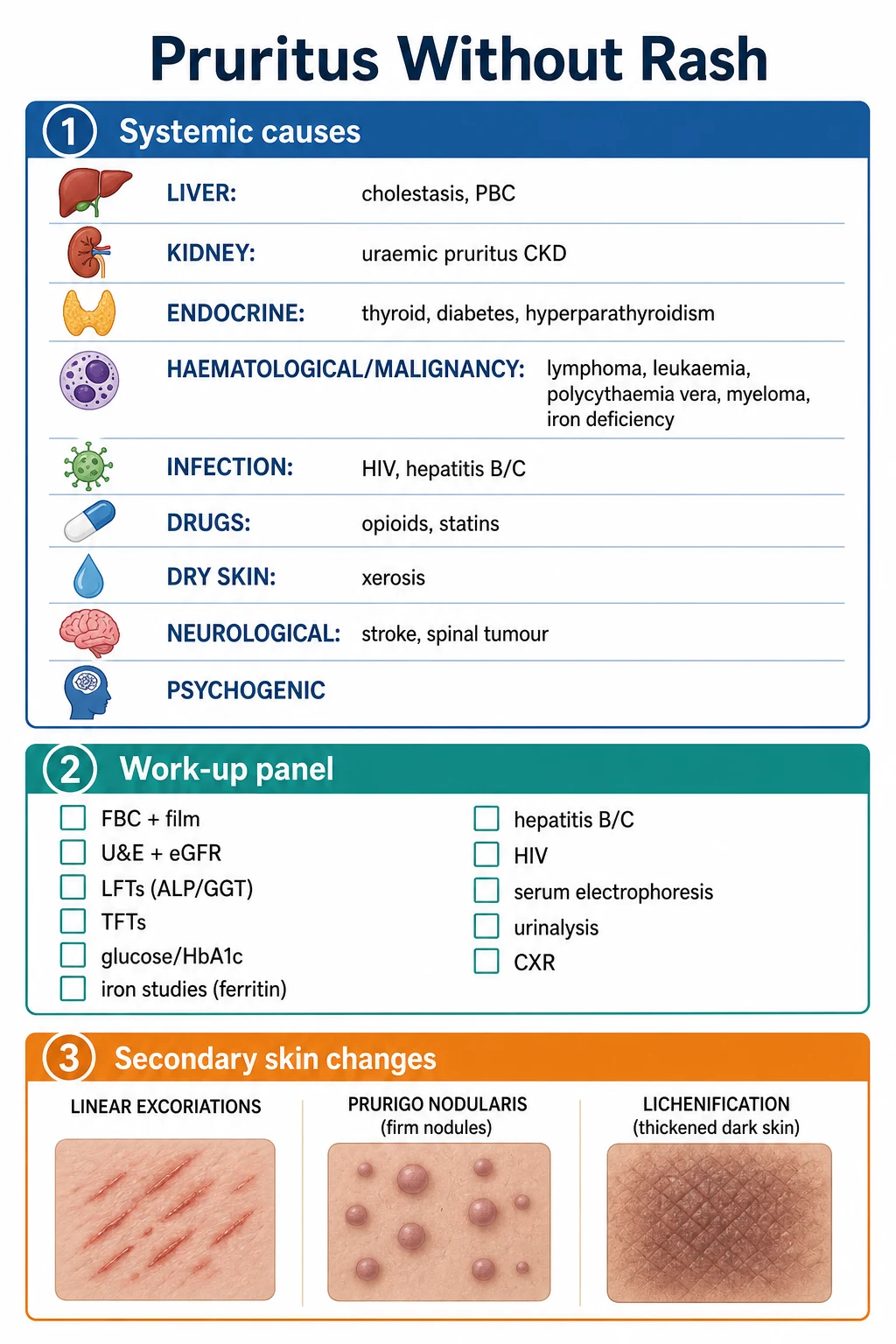
Pruritus without rash (generalised pruritus sine materia) is itch lasting 6 weeks without primary skin lesions — only secondary excoriations, prurigo nodularis or lichenification. It is a clinical sign of SYSTEMIC DISEASE until proven otherwise, requiring a comprehensive work-up (FBC, U&E, LFTs including ALP/GGT, TFTs, glucose/HbA1c, iron studies, hepatitis B/C, HIV, serum electrophoresis, urinalysis, CXR). The mnemonic SCALPED covers the major causes: Skin (xerosis), Chronic kidney disease, Anaemia/iron deficiency, Liver (cholestasis/PBC), Polycythaemia vera, Endocrine (thyroid/diabetes), Drugs. Hodgkin's lymphoma is the classic malignancy association. Management is cause-specific: cholestyramine/rifampicin/naltrexone for cholestatic itch, gabapentin/phototherapy for uraemic itch, gabapentin/capsaicin for neuropathic, treat malignancy for malignancy-associated. Antihistamines have LIMITED efficacy in non-histaminergic itch. Fellowship-level assessment demands mastery of the complete systemic work-up, the cause-specific management ladder, the limited role of antihistamines, and the recognition that this presentation mandates investigation for underlying systemic disease.
On this page & tools
Your progress
Saved locally on this device.
Exam tags
Red flags
Definition
Pruritus without rash (generalised pruritus sine materia) is itch lasting >6 weeks in the absence of primary skin lesions. The only skin findings are secondary changes from scratching: excoriations, prurigo nodularis and lichenification.[2]
This presentation is a clinical sign of underlying systemic disease until proven otherwise, and mandates a comprehensive investigation.[2]
Systemic Causes
The major systemic causes of generalised pruritus (mnemonic: SCALPED):[2]
| Category | Causes | Key tests |
|---|---|---|
| Skin (xerosis) | Asteatotic eczema (especially elderly); a primary skin condition mislabelled | Clinical exam; Wood's lamp |
| Chronic kidney disease | Uraemic pruritus (~40-80% of dialysis patients) | U&E + eGFR |
| Anaemia / iron deficiency | Iron deficiency (even without anaemia); ferritin less than 30 | FBC, ferritin |
| Liver (cholestasis) | PBC (primary biliary cholangitis); cholestatic drugs; cholangiocarcinoma | LFTs (ALP/GGT), anti-mitochondrial antibody |
| Polycythaemia vera | Aquagenic pruritus (itch on contact with water) | FBC (Hb >18.5, Hct >0.52), JAK2 V617F[1] |
| Endocrine | Hyperthyroidism, hypothyroidism, diabetes, hyperparathyroidism | TFTs, glucose/HbA1c, Ca²⁺/PTH |
| Drugs | Opioids, statins, hydroxychloroquine, allopurinol, phenothiazines | Drug history; immune checkpoint inhibitors[5] |
| Other causes | Hodgkin's lymphoma (the classic malignancy); leukaemia, myeloma; HIV; hepatitis B/C; helminths; pregnancy (ICP); notalgia paraesthetica; psychogenic (depression/anxiety) | FBC + film, LDH, CXR, HIV, hepatitis serology, serum electrophoresis, urinalysis |
Aquagenic pruritus (itch triggered by water contact — shower/bath) is highly suggestive of polycythaemia vera; check FBC and JAK2.[1]
Diagnostic Work-Up
Quick numbers for the examiner

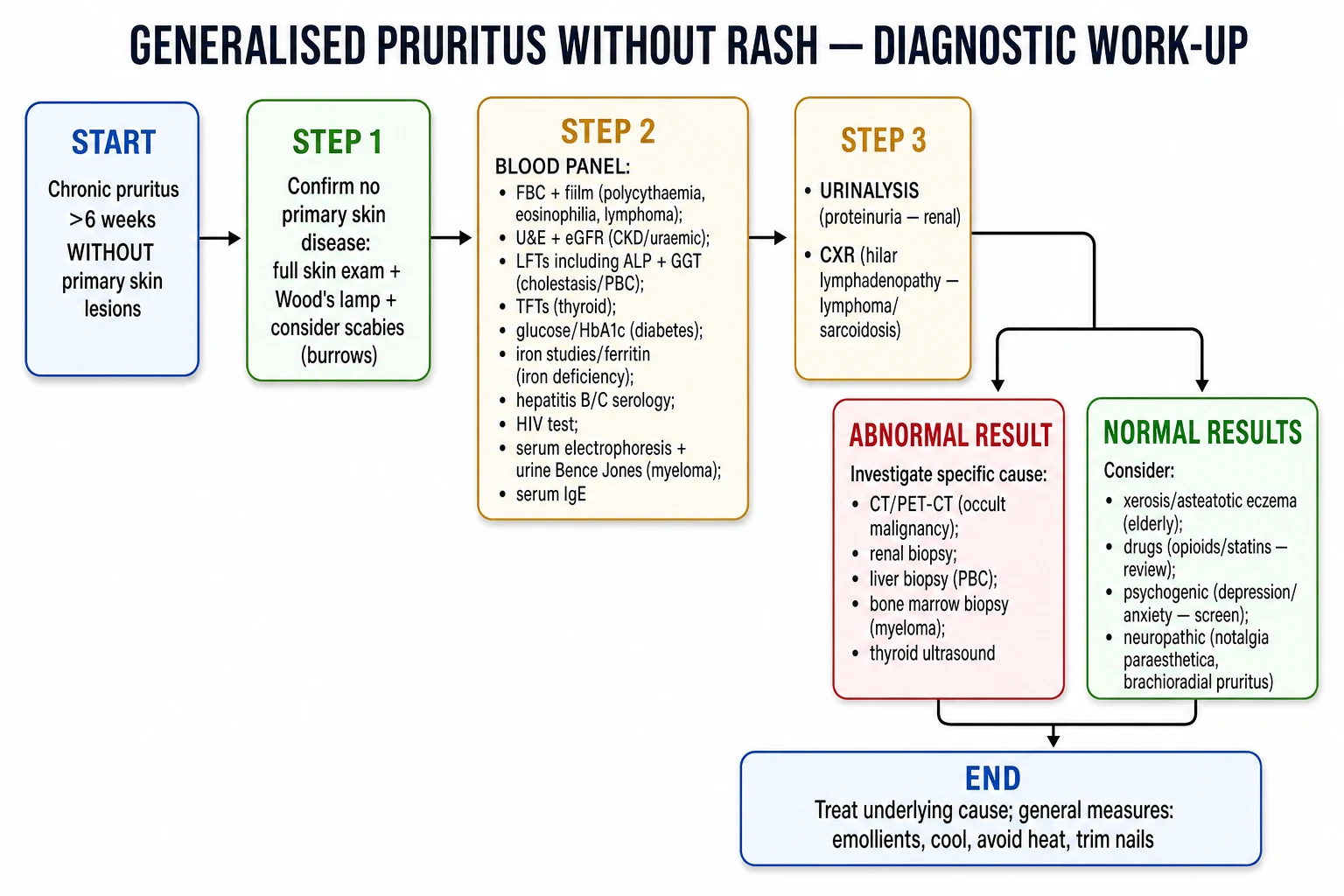
Every patient with chronic generalised pruritus without rash should have:[2]
| Test | What it screens for |
|---|---|
| FBC + film | Polycythaemia vera, lymphoma/leukaemia, eosinophilia, iron deficiency |
| U&E + eGFR | Chronic kidney disease (uraemic pruritus) |
| LFTs (including ALP + GGT) | Cholestasis, PBC (raised ALP) |
| TFTs (TSH, free T4) | Thyroid disease |
| Glucose / HbA1c | Diabetes mellitus |
| Iron studies (ferritin) | Iron deficiency (even without anaemia) |
| Hepatitis B + C serology | Chronic viral hepatitis (cholestatic component) |
| HIV test | HIV infection |
| Serum IgE | Atopy/mast cell activation |
| Serum electrophoresis + urine Bence Jones | Multiple myeloma |
| Urinalysis | Renal disease (proteinuria, haematuria) |
| CXR | Hodgkin's lymphoma (mediastinal mass), sarcoidosis, TB |
Escalate to CT/PET-CT if: abnormal bloods, weight loss, night sweats, lymphadenopathy, or initial work-up inconclusive but clinical suspicion remains high.[2]
Measuring itch — the scales you must know
Accurate grading of chronic pruritus is essential for monitoring response to therapy and for documenting severity in clinic letters and trial protocols. Four validated instruments feature in fellowship-level practice. [1]
Visual Analogue Scale (VAS) for itch — single 100 mm line marked 0 (no itch) to 10 cm (worst imaginable itch). Score ≥4 = moderate itch; ≥7 = severe itch. Quickest tool at the bedside (takes 30 seconds). Limitation: captures intensity only — not quality, distribution or impact on sleep. [1]
Itch Severity Scale (ISS) — four domains scored 0-3 each: frequency (0=rare, 3=continuous), severity (0=mild, 3=severe), sleep impact (0=none, 3=loss of several nights' sleep), and effect on mood/leisure/social function (0=none, 3=severe). Total 0-12; ≥7 = severe itch. Useful in chronic pruritus trials because it captures quality-of-life impact rather than just intensity. [1]
5-D Itch Scale — five domains: Degree (intensity, 1-5), Duration (hours per day, 1-5), Direction (worsening/improving/stable, 1-5), Distribution (localised to generalised, 1-5), Disability (impact on sleep, work, leisure, 1-5). Total 5-25; ≥15 = severe. Has been validated specifically for pruritus associated with cholestasis, uraemia, atopic dermatitis and psoriasis — making it a strong single-page research instrument. [1]
UWMS (Unaffected-side Worst Morning Stiffness) style morning-itch diary / Itch Diary (one-week diary recording itch intensity, triggers, scratching frequency and sleep disruption) — useful before/after an intervention to capture change. [1]
| Scale | Domains | Range | Threshold for severe |
|---|---|---|---|
| VAS (itch) | Intensity only | 0-100 mm | ≥70 mm |
| ISS | Frequency, severity, sleep, mood | 0-12 | ≥7 |
| 5-D Itch Scale | Degree, Duration, Direction, Distribution, Disability | 5-25 | ≥15 |
| Itch Diary | 7-day patient-recorded | qualitative + VAS | Reported change |
In practice: at first clinic visit, document baseline VAS and ISS. Repeat at 4-6 weeks after any intervention (e.g., starting gabapentin or rifampicin). For cholestatic and uraemic pruritus, an improvement of ≥2 cm on VAS is considered clinically meaningful. [1]
Exclude scabies (burrows in finger webs, wrists, genitalia; household contacts) before diagnosing "pruritus without rash" — scabies is the commonest missed cause of generalised pruritus.[3]
Management — General Measures
Quick numbers for the examiner
ITCHY — investigations for pruritus without rash
Iron deficiency even without anaemia causes pruritus; treat with oral/IV iron
Hypo- and hyperthyroidism both cause itch; levothyroxine replacement
Cholestatic pruritus: PBC, PSC, hepatitis, drug-induced; cholestyramine first-line
Hep C: cryoglobulinaemia; HIV: eosinophilic folliculitis; consider in at-risk patients
Polycythaemia vera: aquagenic pruritus (after bath/shower); JAK2 V617F mutation in >95%
NO RASH — systemic workup categories
Post-herpetic neuralgia, brachioradial pruritus, notalgia paraesthetica, trigeminal trophic syndrome
Lymphoma (Hodgkin, CTCL), leukaemia, myeloma, GI, breast, lung; Hodgkin releases histamine
CKD/ESRD on haemodialysis; 30-50% patients; gabapentin first-line
Iron deficiency even without anaemia; treat with oral/IV iron
Xerosis in elderly most common cause; scabies most missed cause
Cholestatic pruritus palms/soles; cholestyramine first-line; rifampicin second
Pharmacology of pruritus treatment
[1]Pharmacology quick numbers
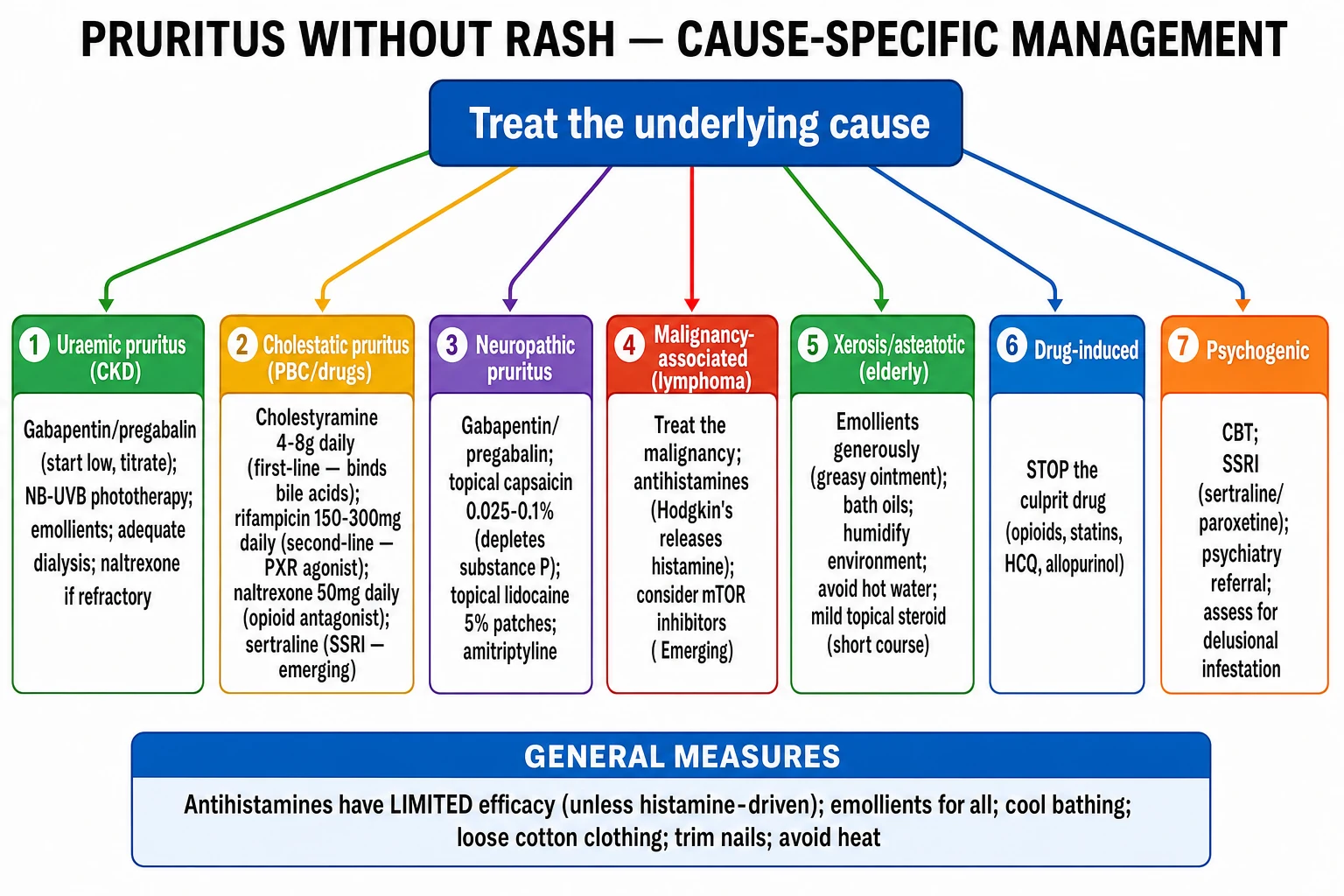
All patients, regardless of cause:[2]
- Emollients — generous and frequent (especially in xerosis/elderly).
- Cool bathing — avoid hot water (triggers itch).
- Loose cotton clothing — avoid wool and synthetics.
- Trim nails — reduce excoriation damage.
- Avoid heat and sweating.
- Antihistamines — have LIMITED efficacy in non-histaminergic itch (i.e., most causes of pruritus without rash). A sedating first-generation at night may help sleep even if it doesn't reduce itch.[2]
Management — Cause-Specific
| Cause | First-line | Second-line |
|---|---|---|
| Uraemic pruritus (CKD) | Gabapentin (start 100 mg post-dialysis, titrate); NB-UVB phototherapy; emollients | Pregabalin; naltrexone; acupuncture |
| Cholestatic pruritus (PBC/drugs) | Cholestyramine 4-8 g daily (bile acid sequestrant) | Rifampicin 150-300 mg daily; naltrexone 50 mg daily (opioid antagonist); sertraline (SSRI) |
| Neuropathic pruritus | Gabapentin/pregabalin; topical capsaicin 0.025-0.1% (depletes substance P) | Topical lidocaine 5% patches; amitriptyline |
| Malignancy-associated | Treat the malignancy | Antihistamines (Hodgkin's releases histamine) |
| Drug-induced | Stop the culprit | Symptomatic while drug clears |
| Xerosis/asteatotic | Emollients (generous, ointment); bath oils; humidifier; mild topical corticosteroid (short course) | Urea 10% cream; avoid hot water |
| Polycythaemia vera | Phlebotomy + aspirin + JAK inhibitor (ruxolitinib) | Antihistamines (limited); SSRI[1] |
| Psychogenic | CBT; SSRI (sertraline/paroxetine) | Psychiatry referral; assess for delusional infestation |
| Iron deficiency | Iron replacement (oral ferrous sulphate; IV iron if intolerant) | — |
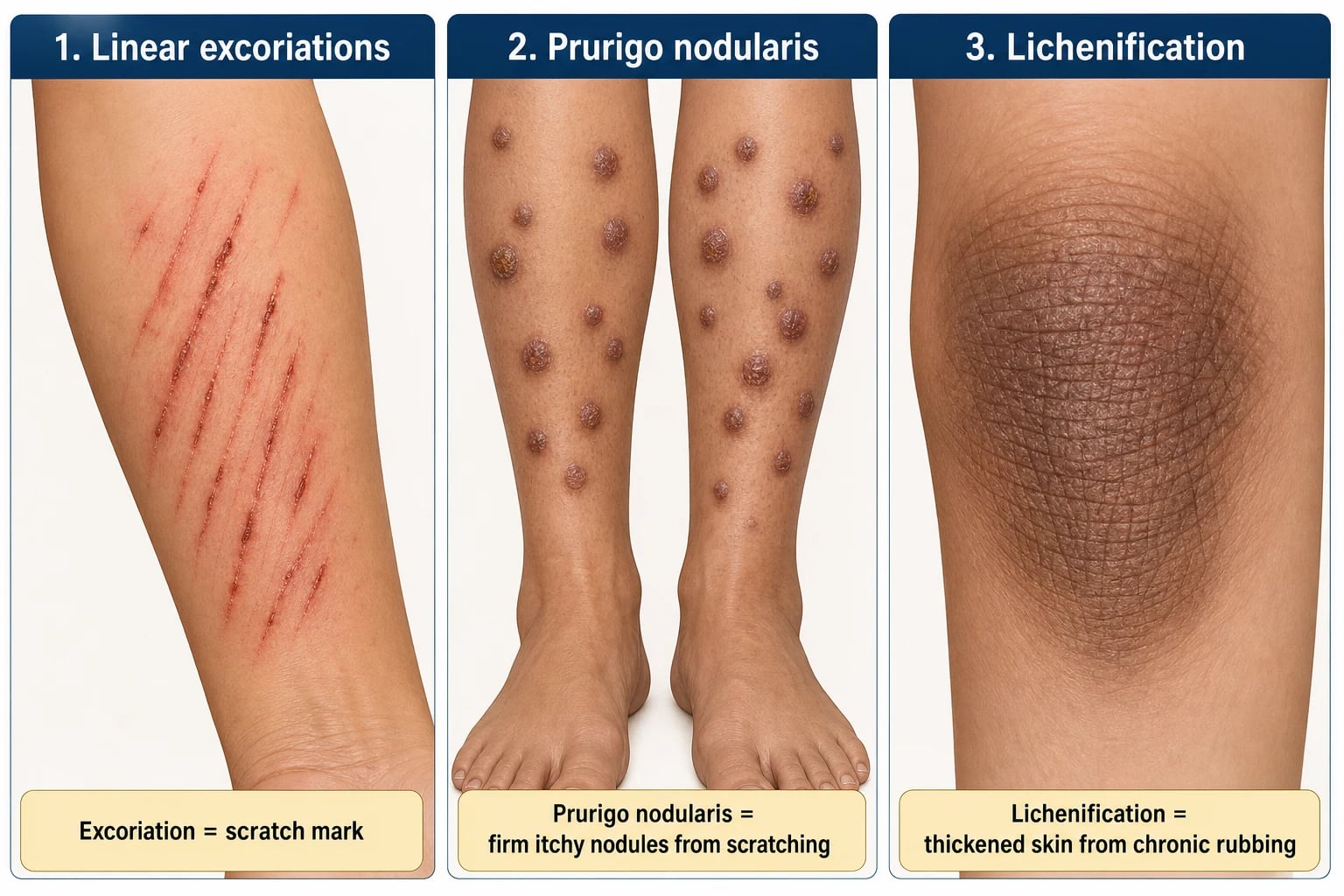
- Excoriations: linear scratch marks — confirm that the pruritus predates the excoriations (i.e., the excoriations are secondary).
- Prurigo nodularis: firm, dome-shaped, hyperkeratotic nodules (5-15 mm) on accessible areas (legs, arms) from chronic scratching/picking; very resistant to treatment.
- Lichenification: thickened, darkened, dry skin with exaggerated skin markings (like tree bark) from chronic rubbing — especially in atopic patients. [1]
These changes confirm the itch-scratch cycle but do NOT change the need to investigate the underlying systemic cause.[2]
Regional and Specialised Subtypes of Pruritus
Generalised pruritus has classic regional variants in which itch is the only symptom — there is no primary rash, only secondary excoriations from scratching the localised area. Each has a stereotyped distribution that signals a specific underlying mechanism (usually neuropathic compression, not systemic disease). Recognising these saves the patient an unnecessary systemic work-up and points the clinician towards targeted therapy. [1]

| Subtype | Distribution | Mechanism / cause | Targeted therapy |
|---|---|---|---|
| Brachioradial pruritus | Dorsum of upper arm / forearm, often over the brachioradialis muscle; sun-exposed in summer; worse after cervical spine movement | Cervical radiculopathy (C5-C6) combined with UV-induced damage to cutaneous C-fibres; "itchy arm" in golfers, sailors, outdoor workers | Cervical spine imaging (MRI if persistent); topical capsaicin; gabapentin; avoid sun exposure + broad-spectrum sunscreen on arms |
| Notalgia paraesthetica | Unilateral infrascapular patch (T2-T6 medial scapular border), hyperpigmented from chronic scratching | Entrapment of medial branches of the dorsal rami of thoracic spinal nerves | Topical capsaicin 0.025%; lidocaine 5% patches; gabapentin; physiotherapy; rarely nerve block |
| Scalp pruritus (persistent scalp itch) | Vertex and occipital scalp; no scale, no inflammation visible | Often neuropathic (cervical); small-fibre neuropathy; rarely psychiatric (delusional infestation) — exclude scabies first | Topical steroid lotion if occult seborrhoeic dermatitis; capsaicin; gabapentin; amitriptyline; check cervical spine |
| Anogenital pruritus (pruritus ani, pruritus vulvae) | Perianal / vulval skin, worse at night, often with burning | Mostly local (faecal seepage, candidiasis, lichen sclerosus, contact dermatitis), but can be systemic (iron deficiency, diabetes, lymphoma) | Re-examine for anogenital dermatoses (exclude lichen sclerosus, lichen planus, psoriasis); stool culture for parasites; topical corticosteroid + barrier cream |
| Idiopathic pruritus of pregnancy (PEP / ICP overlap) | Generalised or palms/soles in 3rd trimester | Intrahepatic cholestasis of pregnancy (serum bile acids ≥10 μmol/L); excludes polymorphic eruption of pregnancy (which has urticated papules) | Urgent serum bile acids + LFTs; ursodeoxycholic acid; early delivery if bile acids ≥40 μmol/L |
| Drug-induced pruritus | Generalised, often within days-weeks of starting culprit drug | Opioids (mu-receptor agonism), statins, hydroxychloroquine, allopurinol, EGFR/immune checkpoint inhibitors[5] | Stop the culprit drug; cholestyramine if cholestatic; gabapentin if peripheral neuropathic; NB-UVB |
| Senile pruritus (itch of ageing) | Generalised, dry skin, worse in winter | Xerosis, reduced stratum corneum lipids, age-related changes in C-fibres | Emollients ± urea 10%; conservative bathing; antihistamines unhelpful |
| Aquagenic pruritus | Within seconds-minutes of water contact (bath, shower, rain) | Strong association with polycythaemia vera (JAK2 V617F in >95%); also myeloproliferative disorders | Check FBC + JAK2; aspirin 81 mg, phototherapy; ruxolitinib if PV confirmed[1] |
Step-by-step: regional itch without rash
Step 1 — Confirm no primary rash
Step 2 — Map the dermatome
Step 3 — Targeted neuro-imaging
Step 4 — Local therapy first
Step 5 — Systemic therapy
Step 6 — Targeted interventions
What is the key clinical clue in brachioradial pruritus?
Which serum test should be done urgently in a pregnant woman with new-onset pruritus without rash?
Detailed Subtype Profiles
Brachioradial pruritus is a localised neuropathic itch confined to the dorsum of the forearms (and occasionally the upper arms and shoulders) overlying the brachioradialis muscle. The classic patient is a fair-skinned adult aged 40-60 with a history of chronic cervical spine disease or repeated sun exposure — golfers, sailors, gardeners and outdoor workers are over-represented. The itch is characteristically worsened by ultraviolet light (especially UVA, which penetrates to the dermis and damages cutaneous peptidergic C-fibres) and improved in winter or after sun avoidance — a near-pathognomonic seasonal pattern. Many patients also describe a coexistent burning, stinging or "crawling" dysaesthesia and may demonstrate reduced pinprick sensation or hypo-aesthesia over the affected skin, consistent with a small-fibre neuropathy. The proposed mechanism is a "double-hit" model: chronic C5-C6 cervical radiculopathy (often from uncovertebral joint hypertrophy or disc osteophyte complex) compresses the dorsal horn input, while cumulative UV exposure damages the cutaneous C-fibre terminals expressing TRPV1 and TRPA1 — the deafferented/spared fibres generate ectopic itch signals.[6] First-line treatment is rigorous sun protection (UPF 50+ sleeve, broad-spectrum SPF 50+ sunscreen applied 2-3 times daily to the forearms), topical capsaicin 0.025% cream three times daily for 4-6 weeks (depletes substance P from cutaneous nociceptors; expect transient burning in week one), and gabapentin 100-300 mg orally at night titrated up to 900-1800 mg/day in divided doses — pregabalin 50-150 mg daily is an alternative. Cervical spine imaging (X-ray, then MRI if red flags or progressive neurology) is appropriate for refractory cases; cervical traction, physiotherapy and (rarely) anterior cervical discectomy can be curative.[7]
Notalgia paraesthetica is a chronic unilateral infrascapular itch localised to a 5-10 cm patch just medial to the scapular spine, classically within the T2-T6 dermatomes. The skin in the affected zone often shows a hyperpigmented, lichenified plaque from chronic scratching — but there is no primary dermatitis, and the lesion reflects the underlying neuropathic aetiology rather than a primary skin disease. Patients frequently complain of associated burning, numbness, paraesthesia or hyperaesthesia over the patch; palpation may reveal a trigger point medial to the scapula. The mechanism is entrapment of the medial branches of the dorsal rami of the thoracic spinal nerves as they pierce the multifidus spinae muscle, with subsequent ectopic firing in the C-fibre population producing itch. Causes include thoracic spine osteoarthritis, paraspinal muscle spasm, scoliosis and, less commonly, spinal tumours — thoracic MRI is reserved for atypical features. First-line topical therapy is capsaicin 0.025% cream three to five times daily for 6-8 weeks; the 5% lidocaine medicated plaster applied for 12 hours daily is particularly useful for patients who cannot tolerate capsaicin burning. Oral options include gabapentin 300-900 mg/day, pregabalin 75-150 mg/day, or amitriptyline 10-25 mg at night. Botulinum toxin A intradermal injections (50-100 units across the patch) are an emerging option for refractory disease. Physiotherapy to release the paraspinal muscles and transcutaneous electrical nerve stimulation (TENS) can provide additional relief. [1]
Postherpetic neuralgia (PHN) is the prototype of neuropathic itch-after-pain: persistent, often burning, itching, stabbing or electric-shock pain in a unilateral dermatomal distribution that persists >3 months after the rash of herpes zoster has healed. Although pain dominates the clinical picture, itch is reported by 30-45% of PHN patients and may be the predominant symptom in a minority. The involved dermatomes (most commonly thoracic, then trigeminal V1) show allodynia (light touch provoking itch/pain), hypo- or hyperaesthesia, and scarring from the healed zoster. Mechanism is virus-driven destruction of dorsal root ganglion neurons and deafferentation, producing ectopic firing in surviving C- and Aδ-fibres and central sensitisation. First-line systemic treatment is gabapentin titrated from 300 mg on day 1 to 1800-3600 mg/day in three divided doses, or pregabalin 150-300 mg/day in two divided doses — both are FDA-approved for PHN. Topical 5% lidocaine medicated plasters (up to three plasters covering the painful area for up to 12 hours within 24 hours) are useful as monotherapy in mild disease or as adjuncts to reduce systemic dose. High-concentration 8% capsaicin patches (Qutenza) applied for 60 minutes (30 minutes for the feet) by a trained clinician provide 12 weeks of relief after a single application. Tricyclic antidepressants (amitriptyline 10-25 mg at night, nortriptyline) are effective but poorly tolerated in the elderly; duloxetine 30-60 mg/day and tramadol 50-100 mg up to QDS are third-line options. Vaccination with the recombinant zoster vaccine (Shingrix, two doses 2-6 months apart) is the most important prevention — efficacy against PHN is >85% in adults over 50. [1]
Scalp pruritus without visible scale is a frequent and under-recognised complaint. Patients describe intense, sometimes burning itch of the vertex, occiput or entire scalp that does not respond to anti-dandruff shampoos. Causes include: (i) occult seborrhoeic dermatitis with subtle erythema and pityriasis (check retroauricular skin, eyebrows, nasolabial folds); (ii) scalp psoriasis (palpate for subtle plaques, check elbows/knees/nail pitting); (iii) pediculosis capitis (look for nits glued to hair shafts within 6 mm of the scalp); (iv) lichen simplex chronicus from habitual scratching; (v) trigeminal trophic syndrome (self-inflicted ulceration from trigeminal nerve injury); (vi) neuropathic itch from cervical spine disease (greater occipital nerve entrapment at C2 — itch in the C2 dermatome over the occiput); (vii) small-fibre neuropathy (diabetes, sarcoidosis, Fabry disease); and (viii) delusional infestation (formication — fixed belief of insects/burrowing). Practical work-up: examine the scalp with a magnifier, perform Wood's lamp if subtle scale, comb for lice, examine the upper back for lichenification, take swabs if impetiginised. For neuropathic causes, topical capsaicin 0.025% lotion, menthol 1% in aqueous cream for symptomatic cooling, and oral gabapentin 100-300 mg at night are useful. Bedside greater occipital nerve block with bupivacaine 0.5% (2-3 mL) provides durable relief for recalcitrant occipital neuropathic itch. Topical steroid lotion (betamethasone valerate 0.1% lotion) short-term is reasonable if seborrhoeic or psoriatic dermatitis is suspected. [1]
Anogenital pruritus (pruritus ani, pruritus vulvae) is itch confined to the perianal or vulval skin, often worse at night and aggravated by warmth, moisture and friction. Up to 5% of adults attend primary care with this complaint. Causes fall into four overlapping groups. (1) Local cutaneous disease: atopic or contact dermatitis (irritants — soaps, wipes, spermicides; allergens — topical anaesthetics, fragrance, latex), psoriasis (well-demarcated shiny red plaques, often with natal cleft extension), lichen sclerosus (white atrophic plaques, figure-of-eight distribution in women, increased risk of squamous cell carcinoma — biopsy any suspicious lesion), lichen planus (violaceous erosive plaques in vulvovaginal lichen planus), lichen simplex chronicus, and infections (candidiasis — satellite pustules, vulvovaginal discharge; tinea cruris — well-demarcated scaly edge; erythrasma — coral-red fluorescence under Wood's lamp; pinworms/threadworms — perianal itch worse at night in children). (2) Local irritants/factors: faecal seepage from incontinence or haemorrhoids, excessive washing ("over-cleaning" cycle), sweating, tight synthetic underwear, menstrual pads, spermicides. (3) Systemic disease: iron deficiency (check ferritin), diabetes mellitus (candidiasis, balanitis), lymphoma (Hodgkin's, mycosis fungoides — paraneoplastic pruritus), cholestasis, HIV. (4) Psychosexual/psychogenic: anxiety, depression, sexual dysfunction, lichen sclerosus-related dyspareunia. Examination must inspect the perineum, vulva/scrotum, perianal skin, inguinal folds, oral mucosa and the rest of the skin for clues. Investigations: stool for ova/cysts/parasites if travel history or children in the household, Wood's lamp for erythrasma, skin scrapings for mycology if scaly edge, swab for Candida if suspected, biopsy of any persistent or atypical plaque to exclude lichen sclerosus, lichen planus or neoplasia. Management: address the local cause first — barrier cream (zinc oxide paste), gentle cleansing with water only, loose cotton underwear, topical corticosteroid (hydrocortisone 1% ointment BD for two weeks then prn) for dermatitis, antifungal (clotrimazole 1% cream BD for two weeks) for candidiasis. Refractory cases warrant referral to vulval/anorectal clinic; patch testing may identify a contact allergen. Sedating antihistamine at night (hydroxyzine 25 mg) helps sleep but does not treat itch — anticholinergic drying may aggravate symptoms. [1]
Idiopathic pruritus of pregnancy / intrahepatic cholestasis of pregnancy (ICP) is the pregnancy-specific pruritic disorder that mandates urgent recognition. Onset is typically in the late second or third trimester (>30 weeks), with intense generalised itch — characteristically worst on the palms and soles, worse at night, and without any primary skin eruption (some patients have excoriations only). Approximately 1-2% of pregnancies in Europe are affected, with higher rates in South American and South Asian populations. The pathophysiology involves impaired biliary excretion of bile acids in genetically susceptible women, often with variants in ABCB4 (MDR3), ABCB11 or ATP8B1. ICP carries serious fetal risks — spontaneous preterm delivery, meconium-stained liquor, fetal bradycardia and intrauterine death (up to 3-5% if bile acids ≥40 μmol/L). Diagnosis is confirmed by fasting serum bile acids ≥10 μmol/L (the gold standard); LFTs typically show mildly raised ALT/AST and ALP, and conjugated bilirubin may be elevated. Liver ultrasound is reasonable to exclude gallstones. Treatment is ursodeoxycholic acid (UDCA) 500-1000 mg daily in two divided doses, titrated up to 1500 mg/day if needed — it improves maternal symptoms and reduces fetal complications. Second-line add-ons include rifampicin 150-300 mg daily and S-adenosyl methionine. Fetal monitoring with weekly CTG and ultrasound growth scans is recommended from diagnosis; early delivery at 36-37 weeks is advised if bile acids ≥40 μmol/L, with closer surveillance and possibly earlier delivery for very high levels. Pruritus resolves within days of delivery. Antihistamines and emollients alone are inadequate — UDCA must be started.[8]
Drug-induced pruritus without rash is a common and under-recognised cause of chronic itch in adults. Drugs that classically produce non-histaminergic itch include opioids (mu-receptor agonism on pruriceptors — particularly spinal/intrathecal morphine with up to 90% itch incidence, but also systemic morphine and codeine), hydroxychloroquine (cumulative dose-related, intense generalised itch within weeks-months of starting — settle on dose reduction), statins (rare, mechanism unclear), allopurinol (rare; consider if combined with HLA-B*5801 in Han Chinese), EGFR inhibitors (cetuximab, gefitinib — itch with papulopustular eruption), immune checkpoint inhibitors (pembrolizumab, nivolumab — pruritus is the second commonest cutaneous adverse event after maculopapular rash), vancomycin (red man syndrome — rate-related histamine release), rifampicin (cholestatic pruritus), fluconazole, hydroxyethyl starch (depot pruritus — lasts weeks-months after infusion), chloroquine and tropical antimalarials. Mechanisms include: direct mast cell degranulation (opioids, vancomycin, radiocontrast), cholestasis (statins, rifampicin, co-amoxiclav), serotonin-mediated (SSRIs, ondansetron can paradoxically worsen), mu-opioid receptor agonism on central pruriceptors (spinal opioids), small-fibre neuropathy (chemotherapy — cisplatin, taxanes, bortezomib), and immune-mediated (immune checkpoint inhibitors). Management: stop or substitute the culprit drug where possible — most drug-induced itch resolves within days to weeks of cessation. Symptomatic treatment depends on mechanism: cholestyramine 4-8 g/day if cholestatic; gabapentin 100-300 mg at night titrated for opioid or chemotherapy-induced neuropathic itch; ondansetron 4-8 mg TDS for serotonin-mediated itch; topical steroids and emollients for the rash component of checkpoint inhibitor toxicity. Mixed mu-opioid receptor antagonists / kappa-opioid agonists (butorphanol, nalbuphine) are being investigated for opioid-induced pruritus unresponsive to H1-antihistamines.[9]
Subtype-targeted therapy — drug doses for the examiner
Special Populations
- Elderly: xerosis is the commonest cause; emollients are the mainstay. Also higher risk of cholestasis (PBC), CKD, malignancy and drug-induced pruritus. Check ferritin (iron deficiency without anaemia is easily missed).
- Pregnancy: intrahepatic cholestasis of pregnancy (ICP) — pruritus (especially palms/soles) without rash in the 3rd trimester; raised serum bile acids; risk of premature birth and stillbirth.
- Dialysis patients: uraemic pruritus affects ~40-80%; gabapentin post-dialysis and NB-UVB are first-line.[2]
Exam Pearls
[1]Red Flags
Exam application bank (NEET-PG / INICET)
One-line answer
Pruritus without rash (generalised pruritus sine materia) is itch lasting >6 weeks without primary skin lesions — only secondary excoriations, prurigo nodularis or lichenification. It is a clinical sign of SYSTEMIC DISEASE until proven otherwise, requiring a comprehensive work-up (FBC, U&E, LFTs including ALP/GGT, TFTs, glucose/HbA1c, iron studies, hepatitis B/C, HIV, serum electrophoresis, urinalysis, CXR). The mnemonic SCALPED covers the major causes: Skin (xerosis), Chronic kidney disease, Anaemia/iron deficiency, Liver (cholestasis/PBC), Polycythaemia vera, Endocrine (thyroid/diabetes), Drugs. Hodgkin's lymphoma is the classic malignancy association. Management is cause-specific: cholestyramine/rifampicin/naltrexone for cholestatic itch, gabapentin/phototherapy for uraemic itch, gabapentin/capsaicin for neuropathic, treat malignancy for malignancy-associated. Antihistamines have LIMI
Worked stems (answer without another resource)
Stem 1 — Classic presentation. Map symptoms to mechanism; name the first investigation and first treatment step with dose/route if drug therapy is standard. [1]
Stem 2 — Unstable / complicated. List red flags that force immediate resuscitation, theatre, ICU, antidote, or reperfusion — and what you do in the first 15 minutes. [1]
Stem 3 — Atypical group. Elderly, pregnancy, child, or immunocompromised: how presentation and thresholds change. [1]
Stem 4 — Differential trap. Name the three closest mimics and one discriminator for each. [1]
Stem 5 — Disposition. Who goes home with safety-netting, who is admitted, who needs HDU/ICU/theatre, and what follow-up is mandatory. [1]
Rapid viva checklist
- Definition + classification
- Pathophysiology chain
- Bedside signs / criteria
- Score with exact components (if any)
- Emergency bundle
- Definitive therapy with doses
- Complications of disease and of treatment
- Special populations
- Guideline/trial name if classic
- Three exam traps
Coverage self-check
If you cannot answer any stem above from this page alone, re-read the matching section — the page is intended to be self-sufficient for final-prof and NEET-PG/INICET questions on Pruritus without rash.
[1]References
- [1]Tefferi A, Barbui T. Polycythemia vera: 2024 update on diagnosis, risk-stratification, and management Am J Hematol, 2023.PMID 37357958
- [2]Butler DC, Berger T, Elmariah S, et al. Chronic Pruritus: A Review JAMA, 2024.PMID 38809527
- [3]Sunderkötter C, Wohlrab J, Hamm H. Scabies: Epidemiology, Diagnosis, and Treatment Dtsch Arztebl Int, 2021.PMID 34615594
- [4]Borda LJ, Perper M, Keri JE. Treatment of seborrheic dermatitis: a comprehensive review J Dermatolog Treat, 2019.PMID 29737895
- [5]Geisler AN, Phillips GS, Barrios DM, et al. Immune checkpoint inhibitor-related dermatologic adverse events J Am Acad Dermatol, 2020.PMID 32454097
- [6]Mirzoyev SA, Davis MD. Brachioradial pruritus: Mayo Clinic experience over the past decade Br J Dermatol, 2013.PMID 23796379
- [7]Mashoudy KD, Brooks SG, Andrade LF, et al. From Compression to Itch: Exploring the Link Between Nerve Compression and Neuropathic Pruritus Am J Clin Dermatol, 2025.PMID 39417971
- [8]Jurk S, Kremer A, Schleussner E. The Latest on Intrahepatic Cholestasis of Pregnancy - Update 2026 Geburtshilfe Frauenheilkd, 2026.PMID 42343909
- [9]Ebata T. Drug-Induced Itch Management Curr Probl Dermatol, 2016.PMID 27578085