Dermatology · Medicine
Psoriasis
Also known as Plaque psoriasis · Psoriasis vulgaris · Guttate psoriasis · Erythrodermic psoriasis
Psoriasis is a chronic, immune-mediated inflammatory disease driven by IL-23/Th17 signalling, with skin, nail, and joint manifestations and systemic comorbidity. Fellowship-level assessment demands mastery of classification, histopathology, severity tools (PASI/BSA/DLQI/NAPSI), psoriatic-arthritis screening (CASPAR, PEST), topical/site-specific therapy, phototherapy protocols, conventional systemic agents with monitoring, biologic mechanisms and landmark trial data, small-molecule therapy, and emergencies such as erythroderma and generalised pustular psoriasis.
On this page & tools
Your progress
Saved locally on this device.
Exam tags
Red flags
Definition & Classification
Psoriasis is a chronic, immune-mediated inflammatory disease with a strong genetic predisposition. The cutaneous hallmark is a well-demarcated erythematous plaque with silvery-white micaceous scale. It is classified primarily by morphology and distribution: [1]
| Type | Characteristics | Notes |
|---|---|---|
| Chronic plaque (vulgaris) | Symmetric extensor plaques with thick scale; scalp, lumbosacral, nails | ~90% of psoriasis |
| Guttate | Drop-like 1–10 mm papules with fine scale; trunk and proximal limbs | Often post-streptococcal; common in children/young adults |
| Inverse (flexural) | Smooth, shiny, well-demarcated erythema in axillae, groin, inframammary folds; minimal scale | Often misdiagnosed as candidiasis or eczema |
| Pustular | Sterile pustules on erythematous base; localised (palms/soles) or generalised (von Zumbusch) | Generalised form is a dermatology emergency |
| Erythrodermic | Generalised erythema and scaling covering >90% BSA | Risk of hypothermia, dehydration, high-output failure |
| Nail psoriasis | Pitting, oil-drop dyschromia, onycholysis, subungual hyperkeratosis | Strong marker for psoriatic arthritis |
| Scalp psoriasis | Well-demarcated plaques with thick scale; may extend beyond hairline | Common first or isolated site |
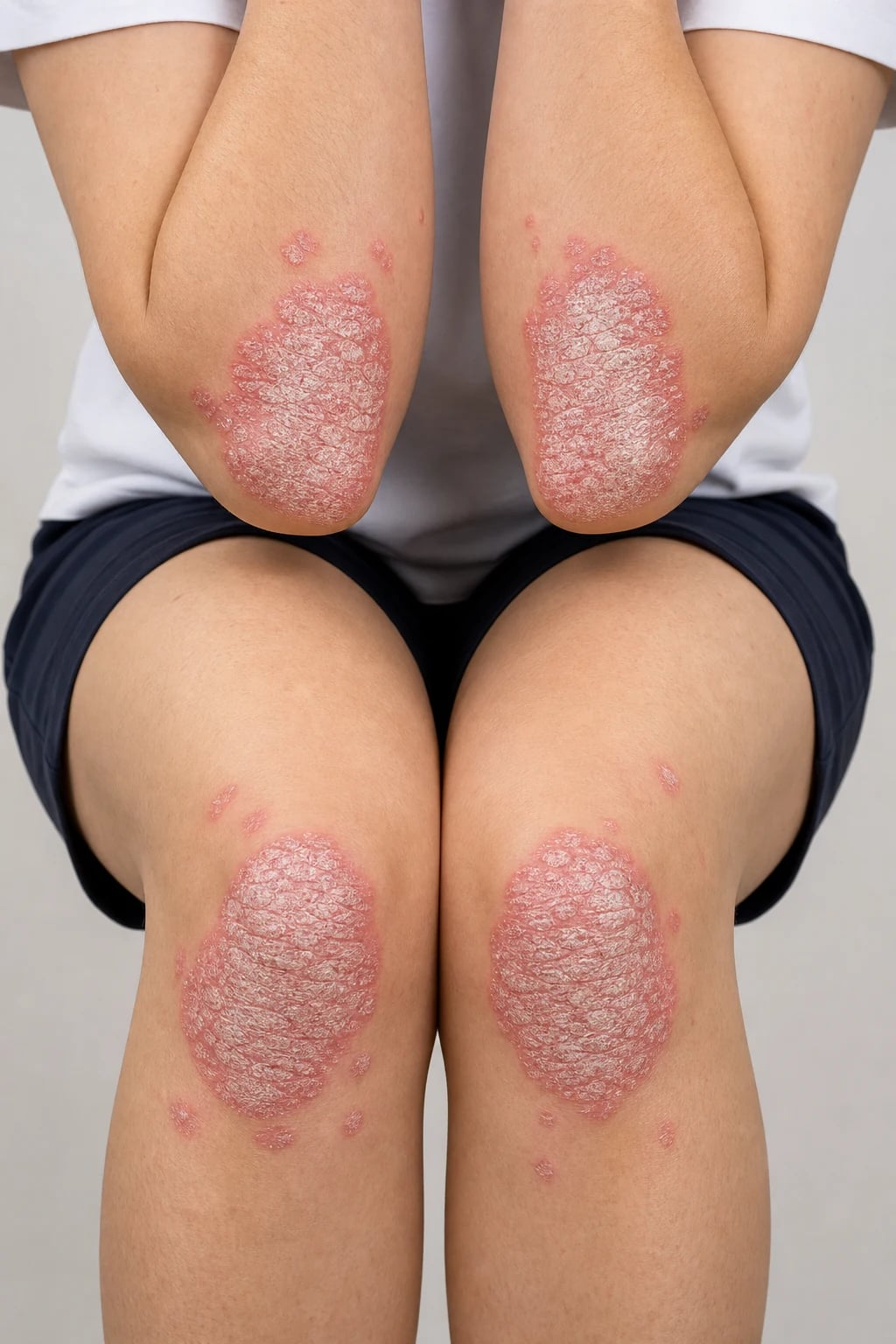
Key named signs [1]
- Auspitz sign — pinpoint bleeding after scale removal, from dilated dermal papillae.
- Koebner phenomenon — new plaques at sites of trauma.
- Woronioff ring — a pale halo around a resolving plaque. [1]
Epidemiology & Risk Factors
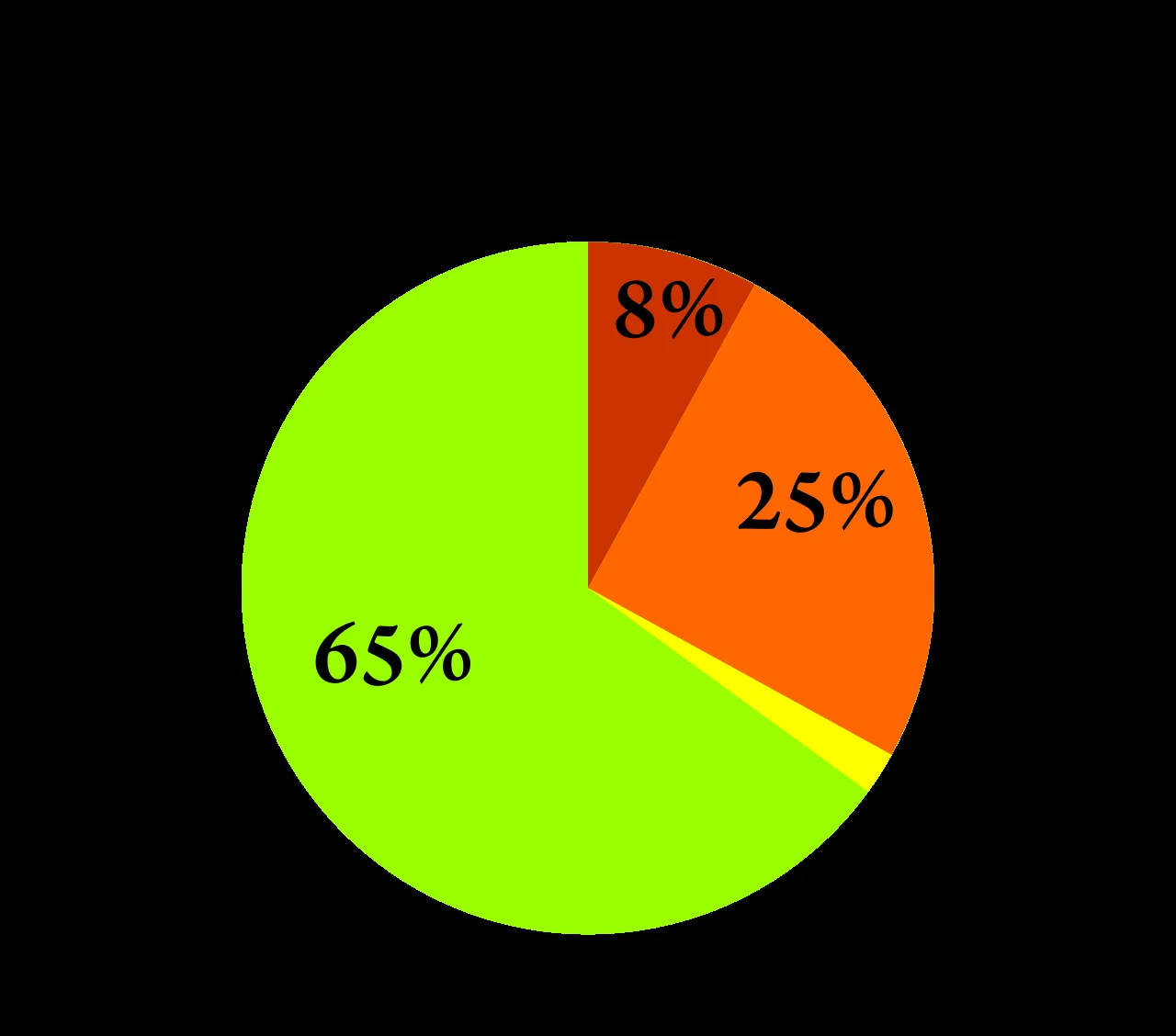
Global prevalence is approximately 2–3%, with higher rates in Northern European populations and lower rates in some African and East Asian groups. Bimodal onset: late teens to early twenties, and fifty to sixty years.[1]
Psoriasis at a glance — global epidemiology
Genetic factors [1]
- Strong familial clustering; ~30% report a first-degree relative affected.
- HLA-Cw6 (PSORS1 on chromosome 6p21) is the strongest susceptibility allele; it is particularly associated with early-onset and guttate psoriasis.
- Other loci include IL-12B, IL-23R, TRAF3IP2, and TNFAIP3.[1]
Environmental triggers and exacerbating factors [1]
- Infection — group A β-haemolytic streptococcal pharyngitis triggers guttate psoriasis; HIV can worsen psoriasis.
- Drugs — lithium, beta-blockers, antimalarials (chloroquine/hydroxychloroquine), interferon, rapid withdrawal of systemic corticosteroids.
- Trauma — Koebner phenomenon.
- Psychological stress, obesity, smoking, and alcohol — all associated with onset and severity.
- Pregnancy — often improves in pregnancy but may flare postpartum; pustular psoriasis can present as impetigo herpetiformis. [1]
Pathophysiology
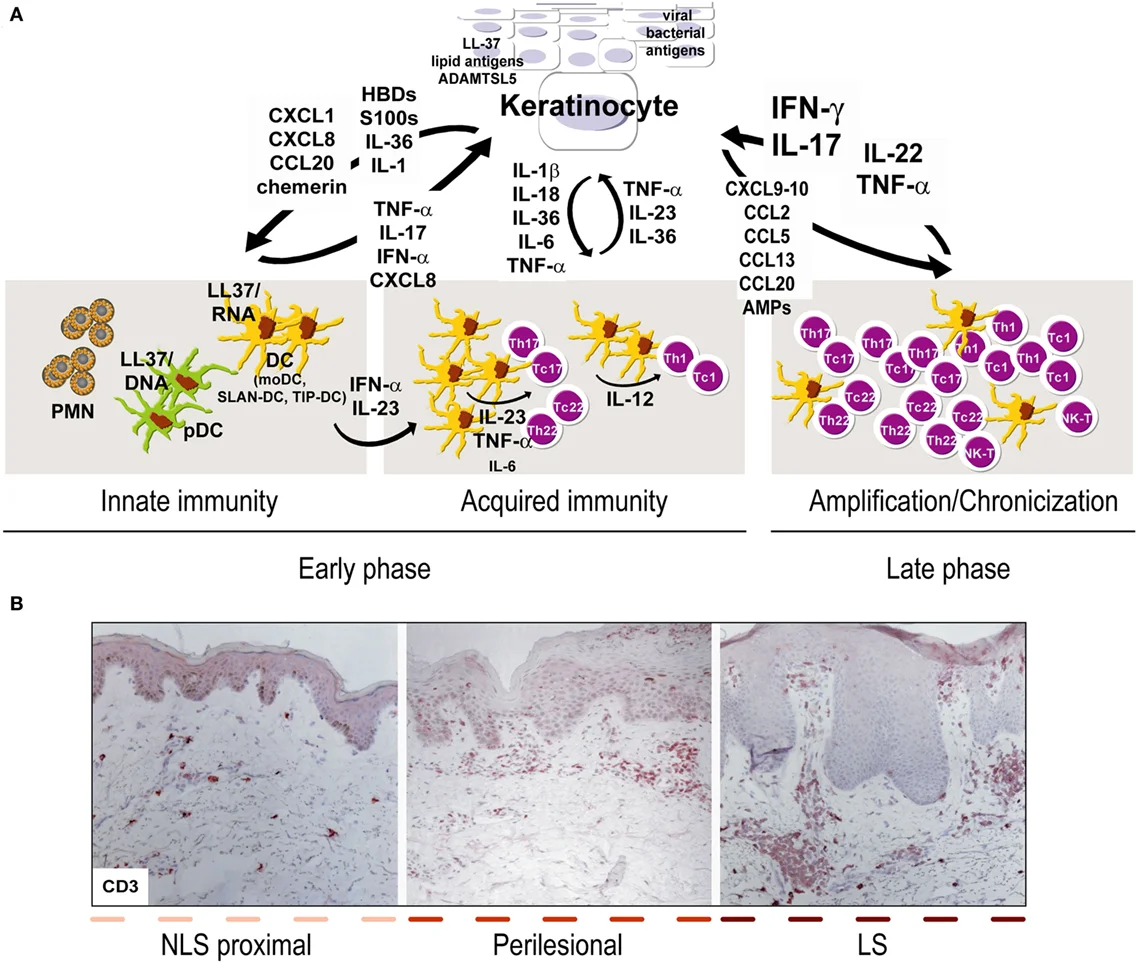
Psoriasis is driven by dysregulated innate and adaptive immunity in genetically susceptible skin. [1]
The IL-23/Th17 axis
The central pathway is the IL-23/Th17 axis: [1]
- Initiation — environmental triggers (trauma, infection) activate keratinocytes and innate immune cells. LL-37 complexes with nucleic acids and activates plasmacytoid dendritic cells via TLR7/9.
- Dendritic-cell activation — myeloid dendritic cells produce IL-23 and IL-12, driving differentiation of Th17 and Th1 cells.
- T-cell effector phase — Th17 cells release IL-17A, IL-17F, and IL-22; Th1 cells release IFN-γ and TNF-α.
- Keratinocyte response — these cytokines drive keratinocyte hyperproliferation (shortened transit time from ~28 days to 3–5 days), abnormal differentiation (parakeratosis), and production of antimicrobial peptides (LL-37, β-defensins, S100 proteins) and chemokines that perpetuate inflammation. [1]
Key cytokines and therapeutic targets
| Cytokine | Cellular source | Main effects | Targeted drugs |
|---|---|---|---|
| IL-23 | Myeloid dendritic cells | Drives Th17 survival/expansion; central pathogenic cytokine | Guselkumab, risankizumab, tildrakizumab, ustekinumab (also IL-12) |
| IL-17A | Th17, Tc17, γδ T cells, neutrophils | Neutrophil recruitment; keratinocyte activation | Secukinumab, ixekizumab, brodalumab (IL-17RA) |
| IL-17F | Th17 cells | Synergises with IL-17A | Bimekizumab (IL-17A/F dual) |
| TNF-α | Macrophages, Th1, mast cells | Pro-inflammatory; amplifies IL-23/IL-17 | Adalimumab, etanercept, infliximab, certolizumab |
| IL-12/IL-23 p40 | Dendritic cells/macrophages | Th1 and Th17 differentiation | Ustekinumab |
| TYK2 | Intracellular kinase | Signal transduction for IL-23, IL-12, type I IFN | Deucravacitinib |
Genetics of generalised pustular psoriasis
Generalised pustular psoriasis (GPP) is associated with mutations in IL36RN, which encodes the IL-36 receptor antagonist. Loss of function leads to uncontrolled IL-36 signalling, neutrophil chemotaxis, and pustule formation. CARD14 mutations are also implicated in pustular phenotypes.[28]
Clinical Presentation
Chronic plaque psoriasis
- Morphology: well-demarcated, dull-red erythematous plaques with silvery-white scale.
- Distribution: symmetric; extensor elbows and knees, lumbosacral area, scalp.
- Symptoms: pruritus is variable; fissuring on palms/soles can be painful.
- Nail changes: pitting, oil-drop (salmon-patch) dyschromia, onycholysis, subungual hyperkeratosis, splinter haemorrhages. [1]
Chronic plaque psoriasis — five exam features
PSORI
Well-demarcated, symmetric, dull-red plaques
Micaceous (mica-like) silver-white scale
Elbows, knees, scalp, lumbosacral, umbilicus
Erythematous plaque with Auspitz sign on scale removal
Pruritus variable; always screen nails and joints
Variants
Guttate psoriasis
- Abrupt onset of 1–10 mm "drop-like" salmon-pink papules with fine scale.
- Trunk and proximal limbs predominantly.
- Classically 2–3 weeks after streptococcal pharyngitis.
- Spontaneous resolution is common; may evolve into chronic plaque psoriasis. [1]
Inverse psoriasis
- Smooth, shiny, well-demarcated erythema in intertriginous sites.
- Scale is minimal because of moisture.
- Common misdiagnosis: candidal intertrigo, erythrasma, contact dermatitis, Hailey-Hailey disease. [1]
Pustular psoriasis
- Palmoplantar pustulosis (PPP): sterile pustules on palms/soles, often associated with smoking.
- Generalised pustular psoriasis (von Zumbusch): widespread sterile pustules on erythematous skin, with fever, malaise, leucocytosis, and risk of sepsis, dehydration, and organ dysfunction.
- Acropustulosis of infancy: pustules on palms/soles in infants, not true psoriasis. [1]
Erythrodermic psoriasis
- Generalised erythema and scaling covering >90% BSA.
- Systemic features: hypothermia, dehydration, electrolyte disturbance, high-output cardiac failure, infection.
- Medical emergency. [1]
Atypical presentations examiners test
- Elderly: may present with late-onset psoriasis; drug triggers more common.
- Immunocompromised: HIV-associated psoriasis can be severe, refractory, and atypical.
- Pregnancy: impetigo herpetiformis (GPP of pregnancy) occurs in third trimester.
- Children: guttate and scalp presentations common; plaque morphology often less scaly. [1]
Differential Diagnosis
[1]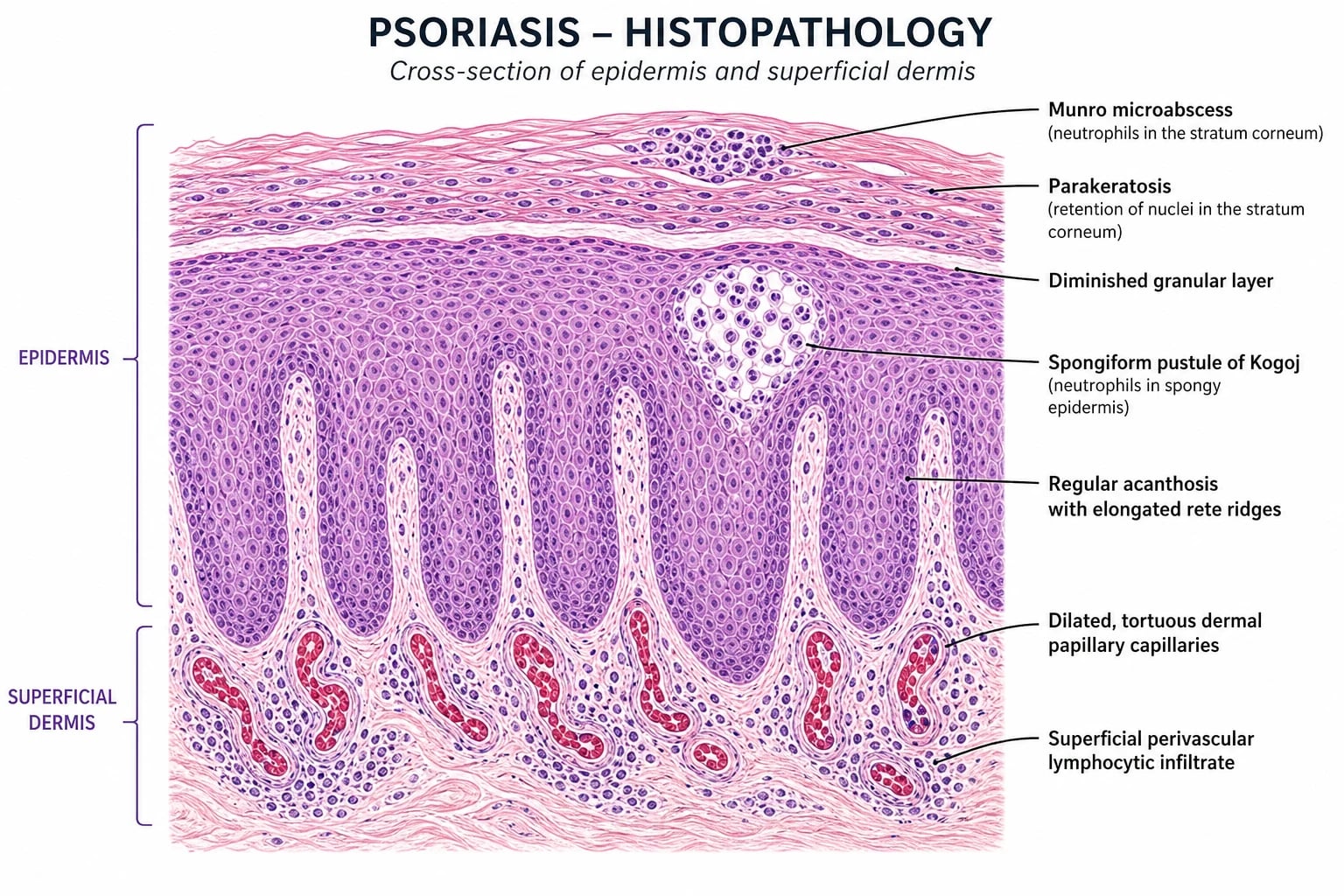
A skin biopsy is indicated when the diagnosis is uncertain, the presentation is atypical, or a biopsy-proven diagnosis is required before systemic therapy. Histology shows regular acanthosis, parakeratosis, diminished granular layer, Munro microabscesses (neutrophils in stratum corneum), spongiform pustules of Kogoj (neutrophils in upper epidermis), dilated and tortuous dermal papillary capillaries, and a superficial perivascular lymphocytic infiltrate.[4][5]
Clinical & Bedside Assessment
Severity measures
| Tool | What it measures | Key thresholds |
|---|---|---|
| BSA | Body surface area involved | Palm incl. fingers ≈ 1% |
| PASI | Erythema, induration, scale × BSA for 4 regions | PASI 75/90/100 = 75/90/100% improvement; PASI ≤ 3 = clear/almost clear |
| sPGA | Static Physician Global Assessment | 0 = clear; 1 = almost clear; 5 = severe |
| DLQI | Quality of life | 0–1 = none; 6–10 = moderate; 21–30 = extremely large effect |
| NAPSI | Nail psoriasis severity | 0–8 per nail, 0–80 for 10 nails |
| PSSI | Psoriasis Scalp Severity Index | PASI-like score for scalp |
Practical severity classification [1]
- Mild: BSA under 3%, manageable with topical therapy, DLQI under 6.
- Moderate: BSA 3–10% or significant quality-of-life impairment.
- Severe: BSA over 10%, PASI of 10 or higher, or DLQI of 10 or higher. [1]
Psoriatic arthritis screening
Screen every psoriasis patient at every visit. The Psoriasis Epidemiology Screening Tool (PEST) has 5 "yes/no" questions; any positive answer warrants further rheumatology assessment.[8]
The CASPAR criteria are used to classify psoriatic arthritis (sensitivity 91%, specificity 98%). A patient with inflammatory articular disease (joint, spine, or entheseal) scores points: [1]
- Current psoriasis (2 points) or personal history/family history (1 point)
- Typical psoriatic nail dystrophy (1 point)
- Negative rheumatoid factor (1 point)
- Current dactylitis (1 point) or history of dactylitis (1 point)
- Radiographic evidence of juxta-articular new-bone formation (1 point) [1]
A score of 3 or more is diagnostic.[7]
Dermoscopy
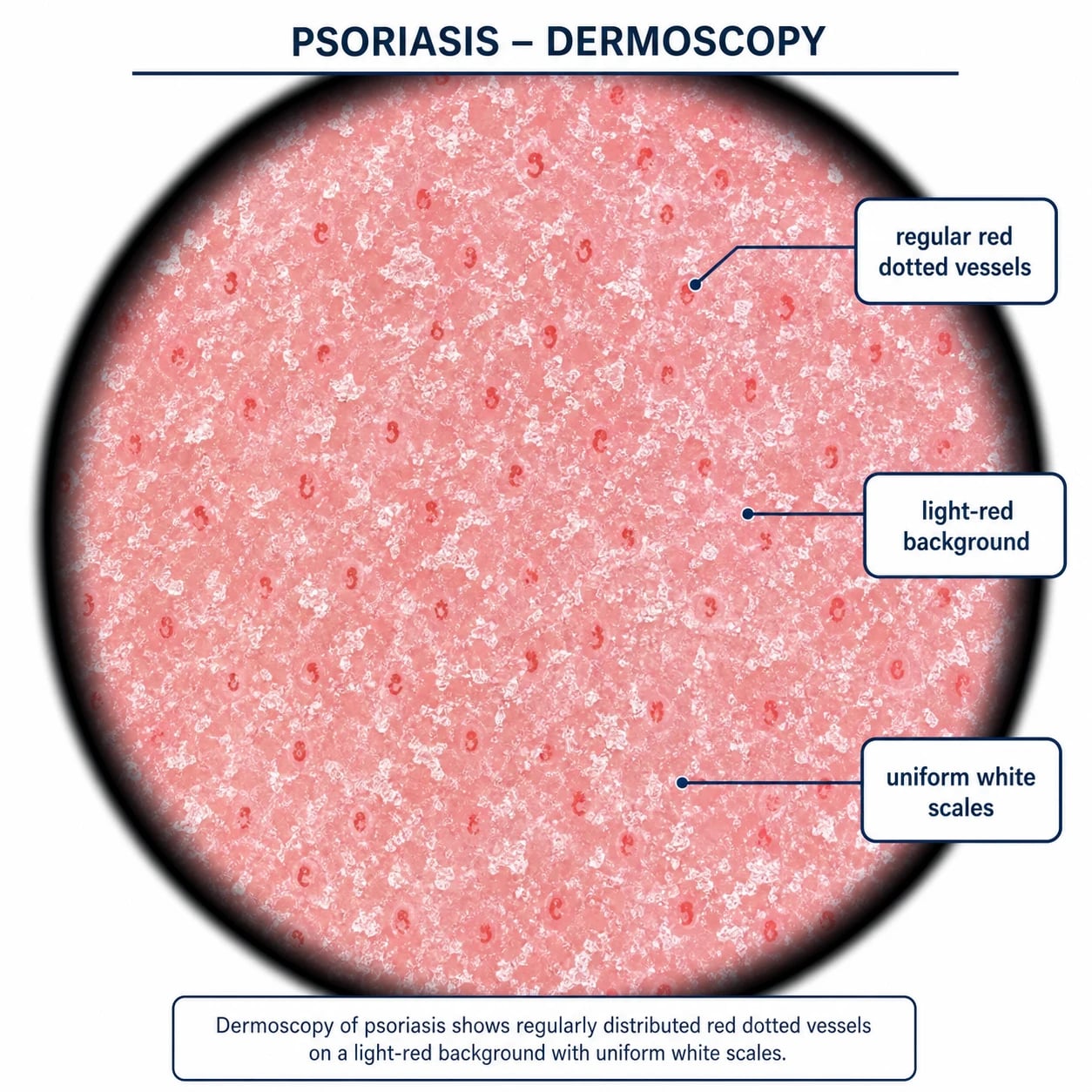
Psoriasis dermoscopy shows regularly distributed dotted vessels on a red background ("red dots"), uniformly distributed white scales, and light-red background. This pattern helps distinguish psoriasis from lichen planus (Wickham striae, peripheral vessels) and eczema (yellow scales, irregular vessels).[6]
Investigations
Routine work-up for all patients
- FBC, LFT, U&E, creatinine, fasting lipids, HbA1c — baseline and comorbidity screen.
- CRP or ESR — inflammatory activity.
- Blood pressure and BMI — metabolic and cardiovascular risk.
- Nail disease assessment — NAPSI if nail involvement significant. [1]
Before systemic therapy
- Hepatitis B surface antigen, hepatitis B core antibody, hepatitis C antibody, HIV — all systemic immunosuppressants.
- Tuberculosis screening — IGRA or Mantoux for biologics; treat latent TB before starting.
- Pregnancy test — for women of childbearing potential before methotrexate, acitretin, or biologics with limited pregnancy data.
- Liver fibrosis assessment — fibroscan or biopsy if indicated before methotrexate; baseline liver enzymes. [1]
Histopathology
Obtain a 4-mm punch biopsy from an active plaque when:
- Diagnosis is uncertain.
- Atypical morphology or distribution.
- Suspicion of cutaneous T-cell lymphoma (persistent solitary plaque). [1]
Characteristic findings: regular acanthosis, parakeratosis with neutrophils (Munro microabscesses), spongiform pustules of Kogoj, diminished granular layer, elongated rete ridges, dilated and tortuous superficial papillary capillaries.[4]
Management — Topical Therapy
Topical therapy is first-line for mild disease and an adjunct for moderate-to-severe disease. [1]
| Agent | Vehicle/site | Notes |
|---|---|---|
| Corticosteroids | Ointments for plaques; lotions/solutions for scalp; creams for face/flexures | Match potency to site; use bursts of 4 weeks; avoid continuous potent steroid on face/flexures |
| Vitamin D analogues (calcipotriol, calcitriol) | Scalp solution, ointment, gel | Slower than steroids; no skin atrophy; first-line maintenance |
| Fixed-dose calcipotriol/betamethasone dipropionate | Ointment, gel, foam, scalp solution | More effective than monotherapy; first-line for trunk/limbs and scalp |
| Coal tar | Shampoo, ointment, bath | Useful for scalp and chronic plaques; odour/staining limit use |
| Dithranol | Short-contact regimen | Effective but stains skin/clothing; irritant |
| Salicylic acid | Keratolytic shampoo, ointment | Useful for thick scale on scalp/palms/soles |
| Calcineurin inhibitors (tacrolimus, pimecrolimus) | Ointment/cream for face, flexures, genitals | Steroid-sparing in sensitive sites |
| Topical retinoid (tazarotene) | Cream/gel | Useful for plaque psoriasis; teratogenic; may irritate |
Site-specific pearls
- Scalp: calcipotriol/betamethasone scalp solution or foam; salicylic acid or coal-tar shampoo for scale; part hair and apply to skin, not hair.
- Face/flexures/genitals: low-potency steroid or calcineurin inhibitor; avoid potent steroids.
- Palms/soles: very potent steroids under occlusion; salicylic acid for hyperkeratosis; acitretin or phototherapy often needed.
- Nails: intralesional triamcinolone, topical vitamin D/corticosteroid, or systemic therapy if functional impairment. [1]
Management — Phototherapy
Narrowband UVB (NB-UVB, 311 nm) is the first-line phototherapy for widespread plaque or guttate psoriasis. Typical regimen: 2–3 times weekly for 15–20 sessions, with dose titration based on minimal erythema dose or skin type. Remission typically lasts 3–6 months.[10]
PUVA (psoralen + UVA) is more effective than NB-UVB but carries higher long-term risk of squamous cell carcinoma and melanoma. It is reserved for refractory disease or when NB-UVB has failed. Contraindications include pregnancy and significant photosensitivity. [1]
Excimer laser (308 nm) is useful for localised plaques and scalp. [1]
Management — Systemic Non-Biologic Therapy
Indicated for moderate-to-severe disease, significant nail or palmoplantar disease, psoriatic arthritis, or failure of topical/phototherapy. [1]
Methotrexate
- Dose: 7.5–25 mg once weekly (oral, subcutaneous, or intramuscular).
- Folic acid: 5 mg daily (except methotrexate day) or 5 mg weekly (24 hours after methotrexate) to reduce mucositis and hepatotoxicity.
- Monitoring: FBC, LFT, creatinine every 1–2 weeks initially, then every 2–3 months.
- Contraindications/cautions: pregnancy, breastfeeding, significant liver disease, immunodeficiency, active infection, myelosuppression.
- Toxicities: hepatotoxicity, myelosuppression, pulmonary toxicity (pneumonitis), mucositis, teratogenicity. [1]
Ciclosporin
- Dose: 2.5–5 mg/kg/day in two divided doses; titrate to response and renal function.
- Onset: rapid (weeks); useful for severe flares, erythroderma, and as a bridging agent.
- Monitoring: blood pressure, serum creatinine, potassium, magnesium, lipids.
- Toxicities: nephrotoxicity, hypertension, hypertrichosis, gingival hyperplasia, immunosuppression.
- Drug interactions: CYP3A4 substrate; many interactions (statins, azoles, macrolides). [1]
Acitretin
- Dose: 10–50 mg daily with food (fatty meal enhances absorption).
- Indications: pustular psoriasis, erythrodermic psoriasis, palmoplantar psoriasis.
- Contraindications: pregnancy and for 3 years after stopping in women of childbearing potential; breastfeeding.
- Toxicities: cheilitis, dry skin/mucous membranes, alopecia, hyperlipidaemia, hepatotoxicity, photosensitivity, skeletal effects with long-term use.
- Note: combining acitretin with phototherapy (Re-PUVA) increases efficacy but also phototoxicity and skin-cancer risk. [1]
Apremilast
- Dose: 10 mg titration: days 1–5 escalation to 30 mg twice daily.
- Mechanism: oral phosphodiesterase-4 (PDE4) inhibitor; increases intracellular cAMP and reduces pro-inflammatory cytokines.
- Monitoring: weight (can cause weight loss); mood (depression/suicidal ideation caution).
- Advantages: no laboratory monitoring, oral, no immunosuppression.
- Disadvantages: GI upset (nausea/diarrhoea), headache, modest efficacy compared with biologics. [1]
Management — Biologic Therapy
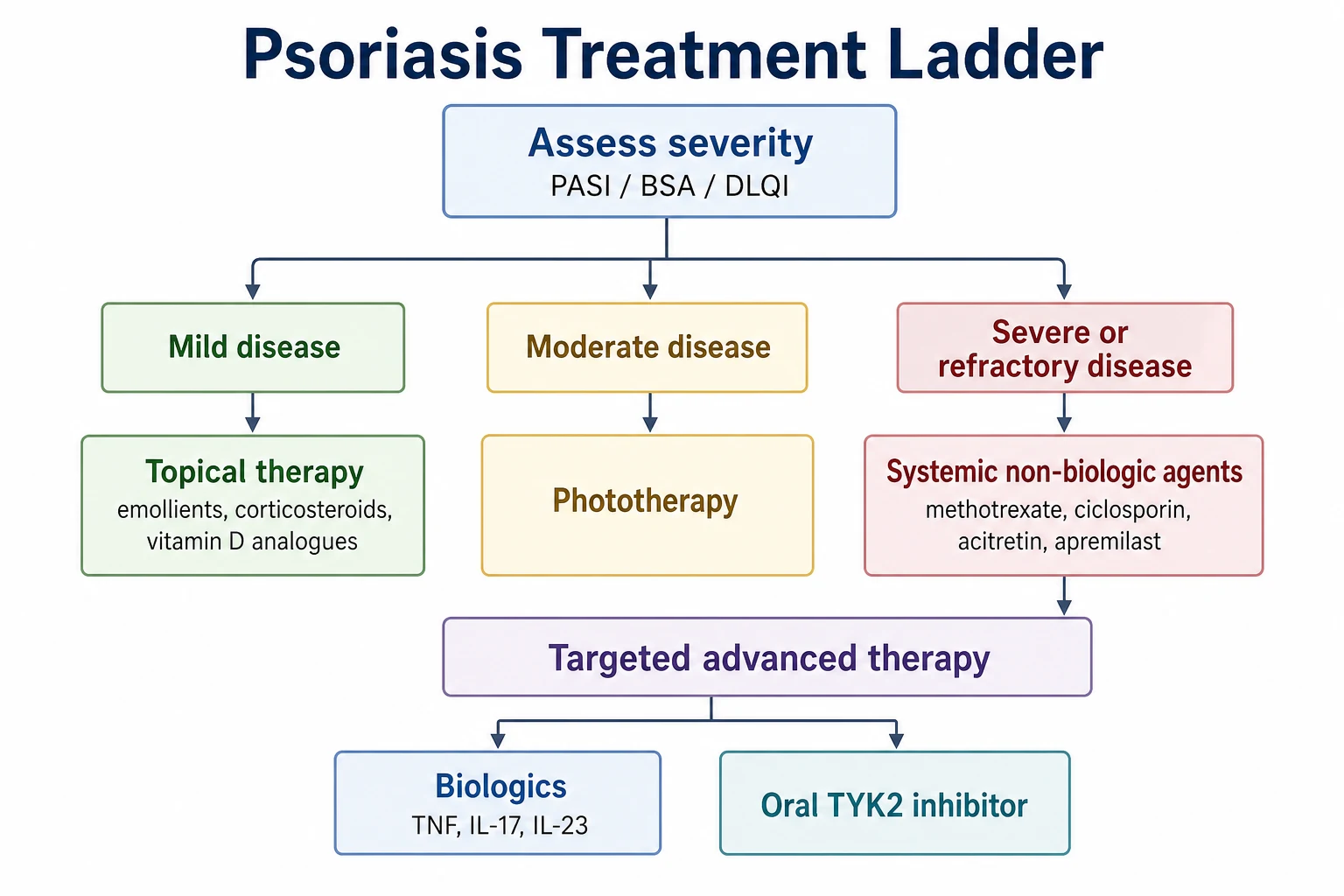
Biologics are indicated for moderate-to-severe plaque psoriasis that is refractory to or unsuitable for topical/phototherapy/conventional systemic therapy, or when psoriatic arthritis is present. [1]
Pre-treatment screening
- Infection screen: IGRA/Mantoux for TB; hepatitis B and C serology; HIV as per local guideline.
- Vaccination: ensure pneumococcal, influenza, COVID-19; live vaccines contraindicated during therapy.
- Pregnancy/breastfeeding counselling.
- Baseline FBC, LFT, creatinine. [1]
TNF-α inhibitors
| Drug | Dose | Notes |
|---|---|---|
| Adalimumab | 80 mg SC week 0, 40 mg every other week from week 1 | Fully human monoclonal; anti-drug antibodies less common with concomitant MTX |
| Etanercept | 25–50 mg SC twice weekly or 50 mg weekly | TNF receptor-IgG1 fusion; less effective for PsA than adalimumab/infliximab |
| Infliximab | 5 mg/kg IV at weeks 0, 2, 6, then every 8 weeks | Chimeric antibody; rapid onset; infusion reactions; effective for PsA |
| Certolizumab pegol | 400 mg SC weeks 0, 2, 4, then 200 mg every other week | PEGylated Fab' fragment |
IL-17 inhibitors
| Drug | Target | Dose | Landmark trial |
|---|---|---|---|
| Secukinumab | IL-17A | 300 mg SC weeks 0, 1, 2, 3, 4, then monthly | ERASURE/FIXTURE: superior to etanercept and placebo; ~80% PASI 75 at week 12[18] |
| Ixekizumab | IL-17A | 160 mg week 0, 80 mg weeks 2, 4, 6, 8, 10, 12, then every 4 weeks | UNCOVER: superior to etanercept; high PASI 90/100 rates[19] |
| Brodalumab | IL-17 receptor A | 210 mg weeks 0, 1, 2, then every 2 weeks | AMAGINE: rapid and high clearance; boxed warning for suicidality in the US |
| Bimekizumab | IL-17A and IL-17F | 320 mg every 4 weeks, then every 8 weeks | Dual blockade; very high skin clearance |
IL-23 inhibitors
| Drug | Dose | Landmark trial |
|---|---|---|
| Guselkumab | 100 mg SC weeks 0, 4, then every 8 weeks | VOYAGE 1: superior to adalimumab; ECLIPSE: superior to secukinumab in PASI 90 at week 48[20][24] |
| Risankizumab | 150 mg SC weeks 0, 4, then every 12 weeks | UltIMMa: superior to ustekinumab and placebo[21] |
| Tildrakizumab | 100 mg SC weeks 0, 4, then every 12 weeks | reSURFACE: superior to placebo and etanercept[22] |
IL-12/23 inhibitor
Ustekinumab — 45 mg (≤100 kg) or 90 mg (>100 kg) SC at weeks 0, 4, then every 12 weeks. Targets the shared p40 subunit of IL-12 and IL-23. PHOENIX trial established efficacy and safety.[17]
Choosing a biologic
- Skin-dominant disease with no PsA: IL-23 or IL-17 inhibitor (highest skin clearance).
- Psoriatic arthritis: TNF inhibitor or IL-17 inhibitor; IL-23 inhibitors also effective.
- Comorbid IBD: avoid IL-17 inhibitors (possible IBD exacerbation); TNF inhibitors or ustekinumab preferred.
- Comorbid cardiovascular disease: TNF inhibitors may have cardiovascular benefit; IL-17/IL-23 data evolving.
- Pregnancy: limited data; TNF inhibitors (especially later in pregnancy) have most experience; avoid live vaccines in infant for 6 months if exposed in utero to biologics. [1]
TNF-α inhibitors
- E.g. adalimumab, etanercept, infliximab
- Strong PsA & skin efficacy; proven in IBD
- Reactivation of latent TB, heart failure caution
IL-17 inhibitors
- E.g. secukinumab, ixekizumab, brodalumab
- Rapid, very high skin clearance (PASI 90)
- Avoid in IBD; candidal mucocutaneous infection risk
IL-23 inhibitors
- E.g. guselkumab, risankizumab, tildrakizumab
- Highest sustained skin clearance; convenient dosing
- Effective in PsA; favourable long-term safety profile
Biologic failure and switching
Primary failure: inadequate response after an adequate trial (typically 12–16 weeks). Secondary failure: loss of response after initial improvement (consider immunogenicity, dosing, adherence, weight gain, smoking). Options include dose escalation, shortening interval, or switching to a different mechanism class.[12]
Management — Small Molecules
Deucravacitinib is an oral, selective TYK2 inhibitor approved for moderate-to-severe plaque psoriasis. It inhibits signalling downstream of IL-23, IL-12, and type I interferon receptors without directly binding JAK1/2/3. [1]
- Dose: 6 mg once daily.
- Efficacy: POETYK PSO-1/2 showed superior PASI 75 response versus placebo and apremilast at week 16, with sustained response to week 52.[25]
- Safety: generally well tolerated; monitor for infections; avoid live vaccines; use caution in active infection.
Management by Special Site or Scenario
Scalp psoriasis
- First-line: potent topical corticosteroid plus vitamin D analogue (e.g., betamethasone/calcipotriol scalp solution or foam).
- Adjuncts: coal-tar or salicylic-acid shampoo for scale removal.
- Refractory: NB-UVB with parting of hair, excimer laser, or systemic therapy. [1]
Nail psoriasis
- Mild: topical vitamin D/corticosteroid, intralesional triamcinolone.
- Moderate-to-severe: systemic therapy (methotrexate, biologics); TNF inhibitors and IL-17/IL-23 inhibitors improve nails.
- Monitor with NAPSI. [1]
Palmoplantar psoriasis
- Potent topical steroids under occlusion; salicylic acid.
- Phototherapy (NB-UVB or PUVA) often difficult because of thickness.
- Systemic agents: acitretin, methotrexate, ciclosporin, biologics. [1]
Genital psoriasis
- Low-potency steroid or calcineurin inhibitor; avoid potent steroids.
- Consider impact on sexual function and quality of life. [1]
Psoriatic arthritis
- Co-manage with rheumatology.
- First-line systemic: methotrexate; NSAIDs for symptom control.
- Biologics: TNF inhibitors, IL-17 inhibitors, IL-23 inhibitors, ustekinumab. [1]
Complications, Emergencies & Pitfalls
Erythrodermic psoriasis
- Definition: erythema and scaling covering >90% BSA.
- Risks: hypothermia, dehydration, electrolyte imbalance, high-output cardiac failure, infection, protein loss.
- Management: admit; fluid/electrolyte resuscitation; temperature regulation; bed rest; ciclosporin or infliximab for rapid control; avoid systemic corticosteroids if possible (rebound risk). [1]
Generalised pustular psoriasis (von Zumbusch)
- Presentation: widespread sterile pustules on erythematous skin with fever, malaise, leucocytosis, hypocalcaemia.
- Risks: sepsis, dehydration, organ dysfunction; can be life-threatening.
- Triggers: infection, pregnancy, corticosteroid withdrawal, hypocalcaemia, IL36RN mutations.
- Management: admit; supportive care; ciclosporin (rapid onset), acitretin, methotrexate, or biologic (infliximab, secukinumab, guselkumab); treat trigger. [1]
Impetigo herpetiformis
- Pustular psoriasis of pregnancy, usually third trimester.
- Presents with grouped pustules on erythematous base, fever, leucocytosis, hypocalcaemia.
- Risks to mother and fetus; requires urgent dermatology/obstetrics co-management.
- Contraindicated: methotrexate, acitretin, PUVA. Options include systemic corticosteroids, ciclosporin, and biologics on a case-by-case basis. [1]
Classic pitfalls
- Misdiagnosing inverse psoriasis as candidiasis — look for well-demarcated borders, minimal scale, no satellite lesions.
- Starting systemic corticosteroids — can precipitate rebound, pustular, or erythrodermic flares on withdrawal.
- Forgetting psoriatic arthritis screening — up to 30% develop PsA; early treatment prevents joint damage.
- Missing medication triggers — lithium, beta-blockers, antimalarials, interferon, steroid withdrawal.
- Inadequate TB/hepatitis screening before biologics — reactivation is a serious risk. [1]
Comorbidities
Psoriasis is a systemic inflammatory disease. Every patient should be screened and managed holistically. [1]
| Comorbidity | Key points |
|---|---|
| Psoriatic arthritis | Up to 30%; screen with PEST; CASPAR for classification |
| Cardiovascular disease | Increased risk of MI, stroke, peripheral vascular disease; independent of traditional risk factors |
| Metabolic syndrome | Obesity, hypertension, dyslipidaemia, insulin resistance, type 2 diabetes |
| Inflammatory bowel disease | Crohn disease and ulcerative colitis more common; IL-17 inhibitors may worsen IBD |
| Mental health | Depression, anxiety, social isolation; suicide risk increased in severe disease |
| Non-melanoma skin cancer | Risk increased with PUVA, long-term immunosuppression; counsel on photoprotection |
| Chronic kidney disease | Associated with severe psoriasis; monitor if nephrotoxic drugs used |
| Fatty liver disease / NAFLD | Common; important when considering methotrexate |
Prognosis & Follow-Up
Psoriasis is chronic and relapsing; there is no cure. Goals of therapy are clear or almost clear skin, minimal symptoms, preserved function, and prevention of comorbidity. [1]
Modern biologics can achieve PASI 90 or 100 in the majority of appropriately selected patients, but relapse is common on withdrawal. Follow-up intervals depend on therapy: [1]
- Topical therapy: review at 4–8 weeks.
- Phototherapy: review after 10–15 sessions; if no response, reconsider diagnosis or escalate.
- Systemic therapy: laboratory monitoring per agent; clinical review every 3 months once stable.
- Biologics: review at 12–16 weeks to assess primary response; then every 3–6 months. [1]
Special Populations
Pregnancy and breastfeeding
- Topical therapy: generally safe; avoid high-potency steroids over large areas.
- Phototherapy: NB-UVB is safe; avoid PUVA.
- Contraindicated: methotrexate, acitretin, PUVA.
- May be used with caution: ciclosporin, some TNF inhibitors (later pregnancy), ustekinumab.
- Breastfeeding: topical therapy preferred; avoid methotrexate and acitretin. [1]
Children and adolescents
- Guttate and scalp psoriasis are common.
- First-line: topical therapy and phototherapy.
- Systemic agents used off-label or on specialist protocols: methotrexate, ciclosporin, etanercept (approved in many jurisdictions), ustekinumab.
- Biologics increasingly used for severe paediatric plaque psoriasis. [1]
Elderly
- Higher burden of comorbidity and polypharmacy.
- Methotrexate and ciclosporin require careful monitoring.
- Consider renal function, hepatic function, cardiovascular risk, and falls/frailty.
- Biologics are often well tolerated but infection risk is higher. [1]
Evidence, Guidelines & Regional Differences
Major guidelines
- AAD-NPF (2020–2021) — separate guidelines for topical therapy, systemic non-biologics, and biologics; emphasizes treat-to-target.
- EuroGuiDerm (2020) — European consensus on systemic treatment; strong on biologic sequencing and monitoring.
- NICE NG507 (UK) — recommends topical vitamin D/corticosteroid first-line; NB-UVB or systemic therapy for moderate-to-severe disease; biologics only if conventional systemic therapy has failed or is contraindicated.
- BAD (British Association of Dermatologists) — UK biologic eligibility criteria often require PASI 10 and DLQI 10 despite two conventional systemic therapies. [1]
Landmark trials
- PHOENIX (2008) — ustekinumab efficacy and safety.
- ERASURE/FIXTURE (2014) — secukinumab phase 3, established IL-17 blockade.
- UNCOVER (2016) — ixekizumab phase 3.
- VOYAGE (2017) — guselkumab vs adalimumab.
- ECLIPSE (2019) — guselkumab vs secukinumab.
- UltIMMa (2018) — risankizumab phase 3.
- reSURFACE (2017) — tildrakizumab phase 3.
- AMAGINE (2015) — brodalumab vs ustekinumab.
- ESTEEM (2015) — apremilast phase 3.
- POETYK PSO-1/2 (2023) — deucravacitinib phase 3. [1]
Exam Pearls
[1]Red Flags
Exam application bank (NEET-PG / INICET)
One-line answer
Psoriasis is a chronic, immune-mediated inflammatory disease driven by IL-23/Th17 signalling, with skin, nail, and joint manifestations and systemic comorbidity. Fellowship-level assessment demands mastery of classification, histopathology, severity tools (PASI/BSA/DLQI/NAPSI), psoriatic-arthritis screening (CASPAR, PEST), topical/site-specific therapy, phototherapy protocols, conventional systemic agents with monitoring, biologic mechanisms and landmark trial data, small-molecule therapy, and emergencies such as erythroderma and generalised pustular psoriasis.
Worked stems (answer without another resource)
Stem 1 — Classic presentation. Map symptoms to mechanism; name the first investigation and first treatment step with dose/route if drug therapy is standard. [1]
Stem 2 — Unstable / complicated. List red flags that force immediate resuscitation, theatre, ICU, antidote, or reperfusion — and what you do in the first 15 minutes. [1]
Stem 3 — Atypical group. Elderly, pregnancy, child, or immunocompromised: how presentation and thresholds change. [1]
Stem 4 — Differential trap. Name the three closest mimics and one discriminator for each. [1]
Stem 5 — Disposition. Who goes home with safety-netting, who is admitted, who needs HDU/ICU/theatre, and what follow-up is mandatory. [1]
Rapid viva checklist
- Definition + classification
- Pathophysiology chain
- Bedside signs / criteria
- Score with exact components (if any)
- Emergency bundle
- Definitive therapy with doses
- Complications of disease and of treatment
- Special populations
- Guideline/trial name if classic
- Three exam traps
Coverage self-check
If you cannot answer any stem above from this page alone, re-read the matching section — the page is intended to be self-sufficient for final-prof and NEET-PG/INICET questions on Psoriasis.
Expanded exam teaching (depth pass)
Clinical reasoning
For Psoriasis, examiners test whether you can prioritise life threats, choose the right first test, and give specific therapy (agent, dose, route, timing). Generic phrases without numbers score poorly.
Mechanism → feature map
Build a short chain: cause → pathophysiologic intermediate → clinical feature → complication. Every major symptom in the classic vignette should sit on that chain.
Investigation strategy
- Bedside/first-line tests that change immediate management
- Confirmatory or staging tests
- What a normal result does not exclude
- When not to delay treatment for imaging (unstable patient)
Management ladder
- Resuscitation / ABC / sepsis or haemorrhage bundle as relevant
- Specific antidote / procedure / antimicrobial / reperfusion / surgery
- Supportive care and monitoring targets
- Definitive long-term therapy and secondary prevention
- Disposition and safety-net advice
Special populations
Always prepare one line each for children, pregnancy, elderly, renal/hepatic impairment, and immunocompromised patients when the topic allows.
Pitfalls that fail candidates
- Treating the number not the patient
- Missing pregnancy status when relevant
- Imaging before stabilisation
- Wrong empiric cover or wrong antidote timing
- Incomplete counselling on recurrence, adherence, or red-flag return
Psoriasis is a chronic, immune-mediated inflammatory disease driven by IL-23/Th17 signalling, with skin, nail, and joint manifestations and systemic comorbidity. Fellowship-level assessment demands mastery of classification, histopathology, severity tools (PASI/BSA/DLQI/NAPSI), psoriatic-arthritis screening (CASPAR, PEST), topical/site-specific therapy, phototherapy protocols, conventional systemic agents with monitoring, biologic mechanisms and landmark trial data, small-molecule therapy, and e [1]
[1]References
- [1]Griffiths CEM, Armstrong AW, Gudjonsson JE, Barker JNWN. Psoriasis Lancet, 2021.PMID 33812489
- [2]Takeshita J, Grewal S, Langan SM, et al. Psoriasis and comorbid diseases: Epidemiology J Am Acad Dermatol, 2017.PMID 28212759
- [3]Hao Y, Wu Y, Lyu C, et al. Metabolic Syndrome and Psoriasis: Mechanisms and Future Directions Front Immunol, 2021.PMID 34367173
- [4]De Rosa G, Mignogna C. The histopathology of psoriasis Reumatismo, 2007.PMID 17828343
- [5]De Rosa G, Mignogna C. Differential diagnosis of psoriasis Reumatismo, 2007.PMID 17828346
- [6]Wu Y, Li X, Li Y, et al. Clinical value of dermoscopy in psoriasis J Cosmet Dermatol, 2024.PMID 37710414
- [7]Taylor W, Gladman D, Helliwell P, et al. Classification criteria for psoriatic arthritis: development of new criteria from a large international study Arthritis Rheum, 2006.PMID 16871531
- [8]Mease PJ, Antoni CE, Gladman DD, Taylor WJ. Measures of psoriatic arthritis: Tender and Swollen Joint Assessment, Psoriasis Area and Severity Index (PASI), Nail Psoriasis Severity Index (NAPSI), Modified Nail Psoriasis Severity Index (mNAPSI), Mander/Newcastle Enthesitis Index (MEI), Leeds Enthesitis Index (LEI), Spondyloarthritis Research Consortium of Canada (SPARCC), Maastricht Ankylosing Spondylitis Enthesis Score (MASES), Leeds Dactylitis Index (LDI), Patient Global for Psoriatic Arthritis, Dermatology Life Quality Index (DLQI), Psoriatic Arthritis Quality of Life (PsAQOL), Functional Assessment of Chronic Illness Therapy-Fatigue (FACIT-F), Psoriatic Arthritis Response Criteria (PsARC), Psoriatic Arthritis Joint Activity Index (PsAJAI), Disease Activity in Psoriatic Arthritis (DAPSA), and Composite Psoriatic Disease Activity Index (CPDAI) Arthritis Care Res (Hoboken), 2011.PMID 22588772
- [9]Elmets CA, Leonardi CL, Davis DMR, et al. Joint AAD-NPF Guidelines of care for the management and treatment of psoriasis with topical therapy and alternative medicine modalities for psoriasis severity measures J Am Acad Dermatol, 2021.PMID 32738429
- [10]Yanovsky RL, Mercer JM, Bell MW, et al. Optimizing Narrowband UVB Phototherapy Regimens for Psoriasis Dermatol Clin, 2020.PMID 31753182
- [11]Menter A, Strober BE, Kaplan DH, et al. Joint American Academy of Dermatology-National Psoriasis Foundation guidelines of care for the management of psoriasis with systemic nonbiologic therapies J Am Acad Dermatol, 2020.PMID 32119894
- [12]Nast A, Spuls PI, van der Kraaij G, et al. EuroGuiDerm Guideline on the systemic treatment of Psoriasis vulgaris - Part 1: treatment and monitoring recommendations J Eur Acad Dermatol Venereol, 2020.PMID 33349983
- [13]Montaudié H, Sbidian E, Paul C, et al. Methotrexate in psoriasis: a systematic review of treatment modalities, incidence, risk factors and monitoring of liver toxicity J Eur Acad Dermatol Venereol, 2011.PMID 21388454
- [14]Berth-Jones J, Henderson CA, Munro CS, et al. The use of ciclosporin in psoriasis J Dermatolog Treat, 2005.PMID 16428145
- [15]Dogra S, Mahajan R. Acitretin in psoriasis: an evolving scenario Int J Dermatol, 2014.PMID 24601982
- [16]Papp K, Reich K, Leonardi CL, et al. Apremilast, an oral phosphodiesterase 4 (PDE4) inhibitor, in patients with moderate to severe plaque psoriasis: Results of a phase III, randomized, controlled trial (Efficacy and Safety Trial Evaluating the Effects of Apremilast in Psoriasis [ESTEEM] 1) J Am Acad Dermatol, 2015.PMID 26089047
- [17]Leonardi CL, Kimball AB, Papp KA, et al. Efficacy and safety of ustekinumab, a human interleukin-12/23 monoclonal antibody, in patients with psoriasis: 76-week results from a randomised, double-blind, placebo-controlled trial (PHOENIX 1) Lancet, 2008.PMID 18486739
- [18]Langley RG, Elewski BE, Lebwohl M, et al. Secukinumab in plaque psoriasis--results of two phase 3 trials N Engl J Med, 2014.PMID 25007392
- [19]Gordon KB, Blauvelt A, Papp KA, et al. Phase 3 Trials of Ixekizumab in Moderate-to-Severe Plaque Psoriasis N Engl J Med, 2016.PMID 27299809
- [20]Blauvelt A, Papp KA, Griffiths CEM, et al. Efficacy and safety of guselkumab, an anti-interleukin-23 monoclonal antibody, compared with adalimumab for the continuous treatment of patients with moderate to severe psoriasis: Results from the phase III, double-blinded, placebo- and active comparator-controlled VOYAGE 1 trial J Am Acad Dermatol, 2017.PMID 28057360
- [21]Gordon KB, Strober B, Lebwohl M, et al. Efficacy and safety of risankizumab in moderate-to-severe plaque psoriasis (UltIMMa-1 and UltIMMa-2): results from two double-blind, randomised, placebo-controlled and ustekinumab-controlled phase 3 trials Lancet, 2018.PMID 30097359
- [22]Reich K, Papp KA, Blauvelt A, et al. Tildrakizumab versus placebo or etanercept for chronic plaque psoriasis (reSURFACE 1 and reSURFACE 2): results from two randomised controlled, phase 3 trials Lancet, 2017.PMID 28596043
- [23]Lebwohl M, Strober B, Menter A, et al. Phase 3 Studies Comparing Brodalumab with Ustekinumab in Psoriasis N Engl J Med, 2015.PMID 26422722
- [24]Reich K, Armstrong AW, Langley RG, et al. Guselkumab versus secukinumab for the treatment of moderate-to-severe psoriasis (ECLIPSE): results from a phase 3, randomised controlled trial Lancet, 2019.PMID 31402114
- [25]Armstrong AW, Gooderham M, Warren RB, et al. Deucravacitinib versus placebo and apremilast in moderate to severe plaque psoriasis: Efficacy and safety results from the 52-week, randomized, double-blinded, placebo-controlled phase 3 POETYK PSO-1 trial J Am Acad Dermatol, 2023.PMID 35820547
- [26]Romiti R, Marcason AH, Bressan AL. Generalized pustular psoriasis (von Zumbusch) An Bras Dermatol, 2022.PMID 34838431
- [27]Choon SE, Navarini AA, Pinter A, et al. Asia-Pacific consensus recommendations on the management of generalized pustular psoriasis J Dermatol, 2024.PMID 39390737
- [28]Young KZ, Kaffenberger BH. Pathophysiology of generalized pustular psoriasis Exp Dermatol, 2023.PMID 36779688
- [29]Abdelhafez MMA, Sabry MA, Gaber MA. Impetigo herpetiformis: A rare pregnancy-specific dermatosis Obstet Med, 2023.PMID 37139500
- [30]Flood KS, Patel R, Maier C, Florek AG. Treatment of psoriasis in pregnancy Cutis, 2020.PMID 33104095
- [31]Miller IM, Ellervik C, Yazdanyar S, Jemec GBE. Meta-analysis of psoriasis, cardiovascular disease, and associated risk factors J Am Acad Dermatol, 2013.PMID 24238156
- [32]Fu Y, Lee CH, Chi CC. Association of Psoriasis With Inflammatory Bowel Disease: A Systematic Review and Meta-analysis JAMA Dermatol, 2018.PMID 30422277