Dermatology · Medicine
Psychodermatology
Also known as Psychodermatology · Psychocutaneous disorders · Psych-neuro-dermatology
Psychodermatology = the interface between dermatology and psychiatry. Three categories: (1) Psychophysiological — skin disease worsened by stress (psoriasis, eczema, acne, rosacea; bidirectional brain-skin axis). (2) Primary psychiatric with cutaneous manifestations — delusional infestation (fixed false belief of bugs; matchbox sign; antipsychotics, NO antiparasitics), body dysmorphic disorder (SSRIs + CBT), trichotillomania (compulsive hair pulling; varying hair lengths; SSRI/CBT/N-acetylcysteine), neurotic excoriations (compulsive skin picking; SSRI), dermatitis artefacta (self-inflicted lesions the patient DENIES). (3) Secondary psychiatric — depression/anxiety/suicidality from disfiguring skin disease (vitiligo, psoriasis, acne). Management is multidisciplinary (dermatologist + psychiatrist + psychologist).
On this page & tools
Your progress
Saved locally on this device.
Exam tags
Red flags
Overview & Definition
The skin and the nervous system share a common embryological origin in the ectoderm, and they remain in lifelong chemical conversation. Psychodermatology (also called psychocutaneous medicine) is the subspecialty that studies and treats disorders in which psychological factors cause, precipitate, or perpetuate skin disease, and psychiatric illness that presents with cutaneous features.[4][5] Up to a third of dermatology outpatients have a coexisting psychological disorder, yet the psychiatric dimension is missed in routine practice more often than it is recognised — which is precisely why examiners test it.[3]
The practical value of the field is that it changes treatment. A patient whose excoriated lesions are driven by an unshakeable belief of infestation will not be cured by another emollient or another antiparasitic; they need an antipsychotic and a therapeutic alliance. A patient whose severe acne has driven them to the edge of suicide needs the suicide risk addressed before the isotretinoin is escalated. The classification below exists to make those management decisions automatic. The dermatologist is rarely the only clinician these patients need, but is very often the first professional they see — so the dermatologist carries the responsibility of recognising the psychocutaneous pattern, stopping inappropriate skin-directed treatment, and redirecting the patient to the right service. [1]
Classification
The most widely taught framework, due to Koo and Lee, divides psychocutaneous disease into three categories based on the direction of causality between psyche and skin.[4][5] The direction of causality determines the treatment: category one is treated as dermatology plus stress management, category two is treated as psychiatry, and category three is treated as dermatology plus psychological support.
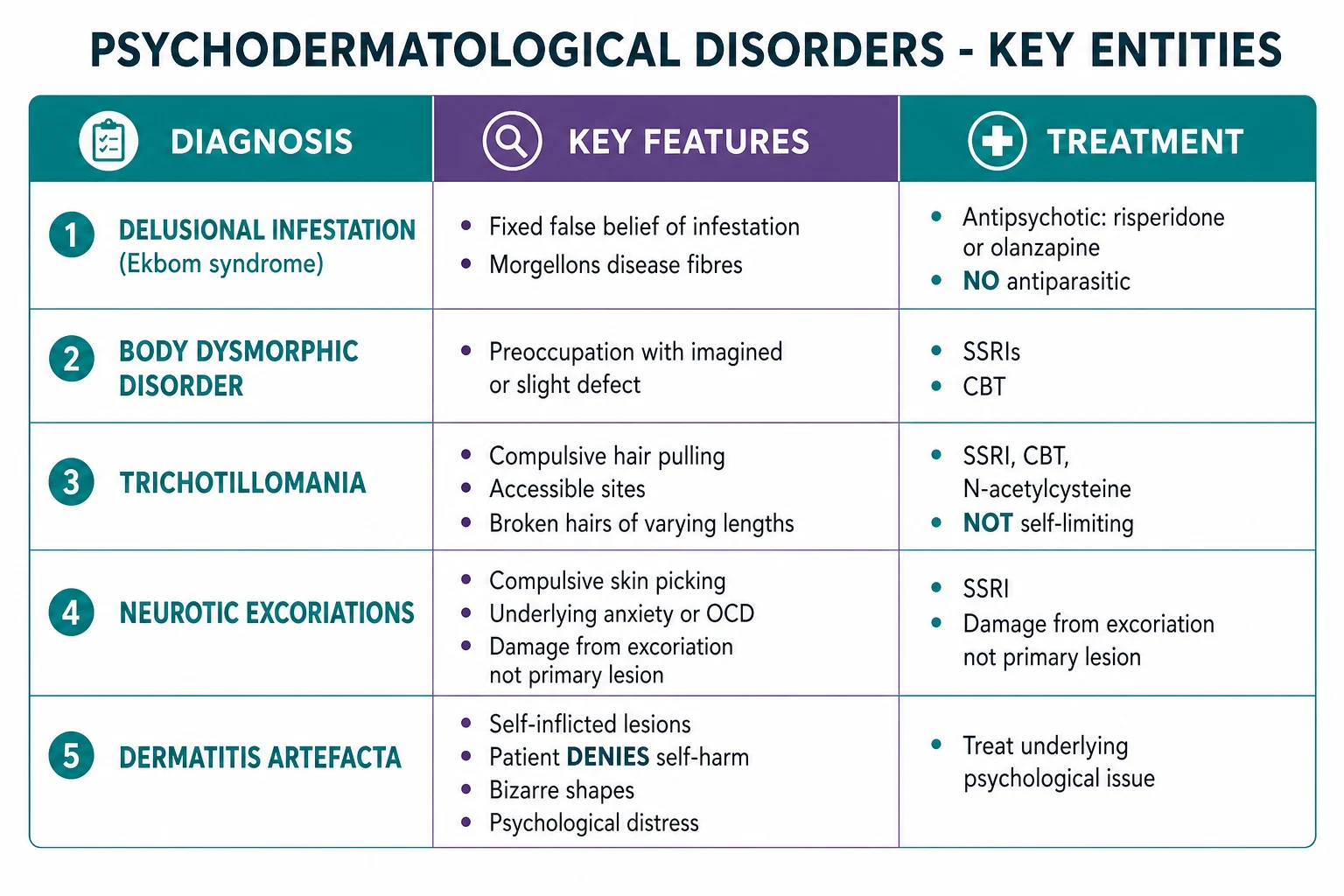
A useful discriminator the examiner will probe: in category one the skin disease is primary and the mind amplifies it; in category two the mind is primary and the skin is its victim; in category three the skin is primary and the mind is its casualty. Two categories can coexist in one patient — a patient with severe psoriasis may both be stress-flaring it (category one) and be depressed by it (category three) — and the history determines which thread to pull first. A small but important fourth group is sometimes appended: cutaneous sensory disorders in which there is itch, pain, burning or formication without any visible skin lesion and without a delusion (for example, brachioradial pruritus, notalgia paraesthetica, vulvodynia, burning mouth syndrome, and psychogenic pruritus); these sit between the categories and are managed by combining dermatological, neurological and psychological approaches.[8]
Epidemiology & Risk Factors
Roughly 25–33% of dermatology outpatients have a psychiatric comorbidity that is clinically significant, and the figure is higher in selected groups such as patients with chronic pruritus, severe acne, or visible depigmentation.[3][4] The prevalence is under-recognised because patients seldom volunteer psychological symptoms to a dermatologist and dermatologists seldom ask.
Risk factors and precipitants cluster around chronicity, visibility and stigma. Visible, disfiguring or chronically itchy skin disease (psoriasis, atopic dermatitis, acne, vitiligo, alopecia areata, chronic pruritus) carries the highest psychiatric load. Adolescence and young adulthood is the peak age for body dysmorphic disorder, trichotillomania and acne-related distress, whereas delusional infestation and dermatitis artefacta skew older and should prompt a search for sensory impairment, cognitive decline, or polypharmacy in the elderly.[6] Female sex predominates in body dysmorphic disorder presenting to dermatology and in trichotillomania. A personal or family history of psychiatric illness (depression, anxiety, obsessive–compulsive disorder, schizophrenia), social isolation, unemployment, and recent life stress (bereavement, relationship breakdown, examinations) all raise the risk of both psychophysiological flaring and secondary depression.[3][5]
Cultural factors shape presentation and severity. In communities where vitiligo is misattributed to leprosy or to moral failing, the depression and social-withdrawal burden is markedly higher; beliefs around spirit-possession or infestation may colour the content of a delusion without changing its underlying diagnosis or its treatment.[3]
Pathophysiology — the Brain–Skin Axis
The skin is not a passive bystander to emotion. It is innervated by a dense network of sensory and autonomic nerve fibres, hosts its own population of immune cells, and shares signalling molecules (neuropeptides, cortisol receptors, cytokines) with the central nervous system. This bidirectional link is the brain–skin axis, and its study is sometimes called psycho-neuro-endocrine-immunology (PNEI).[1][2]
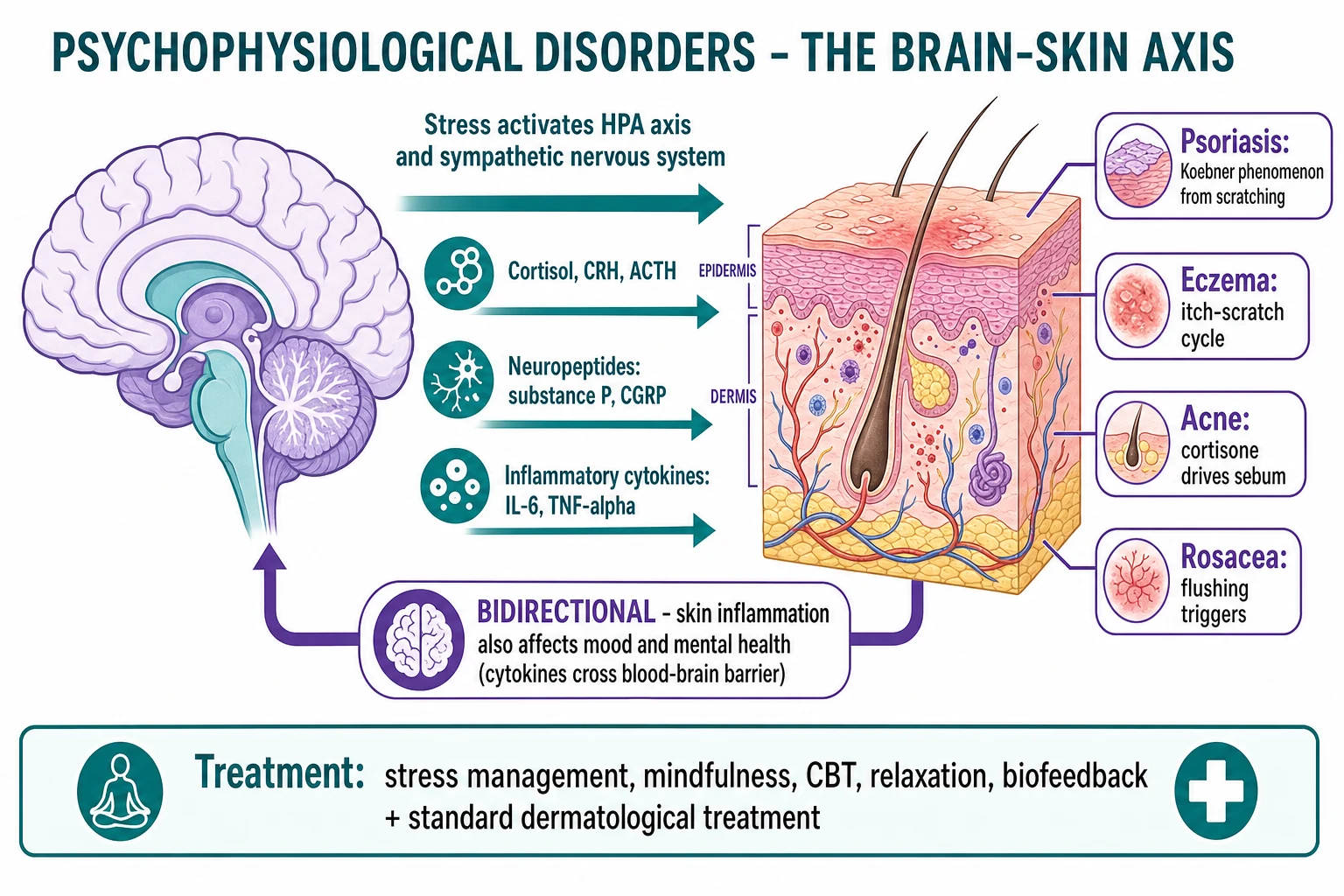
The cascade runs as follows. A stressor activates the hypothalamic–pituitary–adrenal (HPA) axis: corticotropin-releasing hormone (CRH) from the hypothalamus drives adrenocorticotropic hormone (ACTH) from the pituitary, which drives cortisol from the adrenal cortex. Cutaneous cells — including keratinocytes, sebocytes and mast cells — themselves express CRH and ACTH receptors, so the skin mounts its own local stress response in parallel with the systemic one.[1] This is the basis of the so-called "peripheral HPA axis": the skin can synthesise CRH, ACTH and cortisol locally, which means stress signalling is not confined to the bloodstream but is regenerated at the target organ. A paradox worth knowing is that, although systemic cortisol rises with stress, chronic stress can produce a state of functional glucocorticoid resistance in keratinocytes and immune cells — the receptors become desensitised — so that an inflamed plaque of psoriasis or eczema actually becomes less suppressible by endogenous cortisol precisely when more cortisol is circulating. This helps explain why stress does not simply "calm" inflammation but amplifies it.
Concurrent sympathetic outflow and release of neuropeptides such as substance P and calcitonin gene-related peptide (CGRP) from sensory nerve endings cause mast-cell degranulation, vasodilation and neurogenic inflammation.[8] Substance P is the central molecular link: it triggers mast cells to release histamine, tumour necrosis factor-alpha and tryptase, which in turn intensify pruritus and recruit further inflammatory cells, sustaining the loop.
The downstream effects map onto specific diseases. In psoriasis, stress-driven scratching precipitates the Koebner phenomenon and stress-linked T-helper-1 and T-helper-17 cytokine flux (interferon-gamma, interleukin-17, interleukin-23) accelerates plaque formation and destabilises a previously controlled plaque. In atopic dermatitis, substance P and stress amplify the itch–scratch cycle, mast-cell mediators intensify pruritus, and sleep deprivation from nocturnal itching further dysregulates cortisol and increases next-day itch — a self-perpetuating loop that is the single most common mechanism in psychophysiological dermatology.[8] In acne, cortisol and adrenal androgens stimulate sebaceous gland activity, sebum production and follicular hyperkeratinisation, and stress worsens the inflammatory component. In rosacea, sympathetic discharge triggers flushing and the trypsin and cathelicidin axis flares.
The itch–scratch cycle deserves a sentence of its own because it is the mechanism examiners most often ask candidates to draw. Itch (pruritus) is transmitted by dedicated C-fibres and signals via the gastrin-releasing peptide and BNP splice variants in the spinal dorsal horn up to the somatosensory cortex; scratching activates a transient relief through descending inhibitory (nociceptive) pathways but simultaneously damages the epidermal barrier, releases inflammatory mediators and sensitises the itch neurones (peripheral and central sensitisation). The result is that each scratch causes more itch, which demands more scratching — and chronic stress lowers the threshold for the whole loop. The relationship is explicitly bidirectional: pro-inflammatory cytokines (interleukin-1, interleukin-6, tumour necrosis factor-alpha) generated in the skin can act on the brain, which is why patients with severe inflammatory skin disease become fatigued, low in mood, and socially withdrawn — the skin inflames the mind as much as the mind inflames the skin.[1][2]
The brain–skin axis and the three-category classification are accepted across the AAD (US), the EADV and European Society for Dermatology and Psychiatry (Europe), the British Association of Dermatologists (UK), and the IADVL (India). What varies regionally is the availability of psychological services: dedicated psychodermatology clinics are common in tertiary European and North American centres but rare in South Asia, where the dermatologist often has to deliver first-line psychological screening and pharmacotherapy themselves.
Clinical Presentation
The clinical presentation depends on the category. The five primary psychiatric entities are the high-yield exam targets because each carries a recognisable morphology and a specific treatment. Examiners deliberately test atypical presentations — the adolescent, the elderly, the patient who has concealed the behaviour — so the recognition cues below should be applied flexibly. [1]
Delusional infestation (Ekbom syndrome)
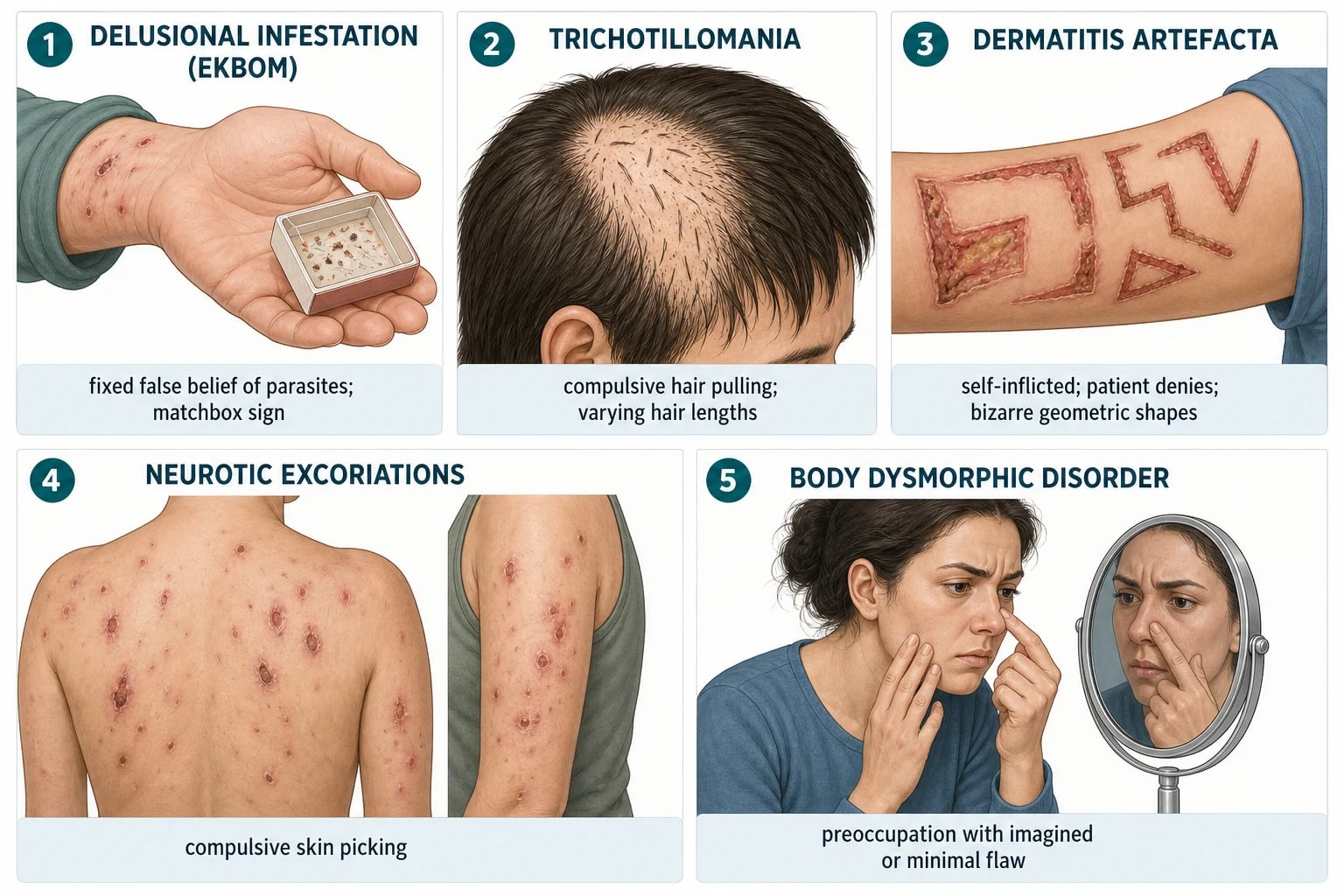
The defining feature is a fixed, unshakeable false belief that the skin or body is infested with parasites, insects, worms or fibres, held with delusional intensity despite negative investigations and reassurance.[6] Patients describe crawling, biting and burrowing sensations (formication). They bring "specimens" — skin scrapings, lint, fibres, crusts, hairs — collected in jars, tissues, plastic bags or a matchbox, the matchbox sign, which is virtually pathognomonic. Self-excoriation from scratching produces linear erosions, crusts and ulcers, often in accessible areas, sometimes with secondary infection. When the patient describes coloured or black fibres emerging from the skin, the term Morgellons disease is used; this is considered a subtype of delusional infestation rather than a separate infestation.[6]
A second patient is typically the "folie à deux" or shared-delusional-infestation presentation, in which a close household contact comes to share the belief; isolating the secondary case and treating the primary (index) case usually resolves both. Atypical presentations include the elderly patient with new-onset formication (exclude sensory impairment, dementia, Parkinson's disease and dopamine-agonist use) and the immunosuppressed patient in whom genuine infestation must be excluded first.[11]
Body dysmorphic disorder (BDD)
BDD is a preoccupation with a perceived or slight defect in appearance that is either nonexistent or barely noticeable to others, producing marked distress and repetitive behaviours.[7] In dermatology the focus is commonly the nose, skin ("huge pores", scarring, discolouration), hair or facial symmetry. Repetitive behaviours include mirror-checking (or mirror-avoidance), excessive grooming, skin picking, comparing with others, and seeking reassurance. Patients characteristically seek dermatological, cosmetic or surgical treatment for the imagined flaw and are typically dissatisfied with the outcome; multiple procedures for the same minimal defect is a red flag. Insight is often poor — the patient is convinced the defect is real — and a subset are delusional. Atypical presentations include the muscular patient (muscle dysmorphoria, a male-predominant variant in which the patient believes he is insufficiently muscular) and the patient whose BDD is unmasked only after a cosmetic procedure produces disproportionate distress.[7]
Trichotillomania (hair-pulling disorder)
Trichotillomania is recurrent, compulsive pulling of one's own hair, producing noticeable hair loss. The diagnostic clue on examination is hairs of varying lengths — a mixture of broken, short and regrowing stubble — in accessible sites such as the scalp, eyebrows, eyelashes, beard or pubic area, with an asymmetrical, patchy distribution that, unlike alopecia areata, never progresses to complete (totalis) hair loss.[4] Pulling may be conscious and goal-directed or automatic and unrecognised (the patient pulls while reading or watching television); tension precedes pulling and relief or gratification follows it. Trichophagy (swallowing hair) may occur and can cause trichobezoars, occasionally presenting as gastric outlet obstruction (the Rapunzel syndrome). Atypical presentations include the child whose parents have attributed the patchy loss to "ringworm" and the patient who pulls only body hair, sparing the scalp.
Neurotic excoriations (skin-picking disorder / excoriation disorder)
The patient consciously picks, scratches or gouges at normal skin or minor pre-existing lesions, producing erosions, crusts, ulcers and eventual scarring distributed across reachable areas — face, upper arms, shoulders, back. There is increasing tension before picking and gratification or relief during it, fitting the obsessive–compulsive spectrum.[9] Lesions are typically at different stages (fresh erosions alongside healing crusts and atrophic scars), reflecting ongoing behaviour. Patients often use fingernails, tweezers, pins or needles, and the resulting scars can become a source of further shame and further picking. Atypical presentations include picking driven by an underlying primary dermatosis (acne excoriée — the patient picks at otherwise mild acne until it scars) and the patient with body dysmorphic disorder whose picking is focused on a perceived defect.
Dermatitis artefacta
Here the patient self-inflicts skin lesions — cuts, burns, chemical or thermal injuries, excoriations — but denies having produced them. The morphology is the clue: lesions are bizarre, geometric, sharply demarcated, in unusual shapes (linear, angular, "signed") and confined to accessible areas the patient can reach, often sparing sites such as the mid-back.[4][5] Underlying there is severe psychological distress, sometimes a factitious disorder, sometimes a cry for help. The differential from neurotic excoriations turns on awareness and intent: the neurotic excoriator knows they are picking and acknowledges it; the artefacta patient denies the act. Atypical presentations include the adolescent with multiple dressings that "never heal" and the patient whose lesions escalate around life stressors.
Secondary psychiatric features
Disfiguring or chronic skin disease — vitiligo (especially extensive or on the face, hands or genitalia), psoriasis, severe acne, alopecia, chronic pruritus — produces low mood, anxiety, shame, social avoidance, body-image disturbance, sexual dysfunction and, at the extreme, suicidal ideation.[3] Acne in particular carries a well-documented suicide risk that is easy to underestimate because the dermatological lesion looks "minor" to the clinician; adolescents are the highest-risk group. These are not personality flaws; they are predictable consequences of a visible, stigmatising chronic illness acting through both the inflammatory mechanisms described above and the psychosocial burden of living with a visible difference.
The magnitude is clinically important and frequently tested. Patients with severe psoriasis and extensive vitiligo have suicidal ideation rates several-fold higher than the general population, and severe acne in adolescents has been associated with completed suicide independent of isotretinoin exposure; the risk tracks with visibility, extent and the degree of associated scarring.[3] For this reason the dermatology consultation in anyone with a visible, chronic or disfiguring dermatosis is incomplete without a direct screen for low mood and suicidal intent.
Differential Diagnosis
The differential has two limbs: exclude genuine organic disease first, then distinguish among the primary psychiatric entities and their psychiatric mimics. [1]
The five primary psychiatric entities
DELIT
Fixed false belief of bugs; matchbox sign; antipsychotic
Same condition; synonym
Self-inflicted; patient DENIES; bizarre shapes
BDD = imagined flaw; trichotillomania = hair pulling
Neurotic excoriations = conscious skin picking
For delusional infestation, the must-not-miss mimics are genuine infestation (scabies, pediculosis / body lice, cutaneous larva migrans) — excluded by skin scraping and microscopy — and drug-induced delusional infestation (corticosteroids, dopaminergic drugs such as those used in Parkinson's disease, cocaine and amphetamines, some antibiotics).[11] Underlying organic brain disease (dementia, brain tumour, post-stroke), schizophrenia, depression with psychotic features, and substance use must also be considered, because delusional infestation may be the presenting feature of any of them.[6]
For trichotillomania, distinguish from alopecia areata (exclamation-mark hairs, smooth complete patches, no hair of varying lengths, nail pitting), tinea capitis (broken hairs plus scaling and black dots, KOH-positive, occipital lymphadenopathy), traction alopecia (patterned along hairline from tension hairstyles, fringe sign), telogen effluvium (diffuse shedding, no patches), and secondary syphilis ("moth-eaten" alopecia). [1]
For dermatitis artefacta and neurotic excoriations, distinguish from genuine bullous disorders (pemphigoid, pemphigus — biopsy and direct immunofluorescence settle it), vasculitis, insect-bite hypersensitivity, and factitious disorder imposed on another (Munchausen-by-proxy in children, which must be reported). [1]
Clinical & Bedside Assessment
The focused assessment rests on morphology and distribution, with a few named signs worth knowing. Look for lesions confined to reachable areas (face, arms, scalp, anterior trunk) and sparing hard-to-reach sites such as the mid-scapular back — a pattern suggesting self-infliction. In trichotillomania, hairs of varying lengths within a patch (broken short stubble mixed with longer regrowing hairs), an irregular "sprouting" border, and absence of exclamation-mark hairs distinguish it from alopecia areata. The matchbox sign — the patient producing a container of "specimens" — is the bedside finding that should prompt a psychiatric rather than parasitic line of questioning.[6]
Take a deliberate psychiatric history: mood, anxiety, obsessions and compulsions, psychotic symptoms, substance use, suicidal ideation, prior psychiatric contact, and the patient's own explanation of how the lesions arose. A patient who attributes normal skin to a "huge" defect, or normal skin crawling to "parasites", is telling you the diagnosis; document the belief and its fixity. A brief mental state examination — appearance and behaviour, speech, mood, thought content (for delusions, obsessions, suicidal intent), perception (for hallucinations), cognition and insight — should be recorded, because insight is the single most useful prognostic sign in the primary psychiatric disorders: the patient with full insight into trichotillomania has a far better prognosis than the patient with delusional-fixed delusional infestation. Ask directly about suicidal ideation in anyone with disfiguring skin disease.[3]
Investigations
Investigations in psychodermatology do two jobs: exclude genuine organic disease, and quantify the psychological burden. There is no blood test for body dysmorphic disorder. [1]
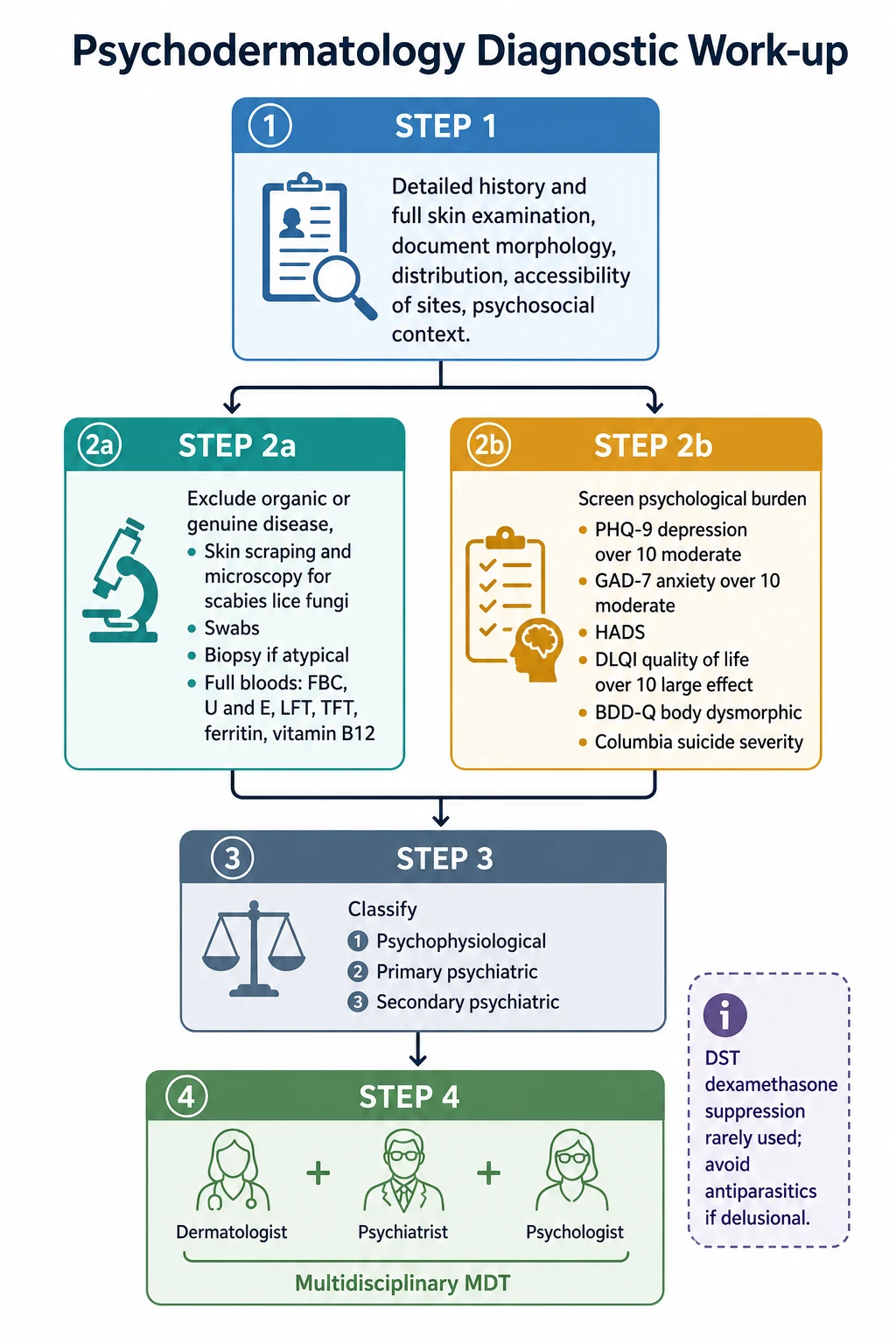
To exclude genuine disease in suspected delusional infestation, perform a skin scraping with microscopy for scabies mites, lice and ova, and fungal elements (KOH); take swabs if there is secondary infection; biopsy an atypical lesion if the morphology is not classic; and order baseline bloods. Multiple negative scrapings, performed and explained to the patient, both exclude infestation and build the therapeutic alliance.[6] In dermatitis artefacta a biopsy can be diagnostic in the right setting: the histology may show a necrotic epidermis with neutrophils and an abrupt transition to normal adjacent skin, with no inflammatory gradient of the kind seen in naturally evolving dermatoses — the so-called "punched-out" or "sign of the ship" appearance — because chemical or physical injury produces instantaneous damage rather than an evolving inflammatory reaction. Skin biopsy in trichotillomania shows trichomalacia (distorted, coiled, fragmented hair shafts), pigmented hair casts in the follicle, and an empty follicle without the peribulbar lymphocytic infiltrate of alopecia areata.
To quantify the psychological burden, use validated instruments reproduced accurately below.[3]
The dexamethasone suppression test (DST) has been studied in psychophysiological disorders but has no routine clinical role; it is an exam curiosity rather than a bedside test. The decisive "investigation" is usually a structured psychiatric assessment — hence early referral. [1]
Management — Immediate Priorities
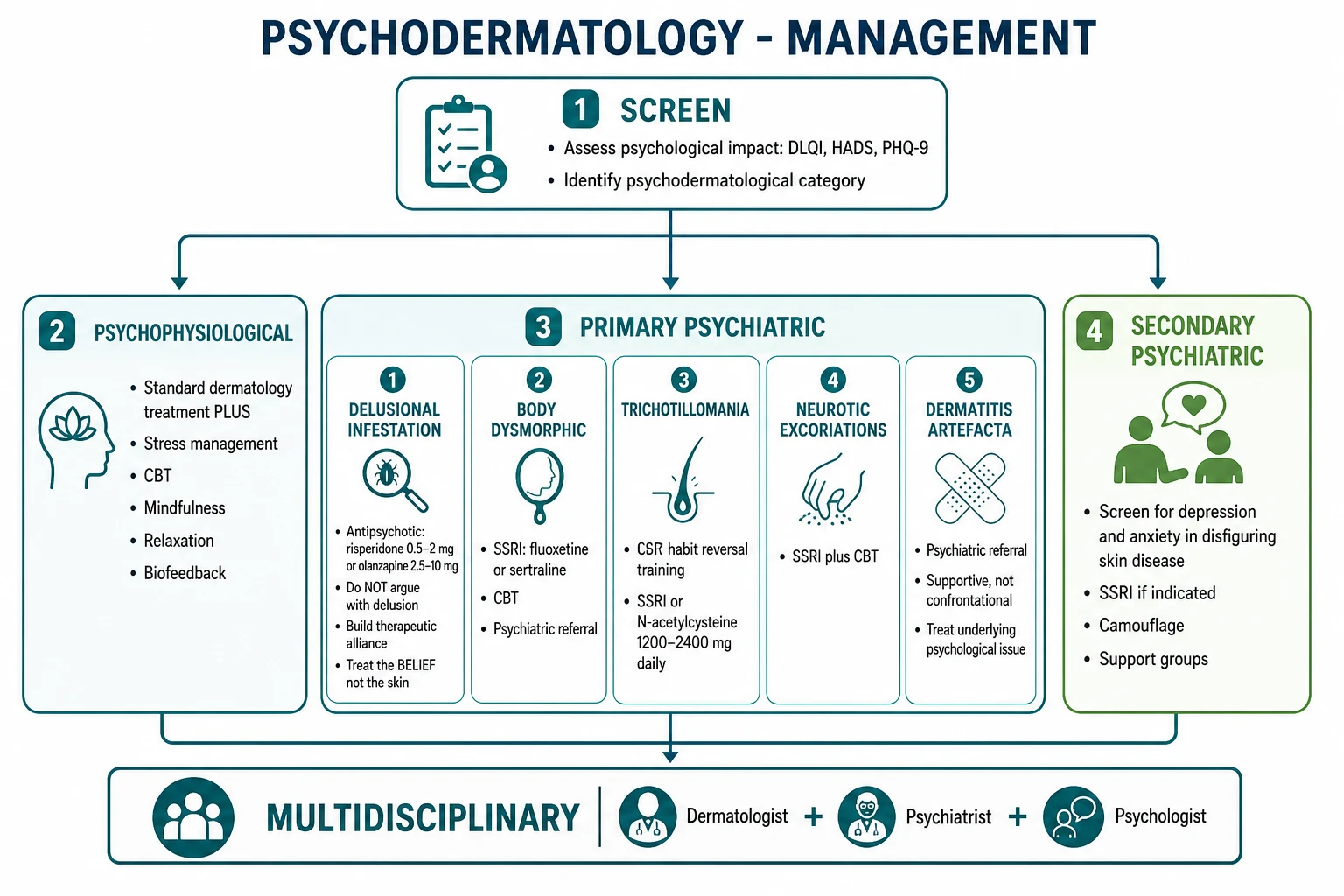
Two situations are time-critical. First, suicidal ideation in a patient with disfiguring skin disease: take it as seriously as suicidal ideation in any other context, complete a structured suicide-risk assessment (e.g. the Columbia Suicide Severity Rating Scale), remove access to means where possible, and arrange urgent psychiatric assessment — admission if risk is high. The visible lesion may look trivial to you; the risk is not.[3]
Second, the patient about to receive antiparasitics for delusional infestation: the single most common iatrogenic error in this condition. Antiparasitics (permethrin, ivermectin, lindane) do not work, expose the patient to toxicity, and — worse — reinforce the delusion by confirming to the patient that you too believe there are parasites. The correct immediate action is to withhold the antiparasitic, build a therapeutic alliance, and start an antipsychotic.[6]
For any acute, severe or rapidly evolving self-inflicted lesion (deep chemical burn, deep excoriation), manage the wound — analgesia, debridement, tetanus cover, infection control — while the psychiatric assessment proceeds in parallel. [1]
Management — Definitive & Stepwise
All psychodermatological care is multidisciplinary: dermatologist (skin), psychiatrist (diagnosis and psychotropics), and psychologist/therapist (CBT, habit reversal, psychoeducation), supported by specialist nurses and social workers. The dermatologist's first job is often to stop inappropriate dermatological treatment (the fifth antibiotic for BDD, the third antiparasitic for delusional infestation, the cosmetic procedure) and redirect the patient to the right service.[4]
Communication, alliance and when to refer
The single most examinable communication skill in psychodermatology is how to introduce a psychiatric explanation — and a psychiatric referral — without rupturing the alliance. Patients with delusional infestation or body dysmorphic disorder have usually seen several clinicians already, feel disbelieved, and will disengage (and stop treatment) the moment they sense dismissal. The validated technique is to take the patient's distress seriously, frame the problem at a level the patient can accept, and treat the symptom rather than debate its cause.[4][6]
For delusional infestation this means acknowledging the very real crawling sensation ("I can see this is causing you terrible suffering, and I am going to help you with it") and explaining that the antipsychotic works by calming the over-active nerve endings that generate the sensation — a statement that is neurobiologically defensible and lands far better than "there are no parasites". For body dysmorphic disorder, the move is to validate the distress without endorsing the imagined defect, and to introduce CBT and an SSRI as treatment for the "excessive preoccupation" rather than for the flaw itself. Introduce psychiatric referral as part of the team ("we work alongside our psychology colleagues for everyone with this condition"), never as a judgement that the problem is "all in the mind". A follow-up that does not depend on the patient re-presenting is itself therapeutic, because these patients are often too ashamed to return.[4]
A structured consultation runs in six steps: [1]
- Acknowledge the distress and take the symptom seriously before examining the skin.
- Examine fully and exclude organic disease (skin scrapings, swabs, biopsy if atypical).
- Screen mood, anxiety and suicide (PHQ-9, GAD-7, DLQI, Columbia suicide severity).
- Classify into psychophysiological, primary psychiatric or secondary psychiatric.
- Agree a plan at the level the patient can accept; treat the symptom, not the debate.
- Refer into the multidisciplinary team and set proactive follow-up. [1]
Delusional infestation
Treat with an antipsychotic, building a therapeutic alliance first. Risperidone 0.5–2 mg once daily (start 0.5 mg, titrate up slowly over days to weeks, usual range 1–4 mg, maximum 4–6 mg) is widely used as first line and has the best evidence among the atypicals.[6] Olanzapine 2.5–10 mg once daily and aripiprazole 5–15 mg once daily are alternatives, the latter favoured where weight gain or metabolic risk is a concern. Pimozide 1–4 mg once daily was the historic agent of choice and is effective, but it carries a real risk of QT prolongation and torsades de pointes, so a baseline and on-treatment ECG are mandatory and atypicals are now preferred. Treat for several months after the delusion resolves, then taper; counsel the patient on the rationale (you are treating a disorder of nerve signalling that produces a false sensation, not calling them "mad"), avoid arguing with the delusion, and never prescribe antiparasitics.[6][11]
Across the AAD (US), BAD/NICE (UK) and EADV (Europe) the consensus is an atypical antipsychotic (risperidone first line) over pimozide because of pimozide's QT risk, with ECG monitoring before and during any antipsychotic. Where pimozide is still used (cost or availability), a baseline and on-treatment ECG with QTc below 450 ms in men and 460 ms in women is the usual safety threshold.
Body dysmorphic disorder
First-line is a combination of an SSRI and cognitive behavioural therapy specifically adapted for BDD.[7] Fluoxetine 20–60 mg daily or sertraline 50–200 mg daily are standard, started low and titrated to an adequate dose; response may take 10–12 weeks. CBT targets perceptual mirror-retraining, exposure and response prevention for checking and grooming rituals, and cognitive restructuring of appearance beliefs. Crucially, dermatological, laser or surgical treatment of the "defect" should be deferred until the BDD has been treated; operating on a patient with untreated BDD produces dissatisfaction, repeat requests, and occasionally litigation.[7]
Trichotillomania and neurotic excoriations
Both sit on the obsessive–compulsive spectrum (the body-focused repetitive behaviours) and are treated with habit-reversal training, a specific CBT in which the patient learns to recognise the urge and substitute a competing response (clenching the fist, using a fidget object, applying a barrier).[9] An SSRI (fluoxetine, sertraline, fluvoxamine) is added for comorbid depression or anxiety, or when CBT alone is insufficient, though SSRIs are less effective for the core pulling or picking behaviour than for the associated mood symptoms. N-acetylcysteine (NAC) 1200–2400 mg daily in divided doses has evidence in trichotillomania through a glutamate-modulating mechanism and is a useful adjunct or alternative.[10] Physical barriers (gloves, bandages, adhesive dressings over picked sites) and stimulus control (covering mirrors, altering triggers) are practical adjuncts.
The rationale for habit reversal and glutamate modulation is neurobiological: trichotillomania and excoriation disorder are now understood as disorders of grooming circuitry — cortico-striato-thalamo-cortical loops that normally terminate a grooming sequence become impaired, so the "stop" signal fails and pulling or picking runs past its natural endpoint.[9] This places them closer to the impulsive/compulsive spectrum than to the anxiety-driven obsessions of classic OCD, which is why SSRIs help the associated mood but are relatively weak against the core behaviour, whereas habit-reversal CBT (which restores the inhibitory "stop") and N-acetylcysteine (which modulates glutamate in the nucleus accumbens and reduces the urge) target the behaviour itself.[10]
Dermatitis artefacta
The cornerstone is psychiatric referral and a supportive, non-confrontational relationship. Confronting the patient with the self-inflicted nature of the lesions usually destroys the alliance and drives the behaviour underground; instead, offer the patient the "sick role" (regular dressing appointments, acknowledgement of distress), treat the wounds conservatively, and address the underlying psychiatric disorder — most often depression, anxiety, a personality disorder, or a factitious disorder. Admit if lesions are severe or escalating, both to protect the skin and to allow psychiatric assessment in a contained setting.[4]
Psychophysiological disorders
Treat the underlying dermatosis aggressively with standard dermatological therapy (topical steroids, calcineurin inhibitors, phototherapy, biologics for psoriasis; emollients and anti-inflammatories for eczema; retinoids or hormonal therapy for acne) and add stress management: cognitive behavioural therapy, mindfulness-based interventions, relaxation, sleep optimisation, and where indicated an SSRI for comorbid depression or anxiety. Improving the skin improves the stress; reducing the stress improves the skin — treat both loops.[1][3]
Secondary psychiatric disorders
Treat the underlying skin disease to the best possible control, and screen and treat the depression and anxiety: SSRI where indicated, counselling, support groups, and camouflage (cosmetic camouflage clinics, vitiligo camouflage, hair prostheses). For severe acne with suicidal ideation, the relationship between isotretinoin and mood is debated; the consensus is to treat severe acne effectively (which usually improves mood) while monitoring mood actively and involving psychiatry when ideation is present.[3]
Specific Subtypes & Scenarios
Morgellons disease is delusional infestation in which the patient describes coloured, black or white fibres emerging from the skin; dermatopathology shows only excoriation and incidental textile fibres, and management is identical to other delusional infestation (antipsychotic, no antimicrobial).[6]
Drug-induced delusional infestation must be excluded before a primary psychiatric diagnosis is made: corticosteroids, dopaminergic drugs (used in Parkinson's disease, restless legs and prolactinoma), cocaine and amphetamines, and occasionally antibiotics can trigger the delusion, and stopping or reducing the culprit may resolve it without an antipsychotic.[11]
Shared delusional infestation (folie à deux) occurs when a close contact adopts the index patient's belief; treating the index case with an antipsychotic and separating the secondary case usually resolves both.[6]
Psychogenic pruritus and the cutaneous sensory disorders — brachioradial pruritus, notalgia paraesthetica, vulvodynia, burning mouth syndrome, and formication without lesions — are managed by combining dermatological, neurological and psychological approaches, often with gabapentinoids, topical capsaicin or local anaesthetics alongside CBT.[8]
In adolescents, the dominant presentations are acne with body-image distress and BDD, and trichotillomania; the psychosocial stakes (school refusal, bullying, emerging identity) are high and early psychological intervention is disproportionately valuable. In the elderly, delusional infestation and dermatitis artefacta are more common, organic brain disease and polypharmacy must be excluded, and antipsychotic doses must start low because of falls and cardiovascular risk. Psychophysiological flares of psoriasis and eczema under examination, work or bereavement stress are the single most common psychodermatological scenario in routine practice; recognising the stress trigger changes the consultation even when no formal psychiatric referral is made.[3]
Complications & Pitfalls
The complications are both cutaneous and psychological. Cutaneous: secondary bacterial infection (Staphylococcus aureus, occasionally cellulitis), scarring (atrophic, hypertrophic or keloid), post-inflammatory hyper- or hypopigmentation, and disfigurement from repeated excoriation or chemical injury. Trichotillomania with trichophagy carries the rare but serious risk of a trichobezoar causing gastric outlet obstruction. Psychological: social isolation, relationship breakdown, unemployment, anxiety, depression and, most importantly, suicide — a real and under-recognised risk in severe acne, psoriasis and vitiligo.[3] Treatment non-adherence is common, driven by the patient's belief that the "real" problem (parasites, the imagined defect) is being ignored.
[1]Prognosis & Disposition
Psychodermatological disorders are typically chronic and relapsing. Delusional infestation responds to antipsychotics in a majority of patients, but relapse on cessation is common, so treatment is often prolonged; a therapeutic alliance and a single trusted clinician are the strongest predictors of adherence.[6] Body dysmorphic disorder, trichotillomania and excoriation disorder run a waxing-and-waning course over years and need long-term CBT plus maintenance SSRI or NAC.[7][9] Dermatitis artefacta can remit with resolution of the underlying stressor but may persist for decades.[4]
Disposition is outpatient multidisciplinary care for most, with psychiatric admission reserved for severe self-harm, severe dermatitis artefacta, or high suicide risk. The dermatologist retains the skin lead; the psychiatrist retains the psychotropic and risk lead; the psychologist delivers therapy. Good communication between the three prevents the patient "shopping" between services and is itself therapeutic.[4][5]
Special Populations
Children and adolescents: body dysmorphic disorder, trichotillomania and excoriation disorder often begin here; SSRIs are used cautiously (suicidality warnings in under-18s, so specialist child and adolescent mental health input is mandatory), habit-reversal CBT is first-line, and family involvement is essential. Acne-related distress peaks in adolescence and drives the highest per-encounter suicide risk in dermatology.[3]
Pregnancy: avoid pimozide (QT, teratogenicity concerns) and prefer non-pharmacological CBT where possible; if an antipsychotic is essential, low-dose risperidone or olanzapine with obstetric and psychiatric input; SSRIs such as sertraline are relatively preferred among antidepressants in pregnancy, avoiding paroxetine in the first trimester. [1]
The elderly: delusional infestation and dermatitis artefacta are common; exclude dementia, brain lesions, sensory impairment (especially of vision and hearing, which feed formication), and drug-induced causes; start antipsychotics at the lowest dose and watch for falls, orthostasis, cerebrovascular events and QT prolongation.[6]
Immunocompromised patients: genuine infestation and opportunistic skin disease must be excluded with particular care before attributing lesions to a psychiatric cause, because organic mimics are both common and dangerous in this group. [1]
Evidence, Guidelines & Regional Differences
The evidence base is moderate. The three-category framework is universally accepted and underpins national guidance from the AAD (US), the British Association of Dermatologists and NICE (UK — including NICE guidance on BDD and on depression in chronic physical illness), the EADV and the European Society for Dermatology and Psychiatry (Europe), and the IADVL (India).[4][7]
[1] [1]Controversies include the relative merits of pimozide versus the atypical antipsychotics (atypicals are now preferred on safety grounds despite pimozide's longer track record); the strength of evidence for N-acetylcysteine in trichotillomania (positive but modest, with mixed replication across trials); and the disputed relationship between isotretinoin and depression or suicide in severe acne — current consensus is that severe acne itself carries a high baseline suicide risk, that effective treatment usually improves mood, but that all patients on isotretinoin should have mood monitored actively and psychiatry involved promptly if ideation emerges.[3][10]
Quality-of-Life Assessment
Validated instruments, reproduced accurately, anchor both screening and follow-up.[3]
- DLQI (Dermatology Life Quality Index): 10 items, scored 0–30; bands 0–1 no effect, 2–5 small, 6–10 moderate, 11–20 very large, 21–30 extremely large.
- PHQ-9: 0–27; bands 5 mild, 10 moderate, 15 moderately severe, 20 severe depression; item 9 screens suicidality.
- GAD-7: 0–21; bands 5 mild, 10 moderate, 15 severe anxiety.
- HADS: 14 items; subscale at or above 11 indicates caseness for anxiety or depression.
- Skindex-29: skin-specific quality-of-life instrument.
- BDDQ (Body Dysmorphic Disorder Questionnaire): screening tool; positive screen prompts psychiatric referral. [1]
Exam Pearls
[1]Quick check: a 70-year-old woman brings a jar of 'specimens' — what is the diagnosis and the drug?
Delusional infestation (Ekbom syndrome). Confirm with negative skin scrapings/microscopy. First-line treatment is an atypical antipsychotic (risperidone 0.5–2 mg once daily), building a therapeutic alliance; do not prescribe antiparasitics, and do not argue with the delusion. Pimozide is historic and carries QT risk.
Quick check: a teenager has patchy scalp hair loss with broken short hairs of varying lengths and no exclamation-mark hairs — what is it and how do you treat it?
Trichotillomania. The varying hair lengths and absence of exclamation-mark hairs distinguish it from alopecia areata. Treat with habit-reversal CBT plus an SSRI or N-acetylcysteine 1200–2400 mg/day; involve child and adolescent mental health.
Exam application bank (NEET-PG / INICET)
One-line answer
Psychodermatology = the interface between dermatology and psychiatry. Three categories: (1) Psychophysiological — skin disease worsened by stress (psoriasis, eczema, acne, rosacea; bidirectional brain-skin axis). (2) Primary psychiatric with cutaneous manifestations — delusional infestation (fixed false belief of bugs; matchbox sign; antipsychotics, NO antiparasitics), body dysmorphic disorder (SSRIs + CBT), trichotillomania (compulsive hair pulling; varying hair lengths; SSRI/CBT/N-acetylcysteine), neurotic excoriations (compulsive skin picking; SSRI), dermatitis artefacta (self-inflicted lesions the patient DENIES). (3) Secondary psychiatric — depression/anxiety/suicidality from disfiguring skin disease (vitiligo, psoriasis, acne). Management is multidisciplinary (dermatologist + psychiatrist + psychologist).
Worked stems (answer without another resource)
Stem 1 — Classic presentation. Map symptoms to mechanism; name the first investigation and first treatment step with dose/route if drug therapy is standard. [1]
Stem 2 — Unstable / complicated. List red flags that force immediate resuscitation, theatre, ICU, antidote, or reperfusion — and what you do in the first 15 minutes. [1]
Stem 3 — Atypical group. Elderly, pregnancy, child, or immunocompromised: how presentation and thresholds change. [1]
Stem 4 — Differential trap. Name the three closest mimics and one discriminator for each. [1]
Stem 5 — Disposition. Who goes home with safety-netting, who is admitted, who needs HDU/ICU/theatre, and what follow-up is mandatory. [1]
Rapid viva checklist
- Definition + classification
- Pathophysiology chain
- Bedside signs / criteria
- Score with exact components (if any)
- Emergency bundle
- Definitive therapy with doses
- Complications of disease and of treatment
- Special populations
- Guideline/trial name if classic
- Three exam traps
Coverage self-check
If you cannot answer any stem above from this page alone, re-read the matching section — the page is intended to be self-sufficient for final-prof and NEET-PG/INICET questions on Psychodermatology.
[1]References
- [1]França K, Lotti TM. Psycho-Neuro-Endocrine-Immunology: A Psychobiological Concept Adv Exp Med Biol, 2017.PMID 29124696
- [2]Yoon KN, Chung JH. Healthy skin, Healthy brain J Dermatol Sci, 2025.PMID 40681402
- [3]Mar K, Rivers JK. The Mind Body Connection in Dermatologic Conditions: A Literature Review J Cutan Med Surg, 2023.PMID 37898903
- [4]Brown GE, Malakouti M, Sorenson E, et al. Psychodermatology Adv Psychosom Med, 2015.PMID 25832518
- [5]Šitum M, Kolić M, Buljan M. [PSYCHODERMATOLOGY] Acta Med Croatica, 2016.PMID 29087669
- [6]Freudenmann RW, Lepping P. Delusional infestation Clin Microbiol Rev, 2009.PMID 19822895
- [7]Herbst I, Jemec GBE. Body Dysmorphic Disorder in Dermatology: a Systematic Review Psychiatr Q, 2020.PMID 32472234
- [8]Misery L, Dutray S, Chastaing M, et al. Psychogenic itch Transl Psychiatry, 2018.PMID 29491364
- [9]Lochner C, Roos A, Stein DJ. Excoriation (skin-picking) disorder: a systematic review of treatment options Neuropsychiatr Dis Treat, 2017.PMID 28761349
- [10]Deepmala, Slattery J, Kumar N, et al. Clinical trials of N-acetylcysteine in psychiatry and neurology: A systematic review Neurosci Biobehav Rev, 2015.PMID 25957927
- [11]Kemperman PMJH, Bruijn TVM, Vulink NCC. Drug-induced Delusional Infestation Acta Derm Venereol, 2022.PMID 35170743