Dermatology · Medicine
Scurvy (vitamin C deficiency)
Also known as Scurvy · Vitamin C deficiency · Ascorbic acid deficiency · Moeller-Barlow disease (infantile scurvy)
Scurvy is caused by deficiency of vitamin C (ascorbic acid), an essential cofactor for collagen synthesis (hydroxylation of proline and lysine residues). Clinical features: follicular hyperkeratosis, corkscrew hairs, perifollicular purpura/petechiae (capillary fragility from defective collagen), bleeding and hypertrophied gums, poor wound healing, arthralgia, and anaemia. Risk factors: tea-and-toast diet in the elderly, alcoholism, anorexia nervosa, autism with selective eating, malabsorption, dialysis, smoking, and food insecurity. Treatment: oral ascorbic acid 300 to 1000 mg daily for one week, then 100 mg daily maintenance — symptoms resolve within 24 to 48 hours.
On this page & tools
Your progress
Saved locally on this device.
Exam tags
Red flags
Definition and overview
Scurvy is the multisystem disease caused by severe deficiency of vitamin C (ascorbic acid), an essential water-soluble vitamin that humans cannot synthesise endogenously. The biochemical pivot is collagen: vitamin C is an obligatory cofactor for prolyl hydroxylase and lysyl hydroxylase, the enzymes that hydroxylate proline and lysine residues during the post-translational maturation of the collagen alpha-chain. Without hydroxylation, the collagen triple helix cannot stabilise at body temperature, so the molecule is mis-folded, secreted in defective form, and rapidly degraded. The downstream clinical signature is therefore connective-tissue failure: capillary walls weaken and bleed, wounds fail to heal, dentin and bone become defective, and hairs twist and fragment within their follicles.[1][3]
The disease is ancient — it crippled the long sea voyages of the Age of Sail and was the leading cause of death in sailors until James Lind's 1747 trial proved citrus could prevent it — yet it is emphatically not extinct.[3] Modern scurvy is concentrated in at-risk subgroups: isolated elderly people subsisting on a "tea-and-toast" diet, patients with alcohol use disorder, people with anorexia nervosa or autism-spectrum selective eating, those with malabsorption, dialysis-dependent patients, refugees and food-insecure populations, and post-bariatric patients. A 2024 national United States inpatient analysis documented a more than three-fold rise in paediatric scurvy between 2016 and 2020.[2]
Classification
There is no formal WHO or consensus severity grading for scurvy, but examiners expect you to classify it along three axes: [1]
Adult vs paediatric
- Adult scurvy: classical mucocutaneous and musculoskeletal presentation in an at-risk adult (elderly, alcoholic, anorexic, dialysis).
- Paediatric scurvy — Moeller-Barlow disease (infantile scurvy): predominantly musculoskeletal (limp, refusal to walk, sub-periosteal haemorrhage), often in autistic or selectively-eating children; cutaneous signs may be subtle or absent.
By severity
- Early (subclinical): fatigue, irritability, anorexia, follicular hyperkeratosis — easily missed.
- Established: perifollicular purpura, corkscrew hairs, gingival bleeding, arthralgia, anaemia.
- Advanced/severe: extensive ecchymoses, haemarthrosis, old wounds reopening, hypotension from haemorrhage, pulmonary hypertension (rare, paediatric), fatal outcome (rare).
By aetiology
- Dietary (most common): tea-and-toast, autism selective eating, anorexia, food insecurity.
- Increased loss/requirement: dialysis, smoking, pregnancy, lactation, hyperthyroidism, sepsis.
- Malabsorptive: inflammatory bowel disease, coeliac disease, short bowel, post-bariatric.
Epidemiology and risk factors
Scurvy develops only when dietary vitamin C is essentially absent for approximately 1 to 3 months — body stores are around 1500 mg, and clinical deficiency appears once stores fall below about 300 mg. Because vitamin C is concentrated in fresh fruit and vegetables, scurvy is a disease of monotonous, processed, fruit- and vegetable-free diets, not of total starvation per se. [1]
The 2024 JAAOS Global national analysis of nearly 19.5 million paediatric inpatient records showed the incidence more than tripled over five years, with affected children more likely to be young, male, obese, in the lowest income quartile, and to carry a concurrent diagnosis of autism spectrum disorder — 64.2% in this cohort.[2] Adults follow a different epidemiology: classical stems in exams centre on the isolated elderly patient with a tea-and-toast diet, the chronic alcoholic, the young woman with restrictive anorexia nervosa, and the long-term haemodialysis patient.[5]
SCURVY — risk groups at a glance
Pathophysiology
The mechanism is one of the most examinable in nutrition dermatology because it ties biochemistry directly to a visible phenotype. L-ascorbic acid maintains iron in the ferrous (Fe2+) state required by the active site of prolyl-4-hydroxylase and lysyl hydroxylase, the endoplasmic-reticulum enzymes that add hydroxyl groups to specific proline and lysine residues of the collagen pre-pro-alpha chain. Hydroxylation of proline stabilises the triple helix (each chain needs roughly 100 hydroxyproline residues to remain intact at 37°C), while hydroxylation of lysine permits the inter- and intra-molecular cross-linking that gives tensile strength to mature collagen fibrils. When vitamin C is absent, hydroxylation fails, the triple helix denatures at body temperature, and the mis-folded chains are degraded intracellularly rather than secreted. The tissue-level consequences are widespread: [1]
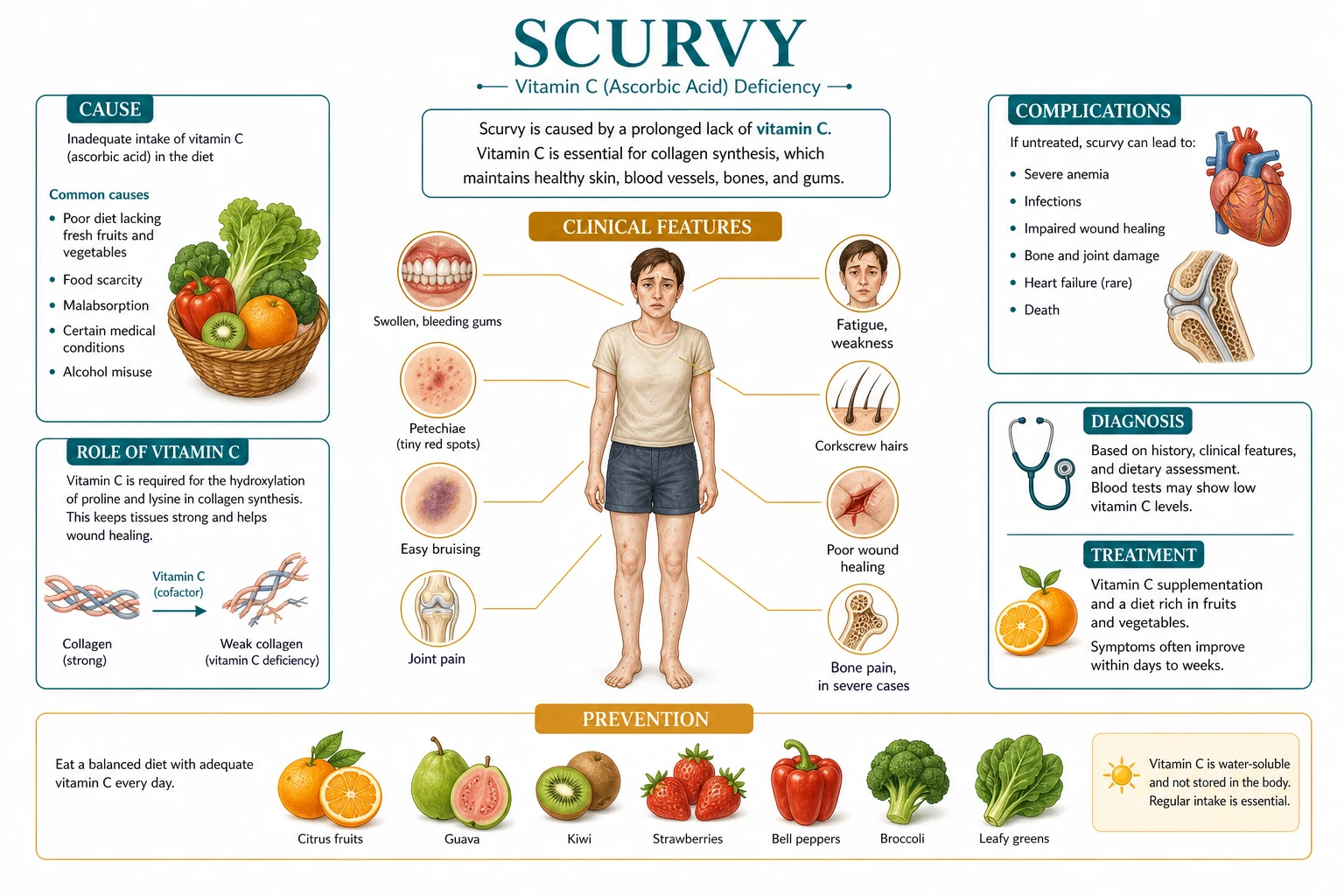
- Capillary fragility — weakened endothelial basement membrane and perivascular collagen leads to perifollicular petechiae, ecchymoses, and bleeding gums; coagulation factors and platelets are normal, so the bleeding is mechanical, not haematological.
- Poor wound healing — type I and type III collagen cannot be remodelled; chronic ulcers granulate poorly, and previously healed wounds may reopen.
- Defective dentin and bone — in children, osteoid and dentin formation fail, producing sub-periosteal haemorrhage, the radiographic Frankel white line, and loose teeth.
- Corkscrew hairs — defective disulfide cross-linking in cortical keratin causes the hair shaft to twist, coil, and fragment within a keratin-plugged follicle; this is the pathognomonic cutaneous sign.
- Non-collagen roles — ascorbate is also a cofactor for dopamine β-hydroxylase (catecholamine synthesis — explaining the early fatigue and lassitude), for carnitine synthesis (contributing to myalgia and weakness), and it enhances dietary iron absorption (reducing ferric to ferrous iron) and preserves folate in its active form — both relevant to the anaemia of scurvy. [1]
The absence of L-gulonolactone oxidase (GULO) in humans is the evolutionary reason vitamin C is a vitamin at all. Most mammals synthesise ascorbate from glucose in the liver via the uronic-acid pathway; humans, other primates, guinea pigs, some bats, and certain passerine birds carry loss-of-function mutations in GULO and depend entirely on dietary intake. This is why guinea pigs are the classic experimental model of scurvy.
Kinetics of deficiency and why symptoms take months to appear
The clinical latency of scurvy is fixed by the size of the body ascorbate pool and its turnover. A replete adult carries roughly 1500 mg of ascorbate, distributed between plasma, leukocytes (the highest intracellular concentration), and tissues. Daily turnover is 40 to 60 mg per day in a healthy non-smoker and 20 to 30 mg higher in a smoker, in pregnancy, or during acute illness. At zero intake, the pool declines linearly; clinical signs appear when stores fall below 300 mg (about 20 percent of the replete pool), which corresponds to 8 to 12 weeks of total dietary absence. This kinetics explains why scurvy is the disease of months of a monotone diet rather than of brief dietary disturbance, why historically it broke out on long sea voyages only after the ship's citrus ran out, and why modern scurvy clusters in patients whose diet has been rigidly narrow for many months — the autistic selective eater, the tea-and-toast widower, and the anorexic young woman. It also explains the speed of recovery: a single 500 mg dose of ascorbic acid repletes roughly a third of the deficit, prolyl and lysyl hydroxylase activity resumes within hours, and new, properly hydroxylated collagen is secreted within a day. [1]
Why the bleeding is non-coagulopathic
A favourite viva question is why does the scurvy patient bleed despite normal clotting? The answer is structural, not biochemical. Platelet number, platelet function, the coagulation cascade, and von Willebrand factor are all intact in scurvy. What fails is the vascular wall: capillary basement membrane and the perivascular collagen sheath are type IV and type I/III collagen respectively, and both depend on ascorbate for hydroxylation. Without it, the vessel wall is mechanically weak, so trivial shearing forces — gravity in the legs, the brush of a toothbrush, the pull of a hair follicle — allow red cells to extravasate. The bleeding time may be modestly prolonged because the damaged vessel cannot constrict and seal effectively, but the prothrombin time, activated partial thromboplastin time, and platelet count are normal, which is the single most useful bedside discriminator from a true coagulopathy. This is also why scurvy will bleed through anticoagulation rather than because of it — a warfarinised patient with scurvy bleeds from both mechanisms simultaneously. [1]
Clinical presentation
Scurvy is one of the great clinical mimics: it can present as a bleeding disorder, an inflammatory arthritis, a limp in a child, or a non-healing ulcer. Examiners deliberately test atypical presentations, so learn the full phenotype, not just the textbook tetrad. [1]
Cutaneous features (the hallmark)
The cutaneous tetrad is follicular hyperkeratosis, corkscrew hairs, perifollicular purpura, and ecchymoses. Follicular hyperkeratosis produces a rough, sandpaper skin texture over the upper arms, thighs, and buttocks; each hyperkeratotic follicle contains a twisted, coiled, fragmented corkscrew hair — the pathognomonic sign. Around each affected follicle, a ring of petechial haemorrhage appears (perifollicular purpura), most densely on the shins, dorsal feet, and other dependent areas because gravity drives red-cell extravasation through fragile capillary walls. With more advanced disease, larger ecchymoses appear on the limbs from minor trauma, and existing wounds fail to heal or reopen.[1]
Oral features
The gums become purple, swollen, spongy, and bleed on the slightest touch. Gingival hypertrophy is most pronounced between the teeth, and in advanced disease the periodontal ligament fails and teeth become loose. Mucosal petechiae may appear on the palate and buccal mucosa. A critical examiner point: gum changes require teeth — the edentulous patient does not develop the classic gingival picture, which can delay diagnosis in elderly edentulous patients.[3]
Systemic features
Musculoskeletal manifestations dominate in children and are often the presenting complaint: arthralgia, joint effusions, haemarthrosis, lower-limb pain, and refusal to walk. In infants and young children, sub-periosteal haemorrhage (especially around the knee and distal femur) produces exquisite tenderness and a pseudoparalysis — Moeller-Barlow disease. Systemic symptoms include fatigue, malaise, irritability, depression, dyspnoea, and oedema (from vascular fragility and hypoalbuminaemia). Anaemia is common and may be normocytic (chronic disease), microcytic (coexisting iron deficiency), or macrocytic (folate deficiency), because vitamin C enhances iron absorption and preserves folate. [1]
Natural history and order of appearance
Scurvy evolves in a predictable sequence that examiners reward knowing. Early, non-specific symptoms — fatigue, malaise, anorexia, irritability, and low mood — appear first, reflecting impaired catecholamine synthesis (dopamine β-hydroxylase requires ascorbate) and early carnitine deficiency. These are easily attributed to the underlying illness (alcoholism, anorexia, isolation) and are missed. Over the following weeks, follicular hyperkeratosis appears on the extensor limbs, followed by corkscrew hairs within those plugged follicles, and then perifollicular purpura as capillary fragility declares itself. Gingival swelling and bleeding typically follow, and finally the more dramatic manifestations — ecchymoses, haemarthrosis, refusal to walk (children), reopening of old wounds, and anaemia — appear in advanced disease. The lesson for the clinician is that scurvy is symptomatic for weeks before it is haemorrhagic: the alert examiner will pick the corkscrew hair and the perifollicular purpura at the bedside long before the patient develops the bruising that triggers a coagulopathy workup. [1]
Comorbidities and co-deficiencies
Scurvy almost never occurs in isolation. The same dietary pattern that produces vitamin C deficiency usually produces thiamine deficiency (Wernicke risk), folate and B12 deficiency (megaloblastic anaemia), iron deficiency (microcytic anaemia), zinc deficiency (acrodermatitis enteropathica pattern), vitamin D deficiency, and protein-energy malnutrition. Alcohol use disorder, anorexia nervosa, malabsorption, and dialysis each carry their own cluster of co-deficiencies. A practical rule is: when you find scurvy, screen for the others — send thiamine (and give empirically before refeeding), folate, B12, iron studies, zinc, vitamin D, and a basic nutritional panel, and arrange dietetic and (where relevant) psychiatric or addiction input. Treating ascorbate alone corrects the collagen defect but leaves the patient exposed to Wernicke, refeeding syndrome, macrocytic anaemia, and osteomalacia. [1]
Atypical presentations examiners test
Paediatric limp / refusal to walk
- Often the first sign in autistic or selectively-eating children.
- Mimics septic arthritis, osteomyelitis, leukaemia, juvenile idiopathic arthritis.
- Normal CRP/ESR may be elevated; radiographs show sub-periosteal haemorrhage and Frankel white line.
- Dietary history is the discriminator.
Anorexia nervosa + bruising
- Restrictive eating depletes ascorbate over months.
- Overlaps with thrombocytopenia, vasculitis, coagulopathy of malnutrition.
- Multidisciplinary (psychiatry, dietetics, medicine) — refeeding precautions.
Pulmonary hypertension (rare)
- Described in severe paediatric scurvy as a reversible, vitamin-C responsive pulmonary vascular phenotype.
- Reports of near-fatal presentations resolved with ascorbate.
Elderly with leg bruising
- Tea-and-toast, institutionalisation, edentulousness (no gum signs).
- Often worked up for vasculitis or coagulopathy before the diet is taken.
- Beware concomitant warfarin/aspirin use.
Differential diagnosis
The differential is wide because purpura, limp, and poor wound healing each generate their own lists. The discriminator is the distribution (perifollicular, dependent lower limbs), the corkscrew hair, the dietary history, and a normal coagulation and platelet screen. [1]
Leukocytoclastic vasculitis
- Palpable purpura (scurvy is non-palpable).
- Biopsy: neutrophilic small-vessel inflammation with fibrinoid necrosis and nuclear dust; scurvy shows perifollicular haemorrhage WITHOUT vasculitis.
- Often systemic (renal, GI, neuropathy).
Thrombocytopenia (ITP, leukaemia, DIC)
- Platelet count LOW (normal in scurvy).
- Petechiae generalised, not perifollicular.
- Bone marrow / smear clarifies.
Vitamin K deficiency / warfarin excess
- PT and APTT abnormal (normal in scurvy).
- Bleeding is haematological, not mechanical.
- INR elevated; responds to vitamin K.
Henoch-Schönlein (IgA) purpura
- Palpable purpura on extensor surfaces and buttocks.
- Abdominal pain, arthritis, renal involvement (haematuria/proteinuria).
- Biopsy: IgA deposition in vessel walls.
Pellagra (B3 deficiency)
- Photosensitive dermatitis (Casal's necklace), diarrhoea, dementia.
- Not purpuric — erythema, scaling, pigmentation on sun-exposed skin.
- Treated with nicotinamide, not ascorbic acid.
Beriberi (B1 deficiency)
- Cardiac (wet) or neurological (dry) — no purpuric cutaneous phenotype.
- Oedema, neuropathy, high-output cardiac failure.
- Treated with thiamine.
Acrodermatitis enteropathica (zinc deficiency)
- Acral and periorificial dermatitis, diarrhoea, alopecia.
- Vesiculobullous and pustular, not purpuric.
- Low serum zinc; responds to zinc.
Paediatric: septic arthritis / osteomyelitis / leukaemia / JIA
- Limp, refusal to walk, raised inflammatory markers — also seen in scurvy.
- Dietary history, radiographs (Frankel line, sub-periosteal haemorrhage), and response to vitamin C discriminate.
- Do not commit to immunosuppression before scurvy is excluded.
Clinical and bedside assessment
The diagnosis is essentially clinical and is made at the bedside by combining the dietary history with the characteristic morphology. A focused examination covers skin, gums, joints, and a screen for underlying cause. [1]
Bedside assessment of suspected scurvy
DIETARY HISTORY — how long without fresh fruit or vegetables? Typical pattern (tea-and-toast, processed food, selective eating, restrictive diet, dialysis, alcohol, post-bariatric)? Duration under 1 to 3 months is the threshold.
SKIN — shins and dorsal feet for perifollicular purpura; upper arms, thighs, buttocks for follicular hyperkeratosis and corkscrew hairs (use a magnifying loupe — twisted, coiled, fragmented hair within a keratin-plugged follicle); limbs for ecchymoses; old scars for reopening; chronic leg ulcers.
ORAL — gum hypertrophy, spongy purple interdental papillae, bleeding on probing, loose teeth, mucosal petechiae. Remember: edentulous patients lack the gum phenotype.
MUSCULOSKELETAL — joint tenderness, effusion, haemarthrosis, refusal to bear weight (paediatric), bone pain.
GENERAL — pallor (anaemia), oedema, vital signs (hypotension if severe bleeding), and a screen for the underlying cause (alcohol, eating disorder, dialysis, malabsorption, social isolation).
The bleeding time may be modestly prolonged (capillary fragility) but the PT, APTT, and platelet count are normal — this combination is the single most useful bedside discriminator from a coagulopathy. [1]
Investigations
Scurvy is a clinical diagnosis confirmed by therapeutic response. Laboratory confirmation is supportive and is not always necessary, but a small panel excludes mimics and quantifies co-deficiencies.[3]
Plasma ascorbic acid
- Deficiency: under 11.4 micromol/L (under 0.2 mg/dL).
- Marginal/depletion: 11 to 28 micromol/L.
- Adequate/saturated: over 28 micromol/L.
- Sample handling matters — ascorbate oxidises rapidly; the tube must be protected from light, kept on ice, and processed within hours, or falsely low results appear.
Leukocyte ascorbic acid
- Reflects tissue stores better than plasma.
- Less widely available.
- Deficiency: under 10 micrograms per 10^8 white cells.
Therapeutic response
- The pragmatic gold standard — symptom resolution within 24 to 48 hours of ascorbic acid is itself diagnostic.
- Useful when the assay is unavailable or delayed.
Full blood count and film
- Anaemia: normocytic (chronic disease), microcytic (iron deficiency), or macrocytic (folate deficiency).
- Platelet count NORMAL (excludes thrombocytopenic purpura).
Coagulation screen
- PT and APTT NORMAL — bleeding is from capillary fragility, not factor deficiency.
- Distinguishes scurvy from vitamin K deficiency, warfarin excess, liver disease, DIC.
Iron, ferritin, folate, B12
- Co-deficiencies are the rule in malnourished patients.
- Vitamin C enhances iron absorption and preserves folate — replete alongside ascorbate.
Skin biopsy (when diagnosis uncertain)
- Dilated, tortuous follicles with keratin plugging; perifollicular haemorrhage; NO vasculitis.
- Differentiates from leukocytoclastic vasculitis.
- Hair shaft shows twisted, coiled morphology.
Radiographs (paediatric — Moeller-Barlow)
- Frankel white line (dense zone of provisional calcification).
- Wimberger sign (loss of cortical white line around epiphyses).
- Pelkan spurs (marginal fractures).
- Trümmerfeld zone (radiolucent band beneath the white line).
- Sub-periosteal haemorrhage with elevation and calcification.
Diagnostic approach and interpretation
In practice the diagnostic sequence is: suspect on clinical grounds (diet + tetrad), exclude mimics with a small panel, confirm by response, and screen for co-deficiencies. The plasma ascorbic acid assay is the formal confirmatory test but is not available in many hospitals, turns around slowly, and is easily artifactually low if the sample is mishandled — ascorbate oxidises on exposure to light and warm temperatures, so the tube must be wrapped in foil, placed on ice, and separated within an hour. For these reasons, the therapeutic response is the pragmatic gold standard: a single 1000 mg dose of oral ascorbic acid that produces resolution of bleeding, gum swelling, and fatigue within 24 to 48 hours is itself diagnostic and curative, and no candidate should delay treatment while awaiting a confirmatory level in a classical case. The platelet count and coagulation screen are the most important exclusionary tests — a low platelet count, prolonged PT, or prolonged APTT redirects the differential away from scurvy and towards thrombocytopenia, vitamin K deficiency, warfarin excess, liver disease, or disseminated intravascular coagulation. In the limping child, knee and distal-femur radiographs showing the Frankel white line, Wimberger sign, Pelkan spurs, and sub-periosteal elevation are the radiographic discriminator from septic arthritis, osteomyelitis, and malignancy, and the dietary history is the historical one.[4]
Skin biopsy is reserved for the diagnostically uncertain adult case — typically when the differential includes leukocytoclastic vasculitis or a pigmented purpuric dermatosis. The histological picture is perifollicular haemorrhage with dilated, keratin-plugged follicles and twisted hair shafts, and crucially, no leucocytoclasia and no vessel-wall fibrinoid necrosis — this single distinction separates scurvy from small-vessel vasculitis, which otherwise presents with a similar dependent purpuric phenotype. Direct immunofluorescence is negative (no IgA deposition), excluding IgA vasculitis (Henoch-Schönlein purpura). [1]
Management — resuscitation
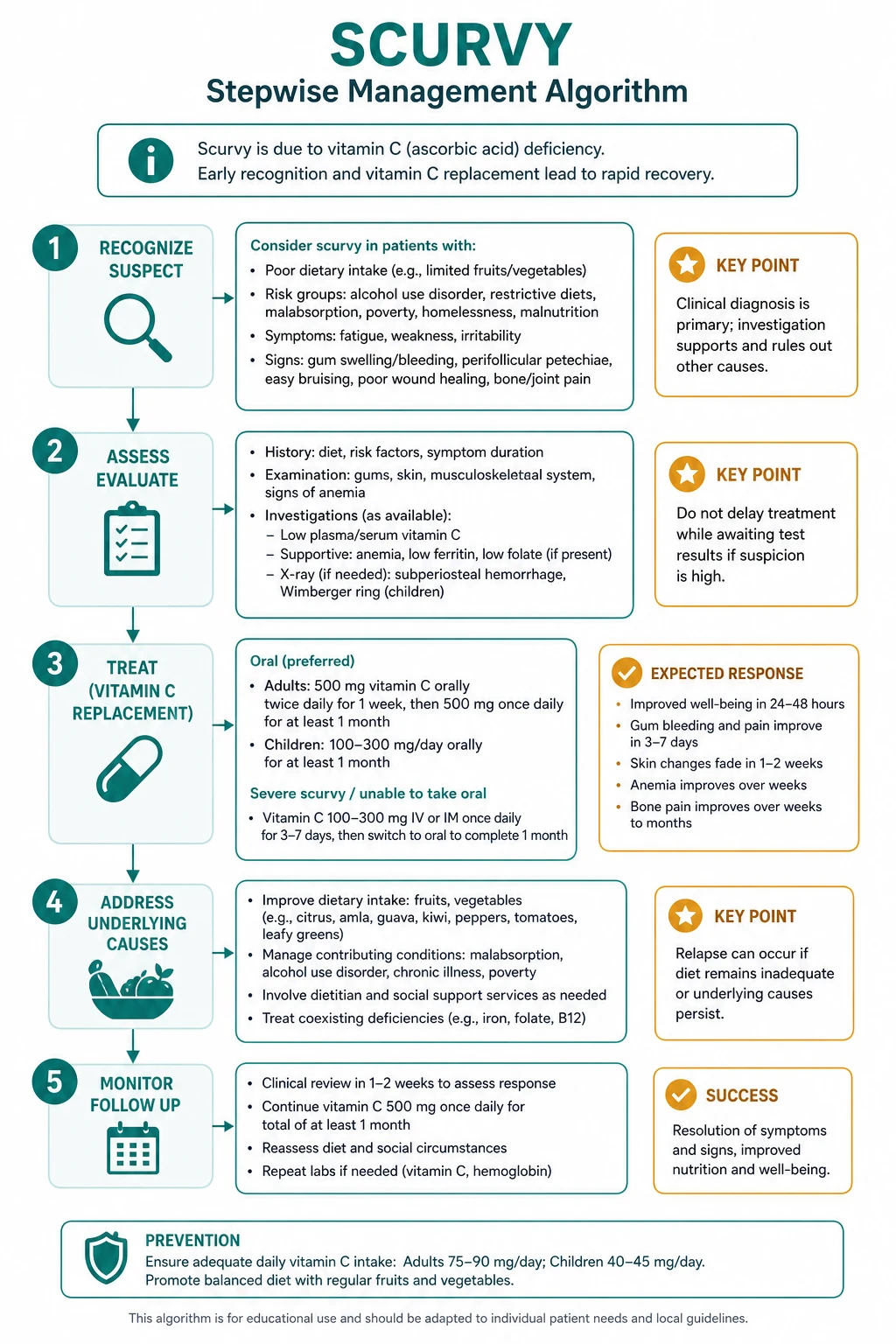
Scurvy is rarely a time-critical emergency, but several scenarios demand prompt action: severe bleeding or symptomatic anaemia, paediatric refusal to bear weight (which can be the presenting emergency), haemodynamic compromise, and any patient in whom the diagnosis has been missed for months. The immediate bundle is: [1]
Immediate management bundle
Start oral ascorbic acid 300 to 1000 mg immediately on clinical suspicion — do not wait for the plasma level.
Send baseline bloods: FBC, PT, APTT, iron studies, folate, B12, U&E, LFT, and (if available) plasma ascorbic acid.
Assess for severity: haemodynamic instability, severe anaemia, haemarthrosis, refusal to bear weight, suspected pulmonary hypertension — admit these.
Screen for and treat coexisting deficiencies: thiamine (give BEFORE feeding — Wernicke risk in alcoholics/anorexia), iron, folate, B12, zinc.
Address the underlying cause: dietetics referral, addiction service, eating-disorder team, social work for food insecurity, dental review.
Management — definitive and stepwise
Definitive therapy is ascorbic acid replacement, dietary correction, and treatment of co-deficiencies and the underlying cause. The regimen is straightforward and the response dramatic. [1]
Ascorbic acid (vitamin C)
Dose
300 to 1000 mg daily in divided doses for 1 week (commonly 500 mg three times daily or 1000 mg once daily), then 100 mg daily maintenance for at least several weeks. Paediatric: 100 to 300 mg daily in divided doses.
Ascorbic acid (vitamin C)
Dose
300 to 1000 mg IV once daily for 1 week, then convert to oral
Dietary correction is the long-term answer and the preventive message. High-vitamin-C foods include citrus (oranges, lemons, limes), red and green peppers, kiwifruit, strawberries, broccoli, Brussels sprouts, tomatoes, and potatoes (especially with skin). As little as 10 mg per day of vitamin C prevents scurvy, so a single orange (~70 mg) more than suffices; the recommended daily allowance is set higher for optimal function (see Special populations). [1]
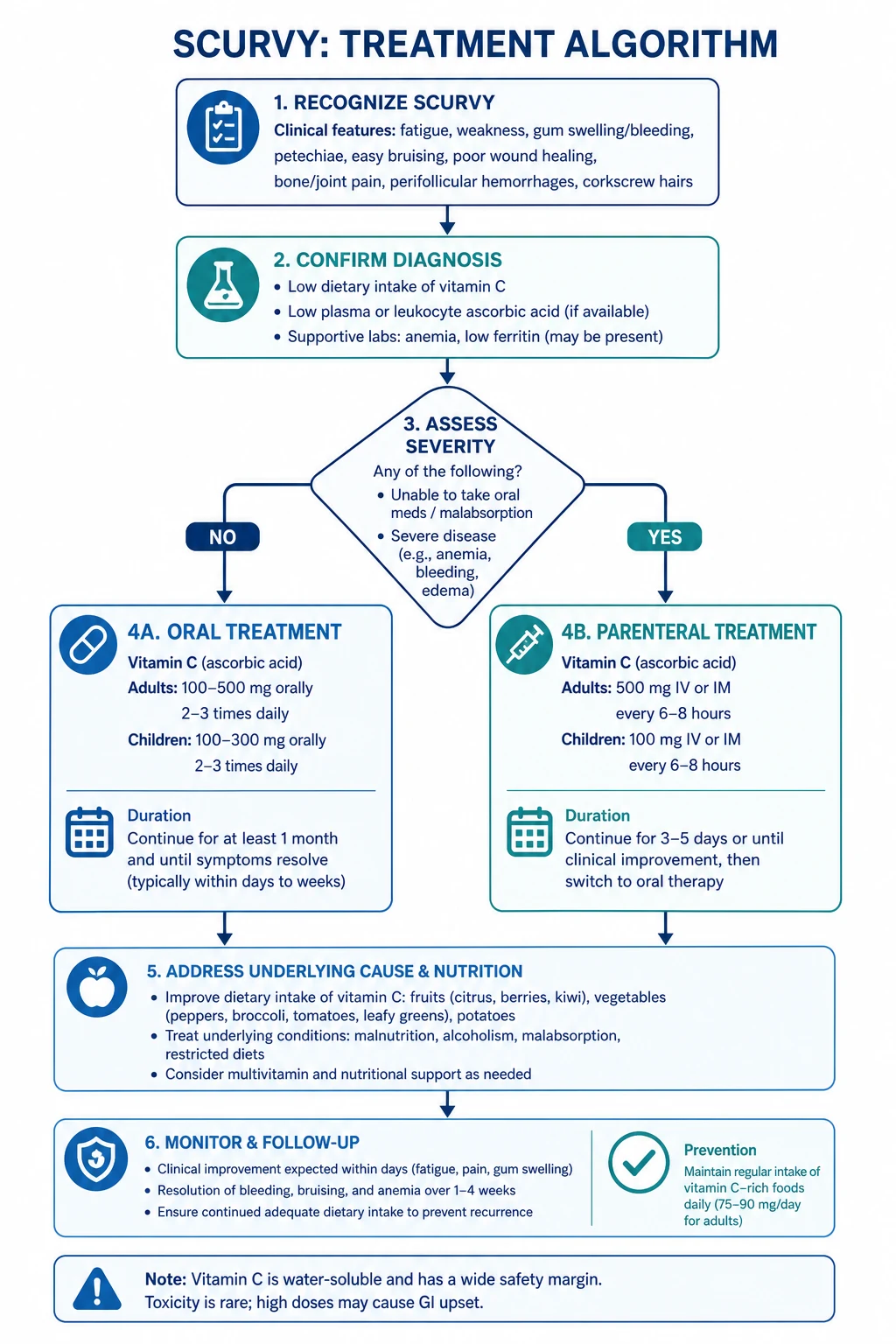
Expected recovery timeline after starting ascorbic acid
Prevention
Scurvy is one of the most easily prevented diseases in medicine — a single daily portion of fruit or vegetables is sufficient. The preventive framework has three layers: adequate dietary intake matched to the regional recommended daily allowance, targeted supplementation in groups with increased requirement or impaired absorption, and anticipatory nutritional counselling of high-risk patients (autistic children with selective eating, the socially isolated elderly, patients on long-term dialysis, and those after bariatric surgery).[3] A focused dietary history at routine encounters — particularly in general practice, paediatric developmental reviews, and pre-dialysis clinics — is the highest-yield preventive intervention, because clinical scurvy is the end-stage of months of a deficient diet during which the patient is asymptomatic but repletable.
As little as 10 mg of vitamin C per day prevents scurvy, so almost any diet containing fresh produce is protective; the recommended daily allowances are set higher (40 to 90 mg) to maintain tissue saturation. Smokers need an additional 35 mg per day because oxidative stress increases ascorbate turnover, pregnancy and lactation raise requirements to 50 to 70 mg per day, and dialysis patients should receive routine water-soluble vitamin supplementation (100 to 200 mg daily, avoiding megadose long-term because of oxalate). Public-health measures that improve access to fresh fruit and vegetables — food subsidies, school fruit schemes, and fortified infant formulas — have historically eliminated scurvy at population scale and remain the structural answer in food-insecure settings. [1]
Specific subtypes and scenarios
Paediatric scurvy (Moeller-Barlow disease)
Paediatric scurvy is the rising phenotype in modern series and the one most often missed. The 2024 JAAOS Global analysis found that 64.2% of inpatient paediatric scurvy cases had a concurrent autism spectrum disorder diagnosis, and that incidence tripled from 2016 to 2020.[2] The typical child is 2 to 8 years old, on a highly selective diet (often only a few carbohydrate foods), and presents with limp, refusal to walk, or irritability on handling rather than the textbook cutaneous tetrad. Inflammatory markers may be elevated, prompting extensive workup for septic arthritis, osteomyelitis, leukaemia, or JIA. The radiographic tetrad of Moeller-Barlow disease is the discriminator: Frankel white line, Wimberger sign, Pelkan spurs, and Trümmerfeld zone, with sub-periosteal haemorrhage around the knees.[4] Treatment is oral ascorbic acid 100 to 300 mg daily with rapid clinical improvement.
Scurvy and anorexia nervosa
Scurvy is increasingly recognised in restrictive eating disorders. The 2024 Frontiers in Nutrition review of nine co-occurrence cases highlighted that gastrointestinal, psychiatric, and dermatological symptoms overlap and that diagnosis is often delayed because scurvy is presumed extinct; vitamin C supplementation produces rapid improvement, but the malnutrition of anorexia requires a multidisciplinary, refeeding-safe approach.[5] Always give thiamine before refeeding and monitor phosphate, magnesium, and potassium.
Dialysis-associated scurvy
Vitamin C is water-soluble and is lost across the dialyser. Long-term haemodialysis patients are at risk, especially if dietary intake is also poor. Routine supplementation with 100 to 200 mg daily prevents deficiency; higher doses are avoided because vitamin C metabolism generates oxalate, and secondary oxalosis can complicate chronic high-dose supplementation in end-stage renal disease. [1]
Post-bariatric, malabsorptive, and food-insecure scurvy
Gastric bypass and short-bowel syndromes impair absorption of water-soluble as well as fat-soluble vitamins. Refugees, food-insecure households, and socially isolated elderly patients present with the classical phenotype and respond rapidly to oral replacement; the long-term fix is dietary and social. [1]
Complications and pitfalls
The complications of scurvy are the consequences of untreated collagen failure: severe haemorrhage (gastrointestinal, intramuscular, intracranial — rare but described), poor wound healing, reopening of old surgical or traumatic wounds, immunosuppression with increased infection susceptibility, anaemia, and — in advanced paediatric disease — pulmonary hypertension and death.[1]
The classic pitfalls are diagnostic: [1]
PITFALLS in scurvy
Prognosis and disposition
Treated scurvy has an excellent prognosis: bleeding stops within 24 to 48 hours, gums heal within 1 to 2 weeks, anaemia resolves within a month with iron and folate, and hairs normalise over 1 to 3 months as new shafts grow out. Full recovery is the rule. Untreated scurvy was historically fatal — death from haemorrhage, infection, or cardiac failure — and modern mortality is rare but described in neglected cases, particularly children with pulmonary hypertension.[1][2]
Disposition is usually outpatient with dietetics, social support, and follow-up of co-deficiencies. Admit patients with severe anaemia, haemodynamic instability, refusal to bear weight (paediatric), suspected pulmonary hypertension, unsafe social circumstances, or significant comorbidity (advanced anorexia, decompensated liver disease). [1]
Special populations
Paediatric
- Weight-based dosing: ascorbic acid 100 to 300 mg daily in divided doses for 1 week, then maintenance.
- Autism spectrum disorder and selective eating dominate modern aetiology.
- Radiographs show Moeller-Barlow tetrad.
- Admit for refusal to bear weight or severe disease.
Pregnancy and lactation
- Higher requirement: UK RDA 50 mg/day in pregnancy, 70 mg/day in lactation.
- Deficiency associated with premature rupture of membranes and peripartum bleeding.
- Oral ascorbic acid 300 to 1000 mg/day is safe in pregnancy.
Elderly
- Tea-and-toast, institutionalisation, edentulousness (no gum signs), polypharmacy, social isolation.
- Often worked up for vasculitis or coagulopathy first.
- Screen for other deficiencies (B12, folate, vitamin D, thiamine).
Smokers
- Plasma ascorbate ~30% lower than non-smokers.
- US RDA is 35 mg/day higher for smokers.
- Repletion as for any deficiency.
Dialysis / renal
- Water-soluble vitamin loss across dialyser.
- Supplement 100 to 200 mg daily; avoid high-dose long-term (oxalate).
Alcoholism / eating disorder
- Multivitamin deficiency is the rule; give thiamine first.
- Multidisciplinary care (addiction, psychiatry, dietetics).
- Refeeding precautions.
Evidence, guidelines and regional differences
The evidence base is dominated by case series, narrative reviews, and one national inpatient analysis rather than randomised trials — appropriate, since the diagnosis and the cure have been settled for 250 years. The landmark modern papers are: [1]
Reikersdorfer 2024 — JAAOS Global
Population: 19,413,465 US paediatric inpatients 2016–2020 (National Inpatient Sample)
Key finding
Incidence rose from 8.2 to 26.7 per 100,000; 64.2% had autism; patients younger, more often male, obese, lowest income quartile; longer stays and higher charges
Trapani 2022 — Nutrients
Population: 166 paediatric scurvy cases from 15 studies over 20 years
Key finding
Wide clinical spectrum; diagnostic delay common; normal nutrition and elevated inflammatory markers mislead towards autoimmune, infectious, or neoplastic diagnoses
Kinlin & Weinstein 2023 — Paediatr Int Child Health
Population: Historical and modern epidemiology of scurvy
Key finding
Scurvy is 'very much a disease of the present'; paediatric risk driven by autism and selective eating; anticipatory nutritional guidance is the prevention target
The Australian/New Zealand nutrient reference value is 45 mg/day (women) to 45 mg/day (men), with higher intakes in pregnancy and lactation. The Australasian College of Dermatologists and Royal Australasian College of Physicians promote routine nutritional screening in at-risk children, particularly those with autism spectrum disorder.
Controversies
- Optimal replacement dose — published regimens range from 100 mg to 1000 mg daily; modern consensus favours 300 to 1000 mg daily for one week then 100 mg daily maintenance, but the dose-response and minimum effective dose are not well studied.
- Oral vs IV — IV is reserved for malabsorption or nil-by-mouth; oral is universally effective when absorption is intact.
- High-dose vitamin C in critical illness and sepsis — CITRIS-ALI and LOVIT trials did not show consistent mortality benefit; high-dose IV ascorbate is not standard care outside trial protocols.
- Oxalate nephrolithiasis risk — long-term high-dose supplementation (over 2000 mg/day) increases urinary oxalate; caution in renal stone formers and dialysis patients. [1]
Exam pearls
[1]Red flags
Exam application bank (NEET-PG / INICET)
One-line answer
Scurvy is caused by deficiency of vitamin C (ascorbic acid), an essential cofactor for collagen synthesis (hydroxylation of proline and lysine residues). Clinical features: follicular hyperkeratosis, corkscrew hairs, perifollicular purpura/petechiae (capillary fragility from defective collagen), bleeding and hypertrophied gums, poor wound healing, arthralgia, and anaemia. Risk factors: tea-and-toast diet in the elderly, alcoholism, anorexia nervosa, autism with selective eating, malabsorption, dialysis, smoking, and food insecurity. Treatment: oral ascorbic acid 300 to 1000 mg daily for one week, then 100 mg daily maintenance — symptoms resolve within 24 to 48 hours. [1]
Worked stems (answer without another resource)
Stem 1 — Classic presentation. Map symptoms to mechanism; name the first investigation and first treatment step with dose/route if drug therapy is standard. [1]
Stem 2 — Unstable / complicated. List red flags that force immediate resuscitation, theatre, ICU, antidote, or reperfusion — and what you do in the first 15 minutes. [1]
Stem 3 — Atypical group. Elderly, pregnancy, child, or immunocompromised: how presentation and thresholds change. [1]
Stem 4 — Differential trap. Name the three closest mimics and one discriminator for each. [1]
Stem 5 — Disposition. Who goes home with safety-netting, who is admitted, who needs HDU/ICU/theatre, and what follow-up is mandatory. [1]
Rapid viva checklist
- Definition + classification
- Pathophysiology chain
- Bedside signs / criteria
- Score with exact components (if any)
- Emergency bundle
- Definitive therapy with doses
- Complications of disease and of treatment
- Special populations
- Guideline/trial name if classic
- Three exam traps
Coverage self-check
If you cannot answer any stem above from this page alone, re-read the matching section — the page is intended to be self-sufficient for final-prof and NEET-PG/INICET questions on Scurvy (vitamin C deficiency).
[1]Quick self-test: a 70-year-old man with corkscrew hairs, perifollicular purpura on the shins, bleeding gums, and a history of living on tea and toast since his wife died. PT 12 s, APTT 31 s, platelets 220. What is the diagnosis, the confirmatory test, and the treatment?
Diagnosis: scurvy (vitamin C deficiency). Confirmatory: plasma ascorbic acid under 11.4 micromol/L, OR the clinical response to ascorbate. Treatment: oral ascorbic acid 300 to 1000 mg daily for one week, then 100 mg daily maintenance, plus dietetic referral and social support. PT and APTT are normal — bleeding is from capillary fragility, not coagulopathy.
SAQ — Scurvy in the limping child (10 marks, 10 minutes)
10 minutes · 10 marks
“”
References
- [1]Toscano F, Zirilli G, Foti Randazzese S, et al. Scurvy, all the faces you can see: our experience and review of the literature Ital J Pediatr, 2025.PMID 40437614
- [2]Reikersdorfer KN, Singh A, Young JD, et al. The Troubling Rise of Scurvy: A Review and National Analysis of Incidence, Associated Risk Factors, and Clinical Manifestations J Am Acad Orthop Surg Glob Res Rev, 2024.PMID 39018570
- [3]Kinlin LM, Weinstein M. Scurvy: old disease, new lessons Paediatr Int Child Health, 2023.PMID 37795755
- [4]Trapani S, Rubino C, Indolfi G, Lionetti P. A Narrative Review on Pediatric Scurvy: The Last Twenty Years Nutrients, 2022.PMID 35277043
- [5]Cui S. A comprehensive review on the co-occurrence of scurvy and anorexia nervosa Front Nutr, 2024.PMID 39296506