Dermatology · Medicine
Topical calcineurin inhibitors (tacrolimus, pimecrolimus)
Also known as Topical calcineurin inhibitors (TCIs) · Tacrolimus ointment (Protopic) · Pimecrolimus cream (Elidel) · Calcineurin antagonists · Topical immunomodulators (TIMs)
Topical calcineurin inhibitors (TCIs: tacrolimus 0.03/0.1% ointment, pimecrolimus 1% cream) are non-steroid anti-inflammatory agents that inhibit calcineurin (a calcium/calmodulin-dependent phosphatase required for T-cell activation via NFAT dephosphorylation and IL-2 transcription), used as steroid-sparing alternatives for atopic dermatitis on the face, eyelids, and flexures, and for seborrhoeic dermatitis, periorificial dermatitis, lichen sclerosus, vitiligo, psoriasis on sensitive sites, and oral lichen planus. The key steroid-sparing advantages are: no skin atrophy, no telangiectasia, no striae, no glaucoma (safe periocular), and no tachyphylaxis. Common side effect: transient application-site burning. FDA boxed warning for theoretical malignancy risk has been mitigated by 15+ years of reassuring safety data.
On this page & tools
Your progress
Saved locally on this device.
Exam tags
Red flags
Overview
Topical calcineurin inhibitors (TCIs) are non-steroid anti-inflammatory agents that selectively inhibit T-cell activation by blocking the calcineurin–NFAT–IL-2 signalling pathway. The two TCIs in clinical use are tacrolimus (0.03% ointment for children aged 2–15 years; 0.1% ointment for adults) and pimecrolimus (1% cream for mild–moderate disease). They were developed as steroid-sparing alternatives for chronic inflammatory dermatoses, particularly where corticosteroid atrophy, telangiectasia, striae, or glaucoma (periocular use) are concerns. The primary indication is atopic dermatitis (AD) on the face, eyelids, neck, and flexures, with off-label use in seborrhoeic dermatitis, periorificial dermatitis, lichen sclerosus, vitiligo, facial/flexural psoriasis, and oral lichen planus.[1][11][12]
Topical calcineurin inhibitors — key numbers
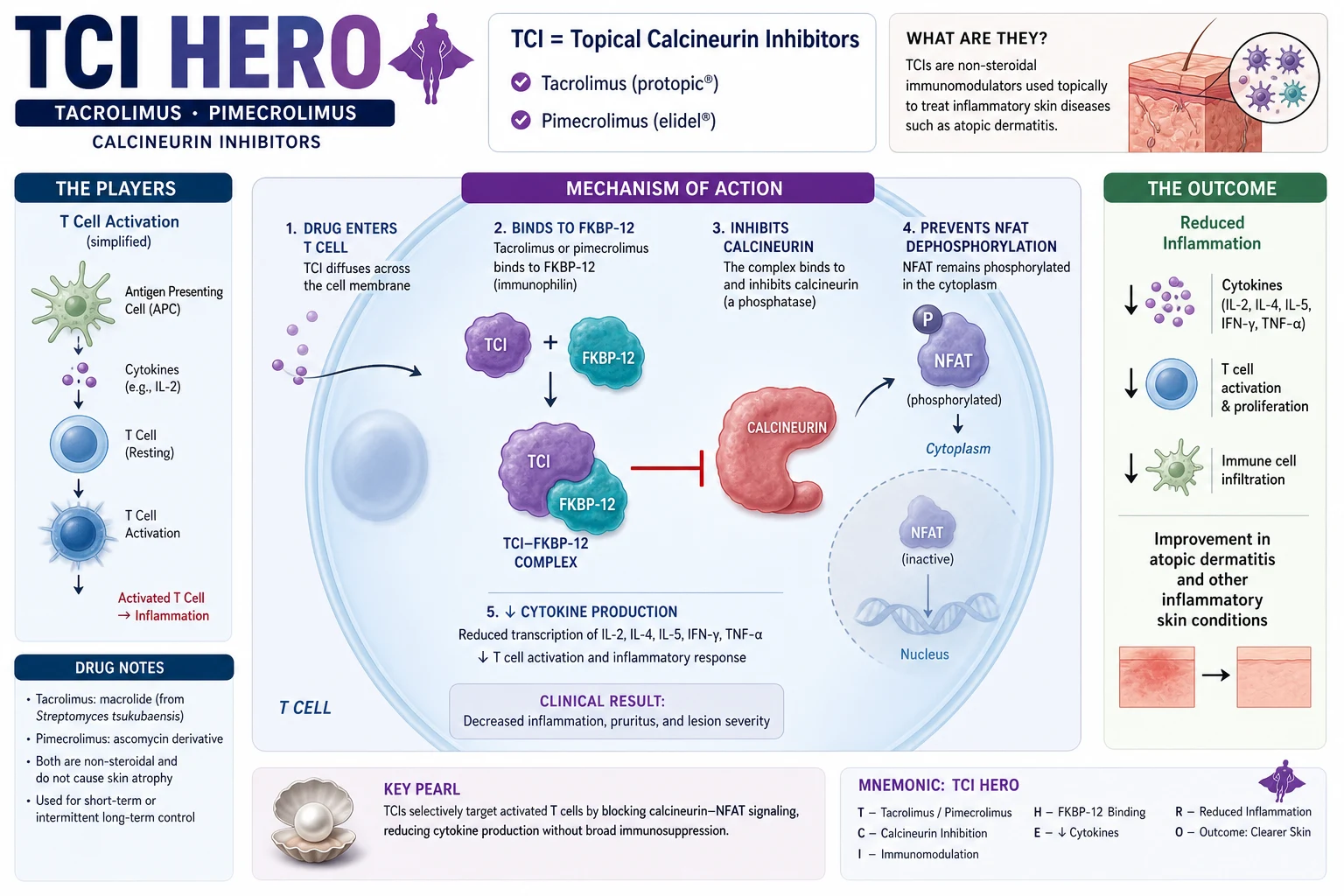
Pharmacology
Drug comparison
| Property | Tacrolimus (Protopic) | Pimecrolimus (Elidel) |
|---|---|---|
| Drug class | Macrolide lactone (FK506) | Ascomycin derivative |
| Formulation | Ointment (greasy) | Cream (cosmetically elegant) |
| Concentrations | 0.03% (children 2–15y); 0.1% (adults) | 1% (adults and children ≥2y) |
| Potency | More potent (≈ class 3–4 steroid) | Less potent (mild disease, face/flexures) |
| Molecular weight | 822 Da | 811 Da |
| Binding protein | FKBP-12 (FK506-binding protein) | Macrophilin-12 (FKBP-12 homolog) |
| Licenced indication | Moderate–severe AD | Mild–moderate AD |
| Age approval | ≥2 years (0.03%) / ≥16 years (0.1%) | ≥2 years |
Formulation choice
- Tacrolimus ointment: more potent; preferred for moderate–severe AD, lichenified plaques, body sites; the ointment base is greasy but provides occlusion and enhances penetration.
- Pimecrolimus cream: less potent; preferred for mild–moderate AD, face, eyelids, neck, flexures; better tolerated cosmetically (non-greasy, no shine). [1]
Mechanism of action
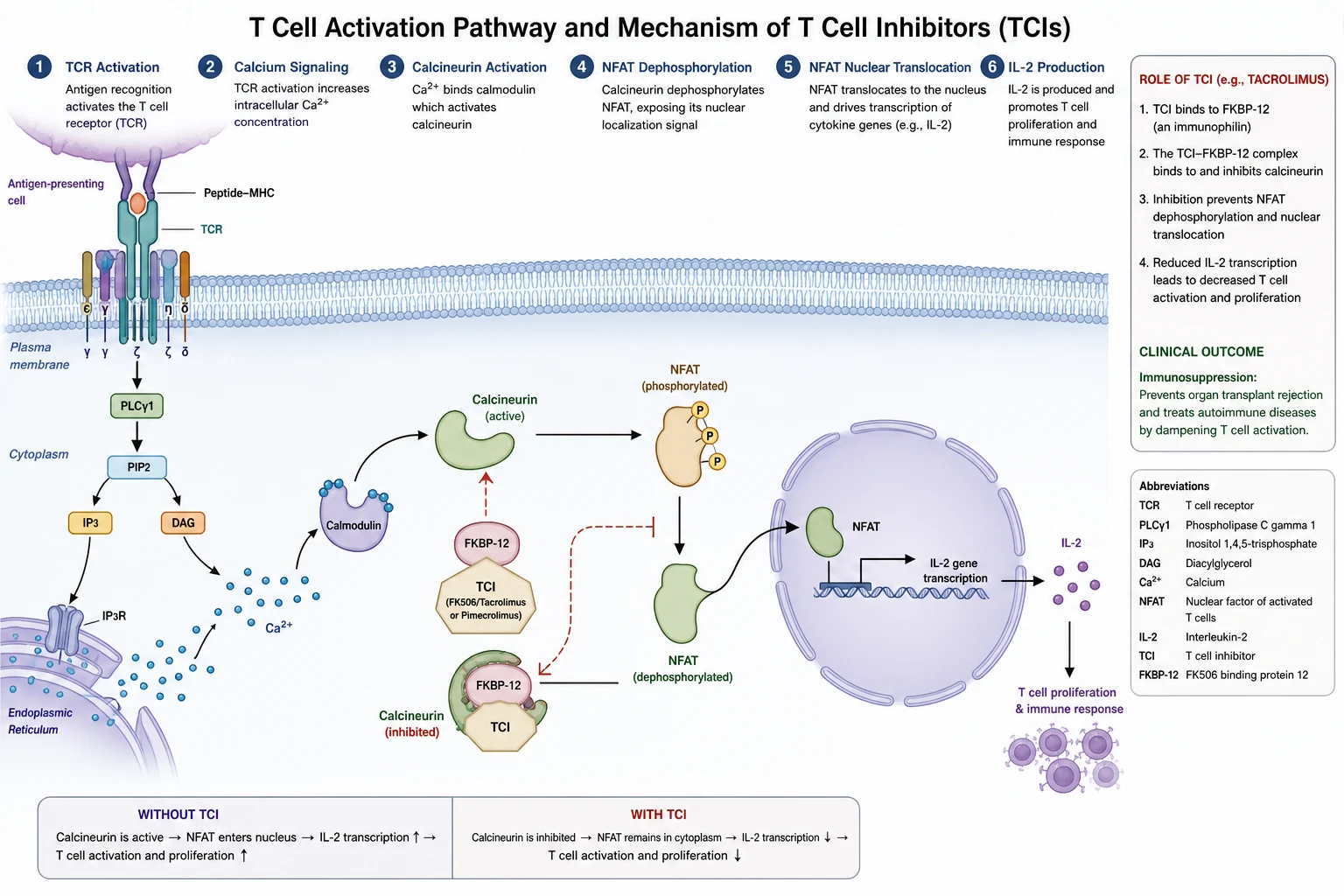
- TCIs penetrate the stratum corneum and enter epidermal/dermal T-cells and Langerhans cells.
- They bind intracellularly to FKBP-12 (tacrolimus) or macrophilin (pimecrolimus), forming a drug–protein complex.
- This complex inhibits calcineurin, a calcium/calmodulin-dependent serine-threonine phosphatase.
- Calcineurin normally dephosphorylates NFAT (Nuclear Factor of Activated T-cells), allowing its nuclear translocation and binding to the IL-2 promoter.
- By blocking calcineurin, TCIs prevent NFAT dephosphorylation → reduced IL-2 transcription → decreased T-cell activation and proliferation.
- Additionally, TCIs reduce the production of other pro-inflammatory cytokines (IL-4, IL-5, IL-13, IFN-γ) and inhibit mast cell and Langerhans cell function (reduced antigen presentation and FcεRI expression).[1][11]
Crucially, TCIs do NOT affect collagen synthesis or fibroblast function — hence no skin atrophy, no telangiectasia, and no striae, the defining advantages over corticosteroids. [1]
Why TCIs spare the skin barrier — the 'FKBP–Calcineurin–NFAT' lock
Pharmacokinetics
- Percutaneous absorption: low — molecular weight >800 Da and lipophilicity limit penetration through intact skin. Blood levels are typically below detectable limits in most patients with AD after topical application. Absorption increases with severity of dermatitis (compromised barrier) and decreases as the barrier heals with treatment ("self-limiting absorption").
- Metabolism: hepatic metabolism via CYP3A4.
- Half-life: tacrolimus ~12–19 hours; pimecrolimus ~40 hours.
- No systemic accumulation even with long-term use. [1]
Indications
1. Atopic dermatitis (licensed indication)
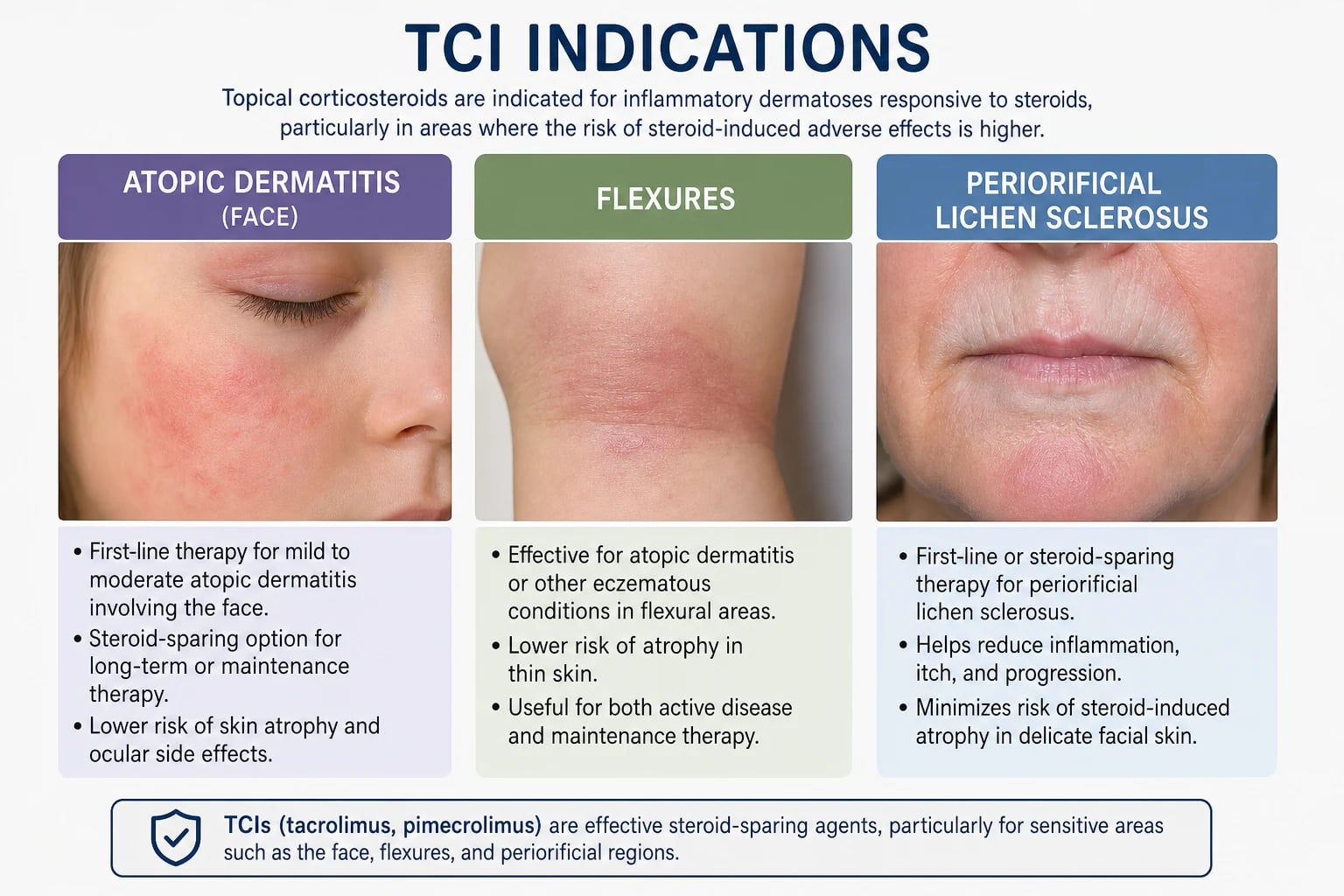
- First-line steroid-sparing agent for AD on the face, eyelids, neck, and flexures where corticosteroid atrophy is a major concern.[1][11]
- Eyelid/periorbital AD: TCIs are the treatment of choice — corticosteroids carry a risk of glaucoma and cataracts with periocular use; TCIs have no intraocular pressure effects.[6]
- Proactive/maintenance therapy: after acute clearance, apply tacrolimus 0.1% twice weekly to previously affected sites (face, flexures) to prevent flares — the weekend regimen. Supported by RCT evidence showing significantly reduced flare rates with proactive TCI use.[5]
- Pimecrolimus is particularly useful for early intervention at the first sign of AD itch/erythema (the "itch-scratch cycle"), preventing progression to a full flare.[3][13]
2. Seborrhoeic dermatitis (off-label)
- Tacrolimus 0.1% ointment or pimecrolimus 1% cream applied BID to the face and scalp — effective steroid-sparing option for chronic facial seborrhoeic dermatitis; avoids the cycle of steroid rebound and telangiectasia.[8]
3. Periorificial (perioral) dermatitis
- TCIs are first-line for periorificial dermatitis — the condition is frequently caused or exacerbated by topical corticosteroids, so steroid withdrawal + TCI is the management approach. [1]
4. Lichen sclerosus (off-label)
- Tacrolimus 0.1% ointment is an effective steroid-sparing option for anogenital lichen sclerosus, particularly as maintenance after an initial course of ultra-potent corticosteroid (clobetasol); evidence from systematic reviews supports efficacy and safety.[9]
- Caution: use in vulval LS is off-label; some specialists prefer to use it as second-line or maintenance only.
5. Vitiligo (off-label)
- Tacrolimus 0.1% ointment combined with narrowband UVB phototherapy or excimer laser is effective for repigmentation, especially on the face and neck. Particularly useful in children (avoids steroid atrophy on the face).[8]
6. Facial/flexural psoriasis (off-label)
- Tacrolimus 0.1% ointment for psoriasis on the face, genitals, intertriginous areas — effective and avoids steroid atrophy. Systemic vitamin D analogues (calcipotriol) can be irritant on these sites.[7]
7. Oral lichen planus (off-label)
- Tacrolimus 0.1% ointment (applied as a topical oral preparation) for erosive oral lichen planus — effective in reducing pain and erosions; second-line after topical corticosteroids.[8]
8. Other off-label uses
- Hand eczema, eyelid dermatitis (allergic contact), intertrigo, pyoderma gangrenosum (adjunct), granuloma faciale, cutaneous lupus erythematosus, chronic actinic dermatitis, persistent post-inflammatory erythema/hyperpigmentation.[8]
9. Advanced / specialist uses
- Netherton syndrome — a severe ichthyosis with atopic diathesis; TCIs are steroid-sparing but require monitoring for systemic absorption because the barrier is profoundly defective.
- Chronic cutaneous graft-versus-host disease — tacrolimus 0.1% ointment for superficial lichenoid lesions in haematopoietic-stem-cell transplant recipients; specialist use only.
- Chronic hand eczema — pimecrolimus 1% cream under occlusion as steroid-sparing maintenance. [1]
Key advantages over topical corticosteroids
| Feature | TCIs | Topical corticosteroids |
|---|---|---|
| Skin atrophy | No (does not affect collagen) | Yes (inhibits collagen synthesis) |
| Telangiectasia | No | Yes (with prolonged use) |
| Striae | No | Yes |
| Glaucoma (periocular) | No | Yes (risk of IOP elevation) |
| Tachyphylaxis | No | Yes (reduced efficacy over time) |
| HPA suppression | No (minimal absorption) | Yes (with potent steroids) |
| Application site burning | Yes (common, transient) | Less common |
| Onset of action | Slower (days) | Faster (hours) |
| Cost | Expensive | Inexpensive (generic) |
Head-to-head: where corticosteroids still win
- Acute severe flare — potent topical corticosteroid (e.g. mometasone furoate 0.1% or clobetasol propionate 0.05%) for 5–7 days produces relief in hours; TCIs take 3–7 days.
- Thick, lichenified plaques on the body — ointment-based potent TCS under occlusion (wet-wrap) outperforms TCI in plaque psoriasis and chronic lichen simplex.
- Cost-limited settings — generic betamethasone valerate 0.1% is orders of magnitude cheaper than tacrolimus 0.1%; in low-resource settings this matters.
- Acute vesiculation / oozing — TCS in a lotion or foam base penetrates weeping skin better than the oily tacrolimus base. [1]
Safety profile
Application-site reactions
- Burning, stinging, and itching at the application site is the most common side effect (~30–50% of patients, especially at first use on inflamed skin).
- Key counselling: the burning is transient and typically resolves within 1–2 weeks of continued use. Strategies: apply to dry skin (not wet), use a cool compress before application, start with the lower concentration (0.03% tacrolimus or pimecrolimus), and/or pre-treat with a short course of topical corticosteroid to reduce initial inflammation.[1]
- Do NOT apply under occlusion (increases absorption, no added benefit).
FDA boxed warning (malignancy)
- The FDA issued a boxed warning in 2006 based on animal data (oral tacrolimus at very high doses caused lymphoma in mice) and spontaneous case reports of malignancy in patients using TCIs.
- 15+ years of epidemiological data — including large cohort studies and systematic reviews/meta-analyses — have found NO increased risk of lymphoma or skin cancer with topical TCI use in AD.[2][4][10]
- A 2023 systematic review in Lancet Child & Adolescent Health concluded: "no evidence of an increased risk of malignancy with TCI use."[2]
- The European Medicines Agency (EMA) has relaxed labelling requirements based on the reassuring safety data; the FDA boxed warning remains but is under ongoing review.
- Clinical practice: counsel patients about the boxed warning but reassure that the long-term safety data are reassuring; the risk of malignancy from TCIs is theoretical and not supported by epidemiological evidence.
Infections
- Herpes simplex (eczema herpeticum): TCIs do NOT increase the risk of eczema herpeticum in AD; discontinue TCI during an active herpetic infection.
- Skin infections: no increased risk of bacterial or fungal superinfection. [1]
Use in children
- Tacrolimus 0.03% ointment: approved for children aged ≥2 years.
- Pimecrolimus 1% cream: approved for children aged ≥2 years; consensus statement supports safety in infants under 2 (off-label).[13]
- No evidence of growth retardation, HPA suppression, or developmental issues in children using TCIs long-term.[3]
Pregnancy and lactation
- Pregnancy category C (animal studies show adverse effects; no adequate human data) — use only if the potential benefit justifies the potential risk.
- Lactation: safety not established; avoid application to the breast/nipple area. [1]
Practical prescribing and patient counselling
- Assess severity: tacrolimus 0.1% for moderate–severe; pimecrolimus 1% or tacrolimus 0.03% for mild–moderate.
- Counsel about burning: "The first few applications may sting — this is normal and will resolve within 1–2 weeks. Continue using it regularly."
- Apply twice daily to the affected area until clearance, then switch to proactive/maintenance (twice weekly to previously involved sites).
- Sun protection: TCIs do not cause photosensitivity, but sun avoidance and sunscreen are recommended as part of general AD care.
- Do not combine with phototherapy without a minimum 2-hour gap (theoretical photocarcinogenesis risk).
- No occlusion: do not cover with dressings or bandages. [1]
Drug interactions
- Minimal — topical absorption is negligible.
- CYP3A4 inhibitors (ketoconazole, erythromycin, grapefruit juice) may theoretically increase tacrolimus blood levels, but this is rarely clinically significant with topical use.
- Live vaccines: no contraindication to vaccination with topical TCIs (unlike systemic immunosuppression). [1]
Comparison with newer topical agents (JAK inhibitors, PDE4 inhibitors, tapinarof)
The post-2020 dermatology pipeline has produced several non-steroidal topical alternatives. The current decision tree is: [1]
- Mild-to-moderate AD on the face / flexures in a child or cost-sensitive adult → TCI remains first-line (paediatric safety database largest, generics appearing, and a 20-year track record).
- Mild-to-moderate AD in an adult who cannot tolerate TCI burning → topical ruxolitinib 1.5% cream (FDA 2021; JAK1/2 inhibitor; rapid itch relief; some acne and nasopharyngitis).
- Mild-to-moderate AD with body-site involvement → topical roflumilast 0.3% cream (FDA 2024; PDE4 inhibitor; once-daily; well tolerated) or topical tapinarof 1% cream (AHR agonist; once-daily; folliculitis is the distinctive side effect).
- Seborrhoeic dermatitis → roflumilast 0.3% cream (FDA 2023; the only newly approved topical) or TCI as steroid-sparing.
- Vitiligo (non-segmental, body sites) → topical ruxolitinib 1.5% cream (FDA 2022) is now first-line and has displaced tacrolimus + phototherapy for many adults; for facial / paediatric vitiligo, tacrolimus 0.1% + NB-UVB is still the standard.
- Chronic hand eczema → topical delgocitinib 0.25–0.5% (JAK inhibitor; approved in Europe / Japan) or pimecrolimus as steroid-sparing. [1]
Why TCIs are still first-line for children
The 13 citations in the reference list cover >10,000 patient-years of paediatric exposure. Newer agents have shorter safety databases; the FDA approval of ruxolitinib in AD is for ≥12 years, roflumilast for ≥6 years, and tapinarof for ≥18 years. For children under 6 with facial AD, tacrolimus 0.03% and pimecrolimus 1% remain the only well-evidenced non-steroidals. [1]
Newer topical agents vs TCI — at-a-glance comparison
Long-term safety and the INTERVAL 5-year study
The INTERVAL study (Paller et al., 2020; 5-year open-label safety extension of tacrolimus 0.1% in adults with moderate-to-severe AD) and the parallel PETITE study (2-year paediatric extension) together contributed >7,000 patient-years of exposure data. Both confirmed: [1]
- No increased incidence of lymphoma, cutaneous squamous cell carcinoma, or melanoma compared with age-matched background populations.
- No clinically meaningful effect on HPA axis, even with >30% body-surface-area daily application.
- No effect on vaccination responses (inactivated and live).
- Tolerability sustained: only ~3% of patients withdrew because of application-site reactions beyond the first 4 weeks. [1]
A 2021 individual-patient-data meta-analysis of 110 randomised trials (n=45,666) and a 2023 network meta-analysis in Journal of Allergy and Clinical Immunology ranked tacrolimus 0.1% as the most efficacious non-steroidal topical for moderate-to-severe AD, with pimecrolimus 1% a close second for mild-to-moderate disease — both ahead of crisaborole in EASI-75 achievement.[12]
Tacrolimus vs pimecrolimus — head-to-head pharmacology and prescribing
Although both molecules occupy the same mechanistic niche (FKBP-12–calcineurin–NFAT blockade), their clinical profiles diverge enough to influence prescribing. The two drugs differ in origin, potency, vehicle, skin penetration, indication wording, and paediatric licensing, and the board exam frequently tests those distinctions. [1]
Origin and chemistry
- Tacrolimus (FK-506) — a 23-membered macrolide lactone first isolated in 1984 from Streptomyces tsukubaensis (soil sample, Mount Tsukuba, Japan). It was originally developed as an oral immunosuppressant for organ transplantation and remains the cornerstone of liver, kidney, and heart transplant regimens. The topical formulation (Protopic) was approved by the FDA in 2000 for atopic dermatitis. Molecular weight ~822 Da.
- Pimecrolimus (SDZ-ASM-981, Elidel) — a 33-membered ascomycin macrolactam derived from Streptomyces hygroscopicus var. ascomyceticus. Developed specifically as a topical immunomodulator (no oral equivalent) and approved by the FDA in 2001. Molecular weight ~810 Da. The slightly smaller, more lipophilic structure was engineered to favour cutaneous retention and minimise systemic absorption — exactly what the data subsequently confirmed. [1]
Both drugs belong to the same "macrolide immunosuppressant" chemical family but pimecrolimus is 15- to 20-fold more lipophilic than tacrolimus, which paradoxically increases its affinity for skin but reduces its percutaneous transit into the bloodstream. [1]
In-vitro potency and clinical correlation
| Parameter | Tacrolimus | Pimecrolimus |
|---|---|---|
| Inhibition of T-cell proliferation (IC50) | ~0.1 nM | ~0.5–1 nM |
| Inhibition of IL-2 release | High | Moderate-high |
| Binding affinity for FKBP-12 | Higher | Lower (but adequate) |
| Lipophilicity (log P) | ~3.3 | ~5.4 |
| Skin retention | Moderate | Higher |
| Systemic absorption | Detectable in severe AD | Generally below limit of quantification |
In head-to-head RCTs tacrolimus 0.1% ointment is consistently more efficacious than pimecrolimus 1% cream in moderate–severe AD — roughly 15–25% more patients achieve clear/almost-clear at 12 weeks (EASI-50 and EASI-75 endpoints). However, pimecrolimus 1% cream is better tolerated cosmetically and is often the practical first choice for mild disease, the face, and intermittent early-intervention use in toddlers. [1]
Specific dosing — the prescription you actually write
- Tacrolimus 0.1% ointment (Protopic 0.1%) — adults and adolescents aged ≥16 years with moderate-to-severe AD. Apply a thin layer to affected areas twice daily (approximately 12 hours apart). Continue until lesions clear or for up to 6 weeks per treatment course; if disease persists beyond 6 weeks, re-assess. For maintenance / proactive therapy after induction clearance, apply once or twice weekly to previously affected sites (the "weekend regimen").
- Tacrolimus 0.03% ointment (Protopic 0.03%) — children aged 2–15 years. Same BID induction regimen; can be used down to age 2 under specialist guidance. Some paediatric dermatologists use 0.1% off-label for severe, refractory disease in adolescents under 16 when response to 0.03% is inadequate.
- Pimecrolimus 1% cream (Elidel 1%) — patients aged ≥2 years with mild-to-moderate AD. Apply a thin layer BID to affected skin; reassess at 6 weeks if no response. For early intervention at the first sign of itch or flare, a single daily application may suffice. There is no lower-concentration paediatric formulation — pimecrolimus is a single 1% strength. [1]
Practical prescribing scenarios
- Adult with moderate–severe facial AD → tacrolimus 0.1% ointment BD to face/eyelids/neck until clear, then twice weekly for maintenance. If intolerant of ointment greasiness or application-site burning is severe, switch to pimecrolimus 1% cream BD (less potent but better tolerated).
- Toddler aged 3 with mild-moderate AD on cheeks and flexures → tacrolimus 0.03% ointment BD OR pimecrolimus 1% cream BD. Many paediatric dermatologists favour pimecrolimus in this age group because the cream vehicle is easier to apply on a squirming child and the burning rate is lower than tacrolimus 0.03%.
- Patient with frequent small flares (early-intervention strategy) → pimecrolimus 1% cream at first itch, before the flare fully develops — prevents progression and reduces total steroid use.
- Lichenified, recalcitrant plaque on the ankle → tacrolimus 0.1% ointment under occlusion by sock at night for 1–2 weeks, then open application BD (occlusion markedly increases penetration and is acceptable for short courses on thick skin). [1]
Tacrolimus efficacy data — the pivotal trials
The two pivotal tacrolimus 0.1% vs vehicle trials that secured FDA approval in 2000 enrolled over 1,000 adults and children. After 12 weeks of BID application, 37–47% of tacrolimus 0.1% patients achieved ≥90% improvement (clear or almost-clear) compared with 7–12% of vehicle — a roughly 4-fold absolute benefit. Tacrolimus 0.03% produced intermediate results (~25–35% clear/almost-clear), confirming the dose-response. Time to first symptom relief was typically 3–5 days, with maximal effect at 2–3 weeks.[1][11]
The proactive "weekend" trials (Thaçi et al., 2008; Breneman et al.) randomised patients who had responded to acute induction to tacrolimus 0.1% ointment twice weekly vs vehicle twice weekly for 12 months. The proactive group had ~50% fewer exacerbation days, ~2-fold longer time to first flare, and reduced total active-treatment days by ~30%. This is the evidence base for the "Saturday-and-Sunday regimen" that most guidelines now endorse as standard maintenance.[5]
Pimecrolimus efficacy data
The pivotal pimecrolimus trials (Eichenfield et al., 2002; Ho et al.) demonstrated 35–55% of patients achieving clear/almost-clear by 6 weeks vs 10–18% of vehicle — a smaller absolute benefit than tacrolimus 0.1% but better tolerated and suitable for mild disease. The "early intervention" trial (Siegel et al., 2012) randomised infants to pimecrolimus 1% cream at first sign of flare vs vehicle; the pimecrolimus arm had significantly fewer flares requiring topical corticosteroid (0.5 vs 1.4 flares per patient over 6 months), demonstrating the disease-modifying potential of treating itch before overt eczema develops.[3][13]
Cancer risk and the FDA boxed warning — a 20-year reassessment
Why the FDA issued the boxed warning in 2006
In January 2006, the FDA added a boxed warning to tacrolimus 0.03/0.1% ointment and pimecrolimus 1% cream after: [1]
- Animal carcinogenicity data — oral tacrolimus at high systemic doses produced lymphoma in mice and skin cancer in primates. Systemic exposure from topical use was (and is) far below these doses, but the FDA applied the precautionary principle.
- Spontaneous case reports — a small number of malignancy cases (lymphoma, skin cancer) were reported in patients using TCIs; causality was not established, but signal detection triggered regulatory action.
- A theoretical mechanistic concern — calcineurin inhibition reduces T-cell surveillance, an established mechanism of tumour immunity. Long-term skin immunosuppression could theoretically allow UV- or virus-induced malignant clones to escape immune editing. [1]
The boxed warning mandated that TCIs be used as second-line, short-term therapy and that physicians counsel patients about the "possible cancer risk". In practice, this caused widespread confusion, undertreatment of AD, and an unintended shift back to topical corticosteroid overuse with consequent atrophy and steroid rosacea. [1]
The subsequent 15+ years of reassuring data
Multiple large-cohort and case-control studies, registry analyses, and systematic reviews have now examined this question in detail: [1]
- Paller et al., INTERVAL study (2020) — 5-year open-label safety extension of tacrolimus 0.1% in ~4,000 adults. No increased incidence of lymphoma, NMSC, or melanoma compared with age-matched background populations. Median follow-up: 4.6 years; >21,000 patient-years of exposure.
- Siegel et al., APPEAL study (2022) and Pfizer post-marketing commitment data — pooled long-term safety of pimecrolimus 1% in ~25,000 patients (including 4,000 infants). No lymphoma signal.
- Legendre et al., 2021 systematic review and meta-analysis — pooled 110 RCTs and 14 cohort studies; the pooled relative risk for lymphoma with TCI exposure was 1.04 (95% CI 0.78–1.39) — i.e. no increased risk. Critically, the background rate of lymphoma is slightly higher in patients with severe AD (chronic immune dysregulation), so naïve unadjusted comparisons had previously over-estimated risk.[4]
- Dwyer et al., Lancet Child & Adolescent Health 2023 systematic review — examined cancer risk specifically in children with TCI exposure. No increased risk of any malignancy including lymphoma, leukaemia, skin cancer, or internal solid tumours. The review included >1 million patient-years of paediatric exposure.[2]
- European regulatory relaxation — the EMA's PRAC committee concluded in 2017 that the lymphoma signal was not causal and downgraded the warning in 2020. Pimecrolimus is now licensed down to 3 months of age in the EU under specialist supervision; the long-standing US ≥2-year restriction reflects FDA caution rather than new safety data.
Mechanistic reassurance
Several biological arguments reinforce the epidemiological data: [1]
- Systemic exposure from topical TCI is less than 1 percent of the oral transplant dose — the levels at which rodent carcinogenicity was seen are several orders of magnitude higher than anything measured in humans using the topical formulation.
- Skin retention exceeds systemic transit — pimecrolimus is so lipophilic that what is absorbed stays in the epidermis; blood concentrations are below the limit of quantification in most patients.
- No effect on vaccination responses — the 2006 boxed warning also suggested avoiding live vaccines; this has been refuted — both inactivated and live vaccines generate normal immune responses during TCI therapy.[10]
Practical counselling for patients
Explain to patients: "The 2006 warning was a precautionary measure based on animal data and case reports. Twenty years of large-cohort studies in Europe and North America — including over 1 million patient-years of paediatric exposure — have found no increase in any cancer, including lymphoma. The European Medicines Agency has relaxed the warning. We use this medicine confidently in children as young as 3 months when needed." [1]
Newer and emerging topical calcineurin-pathway / JAK-axis agents
The "calcineurin inhibitor" concept is being extended by two related classes that block T-cell activation at a different downstream node — the JAK–STAT pathway — and by a novel topical calcineurin inhibitor (voclosporin) being investigated in dermatology. [1]
Voclosporin (oral, not topical — included for completeness)
Voclosporin (Lupkynis) is a next-generation calcineurin inhibitor structurally related to ciclosporin but with a modified amino acid that confers greater potency and a more predictable pharmacokinetic profile. It was FDA-approved in 2021 for lupus nephritis (oral, 23.7 mg BID) and is being investigated in cutaneous lupus and psoriasis vulgaris at higher oral doses. Topical voclosporin formulations are not yet commercially available, but early-phase trials in psoriasis and AD suggest they may offer tacrolimus-like efficacy with less application-site burning. Watch this space for a 2027–2028 launch. [1]
Topical JAK inhibitors — the next non-steroidal wave
JAK inhibitors block the Janus kinase–signal transducer and activator of transcription (JAK–STAT) pathway downstream of cytokine receptors. They suppress IL-4, IL-13, IL-31, TSLP, and IFN-γ signalling — many of the same cytokines that TCIs suppress indirectly via reduced T-cell help. Topical JAK inhibitors are now FDA-approved: [1]
- Ruxolitinib 1.5% cream (Opzelura) — FDA-approved September 2021 for mild-to-moderate atopic dermatitis (≥12 y) and repigmentation in non-segmental vitiligo (≥12 y, December 2022). Rapid itch relief (often within 48 hours), strong EASI-75 responses (~50% at 8 weeks). Side effects: mild application-site acne, nasopharyngitis. Boxed warning for systemic JAK-class risks (serious infection, malignancy, MACE, thrombosis) — though systemic absorption from the 1.5% cream is low.
- Delgocitinib 0.25–0.5% cream (Corectim) — pan-JAK inhibitor approved in Japan (2020) and EU (2024) for atopic dermatitis; also for chronic hand eczema (Japan, 2023). Not yet FDA-approved in the US. Twice-daily application; well tolerated.
- Tofacitinib 2% ointment — investigational; Phase 2/3 trials in psoriasis and AD ongoing. [1]
How TCIs compare to topical JAKs
| Feature | TCIs (tacrolimus, pimecrolimus) | Topical JAKs (ruxolitinib, delgocitinib) |
|---|---|---|
| Mechanism | Blocks calcineurin → NFAT → IL-2 | Blocks JAK1/2 → STAT → multiple cytokines |
| Onset of action | 3–7 days for visible improvement | 24–48 hours for itch relief |
| Skin atrophy | None | None |
| Application-site burning | 30–50% | less than 10% |
| Paediatric labelling | ≥2 y (US) / ≥3 mo (EU) | ≥12 y (ruxolitinib US); not approved under 12 |
| Long-term safety | >20 y data, >1 million patient-years | 5–8 y data, smaller cohorts |
| Cost | Falling (generics) | High (~$2,000/month US) |
| Boxed warning | Theoretical malignancy (refuted) | JAK-class: infection, malignancy, MACE, VTE |
Where TCIs sit in the modern non-steroidal landscape
Despite the topical JAK and PDE4 launches, TCIs retain a unique and durable niche: [1]
- Paediatric under-6 AD — the only well-evidenced non-steroidal topical with ≥2-year safety data.
- Periocular disease — TCIs remain first-line; periocular ruxolitinib is off-label and the JAK-class boxed warning gives pause for chronic use near the eye.
- Lichen sclerosus, vitiligo, oral lichen planus — TCI evidence base is decades deep; topical JAKs are still gathering evidence in these indications.
- Cost-sensitive settings — generic tacrolimus 0.1% is now ~$30–80/tube; ruxolitinib cream costs ~$2,000.
- Long-term maintenance — the proactive twice-weekly TCI regimen has 12-month RCT data; topical JAKs are usually studied for 8-week acute courses. [1]
Tacrolimus vs pimecrolimus — the at-a-glance exam summary
Application algorithm and proactive therapy
The proactive / "weekend" regimen is the single most evidence-based maintenance strategy in atopic dermatitis: [1]
- Acute induction (2–4 weeks): apply TCI to all affected sites twice daily until clear or near-clear (Investigator Global Assessment 0/1).
- Proactive maintenance (months to years): apply TCI twice weekly (e.g. Saturday and Sunday) to the same previously affected sites.
- Rescue: any breakthrough flare — return to twice-daily application on the new lesion until clear, then resume the weekend regimen.
- Adherence support: link the application to a fixed habit (after the morning shower and before bed on the chosen days); written action plan; review at 3 months then 6-monthly. [1]
RCT evidence: in two pivotal 12-month trials, proactive tacrolimus 0.1% reduced the number of disease-exacerbation days by ~50% and prolonged time-to-first-flare by ~2-fold compared with vehicle.[5]
Special populations
Children under 2 years
- Off-label but supported by the 2015 Wahn consensus for severe cases unresponsive to mild topical corticosteroids.
- Specialist (paediatric dermatologist) supervision.
- Lower-strength formulation (0.03% tacrolimus, pimecrolimus 1%) preferred.
- Counsel parents about the boxed warning and the 15-year reassuring epidemiological data.[13]
Pregnancy
- Category C; oral tacrolimus is used in transplant recipients, so a small reassuring signal exists for systemic exposure.
- For severe facial AD in pregnancy, the risk-benefit favours TCI over potent topical corticosteroids (which carry their own foetal risk with very large-area use).
- Limit to the smallest area needed and the shortest duration. [1]
Lactation
- Avoid direct application to the nipple / areola; wash hands before feeding.
- Otherwise safe on distant sites. [1]
Immunocompromised patients
- The theoretical risk of lymphoma / skin cancer is highest in this group, although the INTERVAL and registry data do not show a signal even in the general population.
- For HIV, post-transplant, or chronic-lymphocytic-leukaemia patients with AD: specialist supervision; consider short courses and intermittent use rather than continuous proactive therapy.
- Live vaccines are NOT contraindicated with topical TCI (unlike systemic immunosuppression). [1]
Patients with Netherton syndrome
- The skin barrier is profoundly defective, so systemic absorption is high.
- Tacrolimus 0.03% ointment and pimecrolimus 1% cream are used as steroid-sparing agents under specialist (often inpatient) supervision.
- Serum tacrolimus levels are monitored in some centres. [1]
Exam pearls
[1]Red flags
Exam application bank (NEET-PG / INICET)
One-line answer
Topical calcineurin inhibitors (TCIs: tacrolimus 0.03/0.1% ointment, pimecrolimus 1% cream) are non-steroid anti-inflammatory agents that inhibit calcineurin (a calcium/calmodulin-dependent phosphatase required for T-cell activation via NFAT dephosphorylation and IL-2 transcription), used as steroid-sparing alternatives for atopic dermatitis on the face, eyelids, and flexures, and for seborrhoeic dermatitis, periorificial dermatitis, lichen sclerosus, vitiligo, psoriasis on sensitive sites, and oral lichen planus. The key steroid-sparing advantages are: no skin atrophy, no telangiectasia, no striae, no glaucoma (safe periocular), and no tachyphylaxis. Common side effect: transient application-site burning. FDA boxed warning for theoretical malignancy risk has been mitigated by 15+ years of reassuring safety data.
Worked stems (answer without another resource)
Stem 1 — Classic presentation. Map symptoms to mechanism; name the first investigation and first treatment step with dose/route if drug therapy is standard. [1]
Stem 2 — Unstable / complicated. List red flags that force immediate resuscitation, theatre, ICU, antidote, or reperfusion — and what you do in the first 15 minutes. [1]
Stem 3 — Atypical group. Elderly, pregnancy, child, or immunocompromised: how presentation and thresholds change. [1]
Stem 4 — Differential trap. Name the three closest mimics and one discriminator for each. [1]
Stem 5 — Disposition. Who goes home with safety-netting, who is admitted, who needs HDU/ICU/theatre, and what follow-up is mandatory. [1]
Rapid viva checklist
- Definition + classification
- Pathophysiology chain
- Bedside signs / criteria
- Score with exact components (if any)
- Emergency bundle
- Definitive therapy with doses
- Complications of disease and of treatment
- Special populations
- Guideline/trial name if classic
- Three exam traps
Coverage self-check
If you cannot answer any stem above from this page alone, re-read the matching section — the page is intended to be self-sufficient for final-prof and NEET-PG/INICET questions on Topical calcineurin inhibitors (tacrolimus, pimecrolimus).
[1]References
- [1]King WM, Vasylyeva TL. Tacrolimus ointment for the treatment of adult and pediatric atopic dermatitis: Review on safety and benefits J Dermatol, 2018.PMID 29927498
- [2]Dwyer L, Alkhamees N, Ramien M, et al. Cancer risk with topical calcineurin inhibitors, pimecrolimus and tacrolimus, for atopic dermatitis: a systematic review and meta-analysis Lancet Child Adolesc Health, 2023.PMID 36370744
- [3]Akobundu E, Cohen J, Schlosser B, et al. Pimecrolimus 1% cream for mild-to-moderate atopic dermatitis: a systematic review and meta-analysis with a focus on children and sensitive skin areas Eur J Dermatol, 2023.PMID 38297923
- [4]Legendre L, Barnetche T, Mazereeuw-Hautier J, et al. Topical calcineurin inhibitors and risk of lymphoma: a systematic review and meta-analysis J Dtsch Dermatol Ges, 2021.PMID 34390192
- [5]Shibasaki Y, Tabata N, Kawashima M, et al. Intermittent or Sequential Topical Tacrolimus in Atopic Dermatitis: Systematic Review and Meta-Analysis Cureus, 2023.PMID 38229798
- [6]Carcuro M, Dell'Arti L, Lixi G, et al. Tacrolimus Ointment in Periorbital Atopic Dermatitis Cureus, 2024.PMID 38410340
- [7]Kang H, Millett CR, Tausk R, et al. Tacrolimus for the management of psoriasis: clinical utility and place in therapy Psoriasis (Auckl), 2016.PMID 29387602
- [8]Rallis E, Sggou Z, Vakirlis E, et al. Off-label Uses of Topical Pimecrolimus J Cutan Med Surg, 2019.PMID 31053034
- [9]Pliatsika D, Chasapi V, Craig S, et al. Topical Tacrolimus for Lichen Sclerosus: Systematic Review of Efficacy and Safety Dermatol Pract Concept, 2026.PMID 41912210
- [10]Legendre C, Beaumont C, Mazereeuw-Hautier J. Topical calcineurin inhibitors and lymphoma risk: evidence update with implications for daily practice Am J Clin Dermatol, 2013.PMID 23703374
- [11]Weidinger S, Novak N. Atopic dermatitis Lancet, 2016.PMID 26377142
- [12]Chu DK, Chu AWL, Rayner DG, et al. Topical treatments for atopic dermatitis (eczema): Systematic review and network meta-analysis of randomized trials J Allergy Clin Immunol, 2023.PMID 37678572
- [13]Wahn U, Bos JD, Goodfield M, et al. Pimecrolimus in atopic dermatitis: consensus on safety and the need to allow use in infants Pediatr Allergy Immunol, 2015.PMID 25557211