Dermatology · Medicine
Topical Corticosteroids
Also known as Topical corticosteroids · Topical steroids · TCS · Corticophobia
Topical corticosteroids (TCS) are the most widely prescribed dermatological therapy. Safe use requires matching potency (mild to very potent), vehicle (ointment cream lotion), and body site (face/flexures = low potency; palms/soles = high potency). The fingertip unit (FTU; ~0.5 g) standardizes dosing. Adverse effects include local atrophy, striae, telangiectasia, periorificial dermatitis, tinea incognito, and systemic HPA axis suppression. Steroid-sparing agents (tacrolimus, pimecrolimus, calcipotriene) and patient counselling about corticophobia improve outcomes.
On this page & tools
Your progress
Saved locally on this device.
Exam tags
Red flags
Overview and Definition
Topical corticosteroids (TCS) are synthetic glucocorticoid preparations formulated for cutaneous application. They suppress local inflammation, reduce pruritus, and remain the most widely prescribed class of medication in dermatology worldwide.[1][5] They are used across a spectrum of inflammatory dermatoses, from acute eczema to chronic plaque psoriasis, lichen planus, and vitiligo. The central tenet of safe prescribing is "weakest effective potency for the shortest necessary duration", because the same pharmacological properties that make TCS effective also produce well-characterized local and systemic adverse effects when they are used excessively or on the wrong site.[1]
A TCS preparation has three components that determine its clinical effect: the active corticosteroid molecule (dictating intrinsic glucocorticoid receptor affinity), the vehicle (ointment, cream, lotion, gel, foam, or spray), and the concentration of the active agent. The interaction of these three variables is what a clinician must balance against the thickness of the stratum corneum, the inflammatory intensity of the disease, the body site, the patient's age, and the risk of adverse effects.[1][5]
Classification
Potency ladder
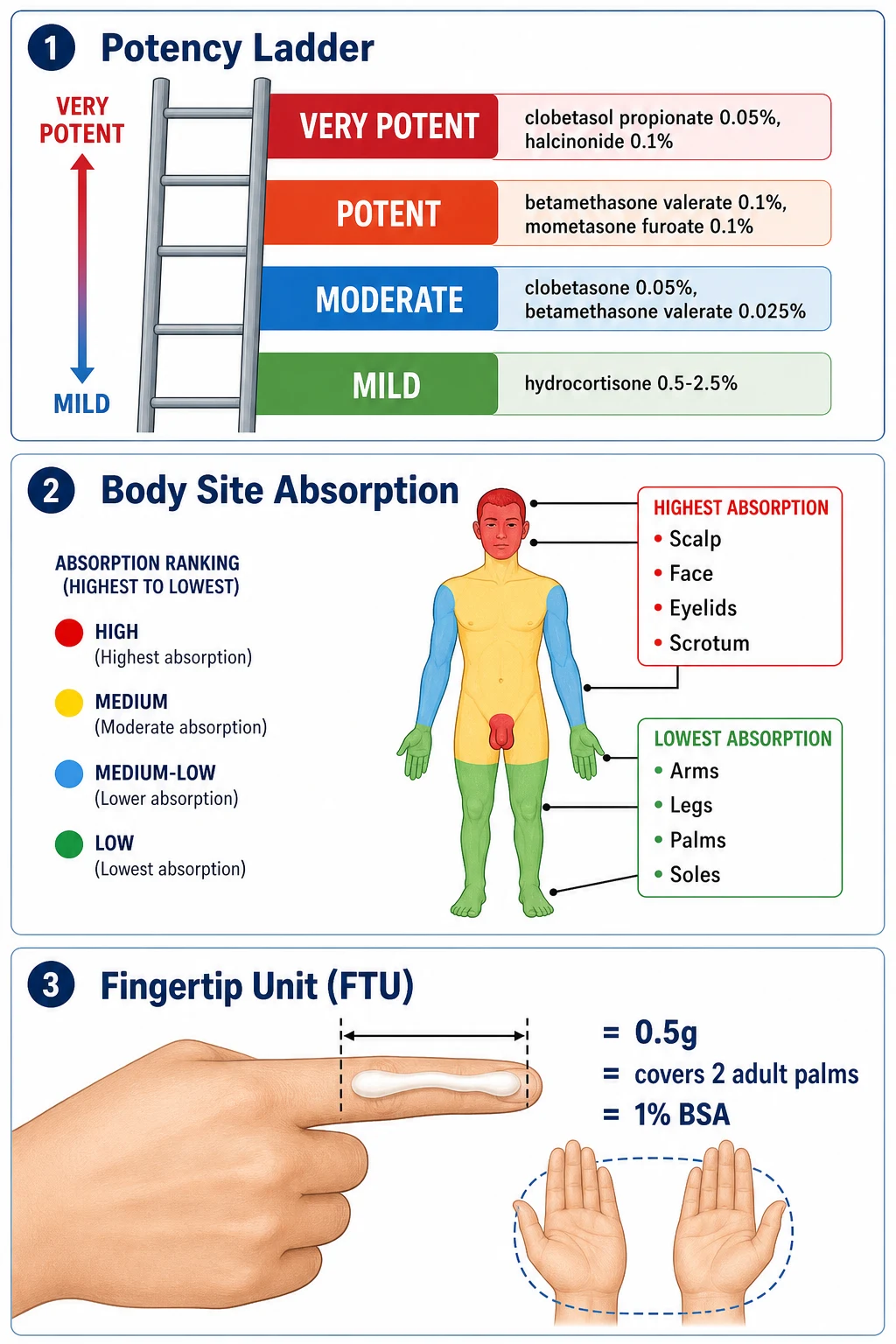
The WHO/NHS and United States classification systems divide TCS into four or seven potency tiers. The four-tier system is more commonly used in undergraduate and postgraduate clinical reasoning in India, the UK, and many Commonwealth countries. The seven-tier United States system (Class I ultra-potent to Class VII least potent) is also widely tested.[1][5]
| Potency | Examples | Typical indications | Caution |
|---|---|---|---|
| Mild | Hydrocortisone 0.5%, 1%, 2.5%; desonide 0.05% | Face, eyelids, flexures, infants, mild intertrigo | Safest on thin skin; still avoid prolonged use |
| Moderate | Clobetasone butyrate 0.05%; betamethasone valerate 0.025%; triamcinolone acetonide 0.1% | Body eczema in children/adults, trunk when mild disease | Short courses on flexures; avoid face |
| Potent | Mometasone furoate 0.1%; betamethasone valerate 0.1%; fluocinolone acetonide 0.025% | Psoriasis on trunk/limbs, chronic eczema, lichen planus on body | Use with dose limits; avoid face/flexures |
| Very potent | Clobetasol propionate 0.05%; halcinonide 0.1%; diflucortolone valerate 0.3% | Refractory thick plaques, scalp psoriasis, lichen planus, palmoplantar disease | Maximum 50 g/week adults; 15 g/week children; avoid face |
The standard exam ladder is therefore: hydrocortisone 1% (mild) → clobetasone 0.05% or betamethasone 0.025% (moderate) → mometasone 0.1% or betamethasone 0.1% (potent) → clobetasol propionate 0.05% (very potent).[1] Clobetasol propionate 0.05% is the prototypical very potent agent and is often tested as the drug of choice for recalcitrant lichen planus, palmoplantar psoriasis, and scalp psoriasis when used in a lotion, foam, or gel vehicle.
Vehicle selection
The vehicle is not inert. It determines occlusion, hydration, spreadability, and cosmetic acceptability, and it modulates the effective potency of the same molecule. In general, the same corticosteroid is more potent in an occlusive ointment than in a cream or lotion because occlusion increases stratum corneum hydration and drug penetration.[1][5]
| Vehicle | Occlusion | Relative potency | Best for | Cautions |
|---|---|---|---|---|
| Ointment | Highest | Most potent | Dry, thick, scaly, lichenified plaques (psoriasis, chronic eczema) | Greasy; folliculitis; unsuitable for wet/intertriginous areas |
| Cream | Moderate | Standard | Wet, weeping, acute eczema; cosmetically acceptable | Contains preservatives/emulsifiers; contact dermatitis risk |
| Lotion | Low | Less potent | Hair-bearing areas, scalp, large surface areas | Drying; may contain alcohol and sting |
| Gel/foam | Low-moderate | Variable | Scalp, hairy areas, non-greasy preference | May sting on excoriated skin |
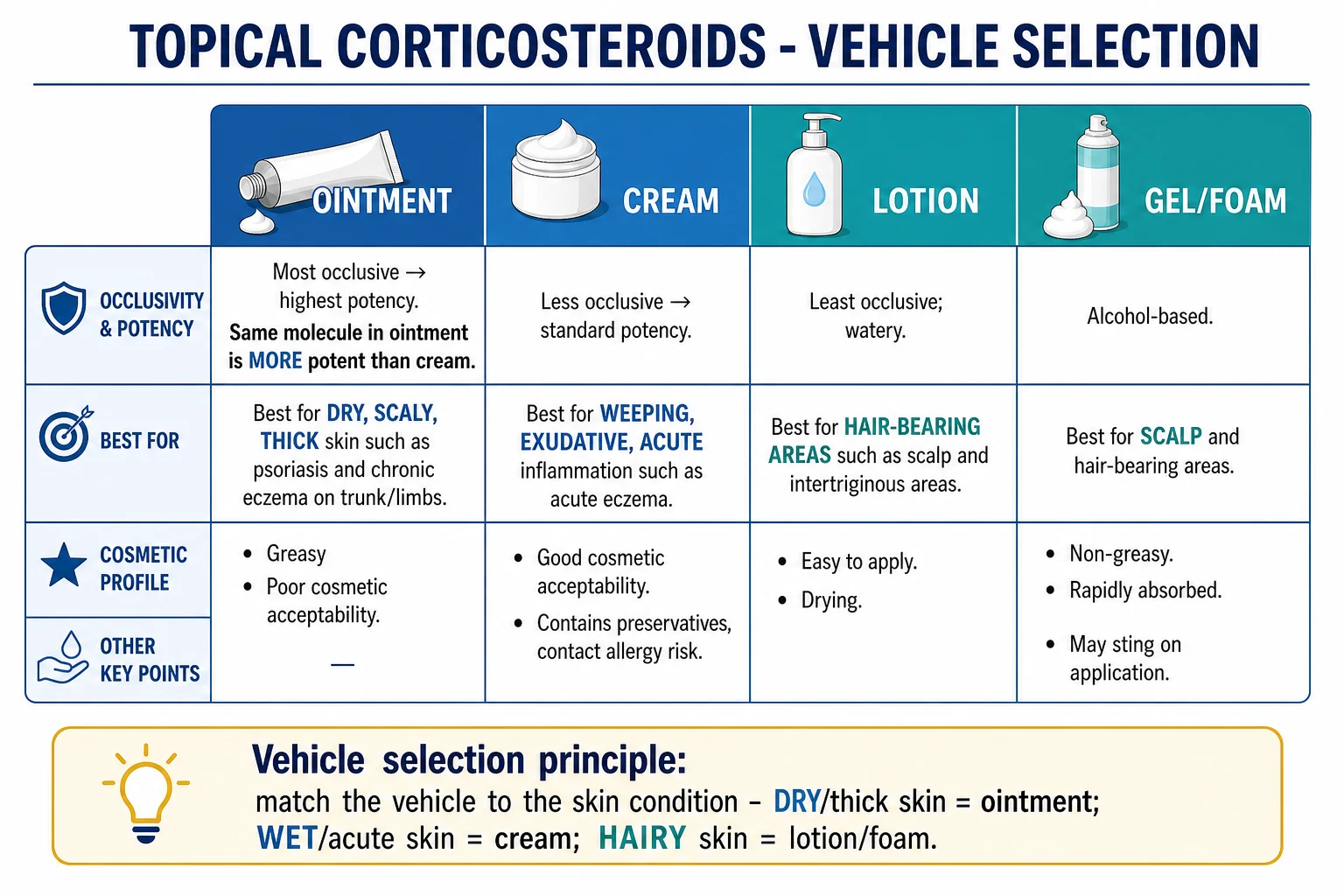
The rule of thumb is: dry skin needs ointment, wet skin needs cream, and hairy skin needs lotion, foam, or gel. Ointments are often preferred on the trunk and limbs for chronic plaque psoriasis, whereas creams are preferred for acute eczematous flares with exudation. A potent agent in cream form may be clinically less effective than a moderate agent in ointment form when treating dry, hyperkeratotic plaques. [1]
Epidemiology and Risk Factors
Topical corticosteroids are prescribed in primary care, dermatology, paediatrics, and ophthalmology more than any other topical dermatological agent. Their accessibility, low cost, and rapid anti-inflammatory effect have made them the first-line treatment for most eczematous and psoriatic diseases.[1][5] However, this ubiquity also drives two opposing problems: overuse by patients and prescribers who escalate potency or duration without indication, and underuse driven by corticophobia — the irrational fear of topical steroids among patients, caregivers, and even some health professionals.[8]
Risk factors for TCS-related adverse outcomes include: [1]
- High potency (very potent agents, especially clobetasol propionate 0.05%).
- Large body surface area treated.
- Prolonged duration of use, especially continuous daily application beyond 2 to 4 weeks without review.
- Occlusion (occlusive dressings, skin folds, or ointment on flexures).
- High-absorption sites: face, eyelids, scrotum, flexures, and intertriginous skin.
- Age extremes: children have a higher surface-area-to-volume ratio and thinner stratum corneum; elderly skin is already atrophic and bruises easily.
- Impaired skin barrier: acute eczema and inflammation increase absorption until the barrier is repaired.
- Misdiagnosis: applying TCS to an undiagnosed fungal, bacterial, or viral infection masks the underlying disease and worsens outcomes.
- Patient factors: history of corticophobia leading to erratic use, or conversely a preference for rapid clearance leading to overuse.
- Cumulative dose: exceeding safe weekly limits is the strongest predictor of systemic toxicity. [1]
TCS phobia prevalence
21–95.7%
Corticophobia is a recognized barrier to adherence. A systematic review found that the prevalence of TCS phobia ranged widely from 21% to 95.7% across studies, with parents of children with atopic dermatitis frequently citing fear of skin thinning, growth retardation, and systemic absorption.[8] The TOPICOP score (Topical Corticosteroid Phobia) and a simple visual analogue scale for fear of steroids can be used to identify patients who need targeted counselling. Interventions that correct misconceptions while acknowledging real risks improve adherence and disease control.
Effective counselling strategies include: [1]
- Name the fear: ask directly, "Some people worry about using steroid creams. Do you have any concerns?"
- Use the FTU demonstration: show exactly how much to use so the patient understands that more is not better and that under-use is also harmful.
- Explain the site-specific risk: the face and flexures are high-risk, but the trunk and limbs are more forgiving when used correctly.
- Compare risks: untreated eczema or psoriasis has its own morbidity, including infection, sleep disturbance, and impaired quality of life.
- Provide a written plan: potency, duration, step-down plan, and warning signs.
- Schedule follow-up: review at 2 to 4 weeks to reinforce correct use and address concerns early.
- Avoid vague instructions: "apply sparingly" or "a thin layer" are less useful than "use one fingertip unit for both hands".[8]
Pathophysiology
Mechanism of action
Corticosteroids are lipophilic molecules that penetrate the stratum corneum and enter the cytoplasm of keratinocytes, fibroblasts, endothelial cells, and immune cells. There they bind to the glucocorticoid receptor (GR), a nuclear receptor that exists in the cytoplasm in a complex with heat-shock proteins and immunophilins. Ligand binding releases the GR from this complex, allowing it to translocate to the nucleus.[5]
Once in the nucleus, the activated GR has two major actions: [1]
- Transactivation: it binds to glucocorticoid response elements (GREs) on DNA and upregulates anti-inflammatory genes, most notably annexin-A1 (lipocortin-1). Annexin-A1 inhibits phospholipase A2, reducing arachidonic acid release and therefore prostaglandin, leukotriene, and platelet-activating factor synthesis. This is the basis of the broad anti-inflammatory effect.
- Transrepression: it interacts with transcription factors such as NF-κB and AP-1, preventing them from driving the expression of pro-inflammatory cytokines (IL-1, IL-2, IL-6, TNF-α), chemokines, and adhesion molecules. T-cell activation, macrophage recruitment, and neutrophil margination are suppressed.
- Reduction of dermal fibroblast activity: corticosteroids inhibit collagen synthesis and glycosaminoglycan production. This is therapeutic in fibrosing conditions but explains skin atrophy and delayed wound healing.
- Vascular effects: corticosteroids reduce nitric oxide and prostaglandin-mediated vasodilatation, decreasing erythema and oedema. This same effect underlies the blanching seen in the vasoconstriction assay. [1]
In the skin, the clinical result is reduced vasodilatation, decreased vascular permeability, diminished oedema, and suppression of the local inflammatory infiltrate. Pruritus is reduced because both the inflammatory mediators and the resulting neurogenic stimulation are dampened. However, the same effects on fibroblasts and endothelial cells explain the adverse effects: collagen synthesis is inhibited, leading to dermal thinning; blood-vessel-supporting connective tissue is lost, leading to telangiectasia; and wound healing is delayed.[5]
Percutaneous absorption and stratum corneum thickness
The stratum corneum is the principal barrier to TCS absorption. Its thickness varies dramatically by body site. In general, thinner stratum corneum = higher absorption = higher systemic and local toxicity risk. The classic absorption hierarchy is:[1][5]
Scrotum > eyelids > face and neck > scalp > trunk > arms and legs > palms and soles [1]
The scrotum has the thinnest stratum corneum and the highest absorption, whereas the palms and soles have a very thick stratum corneum and the lowest absorption. This explains why very potent agents are often needed on the palms and soles, while only mild agents are safe on the face and eyelids. The axillae and groin are also high-risk sites because occlusion from skin folds increases the effective potency of any applied agent. Inflamed or eczematous skin has a disrupted barrier, so absorption is higher during acute flares than after the barrier has healed. This is why emollient use is so important: restoring the barrier reduces the amount of TCS needed for control. [1]
Vasoconstriction assay (McKenzie-Stoughton assay)
The McKenzie-Stoughton vasoconstriction assay is the historical bioassay used to rank TCS potency. The test exploits the fact that topical corticosteroids produce cutaneous vasoconstriction, visible as blanching. The procedure applies the test formulation to healthy skin, often under occlusion for approximately 16 hours, and then grades the intensity of blanching visually or with a chromameter. The degree of blanching correlates with percutaneous absorption, glucocorticoid receptor affinity, and intrinsic anti-inflammatory activity. This assay forms the empirical basis of the class I–VII potency ranking used in the United States. While it remains a useful regulatory and bioequivalence tool, it does not perfectly predict clinical efficacy in every disease, because factors such as scale, inflammation, and body site modify the in-vivo response. [1]
Occlusion and the skin barrier
Occlusion increases hydration of the stratum corneum, which loosens the lipid bilayer and increases drug penetration by up to tenfold. This is why the same molecule in an ointment base is more potent than in a cream, and why applying a plastic dressing over a TCS dramatically increases systemic absorption. Clinically, occlusion is sometimes used deliberately on hyperkeratotic palmoplantar plaques, but it is dangerous on the face, flexures, and large body surface areas because it accelerates atrophy and HPA axis suppression. [1]
Clinical Presentation
Therapeutic effects
When used correctly, TCS reduce erythema, oedema, vesiculation, scaling, lichenification, and pruritus. In atopic dermatitis, the effect is usually evident within 24 to 48 hours, with maximal improvement over 1 to 2 weeks. In psoriasis, very potent agents reduce plaque thickness and scale over 2 to 4 weeks. The goal is to control the flare and then step down to a lower potency or to a steroid-sparing agent for maintenance.[2][3]
Adverse presentations
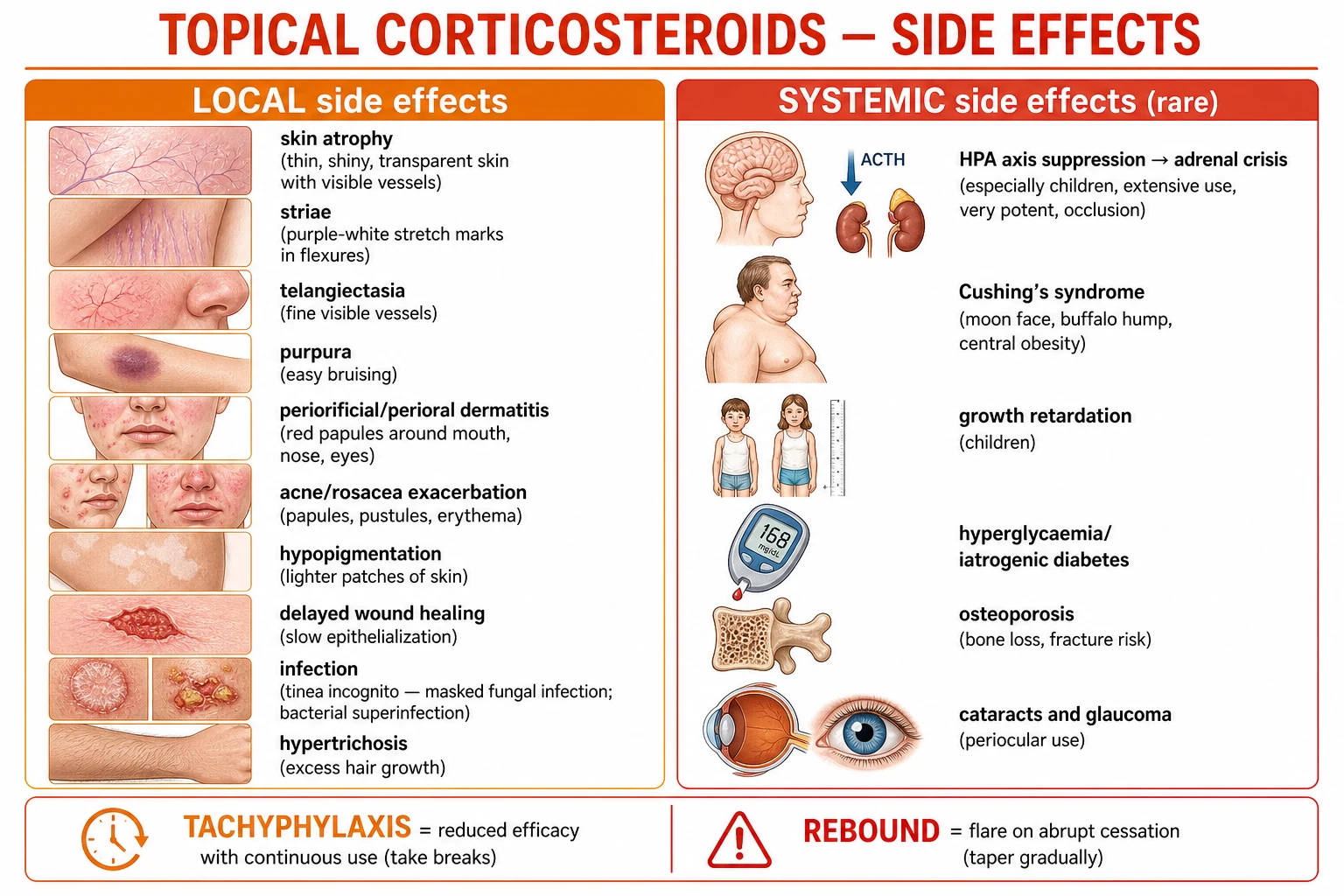
Local side effects are the most common and are usually related to potency, duration, and site:[1][5]
- Skin atrophy: shiny, thin, wrinkled skin with visible telangiectasias; easy bruising and purpura. Often appears after 2 to 4 weeks of continuous potent TCS use on thin skin.
- Striae distensae: parallel, atrophic, violaceous or white linear streaks, especially in flexures and on the trunk. Striae are usually permanent.
- Telangiectasia: dilated superficial vessels that become permanent, particularly on the face.
- Periorificial dermatitis: erythematous papules and pustules around the mouth, nose, and eyes after facial TCS use; often misdiagnosed as acne or rosacea.[4]
- Acneiform eruptions and steroid rosacea: monomorphic papules and pustules on the face, typically sparing the perioral skin initially but later involving it.
- Hypopigmentation: more noticeable in darker skin phototypes; usually reversible but may persist for months after stopping the TCS.
- Hypertrichosis: fine hair growth at sites of prolonged use, especially on the face and trunk.
- Delayed wound healing and increased infection risk: due to immunosuppression and collagen inhibition.
- Tinea incognito: a dermatophyte infection that has been modified by TCS into a less scaly, poorly demarcated, spreading plaque with papules, pustules, or nodules.[6]
Systemic side effects are rare but serious with high cumulative absorption:[1][5]
- HPA axis suppression: reduced cortisol response to stress; may present with fatigue, hypotension, and hypoglycaemia. It can occur with more than 50 g/week of very potent TCS in adults.
- Iatrogenic Cushing's syndrome: moon face, central obesity, buffalo hump, striae, hyperglycaemia. Requires very high cumulative absorption.
- Growth retardation in children: reduced linear growth from chronic systemic absorption, usually with extensive potent TCS use.
- Ocular toxicity: cataracts and raised intraocular pressure/glaucoma, particularly with periorbital use of potent agents.
- Hyperglycaemia and osteopenia with chronic extensive use. [1]
Differential Diagnosis
The question is not usually "what is the rash?" but rather "is this rash appropriate for TCS?" Before prescribing a TCS, the clinician must consider whether the presentation is steroid-responsive or whether steroids will mask or worsen the underlying disease. [1]
| Condition | Why TCS may be inappropriate | Distinguishing feature |
|---|---|---|
| Tinea corporis / tinea incognito | TCS suppresses local inflammation; fungus spreads | KOH microscopy or culture positive for dermatophyte hyphae; less scale, poorly defined border, satellite pustules |
| Scabies | Steroids reduce itch but allow mite proliferation | Burrows in web spaces; worse at night; contact history; mites on scraping |
| Impetigo | Bacterial infection needs antibiotics | Honey-coloured crusts; bacterial culture positive |
| Herpes simplex / zoster | TCS worsen viral infection | Grouped vesicles on erythematous base; Tzanck or PCR positive |
| Lupus erythematosus / dermatomyositis | Needs systemic immunosuppression; TCS alone insufficient | Systemic features, photosensitivity, characteristic histology |
| Cutaneous T-cell lymphoma | May transiently improve but requires oncological diagnosis | Persistent plaques, poikiloderma, histopathology diagnostic |
The key bedside rule is: if the diagnosis is uncertain, and especially if the rash is scaly, annular, vesicular, or crusted, establish the diagnosis with KOH, bacterial culture, or viral PCR before applying TCS. Applying TCS to tinea is the classic exam pitfall because it transforms the lesion into tinea incognito, which is more extensive and harder to treat.[6]
Clinical and Bedside Assessment
Fingertip unit (FTU)
The fingertip unit is the standard practical measure for TCS quantity. One FTU is the amount of cream or ointment expressed from a tube with a 5 mm nozzle and applied from the distal crease to the tip of the adult index finger. One FTU is approximately 0.5 g in an adult male and slightly less in an adult female. One FTU covers approximately two adult palms with fingers together, which is about 2% of the body surface area of an adult.[1][5]
Typical FTU requirements for adults are: [1]
| Body area | FTU (adult) | Approximate percentage of BSA |
|---|---|---|
| Face and neck | 2.5 FTU | 5% |
| One hand, front and back | 1 FTU | 2% |
| One arm | 3 FTU | 6% |
| One foot | 2 FTU | 4% |
| One leg | 6 FTU | 12% |
| Trunk (front) | 7 FTU | 14% |
| Trunk (back) | 7 FTU | 14% |
Children require proportionally smaller amounts. A useful paediatric approximation is to use the child's fingertip unit, which is roughly half to two-thirds of the adult FTU depending on age. The FTU prevents both under-application, which leads to treatment failure, and over-application, which increases toxicity. Every TCS prescription should be accompanied by a demonstration of the FTU. For a patient with 10% BSA affected, approximately 5 FTU per application is needed; if treating twice daily for 7 days, the total quantity is 70 FTU, or about 35 g. This calculation is useful when writing a prescription that covers the expected duration of treatment. [1]
Safe weekly dosing limits
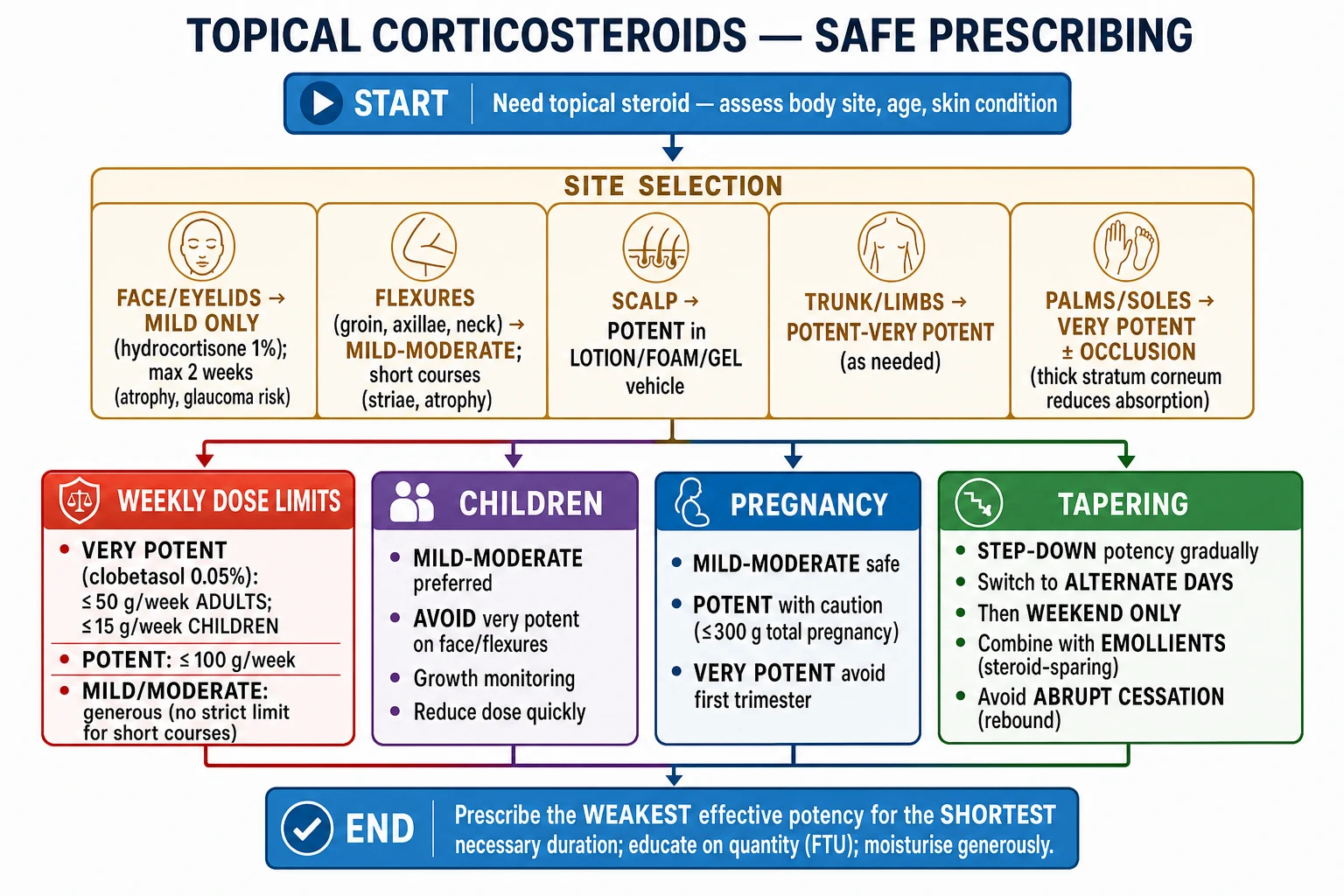
Cumulative weekly quantity is the strongest predictor of systemic absorption and HPA axis suppression. The accepted safe weekly limits are:[1][5]
| Potency | Adult weekly limit | Child weekly limit |
|---|---|---|
| Mild and moderate | No strict limit for short courses | No strict limit for short courses |
| Potent | approximately 100 g/week | approximately 30 g/week |
| Very potent | 50 g/week or less | 15 g/week or less |
These limits are not absolute thresholds but are practical safety rails. A patient using 80 g of clobetasol propionate per week is exceeding the safe adult limit and should be stepped down, switched to a steroid-sparing agent, or investigated for HPA axis suppression if symptomatic. [1]
Bedside signs of adverse effects
Inspection of treated skin should include assessment for: [1]
- Atrophy: shiny, translucent, finely wrinkled skin with loss of normal skin markings.
- Telangiectasia: visible fine vessels, especially on the cheeks and nose.
- Striae: atrophic linear bands, classically in the axillae, groin, and trunk.
- Purpura: easy bruising from vessel fragility.
- Periorificial papules: erythematous papules and pustules around the mouth, nose, or eyes.
- Monomorphic acneiform lesions: steroid acne rather than polymorphic acne vulgaris. [1]
Systemic absorption assessment
Suspect systemic absorption when a patient has used a very potent TCS on a large area, under occlusion, on the face, or for a prolonged duration, and reports fatigue, weight loss, hypotension, nausea, or poor stress tolerance. Clinical clues include morning serum cortisol suppression or a subnormal cortisol response to synthetic ACTH stimulation. If adrenal crisis is suspected, serum electrolytes, glucose, and urgent cortisol should be checked, and intravenous hydrocortisone started. [1]
Investigations
For most TCS-responsive dermatoses, the diagnosis is clinical and no laboratory investigation is needed. However, investigations are important in specific scenarios: [1]
- Before starting TCS when diagnosis is uncertain: KOH microscopy of skin scrapings to exclude tinea; bacterial culture for impetigo; Tzanck smear or PCR for herpes; scabies preparation if burrows are present.
- During TCS use if response is poor: repeat KOH to look for tinea incognito; consider patch testing if allergic contact dermatitis to the vehicle or preservative is suspected; consider skin biopsy if an infiltrative or neoplastic process is possible.
- For suspected systemic toxicity: 9 am serum cortisol, ACTH stimulation test, fasting glucose, serum electrolytes, and bone density assessment if chronic extensive use.
- Research and regulatory: the McKenzie-Stoughton vasoconstriction assay and chromametric methods for potency classification and bioequivalence. [1]
Management — Resuscitation
The emergency presentation of TCS misuse is secondary adrenal insufficiency from HPA axis suppression. This is rare but life-threatening. It should be suspected in any patient who has been using high-potency TCS extensively or under occlusion and who presents with shock, vomiting, abdominal pain, hypoglycaemia, hyponatraemia, or hyperkalaemia. The immediate management is the same as for any adrenal crisis: intravenous hydrocortisone 100 mg bolus, followed by 200 mg per day by continuous infusion or divided doses, plus aggressive intravenous fluids and correction of hypoglycaemia. The precipitating stressor (infection, surgery, trauma) must be treated concurrently. Once stabilised, the TCS should be tapered and the underlying dermatosis switched to lower-potency or steroid-sparing therapy.[1]
Management — Definitive and Stepwise
Selecting potency and vehicle
The choice of TCS depends on the diagnosis, severity, body site, patient age, and previous response. A practical algorithm is:[1][5]
- Face, eyelids, neck, flexures, genitalia: mild potency only (hydrocortisone 1%); maximum 1 to 2 weeks; consider topical calcineurin inhibitors as first-line maintenance.
- Trunk and limbs, moderate eczema: moderate potency (clobetasone 0.05%, betamethasone 0.025%) for 1 to 2 weeks.
- Thick plaques, chronic eczema, lichen planus on trunk/limbs: potent (mometasone 0.1%, betamethasone 0.1%).
- Palms and soles, refractory thick plaques, scalp psoriasis: very potent (clobetasol propionate 0.05%) in an appropriate vehicle; short courses; weekly dose limits apply. [1]
Disease-specific potency and vehicle choices
| Diagnosis | Site | Preferred potency | Preferred vehicle | Typical duration | Notes |
|---|---|---|---|---|---|
| Acute eczema | Face/flexures | Mild | Cream | 7–14 days | Then emollient ± calcineurin inhibitor |
| Acute eczema | Trunk/limbs | Moderate | Cream or ointment | 7–14 days | Step down to mild once controlled |
| Chronic lichenified eczema | Trunk/limbs | Potent | Ointment | 2–4 weeks | Weekend maintenance after control |
| Chronic hand eczema | Palms | Potent to very potent | Ointment ± occlusion | 2–4 weeks | Occlusion only short term; check weekly dose |
| Plaque psoriasis | Trunk/limbs | Potent | Ointment | 2–4 weeks | Rotate with calcipotriene |
| Palmoplantar psoriasis | Palms/soles | Very potent | Ointment ± occlusion | 2–4 weeks | High cumulative dose risk; review frequently |
| Scalp psoriasis | Scalp | Potent | Lotion, foam, or gel | 2–4 weeks | Vehicle must be cosmetically acceptable |
| Lichen planus | Trunk/limbs | Potent | Ointment | 2–4 weeks | Very potent for hypertrophic lesions |
| Oral/genital lichen planus | Mucosa | Potent to very potent | Ointment or gel | Short courses | High absorption; monitor closely |
| Vitiligo | Face/neck | Mild | Cream | 3–6 months | Calcineurin inhibitor preferred for maintenance |
| Vitiligo | Trunk/limbs | Moderate to potent | Cream | 3–6 months | Response is slow |
| Alopecia areata | Scalp | Very potent | Solution or foam | 3–6 months | Intralesional steroid often preferred |
This table is a practical synthesis; the exact choice must be adjusted for age, prior response, disease severity, and patient preference. The principle is to treat to control, then step down and maintain with the least potent effective agent or a steroid-sparing alternative. [1]
Application technique
- Apply a thin layer using the FTU.
- Frequency: once or twice daily. Twice daily is standard for initial control; once daily is often sufficient for maintenance and reduces adverse effects.
- Amount: use the FTU for the body area; do not exceed the safe weekly dose.
- Order with emollients: apply the TCS first to active lesions, then wait 15 to 30 minutes and apply emollient over the top and surrounding skin. Alternatively, apply emollient first and wait 30 minutes before applying the TCS. The key is consistency; both sequences are acceptable if the patient uses them consistently.
- Duration: short courses of 7 to 14 days for mild-moderate flares; up to 4 weeks for thick plaques, then step down. [1]
Tapering strategy
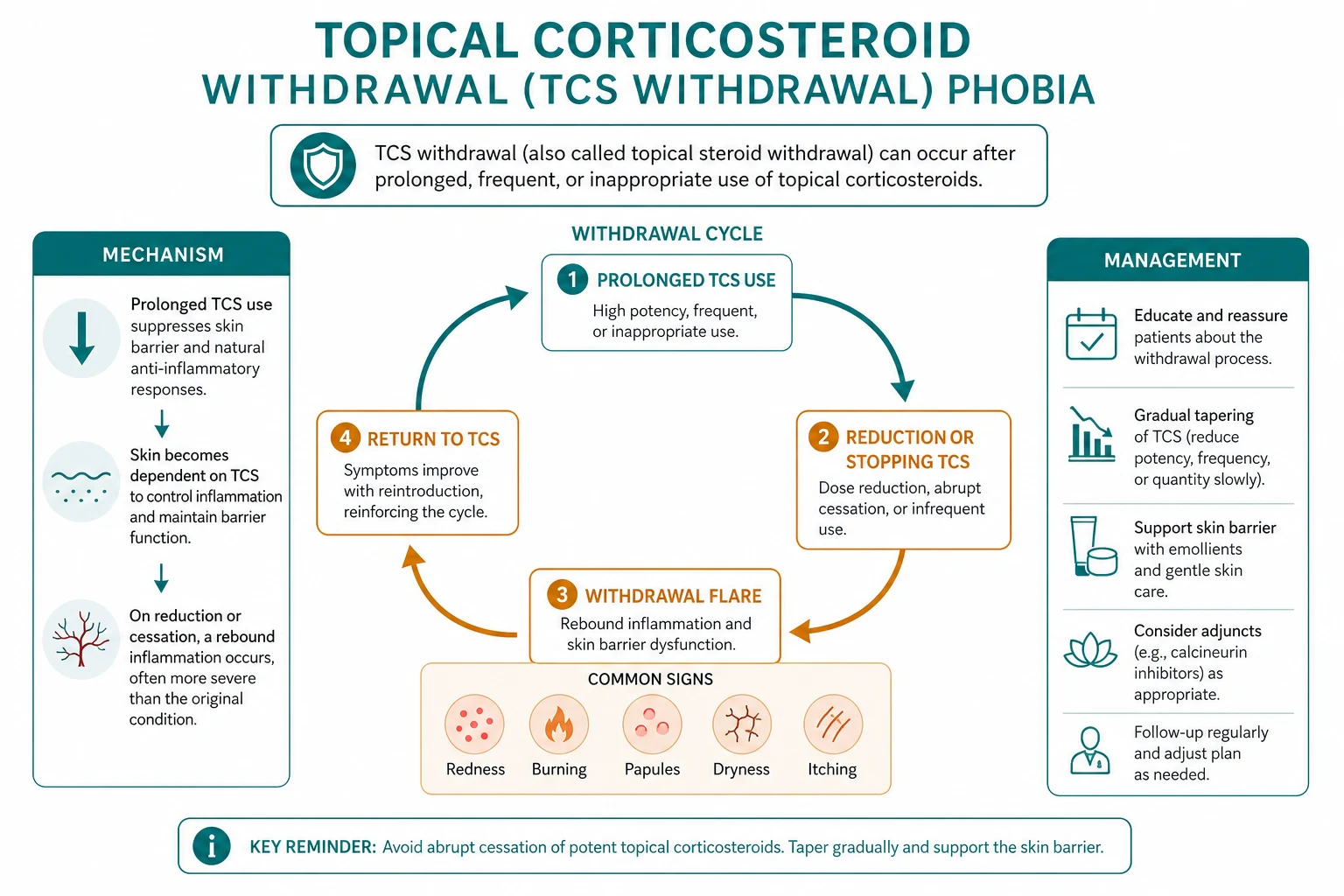
Abrupt cessation of long-term TCS can cause rebound flare. A structured taper is:[3]
- Reduce frequency from twice daily to once daily for 3 to 7 days after control is achieved.
- Step down to the next lower potency class for 1 to 2 weeks.
- Switch to alternate-day application for 1 to 2 weeks.
- Use weekend-only maintenance (e.g., Saturday and Sunday) if chronic relapsing disease.
- Maintain with emollients and, where appropriate, topical calcineurin inhibitors. [1]
For chronic hand eczema or psoriasis, weekend pulse therapy with a potent TCS (Saturday and Sunday only) is an effective maintenance strategy that reduces tachyphylaxis and adverse effects. [1]
Steroid-sparing agents
When TCS are required repeatedly, introduce steroid-sparing therapy to reduce cumulative steroid exposure. Options include:[9]
- Topical calcineurin inhibitors: tacrolimus 0.03% or 0.1% ointment and pimecrolimus 1% cream. These are especially useful on the face, eyelids, neck, and flexures because they do not cause atrophy. They are first-line maintenance for many patients with atopic dermatitis. The most common adverse effect is transient burning or stinging on application.
- Topical vitamin D analogues: calcipotriene (calcipotriol) 0.005% ointment or cream, and the fixed-dose combination calcipotriene/betamethasone dipropionate. These are standard for plaque psoriasis and have a steroid-sparing effect by reducing the amount of TCS needed.
- Other non-steroidal agents: crisaborole 2% ointment (PDE4 inhibitor) for mild-moderate atopic dermatitis; topical Janus kinase inhibitors (ruxolitinib cream) for atopic dermatitis and vitiligo in some regions; coal tar and dithranol for psoriasis. [1]
Specific Subtypes and Scenarios
Atopic dermatitis
TCS are the first-line anti-inflammatory treatment for flares. Mild disease is treated with hydrocortisone 1%; moderate disease with clobetasone 0.05% or betamethasone 0.025%; severe disease on the trunk or limbs with mometasone 0.1% or betamethasone 0.1%. Once control is achieved, maintenance with tacrolimus or pimecrolimus, or weekend TCS, reduces relapse. Emollients are the foundation of therapy and should be prescribed generously.[2][3]
Plaque psoriasis
Mild localized psoriasis on the trunk and limbs responds to potent TCS (mometasone 0.1%, betamethasone 0.1%). Thick plaques, palms, and soles often require very potent clobetasol propionate 0.05%. Because of the risk of tachyphylaxis and rebound, short courses and rotational or weekend therapy are preferred. Calcipotriene/betamethasone combination products are effective and reduce steroid exposure. Scalp psoriasis is treated with potent TCS in lotion, foam, or gel vehicles to improve cosmetic acceptability and penetration through hair. [1]
Lichen planus
Cutaneous lichen planus on the trunk and limbs can be treated with potent TCS, but very potent clobetasol propionate 0.05% is often needed for hypertrophic lichen planus and erosive oral or genital lichen planus. Mucosal surfaces are high-absorption sites and require short courses and close monitoring. Oral lichen planus may require intralesional or systemic corticosteroids rather than topical therapy alone. [1]
Vitiligo
TCS are used to repigment vitiligo, especially on the face and neck where response is best. On the face, only mild TCS (hydrocortisone 1%) or calcineurin inhibitors should be used because of the risk of atrophy and periorificial dermatitis. On the trunk and limbs, moderate to potent TCS can be used for 3 to 6 months. Response is slow and requires sun protection to prevent sunburn in depigmented patches. [1]
Alopecia areata
Intralesional corticosteroids are more effective than topical TCS for alopecia areata, but very potent topical agents (clobetasol propionate 0.05% solution or foam) can be used for limited patchy disease on the scalp. Facial and eyebrow involvement should be treated with caution to avoid atrophy and ocular side effects. [1]
Periorificial dermatitis caused by TCS
This is an iatrogenic condition. Management is to stop the offending TCS (there may be an initial rebound flare), avoid all topical steroids on the face, and treat with topical calcineurin inhibitors or oral tetracyclines (doxycycline 40 to 100 mg daily for 4 to 8 weeks).[4]
Tinea incognito
When TCS have been applied to an undiagnosed dermatophyte infection, the rash becomes more extensive, less scaly, and poorly demarcated. Treatment is to stop the TCS immediately and start systemic antifungal therapy (oral terbinafine or itraconazole) for extensive disease, plus topical antifungals for limited disease. KOH microscopy or culture confirms the diagnosis.[6]
Complications and Pitfalls
Tachyphylaxis
Tachyphylaxis is the loss of clinical efficacy with continuous TCS use, thought to be due to receptor downregulation or compensatory inflammatory pathways. It typically develops after 2 to 4 weeks of continuous application. Management is to introduce drug holidays: switch to weekend-only therapy, rotate to a different steroid molecule, or use a non-steroidal agent such as a calcineurin inhibitor or calcipotriene for maintenance.[3]
Rebound flare and topical corticosteroid withdrawal
A rebound flare is an exacerbation of the underlying disease when TCS are stopped abruptly after prolonged use. It is managed by a gradual taper and improved skin-barrier care. [1]
Topical corticosteroid withdrawal (TCSW), also called red skin syndrome, is a more controversial entity. It is described as burning, stinging, erythema, and skin desquamation that develops after stopping medium- to high-potency TCS, particularly after prolonged use on the face and genitalia. A systematic review supports the existence of this phenomenon but notes that prevalence and diagnostic criteria remain debated, and symptoms may overlap with severe disease relapse.[7] Management is supportive: gradual taper or cessation of TCS, emollients, cool compresses, psychological support, and short-term use of calcineurin inhibitors or other non-steroidal agents. Patients with suspected TCSW often require dermatology referral.
Key prescribing pitfalls
- Prescribing a potent TCS for facial eczema without a clear stop date.
- Failing to demonstrate the FTU, leading to under- or over-use.
- Applying TCS to an undiagnosed scaly rash (tinea incognito).
- Continuing the same TCS for months without review or taper.
- Ignoring cumulative weekly dose in patients using large quantities of very potent TCS.
- Using occlusion without recognising the increased systemic absorption risk. [1]
Prognosis and Disposition
With correct selection, application, and duration, TCS produce rapid and sustained improvement in most steroid-responsive dermatoses. Eczema usually responds within days; psoriasis and lichen planus may take 2 to 4 weeks. Vitiligo and alopecia areata are slower, with responses measured over months. Mild local adverse effects such as transient burning or mild skin thinning usually improve after stopping the TCS or stepping down potency. Striae and telangiectasia, however, can be permanent. Systemic adverse effects from appropriate short-term use are rare and usually reversible once the TCS is stopped, although recovery of the HPA axis may take weeks to months after chronic suppression. Long-term patient education remains the single most effective intervention to reduce both overuse and underuse. [1]
Referral to dermatology is indicated when: [1]
- The diagnosis is uncertain or the disease fails to respond to appropriate TCS therapy.
- There is significant facial, ocular, or genital involvement.
- The patient has used very potent TCS extensively and may have HPA axis suppression.
- TCSW, severe rebound, or corticophobia is interfering with adherence.
- There is suspicion of an infection, neoplasm, or systemic autoimmune process. [1]
Special Populations
Infants and children
Children have a larger surface-area-to-volume ratio, thinner stratum corneum, and higher percutaneous absorption. The principles are:[1][5]
- Prefer mild or moderate potency TCS.
- Avoid very potent TCS unless absolutely necessary, and then only for short courses on thick plaques.
- Avoid TCS on the face and flexures where possible; use calcineurin inhibitors.
- Use FTU-based dosing adjusted for age.
- Monitor growth if repeated or extensive potent TCS use is required.
- Weekly limits: very potent TCS should not exceed 15 g/week in children. [1]
Pregnancy and lactation
A Cochrane review concluded that maternal use of mild to moderate TCS is not associated with increased risks of major congenital malformations, preterm delivery, fetal death, or low Apgar scores.[10] However, potent to very potent TCS used in large cumulative amounts may be associated with low birth weight, although the evidence quality is low. The practical approach is to use the lowest effective potency, avoid very potent agents if possible, limit the total quantity, and avoid large surface-area application. TCS are generally considered safe during lactation if applied to small areas and not applied to the nipple immediately before feeding.
Elderly
Elderly skin is thinner, with reduced subcutaneous tissue and slower wound healing. The risk of atrophy, purpura, and telangiectasia is higher. Lower potencies and shorter courses are preferred. Particular caution is needed on the face, forearms, and dorsal hands. [1]
Ocular and periorbital skin
The eyelids have very thin skin and high absorption. Potent TCS near the eye can cause raised intraocular pressure, cataracts, and glaucoma. Only mild TCS (hydrocortisone 1%) should be used on the eyelids, and for the shortest duration. Patients should be asked about visual symptoms and referred for ophthalmology review if there is any concern. [1]
Evidence, Guidelines, and Regional Differences
Major guidelines
- American Academy of Dermatology (AAD) / American Academy of Family Physicians: TCS remain first-line for atopic dermatitis and psoriasis; potency should be matched to body site; patients should be educated about FTU and adverse effects.[1][2]
- NICE eczema guidelines (UK): use mild TCS for mild atopic dermatitis, moderate for moderate disease, and potent for severe disease; step down once controlled; use emollients as the mainstay.
- Cochrane review (Chu 2023): network meta-analysis of topical treatments for atopic dermatitis supports TCS as effective, with corticosteroid-sparing strategies including calcineurin inhibitors and proactive maintenance regimens.[3]
- Cochrane review (Chi 2015): TCS in pregnancy are generally safe, but caution with potent/very potent agents and large cumulative doses.[10]
- Indian Journal of Dermatology, Venereology and Leprology review (Mehta 2016): practical guidance on potency, vehicles, body sites, and adverse effects in the South Asian context.[5]
Regional classification differences
- United States: Class I (ultra-potent) to Class VII (least potent). Clobetasol propionate 0.05% is Class I; hydrocortisone 1% is Class VII.
- United Kingdom / WHO: Groups I to IV or mild/moderate/potent/very potent classification.
- India: The four-tier mild/moderate/potent/very potent system is widely taught, with clobetasol propionate 0.05% as the reference very potent agent. [1]
Controversies
- TCS phobia: the fear of TCS is disproportionate to real risk when used correctly, but it leads to under-treatment and disease flares. Education is the answer, not avoidance of TCS.[8]
- Topical corticosteroid withdrawal / red skin syndrome: recognized in the literature but with debated diagnostic criteria, prevalence, and pathophysiology. The consensus is that TCS should be used correctly from the outset to avoid the need for prolonged high-potency use that may predispose to withdrawal phenomena.[7]
Why does the same drug in ointment work better than in cream?
Exam Pearls
Potency ladder
Red Flags
Exam application bank (NEET-PG / INICET)
One-line answer
Topical corticosteroids (TCS) are the most widely prescribed dermatological therapy. Safe use requires matching potency (mild to very potent), vehicle (ointment > cream > lotion), and body site (face/flexures = low potency; palms/soles = high potency). The fingertip unit (FTU; ~0.5 g) standardizes dosing. Adverse effects include local atrophy, striae, telangiectasia, periorificial dermatitis, tinea incognito, and systemic HPA axis suppression. Steroid-sparing agents (tacrolimus, pimecrolimus, calcipotriene) and patient counselling about corticophobia improve outcomes. [1]
Worked stems (answer without another resource)
Stem 1 — Classic presentation. Map symptoms to mechanism; name the first investigation and first treatment step with dose/route if drug therapy is standard. [1]
Stem 2 — Unstable / complicated. List red flags that force immediate resuscitation, theatre, ICU, antidote, or reperfusion — and what you do in the first 15 minutes. [1]
Stem 3 — Atypical group. Elderly, pregnancy, child, or immunocompromised: how presentation and thresholds change. [1]
Stem 4 — Differential trap. Name the three closest mimics and one discriminator for each. [1]
Stem 5 — Disposition. Who goes home with safety-netting, who is admitted, who needs HDU/ICU/theatre, and what follow-up is mandatory. [1]
Rapid viva checklist
- Definition + classification
- Pathophysiology chain
- Bedside signs / criteria
- Score with exact components (if any)
- Emergency bundle
- Definitive therapy with doses
- Complications of disease and of treatment
- Special populations
- Guideline/trial name if classic
- Three exam traps
Coverage self-check
If you cannot answer any stem above from this page alone, re-read the matching section — the page is intended to be self-sufficient for final-prof and NEET-PG/INICET questions on Topical Corticosteroids.
[1]References
- [1]Stacey SK, McEleney M. Topical Corticosteroids: Choice and Application Am Fam Physician, 2021.PMID 33719380
- [2]Frazier W, Bhardwaj N. Atopic Dermatitis: Diagnosis and Treatment Am Fam Physician, 2020.PMID 32412211
- [3]Chu DK, Chu AWL, Rayner DG, et al. Topical treatments for atopic dermatitis (eczema): Systematic review and network meta-analysis of randomized trials J Allergy Clin Immunol, 2023.PMID 37678572
- [4]Searle T, Ali FR, Al-Niaimi F. Perioral dermatitis: Diagnosis, proposed etiologies, and management J Cosmet Dermatol, 2021.PMID 33751778
- [5]Mehta AB, Nadkarni NJ, Patil SP, et al. Topical corticosteroids in dermatology Indian J Dermatol Venereol Leprol, 2016.PMID 27279294
- [6]Kokandi AA. Tinea Incognito Clin Cosmet Investig Dermatol, 2024.PMID 38737948
- [7]Hwang J, Kim CW, Kim SS, et al. Topical corticosteroid withdrawal ('steroid addiction'): an update of a systematic review J Dermatolog Treat, 2022.PMID 33499686
- [8]Li AW, Yin JW, Antaya RJ. Topical Corticosteroid Phobia in Atopic Dermatitis: A Systematic Review JAMA Dermatol, 2017.PMID 28724128
- [9]Lax SJ, Harvey J, Axon E, et al. Topical anti-inflammatory treatments for eczema: network meta-analysis Cochrane Database Syst Rev, 2024.PMID 39105474
- [10]Chi CC, Wang SH, Wojnarowska F, et al. Safety of topical corticosteroids in pregnancy Cochrane Database Syst Rev, 2015.PMID 26497573