Dermatology · Medicine
Verrucae and human papillomavirus warts
Also known as Common wart (verruca vulgaris) · Plantar wart (verruca plantaris) · Flat wart (verruca plana) · Filiform wart · Genital wart (condyloma acuminatum) · Epidermodysplasia verruciformis
Cutaneous and genital warts (verrucae) are benign epithelial proliferations caused by human papillomavirus (HPV) infection of keratinocytes, with distinct HPV types favouring specific clinical morphologies and sites (e.g., HPV-1 plantar, HPV-2/27 common, HPV-3/10 flat, HPV-6/11 genital). Fellowship-level assessment demands mastery of the clinical morphologies and their type associations, the natural history of immune-mediated resolution, the tiered treatment ladder (salicylic acid, cryotherapy, blunt dissection, intralesional and immune therapies) with its evidence base, the special management of refractory, plantar, and periungual disease, genital warts and their HPV-vaccine prevention, and the rare but important malignant transformation (epidermodysplasia verruciformis, HPV-related squamous carcinoma, especially in immunocompromise).
On this page & tools
Your progress
Saved locally on this device.
Exam tags
Red flags
Overview
Verrucae (warts) are benign epithelial proliferations of keratinocytes caused by human papillomavirus (HPV) infection. They are among the commonest skin lesions, with distinct HPV types favouring characteristic morphologies and sites — common, plantar, flat (plane), filiform, and genital warts. Fellowship-level competence requires mastery of the clinical morphology and type associations, an understanding of natural immune-mediated resolution, the evidence-based treatment ladder (salicylic acid, cryotherapy, blunt dissection, intralesional bleomycin/immunotherapy, and newer approaches such as saturated saline immersion), the special problems of plantar, periungual, and refractory disease, genital warts and their prevention by HPV vaccination, and the rare but important malignant transformation (epidermodysplasia verruciformis, HPV-related squamous and verrucous carcinoma), especially in immunocompromise.[1][2][5]
Quick numbers for the examiner
Pathophysiology and virology [1]
HPV is a small, non-enveloped, double-stranded DNA papillomavirus with tropism for stratified squamous epithelium. It infects basal keratinocytes through micro-abrasions, and viral replication in differentiating keratinocytes drives the characteristic proliferation and hyperkeratosis. Over 200 HPV types exist, with type-site-morphology associations: [1]
- HPV-1 — deep plantar warts (myrmecia).
- HPV-2, 27, 57 — common warts (verruca vulgaris).
- HPV-3, 10, 28 — flat (plane) warts.
- HPV-6, 11 (low-risk) — genital warts (condyloma acuminatum) and laryngeal papillomatosis; HPV-16, 18 and other high-risk types — anogenital and oropharyngeal dysplasia/carcinoma.
- HPV-5, 8 — epidermodysplasia verruciformis. [1]
Transmission is by skin-to-skin contact, autoinoculation, and fomites (swimming pools, shared footwear for plantar warts; sexual for genital warts). Cell-mediated immunity governs resolution: most cutaneous warts resolve spontaneously within 1-2 years in immunocompetent hosts (especially children), but immunocompromise (HIV, transplant, iatrogenic) predisposes to extensive, persistent, refractory disease.[1][15][2]
Clinical features
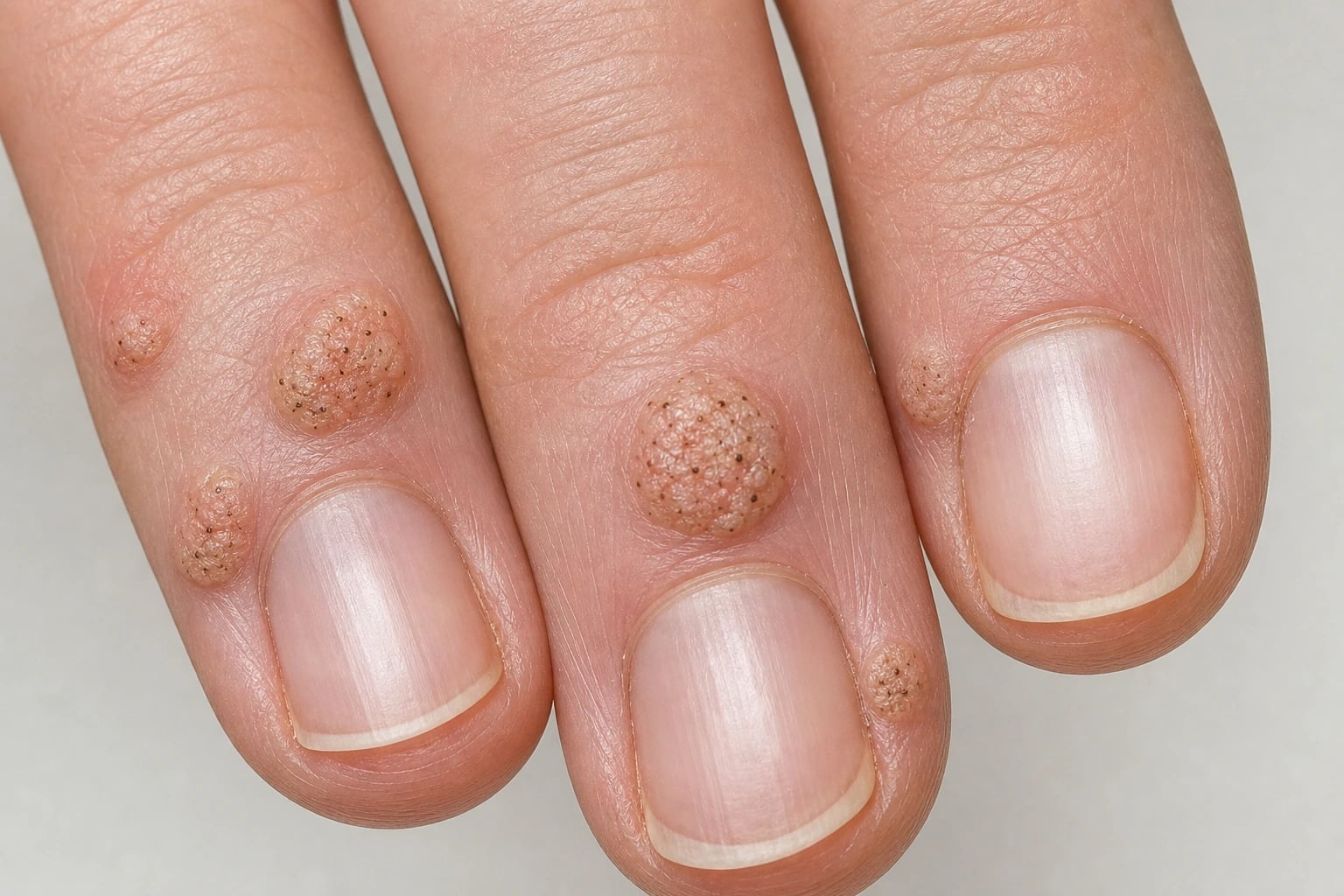
- Common wart (verruca vulgaris) — firm, hyperkeratotic, exophytic papule with a rough verrucous surface, often on the fingers and hands; paring reveals tiny black dots (thrombosed capillary loops) — a key discriminator from calluses/corns.
- Plantar wart (verruca plantaris) — a firm, endophytic, hyperkeratotic plaque on the sole, often at pressure points, with black dots on paring; multiple lesions may coalesce into a mosaic wart. Painful on lateral pressure (unlike calluses, which are tender only on direct pressure and lack black dots).
- Flat (plane) wart (verruca plana) — smooth, flat-topped, skin-coloured or pigmented papules, often numerous on the face, hands, and shins; commonly linear (Koebner).
- Filiform/digitate wart — slender, finger-like projections, often on the face (eyelids, lips, neck) and neck.
- Genital wart (condyloma acuminatum) — soft, fleshy, cauliflower-like papules on the genitals, perianal area, and perineum; sexually transmitted (HPV-6/11).
- Epidermodysplasia verruciformis — a rare genetic susceptibility to widespread, lifelong HPV infection (HPV-5/8) presenting with flat warts and premalignant actinic keratosis-like lesions that progress to squamous cell carcinoma in sun-exposed sites.[2][7]
Diagnosis
The diagnosis is clinical, aided by dermoscopy (thrombosed capillaries as dark dots/red loops) and the characteristic black dots on paring. Biopsy is indicated for: a treatment-resistant, atypical, ulcerated, or bleeding lesion (to exclude squamous or verrucous carcinoma), immunocompromise (to assess dysplasia), pigmented lesions, and lesions in older adults. HPV typing and/or PCR is used in research and for high-risk cervical/anogenital typing. Acetowhitening is used for subclinical anogenital lesions.[16]
Specific Subtypes & High-Yield Scenarios
- Plantar warts (verruca plantaris): deep endophytic; HPV-1 myrmecia type; mosaic pattern; painful on lateral squeeze. Salicylic acid + paring, then cryotherapy. Saturated saline immersion is a novel evidence-based treatment.
- Periungual warts: around the nail folds; difficult to treat; can cause onycholysis and nail dystrophy; treat conservatively to avoid nail damage.
- Filiform warts: slender projections on face, eyelids, neck, lips; treat by careful scissor excision or cryotherapy.
- Flat warts: numerous on face/extremities; topical retinoids, imiquimod, 5-FU, gentle cryotherapy.
- Anogenital warts (condyloma acuminatum): HPV-6/11; soft, cauliflower-like; treat with imiquimod, podophyllotoxin, sinecatechins, trichloroacetic acid, cryotherapy, CO2 laser, surgical excision. Screen for other STIs.
- Buschke-Lowenstein tumour: giant anogenital condyloma; HPV-6/11; locally invasive; high recurrence; requires wide local excision; consider chemoradiation.
- Recurrent respiratory papillomatosis (RRP): laryngeal HPV-6/11; hoarseness, stridor; repeated laser ablation; intralesional cidofovir/bevacizumab.
- Epidermodysplasia verruciformis: rare genetic susceptibility (EVER1/EVER2 TMC6/TMC8); widespread flat warts; cutaneous SCC in sun-exposed sites.
- Warts in immunocompromise (HIV, transplant): extensive, refractory; consider reduction of immunosuppression, retinoids, imiquimod, intralesional bleomycin, HPV vaccination.
- Verrucous carcinoma (epithelioma cuniculatum): rare, low-grade SCC variant; can arise in long-standing plantar wart or chronic ulcer; biopsy if treatment-resistant or rapid growth.
- Heck disease (focal epithelial hyperplasia): HPV-13/32; multiple soft papules on lips/buccal mucosa; children; common in indigenous populations.
- Epidermal cyst-like wart: HPV-60; plantar epidermoid cyst with verrucous lining. [1]
Complications & Pitfalls
- Missed squamous or verrucous carcinoma: any treatment-resistant, ulcerated, bleeding, or rapidly growing wart in an older adult; biopsy.
- Scarring from aggressive cryotherapy, CO2 laser, or surgery — counsel patients, especially on cosmetic sites (face, periungual).
- Nail dystrophy from periungual wart treatment; can be permanent.
- Autoinoculation: scratching spreads warts to adjacent sites (Koebner); advise not to pick.
- Treatment failure: approximately 30% of cutaneous warts recur after any single treatment; second-line or combination therapy often needed.
- Imiquimod side effects: local irritation, flu-like symptoms, exacerbation of inflammatory skin disease.
- Bleomycin: nail changes, Raynaud's, hyperpigmentation; rare pulmonary toxicity with intralesional use.
- Buschke-Lowenstein tumour: misdiagnosed as condyloma; biopsy; risk of SCC transformation. [1]
Special Populations
- Children: warts common, often self-resolving; gentle therapy preferred; duct tape as adjunct; reassure parents.
- Pregnancy: genital warts can proliferate; treatment deferred until after delivery; vaginal delivery may transmit HPV to neonate (laryngeal papillomatosis).
- Immunocompromised (HIV, transplant): extensive disease; consider reduction of immunosuppression; retinoids, imiquimod; HPV vaccination recommended (though reduced efficacy).
- Atopic dermatitis: increased wart susceptibility due to impaired Th1/cell-mediated immunity.
- Elderly: consider biopsy to exclude SCC; seborrhoeic warts (NOT HPV-related) are the commonest senile wart.
- Men who have sex with men (MSM): high-risk HPV exposure; anal cancer screening with anal cytology (analogous to cervical screening). [1]
Evidence, Guidelines & Regional Differences (Extended)
- Cochrane 2012 review of cutaneous wart treatments: topical salicylic acid has the best evidence; no single treatment is highly effective.
- BAD 2014 guidelines: first-line salicylic acid or cryotherapy; second-line combination, intralesional immunotherapy.
- AAFP 2018 review: most warts self-resolve; treatment optional; shared decision-making.
- AAD/CDC genital wart guidelines (2021): patient-applied (imiquimod, podophyllotoxin, sinecatechins) or provider-applied (cryotherapy, TCA, surgical); HPV vaccine for prevention.
- WHO 2022 cervical cancer elimination strategy: 90% of girls HPV-vaccinated by age 15; 70% screening; 90% treatment.
- HPV vaccines: bivalent (HPV-16/18), quadrivalent (HPV-6/11/16/18), nonavalent (HPV-6/11/16/18/31/33/45/52/58) — nonavalent Gardasil-9 most widely used; effective for prevention of anogenital warts, cervical/anal/oropharyngeal cancer.
- Saturated saline immersion (Xu 2026, JAAD): novel, simple, low-cost adjunct for refractory plantar warts; soak affected foot in 25% hypertonic saline 30 min twice daily for 4-6 weeks.
- Photodynamic therapy (ALA-PDT): used in Europe/Asia for recalcitrant warts; 70-90% clearance in some series. [1]
Exam Pearls (Extended)
[1]Differential diagnosis
Calluses and corns (no black dots, normal skin lines), molluscum contagiosum (central umbilication), squamous cell carcinoma and verrucous carcinoma (treatment-resistant, biopsy), seborrhoeic keratosis, lichen planus (flat-topped, Wickham striae), actinic keratosis, scar, amelanotic melanoma (any atypical or refractory lesion — biopsy), and condyloma latum (syphilis) for genital warts.[2]
Management
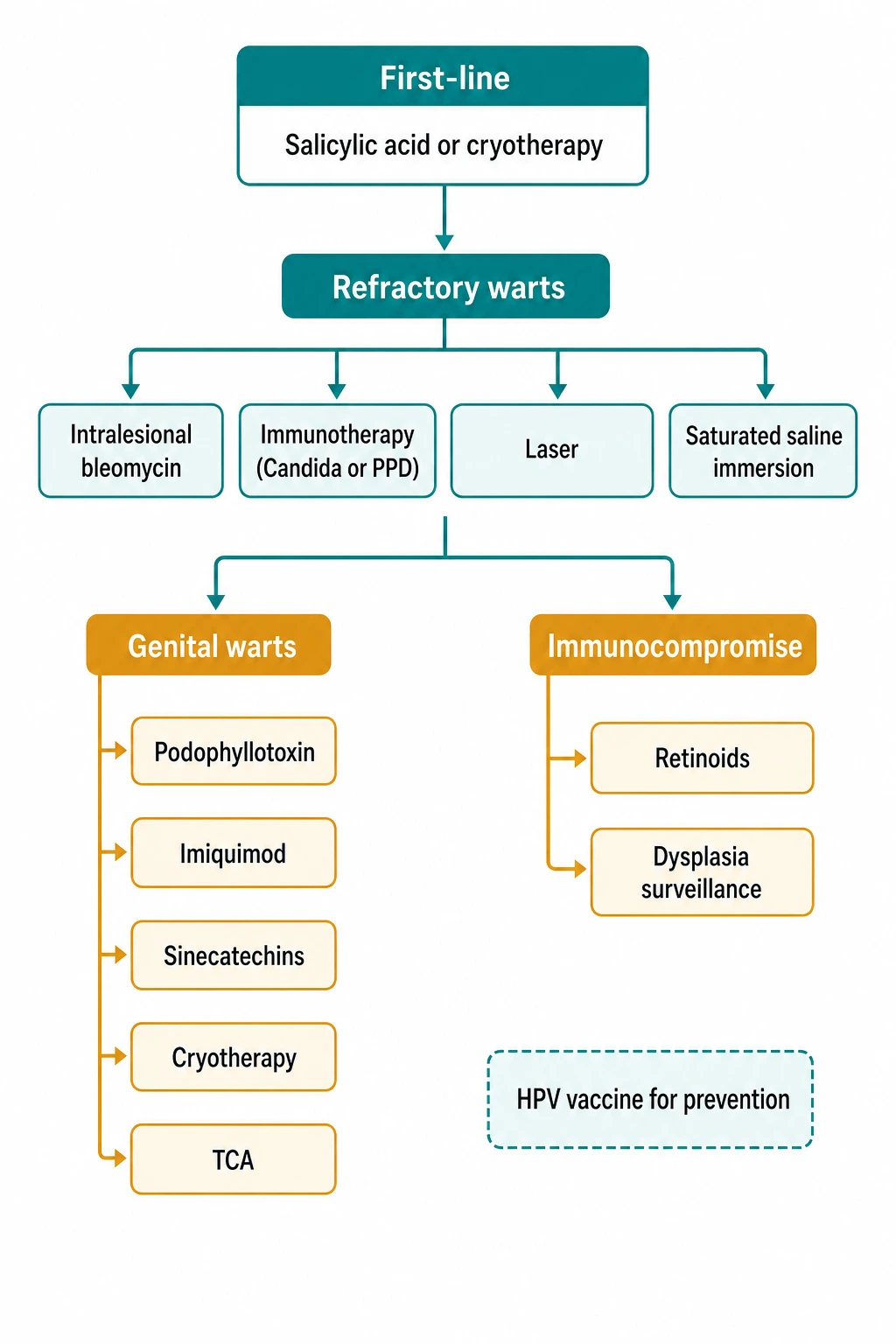
Treatment balances natural resolution against discomfort, scarring, time, and patient preference; no treatment is universally effective, and recurrence is common.[3][5][9]
First-line for cutaneous warts
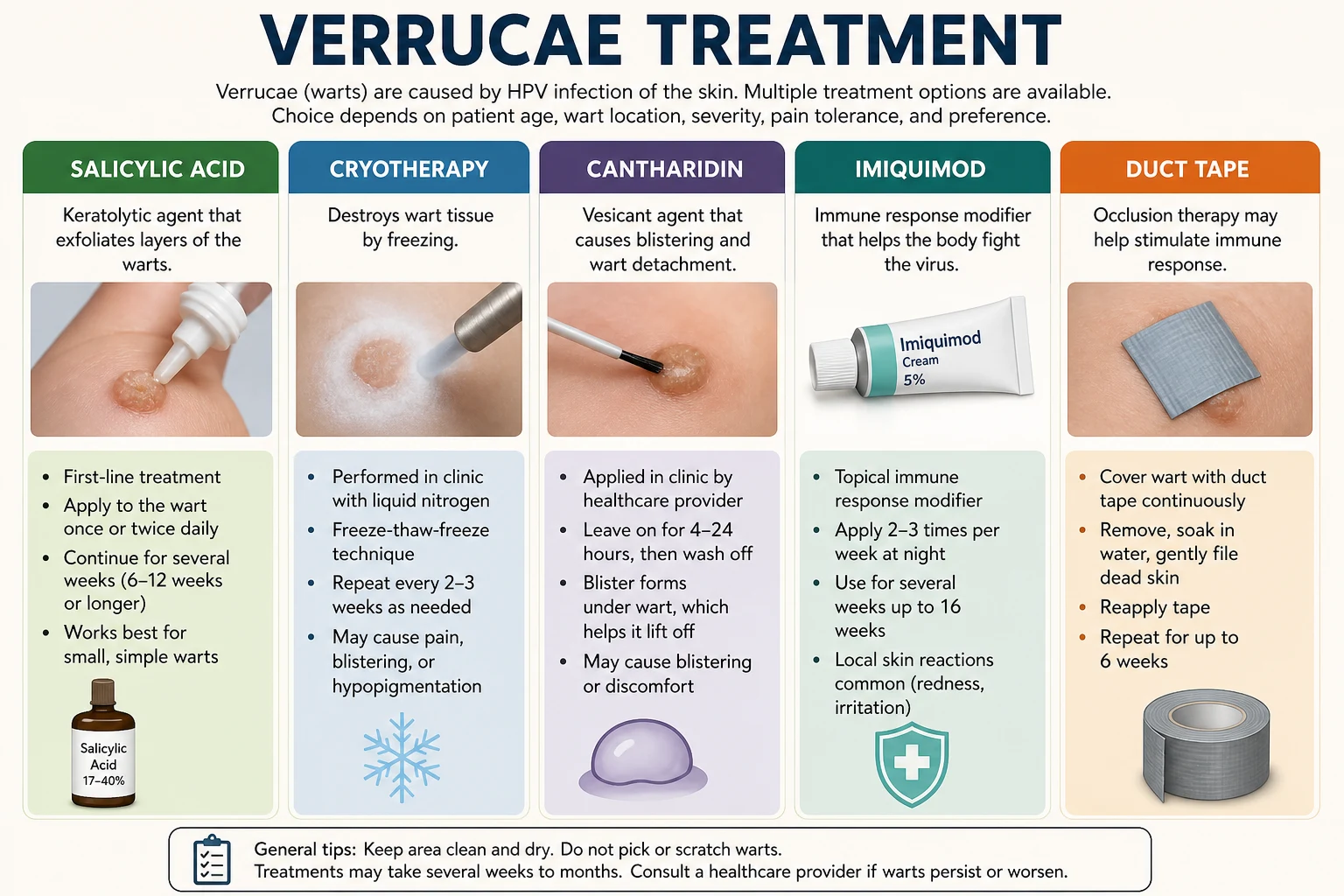
- Salicylic acid (12-26%, e.g., 17-40% plasters) with prior soaking and paring — first-line; moderate efficacy, requires persistence, low scarring. Cochrane evidence supports efficacy over placebo, though absolute benefit is modest.[3][4]
- Cryotherapy (liquid nitrogen) every 2-3 weeks — comparable to salicylic acid; aggressive (longer freeze) is more effective but more painful and prone to blistering/scarring; not preferred in young children.[3]
Second-line and refractory
- Blunt dissection / curettage / electrodessication — quick and effective, especially for filiform and periungual warts; small scarring risk.
- Cantharidin, podophyllotoxin (for genital), formic acid, and formaldehyde (for plantar).
- Intralesional bleomycin, intralesional 5-fluorouracil, and intralesional immunotherapy (Candida, PPD, measles antigens) — for refractory warts, inducing a delayed hypersensitivity response that clears warts at distant sites too.
- Photodynamic therapy, pulsed-dye laser (targets the capillary loops), saturated saline immersion (recent RCT evidence), and candidal antigen immunotherapy.
- Retinoids (topical or oral acitretin) for extensive refractory disease, especially in immunocompromise.[6][4]
Intralesional therapies (refractory disease)
For warts that have failed first- and second-line destructive approaches, intralesional injection delivers drug directly into the wart and the surrounding dermis, killing infected keratinocytes and provoking a host immune response. Three agents dominate fellowship-level practice: [1]
- Intralesional Candida antigen (Candin, 0.1 mL of 1:1000 dilution per wart, max 0.5 mL per session): a delayed-type hypersensitivity reaction to a recall antigen. Induces a T-cell-mediated (Th1) response that clears the injected wart and 50-70% of distant untreated warts by immune cross-recognition of HPV antigens; treatment is repeated every 2-4 weeks for up to 5 sessions. Adverse events: pain, erythema, blistering, flu-like symptoms; avoid in patients allergic to yeast or with severe atopy. PPD (tuberculin), MMR (measles-mumps-rubella) vaccine, and Trichophyton skin-test antigen work on the same principle; MMR has the strongest paediatric data and is preferred in pregnancy because Candida is contraindicated in pregnancy.
- Intralesional bleomycin (0.1 mL of 1 U/mL solution, drop-wise into the wart via a 27-30 G needle, single puncture; repeat every 2-4 weeks for up to 4 sessions): a cytostatic glycopeptide that causes strand breaks in HPV DNA and induces keratinocyte apoptosis; clearance rates of 60-90% in plantar and periungual refractory warts, with a small advantage over cryotherapy in head-to-head trials. Adverse events: intense pain on injection (may need local anaesthetic or EMLA), Raynaud's phenomenon of the distal digit when used periungually, nail dystrophy, eschar, and rarely flagellate hyperpigmentation; pulmonary fibrosis is a theoretical concern at systemic doses but is not reported with intralesional use.
- Intralesional 5-fluorouracil (5-FU, 0.1-0.3 mL of 50 mg/mL with or without a topical steroid to reduce pain) and intralesional vitamin D3 (0.2 mL of 300,000 IU/mL) are useful adjuncts; 5-FU is favoured for flat warts and periungual disease, and vitamin D3 has emerged as a low-cost, low-toxicity option with 70-80% clearance in plantar warts. [1]
Selection is lesion- and patient-specific: Candida antigen first for multiple or distant warts (immune spread); bleomycin first for a single refractory plantar or periungual wart; MMR preferred in children and pregnancy; 5-FU for flat warts. Counsel that scarring, dyspigmentation, and recurrence remain possible, and combination with paring/salicylic acid improves delivery through the hyperkeratotic surface. [1]
Intralesional therapies at a glance
Plantar and periungual warts
Plantar warts are challenging (pressure, endophytic growth): combine paring, salicylic acid plasters, cryotherapy, and (for refractory) intralesional bleomycin or laser; avoid painful destructive treatments that impair mobility. Periungual warts may distort the nail and are refractory; protect the nail matrix during treatment.[7][16]
Genital warts
- Patient-applied: podophyllotoxin 0.5% solution/gel or imiquimod 5% cream (immune response modifier). Sinecatechins (green-tea catechin) ointment is another option.
- Clinic-applied: cryotherapy, trichloroacetic acid (TCA), electrocautery, or surgical excision.
- Contraindicated in pregnancy: podophyllotoxin, imiquimod (relative), and podophyllin.
- Counsel on STI screening and HPV vaccination, and the risk of high-risk HPV-associated dysplasia.[10][11][12]
Prevention — HPV vaccination
Prophylactic HPV vaccination (9-valent, covering HPV-6/11/16/18/31/33/45/52/58) prevents vaccine-type genital warts and HPV-related dysplasia/carcinoma; greatest benefit before sexual debut, with effectiveness decreasing with age and number of partners, and catch-up programmes up to age 26 (and risk-based to 45 in some guidelines). Vaccination also reduces recurrent respiratory papillomatosis. It does not treat existing warts.[13][14]
Immunocompromise and malignancy
In HIV, transplant, and iatrogenic immunosuppression, warts are often extensive, refractory, and harbour high-risk HPV; management combines retinoids, immunotherapy, and close surveillance for dysplasia and squamous carcinoma. Buschke-Lowenstein tumour (giant condyloma, a verrucous carcinoma) and epidermodysplasia verruciformis-related SCC require surgical oncology.[2]
Clinical pearl
[1]Red flags
Exam application bank (NEET-PG / INICET)
One-line answer
Cutaneous and genital warts (verrucae) are benign epithelial proliferations caused by human papillomavirus (HPV) infection of keratinocytes, with distinct HPV types favouring specific clinical morphologies and sites (e.g., HPV-1 plantar, HPV-2/27 common, HPV-3/10 flat, HPV-6/11 genital). Fellowship-level assessment demands mastery of the clinical morphologies and their type associations, the natural history of immune-mediated resolution, the tiered treatment ladder (salicylic acid, cryotherapy, blunt dissection, intralesional and immune therapies) with its evidence base, the special management of refractory, plantar, and periungual disease, genital warts and their HPV-vaccine prevention, and the rare but important malignant transformation (epidermodysplasia verruciformis, HPV-related squamous carcinoma, especially in immunocompromise).
Worked stems (answer without another resource)
Stem 1 — Classic presentation. Map symptoms to mechanism; name the first investigation and first treatment step with dose/route if drug therapy is standard. [1]
Stem 2 — Unstable / complicated. List red flags that force immediate resuscitation, theatre, ICU, antidote, or reperfusion — and what you do in the first 15 minutes. [1]
Stem 3 — Atypical group. Elderly, pregnancy, child, or immunocompromised: how presentation and thresholds change. [1]
Stem 4 — Differential trap. Name the three closest mimics and one discriminator for each. [1]
Stem 5 — Disposition. Who goes home with safety-netting, who is admitted, who needs HDU/ICU/theatre, and what follow-up is mandatory. [1]
Rapid viva checklist
- Definition + classification
- Pathophysiology chain
- Bedside signs / criteria
- Score with exact components (if any)
- Emergency bundle
- Definitive therapy with doses
- Complications of disease and of treatment
- Special populations
- Guideline/trial name if classic
- Three exam traps
Coverage self-check
If you cannot answer any stem above from this page alone, re-read the matching section — the page is intended to be self-sufficient for final-prof and NEET-PG/INICET questions on Verrucae and human papillomavirus warts.
[1]Examination pearl
CRAB-P (CUTANEOUS-RESPIRATORY-ANAL-BOWEN-PENILE) - HPV-related cancer spectrum
Most common HPV-related malignancy; cytology screening + HPV testing + colposcopy
Oropharyngeal cancer 70% HPV-related; tonsil, base of tongue; non-smoker, younger
Anal intraepithelial neoplasia (AIN); anal cytology screening in high-risk (MSM, HIV)
Multiple brown-red papules in genital area; in situ SCC; can progress; immunocompetent - benign course
Rare; often in uncircumcised men with phimosis; erythroplasia of Queyrat (in situ on glans)
HPV genotype & vaccine
[1]HPV-related malignancy: cervical, anal, and oropharyngeal cancer
Although most HPV infections are cleared by cell-mediated immunity, persistent infection with high-risk HPV types (especially HPV-16 > 18 > 31/33/45/52/58) drives virtually all cervical cancers, the great majority of anal cancers, and a growing share of oropharyngeal cancers. The oncoproteins E6 and E7 inactivate p53 and retinoblastoma (pRB) respectively, allowing unregulated epithelial proliferation, genomic instability, and integration of viral DNA into the host genome — the molecular signature of progression from low-grade dysplasia to high-grade intraepithelial neoplasia and invasive carcinoma.[1][2][15]
Cervical cancer remains the canonical HPV-related malignancy: HPV 16/18 account for ~70% of cases, with HPV 31/33/45/52/58 contributing most of the remainder. Squamous cell carcinoma predominates (~80%); adenocarcinoma (~20%) is increasing in incidence and disproportionately attributable to HPV-18. The natural history runs through cervical intraepithelial neoplasia (CIN 1 → CIN 2 → CIN 3 / carcinoma in situ → invasive carcinoma), typically over 10-20 years. Primary prevention is HPV vaccination before sexual debut; secondary prevention is cytology with reflex HPV testing (co-testing or primary HPV testing) and colposcopy. 9-valent vaccination prevents ~90% of HPV-attributable cervical cancers in women who are HPV-naive at the time of immunisation.[1][13][15]
Anal cancer is strongly HPV-driven: HPV-16/18 account for ~90% of anal squamous cell carcinomas. Incidence has been rising for three decades, particularly in men who have sex with men (MSM), people living with HIV (PLWH), women with prior HPV-related vulvar or cervical disease, and solid-organ transplant recipients. The anal cancer precursor is anal intraepithelial neoplasia (AIN) — low-grade (AIN 1) and high-grade (AIN 2/3), analogous to cervical CIN. High-resolution anoscopy (HRA) with biopsy of acetowhite lesions is the diagnostic standard. Anal cytology screening is recommended in HIV-positive adults and high-risk MSM (some guidelines extend to all MSM); treatment of high-grade AIN with topical imiquimod, trichloroacetic acid (TCA), or electrocautery/laser ablation reduces progression to invasive cancer, although long-term data remain limited. The ANCHOR trial demonstrated a 57% reduction in progression to anal cancer with treatment of high-grade AIN in PLWH.[2][15]
Oropharyngeal cancer (tonsil, base of tongue, soft palate, pharyngeal wall) is the fastest-rising HPV-related malignancy in high-income countries. HPV-16 accounts for ~70% of HPV-positive oropharyngeal squamous cell carcinomas (OPSCC); HPV-18 contributes a small fraction, and the remaining high-risk types add little. The epidemiology is distinct: HPV-positive OPSCC presents in younger patients (median ~55 yr vs ~65 yr for HPV-negative), often without traditional tobacco/alcohol risk, frequently as a small primary tonsillar or base-of-tongue tumour with early cystic nodal metastases. HPV positivity confers a markedly better prognosis (3-year overall survival ~85% vs ~65% for HPV-negative), and treatment is increasingly de-escalated to reduce long-term toxicity (radiotherapy dose reduction, avoidance of cisplatin in low-risk disease). Prevention depends on HPV vaccination; screening is not established.[2][15]
Other HPV-related cancers include vulvar (HPV-attributable in ~40-60% of cases, especially younger women), vaginal (~75%), penile (~50%, with erythroplasia of Queyrat and Bowenoid papulosis as precursor lesions), and recurrent respiratory papillomatosis (RRP) — a benign but morbid airway disease caused by HPV-6/11, acquired perinatally in juvenile-onset RRP or sexually in adult-onset RRP, treated by serial laser or microdebrider ablation and cidofovir or bevacizumab for refractory disease.[1][15]

Rare verruca variants and HPV-associated neoplasia
Several rare entities lie on the spectrum between benign HPV infection and invasive HPV-driven cancer. Each has a characteristic HPV type profile, clinical morphology, malignant potential, and management approach that the fellowship candidate must recognise.[1][2][5]
Epidermodysplasia verruciformis (EV) is a rare, lifelong, autosomal recessive (or acquired, sometimes HIV-associated) disorder of susceptibility to β-HPV types (especially HPV-5, HPV-8, and others in the B1/B2 clade) that are harmless to the general population. Classically inherited EV is caused by biallelic loss-of-function mutations in EVER1/TMC6 or EVER2/TMC8, transmembrane channel proteins in keratinocytes that normally restrict β-HPV replication. Patients present in childhood with widespread, flat-topped, pink-to-brown plane warts and pityriasis versicolor-like macules on the trunk, neck, hands, and face; tinea versicolor-like lesions on the trunk are a clue. Malignant transformation to in situ or invasive squamous cell carcinoma occurs in 30-50% by age 40-50, almost exclusively on UV-exposed sites (face, neck, dorsal hands, bald scalp), implicating UV as co-carcinogen. Management combines rigorous photoprotection, topical and systemic retinoids (acitretin 0.5-1 mg/kg/day), topical imiquimod or 5-fluorouracil, and excisional or Mohs surgery for SCC. Interferon-α and checkpoint inhibitors are reserved for advanced disease. The acquired EV-like syndrome in HIV, transplant, or idiopathic CD4 lymphopenia should prompt immunophenotyping and immune reconstitution where possible.[1][2][15]
Bowenoid papulosis presents as multiple pigmented or erythematous, smooth, flat-topped papules on the genitalia, groin, or perianal area of sexually active young adults (typically 20-40 yr). Histology shows Bowenoid dysplasia / squamous cell carcinoma in situ confined to the epidermis, but the clinical course is benign with spontaneous regression in most immunocompetent patients. HPV-16 (and to a lesser extent HPV-18, -33, -39) is detected in most lesions. Differentiating this from Bowen disease (SCC in situ of the vulva / penis / perianal skin) — a solitary, larger, more persistent, erythematous scaly plaque in older adults with malignant potential — is essential. Treatment options include topical imiquimod 5% (3x/week x 16 weeks), topical 5-FU, cryotherapy, CO₂ laser ablation, electrocautery, or tangential shave excision. Biopsy to confirm the diagnosis and exclude invasive SCC is mandatory; long-term follow-up is advised in immunocompromised patients because progression to invasive SCC is reported.[2][15]
Focal epithelial hyperplasia (Heck disease) is a benign HPV-13 and HPV-32 infection of the oral mucosa, presenting as multiple soft, sessile, pale papules on the lips, buccal mucosa, lateral tongue, and gingiva, often in children. It is particularly common in indigenous populations of the Americas (Inuit, First Nations, Amazonian), sub-Saharan Africa, and parts of the Middle East. The condition is usually self-limiting over months to years; treatment is reserved for cosmetically significant or symptomatic lesions and includes CO₂ laser ablation, electrocautery, topical imiquimod, or surgical excision. Malignant transformation is exceptional; the differential includes molluscum contagiosum, white sponge naevus (autosomal dominant, no HPV), and condyloma acuminatum of the oral mucosa (the latter implies sexual transmission and warrants safeguarding in children).[2][15]
Verrucous carcinoma is a slow-growing, exophytic, well-differentiated variant of squamous cell carcinoma with minimal cytological atypia but locally destructive behaviour, attributable to HPV (especially HPV-6, -11, -16, -18) in many cutaneous and mucosal variants, with smoking and betel nut as co-factors for oral disease. The clinical pattern depends on site: [1]
- Epithelioma cuniculatum — plantar foot, often pretibial in older men; cauliflower-like mass with deep keratin-filled crypts; HPV-6/-11 or HPV-2. Wide local excision or amputation; recurrence is common.
- Buschke-Löwenstein tumour (giant condyloma acuminatum) — anogenital, HPV-6/-11 in most cases; cauliflower-like, locally invasive, can ulcerate and fistulate; malignant transformation in ~30-50%, despite bland histology. Wide local excision, abdominoperineal resection, or concurrent chemoradiotherapy; multidisciplinary surgical oncology input is required.
- Oral florid papillomatosis — oral mucosa, HPV-6/-11/-16; verrucous, carpet-like plaques; malignant transformation reported.
- Papillomatosis cutis carcinoides — extremely rare cutaneous variant elsewhere on the skin. [1]
Biopsy depth must include the full thickness of the lesion because superficially-biopsied verrucous carcinoma looks like a simple wart; biopsy the base / a representative full-thickness area to identify invasive keratinocyte infiltration. Radiological staging (MRI pelvis for Buschke-Löwenstein, MRI foot for epithelioma cuniculatum) defines the extent of local invasion and helps plan resection or radiotherapy.[1][2][15]
EV-BUSH-PAP (rare HPV-associated entities to recognise)
EVER1/2 mutations; HPV-5/8; widespread plane warts; SCC on sun-exposed skin
Epithelioma cuniculatum (plantar), Buschke-Lowenstein (anogenital), oral florid; HPV-6/11/16; deep biopsy needed
Giant condyloma; HPV-6/11; locally destructive; 30-50% malignant; wide excision
Sun-exposed EV plaques transform to SCC; photoprotection essential; retinoids
Bowen disease (older, solitary); Bowenoid papulosis (younger, multiple, benign course); biopsy mandatory
HPV-13/32; children; oral mucosa; self-limiting; indigenous populations
Rare verrucous carcinoma on non-acral skin; HPV-2/-6/-11; wide excision
HPV-16/18; precursor of anal SCC; HRA + ablation in high-risk
Oral HPV-6/11/16 lesions can mimic white sponge naevus; biopsy if atypical
Specific dosing and prevention: a pragmatic reference
Precise dosing and prevention strategies anchor the fellowship viva and the clinic. The table below summarises specific, evidence-supported doses for the agents most likely to be examined:[3][4][5][9][10][11][12]
- Topical salicylic acid 17-40% plasters: pare wart, apply plaster, occlude with tape; replace every 24-48 hours for 6-12 weeks; concentration 17% for hands, 40% for plantar warts; combine with weekly paring.
- Cryotherapy with liquid nitrogen (-196 °C): single 5-15 second freeze-thaw cycle (target a 1-2 mm halo); repeat every 2-3 weeks for 3-4 months (typically 4-6 treatments); maximum freeze time per session 30 seconds to avoid blistering and tendon injury near digits.
- Intralesional bleomycin 1 U/mL: 0.1 mL per wart via single-puncture drop-wise technique or multi-puncture (Dermajet); repeat every 2-4 weeks for up to 4 sessions; total dose per session ≤2 mg; protect digits to avoid Raynaud phenomenon and nail dystrophy.
- Intralesional Candida antigen (1:1000): 0.1 mL per wart, max 0.5 mL per session; repeat every 2-4 weeks for up to 5 sessions; avoid in yeast allergy and pregnancy.
- Intralesional MMR vaccine: 0.1-0.3 mL of reconstituted MMR per wart; safe in pregnancy and children; repeat every 2-4 weeks for up to 5 sessions.
- Intralesional 5-fluorouracil 50 mg/mL: 0.1-0.3 mL per wart; pair 1:1 with triamcinolone 10 mg/mL to reduce pain; useful for flat and periungual warts.
- Intralesional vitamin D3 (cholecalciferol 300,000 IU/mL): 0.2 mL per wart; emerging low-cost option; mainly plantar warts.
- Topical imiquimod 5% cream: apply three nights per week for up to 16 weeks; leave on for 6-10 hours; wash off with mild soap; safe in non-pregnant adults; common local irritation.
- Topical podophyllotoxin 0.5% solution or gel: apply twice daily for 3 consecutive days, then 4 days off; repeat for up to 4 weeks; treat only visible warts (≤10 cm² total); avoid in pregnancy.
- Sinecatechins 15% ointment (Veregen): apply three times daily for up to 16 weeks; the only FDA-approved genital-wart therapy that is safe in pregnancy.
- Provider-applied trichloroacetic acid 80-90% (TCA): paint on wart weekly; allow to frost, neutralise with saline; residual hypopigmentation common.
- Oral retinoids for extensive or EV-associated disease: acitretin 0.5-1 mg/kg/day (or isotretinoin 0.5-1 mg/kg/day for women of childbearing potential requiring shorter washout), tapered to lowest effective dose; teratogenic, contraception mandatory for acitretin (3 yr washout) and isotretinoin (1 month washout). [1]
HPV vaccination specifics (Gardasil-9 / 9-valent HPV vaccine, covering HPV-6, -11, -16, -18, -31, -33, -45, -52, -58):[13][14]
- Routine schedule: 2-dose series (0 and 6-12 months) for ages 9-14 years; 3-dose series (0, 1-2, 6 months) for ages 15-26 years or anyone immunocompromised.
- Catch-up through age 26; shared clinical decision-making 27-45 (FDA-approved 2023).
- Dose: 0.5 mL intramuscular deltoid.
- Effectiveness: ~90% protection against HPV-6/11 genital warts and HPV-16/18 cervical, anal, and oropharyngeal cancer when administered before sexual debut; partial but real benefit after exposure.
- Safety: predominantly local reactions (pain, erythema); syncope post-vaccination (observe 15 min); no causal link to autoimmune disease or infertility.
- Immunocompromised patients (HIV, transplant): 3-dose series; seroconversion rates are high but titres lower than in immunocompetent peers; consider post-vaccination anti-HPV antibody testing in select transplant recipients.
- Pregnancy: defer; no teratogenic signal but data limited; vaccine can be resumed postpartum.
- Booster doses: not currently recommended; durable protection 15-20+ years in follow-up studies.
- Therapeutic use (after HPV exposure): does NOT treat established infection; reduces recurrence after conisation/LOOP/LLETZ for CIN and after surgical excision of anal and oropharyngeal HPV-related disease (per Kechagias 2022 meta-analysis).[14]
Secondary prevention / screening: [1]
- Cervical screening: cytology alone (age 21-29, every 3 yr); co-testing or primary HPV testing (age 25-65, every 5 yr); HPV-vaccinated women should still be screened because the vaccine does not cover all oncogenic types and may wane in late life.
- Anal cytology in HIV-positive adults and high-risk MSM; HRA if cytology abnormal.
- Oropharyngeal screening: not recommended; primary prevention via HPV vaccination is the only validated population strategy.[13][15]
Behavioural and environmental prevention: condom use reduces but does not eliminate HPV transmission (HPV is transmitted by skin-to-skin contact not just by fluids); limiting partners, delaying sexual debut, and male circumcision reduce but do not abolish acquisition; avoid sharing towels, razors, and footwear to limit cutaneous HPV spread; cover plantar warts in swimming pools and gyms.[1][10]
HPV vaccine and screening quick numbers
HPV vaccine schedule
HPV vaccine quick numbers
References
- [1]Wolf J, Kist LF, Pereira SB, et al. Human papillomavirus infection: Epidemiology, biology, host interactions, cancer development, prevention, and therapeutics Rev Med Virol, 2024.PMID 38666757
- [2]Jensen JE, Becker GL, Jackson JB, et al. Human Papillomavirus and Associated Cancers: A Review Viruses, 2024.PMID 38793561
- [3]Kwok CS, Gibbs S, Bennett C, et al. Topical treatments for cutaneous warts Cochrane Database Syst Rev, 2012.PMID 22972052
- [4]García-Oreja S, Álvaro-Afonso FJ, García-Álvarez Y, et al. Topical treatment for plantar warts: A systematic review Dermatol Ther, 2021.PMID 33263934
- [5]Kore VB, Anjankar A. A Comprehensive Review of Treatment Approaches for Cutaneous and Genital Warts Cureus, 2023.PMID 38022045
- [6]Xu Y, Li T, Liang X, et al. Saturated saline immersion for the treatment of refractory plantar warts: An open-label, one-arm, single-center trial J Am Acad Dermatol, 2026.PMID 41072585
- [7]Witchey DJ, Witchey NB, Roth-Kauffman MM, et al. Plantar Warts: Epidemiology, Pathophysiology, and Clinical Management J Am Osteopath Assoc, 2018.PMID 29379975
- [8]Loo SK, Tang WY. Warts (non-genital) BMJ Clin Evid, 2014.PMID 24921240
- [9]Zhu P, Qi RQ, Yang Y, et al. Clinical guideline for the diagnosis and treatment of cutaneous warts (2022) J Evid Based Med, 2022.PMID 36117295
- [10]Temple RW, Larker JCL, Brus JM. Genital Warts: Rapid Evidence Review Am Fam Physician, 2025.PMID 39964927
- [11]Sindhuja T, Bhari N, Gupta S. Asian guidelines for condyloma acuminatum J Infect Chemother, 2022.PMID 35341674
- [12]Workowski KA, Bolan GA. Sexually transmitted diseases treatment guidelines, 2015 MMWR Recomm Rep, 2015.PMID 26042815
- [13]Ellingson MK, Sheikha H, Nyhan K, et al. Human papillomavirus vaccine effectiveness by age at vaccination: A systematic review Hum Vaccin Immunother, 2023.PMID 37529935
- [14]Kechagias KS, Kalliala I, Bowden SJ, et al. Role of human papillomavirus (HPV) vaccination on HPV infection and recurrence of HPV related disease after local surgical treatment: systematic review and meta-analysis BMJ, 2022.PMID 35922074
- [15]Oyouni AAA. Human papillomavirus in cancer: Infection, disease transmission, and progress in vaccines J Infect Public Health, 2023.PMID 36868166
- [16]Bhatti A, Chowdhary S, Ferrise T, et al. Plantar Verruca and Dermoscopy: An Update Clin Podiatr Med Surg, 2021.PMID 34538428