Emergency Medicine · Emergency & Toxicology
Carbon Monoxide Poisoning
Also known as CO poisoning · Smoke inhalation · Carbon monoxide toxicity · Carboxyhaemoglobinaemia · COHb poisoning · Coal gas poisoning
Carbon monoxide (CO) poisoning is a leading cause of unintentional poisoning deaths worldwide — a colourless, odourless, tasteless gas produced by incomplete combustion of carbonaceous fuels. The clinical syndrome arises because CO binds haemoglobin with an affinity approximately 240 times that of oxygen, forming carboxyhaemoglobin (COHb) that both reduces oxygen-carrying capacity and shifts the oxyhaemoglobin dissociation curve leftward (impairing oxygen unloading at tissue). Additional injury occurs through direct mitochondrial poisoning (cytochrome c oxidase / cytochrome aa3 inhibition), oxidative stress from neutrophil priming, and lipid peroxidation of myelin-rich white matter that produces the classic delayed neuropsychiatric syndrome. Acute clinical features range from headache, nausea and dizziness in mild exposure to syncope, myocardial ischaemia, seizures, coma and death in severe exposure; fetal demise may follow even moderately severe maternal exposure because fetal haemoglobin binds CO even more avidly. The diagnostic cornerstone is arterial or venous blood gas with co-oximetry — standard pulse oximetry FALSELY reads normal because it cannot distinguish COHb from oxyhaemoglobin. Immediate 100 percent oxygen via non-rebreather mask at 10 to 15 L/min reduces the CO half-life from 4 to 5 hours (room air) to 60 to 90 minutes; hyperbaric oxygen at 2.5 to 3.0 ATA for 60 to 150 minutes shortens it further to 20 to 30 minutes and is indicated for severe poisoning (COHb over 25 percent, loss of consciousness, neurological deficit, myocardial ischaemia, pregnancy with COHb over 15 percent, or smoke inhalation with concurrent cyanide toxicity). In fire victims with smoke inhalation, concomitant cyanide poisoning must always be considered and treated empirically with hydroxocobalamin 5 g IV (or sodium thiosulfate 12.5 g IV, or the cyanide antidote kit of amyl nitrite 0.3 mL ampoule inhaled then sodium nitrite 10 mL of 3 percent IV over 10 minutes). Groups at special risk include fire victims, occupants of buildings with faulty heating, vehicle exhaust exposure in enclosed garages, workers at methamphetamine laboratories, attempted suicide via vehicle exhaust, and pregnant women (foetal injury at maternal COHb levels that are otherwise asymptomatic).
On this page & tools
Your progress
Saved locally on this device.
Exam tags
Red flags
Overview & Definition
Carbon monoxide (CO) is a colourless, odourless, tasteless, non-irritating gas produced by the incomplete combustion of carbonaceous fuels. It is the leading cause of unintentional poisoning deaths in many countries and a worldwide public-health problem; in the United States alone, CO poisoning produces an estimated 50 000 emergency-department visits and 1300 to 2000 deaths per year, with a similar burden reported from Europe and South Asia. The clinical syndrome — carbon monoxide poisoning — is defined as tissue hypoxia produced by the combined effects of impaired oxygen delivery (carboxyhaemoglobin, left-shifted dissociation curve), impaired oxygen utilisation (mitochondrial cytochrome inhibition), and secondary inflammatory injury (oxidative stress, lipid peroxidation).[3] [5]
The condition was first described by John Haldane in 1895 during an experiment in which he himself became symptomatic in a CO-enriched chamber; his physiological work established the basis for treatment with high inspired oxygen concentrations. Acute, high-concentration exposure produces syncope, seizures, myocardial ischaemia and death within minutes; lower-concentration exposure produces a subacute syndrome of headache, nausea, dizziness and weakness that is easily mistaken for viral illness, food poisoning, migraine or alcohol intoxication and is the cause of the typical winter clusters from faulty domestic heating. Chronic low-level exposure (flues left unserviced, workplace exposure, second-hand smoke) produces vague constitutional symptoms, fatigue and cognitive impairment that may be missed for months. [1]
The four interacting mechanisms are: (1) carboxyhaemoglobin formation, (2) left-shift of the oxyhaemoglobin dissociation curve (and altered intra-erythrocyte 2,3-DPG), (3) inhibition of mitochondrial cytochrome c oxidase (cytochrome aa3), and (4) secondary oxidative injury with neutrophil priming and lipid peroxidation of myelin-rich white matter that produces the classic delayed neuropsychiatric syndrome.[5]
CO poisoning is a clinical diagnosis confirmed by co-oximetry — the bedside triad is multiple casualties, non-specific neurological or cardiovascular symptoms, and a sustained improvement after removal from the environment. Pulse oximetry cannot measure it, normal arterial oxygen tension is preserved until respiration fails, and the classic cherry-red skin is a late, post-mortem finding rather than a useful clinical sign.[3] [4]
Classification
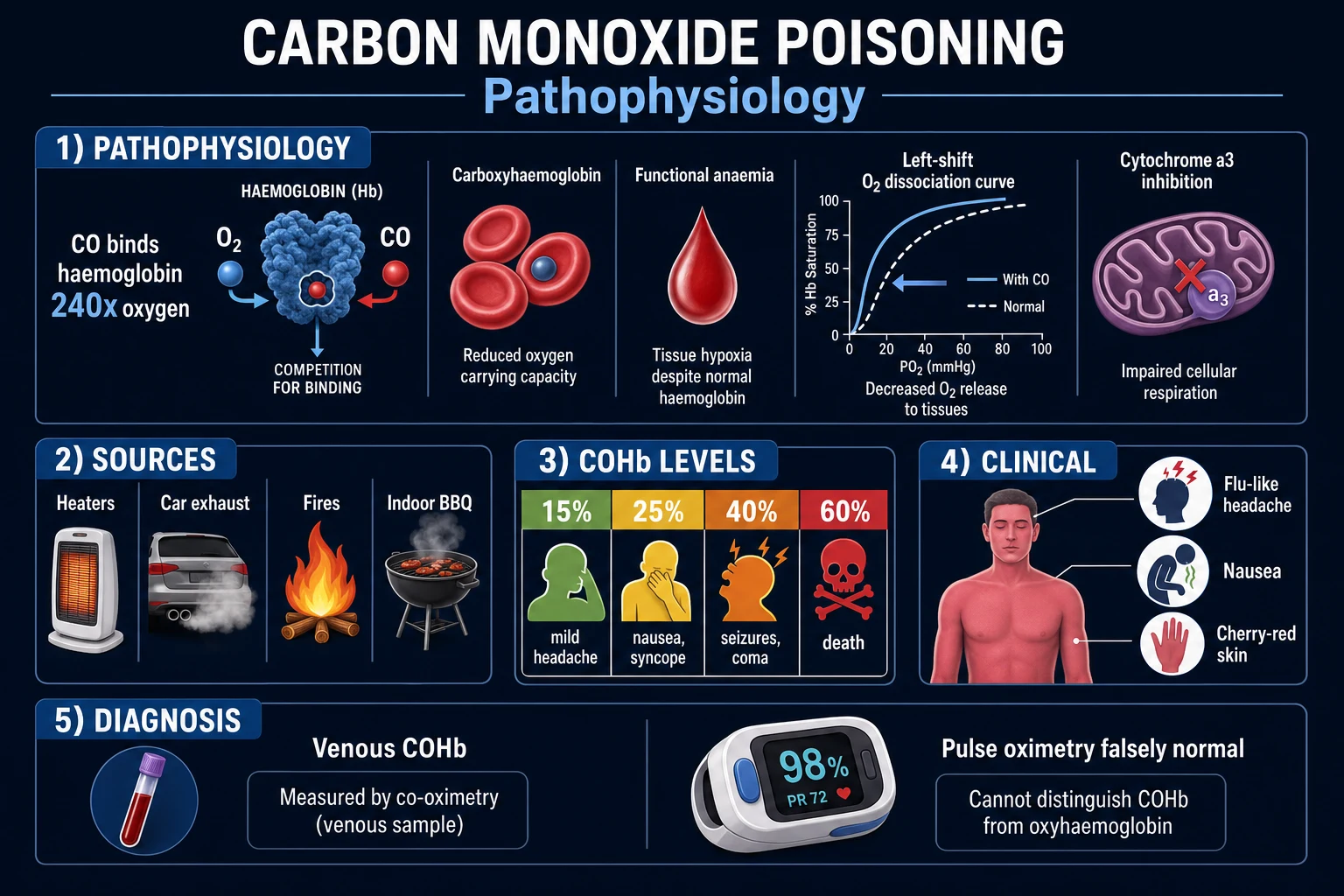
CO poisoning is classified by clinical severity, by COHb concentration, by chronicity, and by exposure scenario. None alone is sufficient — the decision to treat is clinical, supported by COHb and physiology.[3]
By clinical severity (a widely used bedside framework): [1]
Mild (COHb 10 to 20 percent)
- Headache (most common symptom — dull, frontal, gradual), nausea, mild dizziness, fatigue, exertional dyspnoea
- Tachycardia is common; ECG usually normal
- Cognitive testing may show subtle impairment
- No LOC, no neurological deficit, no cardiac ischaemia
- Resolution within hours of 100 percent O2
Moderate (COHb 20 to 40 percent)
- Severe headache, nausea and vomiting, visual disturbance, weakness, syncope, confusion, personality change
- Tachypnoea, tachycardia, hypotension possible
- Metabolic (lactic) acidosis from impaired oxidative phosphorylation — anion gap
- Chest pain and ECG ischaemia may appear in patients with coronary disease even at moderate COHb
- Risk of delayed neuropsychiatric syndrome if not promptly treated
Severe (COHb over 40 percent or any LOC / neurological deficit / cardiac ischaemia)
- Syncope, seizures, coma, pulmonary oedema, shock, malignant arrhythmias, cardiac arrest
- Marked lactic acidosis, hyperglycaemia, leucocytosis, raised CK, raised troponin
- In fire victims — always consider concomitant cyanide poisoning and inhalational injury to the airway
- Reflex sympathetic surges may produce an initially brief hyperdynamic phase followed by cardiovascular collapse
- Mortality 5 to 30 percent; severe neurological morbidity in survivors
By COHb concentration (used as a guide for hyperbaric-oxygen referral; not a diagnostic threshold in isolation): [1]
| COHb | Severity | Action |
|---|---|---|
| Under 5 percent | Normal in non-smokers (up to 12 percent in heavy smokers, 3 percent urban dwellers) | Observation if asymptomatic |
| 5 to 15 percent | Mild — smoker or low exposure | 100 percent O2, observe, no HBO |
| 15 to 25 percent | Moderate | 100 percent O2; HBO if symptoms or pregnancy |
| 25 to 40 percent | Severe | 100 percent O2 + HBO |
| Over 40 percent | Critical | 100 percent O2 + HBO; ICU |
| Over 50 to 60 percent | Often fatal | 100 percent O2 + HBO; ICU; CPR if arrested |
By chronicity: [1]
Acute exposure
- Single short-duration exposure — minutes to hours — often with a high peak COHb
- Classic winter-cluster presentation (boiler fault, generator indoors) or fire / smoke inhalation
- Symptoms proportional to peak COHb and rate of rise
- Reversible with prompt 100 percent O2; risk of delayed neuropsychiatric syndrome if any LOC or neurological signs at presentation
Subacute / chronic exposure
- Repeated or prolonged low-level exposure — poorly ventilated home with faulty flue, occupational (garage attendants, forklift operators, longshoremen, firefighters, charcoal production), second-hand smoke, recreational 'chasing' with car exhaust is rare
- Non-specific — fatigue, headache, nausea, cognitive slowing, personality change, falls, dyspnoea on exertion
- COHb may be normal at the time of measurement (last exposure hours earlier); diagnosis rests on history and carboxyhaemoglobin peak
- Long-term sequelae include memory impairment, vestibular dysfunction and polyneuropathy
By exposure scenario: [1]
- Domestic — accidental (most common in temperate countries in winter): faulty boilers, blocked chimneys, improperly vented kerosene / gas heaters, wood-burning stoves without flue lining, indoor use of gas-powered generators, indoor charcoal grilling.
- Fire / smoke inhalation — the smoking patient; 50 to 70 percent of fire fatalities have potentially lethal COHb; cyanide co-toxicity is the rule.
- Occupational — coal miners, blast-furnace and foundry workers, garage mechanics, fork-lift operators (petrol-powered), longshoremen working around marine engines, painters (methylene chloride in strippers is metabolised to CO).
- Vehicle-related — accidental in enclosed garages (running engine, faulty exhaust); deliberate as a suicide method.
- Clandestine drug manufacture — methamphetamine ("meth") labs release large volumes of CO and other gases; hazmat scene; multiple casualties.
- Recreational 'chasing' — inhaling car exhaust to chase euphoria, mostly historical.
- Methylene chloride — paint strippers and industrial solvents are metabolised to CO and can produce delayed CO poisoning with onset hours after exposure. [1]
Epidemiology & Risk Factors
CO is the leading cause of fire-related deaths, but the majority of clinical CO poisoning is accidental domestic exposure during cold weather when heating is in use.[3] [5]
Incidence and mortality: [1]
- United States — approximately 50 000 ED visits and 1300 to 2000 deaths per year; unintentional deaths peak in winter; intentional (suicide) deaths peak in spring in some series; rates have fallen since the 1970s after mandating CO detectors in dwellings and catalytic converters in vehicles (which reduced ambient CO from exhaust).
- United Kingdom — approximately 200 deaths per year from CO exposure (lower than the United States because lower domestic use of gas heating); unintentional cluster incidents are more common than isolated deaths.
- Low- and middle-income countries — data are sparse; indoor use of biomass fuels (coal, wood, dung) in poorly ventilated cooking and heating spaces produces chronic low-level exposure and acute poisoning outbreaks in cold and high-altitude regions. [1]
Populations at highest risk: [1]
Fire / smoke-inhalation victims
- Most common lethal exposure worldwide
- Always consider **concomitant cyanide poisoning** — combustion of plastics, wool, silk, polyurethane foam releases hydrogen cyanide
- Inhalational thermal injury to the airway may dominate the early presentation; CO and cyanide produce the systemic toxicity
Domestic winter exposures
- Faulty or poorly ventilated gas boilers and water heaters, blocked flues
- Indoor use of charcoal grills, hibachis, propane heaters
- Portable generators indoors during power outages (post-hurricane clusters)
- Multiple family casualties in the same dwelling in winter; pets affected first
Occupational exposures
- Coal miners, blast-furnace and coke-oven workers, foundry workers, garage mechanics
- Marine and longshoremen; fork-lift operators in warehouses (petrol engines)
- Firefighters (occupational monitoring now standard)
- Painters and strippers using **methylene chloride** — metabolised to CO for hours after exposure
METH lab exposures
- Clandestine labs using the **red phosphorus / iodine / pseudoephedrine** method release CO and other gases
- Hazmat scene — chemical, fire and explosive risks in addition to CO
- Multiple casualties including first responders
- Public-health notification; psychiatric assessment of the cook
Vehicle exhaust / suicide
- Accidental in enclosed garages (running engine) or blocked tailpipes
- Deliberate with hose from exhaust to cabin — historical suicide method; now rare in countries that have phased out non-catalytic vehicles
- Cluster suicides in rural areas with vehicle + garage + alcohol
- Psychiatric assessment after medical stabilisation; do not leave the patient unattended
Pregnant women
- Foetal haemoglobin binds CO even more avidly than adult Hb; foetal COHb accumulates to **higher peak** and clears **much more slowly**
- Foetal demise and severe neurological injury at maternal COHb levels that may be asymptomatic
- Refer for HBO at **lower maternal COHb threshold** (over 15 percent, or any symptomatic exposure); continuous foetal monitoring
Modifiable environmental risk factors include lack of CO detectors in dwellings (UL 2034 / EN 50291 standard), inadequate flue servicing, use of portable generators indoors, kerosene heaters without flues, and indoor charcoal grilling. Public-health campaigns in many countries now mandate CO detectors at point-of-sale for new dwellings and rentals.[3]
Pathophysiology
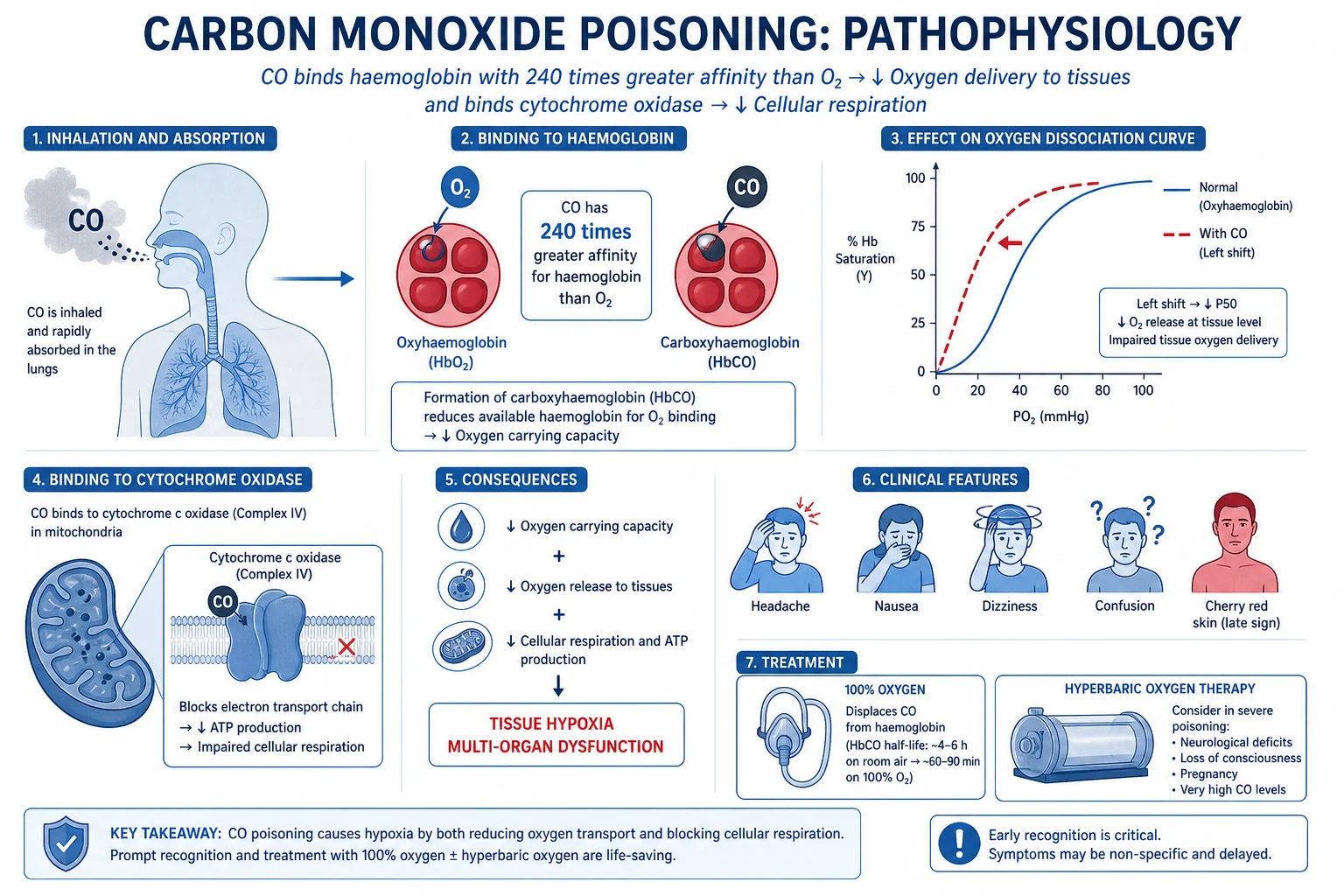
CO is a small, lipophilic molecule that diffuses rapidly across the alveolar membrane and binds to haemoglobin (Hb), myoglobin (Mb), cytochrome c oxidase, and other haem-containing and metalloproteins. The clinical syndrome is the integrated effect of impaired O2 delivery, impaired O2 utilisation, and secondary inflammatory injury.[4] [5]
1. Carboxyhaemoglobin — CO binds haemoglobin ~ 240 times more avidly than O2. CO and O2 compete for the same ferrous (Fe2+) iron in the haem pocket. The equilibrium affinity ratio HbCO / HbO2 is approximately 240 : 1 at low CO partial pressure. The affinity constant implies that a CO partial pressure only 1/240 of alveolar PO2 produces 50 percent COHb — hence the severity of even modest exposures. Smoking is the commonest cause of chronic COHb elevation (5 to 12 percent versus under 3 percent in non-smokers); endogenous CO production from haem catabolism contributes 0.4 to 0.7 percent COHb at baseline. Once CO is bound, it displaces O2 in proportion to relative partial pressures (Haldane first-law analogue), but because binding is cooperative, CO also stabilises the R (relaxed, high-affinity) state of haemoglobin and shifts the oxyhaemoglobin dissociation curve to the LEFT — meaning that the remaining oxyhaemoglobin releases O2 less readily to the tissues. The combination of reduced carrying capacity + impaired unloading is more toxic than either alone; the result is a functional anaemia that the haemoglobin concentration cannot detect.[4]
2. Mitochondrial cytochrome c oxidase inhibition. CO binds the reduced (ferrous) form of cytochrome a-a3 (complex IV) of the electron-transport chain, with an affinity roughly comparable to O2 at these sites. Inhibition uncouples oxidative phosphorylation, forcing anaerobic metabolism even in the presence of adequate O2 — this is the biochemical basis of the lactic acidosis that characterises severe poisoning. Heart and brain — the highest O2 consumers — are the first organs affected. Mitochondrial injury persists even after COHb clears, contributing to the delay in clinical resolution. [1]
3. Myoglobin binding. CO binds myoglobin ~ 60 times more avidly than O2, impairing cardiac myocyte oxygen delivery and sarcoplasmic Ca2+ handling — a major contributor to myocardial stunning, arrhythmia, and troponin elevation in CO exposure, particularly in patients with pre-existing coronary disease in whom cardiac symptoms appear at lower COHb. [1]
4. Foetal haemoglobin binds CO even more avidly than adult Hb. Foetal Hb (HbF) is the dominant Hb before 30 weeks' gestation; it binds CO with an affinity roughly 2 to 3 times higher than adult Hb. Foetal COHb therefore accumulates to a higher peak than maternal COHb and clears more slowly (the maternal half-life is 4 to 5 hours on room air; foetal half-life is several-fold longer). This explains why the foetus can suffer severe injury — fetal demise, microcephaly, white-matter injury, cerebral palsy — at maternal COHb levels that produce only mild symptoms. [1]
5. CO as a signalling molecule and the secondary injury wave. Small amounts of endogenous CO are produced by haem oxygenase (HO-1, HO-2) and act as a signalling molecule (vasodilator, anti-inflammatory, anti-apoptotic). In CO poisoning, however, the oxidative stress wave that follows reperfusion (after O2 is restored) is paradoxically worse than the hypoxia itself — CO displaces from cytochrome and haemoglobin, generating reactive oxygen species that prime neutrophils to adhere to the cerebral microvasculature and release myeloperoxidase. The downstream event is lipid peroxidation of myelin in the globus pallidus, deep white matter, and cerebral cortex — the anatomical basis of the classic delayed neuropsychiatric syndrome (memory loss, parkinsonism, personality change, cognitive deficit, gait disturbance) that appears days to weeks after apparent recovery.[5]
COHb half-life (the kinetic rationale for treatment):[3]
| Condition | Half-life of COHb |
|---|---|
| Room air (FiO2 0.21) | 240 to 320 minutes (4 to 5 hours) |
| 100 percent O2 (NRB) | 60 to 90 minutes |
| Hyperbaric O2 at 2.5 to 3.0 ATA | 20 to 30 minutes |
| Reduced by pregnancy, anaemia, exercise; increased by sleep, posture, co-ingestion |
The shorter half-life under high inspired O2 reflects direct competition between O2 and CO for the haem binding site (mass-action), not enzymatic clearance — the rationale for aggressive early oxygen therapy. [1]
Clinical Presentation
The clinical picture is highly variable, depends on COHb level, rate of rise, duration, and individual susceptibility (age, comorbidity, pregnancy), and is easily mistaken for viral illness, food poisoning, migraine, alcohol intoxication or simple anxiety — which is why the diagnosis is so often missed.[4] [5]
Symptoms of mild exposure (COHb 10 to 20 percent): [1]
- Headache — dull, gradual, frontal or bitemporal, worsened by exertion (the most common symptom; present in 80 percent of cases).
- Nausea, mild anorexia, generalised malaise.
- Dizziness and subjective imbalance.
- Fatigue, lethargy, difficulty concentrating.
- Dyspnoea on exertion (aerobic exercise unmasks cardiac ischaemia at COHb levels that are asymptomatic at rest, especially in patients with coronary disease).
- Tachycardia is common; ECG usually normal. [1]
Symptoms of moderate exposure (COHb 20 to 40 percent): [1]
- Severe throbbing headache, nausea and vomiting.
- Visual disturbance — blurred vision, diplopia.
- Confusion, personality change, irritability, impaired judgment.
- Syncope or near-syncope (a red flag — mandates admission and hyperbaric referral in most centres).
- Chest pain in patients with coronary disease even at moderate COHb (unmasked demand ischaemia).
- Weakness, ataxia. [1]
Symptoms of severe exposure (COHb over 40 percent or any LOC): [1]
- Syncope, seizures, focal neurological deficit, coma.
- Hypotension, shock, malignant arrhythmia, cardiac arrest.
- Pulmonary oedema (non-cardiogenic from myocardial depression and ARDS in fire victims).
- Rhabdomyolysis with raised CK and myoglobinuric acute kidney injury (particularly in patients trapped unconscious under a vehicle or in a burning building).
- Skin — cherry-red discoloration is a late, post-mortem finding in many fatal cases; it is NOT a reliable bedside sign and is absent in the majority of survivors. Pallor rather than ruddiness is more common. Bullous skin lesions may appear over pressure points and indicate prolonged immobility (a forensic clue to time of collapse). [1]
Delayed neuropsychiatric syndrome (DNS). [1]
DNS appears in 10 to 30 percent of survivors of severe CO poisoning, typically 2 to 40 days after apparent recovery, and is the leading cause of long-term morbidity. Manifestations include: [1]
- Cognitive: memory loss (especially short-term), impaired concentration, executive dysfunction.
- Affective: depression, anxiety, emotional lability, personality change.
- Motor: parkinsonism (bradykinesia, rigidity, tremor), gait disturbance, ataxia.
- Other: peripheral neuropathy, urinary incontinence, mutism, cortical blindness (rare). [1]
MRI findings are characteristic — bilateral symmetric T2/FLAIR hyperintensities in the globus pallidus, sometimes extending to caudate, putamen and periventricular white matter. Risk factors for DNS include age over 50, prolonged CO exposure, LOC, severe acidosis, abnormal MRI on admission, and delayed or absent HBO treatment.[5]
Foetal effects. Foetal injury at COHb levels that produce only mild maternal symptoms. Manifestations include fetal demise, intrauterine growth restriction, microcephaly, white-matter injury and cerebral palsy if the pregnancy survives to term. Maternal COHb over 15 percent, or any symptomatic maternal CO exposure in the second or third trimester, mandates hyperbaric oxygen rather than normobaric oxygen in most guidelines, and continuous foetal monitoring for at least 24 hours.[5]
Differential Diagnosis
CO poisoning is a chameleon — symptoms are non-specific and overlapping. The exam candidate and the clinician must consider CO poisoning whenever multiple people in the same environment develop similar symptoms, when symptoms resolve on leaving the environment and recur on return, and in vague winter illness unresponsive to symptomatic treatment.[4]
Viral illness (influenza, COVID-19, viral gastroenteritis)
- Winter clustering, headache, myalgia, fatigue, nausea — virtually indistinguishable from mild CO poisoning on history alone
- Red-flag clue: symptoms improve when the patient leaves the building for work / school and recur on return
- Negative viral testing and lack of fever / cough point away from viral aetiology
Food poisoning and gastroenteritis
- Nausea, vomiting, abdominal pain, headache — same spectrum
- Red-flag clues: multiple cohabitants with simultaneous 'food poisoning' all recover quickly when they leave the house; food history does not match
- Public-health implication — diagnose CO and you may unmask a cluster affecting the whole building
Migraine and other primary headache disorders
- Migraine produces severe unilateral throbbing headache with photophobia and may include aura
- Red-flag clues: CO headache is bilateral, gradual and progressive, lacks aura, worsens in the home, improves outdoors
- Vomiting is more suggestive of migraine but is also common in CO poisoning
Alcohol intoxication and sedative-hypnotic overdose
- Ataxia, dysarthria, confusion, somnolence, coma — overlap is so close that CO poisoning has been called 'the silent mimic of drunkenness'
- Red-flag clues: pinpoint pupils (opiates) or alcohol breath — CO patient typically has NORMAL pupils and NO alcohol breath
- Patients with chronic alcohol use may co-poison; do not assume the diagnosis is intoxication and miss CO
Acute viral or autoimmune encephalitis
- Fever, altered mental status, focal deficit, seizures
- Clue: CO poisoning has NO fever (unless co-existing infection); consider if afebrile encephalopathy, especially in winter
- Lumbar puncture and MRI in encephalitis differ; co-oximetry distinguishes CO
Acute coronary syndrome
- Chest pain, ECG ischaemia, raised troponin, arrhythmia
- CO poisoning CAN produce this directly; patients with stable angina develop ischaemia at COHb levels of 5 to 10 percent
- Co-oximetry is essential in any unexplained 'ACS' in a previously well patient, especially if contact with fuel-burning equipment is elicited
Concomitant cyanide in fire / smoke-inhalation victim
- Both produce CNS depression and cardiovascular collapse in fire victims
- Cyanide is suggested by profound lactic acidosis (over 10 mmol/L), normal or near-normal COHb at the time of measurement, almond-scented breath, dark venous blood
- TREAT BOTH empirically in any obtunded fire victim
Methaemoglobinaemia
- Chocolate-brown blood, cyanosis unresponsive to O2, chocolate-coloured urine
- Produced by nitrites, dapsone, benzocaine, naphthalene
- Distinguished by co-oximetry (methaemoglobin per cent) and the chocolate blood colour — not present in CO poisoning
Meningitis / sepsis / metabolic encephalopathy
- Altered mental status, fever (or hypothermia in sepsis), nuchal rigidity, leucocytosis, lactate
- CO poisoning is afebrile; clues are environmental and multiple-casualty pattern
The clinical decision rule that catches the most cases: CO poisoning is the diagnosis in any patient with non-specific neurological or cardiovascular symptoms that improve when they leave their home or workplace and recur on return — particularly in winter, particularly when multiple cohabitants are affected, and particularly when pets are also ill or have died. [1]
Clinical & Bedside Assessment
The first 15 minutes at the bedside decide the case. [1]
1. Scene safety and environmental history. Critical: confirm the safety of the rescuer and the receiving environment before fully committing to assessment. Ask: what fuel sources are in the dwelling (boiler, gas heater, wood stove, generator, charcoal)? is the flue clear? has there been recent service? are other family members / pets ill? does anyone else in the building have the same symptoms? was there a fire? is there a METH lab suspicion? Escalate to fire service / hazmat and notify public-health / environmental health officers if a domestic source is identified. [1]
2. Primary survey (ABCDE). Although CO poisoning is primarily a toxin-induced cellular hypoxia, severe cases reach the resuscitation bay as coma, seizure, arrhythmia, cardiac arrest, pulmonary oedema or shock. Run the standard ABCDE: high-flow 100 percent O2 from the first breath, IV access, continuous ECG and pulse oximetry, blood glucose, full set of vital signs. Pulse oximetry is unreliable — it cannot distinguish COHb from oxyhaemoglobin and will read falsely normal even in severe poisoning. Treat the patient, not the SpO2. [1]
3. Focused history. Time of onset, time of removal from exposure, duration of LOC (if any), source (boiler, fire, generator, vehicle exhaust, meth lab, methylene chloride), co-injuries (burn, inhalation injury, trauma), past medical history (coronary disease, anaemia, pregnancy), medication, psychiatric history (suicide attempt). [1]
4. Targeted examination. [1]
- Neurological — GCS (Glasgow Coma Scale: eye opening E1-E4, verbal response V1-V5, motor response M1-M6; max 15), pupillary symmetry and reactivity, focal deficit, cerebellar signs (ataxia, dysmetria), cognitive screen (MMSE or equivalent). A formal neuropsychological test battery at baseline is useful to track delayed neuropsychiatric syndrome (Weaver and Hopkins demonstrated benefit of HBO correlated with preserved test performance).
- Cardiovascular — pulse, blood pressure (both arms), jugular venous pressure, cardiac auscultation, peripheral perfusion; careful ECG review for ischaemia, QTc, ST changes, arrhythmia.
- Respiratory — inspection for soot in the nasopharynx, hoarseness, stridor, carbonaceous sputum, singed nasal vibrissae (fire / smoke-inhalation); auscultation for wheeze (bronchospasm) or crackles (pulmonary oedema, ARDS).
- Skin — note cherry-red colour (uncommon, late), bullae over pressure points (indicates prolonged immobility / time of collapse), pallor, peripheral cyanosis, evidence of burns.
- Mental state and psychiatric screen — suicidal intent must be addressed in deliberate exposures (vehicle-exhaust suicide); collateral history if possible. [1]
5. Bedside tests. [1]
- Capillary glucose — to exclude hypoglycaemia masquerading as CO coma.
- 12-lead ECG — at presentation and at intervals; ST depression or elevation, T-wave inversion, QTc prolongation, arrhythmias.
- Point-of-care lactate — strongly supportive if raised; over 10 mmol/L in fire victims is highly suggestive of cyanide co-toxicity.[5]
- Bedside foetal Doppler in pregnancy.
6. Reassessment after 100 percent O2. CO symptoms typically improve rapidly on 100 percent O2. Failure to improve suggests an alternative diagnosis, very severe poisoning with prolonged ischaemia, concomitant injury (trauma, burn, cyanide), or a complication (rhabdomyolysis, AKI, MI).[4]
Investigations
Carboxyhaemoglobin is the cornerstone, but is only one piece of the picture. Order a panel and interpret in clinical context.[3] [4]
1. Co-oximetry on arterial or venous blood. [1]
- The single most important test. COHb is measured by multi-wavelength co-oximetry on a blood gas analyser; standard 2-wavelength pulse oximetry CANNOT measure COHb and will be falsely normal.
- Arterial vs venous — both are reliable; venous samples are easier and correlate well with arterial COHb. Arterial preferred if ABG is needed for acid-base assessment in severe cases.
- Timing — measure as early as possible (before oxygen), but treatment should never be delayed waiting for the result.
- Interpretation — non-smoker under 3 percent, smoker 5 to 12 percent; symptomatic exposure typically over 10 percent; severe over 25 percent. COHb underestimates tissue exposure because CO has already diffused into tissues and intracellular cytochrome binding persists after the plasma level falls. [1]
2. Arterial blood gas (ABG). [1]
- PaO2 is normal (CO poisoning does not affect dissolved O2); the injury is at the level of O2 carriage and utilisation.
- pH and lactate — metabolic acidosis with raised anion gap from lactic acidaemia; lactate over 10 mmol/L in a fire victim is highly suggestive of concomitant cyanide poisoning.
- PaCO2 may be low if hyperventilation from acidaemia or compensation. [1]
3. ECG and troponin. [1]
- ECG at presentation and at intervals for ST changes, T-wave inversion, QTc, arrhythmia. ST-elevation MI can occur at moderate COHb in patients with pre-existing coronary disease; cardiac troponin elevation is a marker of severe CO poisoning and is itself an indication for HBO in many guidelines. [1]
4. Lactate. As above — a useful severity marker and the most useful bedside screen for cyanide co-toxicity in fires. [1]
5. Creatine kinase (CK) and renal function. [1]
- CK is often raised in moderate-to-severe CO poisoning (rhabdomyolysis from prolonged immobility and direct myocyte injury); early CK and urine myoglobin predict AKI risk.
- Urea, creatinine, electrolytes to detect AKI from rhabdomyolysis or hypoperfusion. [1]
6. Liver function tests. Raised transaminases may follow severe hypoxia (ischaemic hepatitis) or concomitant drug or alcohol ingestion. [1]
7. Full blood count and coagulation. Leucocytosis is common; look for evidence of haemolysis (LDH, haptoglobin if relevant). [1]
8. β-HCG in any woman of reproductive age. Pregnancy changes the COHb threshold for HBO referral and mandates foetal monitoring. [1]
9. Brain imaging — CT and MRI. [1]
- Non-contrast CT brain — often normal early; subsequent bilateral symmetric low attenuation in the globus pallidus is the classic finding of severe CO poisoning, typically appearing 24 to 72 hours after exposure. CT may also show diffuse cerebral oedema in severe cases or be normal.
- MRI brain (T2 / FLAIR, DWI) — more sensitive than CT; shows bilateral symmetric T2 / FLAIR hyperintensity in the globus pallidus, sometimes extending to caudate, putamen, deep white matter and centrum semiovale. DWI abnormalities and reduced ADC in the white matter correlate with risk of delayed neuropsychiatric syndrome. [1]
10. Formal neuropsychological testing. [1]
- A standardised battery (MMSE, digit span, trail-making, finger tapping, grooved pegboard) at baseline (before HBO if possible) and at 2, 6 and 12 weeks is the standard for follow-up and identification of delayed neuropsychiatric syndrome. Improves the objectivity of the decision to refer for HBO and to monitor recovery. [1]
11. Carboxyhaemoglobin in pregnancy — fetal monitoring. Even when maternal COHb has fallen, the fetus may continue to accumulate CO from the maternal circulation. Continuous electronic fetal monitoring for at least 4 to 24 hours after severe maternal exposure is standard; non-reassuring traces, absent variability or decelerations are indications for urgent obstetric consultation.[5]
Carbon monoxide poisoning — key numbers
Management — Resuscitation
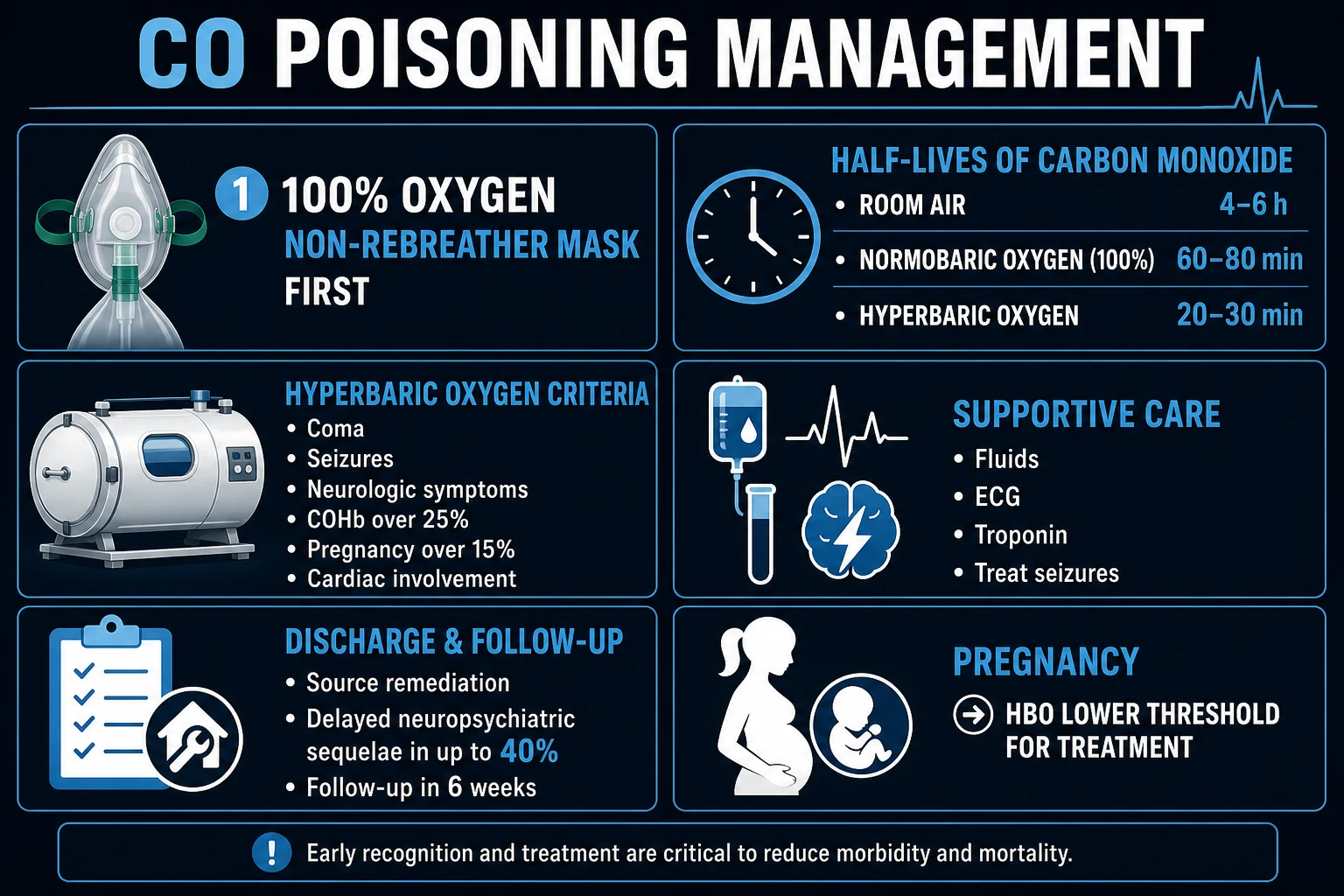
The resuscitation task is twofold: restore oxygen delivery and exclude or treat concomitant threats (cyanide in fires, trauma, burns, inhalation injury). [1]
The first 5 minutes: [1]
- 100 percent oxygen via non-rebreather mask at 10 to 15 L/min from the moment poisoning is suspected — even before the first ABG returns. Do not wait for co-oximetry. Bag-valve-mask 100 percent O2 with reservoir in the obtunded or apnoeic patient.
- Remove from the environment — ensure the rescuer uses respiratory protection (the fire service should enter with self-contained breathing apparatus; do not enter a confined space without it).
- Assess ABCDE — airway, breathing, circulation, disability (GCS, pupils, glucose), exposure (search for burns, trauma, soot, stridor).
- Two large-bore IV cannulae, fluid bolus if hypotensive (crystalloid 10 to 20 mL/kg), continuous ECG, SpO2 + ETCO2 monitoring (interpret SpO2 with the awareness it is falsely normal in CO poisoning — use ETCO2 and clinical gas exchange).
- Capillary glucose, immediate co-oximetry and ABG, point-of-care lactate, ECG, troponin, CK, FBC, U&E, LFTs, β-HCG in women of reproductive age. [1]
Cardiopulmonary arrest considerations. In CO-cardiac arrest, standard ALS applies, but two points are critical: (1) chest compressions circulate even anoxic blood; pure oxygen ventilation is essential; (2) cyanide co-poisoning in fire victims should be treated empirically with hydroxocobalamin 5 g IV even before the cyanide level returns. Survival after witnessed CO-cardiac arrest is reported but uncommon; HBO may be considered in selected centres after ROSC, weighing transport risk against benefit. [1]
Seizure control. First-line diazepam 5 to 10 mg IV (or lorazepam 0.1 mg/kg IV, or midazolam 5 mg IM/IN/buccal if no IV access); refractory seizures may require phenytoin, levetiracetam or intubation with thiopental / propofol. Hypoglycaemia (an occult cause) must be excluded. [1]
Airway protection in the comatose patient. GCS 8 or below, or failing to protect the airway, intubate with rapid sequence induction (ketamine 1 to 2 mg/kg IV or etomidate 0.3 mg/kg IV, plus suxamethonium 1 to 1.5 mg/kg IV or rocuronium 1 to 1.2 mg/kg IV). Continue 100 percent O2 immediately after intubation; confirm with ABG and capnography; expect a falsely normal SpO2 despite alveolar ventilation. Note that suxamethonium is contraindicated in severe burns over 24 to 72 hours old (potassium release) — use rocuronium in late-presenting burn patients. [1]
Management — Definitive & Stepwise
Definitive management is continued normobaric 100 percent O2 with HBO in selected patients; supportive care; specific treatment of complications; and prevention of delayed neuropsychiatric syndrome.[1] [2] [5]
1. Indications for hyperbaric oxygen (HBO). [1]
The 2002 Weaver randomised trial demonstrated that HBO (3 ATA for 60 min first session, then 2 ATA for 60 min twice within 24 h) reduced the risk of delayed neuropsychiatric syndrome at 6 weeks from 46 percent to 25 percent in patients with LOC or other markers of severe poisoning.[1] Subsequent Cochrane review found methodological heterogeneity but a signal towards benefit in LOC and severe poisoning.[2] Indications vary by guideline, but a widely accepted set includes:
- Loss of consciousness at any point.
- Persistent neurological deficit (confusion, cerebellar signs, focal deficit, seizure).
- Myocardial ischaemia, arrhythmia, raised troponin or known significant coronary disease.
- COHb over 25 percent (in adults; lower in pregnancy and children).
- Pregnancy with maternal COHb over 15 percent or any symptomatic maternal exposure.
- Endotracheal intubation with persistent acidosis or neurological depression.
- Smoke inhalation with concurrent cyanide suspicion (some centres combine HBO decision with cyanide-antidote use).
- Persistent or recurrent symptoms despite 100 percent O2. [1]
HBO regimen — typically 2.5 to 3.0 ATA for 60 to 150 minutes, with one or two repeat sessions within 24 hours depending on protocol and response. Contraindications to HBO are untreated pneumothorax, severe COPD with bullae, recent thoracic surgery, severe claustrophobia, upper-respiratory infection (Eustachian tube dysfunction) — relative. Side effects include middle-ear barotrauma, sinus barotrauma, oxygen-toxicity seizures (rare at therapeutic protocols), transient myopia, and exacerbation of pulmonary blebs. [1]
2. Continued normobaric 100 percent O2. Even when HBO is or is not given, 100 percent O2 via NRB at 10 to 15 L/min for at least 6 to 12 hours, then reassess. The COHb half-life under NRB oxygen is 60 to 90 minutes, so by 4 to 6 hours the COHb should be near zero unless ongoing exposure. Persistence of COHb or symptoms at this point suggests ongoing exposure (re-enter the dwelling), mis-diagnosis, cyanide, or complication. [1]
3. Supportive care. [1]
- Cardiac monitoring for 12 to 24 hours in any patient with neurological symptoms, abnormal ECG or raised troponin.
- IV fluids to maintain perfusion and to protect the kidney against myoglobin in rhabdomyolysis (target urine output 1 to 2 mL/kg/h with crystalloid; consider bicarbonate and mannitol if severe — evidence weak but standard).
- Seizure control as above.
- Glycaemic control — hyperglycaemia is common and worsens ischaemic injury; aim for glucose 6 to 10 mmol/L.
- Avoid unnecessary catecholamines in the early phase — myocardial depression is partly toxin-induced; inotropes only after volume loading. [1]
4. Specific antidotes — only for concomitant cyanide in fire victims. See below. Pure CO poisoning has no specific antidote beyond oxygen; do not give methylene blue (a methaemoglobinaemia antidote — useless and harmful in CO). [1]
5. Observation, follow-up and DNS prevention. [1]
- All LOC patients and those receiving HBO should have baseline and serial neuropsychological testing (MMSE, digit span, trail-making, grooved pegboard) at presentation, discharge, 2 weeks, 6 weeks and 12 weeks.
- Educate the patient and family about delayed symptoms; instruct to return if memory loss, gait disturbance, personality change or parkinsonism appears.
- No proven pharmacotherapy for DNS prevention; ongoing trials of HBO protocols, erythropoietin and targeted temperature management. Avoid hypoxia, hypotension and hyperglycaemia in the first 24 hours as modifiable secondary-insult factors. [1]
Stepwise Management
For an adult presenting with suspected CO exposure without fire (so no cyanide consideration initially): [1]
- Confirm safety of rescuers and environment. Remove from source. Apply 100 percent O2 via NRB at 10 to 15 L/min from the first breath — before blood tests.
- Primary survey (ABCDE) — airway, breathing (note that SpO2 is unreliable), circulation, disability (GCS, pupils, glucose), exposure (burns, trauma).
- History — exposure timing and source, LOC, co-morbidity, pregnancy.
- First-line investigations — co-oximetry (arterial or venous blood), ABG, lactate, ECG, troponin, CK, U&E, LFTs, FBC, β-HCG, blood glucose.
- Disposition decision based on severity: [1]
| Severity | Findings | Disposition |
|---|---|---|
| Asymptomatic, COHb under 10 percent, no LOC, normal exam, no pregnancy | Low risk | Observe 4 hours on 100 percent O2; re-check COHb and symptoms; may discharge with CO-detector advice |
| Mildly symptomatic, COHb 10 to 25 percent, no LOC, no deficit | Moderate | 100 percent O2 6 to 12 hours; serial clinical review; consider HBO if no improvement |
| Loss of consciousness, neurological deficit, ECG ischaemia, troponin raised, COHb over 25 percent | Severe | 100 percent O2 + HBO referral + admission (HDU / ICU) |
| Pregnancy with COHb over 15 percent or any symptoms | Severe | 100 percent O2 + HBO + obstetric referral + continuous fetal monitoring |
| Smoke-inhalation victim with any CNS / cardiac depression | Fire | 100 percent O2 + empirical hydroxocobalamin 5 g IV + HBO if criteria met |
- Pre-arrival for HBO — telephone the receiving hyperbaric centre early, document COHb, LOC, neurological findings, ECG findings, pregnancy, and anticipated transfer timing; transport with continued 100 percent O2 via portable mask; many centres require ground transport rather than air (helicopters at altitude lower ambient pressure — risk of worsening hypoxia in fire victims with airway injury). [1]
Time-to-treatment rule. Time to first 100 percent O2 is the single modifiable prognostic factor; time to HBO in severe poisoning is the second. Both should be minutes from arrival, not hours.[1]
Specific Subtypes & Scenarios
1. Fire / smoke-inhalation victims. The single most clinically dangerous scenario because of concomitant cyanide poisoning. Combustion of plastics, wool, silk, polyurethane foam, polyacrylonitrile and other nitrogen-containing materials releases hydrogen cyanide alongside CO. Both toxins act on cytochrome c oxidase; additive effect is lethal. Always consider cyanide in any fire victim with altered consciousness, severe lactic acidosis (over 10 mmol/L), persistent shock, or cardiac arrest. Empirical treatment of any obtunded fire victim: 100 percent O2 + hydroxocobalamin 5 g IV (or sodium thiosulfate 12.5 g IV, or the older cyanide antidote kit: amyl nitrite 0.3 mL ampoule inhaled, then sodium nitrite 10 mL of 3 percent IV over 10 minutes). Hydroxocobalamin is preferred (does not produce methaemoglobin, safe with concurrent CO, safe in pregnancy). Inhalational thermal injury to the airway may also be present: soot in the nasopharynx, hoarseness, stridor, carbonaceous sputum, singed vibrissae — early ENT inspection and flexible bronchoscopy; consider elective intubation before airway oedema closes the glottis. [1]
2. Pregnancy. Fetal COHb reaches a higher peak and clears far slower than maternal COHb. Even mild maternal symptoms (or asymptomatic maternal exposure with COHb over 15 percent) are an indication for HBO in most guidelines; the threshold is lower than in the non-pregnant adult. Continuous electronic fetal monitoring for at least 4 to 24 hours after exposure; non-reassuring traces are an indication for urgent obstetric consultation and consideration of delivery if the fetus is viable and at term. Maternal 100 percent O2 is harmless to the fetus; HBO risk in pregnancy is fetal middle-ear barotrauma at high ATA but is generally considered acceptable when the alternative is fetal injury. [1]
3. Paediatrics. Children present non-specifically — feeding difficulty, lethargy, vomiting, irritability in infants; young children may deteriorate faster because of higher metabolic rate. COHb over 20 percent is a common hyperbaric threshold in paediatrics. 100 percent O2 via NRB in older children, oxyhood or NRB strapped over the face in infants; intubation if GCS below 8. HBO referral per paediatric protocol. [1]
4. Suicide attempt with vehicle exhaust. After medical stabilisation, the patient requires psychiatric evaluation, observation under safe conditions (cannot be left alone in a vehicle or garage), and an appropriate suicide-risk assessment. Collateral history from family / friends; ensure that the family vehicle is not accessible during the admission. Antidepressant or substance-misuse treatment as indicated. [1]
5. Occupational / workplace clusters. Notify occupational health, the workplace health-and-safety authority, and the public-health department; multiple casualties must be evacuated; the building must be inspected before re-entry. Common sources include forklifts in warehouses, marine engines in holds, blast-furnace leaks and methanol-stripping operations. Methylene chloride in paint strippers is metabolised to CO in the liver — symptoms may be delayed 6 to 12 hours after exposure. [1]
6. Cyanide co-toxicity in fires. See above. Empirical hydroxocobalamin 5 g IV over 15 min (repeat once if persistent shock); alternative sodium thiosulfate 12.5 g IV over 10 min (slower onset); historical cyanide antidote kit of amyl nitrite 0.3 mL ampoule inhaled (generates methaemoglobin, then sodium nitrite 10 mL of 3 percent IV over 10 minutes, then sodium thiosulfate). Hydroxocobalamin is the modern drug of choice — does not produce methaemoglobinaemia (so does not worsen O2 delivery in CO patients), does not provoke hypotension, and is safe in pregnancy. [1]
7. METH lab exposure. Multiple toxic gases — CO, hydrogen cyanide, ammonia, hydrochloric acid, iodine vapour, organic solvents, phosphine, sodium and lithium from reaction metal reductions — in addition to explosion and fire risk. Evacuate; hazmat entry with self-contained breathing apparatus; supportive decontamination; treat CO and cyanide as above; notify hazmat and law enforcement. Multiple casualties including children (often present in clandestine labs) and first responders; long-term neuropsychiatric follow-up for both the cook and any children present. [1]
8. Chronic low-level occupational exposure. Fatigue, headache, dyspnoea on exertion, cognitive slowing; diagnosis rests on history and serial COHb at end-of-shift (a 12-hour half-life on room air). Address the source; reassign; advise CO detector if domestic exposure is concurrent. [1]
Complications
Cardiovascular: myocardial ischaemia (unmasked angina, type 2 MI, classical STEMI from demand ischaemia at moderate COHb in coronary disease); arrhythmia (atrial fibrillation, ventricular tachycardia); myocardial stunning and cardiogenic shock in severe poisoning; persistent reduced LV ejection fraction; sudden cardiac death. [1]
Cerebrovascular and neurological: [1]
- Delayed neuropsychiatric syndrome (described above) — the leading cause of long-term morbidity.
- Ischaemic and haemorrhagic stroke in severe poisoning.
- Generalised cerebral oedema, status epilepticus, persistent vegetative state in severe anoxic injury.
- Peripheral neuropathy, vestibular dysfunction, hearing loss.
- Parkinsonism (chronic globus pallidus injury) — often improves over months but may persist. [1]
Renal: Rhabdomyolysis from prolonged immobility and direct myocyte injury → myoglobinuric acute kidney injury. Serial CK and creatinine; aggressive crystalloid resuscitation; bicarbonate and mannitol if severe (controversial). [1]
Hepatic: Ischaemic hepatitis from prolonged hypoperfusion; raised transaminases with peak AST / ALT at 24 to 72 hours; usually self-limited. [1]
Haematological: Leucocytosis (stress), haemolysis (rare), DIC (in severe multi-organ failure). [1]
Respiratory: Non-cardiogenic pulmonary oedema (capillary leak from inflammatory injury and direct myocardial depression); ARDS in fire victims with smoke inhalation; aspiration pneumonia in comatose patients. [1]
Pregnancy-specific: Fetal demise, intrauterine growth restriction, preterm labour, placental abruption, foetal brain injury with cerebral palsy, microcephaly, developmental delay.[5]
Psychiatric: depression, anxiety, PTSD, suicide are over-represented in survivors of severe CO poisoning and particularly after attempted suicide with vehicle exhaust. [1]
Prognosis & Disposition
Prognosis depends on peak COHb, duration of exposure, presence of LOC, neurological deficit, cardiac involvement, co-toxicity, age, comorbidity, and time to 100 percent O2 + HBO in severe cases.[1] [5]
Mortality data: [1]
- Unintentional acute CO poisoning in the developed world — overall mortality 1 to 5 percent; rises sharply with LOC, age over 65, cardiac involvement, smoke inhalation, or delayed presentation.
- Fire / smoke inhalation — the most lethal scenario: mortality 5 to 30 percent when admitted; higher in cardiac-arrest survivors. Concomitant cyanide poisoning approximately doubles mortality.
- Delayed neuropsychiatric syndrome in severe poisoning — 25 to 40 percent at 4 to 6 weeks in the placebo arm of the Weaver 2002 HBO trial (LOC subset); roughly half the rate (about 25 percent) in the HBO arm.[1]
- Fetal mortality and morbidity are high after severe maternal exposure; risk increases sharply when maternal COHb exceeds 25 percent, LOC occurs, or HBO is not delivered.
Functional outcomes: [1]
- Mild acute exposure — full recovery within hours; no long-term neurocognitive sequelae.
- Moderate acute exposure with prompt treatment — full recovery in over 90 percent of adults; small minority with subjective cognitive complaints at 6 to 12 months.
- Severe acute exposure — 25 to 40 percent develop delayed neuropsychiatric syndrome; the majority recover within 6 to 12 months with HBO; a minority have persistent cognitive, affective or motor deficit.
- Withdrawal from the environment — psychiatric, social and occupational rehabilitation after attempted-suicide cases. [1]
Disposition: [1]
- Asymptomatic, COHb under 10, no LOC, no comorbidity — observe 4 hours on 100 percent O2, re-check COHb, may discharge with CO-detector advice and public-health referral for source inspection.
- Mild-to-moderate symptomatic — admission for 12 to 24 hours; 100 percent O2; serial clinical review; HBO referral per criteria.
- Severe poisoning, LOC, neurological deficit, cardiac ischaemia, smoke inhalation, pregnancy with COHb over 15 — admission to HDU/ICU, ongoing 100 percent O2, HBO referral, continuous ECG, ABG / lactate, neurocognitive baseline and serial follow-up, obstetric and toxicology consultation as needed. Psychiatric evaluation if deliberate exposure. [1]
Special Populations
1. Pregnancy. Discussed above. Maternal 100 percent O2 via NRB is safe; fetal COHb peaks higher, clears slower; HBO is indicated at lower maternal COHb threshold (over 15 percent), any symptomatic maternal exposure, or any LOC; continuous electronic fetal monitoring 4 to 24 hours; coordinate care with obstetric, neonatology and hyperbaric services; document discussion of risks (fetal middle-ear barotrauma, fetal effects of HBO) and benefits. [1]
2. Paediatrics. Non-specific presentation; COHb threshold for HBO lower (over 20 percent) in most paediatric protocols. 100 percent O2 via NRB (older children) or oxyhood / strapped NRB over face (infants); intubation if GCS below 8; HBO referral per paediatric protocol; family / sibling screening because exposure is often shared; social-services involvement if neglect is suspected. Outcomes are similar to adults when treated promptly. [1]
3. Elderly. Reduced physiological reserve; CO poisoning may present as falls, confusion, "off legs", or delirium rather than the textbook headache and nausea; high prevalence of coronary disease unmasking as ischaemia at COHb that is otherwise mild. Lower threshold for admission and HBO referral. Cognitive baseline may already be impaired — important for interpretation of post-exposure cognitive testing. [1]
4. Coronary artery disease. Cardiac symptoms at COHb levels that are asymptomatic in healthy adults — 5 to 10 percent COHb can provoke angina and ischaemic ECG changes in known coronary disease. Lower threshold for HBO; admit; continuous ECG; consider type 2 MI as a separate, parallel diagnosis. [1]
5. Psychiatric and deliberate self-harm. Must be assumed in vehicle-exhaust and indoor-grill exposures. Psychiatric evaluation when medically stabilised; do not leave the patient alone with access to a vehicle or garage; manage poisoning first, then the mental-health crisis; many jurisdictions have compulsory involuntary-treatment laws for imminent self-harm. [1]
6. Occupational and chronic exposure. Serial end-of-shift COHb measurement (worker should be advised to stop smoking at least 24 hours before measurement); ventilation improvement; personal CO monitoring in high-risk jobs; consideration of carboxyhaemoglobin reference values for the workplace (often under 5 percent end-of-shift). Workers with neurological or cardiac symptoms require temporary reassignment. [1]
7. Methylene chloride (paint stripper) exposure. Delayed onset of CO toxicity 6 to 12 hours after exposure as methylene chloride is metabolised by hepatic CYP2E1 to CO. COHb may rise for hours after exposure has ended. Treat with 100 percent O2 and HBO per criteria; warn the patient to return if symptoms develop. [1]
Evidence & Guidelines
Landmark trials and reviews: [1]
- Weaver LK, Hopkins RO, Chan KJ, et al. Hyperbaric oxygen for acute carbon monoxide poisoning (NEJM 2002) — randomised trial of HBO (3 ATA for 60 min first session, then 2 ATA twice daily) vs normobaric 100 percent O2 in 152 patients with LOC or elevated COHb. HBO reduced delayed neuropsychiatric syndrome at 6 weeks from 46 percent to 25 percent (p = 0.007). Established HBO as the standard of care for severe poisoning.[1]
- Buckley NA, Juurlink DN, Isbister G, Bennett MH, Lavonas EJ. Hyperbaric oxygen for carbon monoxide poisoning (Cochrane 2011) — six small RCTs (n = 1361) with methodological heterogeneity; signal towards benefit on neurological outcomes but inconclusive in some analyses.[2]
- Hampson NB. Carbon monoxide poisoning: a review occurring in two correlated peaks (Undersea Hyperb Med 2010) — kinetic data on COHb half-life under room air, 100 percent O2 and HBO; clinical grading of severity.[3]
- Kao LW, Nañagas KA. Carbon monoxide poisoning (Med Clin North Am 2009) — comprehensive clinical review of poisoning, epidemiology and management.[4]
- Rose JJ, Wang L, Xu Q, et al. Carbon monoxide poisoning: pathogenesis, management, and future directions of therapy (Am J Respir Crit Care Med 2017) — modern pathophysiology (cytochrome inhibition, lipid peroxidation, neutrophil priming, foetal vulnerability), focus on cyanide co-toxicity in fire victims and emerging therapies.[5]
Guidelines: [1]
- American College of Emergency Physicians clinical policy (2008) — formal recommendation for HBO in LOC, neurological deficit, severe COHb (over 25 percent), pregnancy, and cardiac ischaemia.[1]
- Undersea and Hyperbaric Medical Society (UHMS) — accepted indications include CO poisoning with LOC, neurological deficit, severe metabolic acidosis, pregnancy, or endotracheal intubation.
- NICE and Resuscitation Council UK — emergency department disposition of CO poisoning, criteria for HBO referral, public-health notification duties.
- WHO indoor-air-quality guidance — emphasises safe heating, ventilation, and biomass-smoke exposure reduction in low-resource settings.
- CDC clinical guidance — diagnostic criteria, indications for HBO, public-health response and CO-detector recommendations.
Regional practice variations: [1]
- HBO availability is uneven; many countries do not have hyperbaric chambers or share them across regions; transfer logistics are the limiting step in many centres, and the threshold for transfer varies by local protocol and chamber capacity.
- Smoke-inhalation cyanide co-treatment — hydroxocobalamin is preferred in the UK, Europe, and Australia; the older cyanide antidote kit (amyl nitrite + sodium nitrite + sodium thiosulfate) survives in some North American pre-hospital kits.
- CO-detector regulation — mandatory in dwellings in many EU states, parts of Canada, Australia; not mandated in many US states; rare in low- and middle-income countries. [1]
Exam Pearls
The exam answer must be accurate, immediate and complete: suspicion, oxygen, co-oximetry, treat-to-protocol, anticipate complications. [1]
Carbon monoxide poisoning — the bedside answer
HOT FIRE
Any LOC, neurological deficit, COHb over 25 (over 15 in pregnancy, over 20 in children), myocardial ischaemia, smoke inhalation with cyanide suspicion
10 to 15 L/min from the first breath — reduces CO half-life from 4 to 5 h to 60 to 90 min
CO + cyanide — cyan Hb Acidosis lactate over 10 — give hydroxocobalamin 5 g IV empirically in any obtunded fire victim
Lower maternal COHb threshold for HBO (over 15); continuous fetal monitoring; fetal COHb peaks higher and clears slower
Standard pulse oximetry CANNOT measure COHb — only co-oximetry on arterial or venous blood
Memory loss, parkinsonism, cognitive deficit, gait disturbance 2 to 40 days later in 10 to 30 percent of severe poisoning; baseline and serial cognitive testing; HBO reduces this risk
Self-contained breathing apparatus for rescuer; multiple casualties = notify fire service + public health / hazmat (boiler / generator / METH lab)
Exam application bank (NEET-PG / INICET)
One-line answer
Carbon monoxide (CO) poisoning is a leading cause of unintentional poisoning deaths worldwide — a colourless, odourless, tasteless gas produced by incomplete combustion of carbonaceous fuels. The clinical syndrome arises because CO binds haemoglobin with an affinity approximately 240 times that of oxygen, forming carboxyhaemoglobin (COHb) that both reduces oxygen-carrying capacity and shifts the oxyhaemoglobin dissociation curve leftward (impairing oxygen unloading at tissue). Additional injury occurs through direct mitochondrial poisoning (cytochrome c oxidase / cytochrome aa3 inhibition), oxidative stress from neutrophil priming, and lipid peroxidation of myelin-rich white matter that produces the classic delayed neuropsychiatric syndrome. Acute clinical features range from headache, nausea and dizziness in mild exposure to syncope, myocardial ischaemia, seizures, coma and death in sev
Worked stems (answer without another resource)
Stem 1 — Classic presentation. Map symptoms to mechanism; name the first investigation and first treatment step with dose/route if drug therapy is standard. [1]
Stem 2 — Unstable / complicated. List red flags that force immediate resuscitation, theatre, ICU, antidote, or reperfusion — and what you do in the first 15 minutes. [1]
Stem 3 — Atypical group. Elderly, pregnancy, child, or immunocompromised: how presentation and thresholds change. [1]
Stem 4 — Differential trap. Name the three closest mimics and one discriminator for each. [1]
Stem 5 — Disposition. Who goes home with safety-netting, who is admitted, who needs HDU/ICU/theatre, and what follow-up is mandatory. [1]
Rapid viva checklist
- Definition + classification
- Pathophysiology chain
- Bedside signs / criteria
- Score with exact components (if any)
- Emergency bundle
- Definitive therapy with doses
- Complications of disease and of treatment
- Special populations
- Guideline/trial name if classic
- Three exam traps
Coverage self-check
If you cannot answer any stem above from this page alone, re-read the matching section — the page is intended to be self-sufficient for final-prof and NEET-PG/INICET questions on Carbon Monoxide Poisoning.
References
- [1]Weaver LK, Hopkins RO, Chan KJ, et al. Hyperbaric oxygen for acute carbon monoxide poisoning N Engl J Med, 2002.PMID 12362006
- [2]Buckley NA, Juurlink DN, Isbister G, Bennett MH, Lavonas EJ. Hyperbaric oxygen for carbon monoxide poisoning Cochrane Database Syst Rev, 2011.PMID 21491385
- [3]Hampson NB. Impact of continuous renal replacement therapy on oxygenation in children with acute lung injury after allogeneic hematopoietic stem cell transplantation Pediatr Blood Cancer, 2010.PMID 20658627
- [4]Kao LW, Nañagas KA. Leprosy in Yemen: trends in case detection, 1982-2008 Wkly Epidemiol Rec, 2009.PMID 19462532
- [5]Rose JJ, Wang L, Xu Q, et al. Histology Atlas of the Developing Mouse Hepatobiliary Hemolymphatic Vascular System with Emphasis on Embryonic Days 11.5-18.5 and Early Postnatal Development Toxicol Pathol, 2016.PMID 26961180