Emergency & Toxicology · Emergency & Toxicology
Digoxin Toxicity
Also known as Digoxin toxicity · Digoxin poisoning · Cardiac glycoside toxicity · Digoxin Fab fragments · DigiFab · Oleander poisoning · Xanthopsia
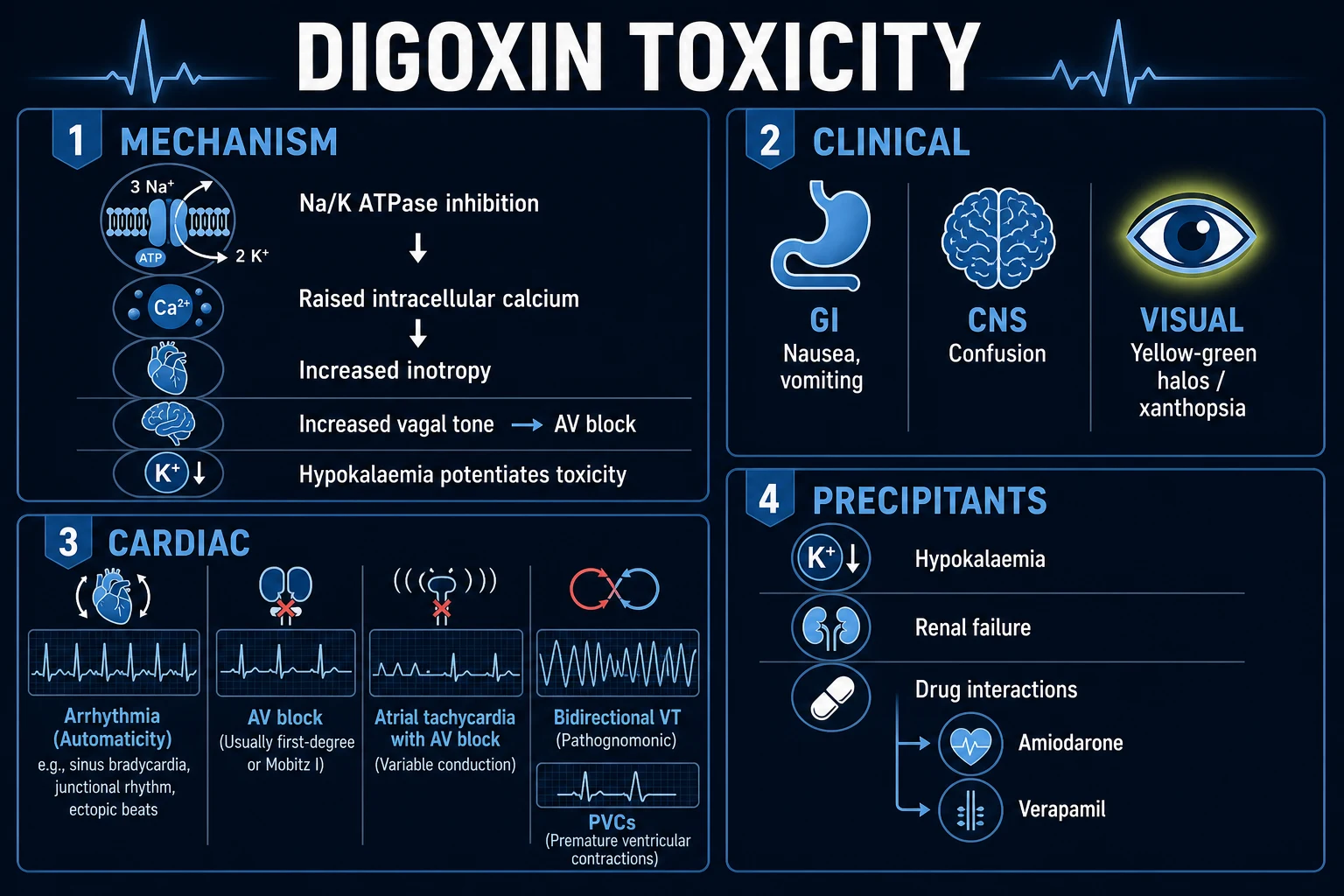
Digoxin toxicity results from excess of the cardiac glycoside digoxin (used for rate control in atrial fibrillation and as an adjunct in heart failure with reduced ejection fraction). Digoxin inhibits the Na+/K+ ATPase - raised intracellular Na+ - reduced Na+/Ca2+ exchange - raised intracellular Ca2+ (positive inotropy) and increased vagal tone (AV nodal blockade). Toxicity produces gastrointestinal (anorexia, nausea, vomiting), neurological/visual (confusion, weakness, yellow-green halos = xanthopsia) and cardiac effects — the hallmark being arrhythmia from automaticity AND conduction block together (atrial tachycardia WITH AV block classic; bidirectional VT pathognomonic). Chronic toxicity is potentiated by hypokalaemia, renal failure, hypomagnesaemia and drug interactions (amiodarone, verapamil, macrolides). Treatment: stop digoxin, correct K+/Mg2+, atropine/pacing for bradycardia, lidocaine/phenytoin/magnesium for ventricular tachyarrhythmia, and digoxin-specific Fab fragments (DigiFab) for life-threatening features (VT/VF, severe brady/AV block, K+ over 5.5, shock, massive overdose). Avoid IV calcium (classic 'stone heart' teaching), class Ia/Ic agents, and dialysis.
On this page & tools
Your progress
Saved locally on this device.
Exam tags
Red flags
Overview & Definition
Digoxin toxicity is the clinical and biochemical syndrome caused by excessive cardiac glycoside effect, arising from inhibition of the sodium-potassium ATPase (Na+/K+ ATPase) on cardiac (and other) cell membranes. It may occur with a serum digoxin concentration within or above the conventional therapeutic range; toxicity is fundamentally a CLINICAL diagnosis, and a "normal" number never excludes it in the symptomatic patient.[1]
Digoxin remains in clinical use for two indications: rate control in atrial fibrillation (especially with coexisting heart failure or sedentary patients) and as an adjunct in heart failure with reduced ejection fraction (HFrEF) to reduce hospitalisations. Its narrow therapeutic index — the toxic dose is only slightly above the therapeutic dose — makes toxicity common and frequently examined. The DIG trial established that digoxin reduces heart-failure hospitalisations but does not reduce all-cause mortality in HFrEF; the contemporary target serum concentration is therefore 0.5-0.9 ng/mL (lower than the older 0.8-2.0 ng/mL), which reduces toxicity risk without losing benefit.[3][1]
The topic is high-yield for five reasons: the characteristic symptom combination (GI + visual + cardiac), the potentiating effect of hypokalaemia, the pathognomonic arrhythmia (bidirectional VT), the classic teaching arrhythmia (atrial tachycardia WITH AV block), and the specific antidote (digoxin Fab fragments). The classic exam trap is a patient on digoxin who develops an atrial tachyarrhythmia with a slow ventricular response — this is toxicity until proven otherwise.[1][2]
Pharmacology (why the drug is easy to overdose)
A working knowledge of digoxin pharmacology explains nearly every clinical and investigative feature, and is a frequent short-answer question in its own right. [1]
[1]The clinical consequences of these pharmacokinetic facts are exactly what examiners probe. Because digoxin is renally cleared with a long half-life, any fall in glomerular filtration — acute kidney injury, dehydration, an episode of heart failure, or simply advancing age — drives accumulation and chronic toxicity over days to weeks. Because the volume of distribution is large (it distributes into skeletal muscle, not fat), the serum level is a small fraction of total body load; this is why haemodialysis does NOT remove digoxin and why the post-Fab total serum level becomes uninterpretable. Because the therapeutic window is narrow, the dose that controls atrial fibrillation is dangerously close to the dose that causes vomiting and arrhythmia — the modern strategy is therefore to target the lowest effective level (0.5-0.9 ng/mL) rather than to push the dose.[1][3]
Classification
Cardiac glycoside toxicity can be classified two ways that matter clinically — by temporal pattern and by source. [1]
Chronic (accumulative) toxicity
- Commoner pattern — elderly patient on long-term digoxin with a precipitant
- Driven by renal impairment, hypokalaemia (diuretics), drug interactions
- Vague GI/CNS onset; serum level usually over 2 ng/mL but may be in range
- Potassium usually LOW or normal (co-diuretic hypokalaemia)
- Fab indication is clinical instability; dose 1-2 vials empirically
Acute (overdose) toxicity
- Deliberate self-harm or accidental — single large ingestion
- Prominent nausea/vomiting within hours; marked HYPERkalaemia
- Serum level may be massively elevated (over 10-15 ng/mL)
- Potassium typically HIGH (Na+/K+ pump failure -> K+ efflux)
- Fab dose by formula or 5-10 vials; activated charcoal if early
By source, cardiac glycosides include pharmaceutical digoxin and digitoxin, plants (foxglove/Digitalis purpurea, yellow oleander/Cascabela thevetia, white oleander/Nerium oleander, lily-of-the-valley/Convallaria majalis, red squill/Urginea), and toad venom cardioactive steroids (Chan Su, Kyushin, 'love stone'). All share the Na+/K+ ATPase mechanism and cross-react with digoxin Fab, which is why the antidote works across this whole toxin family.[2]
It is essential to distinguish digoxin EFFECT (therapeutic ECG changes — sagging ST depression, shortened QT, flattened T waves; benign) from digoxin TOXICITY (arrhythmias + symptoms; dangerous). ST changes alone are NOT toxicity.[1]
Epidemiology & Risk Factors
Digoxin toxicity is common because the drug's therapeutic index is narrow and its use is concentrated in the elderly — the very population most vulnerable to accumulation. Most cases are chronic accumulative toxicity in older patients with renal impairment and polypharmacy, rather than acute overdose.[1]
Patient-related precipitants:
- Renal impairment — digoxin is predominantly renally cleared (60-80 per cent unchanged in urine); falling creatinine clearance is the single biggest driver of chronic accumulation. Dose by renal function.
- Advanced age and low lean body mass — digoxin distributes into muscle (large volume of distribution); sarcopenia lowers the Vd and raises serum concentration for a given dose.
- Hypothyroidism — reduces digoxin clearance.
- Electrolyte depletion — hypokalaemia, hypomagnesaemia, hypercalcaemia — all potentiate toxicity at the pump.
- Hypoxia and acidaemia — increase myocardial sensitivity to digoxin.
- Heart failure exacerbation and dehydration — reduce renal perfusion and clearance. [1]
The central role of HYPOKALAEMIA: potassium and digoxin compete for the same extracellular K+-binding site on the Na+/K+ ATPase alpha-subunit. When serum K+ falls, digoxin binds more avidly and its action is potentiated — so a patient on digoxin plus a loop/thiazide diuretic who becomes hypokalaemic can become toxic at a previously tolerated dose. Hypokalaemia also independently promotes DADs and arrhythmia. Hypomagnesaemia acts by the same logic (magnesium is the physiological blocker of the digoxin-binding site; low Mg2+ leaves the site more available) and must be corrected alongside potassium or hypokalaemia will be refractory.[1]
Drug interactions that raise digoxin levels (high-yield list — almost all act via P-glycoprotein inhibition):
- Amiodarone — inhibits P-glycoprotein (digoxin renal/efflux transporter); halve digoxin dose.
- Verapamil / diltiazem — P-gp inhibition.
- Quinidine — displaces digoxin from tissue binding + P-gp inhibition (classic interaction; halve dose).
- Propafenone, flecainide — P-gp inhibition.
- Macrolides (clarithromycin, erythromycin) and itraconazole — P-gp/CYP inhibition.
- Ciclosporin, dronedarone, ritonavir — P-gp inhibition.
- Spironolactone / eplerenone — P-gp inhibition and K+-sparing (may raise level but also protect K+).
- Loop and thiazide diuretics — via hypokalaemia/hypomagnesaemia (the commonest mechanism in practice). [1]
Regional epidemiology — cardiac glycoside plant self-poisoning: in South Asia (especially Sri Lanka and India) and parts of Africa, yellow oleander (Cascabela thevetia) and white oleander (Nerium oleander) self-poisoning causes thousands of admissions and substantial mortality each year, and historically drove the empirical use of digoxin Fab in plant poisoning. Cerbera odollam ('suicide tree') and Calotropis (madar) are other regional sources. In the West, foxglove herbal/tea ingestion and toad venom remedies are rarer sources.[2]
Pathophysiology
The molecular mechanism is the single most frequently examined concept and must be reproduced in full. [1]
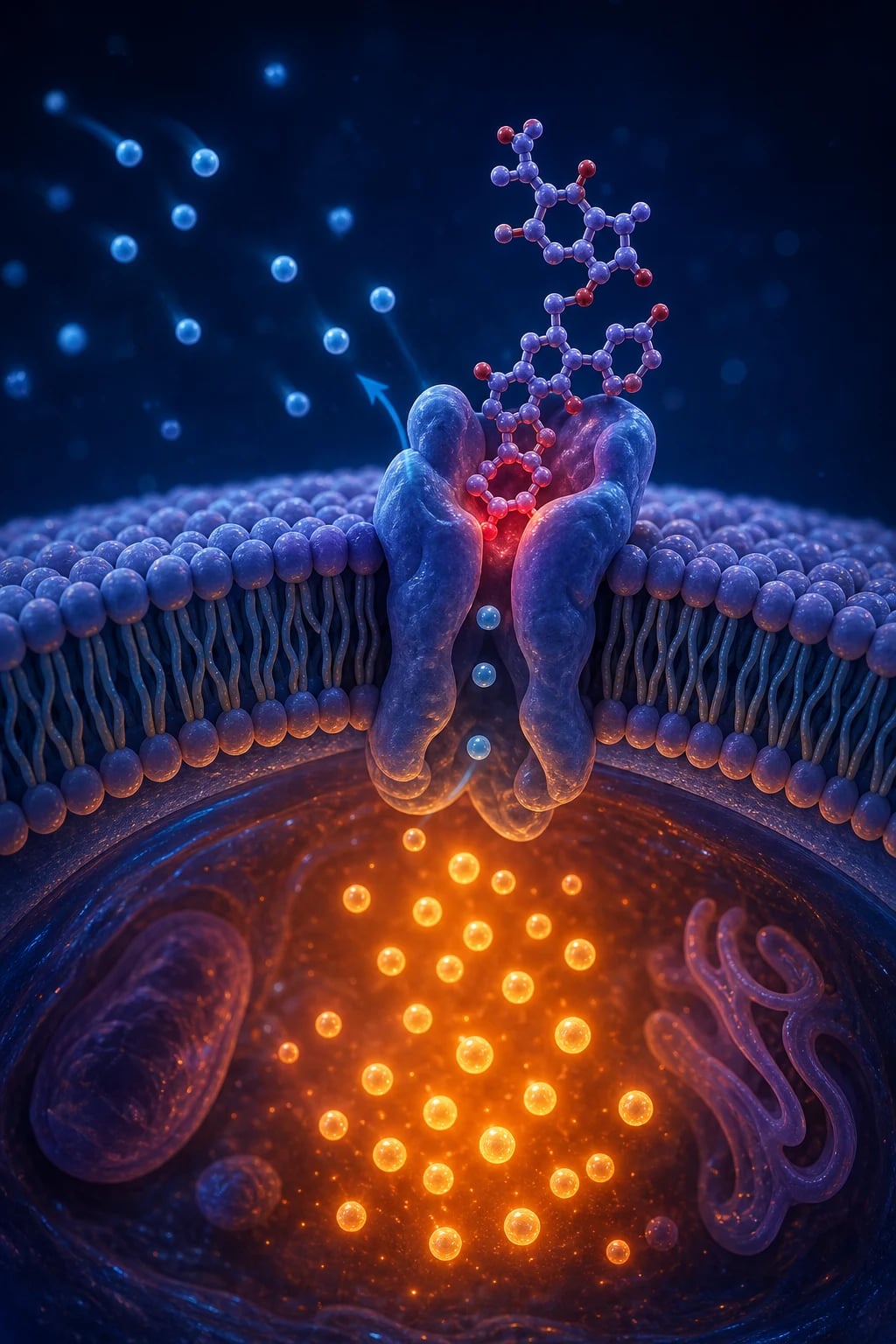
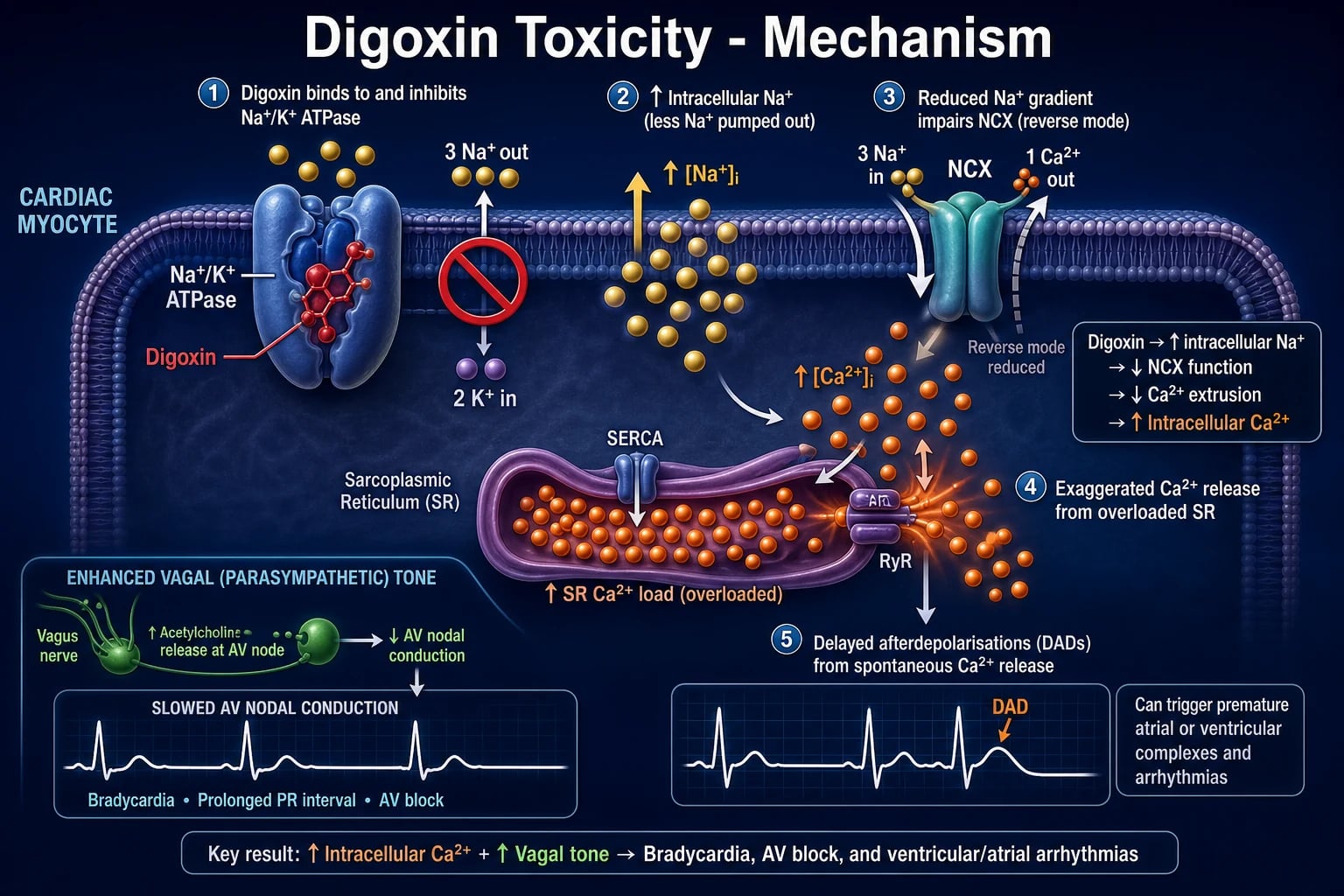
Step 1 — pump inhibition. Digoxin binds with high affinity to the alpha-subunit of the Na+/K+ ATPase (the sodium-potassium pump), inhibiting it. The pump normally extrudes 3 Na+ and imports 2 K+ per ATP hydrolysed; its inhibition therefore raises intracellular Na+ and lowers intracellular K+.[1]
Step 2 — intracellular calcium rises. The raised intracellular Na+ reduces the transmembrane Na+ gradient that normally drives the Na+/Ca2+ exchanger (NCX) to extrude Ca2+ from the cell. With a weaker Na+ gradient, NCX activity falls (and may reverse), so intracellular Ca2+ accumulates. The extra Ca2+ is taken up into the sarcoplasmic reticulum via SERCA, so each subsequent action potential releases a larger bolus of Ca2+ onto the contractile apparatus -> positive inotropy (the therapeutic effect in heart failure).[1]
Step 3 — why toxicity causes AUTOMATICITY and arrhythmia. Excess intracellular Ca2+ overloads the SR. During phase 3-4 of the action potential, spontaneous SR Ca2+ release generates an inward Na+/Ca2+ exchange transient inward current (and Ca2+-activated non-selective cation current), producing delayed afterdepolarisations (DADs). When a DAD reaches threshold, it triggers an extrasystole — this triggered activity underlies the ectopic/automatic atrial and ventricular arrhythmias of digoxin toxicity (PVCs, atrial tachycardia, bidirectional VT). (Early afterdepolarisations, EADs, are bradycardia-/QT-related and are NOT the mechanism here — digoxin causes DADs, the high-calcium mechanism.)[1]
Step 4 — vagal (parasympathetic) effect. Digoxin enhances vagal efferent activity and increases the sensitivity of the SA and AV nodes to acetylcholine. The result is slowing of the sinus node and, importantly, slowing of AV nodal conduction — the basis of digoxin's use for ventricular rate control in atrial fibrillation. In toxicity this produces sinus bradycardia, AV block (1st, 2nd, 3rd degree) and junctional escape rhythms.[1]
Step 5 — the hallmark: automaticity PLUS conduction block together. Toxic digoxin simultaneously drives ectopic/automatic foci (via Ca2+ overload) AND blocks the AV node (via vagal effect). The combination is essentially diagnostic: an atrial tachycardia (automatic focus firing fast) WITH AV block (the ventricular response is slow because the AV node is blocked). This explains why atrial tachycardia WITH AV block is the classic teaching arrhythmia of digoxin toxicity.[1]
Step 6 — why bidirectional VT is pathognomonic. Bidirectional ventricular tachycardia arises from triggered automaticity from two foci — typically alternating sites in the left and right bundle-Purkinje system (or fascicles) — each producing a beat of opposite QRS axis, so the QRS alternates in direction beat-to-beat in the same lead. This alternating-axis VT is essentially diagnostic of digoxin (or a cardiac glycoside) toxicity in the right context, although rare catecholaminergic polymorphic VT and Andersen-Tawil syndrome are mimics.[1]
Step 7 — potassium: two opposite pictures (the potassium paradox).
- In acute overdose, massive pump inhibition prevents cellular K+ uptake and K+ leaks from cells -> serum K+ rises (hyperkalaemia). The degree of hyperkalaemia parallels severity and a serum K+ over 5.0-5.5 mmol/L in acute poisoning is itself an indication for Fab.
- In chronic toxicity, the patient is usually on a diuretic and is hypokalaemic — and the hypokalaemia is itself the precipitant that potentiated the toxicity. Correcting it is treatment; over-shooting into hyperkalaemia is dangerous because the failing pump cannot shift K+ back into cells. [1]
This dual behaviour of potassium is the single most testable "trap" in digoxin toxicity — the same electrolyte is a precipitant in chronic disease and a severity marker in acute overdose.[1]
Clinical Presentation
The clinical picture spans three systems — gastrointestinal, neurological/visual, and cardiac — and the cardiac effects are the danger. Symptoms in chronic toxicity creep in over days to weeks; in acute overdose they appear within hours.[1]
Gastrointestinal (often the earliest features):
- Anorexia (frequently the very first symptom)
- Nausea and vomiting (very common)
- Abdominal pain, diarrhoea, weight loss (chronic) [1]
Neurological / visual:
- Fatigue, malaise, generalised muscular weakness (common and non-specific)
- Headache, dizziness, confusion, delirium — in the elderly this can masquerade as dementia or 'failure to thrive'
- Severe cases: seizures, coma (rare)
- Visual disturbance — the classic features:
- Blurred vision, photophobia, scotomata, photopsias (flashing lights)
- Colour-vision disturbance — XANTHOPSIA (objects appear yellow-green; halos around lights) — the single most famous visual sign, though not universally present
- Gynaecomastia (chronic — a weak oestrogen-like effect of digitalis) [1]
Cardiac — the danger. Virtually any arrhythmia can occur, but the teaching points rest on the principle that toxicity produces automaticity AND AV block together. The arrhythmias can be grouped and distinguished: [1]
Ventricular ectopy / automaticity
- PVCs (commonest arrhythmia overall — bigeminy, couplets, trigeminy)
- Ventricular tachycardia (monomorphic) and VF (preterminal)
- Bidirectional VT — alternating QRS axis beat-to-beat; PATHOGNOMONIC
Atrial arrhythmia + AV block
- Atrial tachycardia WITH AV block — the CLASSIC teaching arrhythmia
- Atrial rate 130-250 with 2:1 or varying block and relatively SLOW ventricular response
- Junctional (nodal) tachycardia and junctional escape — may 'regularise' AF
Bradyarrhythmias / conduction block
- Sinus bradycardia, sinus arrest
- AV block — 1st degree, 2nd degree (usually Mobitz I), 3rd degree
- Slow junctional / idioventricular escape rhythms
The cardinal principle to state in a viva: in digoxin toxicity the heart shows simultaneous enhanced automaticity (fast ectopic foci) and impaired conduction (slow/blocked AV node). An atrial tachyarrhythmia with a slow ventricular response on digoxin is toxicity until proven otherwise.[1]
Digoxin toxicity — high-yield numbers
Digoxin toxicity — severity stratification
Life-threatening features
VT/VF, complete heart block, cardiogenic shock, K+ over 5.5 mmol/L in acute overdose, or massive ingestion (over 10 mg adult). Give digoxin-specific Fab fragments immediately — the definitive antidote.
Atypical presentation — the elderly (the trap). Chronic toxicity in an older patient on digoxin + diuretic may present with vague anorexia, weight loss, confusion or falls, with only minor ectopy on ECG. The diagnosis is missed if digoxin is not actively considered. Any elderly patient on digoxin with new GI, visual or CNS symptoms OR new ectopy has digoxin toxicity until proven otherwise.[1]
Acute overdose presentation: deliberate self-harm (or paediatric/accidental) ingestion of a large dose produces prominent early nausea and vomiting, then bradycardia and AV block, and often severe hyperkalaemia. The risk of a life-threatening ventricular arrhythmia is high in the first 6-12 hours. [1]
Acute digoxin overdose — temporal course
Differential Diagnosis
The differential is driven by the presenting feature: a patient on digoxin with GI + visual + cardiac features, isolated arrhythmia, or delirium/weakness.[1]
Other drug/toxin arrhythmias
- TCA overdose: QRS widening, anticholinergic toxidrome, long QT — no xanthopsia
- Beta-blocker/CCB overdose: bradycardia + hypotension, no GI/visual triad
- Theophylline: tachycardia, seizures, vomiting; very high level
- Quinidine/antiarrhythmic: long QT, torsades — different ECG
Electrolyte-induced arrhythmia
- Primary hypokalaemia (diuretic, GI loss) causing ectopy
- Hypomagnesaemia, hypercalcaemia
- Distinguish by levels + absence of digoxin-specific pattern
- Note: may CO-EXIST with and potentiate digoxin toxicity
Non-toxic causes of delirium/weakness
- Sepsis/delirium, posterior circulation stroke/TIA (visual symptoms)
- Gastroenteritis, electrolyte disturbance, intracranial event
- Intrinsic cardiac disease causing arrhythmia (ischaemia, cardiomyopathy)
Non-pharmaceutical glycoside exposure
- Oleander (yellow/white), foxglove, lily-of-the-valley, red squill
- Toad venom (Chan Su, Kyushin, 'love stone')
- No digoxin prescription but identical toxidrome; Fab cross-reacts
- Endogenous digoxin-like immunoreactive substances (renal failure, neonate, pregnancy) can falsely elevate the assay
The decisive distinction within the topic itself is digoxin EFFECT vs digoxin TOXICITY: sagging ST depression with a shortened QT and a normal heart rate is digoxin EFFECT (benign, do not treat), whereas any arrhythmia (atrial tach with AV block, bidirectional VT, frequent PVCs, AV block) plus symptoms is TOXICITY (treat).[1]
Clinical & Bedside Assessment
Focused history:
- Indication and dosing — AF rate control or HFrEF; the current dose and any recent change.
- Adherence — has the patient been taking extra? (chronic) or a large single ingestion? (acute / self-harm).
- Renal function and recent illness — any dehydration/AKI that reduced clearance?
- Concurrent drugs — diuretics (K+ loss), amiodarone, verapamil/diltiazem, quinidine, macrolides, spironolactone.
- Symptoms — GI, visual (colour change, halos), weakness, confusion.
- Possibility of deliberate self-harm or plant/herbal ingestion (oleander, foxglove, toad-venom remedies). [1]
Focused examination:
- Vital signs — heart rate (bradycardia common), blood pressure, respiratory rate, oxygen saturation, temperature, GCS.
- Hydration status (dehydration worsens renal function and accumulation).
- Visual fields / colour vision (xanthopsia).
- Cardiovascular examination and abdominal examination (nausea/vomiting). [1]
ECG — obtain a 12-lead and a continuous rhythm strip; recognise:
- Digoxin effect (benign): symmetrical 'sagging/scooped' ST depression (the 'reverse tick' / sagging sign, best in V5-V6 and lead II), shortened QT, flattened or biphasic T waves, and occasionally U waves. These changes correlate with digoxin concentration and are not toxicity by themselves.
- Digoxin toxicity (dangerous): frequent PVCs / bigeminy, atrial tachycardia WITH AV block, bidirectional VT, sinus bradycardia, AV block (1st-3rd degree), junctional escape rhythm, VT/VF. [1]
Establish continuous cardiac monitoring and IV access immediately for any suspected case, and assess the severity markers that trigger Fab: haemodynamic instability/shock, life-threatening ventricular arrhythmia, symptomatic bradycardia/AV block unresponsive to atropine, serum K+ over 5.0 mmol/L in acute poisoning, and massive known ingestion.[1][2]
Investigations
First-line investigations: serum digoxin level (draw BEFORE giving Fab), serum potassium, magnesium, calcium, urea/creatinine/eGFR, venous blood gas, 12-lead ECG with continuous cardiac monitoring, FBC, LFTs, glucose; troponin if ischaemia suspected; beta-hCG in women of childbearing potential; paracetamol and salicylate levels in any deliberate overdose. TSH to exclude hypothyroidism (which reduces clearance) is reasonable in chronic toxicity. An abdominal X-ray may reveal radiopaque digoxin tablets ('pill burden') in acute overdose — digoxin tablets contain a radiopaque filler, so a visible pill mass is a useful clue, not a requirement.[1]
Serum digoxin concentration — thresholds and caveats:
- Therapeutic range 0.5-2.0 ng/mL (modern HFrEF target 0.5-0.9; traditional 0.8-2.0).
- Chronic toxicity usually appears above 2.0 ng/mL, but toxicity can occur within range (especially elderly/renal) — correlate clinically.
- Acute overdose may show levels over 10-15 ng/mL.
- Levels are most informative drawn more than 6 hours after ingestion — earlier samples reflect distribution, not total load.
- Endogenous digoxin-like immunoreactive substances (DLIS) can falsely elevate the assay in renal failure, neonates and pregnancy — a high level in these settings needs clinical correlation, not reflex Fab.
- After Fab is given, the total serum digoxin level RISES (the assay measures bound + free digoxin, and bound drug is removed from tissue into the circulation) and is uninterpretable — use the free digoxin level or equimolar dose calculations; never chase the post-Fab total level.[2]
Reproduce the indications for digoxin Fab fragments verbatim (life-threatening — give Fab):[1][2]
- Ventricular arrhythmia — VT or VF.
- Potassium over 5.0 mmol/L in acute poisoning (many references use over 5.5 mmol/L) — reflects severe pump inhibition.
- Severe bradycardia or 2nd/3rd-degree AV block unresponsive to atropine.
- Cardiac arrest attributable to digoxin.
- Ingested dose over 10 mg in an adult, or over 4 mg (or 0.1 mg/kg) in a child.
- Serum digoxin concentration over 10-15 ng/mL measured more than 6 hours post-ingestion.
- End-organ dysfunction — cardiogenic shock, severe hyperkalaemia, life-threatening instability.
Reproduce the Fab (DigiFab) dose calculations:
-
If the serum concentration and weight are known: [1]
Number of vials = (serum digoxin in ng/mL x weight in kg) / 100 [1]
(Each DigiFab 40 mg vial binds 0.5 mg of digoxin.)
-
If the ingested dose is known (acute): vials = total mg ingested x 1.6 (DigiFab); or, for Digibind 38 mg/vial, vials = total mg ingested / 0.5.
-
If the dose/level is unknown: give 1-2 vials empirically for chronic toxicity, or 5-10 vials for acute life-threatening overdose, and titrate to clinical response. In cardiac arrest, give 10-20 vials as a single IV bolus.[2]
Management — Resuscitation
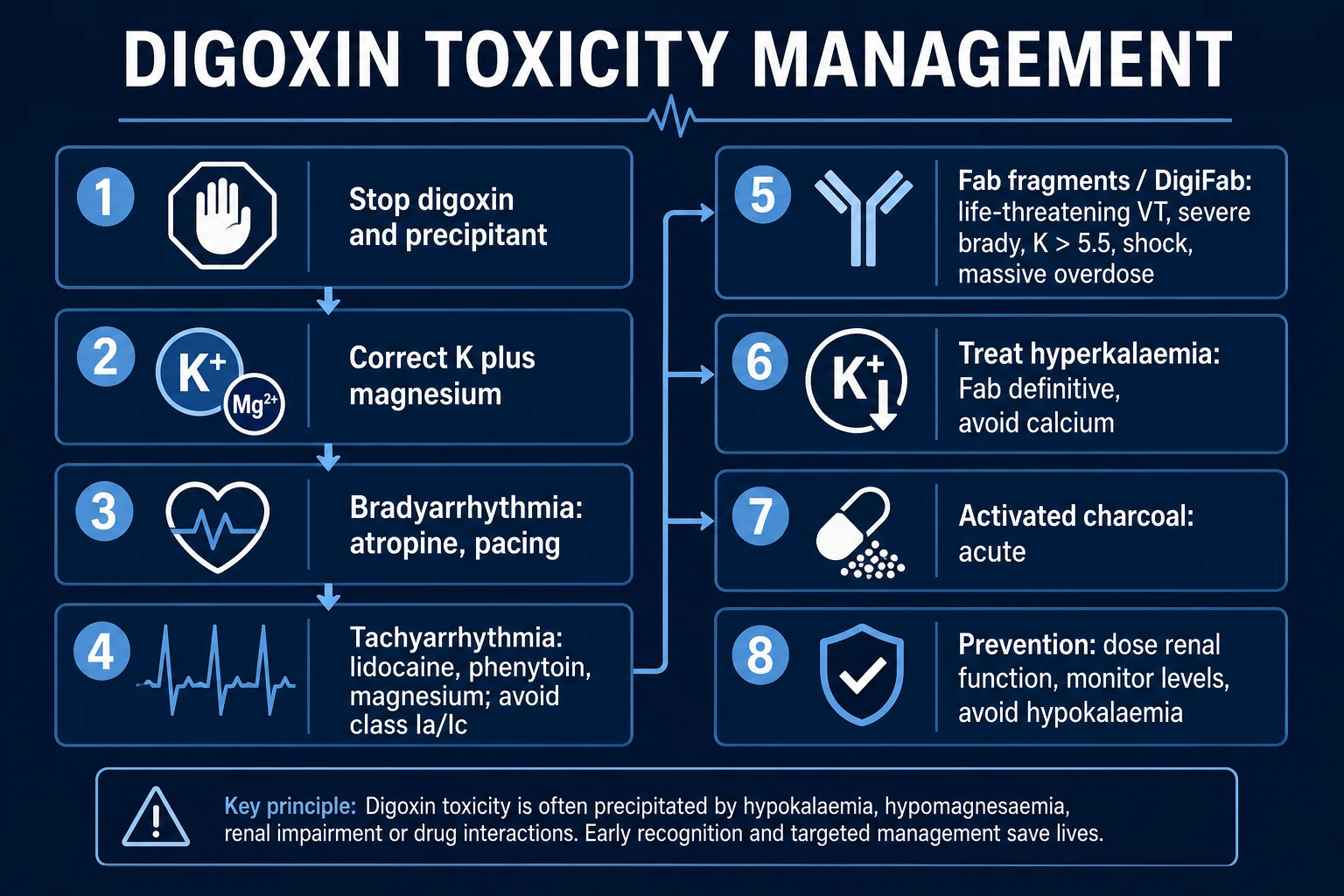
Begin with ABCDE: secure the airway, give high-flow oxygen if hypoxic, establish IV access, attach continuous cardiac monitoring, and identify and treat the immediately life-threatening arrhythmia first.[1]
Immediate non-drug measures:
- STOP digoxin and review/stop interacting drugs (amiodarone, verapamil, macrolides, quinidine).
- Correct the precipitant (dehydration, AKI, interacting drug).
- Activated charcoal 50 g (1 g/kg in children) within 1 hour of acute ingestion (and multiple-dose activated charcoal for plant glycoside poisoning, which undergoes enterohepatic recirculation). [1]
Potassium management — different in chronic vs acute (the paradox in action):
- Chronic toxicity with hypokalaemia: correct cautiously to keep serum K+ 4.0-5.0 mmol/L (IV potassium chloride, typically 10-20 mmol/h via a central line with monitoring). Over-correction into hyperkalaemia worsens toxicity because the failing pump cannot tolerate it. Replace magnesium (1-2 g IV magnesium sulphate) alongside — hypomagnesaemia makes hypokalaemia refractory.
- Acute overdose with hyperkalaemia: do NOT treat with IV calcium (see below). Use insulin/dextrose (10 U soluble insulin + 25 g dextrose IV), salbutamol nebuliser/IV, and sodium bicarbonate if acidaemic; sodium polystyrene sulfonate (kayexalate) is slower. Fab is the definitive potassium-lowering treatment in acute digoxin toxicity because it restores the pump, allowing K+ to re-enter cells — the potassium will fall, sometimes sharply, so monitor and avoid over-shooting into hypokalaemia after Fab.[1]
Bradycardia / AV block resuscitation:
- Atropine 0.5 mg IV (repeated every 3-5 min to a maximum of 3 mg).
- If unresponsive: transcutaneous pacing, then transvenous pacing. Avoid isoprenaline (provokes ectopy/arrhythmia in the sensitised myocardium). Avoid beta-blockers and non-dihydropyridine calcium channel blockers (verapamil/diltiazem) — they worsen AV block and raise digoxin levels via P-gp. [1]
Ventricular arrhythmia resuscitation:
- Lidocaine 1-1.5 mg/kg IV (class Ib — shortens the action potential, suppresses DADs — the preferred agent) or phenytoin 10-15 mg/kg IV (also class Ib; uniquely, phenytoin counteracts the AV-nodal digoxin effect while suppressing ventricular automaticity — the classic viva drug for digoxin VT).
- Magnesium sulphate 1-2 g IV (blocks DADs; useful for torsades-like and ventricular ectopy).
- Avoid class Ia (quinidine, procainamide, disopyramide) — they prolong conduction and can worsen toxicity — and class Ic (flecainide, propafenone).
- DC cardioversion is a LAST RESORT: if unavoidable for unstable VT/VF, use LOW energy starting at 10-20 J (synchronised), escalating cautiously — high-energy shocks risk precipitating refractory VF in the digoxin-sensitised myocardium.
- In digoxin-induced cardiac arrest, follow standard ALS but give Fab early (10-20 vials IV bolus) and continue resuscitation; reversal can be dramatic.[1][2]
Key principle: give Fab EARLY for life-threatening features rather than escalating antiarrhythmics — it is the definitive antidote.[2]
Management — Definitive & Stepwise
Digoxin toxicity — stepwise management ladder
Stop the drug + the precipitant
Hold digoxin and any P-gp-interacting drug (amiodarone, verapamil, macrolide, quinidine). Correct dehydration/AKI. Activated charcoal if acute ingestion within 1 h.
ABCDE + continuous monitoring
Airway, oxygen if hypoxic, IV access, 12-lead ECG and continuous cardiac monitor, two large-bore cannulae. Draw serum digoxin + K+/Mg2+/Ca2+/renal BEFORE Fab.
Correct electrolytes
Chronic/hypokalaemic: IV KCl to keep K+ 4.0-5.0 + MgSO4 1-2 g. Acute/hyperkalaemic: insulin-dextrose, salbutamol, bicarbonate; NO IV calcium. Fab is the definitive K+ treatment.
Treat arrhythmia by type
Brady/AV block: atropine 0.5 mg IV, then pacing. VT: lidocaine 1-1.5 mg/kg or phenytoin 10-15 mg/kg, MgSO4 1-2 g. Avoid Ia/Ic, beta-blockers, CCB.
Give Fab for life-threatening features
VT/VF, severe brady/AV block, K+ over 5.5 (acute), cardiac arrest, ingestion over 10 mg adult, level over 10 ng/mL, shock. Dose by formula or empirically 5-10 vials (10-20 in arrest).
Monitor for rebound + disposition
Watch K+ (falls after Fab), free (not total) digoxin, and rhythm for 24-72 h. ICU for any life-threatening feature; psychiatry referral for deliberate self-harm.
Fab fragment (DigiFab / Digibind) details — the definitive antidote:
- Purified Fab (fragment antigen-binding) fragments of anti-digoxin IgG raised in sheep; they bind free digoxin in the plasma, creating a concentration gradient that draws digoxin out of the tissues; the Fab-digoxin complex is renal-cleared.
- Onset 15-45 min, peak effect within 1-2 h; effect can be dramatic — arrhythmias terminate, hyperkalaemia resolves, conduction restores.
- Dosing options (reproduce any one):
- By level and weight: vials = (serum digoxin ng/mL x weight kg) / 100.
- By ingested dose: vials = mg ingested / 0.5 (Digibind) or mg ingested x 1.6 (DigiFab).
- Empirical: chronic toxicity 1-2 vials; acute life-threatening 5-10 vials; cardiac arrest 10-20 vials IV bolus.
- Avoid underdosing — give a full neutralising dose; a partial dose leaves free digoxin on board and causes rebound. For chronic toxicity in renal failure, smaller empirical doses (1-2 vials) are used because the total body load is smaller and recrudescence is harder to detect.
- Monitor potassium closely after Fab — as the pump is unblocked, K+ shifts back into cells and the serum K+ falls, sometimes rapidly; have IV potassium ready and recheck within 30-60 min.
- The post-Fab total digoxin level is uninterpretable (it rises) — use the free level.[2]
Explicit contraindication to IV calcium — the 'stone heart' controversy: the classic teaching (animal data, Nola/McBay/Selah 1969-70) holds that calcium worsens the already calcium-overloaded, digoxin-toxic myocardium and may produce irreversible systolic arrest ('stone heart'). Modern retrospective human series have challenged this and found no clear harm, and the dogma is increasingly regarded as unproven. However, the exam-standard and conservative practice remains to AVOID IV calcium in digoxin toxicity; manage hyperkalaemia with Fab, insulin/dextrose, salbutamol and bicarbonate instead.[1]
Extracorporeal removal is ineffective for digoxin because of its large volume of distribution and extensive tissue binding; Fab is the modality. Haemodialysis may still be required for the underlying renal failure or severe refractory hyperkalaemia, but not for digoxin removal itself.[2]
Escalation triggers to ICU: any life-threatening arrhythmia; need for Fab; need for pacing; haemodynamic instability; acute massive ingestion; serum K+ over 6 mmol/L; end-organ failure. [1]
Specific Subtypes & Scenarios
- Chronic toxicity in the elderly/renal patient (the commonest scenario): vague GI/CNS symptoms, low-to-normal digoxin level, hypokalaemia from a diuretic. Management = stop the drug, correct K+/Mg2+, hold interacting drugs, low threshold for Fab if unstable. Re-evaluate the dose and dosing interval against renal function before any restart.[1]
- Acute deliberate overdose (suicidal): massive ingestion, severe hyperkalaemia (K+ over 5.5 is a Fab indication), life-threatening arrhythmia, very high digoxin level. Activated charcoal if early; high-dose Fab by formula or 5-10 vials; ICU.[2]
- Cardiac glycoside plant poisoning (yellow/white oleander, foxglove, lily-of-the-valley, Cerbera odollam, Calotropis/madar): identical toxidrome; common in South Asia. Fab fragments cross-react (dose empirically — 5-10 vials, may need repeat); multiple-dose activated charcoal for enterohepatic recirculation of plant glycosides. Mortality falls sharply with early Fab.[2]
- Toad venom (Chan Su, Kyushin, 'love stone'): cardioactive steroid (bufalin/cinobufagin) poisoning with the same Na+/K+ ATPase toxidrome; cross-reacts with the digoxin assay and with Fab.[2]
- Paediatric ingestion: even a few adult tablets are dangerous (threshold over 0.1 mg/kg or over 4 mg); low threshold for Fab, weight-based dosing, activated charcoal if early. Children may present with vomiting and bradycardia after finding tablets.
- Patient already on digoxin who is started on amiodarone/verapamil/macrolide: the classic iatrogenic interaction — halve the digoxin dose at the time the interacting drug is introduced and recheck the level in 5-7 days.
Complications & Pitfalls
Cardiac complications: refractory ventricular arrhythmias (VT/VF), complete heart block/asystole, cardiogenic shock, sudden cardiac death. [1]
Non-cardiac complications: severe hyperkalaemia (acute overdose), hypokalaemia-induced worsening of toxicity (chronic), mesenteric ischaemia (rare, from splanchnic vasoconstriction), thrombocytopenia and gynaecomastia (chronic).[1]
Treatment-related complications: hypokalaemia after Fab (K+ shifts intracellularly as the pump is unblocked — anticipate and replace); rebound toxicity if the Fab dose is insufficient or as Fab is cleared and tissue digoxin redistributes; heart-failure exacerbation from withdrawal of the inotropic effect once digoxin is neutralised; rare hypersensitivity/serum-sickness to sheep Fab (low rate even on re-exposure). [1]
Classic pitfalls (high-yield):
- Treating digoxin EFFECT (ST changes) as toxicity — ST depression alone is benign.
- Giving IV calcium for hyperkalaemia in acute digoxin overdose.
- Using quinidine/procainamide/flecainide (class Ia/Ic) for the arrhythmia.
- Over-correcting hypokalaemia into hyperkalaemia in chronic toxicity.
- Misinterpreting the post-Fab total digoxin level (it rises spuriously — use the free level).
- Relying on dialysis to remove digoxin (it does not).
- Missing non-pharmaceutical glycoside exposure (oleander, foxglove, toad venom) in a patient with no digoxin prescription.
- Falsely reassuring yourself with a 'therapeutic' level in a symptomatic elderly/renal patient.[1]
Rebound phenomenon: after Fab, tissue digoxin redistributes into plasma and, as Fab is cleared (over 24-72 h), free digoxin can rise again — monitor for recrudescence, especially after massive overdose; check free digoxin, not total.[2]
The potassium paradox (re-stated): chronic toxicity is driven/potentiated by hypokalaemia (diuretics), whereas the drug itself (Na+/K+ pump failure) causes hyperkalaemia in acute overdose. The potassium value guides Fab need in acute poisoning (K+ over 5.5 is an indication), and Fab itself lowers potassium — so anticipate hypokalaemia after reversal. [1]
Prognosis & Disposition
Overall mortality of treated digoxin toxicity is low in modern practice with early Fab — mortality fell from roughly 30 per cent in the pre-Fab era to under 5 per cent in contemporary series. Untreated acute massive overdose and delayed presentation still carry high mortality.[2]
Predictors of severity / poor outcome: acute overdose, very high digoxin level, hyperkalaemia over 5.5 mmol/L, advanced age, renal failure, delay to Fab, and life-threatening arrhythmia at presentation. [1]
Disposition:
- Asymptomatic/minimal chronic toxicity with corrected precipitant and normal K+ — ward observation, hold the drug, recheck the level and renal function, review interacting drugs, restart at a reduced dose.
- Life-threatening features or acute overdose — ICU; after Fab, observe 24-72 h for rebound. [1]
Prevention at discharge: dose reduction/recheck against renal function, avoid interacting drugs, patient education on symptoms, periodic monitoring of serum digoxin, K+, Mg2+ and renal function; assess deliberate-self-harm risk and refer to psychiatry where relevant.[1]
Special Populations
- Elderly / renal impairment: the commonest and most vulnerable group. Reduce the dose by renal function (CrCl-based), target the lower serum level (0.5-0.9 ng/mL), monitor regularly, and maintain a low threshold to suspect. Sarcopenia lowers the Vd and raises the serum concentration.
- Pregnancy: digoxin crosses the placenta and is in fact used therapeutically for fetal SVT; toxicity management is unchanged and Fab is safe in pregnancy. Endogenous DLIS may elevate the assay. The fetus shares the maternal exposure and risk.
- Paediatrics: paediatric formulations exist; the toxicity threshold per kg is lower. Weight-based Fab dosing; a small number of adult tablets is dangerous; activated charcoal if early.
- End-stage renal disease / dialysis: very high baseline risk (digoxin is renally cleared). Do NOT rely on dialysis for removal (Fab only); DLIS may falsely elevate the assay, so correlate clinically.
- Deliberate self-harm / psychiatric patient: assess intent and risk, ensure safeguarding, and arrange psychiatric referral after medical stabilisation; secure the drug supply. [1]
Evidence, Guidelines & Regional Differences
DIG trial — Digitalis Investigation Group
New England Journal of Medicine, 1997
RCT of digoxin vs placebo in 6800 patients with HFrEF in sinus rhythm (target serum level ~1.0 ng/mL).
Key finding
Digoxin reduced heart-failure hospitalisations by ~28% but did NOT reduce all-cause mortality.
Practice change
Established digoxin as an adjunct (symptom/hospitalisation benefit), not a mortality drug, and underpins the lower contemporary target level (0.5-0.9 ng/mL) to minimise toxicity.
RATE-AF trial — Kato et al.
JAMA, 2020
RCT of digoxin vs bisoprolol monotherapy in 160 older patients with permanent AF and HFrEF/HFpEF.
Key finding
Digoxin monotherapy was non-inferior to bisoprolol for patient-reported quality of life and symptom burden at 6 months.
Practice change
Supports a continuing role for digoxin in selected patients while reinforcing the need for active toxicity monitoring.
- Narrative review and consensus (Yang et al., European Journal of Emergency Medicine 2023): consolidates the contemporary diagnosis, indications for Fab and dosing — the practical reference for ED management.[1]
- Fab evidence (Chan & Buckley, Clinical Toxicology 2014): the efficacy and safety case for digoxin-specific antibody fragments in both pharmaceutical and plant glycoside poisoning.[2]
- IV calcium controversy: the classic 'stone heart' teaching rests on 1969-70 animal data; modern retrospective human data found no clear harm, but the exam-standard and conservative practice remains to AVOID IV calcium in digoxin toxicity and to use Fab/insulin-dextrose for hyperkalaemia.[1]
Regional deltas — South Asia: in Sri Lanka and India, oleander self-poisoning is a major public health problem; WHO essential-listing and regional experience drove empirical Fab use in plant poisoning (high cross-reactivity). NICE/RCP guidance emphasises monitoring; ACC/AHA/HFSA guidance promotes the lower HF target level (0.5-0.9 ng/mL) and P-glycoprotein-interaction awareness.
Exam Pearls
Digoxin toxicity — CLINICAL mnemonic
DIGOXIN
inhibits Na+/K+ ATPase -> raised intracellular Ca2+ (inotropy) + vagal tone (AV block)
amiodarone, verapamil, quinidine, macrolides raise digoxin (P-gp inhibition)
anorexia/nausea/vomiting (earliest); yellow-green halos = XANTHOPSIA
serum K+ over 5.5 mmol/L in acute overdose -> give Fab
yellow-green vision — the signature visual sign
AVOID IV calcium, class Ia/Ic, dialysis — these harm or fail
atrial tachycardia WITH AV block (classic); bidirectional VT PATHOGNOMONIC; PVCs commonest
- Mechanism one-liner: digoxin inhibits Na+/K+ ATPase -> raised intracellular Ca2+ (inotropy) + increased vagal tone (AV block); hypokalaemia potentiates (K+ competes for the pump site).
- Clinical triad: GI (nausea/vomiting, earliest) + CNS (confusion, weakness) + visual (yellow-green halos/xanthopsia) + cardiac.
- Cardiac hallmark: arrhythmia from automaticity + AV block together; atrial tachycardia WITH AV block classic; bidirectional VT pathognomonic; PVCs the commonest.
- Precipitants (chronic): hypokalaemia (key), renal failure, hypomagnesaemia, hypercalcaemia, amiodarone, verapamil, quinidine, macrolides.
- Fab fragments (DigiFab) for life-threatening: VT/VF, severe brady/AV block, K+ over 5.5 (acute), shock, massive overdose; binds digoxin; effect 15-45 min; dose = (level x kg)/100, or 5-10 vials empirically, 10-20 in arrest.
- AVOID: class Ia (quinidine, procainamide, disopyramide), class Ic (flecainide), IV CALCIUM ('stone heart'), beta-blockers/CCB, and dialysis (digoxin not dialysable).
- Hyperkalaemia in ACUTE overdose predicts severity and is a Fab indication; post-Fab total digoxin level RISES spuriously — use the free level; K+ falls after Fab (anticipate hypokalaemia).
- Digoxin is RENALLY cleared, large Vd, NOT dialysable, half-life 36-48 h; tablets are radiopaque (abdominal X-ray clue).
- DC cardioversion is a last resort — LOW energy (10-20 J) if unavoidable.
- Digoxin EFFECT on ECG (sagging ST, short QT) is benign — treat the patient (clinical), not the number. [1]
Self-test — what is the dose of Fab if serum digoxin is 12 ng/mL and weight is 70 kg?
Vials = (12 x 70) / 100 = 8.4 -> round up to 9 vials of DigiFab (each 40 mg vial binds 0.5 mg digoxin). In cardiac arrest or if the level is uncertain, give 10-20 vials IV empirically and titrate to clinical response. Remember to monitor potassium after Fab — it will fall as the pump is restored.
Exam application bank (NEET-PG / INICET)
One-line answer
Digoxin toxicity results from excess of the cardiac glycoside digoxin (used for rate control in atrial fibrillation and as an adjunct in heart failure with reduced ejection fraction). Digoxin inhibits the Na+/K+ ATPase -> raised intracellular Na+ -> reduced Na+/Ca2+ exchange -> raised intracellular Ca2+ (positive inotropy) and increased vagal tone (AV nodal blockade). Toxicity produces gastrointestinal (anorexia, nausea, vomiting), neurological/visual (confusion, weakness, yellow-green halos = xanthopsia) and cardiac effects — the hallmark being arrhythmia from automaticity AND conduction block together (atrial tachycardia WITH AV block classic; bidirectional VT pathognomonic). Chronic toxicity is potentiated by hypokalaemia, renal failure, hypomagnesaemia and drug interactions (amiodarone, verapamil, macrolides). Treatment: stop digoxin, correct K+/Mg2+, atropine/pacing for bradycardia,
Worked stems (answer without another resource)
Stem 1 — Classic presentation. Map symptoms to mechanism; name the first investigation and first treatment step with dose/route if drug therapy is standard. [1]
Stem 2 — Unstable / complicated. List red flags that force immediate resuscitation, theatre, ICU, antidote, or reperfusion — and what you do in the first 15 minutes. [1]
Stem 3 — Atypical group. Elderly, pregnancy, child, or immunocompromised: how presentation and thresholds change. [1]
Stem 4 — Differential trap. Name the three closest mimics and one discriminator for each. [1]
Stem 5 — Disposition. Who goes home with safety-netting, who is admitted, who needs HDU/ICU/theatre, and what follow-up is mandatory. [1]
Rapid viva checklist
- Definition + classification
- Pathophysiology chain
- Bedside signs / criteria
- Score with exact components (if any)
- Emergency bundle
- Definitive therapy with doses
- Complications of disease and of treatment
- Special populations
- Guideline/trial name if classic
- Three exam traps
Coverage self-check
If you cannot answer any stem above from this page alone, re-read the matching section — the page is intended to be self-sufficient for final-prof and NEET-PG/INICET questions on Digoxin Toxicity.
[1] [1]References
- [1]Yang A, Tan X, Liu T, et al. Diagnosis and practical management of digoxin toxicity: a narrative review and consensus Eur J Emerg Med, 2023.PMID 37650725
- [2]Chan BS, Buckley NA. Digoxin-specific antibody fragments in the treatment of digoxin toxicity Clin Toxicol (Phila), 2014.PMID 25089630
- [3]Digitalis Investigation Group. The effect of digoxin on mortality and morbidity in patients with heart failure N Engl J Med, 1997.PMID 9036306
- [4]Kato Y, Sato N, Takahashi Y, et al. Effect of Digoxin vs Bisoprolol for Heart Rate Control in Atrial Fibrillation on Patient-Reported Quality of Life: The RATE-AF Randomized Clinical Trial JAMA, 2020.PMID 33351042