Emergency & Toxicology · General Medicine
High-Altitude Illness
Also known as High-altitude illness · Acute mountain sickness · AMS · High-altitude pulmonary oedema · HAPE · High-altitude cerebral oedema · HACE · Altitude sickness
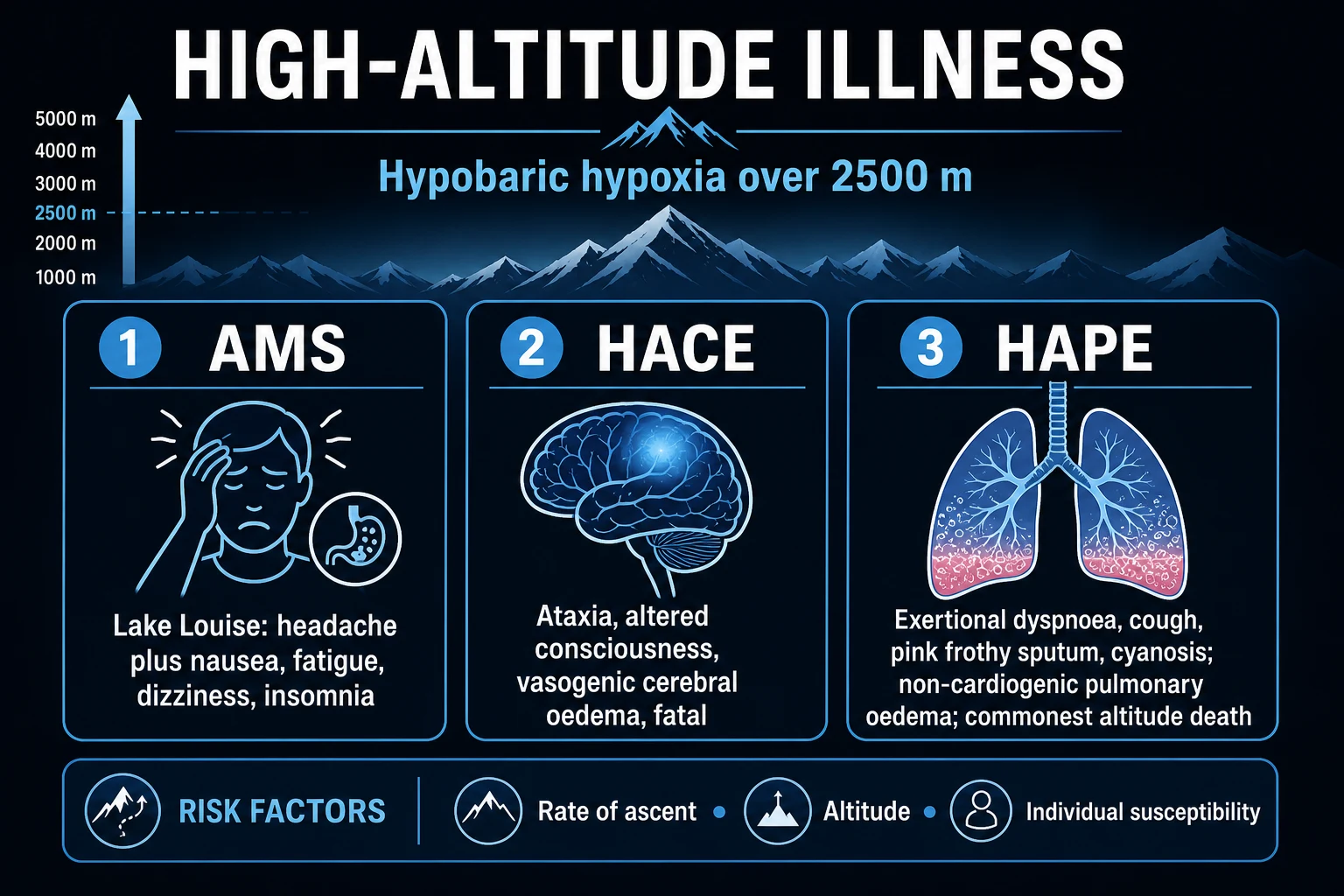
High-altitude illness is the spectrum of syndromes caused by ascent to altitude (usually above 2500 m) under hypobaric hypoxia: (1) Acute Mountain Sickness (AMS) — common and self-limiting, defined as headache plus one or more of nausea/anorexia, fatigue/weakness, dizziness/vertigo and sleep disturbance (2018 Lake Louise score); (2) High-Altitude Cerebral Oedema (HACE) — severe, with ataxia and altered consciousness from vasogenic cerebral oedema, fatal if untreated; (3) High-Altitude Pulmonary Oedema (HAPE) — severe, with exertional dyspnoea, dry then pink-frothy cough, cyanosis and reduced exercise performance from uneven hypoxic pulmonary vasoconstriction and non-cardiogenic pulmonary oedema — the commonest cause of altitude-related death. Onset is hours to days after ascent; risk rises with rate of ascent, altitude reached and individual susceptibility. Prevention is gradual ascent plus acetazolamide 125 to 250 mg twice daily. AMS — stop ascent, rest, acetazolamide; HACE and HAPE — immediate descent plus oxygen plus dexamethasone (HACE) or nifedipine (HAPE), with a portable hyperbaric chamber if descent is impossible.
On this page & tools
Your progress
Saved locally on this device.
Exam tags
Red flags
Overview & Definition
High-altitude illness is the term for the clinical syndromes caused by rapid ascent to altitude under the single upstream stressor of hypobaric hypoxia (a fall in barometric pressure lowering the partial pressure of inspired oxygen). The clinical spectrum comprises three overlapping syndromes that are best understood as points on a continuum rather than as separate diseases[2][3]:
- Acute mountain sickness (AMS) — the common, benign, self-limiting syndrome of headache plus at least one of gastrointestinal symptoms, fatigue/weakness, dizziness/vertigo or sleep disturbance, occurring 6 to 12 hours after arrival above 2500 m.
- High-altitude cerebral oedema (HACE) — the severe progression of AMS to vasogenic cerebral oedema, characterised clinically by ataxia and altered consciousness, and fatal if untreated.
- High-altitude pulmonary oedema (HAPE) — a non-cardiogenic pulmonary oedema caused by uneven hypoxic pulmonary vasoconstriction, presenting with exertional dyspnoea, dry then pink-frothy cough, cyanosis and reduced exercise performance, and the commonest cause of death related to altitude. [1]

The clinical skill in high-altitude illness is not the diagnosis (the syndromes have crisp signatures) but recognising severity early — specifically, recognising ataxia as the cardinal sign that converts AMS into the lethal HACE, and recognising exertional dyspnoea with cough as HAPE — because the definitive treatment, descent, must be triggered before the patient becomes bed-bound, comatose, or hypoxaemic in the field. The Lake Louise 2018 score standardises AMS diagnosis; the Wilderness Medical Society 2019 guideline codifies prevention and treatment.[1][3]
Classification
High-altitude illness is classified by the clinical syndrome and by chronicity. Both axes are examinable.[2][3]
Acute syndromes (hours to days at altitude): [1]
- Acute mountain sickness (AMS) — common (about 25% of unacclimatised travellers at 3000 m, 40 to 50% at 4500 m on rapid ascent); benign; self-limiting within 24 to 48 hours.
- High-altitude cerebral oedema (HACE) — uncommon (under 1 to 2% at 4500 m with gradual ascent; higher with rapid ascent); progression of AMS; fatal if untreated.
- High-altitude pulmonary oedema (HAPE) — uncommon (under 0.2 to 6% depending on ascent profile); the commonest cause of altitude death; non-cardiogenic. [1]
Minor / less common acute syndromes: [1]
- High-altitude headache (HAI) — headache at altitude without other Lake Louise symptoms.
- High-altitude peripheral oedema — dependent oedema from hypoxia-driven sodium retention; benign.
- High-altitude retinopathy — retinal haemorrhages, usually asymptomatic; relevant when central vision is affected.
- High-altitude syncope — vasovagal on standing in hypoxia.
- High-altitude cough — dry, relentless cough (cold dry air + hyperventilation), distinct from HAPE. [1]
Chronic syndromes (weeks to years of high-altitude residence): [1]
- Chronic mountain sickness (Monge disease) — excessive erythrocytosis (haemoglobin over 21 g/dL), hypoxaemia, pulmonary hypertension, headache, dizziness, fatigue; treated by descent, oxygen, venesection, acetazolamide.
- High-altitude pulmonary hypertension — chronic hypoxic pulmonary vasoconstriction progressing to right heart failure.
- High-altitude deterioration — weight loss, cognitive decline and sleep disruption seen at extreme altitude (above 5500 m), marking the limit of acclimatisation. [1]
Altitude categories used in the literature: [1]
- High altitude — 1500 to 3500 m. AMS begins to occur.
- Very high altitude — 3500 to 5500 m. AMS, HAPE and HACE common with rapid ascent.
- Extreme altitude — above 5500 m. Acclimatisation cannot be sustained long-term; deterioration supervenes. [1]
Epidemiology & Risk Factors
About 140 million people worldwide live above 2500 m, and tens of millions travel to altitude each year for trekking, mountaineering, pilgrimage (Amarnath Yatra, Kailash Mansarovar, Hajj on the Anatolian plateau) and military deployment (Indian Armed Forces on the Siachen and Ladakh frontiers).[2]
Incidence of AMS in unacclimatised travellers ascending rapidly: [1]
- About 25% ascending directly to 3000 m.
- About 40 to 50% ascending directly to 4500 m.
- Higher with air travel straight to high altitude (for example La Paz/El Alto at 4061 m, Lhasa at 3650 m, Leh at 3500 m). [1]
HACE and HAPE are far less common with prudent ascent but case fatality is high when descent is delayed. [1]
- Rate of ascent — the single most important modifiable risk. Direct flight to 3500 m followed by trekking multiplies risk.
- Absolute altitude reached and sleeping altitude (risk rises above 2500 m, steeply above 3500 m).
- Prior acclimatisation — protective (the same individual tolerates the same altitude much better after a period at intermediate altitude).
- Individual susceptibility — highly reproducible: a person who developed HAPE once is very likely to again. Genetic factors (e.g. variants in endothelial nitric oxide synthase, HIF pathway) contribute.
- Exertion at altitude — increases risk, particularly of HAPE.
- Cold — adds to pulmonary vascular resistance and HAPE risk.
- Age — interestingly, younger adults (and children) have similar or higher AMS rates than older adults; the systematic-review evidence shows age does not reliably protect, and young fit men are over-represented because they ascend faster.[7]
- Physical fitness is NOT protective — fitness permits a faster (and therefore riskier) ascent.
- Obesity and pre-existing cardiopulmonary disease modestly increase risk.
- Female sex may carry slightly lower risk in some series.
- Drugs: alcohol, sedatives, anxiolytics and respiratory depressants worsen overnight hypoxaemia and increase risk.
Pathophysiology
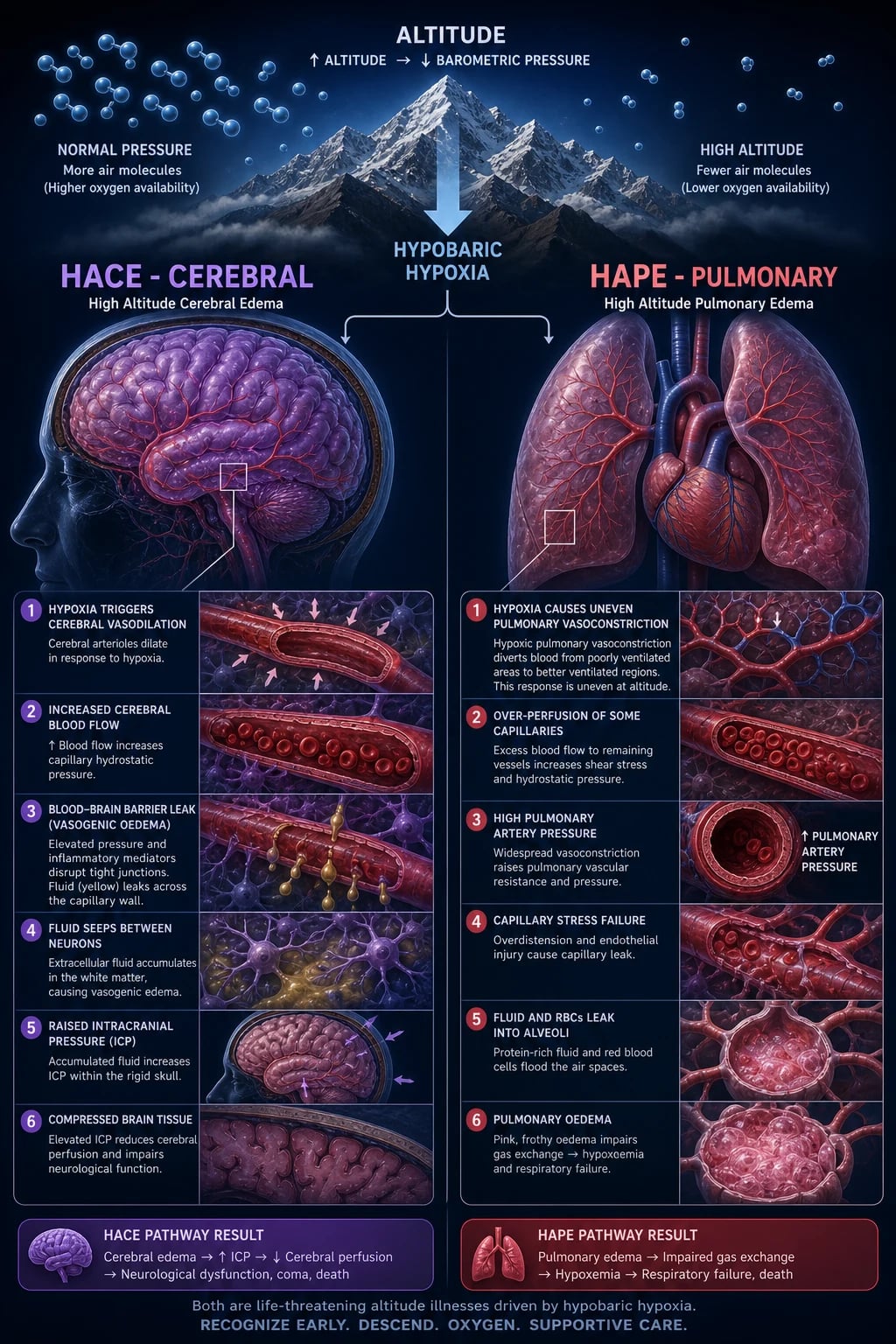
All high-altitude illness flows from a single upstream cause — hypobaric hypoxia.[2][6]
Hypobaric hypoxia. Barometric pressure falls exponentially with altitude: at sea level 760 mmHg, at 5500 m about half (380 mmHg), and at the summit of Everest (8848 m) about 253 mmHg. Because the fraction of oxygen in air is constant (21%), the partial pressure of inspired oxygen falls in parallel: from 159 mmHg at sea level to about 43 mmHg on the summit of Everest. The downstream consequences are:[6]
1. The acute ventilatory response (minutes to hours). Hypoxia is sensed by the glomus cells of the carotid body, which signal via the glossopharyngeal nerve to the dorsal respiratory group in the medulla, increasing minute ventilation. This hypoxic ventilatory response (HVR) raises alveolar and arterial PO2 — the most immediate defence. However, blowing off CO2 produces a respiratory alkalosis (cerebral vasoconstriction; restricts deep sleep; contributes to periodic breathing). This is why acetazolamide works: by inhibiting carbonic anhydrase in the proximal renal tubule it induces a bicarbonate diuresis, correcting the alkalosis, restoring the central chemoreceptor set-point to drive ventilation harder, improving oxygenation and reducing periodic breathing.[3]
2. Acclimatisation (days to weeks). Successful acclimatisation integrates:
- Renal bicarbonate excretion — restores arterial pH toward normal over 1 to 2 weeks (so the respiratory alkalosis no longer limits ventilation).
- Raised 2,3-bisphosphoglycerate (2,3-BPG) in erythrocytes — shifts the oxyhaemoglobin dissociation curve rightward, enhancing tissue oxygen unloading.
- Increased erythropoietin (EPO) from the renal cortical interstitial fibroblasts (HIF-2alpha driven) — raises red-cell mass over weeks, increasing oxygen-carrying capacity (but also viscosity).
- Hypoxic pulmonary vasoconstriction — a uniform but heterogeneous response across the lung.
- Cerebral blood flow increases acutely (hypoxic vasodilation), then partially normalises as viscosity and ventilation rise. [1]
Failure of acclimatisation — usually because of too-rapid ascent — produces the three syndromes. [1]
3. Mechanism of AMS. Cerebral blood flow rises to compensate for the low arterial oxygen content; this, combined with mild cytotoxic and vasogenic oedema, stretches the pain-sensitive dura and vessels, producing headache. The systemic symptoms (nausea, fatigue, insomnia, dizziness) reflect brainstem / chemoreceptor trigger-zone effects and disturbed sleep architecture with periodic breathing.[2]
4. Mechanism of HACE — vasogenic cerebral oedema. When hypoxia is sustained, the blood-brain barrier leaks. Hypoxia induces vascular endothelial growth factor (VEGF) expression, increasing capillary permeability; cytotoxic oedema (failure of Na+/K+ ATPase in glial cells) and the failure of intracranial compliance produce raised intracranial pressure. The cerebellum is exquisitely sensitive — hence ataxia is the earliest and most reliable sign. Untreated, this progresses to cerebral herniation, coma and death. HACE is essentially AMS that has progressed to involve the cerebellum and brainstem.[2]
5. Mechanism of HAPE — non-cardiogenic pulmonary oedema. Hypoxic pulmonary vasoconstriction (HPV) is the body's attempt to redirect blood from poorly ventilated alveoli. In HAPE-susceptible individuals, the response is excessive and uneven: some arterioles constrict powerfully while neighbouring ones do not, so the entire cardiac output is funnelled through the non-constricted capillaries at very high pressure. This produces capillary stress failure (West's hypothesis): the alveolar-capillary membrane ruptures under hydrostatic stress, allowing red cells and protein-rich fluid to flood the alveoli — a non-cardiogenic, permeability-type oedema with a normal-sized left ventricle and normal pulmonary artery wedge pressure.[4][5]
Two additional defects amplify HAPE: [1]
- Impaired alveolar fluid clearance — alveolar epithelial sodium channels (ENaC) clear fluid from the alveolus; this clearance is suppressed by hypoxia, and is the rationale for inhaled beta-2 agonists (salmeterol) in HAPE prophylaxis.[5]
- Reduced nitric oxide (NO) bioavailability in the pulmonary vasculature of HAPE-susceptible individuals — the rationale for PDE-5 inhibitors (sildenafil, tadalafil).[4]
Why exertion and cold precipitate HAPE: exertion raises cardiac output, magnifying the pressure insult to non-constricted capillaries; cold further raises pulmonary vascular resistance. [1]
Clinical Presentation
Acute mountain sickness (AMS)
Onset 6 to 12 hours after arrival above 2500 m (may be sooner with rapid ascent). The 2018 Lake Louise consensus defines AMS as headache plus one or more of the following symptom groups, in the setting of a recent altitude gain[1]:
- Gastrointestinal — nausea/vomiting and/or anorexia.
- Fatigue/weakness — unusual tiredness, reduced exercise tolerance.
- Dizziness/vertigo — light-headedness on standing.
- Sleep disturbance — difficulty sleeping, frequent waking, vivid dreams. [1]
The symptom is headache-driven: without headache, AMS cannot be diagnosed. Headache is typically bilateral, throbbing, worse at night and on waking, and exacerbated by exertion or cough. [1]
High-altitude cerebral oedema (HACE)
HACE is AMS that has progressed to involve the brain substance. The two cardinal features, either of which mandates an immediate diagnosis of HACE, are: [1]
- Ataxia — inability to walk a straight line heel-to-toe. This is the single most reliable early sign of HACE and the trigger to descend immediately. Anyone with ataxia at altitude has HACE until proven otherwise.
- Altered consciousness — confusion, drowsiness, disorientation, progressing to coma. [1]
Additional features: severe headache unresponsive to analgesia, vomiting (often projectile), lassitude, hallucinations, and (late) focal neurological signs and seizures. Onset usually within 1 to 4 days of altitude gain. Untreated, death occurs from cerebral herniation within 24 hours.[2]
High-altitude pulmonary oedema (HAPE)
Onset usually in the first 2 to 4 days at altitude (classically the second night). Symptoms in order of appearance: [1]
- Reduced exercise performance — the earliest manifestation; the trekker who is now slower than peers.
- Exertional dyspnoea — out of proportion to altitude and exertion; progresses to dyspnoea at rest.
- Dry, persistent cough — later becoming pink, frothy sputum (frank haemoptysis in severe cases).
- Cyanosis, tightness in the chest. [1]
Signs: tachycardia, tachypnoea, low-grade fever (under 38.5 C), bibasal inspiratory crackles (often right mid-zone first, becoming diffuse), cyanosis, and a fall in SpO2. Unlike cardiogenic pulmonary oedema, the jugular venous pressure and cardiac examination are often normal (no third heart sound) and the heart is normal in size.[4][5]
High-altitude headache (HAI)
Headache at altitude within 24 hours of ascent, without the other Lake Louise features. Bilateral, dull or throbbing, aggravated by exertion or Valsalva. Distinguished from AMS by the absence of accompanying symptoms. Treat with simple analgesia, hydration and acclimatisation. [1]
Atypical presentations
- Children — cannot reliably report symptoms; present with behavioural change, irritability, refusal to play or eat, excessive sleepiness or unexplained crying. Have a low threshold for presumptive treatment.
- The elderly — present more slowly and with more fatigue; ataxia may be subtle. AMS scores perform less well in older adults.[7]
- Pregnant women — may attribute dyspnoea to the pregnancy, delaying recognition of HAPE.
- The very fit — under-report symptoms ("I will sleep it off") and may mask HACE ataxia as fatigue.
Differential Diagnosis
An altitude traveller is also at risk of unrelated illness, some of which are lethal mimics. The cardinal rule is that any symptom at altitude is altitude illness until proven otherwise — but the mimics must always be considered, especially in a group setting.[2]
| Condition | Distinguishing features from high-altitude illness |
|---|---|
| Dehydration / exertional headache | No accompanying GI/sleep symptoms; resolves with hydration and analgesia; SpO2 normal for altitude |
| Migraine | Typical aura, photophobia, unilateral, prior history |
| Caffeine withdrawal | Stopped usual intake during travel; throbbing, resolves with caffeine |
| Meningitis | Fever, neck stiffness, photophobia, petechial rash; rapid progression; no clear altitude correlation |
| Subarachnoid haemorrhage | Thunderclap headache, meningism, focal neurology |
| Carbon monoxide poisoning (cooking in a closed tent) | Multiple casualties in a group, normal SpO2 (pulse oximeter cannot distinguish COHb), headache + nausea + dizziness, cherry-red skin (late). Always consider in groups. |
| Hypoglycaemia | Diabetic on insulin/dexamethasone; sweaty, tremulous, rapid recovery with glucose |
| Hypothermia | Coexists; bradycardia, cold extremities, "umbles" (mumbles, fumbles, stumbles, grumbles); core temperature under 35 C |
| Pneumonia | High fever, purulent sputum, leukocytosis, localised consolidation; HAPE may be complicated by secondary pneumonia |
| Pulmonary embolism | Sudden pleuritic pain, dyspnoea, risk factors (immobility, dehydration, oestrogen); HAPE produces more gradual onset |
| Cardiogenic pulmonary oedema | Pre-existing cardiac disease, raised JVP, gallop, cardiomegaly, bibasal signs. HAPE has a normal heart size and is non-cardiogenic. |
| Asthma exacerbation | Wheeze, prior history, response to bronchodilator |
| Aortic dissection (rare) | Tearing chest pain to the back, pulse/BP asymmetry |
| Alcohol intoxication (masking HACE ataxia) | Smell of alcohol, but always exclude HACE ataxia first |
Three points an examiner rewards: (1) Ataxia at altitude is HACE until proven otherwise — never write it off as "tired" or "drunk". (2) Multiple casualties in a group with headache/nausea is carbon monoxide poisoning until excluded — check the stove and ventilation. (3) A young, previously fit adult with pulmonary oedema at altitude is HAPE — do not anchor on "unfitness" or "pneumonia". [1]
Clinical & Bedside Assessment
In the field, decisions are clinical. The focused assessment is short but disciplined.[2][3]
Vital signs and bedside observations: [1]
- SpO2 (finger pulse oximetry) — trends over time matter more than a single reading. A fall of 5 percentage points or more below the group baseline for the altitude is significant. In HAPE, SpO2 is markedly low for the altitude.
- Respiratory rate, heart rate, blood pressure, temperature (exclude hypothermia with a low-reading thermometer).
- Conscious level — AVPU or GCS; serially.
- Hydration — urine output (a target of clear, copious urine; oliguria suggests dehydration or HAPE). [1]
Cardinal bedside manoeuvre for HACE — the tandem gait (heel-to-toe) test: the patient walks a straight line, placing the heel of one foot directly in front of the toe of the other, for 5 to 10 paces. Inability to do this smoothly (staggering, sidestepping, falling) is ataxia and mandates an immediate diagnosis of HACE and descent. Also test finger-to-nose, Romberg and observe for intention tremor. [1]
Cardinal bedside assessment for HAPE — exertional testing and auscultation: [1]
- Time a standardised walk/climb; compare to the patient's baseline and to peers.
- Exertional desaturation (a 5 to 10 point SpO2 drop on mild exertion that recovers slowly) is an early HAPE sign.
- Auscultate the chest for bibasal inspiratory crackles (often right mid-zone first) and exclude wheeze. [1]
Lake Louise 2018 scoring at the bedside is performed in two flavours: [1]
- Self-scored (LLSelf) — the patient rates each symptom (used for surveillance / groups).
- Clinical score (LLClinical) — the clinician assesses and combines with the functional score (used to direct care). [1]
Investigations
In the field, investigations are limited and decisions are clinical. Hospital/laboratory investigation supports, but never supersedes, the diagnosis.[2]
Field investigations: [1]
- Finger pulse oximetry — essential and available; trend over time.
- Portable chest X-ray (if available) — in HAPE shows patchy, often right-sided infiltrates progressing to diffuse alveolar shadowing, with a normal cardiac silhouette — distinguishing HAPE from cardiogenic oedema. [1]
Hospital investigations: [1]
- Chest X-ray — non-cardiogenic oedema pattern, normal heart size, often Kerley B lines and patchy alveolar infiltrates.
- Arterial blood gas — respiratory alkalosis with hypoxaemia in acclimatising individuals; in HAPE a widened alveolar-arterial (A-a) gradient reflecting intrapulmonary shunt and V/Q mismatch. (Calculate A-a gradient = PAO2 minus PaO2.)
- ECG — sinus tachycardia at altitude; in HAPE may show right-axis deviation, P pulmonale, right ventricular strain, T-wave inversion in right precordial leads.
- Echocardiography — elevated estimated pulmonary artery systolic pressure, preserved left ventricular function, possible right ventricular dilatation (HAPE).
- Brain imaging (CT/MRI) in HACE — not available in the field; shows white-matter oedema, often involving the corpus callosum (splenium), and in severe cases posterior reversible encephalopathy-like changes. Used to exclude SAH/mass once the patient reaches hospital.
- Full blood count — haemoconcentration from dehydration; haemoglobin over 21 g/dL with hypoxaemia points to chronic mountain sickness (Monge).
- Troponin, BNP — to exclude myocardial infarction and cardiogenic oedema. [1]
The 2018 Lake Louise Acute Mountain Sickness Score — reproduced verbatim
The 2018 Lake Louise consensus defines AMS and standardises its scoring.[1]
Diagnostic criterion for AMS (2018 Lake Louise): the presence of headache PLUS at least one other symptom (gastrointestinal, fatigue/weakness, dizziness/vertigo, sleep disturbance), in the setting of a recent gain in altitude. Severity is scored as follows. [1]
Symptom score — each component scored 0 (none) to 3 (severe): [1]
| Symptom | 0 | 1 | 2 | 3 |
|---|---|---|---|---|
| Headache | none | mild | moderate | severe, incapacitating |
| Gastrointestinal | none | poor appetite or nausea | moderate nausea and/or vomiting | severe, incapacitating |
| Fatigue / weakness | none | mild | moderate | severe, incapacitating |
| Dizziness / vertigo | none | mild | moderate | severe, incapacitating |
| Sleep disturbance | slept as well as usual | did not sleep as well as usual | woke many times, poor night's sleep | could not sleep at all |
Functional score (LLFunctional), 0 to 3: [1]
- 0 — no change in activity.
- 1 — mild reduction, still active.
- 2 — moderate reduction; off normal programme.
- 3 — severe; cannot continue. [1]
AMS severity grading (2018 Lake Louise): [1]
- Mild AMS — total symptom score 3 to 5 with headache (or self-score 3 to 5).
- Severe AMS — total symptom score 6 or more with headache (or self-score 6 or more). [1]
Note: the 2018 revision formally included sleep as a scored symptom (it had been listed separately in the 1991 score) and added the functional score. Ataxia and altered consciousness are not part of AMS scoring — their presence converts the diagnosis to HACE. [1]
AMS (Lake Louise)
- Headache PLUS at least one of GI / fatigue / dizziness / sleep
- Onset 6 to 12 h above 2500 m
- Self-limiting in 24 to 48 h
- Mild score 3 to 5; severe 6 or more
- Management: stop ascent, rest, analgesia, antiemetic, acetazolamide, descend if worsening
HACE
- Ataxia (heel-to-toe) — cardinal sign
- Altered consciousness, confusion to coma
- Vasogenic cerebral oedema; raised ICP
- Fatal within 24 h if untreated
- Management: IMMEDIATE descent + O2 + dexamethasone 8 mg then 4 mg 6-hourly + hyperbaric
HAPE
- Exertional dyspnoea, then dyspnoea at rest
- Dry cough then pink frothy sputum
- Cyanosis, bibasal crackles, reduced SpO2
- Non-cardiogenic oedema, normal heart size
- Management: IMMEDIATE descent + O2 + nifedipine 30 mg SR BD + hyperbaric; add sildenafil/salmeterol
High-altitude illness — key numbers
Management — Resuscitation
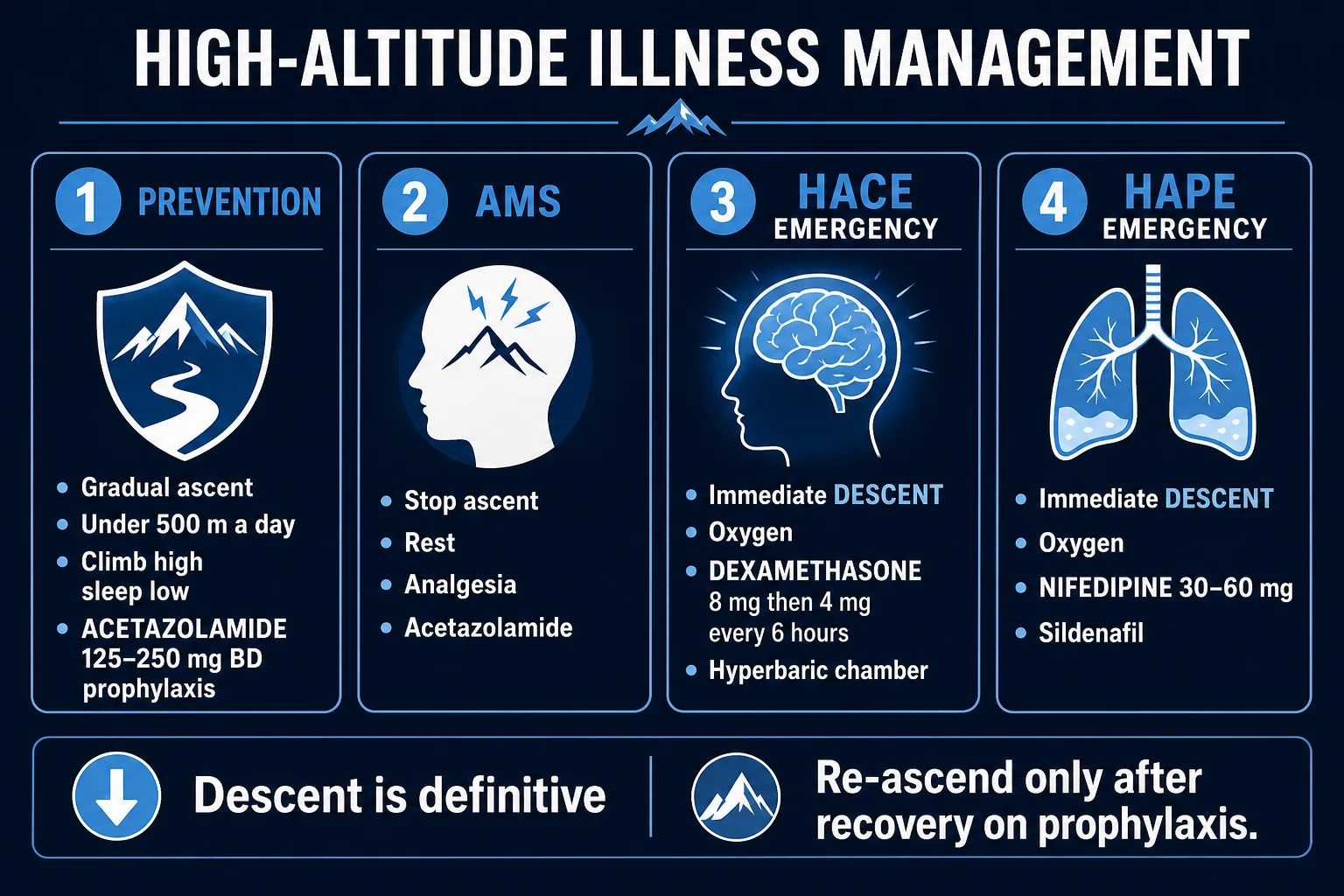
Field resuscitation of suspected HACE or HAPE rests on three actions executed without delay: stop all ascent, give oxygen, and begin descent.[2][3]
- ABCDE. Secure the airway (recovery position if comatose); high-flow oxygen; check for trauma and hypothermia.
- Oxygen — give the highest concentration available via mask; target SpO2 over 90% (or the highest achievable). In HAPE, oxygen alone can dramatically improve gas exchange within minutes by lowering pulmonary artery pressure and relieving hypoxic vasoconstriction.
- Stop all exertion, sit the patient upright, keep them warm and dry — exertion raises pulmonary pressures and worsens HAPE; cold raises pulmonary vascular resistance.
- Immediate descent — the definitive treatment. Descend at least 500 to 1000 m or until symptoms resolve (often a greater descent is needed for HACE). If the patient cannot walk, carry, sledge or helicopter evacuation is required; never let an ataxic patient descend unaided — they will fall.
- Portable hyperbaric (Gamow) chamber — if descent is impossible (weather, terrain, darkness), place the patient in a portable hyperbaric bag pressurised to about 2 psi above ambient, which simulates a descent of 1500 to 2000 m within minutes. It buys time, not cure; the patient must still descend when conditions allow.
- Position and airway in a comatose HACE patient — recovery position on descent; have suction ready; protect the cervical spine if there is any risk of fall. [1]
Drugs (oxygen, dexamethasone, nifedipine, acetazolamide) are adjuncts that buy time — they are never a substitute for descent in HACE/HAPE.[3]
Management — Definitive & Stepwise
The Wilderness Medical Society 2019 guideline defines the agents, doses and indications.[3]
Prevention (the best treatment)
The single most effective preventive measure is gradual ascent[3]:
- Above 3000 m, sleeping altitude should not increase by more than 500 m per night.
- "Climb high, sleep low" — day-time excursions higher than the sleeping altitude accelerate acclimatisation.
- Add a rest day every 1000 m of altitude gain above 3000 m (every 600 m if very high altitude).
- Hydrate, eat a high-carbohydrate diet, avoid alcohol, sedatives and smoking.
- Recognise symptoms early and stop ascending. [1]
Pharmacological prophylaxis:[3]
- Acetazolamide — for those ascending above 3000 m in a single day, with a past history of AMS, or on a rapid itinerary. Dose 125 to 250 mg orally twice daily, started 24 hours before ascent and continued for 2 to 4 days at target altitude (then tapered as acclimatisation develops). Mechanism: carbonic anhydrase inhibition → renal bicarbonate diuresis → corrects the respiratory alkalosis → restores the central chemoreceptor drive to ventilate, accelerates acclimatisation, and reduces periodic breathing in sleep.
- Dexamethasone — for those intolerant of or allergic to acetazolamide, or for forced-rapid ascent (military, rescue). Dose 2 mg every 6 h or 4 mg every 12 h orally, started the day of ascent. Mechanism: reduces cerebral oedema. Note: does not aid acclimatisation and rebound occurs on withdrawal — must descend before stopping.
- Nifedipine — for HAPE-susceptible individuals (a prior HAPE episode). Dose 30 mg slow-release orally, twice daily, started the day of ascent and continued for 2 to 4 days at altitude. Mechanism: reduces pulmonary arterial pressure.
- Sildenafil / tadalafil — alternative HAPE prophylaxis; dose 50 mg sildenafil three times daily or 10 mg tadalafil daily.
- Salmeterol — add-on for recurrent HAPE; inhaled 125 micrograms twice daily. Mechanism: up-regulates alveolar Na+ channels and fluid clearance.
- Ginkgo biloba — conflicting evidence; not recommended routinely. [1]
Contraindications and cautions to acetazolamide: sulpha allergy (relative — cross-reactivity is low but caution is advised), severe renal impairment, hepatic impairment, adrenal insufficiency, late pregnancy (avoid high-dose, theoretical teratogenicity), concurrent high-dose aspirin (risk of metabolic acidosis and encephalopathy). Common side effects: paraesthesia of fingers/toes and perioral region, altered taste of carbonated drinks, polyuria, nausea — all reversible on cessation. [1]
Acute mountain sickness (AMS)
- Stop ascending — do not go higher; rest at the same altitude.
- Hydrate, give simple analgesia (paracetamol 1 g or ibuprofen 400 to 600 mg) for headache, and an antiemetic (ondansetron 4 mg or prochlorperazine) for nausea.
- Acetazolamide 250 mg orally every 8 to 12 hours (treatment dose, higher than prophylaxis).
- Supplemental oxygen if available, to keep SpO2 over 90%.
- Reassess hourly — most mild AMS resolves within 24 hours at the same altitude.
- Descend (at least 500 m) if symptoms do not improve within 24 hours, worsen despite treatment, or if ataxia or altered consciousness develop (these are HACE). [1]
High-altitude cerebral oedema (HACE)
HACE is a medical emergency[2][3]:
- Immediate descent — at least 1000 m, or until symptoms resolve. This is the definitive treatment.
- Oxygen — high-flow, target SpO2 over 90%.
- Dexamethasone — 8 mg loading dose orally/IM/IV, then 4 mg every 6 hours. Reduces vasogenic oedema; improves consciousness within hours; continue until 24 hours after full recovery, then taper. Never let dexamethasone delay descent.
- Acetazolamide 250 mg every 8 to 12 hours may be added (acclimatisation, Mountain Medicine practice).
- Portable hyperbaric chamber if descent is impossible.
- Evacuation to hospital once stabilised; CT/MRI to exclude alternative diagnoses; supportive care for coma; gradual rehabilitation. [1]
High-altitude pulmonary oedema (HAPE)
HAPE is a medical emergency[3][4][5]:
- Immediate descent — at least 1000 m, or until symptoms resolve. Definitive.
- Oxygen — high-flow, target SpO2 over 90%. In HAPE, oxygen alone can be dramatically effective by reversing hypoxic pulmonary vasoconstriction and lowering pulmonary artery pressure.
- Sit upright, minimise exertion, keep warm — exertion raises pulmonary pressures.
- Nifedipine 30 mg slow-release orally every 12 hours (slowly titrate; may add a 10 mg sublingual dose for an acute episode if blood pressure allows). Reduces pulmonary artery pressure.
- Consider sildenafil 50 mg every 8 hours (PDE-5 inhibitor; pulmonary vasodilation) and/or salmeterol 125 micrograms inhaled every 12 hours (enhances alveolar fluid clearance).
- Portable hyperbaric chamber if descent is impossible.
- Diuretics, morphine and nitroglycerine are NOT indicated — HAPE patients are often volume-depleted; these can precipitate hypotension. (Contrast with cardiogenic oedema.)
- Antibiotics only if secondary infection is confirmed.
- Evacuation to hospital once stabilised; consider non-invasive ventilation (CPAP) for refractory hypoxaemia. [1]
When to evacuate / hospital criteria
- All confirmed HACE and all moderate-to-severe HAPE.
- AMS not improving after 24 hours of treatment, or worsening.
- Any reduced conscious level, SpO2 under 85% despite oxygen, or inability to walk.
- Helicopter evacuation only if the conditions allow — beware exposing the casualty and the rescuer to further altitude and weather risk; a ground descent may be safer. [1]
Re-ascent after recovery
The patient may resume ascent only after full resolution of symptoms at a lower altitude for at least 24 hours; restart slowly with acetazolamide. A patient with a documented HAPE episode has a high recurrence risk and should carry nifedipine and sildenafil for future prophylaxis. [1]
Specific Subtypes & Scenarios
High-altitude headache (HAI) — headache within 24 hours of ascent above 2500 m, without other Lake Louise symptoms. Bilateral, throbbing, aggravated by exertion or cough. Mechanism: cerebral vasodilation. Treat with hydration, simple analgesia, rest, and oxygen if available; resolves on acclimatisation or descent.[2]
Re-entry / re-ascent HAPE — high-altitude residents who descend to lowland for a few weeks lose their acclimatisation and, on return, may develop HAPE rapidly. Especially described in Andean and Himalayan residents. Prevention is gradual re-ascent and nifedipine prophylaxis for susceptible individuals. [1]
Chronic mountain sickness (Monge disease) — seen in long-term high-altitude residents (Andes, Tibet). Characterised by excessive erythrocytosis (haemoglobin over 19 to 21 g/dL in women/men), severe hypoxaemia, pulmonary hypertension, headache, dizziness, somnolence and signs of right heart failure. Pathophysiology: blunted hypoxic ventilatory response and HIF-2alpha-driven erythrocytosis. Treatment: descent to low altitude (definitive), continuous supplemental oxygen, isovolaemic venesection (target haematocrit under 55%), and acetazolamide 250 to 500 mg daily (reduces erythropoietin and improves ventilation). [1]
High-altitude pulmonary hypertension — chronic hypoxic pulmonary vasoconstriction progressing to pulmonary vascular remodelling and right heart failure in long-term residents. Treat with descent, oxygen, PDE-5 inhibitors (sildenafil/tadalafil), and consider bosentan (endothelin antagonist). [1]
High-altitude deterioration — at extreme altitude (above 5500 m), prolonged exposure produces weight loss (anorexia, malabsorption), cognitive decline and sleep disruption, signalling that acclimatisation cannot be sustained. Treatment is descent. [1]
High-altitude retinopathy — retinal haemorrhages (High-Altitude Retinal Haemorrhages, HARH) from hypoxia-induced vascular leak; usually asymptomatic and resolve spontaneously. Relevant when a haemorrhage affects the macula (central visual loss). [1]
High-altitude syncope — vasovagal in the setting of hypoxic cerebral vasodilation on standing; manage by lying flat, oxygen and acclimatisation. [1]
The pregnant traveller — pregnancy at altitude: avoid sleeping above 3000 to 3500 m; brief daytime excursions to 4000 m are generally tolerated in a healthy pregnancy. Risks include fetal growth restriction and pre-eclampsia. Counsel against extreme altitude; carry oxygen.[3]
Cardiopulmonary disease — patients with COPD, pulmonary hypertension, ischaemic heart disease or heart failure have lower functional reserve; counsel on acclimatisation, carry oxygen, and avoid extreme altitude. Patients with pre-existing pulmonary hypertension are at high risk of HAPE. [1]
Sickle cell trait / disease — risk of splenic infarction above 2500 m; altitude travel is generally contraindicated. [1]
Diabetics — dexamethasone raises glucose; exertion and cold alter insulin requirement; acetazolamide can cause metabolic acidosis; close glucose monitoring and continuous-carbohydrate availability are essential. [1]
Complications & Pitfalls
Complications of HACE: progression to coma, cerebral herniation, death, and in survivors residual cognitive, motor or visual deficits that may persist for months. Some patients develop chronic neuropsychological impairment ("high-altitude brain damage").[2]
Complications of HAPE: hypoxaemic respiratory failure, secondary bacterial pneumonia, pulmonary hypertension with right ventricular failure, and death. Survivors recover fully if descent is prompt. [1]
Common field pitfalls[3]:
- Continuing to ascend with AMS in the hope it will resolve — the single most preventable cause of progression to HACE/HAPE.
- Mistaking HACE ataxia for drunkenness, fatigue or clumsiness — ataxia at altitude is HACE until proven otherwise.
- Mistaking HAPE dyspnoea for "being unfit", a chest infection or asthma — and treating with bronchodilators or antibiotics instead of descent.
- Delaying descent to "wait and see" or for dawn/weather — descent is the definitive treatment and must not be delayed.
- Relying on oxygen or dexamethasone as a substitute for descent — they buy time, they do not cure.
- Giving sedatives, opioids or benzodiazepines for sleep or anxiety — they blunt the hypoxic ventilatory drive, worsen nocturnal desaturation, and can precipitate respiratory failure. Sleep disturbance of AMS is treated with acetazolamide (improves periodic breathing), not hypnotics.
- Using diuretics, morphine or nitrates in HAPE — these are for cardiogenic oedema; HAPE patients are often volume-depleted and these precipitate hypotension.
- Withdrawing dexamethasone abruptly — rebound cerebral oedema.
- Mistaking carbon monoxide poisoning (multiple casualties, normal SpO2) for AMS. [1]
Acetazolamide pitfalls: volume depletion and dehydration (the diuresis); can mask worsening symptoms by improving sleep; sulfa allergy; do not use as a licence for faster ascent. [1]
Nifedipine pitfalls: hypotension in the volume-depleted HAPE patient; titrate slowly and monitor blood pressure. [1]
Prognosis & Disposition
AMS — resolves within 24 to 48 hours at the same altitude or after modest descent. Complete recovery; no long-term sequelae. [1]
HACE and HAPE — with prompt descent and the adjunctive drugs, recovery begins within hours and is usually complete within 24 to 72 hours; mortality is high if descent is delayed. After HACE, some patients have residual cognitive or cerebellar deficits that require follow-up neuropsychological testing.[2]
Follow-up after HACE — outpatient neurological review and (if symptomatic) neuropsychological testing at 1 to 3 months; most deficits resolve. [1]
Re-ascent advice: resume ascent only after full resolution at a lower altitude for at least 24 hours, slowly and with acetazolamide. A documented HAPE episode predicts high recurrence; future trips should include slow ascent, nifedipine and sildenafil prophylaxis, and a written descent plan.[3]
Special Populations
Children — cannot reliably report symptoms; present with behavioural change, irritability, refusal to play or eat, excessive sleepiness. Same treatment as adults (weight-adjusted acetazolamide: 2.5 mg/kg per dose, max 250 mg). Infants under 1 year should not sleep above 3000 m because of an SIDS-like risk of nocturnal hypoxaemia; brief daytime exposure is acceptable.[3]
Pregnant women — healthy pregnant women tolerate moderate altitude (under 3000 m) well; avoid sleeping above 3000 to 3500 m and extreme altitude. Brief daytime excursions to 4000 m are acceptable in an uncomplicated pregnancy. Risks at high altitude: fetal growth restriction, pre-eclampsia. Acetazolamide is generally avoided in the first trimester (theoretical teratogenicity) but may be used in late pregnancy if the indication is strong; weigh against descent.[3]
Elderly and cardiopulmonary disease — lower physiological reserve; counsel on acclimatisation, carry oxygen, avoid extreme altitude; patients with pre-existing pulmonary hypertension are at high risk of HAPE and should be advised against significant altitude exposure. [1]
Sickle cell trait / disease — splenic infarction and sickling crisis above 2500 m; altitude travel is contraindicated. [1]
Diabetics — dexamethasone hyperglycaemia; exertion and cold alter insulin requirement; acetazolamide-induced acidosis; carry glucose and monitor closely. [1]
Indian Armed Forces / mass pilgrimages (Amarnath Yatra at 3900 m, Kailash Mansarovar, Hajj) — large numbers of unacclimatised people ascend rapidly to altitude; these are mass-casualty scenarios for AMS/HACE/HAPE. Prevention requires staged ascent, mandatory acclimatisation days, medical posts at altitude, public education, and pre-travel screening (sickle cell trait, severe cardiopulmonary disease). The Indian Armed Forces operate a graded acclimatisation schedule for troops (stage at 2700 to 3000 m for several days, then graded ascent) that has substantially reduced HAPE incidence. [1]
Evidence, Guidelines & Regional Differences
Wilderness Medical Society 2019 guideline (Luks et al.)[3] — the current international standard, key recommendations:
- Gradual ascent is the cornerstone of prevention; sleeping altitude gain under 500 m/day above 3000 m, with rest days.
- Acetazolamide 125 mg twice daily is the preferred pharmacological prophylaxis (250 mg twice daily for high-risk itineraries).
- Dexamethasone (2 mg every 6 h or 4 mg every 12 h) is the alternative for those intolerant of acetazolamide.
- Nifedipine 30 mg SR twice daily for HAPE prophylaxis in susceptible individuals; tadalafil 10 mg daily or sildenafil 50 mg every 8 hours are alternatives; dexamethasone has no role in HAPE.
- Descent, oxygen and dexamethasone for HACE; descent, oxygen and nifedipine for HAPE.
- Portable hyperbaric chambers are an effective temporising measure when descent is impossible.
- No role for ginkgo biloba, antioxidants or spironolactone as routine prophylaxis. [1]
2018 Lake Louise Consensus (Roach et al.)[1] — refined AMS scoring: formally incorporated sleep into the symptom score and added the functional score, replacing the 1991 score.
Landmark trials: [1]
- Maggiorini et al., NEJM 1991 — nifedipine prophylaxis prevented HAPE in HAPE-susceptible mountaineers ascending rapidly to 4559 m, establishing nifedipine as the prophylaxis of choice.[5]
- Bartsch et al. (Swiss Medical Weekly 2003)[4] — defined the pathophysiology of HAPE as uneven hypoxic pulmonary vasoconstriction with capillary stress failure.
- Maggiorini, Cardiovascular Research 2006[5] — synthesised the mechanism and the rationale for nifedipine, PDE-5 inhibitors and beta-agonists in HAPE.
- West JB, High Alt Med Biol 2015[6] — comprehensive review of high-altitude physiology and medicine, including the capillary stress-failure hypothesis.
Controversies: [1]
- Pre-acclimatisation in normobaric/hypobaric hypoxic tents before travel — modestly reduces AMS but does not replace slow ascent.
- Ginkgo biloba — conflicting randomised trial evidence; not routinely recommended.
- Definition of the AMS threshold — the 2018 Lake Louise revision aimed to harmonise research endpoints but the optimal clinical threshold remains debated. [1]
Regional practice: [1]
- UIAA / International Society for Mountain Medicine (ISMM) — international mountaineering consensus; closely aligned with the WMS.
- UK / British Mountain Medical Society (BMMS) / NICE — aligned with WMS; emphasises pre-expedition medical screening and rescue planning.
- India — Indian Armed Forces / DRDO-Defence Institute of High Altitude Research (DIHAR), Leh — operates a graded acclimatisation schedule for troops deployed to high altitude: stage at 2700 to 3000 m for 4 to 6 days, then graded ascent with rest days, mandatory medical screening, and altitude-acclimatisation protocols that have substantially reduced HAPE incidence in military deployments. [1]
Exam Pearls
- Three syndromes at altitude: AMS (common, mild), HACE (cerebral oedema, ataxia), HAPE (pulmonary oedema, dyspnoea).
- Lake Louise 2018: headache PLUS at least one of GI / fatigue / dizziness / sleep; score 0 to 3 per item; AMS if total at least 3 with headache (mild 3 to 5, severe 6 or more).
- Definitive treatment for HACE and HAPE is DESCENT. Oxygen, dexamethasone and nifedipine are adjuncts — never a substitute.
- Ataxia is the single most reliable early sign of HACE — anyone with ataxia at altitude descends immediately.
- HAPE is NON-CARDIOGENIC pulmonary oedema — normal heart size, raised pulmonary artery pressure, commonest altitude death. No diuretics, no morphine, no nitrates.
- Acetazolamide 125 to 250 mg BD prophylaxis; 250 mg twice to three times daily treatment — carbonic anhydrase inhibition → bicarbonate diuresis → corrects the respiratory alkalosis and accelerates acclimatisation.
- HACE: dexamethasone 8 mg loading then 4 mg every 6 hours.
- HAPE: nifedipine 30 mg SR twice daily; consider sildenafil 50 mg three times daily and salmeterol inhaled.
- Prevention: climb high, sleep low; sleeping altitude gain under 500 m/day; one rest day every 1000 m above 3000 m.
- Gamow bag = portable hyperbaric chamber; simulates descent of about 1500 to 2000 m.
- Do NOT give sedatives, opioids or benzodiazepines at altitude — they blunt the hypoxic ventilatory drive.
- Multiple casualties with headache/nausea in a closed tent = carbon monoxide poisoning until excluded (normal SpO2 on pulse oximetry, group illness).
- Sickle cell trait = splenic infarction at altitude; altitude is contraindicated.
- Chronic mountain sickness (Monge) = haemoglobin over 21 g/dL with hypoxaemia; treat with descent, oxygen, venesection, acetazolamide.
- Re-entry HAPE — high-altitude residents returning from lowland; prevent with slow re-ascent and nifedipine. [1]
HACE vs HAPE — the cardinal signs
ACDC
the cardinal sign of HACE — heel-to-toe gait, descend now
confusion to coma — HACE; vasogenic cerebral oedema
the earliest HAPE sign, with dry then pink-frothy cough
bibasal crackles, low SpO2, normal heart size — HAPE
Lake Louise AMS symptom groups — Head+GFDS
HEADS
prerequisite — without headache AMS cannot be diagnosed
nausea, vomiting, anorexia
fatigue and weakness
light-headedness
insomnia, frequent waking
Exam application bank (NEET-PG / INICET)
One-line answer
High-altitude illness is the spectrum of syndromes caused by ascent to altitude (usually above 2500 m) under hypobaric hypoxia: (1) Acute Mountain Sickness (AMS) — common and self-limiting, defined as headache plus one or more of nausea/anorexia, fatigue/weakness, dizziness/vertigo and sleep disturbance (2018 Lake Louise score); (2) High-Altitude Cerebral Oedema (HACE) — severe, with ataxia and altered consciousness from vasogenic cerebral oedema, fatal if untreated; (3) High-Altitude Pulmonary Oedema (HAPE) — severe, with exertional dyspnoea, dry then pink-frothy cough, cyanosis and reduced exercise performance from uneven hypoxic pulmonary vasoconstriction and non-cardiogenic pulmonary oedema — the commonest cause of altitude-related death. Onset is hours to days after ascent; risk rises with rate of ascent, altitude reached and individual susceptibility. Prevention is gradual ascent p
Worked stems (answer without another resource)
Stem 1 — Classic presentation. Map symptoms to mechanism; name the first investigation and first treatment step with dose/route if drug therapy is standard. [1]
Stem 2 — Unstable / complicated. List red flags that force immediate resuscitation, theatre, ICU, antidote, or reperfusion — and what you do in the first 15 minutes. [1]
Stem 3 — Atypical group. Elderly, pregnancy, child, or immunocompromised: how presentation and thresholds change. [1]
Stem 4 — Differential trap. Name the three closest mimics and one discriminator for each. [1]
Stem 5 — Disposition. Who goes home with safety-netting, who is admitted, who needs HDU/ICU/theatre, and what follow-up is mandatory. [1]
Rapid viva checklist
- Definition + classification
- Pathophysiology chain
- Bedside signs / criteria
- Score with exact components (if any)
- Emergency bundle
- Definitive therapy with doses
- Complications of disease and of treatment
- Special populations
- Guideline/trial name if classic
- Three exam traps
Coverage self-check
If you cannot answer any stem above from this page alone, re-read the matching section — the page is intended to be self-sufficient for final-prof and NEET-PG/INICET questions on High-Altitude Illness.
References
- [1]Roach RC, Hackett PH, Oelz O, Bartsch P, Luks AM, MacInnis MJ, Baillie JK, Lake Louise AMS Score Consensus Committee. The 2018 Lake Louise Acute Mountain Sickness Score High Alt Med Biol, 2018.PMID 29583031
- [2]Gallagher SA, Hackett PH. High-altitude illness Emerg Med Clin North Am, 2004.PMID 15163571
- [3]Luks AM, Auerbach PS, Freer L, Grissom CK, Keyes LE, McIntosh SE, et al. Wilderness Medical Society Clinical Practice Guidelines for the Prevention and Treatment of Acute Altitude Illness: 2019 Update Wilderness Environ Med, 2019.PMID 31248818
- [4]Bartsch P, Mairbaurl H, Swenson ER, Maggiorini M. High altitude pulmonary oedema Swiss Med Wkly, 2003.PMID 12947525
- [5]Maggiorini M. High altitude-induced pulmonary oedema Cardiovasc Res, 2006.PMID 16904089
- [6]West JB. Recent Advances in High Altitude Medicine and Biology High Alt Med Biol, 2015.PMID 25961356
- [7]Gianfredi V, Albano L, Basnyat B, Ferrara P. Does age have an impact on acute mountain sickness? A systematic review J Travel Med, 2020.PMID 31897482