Emergency & Toxicology · General Medicine
Poisoning Overview & Toxidromes
Also known as Poisoning · Toxicology · Toxidromes · Approach to the poisoned patient · Gastrointestinal decontamination
A structured, examiner-grade overview of the approach to the acutely poisoned patient — resuscitation (ABCDE), toxidrome recognition, gastrointestinal decontamination, enhanced elimination, and the antidote armamentarium. Designed as a self-contained chapter covering all 15 examiner dimensions for NEET-PG, INICET, USMLE and PLAB.
On this page & tools
Your progress
Saved locally on this device.
Exam tags
Red flags
Overview & Definition
Poisoning is among the highest-yield and most common emergencies in medicine and in examinations. The World Health Organization estimates that over 800,000 people die by suicide each year and pesticide self-poisoning is the single most common means in low- and middle-income countries; in India, organophosphate and aluminium-phosphide ingestion dominate the toxicology caseload, while in high-income countries analgesics (paracetamol highest), opioids and psychiatric medications lead.[1][2]
A poison is any substance that, when introduced into or absorbed by a living organism, produces dose-related harmful effects. Distinguish the related terms that examiners test deliberately: [1]
Poisoning
- The clinical event of exposure to a harmful substance
- May be acute, subacute, chronic, or repeated
Toxicity
- The inherent capacity of a substance to cause harm
- A property of the agent, not the event
Intoxication
- The state of being poisoned
- The clinical syndrome produced
Overdose
- Ingestion of a quantity exceeding a therapeutic or ambient range
- Implies a single, quantifiable exposure
Envenomation
- A toxin introduced by a living organism (snake, scorpion, spider, marine animal)
- Distinct management: antivenom, not decontamination
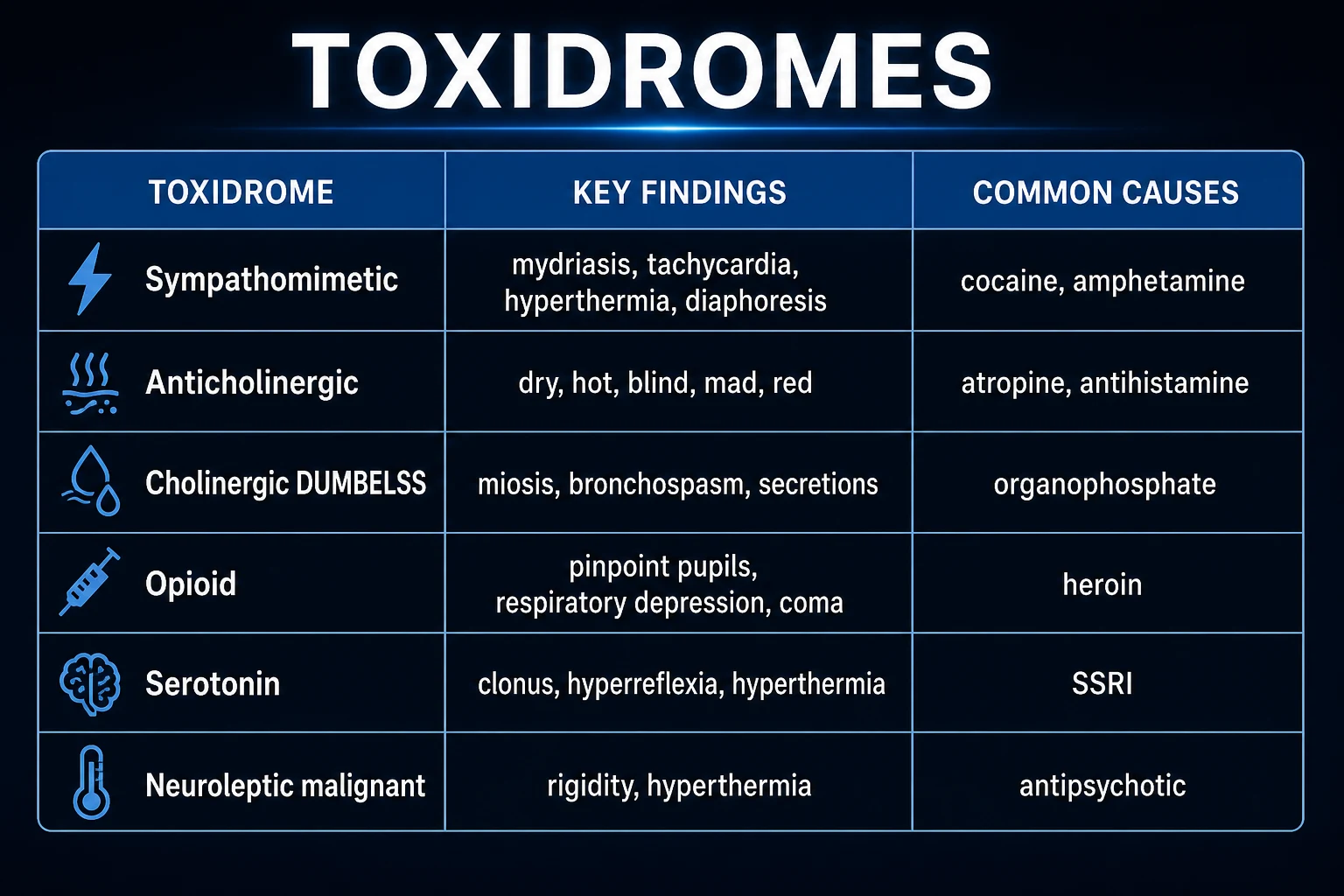
A toxidrome is a constellation of autonomic, ocular, dermal, neurological and cardiorespiratory signs produced by a class of poisons that act on a common receptor or effector pathway. The toxidrome is the bedside shortcut that narrows an infinite differential to a handful of toxin classes within seconds, often before any laboratory result is back.[1]
Classification
Poisoning is classified along three independent axes — by intent, by tempo, and by the toxidrome produced. The third axis is the one that drives bedside management. [1]
By intent
- Intentional self-harm (most common in young adults)
- Accidental (children, occupational, dosing error)
- Recreational (substance use)
- Iatrogenic (drug error, interaction)
- Malicious / homicidal (rare but considered)
By tempo
- Acute (single exposure, hours)
- Subacute (days to weeks)
- Chronic (months — lead, arsenic, alcohol)
- Acute-on-chronic (the chronic alcoholic who binges)
By toxidrome
- Sympathomimetic, anticholinergic, cholinergic, opioid, serotonergic, sedative-hypnotic
- Plus non-autonomic syndromes: methaemoglobinaemia, chelatable-metal poisoning, anion-gap acidosis
The agent-specific classifications (paracetamol, salicylate, organophosphate, TCA, opioid, toxic alcohol, carbon monoxide, lead) each have their own topic in this collection — this chapter is the general framework that precedes them. [1]
Epidemiology & Risk Factors
The epidemiology is profoundly region-dependent: [1]
In high-income countries (US, Europe, Australia) the top agents in adult overdose are paracetamol, NSAIDs, benzodiazepines, antidepressants (SSRIs, TCAs), opioids (the fentanyl epidemic in North America), cardiovascular drugs, and antipsychotics. In children under five the leading agents are household cleaning products, cosmetics, foreign bodies (button batteries, magnets), paracetamol and iron.[1][2]
In Australia and New Zealand, the in-hospital caseload is dominated by paracetamol and benzodiazepine overdoses, but the out-of-hospital mortality is driven by snake and spider envenomation (eastern brown snake, funnel-web) and is managed with antivenom algorithms unique to the region.
In India and South Asia, the dominant agents in adult poisoning are organophosphate and carbamate pesticides, aluminium phosphide (celphos), oleander, copper sulphate, corrosive acids and alkalis (toilet cleaners), and agricultural chemicals (paraquat, endosulfan). Snake envenomation (the "big four" — Russell's viper, saw-scaled viper, common krait, cobra) and scorpion stings add substantially to the rural burden. Aluminium phosphide carries 50–90% mortality because of refractory cardiogenic shock from phosphine-induced mitochondrial failure.
The risk factors for a severe outcome are: very young or old age, polypharmacy (co-ingestant in more than half), delayed presentation, pre-existing cardiac, hepatic or renal disease, pregnancy, and an agent with a narrow therapeutic index (digoxin, lithium, warfarin, insulin, theophylline, methotrexate). [1]
Pathophysiology
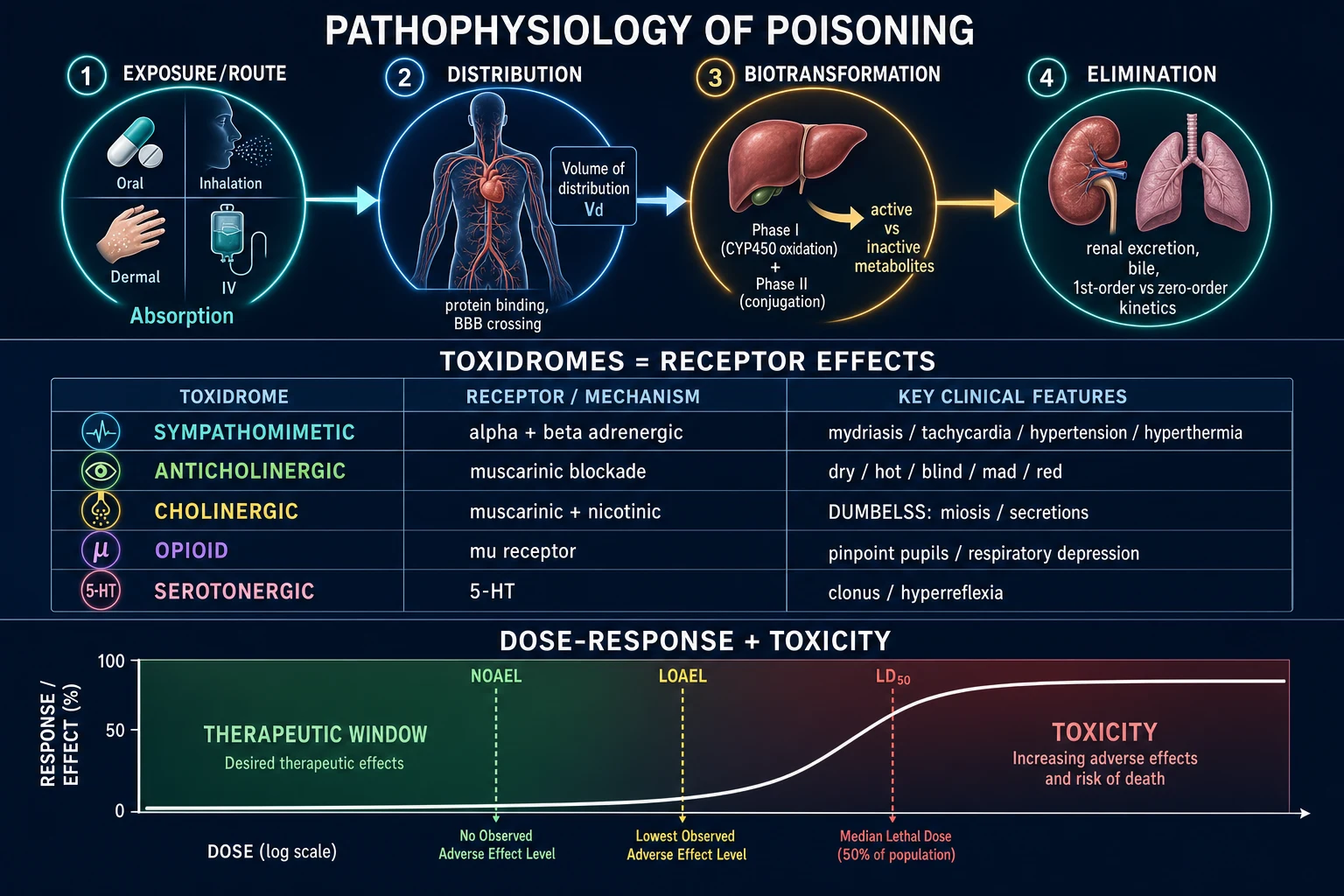
The clinical effect of a poison is the integrated result of toxicokinetics (what the body does to the poison) and toxicodynamics (what the poison does to the body). Examiners probe both. [1]
Toxicokinetics — the journey of a poison
Absorption depends on route (oral is slowest and most variable; inhalational and intravenous are fastest; dermal is slow but significant for organophosphates and solvents). Bioavailability is the fraction reaching systemic circulation — first-pass hepatic metabolism reduces oral bioavailability of many drugs. [1]
Distribution is governed by the volume of distribution (Vd) — the apparent volume that would contain the total body burden at the measured plasma concentration. A drug with a large Vd (digoxin 7 L/kg, amiodarone 60 L/kg, TCAs 10–20 L/kg, fluoxetine 25 L/kg) distributes widely into tissue and is poorly removed by haemodialysis; a drug with a small Vd (lithium 0.8 L/kg, salicylate 0.2–0.6 L/kg, methanol and ethylene glycol 0.6 L/kg) stays in the plasma/water compartment and is dialysable. Protein binding matters: highly bound drugs (warfarin, phenytoin, valproate) are not dialysable until binding is saturated. Blood-brain-barrier penetration explains the CNS effects of lipophilic drugs (opioids, sedatives, organophosphates). [1]
Biotransformation occurs overwhelmingly in the liver, in two phases. Phase I (mostly CYP450 — oxidation, reduction, hydrolysis) may produce active metabolites (e.g. codeine → morphine via CYP2D6; paracetamol → NAPQI via CYP2E1; methanol → formaldehyde → formic acid via alcohol dehydrogenase; ethylene glycol → glycolate → oxalate). Phase II (conjugation — glucuronidation, sulfation, glutathione, glycine, acetylation) almost always produces inactive, water-soluble metabolites. Polymorphisms (CYP2D6 poor vs ultra-rapid metabolisers) and inducers/inhibitors (smoking, rifampicin, grapefruit, SSRIs) change toxicity risk. [1]
Elimination is renal (glomerular filtration and tubular secretion — important for lithium, salicylate, digoxin), biliary (digoxin, lead), and pulmonary (volatile agents — ethanol, methanol, chloroform, inhaled anaesthetics, carbon monoxide). [1]
First-order vs zero-order kinetics
This distinction is heavily examined. In first-order kinetics a constant fraction of the drug is eliminated per unit time — the plasma concentration falls exponentially, and a half-life is meaningful. Most drugs follow first-order kinetics within a therapeutic dose range. In zero-order (saturation) kinetics a constant amount is eliminated per unit time because the metabolising enzyme is saturated — small dose increments produce large, unpredictable rises in plasma concentration, and the apparent half-life lengthens as the dose rises. The classic saturable drugs are ethanol, phenytoin, salicylate (at high dose), theophylline, and voriconazole. This is why salicylate toxicity worsens disproportionately as the dose rises and why a small phenytoin increment can tip a patient from a sub-therapeutic to a toxic level. [1]
Toxicodynamics — the receptor signature
The five autonomic/neurological toxidromes are receptor signatures: [1]
Sympathomimetic
- Direct or indirect alpha + beta adrenergic agonism
- Cocaine, amphetamines, MDMA, ephedrine, pseudoephedrine, caffeine, theophylline
- Mydriasis, tachycardia, hypertension, hyperthermia, diaphoresis, agitation, seizures
Anticholinergic
- Muscarinic acetylcholine receptor blockade
- Atropine, hyoscine, antihistamines (1st-gen), tricyclics, Jimson weed (Datura), anti-Parkinsonian drugs
- Dry, hot, flushed skin; mydriasis and cycloplegia; urinary retention; ileus; delirium; hyperthermia
Cholinergic
- Excess acetylcholine at muscarinic and nicotinic receptors (AChE inhibition)
- Organophosphates, carbamates, nerve agents (sarin, VX), some mushrooms
- DUMBELSS: miosis, bronchorrhoea, bronchospasm, salivation, lacrimation, sweating, GI hypermotility, bradycardia, fasciculations, paralysis
Opioid
- Mu (μ) opioid receptor agonism in the CNS
- Heroin, morphine, codeine, fentanyl, methadone, tramadol (also serotonergic)
- Pinpoint pupils, respiratory depression, coma, hypothermia, hyporeflexia, reduced bowel sounds
Serotonergic
- Excess 5-HT1A and 5-HT2A receptor stimulation
- SSRIs, SNRIs, MAOIs, tramadol, fentanyl, linezolid, methylene blue, St John's wort, triptans
- Spontaneous or inducible clonus, hyperreflexia (lower-limb predominant), hyperthermia, tremor, agitation, autonomic instability
Cellular mechanisms of organ injury
Beyond the autonomic toxidromes, toxins damage organs through several distinct cellular mechanisms that examiners probe: [1]
- Direct tissue injury — corrosives (acids, alkalis), paraquat (free-radical lung injury), hydrocarbons (chemical pneumonitis).
- Mitochondrial toxicity — cyanide (cytochrome c oxidase inhibition), salicylate (uncoupling of oxidative phosphorylation), metformin (lactic acidosis), nucleoside reverse-transcriptase inhibitors.
- Receptor blockade — beta-blockers (beta-adrenergic), calcium-channel blockers (L-type calcium channel), opioids (mu receptor).
- Enzyme inhibition — organophosphates (acetylcholinesterase), methotrexate (dihydrofolate reductase), cyanide (cytochrome oxidase).
- Oxidative stress — iron (free-radical generation), paracetamol (NAPQI depletes glutathione and centrilobular hepatocyte necrosis), carbon tetrachloride.
- Ion-channel effects — tricyclic antidepressants (fast sodium-channel blockade → QRS widening; potassium-channel blockade → QT prolongation), digoxin (Na/K-ATPase inhibition), local anaesthetics (sodium and potassium channels). [1]
Dose-response and therapeutic index
The dose-response curve is sigmoid. Key landmarks: NOAEL (no observed adverse effect level), LOAEL (lowest observed adverse effect level), and LD50 (the dose lethal to 50% of an exposed population). The therapeutic index is the ratio TD50/ED50 — a narrow index (digoxin, lithium, warfarin, insulin, theophylline, methotrexate) means small dose increments are dangerous, and these drugs carry disproportionate mortality in overdose. [1]
Clinical Presentation
The poisoned patient is approached systematically, in two phases. Phase one is resuscitation (ABCDE), performed before any diagnostic effort. Phase two is the focused toxicological assessment — history, examination for the toxidrome, and targeted investigations — performed once the patient is stable. [1]
Phase one: resuscitation (ABCDE)
The vital signs and immediate threats are addressed simultaneously: [1]
- Airway — protect the airway; intubate early if GCS is under 8, secretions are copious (organophosphate), or the patient cannot protect the airway (sedative-hypnotic, opioid).
- Breathing — high-flow oxygen for hypoxia; ventilate for respiratory failure (opioid, sedative, organophosphate). Caution: avoid supplemental oxygen in paraquat poisoning (worsens free-radical lung injury); target sats 88–92% in known COPD with chronic CO2 retention.
- Circulation — IV fluids for hypotension; vasopressors (noradrenaline first line, adrenaline if profound) for refractory shock; treat arrhythmia per cause.
- Disability — check capillary glucose at the bedside in every coma; give naloxone trial if pinpoint pupils or respiratory depression; treat seizures with benzodiazepines.
- Exposure — remove contaminated clothing, full skin wash (organophosphate, corrosive), take a core temperature. [1]
Phase two: history
When the patient is unconscious, the history is taken from bystanders, family, EMS, and the scene: what was taken, when, how much, by what route, with what co-ingestants, and with what intent. Empty bottles, blister packs, suicide notes, occupation, recent prescriptions, internet search history, and identifiable plants all contribute. Always specifically ask about paracetamol — patients under-report or do not consider it a "real" overdose, and missing it is a leading cause of preventable death. [1]
Phase two: examination for the toxidrome
The focused toxicological examination is built around the toxidrome. Examine the pupils (pinpoint = opioid/cholinergic; dilated = sympathomimetic/anticholinergic/withdrawal), the skin (dry/hot = anticholinergic; wet = cholinergic/sympathomimetic with diaphoresis), the temperature (hyperthermia = sympathomimetic/anticholinergic/serotonin/NMS; hypothermia = opioid/sedative-hypnotic), bowel sounds (absent = anticholinergic/opioid; hyperactive = cholinergic), reflexes (hyperreflexia + clonus = serotonin; hyporeflexia = opioid/sedative), bladder (distended = anticholinergic), and respiratory pattern (slow = opioid; tachypnoea = salicylate, metabolic acidosis). [1]
Atypical presentations
Examiners test atypical presentations deliberately: [1]
- The elderly — blunted autonomic response (no tachycardia in anticholinergic overdose if on beta-blocker), abdominal pain may dominate over the CNS picture, chronic toxicity masquerades as dementia or weight loss.
- The pregnant patient — altered volume of distribution and renal clearance change toxicity; stabilise the mother first; most antidotes (NAC, naloxone, atropine, fomepizole) are safe; NAC crosses the placenta and protects the fetal liver in paracetamol overdose.
- The chronic alcoholic — thiamine-deficient coma (Wernicke); opioid toxidrome may be masked by concurrent alcohol; give thiamine before glucose to avoid precipitating Wernicke encephalopathy.
- The patient on multiple serotonergic drugs — serotonin syndrome may be insidious; the diagnostic clue is inducible clonus at the ankle.
- The intubated or sedated patient — the toxidrome is masked; rely on history, levels, anion gap, osmolal gap, ECG. [1]
Differential Diagnosis
The poisoned patient rarely arrives with a reliable label. The differential is built around the dominant clinical feature — coma, hyperthermia, metabolic acidosis, wide QRS — and the toxidrome is one of several explanations for each. [1]
MUDPILES
Distinguishing the three hyperthermia syndromes
The most heavily examined differential is the drug-induced hyperthermia trio — serotonin syndrome, neuroleptic malignant syndrome, and malignant hyperthermia — because they share clonus, rigidity and fever but the antidote differs: [1]
Serotonin syndrome
- Onset within hours of a serotonergic agent
- Clonus + hyperreflexia (lower limbs)
- Diaphoretic, agitation, mydriasis, diarrhoea
- Treat: stop agent, cyproheptadine, benzodiazepines, active cooling
Neuroleptic malignant syndrome
- Onset over days–weeks of an antipsychotic
- Lead-pipe rigidity (not clonus)
- Bradyreflexia, hyporeflexia, mutism, stable pupils
- Treat: stop antipsychotic, dantrolene, bromocriptine, cooling, supportive
Malignant hyperthermia
- Onset minutes–hours after a triggering anaesthetic (succinylcholine, volatiles)
- Masseter rigidity + generalised rigidity
- Rising end-tidal CO2 (hypermetabolism)
- Treat: stop trigger, dantrolene, hyperventilation with 100% oxygen, cooling
Can't-miss mimics of "coma of unknown cause"
The single most dangerous trap is to assume a coma is toxic. Every coma gets a bedside glucose and a trial of naloxone, but the examiner expects you to also exclude: [1]
- Hypoglycaemia (the commonest reversible cause — always check glucose first).
- Post-ictal state (history of seizure or witnessed convulsion).
- Intracranial haemorrhage or stroke (focal signs, asymmetric pupils, headache, trauma).
- CNS infection — meningitis, encephalitis (neck stiffness, fever, rash).
- Septic encephalopathy (source, hypotension, lactate).
- Hepatic or uraemic encephalopathy (asterixis, known liver or renal disease).
- Electrolyte disturbance — hyponatraemia, hypercalcaemia. [1]
Wide-anion-gap acidosis with raised osmolal gap
The combined finding of a high anion-gap metabolic acidosis AND a raised osmolal gap is highly specific for toxic alcohols (methanol, ethylene glycol). Differentiate from alcoholic ketoacidosis (no osmolal gap, ketones), lactic acidosis (no osmolal gap), and sepsis. [1]
Clinical & Bedside Assessment
The bedside assessment in the poisoned patient is brief, structured and high-yield. The named manoeuvres and findings: [1]
- Rectal or core temperature — hyperthermia above 39.5 °C is a medical emergency; above 40 °C, mortality rises steeply.
- Capillary glucose — every coma, every seizure, every collapse.
- Pupillary light reflex — pinpoint (under 2 mm) = opioid or cholinergic; dilated (over 5 mm) = sympathomimetic or anticholinergic; asymmetric = structural brain lesion.
- Inducible clonus at the ankle — the single most specific bedside finding for serotonin syndrome; test by rapid dorsiflexion of the foot and observe for sustained clonus.
- Deep-tendon reflexes — hyperreflexia in serotonin; hyporeflexia in opioid and sedative-hypnotic overdose.
- Nystagmus — horizontal, vertical or rotatory in lithium, carbamazepine, phenytoin, ketamine, MDMA, alcohol, and Wernicke encephalopathy.
- Skin — diaphoretic and pale (sympathomimetic, cholinergic, hypoglycaemia, withdrawal); dry and flushed (anticholinergic); bullae at pressure points (prolonged unconsciousness — "coma bullae" of barbiturate or carbon-monoxide poisoning).
- Chest auscultation — diffuse wheeze with crackles and profuse secretions = bronchorrhoea of organophosphate poisoning.
- Abdomen — absent bowel sounds and a palpable bladder = anticholinergic; hyperactive bowel sounds = cholinergic.
- ECG — QRS over 120 ms = sodium-channel blockade (TCA, cocaine, class I antiarrhythmics); QT prolongation = risk of torsades (methadone, antipsychotics, macrolides, ondansetron); bradycardia with atrioventricular block = beta-blocker, calcium-channel blocker, digoxin. [1]
Investigations
Bedside, bloods, ECG, imaging
Bedside — capillary glucose (every coma, every seizure), ECG (every symptomatic overdose), urine pregnancy test (every woman of child-bearing age), pulse oximetry, temperature. [1]
Bloods — urea, electrolytes, creatinine, liver function tests, coagulation, venous blood gas (pH, pCO2, bicarbonate, lactate, anion gap, osmolal gap), creatine kinase (rhabdomyolysis), lipase if abdominal pain. Specific drug levels — paracetamol (always, 4-hour post-ingestion), salicylate (suspected or symptomatic), lithium, digoxin (in any unexplained bradycardia or hyperkalaemia on digoxin), iron (severe ingestion), theophylline, valproate, methotrexate, and toxic alcohols (methanol, ethylene glycol — measured directly or inferred from osmolal gap). [1]
ECG — the single most useful investigation in the symptomatic overdose. QRS over 120 ms in a wide-complex tachydysrhythmia or after a known sodium-channel-blocker ingestion is the trigger for IV sodium bicarbonate. QTc over 470 ms in men or 480 ms in women (over 500 ms is high-risk) mandates cardiac monitoring and electrolyte correction. Bradyarrhythmia with hyperkalaemia in a patient on digoxin = acute digoxin toxicity (give digoxin Fab). [1]
Imaging — chest X-ray (aspiration, pulmonary oedema, chemical pneumonitis); abdominal X-ray (radiopaque toxins — iron, lead, lithium, potassium, enteric-coated and sustained-release preparations; decides whole-bowel irrigation); CT brain if coma is unexplained or focal signs are present. [1]
The anion gap and osmolal gap
Two gap calculations are central to toxicological reasoning: [1]
The anion gap = (Na + K) − (Cl + HCO3). Normal range 8–12 mmol/L. A high anion-gap metabolic acidosis in a poisoned patient points to MUDPILES — methanol, uraemia, DKA/AKA, propylene glycol/paraldehyde, iron/isoniazid, lactic acidosis (metformin, cyanide, sepsis), ethylene glycol, salicylates.
The osmolal gap = measured serum osmolality − calculated osmolality. Calculated osmolality = 2 × Na + glucose + urea (in SI units). A gap above 10 mOsm/kg suggests an unmeasured osmotically active solute — methanol, ethanol, ethylene glycol, isopropanol (the last raises the osmolal gap but typically NOT the anion gap because acetone is not an acid). The combination of a high anion gap AND a high osmolal gap is highly specific for toxic alcohol poisoning.[9]
The paracetamol nomogram
A 4-hour post-ingestion paracetamol level is plotted on the Rumack-Matthew nomogram. Levels above the treatment line (starting at 100 mg/L or 660 micromol/L at 4 hours, declining with a half-life of 4 hours to 0 at 24 hours) trigger N-acetylcysteine. The nomogram is NOT valid in: repeated or staggered ingestion (use a single detectable level + treat), unknown time of ingestion (treat empirically), extended-release or modified-release formulations (monitor levels at 4 and 8 hours), or chronic supratherapeutic ingestion (monitor ALT and treat if rising). [1]
Hunter Serotonin Toxicity Criteria
For serotonin syndrome, the Hunter Serotonin Toxicity Criteria (Dunkley 2003) are more sensitive and specific than the older Sternbach criteria. Diagnosis requires serotonergic agent in the preceding 5 days plus any one of: [1]
- Spontaneous clonus; or
- Inducible clonus plus agitation and diaphoresis; or
- Ocular clonus plus agitation and diaphoresis; or
- Tremor plus hyperreflexia; or
- Hypertonia plus temperature above 38 °C plus ocular or inducible clonus.[8]
Management — Resuscitation
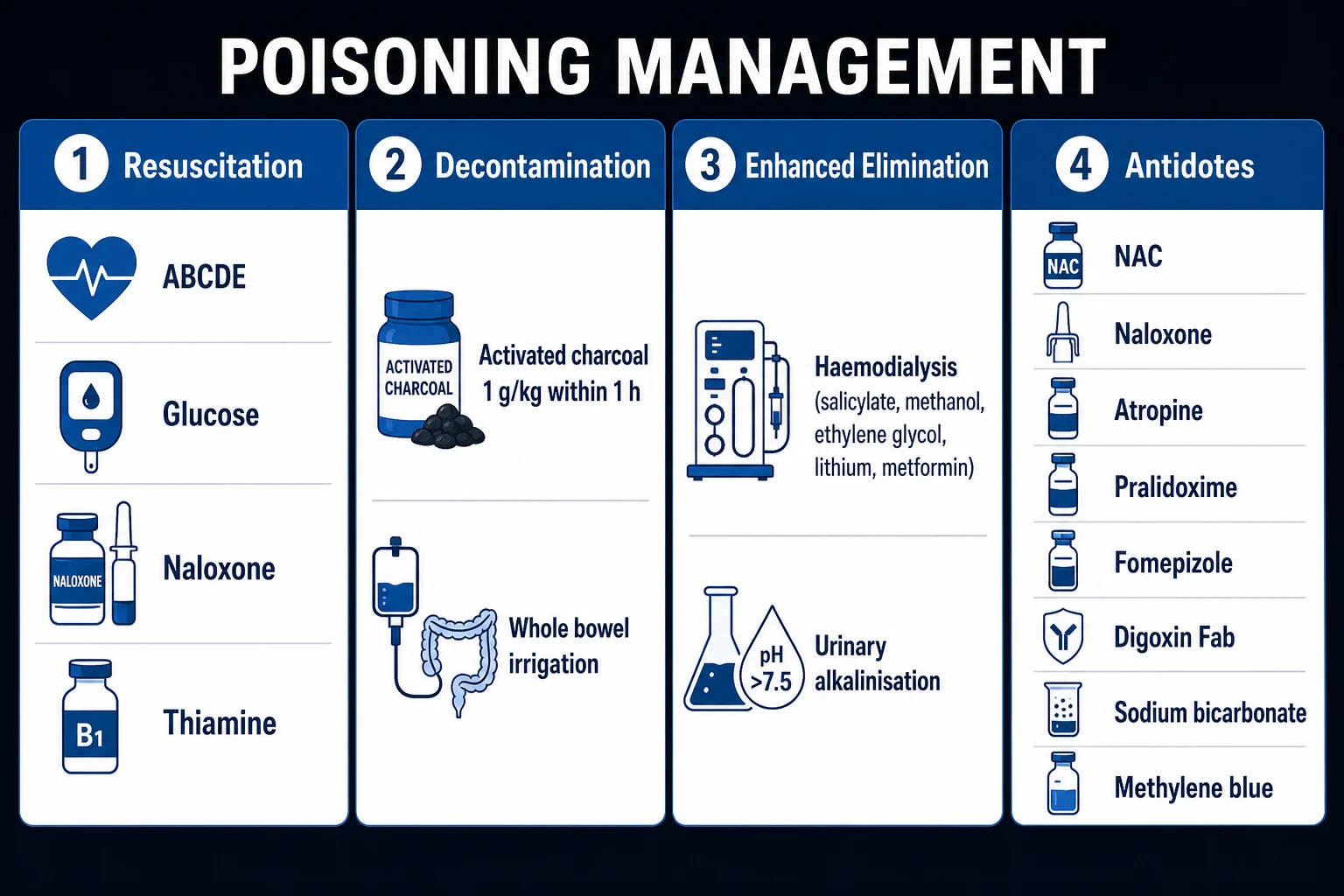
Resuscitation precedes diagnosis and is the most heavily examined single step in the topic. The bundle: [1]
Airway, breathing, circulation
- Airway — intubate if GCS under 8, copious secretions (organophosphate), loss of protective reflexes. Pre-oxygenase; rapid-sequence induction (avoid long-acting paralytics in organophosphate — succinylcholine causes prolonged paralysis because butyrylcholinesterase is inhibited; prefer rocuronium).
- Breathing — high-flow oxygen for hypoxia; ventilate for respiratory failure. Avoid unnecessary oxygen in paraquat.
- Circulation — 10–20 mL/kg crystalloid bolus for hypotension; vasopressor (noradrenaline infusion, starting 0.05 micrograms/kg/min, titrate to mean arterial pressure above 65 mmHg) for refractory shock; treat the cause (sodium bicarbonate for TCA-induced cardiotoxicity, calcium for calcium-channel blocker, glucagon for beta-blocker). [1]
The empirical "coma cocktail" (DONT)
The empirical reversible-cause bundle given to any coma of unknown cause while awaiting results: [1]
DONT
Sodium bicarbonate for sodium-channel-blockade cardiotoxicity
QRS widening over 120 ms after a tricyclic, cocaine, class I antiarrhythmic, or other sodium-channel blocker is a medical emergency. Give IV sodium bicarbonate 8.4%: [1]
- Bolus 1–2 mEq/kg IV (adult: 50–100 mL of 8.4%), repeated to a maximum of 3 mEq/kg, titrated to narrowing of the QRS and a plasma pH of 7.45 to 7.55.
- Infusion of 1–2 mEq/kg/day may follow if dysrhythmia recurs.
- Hyperventilation to a pH of 7.45–7.55 is an adjunct (and helps when bicarbonate is contraindicated by volume overload).
- Avoid class Ia, Ic, and III antiarrhythmics (they prolong QRS or QT); avoid flumazenil (seizure risk). Ventricular dysrhythmia refractory to bicarbonate is treated with lipid emulsion.[7]
Seizures and hyperthermia
- Seizures — first-line is a benzodiazepine: IV lorazepam 4 mg (0.1 mg/kg), repeated, or IV diazepam 10 mg. Refractory seizures call for phenobarbital or intubation with propofol/midazolam infusion. Avoid phenytoin in TCA overdose (it is itself a sodium-channel blocker and may worsen cardiotoxicity).
- Hyperthermia — active cooling (ice packs, cooled IV fluids, cooling blankets, evaporative cooling). Benzodiazepines reduce muscle activity and central drive. Specific antidote: cyproheptadine for serotonin syndrome; dantrolene for malignant hyperthermia and severe NMS. [1]
Management — Definitive & Stepwise
Beyond resuscitation, definitive management has four pillars: decontamination, enhanced elimination, antidotes, and supportive care. [1]
Pillar 1 — Gastrointestinal decontamination
Activated charcoal (single dose)
- Adult 50 g; child 1 g/kg PO/NG
- Within 1 hour of ingestion (up to 4 h for sustained-release or drugs that delay gastric emptying — opioids, anticholinergics)
- Reduces absorption by up to 50%
- NOT for corrosives, hydrocarbons, metals (iron, lithium, lead), late paracetamol
- Complication: aspiration pneumonitis (most dangerous)
Multi-dose charcoal (MDAC)
- 50 g then 25 g every 2–4 h, or 12.5 g/hour by NG infusion
- Indicated for drugs with enterohepatic recirculation: carbamazepine, dapsone, phenobarbital, theophylline, quinine
- Mechanism: interrupts enterohepatic and enteroenteric recirculation, enhances elimination
- Avoid if ileus, obstruction, unprotected airway
Whole-bowel irrigation (WBI)
- Polyethylene glycol 1–2 L/hour adult; 500 mL/hour child via NG until clear rectal effluent
- Indicated for iron, lithium, sustained-release drugs, body-packers, radiopaque toxins
- Contraindicated in ileus, obstruction, haemodynamic instability, unprotected airway
Ipecac syrup
- ABANDONED — no outcome benefit, delays charcoal, aspiration risk
- Hojer 2013 position paper: not recommended
The position papers of the American Academy of Clinical Toxicology (AACT) and the European Association of Poisons Centres (EAPCCT) establish the evidence base: single-dose charcoal is recommended within 1 hour of a potentially toxic ingestion (Chyka 2005);[3] a 2021 systematic review found the benefit modest and use has declined as presentation is often delayed;[4] whole-bowel irrigation has narrow indications (Thanacoody 2015);[5] and ipecac is no longer recommended (Hojer 2013).[6]
Pillar 2 — Enhanced elimination
Urine alkalinisation
- IV sodium bicarbonate to urinary pH above 7.5
- Indicated for severe salicylate toxicity when dialysis thresholds not met
- Mechanism: ion-traps the weak acid salicylate in the renal tubule, increasing excretion 10–20-fold
- Target urine pH above 7.5; monitor potassium (hypokalaemia prevents alkalinisation — replace first)
Haemodialysis
- Dialysable poisons = SLIME: Salicylate, Lithium, Isopropanol, Iron (severe), Methanol/Metformin, Ethylene glycol — plus theophylline, valproate, carbamazepine (severe)
- EXTRIP criteria: severe toxicity, high extracorporeal-removable toxin, refractory to standard therapy
- Effective only for small-Vd, low-protein-bound, low-molecular-weight toxins
Multi-dose charcoal
- See decontamination above — also an enhanced-elimination technique
- Effective for carbamazepine, dapsone, phenobarbital, theophylline, quinine
SLIME
Pillar 3 — Antidotes
The antidote table is the single highest-yield piece of factual recall in toxicology. Reproduce it exactly — agent, dose, indication: [1]
Paracetamol
- N-acetylcysteine (NAC) — 150 mg/kg over 1 h, then 50 mg/kg over 4 h, then 100 mg/kg over 16 h (total 300 mg/kg over 21 h)
- Replaces hepatic glutathione, detoxifies NAPQI; benefit if given within 8 h; still useful up to 24 h and in established hepatotoxicity
Opioids
- Naloxone — 0.04–0.4 mg IV/IM titrated to respiratory rate; infusion two-thirds effective bolus/hour
- Mu-receptor antagonist
Organophosphates / nerve agents
- Atropine 1.2–2 mg IV repeated every 5–10 min until drying of secretions (target: dry mouth, clear chest); plus pralidoxime 30 mg/kg IV bolus over 15 min then 8 mg/kg/hour infusion
- Atropine blocks muscarinic effects; pralidoxime reactivates AChE before it 'ages'
Benzodiazepines
- Flumazenil 0.2 mg IV, then 0.3 mg, then 0.5 mg up to 3 mg total
- USE WITH CAUTION — contraindicated in mixed/TCA overdose and chronic users (seizure risk)
Toxic alcohols (methanol, ethylene glycol)
- Fomepizole 15 mg/kg IV loading, then 10 mg/kg every 12 h for 4 doses, then 15 mg/kg every 12 h until levels undetectable; alternative IV ethanol
- Inhibits alcohol dehydrogenase; add haemodialysis; cofactors — folate (methanol), thiamine + pyridoxine (ethylene glycol)
Methaemoglobinaemia
- Methylene blue 1–2 mg/kg IV over 5 min, repeat after 1 h if metHb above 30%
- Contraindicated in G6PD deficiency (haemolysis) and relative caution in pregnancy
Cyanide
- Hydroxocobalamin 5 g IV (70 mg/kg in children), repeat; alternative sodium thiosulphate + sodium nitrite
- Turns skin and urine red — harmless and expected
Digoxin
- Digoxin-specific Fab antibody fragments — dose by serum level or number of tablets ingested; empiric 5–10 vials in cardiac arrest
- Reverses acute and chronic toxicity
Iron
- Desferrioxamine 15 mg/kg/hour IV (max 80 mg/kg/24 h)
- Chelates iron; indication — symptomatic, level over 90 micromol/L, or radiopaque tablets on abdominal X-ray
Lead
- Succimer (DMSA, oral) for moderate; CaNa2 EDTA IV for moderate-severe; dimercaprol (BAL) IM first in encephalopathy
- Encephalopathy sequence: BAL IM first, then CaNa2 EDTA IV 4 h later — never disodium EDTA (fatal hypocalcaemia)
Beta-blocker
- Glucagon 5–10 mg IV bolus then 1–5 mg/hour infusion; high-dose insulin/euglycaemia
- Bypasses beta-receptor blockade; activates adenylyl cyclase directly
Calcium-channel blocker
- IV calcium gluconate 10–20 mL of 10% (1 g) or calcium chloride 10 mL of 10%; high-dose insulin/euglycaemia (1 U/kg then 0.5–1 U/kg/h with glucose)
- Restores contractility; lipid emulsion in refractory
Tricyclic antidepressant
- IV sodium bicarbonate 8.4% 1–2 mEq/kg to pH 7.45–7.55; lipid emulsion 1.5 mL/kg bolus for refractory cardiovascular collapse
- Overcomes fast sodium-channel blockade
Anticoagulants (warfarin, rodenticide)
- Vitamin K1 (phytomenadione) 5–10 mg IV/PO; prothrombin complex concentrate (PCC) 25–50 IU/kg for major bleeding
- Reverses vitamin-K-antagonist anticoagulation
Heparin
- Protamine sulphate 1 mg per 100 IU of heparin (max 50 mg), slow IV
- 1 mg neutralises 100 IU heparin
Insulin (hypoglycaemia)
- 50 mL of 50% dextrose IV adult; 2–5 mL/kg of 10% in child; repeat and infuse if long-acting
- Recheck glucose every 15–30 min
Serotonin syndrome
- Cyproheptadine 12 mg PO/NG then 2 mg every 2 h to 32 mg/24 h; benzodiazepines; active cooling
- 5-HT2A antagonist; supportive care is primary
Local-anaesthetic systemic toxicity (LAST)
- 20% lipid emulsion 1.5 mL/kg IV bolus, then 0.25 mL/kg/min infusion; repeat bolus up to 3; total upper limit 12 mL/kg
- Lipid sink — sequesters lipophilic drug from receptors
Pillar 4 — Supportive care and disposition
- Observation — asymptomatic patients who ingest a low-toxicity agent can be observed for 6 hours and discharged with a safety-net. Sustained-release preparations, agents with delayed toxicity (paracetamol, mushrooms, sustained-release calcium-channel blockers, co-phenotype), and symptomatic patients are admitted.
- ICU admission criteria — airway compromise or need for intubation, seizures, haemodynamic instability, QRS over 120 ms, requirement for an infusion (naloxone, atropine, NAC, insulin/euglycaemia, lipid emulsion), need for haemodialysis, or declining GCS.
- Psychiatric assessment — every intentional overdose receives a psychiatric assessment before discharge; the medical clearance must document that the patient is medically fit, has no drug levels pending, and is not a continuing self-harm risk. [1]
Specific Subtypes & Scenarios
The poisoning-overview framework is applied differently to each major agent. Each agent below has a dedicated topic; the modified first-response is summarised here. [1]
Paracetamol (acetaminophen)
The single most common overdose agent worldwide. At therapeutic doses 90% is conjugated (glucuronidation, sulfation) and 5% is oxidised by CYP2E1 to the reactive intermediate NAPQI, which is detoxified by glutathione. In overdose, conjugation saturates and glutathione is depleted; NAPQI binds hepatocyte proteins and produces centrilobular (zone 3) hepatic necrosis. Plot a 4-hour level on the Rumack-Matthew nomogram; treat with N-acetylcysteine if above the treatment line. NAC benefit is maximal within 8 hours but persists up to 24 hours and in established hepatotoxicity (the Prescott protocol and modified 2-bag regimens are used). Co-ingestion of an enzyme inducer (rifampicin, phenytoin, carbamazepine, chronic alcohol) or chronic malnutrition raises the NAPQI fraction and lowers the treatment threshold. [1]
Salicylate (aspirin)
Salicylate uncouples oxidative phosphorylation (producing fever, lactate, metabolic acidosis) and directly stimulates the respiratory centre (respiratory alkalosis), producing the classic mixed acid-base disturbance: primary respiratory alkalosis plus high-anion-gap metabolic acidosis. Severe toxicity = salicylate over 6.5 mmol/L (90 mg/dL), acidosis, renal failure, pulmonary or cerebral oedema, altered mental state. Treat with urine alkalinisation (sodium bicarbonate to urinary pH above 7.5; replace potassium first) and haemodialysis when thresholds are met. Watch for rebound — salicylate redistributes from tissue stores after dialysis and alkalinisation stop.[10]
Organophosphate pesticides
Inhibit acetylcholinesterase → acetylcholine accumulates at muscarinic, nicotinic and CNS receptors → DUMBELSS toxidrome plus nicotinic fasciculations, paralysis and seizures. Decontaminate (remove clothing, full skin wash with soap and water; staff in PPE). Atropine titrated to drying of secretions (not to heart rate — start 1.2–2 mg IV every 5–10 min; the Atropine Test — if secretions worsen after a dose, give more). Pralidoxime 30 mg/kg IV bolus then 8 mg/kg/hour infusion reactivates AChE before it ages (irreversibly bound); the window is 24–48 hours but earlier is better. Watch for the intermediate syndrome (1–4 days later — proximal limb weakness, respiratory failure, cranial nerve palsies) and organophosphate-induced delayed polyneuropathy (OPIDP) at 1–3 weeks. [1]
Tricyclic antidepressants
The three toxic effects: (1) fast sodium-channel blockade → QRS widening and ventricular dysrhythmia, (2) alpha-1 blockade → hypotension, (3) potassium-channel blockade + anticholinergic → QT prolongation and anticholinergic toxidrome. The ECG QRS is the risk-stratifier — over 100 ms predicts seizures, over 160 ms predicts ventricular dysrhythmia. Treat QRS over 120 ms or ventricular dysrhythmia with IV sodium bicarbonate to pH 7.45–7.55. Refractory cardiovascular collapse: lipid emulsion 1.5 mL/kg bolus.[7]
Toxic alcohols — methanol and ethylene glycol
Both are metabolised by alcohol dehydrogenase to highly toxic organic acids: methanol → formaldehyde → formic acid (blindness, basal ganglia injury); ethylene glycol → glycolaldehyde → glycolate → oxalate (renal failure, hypocalcaemia). The clues: high anion-gap metabolic acidosis + high osmolal gap + (in ethylene glycol) calcium oxalate crystals in urine. Treat with fomepizole (or ethanol) to block alcohol dehydrogenase, haemodialysis to remove the parent alcohol and organic acid, and cofactors — folate (methanol, accelerates formate metabolism) and thiamine + pyridoxine (ethylene glycol, divert glyoxylate away from oxalate).[9]
Carbon monoxide
Carbon monoxide binds haemoglobin with 240-fold greater affinity than oxygen, producing a left-shifted oxyhaemoglobin dissociation curve and tissue hypoxia; it also binds cytochrome a3, impairing mitochondrial respiration. Treat with 100% oxygen via non-rebreather mask (reduces carboxyhaemoglobin half-life from 4–6 h to 60–80 min). Hyperbaric oxygen is indicated for syncope, coma, seizure, pregnancy with carboxyhaemoglobin above 15%, cardiac ischaemia, or carboxyhaemoglobin above 25% (over 40% in non-pregnant adults). [1]
Opioid overdose
Pinpoint pupils, respiratory depression under 12/min, coma. Naloxone titrated to respiratory rate (see resuscitation). Fentanyl and methadone require repeat dosing or an infusion because the opioid outlasts naloxone's short half-life (60–90 min). Fentanyl may need very high cumulative doses because of extreme potency and rapid tissue redistribution. [1]
Body-packers and body-stuffers
Body-packers swallow professionally wrapped packets of illicit drug for smuggling; packet rupture is lethal. Body-stuffers swallow loose drug to avoid arrest (impending toxicity). Management: whole-bowel irrigation with polyethylene glycol, surgical removal for packet obstruction or rupture, and antidote readiness (naloxone for heroin, NAC for paracetamol). [1]
Complications & Pitfalls
Acute complications of severe poisoning
- Aspiration pneumonitis — the commonest in-hospital cause of death after overdose (charcoal, gastric contents in the unprotected airway).
- Arrhythmia and cardiac arrest — sodium-channel blockade (TCA, cocaine), potassium-channel blockade (methadone, antipsychotics), direct myocardial depression (beta-blocker, CCB).
- Seizures and status epilepticus — TCA, theophylline, isoniazid, tramadol, lithium, organophosphate, withdrawal (alcohol, benzodiazepine).
- Hypoxic brain injury — opioid and sedative overdose with delayed resuscitation.
- Acute respiratory failure — opioid, organophosphate, salicylate (late).
- Acute kidney injury — ethylene glycol, rhabdomyolysis (prolonged immobility), NSAIDs, metformin lactic acidosis.
- Hepatic failure — paracetamol (the classic), mushrooms (Amunita phalloides), iron, carbon tetrachloride.
- Rhabdomyolysis — prolonged immobility, MDMA, statins, neuroleptic malignant syndrome, serotonin syndrome.
- Compartment syndrome — prolonged immobility in unconscious patients.
- Hypothermia / hyperthermia — environmental exposure during overdose; serotonin/NMS/NMH for hyperthermia. [1]
Complications of decontamination and antidotes
Activated charcoal
- Aspiration pneumonitis (most dangerous)
- Constipation and bowel obstruction (especially with multi-dose)
- Corneal injury if spilled
Whole-bowel irrigation
- Fluid and electrolyte disturbance (especially in children)
- Bloating, vomiting, aspiration if airway unprotected
Naloxone
- Precipitated acute withdrawal (in the opioid-tolerant)
- Acute pulmonary oedema (rare, in the tolerant)
- Agitation, non-cardiogenic pulmonary oedema
Flumazenil
- Seizures (especially in TCA co-ingestion or chronic benzodiazepine use)
- Acute withdrawal
N-acetylcysteine
- Anaphylactoid (not IgE) reaction — rash, bronchospasm, hypotension (rate-related; slow or stop, antihistamine, restart slower)
- Nausea, vomiting
Methylene blue
- Haemolysis in G6PD deficiency
- Methaemoglobinaemia paradox if dose excessive
- Serotonin syndrome risk with SSRIs (weak MAO-A inhibitor)
Hydroxocobalamin
- Red discolouration of skin and urine (harmless, expected)
- Hypertension, acneiform rash
Lipid emulsion
- Acute pancreatitis (hypertriglyceridaemia)
- Fat overload syndrome, ARDS
- Laboratory interference
Classic management pitfalls
These are the recurring, examiner-favoured errors: [1]
- Failing to check paracetamol and salicylate levels in every overdose regardless of history — covert or forgotten co-ingestion is common and paracetamol has a window for antidote.
- Giving flumazenil in mixed overdose or TCA co-ingestion — provokes refractory seizures.
- Using disodium EDTA instead of CaNa2 EDTA for lead chelation — causes fatal hypocalcaemia.
- Misreading the Rumack-Matthew nomogram in staggered, repeated, or unknown-time ingestion — always treat empirically in these cases.
- Neglecting co-ingestants — ethanol masks toxicity, masks the toxidrome, and changes the paracetamol threshold.
- Missing an alternative diagnosis — the unexplained coma is intracranial haemorrhage, sepsis, hypoglycaemia, or CNS infection until proven otherwise.
- Giving amiodarone or procainamide for TCA-induced wide-complex tachycardia — these prolong QRS/QT and worsen cardiotoxicity; use sodium bicarbonate.
- Using phenytoin for TCA seizures — phenytoin is itself a sodium-channel blocker and may worsen cardiotoxicity; use benzodiazepines.
- Administering succinylcholine in organophosphate poisoning — butyrylcholinesterase is inhibited, producing prolonged paralysis; use rocuronium.
- Stopping urine alkalinisation too early in salicylate toxicity — rebound redistribution occurs; continue until levels and symptoms resolve.[10]
Delayed-onset toxicities
- Paracetamol — hepatotoxicity peaks at 24–72 hours.
- Sustained-release preparations (calcium-channel blockers, theophylline, lithium) — peak toxicity at 12–24 hours.
- Mushrooms (Amanita phalloides) — false recovery at 24–48 hours then fulminant hepatic failure (the 6–24 h lag is characteristic).
- Paraquat — pulmonary fibrosis days to weeks later.
- Methotrexate — renal and mucosal toxicity days later. [1]
Prognosis & Disposition
Determinants of outcome
- Toxicity and dose per kilogram of the agent (aluminium phosphide mortality 50–90%; paracetamol mortality under 1% with NAC within 8 h).
- Time to presentation — paracetamol NAC within 8 hours is highly effective; late presentation with fulminant hepatic failure carries 30% mortality without transplant.
- Co-ingestants — additive toxicity (alcohol + sedative + opioid).
- Age and comorbidity — cardiac, hepatic, renal disease worsen prognosis.
- Availability of antidote and dialysis — resource-limited settings (rural India) have higher mortality from organophosphate poisoning. [1]
Validated poor-prognosis markers
Expected recovery by agent
Paracetamol
- Excellent if NAC within 8 hours
- Grave if late presentation with fulminant hepatic failure — King's College criteria for transplant
Organophosphate
- Mortality 10–20% even with full antidote + ICU
- Intermediate syndrome at 1–4 days; OPIDP at 1–3 weeks
- Long-term neuropsychiatric sequelae common
TCA
- Good outcome with sodium bicarbonate
- Death from refractory cardiogenic shock or arrhythmia if untreated
Toxic alcohols
- Good with early fomepizole (within hours)
- Grave with severe acidosis at presentation — methanol causes permanent blindness
Aluminium phosphide
- Mortality 50–90%
- Refractory cardiogenic shock from phosphine-induced mitochondrial failure; no antidote
Disposition pathway
- Discharge within 6 h — asymptomatic patient, low-toxicity agent, no sustained-release preparation, no delayed-toxicity agent, psychiatric assessment done.
- Inpatient ward — symptomatic but stable; observation beyond 6 h.
- HDU / ICU — airway compromise, seizures, arrhythmia, hypotension, QRS over 120 ms, need for infusion (atropine, naloxone, NAC, insulin/euglycaemia, lipid), need for dialysis, declining GCS. [1]
Special Populations
Paediatric poisoning
Children under five account for most accidental ingestions (household products, iron, hydrocarbons, button batteries, plants). The approach is the same ABCDE with weight-based dosing of every antidote: [1]
- Naloxone — 0.1 mg/kg IV/IM (up to 2 mg).
- N-acetylcysteine — 150 mg/kg over 1 h then 50 mg/kg over 4 h then 100 mg/kg over 16 h.
- Atropine — 0.02–0.05 mg/kg IV (minimum 0.1 mg to avoid paradoxical bradycardia).
- Succimer (DMSA) — 10 mg/kg every 8 h for 5 days then every 12 h for 14 days. [1]
Avoid ipecac (no benefit, aspiration risk); lower threshold for whole-bowel irrigation (iron, lithium, sustained-release). Suspect non-accidental injury or neglect in any paediatric poisoning presentation. [1]
Pregnancy
Stabilise the mother first — the best fetal resuscitation is maternal resuscitation. Most antidotes are safe in pregnancy: [1]
- N-acetylcysteine — safe; crosses placenta; protects fetal liver in paracetamol overdose (treat as for the mother).
- Naloxone — safe (unclear placental transfer; minimal fetal effects).
- Atropine — safe; crosses placenta (may cause fetal tachycardia).
- Fomepizole — limited data but used when indicated.
- Methylene blue — relative contraindication in pregnancy (historical association with haemolysis and methaemoglobinaemia in the G6PD-deficient fetus); avoid if possible. [1]
Consider the teratogenic potential of the agent itself — isotretinoin, warfarin (embryopathy), ACE inhibitors, methotrexate, lithium (Ebstein's anomaly in first trimester), sodium valproate (neural tube defects). [1]
Elderly
Reduced renal and hepatic clearance increases toxicity at lower doses; multiple comorbidities (cardiac, hepatic, renal) compound the effect; drug interactions are common; the autonomic response is blunted (no tachycardia in anticholinergic overdose in a patient on a beta-blocker). High-risk agents: digoxin, warfarin, insulin, metformin, opioids, benzodiazepines. A low threshold for admission and a longer observation period are appropriate. [1]
Immunocompromised and organ-failure patients
Hepatic failure increases the risk of paracetamol and valproate toxicity (lower NAC threshold); renal failure increases lithium, salicylate, and digoxin toxicity (prioritise dialysis); transplant patients on calcineurin inhibitors (cyclosporin, tacrolimus) are at risk of nephrotoxicity and neurotoxicity. Adjust antidote and supportive care to organ function. [1]
The chronic polypharmacy patient
The patient on multiple psychiatric drugs is at risk of serotonin syndrome (SSRI + tramadol + triptan + linezolid), QT prolongation (methadone + antipsychotic + macrolide + ondansetron), anticholinergic load (TCA + antihistamine + anti-Parkinsonian), and CYP interactions (CYP2D6, 2C9, 3A4). Always reconcile the medication list before discharge. [1]
Evidence, Guidelines & Regional Differences
Position-paper evidence on decontamination
The AACT/EAPCCT position papers are the evidence backbone: [1]
- Single-dose activated charcoal within 1 hour of ingestion if a potentially toxic amount has been ingested (Chyka 2005).[3]
- A 2021 systematic review confirmed a modest reduction in absorption but noted that benefit falls with delayed presentation; routine use has declined.[4]
- Whole-bowel irrigation has narrow indications — iron, lithium, sustained-release, body-packers (Thanacoody 2015).[5]
- Ipecac syrup is no longer recommended in any setting (Hojer 2013).[6]
EXTRIP recommendations on extracorporeal treatment
The EXTRIP (Extracorporeal Treatments in Poisoning) workgroup issues toxin-specific recommendations on haemodialysis and haemoperfusion. Recommendations exist for lithium, salicylate, metformin, methanol, ethylene glycol, valproate, carbamazepine, theophylline, phenytoin, and digoxin (the last not dialysable — Fab is the answer).[2]
Lipid emulsion practice advisory
The ASRA practice advisory (Neal 2018) standardised lipid emulsion therapy for local-anaesthetic systemic toxicity (LAST) and supports its off-label extension to other lipophilic-drug cardiotoxicities (TCA, beta-blocker, calcium-channel blocker, bupropion).[7]
Regional deltas
In India and South Asia, pesticide self-poisoning dominates the rural caseload; protocols emphasise atropine 2 mg IV every 10–15 min until drying of secretions (rather than 1.2 mg), pralidoxime early (before aging), and aggressive supportive ICU care. Antidote supply (especially pralidoxime and fomepizole) is inconsistent. The NIMHANS and AIIMS protocols are the local references. Aluminium phosphide (celphos) poisoning carries 50–90% mortality and has no antidote — management is supportive (magnesium sulphate, aggressive shock management, experimental coconut oil). Snake envenomation (the "big four") is managed with the WHO snake-bite protocol and polyvalent antivenom (ASV).
In Australia and New Zealand, the Australian Therapeutic Guidelines (eTG) and the NSW Poisoning Guidelines are the regional references; salicylate and paracetamol dominate, and snake envenomation (eastern brown, tiger, taipan, death adder, funnel-web) is managed with species-specific antivenom and the CSL venom-immunoassay.
Antidote availability and cost
The ACMT Position Statement on antidote cost (Mazer-Amirshahi 2018) highlights that several life-saving antidotes (fomepizole, digoxin Fab, Crotalidae antivenom) have become prohibitively expensive, threatening access.[11]
Current controversies
- Routine ipecac — abandoned.
- Home administration of activated charcoal — abandoned (aspiration risk, no proven outcome benefit).
- NAC protocols — the 21-hour (300 mg/kg) Prescott protocol versus the 12-hour (modified two-bag, 200 mg/kg) protocol; both effective, the shorter reduces adverse reactions and bed-occupancy.
- Hyperbaric oxygen for carbon monoxide — benefit debated; recent trials (Weaver 2002 showed benefit; ICOEFR 2017 did not); reserved for severe cases.
- High-dose insulin/euglycaemia (HDIE) for calcium-channel blocker and beta-blocker overdose — emerging standard, dose and timing debated. [1]
Exam Pearls
DUMBELSS
ANTICHOLINERGIC
Exam application bank (NEET-PG / INICET)
One-line answer
A structured, examiner-grade overview of the approach to the acutely poisoned patient — resuscitation (ABCDE), toxidrome recognition, gastrointestinal decontamination, enhanced elimination, and the antidote armamentarium. Designed as a self-contained chapter covering all 15 examiner dimensions for NEET-PG, INICET, USMLE and PLAB.
Worked stems (answer without another resource)
Stem 1 — Classic presentation. Map symptoms to mechanism; name the first investigation and first treatment step with dose/route if drug therapy is standard. [1]
Stem 2 — Unstable / complicated. List red flags that force immediate resuscitation, theatre, ICU, antidote, or reperfusion — and what you do in the first 15 minutes. [1]
Stem 3 — Atypical group. Elderly, pregnancy, child, or immunocompromised: how presentation and thresholds change. [1]
Stem 4 — Differential trap. Name the three closest mimics and one discriminator for each. [1]
Stem 5 — Disposition. Who goes home with safety-netting, who is admitted, who needs HDU/ICU/theatre, and what follow-up is mandatory. [1]
Rapid viva checklist
- Definition + classification
- Pathophysiology chain
- Bedside signs / criteria
- Score with exact components (if any)
- Emergency bundle
- Definitive therapy with doses
- Complications of disease and of treatment
- Special populations
- Guideline/trial name if classic
- Three exam traps
Coverage self-check
If you cannot answer any stem above from this page alone, re-read the matching section — the page is intended to be self-sufficient for final-prof and NEET-PG/INICET questions on Poisoning Overview & Toxidromes.
[1] [1]Self-test: name the toxidrome
A 24-year-old is brought unconscious. Pupils 1 mm, respiratory rate 6, GCS 8, needle-track marks. What is the toxidrome, what bedside test, and what treatment? [1]
Answer: Opioid toxidrome. Bedside: capillary glucose (rule out hypoglycaemia). Treatment: naloxone 0.04–0.4 mg IV titrated to a respiratory rate over 12/min (not to full consciousness); plan a naloxone infusion if a long-acting opioid (methadone, fentanyl) is suspected.
Self-test: name the toxidrome
A 19-year-old presents agitated, with mydriasis, heart rate 140, blood pressure 180/100, temperature 39.2 °C, profuse sweating, and inducible clonus at the ankle. Took "something" at a party. What is the most likely toxidrome and what is the diagnostic clue that distinguishes it from the mimics? [1]
Answer: Serotonin syndrome (clonus + hyperreflexia + serotonergic exposure = Hunter criteria). The inducible clonus at the ankle is the single most specific bedside finding and distinguishes it from sympathomimetic (no clonus, mydriasis, hypertension, diaphoresis), NMS (lead-pipe rigidity, bradyreflexia, days-onset), and malignant hyperthermia (post-anaesthetic).
References
- [1]Hoffman RJ, Stahl AL, Wax PM. Toxidromes and a general approach to poisoning Arch Dis Child, 2025.PMID 39978865
- [2]Ghannoum M, Yates C, Galvao T, et al. Management of Poisonings and Intoxications Clin J Am Soc Nephrol, 2023.PMID 37097121
- [3]Chyka PA, Seger D, Krenzelok EP, Vale JA; American Academy of Clinical Toxicology; European Association of Poisons Centres and Clinical Toxicologists. Position paper: Single-dose activated charcoal Clin Toxicol (Phila), 2005.PMID 15822758
- [4]Hoegberg LCG, Gosselin S, Hoegberg-Svendsen M, et al. Systematic review on the use of activated charcoal for gastrointestinal decontamination following acute oral overdose Clin Toxicol (Phila), 2021.PMID 34424785
- [5]Thanacoody R, Caravati EM, Troutman B, et al. Position paper update: whole bowel irrigation for gastrointestinal decontamination of overdose patients Clin Toxicol (Phila), 2015.PMID 25511637
- [6]Hojer J, Troutman WG, Hoppu K, et al. Position paper update: ipecac syrup for gastrointestinal decontamination Clin Toxicol (Phila), 2013.PMID 23406298
- [7]Neal JM, Woodward CM, Harrison TK. The Third American Society of Regional Anesthesia and Pain Medicine Practice Advisory on Local Anesthetic Systemic Toxicity: Executive Summary 2017 Reg Anesth Pain Med, 2018.PMID 29356773
- [8]Dunkley EJ, Isbister GK, Sibbritt D, Dawson AH, Whyte IM. The Hunter Serotonin Toxicity Criteria: simple and accurate diagnostic decision rules for serotonin toxicity QJM, 2003.PMID 12925718
- [9]McMartin K, Jacobsen D, Hovda KE. Antidotes for poisoning by alcohols that form toxic metabolites Br J Clin Pharmacol, 2025.PMID 39234820
- [10]O'Keefe M, Ueda N, Burns MJ, Vohra R, Hayes BD. Incidence of rebound salicylate toxicity following cessation of urine alkalinization Clin Toxicol (Phila), 2023.PMID 37427892
- [11]Mazer-Amirshahi M, Solid C, Mullins PM, van den Anker J, Pines JM, May L. ACMT Position Statement: Addressing the Rising Cost of Prescription Antidotes J Med Toxicol, 2018.PMID 29185196