Emergency & Toxicology · General Medicine
Toxic Alcohols: Methanol & Ethylene Glycol Poisoning
Also known as Methanol poisoning · Ethylene glycol poisoning · Toxic alcohols · Fomepizole · Anion gap acidosis · Osmolal gap · Wood alcohol · Antifreeze poisoning
Methanol (wood alcohol; antifreeze, windscreen washer, illicit spirits, paint thinner, denatured alcohol, hand sanitiser) and ethylene glycol (antifreeze) are toxic alcohols that are themselves relatively harmless but are metabolised by hepatic alcohol dehydrogenase to highly toxic organic acids — methanol to formic acid (causes blindness, optic nerve injury, basal ganglia necrosis, severe metabolic acidosis) and ethylene glycol to glycolic and oxalic acid (causes acute kidney injury, severe metabolic acidosis, hypocalcaemia, calcium oxalate crystalluria). The defining laboratory signature is a high anion-gap metabolic acidosis AND an elevated osmolal gap early in the course; as the parent alcohol is metabolised the osmolal gap falls while the anion gap rises. Clinical discriminator: methanol causes visual disturbance, 'snowstorm' vision, optic disc oedema, blindness; ethylene glycol causes renal failure, hypocalcaemia and calcium oxalate crystals in the urine. Treatment is mechanism-directed: block alcohol dehydrogenase with fomepizole (preferred) or ethanol, give sodium bicarbonate for acidosis, haemodialyse severe cases, and give folinic acid (methanol) and thiamine + pyridoxine (ethylene glycol) as cofactors.
On this page & tools
Your progress
Saved locally on this device.
Exam tags
Red flags
Overview & Definition
Toxic alcohol poisoning is one of the highest-yield topics in emergency toxicology for one elegant reason: the entire clinical syndrome is mechanism-directed. The parent alcohols — methanol (CH3OH, wood alcohol) and ethylene glycol (HOCH2CH2OH, the principal constituent of antifreeze) — are themselves only mildly toxic; they intoxicate but rarely kill. Lethality comes from their metabolites, generated by the same hepatic enzyme that metabolises ethanol — alcohol dehydrogenase (ADH). Because the toxicity is downstream of a single enzyme, blocking that enzyme with fomepizole (or ethanol) prevents all end-organ injury. Few poisons offer so clean a target.[1]
The diagnostic difficulty is that the picture evolves over time. Early, the patient has only an osmolal gap (the unmetabolised parent alcohol is osmotically active) and mild intoxication; hours later, as ADH converts the parent into organic acids, a high anion-gap metabolic acidosis appears and the osmolal gap falls. A clinician who measures the gaps at only one time point — particularly late — can be badly misled. Two traps recur in every exam: co-ingested ethanol delays symptoms (it competes for ADH), and a 'normal' osmolal gap late does not exclude the diagnosis. The clinical clues — visual disturbance in methanol, renal failure with calcium oxalate crystals in ethylene glycol — are the discriminators examiners test.[2]
This topic covers the toxic-alcohol duo (methanol + ethylene glycol), which share the ADH mechanism and the dual laboratory signature. The wider family — isopropanol (isopropyl alcohol, which causes ketosis without a high anion gap), propylene glycol (an iatrogenic ICU cause of anion gap + osmolal gap), and diethylene glycol (the recurring cause of contaminated-medicine mass poisonings) — is covered in Differential Diagnosis and Specific Subtypes, because every examiner will probe the distinction.[2]
Classification
Toxic alcohol poisoning is classified along two axes: the parent alcohol (which determines the metabolite and end-organ target) and the laboratory stage (which determines which gap dominates). [1]
Methanol (wood alcohol)
- Source: illicit spirits ('moonshine', country liquor, adulterated arrack), windscreen washer, antifreeze, paint thinner/varnish/shellac, photocopy fluid, denatured alcohol, camp stove fuel, methanol-contaminated hand sanitiser
- Metabolite: FORMALDEHYDE then FORMIC ACID (via ADH and formaldehyde dehydrogenase)
- End-organ target: RETINA and OPTIC NERVE (cytochrome c oxidase inhibition), BASAL GANGLIA (putaminal necrosis)
- Hallmark: visual disturbance, 'snowstorm' vision, blindness, optic disc hyperaemia/oedema; parkinsonism
- Cofactor: FOLINIC ACID (leucovorin) — folate-dependent formate clearance
- Toxic dose: potentially toxic 0.1 mL/kg; lethal ~0.5-1 mL/kg (~30-60 mL adult)
Ethylene glycol (antifreeze)
- Source: antifreeze/coolant (sweet taste), brake/hydraulic fluid, industrial dehydrating agents; fluorescein dye and bittering agent often added
- Metabolite: GLYCOALDEHYDE then GLYCOLIC ACID (main acidosis driver) then GLYOXYLIC ACID then OXALIC ACID (via ADH and ALDH)
- End-organ target: KIDNEY (calcium oxalate crystallisation in tubules -> acute tubular necrosis)
- Hallmark: AKI, HYPOCALCAEMIA (prolonged QT, tetany, seizures), calcium oxalate crystals in urine (envelope-shaped, birefringent); Wood's lamp fluorescence of urine
- Cofactors: THIAMINE + PYRIDOXINE (vitamin B6) — divert glyoxylate to non-toxic metabolites
- Toxic dose: potentially toxic 0.2 mL/kg; lethal ~1.0-1.5 mL/kg (~100 mL of 100% solution)
Isopropanol (isopropyl alcohol)
- Source: rubbing alcohol, disinfectants, screen wash, solvents
- Metabolite: ACETONE (via ADH) — NO organic ACID generated
- Hallmark: KETOSIS (ketonaemia, ketonuria) WITHOUT a high anion-gap metabolic acidosis and WITHOUT osmolal-gap-acidosis pairing; marked CNS depression; haemorrhagic gastritis; acetone smell on breath
- NOT in the toxic-alcohol duo — distinguished by ketosis + little/no acidosis
- Treatment: supportive (no fomepizole/ethanol needed; ADH blockade does not help); haemodialysis only for profound CNS depression or very high levels
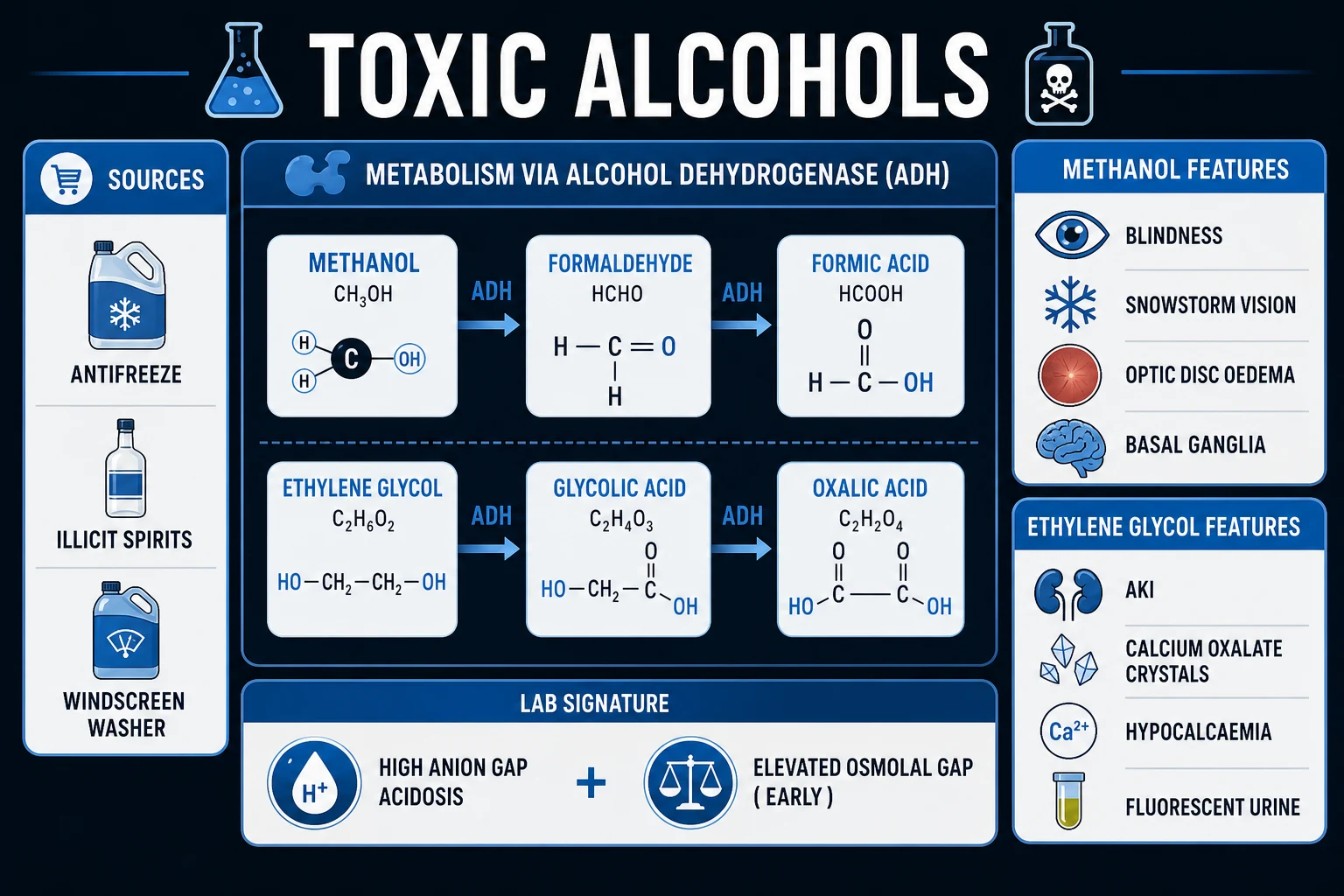
A second classification axis — the laboratory stage — is what makes toxic-alcohol poisoning a moving target: [1]
Stage 1 — Early (osmolal-gap phase)
- Parent alcohol unmetabolised; latent period 12-24 h (methanol) or 4-12 h (ethylene glycol)
- OSMOLAL GAP HIGH (parent is osmotically active); anion gap near-normal
- Symptoms: ethanol-like intoxication only (ataxia, slurred speech, drowsiness)
- Co-ingested ethanol LENGTHENS this stage (competes for ADH)
Stage 2 — Metabolic (anion-gap phase)
- ADH actively converting parent to organic acids; toxicity emerges
- ANION GAP HIGH and rising; OSMOLAL GAP FALLING
- Symptoms: visual (methanol) or renal (ethylene glycol); severe metabolic acidosis, Kussmaul breathing
- This is when most patients present
Stage 3 — End-organ injury
- Established organ damage: blindness/basal ganglia (methanol); AKI/hypocalcaemia (ethylene glycol)
- Both gaps may be normalising as the parent is exhausted — a 'normal' picture can be deceptive
- Deep coma, shock, seizures — high mortality
Epidemiology & Risk Factors
Toxic alcohol poisoning is uncommon in countries with regulated alcohol and antifreeze markets, but it is a major cause of preventable poisoning death wherever illicit alcohol circulates. Mass outbreaks of methanol poisoning — from tainted 'moonshine', country liquor, denatured alcohol, or methanol-adulterated hand sanitiser (notably during the COVID-19 pandemic) — occur worldwide and carry case-fatality rates historically of 10-40% in untreated series, with many survivors left permanently blind.[2]
Sources and risk factors: [1]
- Methanol — illicit spirits ('moonshine', country liquor/toddy, tainted arrack), windscreen washer fluid, antifreeze, paint thinner and remover, varnish/shellac, photocopying fluid, camp-stove (canned heat) fuel, denatured alcohol, and methanol-contaminated hand sanitiser. Risk groups: alcoholics (substituting cheap denatured alcohol), people in poverty, suicide attempts, painters/printers/mechanics (occupational), and whole communities in mass outbreaks (illicit-alcohol contamination after tax changes, prohibition, or hand-sanitiser ingestion).
- Ethylene glycol — antifreeze/coolant (the classic source, with a sweet taste that attracts children and is used in suicide attempts), brake and hydraulic fluid, and industrial dehydrating agents. Many jurisdictions now mandate a bittering agent (denatonium benzoate) and fluorescein dye to deter and diagnose ingestion. Risk groups: children (accidental, sweet), suicidal adults, and industrial/occupational exposure.
- Diethylene glycol (DEG) — a recurring drug-safety disaster: contamination of pharmaceutical glycerin used in paediatric syrups and toothpaste has caused repeated mass poisonings with renal failure (India 1998, Panama 2006, the Gambia/Nigeria 2022). DEG is partly metabolised by ADH; management is largely supportive + dialysis.[2]
Pathophysiology
The entire clinical syndrome flows from a single hepatic enzyme, alcohol dehydrogenase (ADH), and its downstream partner aldehyde dehydrogenase (ALDH). Understanding this cascade is the key to the exam and to therapy. [1]
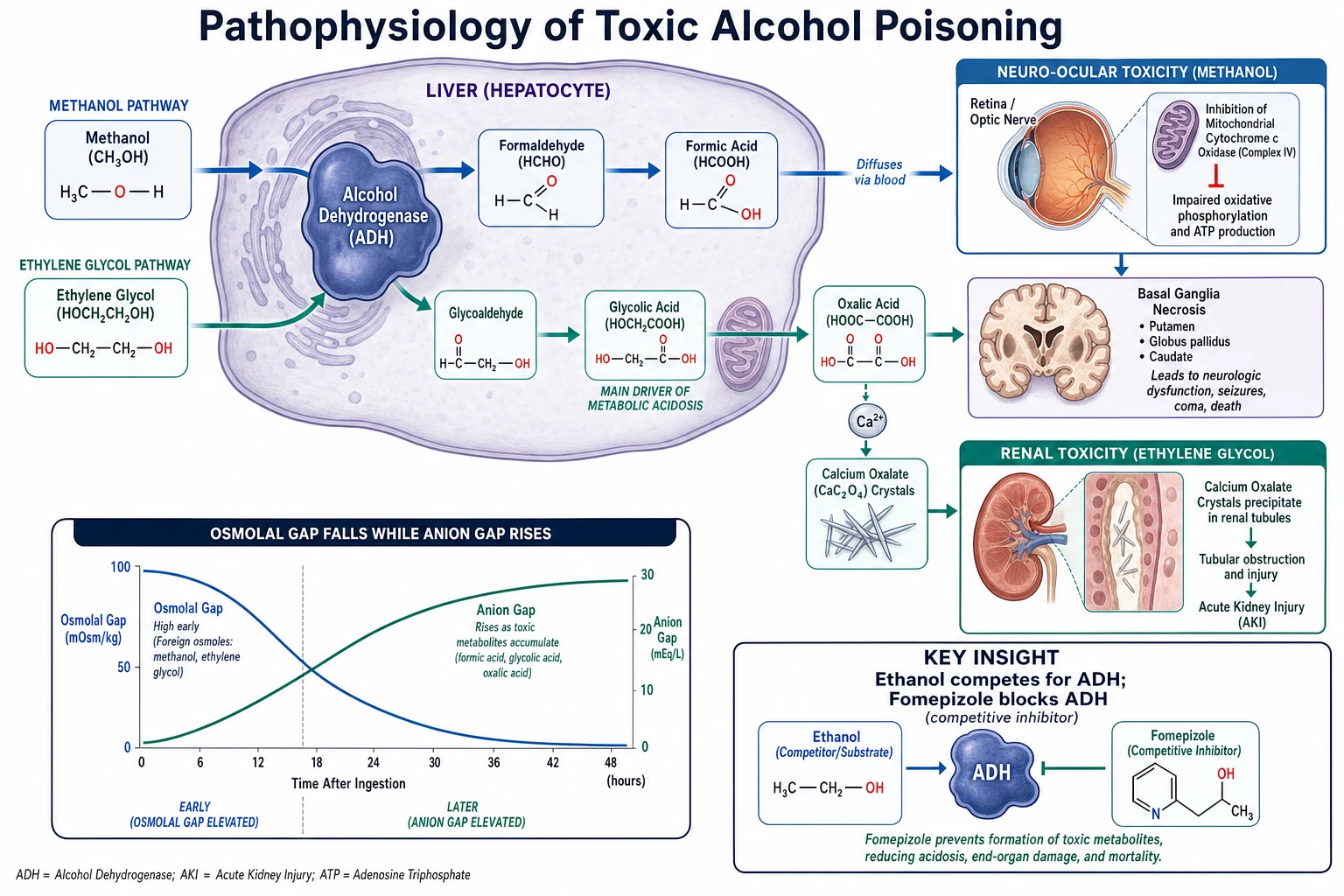
The methanol cascade
ADH oxidises methanol to formaldehyde, which is rapidly oxidised by formaldehyde dehydrogenase (and ALDH) to formic acid (formate). Formate is the toxin. It inhibits mitochondrial cytochrome c oxidase (complex IV of the electron transport chain), halting oxidative phosphorylation and producing histotoxic hypoxia. Tissues with the highest metabolic demand and oxygen dependence — the retina, optic nerve, and basal ganglia (especially the putamen) — are selectively destroyed. This is why methanol poisoning causes blindness, optic disc oedema, and putaminal necrosis with parkinsonism.[1]
Formate is itself a strong organic acid, contributing to the high anion-gap metabolic acidosis. Its clearance is folate-dependent: tetrahydrofolate catalyses the oxidation of formate to carbon dioxide and water. This single biochemical fact is the rationale for folinic acid (leucovorin) as a cofactor in methanol poisoning — depleted folate stores (common in alcoholics) prolong and worsen toxicity. [1]
The ethylene glycol cascade
ADH oxidises ethylene glycol to glycoaldehyde, which is then oxidised (largely by ALDH) through glycolic acid and glyoxylic acid to oxalic acid. Glycolic acid is the dominant contributor to the metabolic acidosis (its accumulation, with the NADH generated, also drives some lactate formation). Oxalic acid is the renal toxin: it chelates calcium to form insoluble calcium oxalate, which precipitates as crystals (monohydrate = envelope/prism; dihydrate = bipyramidal/needle, both birefringent) in the proximal renal tubules, producing acute tubular necrosis and AKI. The calcium loss produces hypocalcaemia (tetany, seizures, QT prolongation with Torsades de pointes).[2]
The rationale for cofactor therapy in ethylene glycol is mechanistic: thiamine diverts glyoxylate away from oxalate toward non-toxic alpha-hydroxy-beta-ketoadipate (and on to CO2), and pyridoxine (vitamin B6) diverts glyoxylate toward non-toxic glycine. Both reduce oxalate formation. [1]
The dual laboratory signature — and why it moves
The parent alcohol is a small, uncharged molecule that raises measured plasma osmolality without contributing to the anion gap — this is the osmolal gap. As ADH converts the parent into organic acids that dissociate, those anions accumulate, consuming bicarbonate and raising the anion gap, while the osmotically active parent is depleted. The two gaps are therefore inversely related over time: the osmolal gap is at its peak early (before metabolism) and falls; the anion gap is low early and rises. Measuring at one time point misleads — particularly late, when the osmolal gap may have normalised while the patient is at their most toxic. Serial measurements and clinical correlation are essential.[2]
[1]The kinetic basis of therapy
ADH has roughly 10-100 times higher affinity for ethanol than for methanol or ethylene glycol. A therapeutic blood ethanol concentration therefore competitively saturates ADH and diverts it from the toxic alcohols, halting toxic-metabolite formation — the basis for ethanol as an antidote. Fomepizole (4-methylpyrazole) takes a cleaner approach: it is a direct competitive inhibitor of ADH with no intrinsic CNS effect, achieving the same blockade without intoxication, hypoglycaemia, or the intensive monitoring ethanol demands. Both antidotes convert the toxic alcohols into harmless substrates for slow endogenous elimination (renal excretion of parent methanol/ethylene glycol). This is why early ADH blockade prevents all downstream toxicity — a rare example of truly mechanism-directed antidotal therapy.[1][4]
Clinical Presentation
The presentation is dominated by a latent period followed by evolving end-organ injury. Recognising the tempo and the discriminating features between methanol and ethylene glycol is the examiner's favourite test. [1]
Shared early features (both toxic alcohols)
After a latent period — 12-24 hours for methanol, 4-12 hours for ethylene glycol, shorter if no ethanol is co-ingested and longer with co-ingested ethanol — the patient develops: [1]
- CNS depression disproportionate to a low or absent serum ethanol — ataxia, slurred speech, confusion, drowsiness, progressing to obtundation and coma. (A drunk-looking patient with a near-zero ethanol level is a toxic-alcohol clue.)
- Headache, nausea, vomiting, abdominal and back pain.
- Kussmaul (deep, sighing) breathing — the respiratory compensation for severe metabolic acidosis.
- Tachycardia, hypotension, and hyperventilation. [1]
Methanol-specific features
The eye is the signature organ. Patients describe blurred vision, 'snowstorm' or 'like looking through a snowfield', photophobia, flashing lights, and a central scotoma, progressing to complete blindness. Fundoscopy shows optic disc hyperaemia and oedema with retinal oedema, and pupils may be dilated and react sluggishly or not at all (established optic nerve injury). Severe poisoning produces putaminal/basal ganglia necrosis — visible on CT/MRI as bilateral basal ganglia hypodensities — causing parkinsonian features (bradykinesia, rigidity) and coma. Pancreatitis and myoglobinuria are described. [1]
Ethylene-glycol-specific features
The kidney is the signature organ. Patients develop oliguria/anuria and flank pain as acute tubular necrosis from calcium oxalate crystallisation progresses. Hypocalcaemia (oxalate chelates calcium) causes tetany, seizures, and QT prolongation with Torsades de pointes. Fresh urine microscopy shows the diagnostic calcium oxalate crystals — monohydrate forms are envelope/prism-shaped, dihydrate forms are bipyramidal/needle-like, and both are birefringent under polarised light. Because antifreeze commonly contains a fluorescein dye, the urine may fluoresce under Wood's lamp — a useful bedside clue. Cranial nerve palsies (hypoglossal, facial) are rare but classic. [1]
Atypical and special-context presentations
- The chronic alcoholic — co-ingested ethanol delays symptom onset (sometimes 24-48 h); depleted folate/thiamine worsens formate and oxalate toxicity respectively; the patient may present 'late' with established blindness or renal failure after a 'hangover' that never resolved.
- Children — accidental ingestion of small volumes of sweet antifreeze or methanol-containing products; weight-based lethality means a mouthful can be lethal; early drowsiness; hypocalcaemic seizures; crystalluria.
- The late presentation — deep coma, shock, refractory metabolic acidosis, seizures, respiratory failure, established renal failure, established blindness. Mortality is high; survivors carry permanent sequelae.
- The mass-outbreak presentation — clusters of patients (often from a single illicit-alcohol source) presenting over hours to days with visual symptoms and severe acidosis; a public-health emergency. [1]
Differential Diagnosis
The single most useful framing is the high anion-gap metabolic acidosis. The differential is the classic mnemonic, and toxic alcohols sit firmly within it. [1]
GOLD MARK
Within this list, toxic alcohols are distinguished by the dual gap signature (high anion gap plus elevated osmolal gap) and by the organ-specific clues. The discriminating features: [1]
Toxic alcohols (methanol/EG)
- HIGH anion gap + ELEVATED osmolal gap (early)
- Visual symptoms (methanol) or AKI + calcium oxalate crystals + hypocalcaemia (EG)
- History of ingestion, low/absent ethanol, occupational/suicidal context
- Lactate only mildly raised (beware glycolate cross-reactivity with lactate assays)
Lactic acidosis (sepsis/shock/metformin)
- HIGH anion gap but NORMAL osmolal gap
- Lactate markedly elevated; clinical shock/sepsis or metformin use
- No visual symptoms; no calcium oxalate crystals
- Responds to resuscitation / metformin withdrawal
Diabetic ketoacidosis
- HIGH anion gap, normal osmolal gap; hyperglycaemia, ketonaemia, known diabetes
- Kussmaul breathing, dehydration; no visual/renal-crystal clues
- Responds to insulin, fluids, potassium
Alcoholic ketoacidosis
- Chronic alcohol use, recent binge + starvation; LOW/near-normal glucose
- Mild-moderate anion-gap acidosis; responds to dextrose + thiamine
- Beware: CO-INGESTION with methanol/EG is common — measure gaps and levels if any doubt
Salicylate poisoning
- MIXED respiratory alkalosis + high anion-gap metabolic acidosis
- Tinnitus, hyperventilation, hyperthermia, agitation; serum salicylate high
- No osmolal gap; no visual/renal-crystal clues
Isopropanol (isopropyl alcohol)
- KETOSIS (high acetone) WITHOUT a high anion-gap metabolic acidosis
- Marked CNS depression, haemorrhagic gastritis, acetone (sweet) breath
- Osmolal gap may be elevated but acidosis is ABSENT — the key discriminator
Propylene glycol (iatrogenic)
- HIGH anion gap + elevated osmolal gap from IV lorazepam/diazepam/phenytoin/etomidate/esmolol infusions or e-cigarette liquid
- Metabolised to LACTIC ACID; an ICU iatrogenic mimic
- Diagnosis: high lactate + high osmolal gap + propylene-glycol exposure; treat by withdrawing the source
Uraemic acidosis (renal failure)
- HIGH anion gap from retained organic acids; chronic kidney disease
- No osmolal gap elevation; no visual/crystal clues
- Raised urea/creatinine with chronic features
Two distinctions deserve emphasis. Methanol versus ethylene glycol at the bedside: visual symptoms, optic disc changes and basal ganglia signs point to methanol; AKI with calcium oxalate crystals, hypocalcaemia and Wood's-lamp-positive urine point to ethylene glycol. Both share the dual gap signature. Isopropanol is deliberately excluded from the toxic-alcohol duo because it does not generate a high anion-gap acidosis — it produces ketosis (acetone) instead; the serum acetone is high with little acidosis, and ADH blockade (fomepizole/ethanol) is not indicated.[2]
Clinical & Bedside Assessment
The focused assessment is built around confirming the metabolic picture and capturing the organ-specific clues. [1]
History. Establish the substance, timing, quantity and co-ingestants (especially ethanol, which delays onset and confuses the picture). Explore occupation and intent (painter/printer/mechanic; illicit alcohol; suicide; accidental paediatric; hand sanitiser). Ask specifically about visual symptoms (methanol) and urine output/flank pain (ethylene glycol), and about comorbidity (alcoholism, renal disease). [1]
Examination. Vital signs — look for tachypnoea/Kussmaul breathing (the acidotic respiratory compensation), tachycardia, hypotension. GCS (depressed disproportionate to ethanol level). Eye examination is critical in suspected methanol — record visual acuity, colour vision, fields, pupil reactions and fundoscopy (optic disc hyperaemia/oedema, retinal oedema). Abdominal exam (pain, pancreatitis). Neurological exam for basal ganglia signs (bradykinesia, rigidity). Skin — needle tracks, smell of solvent/alcohol. [1]
Bedside tests. [1]
- Fresh urine microscopy — look for calcium oxalate crystals (envelope/prism and needle forms, birefringent); strongly supportive of ethylene glycol. Note: sensitivity is moderate — absence does not exclude it.
- Wood's lamp examination of urine — many antifreeze products contain fluorescein dye; the urine fluoresces. A bedside clue, not diagnostic.
- ECG — QT prolongation in ethylene glycol (hypocalcaemia); monitor for Torsades.
- Bedside glucose — exclude hypoglycaemia (and distinguish from DKA).
- IV access and monitoring — continuous ECG, pulse oximetry; apply ABCDE. [1]
Investigations
Investigations serve three purposes: confirm the metabolic acidosis and the dual gap, exclude mimics, and quantify the parent-alcohol level to guide duration of therapy. [1]
First-line panel: [1]
- Venous/arterial blood gas — low pH, low bicarbonate, high base deficit; respiratory compensation (low pCO2). Confirms the metabolic acidosis.
- Serum electrolytes + calculated anion gap.
- Serum osmolality (MEASURED, by freezing-point depression — NOT vapour-pressure, which misses volatile alcohols) + calculated osmolality + osmolal gap.
- Serum ethanol level (high ethanol delays toxicity and is a clue; required to interpret the osmolal gap and to titrate ethanol therapy if used).
- Serum methanol and ethylene glycol levels (if available — confirm the diagnosis and guide duration of antidote/dialysis; many centres have slow turnaround, so treat empirically).
- Serum lactate — to exclude lactic acidosis as the primary cause. Pitfall: some point-of-care lactate assays misread glycolate (the ethylene glycol metabolite) as lactate, producing a falsely very high lactate that paradoxically points toward ethylene glycol — a recognised clue, not a contradiction.
- Urea, creatinine, eGFR (renal involvement), glucose (DKA), calcium (low in ethylene glycol), magnesium, CK, lipase (pancreatitis in methanol), LFTs, FBC, troponin.
- Urinalysis + microscopy (calcium oxalate crystals, haematuria, proteinuria).
- Pregnancy test in women of childbearing age.
- ECG (QT prolongation, arrhythmias).
- Paracetamol and salicylate levels in any intentional overdose. [1]
The anion gap — reproduced verbatim
Anion Gap
- Formula: Anion Gap = [Na+] - ([Cl-] + [HCO3-]) (all mmol/L)
- Normal range: ~8-12 mmol/L (modern ion-selective references 3-11)
- A HIGH anion gap (over 12, especially over 20) in a metabolic acidosis is the hallmark of toxic alcohol poisoning
- Rises over time as the parent alcohol is metabolised to organic acids
Osmolal Gap
- Formula: Osmolal Gap = MEASURED osmolality - CALCULATED osmolality
- Calculated osmolality = 2 x [Na+] + [glucose] + [urea] (all mmol/L) — in mg/dL: 2Na + glucose/18 + BUN/2.8
- Normal range: roughly -10 to +10 mOsm/kg (some references up to +15)
- Elevated (over 20 mOsm/kg) strongly suggests a toxic alcohol (or ethanol, ketones, mannitol, etc.)
- Measured osmolality MUST be by freezing-point depression — vapour-pressure osmometers miss volatile alcohols
The timing caveat — the single most-tested fact
The osmolal gap is at its peak early (before metabolism) and falls as the parent is converted to organic acids; the anion gap is low early and rises. Therefore a single measurement late in the course can show a normal osmolal gap with a high anion gap — this does NOT exclude toxic alcohol poisoning. A normal osmolal gap never excludes the diagnosis in a clinically suspicious case. Serial measurements and clinical correlation are essential. [1]
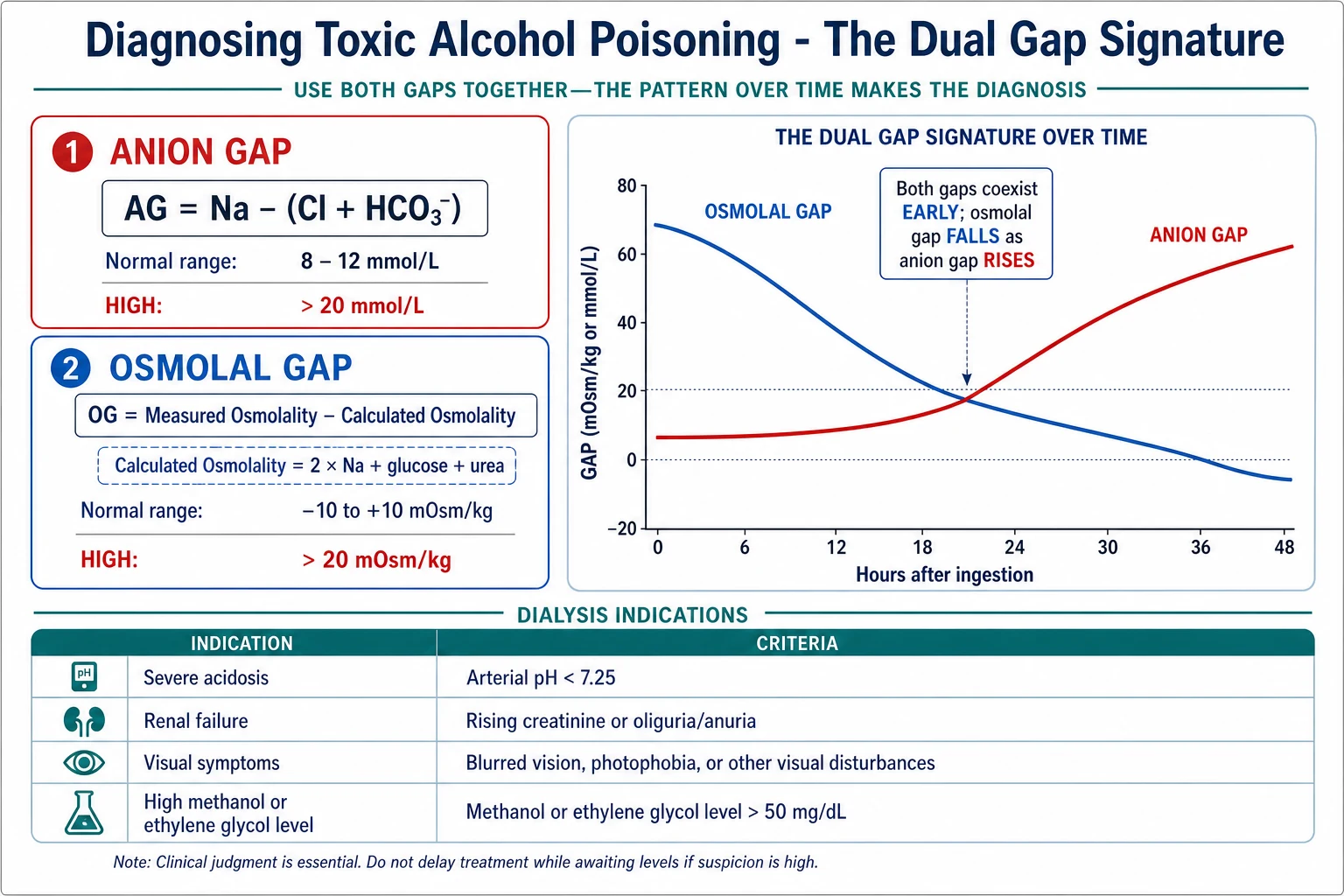
Empiric treatment thresholds (do not wait for levels)
Start fomepizole/ethanol empirically if ANY of:
- Documented ingestion with evidence of intoxication or acidosis
- High anion-gap metabolic acidosis of unknown cause PLUS an elevated osmolal gap
- Strong clinical suspicion (visual symptoms, calcium oxalate crystals, history) — pending levels
- Serum methanol or ethylene glycol level over 20 mg/dL
Confirmatory but not essential for the decision: serum methanol/ethylene glycol levels (over 20 mg/dL support therapy; over 50 mg/dL support dialysis). Imaging — CT/MRI may show bilateral basal ganglia (putaminal) hypodensities in severe methanol poisoning — a late clue, not diagnostic. [1]
Management — Resuscitation
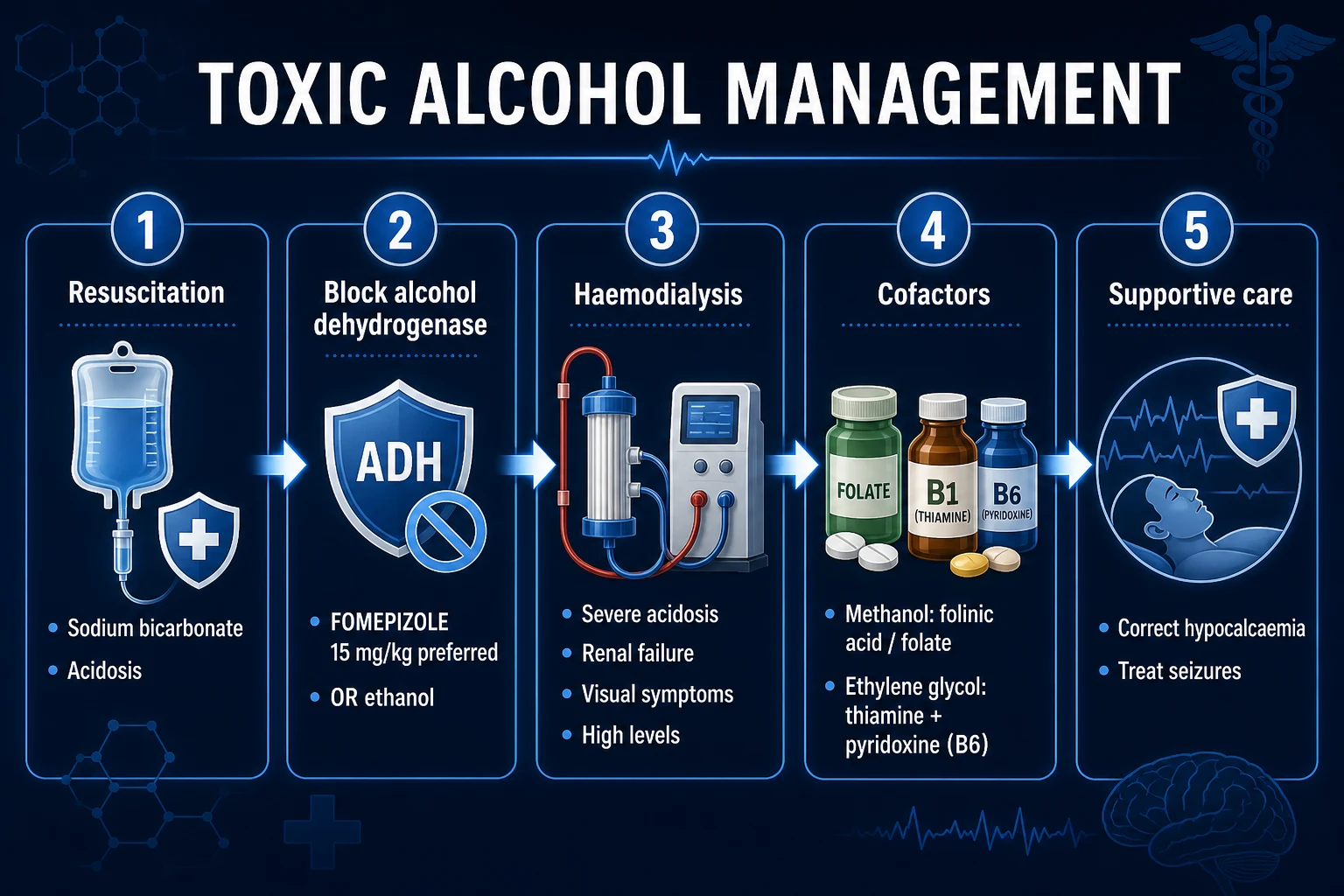
Resuscitation and the first specific antidote are simultaneous: block ADH while you resuscitate. [1]
- ABCDE. Secure the airway (intubate if GCS below 8 or the patient cannot protect it); give high-flow oxygen if hypoxic; establish IV access; continuous ECG and pulse oximetry; isotonic crystalloid to correct hypovolaemia and enhance urinary elimination of metabolites.
- Block alcohol dehydrogenase IMMEDIATELY with fomepizole (preferred) or ethanol on suspicion — do not wait for confirmatory levels. This single intervention prevents all downstream toxicity. (Definitive dosing below.)
- Sodium bicarbonate for acidosis — give IV sodium bicarbonate (e.g. 1-2 mmol/kg bolus, or an infusion of 150 mL of 8.4% sodium bicarbonate in 850 mL of 5% dextrose, titrated) to target a serum pH over 7.20-7.30. In methanol poisoning, alkalinisation is doubly useful: it traps formate in its anionic form, speeding renal clearance — analogous to salicylate alkalinisation.
- Immediate cofactor administration — folinic acid (leucovorin) 1 mg/kg IV (up to 50 mg) every 4-6 h for suspected methanol; thiamine 100 mg IV and pyridoxine (vitamin B6) 50-100 mg IV every 6 h for suspected ethylene glycol.
- Correct hypoglycaemia (IV dextrose); give thiamine to alcoholics (prevent Wernicke); treat seizures with benzodiazepines.
- Hypocalcaemia (ethylene glycol) — replace only if symptomatic (tetany, seizures, QT prolongation): IV calcium gluconate 10% 10-20 mL, cautiously — over-correction can worsen calcium oxalate crystal deposition.
- Decontamination — activated charcoal is NOT effective (alcohols are not adsorbed) and is NOT recommended unless a co-ingested adsorbable toxin is suspected; whole-bowel irrigation is not useful. Haemodialysis is the definitive removal modality. [1]
Management — Definitive & Stepwise
The definitive ladder integrates resuscitation, ADH blockade, acidosis correction, cofactors, and extracorporeal removal. The antidote and dialysis run in parallel, and the antidote must continue through and after dialysis. [1]
Step 1 — Block alcohol dehydrogenase
FOMEPIZOLE (4-methylpyrazole) — PREFERRED
- Mechanism: direct COMPETITIVE INHIBITOR of ADH; no CNS effect, no hypoglycaemia, no monitoring burden
- LOADING: 15 mg/kg IV over 30 min
- Then: 10 mg/kg IV every 12 h for 4 doses
- Then: 15 mg/kg IV every 12 h thereafter
- DURING HAEMODIALYSIS: give every 4 h (fomepizole is dialysable)
- Continue until serum methanol/EG under 20 mg/dL AND acidosis resolved
- NO dose reduction in renal or hepatic impairment
- Adverse effects: mild (headache, nausea, eosinophilia); far safer than ethanol
ETHANOL — second-line (when fomepizole unavailable)
- Mechanism: ADH has ~10-100x higher affinity for ethanol than for toxic alcohols — ethanol competitively diverts ADH
- LOADING: 0.6-0.8 g/kg IV (10% ethanol in D5W; or orally)
- Maintenance (non-alcoholic): ~0.11 g/kg/h IV (~66 mg/kg/h)
- Maintenance (chronic alcoholic): 0.15-0.18 g/kg/h (faster metabolism)
- Target serum ETHANOL: 100-150 mg/dL (22-33 mmol/L) — measure every 1-2 h
- INCREASE rate during haemodialysis
- Adverse effects: CNS depression (impairs examination), HYPOGLYCAEMIA (especially children), hepatitis, aspiration, intensive monitoring required
Step 2 — Correct the acidosis
Sodium bicarbonate infusion as above, targeting pH over 7.20-7.30. In methanol, this also speeds formate clearance by trapping formate as the anion (urinary alkalinisation). Monitor sodium (hypernatraemia), potassium (alkalosis-driven hypokalaemia), and volume. [1]
Step 3 — Cofactor therapy
Methanol — FOLINIC ACID (leucovorin)
- Dose: 1 mg/kg IV (up to 50 mg) every 4-6 h
- Rationale: folate-dependent metabolism of formate to CO2 + H2O — accelerates formate clearance
- Alternative: folic acid 1 mg/kg IV every 4-6 h
- Continue until acidosis resolves and methanol level undetectable
- Critical in alcoholics (depleted folate stores worsen formate accumulation)
Ethylene glycol — THIAMINE + PYRIDOXINE
- THIAMINE 100 mg IV every 6 h — diverts glyoxylate to non-toxic alpha-hydroxy-beta-ketoadipate -> CO2
- PYRIDOXINE (vitamin B6) 50-100 mg IV every 6 h — diverts glyoxylate to non-toxic glycine
- Both reduce oxalate formation by competitive metabolic diversion
- Continue until acidosis resolves and EG level undetectable
Step 4 — Haemodialysis (indications)
Indications for haemodialysis — meet any one: [1]
- Severe metabolic acidosis (pH under 7.25-7.30, or refractory to bicarbonate).
- Renal failure / anuria (especially ethylene glycol).
- Visual symptoms or optic disc oedema (methanol — dialysis directly removes formate).
- Serum methanol or ethylene glycol level over 50 mg/dL (some guidelines over 25 mg/dL).
- Haemodynamic instability or severe electrolyte disturbance.
- Deteriorating conscious level. [1]
Modern note: in the fomepizole era, the threshold for dialysis has fallen — stable patients with fomepizole and modest levels (under 50 mg/dL) and no acidosis may avoid dialysis — indications are increasingly severity-based rather than level-based. Severe disease still warrants dialysis. [1]
Step 5 — Endpoints and continuation
Continue fomepizole (or ethanol) during AND for several doses after haemodialysis, because tissue stores of methanol/ethylene glycol redistribute into plasma and are re-metabolised (rebound). Recheck levels. Endpoints of therapy: [1]
- Serum methanol/ethylene glycol level under 20 mg/dL.
- Metabolic acidosis resolved (normal anion gap, normal pH).
- Osmolal gap normal.
- Renal function improving; visual symptoms stabilising. [1]
Specific Subtypes & Scenarios
Methanol poisoning (alone)
- Classic triad: visual disturbance + severe metabolic acidosis + basal ganglia injury
- Urgent fomepizole + FOLINIC ACID + bicarbonate + dialysis (visual symptoms = dialysis indication)
- After recovery: residual blindness, parkinsonism, cognitive impairment common
- Outbreak setting: coordinate antidote + dialysis resources
Ethylene glycol poisoning (alone)
- Severe acidosis + AKI + hypocalcaemia + calcium oxalate crystalluria
- Urgent fomepizole + THIAMINE + PYRIDOXINE + bicarbonate + dialysis (renal failure = dialysis indication)
- Residual AKI often recovers but may leave CKD; monitor calcium (QT)
Co-ingestion with ETHANOL
- Ethanol competes for ADH — DELAYS toxic-metabolite formation and symptom onset (longer latent period)
- The high ethanol level is itself a diagnostic clue (patient looks drunk with low methanol metabolism)
- Still give fomepizole and continue antidote until parent-alcohol level undetectable
- Do NOT assume protection — large co-ingestions still cause toxicity once ethanol is metabolised
Propylene glycol (iatrogenic)
- Solvent/diluent in IV lorazepam, diazepam, phenytoin, etomidate, esmolol; also e-cigarette liquid
- Metabolised to LACTIC ACID -> high anion-gap acidosis + elevated osmolal gap (mimics toxic alcohols)
- An ICU iatrogenic cause of the 'anion gap + osmolal gap' picture
- Treatment: WITHDRAW the source + supportive; rarely dialysis. ADH blockade unhelpful.
Diethylene glycol (DEG) contamination
- Contaminated pharmaceutical GLYCERIN in paediatric syrups (India 1998, Panama 2006, Gambia 2022)
- Acute renal failure (tubular necrosis) + metabolic acidosis + cranial neuropathy
- Fomepizole role uncertain (DEG partly metabolised by ADH); management supportive + dialysis
- A recurring drug-safety and pharmacovigilance disaster
Paediatric ingestion
- Small volume of sweet antifreeze lethal; weight-based lethality
- FOMEPIZOLE strongly preferred over ethanol (ethanol causes hypoglycaemia and CNS depression in children)
- Dose fomepizole 15 mg/kg IV load, then 10 mg/kg q12h x4, then 15 mg/kg q12h
- Child-safeguarding assessment for non-accidental ingestion
Mass outbreak (public health)
- Triage by severity; fomepizole/ethanol + bicarbonate + folate
- Haemodialysis prioritised for the sickest (resource-limited — intermittent dialysis acceptable)
- Inter-hospital coordination; notify public health; source removal
- Screen admissions for serum-ethanol-negative high-anion-gap acidosis
Complications & Pitfalls
Disease complications [1]
- Methanol — permanent blindness and optic atrophy; basal ganglia (putaminal) necrosis with parkinsonism; cognitive and neuropsychiatric impairment; seizures; coma; death; pancreatitis.
- Ethylene glycol — acute kidney injury (may progress to CKD); hypocalcaemia-related complications (seizures, QT prolongation, Torsades de pointes); cranial nerve palsies; cardiogenic shock; death. [1]
Treatment-related complications [1]
- Ethanol infusion — hypoglycaemia (especially children), CNS depression (impairs examination), hepatitis, aspiration, requires intensive monitoring.
- Fomepizole — mild (headache, nausea, eosinophilia); far safer.
- Haemodialysis — vascular-access complications, hypotension, disequilibrium, heparin-related bleeding, line infection.
- Sodium bicarbonate — hypernatraemia, hypokalaemia, volume overload, alkalosis.
- Calcium over-replacement (ethylene glycol) — can worsen crystal deposition. [1]
Timing and rebound pitfalls. The osmolal gap peaks before metabolism and the anion gap is low then; over hours the parent is metabolised and the anion gap climbs while the osmolal gap falls — a single measurement misleads. After haemodialysis, tissue stores of methanol/ethylene glycol redistribute into plasma and are re-metabolised — continue the antidote (fomepizole/ethanol) for 2-3 doses after dialysis and recheck levels. [1]
Prognosis & Disposition
Overall prognosis. Untreated severe poisoning carries a high mortality — methanol case-fatality in outbreaks has historically been 10-40%, with many survivors left permanently blind. With early fomepizole/ethanol and haemodialysis, mortality falls substantially and full recovery is common, except for established end-organ injury: blindness and parkinsonism in methanol, CKD after severe ethylene-glycol AKI. [1]
Predictors of poor outcome. Delayed presentation or treatment; severe metabolic acidosis (pH under 7.0); deep coma; shock; established renal failure; visual symptoms at presentation (methanol); high parent-alcohol level; significant comorbidity. [1]
Disposition. [1]
- Suspected or confirmed toxic alcohol poisoning — Emergency Department with ICU input.
- Any patient receiving fomepizole/ethanol or dialysis — ICU.
- Asymptomatic patient with documented small ingestion and observation — observed with serial anion/osmolal gaps and levels for at least 6-12 h; discharge only if levels undetectable, gaps normal, and no symptoms.
- After recovery — screen for suicidality and alcohol use disorder; psychiatric and addiction referral as appropriate. [1]
Long-term sequelae. Methanol — permanent blindness, optic atrophy, parkinsonism, neuropsychiatric impairment. Ethylene glycol — CKD if AKI was severe. Both — risk of recurrence (alcoholism, repeat suicide attempt). [1]
Prevention. Fomepizole availability on hospital formularies; public-health regulation of denatured alcohol and antifreeze (bittering agents, fluorescein dye); regulation of illicit alcohol; drug-safety regulation of pharmaceutical glycerin (DEG contamination); community and occupational education; methanol surveillance of hand sanitisers. [1]
Special Populations
Paediatric
- Accidental ingestion of small volumes of sweet antifreeze or methanol products; weight-based lethality
- Fomepizole 15 mg/kg IV load; STRONGLY preferred over ethanol (ethanol causes hypoglycaemia and CNS depression)
- High index of suspicion; child-safeguarding assessment for non-accidental ingestion
Pregnancy
- Fomepizole — limited human data but considered acceptable (benefit outweighs risk in life-threatening maternal poisoning)
- Ethanol — known teratogen (foetal alcohol spectrum); use only when fomepizole unavailable and benefit is paramount
- Haemodialysis feasible in pregnancy with obstetric input and foetal monitoring
- Both methanol and ethylene glycol cross the placenta
Elderly
- Decreased renal reserve worsens ethylene glycol AKI; reduced folate stores worsen methanol formate clearance
- Comorbidity and polypharmacy raise the risk of delayed diagnosis
- Lower threshold for dialysis; always give folinic acid (methanol) and cofactors
Alcoholics / chronic ethanol users
- Co-ingested ethanol delays onset; depleted folate/thiamine (give cofactors)
- Induced hepatic enzymes metabolise antidote ethanol FASTER (higher maintenance rate if using ethanol)
- Higher risk of recurrence and suicide; give thiamine to prevent Wernicke
Renal impairment / dialysis-dependent
- Ethylene glycol worsens pre-existing renal disease
- Fomepizole dose UNCHANGED (not renally cleared) but dose frequency INCREASES during haemodialysis
- Dialysis access often already in situ
Resource-limited / rural outbreaks
- Fomepizole may be unavailable — ETHANOL infusion is the practical antidote (target serum 100-150 mg/dL)
- Oral ethanol acceptable if IV unavailable
- Dialysis is the resource bottleneck — triage by severity; folate and B-vitamins are cheap and effective
Evidence, Guidelines & Regional Differences
Landmark evidence. The clinical role of fomepizole was established in the prospective MEP (methylene-pyrazole) trials (Brent and colleagues, J Toxicol Clin Toxicol 1999), which demonstrated efficacy and safety of fomepizole for both methanol and ethylene glycol poisoning. Brent's 2009 NEJM review consolidated the indications and dosing that remain the international standard.[1] The Kraut and Xing 2018 NEJM review ('Toxic Alcohols') is the contemporary international reference, covering methanol, ethylene glycol, diethylene glycol, isopropanol, and propylene glycol.[2] The Zakharov group and the Megarbane/Baud group have addressed the practical fomepizole-versus-ethanol comparison and large-cohort outcomes.[3][4]
Guidelines. The AACT/EAPCCT practice guidelines endorse fomepizole as first-line, dialysis for severe acidosis/renal failure/visual symptoms/high levels, no activated charcoal, bicarbonate for acidosis, and cofactor therapy for both. The endpoint is a parent-alcohol level under 20 mg/dL with a resolved metabolic acidosis. [1]
Regional deltas. [1]
- US (AACT) — fomepizole standard; ethanol as second-line.
- UK (NPIS/TOXBASE) — fomepizole now standard, though historically ethanol was more used due to fomepizole cost and availability.
- India / South-Asia — methanol mass outbreaks (illicit alcohol; hand-sanitiser ingestion during COVID-19); ethanol infusion is often the practical antidote due to fomepizole cost/availability; DEG contamination of paediatric syrups is a recurring drug-safety disaster; folate and B-vitamins are cheap, effective, and under-used. [1]
Controversies. (1) In the modern fomepizole era, whether dialysis is needed in all patients with high levels is debated — stable patients with fomepizole and modest levels (under 50 mg/dL) and no acidosis may avoid dialysis; indications are evolving toward severity-based rather than level-based. (2) The osmolal-gap 'normal' threshold varies (10-15 mOsm/kg) and the gap has poor specificity (ethanol, ketones, lactate, sorbitol, mannitol also raise it) and limited sensitivity late — clinical correlation and serial measurement are essential, never a single normal value.[2]
Exam Pearls
METHYLE G & M
Must-know calculations
- Anion Gap = [Na+] - ([Cl-] + [HCO3-]); normal ~8-12 mmol/L
- Osmolal Gap = MEASURED osmolality - CALCULATED osmolality
- Calculated Osmolality = 2 x [Na+] + [glucose] + [urea] (all in mmol/L)
- Normal osmolal gap: -10 to +10 mOsm/kg; over 20 suggests a toxic alcohol
Must-avoid pitfalls
- ACTIVATED CHARCOAL — does not bind alcohols
- Waiting for levels before fomepizole — treat on suspicion
- Stopping antidote too early — continue during + after dialysis (rebound)
- Forgetting cofactors — folate (methanol), thiamine + B6 (ethylene glycol)
- Misreading glycolate as lactate on point-of-care assay (falsely very high lactate)
Discriminating clues
- Methanol -> VISUAL symptoms, optic disc oedema, putaminal necrosis; cofactor FOLINIC ACID
- Ethylene glycol -> AKI + CALCIUM OXALATE crystals + HYPOCALCAEMIA; cofactors THIAMINE + B6
- Isopropanol -> KETOSIS (acetone) WITHOUT high anion-gap acidosis — NOT a toxic-alcohol-duo member
- Propylene glycol -> iatrogenic ICU cause of anion gap + osmolal gap (IV lorazepam/diazepam/phenytoin/etomidate)
- Co-ingested ETHANOL delays onset (competes for ADH)
Exam application bank (NEET-PG / INICET)
One-line answer
Methanol (wood alcohol; antifreeze, windscreen washer, illicit spirits, paint thinner, denatured alcohol, hand sanitiser) and ethylene glycol (antifreeze) are toxic alcohols that are themselves relatively harmless but are metabolised by hepatic alcohol dehydrogenase to highly toxic organic acids — methanol to formic acid (causes blindness, optic nerve injury, basal ganglia necrosis, severe metabolic acidosis) and ethylene glycol to glycolic and oxalic acid (causes acute kidney injury, severe metabolic acidosis, hypocalcaemia, calcium oxalate crystalluria). The defining laboratory signature is a high anion-gap metabolic acidosis AND an elevated osmolal gap early in the course; as the parent alcohol is metabolised the osmolal gap falls while the anion gap rises. Clinical discriminator: methanol causes visual disturbance, 'snowstorm' vision, optic disc oedema, blindness; ethylene glycol cau
Worked stems (answer without another resource)
Stem 1 — Classic presentation. Map symptoms to mechanism; name the first investigation and first treatment step with dose/route if drug therapy is standard. [1]
Stem 2 — Unstable / complicated. List red flags that force immediate resuscitation, theatre, ICU, antidote, or reperfusion — and what you do in the first 15 minutes. [1]
Stem 3 — Atypical group. Elderly, pregnancy, child, or immunocompromised: how presentation and thresholds change. [1]
Stem 4 — Differential trap. Name the three closest mimics and one discriminator for each. [1]
Stem 5 — Disposition. Who goes home with safety-netting, who is admitted, who needs HDU/ICU/theatre, and what follow-up is mandatory. [1]
Rapid viva checklist
- Definition + classification
- Pathophysiology chain
- Bedside signs / criteria
- Score with exact components (if any)
- Emergency bundle
- Definitive therapy with doses
- Complications of disease and of treatment
- Special populations
- Guideline/trial name if classic
- Three exam traps
Coverage self-check
If you cannot answer any stem above from this page alone, re-read the matching section — the page is intended to be self-sufficient for final-prof and NEET-PG/INICET questions on Toxic Alcohols: Methanol & Ethylene Glycol Poisoning.
References
- [1]Brent J. Fomepizole for ethylene glycol and methanol poisoning N Engl J Med, 2009.PMID 19458366
- [2]Kraut JA, Xing X. Toxic Alcohols N Engl J Med, 2018.PMID 29342392
- [3]Zakharov S, Pelclova D, Navratil T, et al. Treatment of patients with ethylene glycol or methanol poisoning: focus on fomepizole Open Access Emerg Med, 2010.PMID 27147840
- [4]Megarbane B, Borron SW, Baud FJ. Ethylene glycol or methanol intoxication: which antidote should be used, fomepizole or ethanol? Neth J Med, 2014.PMID 24659589