Emergency & Toxicology · Emergency & Toxicology
Tricyclic Antidepressant (TCA) Overdose
Also known as TCA overdose · Tricyclic overdose · Amitriptyline overdose · Cyclic antidepressant poisoning · Sodium bicarbonate therapy for TCA
Tricyclic antidepressant (TCA) overdose (amitriptyline, imipramine, dothiepin, nortriptyline, clomipramine) is one of the most lethal common poisonings — even a handful of tablets can kill. TCAs exert three toxic effects that define the syndrome: (1) fast voltage-gated SODIUM-CHANNEL BLOCKADE in cardiac myocytes and cortical neurons (slows phase 0 depolarisation - QRS widening, AV block, re-entrant ventricular arrhythmia, hypotension, seizures, coma); (2) ANTICHOLINERGIC (antimuscarinic) blockade (the classic toxidrome — mydriasis, dry mucosae, flushed dry skin, hyperthermia, ileus, urinary retention, sinus tachycardia, agitated delirium); and (3) ALPHA-1 ADRENERGIC blockade plus norepinephrine/serotonin reuptake inhibition (vasodilation, hypotension, initial sympathomimetic features). The hallmark of severe poisoning is QRS widening over 120 ms on ECG (predicts seizures and ventricular arrhythmias); other ECG markers are the terminal R wave over 3 mm in aVR (right-axis deviation of the terminal 40 ms) and QT prolongation. The specific antidote is IV SODIUM BICARBONATE (1-2 mmol/kg bolus, alkalinise serum to pH 7.45-7.55) for QRS over 120 ms, ventricular arrhythmia or hypotension. AVOID class Ia/Ic antiarrhythmics (procainamide, flecainide), phenytoin, and flumazenil — all worsen the cardiotoxicity or precipitate seizures. Seizures are treated with benzodiazepines; refractory cardiovascular collapse is treated with intravenous lipid emulsion and ECMO. An asymptomatic patient with a normal ECG for 6 hours after an immediate-release ingestion can be safely discharged (GEMNet 6-hour rule).
On this page & tools
Your progress
Saved locally on this device.
Exam tags
Red flags
Overview & Definition
Tricyclic antidepressant (TCA) overdose is the clinical syndrome produced by acute ingestion of a supra-therapeutic quantity of a tricyclic antidepressant. It is defined by a clinical and electrocardiographic triad: cardiovascular toxicity from fast voltage-gated sodium-channel blockade (QRS widening, conduction block, ventricular arrhythmia, hypotension), an anticholinergic (antimuscarinic) toxidrome, and central nervous system toxicity (depressed consciousness, seizures, coma). The three-ringed tricyclic structure confers high lipophilicity (a large volume of distribution) and broad receptor binding — the same properties that make TCAs therapeutic at low dose (serotonin and norepinephrine reuptake inhibition) make them lethal in overdose (sodium-channel, alpha-1 and muscarinic blockade).[1]
TCA overdose was historically the leading cause of death from drug overdose in the developed world and remains one of the most lethal common pharmaceutical poisonings. The clinical skill is to recognise cardiotoxicity early — the widened QRS — and give sodium bicarbonate before arrhythmia or cardiovascular collapse occurs. The anticholinergic toxidrome provides the diagnostic clue, and the ECG predicts severity: a QRS under 100 ms is reassuring, while a QRS over 160 ms predicts a high risk of both seizures and ventricular arrhythmias.[2]
The topic is high-yield because it tests three layers that examiners return to repeatedly: the molecular pharmacology (the fast voltage-gated sodium channel, the muscarinic and alpha-1 receptors, the rationale for alkalinisation and sodium loading), the electrocardiographic recognition (the QRS thresholds, the aVR terminal R wave), and the antidote ladder with verbatim drug doses (sodium bicarbonate, benzodiazepines, lipid emulsion) — together with the equally important AVOID list (procainamide, flecainide, amiodarone, phenytoin, flumazenil), each of which worsens the toxicity in a specific, examinable way. [1]
Classification
TCAs are classified by chemical generation and by relative toxicity in overdose — both axes are examinable.[1]
First-generation (tertiary amines) — the lethal majority
- AMITRIPTYLINE — the prototype and the most commonly lethal TCA by absolute numbers (volume of prescribing)
- IMIPRAMINE — among the most cardiotoxic; prescribed to children for enuresis, a particular accidental-ingestion risk
- DOTHIEPIN (DOSULEPIN) — the HIGHEST case-fatality of any TCA in overdose; withdrawn/restricted in the UK in 2007
- CLOMIPRAMINE — highly serotonergic; combine TCA cardiotoxicity with a serotonin-syndrome picture (clonus, hyperreflexia, rigidity)
- DOXEPIN — broad receptor binding; anticholinergic and cardiotoxic
Second-generation (secondary amines) — somewhat less cardiotoxic
- NORTRIPTYLINE — the demethylated active metabolite of amitriptyline; less anticholinergic and somewhat less cardiotoxic but still lethal in overdose
- DESYLAMINE (desipramine) — the active metabolite of imipramine; relatively less sedating and anticholinergic but still a sodium-channel blocker
- Still cause QRS widening, seizures and the full syndrome at high dose — never assume a secondary amine is 'safe'
Atypical / related cyclics — distinct overdose profiles
- AMOXAPINE (dibenzoxazepine) — causes SEIZURES and STATUS EPILEPTICUS WITHOUT classic QRS widening (less Na-channel blockade but potent GABA antagonism); also neuroleptic malignant syndrome and rhabdomyolysis with AKI; high mortality despite a 'normal-looking' ECG
- MAPROTILINE (tetracyclic) — high seizure incidence and QT prolongation; treat as a TCA
- TRIMIPRAMINE — broad toxicity, treat as a TCA
The other classification examiners test is the contrast with the newer antidepressants — SSRIs, SNRIs, and atypicals. SSRIs (fluoxetine, sertraline, paroxetine) have a much wider therapeutic index; in overdose they cause the serotonin syndrome (hyperthermia, clonus, hyperreflexia, rigidity, autonomic instability) rather than cardiotoxicity — except citalopram and escitalopram, which prolong the QT (a sodium-channel effect of the QT-prolonging enantiomer) and can cause torsades. TCA overdose is dramatically more lethal than SSRI overdose.[1]
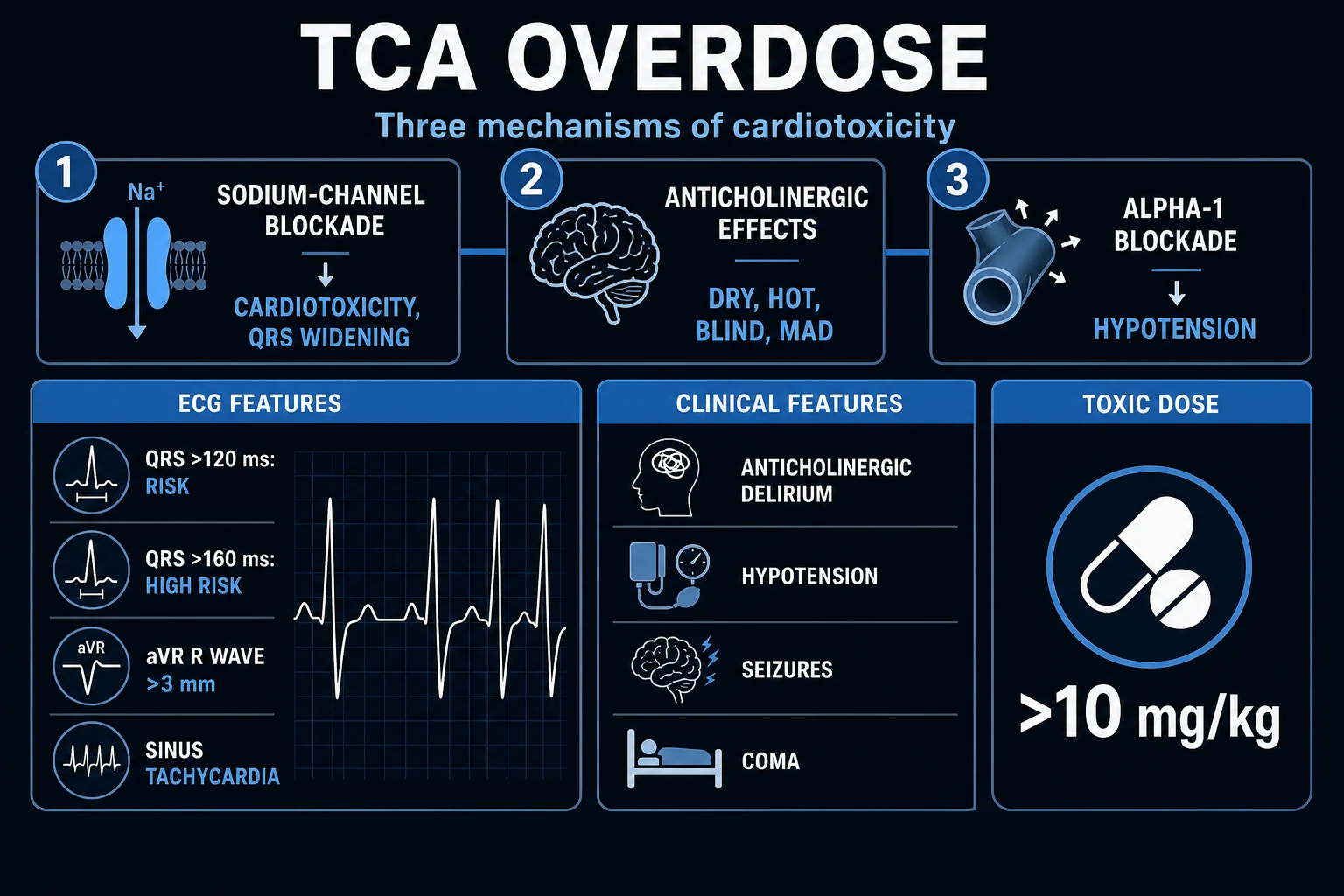
TCA overdose — the high-yield numbers
Epidemiology & Risk Factors
TCA overdose remains one of the most lethal common pharmaceutical poisonings. The typical demographic is deliberate self-harm in adults (the patient is depressed — hence prescribed a TCA, which gives them iatrogenic access to a lethal means), accidental paediatric ingestion (1-2 tablets are lethal in a toddler), and iatrogenic error in the elderly.[1]
Patient-related risk factors for severity: [1]
- Co-ingestants — alcohol, benzodiazepines and opioids deepen coma and respiratory depression; another cardiotoxin (digoxin, beta-blocker, calcium-channel blocker, another TCA, quinine) dramatically increases mortality; always send a paracetamol and salicylate level in any deliberate overdose (the silent co-ingestants).
- Advanced age — reduced clearance, pre-existing conduction disease, anticholinergic delirium mistaken for dementia, polypharmacy.
- Pre-existing cardiac disease — bundle branch block, ischaemia, prior arrhythmia lower the threshold for symptomatic cardiotoxicity.
- Hepatic or renal impairment — TCAs are metabolised by CYP2D6 and CYP2C19; clearance is prolonged; metabolites are renally excreted.
- Rapid absorption — an empty stomach shortens the time to peak toxicity. [1]
Drug-specific risk: [1]
- Dothiepin (dosulepin) has the highest case-fatality of any TCA — it was withdrawn/restricted in the UK in 2007 specifically because of overdose lethality.
- Amoxapine has a high mortality from seizures despite a narrow QRS.
- Amitriptyline and imipramine cause the most absolute deaths because of the volume of prescribing. [1]
Paediatric lethality: even one or two adult 50 mg or 75 mg amitriptyline tablets can produce life-threatening toxicity in a toddler. Imipramine is prescribed to children for nocturnal enuresis, making accidental paediatric ingestion a particular and preventable risk.[5]
Pathophysiology
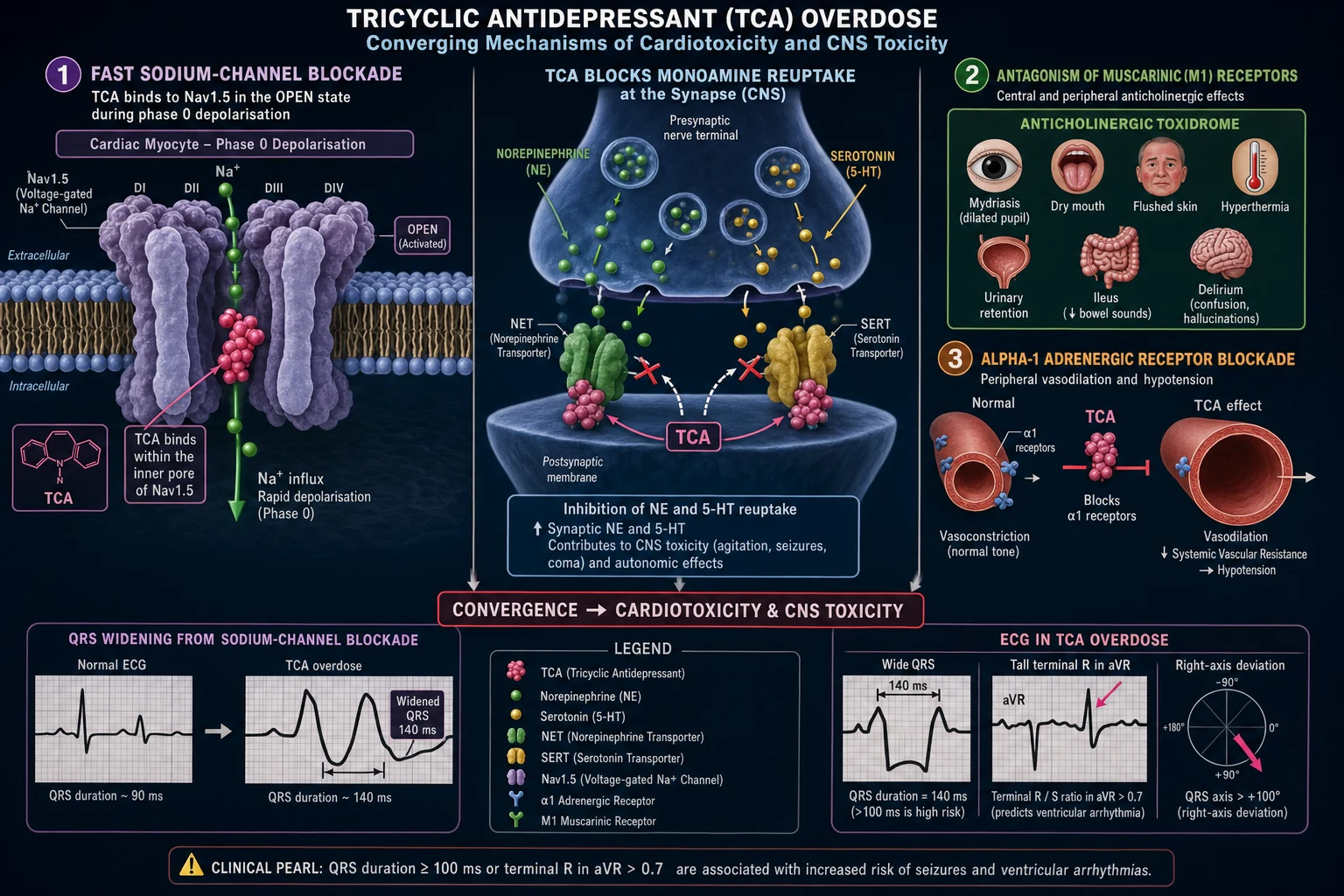
The molecular mechanism is the most frequently examined concept in this topic and must be reproduced in full. TCAs exert three distinct pharmacological effects at toxic dose.[3]
Mechanism 1 — fast voltage-gated sodium-channel blockade (the cardiotoxic and CNS-toxic mechanism)
Step 1 — channel binding. TCAs block the fast voltage-gated sodium channel (Nav1.5 in the heart; neuronal Nav isoforms in the brain) by binding to the inner pore of the alpha-subunit in the open (activated) state during phase 0 depolarisation — a so-called use-dependent block. The tricyclic ring, being lipophilic, accesses the channel from the intracellular side and physically plugs the pore. [1]
Step 2 — slowed conduction. Blocking the fast sodium current slows the phase 0 upstroke (reduced Vmax) and slows intraventricular conduction. The ECG consequence is the cardinal sign of TCA cardiotoxicity: QRS widening. Conduction is also slowed through the AV node (PR prolongation, varying degrees of AV block) and the His-Purkinje system. The slowed conduction, combined with a shortened refractory period from the anticholinergic and inotropic effects, sets up the substrate for re-entry -> monomorphic VT, torsades-like polymorphic VT, and VF. [1]
Step 3 — negative inotropy. Reduced sodium entry reduces the intracellular sodium available to drive the sodium-calcium exchanger, indirectly reducing intracellular calcium and myocardial contractility. The combined loss of conduction and inotropy, together with alpha-1-mediated vasodilation, produces hypotension and cardiovascular collapse — the mode of death. [1]
Step 4 — CNS sodium-channel and GABA effect. The same sodium-channel blockade occurs in cortical neurons, and TCAs also act as GABA-A receptor antagonists at toxic concentration. The result is depressed consciousness, generalised tonic-clonic seizures (often within 1-3 hours, may be recurrent or status), and rapid progression to coma with respiratory depression. [1]
Mechanism 2 — anticholinergic (antimuscarinic) blockade
TCAs are competitive antagonists of central and peripheral M1 muscarinic receptors. This produces the classic anticholinergic toxidrome: mydriasis (dilated, sluggish pupils — "blind as a bat"), dry mouth and axillae ("dry as a bone"), flushed dry skin ("red as a beet"), hyperthermia ("hot as a hare"), ileus with decreased or absent bowel sounds, urinary retention, sinus tachycardia, and an agitated delirium progressing to coma ("mad as a hatter"). The anticholinergic signs are usually the first and most reliable diagnostic clue.[1]
Mechanism 3 — alpha-1 adrenergic blockade and amine reuptake inhibition
TCAs competitively block peripheral alpha-1 adrenergic receptors -> vasodilation and hypotension (often the first haemodynamic sign), with a reflex tachycardia that may be blunted by the direct conduction effects. Alpha-1 blockade also explains the nasal congestion and the orthostatic component. At therapeutic dose, TCAs block the norepinephrine transporter (NET) and serotonin transporter (SERT) — this is the basis of their antidepressant action; in overdose (and with serotonergic co-ingestants) it contributes to a serotonin syndrome picture, particularly with clomipramine. [1]
The vicious cycle — why acidosis worsens TCA toxicity
A falling serum pH (from seizure-induced lactic acidosis, hypoventilation, hypoxia, or shock) worsens TCA cardiotoxicity in three ways (a pivotal exam point):[3]
- Alkalosis increases TCA protein binding; acidosis reduces it, increasing the free (active) drug concentration at the channel.
- Alkalosis increases fast-sodium-channel recovery from use-dependent block; acidosis impairs it.
- Acidosis impairs myocardial contractility directly. [1]
This is the mechanistic justification for the alkalinisation and sodium-loading strategy: a seizure that causes a lactic acidosis makes the QRS widen further and the arrhythmia worse, which lowers cardiac output, which worsens the acidosis — a vicious cycle that ends in cardiovascular collapse. Controlling seizures, ventilation and perfusion to prevent acidosis is therefore not just supportive — it is antidotal. [1]
Clinical Presentation
The presentation spans the anticholinergic toxidrome (the early clue), cardiovascular toxicity (the lethal component), and CNS toxicity (the cause of secondary deterioration).[1]
The anticholinergic toxidrome (early and diagnostic)
Anticholinergic toxidrome — the classic five
BLIND-HOT-DRY-MAD-RED
mydriasis (dilated, sluggish pupils) and cycloplegia — blurred near vision
anhidrotic hyperthermia (dry, hot skin) — distinguishes from sympathomimetic sweating
dry mouth, dry axillae, decreased bowel sounds (ileus), urinary retention
agitated delirium with hallucinations, progressing to coma
flushed, dry skin (not sweating — distinguishes from the hot, wet skin of serotonin syndrome)
The dry, hot skin with absent sweating distinguishes the anticholinergic toxidrome from the serotonin syndrome (hot, wet skin with clonus and hyperreflexia) and from sympathomimetic toxicity (sweating, agitation). Sinus tachycardia is the earliest cardiovascular sign. [1]
Cardiovascular features (the lethal component)
- Initially sinus tachycardia (anticholinergic).
- QRS widening — the cardinal sign of cardiotoxicity.
- PR and QT prolongation; QT prolongation predisposes to torsades.
- Right-axis deviation of the terminal 40 ms with a terminal R wave over 3 mm in lead aVR — a sensitive and fairly specific marker of TCA cardiotoxicity, an indication for sodium bicarbonate even when the QRS is only mildly widened.
- AV block — first, second, or third degree; complete heart block and asystole are modes of death.
- Hypotension — alpha-1 vasodilation + negative inotropy; the first haemodynamic sign and an indication for bicarbonate if unresponsive to fluid.
- Ventricular arrhythmia — monomorphic VT, torsades-like polymorphic VT, and VF; cardiovascular collapse is the mode of death. [1]
CNS features
- Drowsiness, slurred speech, ataxia, confusion early.
- Agitated delirium (anticholinergic) that progresses to coma.
- Generalised tonic-clonic seizures, often within 1-3 hours; may be recurrent or status epilepticus.
- Coma with respiratory depression — the hypoventilation drives the acidosis that worsens cardiotoxicity. [1]
Temporal sequence (reproduce verbatim)
Anticholinergic signs and sinus tachycardia appear first (within 1-2 hours); seizures typically occur early (within 1-3 hours); QRS widening and arrhythmias develop within 2-6 hours; the patient who is going to deteriorate has usually done so within the first 6 hours — the basis of the GEMNet 6-hour rule.[1]
Atypical presentation — the elderly
A patient on a low-dose TCA for neuropathic pain or depression who presents with delirium, falls, urinary retention, or unexplained syncope may have iatrogenic or drug-interaction toxicity, often precipitated by a new CYP2D6/CYP2C19 inhibitor (fluoxetine, paroxetine — which raise TCA levels) rather than deliberate overdose. The diagnosis is missed if the medication history is not actively taken. [1]
Paediatric presentation
Accidental ingestion of a grandparent's or parent's tablets — lethargy, tachycardia, dry mucosae, dilated pupils, seizures, and rapid progression to life-threatening cardiotoxicity from even one or two tablets. A high index of suspicion, a finger-prick glucose, a 12-lead ECG, and a thorough pill count are essential. [1]
Co-ingestion
Alcohol and benzodiazepines deepen the coma and respiratory depression; opioids add miosis and respiratory depression (give naloxone); paracetamol co-ingestion is silent and lethal — always check a paracetamol level at 4 hours.[1]
Differential Diagnosis
The differential of an undifferentiated coma + wide QRS + anticholinergic toxidrome is driven by recognising the toxin and excluding mimics. The combination of anticholinergic signs + wide QRS + aVR R wave + right-axis deviation is essentially pathognomonic for TCA overdose.[2]
Other fast-sodium-channel cardiotoxins (wide-QRS mimics)
- DIPHENHYDRAMINE / first-generation antihistamines — share anticholinergic + QRS features but usually milder; respond to sodium bicarbonate
- CLASS Ia (quinidine, procainamide, disopyramide) and class Ic (flecainide) antiarrhythmics — wide QRS, no anticholinergic signs; contraindicated as treatment
- COCAINE — wide QRS PLUS sympathomimetic (hypertension, agitation, hyperthermia); treat with benzodiazepines, NOT beta-blockers
- CARBAMAZEPINE — ataxia, nystagmus, SIADH, QRS widening; treat with sodium bicarbonate + charcoal (multiple-dose)
- QUININE / CHLOROQUINE — blindness, hypokalaemia, QT prolongation, QRS widening; treat with sodium bicarbonate + diazepam + adrenaline
- PROPOXYPHENE, PROPRANOLOL (membrane-stabilising) — wide QRS, treat with bicarbonate
Other antidepressant overdose (distinguished at the bedside)
- SSRI overdose (fluoxetine, sertraline) — SEROTONIN SYNDROME: hyperthermia, clonus, hyperreflexia, rigidity, NO QRS widening (wider therapeutic index); treat with benzodiazepines +/- cyproheptadine
- CITALOPRAM / ESCITALOPRAM overdose — QT prolongation -> torsades (Na-channel effect of the QT-prolonging enantiomer); treat with magnesium + overdrive
- VENLAFAXINE — seizures + QT prolongation + serotonin syndrome; more lethal than other SSRIs
- TCA: QRS WIDENING + anticholinergic + much higher lethality — the key distinctions
Non-antidepressant toxic causes of coma + seizures
- LITHIUM — coarse tremor, ataxia, hyperreflexia, confusion, seizures with a NARROW QRS; check serum lithium level; neurotoxic WITHOUT cardiotoxicity
- OPIOID — pinpoint pupils, coma, respiratory depression; responsive to NALOXONE (but AVOID flumazenil if TCA co-ingested)
- HYPOGLYCAEMIA — check a finger-prick glucose FIRST; TCA does not cause hypoglycaemia
- ALCOHOL/BENZO withdrawal, ECLAMPSIA, CNS INFECTION — non-toxic causes of seizures; exclude with history, glucose, CT, LP as appropriate
- Pure anticholinergic plants (atropine, belladonna, Datura/jimsonweed, antiparkinsonian drugs) — same 'blind-hot-dry-mad' picture but NO QRS WIDENING (no Na-channel blockade)
Non-toxic causes of wide-QRS coma + arrhythmia
- Severe HYPERKALAEMIA — peaked T waves, wide QRS, sine-wave; check K+; treat with calcium chloride, insulin/dextrose, salbutamol
- Severe HYPOTHERMIA — Osborn J waves, bradycardia; check core temperature; rewarm
- Acute MI with cardiogenic shock + conduction block — check troponin, ECG changes; treat per cardiology
- Always actively EXCLUDE a precipitating toxin in any unexplained coma with a wide QRS
The decisive bedside questions are: is there an anticholinergic toxidrome? (points to TCA/antihistamine), is the QRS widened? (points to a sodium-channel blocker — TCA, antiarrhythmic, cocaine, carbamazepine, quinine), is there clonus/hyperreflexia? (serotonin syndrome), and what is the glucose? (hypoglycaemia). The medication history from the family (pill-bottle count, household inventory) usually identifies the agent. [1]
Clinical & Bedside Assessment
Focused history: [1]
- Drug name — which TCA? Dothiepin, amoxapine and amitriptyline carry the highest mortality.
- Dose and number of tablets — over 5-10 mg/kg is potentially lethal; over 15-20 mg/kg frequently lethal.
- Time of ingestion — drives the 6-hour observation rule.
- Co-ingestants — alcohol, benzodiazepines, opioids, paracetamol (always check a 4-hour level), other cardiotoxins.
- Reason — deliberate vs accidental; psychiatric history; access to means.
- Usual medications and cardiac history — pre-existing conduction disease, hepatic/renal impairment, CYP inhibitors. [1]
Focused examination: [1]
- Vital signs — heart rate (sinus tachycardia early), blood pressure (hypotension with progression), respiratory rate (hypoventilation drives acidosis), oxygen saturation, GCS, temperature (anhidrotic hyperthermia), capillary refill, finger-prick glucose (exclude hypoglycaemia — TCA does not cause it).
- Toxidrome-directed exam — pupils (mydriasis), mucosae (dry), skin (flushed, dry), bowel sounds (decreased/absent from ileus), bladder (palpable from retention), and tone/clonus/reflexes (to exclude serotonin syndrome, which has clonus and hyperreflexia rather than the anticholinergic flaccid delirium).
- Cardiovascular and neurological exam — to grade shock and coma. [1]
ECG — obtain a 12-lead within 15 minutes and recognise the five cardinal changes:[2]
- Sinus tachycardia (early, anticholinergic).
- QRS widening — under 100 ms low risk, over 120 ms treat, over 160 ms high risk.
- PR and QT prolongation — QT prolongation predisposes to torsades.
- Right-axis deviation of the terminal 40 ms with a terminal R wave over 3 mm in aVR — the sensitive marker of TCA cardiotoxicity.
- AV block — first to third degree. [1]
Establish continuous cardiac monitoring, two large-bore IV cannulae, oxygen, and a venous blood gas. Check a paracetamol and salicylate level (the universal co-ingestant screen), electrolytes (K+, Mg2+, Ca2+ — hypokalaemia and hypomagnesaemia precipitate arrhythmia), and beta-hCG in women of childbearing age.[1]
Investigations
First-line investigations: 12-lead ECG with continuous cardiac monitoring (the single most important investigation), venous blood gas (pH, lactate, base excess — guide alkalinisation and detect the acidosis that worsens cardiotoxicity), serum electrolytes (Na+, K+, Mg2+, Ca2+), urea/creatinine, glucose, paracetamol and salicylate levels, beta-hCG, FBC, and a serum TCA level if available.[1]
The QRS duration thresholds (Boehnert & Lovejoy, NEJM 1985 — reproduce verbatim)
The landmark 1985 NEJM study established the QRS duration (not the serum drug level) as the predictor of seizures and ventricular arrhythmias:[2]
The aVR terminal R wave
A terminal R wave over 3 mm in lead aVR (with right-axis deviation of the terminal 40 ms) is a sensitive and fairly specific marker of TCA cardiotoxicity and predicts arrhythmia even when the QRS is only mildly widened. It is an indication for IV sodium bicarbonate.[1]
Target serum pH for alkalinisation
The alkalinisation end-point is serum pH 7.45 to 7.55 (venous or arterial gas). The goal is BOTH QRS narrowing AND pH in this range. Over-alkalinisation (pH over 7.60) causes cerebral vasoconstriction and is avoided.[3]
Role of the serum TCA level
A serum TCA level is NOT useful for acute management — levels correlate poorly with severity (large volume of distribution, protein binding, active metabolites; the parent drug and its demethylated metabolite differ in cardiotoxicity), and turnaround is slow. Treatment is driven entirely by the ECG and haemodynamics. A level may confirm exposure retrospectively or in medicolegal cases.[2]
Repeat ECG and serial gases
Repeat the ECG and gas after every sodium bicarbonate bolus, with any change in haemodynamics or rhythm, and every 15-30 minutes during the first 6 hours to detect evolving QRS widening, AV block, or arrhythmia. [1]
Bedside echocardiography
Shows reduced contractility (negative inotropy) and helps distinguish toxin-induced shock from cardiogenic shock of primary cardiac cause — but treatment is the same (sodium bicarbonate + supportive). [1]
Management — Resuscitation
Begin with ABCDE, with the specific TCA modifications:[1]
- AIRWAY — intubate EARLY if GCS is under 8, if seizures are uncontrolled, or if the patient is hypoventilating. The airway is lost suddenly in TCA overdose, and hypoventilation drives the respiratory acidosis that worsens cardiotoxicity. A low threshold for intubation is correct.
- BREATHING — high-flow oxygen, and ventilate to mild hyperventilation (target PaCO2 30-35 mmHg). Mechanical hyperventilation itself alkalinises the serum (respiratory alkalosis shifts the equation) and is a useful adjunct to bicarbonate.
- CIRCULATION — two large-bore IV cannulae, isotonic crystalloid boluses (10 mL/kg aliquots) for hypotension, treat immediately life-threatening arrhythmia.
- D, E — check glucose (TCA does not cause hypoglycaemia but exclude it), temperature, and a paracetamol level. [1]
IV sodium bicarbonate — the specific antidote
Sodium bicarbonate — reproduce verbatim
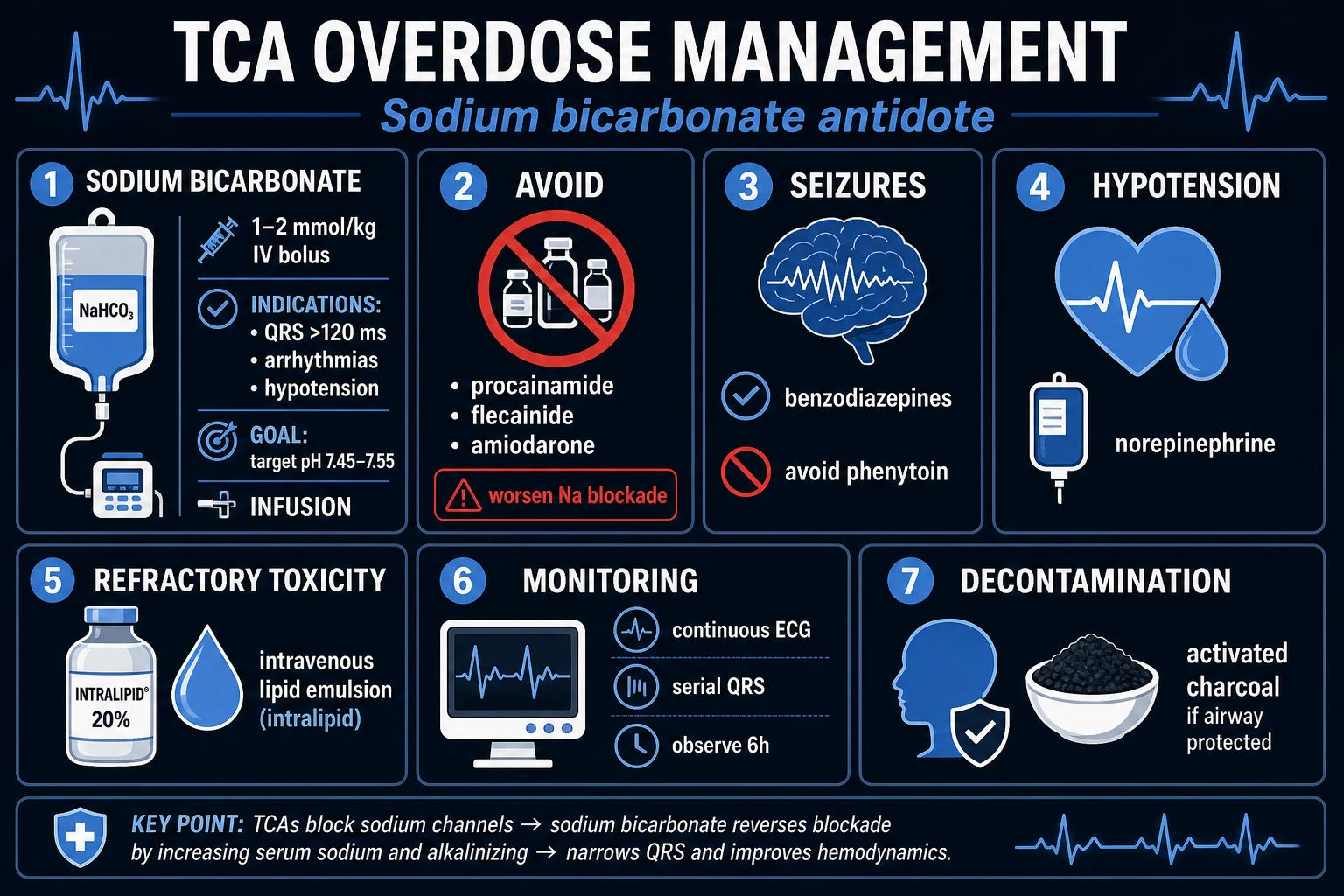
Indications for IV sodium bicarbonate:[1]
- QRS over 120 ms
- Ventricular arrhythmia (VT/VF) in the suspected TCA overdose
- Hypotension unresponsive to fluid
- Terminal R wave over 3 mm in aVR
- Cardiac arrest in the known/suspected TCA overdose [1]
Rationale — the THREE-component mechanism (the exam answer):[3]
- Sodium load — overcomes competitive fast-sodium-channel blockade by mass action (the TCA is a competitive channel blocker; flooding the extracellular space with sodium displaces it).
- Alkalinisation — raises serum pH, which increases TCA protein binding (reducing the free, active drug concentration) and increases fast-sodium-channel recovery from use-dependent block.
- Mild hypernatraemia and volume expansion — improve conduction and perfusion. [1]
Seizures — benzodiazepines, AVOID phenytoin
- First-line: a BENZODIAZEPINE — diazepam 10-20 mg IV (0.1-0.3 mg/kg in children), or lorazepam 4 mg IV (0.05-0.1 mg/kg), repeated every 5-10 minutes.
- Refractory: a barbiturate — phenobarbitone 15 mg/kg IV.
- AVOID PHENYTOIN — it is itself a sodium-channel blocker and worsens the cardiotoxicity.
- Seizures MUST be controlled because the lactic acidosis and hypoxia they cause worsen cardiotoxicity (the vicious cycle). [1]
Refractory ventricular arrhythmia
For ventricular arrhythmia refractory to bicarbonate: consider lidocaine 1-1.5 mg/kg IV (a class Ib agent that does NOT prolong repolarisation and may be safer than class Ia/Ic), magnesium sulphate 2 g IV for torsades, and overdrive pacing. AVOID class Ia (procainamide, quinidine, disopyramide) and class Ic (flecainide) antiarrhythmics — all worsen sodium-channel blockade.[1]
Management — Definitive & Stepwise
The stepwise ladder, with escalation triggers, is the most frequently examined aspect of this topic.[1][6]
- ABCDE + decontamination — airway (intubate early if GCS depressed), oxygen, IV access, monitoring.
- IV SODIUM BICARBONATE — the antidote for cardiotoxicity (QRS over 120 ms, arrhythmia, hypotension, aVR R wave over 3 mm).
- HYPERTONIC SALINE (3 percent or 7.5 percent NaCl) — for refractory cardiotoxicity (bicarbonate-unresponsive, or as an alternative when bicarbonate causes problematic volume or alkalosis).
- SEIZURE control — benzodiazepines (AVOID phenytoin).
- VASOPRESSORS — noradrenaline preferred for refractory hypotension.
- INTRAVENOUS LIPID EMULSION — for refractory cardiovascular collapse.
- CARDIAC PACING — for refractory bradycardia (capture often poor).
- ECMO (veno-arterial) — for refractory cardiogenic shock, bridge to drug clearance. [1]
Decontamination
- Activated charcoal 50 g (1 g/kg in children) within 1-2 hours of ingestion, IF the airway is protected (or will be imminently). TCAs bind well to charcoal. Do NOT induce vomiting (anticholinergic delay plus the risk of aspiration in a rapidly deteriorating patient). Beyond 1-2 hours charcoal is of limited benefit unless the patient has ileus from the anticholinergic effect.
- Whole-bowel irrigation is generally NOT used for TCAs (they are rapidly absorbed) but is considered for massive ingestions.[1]
IV sodium bicarbonate — the antidote (protocol verbatim)
- Bolus: 1-2 mmol/kg (1-2 mL/kg of 8.4 percent NaHCO3) IV over 1-2 minutes; repeat every 3-5 minutes until QRS narrows, arrhythmia resolves, blood pressure stabilises, AND serum pH reaches 7.45 to 7.55.
- Infusion: 150 mmol NaHCO3 in 850 mL of 5 percent dextrose (or 100 mL of 8.4 percent NaHCO3 in 1 L of 5 percent dextrose) at a rate titrated to maintain pH 7.45 to 7.55 and QRS under 120 ms.
- Hyperventilation (mechanical, to PaCO2 30-35 mmHg) is a useful adjunct that itself alkalinises the serum.[3]
Hypertonic saline (refractory)
- 3 percent or 7.5 percent NaCl IV provides a large sodium load to overcome channel blockade; useful when bicarbonate causes problematic volume or alkalosis. No randomised trial; case-series evidence.[6]
Vasopressors (refractory hypotension)
- NORADRENALINE (norepinephrine) 0.05-1 microgram/kg/min is PREFERRED — it is a direct alpha-1 agonist whose direct vasoconstriction partly overcomes the alpha-1 blockade.
- AVOID adrenaline (epinephrine) and isoprenaline as monotherapy — adrenaline's beta-2 vasodilation can worsen hypotension in TCA overdose; high-dose noradrenaline +/- adrenaline in combination may be needed for refractory shock.[1]
Intravenous lipid emulsion (ILE) — refractory collapse
- 20 percent lipid emulsion 1.5 mL/kg IV bolus, then infusion 0.25 mL/kg/min for 30-60 min; repeat the bolus for refractory collapse; maximum about 10 mL/kg in the first 30 min.
- Mechanism — the 'LIPID SINK': creates a lipid phase in plasma that sequesters the lipophilic TCA, reducing the free-drug concentration at the channel; also provides fatty-acid substrate to the poisoned myocardium.
- Used for refractory cardiovascular collapse unresponsive to bicarbonate + saline + vasopressors; case-report and animal evidence (Levine 2012, Hendron 2011).[4][5]
ECMO
- Veno-arterial ECMO for refractory cardiogenic shock unresponsive to bicarbonate, saline, vasopressors and lipid — a bridge to recovery as the drug is cleared (large volume of distribution, redistribution over 12-24 h). Early referral is essential.[1]
Escalation triggers
QRS over 120 ms; ventricular arrhythmia; hypotension unresponsive to fluid + bicarbonate; seizures; refractory cardiotoxicity despite bicarbonate + saline -> lipid emulsion -> ECMO referral; recurrent toxicity after weaning (the rebound/recrudescence phenomenon). [1]
Specific Subtypes & Scenarios
Agent-specific overdose profiles
- AMITRIPTYLINE (prototype, most absolute deaths): full classic syndrome; small numbers lethal; responds to sodium bicarbonate
- DOTHIEPIN/DOSULEPIN: HIGHEST case-fatality; restricted in UK 2007; expect severe cardiotoxicity — low threshold for bicarbonate
- IMIPRAMINE: among the most cardiotoxic; prescribed to children for enuresis — accidental ingestion risk
- CLOMIPRAMINE: highly serotonergic — combine TCA cardiotoxicity with serotonin syndrome (clonus, hyperreflexia, rigidity)
- AMOXAPINE: SEIZURES + STATUS WITHOUT classic QRS widening; also NMS, rhabdomyolysis, AKI; high mortality despite 'normal-looking' ECG
- MAPROTILINE: high seizure incidence and QT prolongation
Scenario-specific management
- PAEDIATRIC ingestion: accidental; even 1-2 tablets lethal; WEIGHT-BASED dosing for all antidotes (bicarbonate 1-2 mL/kg 8.4 percent; charcoal 1 g/kg; diazepam 0.1-0.3 mg/kg); observe 6 h; child-safeguarding review
- CO-INGESTION with alcohol/benzo: deeper coma and respiratory depression; lower threshold for intubation; alcohol does NOT significantly alter TCA toxicity but worsens the respiratory picture
- CO-INGESTION with another cardiotoxin (digoxin, beta-blocker, CCB, quinine): dramatically higher mortality; treat BOTH toxidromes (Fab for digoxin; HIET/calcium for CCB; bicarbonate for TCA QRS widening)
- PREGNANCY: manage the mother first (bicarbonate, benzodiazepines, oxygen are SAFE); fetus at risk from maternal hypotension/hypoxia/acidosis; magnesium treats seizures AND eclampsia; perimortem Caesarean for refractory maternal arrest
- REFRACTORY TOXICITY: sodium bicarbonate + hypertonic saline + vasopressors + lipid + ECMO
Complications & Pitfalls
Cardiovascular complications: refractory ventricular arrhythmia (VT/VF), complete heart block and asystole, refractory hypotension and cardiovascular collapse, pulseless electrical activity arrest — these are the modes of death.[1]
CNS complications: status epilepticus, hypoxic brain injury (from seizure/hypoventilation-induced hypoxia), cerebral oedema, persistent coma, and post-hypoxic cognitive impairment. [1]
Non-cardiovascular/non-CNS complications: aspiration pneumonitis (from coma + seizures + vomiting), acute kidney injury (from shock + rhabdomyolysis from prolonged seizures), hyperthermia-related complications (rhabdomyolysis, DIC, multi-organ failure) in severe cases, and pressure injuries from prolonged coma. [1]
The classic pitfalls (high-yield — the AVOID list revisited)
Test yourself: which five treatments must you AVOID in TCA overdose, and why?
- Class Ia antiarrhythmics (procainamide, quinidine, disopyramide) and class Ic (flecainide) — worsen sodium-channel blockade.
- Amiodarone — variable evidence; many guidelines avoid it.
- Phenytoin for seizures — it is a sodium-channel blocker; use a benzodiazepine.
- Flumazenil — lowers the seizure threshold; can precipitate refractory status.
- Induced vomiting / ipecac — anticholinergic delay plus aspiration risk in a rapidly deteriorating patient. Also avoid relying on the serum TCA level (correlates poorly), under-alkalinising (stopping bicarbonate before pH 7.45-7.55 or QRS under 120), discharging before the 6-hour mark, and missing a paracetamol co-ingestion.[1][6]
Lipid-emulsion pitfalls: fat embolism, pancreatitis (the most common serious adverse effect), lipaemia interfering with laboratory assays (false results for haemoglobin, lipase, some drug levels), and ARDS — used only for refractory collapse, not routinely.[4]
Bicarbonate pitfalls: hypernatraemia, hyperosmolarity, hypokalaemia (alkalinisation shifts K+ into cells — replace), volume overload, and paradoxical CSF acidosis (CO2 crosses the blood-brain barrier faster than bicarbonate) — avoid over-alkalinising (pH over 7.60).[6]
Rebound/recrudescence: after apparent QRS narrowing the infusion must be continued and weaned slowly (over 12-24 h) because the drug redistributes from tissue stores (large volume of distribution) and toxicity can recur. [1]
Prognosis & Disposition
Overall mortality: TCA overdose remains one of the most lethal common drug overdoses; death is from refractory ventricular arrhythmia or cardiovascular collapse, typically within the first 24 hours. With early sodium bicarbonate and good supportive care, survival is good (over 90 per cent in patients reaching hospital alive).[1]
Predictors of severity and poor outcome: large ingested dose (over 15-20 mg/kg), dothiepin/dosulepin (highest case-fatality), amoxapine (seizures despite narrow QRS), delay to presentation and bicarbonate, co-ingestants (especially alcohol and other cardiotoxins), advanced age, pre-existing cardiac disease, severe acidosis, and recurrent seizures. [1]
Disposition — the GEMNet 6-hour rule:[1]
- Safe to discharge: an immediate-release TCA ingestion that remains asymptomatic with a normal ECG and normal haemodynamics for 6 hours after ingestion (after psychiatric assessment if deliberate).
- Admit (ward): any symptom, any ECG change (QRS over 100 ms, PR prolongation, aVR R wave over 3 mm, arrhythmia), or any haemodynamic instability during the 6 hours.
- Admit (ICU): QRS over 120 ms, ventricular arrhythmia, hypotension unresponsive to fluid + bicarbonate, seizures, GCS under 8 requiring intubation, or need for a bicarbonate infusion. [1]
Prevention/psychiatric strategy: all deliberate overdoses require psychiatric assessment after medical stabilisation (do not discharge without it); consider switching the patient's antidepressant to a less lethal agent (SSRI) on recovery; secure the medication supply; involve child-safeguarding in paediatric accidental ingestion. [1]
Special Populations
- Paediatrics: accidental ingestion is typical; even 1-2 adult tablets lethal in a toddler; weight-based dosing for ALL antidotes (sodium bicarbonate 1-2 mL/kg of 8.4 percent; charcoal 1 g/kg; diazepam 0.1-0.3 mg/kg); observe 6 hours; child-safeguarding review; check glucose (children risk hypoglycaemia from poor intake).[5]
- Pregnancy: management unchanged — sodium bicarbonate, benzodiazepines, oxygen and supportive care are SAFE in pregnancy; the fetus is at risk from maternal hypotension, hypoxia and acidosis; magnesium sulphate controls seizures AND treats eclampsia if that is the differential; urgent Caesarean may be needed for refractory maternal arrest (perimortem).
- Elderly: greater cardiotoxicity from pre-existing conduction disease and reduced clearance; anticholinergic delirium may be the presenting feature and may be misattributed to dementia; drug interactions (CYP2D6/CYP2C19 inhibitors raise TCA levels); lower threshold for ICU.
- Pre-existing cardiac disease: lower baseline conduction reserve; worse outcomes; pace capture may be poor; lower threshold for early bicarbonate and ICU.
- Hepatic or renal impairment: prolonged elimination (TCAs are hepatically metabolised by CYP2D6/CYP2C19; metabolites are renally excreted); dose benzodiazepines cautiously; dialysis does NOT remove TCAs (large volume of distribution, high protein binding) but may be needed for AKI.
- Anticoagulated patient (warfarin/DOAC): TCA overdose does not directly alter anticoagulation, but co-ingestion risk and the need for procedures (central line, intubation) raise bleeding risk; check INR/aPTT/anti-Xa as appropriate.
Evidence, Guidelines & Regional Differences
- GEMNet 2011 guideline (Body R et al, Emerg Med J 2011, PMID 21436332): the principal UK/international clinical guideline for TCA overdose — recommends IV sodium bicarbonate as the antidote for cardiotoxicity, benzodiazepines for seizures, and the 6-hour observation rule; AVOID class Ia/Ic antiarrhythmics; AVOID flumazenil; AVOID phenytoin for seizures.[1]
- Boehnert & Lovejoy 1985 NEJM (PMID 4022081): the landmark study establishing the QRS duration (not the serum drug level) as the predictor of seizures and ventricular arrhythmias — QRS over 100 ms predicts toxicity, over 160 ms predicts high risk of both. This is the evidence base for ECG-driven management.[2]
- Liebelt 1998 review (Pediatr Emerg Care, PMID 9733258): articulated the pivotal role of alkalinisation and sodium loading and the three-component mechanism of sodium bicarbonate (sodium load, alkalinisation reducing free drug, increased channel recovery).[3]
- Levine 2012 (Pediatrics, PMID 22753554) and Hendron 2011 (Pediatrics, PMID 22065274): case reports of intravenous lipid emulsion for refractory TCA cardiotoxicity (amitriptyline), providing the human evidence for the 'lipid sink' therapy.[4][5]
- Chan & Buckley 2024 (Clin Toxicol, PMID 38597366): the common pitfalls in the use of hypertonic sodium bicarbonate for cardiac-toxic drug poisonings — under-dosing, stopping too early, failing to alkalinise to the target range (pH 7.45-7.55), and over-alkalinising causing harm.[6]
Regional practice (UK GEMNet, AACT/EAPCCT international): the recommendations broadly agree. In resource-limited settings without lipid emulsion or ECMO, the practical mainstay is sodium bicarbonate + benzodiazepines + good supportive care (airway, ventilation, vasopressors). The avoidance of class Ia/Ic antiarrhythmics, phenytoin and flumazenil is universal. In India and South Asia, the cheap and ubiquitous availability of amitriptyline, imipramine and dothiepin makes TCA overdose a leading cause of fatal pharmaceutical poisoning; the practical mainstay is early sodium bicarbonate and benzodiazepines.
Exam Pearls
- One-liner: TCA overdose = anticholinergic toxidrome + WIDE QRS + seizures + hypotension; antidote = IV SODIUM BICARBONATE.
- ECG thresholds (reproduce verbatim): QRS under 100 ms LOW risk; 100-160 ms MODERATE; over 160 ms HIGH risk of seizures AND ventricular arrhythmias; aVR terminal R wave over 3 mm = TCA cardiotoxicity.
- Antidote verbatim: SODIUM BICARBONATE 1-2 mmol/kg (1-2 mL/kg of 8.4 percent) IV BOLUS, repeat to QRS narrowing and serum pH 7.45-7.55; then INFUSION 150 mmol NaHCO3 in 850 mL 5 percent dextrose.
- Why bicarbonate works (the 3 mechanisms): SODIUM LOAD (mass action overcomes competitive channel blockade) + ALKALINISATION (increases protein binding, reduces free drug; increases channel recovery) + mild hypernatraemia/volume.
- AVOID list: class Ia/Ic antiarrhythmics (procainamide, flecainide), amiodarone, phenytoin for seizures, flumazenil, induced vomiting.
- Seizure treatment verbatim: DIAZEPAM 10-20 mg IV (lorazepam 4 mg) FIRST-LINE; barbiturate (phenobarbitone 15 mg/kg) for refractory; AVOID phenytoin.
- Hypotension verbatim: IV crystalloid bolus first; NORADRENALINE preferred pressor; AVOID adrenaline/isoprenaline as monotherapy (beta-2 vasodilation can worsen).
- Lipid emulsion verbatim: 20 percent lipid 1.5 mL/kg IV bolus then 0.25 mL/kg/min for refractory collapse.
- Observation rule: asymptomatic + normal ECG for 6 hours after immediate-release TCA = safe to discharge (GEMNet).
- Mortality fact: dothiepin/dosulepin has the highest case-fatality; amitriptyline the highest absolute deaths (volume of prescribing).
- Acidosis fact: a FALLING serum pH worsens TCA cardiotoxicity (reduces protein binding, increases free drug, slows channel recovery) — control seizures, ventilation, and perfusion to prevent acidosis.
- Co-ingestion rule: ALWAYS send a PARACETAMOL LEVEL at 4 hours in any deliberate overdose (the silent co-ingestant).
- Discriminator one-liner: COMA + WIDE QRS + ANTICHOLINERGIC toxidrome = TCA until proven otherwise. [1]
The anticholinergic toxidrome
DRY-BUG
dry mouth, dry axillae, dry flushed skin, decreased bowel sounds (ileus), urinary retention
flushed, dry skin (NOT sweating — distinguishes from serotonin syndrome and sympathomimetics)
mydriasis (dilated, sluggish) — 'blind as a bat'
sinus tachycardia (anticholinergic effect on the SA node)
anhidrotic hyperthermia (hot skin but dry — 'hot as a hare')
agitated delirium with hallucinations -> coma — 'mad as a hatter'
Exam application bank (NEET-PG / INICET)
One-line answer
Tricyclic antidepressant (TCA) overdose (amitriptyline, imipramine, dothiepin, nortriptyline, clomipramine) is one of the most lethal common poisonings — even a handful of tablets can kill. TCAs exert three toxic effects that define the syndrome: (1) fast voltage-gated SODIUM-CHANNEL BLOCKADE in cardiac myocytes and cortical neurons (slows phase 0 depolarisation -> QRS widening, AV block, re-entrant ventricular arrhythmia, hypotension, seizures, coma); (2) ANTICHOLINERGIC (antimuscarinic) blockade (the classic toxidrome — mydriasis, dry mucosae, flushed dry skin, hyperthermia, ileus, urinary retention, sinus tachycardia, agitated delirium); and (3) ALPHA-1 ADRENERGIC blockade plus norepinephrine/serotonin reuptake inhibition (vasodilation, hypotension, initial sympathomimetic features). The hallmark of severe poisoning is QRS widening over 120 ms on ECG (predicts seizures and ventricular
Worked stems (answer without another resource)
Stem 1 — Classic presentation. Map symptoms to mechanism; name the first investigation and first treatment step with dose/route if drug therapy is standard. [1]
Stem 2 — Unstable / complicated. List red flags that force immediate resuscitation, theatre, ICU, antidote, or reperfusion — and what you do in the first 15 minutes. [1]
Stem 3 — Atypical group. Elderly, pregnancy, child, or immunocompromised: how presentation and thresholds change. [1]
Stem 4 — Differential trap. Name the three closest mimics and one discriminator for each. [1]
Stem 5 — Disposition. Who goes home with safety-netting, who is admitted, who needs HDU/ICU/theatre, and what follow-up is mandatory. [1]
Rapid viva checklist
- Definition + classification
- Pathophysiology chain
- Bedside signs / criteria
- Score with exact components (if any)
- Emergency bundle
- Definitive therapy with doses
- Complications of disease and of treatment
- Special populations
- Guideline/trial name if classic
- Three exam traps
Coverage self-check
If you cannot answer any stem above from this page alone, re-read the matching section — the page is intended to be self-sufficient for final-prof and NEET-PG/INICET questions on Tricyclic Antidepressant (TCA) Overdose.
[1]References
- [1]Body R, Bartram T, Azam F, Mackway-Jones K. Guidelines in Emergency Medicine Network (GEMNet): guideline for the management of tricyclic antidepressant overdose Emerg Med J, 2011.PMID 21436332
- [2]Boehnert MT, Lovejoy FH Jr. Value of the QRS duration versus the serum drug level in predicting seizures and ventricular arrhythmias after an acute overdose of tricyclic antidepressants N Engl J Med, 1985.PMID 4022081
- [3]Liebelt EL. Targeted management strategies for cardiovascular toxicity from tricyclic antidepressant overdose: the pivotal role for alkalinization and sodium loading Pediatr Emerg Care, 1998.PMID 9733258
- [4]Levine M, Brooks DE, Franken A, Graham R. Delayed-onset seizure and cardiac arrest after amitriptyline overdose, treated with intravenous lipid emulsion therapy Pediatrics, 2012.PMID 22753554
- [5]Hendron D, Menagh G, Sandilands EA, Scullion D. Tricyclic antidepressant overdose in a toddler treated with intravenous lipid emulsion Pediatrics, 2011.PMID 22065274
- [6]Chan BS, Buckley NA. Common pitfalls in the use of hypertonic sodium bicarbonate for cardiac toxic drug poisonings Clin Toxicol (Phila), 2024.PMID 38597366