Endocrinology · General Medicine
Hypercalcaemia and Hyperparathyroidism
Also known as Hypercalcaemia · Primary hyperparathyroidism · PHPT · Parathyroid adenoma · Hypercalcaemic crisis · Secondary hyperparathyroidism · Tertiary hyperparathyroidism
Hypercalcaemia is a corrected serum calcium over 2.6 mmol/L (10.4 mg/dL); it is dangerous above 3.5 mmol/L (14 mg/dL) — hypercalcaemic crisis with confusion, dehydration, AKI and shortened QT. Causes split by PTH: PTH-dependent (primary and tertiary hyperparathyroidism, lithium, familial hypocalciuric hypercalcaemia) versus PTH-independent (malignancy via PTHrP, osteolytic metastases (breast, myeloma), granulomatous disease (sarcoid, TB), vitamin D intoxication, thiazides, immobilisation, thyrotoxicosis). Primary hyperparathyroidism is the commonest outpatient cause (single parathyroid adenoma 80 percent, hyperplasia 15 percent, double adenoma 4 percent, carcinoma under 1 percent); malignancy is the commonest inpatient cause and the commonest cause overall in a sick patient. Acute severe hypercalcaemia is treated with aggressive isotonic saline (3 to 6 L over 24 hours) then IV bisphosphonate (pamidronate 60 to 90 mg or zoledronate 4 mg) plus calcitonin for fastest onset. Primary hyperparathyroidism is cured by parathyroidectomy; cinacalcet is for those who decline or fail surgery.
On this page & tools
Your progress
Saved locally on this device.
Practise this topic
Exam tags
Red flags
Overview & Definition
Hypercalcaemia is a corrected serum calcium above 2.6 mmol/L (10.4 mg/dL) (the upper reference limit varies slightly between laboratories, typically 2.55 to 2.60 mmol/L or 8.5 to 10.4 mg/dL). Because roughly half of circulating calcium is protein-bound (mainly to albumin) and only the ionised fraction is physiologically active, every measured calcium must be corrected for albumin:[1]
Corrected Ca (mmol/L) = measured Ca + 0.02 × (40 − albumin in g/L) [1]
(Equivalent in mg/dL: add 0.8 mg/dL for every 1 g/dL of albumin below 4.0.) If available, direct ionised calcium (reference 1.15 to 1.32 mmol/L) avoids the albumin problem entirely and should be used in critical illness or with abnormal albumin. [1]
Severity thresholds drive management urgency:[1]
| Severity | Corrected Ca (mmol/L) | Corrected Ca (mg/dL) | Setting |
|---|---|---|---|
| Mild | 2.6 to 3.0 | 10.5 to 12.0 | Usually asymptomatic |
| Moderate | 3.0 to 3.5 | 12.0 to 14.0 | May have GI and renal symptoms |
| Severe / crisis | over 3.5 | over 14.0 | Hypercalcaemic crisis — confusion, AKI, dehydration |
Hypercalcaemic crisis (calcium over 3.5 mmol/L with symptoms) is an endocrine emergency with mortality up to 50 percent if untreated — it requires immediate IV fluids and bisphosphonate.[1]
Hyperparathyroidism refers to overactivity of the parathyroid glands and exists in three forms: [1]
- Primary hyperparathyroidism (PHPT) — autonomous PTH secretion despite hypercalcaemia; the parathyroids are unsuppressed.
- Secondary hyperparathyroidism — appropriate physiological PTH elevation in response to chronic hypocalcaemia (most commonly CKD and vitamin D deficiency); calcium is normal or low.
- Tertiary hyperparathyroidism — autonomous PTH secretion emerging after long-standing secondary HPT (e.g. in dialysis or post-renal transplant); calcium is high. [1]
The clinical skill in hypercalcaemia is to (1) identify and treat the emergency, (2) measure PTH to split the differential, and (3) distinguish the surgically curable causes (primary hyperparathyroidism, parathyroid carcinoma) from medical causes (malignancy, granulomatous disease).[1][2]
Classification
The single most useful classification is by PTH level, because it splits the differential at the first laboratory step.[1][4]
PTH-dependent (PTH high or inappropriately normal)
- Primary hyperparathyroidism (commonest outpatient cause): single adenoma 80 percent, four-gland hyperplasia 15 percent, double adenoma 4 percent, parathyroid carcinoma under 1 percent
- Tertiary hyperparathyroidism (after long-standing CKD/dialysis or post-renal transplant)
- Lithium therapy (shifts CaSR set-point, stimulates PTH)
- Familial hypocalciuric hypercalcaemia (FHH — CaSR loss-of-function, benign, do NOT operate)
- Ectopic (extremely rare) PTH secretion from a tumour
- Distinguishing clue: 24-h urinary calcium LOW or normal (FHH) versus HIGH (PHPT)
PTH-independent (PTH suppressed)
- Malignancy — commonest inpatient cause: PTHrP secretion (squamous, renal, breast, bladder), osteolytic metastases (breast, myeloma), ectopic 1-alpha-hydroxylase (lymphoma)
- Granulomatous disease — sarcoidosis, tuberculosis, histoplasmosis, berylliosis (macrophage 1-alpha-hydroxylase makes 1,25(OH)2-D)
- Vitamin D intoxication (over-the-counter supplements, treat-of-osteoporosis errors)
- Milk-alkali syndrome (excess calcium carbonate antacids with AKI)
- Drugs: thiazide diuretics (potentiates PTH renal effect), vitamin A intoxication, tamoxifen
- Endocrine: thyrotoxicosis (increased bone turnover), adrenal insufficiency, phaeochromocytoma
- Immobilisation (young growing skeleton or Paget disease), Williams syndrome (infancy)
Epidemiology & Risk Factors
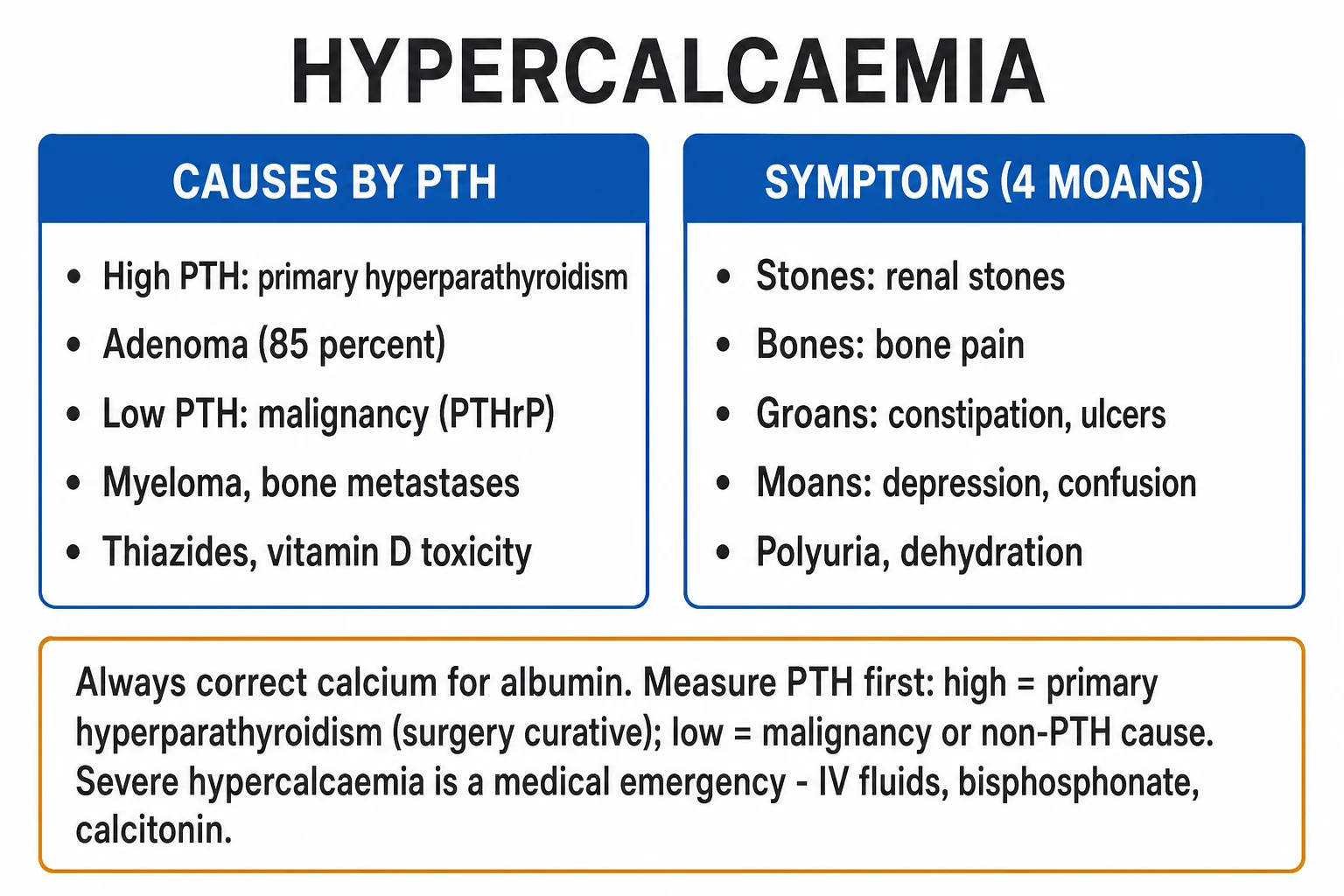
Primary hyperparathyroidism has a prevalence of roughly 1 percent of the general adult population, rising to 2 to 3 percent in those over 65, with a strong female predominance (3:1) and peak incidence in the fifth to seventh decades (postmenopausal women). In countries with routine biochemistry it is now the commonest cause of hypercalcaemia in ambulatory patients and the third commonest endocrine disorder after diabetes and thyroid disease.[2][4]
Malignancy-associated hypercalcaemia is the commonest cause in hospitalised inpatients and has a prevalence of up to 30 percent in advanced cancer; it carries a grim prognosis (median survival 30 to 60 days) if untreated.[1]
Risk factors and the causes they favour (high-yield): [1]
| Risk factor / host | Cause of hypercalcaemia |
|---|---|
| Postmenopausal woman over 50 | Primary hyperparathyroidism (adenoma) |
| Family history of hypercalcaemia, young age, FHH gene (CASR) | Familial hypocalciuric hypercalcaemia (FHH) — avoid surgery |
| Personal/family history of MEN1 (pituitary, pancreatic NETs, parathyroid) or MEN2A (medullary thyroid, phaeo, parathyroid) | Multigland primary hyperparathyroidism |
| Prior external neck irradiation in childhood | Parathyroid adenoma / carcinoma |
| Long-term lithium therapy | Lithium-induced HPT (shifts CaSR set-point) |
| Thiazide diuretic use | Unmasking of underlying PHPT (rarely sole cause) |
| CKD, dialysis, post-renal transplant | Secondary then tertiary HPT |
| Cancer (breast, lung, renal, myeloma, squamous of head/neck/oesophagus) | PTHrP, osteolytic metastases, myeloma |
| Sarcoidosis, TB, histoplasmosis, berylliosis, lymphoma | Granulomatous 1,25(OH)2-D production |
| Immobilised teenager, Paget disease | Immobilisation hypercalcaemia |
| Vitamin D supplementation, antacid overuse | Vitamin D / vitamin A intoxication, milk-alkali |
Pathophysiology
Calcium homeostasis is governed by a triad of hormones acting on three organs (gut, kidney, bone). The pivotal integrator is PTH, a 84-amino-acid peptide secreted from the chief cells of the four parathyroid glands in response to a fall in ionised calcium, sensed by the calcium-sensing receptor (CaSR) on the chief-cell membrane. PTH acts to raise the serum calcium through three mechanisms:[4]
- Bone — within minutes PTH stimulates osteoblasts, which indirectly activate osteoclasts via RANK-L, releasing calcium and phosphate from bone.
- Kidney — PTH increases distal tubular calcium reabsorption (and decreases proximal phosphate reabsorption — hence hypophosphataemia) and stimulates 1-alpha-hydroxylase in the proximal tubule, converting 25-OH-vitamin D to active 1,25-dihydroxyvitamin D (calcitriol).
- Gut (indirect) — calcitriol increases intestinal calcium absorption. [1]
The same loop is normally closed-loop: rising calcium feeds back through the CaSR to switch off PTH. Calcitonin, secreted by thyroid C cells, is a minor antagonist that inhibits osteoclasts acutely. [1]
Calcium-sensing receptor (CaSR) is the master sensor: a loss-of-function mutation (homozygous = neonatal severe primary HPT; heterozygous = FHH) shifts the set-point so that PTH is not suppressed even at high calcium. A gain-of-function mutation produces autosomal dominant hypocalcaemia.[2]
Primary hyperparathyroidism arises when one or more parathyroid glands escape feedback and secrete PTH autonomously (a single adenoma in 80 percent of cases, four-gland hyperplasia 15 percent, double adenoma 4 percent, parathyroid carcinoma under 1 percent). The result is PTH-driven bone resorption + renal calcium retention + phosphaturia + increased calcitriol, producing the biochemical signature of high calcium, low phosphate, high or high-normal PTH.[2]
Malignancy-associated hypercalcaemia has three mechanisms: [1]
- Humoral hypercalcaemia of malignancy (HHM, 80 percent of cases) — tumour-secreted PTH-related peptide (PTHrP) binds the PTH-1 receptor, mimicking PTH (bone resorption, renal Ca retention, phosphaturia). The key difference from PHPT is that PTHrP does not stimulate 1-alpha-hydroxylase, so 1,25-dihydroxyvitamin D is low. Classical tumours: squamous cell (lung, head and neck, oesophagus, cervix), renal cell, bladder, breast, ovarian.
- Osteolytic metastases (20 percent) — local cytokines (IL-1, IL-6, RANK-L, PTHrP) from tumour cells in bone stimulate osteoclasts directly. Classic: breast carcinoma, multiple myeloma, lymphoma.
- Ectopic 1-alpha-hydroxylase (rare) — seen in some lymphomas (and granulomatous disease), producing excess 1,25(OH)2-D with consequent gut calcium absorption. [1]
Granulomatous disease — activated macrophages express 1-alpha-hydroxylase and convert 25-OH-D to 1,25(OH)2-D, unregulated by PTH, leading to gut calcium over-absorption.[1]
Thiazides reduce urinary calcium excretion, which potentiates PTH and may unmask previously occult primary hyperparathyroidism. Lithium shifts the CaSR set-point so that higher calcium is needed to suppress PTH, producing a lithium-induced HPT that is typically four-gland and requires subtotal parathyroidectomy. [1]
Vitamin D intoxication produces hypercalcaemia through gut over-absorption and bone resorption; 25-OH-D levels are markedly elevated (over 150 ng/mL). [1]
Milk-alkali syndrome (now more accurately termed calcium-alkali syndrome) arises from excessive oral calcium carbonate (often over 4 g/day) typically with an acute kidney injury; the triad is hypercalcaemia, metabolic alkalosis and AKI.[1]
Clinical Presentation
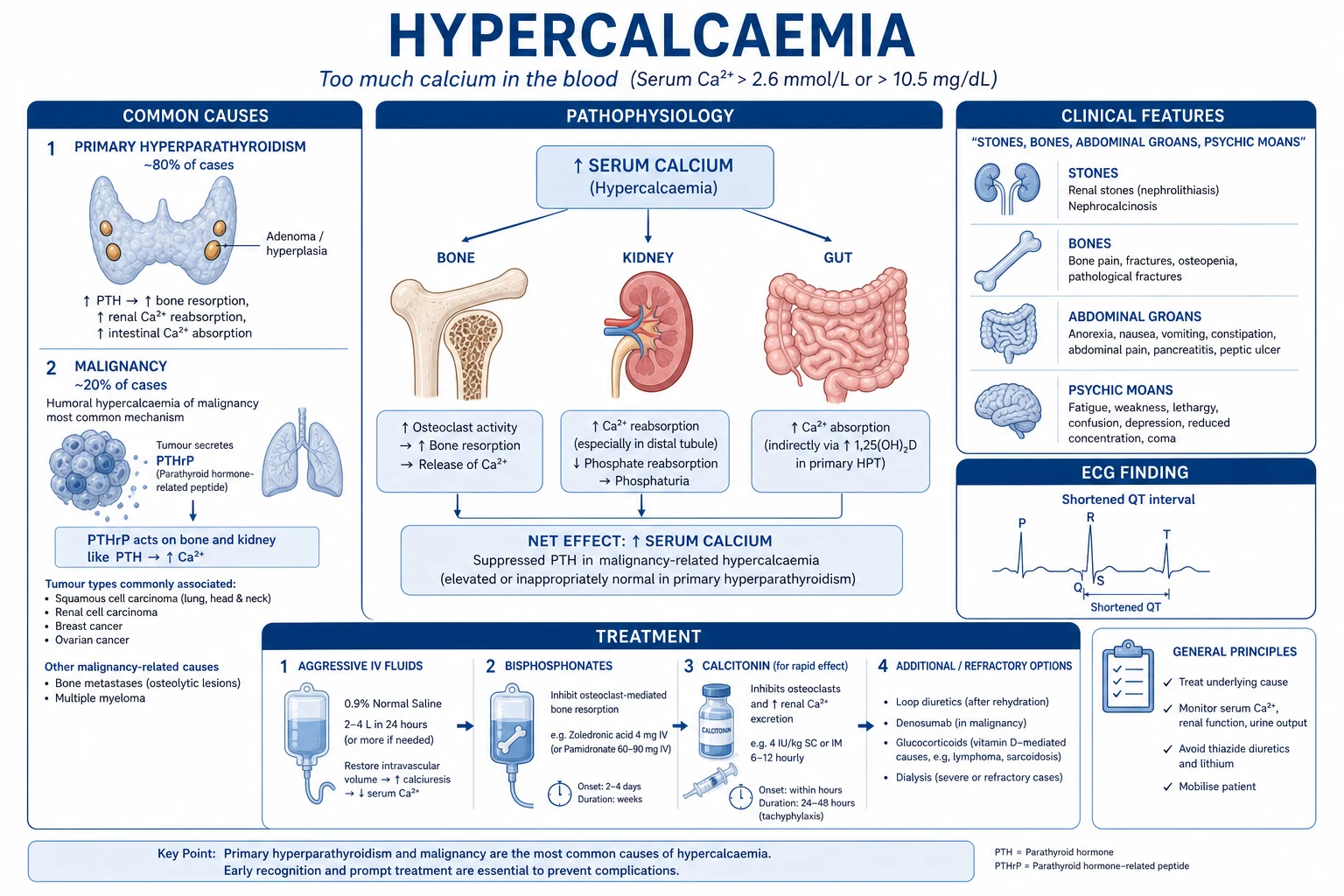
The modern face of primary hyperparathyroidism is asymptomatic — discovered incidentally on routine biochemistry. Symptomatic disease (now rare where biochemistry is routine) reproduces the classic mnemonic 'stones, bones, abdominal groans, psychic moans':[1][4]
Stones (renal) [1]
- Nephrolithiasis (calcium oxalate/phosphate) in 15 to 20 percent — recurrent in untreated disease; the most common overt complication.
- Nephrocalcinosis — diffuse renal parenchymal calcification.
- Polyuria, polydipsia (nephrogenic diabetes insipidus from renal concentrating defect) — contributes to dehydration in crisis.
- Chronic kidney disease from recurrent stones, nephrocalcinosis and direct hypercalcaemic tubular injury. [1]
Bones (skeletal) [1]
- Osteoporosis, especially cortical bone (distal forearm, hip).
- Classic but now rare osteitis fibrosa cystica (brown tumours of the long bones, salt-and-pepper skull, subperiosteal resorption of the radial side of the middle phalanges, clavicular resorption).
- Bone pain and fractures in advanced disease. [1]
Abdominal groans (gastrointestinal) [1]
- Constipation, anorexia, nausea, vomiting (decreased smooth-muscle tone).
- Peptic ulcer disease (PTH stimulates gastric acid; increased gastrin; MEN1 association with Zollinger-Ellison).
- Acute and chronic pancreatitis (calcium deposition in pancreatic ducts; hyperparathyroidism is one of the curable causes of recurrent pancreatitis). [1]
Psychic moans (neurological and psychiatric) [1]
- Fatigue, weakness (proximal myopathy), depression, anxiety, cognitive slowing, irritability.
- Severe cases: confusion, lethargy, drowsiness, coma (especially at calcium over 3.5 mmol/L). [1]
Cardiovascular [1]
- Hypertension (common association).
- Shortened QT interval on ECG — the hallmark ECG change (versus prolonged QT in hypocalcaemia); at very high calcium the PR interval may also lengthen and arrhythmias occur.
- Long-standing disease: left ventricular hypertrophy, valvular and myocardial calcification — controversial association with cardiovascular mortality. [1]
Other — band keratopathy (calcium deposition at the corneal limbus, visible on slit-lamp), pruritus, and ectopic soft-tissue calcification in chronic cases. [1]
Atypical presentations (high-yield): [1]
- Elderly — may present with acute confusion or 'failure to cope'; the only feature may be delirium — measure calcium in any unwell elderly patient.
- Pregnancy — symptomatic PHPT can precipitate maternal hypercalcaemic crisis, neonatal hypocalcaemia and tetany (from fetal parathyroid suppression); surgery is safest in the second trimester.
- Dialysis patient — severe pruritus, calciphylaxis-like lesions, fractures (tertiary HPT).
- Normocalcaemic PHPT — incidentally discovered high PTH with normal corrected calcium (after excluding vit D deficiency and CKD); treated as PHPT if complications develop.
- MEN1 patient — recurrent stones + concurrent pituitary (prolactinoma, acromegaly) and pancreatic NETs (gastrinoma = Zollinger-Ellison, insulinoma). [1]
Hypercalcaemic crisis — calcium over 3.5 mmol/L (14 mg/dL) with dehydration, confusion or coma, AKI, constipation, nausea/vomiting, polyuria; shortened QT on ECG. This is a true endocrine emergency. [1]
Differential Diagnosis
Hypercalcaemia is the finding; the differential is the cause. The PTH level splits it immediately.[1][4]
PTH-dependent (PTH inappropriately high or normal) [1]
- Primary hyperparathyroidism — single adenoma 80 percent; multigland hyperplasia 15 percent (MEN1, MEN2A, familial); parathyroid carcinoma under 1 percent (palpable neck mass, very high calcium over 3.5 mmol/L, very high PTH over 3 times ULN).
- Tertiary hyperparathyroidism — long-standing CKD/dialysis, post-renal-transplant; PTH high, calcium high.
- Lithium therapy — chronic use; multigland; reduce/stop if possible.
- Familial hypocalciuric hypercalcaemia (FHH) — autosomal dominant CaSR loss-of-function; benign lifelong; 24-h urinary calcium low (under 200 mg), calcium/creatinine clearance ratio under 0.01; surgery is not indicated — this is the single most important pitfall to exclude before surgery.
- Ectopic PTH secretion (extremely rare). [1]
PTH-independent (PTH suppressed) [1]
- Malignancy — PTHrP-mediated (squamous, renal, bladder, ovarian, breast); osteolytic (breast, myeloma, lymphoma); 1,25-OH-D ectopic (lymphoma). Features: known cancer, weight loss, anaemia, rapid onset, often PTHrP elevated.
- Multiple myeloma — elderly, anaemia, renal failure, raised ESR, hypercalcaemia with low PTH, back pain; diagnose with SPEP, UPEP, serum free light chains, bone marrow.
- Granulomatous disease — sarcoidosis (hilar lymphadenopathy, erythema nodosum, uveitis), tuberculosis, histoplasmosis, berylliosis. 1,25(OH)2-D elevated; 25-OH-D normal.
- Vitamin D intoxication — supplement history, 25-OH-D markedly elevated (over 150 ng/mL).
- Milk-alkali (calcium-alkali) syndrome — antacid overuse, metabolic alkalosis, AKI.
- Thiazide diuretics — usually unmask PHPT; rarely sole cause.
- Vitamin A intoxication, retinoids.
- Thyrotoxicosis — increased bone turnover; usually mild.
- Adrenal insufficiency — typical features (hypotension, hyponatraemia, hyperkalaemia).
- Immobilisation — young growing patients (spinal cord injury, cerebral palsy), Paget disease.
- Drugs — theophylline, oestrogen/anti-oestrogens (tamoxifen) in breast metastases. [1]
Distinguishing primary hyperparathyroidism from malignancy and FHH (the three high-yield differentials): [1]
| Feature | Primary HPT | Malignancy | FHH |
|---|---|---|---|
| PTH | High or high-normal | Suppressed (undetectable) | High-normal |
| Phosphate | Low | Low (PTHrP) or normal | Normal |
| 1,25-OH-D | High-normal | Low (PTHrP does not stimulate) | Normal |
| PTHrP | Normal | High (in 80 percent) | Normal |
| 24-h urinary Ca | High | High | Low (under 200 mg/day) |
| Ca/Cr clearance ratio | over 0.01 | over 0.01 | under 0.01 |
| Course | Chronic, indolent | Acute, rapid, ill patient | Lifelong, benign, asymptomatic |
| Family history | May suggest MEN1/2A | Usually none | Positive (AD inheritance) |
Clinical & Bedside Assessment
The bedside assessment answers two questions: how sick is the patient (severity) and what is the underlying cause (history and signs of malignancy, sarcoid, drugs, MEN).[1]
Vital signs and hydration — assess dehydration (tachycardia, dry mucous membranes, reduced skin turgor, postural drop), conscious level (GCS/confusion), and blood pressure (hypertension in PHPT; hypotension in adrenal insufficiency or severe crisis). [1]
Neck — palpate for a thyroid goitre, cervical lymphadenopathy, or rarely a palpable parathyroid mass (suspicious for carcinoma — usually hard, fixed, with recurrent laryngeal nerve palsy). [1]
Abdomen — epigastric tenderness (peptic ulcer, pancreatitis), palpable masses (malignancy). [1]
Cardiovascular — hypertension, signs of heart failure in chronic disease; ECG: shortened QT interval (corrected QT under 0.40 s; severe cases show PR prolongation, wide T waves, and arrhythmia). [1]
Skin and eyes — band keratopathy (limbal corneal calcium), xanthelasma, pruritus; erythema nodosum, lupus pernio (sarcoid); cafe-au-lait patches, neurofibromas (MEN); hirstutism, striae (Cushing). [1]
Neurology — proximal myopathy, depression/cognitive slowing, hyperreflexia (in severe hypercalcaemia; contrast with hypocalcaemic hyporeflexia). [1]
History pearls — ask about: kidney stones, fractures, peptic ulcer or pancreatitis (PHPT); weight loss, cough, haemoptysis, bone pain, night sweats (malignancy); drug history — lithium, thiazides, vitamin D/A, antacids, calcium supplements, herbal preparations; neck irradiation in childhood; family history of hypercalcaemia, endocrine tumours, MEN, or FHH. [1]
Investigations
The investigation strategy is staged: (1) confirm and quantify hypercalcaemia, (2) measure PTH to split the differential, (3) targeted second-line tests.[1][2]
First-line (every patient): [1]
- Corrected calcium (or ionised calcium) — confirm and quantify. Always recheck to rule out spurious elevation (e.g. tourniquet, prolonged venous stasis).
- Albumin — for the correction.
- Renal function (urea, creatinine, eGFR) — AKI in crisis, CKD in secondary/tertiary HPT.
- Intact PTH — the pivotal test. High or inappropriately normal PTH in the face of hypercalcaemia = PTH-dependent (primary or tertiary HPT, lithium, FHH). Suppressed PTH = PTH-independent (malignancy, granulomatous, drugs). PTH must be drawn BEFORE any treatment that changes calcium, especially bisphosphonates.
- Phosphate — low in PHPT and HHM (PTH/PTHrP phosphaturic); high in CKD/tertiary HPT and milk-alkali with AKI.
- Magnesium — hypomagnesaemia can alter PTH secretion.
- Alkaline phosphatase (ALP) — high in bone disease (PHPT, malignancy, Paget, vitamin D deficiency).
- 25-hydroxyvitamin D — deficiency is common and may mask or exacerbate PHPT; always check before diagnosing normocalcaemic PHPT.
- ECG — shortened QT (hypercalcaemic marker), PR prolongation; arrhythmia in crisis.
- Urinalysis — haematuria (renal cell cancer, calculi). [1]
Second-line (targeted by PTH result): [1]
- If PTH suppressed (suspect malignancy): PTHrP; SPEP, UPEP, serum free light chains (myeloma); 1,25-dihydroxyvitamin D (granulomatous, lymphoma); TSH (thyrotoxicosis); morning cortisol / short Synacthen test (adrenal insufficiency); ACE level and chest X-ray (sarcoid); vitamin A level; review all drugs (thiazides, lithium, vitamin D, antacids). Imaging: CT chest/abdomen/pelvis, mammogram, bone scan, myeloma screen (skull X-ray pelvis — 'raindrop' lytic lesions; MRI spine).
- If PTH high (PHPT confirmed): 24-hour urinary calcium and creatinine clearance to exclude FHH before any surgery; DEXA (hip, spine, distal third forearm — cortical site is most sensitive in PHPT); renal imaging (US or CT KUB) for stones and nephrocalcinosis; vitamin D level; genetic testing for MEN1 (menin), RET, CaSR if young, multigland, or suggestive family history. Sestamibi (MIBI) scan + high-resolution neck ultrasound for preoperative localisation of the adenoma; 4D-CT as second-line; MRI if reoperation or scarred neck. PTHrP may also be sent if coexistent malignancy suspected. [1]
Localisation before parathyroidectomy (high-yield): [1]
- Sestamibi (technetium-99 m sestamibi) scintigraphy, often with SPECT/CT — identifies single adenoma in 85 to 95 percent of cases (sensitive for adenoma; poor for hyperplasia).
- High-resolution neck ultrasound — operator-dependent; good for intrathyroidal adenomas; combined with MIBI gives the best localisation.
- 4D-CT — second-line; useful in reoperative cases.
- Selective venous sampling — reserved for failed prior surgery. [1]
Reproduce the biochemical signature (exam high-yield): [1]
| Variable | Primary HPT | Malignancy (PTHrP) | Granulomatous | FHH |
|---|---|---|---|---|
| Total/corrected Ca | High | High | High | Mildly high (lifelong) |
| Intact PTH | High / inappropriately normal | Suppressed | Suppressed | High-normal |
| Phosphate | Low | Low | Normal-high | Normal |
| ALP | High-normal to high | Variable | Normal | Normal |
| 25-OH-D | Variable | Normal | Normal | Normal |
| 1,25-OH-D | High-normal | Low | High | Normal |
| PTHrP | Normal | High | Normal | Normal |
| 24-h urinary Ca | High | High | High | Low (under 200 mg/day) |
| Ca/Cr clearance ratio | over 0.01 | over 0.01 | over 0.01 | under 0.01 |
Management — Resuscitation
Severe or symptomatic hypercalcaemia (calcium over 3.0 mmol/L with symptoms, or over 3.5 mmol/L regardless of symptoms) is an endocrine emergency. The resuscitation bundle has three tiers that act on different timescales.[1]
Tier 1 — Initial resuscitation (hours) [1]
- ABC + IV access + cardiac monitoring (shortened QT, arrhythmia risk).
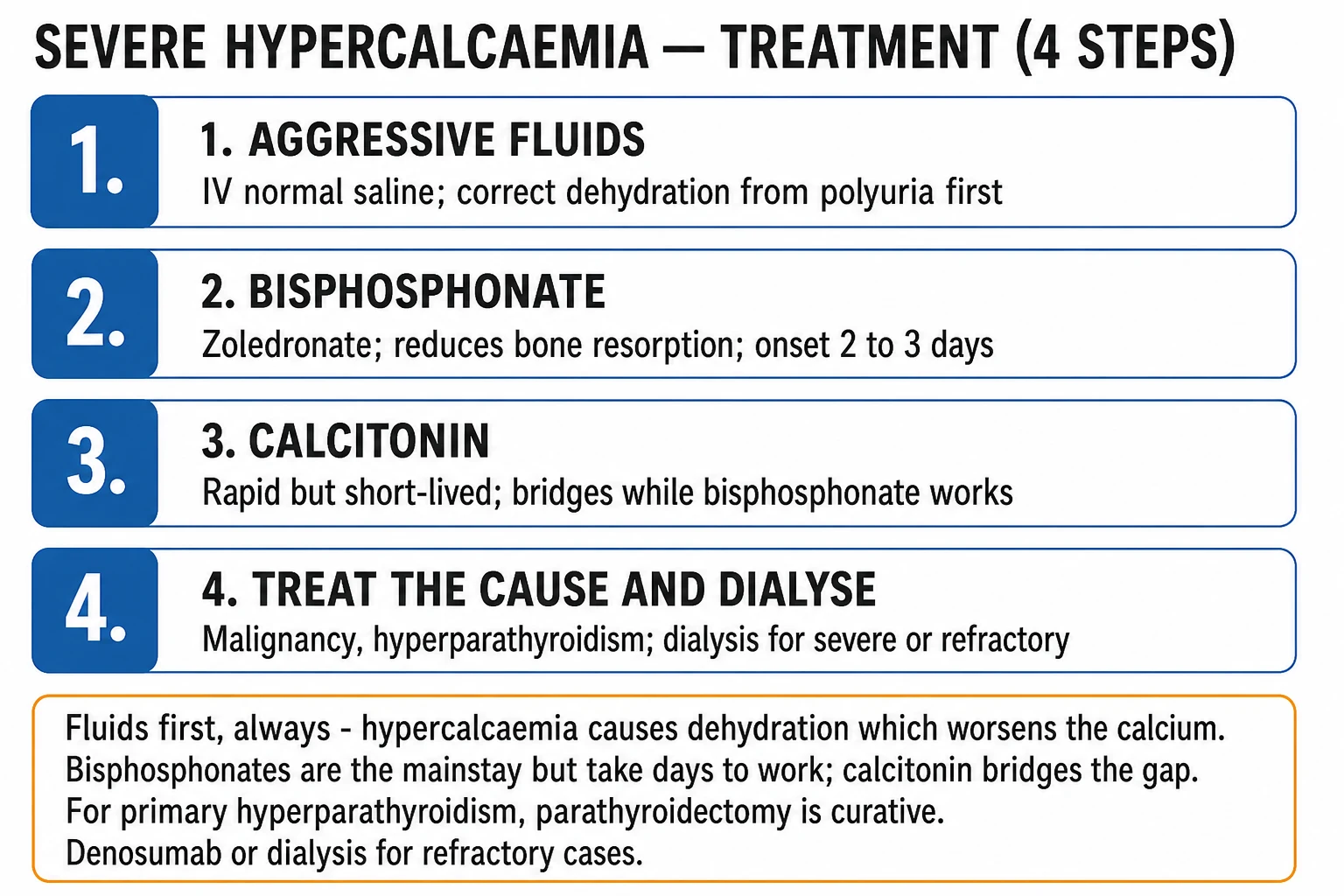
- Aggressive isotonic saline — the cornerstone. The patient is volume-depleted from polyuria (nephrogenic DI from hypercalcaemia) and vomiting. Normal saline 200 to 500 mL/hour titrated to euvolaemia and urine output, target 3 to 6 L over the first 24 hours in the absence of cardiac/renal failure (use caution in heart failure; use furosemide 20 to 40 mg IV only after rehydration to drive calciuria, and only if volume-replete — the old 'lasix loop' has fallen out of routine favour because it causes hypokalaemia, hypomagnesaemia and dehydration if used before euvolaemia).
- Stop offending drugs — thiazides, lithium (if possible), vitamin D, calcium supplements, antacids.
- Treat the underlying cause in parallel (e.g. glucocorticoids for granulomatous disease or lymphoma, chemotherapy for malignancy, IV saline alone for FHH — though FHH rarely needs treatment). [1]
Tier 2 — Calcitonin (within hours, peak at 12 to 24 h) [1]
- Salmon calcitonin 4 to 8 IU/kg subcutaneously or IM every 12 hours — works within 4 to 6 hours (peak 12 to 24 h) by inhibiting osteoclasts and increasing renal calcium excretion. Tachyphylaxis after 48 h limits longer use; useful as a bridge to bisphosphonate effect. Side effects — nausea, flushing, allergic reaction (skin test for salmon calcitonin). [1]
Tier 3 — Bisphosphonate (within 24 to 48 h, peak at 2 to 4 days) [1]
- Pamidronate 60 to 90 mg IV over 2 to 4 hours (90 mg for calcium over 3.5 mmol/L), OR
- Zoledronate 4 mg IV over 15 minutes (preferred in malignancy; longer duration of action).
- Mechanism — potent osteoclast inhibitors; onset 24 to 48 h; nadir at 4 to 7 days; duration weeks (malignancy 1 to 4 weeks; PHPT 1 to 2 months).
- Side effects — acute-phase reaction (fever, myalgia, flu-like — common after first dose), hypocalcaemia, hypophosphataemia, nephrotoxicity (avoid rapid infusion; check renal function; dose-reduce in CKD), osteonecrosis of the jaw (rare, mostly with repeated doses in cancer), atypical femoral fractures with long-term use. Avoid in pregnancy (teratogenic in animals).
- Caution in CKD — zoledronate is contraindicated if eGFR under 35 mL/min; pamidronate is safer (use lower dose, longer infusion, dose-adjust). [1]
Tier 4 — Refractory or special situations [1]
- Denosumab 60 to 120 mg subcutaneously — monoclonal antibody to RANK-L, very effective in malignancy-associated hypercalcaemia (including bisphosphonate-refractory cases); does not require renal dose adjustment; risk of severe hypocalcaemia (monitor closely). Onset 3 to 7 days.
- Glucocorticoids — prednisolone 20 to 40 mg/day — only effective where hypercalcaemia is driven by excess 1,25-OH-D (granulomatous disease, lymphoma, vitamin D intoxication); not effective in PHPT or PTHrP-mediated malignancy.
- Haemodialysis or peritoneal dialysis (low-calcium bath) — temporary calcium reduction in severe renal failure, cardiac instability, or failure of medical therapy; useful in malignancy with severe AKI.
- Cinacalcet (oral calcimimetic) — not for acute crisis (slow onset), but useful in PHPT, parathyroid carcinoma, secondary/tertiary HPT. [1]
Management — Definitive & Stepwise
The definitive treatment depends on the cause. The only curative treatment for primary hyperparathyroidism is surgery; medical therapy is for those who decline or cannot have surgery.[2][3][5]
Primary hyperparathyroidism — surgical criteria (Fifth International Workshop 2022, AAES 2016)
Surgery is recommended if ANY of the following (one set of criteria applies; AAES adds more): [1]
- Symptomatic disease — nephrolithiasis (imaging or history), fragility fracture, classic osteitis fibrosa cystica.
- Serum calcium greater than 0.25 mmol/L (1.0 mg/dL) above the upper limit of normal.
- Skeletal — DEXA T-score under −2.5 at any site (lumbar spine, total hip, femoral neck, or distal third forearm — the cortical site most affected by PHPT), or vertebral fracture by imaging (X-ray, CT, MRI, VFA).
- Renal — creatinine clearance (eGFR) under 60 mL/min; 24-hour urine calcium over 400 mg/day (North American Workshop; European not required); nephrolithiasis or nephrocalcinosis by imaging (X-ray, ultrasound or CT).
- Age under 50 years (because complications accumulate over decades).
- AAES 2016 adds — neuropsychiatric symptoms attributable to PHPT, cardiovascular disease attributable to PHPT, unable to participate in long-term surveillance. [1]
Patients who do NOT meet criteria can be monitored — annual corrected calcium and creatinine, DEXA every 1 to 3 years, renal imaging if symptoms. Maintain vitamin D sufficiency (25-OH-D at least 75 nmol/L) — repletion does not worsen hypercalcaemia but improves bone density.[3]
Surgery — what the operation is
- Focused minimally invasive parathyroidectomy (MIP) — single-gland disease localised on MIBI + ultrasound. Performed under local or general anaesthesia as day surgery. Intraoperative PTH (ioPTH) assay confirms cure: PTH falls by at least 50 percent into the normal range within 10 minutes of adenoma excision (Miami criterion).
- Bilateral neck exploration (four-gland) — for multigland disease, MEN1/MEN2A, negative localisation, or failed MIP. Subtotal parathyroidectomy (leaving 30 to 50 mg) or total with autotransplantation to the forearm (MEN1).
- Parathyroid carcinoma — en bloc resection with ipsilateral thyroid lobectomy and any involved structures; survival 85 percent at 5 years, 49 to 77 percent at 10 years; recurrence in 50 percent; PTH and calcium surveillance; cinacalcet for refractory hypercalcaemia. [1]
Medical management (when surgery is declined or contraindicated)
- Cinacalcet 30 to 60 mg orally twice daily (titrate to maximum 120 mg tds) — allosteric CaSR agonist that lowers calcium within hours to days and lowers PTH but does not improve bone density. NICE NG132 recommends cinacalcet for symptomatic PHPT in whom surgery is contraindicated or has failed, when corrected calcium over 2.85 mmol/L and symptoms present.[1]
- Bisphosphonates (oral alendronate 70 mg weekly, or IV zoledronate) — improve bone density but do not lower calcium meaningfully.
- Vitamin D repletion — to maintain 25-OH-D over 50 nmol/L; improves bone density; monitor calcium.
- Hydration — encourage 2 to 3 L/day oral fluids; avoid thiazides (worsen hypercalcaemia); avoid prolonged immobilisation.
Secondary hyperparathyroidism (CKD)
- Phosphate restriction + phosphate binders (calcium acetate, sevelamer, lanthanum).
- Active vitamin D — calcitriol 0.25 to 1 microgram daily or paricalcitol (selective VDR activator, less hypercalcaemia/hyperphosphataemia).
- Cinacalcet / etelcalcetide (IV calcimimetic) if PTH over 9 times ULN despite above.
- Parathyroidectomy (subtotal or total with autotransplantation) for refractory disease with hypercalcaemia, severe bone disease, or calciphylaxis. [1]
Tertiary hyperparathyroidism
- After renal transplantation, hypercalcaemia usually resolves in months as the graft functions.
- Persistent hypercalcaemia over 6 months post-transplant, symptomatic disease, or progressive renal damage → subtotal or total parathyroidectomy with autotransplantation. [1]
Specific cause-directed therapy
- Malignancy — treat the underlying cancer; bisphosphonate/denosumab; PTHrP-mediated disease responds to bisphosphonate but recurs; denosumab effective in refractory cases.
- Granulomatous disease — prednisolone 20 to 40 mg/day (reduces macrophage 1-alpha-hydroxylase); treat the underlying sarcoid/TB; avoid sun/vitamin D.
- Vitamin D intoxication — stop vitamin D, IV saline, glucocorticoids; consider bisphosphonate.
- Milk-alkali syndrome — stop calcium carbonate and alkali, IV saline; usually self-limited with renal recovery.
- Thyrotoxicosis — treat the underlying thyroid disease; bisphosphonate if severe.
- Adrenal insufficiency — IV hydrocortisone 100 mg stat then 200 mg/24 h.
- Immobilisation — mobilise; bisphosphonate if severe.
- Lithium — switch psychiatric agent if possible; otherwise subtotal parathyroidectomy.
- FHH — NO treatment (and no surgery); counsel about benign inheritance; consider genetic testing of family. [1]
Specific Subtypes & Scenarios
- Single parathyroid adenoma (80 percent) — the commonest surgical lesion; localise with MIBI + US; focused parathyroidectomy with ioPTH.
- Four-gland hyperplasia (15 percent) — sporadic or MEN1/MEN2A; treat with subtotal parathyroidectomy (3.5 glands) or total with autotransplantation.
- Double adenoma (4 percent) — remove both; recurrence risk; check MEN.
- Parathyroid carcinoma (under 1 percent) — palpable neck mass, very high calcium over 3.5 mmol/L, PTH over 3 to 10 times ULN, recurrent laryngeal nerve palsy, invasion; treat with en bloc resection; adjuvant radiotherapy in selected cases; cinacalcet for refractory hypercalcaemia; prognosis guarded.
- MEN1 (Wermer) — parathyroid hyperplasia (90 percent) + pancreatic NETs (gastrinoma, insulinoma) + pituitary adenoma (prolactinoma); PHPT is the first and commonest manifestation; treat with subtotal parathyroidectomy; recurrence common.
- MEN2A (Sipple) — medullary thyroid carcinoma + phaeochromocytoma + parathyroid hyperplasia (20 to 30 percent); screen RET mutation carriers; phaeo must be excluded/removed before parathyroid surgery.
- Familial hypocalciuric hypercalcaemia (FHH) — autosomal dominant CaSR mutation; benign; calcium/Cr clearance ratio under 0.01; avoid surgery; counsel about lifelong benign course; check family.
- Lithium-induced HPT — usually four-gland; reduce/stop lithium if possible; otherwise subtotal parathyroidectomy.
- Hypercalcaemic crisis — see Resuscitation; definitive parathyroidectomy once stabilised (urgent if PHPT).
- Normocalcaemic PHPT — high PTH, normal corrected calcium, after excluding vit D deficiency and CKD; treat if complications (stones, osteoporosis) develop.
- Parathyroidectomy in CKD/dialysis (tertiary HPT) — subtotal or total with forearm autotransplantation.
- Pregnancy — symptomatic PHPT or calcium over 2.85 mmol/L → surgery in the second trimester (safest window); first trimester risks miscarriage, third trimester risks preterm labour; cinacalcet is not recommended in pregnancy (limited data). [1]
Complications & Pitfalls
Complications of untreated PHPT: [1]
- Nephrolithiasis, nephrocalcinosis, CKD (and progression to ESRD in severe disease).
- Osteoporosis (especially cortical bone — distal forearm, hip).
- Osteitis fibrosa cystica (brown tumours, salt-and-pepper skull) — rare today.
- Peptic ulcer disease, pancreatitis.
- Hypertension, cardiovascular calcification (controversial association).
- Neurocognitive decline, depression (often under-recognised; may improve with cure).
- Hypercalcaemic crisis with coma, AKI, arrhythmia. [1]
Complications of parathyroidectomy: [1]
- Recurrent laryngeal nerve injury — hoarseness (unilateral), stridor (bilateral); permanent in 1 percent.
- Hypocalcaemia (post-operative) — transient in up to 25 percent; check calcium at 6, 12, 24 h; treat symptomatic or Ca under 1.9 mmol/L with oral calcium and calcitriol, IV calcium gluconate if severe.
- Hungry bone syndrome — severe prolonged hypocalcaemia, hypophosphataemia, hypokalaemia, hypomagnesaemia due to sudden bone remineralisation after parathyroidectomy; risk in severe preoperative bone disease, high ALP, large adenoma, long-standing disease; treat with high-dose calcium (oral + IV), calcitriol, magnesium, potassium for days to weeks.
- Persistent or recurrent hyperparathyroidism — persistent (calcium high within 6 months) usually from missed adenoma or supernumerary gland; recurrent (after 6 months) usually from multigland disease.
- Neck haematoma — surgical emergency if airway compromise; re-open at bedside.
- Wound infection, seroma. [1]
Classic pitfalls: [1]
- Failing to exclude FHH before surgery — 24-h urinary calcium and Ca/Cr clearance ratio in any young patient with mild hypercalcaemia and family history; surgery does not cure FHH.
- Missing MEN1/MEN2A — young patient with multigland disease → screen for MEN1 (menin gene), pituitary and pancreatic tumours; MEN2A (RET) — medullary thyroid carcinoma and phaeochromocytoma must be excluded before neck surgery (phaeo crisis perioperatively if missed).
- Using bisphosphonates in CKD without dose-adjustment — nephrotoxicity.
- Glucocorticoids given for PHPT or PTHrP-mediated malignancy — they do not work; only effective in 1,25-OH-D mediated disease (granulomatous, lymphoma, vitamin D intoxication).
- Treating mild asymptomatic PHPT inappropriately — many patients are appropriately monitored; criteria for surgery are explicit.
- Drawing PTH after bisphosphonate — calcium falls, PTH rises (now appropriate, not primary HPT); always measure PTH before treatment.
- Thiazides for hypercalcaemia-induced nephrolithiasis — thiazides are correct for idiopathic hypercalciuria but worsen PHPT.
- Forgetting 1,25-OH-D and 25-OH-D — without these, granulomatous disease and vitamin D intoxication are missed. [1]
Prognosis & Disposition
Primary hyperparathyroidism — curative with successful parathyroidectomy (success rate over 95 percent in expert hands with ioPTH). Bone density improves within 1 year and continues to improve for several years; renal stone risk falls; neurocognitive symptoms often improve (though evidence is mixed). Untreated asymptomatic PHPT meeting monitoring criteria has a stable course in most, but progressive bone loss, stones, or worsening hypercalcaemia develop in about 25 percent over 15 years.[2][4]
Malignancy-associated hypercalcaemia — poor prognosis; median survival 30 to 60 days untreated, improved modestly with bisphosphonate/denosumab and tumour treatment. Hypercalcaemia is often a late marker of advanced disease. [1]
Parathyroid carcinoma — 5-year survival 85 percent; 10-year 49 to 77 percent; recurrence in ~50 percent; PTH/calcium surveillance mandatory. [1]
Hypercalcaemic crisis — mortality up to 50 percent untreated; prompt recognition and aggressive IV saline + bisphosphonate dramatically improves outcome. [1]
Secondary and tertiary HPT in CKD — medical management controls most; parathyroidectomy reserved for refractory disease. Renal transplant may resolve tertiary HPT over months. [1]
Disposition — mild asymptomatic PHPT → outpatient with monitoring; symptomatic PHPT meeting surgical criteria → elective parathyroidectomy; hypercalcaemic crisis or severe symptomatic → admit for IV saline and bisphosphonate; renal failure with severe hypercalcaemia → consider dialysis. [1]
Special Populations
- Pregnancy — symptomatic PHPT (calcium over 2.85 mmol/L or symptoms) → surgery in the second trimester (safest). Untreated PHPT risks maternal hypercalcaemic crisis at delivery, neonatal hypocalcaemia and tetany (fetal parathyroid suppression). Avoid bisphosphonates (teratogenic); cinacalcet not recommended. Mild asymptomatic disease → monitor.
- Elderly — atypical presentation with delirium, falls, 'failure to cope'; measure calcium in any unwell older patient. They tolerate hypercalcaemic crisis poorly — early aggressive saline. Surgery safe in fit elderly.
- CKD and dialysis — secondary HPT common; manage with phosphate binders, active vitamin D, calcimimetics; parathyroidectomy for refractory disease. Tertiary HPT post-transplant may need surgery. Avoid zoledronate if eGFR under 35.
- Children and adolescents — rare; consider MEN1, MEN2A, FHH, Williams syndrome, juvenile sarcoidosis, immobilisation; genetic testing is often indicated.
- Cardiac disease — hypercalcaemia can worsen arrhythmia; correct slowly if severe; monitor ECG.
- Post-parathyroidectomy — check calcium, PTH, magnesium, phosphate serially; counsel on hungry bone syndrome; calcium/calcitriol replacement if needed; voice assessment for RLN injury. [1]
Evidence, Guidelines & Regional Differences
Fifth International Workshop on Primary Hyperparathyroidism (2022)[2] — the global reference standard for evaluation and management; defines surgical criteria, monitoring, and the role of cinacalcet. Fourth Workshop (2013/2014)[3] — superseded but historically important (introduced monitoring criteria).
AAES Guidelines 2016 (Wilhelm et al.)[5] — American Association of Endocrine Surgeons; emphasise surgery as definitive therapy; expanded indications (neuropsychiatric and cardiovascular); operative technique.
NICE NG132 (2019)[1] — UK guideline; recommends surgery for symptomatic disease or corrected calcium over 2.85 mmol/L with symptoms; cinacalcet for symptomatic PHPT where surgery contraindicated; DEXA including distal forearm; information and support for patients.
Key regional deltas: [1]
- US/AAES — broader surgical indications (includes neuropsychiatric and cardiovascular); cinacalcet less emphasised.
- UK/NICE — explicit cinacalcet pathway for symptomatic non-surgical PHPT; 24-hour urinary calcium NOT routinely required for diagnosis of FHH (but recommended if any suspicion).
- Europe — Third/Fourth European Workshop criteria broadly overlap; 24-h urinary calcium threshold for surgery historically lower (350 mg/day) than North America (400 mg/day).
- India (ICMR/Endocrine Society of India) — uses Workshop criteria; vitamin D deficiency is highly prevalent and coexists with PHPT, often producing normocalcaemic or vitamin-D-deficient PHPT — replete vitamin D before final diagnosis. [1]
Landmark trials / developments: [1]
- Calcimimetics (cinacalcet, etelcalcetide) — paradigm shift in medical management of PHPT and SHPT.
- Intraoperative PTH (Miami criterion) — enables focused minimally invasive parathyroidectomy.
- Denosumab for malignancy-associated hypercalcaemia — effective in bisphosphonate-refractory cases.
- Normocalcaemic PHPT — increasingly recognised entity since the Third Workshop; not yet a separate diagnosis in all guidelines. [1]
Controversies: [1]
- Whether asymptomatic PHPT has subtle neurocognitive and cardiovascular morbidity that justifies broader surgical indication — unresolved.
- Vitamin D repletion in PHPT — historically feared to worsen hypercalcaemia; modern data show it is safe and improves bone density.
- Cinacalcet lowers calcium but not bone density — role versus bisphosphonate in non-surgical PHPT.
- Genetic screening in young/multigland PHPT — increasingly accessible. [1]
Exam Pearls
Hypercalcaemia — the numbers that decide the answer
Causes of hypercalcaemia — CHIMPANZEES
CHIMPANZEES
excess oral calcium carbonate; metabolic alkalosis + AKI
commonest outpatient cause; adenoma 80 percent
young growing skeleton or Paget disease
PTHrP (squamous, renal, breast); osteolytic mets (breast, myeloma)
with immobilisation; Williams syndrome in infancy
adrenal insufficiency; thyrotoxicosis
sarcoid, TB, histoplasmosis, berylliosis — 1,25-OH-D excess
vitamin D intoxication (25-OH-D over 150 ng/mL); vitamin A
increased bone turnover
thiazides potentiate renal calcium retention; lithium shifts CaSR set-point
exclude FHH (Ca/Cr ratio under 0.01) before surgery; MEN in multigland disease
Hyperparathyroidism — the clinical tetrad
MOANS
fatigue, depression, anxiety, cognitive slowing, confusion in crisis
bone pain, fractures, brown tumours, salt-and-pepper skull (rare today)
constipation, peptic ulcer (MEN1 gastrinoma), pancreatitis
calcium oxalate/phosphate stones (15 to 20 percent); commonest overt complication
stones, bones, groans, moans — plus shortened QT on ECG
Exam application bank (NEET-PG / INICET)
One-line answer
Hypercalcaemia is a corrected serum calcium over 2.6 mmol/L (10.4 mg/dL); it is dangerous above 3.5 mmol/L (14 mg/dL) — hypercalcaemic crisis with confusion, dehydration, AKI and shortened QT. Causes split by PTH: PTH-dependent (primary and tertiary hyperparathyroidism, lithium, familial hypocalciuric hypercalcaemia) versus PTH-independent (malignancy via PTHrP, osteolytic metastases (breast, myeloma), granulomatous disease (sarcoid, TB), vitamin D intoxication, thiazides, immobilisation, thyrotoxicosis). Primary hyperparathyroidism is the commonest outpatient cause (single parathyroid adenoma 80 percent, hyperplasia 15 percent, double adenoma 4 percent, carcinoma under 1 percent); malignancy is the commonest inpatient cause and the commonest cause overall in a sick patient. Acute severe hypercalcaemia is treated with aggressive isotonic saline (3 to 6 L over 24 hours) then IV bisphospho [1]
Worked stems (answer without another resource)
Stem 1 — Classic presentation. Map symptoms to mechanism; name the first investigation and first treatment step with dose/route if drug therapy is standard. [1]
Stem 2 — Unstable / complicated. List red flags that force immediate resuscitation, theatre, ICU, antidote, or reperfusion — and what you do in the first 15 minutes. [1]
Stem 3 — Atypical group. Elderly, pregnancy, child, or immunocompromised: how presentation and thresholds change. [1]
Stem 4 — Differential trap. Name the three closest mimics and one discriminator for each. [1]
Stem 5 — Disposition. Who goes home with safety-netting, who is admitted, who needs HDU/ICU/theatre, and what follow-up is mandatory. [1]
Rapid viva checklist
- Definition + classification
- Pathophysiology chain
- Bedside signs / criteria
- Score with exact components (if any)
- Emergency bundle
- Definitive therapy with doses
- Complications of disease and of treatment
- Special populations
- Guideline/trial name if classic
- Three exam traps
Coverage self-check
If you cannot answer any stem above from this page alone, re-read the matching section — the page is intended to be self-sufficient for final-prof and NEET-PG/INICET questions on Hypercalcaemia and Hyperparathyroidism.
References
- [1]Turner JJO. Hypercalcaemia - presentation and management Clin Med (Lond), 2017.PMID 28572230
- [2]Bilezikian JP, Khan AA, Silverberg SJ, et al. Evaluation and Management of Primary Hyperparathyroidism: Summary Statement and Guidelines from the Fifth International Workshop J Bone Miner Res, 2022.PMID 36245251
- [3]Marcocci C, Bollerslev J, Khan AA, Bilezikian JP. [Evaluation of association of myocardial bridge in the left anterior descending coronary with coronary atherosclerosis (stenosis > 50%) in the segment proximal to the site of bridge on coronary cta in hypertension subjects] Zhonghua Yi Xue Za Zhi, 2014.PMID 25152278
- [4]Walker MD, Silverberg SJ. Death as a Consequence of Foreign Body Aspiration in Children Med Arch, 2018.PMID 30061771
- [5]Wilhelm SM, Wang TS, Ruan DT, et al. The American Association of Endocrine Surgeons Guidelines for Definitive Management of Primary Hyperparathyroidism JAMA Surg, 2016.PMID 27532368