Endocrinology · General Medicine
Multiple Endocrine Neoplasia (MEN) Syndromes
Also known as Multiple endocrine neoplasia · MEN · MEN 1 · MEN 2 · Wermer syndrome · Sipple syndrome
Multiple endocrine neoplasia (MEN) syndromes are autosomal dominant disorders in which a single germline mutation predisposes to tumours of two or more endocrine glands throughout life. MEN 1 (Wermer syndrome) is caused by the MEN1 gene (menin) tumour suppressor on chromosome 11q13 and follows the 3 P's rule: Primary hyperparathyroidism (commonest, multi-gland hyperplasia), Pituitary adenoma (prolactinoma commonest) and Pancreatic neuroendocrine tumour (gastrinoma with Zollinger-Ellison commonest; insulinoma second). MEN 2A (Sipple syndrome) and MEN 2B are caused by the RET proto-oncogene on chromosome 10q11.2: MEN 2A features medullary thyroid carcinoma (near 100 percent), phaeochromocytoma (around 50 percent, often bilateral) and parathyroid hyperplasia (around 20 percent), while MEN 2B features aggressive medullary thyroid cancer, phaeochromocytoma, mucosal neuromas and marfanoid habitus with no parathyroid disease. MEN 4 is caused by a CDKN1B (p27) mutation and mimics MEN 1. Diagnosis is by genetic testing (RET for MEN 2, MEN1 gene for MEN 1) combined with biochemical surveillance. Management includes prophylactic thyroidectomy in MEN 2 RET carriers (timing by ATA mutation risk), treating each tumour, alpha-blockade before any surgery in MEN 2, and lifelong cascade screening of first-degree relatives (MEN 2 from birth, MEN 1 from age 5).
On this page & tools
Your progress
Saved locally on this device.
Practise this topic
Exam tags
Red flags
Overview & Definition
The multiple endocrine neoplasia (MEN) syndromes are the paradigm of hereditary endocrine cancer - a single inherited germline mutation predisposes the carrier to tumours in two or more endocrine glands throughout life, with near-complete penetrance but variable expressivity. They are autosomal dominant, so each child of an affected parent has a 50 percent risk of inheriting the mutation, and they are the textbook example of how identifying one tumour in a young patient obliges you to look for the others in the patient and the family.[1][2]
Two genes dominate the field, and they work in opposite molecular directions: MEN 1 is caused by loss of a tumour SUPPRESSOR (the MEN1 gene encoding menin on chromosome 11q13), while MEN 2 is caused by activation of a PROTO-oncogene (the RET receptor tyrosine kinase on chromosome 10q11.2). A fifth syndrome, MEN 4, is caused by mutation of CDKN1B (p27/Kip1) and mimics MEN 1 but is rarer. The clinical skill in MEN is to recognise the pattern (medullary thyroid cancer plus phaeochromocytoma equals MEN 2; primary hyperparathyroidism plus pituitary plus pancreatic tumour equals MEN 1), genetically confirm it, and then manage proactively - with prophylactic thyroidectomy in MEN 2 RET carriers and lifelong biochemical surveillance of the patient and their relatives. Genetic diagnosis plus cascade screening has transformed MEN 2 from a frequently fatal cancer predisposition into a preventable disease.[1][2][5]
Classification
MEN is classified into four named syndromes, each defined by a gene, a triad of tumours and a penetrance pattern. Recognising the triad at the bedside makes the genetic diagnosis.[1][2]
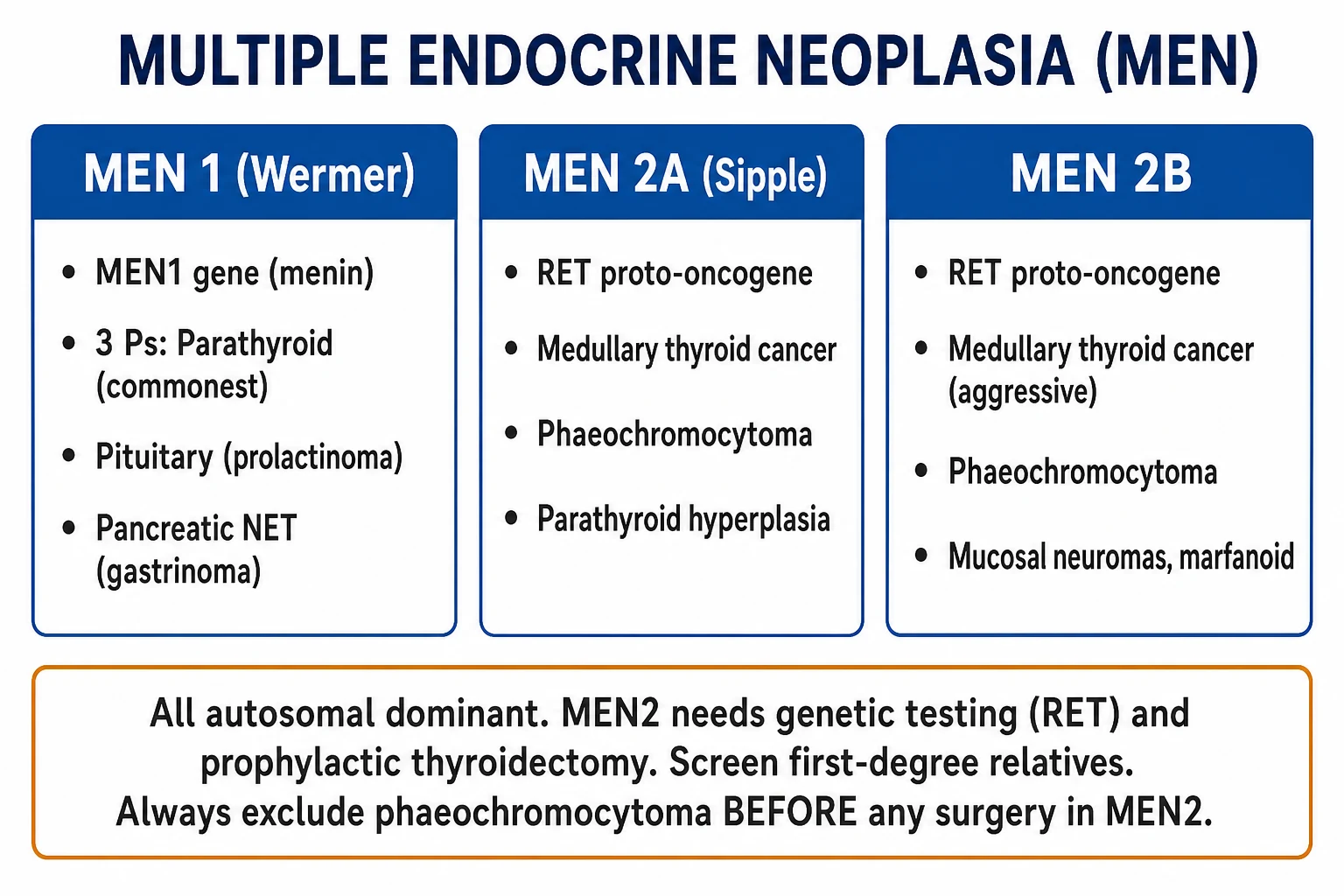
MEN 1 (Wermer)
MEN1 gene / menin - chr 11q13
- Tumour SUPPRESSOR (loss-of-function), Knudson two-hit
- 3 P's: Parathyroid (commonest, ~90%), Pituitary (prolactinoma), Pancreatic NET (gastrinoma, insulinoma)
- Primary hyperparathyroidism is the earliest and commonest manifestation
- Medullary thyroid cancer and phaeo are ABSENT
- Leading cause of death: malignant enteropancreatic NET (gastrinoma)
- Screen relatives from age 5
MEN 2A (Sipple)
RET codon 634 - chr 10q11.2
- PROTO-oncogene (gain-of-function) - extracellular cysteine
- Medullary thyroid cancer (~100%), Phaeo (~50%, often bilateral), Parathyroid (~20%, milder)
- MTC is usually the first manifestation
- Prophylactic thyroidectomy by about age 5 in carriers
- Good prognosis with prophylactic thyroidectomy and surveillance
MEN 2B
RET codon 918 (M918T) - TK domain
- PROTO-oncogene (gain-of-function) - highest ATA risk
- Aggressive early MTC, Phaeo, Mucosal neuromas, Marfanoid habitus, Ganglioneuromatosis (constipation)
- NO parathyroid disease
- Prophylactic thyroidectomy in INFANCY (within first months)
- Worst prognosis; often de novo mutation
- Characteristic facies - lips, tongue, eyelids
MEN 4
CDKN1B (p27/Kip1)
- Loss-of-function of cell-cycle inhibitor p27
- Phenocopy of MEN 1: parathyroid, pituitary, pancreatic, adrenal, renal tumours
- Suspect when MEN 1 phenotype but MEN1 sequencing is negative
- Much rarer than MEN 1
- Same surveillance as MEN 1
The ATA RET mutation risk categories refine MEN 2 management. The American Thyroid Association stratifies RET mutations into highest (level D - includes the MEN 2B M918T codon 918, where MTC can be aggressive in infancy), high (level C - includes the C634R codon 634 typical of MEN 2A) and moderate (level A/B - codons such as 609, 611, 618, 620, 630, 768, 790, 791, 804, 891). The risk level sets the age at which prophylactic thyroidectomy is offered - the practical translation of molecular genetics into surgical timing.[3][7]
Epidemiology & Risk Factors
MEN syndromes are individually rare but together account for a substantial fraction of hereditary endocrine tumours. MEN 1 has a prevalence of about 1 in 30,000, with penetrance approaching 90 percent by age 50 and near 100 percent by age 80; primary hyperparathyroidism is the first and commonest manifestation. MEN 2 has a prevalence of about 1 in 35,000, of which MEN 2A is about 75 percent and MEN 2B about 5 percent; the remainder are familial medullary thyroid carcinoma (FMTC), a milder MEN 2 variant with MTC alone.[1][4]
The decisive epidemiological fact for the exam is the de novo mutation rate: roughly 25 percent of MEN 2B cases (and a smaller fraction of MEN 2A and MEN 1) arise from a new germline mutation, with no family history. The parents of a de-novo proband are unaffected, but every child of the proband still has a 50 percent risk, so the index case is the gateway to cascade screening.[1]
MEN syndromes - the numbers that decide an answer
The principal cause of death differs by syndrome and is high-yield. In MEN 1, death is most often from malignant enteropancreatic neuroendocrine tumour - especially metastatic gastrinoma or thymic carcinoid. In MEN 2, death is most often from metastatic medullary thyroid carcinoma, and the risk is greatest and earliest in MEN 2B. The single most important risk-modifying intervention is early genetic diagnosis and prophylactic thyroidectomy, which is why every medullary thyroid cancer patient must be offered RET testing.[1][4]
Pathophysiology
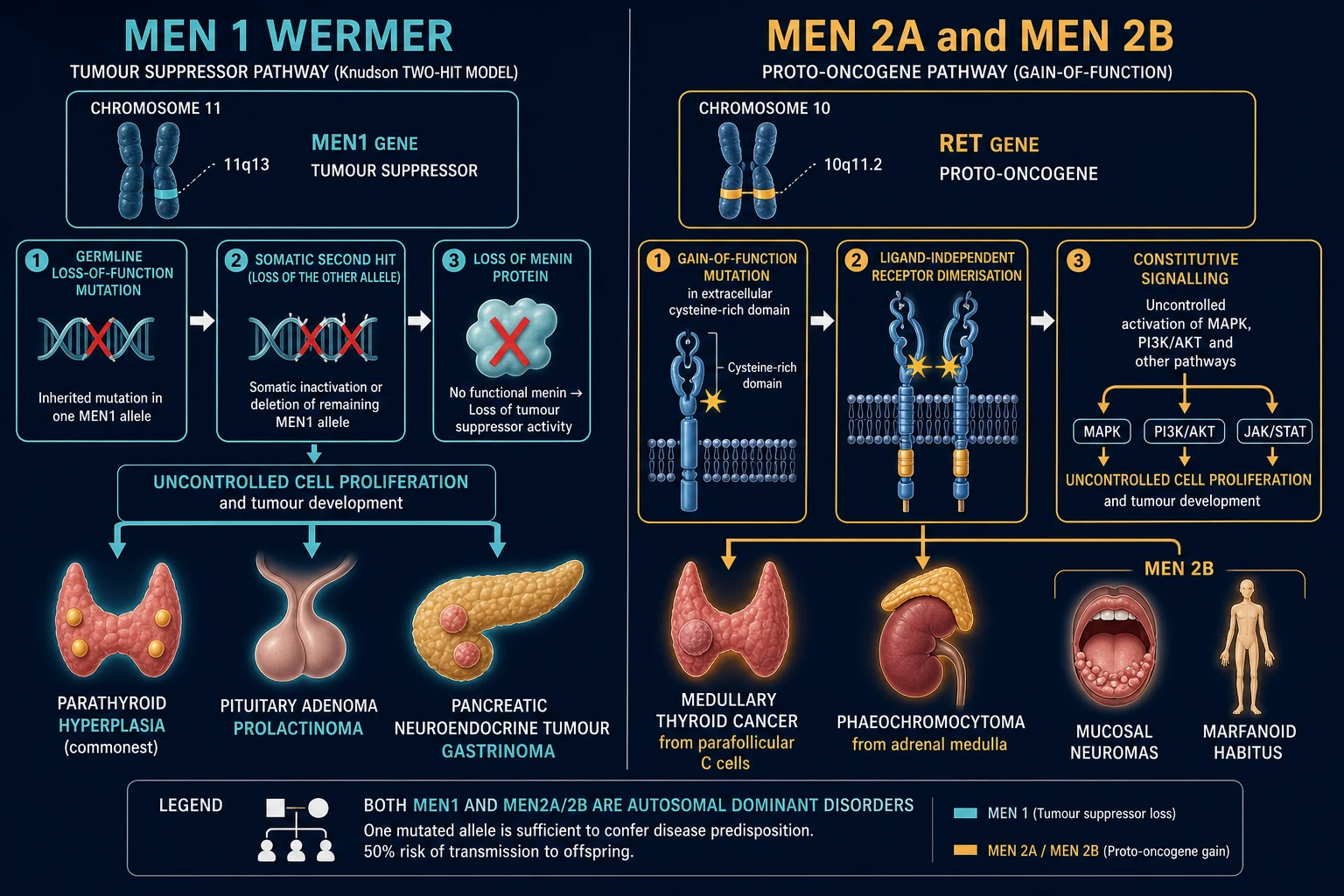
MEN syndromes are the cleanest illustration in clinical medicine of the two opposing mechanisms of inherited cancer: loss of a tumour suppressor (MEN 1, MEN 4) versus activation of a proto-oncogene (MEN 2). Understanding the direction of the molecular defect explains the inheritance, the penetrance and - in MEN 2 - the genotype-specific timing of surgery.[1][5]
MEN 1 - loss of the MEN1 tumour suppressor (chromosome 11q13). A germline loss-of-function mutation in one allele of MEN1 is inherited; a second somatic hit (the Knudson two-hit hypothesis) then inactivates the remaining wild-type allele in a parathyroid, pituitary or pancreatic endocrine cell. With both copies lost, the cell is deprived of menin - a nuclear protein that interacts with transcription factors, chromatin-modifying complexes and cell-cycle regulators to brake proliferation. Removing the brake permits clonal expansion and, over time, adenoma formation in parathyroid chief cells, anterior pituitary secretory cells and pancreatic islet (enteropancreatic) neuroendocrine cells. The same two-hit logic explains why the tumours are multifocal (each gland accumulates independent second hits) and why penetrance is near-complete but delayed into adult life.[4][5]
MEN 2 - activation of the RET proto-oncogene (chromosome 10q11.2). RET encodes a receptor tyrosine kinase expressed on parafollicular C cells of the thyroid, adrenal chromaffin cells and (to a lesser extent) parathyroid chief cells - precisely the cells that give rise to the MEN 2 tumours. Unlike MEN 1, only a single activating (gain-of-function) mutation in RET is required; a second hit is not needed because the mutant receptor is already constitutively active. The mutations cluster in two functional regions:[1][3]
- Extracellular cysteine-rich domain (codon 634 most common). Substitution of a cysteine leaves a free unpaired thiol that drives ligand-independent receptor dimerisation, activating the kinase. Codon 634 (C634R) is the classic MEN 2A mutation and is associated with the full triad (MTC + phaeo + parathyroid).[7]
- Intracellular tyrosine kinase domain (codon 918). The M918T substitution in the catalytic core alters substrate specificity and is the most potent activating mutation. It is essentially diagnostic of MEN 2B and produces the most aggressive phenotype, with MTC arising in utero or in infancy.[1]
Downstream, constitutive RET signalling drives the RAS-RAF-MEK-ERK (MAPK) and PI3K-AKT pathways, promoting survival and proliferation in C cells and chromaffin cells. The specific codon determines the phenotype (Machens' genotype-phenotype correlations) - codon 634 gives MEN 2A, codon 918 gives MEN 2B, and moderate-risk codons give FMTC or attenuated MEN 2A. This is the molecular basis for risk-adapted prophylactic thyroidectomy.[7]
MEN 4 - loss of CDKN1B (p27/Kip1). CDKN1B encodes p27, a cyclin-dependent kinase inhibitor that restrains the G1/S transition. Loss-of-function germline mutations reproduce a MEN 1-like phenotype (parathyroid, pituitary, pancreatic, adrenal and renal tumours). It is rare and should be suspected when a patient has a MEN 1 phenotype but negative MEN1 sequencing.[5][8]
Clinical Presentation
The clinical face of MEN is the combination of separate endocrine syndromes in one patient or family. Each tumour produces its own classic syndrome; the diagnostic leap is to see the pattern.[1][2]
MEN 1 (Wermer syndrome)
The 3 P's present across a lifetime, usually in a predictable order. Primary hyperparathyroidism is the earliest and commonest manifestation (around 90 percent by age 50), arising from multi-gland hyperplasia; it presents with renal stones, bone pain, fatigue, polyuria, abdominal groans and psychic moans, and - because it is multi-gland disease - it appears younger and recurs more often than sporadic primary hyperparathyroidism. Pituitary adenoma is seen in 30 to 40 percent, with prolactinoma the single commonest subtype (galactorrhoea, amenorrhoea, infertility, erectile dysfunction, mass effect with headache and bitemporal hemianopia); somatotrophinoma (acromegaly) and non-functioning adenoma also occur. Pancreatic neuroendocrine tumours appear in 40 to 70 percent and are the leading cause of MEN 1 death: gastrinoma (the commonest pancreatic NET in MEN 1) produces Zollinger-Ellison syndrome - refractory, multiple or atypical peptic ulcers, secretory diarrhoea and oesophagitis - while insulinoma (second commonest) produces the Whipple triad (fasting hypoglycaemia, neuroglycopenic symptoms, relief with glucose). Less common are glucagonoma, VIPoma and somatostatinoma. Adrenal cortical adenomas, bronchial and thymic carcinoids (the latter especially in men who smoke) and lipomas complete the spectrum.[2][4][6]
MEN 2A (Sipple syndrome)
Medullary thyroid carcinoma is the first manifestation in nearly all carriers (penetrance near 100 percent), arising from malignant transformation of parafollicular C cells. It presents as a thyroid nodule or cervical lymphadenopathy, sometimes with diarrhoea and flushing from tumour calcitonin secretion. Phaeochromocytoma develops in about half (often bilaterally, characteristically in the adrenal medulla), producing the classic triad of episodic headache, sweating and palpitations with paroxysmal or sustained hypertension. Primary hyperparathyroidism is milder than in MEN 1 (around 20 percent, multi-gland). The clinical trap is the patient who presents for thyroid surgery without first being screened for phaeochromocytoma - the undiagnosed phaeo can precipitate a fatal hypertensive crisis under anaesthesia.[1][2]
MEN 2B
The phenotype is unmistakable and the diagnosis is often made by inspection. Aggressive medullary thyroid carcinoma appears in infancy or early childhood and is the leading cause of death. Mucosal neuromas stud the lips, anterior tongue, buccal mucosa, eyelids and conjunctiva, giving a bumpy, thickened appearance with prominent, everted lips. Marfanoid habitus (tall stature, long limbs, arachnodactyly, pectus excavatum, kyphoscoliosis, hyperextensible joints) overlaps with Marfan syndrome - but MEN 2B has no aortic root dilatation and no lens dislocation. Ganglioneuromatosis of the gut causes chronic constipation, abdominal distension and megacolon that may be misdiagnosed as Hirschsprung disease. Phaeochromocytoma occurs as in MEN 2A, but there is NO parathyroid disease.[1][2]
Atypical presentations. MEN 2B in a child may be mislabelled as Marfan syndrome (aortic/lens features absent) or Hirschsprung disease (constipation from ganglioneuromatosis). A young adult with recurrent renal stones alone may have MEN 1 hyperparathyroidism. A patient with refractory peptic ulceration may have MEN 1 gastrinoma. Any patient with bilateral phaeochromocytoma should be evaluated for a hereditary syndrome (MEN 2, von Hippel-Lindau, NF1, familial paraganglioma/SDHx). And every patient with medullary thyroid cancer - at any age, with or without family history - must be offered RET germline testing, because about a quarter of MTC is hereditary.[1][2]
Differential Diagnosis
The differentials of MEN split into three questions: is the thyroid cancer hereditary? is the hyperparathyroidism familial? and is the phaeochromocytoma syndromic?[1][2]
Sporadic vs hereditary medullary thyroid carcinoma. About 25 percent of all medullary thyroid cancer is hereditary (MEN 2 or FMTC). The discriminating test is germline RET sequencing - indicated in every newly diagnosed MTC patient, regardless of family history. Sporadic MTC is usually a single RET-negative (often somatic M918T) tumour in an older adult with a negative family history.[3]
Sporadic vs MEN 1 primary hyperparathyroidism. Sporadic disease is typically a single parathyroid adenoma in a middle-aged woman; MEN 1 hyperparathyroidism is multi-gland hyperplasia, presents younger, recurs more often and is accompanied by pituitary or pancreatic disease. A young patient with multi-gland disease or recurrence after parathyroidectomy should be tested for MEN 1.[4][9]
Hereditary phaeochromocytoma/paraganglioma syndromes. Bilateral, multifocal, young-onset or extra-adrenal phaeo/paraganglioma suggests a hereditary cause: MEN 2 (RET), von Hippel-Lindau (VHL), neurofibromatosis type 1 (NF1) or the familial paraganglioma syndromes (SDHx - SDHB, SDHC, SDHD). Each has a distinctive tumour constellation (e.g. VHL adds renal cell carcinoma, CNS haemangioblastoma, pancreatic neuroendocrine tumour; NF1 adds cafe-au-lait spots and neurofibromas).[1]
Marfan syndrome vs MEN 2B. Both produce marfanoid habitus, but Marfan (FBN1) has aortic root dilatation, dissection, mitral valve prolapse and ectopia lentis (upward lens dislocation), while MEN 2B has mucosal neuromas, medullary thyroid cancer, phaeochromocytoma and ganglioneuromatosis and no aortic or lens features.[2]
MEN 2A (Sipple)
RET codon 634
- MTC + Phaeo + Parathyroid
- Family history of thyroid cancer
- Medullary thyroid cancer at any age
- RET germline test positive
MEN 2B
RET codon 918 (M918T)
- Marfanoid + Mucosal neuromas + MTC + Phaeo
- NO parathyroid
- NO aortic root dilatation, NO lens dislocation
- Chronic constipation from ganglioneuromatosis
Marfan syndrome
FBN1 (fibrillin)
- Marfanoid habitus
- Aortic root dilatation and dissection
- Ectopia lentis (upward lens dislocation)
- Mitral valve prolapse; no endocrine tumours
MEN 1 (Wermer)
MEN1 gene
- 3 P's: Parathyroid, Pituitary, Pancreatic NET
- Multi-gland hyperplasia; recurrent stones
- Prolactinoma; gastrinoma (ZES); insulinoma
- MTC and phaeo are ABSENT
Clinical & Bedside Assessment
The bedside task is to recognise the syndrome, enumerate the tumours, and map the family. Three moves do most of the work.[1][2]
Recognise the phenotype. In suspected MEN 2B, inspect the face and mouth: thickened bumpy lips, mucosal neuromas on the tongue and eyelids, and the long-limbed marfanoid build are pathognomonic. In suspected MEN 1, examine for galactorrhoea and visual fields (prolactinoma), abdominal signs, and signs of hypercalcaemia and peptic ulceration. In suspected MEN 2, take the blood pressure (phaeo), palpate the thyroid and cervical nodes (MTC), and ask about episodic headache, sweating and palpitations.[1][2]
Map the family. A three-generation pedigree is mandatory - thyroid cancer at a young age, phaeochromocytoma, hyperparathyroidism, renal stones, peptic ulcer disease, sudden (cardiac) death and pituitary disease all count. A de-novo mutation will have a negative family history, so a negative family history does not exclude MEN.[1]
Bedside safety move in known or suspected MEN 2. Before any operation - and before any invasive procedure or labour - in a MEN 2 patient, exclude phaeochromocytoma with plasma or 24-hour urine fractionated metanephrines. An undiagnosed phaeo under anaesthesia is one of the classic preventable deaths in medicine.[1][11]
Investigations
Investigation has two goals: confirm the syndrome genetically and define the tumour burden biochemically and radiologically. Genetic testing is the cornerstone - once a pathogenic mutation is found in the proband, predictive testing of relatives converts high-risk surveillance into a focused, age-defined programme.[1][4]
1. Genetic testing - the diagnostic cornerstone
- MEN 2 (all types): RET proto-oncogene sequencing. Indicated in every patient with medullary thyroid cancer (about 25 percent is hereditary), in any phaeochromocytoma with bilateral/multifocal/young-onset/family-history features, and in classic MEN 2B phenotypes. A positive RET test triggers cascade screening of all first-degree relatives from birth, because prophylactic thyroidectomy may be needed in infancy (MEN 2B) or by age 5 (MEN 2A).[3]
- MEN 1: MEN1 gene sequencing (with deletion/duplication analysis if sequencing is negative). Indicated in any patient with two or more MEN 1-associated tumours, or one tumour plus a positive family history, or early-onset multi-gland primary hyperparathyroidism. A positive test triggers cascade screening of relatives from age 5.[4][6]
- MEN 4: CDKN1B (p27) testing when a patient has a MEN 1 phenotype but negative MEN1 sequencing.[5][8]
2. MEN 1 biochemical and imaging surveillance
From age 5, a confirmed or at-risk MEN 1 carrier enters annual surveillance: serum calcium and intact PTH (hyperparathyroidism, the commonest and earliest tumour); prolactin and IGF-1 (pituitary); fasting glucose, insulin, gastrin, chromogranin A, glucagon, VIP and pancreatic polypeptide (enteropancreatic NET). A pituitary MRI is performed every three years (or on biochemical abnormality), and abdominal cross-sectional imaging (CT/MRI, or endoscopic ultrasound) every one to three years for pancreatic NETs. Basal and stimulated gastrin and secretin stimulation test help localise gastrinoma.[4][6]
3. MEN 2 biochemical surveillance
A confirmed RET carrier enters annual surveillance from age 5 or earlier: basal (and stimulated, where used) calcitonin for C-cell hyperplasia and MTC; plasma or 24-hour urine fractionated metanephrines and normetanephrines for phaeochromocytoma (from age 5 in MEN 2A; some start from age 8 in lower-risk mutations); and serum calcium and PTH for parathyroid disease (MEN 2A only). Neck ultrasound and CT/MRI of the adrenals image the relevant glands.[1][3]
4. Tumour markers in medullary thyroid cancer
MTC is tracked with calcitonin and CEA - NOT thyroglobulin (thyroglobulin tracks papillary and follicular thyroid cancer, which arise from follicular cells, not C cells). Calcitonin doubling time is the single best prognostic marker: a doubling time under 6 months predicts poor outcome, while a doubling time over 24 months predicts an indolent course. Calcitonin also rises with C-cell hyperplasia and is used (with pentagastrin or calcium stimulation in some centres) to detect pre-malignant C-cell disease in RET carriers before histological MTC.[3][13]
Management - Resuscitation
MEN is overwhelmingly a chronic, planned disease, but four acute presentations need immediate recognition.[1][11]
Phaeochromocytoma crisis (hypertensive emergency) - whether spontaneous or provoked by anaesthesia, labour, opiates, contrast or abdominal palpation - presents with precipitous hypertension, severe headache, sweating, palpitations and sometimes pulmonary oedema, stroke or arrhythmia. Immediate management is an intravenous alpha-blocker - phentolamine 2 to 5 mg intravenous bolus, repeated and titrated, or a nicardipine infusion; sodium nitroprusside for refractory hypertension. NEVER give a beta-blocker first - unopposed alpha stimulation precipitates catastrophic vasoconstriction and pulmonary oedema. A beta-blocker is added only after adequate alpha-blockade.[11]
Undiagnosed phaeo under anaesthesia (especially during thyroidectomy in an un-screened MEN 2 patient) is the classic fatal pitfall. If intra-operative hypertension explodes, abort the procedure, give IV phentolamine, admit to ICU, and complete alpha-blockade before any re-operation. This is exactly why every MEN 2 patient must be screened for phaeochromocytoma before any surgery.[1][11]
Exam application bank (NEET-PG / INICET)
One-line answer
Multiple endocrine neoplasia (MEN) syndromes are autosomal dominant disorders in which a single germline mutation predisposes to tumours of two or more endocrine glands throughout life. MEN 1 (Wermer syndrome) is caused by the MEN1 gene (menin) tumour suppressor on chromosome 11q13 and follows the 3 P's rule: Primary hyperparathyroidism (commonest, multi-gland hyperplasia), Pituitary adenoma (prolactinoma commonest) and Pancreatic neuroendocrine tumour (gastrinoma with Zollinger-Ellison commonest; insulinoma second). MEN 2A (Sipple syndrome) and MEN 2B are caused by the RET proto-oncogene on chromosome 10q11.2: MEN 2A features medullary thyroid carcinoma (near 100 percent), phaeochromocytoma (around 50 percent, often bilateral) and parathyroid hyperplasia (around 20 percent), while MEN 2B features aggressive medullary thyroid cancer, phaeochromocytoma, mucosal neuromas and marfanoid habi
Worked stems (answer without another resource)
Stem 1 — Classic presentation. Map symptoms to mechanism; name the first investigation and first treatment step with dose/route if drug therapy is standard. [1]
Stem 2 — Unstable / complicated. List red flags that force immediate resuscitation, theatre, ICU, antidote, or reperfusion — and what you do in the first 15 minutes. [1]
Stem 3 — Atypical group. Elderly, pregnancy, child, or immunocompromised: how presentation and thresholds change. [1]
Stem 4 — Differential trap. Name the three closest mimics and one discriminator for each. [1]
Stem 5 — Disposition. Who goes home with safety-netting, who is admitted, who needs HDU/ICU/theatre, and what follow-up is mandatory. [1]
Rapid viva checklist
- Definition + classification
- Pathophysiology chain
- Bedside signs / criteria
- Score with exact components (if any)
- Emergency bundle
- Definitive therapy with doses
- Complications of disease and of treatment
- Special populations
- Guideline/trial name if classic
- Three exam traps
Coverage self-check
If you cannot answer any stem above from this page alone, re-read the matching section — the page is intended to be self-sufficient for final-prof and NEET-PG/INICET questions on Multiple Endocrine Neoplasia (MEN) Syndromes.
Severe hypercalcaemia (MEN 1 hyperparathyroidism) - aggressive intravenous isotonic saline (3 to 6 L in the first 24 hours), intravenous bisphosphonate (zoledronate 4 mg intravenously over 15 minutes), and calcitonin (4 IU/kg subcutaneously every 12 hours) for rapid but transient calcium lowering; definitive treatment is parathyroidectomy once stabilised. Insulinoma hypoglycaemia (MEN 1) - intravenous dextrose, glucagon 1 mg intramuscularly, and diazoxide for refractory hypoglycaemia pending surgery.[4]
Management - Definitive & Stepwise
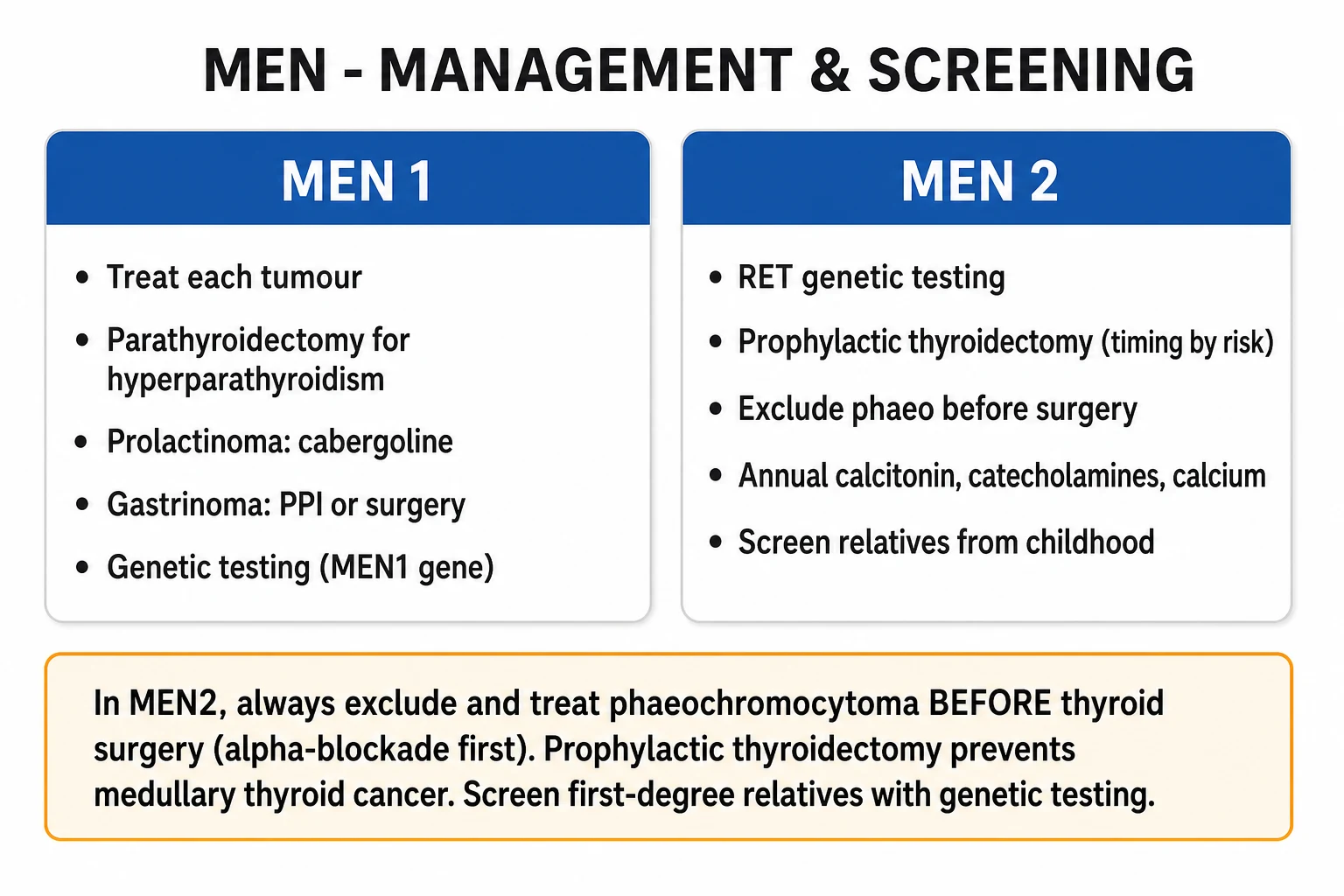
Definitive management is syndrome-specific and lifelong. The unifying principles are treat each tumour, prioritise the dangerous one first (phaeo before thyroid), prevent the predictable one (prophylactic thyroidectomy in MEN 2), and screen the family forever.[1][3]
MEN 1 - treat each tumour; screen relatives from age 5
Primary hyperparathyroidism is the commonest MEN 1 manifestation and is surgically treated. Because the disease is multi-gland hyperplasia, the operation of choice is subtotal parathyroidectomy (3.5-gland, leaving about 50 mg of the most accessible gland in situ) with transcervical thymectomy, or total parathyroidectomy with autotransplantation of parathyroid tissue into the forearm. The aim is durable normocalcaemia with avoidance of permanent hypoparathyroidism; recurrence is commoner than in sporadic disease, so an experienced endocrine surgeon is essential. Surgery is recommended once the patient is symptomatic, or for asymptomatic hypercalcaemia meeting guideline thresholds (serum calcium more than 0.25 mmol/L above the upper limit of normal, or end-organ effects such as nephrolithiasis or osteoporosis).[4][9]
Pituitary adenoma. Prolactinoma is treated first-line with the dopamine agonist cabergoline (0.5 to 2 mg twice weekly, titrated to prolactin and tumour shrinkage); transsphenoidal surgery is reserved for macroadenoma with mass effect (chiasmal compression) or dopamine-agonist resistance. Acromegaly (somatotrophinoma) and Cushing disease follow their standard MEN-1-equivalent pathways.[4][6]
Enteropancreatic neuroendocrine tumours. Gastrinoma (Zollinger-Ellison syndrome) is controlled medically with a high-dose proton pump inhibitor - omeprazole 40 to 80 mg per day (or pantoprazole, esomeprazole) - which prevents peptic complications; octreotide (a somatostatin analogue) helps both hormonal and tumour control, and surgical resection of localised duodenal or pancreatic gastrinoma is considered when metastases are absent. Insulinoma is treated by surgical enucleation (or partial pancreatectomy for multiple lesions) once localised on imaging and intra-operative ultrasound; diazoxide (300 to 1200 mg per day in divided doses) suppresses insulin secretion for refractory hypoglycaemia. Functional metastatic disease is managed with somatostatin analogues (octreotide LAR 20 to 30 mg intramuscularly every 4 weeks, lanreotide 60 to 120 mg subcutaneously every 4 weeks), everolimus (mTOR inhibitor) or sunitinib (tyrosine kinase inhibitor) for progressive well-differentiated pancreatic NET, peptide receptor radionuclide therapy (PRRT, Lu-177 DOTATATE) for SSTR-positive disease, and trans-arterial embolisation (TAE/TACE) for hepatic metastases.[4][10]
MEN 1 management - the dose ladder
MEN 2 - prophylactic thyroidectomy; exclude phaeo before any surgery
Medullary thyroid carcinoma is the leading cause of MEN 2 death, so management centres on preventing or curing it surgically. The definitive operation is total thyroidectomy with central neck (level VI) dissection; for clinically nodal disease, lateral neck dissection (levels II-V) is added. C-cell derived tumours do not take up radioiodine (radioiodine ablation is useless) and do not respond to TSH suppression in the way differentiated thyroid cancer does - so post-operative levothyroxine is given for replacement, not suppression. Advanced/metastatic MTC is treated with tyrosine kinase inhibitors - cabozantinib or vandetanib - which are the first effective systemic therapies.[1][3]
Prophylactic (pre-emptive) thyroidectomy in RET carriers is the paradigm of hereditary cancer prevention. The American Thyroid Association (ATA) 2015 guideline sets the timing by mutation risk level:[3][7]
Highest risk (ATA-D)
MEN 2B - RET codon 918 (M918T)
- Prophylactic thyroidectomy in INFANCY - within first months of life
- MTC can be present and metastatic at diagnosis
- Also screen for phaeo before any surgery once adrenal develops
- Worst prognosis of all MEN
High risk (ATA-C)
MEN 2A - RET codon 634 (C634R)
- Prophylactic thyroidectomy by about age 5
- Some centres operate earlier if calcitonin rising
- Annual phaeo and calcium surveillance from age 5
- Good prognosis with prophylactic surgery
Moderate risk (ATA-A/B)
RET codons 609/611/618/620/630/768/790/791/804/891
- Timing individualised to calcitonin trajectory
- Often deferred into later childhood or adolescence
- Less aggressive MTC; lower phaeo penetrance
- Annual biochemical surveillance
Phaeochromocytoma is treated by adrenalectomy after adequate pre-operative alpha-blockade. The classical regimen is phenoxybenzamine - a non-competitive, irreversible alpha-blocker - 10 mg twice daily, titrated every 2 to 3 days up to about 20 to 40 mg twice daily, given for 10 to 14 days pre-operatively with liberal salt and fluid intake to expand intravascular volume; a beta-blocker (propranolol 20 to 40 mg three times daily) is added only after alpha-blockade to control tachycardia. Modern practice increasingly uses selective alpha-1 blockers (doxazosin 2 to 8 mg daily, terazosin, phenoxybenzamine), and a large US study reported that phenoxybenzamine is no longer the standard agent in many centres - but the principle of alpha-blockade first, beta-blockade only after is inviolable. Laparoscopic adrenalectomy is standard; cortical-sparing adrenalectomy is preferred for bilateral disease to avoid lifelong steroid dependence and adrenal crisis. Before any adrenalectomy, the contralateral adrenal must be confirmed functional.[1][11][12]
Parathyroid disease (MEN 2A) - when symptomatic or meeting guideline thresholds - is managed with subtotal parathyroidectomy, generally at the time of thyroidectomy to avoid re-operation in a previously dissected neck.[1]
MEN 2 RET carrier - the lifelong pathway
MEN 2 management priorities - THYROID
THYROID
prophylactic in RET carriers; curative for early MTC with central neck dissection
screen metanephrines and alpha-block (phenoxybenzamine) before any surgery - a missed phaeo under anaesthesia is fatal
timing of prophylactic thyroidectomy set by age and RET codon (MEN 2B infancy; MEN 2A about age 5)
autosomal dominant - cascade screen every first-degree relative from birth
parafollicular C cells do NOT take up radioiodine; tyrosine kinase inhibitors (cabozantinib, vandetanib) for advanced disease
NOT thyroglobulin - that is for papillary and follicular cancers
under 6 months predicts poor prognosis; over 24 months good - the best follow-up marker
Specific Subtypes & Scenarios
MEN 4 (CDKN1B / p27). When a patient has a clinical MEN 1 phenotype - parathyroid, pituitary, pancreatic, adrenal or renal tumours - but negative MEN1 sequencing, consider CDKN1B (p27) testing. MEN 4 is much rarer than MEN 1, the tumour spectrum overlaps, and surveillance mirrors the MEN 1 programme. Recognition matters because the genetic counselling and family testing cascade is distinct.[5][8]
Familial medullary thyroid carcinoma (FMTC). A milder MEN 2 variant in which MTC is the only tumour (no phaeo, no parathyroid). It is defined by a RET mutation in a family with at least four (some criteria say 10) carriers with MTC and no phaeo. Prophylactic thyroidectomy is still offered, but the timing is often later (moderate-risk ATA-A/B category), and phaeo screening continues because some families later declare phaeochromocytoma and "tip" into MEN 2A.[1][3]
De-novo RET mutation (no family history). About a quarter of MEN 2B and a smaller fraction of MEN 2A arise de novo. The parents are unaffected and need no surveillance, but every child of the proband still has a 50 percent risk - so the index case is the start of cascade screening, not the end.[1]
Pregnancy in MEN 2. A phaeochromocytoma must be excluded and treated before conception or early in pregnancy - a phaeo crisis in labour is potentially fatal. Prophylactic thyroidectomy is normally completed before reproductive age, and reproductive genetic counselling (including pre-implantation genetic testing) is offered.[1]
MEN 1 in pregnancy. A prolactinoma may enlarge under oestrogen; cabergoline is generally continued if the tumour is large. Hypercalcaemia is monitored, and pancreatic NET surveillance continues. The genetic counselling considerations are the same as MEN 2.[4]
Complications & Pitfalls
The complications of MEN are the complications of each constituent tumour plus the complications of treating them - and a small set of avoidable errors that examiners reward you for naming.[1][2]
Phaeochromocytoma crisis under anaesthesia - the classic preventable death. Every MEN 2 patient must be screened for phaeo before any surgery. The reverse pitfall - giving a beta-blocker before an alpha-blocker - converts a hypertensive crisis into an unopposed-alpha vasoconstrictive catastrophe. Alpha before beta, always.[11]
Recurrent hyperparathyroidism after surgery for MEN 1 (and MEN 2A) - multi-gland hyperplasia recurs more often than sporadic single-adenoma disease; re-operative parathyroid surgery in a previously dissected neck risks recurrent laryngeal nerve injury and permanent hypoparathyroidism. Informed consent, experienced endocrine surgery, and intra-operative PTH monitoring are mitigations.[9]
Permanent hypoparathyroidism after total/subtotal parathyroidectomy or total thyroidectomy with central neck dissection - managed with oral calcium, calcitriol (1,25-dihydroxyvitamin D), and (for refractory disease) recombinant PTH (1-34). Hypocalcaemia after thyroidectomy in MEN 2 may be transient (stunned glands) or permanent.[1]
Metastatic medullary thyroid carcinoma - cervical nodal, mediastinal, hepatic, pulmonary and bone metastases; diarrhoea and flushing from calcitonin and other vasoactive peptides; Cushing syndrome from ectopic ACTH secretion by metastatic MTC. Calcitonin doubling time under 6 months is the harbinger of poor outcome.[3][13]
Adrenal insufficiency after bilateral adrenalectomy - the patient is now glucocorticoid- (and often mineralocorticoid-) dependent for life; adrenal crisis is the risk, and stress-dose steroids are mandatory for illness or surgery. Cortical-sparing adrenalectomy avoids this when technically feasible.[1]
MEN 1 malignancy-related deaths - malignant enteropancreatic NET (especially gastrinoma with hepatic metastases) and thymic carcinoid (especially in men who smoke) are the principal causes; pancreatic NETs are frequently multiple and small, and their malignant potential drives the case for aggressive surveillance.[4][6]
Diagnostic pitfall - missing the syndrome. Treating a single tumour (one parathyroid, one thyroid nodule, one peptic ulcer) without looking for the others or testing the family. A young patient with multi-gland hyperparathyroidism, bilateral phaeo, medullary thyroid cancer, or gastrinoma obliges you to test for MEN.[1]
Prognosis & Disposition
Prognosis depends on the syndrome and the dominant tumour. MEN 2B has the worst prognosis - aggressive MTC arising in infancy, often metastatic at diagnosis - and survival has improved only with early genetic diagnosis and prophylactic thyroidectomy in the first months of life. MEN 2A has a good prognosis when RET carriers undergo prophylactic thyroidectomy and lifelong phaeo surveillance. MEN 1 prognosis is dominated by the pancreatic NET burden - malignant gastrinoma and thymic carcinoid are the main cancer-related deaths; primary hyperparathyroidism and prolactinoma, by contrast, are eminently manageable.[1][4]
For medullary thyroid cancer, the calcitonin doubling time is the single best prognostic marker: under 6 months predicts a poor outcome (five-year disease-specific mortality around 25 to 50 percent), while over 24 months predicts an indolent course (near-normal survival). Post-operative calcitonin and CEA are followed lifelong.[13]
Disposition is lifelong and family-wide. Every MEN patient remains in structured endocrine surveillance for life - the patient never leaves follow-up - and the diagnosis triggers a cascade genetic testing programme that extends to parents, siblings and children. The modern multidisciplinary endocrine cancer service (endocrinology, endocrine surgery, genetics, thyroid surgery, ENT, nuclear medicine, oncology, reproductive medicine, psychology) is the appropriate setting.[1][6]
Special Populations
Children with RET mutations. The paradigm of preventive surgery in hereditary cancer. Prophylactic thyroidectomy is timed by ATA risk - MEN 2B (codon 918) in infancy, MEN 2A (codon 634) by about age 5, and moderate-risk mutations individualised to the calcitonin trajectory. Lifelong levothyroxine replacement (and calcium/calcitriol if hypoparathyroid) is required; paediatric anaesthetic and endocrine expertise is essential.[3][7]
Family screening and genetic counselling. All MEN syndromes are autosomal dominant with 50 percent risk to children. Predictive genetic testing of at-risk children - MEN 2 from birth, MEN 1 from age 5 - is offered with pre- and post-test counselling (psychosocial impact, reproductive implications, employment and insurance considerations). Pre-implantation genetic testing is available for affected adults planning a family.[1][4]
Pregnancy. In MEN 2, exclude and treat phaeochromocytoma before conception or early pregnancy - a phaeo crisis in labour is potentially fatal; prophylactic thyroidectomy is usually completed before reproductive age. In MEN 1, watch for prolactinoma enlargement under oestrogen and hypercalcaemia.[1][4]
De-novo mutation carriers. Parents may test negative (and need no surveillance), but the proband's children carry a 50 percent risk - the index case is the gateway to cascade screening, not a dead end.[1]
Older adults with newly diagnosed MEN. Surveillance is scaled to comorbidity and life expectancy; the aggressiveness of prophylactic surgery and metastatic NET therapy is individualised, but phaeo exclusion before any surgery remains non-negotiable at any age.[2]
Evidence, Guidelines & Regional Differences
The American Thyroid Association 2015 Revised Guidelines for Medullary Thyroid Carcinoma (Wells et al.) are the practice-defining document for MEN 2: they establish the RET mutation risk categories (highest ATA-D, high ATA-C, moderate ATA-A/B) that drive the timing of prophylactic thyroidectomy, the calcitonin-based surveillance schedule, and the surgical approach (total thyroidectomy with central neck dissection).[3] Machens' genotype-phenotype work underpins the codon-specific surgical timing.[7]
For MEN 1, the Endocrine Society / European Society of Endocrinology 2012 clinical practice guidelines (Thakker et al., JCEM) defined the surveillance and management framework, and the 2025 best-practice update (Brandi et al., Lancet Diabetes and Endocrinology) consolidates the contemporary multidisciplinary approach.[4][6]
In Europe the ATA risk-adapted prophylactic thyroidectomy framework is followed uniformly, with cortical-sparing adrenalectomy for bilateral phaeo in expert centres. In India, the ATA and Endocrine Society algorithms are followed; access to genetic testing, cabozantinib/vandetanib and PRRT is variable, and cost often steers therapy toward surgery and somatostatin analogues. The ICMR does not publish an MEN-specific guideline. Genetic counselling and cascade screening infrastructure is the principal gap in resource-variable settings, where de-novo and familial cases are often diagnosed late.[1][4]
Where the evidence is weak. The exact age of prophylactic thyroidectomy in moderate-risk RET carriers (individualised to calcitonin trajectory); the preferred pre-operative alpha-blocker (phenoxybenzamine vs doxazosin, with practice varying by centre and country); the timing and extent of surgery for MEN 1 hyperparathyroidism (subtotal vs total with autotransplant); and the place of Lu-177 DOTATATE PRRT and TKIs in the long-term algorithm for metastatic NET/MTC.[7][9][12]
Exam Pearls
MEN is one of the most patterned topics in endocrinology and a NEET-PG / INICET / USMLE / PLAB staple. The exam rewards the gene-gland pairings, the few inviolable rules, and the classic stems.[1][2]
The definitional one-liners: MEN 1 (Wermer) = MEN1 gene (menin, tumour suppressor, chromosome 11q13) - the 3 P's: Parathyroid (commonest), Pituitary (prolactinoma), Pancreatic NET (gastrinoma). MEN 2A (Sipple) = RET codon 634 - Medullary thyroid cancer (near 100 percent), Phaeo, Parathyroid. MEN 2B = RET codon 918 (M918T) - aggressive MTC, Phaeo, Mucosal neuromas, Marfanoid; NO parathyroid. MEN 4 = CDKN1B (p27), a MEN 1 phenocopy.[1][2][5]
The discriminator: medullary thyroid cancer belongs to MEN 2 (RET), never MEN 1. If a stem mentions MTC, the answer is MEN 2.[1][3]
The non-negotiable rules: (1) always exclude phaeochromocytoma before any surgery in MEN 2 (alpha-blockade first - phenoxybenzamine 10 mg twice daily for 10 to 14 days; beta-blocker only after alpha)[11]; (2) offer prophylactic thyroidectomy to RET carriers, timed by ATA risk (MEN 2B in infancy, MEN 2A by about age 5)[3][7]; (3) MTC is followed with calcitonin and CEA, not thyroglobulin, and does not respond to radioiodine.[13]
The classic stems: a young patient with bilateral phaeochromocytoma (think MEN 2, VHL, NF1, SDHx); a child with marfanoid habitus, bumpy lips and chronic constipation (MEN 2B); refractory peptic ulceration (gastrinoma, often MEN 1); recurrent renal stones with multi-gland hyperparathyroidism (MEN 1); MTC plus hypertension and sweating (MEN 2A); prolactinoma with hyperparathyroidism (MEN 1).[1][2]
The drug doses: phenoxybenzamine 10 mg twice daily (pre-op phaeo)[11]; omeprazole 40 to 80 mg per day (gastrinoma)[10]; octreotide LAR 20 to 30 mg intramuscularly every 4 weeks (pancreatic NET)[4]; cabergoline 0.5 to 2 mg twice weekly (prolactinoma)[4]; diazoxide 300 to 1200 mg per day (insulinoma)[4]; cabozantinib / vandetanib (metastatic MTC).[1]
The single most quotable fact: calcitonin doubling time under 6 months predicts a poor outcome in MTC; medullary thyroid cancer is followed with calcitonin and CEA, never thyroglobulin.[13]
Quick self-test - cover and answer
Q1. A 6-month-old infant has mucosal neuromas and constipation - which gene and which operation? - RET codon 918 (MEN 2B); prophylactic total thyroidectomy in infancy. Q2. A 35-year-old with MTC needs thyroidectomy - what MUST be excluded first, and how? - Phaeochromocytoma - plasma or 24-h urine fractionated metanephrines; alpha-block (phenoxybenzamine 10 mg twice daily x 10-14 days) before surgery. Q3. Recurrent peptic ulcer with diarrhoea in a young man - which syndrome and which marker? - MEN 1 gastrinoma (Zollinger-Ellison); fasting serum gastrin (and secretin stimulation test). Q4. A RET codon 634 carrier at age 4 - what operation and when? - Prophylactic total thyroidectomy with central neck dissection by about age 5 (high-risk ATA-C). Q5. MTC followed post-operatively with which two markers - and which marker is NOT used? - Calcitonin and CEA; thyroglobulin is NOT used (C cells, not follicular cells). Q6. MEN 1 phenotype but MEN1 sequencing negative - which gene? - CDKN1B (p27) - MEN 4.
References
- [1]Mathiesen JS, Effraimidis G, Rossing M, et al. Multiple endocrine neoplasia type 2: A review Semin Cancer Biol, 2022.PMID 33812987
- [2]Greenberg LA. Multiple Endocrine Neoplasia Type 1, Type 2A, and Type 2B Prim Care, 2024.PMID 39067973
- [3]Wells SA Jr, Asa SL, Dralle H, et al. Revised American Thyroid Association guidelines for the management of medullary thyroid carcinoma Thyroid, 2015.PMID 25810047
- [4]Thakker RV, Newey PJ, Walls GV, et al. Clinical practice guidelines for multiple endocrine neoplasia type 1 (MEN1) J Clin Endocrinol Metab, 2012.PMID 22723327
- [5]Thakker RV. Multiple endocrine neoplasia type 1 (MEN1) and type 4 (MEN4) Mol Cell Endocrinol, 2014.PMID 23933118
- [6]Brandi ML, Colao A, Fassnacht M, et al. Multiple endocrine neoplasia type 1 (MEN1): recommendations and guidelines for best practice Lancet Diabetes Endocrinol, 2025.PMID 40523372
- [7]Machens A, Brauckhoff M, Holzhausen HJ, et al. Genotype-phenotype based surgical concept of hereditary medullary thyroid carcinoma World J Surg, 2007.PMID 17453286
- [8]Ruggeri RM, Benevento E, Ferrau F, et al. Multiple endocrine neoplasia type 4 (MEN4): a thorough update on the latest and least known men syndrome Endocrine, 2023.PMID 37632635
- [9]Schreinemakers JM, Pieters GL, Schep NW, et al. The optimal surgical treatment for primary hyperparathyroidism in MEN1 patients: a systematic review World J Surg, 2011.PMID 21713580
- [10]Rossi RE, El-Bahesh S, O'Dowd G, et al. Gastrinoma and Zollinger Ellison syndrome: A roadmap for the management between new and old therapies World J Gastroenterol, 2021.PMID 34629807
- [11]van der Zee PA, de Boer A. Pheochromocytoma: a review on preoperative treatment with phenoxybenzamine or doxazosin Neth J Med, 2014.PMID 24829175
- [12]Kuo EJ, Liu Y, Udesman R, Livhits MJ, Yeh MW, Ho AS. Phenoxybenzamine is no longer the standard agent used for alpha blockade before adrenalectomy for pheochromocytoma: A national study of 552 patients Surgery, 2023.PMID 36167697
- [13]Nigam A, Castellanos L, Tavera-Garza C, et al. Tumor Grade Predicts for Calcitonin Doubling Times and Disease-Specific Outcomes After Resection of Medullary Thyroid Carcinoma Thyroid, 2022.PMID 35950622