Endocrinology · General Medicine
Polycystic Ovary Syndrome (PCOS)
Also known as Polycystic ovary syndrome · PCOS · Stein-Leventhal syndrome
Polycystic ovary syndrome (PCOS) is the commonest endocrine disorder of reproductive-age women (around 8 to 13 percent), diagnosed by the Rotterdam criteria — TWO of THREE: oligo/anovulation, clinical or biochemical hyperandrogenism (hirsutism, acne, elevated free testosterone), and polycystic ovaries on ultrasound — after excluding mimics (thyroid, prolactin, Cushing, non-classic CAH, androgen-secreting tumour). Insulin resistance and the metabolic syndrome are central, driving obesity, type 2 diabetes and cardiovascular risk. Presentation includes irregular periods, hirsutism, acne, infertility and weight gain. Management is lifestyle first (5 to 10 percent weight loss), then combined oral contraceptive pill (cycle control, endometrial protection, hirsutism), metformin (insulin resistance), letrozole (first-line for fertility — PPCOS II, NEJM 2014) and spironolactone (hirsutism, with reliable contraception). Long-term care includes endometrial protection, type 2 diabetes screening and cardiovascular risk reduction.
On this page & tools
Your progress
Saved locally on this device.
Exam tags
Red flags
Overview & Definition
PCOS is a heterogeneous syndrome of reproductive and metabolic dysfunction — both a reproductive problem (irregular cycles, infertility) and a metabolic one (insulin resistance, diabetes, cardiovascular risk). It is the commonest endocrine disorder of reproductive-age women (around 8 to 13 percent; up to 15 to 20 percent with broader criteria), yet historically under-diagnosed.[1] The diagnosis is clinical, made by the Rotterdam criteria after excluding mimics — never by ultrasound alone. Because it spans two systems, management must address both dimensions, not just the presenting symptom.
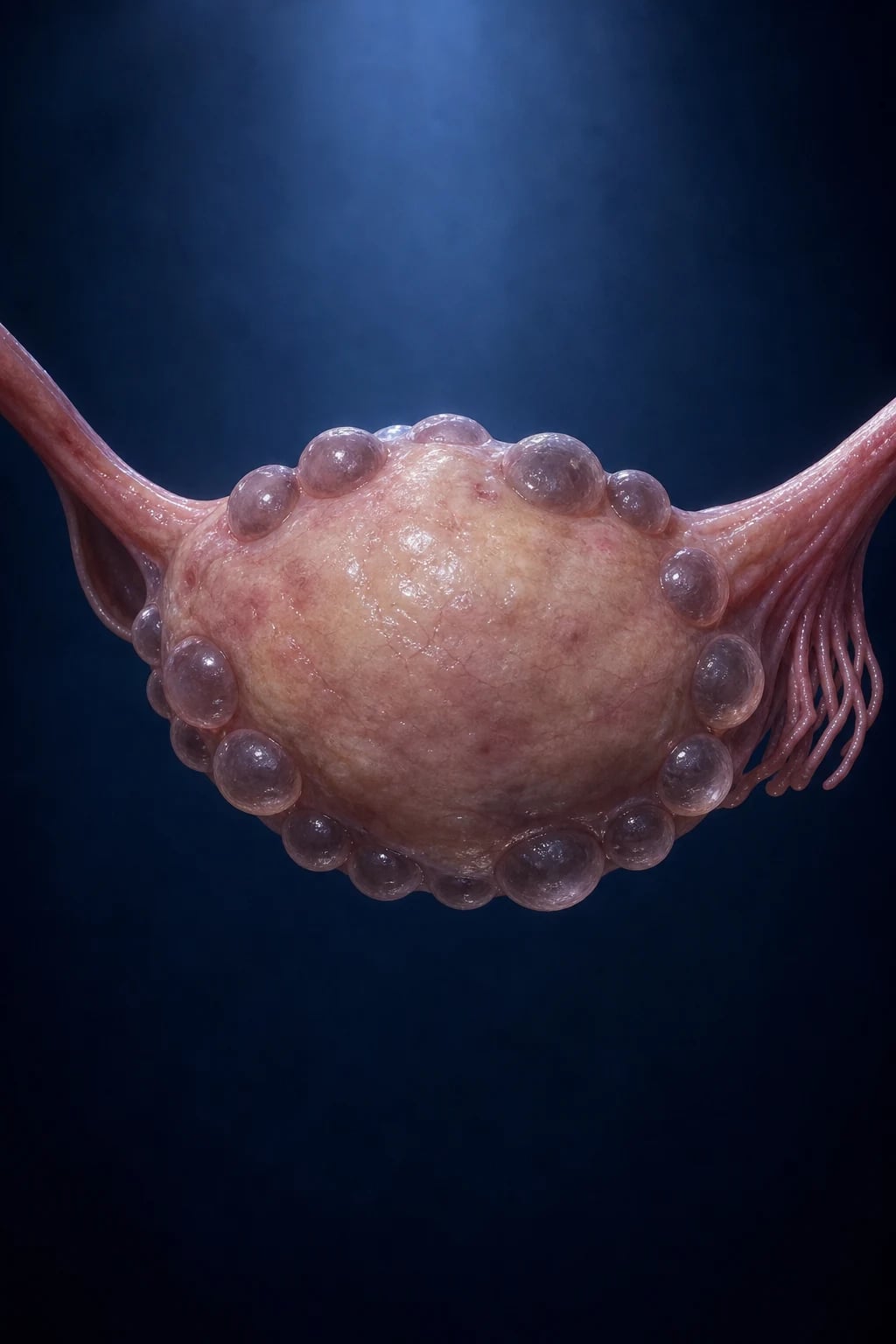
Classification (Rotterdam Phenotypes)
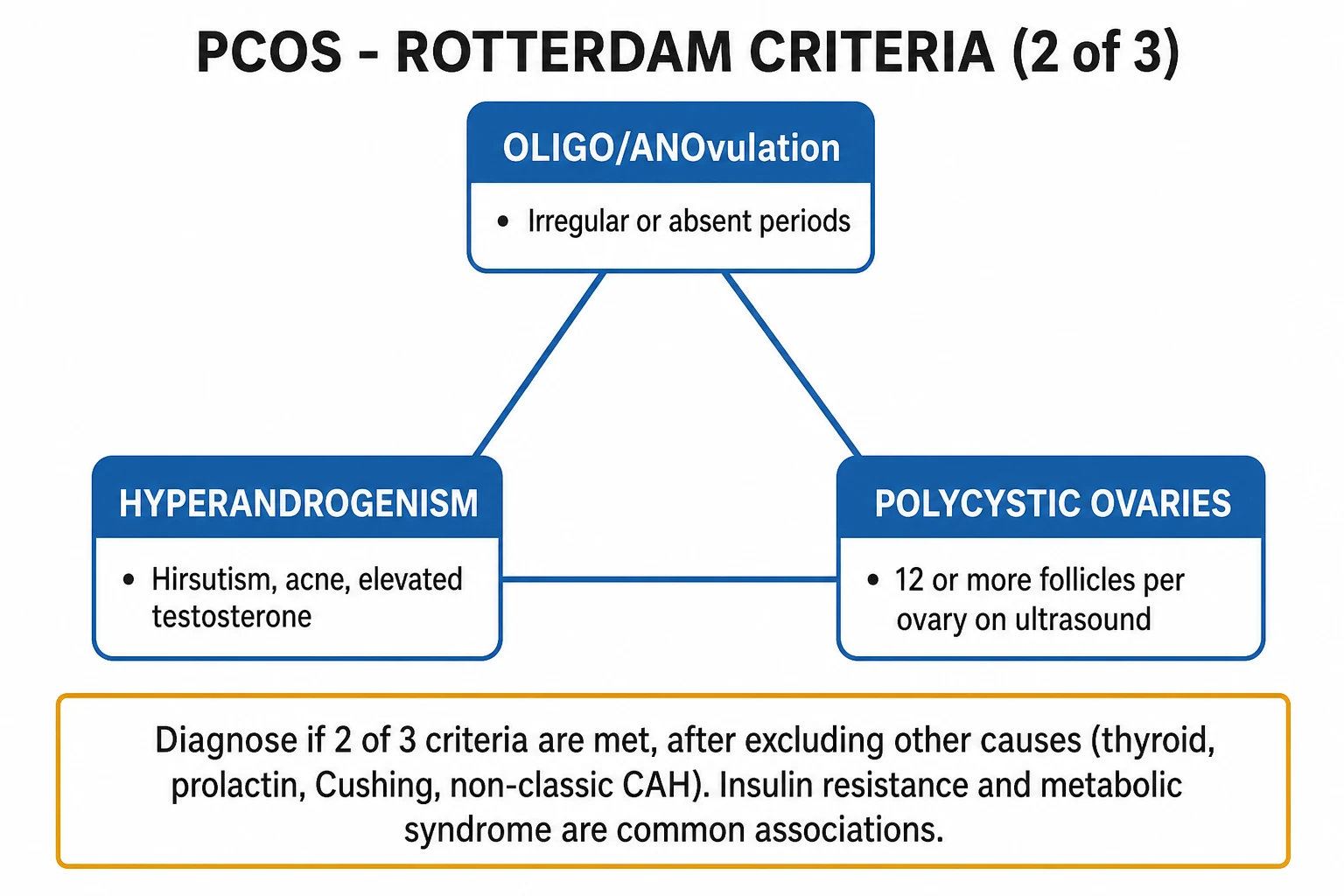
The three Rotterdam features combine into four recognised phenotypes of increasing severity:[1]
- Phenotype A (classic) — hyperandrogenism + ovulatory dysfunction + PCOM. The most severe and most insulin-resistant; highest metabolic risk.
- Phenotype B (classic, non-PCOM) — hyperandrogenism + ovulatory dysfunction without PCOM. Metabolic risk similar to A.
- Phenotype C (ovulatory PCOS) — hyperandrogenism + PCOM with regular cycles. Moderate.
- Phenotype D (non-hyperandrogenic) — ovulatory dysfunction + PCOM. The mildest phenotype, lowest metabolic burden. [1]
The practical point: classic phenotypes (A and B) carry the highest cardiometabolic risk and warrant the most aggressive metabolic screening. [1]
Epidemiology & Risk Factors
PCOS affects around 8 to 13 percent of reproductive-age women worldwide — the most common endocrine disorder in this group — yet up to 70 percent remain undiagnosed.[1][9] Using the broader Rotterdam criteria (versus the stricter NIH 1990 criteria) approximately doubles the apparent prevalence (15 to 20 percent in unselected community samples). The diagnosis is often delayed by 2 to 4 years after symptom onset, with patients consulting multiple clinicians before a label is applied — a delay that is itself a modifiable harm.[4][9] Risk factors include family history (heritability around 70 percent in twin studies), obesity (present in 50 to 80 percent in some populations, but a lean-PCOS phenotype exists in around 20 percent), insulin resistance (a near-universal feature even in lean women), low birth weight and prenatal androgen exposure (Barker-style developmental programming), premature pubarche (early adrenarche from premature adrenarchal androgen secretion), and type 2 diabetes in first-degree relatives.[9][10] Prevalence and metabolic severity are higher in South Asian, Hispanic, Middle Eastern and Indigenous populations, who develop metabolic features at lower BMI (an Asian cut-off of BMI 23 to 27.5 kg/m² better captures at-risk women than the Western 25 kg/m² cut-off) — a key reason management must be regionally aware.[3][7] PCOS is also highly heritable: first-degree relatives have a 5 to 8-fold increased risk, and the genetic architecture is polygenic, with GWAS identifying more than 20 susceptibility loci including DENND1A (theca-cell androgen production), THADA (metabolic and thyroid association), LHCGR (LH receptor signalling), FSHR (FSH receptor), INSR (insulin receptor) and RAB5B (intracellular trafficking).[6] The syndrome tracks across the lifespan — daughters of PCOS mothers, and even daughters exposed in utero to maternal androgens, show higher AMH and features of the syndrome, supporting a developmental origin that is then unmasked by peripubertal insulin resistance.[12]
Pathophysiology
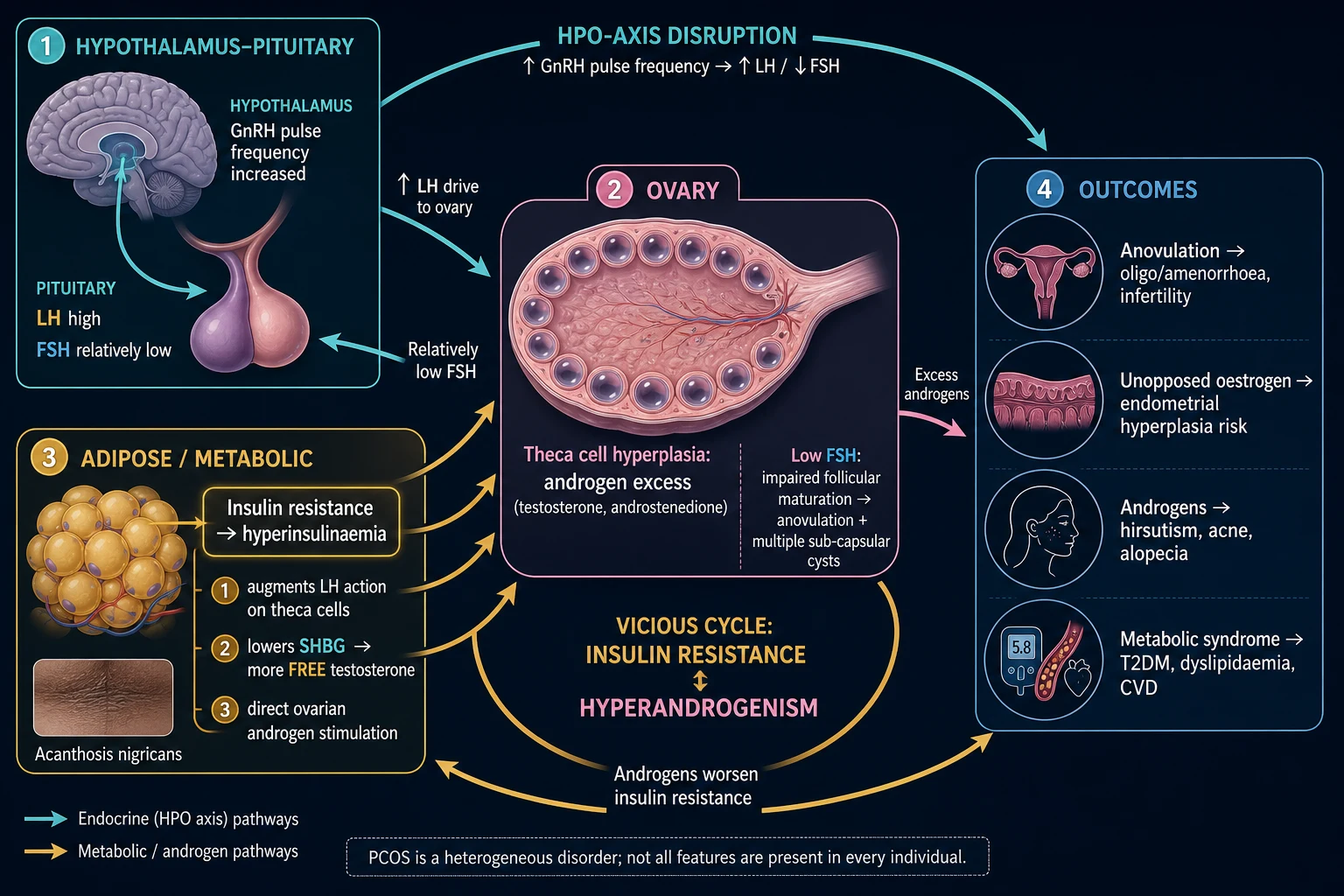
PCOS arises from a self-reinforcing vicious cycle between insulin resistance and hyperandrogenism, set against a disordered hypothalamic-pituitary-ovarian (HPO) axis and shaped by genetic and developmental programming.[1][6][11]
1. Disordered HPO axis (the GnRH pulse generator). In PCOS the hypothalamic GnRH pulse generator accelerates — pulses of GnRH become more frequent (every 60 to 90 minutes instead of the normal 90 to 120), driving the pituitary to release more LH and less FSH. The resulting LH:FSH ratio is often elevated (over 2:1 is supportive but not diagnostic). The high LH stimulates ovarian theca-cell hyperplasia and CYP17 overexpression — the rate-limiting enzyme in ovarian androgen biosynthesis — increasing production of testosterone and androstenedione. AMH, secreted by granulosa cells of the small antral follicles that accumulate in PCOS, further accelerates GnRH pulse frequency by acting on hypothalamic GnRH neurons, reinforcing the LH-dominant state.[6][12]
2. Insulin resistance and the serine-phosphorylation defect. Insulin resistance is near-universal in PCOS (present in around 70 percent of lean and 95 percent of obese PCOS). The molecular mechanism centres on post-receptor serine phosphorylation of the insulin receptor and IRS-1 — the same defect that impairs glucose uptake in muscle and adipose tissue also affects the ovarian theca cell, where it paradoxically preserves and amplifies the steroidogenic arm of insulin signalling. The result is hyperinsulinaemia, which drives hyperandrogenism by three named mechanisms:[11]
- (a) It augments LH action on theca cells — insulin and IGF-1 receptors co-amplify the LH-driven CYP17 transcription.
- (b) It suppresses hepatic synthesis of sex-hormone-binding globulin (SHBG) — lowering SHBG raises the free (bioactive) testosterone fraction even when total testosterone is normal.
- (c) It directly stimulates ovarian (and adrenal) androgen production through its own receptor and the cross-reactive IGF-1 receptor.
3. Follicular arrest and polycystic morphology. Although the early pre-antral follicle cohort is normal, FSH is relatively low (because of the LH-dominant pituitary state and the negative feedback of relatively higher oestradiol and inhibin B). Without adequate FSH, no single follicle is selected as the dominant Graafian follicle. Small antral follicles accumulate in the sub-capsular region of the ovary, producing the characteristic pearl-necklace / string-of-pearls ultrasound appearance (more than 20 per ovary of 2 to 9 mm on modern transducers). These arrested follicles secrete large amounts of anti-Müllerian hormone (AMH) — 2 to 4 times the level of age-matched controls — and AMH itself inhibits FSH-induced aromatase activity, blocking conversion of androgens to oestrogens and sustaining the hyperandrogenic follicular environment. AMH also acts on the hypothalamus to accelerate GnRH pulses, closing the loop with point 1.[12]
4. Anovulation and unopposed oestrogen. Without a dominant follicle there is no ovulation, no corpus luteum, and no luteal-phase progesterone to oppose oestrogen action on the endometrium. Meanwhile, adipose-tissue aromatase continuously converts the excess androgens to oestrone (E1). The result is chronic unopposed oestrogen stimulation of the endometrium — the basis of the increased risk of endometrial hyperplasia and endometrial cancer (around 2 to 3-fold increased risk in PCOS).[13]
5. Low-grade chronic inflammation and adipokine dysregulation. PCOS is increasingly recognised as a state of chronic low-grade inflammation with elevated TNF-alpha, IL-6, IL-18, and CRP, driven by adipocyte hypertrophy and macrophage infiltration of visceral adipose tissue. Adipokines are deranged: leptin is elevated (leptin resistance), adiponectin is reduced (anti-inflammatory and insulin-sensitising effect lost). These inflammatory mediators further impair insulin signalling and stimulate ovarian androgen production via NF-kB pathways, completing the inflammatory arm of the vicious cycle.[15]
6. The "two-hit" developmental model. Many researchers now frame PCOS as a two-hit disorder: first hit = genetic susceptibility (DENND1A, THADA, LHCGR, INSR variants) + in-utero androgen or AMH exposure that programmes the HPO axis for hyperandrogenism; second hit = peripubertal or adult insulin resistance (driven by adiposity, diet or sedentary lifestyle), which unmasks the syndrome by augmenting the pre-programmed androgen excess. This explains why PCOS emerges around menarche, why a lean woman with no obvious metabolic risk can still have the syndrome, and why lifestyle modification (which targets the second hit) is so effective across the whole phenotypic spectrum. [1]
Diagnostic Criteria — Rotterdam 2003 (in detail)
The Rotterdam consensus (ESHRE/ASRM 2003) remains the international diagnostic standard and requires ANY 2 of 3 features — oligo/anovulation, hyperandrogenism, polycystic ovarian morphology (PCOM) — AFTER excluding disorders of similar presentation (thyroid, hyperprolactinaemia, non-classic CAH, Cushing, androgen-secreting tumour, acromegaly).[1][3]
- Oligo/anovulation — cycles over 35 days or fewer than 8 per year, or chronic amenorrhoea; reflects chronic anovulation with unopposed oestrogen.
- Hyperandrogenism — clinical (hirsutism on the modified Ferriman-Gallwey score of 4 or above; persistent acne; androgenic alopecia) OR biochemical (elevated total/free testosterone; raised free androgen index = total testosterone divided by SHBG). Mild elevations are typical — very high levels (over 5 to 6 nmol/L) raise suspicion for tumour.
- Polycystic ovarian morphology (PCOM) on ultrasound — adult threshold is 20 or more antral follicles per ovary (2 to 9 mm) and/or ovarian volume over 10 mL on modern high-resolution transducers (AE-PCOS 2014); the older Rotterdam cutoff of 12 follicles over-calls with current probes. Transvaginal ultrasound is preferred; transabdominal is acceptable when TVUS is not feasible.
- Note — PCOM is NOT required if the other two features are present; PCOM alone is insufficient for diagnosis (over 20 percent of normal ovulatory women of reproductive age have PCOM by modern criteria). [1]
Alternate criteria exist: the Androgen Excess & PCOS Society (AE-PCOS) requires hyperandrogenism as mandatory plus ovulatory dysfunction and/or PCOM; the NIH 1990 criteria are stricter (require both hyperandrogenism and ovulatory dysfunction).[1]
Rotterdam 2003 (ESHRE/ASRM)
- ANY 2 of 3: oligo/anovulation + hyperandrogenism + PCOM
- Most permissive — captures the broadest phenotype spectrum (4 phenotypes)
- Excludes mimics (thyroid, prolactin, CAH, Cushing, tumour) — required
- International standard; widely used in clinical practice and trials
Androgen Excess Society (AE-PCOS)
- Hyperandrogenism is MANDATORY plus ovulatory dysfunction and/or PCOM
- Captures only hyperandrogenic phenotypes (A, B, C)
- Better aligned with the metabolic/insulin-resistant core mechanism
- Useful when the research question centres on androgen excess
NIH 1990 (original criteria)
- BOTH hyperandrogenism AND ovulatory dysfunction required
- Strictest — captures only classic phenotypes A and B
- PCOM not formally included (US technology of the era)
- Rarely used clinically now; quoted in older literature
Adolescent criteria
- Require BOTH hyperandrogenism and persistent ovulatory dysfunction
- DO NOT use PCOM (over 50 percent of normal adolescents have multifollicular ovaries)
- Wait at least 2 to 3 years post-menarche before diagnosing
- Reassess; labels in adolescents should be provisional
Clinical Presentation
PCOS is a spectrum; most women present in the late teens to early thirties with reproductive complaints, but metabolic features often dominate over time. The phenotype is shaped by the underlying balance between the HPO-axis/hyperandrogenic and the metabolic/insulin-resistant arms, and the presenting complaint differs by age: in the teens and early twenties women typically present with menstrual irregularity, hirsutism, acne and infertility; in the thirties and forties the metabolic features — weight gain, prediabetes, gestational diabetes, dyslipidaemia and obstructive sleep apnoea — become increasingly prominent.[1][5]
Reproductive presentation:
- Menstrual — oligomenorrhoea (cycles over 35 days or fewer than 8 per year) is the cardinal gynaecological symptom and reflects chronic anovulation; amenorrhoea (no menses for 3 or more months) may also occur. Because anovulatory cycles are progesterone-deficient, the endometrium is exposed to unopposed oestrogen, producing irregular, sometimes heavy, bleeding (the commonest reason for presentation in adolescence). Anovulatory infertility — failure to conceive after 12 months of regular unprotected intercourse — is the commonest reason a reproductive-age woman seeks care, and accounts for around 80 percent of anovulatory infertility overall.
- Hyperandrogenism (clinical) — hirsutism is the most visible marker. Hirsutism is male-pattern terminal hair in androgen-dependent areas — upper lip, chin, chest (periareolar), back, abdomen (linea alba), inner thigh — distinct from vellus hypertrichosis. It is quantified by the modified Ferriman-Gallwey (mFG) score, which grades 9 body sites (lip, chin, chest, upper back, lower back, upper abdomen, lower abdomen, upper arm, thigh) from 0 (no terminal hair) to 4 (fully male-pattern); the cut-off for hirsutism is ≥ 4 in most populations, with a higher threshold (≥ 8 to 10) often used in East Asian women because of lower baseline terminal-hair density. Acne (persistent, often jawline and chin) and androgenic alopecia (frontal/temporal recession and crown thinning, Ludwig pattern) are also part of the clinical hyperandrogenism spectrum, although acne alone is a weaker diagnostic marker in adults.
- Hyperandrogenism (biochemical) — total testosterone is mildly-to-moderately raised in around 60 to 80 percent of PCOS, but the free (bioactive) testosterone and the free androgen index (FAI = 100 × total testosterone / SHBG) are more sensitive because SHBG is suppressed. DHEA-S is an adrenal androgen — modestly raised in some PCOS, but markedly raised should raise suspicion of adrenal pathology. Androstenedione is the most sensitive single marker but is not routinely available in all labs. [1]
Metabolic presentation:
- Central (android) obesity — present in 50 to 80 percent depending on ethnicity; a waist circumference over 88 cm in non-Asian or over 80 cm in Asian women defines the metabolic-syndrome criterion.
- Acanthosis nigricans — velvety hyperpigmented thickening of skin over the neck, axillae, groin and knuckles — a bedside marker of insulin resistance, present in around 30 to 50 percent of PCOS. Multiple skin tags (acrochordons) often accompany acanthosis.
- Dyslipidaemia — typical pattern is high triglycerides, low HDL-C, increased small-dense LDL — atherogenic.
- Hypertension, glucose intolerance, obstructive sleep apnoea — see Complications. [1]
Psychological presentation:
- Anxiety, depression, body-image distress, eating disorders and reduced quality of life are 2 to 4-fold more common in PCOS. Mood symptoms often track hirsutism and weight rather than cycle irregularity. Screen actively (PHQ-9, GAD-7) — they are treatable and they worsen adherence. [1]
Atypical / lifespan-specific presentations:
- Lean PCOS (around 20 percent of PCOS) — normal BMI but still insulin resistant (by euglycaemic clamp or HOMA-IR). The phenotype is dominated by the reproductive arm — hirsutism, oligomenorrhoea, infertility — and metabolic risk is lower but not absent. The Dapas/Dunaif 2020 unsupervised clustering analysis identified a distinct "reproductive" PCOS subtype (higher LH and SHBG, lower BMI and insulin) and a "metabolic" subtype (higher BMI, glucose, insulin androgens), supporting the clinical recognition that PCOS is not one disease.[5]
- Adolescents — irregular cycles are normal for 2 to 3 years post-menarche; the HPO axis is still maturing. Over-diagnosis is the main risk; require both hyperandrogenism and persistent ovulatory dysfunction for at least 2 years post-menarche, and avoid PCOM as a criterion.
- Pregnancy — PCOS is the commonest cause of anovulatory infertility but pregnancy is achievable; once pregnant, women are at higher risk of miscarriage, gestational diabetes, pre-eclampsia, preterm birth, caesarean section and large-for-gestational-age babies — see Special Populations.
- Post-menopausal — reproductive features (hirsutism, acne) wane as ovarian androgen production falls; the metabolic and cardiovascular risk persists or worsens; continue surveillance.
Clinical presentation — symptom frequencies in PCOS
Differential Diagnosis
Before labelling a patient PCOS, exclude the mimics — this is itself an examinable dimension. The discriminating features below tell them apart.[1]
PCOS
- Slowly progressive, mild-to-moderate hyperandrogenism; hirsutism, acne
- Oligomenorrhoea from adolescence; polycystic ovaries on US
- Insulin resistance, acanthosis nigricans, raised LH:FSH; normal 17-OHP, normal prolactin/TSH/cortisol
- Testosterone mildly-to-moderately raised
Non-classic CAH (21-OH deficiency)
- Hirsutism + oligomenorrhoea indistinguishable from PCOS on history
- Elevated baseline 17-hydroxyprogesterone (morning, early follicular)
- Confirmed by ACTH (Cortrosyn) stimulation test
- Family history of CAH; may have hypertension in 11-beta-OH deficiency
Androgen-secreting tumour
- RAPID onset, SEVERE virilisation: clitoromegaly, voice deepening, frontal balding
- Total testosterone very high (typically over 5 to 6 nmol/L)
- DHEA-S markedly raised suggests adrenal source
- Urgent pelvic ultrasound then CT/MRI adrenals — NOT PCOS
Cushing syndrome
- Central obesity, moon face, purple striae, proximal myopathy, bruising
- Hypertension, hyperglycaemia, hypokalaemia
- Exclude with 24-hour urine free cortisol, overnight dexamethasone suppression, midnight salivary cortisol
- Loss of cortisol diurnal rhythm distinguishes from PCOS
Thyroid / prolactin disorders
- Both cause menstrual irregularity and can mimic PCOS
- Hypothyroidism: raised TSH; may raise prolactin via TRH
- Hyperprolactinaemia: raised prolactin, galactorrhoea, may lower GnRH
- Exclude with TSH and prolactin — first-line in ANY menstrual workup
Clinical & Bedside Assessment
Focused history (a few high-yield questions determine most of the diagnosis):
- Menstrual pattern — cycle length, frequency, last menstrual period, age at menarche, prior pregnancies.
- Fertility intent and history — duration of trying, prior pregnancies and outcomes, partner's reproductive history.
- Hirsutism and acne — onset and progression (sudden and severe = red flag for tumour), prior treatments, hair-removal practices.
- Weight change — particularly recent rapid gain around the time of menarche or after stopping the OCP.
- Family history of PCOS, type 2 diabetes, hypertension, premature cardiovascular disease, and endometrial cancer.
- Medications — valproate (associated with PCOS-like hyperandrogenism), antipsychotics (hyperprolactinaemia), anabolic steroids / exogenous androgens (iatrogenic hyperandrogenism), androgens from a partner's topical preparation, glucocorticoids.
- Sleep, mood, eating behaviours — screen for obstructive sleep apnoea (snoring, witnessed apnoeas, Epworth score) and depression/anxiety.
- Cardiovascular and metabolic history — gestational diabetes, hypertension, dyslipidaemia, smoking. [1]
Focused examination (the high-yield bedside steps):
- Anthropometrics — BMI (kg/m²) and waist circumference at the level of the iliac crest. BMI over 25 (or over 23 in Asian populations) flags cardiometabolic risk. Waist over 88 cm (non-Asian) or over 80 cm (Asian) is the metabolic-syndrome criterion.
- Blood pressure — the cardiovascular risk starts young; aim under 130/80 mmHg.
- Modified Ferriman-Gallwey score — examine the 9 body sites; ≥ 4 is the cut-off for hirsutism in most populations.
- Skin — acanthosis nigricans (neck, axillae, groin, knuckles), acne (face, jawline, chest, back), androgenic alopecia (midline parting, crown), skin tags (acrochordons) as an insulin-resistance clue.
- Look actively for virilisation — clitoromegaly (clitoral index over 35 mm²), deepening of the voice, frontal balding, increased muscle bulk, breast atrophy. The presence of any of these shifts the differential towards an androgen-secreting tumour or severe non-classic CAH and triggers urgent imaging.
- Thyroid — goitre, nodules; breast examination — expressible galactorrhoea (prolactinoma); skin turgor and BP — Cushing screening if suspected.
- Pelvic examination is not routine in an adolescent or a young nulliparous woman in the absence of symptoms, but is performed when an alternative diagnosis (mass, deep endometriosis, pelvic pain) is suspected. [1]
Why the bedside matters: the mFG score objectifies hirsutism (a diagnosis-defining feature), acanthosis is a single-glance clue to insulin resistance that prompts diabetes screening, and sudden severe virilisation is the single most important red flag to catch clinically before labelling the patient PCOS. The clinical phenotype also guides the diagnostic workup: an obese woman with acanthosis needs more aggressive metabolic screening than a lean woman with isolated hirsutism. [1]
Investigations
Diagnosis is clinical (Rotterdam); investigation serves three purposes — confirm hyperandrogenism, exclude mimics and stage metabolic risk. There is no single diagnostic test; the workup is staged. First-line bloods are mandatory before any diagnostic label.[1][7]
Stage 1 — exclude the mimics (the "T3P" of menstrual workup + androgens + glucose). Every woman with suspected PCOS has the following at presentation (ideally in the early follicular phase, days 2 to 5 of a spontaneous or induced bleed, drawn in the morning): [1]
TSH
- Hypothyroidism causes oligomenorrhoea and may raise prolactin via TRH
- Hyperthyroidism causes oligomenorrhoea and osteoporosis
- Standard first-line in any menstrual workup — cheap and changes management
Prolactin
- Hyperprolactinaemia suppresses GnRH → anovulation; galactorrhoea in some
- Mild elevations are common; macroprolactin and the hook effect must be excluded
- Prolactin > 100 µg/L suggests macroadenoma — MRI pituitary
17-hydroxyprogesterone
- Morning, early-follicular (days 2 to 5) — peaks in luteal phase confounds interpretation
- Baseline > 2 to 4 ng/mL (6 to 12 nmol/L) suggests non-classic CAH
- Confirm with ACTH (Cortrosyn) stimulation test — peak 17-OHP > 10 ng/mL = CAH
Total + free testosterone + SHBG (FAI)
- Total testosterone is the screening test — mildly raised in 60 to 80% of PCOS
- Free testosterone and FAI (= 100 × T / SHBG) are more sensitive
- Testosterone > 5 to 6 nmol/L (200 ng/dL) flags an androgen-secreting tumour
DHEA-S
- Adrenal androgen — markedly raised suggests adrenal source (CAH, adrenal carcinoma)
- Only mildly raised in PCOS — a normal DHEA-S does not exclude PCOS
Cortisol studies (if Cushing suspected)
- 24-hour urinary free cortisol — sensitive; ≥ 3× upper limit of normal is suggestive
- Overnight 1 mg dexamethasone suppression — cortisol < 50 nmol/L excludes Cushing
- Midnight salivary cortisol — loss of diurnal rhythm; sensitive for mild Cushing
Stage 2 — confirm PCOM and assess the ovary. Pelvic transvaginal ultrasound is the imaging modality of choice; transabdominal is acceptable in virginal or sexually-inactive women. Adult criteria (AE-PCOS 2014, unchanged in 2018/2023 guidelines): 20 or more antral follicles per ovary of 2 to 9 mm AND/OR ovarian volume over 10 mL on modern high-resolution transducers. The older 12-follicle threshold over-calls PCOM and is no longer recommended. Either ovary meeting the threshold counts (it need not be bilateral). Ultrasound is not required if the other two criteria are met, and is not recommended for the diagnosis of PCOS within 8 years of menarche because multifollicular ovaries are normal in this age group. AMH is increasingly used as a serum surrogate for antral follicle count (when access to ultrasound is limited) — typical PCOS cut-offs are around 4.7 to 5 ng/mL using the Beckman Generation II assay — but is not yet part of formal criteria because of inter-assay variability.[7][12]
Stage 3 — metabolic surveillance (mandatory at diagnosis and periodic). PCOS is a cardiometabolic disorder, and the metabolic workup is part of the diagnosis:
- Anthropometrics and blood pressure at every visit.
- Fasting glucose and HbA1c in all patients at diagnosis; in those with BMI ≥ 25 (or ≥ 23 Asian), high-risk ethnicity, prior gestational diabetes, or a family history of T2DM, a 2-hour 75 g oral glucose tolerance test (OGTT) is the preferred test (HbA1c alone under-diagnoses IGT in PCOS, missing up to a third of cases).
- Fasting lipid profile (total cholesterol, LDL-C, HDL-C, triglycerides) at diagnosis and every 2 to 3 years (more often if abnormal).
- Liver function tests (ALT, AST, GGT) — screen for NAFLD, present in 30 to 50 percent of PCOS.
- Sleep study (polysomnography or validated questionnaire such as STOP-BANG or Berlin) if symptoms of obstructive sleep apnoea (snoring, witnessed apnoeas, Epworth over 10) — particularly in obese PCOS, where OSA prevalence reaches 30 to 50 percent.
- Repeat OGTT every 1 to 3 years in those with normal baseline but ongoing risk (obesity, weight gain, pregnancy, family history). [1]
Supportive (NOT diagnostic):
- LH and FSH — an LH:FSH ratio over 2:1 is supportive but no longer a diagnostic criterion (often normal, especially in obese PCOS where LH is suppressed by adipose-tissue aromatisation). Useful only as a sanity check.
- AMH — 2 to 4× elevated; tracks with antral follicle count; not part of formal criteria.
- oestradiol — often normal or mildly raised; not useful diagnostically.
- Anti-CCP, anti-TPO — not routine, but thyroid autoantibodies may reveal early Hashimoto's in the workup of menstrual irregularity. [1]
Pre-conception workup (when fertility is desired): add partner semen analysis (mandatory first), tubal patency assessment (hysterosalpingogram or hystero-contrast-sonography), mid-luteal progesterone (day 21 to 23) to confirm ovulation once cycles are regular, rubella and varicella serology, cervical screening if due, and fasting glucose / HbA1c as a baseline for pregnancy risk stratification. [1]
First-line blood workup — the number that must be remembered
PCOS diagnostic criteria — the numbers at a glance
PCOS — the numbers that decide an answer
Management — Resuscitation & Red Flags
PCOS is not a time-critical emergency, but three situations demand prompt action: [1]
- Sudden severe virilisation (clitoromegaly, voice deepening) with very high testosterone — investigate for an androgen-secreting tumour (pelvic ultrasound then adrenal imaging); do not reassure as PCOS.
- Prolonged amenorrhoea (over 3 months) with unopposed oestrogen and abnormal bleeding — sample the endometrium; start endometrial protection (cyclical progestogen or combined OCP).
- Metabolic decompensation — new type 2 diabetes or hyperglycaemic crisis — manage per diabetes guidelines and screen comorbidities. [1]
The single most common "resuscitation" intervention is endometrial protection in amenorrhoea: induce a regular withdrawal bleed with a cyclical progestogen (e.g., medroxyprogesterone 5 to 10 mg for 10 to 14 days) or a combined OCP, to prevent hyperplasia.[1]
Management — Definitive & Stepwise
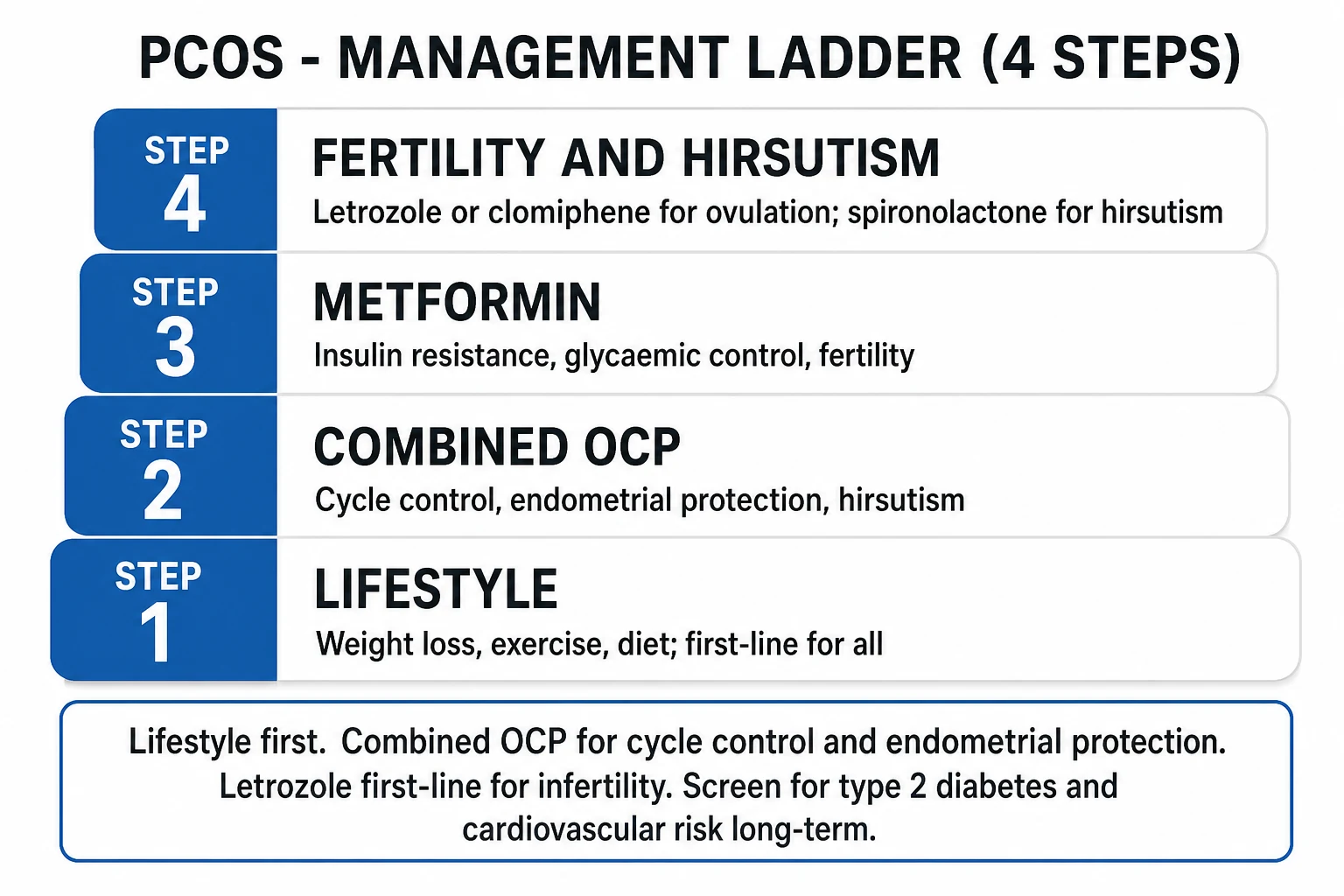
Management is symptom-driven and lifestyle-first, organised by the patient's primary concern: cycles, hirsutism, metabolic risk, or fertility.[1][2][3]
- 1. Lifestyle (first-line for ALL patients) — 5 to 10 percent weight loss through diet, exercise and behaviour change restores ovulation in many and is the single most effective intervention; it improves insulin sensitivity, cycles, fertility and metabolic risk. Target achievable, sustained loss.
- 2. Menstrual irregularity without fertility desire — combined oral contraceptive pill is first-line (e.g., ethinylestradiol 30 to 35 microgram with a progestin): provides cycle control, endometrial protection (prevents hyperplasia from unopposed oestrogen), raises SHBG to lower free testosterone (helps hirsutism/acne). Use cyclical oral progestogen (e.g., medroxyprogesterone 5 to 10 mg for 10 to 14 days every 1 to 3 months) when the OCP is contraindicated (smoker over 35, migraine with aura, VTE risk).
- 3. Metabolic features — metformin (start 500 mg once daily with food, titrate to 1500 to 2000 mg per day in divided doses) improves insulin sensitivity, menstrual regularity and ovulation; modest effect on hirsutism. GLP-1 receptor agonists may be added for obesity (with lifestyle). Treat hypertension, dyslipidaemia, and diabetes per standard guidelines; offer weight-management / bariatric surgery assessment for BMI over 35 to 40 with comorbidity (defer pregnancy 12 to 18 months post-surgery).
- 4. Hirsutism and acne — combined OCP is first-line; add cosmetic measures (laser, electrolysis, waxing, eflornithine cream topically). If inadequate after six months (hair cycles are slow), add an anti-androgen — spironolactone 50 to 200 mg per day (or finasteride) — ONLY with reliable contraception because anti-androgens are teratogenic (feminise a male fetus). Do not start an anti-androgen alone — always pair with the OCP for contraception and synergy.
- 5. Infertility / ovulation induction — pre-conception: optimise weight, glucose, folate, stop teratogens. LETROZOLE is FIRST-LINE (2.5 to 5 mg days 2 to 6, titrate to 7.5 mg): the PPCOS II trial (NEJM 2014) showed letrozole achieved higher live-birth rates than clomiphene (around 28 percent vs 19 percent) with a lower multiple-pregnancy rate.[2] Clomiphene citrate (50 to 100 mg days 2 to 6) is second-line. Gonadotrophins (low-dose FSH, with cycle monitoring) and laparoscopic ovarian drilling are third-line for clomiphene/letrozole resistance. IVF is reserved for failure of ovulation induction or additional factors (tubal, male factor).
- Escalation triggers for fertility — failure to ovulate on maximum-dose letrozole; need for gonadotrophins (OHSS and multiple-pregnancy risk — requires monitoring); tubal or male factor — refer to reproductive endocrinology.
Specific drug doses — at a glance (for the prescription pad):[1][2]
Key drug doses in PCOS management
Management of Insulin Resistance
Insulin resistance is central to PCOS pathophysiology and the metabolic syndrome — addressing it is not optional. The therapeutic ladder:[1][3]
- Lifestyle first (always) — 5 to 10 percent weight loss through calorie restriction, low-glycaemic-index diet, and 150 minutes per week of moderate aerobic exercise plus resistance training. This restores ovulation in many, improves HbA1c, lowers triglycerides, and reduces T2DM risk; it is the most effective single intervention.
- Metformin — biguanide that suppresses hepatic gluconeogenesis and improves peripheral insulin sensitivity. Starting dose 500 mg once daily with the evening meal (to limit GI side-effects), titrate by 500 mg every 1 to 2 weeks to 500 mg BD (twice daily), then 500 mg TDS (three times daily) — usual target 1.5 to 2 g/day. Maximum 2.55 g/day. Extended-release (XR) 1 to 2 g once daily is better tolerated. Counsel about GI side-effects (nausea, diarrhoea — take with food), vitamin B12 deficiency with chronic use, and stop 48 hours before contrast imaging (lactic acidosis risk). Contraindicated if eGFR under 30; caution under 45. Avoid in decompensated liver disease, sepsis, alcohol excess.
- GLP-1 receptor agonists (e.g., liraglutide, semaglutide) — added for obesity when lifestyle + metformin are insufficient; significant weight loss (5 to 15 percent) and may restore ovulation; effective in PCOS obesity trials but stop 2 months before conception (semaglutide washout).
- Inositol (myo-inositol 4 g plus D-chiro-inositol 400 mg daily) — emerging evidence for insulin sensitivity and ovulation, generally well tolerated; not yet first-line but reasonable adjunct.
- Thiazolidinediones (pioglitazone) — improve insulin sensitivity and ovulation but cause weight gain and are teratogenic; reserved for refractory metabolic cases under specialist supervision.
- Bariatric/metabolic surgery — consider for BMI over 35 to 40 kg/m² with comorbidity when non-surgical measures fail; defer pregnancy 12 to 18 months post-surgery; can restore ovulation and dramatically improve insulin resistance.
- Treat comorbidities aggressively — HbA1c target under 6.5 percent (or individualised), BP under 130/80 mmHg, LDL cholesterol under 2.6 mmol/L (under 1.8 in high CV risk), screen and manage NAFLD and obstructive sleep apnoea. [1]
Infertility Workup and Ovulation Induction
A woman with PCOS who fails to conceive after 12 months of regular unprotected intercourse (or 6 months if over 35 years, or sooner if other factors exist) enters a structured workup.[2]
- Confirm ovulation — mid-luteal serum progesterone over 10 nmol/L (over 3 ng/mL) indicates ovulation; basal body temperature and LH-surge kits are supportive but less reliable.
- Investigate other factors BEFORE ovulation induction — partner semen analysis (mandatory first step), tubal patency (hysterosalpingogram or HyCoSy), pelvic ultrasound, TSH and prolactin if not done. Address tubal, uterine, or male factor before assuming PCOS anovulation alone.
- Pre-conception optimisation — folic acid 400 to 800 microgram daily (5 mg if previous NTD or BMI over 35), optimise weight, HbA1c and BP, stop teratogens (spironolactone, retinoids, GLP-1 agonists), review medications.
- Ovulation induction ladder (PPCOS II framework, Legro et al., NEJM 2014):[2]
- Step 1 — Letrozole (FIRST-LINE) — an aromatase inhibitor that lowers oestrogen and triggers FSH release. Starting dose 2.5 mg orally once daily on cycle days 2 to 6 (counting from the first day of menses or withdrawal bleed). Titrate to 5 mg/day days 2 to 6, then 7.5 mg/day days 2 to 6 if no ovulation (mid-luteal progesterone under 10 nmol/L) or no pregnancy after 3 ovulatory cycles. Higher doses (up to 7.5 mg/day) are used in clomiphene-resistant PCOS. Side-effects: mild headache, hot flushes, fatigue; lower multiple-pregnancy rate than clomiphene and no anti-oestrogenic endometrial thinning. PPCOS II showed live birth around 28 percent with letrozole vs 19 percent with clomiphene (NEJM 2014).
- Step 2 — Clomiphene citrate (SECOND-LINE) — selective oestrogen receptor modulator with anti-oestrogenic endometrial and cervical-mucus effects. 50 mg/day days 2 to 6, titrate to 100 mg/day, occasionally up to 150 mg/day. Use when letrozole is unavailable or not tolerated; monitor ovulation; consider adding trigger hCG if follicle tracking is available. Anti-oestrogenic endometrial thinning may impair implantation — this is a key mechanism by which letrozole outperforms clomiphene.
- Step 3 — Gonadotrophins (THIRD-LINE) — low-dose FSH (e.g., follitropin alpha/beta), starting 37.5 to 75 IU/day, with step-up protocol under cycle monitoring (transvaginal ultrasound and oestradiol every 2 to 3 days) to avoid OHSS (ovarian hyperstimulation syndrome) and multiple pregnancy. Cycle cancellation if over 3 mature follicles or oestradiol over 3000 pg/mL.
- Step 4 — Laparoscopic ovarian drilling (THIRD-LINE alternative) — electrocautery or laser of the ovarian stroma (4 to 6 punctures per ovary); restores ovulation in approximately 50 to 70 percent of clomiphene-resistant patients; risk of adhesions and ovarian damage.
- Step 5 — IVF (fourth-line) — indicated for failure of ovulation induction, additional tubal or male factor, or multiple-cycle pregnancy loss. Use GnRH antagonist protocol with GnRH-agonist trigger to minimise OHSS risk in PCOS (the most OHSS-prone phenotype).
- Monitoring — mid-luteal progesterone day 21 to 23 (over 10 nmol/L confirms ovulation); transvaginal ultrasound from cycle day 10 (dominant follicle 18 to 24 mm); timed intercourse or IUI at ovulation trigger.
- Lifestyle during induction — maintain BMI under 30 kg/m² when possible; each 5 percent weight loss roughly doubles the pregnancy rate.
PCOS management — what each letter reminds you
PCOS
First-line for cycle control AND endometrial protection (prevents hyperplasia from unopposed oestrogen)
Letrozole is first-line ovulation induction (PPCOS II, NEJM 2014 — superior live birth)
Addressed first by lifestyle (5 to 10 percent weight loss) — the single most effective intervention
Anti-androgen — ONLY with reliable contraception (teratogenic; feminises a male fetus)
Specific Subtypes & Scenarios
Adult phenotypes
- Phenotype A (classic, full) — hyperandrogenism + ovulatory dysfunction + PCOM. The most severe and most insulin-resistant; highest metabolic risk. Carries the highest T2DM and cardiovascular risk; the phenotype most likely to progress to diabetes and most likely to require IVF.
- Phenotype B (classic, non-PCOM) — hyperandrogenism + ovulatory dysfunction without PCOM. Metabolic risk similar to A; the diagnosis depends on biochemical or clinical hyperandrogenism.
- Phenotype C (ovulatory PCOS) — hyperandrogenism + PCOM with regular cycles. The hyperandrogenic but ovulating patient; typically milder; fertility usually preserved; the metabolic risk is intermediate.
- Phenotype D (non-hyperandrogenic) — ovulatory dysfunction + PCOM, no hyperandrogenism. The mildest phenotype, lowest metabolic burden; sometimes called the "ovulatory dysfunction + PCOM" phenotype; some experts argue this is not PCOS at all (no androgen excess) and may reflect a different disorder.
Phenotypic clusters (Dapas/Dunaif 2020)
An alternative, unsupervised clustering of PCOS patients on quantitative traits identifies two biologically distinct subtypes:[5]
- "Reproductive" subtype — higher LH and SHBG, lower BMI and insulin, relatively preserved insulin sensitivity. Better response to letrozole/clomiphene for fertility.
- "Metabolic" subtype — higher BMI, fasting glucose, insulin and triglycerides, more dyslipidaemia. Better response to metformin and weight loss; higher cardiometabolic risk.
These clusters may explain the heterogeneity in treatment response and long-term outcomes, and may in the future guide subtype-specific therapy. [1]
Clinical scenarios
- Lean PCOS (around 20 percent) — emphasise reproductive and endometrial management; metabolic risk is lower but still screen for diabetes (insulin resistance is present in around 70 percent of lean PCOS by HOMA-IR); do not assume health from a normal BMI; AMH is often markedly elevated.
- Obese PCOS — aggressive lifestyle, metformin and bariatric surgery assessment; screen for OSA and NAFLD; consider GLP-1 agonists; higher doses of medication may be needed for the same effect.
- Clomiphene-resistant PCOS — escalate to letrozole (if not yet used), then low-dose gonadotrophins or laparoscopic ovarian drilling; the latter may restore ovulation and reduces OHSS risk vs gonadotrophins but carries surgical and adhesion risks.
- PCOS with recurrent pregnancy loss — investigate antiphospholipid antibodies, thyroid antibodies, uterine septum; treat with low-dose aspirin ± LMWH in subsequent pregnancies if APS confirmed; letrozole may improve subsequent pregnancy outcomes.
- PCOS with endometrial hyperplasia on biopsy — induce a withdrawal bleed; offer high-dose progestin (megestrol, levonorgestrel IUS) for 3 to 6 months; repeat biopsy; lifelong OCP or progestin if hyperplasia persists.
Adolescent vs Adult Phenotypes
PCOS commonly emerges in the perimenarcheal years but the diagnosis in adolescents is deliberately conservative because the HPO axis is still maturing and adult criteria over-diagnose.[10]
Adolescent PCOS (criteria)
- BOTH hyperandrogenism AND persistent ovulatory dysfunction are required
- Persistent = at least 2 years post-menarche (the HPO axis needs 2 to 3 years to mature)
- DO NOT use PCOM as a diagnostic criterion (multifollicular ovaries are normal in this age group)
- AMH is not validated as a diagnostic criterion in adolescents
- Hyperandrogenism: clinical (hirsutism, severe acne) or biochemical (total testosterone > upper limit of normal for age and Tanner stage)
Adult PCOS (criteria)
- Rotterdam 2 of 3 — any combination of oligo/anovulation, hyperandrogenism, PCOM
- PCOM is allowed as one of the three (20+ follicles/ovary on modern US)
- Biochemical hyperandrogenism: total testosterone or FAI above the female reference range
- AMH may be used as a serum surrogate for antral follicle count when US is unavailable (off-label)
Practical management of the adolescent with suspected PCOS:
- Confirm persistent menstrual irregularity for at least 2 years post-menarche (cycles over 35 days or fewer than 8 per year) before considering the diagnosis.
- Document hyperandrogenism (clinical or biochemical) — biochemical hyperandrogenism in adolescents uses age- and Tanner-specific reference ranges; the female adult range is too insensitive in early puberty.
- Reassess at 18 to 20 — about 20 to 30 percent of adolescent "PCOS" labels are no longer present in early adulthood, because the HPO axis has matured.
- Manage symptoms while avoiding premature labelling — cycle control (combined OCP, low-androgenic progestin, or cyclic progestin if OCP contraindicated), hirsutism (combined OCP, eflornithine cream; spironolactone with caution in the sexually active), weight management, lifestyle, screen for depression and anxiety.
- Do NOT diagnose PCOM in this age group; over 50 percent of normal adolescents have multifollicular ovaries. [1]
Complications & Pitfalls
PCOS is a multi-system disorder with complications in reproductive, metabolic, cardiovascular, endometrial, and psychological domains.[1][5]
Reproductive complications:
- Anovulatory infertility — present in 70 to 80 percent of PCOS-related infertility; letrozole restores ovulation in 70 to 80 percent and live birth in 28 percent per cycle.
- Recurrent early pregnancy loss — risk increased approximately 1.5 to 2-fold; mechanisms include endometrial receptivity defects, hyperandrogenism, hyperinsulinaemia, obesity.
- Gestational diabetes mellitus (GDM) — risk 2 to 3-fold higher than background; early OGTT (before 24 weeks) is recommended in the 2023 international guideline.
- Pre-eclampsia — risk 1.5 to 2-fold higher; mechanisms include endothelial dysfunction, hyperandrogenism, obesity.
- Preterm delivery, caesarean section, large-for-gestational-age babies — all increased; neonates have higher admission rates. [1]
Metabolic complications:
- Type 2 diabetes mellitus — risk 3 to 4-fold higher than BMI-matched controls; cumulative incidence 10 to 20 percent by age 40; gestational diabetes is the strongest single predictor.
- Impaired glucose tolerance — present in 30 to 40 percent of obese PCOS at diagnosis.
- Dyslipidaemia — high triglycerides, low HDL, increased small-dense LDL in up to 70 percent.
- Hypertension — risk 1.5 to 2-fold higher; often manifests by the late thirties.
- Metabolic syndrome — affects 30 to 50 percent of PCOS depending on BMI and ethnicity; the 2023 international guideline recommends metabolic-syndrome screening at diagnosis and periodically.
- NAFLD / NASH — present in 30 to 50 percent; the leading non-gynaecological cause of morbidity.
- Obstructive sleep apnoea — prevalence 30 to 50 percent in obese PCOS; independent of BMI; contributes to insulin resistance and cardiovascular risk; screen with STOP-BANG, treat with CPAP and weight loss. [1]
Cardiovascular complications:
- Subclinical atherosclerosis — increased carotid intima-media thickness and coronary calcium scores from early adulthood.
- Cardiovascular events — likely increased (relative risk ~ 1.3 to 1.7 for CHD), but outcome-level data still maturing.
- Venous thromboembolism — modestly increased, particularly with combined OCP in obese PCOS; careful risk stratification before prescribing OCP. [1]
Endometrial complications:
- Endometrial hyperplasia — risk increased in chronic anovulation; the most direct consequence of unopposed oestrogen.
- Endometrial cancer — risk 2 to 3-fold increased overall; up to 4-fold in obese PCOS; tends to be diagnosed at an earlier age (often before 50) and is usually low-grade, oestrogen-receptor-positive — hence the absolute benefit of endometrial protection with OCP or cyclic progestogen.[13]
Psychological complications:
- Anxiety, depression, body-image distress, eating disorders — 2 to 4-fold more common; PHQ-9 and GAD-7 screening is recommended; treatment improves adherence and quality of life.
- Sexual dysfunction — reduced libido from hyperandrogenism, body-image distress, and dyspareunia from acne. [1]
Pitfalls (the "don'ts"):
- Diagnosing PCOS without excluding mimics — every woman needs TSH, prolactin, 17-OHP, androgens, and a clinical screen for Cushing and thyroid disease.
- Omitting endometrial protection in prolonged amenorrhoea — endometrial cancer is the most preventable complication.
- Prescribing spironolactone without contraception — teratogenic; feminises a male fetus.
- Over-diagnosing adolescents — multifollicular ovaries and anovulatory cycles are normal for 2 to 3 years post-menarche.
- Treating hirsutism for under six months and declaring failure — hair cycles are 6 to 12 months; reassess at 6 months.
- Assuming a normal BMI excludes metabolic risk — lean PCOS is insulin resistant; screen with HbA1c and lipid profile.
- Using clomiphene as first-line when letrozole is available — letrozole has higher live birth and lower multiple pregnancy (PPCOS II, NEJM 2014).
- Continuing metformin through pregnancy without specialist input — generally stopped once pregnancy is confirmed except in pre-gestational diabetes.
- Forgetting thromboprophylaxis in obese PCOS on oestrogen — the OCP VTE risk is amplified by obesity. [1]
Prognosis & Disposition
PCOS is a lifelong condition whose phenotype evolves across the lifespan: [1]
- Reproductive — hyperandrogenic and anovulatory features dominate in the teens to early forties; fertility peaks in the late twenties, then declines in line with age; post-menopause, ovarian androgen production falls and hirsutism and acne often improve, although hyperandrogenism may persist in some.
- Metabolic — features worsen with age and weight gain; T2DM risk climbs steeply after the late thirties; cardiovascular events accrue from the fifties onwards.
- Endometrial — cumulative risk of endometrial cancer rises with each decade of untreated anovulation; protection with OCP or progestin dramatically reduces this risk.
- Psychological — anxiety, depression and body-image distress persist across the lifespan; quality-of-life interventions remain relevant. [1]
Outcomes with modern management: most women achieve a good quality of life; fertility is achievable in 70 to 80 percent with letrozole ± gonadotrophins ± IVF; metabolic risk is modifiable with lifestyle and metformin; cardiovascular and endometrial outcomes depend on adherence to screening and protection. The strongest single prognostic intervention is weight management — 5 to 10 percent loss restores ovulation in many, improves metabolic features, and is the cornerstone of long-term risk reduction.[1][5]
Disposition: outpatient management with a multidisciplinary team (endocrinology, gynaecology/reproductive medicine, dietetics, psychology/psychiatry, sleep medicine for OSA). Annual review with weight, blood pressure, metabolic screen, mental health, and (when relevant) endometrial protection. [1]
Special Populations
- Adolescents — diagnostic caution: irregular cycles are normal for 2 to 3 years post-menarche; do not apply adult PCOM criteria (modern transducers over-call follicle counts). Require both hyperandrogenism and ovulatory dysfunction, and reassess at 18 to 20. Manage symptoms while avoiding premature labelling; do not use the diagnosis to label a teenager as "diseased" when the HPO axis is still maturing.[10]
- Women trying to conceive — letrozole first-line; ensure folate; optimise weight and glucose pre-conception; stop spironolactone at least 4 weeks before conception; check partner semen analysis before induction.
- Pregnancy — heightened risk of gestational diabetes (2 to 3×), pre-eclampsia (1.5 to 2×), preterm birth, caesarean section; early OGTT (before 24 weeks) is recommended in the 2023 international guideline; metformin may be continued for pre-gestational T2DM under specialist supervision but is generally stopped at confirmation of pregnancy in non-diabetic PCOS; aspirin 75 to 150 mg daily from 12 weeks for pre-eclampsia prophylaxis in high-risk women.
- Post-partum and lactation — PCOS does not preclude breastfeeding; metformin is excreted in low amounts in milk (considered compatible); postpartum follow-up includes glucose testing (fasting glucose or OGTT at 6 to 12 weeks post-partum in those with GDM).
- Peri-/post-menopausal — reproductive features wane; continue metabolic and cardiovascular screening; reassess need for endometrial protection; cardiovascular risk is the leading cause of morbidity; statins, BP control and lifestyle are key; consider HRT for vasomotor symptoms (oestrogen with micronised progesterone if uterus present) — the metabolic and CV profile, not the PCOS history, drives the decision.
- High-risk ethnicities (South Asian, Indigenous, Hispanic, Middle Eastern) — develop metabolic features at lower BMI; lower the threshold for diabetes screening (use Asian BMI cut-offs of 23 to 27.5 kg/m² for overweight/obese) and intensify lifestyle counselling; insulin resistance and T2DM occur 5 to 10 years earlier in these populations.[3]
- Transgender and gender-diverse individuals — PCOS may persist on testosterone gender-affirming therapy; monitor lipids, liver function, haematocrit; the management is individualised and involves the gender-affirming care team.
Evidence, Guidelines & Regional Differences
Landmark studies and what they changed:
- Rotterdam 2003 consensus (ESHRE/ASRM-sponsored PCOS workshop) — the international standard; defined PCOS as 2 of 3 features after excluding mimics; identified the four phenotypes; enabled international research and trial harmonisation.[4]
- AE-PCOS Society 2006 criteria — hyperandrogenism is mandatory; captured only hyperandrogenic phenotypes; better aligned with the metabolic/insulin-resistant core mechanism; influential in research.
- NIH 1990 — original criteria; hyperandrogenism AND anovulation both required; only classic phenotypes A and B; rarely used clinically now but quoted in older literature.
- PPCOS II trial (Legro et al., NEJM 2014) — the single most clinically important trial in modern PCOS: letrozole 28 percent live birth vs clomiphene 19 percent in 750 women with PCOS-related infertility; shifted first-line ovulation induction from clomiphene to letrozole.[2]
- International Evidence-based PCOS Guideline 2018 (Teede et al., Fertil Steril / Hum Reprod / Clin Endocrinol) — unified care algorithm; raised the PCOM follicle threshold to 20 with modern transducers; advised against over-diagnosing adolescents; 38 evidence-based recommendations and 55 practice points.
- International Evidence-based PCOS Guideline 2023 update (Teede et al., Eur J Endocrinol) — 254 recommendations and practice points; advocated renaming the syndrome to "metabolic reproductive syndrome" or similar to reflect the multi-system nature; added emphasis on inositol, GLP-1 agonists, lifestyle, and metabolic surveillance; added AMH as a possible surrogate for antral follicle count in settings where ultrasound is unavailable.[7]
- Dapas/Dunaif 2020 (PLOS Med) — unsupervised clustering identified "reproductive" and "metabolic" PCOS subtypes with novel genetic associations — a step toward precision endocrinology.[5]
- Cochrane 2022 (Franik et al.) — aromatase inhibitors (letrozole) confirmed as first-line for ovulation induction in PCOS with subfertility; higher live birth than clomiphene (moderate-certainty evidence).[5]
Regional deltas (the variations examiners test):
- PCOM follicle threshold — AE-PCOS, 2018/2023 international guideline: 20 per ovary. Older Rotterdam 2003: 12 per ovary (over-calls on modern probes). Indian / older exam questions: may still quote 12.
- mFG score for hirsutism — ≥ 4 in most populations. East Asian: ≥ 2 to 3 (lower density of terminal hair). Mediterranean / South Asian / Middle Eastern: ≥ 8 to 10 (higher baseline). The 2023 guideline endorses region-specific cut-offs.
- Metformin — first-line for metabolic features and T2DM prevention globally; adjunctive for ovulation induction where letrozole is available; in some South Asian protocols, metformin retains a more central reproductive role.
- Letrozole — first-line for ovulation induction globally since PPCOS II. Clomiphene still acceptable in some European protocols where letrozole is unlicensed for this indication.
- GDM screening in pregnancy — the IADPSG / WHO 2013 criteria diagnose GDM at a lower threshold (fasting ≥ 5.1, 1-h ≥ 10, 2-h ≥ 8.5 mmol/L). The 2023 international PCOS guideline recommends early OGTT in PCOS pregnancy (before 24 weeks) because of the high prevalence.
- Endometrial cancer screening — the 2023 guideline does not recommend routine ultrasound screening of asymptomatic PCOS; protection with OCP or cyclic progestin is preferred. [1]
Controversies (the live debates):
- Cardiovascular event-level outcomes — PCOS clearly increases risk factors and subclinical atherosclerosis; whether it increases hard cardiovascular events (MI, stroke, CV death) is still under study.
- AMH in diagnosis — increasingly used as a serum surrogate for antral follicle count; not yet a formal criterion because of inter-assay variability.
- GLP-1 receptor agonists in PCOS — excellent for weight loss and insulin sensitivity, but long-term reproductive outcomes, pregnancy safety, and durability are still under study.
- Inositol — emerging evidence is encouraging, but the trial base is smaller than for metformin; not yet first-line.
- Renaming the syndrome — the 2023 guideline opens the door to renaming; some advocate for "metabolic reproductive syndrome" to capture the full multi-system picture; not yet adopted in clinical practice. [1]
Exam Pearls
- Rotterdam = 2 of 3 (oligo/anovulation + hyperandrogenism + polycystic ovaries) AFTER excluding mimics — the single highest-yield fact.
- ALWAYS exclude thyroid, prolactin, Cushing, non-classic CAH (17-OHP), androgen tumour before diagnosing.
- Core mechanism = insulin resistance + hyperandrogenism vicious cycle; LH:FSH ratio over 2 is supportive, not diagnostic.
- Lifestyle (5 to 10 percent weight loss) is first-line for ALL and the single most effective intervention.
- Letrozole is FIRST-LINE ovulation induction (better than clomiphene; PPCOS II, NEJM 2014).[2]
- Spironolactone for hirsutism — ONLY with reliable contraception (teratogenic).
- Combined OCP gives cycle control AND endometrial protection (prevents hyperplasia from unopposed oestrogen).
- Acanthosis nigricans = insulin resistance clue; screen for T2DM (HbA1c / fasting glucose, plus OGTT if overweight/high-risk).
- Sudden severe virilisation (clitoromegaly, voice change) is NOT PCOS — investigate androgen-secreting tumour.
- Endometrial cancer risk is around 3-fold raised — protect the endometrium in amenorrhoea.
- Do NOT over-diagnose adolescents: irregular cycles for up to 2 to 3 years post-menarche are normal.
- Modified Ferriman-Gallwey threshold for hirsutism is 4 or above (modern, 9 body sites).
- PCOM threshold (adults) is 20 or more follicles per ovary of 2 to 9 mm on modern transducers — ultrasound is NOT required if the other two criteria are met.
Exam application bank (NEET-PG / INICET)
One-line answer
Polycystic ovary syndrome (PCOS) is the commonest endocrine disorder of reproductive-age women (around 8 to 13 percent), diagnosed by the Rotterdam criteria — TWO of THREE: oligo/anovulation, clinical or biochemical hyperandrogenism (hirsutism, acne, elevated free testosterone), and polycystic ovaries on ultrasound — after excluding mimics (thyroid, prolactin, Cushing, non-classic CAH, androgen-secreting tumour). Insulin resistance and the metabolic syndrome are central, driving obesity, type 2 diabetes and cardiovascular risk. Presentation includes irregular periods, hirsutism, acne, infertility and weight gain. Management is lifestyle first (5 to 10 percent weight loss), then combined oral contraceptive pill (cycle control, endometrial protection, hirsutism), metformin (insulin resistance), letrozole (first-line for fertility — PPCOS II, NEJM 2014) and spironolactone (hirsutism, with r
Worked stems (answer without another resource)
Stem 1 — Classic presentation. Map symptoms to mechanism; name the first investigation and first treatment step with dose/route if drug therapy is standard. [1]
Stem 2 — Unstable / complicated. List red flags that force immediate resuscitation, theatre, ICU, antidote, or reperfusion — and what you do in the first 15 minutes. [1]
Stem 3 — Atypical group. Elderly, pregnancy, child, or immunocompromised: how presentation and thresholds change. [1]
Stem 4 — Differential trap. Name the three closest mimics and one discriminator for each. [1]
Stem 5 — Disposition. Who goes home with safety-netting, who is admitted, who needs HDU/ICU/theatre, and what follow-up is mandatory. [1]
Rapid viva checklist
- Definition + classification
- Pathophysiology chain
- Bedside signs / criteria
- Score with exact components (if any)
- Emergency bundle
- Definitive therapy with doses
- Complications of disease and of treatment
- Special populations
- Guideline/trial name if classic
- Three exam traps
Coverage self-check
If you cannot answer any stem above from this page alone, re-read the matching section — the page is intended to be self-sufficient for final-prof and NEET-PG/INICET questions on Polycystic Ovary Syndrome (PCOS).
References
- [1]Azziz R, Carmina E, Chen Z, et al. Polycystic ovary syndrome Nat Rev Dis Primers, 2016.PMID 27510637
- [2]Legro RS, Brzyski RG, Diamond MP, et al. Letrozole versus clomiphene for infertility in the polycystic ovary syndrome N Engl J Med, 2014.PMID 25006718
- [3]Zehravi M, Maqbool M, Ara I. Polycystic ovary syndrome and reproductive health of women: a curious association Int J Adolesc Med Health, 2021.PMID 33878255
- [4]Rotterdam ESHRE/ASRM-Sponsored PCOS consensus workshop group. Revised 2003 consensus on diagnostic criteria and long-term health risks related to polycystic ovary syndrome (PCOS) Hum Reprod, 2004.PMID 14688154
- [5]Joham AE, Norman RJ, Stener-Victorin E, et al. Polycystic ovary syndrome Lancet Diabetes Endocrinol, 2022.PMID 35934017
- [6]Rosenfield RL, Ehrmann DA. The Pathogenesis of Polycystic Ovary Syndrome (PCOS): The Hypothesis of PCOS as Functional Ovarian Hyperandrogenism Revisited Endocr Rev, 2016.PMID 27459230
- [7]Teede HJ, Tay CT, Laven J, et al. Recommendations from the 2023 international evidence-based guideline for the assessment and management of polycystic ovary syndrome Eur J Endocrinol, 2023.PMID 37580861
- [8]Teede HJ, Misso ML, Costello MF, et al. Recommendations from the international evidence-based guideline for the assessment and management of polycystic ovary syndrome Fertil Steril, 2018.PMID 30033227
- [9]Lizneva D, Suturina L, Walker W, et al. Criteria, prevalence, and phenotypes of polycystic ovary syndrome Fertil Steril, 2016.PMID 27233760
- [10]Witchel SF, Oberfield SE, Pena AS. Polycystic Ovary Syndrome: Pathophysiology, Presentation, and Treatment With Emphasis on Adolescent Girls J Endocr Soc, 2019.PMID 31384717
- [11]Zhao H, Zhang J, Cheng X, et al. Insulin resistance in polycystic ovary syndrome across various tissues: an updated review of pathogenesis, evaluation, and treatment J Ovarian Res, 2023.PMID 36631836
- [12]Garg D, Tal R. The role of AMH in the pathophysiology of polycystic ovarian syndrome Reprod Biomed Online, 2016.PMID 27174394
- [13]Palomba S, Piltonen TT, Giudice LC. Endometrial function in women with polycystic ovary syndrome: a comprehensive review Hum Reprod Update, 2021.PMID 33302299
- [14]Kotlyar AM, Seifer DB. Women with PCOS who undergo IVF: a comprehensive review of therapeutic strategies for successful outcomes Reprod Biol Endocrinol, 2023.PMID 37528417
- [15]Rudnicka E, Suchta K, Grymowicz M, et al. Chronic Low Grade Inflammation in Pathogenesis of PCOS Int J Mol Sci, 2021.PMID 33917519