Endocrinology · General Medicine
Thyroiditis & Goitre
Also known as Thyroiditis · Hashimoto thyroiditis · Subacute thyroiditis · De Quervain thyroiditis · Postpartum thyroiditis · Silent thyroiditis · Riedel thyroiditis · Amiodarone-induced thyrotoxicosis · Goitre · Multinodular goitre
Thyroiditis is inflammation of the thyroid gland, producing a spectrum from transient thyrotoxicosis (leak of preformed hormone) through hypothyroidism (gland destruction). Hashimoto thyroiditis (autoimmune, anti-TPO) is the commonest cause of hypothyroidism and goitre in iodine-sufficient areas. Subacute (De Quervain) thyroiditis presents with a painful tender goitre, fever and transient thyrotoxicosis after a viral illness, a raised ESR and a low radioactive iodine uptake. Postpartum and silent (painless) thyroiditis cause a transient thyrotoxicosis then hypothyroidism. Amiodarone causes both hypothyroidism (Wolff-Chaikoff effect) and thyrotoxicosis (Jod-Basedow, type 1 synthetic vs type 2 destructive). Riedel thyroiditis is a rare IgG4-related fibrosing disease with a stony-hard goitre. A goitre may be diffuse (Graves, Hashimoto, iodine deficiency, puberty) or multinodular (nodular hyperplasia, toxic or compressive). Thyroid storm is the endocrine emergency, treated with beta-blocker, thionamide, iodine and glucocorticoid.
On this page & tools
Your progress
Saved locally on this device.
Exam tags
Red flags
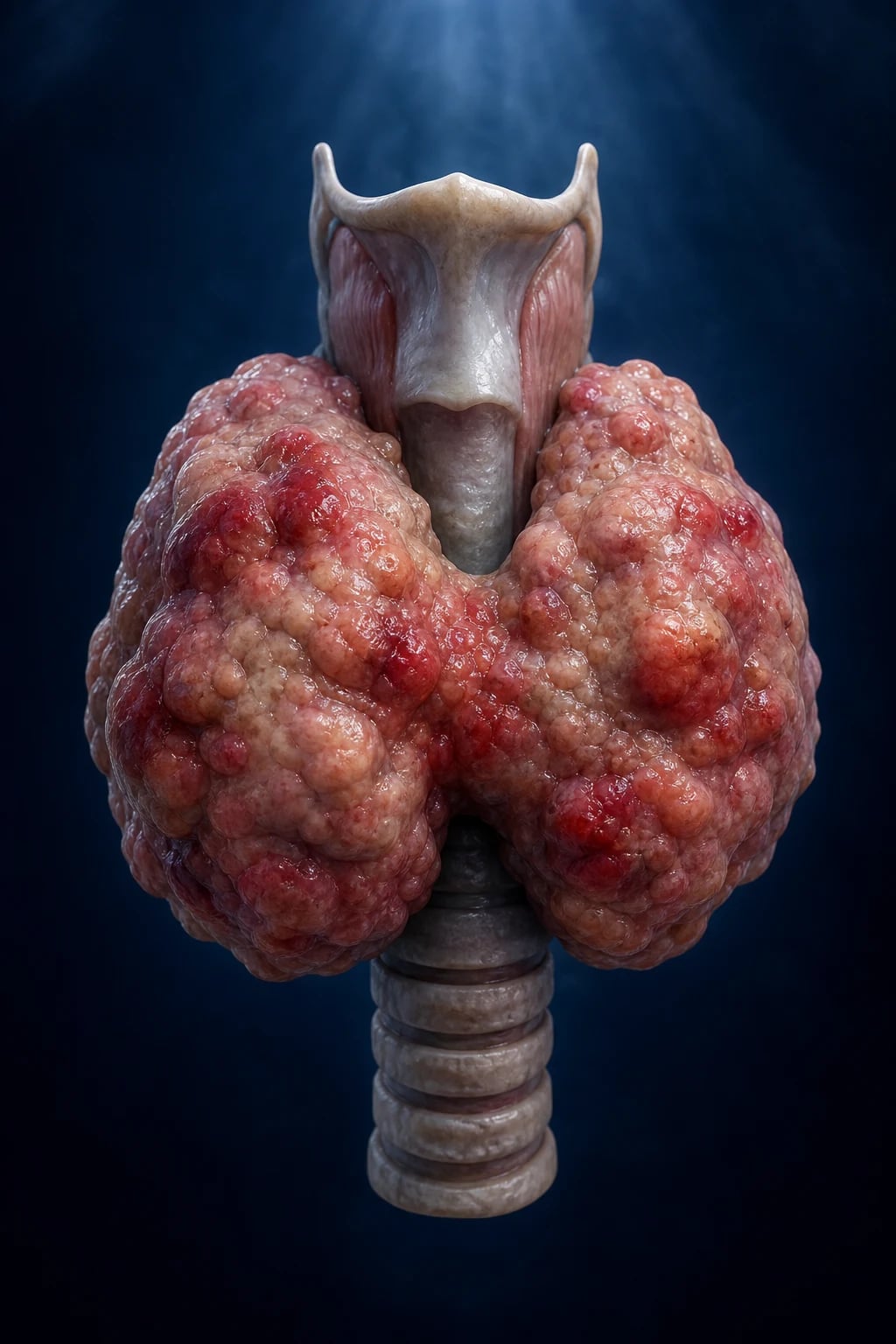
Overview & Definition
Thyroiditis is inflammation of the thyroid gland. It is best understood as a unifying mechanism that links many thyroid presentations, because any inflammation that destroys thyroid follicles releases preformed thyroxine (T4) and tri-iodothyronine (T3), producing a transient thyrotoxicosis, followed — once the hormone store is exhausted and the damaged gland cannot synthesise — by a hypothyroid phase, and eventually recovery (in the self-limiting forms) or permanent hypothyroidism (Hashimoto). This is the classical triphasic curve and is the conceptual key to the whole topic.[1][5]
A goitre (from Latin guttur, throat) is simply an enlarged thyroid gland, defined either by palpation or by imaging volume above the upper normal (about 18 mL in women, 25 mL in men). A goitre may accompany any thyroiditis, be caused by iodine deficiency, dyshormonogenesis, TSH hyperstimulation, or arise independently as nodular hyperplasia. The clinician's task in any neck swelling is therefore two-fold: classify the thyroid dysfunction (the TSH pattern) and classify the goitre (diffuse vs nodular, toxic vs non-toxic, benign vs malignant).[1][2]
[1]Classification
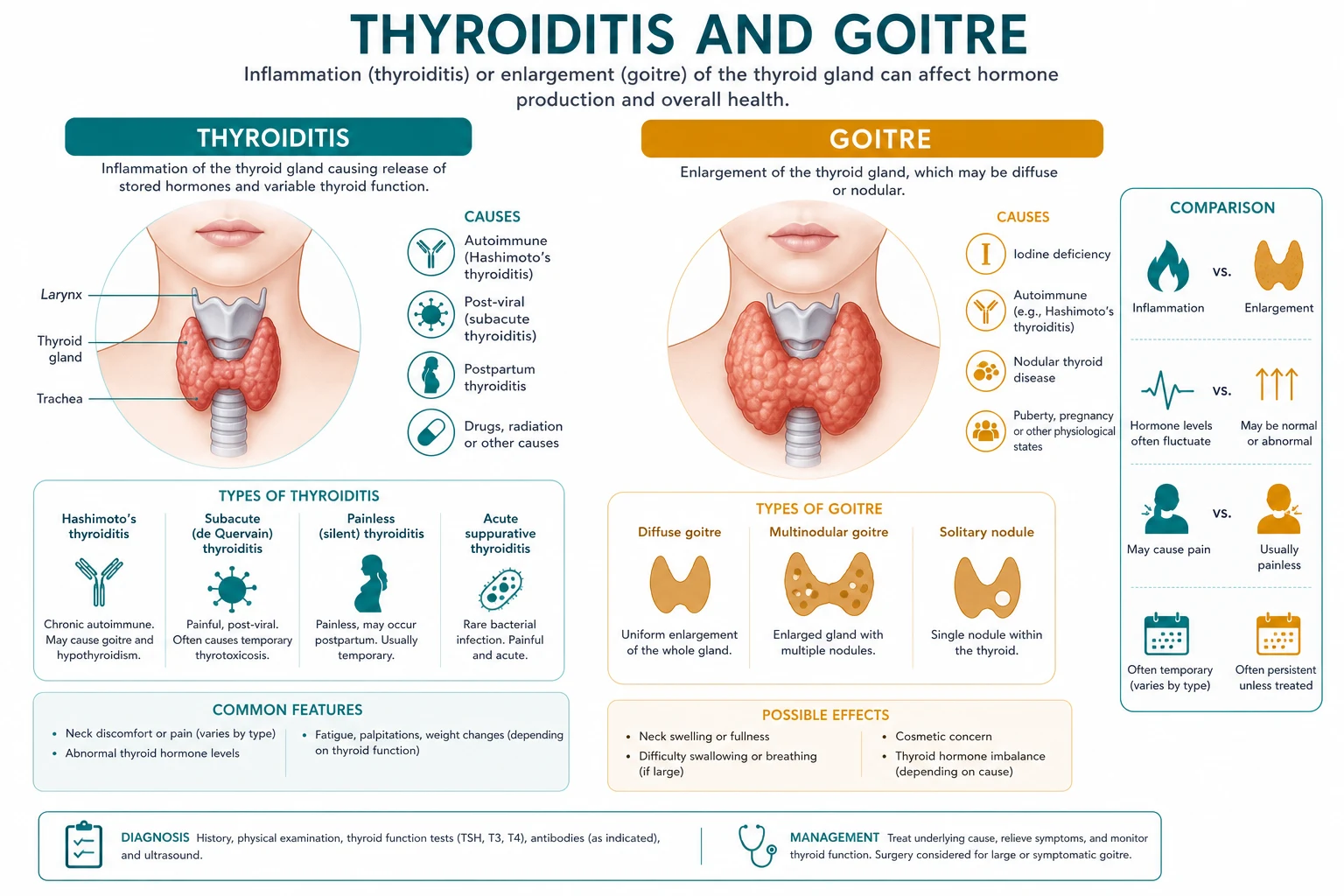
Thyroiditis is classified two complementary ways. By pain and onset it divides into painful forms — subacute (De Quervain/granulomatous), acute suppurative (infectious), radiation-induced and traumatic — and painless forms — Hashimoto (chronic lymphocytic), postpartum, silent/sporadic and drug-induced (amiodarone, lithium, interferon, immune checkpoint inhibitors).[1][2]
The second, mechanistic classification is the one examiners reward most: destructive vs synthetic thyrotoxicosis. In all the destructive thyroiditides (and in iodine-induced Jod-Basedow from a damaged gland), the hormone is leaking from a damaged gland, so radioactive iodine uptake (RAIU) is low; in Graves disease the gland is actively synthesising hormone under TSH-receptor antibody stimulation, so RAIU is high and diffuse, and in toxic multinodular goitre or toxic adenoma it is high and focal/patchy. This single distinction — low vs high RAIU — resolves most thyrotoxicosis MCQs.[1][2]
Destructive thyroiditis (LOW RAIU)
- Hormone LEAKS from damaged follicles; synthesis is shut down
- Subacute (De Quervain), postpartum, silent/sporadic, amiodarone type 2, radiation/trauma
- RAIU/scan LOW (suppressed); gland not trapping iodine
- Thyrotoxic phase treated with BETA-BLOCKER only — antithyroid drugs are useless (no synthesis to block)
- Self-limiting course: thyrotoxic → euthyroid → hypothyroid → recovery
Synthetic thyrotoxicosis (HIGH RAIU)
- Gland actively MAKES excess hormone; follicles intact
- Graves disease (TRAb+), toxic MNG, toxic adenoma (Plummer), TSH-secreting adenoma, hCG-mediated
- RAIU/scan HIGH — diffuse (Graves) or focal/patchy (toxic nodule/MNG)
- Treated with ANTITHYROID DRUGS (carbimazole/PTU), radioiodine, or surgery
- Persistent (not self-resolving) until the gland is definitively treated
Goitre is classified by morphology (diffuse vs nodular — uni- or multinodular), by function (toxic vs non-toxic), and by epidemiology (endemic — iodine deficiency in a region; vs sporadic). The WHO grades goitre clinically: grade 0 (no goitre), grade 1 (palpable but not visible with the neck in normal position), grade 2 (visible at normal posture). A region is defined as endemic when goitre prevalence exceeds 10 percent in school-age children. A retrosternal (substernal) goitre extends below the thoracic inlet and is a surgical concern because of the rigid bony thoracic inlet.[5]
Epidemiology & Risk Factors
Hashimoto thyroiditis is the commonest cause of hypothyroidism and of goitre in iodine-sufficient regions, whereas iodine deficiency remains the leading cause worldwide.[3][5] Hashimoto predominates in women (5 to 10 times), peaks between 30 and 50 years, clusters with other autoimmune disease (type 1 diabetes, coeliac disease, pernicious anaemia, vitiligo, Addison disease), and associates with HLA-DR3/DR5 and Down and Turner syndromes; excess iodine intake can trigger it in susceptible people. Anti-TPO positivity predicts both disease onset and progression to permanent hypothyroidism.[3][4]
Postpartum thyroiditis occurs in roughly 5 to 10 percent of pregnancies (rising to 30 to 50 percent in women who are anti-TPO-positive in early pregnancy), recurs in about 70 percent of subsequent pregnancies, and leaves 20 to 30 percent of affected women with permanent hypothyroidism.[6] Subacute (De Quervain) thyroiditis is the commonest cause of a painful thyroid, follows viral upper respiratory infections (coxsackievirus, mumps, echovirus, influenza — and, increasingly, SARS-CoV-2 infection and vaccination), and peaks in women aged 20 to 50, with an annual incidence of about 12 per 100,000.[1][10]
Drug-induced thyroiditis is dominated by amiodarone, which affects roughly 15 to 20 percent of treated patients with both hypo- and thyrotoxicosis (the latter commoner in iodine-deficient regions). Lithium impairs thyroid hormone release and increases goitre and hypothyroidism risk. Interferon-alpha, interleukin-2, tyrosine-kinase inhibitors (sunitinib, sorafenib) and immune checkpoint inhibitors (pembrolizumab, nivolumab, ipilimumab) all trigger autoimmune or destructive thyroiditis in a meaningful minority.[1][7] Endemic goitre from iodine deficiency remains a public-health problem across much of rural India and the developing world, where universal salt iodisation (ICMR/NIDDCP programmes) has markedly reduced goitre and cretinism.[5]
Thyroiditis & goitre — the numbers examiners ask
Pathophysiology
The thyroid operates on a negative-feedback axis: TRH (hypothalamus) → TSH (pituitary) → T4/T3 synthesis in the follicular cell, with circulating hormone feeding back to suppress TSH. Inflammation that destroys follicles releases stored hormone (the thyrotoxic phase, with suppressed TSH); once the store is depleted and the damaged gland cannot synthesise, T4/T3 fall and TSH rises (the hypothyroid phase); recovery follows as the gland regenerates — the classical triphasic curve of destructive thyroiditis.[1][5]
Hashimoto thyroiditis is organ-specific autoimmunity: anti-thyroid peroxidase (anti-TPO) and anti-thyroglobulin antibodies, CD8+ T-cell-driven lymphocytic infiltration, germinal-centre formation, Hurthle (oxyphil) cell metaplasia and fibrosis, with apoptosis of follicular cells. Anti-TPO fixes complement and antibody-dependent cell cytotoxicity destroys follicular cells; the gland is firm, rubbery and goitrous early (infiltrated and hyperplastic under TSH drive), later atrophic as fibrosis wins. A transient "hashitoxicosis" phase from hormone leak occurs in a minority at onset.[3][4]
Subacute (De Quervain) thyroiditis is a granulomatous (giant-cell) post-viral inflammation: follicular destruction with macrophages and multinucleated giant cells (the giant cells are thought to be a reaction to extravasated colloid), producing pain, fever and hormone leak. The same viral trigger usually leaves the patient seropositive for the offending virus, and recurrence is uncommon.[1][10]
Amiodarone is 37.5 percent iodine by weight and structurally resembles T4; a 200 mg maintenance dose delivers roughly 75 mg of organic iodine — a many-fold excess over the 150 mcg daily requirement. Its enormous iodine load triggers two opposing effects: the Wolff-Chaikoff effect — acute iodine excess transiently blocks hormone synthesis (a protective escape normally follows; if it does not, hypothyroidism results, especially in anti-TPO-positive patients); and the Jod-Basedow phenomenon — excess iodine fuels excess synthesis in an autonomously functioning gland (underlying nodule or Graves), causing thyrotoxicosis. Type 1 is synthetic (underlying nodular goitre, increased vascularity on Doppler; treat with thionamide ± perchlorate); type 2 is destructive thyroiditis (normal underlying gland, decreased vascularity, high interleukin-6; treat with glucocorticoids). Mixed forms occur and are the hardest to treat.[1][7]
Riedel thyroiditis is a fibrosing, IgG4-related disease in which dense fibrous tissue replaces the gland and invades beyond the capsule into strap muscles, trachea, oesophagus, the recurrent laryngeal nerve and even vascular structures; it may be part of multifocal IgG4-related disease (autoimmune pancreatitis, retroperitoneal fibrosis). The fibrosis, not autoimmunity, drives the morbidity.[9] Endemic goitre arises from iodine deficiency → impaired iodination of thyroglobulin → low hormone output → loss of feedback → TSH hyperstimulation → diffuse then nodular hyperplasia of the follicular epithelium; over years a simple diffuse goitre evolves into a multinodular one.[5]
Clinical Presentation
The clinical skill is matching the type of thyroiditis to its signature presentation. Hashimoto thyroiditis presents with a painless, firm, rubbery, diffusely enlarged goitre (often with a pyramidal lobe and a coarse surface from lobulation) and gradual hypothyroidism — fatigue, cold intolerance, weight gain, constipation, dry skin, bradycardia, delayed reflexes, menorrhagia, and, in severe disease, periorbital puffiness, bradycardia and a serous effusion. A few have a transient thyrotoxic ("hashitoxicosis") phase at onset, mimicking Graves but without eye signs.[3][4]
Subacute (De Quervain) thyroiditis is unmistakable: a painful, exquisitely tender goitre with pain often radiating to the jaw or ear (the referred otalgia is a classic clue), fever, malaise and fatigue, a preceding viral upper respiratory infection, and a transient thyrotoxic phase (palpitations, sweating, tremor, heat intolerance) that evolves into a hypothyroid phase before recovery over weeks to months. The tenderness is so marked that the patient may be unable to tolerate a collar or to turn the head.[1][10]
Postpartum and silent (painless/sporadic) thyroiditis present with a painless, slightly firm goitre and the classical transient thyrotoxicosis (palpitations, anxiety, weight loss, heat intolerance) followed by hypothyroidism (fatigue, depression, dry skin, weight gain); postpartum thyroiditis occurs within 12 months of delivery (typically 1 to 6 months postpartum) and is easily missed because fatigue and low mood are attributed to the demands of new motherhood.[6] Amiodarone-induced dysfunction announces itself as either new hypothyroidism (insidious) or thyrotoxicosis (weight loss, tremor, new atrial fibrillation, worsening of underlying heart failure or cardiomyopathy) in a patient on the drug.[7] Riedel thyroiditis produces a very hard (woody/stone-hard) goitre with compressive symptoms — stridor, dysphagia, a choking sensation — and sometimes hypoparathyroidism (hypocalcaemia, tetany) or Horner syndrome from local invasion; importantly the gland is not tender despite its rock-hard feel.[9]
Acute suppurative thyroiditis is rare — the thyroid is remarkably resistant to infection thanks to its capsule, rich vascularity and high iodine content. It affects children and the immunocompromised, is seeded via a pyriform sinus fistula (left-sided, a remnant of the third/fourth pharyngeal pouch) or haematogenously, is caused by Staphylococcus aureus, streptococci and anaerobes, and presents as a tender, fluctuant, warm, erythematous swelling with high fever and systemic sepsis — usually localised to the left lobe.[1][2]
A large goitre causes compressive features that may dominate the presentation regardless of thyroid function: dysphagia (oesophageal compression), stridor and dyspnoea (tracheal compression or deviation), a choking sensation when lying flat, a Pemberton sign (facial plethora, distension of neck veins and distress on raising the arms — thoracic-inlet obstruction), and occasionally superior vena cava obstruction (facial and upper-limb congestion). Hoarseness from recurrent laryngeal nerve involvement is a red flag for malignancy until proven otherwise.[2][8]
Differential Diagnosis
A thyrotoxic patient is not always Graves, and a neck swelling is not always benign. Distinguish the three thyrotoxic goitres by combining the clinical, antibody and uptake features:[1][2]
Graves disease
- Diffuse, SMOOTH goitre, often with a BRUIT and thrill; eye signs (exophthalmos, lid retraction/lag) and pretibial myxoedema
- TRAb POSITIVE; anti-TPO often positive; HLA-DR3; female, 30 to 50 years
- RAIU HIGH and DIFFUSE; TSH suppressed; thyroid acropachy rare
- Treatment: antithyroid drugs (carbimazole/PTU), radioiodine, or surgery
Toxic multinodular goitre
- NODULAR goitre, NO eye signs, older patient (over 60); long-standing MNG that becomes autonomous
- TRAb NEGATIVE; anti-TPO variable
- RAIU HIGH but PATCHY/multifocal; TSH suppressed; multiple autonomous hot nodules
- Treatment: radioiodine (preferred) or surgery; no role for immunosuppression
Toxic adenoma (Plummer)
- SINGLE nodule; no eye signs; younger patient with a palpable discrete nodule
- TRAb NEGATIVE; solitary hyperfunctioning follicular adenoma
- RAIU shows a SINGLE hot nodule with suppressed uptake in the rest of the gland
- Treatment: radioiodine or lobectomy; antithyroid drugs only as a bridge
For a painful anterior neck swelling, distinguish subacute thyroiditis (bilateral tender thyroid, high ESR, post-viral, low RAIU, thyrotoxic TFTs) from acute suppurative thyroiditis (very unwell, fever, fluctuant abscess, children, left lobe, Staph/Strep, pyriform sinus fistula), haemorrhage into a nodule or cyst (sudden painful swelling, often overnight, ultrasound shows clot within a pre-existing nodule), an infected thyroglossal or branchial cyst (midline or along the anterior border of sternocleidomastoid, separate from the thyroid), and infected neck nodes. Remember: subacute thyroiditis is the commonest cause of a painful thyroid.[1][2]
For a diffuse goitre without toxicity, distinguish Hashimoto, Graves, iodine deficiency, physiological goitre of puberty/pregnancy (high hCG acts on the TSH receptor) and simple colloid goitre by TSH, antibodies and (if needed) RAIU. For any dominant or rapidly enlarging nodule — especially in long-standing Hashimoto thyroiditis — exclude thyroid lymphoma (a diffuse large B-cell lymphoma arising in a background of Hashimoto, presenting as a rapidly growing neck mass) or papillary carcinoma, both of which demand urgent fine-needle aspiration.[3][8]
Clinical & Bedside Assessment
Begin with the character of the goitre on palpation — the bedside feel often predicts the diagnosis. Examine the patient from in front: inspect for swellings, then ask the patient to swallow (a thyroid swelling moves up with swallowing, distinguishing it from thyroglossal and other neck swellings).[2][3]
- A firm, rubbery, diffuse, non-tender gland with a lobulated surface suggests Hashimoto.
- An exquisitely tender, firm gland with overlying warmth suggests subacute thyroiditis (gently palpate — the patient will wince; pain may radiate to the ear).
- A stony-hard, fixed mass invading adjacent structures, not moving well on swallowing, suggests Riedel thyroiditis or malignancy.
- A soft, smooth, diffuse swelling with a bruit suggests Graves.
- A nodular gland with multiple lumps suggests multinodular goitre.
- A fluctuant, warm, erythematous tender swelling in an unwell child suggests acute suppurative thyroiditis (abscess). [1]
Perform Pemberton's manoeuvre: ask the patient to raise both arms above the head until they touch the ears, and hold the position; facial plethora, distension of the neck veins, stridor or distress within 30 to 60 seconds indicates a retrosternal goitre causing thoracic-inlet obstruction — a positive Pemberton sign mandates cross-sectional imaging and surgical referral. Look specifically for eye signs that separate Graves from thyroiditis — exophthalmos (proptosis), lid retraction and lid lag, and ophthalmoplegia — and for tracheal deviation (best felt at the suprasternal notch), cervical lymphadenopathy (a red flag for malignancy) and hoarseness (recurrent laryngeal nerve involvement — also a malignancy red flag).[2][8]
Assess for airway compromise (stridor, accessory-muscle use, position-dependent dyspnoea, inability to lie flat) and swallowing. In a suspected thyroid storm, perform an ABCDE assessment, secure the airway and oxygenation, establish monitoring, and search for a precipitant (infection, recent surgery or iodine load such as contrast or amiodarone, antithyroid-drug withdrawal, trauma, diabetic ketoacidosis, parturition, stroke).[1]
Investigations
First line — thyroid function tests, interpreted by phase.[1][5]
- Thyrotoxic phase — suppressed TSH (below 0.1 mIU/L) with raised free T4 and/or free T3 (hormone leaking from the damaged gland). The TSH is the most sensitive marker; free T3 rises disproportionately in iodine-loaded states (amiodarone) and in early Graves.
- Hypothyroid phase — raised TSH with low free T4 (the gland store is exhausted and synthesis is impaired).
- Recovery — TFTs normalise as the gland regenerates. In Hashimoto the patient lands in the hypothyroid phase and stays there. [1]
Antibodies distinguish the autoimmune forms: anti-TPO is positive in Hashimoto (over 90 percent), postpartum and silent thyroiditis (and predicts permanent hypothyroidism), whereas TSH-receptor antibodies (TRAb) are the hallmark of Graves disease and are negative in thyroiditis — a TRAb level is the single most useful test to separate Graves from a destructive thyroiditis when RAIU is not available.[3][6] Inflammatory markers are the key clue in subacute disease: ESR and CRP are markedly raised in subacute (De Quervain) thyroiditis (ESR often over 50 mm/h) and normal in the other thyroiditides — this is a favourite discriminator in exams.[1][10]
Radioactive iodine uptake (RAIU / iodine-123 or technetium-99m scan) is the decisive discriminator: it is low in all destructive thyroiditides (subacute, postpartum, silent, amiodarone type 2, radiation/trauma) and in iodine-induced Jod-Basedow from a damaged gland, but high and diffuse in Graves and high and focal/patchy in toxic MNG or toxic adenoma. In amiodarone thyrotoxicosis the high iodine load suppresses uptake in both types, so RAIU is less discriminating — colour-flow Doppler (increased vascularity in type 1, decreased in type 2) and interleukin-6 help separate them.[1][2] Thyroid ultrasound shows heterogeneous hypoechogenicity in Hashimoto (often with a pseudo-nodular pattern and increased vascularity on Doppler), a tender, poorly defined hypoechoic area in subacute thyroiditis, an abscess collection in suppurative disease, and characterises nodules by the TI-RADS score in a nodular goitre (driving the decision to biopsy).[8]
Fine-needle aspiration cytology (FNA) is indicated for a dominant or suspicious nodule (guided by TI-RADS), a rapidly enlarging goitre, or a dominant nodule in long-standing Hashimoto (to exclude lymphoma or papillary cancer). It is not needed for a classic tender subacute thyroiditis.[3][8] Cross-sectional imaging (CT or MRI) is indicated when a goitre is retrosternal (to define extent, tracheal compression and the great-vessel relationship before surgery) and to assess airway compromise; CT also helps in Riedel thyroiditis to map the fibrotic extension. Laryngoscopy assesses vocal-cord function before any thyroid surgery. Calcium is checked in Riedel (hypoparathyroidism from parathyroid infiltration) and after thyroidectomy.
Thyroid storm is a clinical diagnosis, supported by the Burch-Wartofsky point score (BWPS) — points awarded for thermoregulatory dysfunction (temperature, with hypothermia-to-hyperpyrexia scoring), central-nervous-system effects (agitation → delirium → seizure → coma), gastrointestinal-hepatic dysfunction (nausea, vomiting, diarrhoea, jaundice), tachycardia, congestive heart failure, atrial fibrillation and the presence of a precipitant — on a background of decompensated thyrotoxicosis. A score of 45 or above is highly suggestive of storm, 25 to 44 is impending, and below 25 is unlikely.[1][2]
Management — Resuscitation
Thyroid storm is the resuscitation scenario and carries a high mortality (historically 20 to 30 percent, lower with prompt, bundled therapy). Recognise it from hyperpyrexia (often over 40 degrees C), severe tachycardia or atrial fibrillation, high-output or established heart failure, agitation, delirium or coma, and vomiting/diarrhoea/jaundice in a thyrotoxic patient, usually with a precipitant. Admit to ICU and give the bundle — the drugs are given in a defined order with stated doses, because each blocks a different step in hormone synthesis, release and peripheral action:[1][2]
- Supportive — oxygen, IV fluids (dextrose-saline, as glycogen stores are depleted), active cooling (cooling blankets, and paracetamol; avoid aspirin, which displaces thyroid hormone from binding proteins and can worsen the thyrotoxicosis), and treat the precipitant (e.g. IV antibiotics for infection, insulin and fluids for DKA).
- Block synthesis — a thionamide. Propylthiouracil (PTU) is preferred because it also blocks peripheral T4-to-T3 conversion (the active hormone): a loading dose of 500 to 1000 mg, then 250 mg orally or by nasogastric tube every 4 hours. Carbimazole/methimazole 60 to 80 mg daily is an alternative but does not block conversion.
- Block release — iodine, given at least 1 hour AFTER the thionamide (so the thionamide blocks organification first and the iodine cannot be used as fuel for further synthesis — this prevents the Jod-Basedow effect): Lugol's iodine 8 drops (about 0.5 mL) orally every 6 hours, or saturated solution of potassium iodide (SSKI) 5 drops every 6 hours. Iopanoic acid or ipodate are alternatives that also block T4-to-T3 conversion.
- Block T4-to-T3 conversion and the adrenal axis — glucocorticoids: hydrocortisone 100 mg IV every 8 hours (or dexamethasone 2 mg every 6 hours); these also block peripheral conversion and treat the relative adrenal insufficiency of severe illness.
- Block adrenergic symptoms — beta-blocker: propranolol 60 to 80 mg orally every 4 to 6 hours (it also blocks peripheral T4-to-T3 conversion; use intravenous esmolol with great caution in asthma or heart failure). Cholestyramine 4 g orally four times daily can be added to block enterohepatic reabsorption of thyroid hormone in refractory cases.[1][2]
The order matters and is an exam favourite: beta-blocker → thionamide → wait at least 1 hour → iodine → glucocorticoid, with supportive care and precipitant treatment throughout. Plasma exchange and thyroidectomy are salvage options for refractory storm. [1]
Management — Definitive & Stepwise
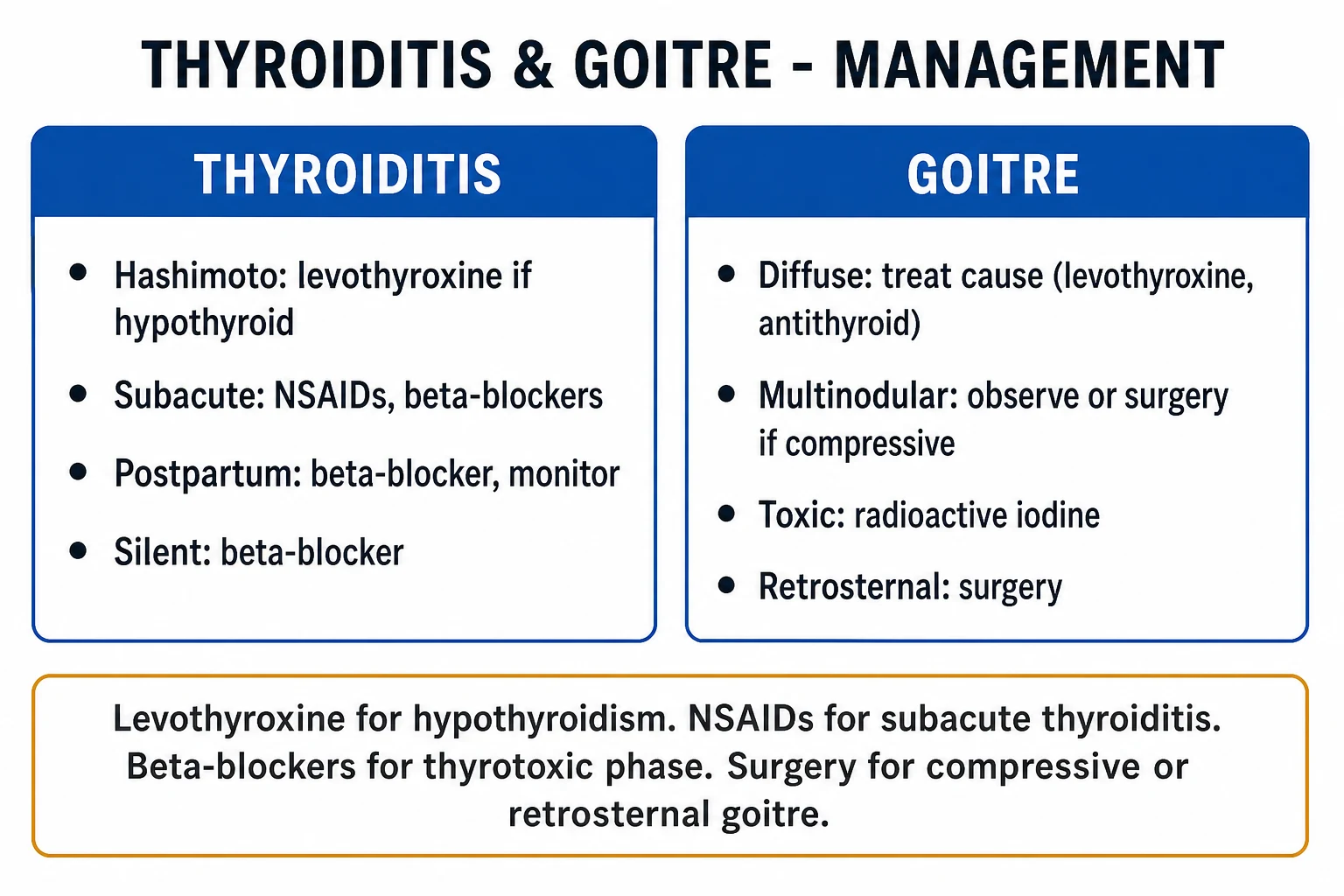
Definitive management is type- and phase-specific. The general principle: in destructive thyroiditis the thyrotoxic phase is treated symptomatically with a beta-blocker (the hormone is leaking, not being made), whereas synthetic thyrotoxicosis (Graves, toxic MNG/adenoma) needs antithyroid drugs, radioiodine or surgery.[1][2]
- Destructive thyroiditis, thyrotoxic phase — a beta-blocker (propranolol 20 to 40 mg orally every 6 to 8 hours, titrated to heart rate) for symptom control; antithyroid drugs (carbimazole/PTU) are NOT used because the hormone is leaking, not being synthesised — they are useless and carry needless risk.
- Subacute (De Quervain) thyroiditis — NSAIDs (e.g. ibuprofen 400 to 600 mg three times daily, or naproxen 500 mg twice daily) first-line for pain and inflammation; a short course of oral prednisolone 40 mg daily, tapered over 2 to 4 weeks, if pain is severe or NSAIDs fail (response to steroids is rapid and helps confirm the diagnosis); beta-blocker for the thyrotoxic phase; levothyroxine only if the hypothyroid phase is symptomatic and prolonged.[1][10]
- Hashimoto thyroiditis — lifelong levothyroxine at about 1.6 mcg/kg/day (roughly 100 to 150 mcg for an average adult), titrated to a normal TSH (recheck at 6 to 8 weeks after each dose change), started low (25 mcg) and titrated slowly in the elderly or cardiac patient to avoid precipitating angina or atrial fibrillation; a small, euthyroid goitre with normal TSH can simply be observed.[3][5]
- Postpartum/silent thyroiditis — beta-blocker (lowest effective dose, short course) for the thyrotoxic phase; levothyroxine if the hypothyroid phase is symptomatic, prolonged, or the woman is breastfeeding; monitor TSH for 6 to 12 months as 20 to 30 percent become permanently hypothyroid and will need ongoing replacement.[6]
- Acute suppurative thyroiditis — IV antibiotics covering S. aureus, streptococci and anaerobes (e.g. flucloxacillin or vancomycin plus metronidazole, tailored to culture), and surgical or image-guided drainage of any abscess; search for and excise a pyriform sinus fistula electively to prevent recurrence.[1][2]
- Amiodarone-induced thyrotoxicosis — type 1: a thionamide (carbimazole 40 to 60 mg daily, or high-dose PTU) plus potassium perchlorate 250 mg four times daily (to block iodine uptake); type 2: prednisolone 40 to 60 mg daily tapered over weeks; mixed forms need both. Amiodarone-induced hypothyroidism is treated with levothyroxine and the drug need not be stopped. Discontinuing amiodarone is a cardiologist-led decision, not an automatic step.[7]
- Drug-induced autoimmune thyroiditis (checkpoint inhibitors, interferon) — manage as for Hashimoto/silent thyroiditis; continue the immunotherapy where possible with endocrine input, as the thyroid dysfunction is usually easily controlled.
- Riedel thyroiditis — glucocorticoids (prednisolone 30 to 40 mg daily) and tamoxifen (20 mg daily — anti-fibrotic via TGF-beta) for the fibrosis; surgery only for severe compressive symptoms, though dissection is technically difficult in the woody fibrotic plane.[9]
For goitre, the management ladder runs from observation to surgery:[2][8]
- An asymptomatic, non-toxic diffuse goitre with normal TSH and no suspicious nodule is observed with periodic ultrasound. Suppressive levothyroxine (to suppress TSH) is controversial and not routinely recommended — it does not reliably shrink a non-toxic goitre and risks iatrogenic thyrotoxicosis and bone loss.
- A toxic multinodular goitre is treated definitively with radioactive iodine (preferred in older patients and those unfit for surgery; it shrinks the goitre over months but may need more than one dose) or surgery (near-total/total thyroidectomy) — preferred for large compressive goitres, those with a suspicious nodule, or younger patients; a brief course of a thionamide before radioiodine reduces the small risk of storm.
- A compressive or retrosternal goitre (dysphagia, stridor, Pemberton sign, tracheal narrowing on imaging) is referred for surgery (total or near-total thyroidectomy); radioiodine can shrink a gland but is less reliable for relieving acute compression.
- A solitary nodule is worked up by ultrasound + TI-RADS and FNA if indicated, and managed by the cytology result (Bethesda categories — benign = observe, indeterminate = molecular testing or diagnostic lobectomy, malignant = thyroidectomy). Percutaneous ethanol injection is an option for recurrent benign cystic nodules.[8]
- Iodine supplementation is the definitive (and preventive) treatment for endemic iodine-deficiency goitre.
Specific Subtypes & Scenarios
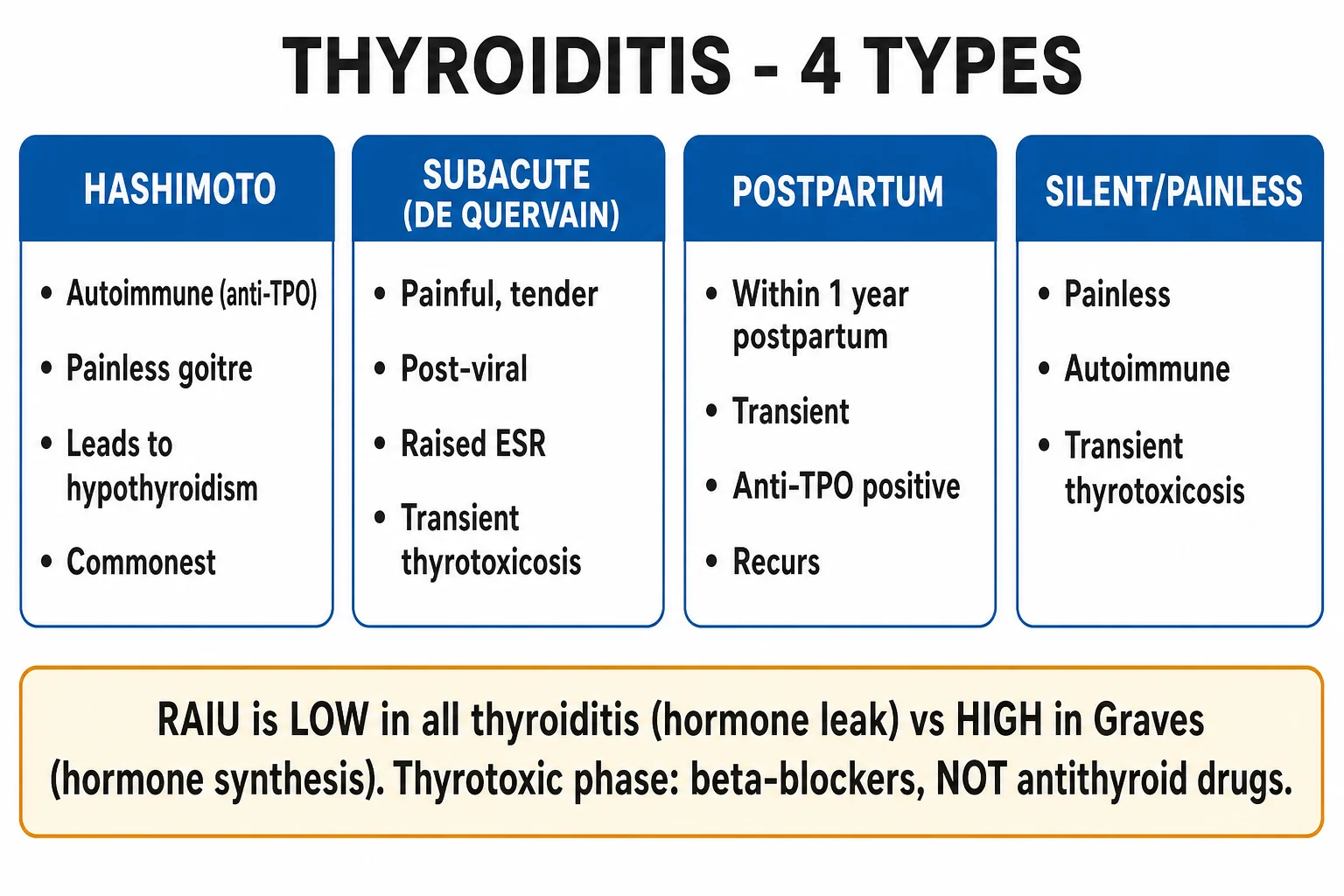
The destructive thyroiditides compared head-to-head — the table examiners love. The four-way comparison fixes the discriminating features (pain, antibodies, ESR, RAIU, course) that MCQs test:[1][6][10]
Hashimoto
- PAINLESS, firm rubbery diffuse goitre; female 30 to 50; clusters with autoimmunity
- Anti-TPO POSITIVE (over 90 percent); TRAb negative; ESR NORMAL
- RAIU low or not done (patient already hypothyroid); ultrasound heterogeneous hypoechoic
- Course LIFELONG → permanent hypothyroidism; risk of B-cell lymphoma
Subacute (De Quervain)
- PAINFUL, exquisitely tender, radiates to jaw/ear; fever, malaise; post-viral
- Anti-TPO variable; TRAb negative; ESR MARKEDLY RAISED (often over 50)
- RAIU LOW (destructive); triphasic TFT curve
- Course SELF-LIMITING over weeks to months; NSAIDs or prednisolone 40 mg
Postpartum/silent
- PAINLESS, slightly firm goitre; within 1 year of delivery (postpartum) or sporadic (silent)
- Anti-TPO POSITIVE; TRAb negative; ESR NORMAL
- RAIU LOW (destructive); triphasic TFT curve
- Transient; 20 to 30 percent permanent; recurs in 70 percent of next pregnancies
Amiodarone
- PAINLESS; patient on amiodarone; presents hypo- or thyrotoxic
- Type 1: anti-TPO variable, underlying nodule, INCREASED Doppler vascularity
- RAIU LOW in both types (iodine load suppresses); type 2 destructive, decreased vascularity, high IL-6
- Type 1: thionamide + perchlorate; type 2: prednisolone 40 to 60 mg
Acute suppurative (infectious) thyroiditis is rare (the thyroid is remarkably resistant to infection): it affects children and the immunocompromised, is seeded via a pyriform sinus fistula (left-sided, from the third/fourth pharyngeal pouch) or haematogenously, is caused by Staphylococcus aureus, streptococci and anaerobes, presents as a tender, fluctuant abscess with systemic sepsis (usually in the left lobe), and is treated with IV antibiotics and surgical drainage — a barium swallow or CT identifies the fistula for elective excision to prevent recurrence.[1][2] Radiation thyroiditis (after radioactive iodine therapy or external neck radiotherapy) and trauma/palpation thyroiditis cause a self-limiting thyrotoxic leak and need only a beta-blocker if symptomatic.
Iodine-deficiency (endemic) goitre is the leading worldwide cause of goitre. The gland, unable to iodinate thyroglobulin adequately, falls under TSH hyperstimulation and undergoes diffuse then nodular hyperplasia; over decades the multinodular gland may become autonomous and toxic. It is prevented by universal salt iodisation, which has eliminated endemic cretinism across much of India and the developing world.[5]
The thyroiditides by pain — the fastest bedside discriminator
PAIN SORTS IT
subacute (De Quervain) — viral, high ESR, low RAIU; suppurative — abscess, septic, child, left lobe; radiation; trauma
Hashimoto — anti-TPO, firm rubbery; postpartum and silent — anti-TPO, triphasic
amiodarone type 1 (synthetic) vs type 2 (destructive); lithium; interferon; checkpoint inhibitors
Riedel — IgG4-related fibrosing, stony-hard, invades beyond capsule, compressive
PTU load → iodine (1 h later) → hydrocortisone → propranolol; ICU
Complications & Pitfalls
Untreated thyrotoxicosis (any cause) causes atrial fibrillation (and thromboembolic stroke), high-output then dilated (thyrotoxic) heart failure, osteoporosis (thyroid hormone accelerates bone turnover), weight loss and proximal myopathy, and at the extreme thyroid storm.[1][2] A large goitre causes compression — dysphagia, stridor, airway compromise, superior vena cava obstruction, and recurrent laryngeal nerve palsy — and any dominant nodule may harbour malignancy (papillary cancer is commonest; and in long-standing Hashimoto a primary thyroid B-cell lymphoma can arise, presenting as a rapidly enlarging goitre and demanding urgent FNA).[3][8] Postpartum thyroiditis leaves 20 to 30 percent of women permanently hypothyroid and recurs in about 70 percent of subsequent pregnancies; the under-recognised hypothyroid phase contributes to postnatal depression.[6]
The classic pitfalls that lose marks and harm patients:[1][2]
- Giving antithyroid drugs (carbimazole/PTU) to the thyrotoxic phase of thyroiditis — the gland is leaking, not synthesising, so they are useless; use a beta-blocker.
- Missing subacute thyroiditis by not checking the ESR/CRP or not eliciting tenderness; it is then misdiagnosed as pharyngitis or Graves.
- Mislabelling amiodarone type 2 (destructive) as type 1 and treating with thionamides when steroids are needed (and vice versa).
- Failing to biopsy a dominant or rapidly enlarging nodule, missing lymphoma or papillary cancer.
- Treating a painless thyroiditis like Graves with antithyroid drugs or even radioiodine.
- Forgetting that RAIU is the single test that separates destructive thyroiditis from Graves.
- Missing retrosternal extension by not performing Pemberton's manoeuvre, and sending a patient with tracheal compression for surgery without cross-sectional imaging. [1]
Prognosis & Disposition
Most destructive thyroiditis is self-limiting — subacute, postpartum and silent thyroiditis recover fully within weeks to a few months, although subacute occasionally leaves mild permanent hypothyroidism and postpartum leaves it in 20 to 30 percent.[1][6] Hashimoto thyroiditis is usually lifelong, progressing to permanent hypothyroidism with an excellent prognosis once levothyroxine is established — annual TSH monitoring suffices for stable patients. Thyroid storm carries a high mortality even with treatment and mandates ICU care; survival depends on early recognition and the bundled storm regimen.[1] A multinodular goitre grows slowly over years and may eventually become toxic (autonomous nodules) or compressive; a retrosternal goitre is referred for surgery. Riedel thyroiditis runs a chronic, indolent fibrotic course; prognosis depends on the degree of compression and on whether it is part of multifocal IgG4-related disease.[9]
Disposition: outpatient management with serial TSH for stable Hashimoto, subacute, postpartum and silent thyroiditis; surgical referral for a compressive or retrosternal goitre, a dominant suspicious nodule (after FNA), or Riedel with compression; ICU for thyroid storm; inpatient for acute suppurative thyroiditis needing IV antibiotics and drainage.[2][8]
Special Populations
- Postpartum women — screen anti-TPO-positive women; postpartum thyroiditis develops in 5 to 10 percent of all women (up to 50 percent of those anti-TPO-positive); monitor TSH at 3 and 6 months postpartum as 20 to 30 percent become permanently hypothyroid; it recurs in about 70 percent of subsequent pregnancies.[6]
- Amiodarone-treated patients — check baseline thyroid function and anti-TPO before starting, then every 6 months while on the drug; both hypothyroidism and thyrotoxicosis occur, and thyrotoxicosis can destabilise the underlying arrhythmia or cardiomyopathy, so it warrants prompt, type-specific treatment.[7]
- Iodine-deficient populations — endemic goitre and cretinism; universal salt iodisation is the public-health cornerstone, and adequate iodine in pregnancy and early childhood prevents the irreversible neurodevelopmental harm of endemic cretinism.[5]
- The elderly with toxic MNG — may present apathetically (apathetic thyrotoxicosis) with atrial fibrillation, weight loss, heart failure and depression rather than agitation; treat cautiously with beta-blockade and radioactive iodine (often after a brief thionamide course to render them biochemically safer), pretreating to avoid storm.[2]
- Pregnancy — radioactive iodine is absolutely contraindicated; iodine/steroid for thyroiditis are best avoided; a symptomatic thyrotoxic phase of thyroiditis is managed with the lowest effective beta-blocker for the shortest time, and overt hypothyroidism is treated with levothyroxine to trimester-specific TSH targets (first-trimester TSH below 2.5 mIU/L). Physiological goitre of pregnancy (hCG acting on the TSH receptor) needs no treatment.[6]
- Children — acute suppurative thyroiditis is over-represented; think of a pyriform sinus fistula and arrange imaging for elective excision after the acute episode. Congenital dyshormonogenetic goitre (e.g. pendrin, thyroglobulin synthesis defects) presents with a goitre and hypothyroidism from birth.[5]
Evidence, Guidelines & Regional Differences
The ATA 2016 hyperthyroidism guideline (Ross et al.) sets the standard for Graves, toxic MNG/adenoma, the destructive thyroiditides, amiodarone-induced thyrotoxicosis and thyroid storm, formalising RAIU as the discriminator and the ordered storm bundle (beta-blocker → thionamide → iodine at least 1 hour later → glucocorticoid).[2] The ATA 2017 pregnancy/postpartum guideline (Alexander et al.) addresses postpartum thyroiditis — anti-TPO screening, monitoring, and the recognition that a substantial minority become permanently hypothyroid.[6] The ATA 2015 nodule guideline (Haugen et al.) codifies the ultrasound TI-RADS score and the size-based FNA thresholds that drive the workup of a nodular goitre.[8]
The Lancet/Lancet Diabetes & Endocrinology reviews by Taylor (hypothyroidism) and Wiersinga (hyperthyroidism) synthesise global epidemiology and pathogenesis — confirming Hashimoto as the dominant cause in iodine-sufficient regions and iodine deficiency as the dominant cause worldwide.[1][5] The Riedel/IgG4 reviews consolidate the modern understanding of Riedel thyroiditis as an IgG4-related fibrosing disease, justifying glucocorticoid and tamoxifen therapy.[9]
Regional picture: in iodine-sufficient regions the burden of goitre and hypothyroidism is autoimmune (Hashimoto), whereas iodine deficiency remains the dominant cause across much of India and the developing world — addressed by universal salt iodisation (ICMR/NIDDCP programmes), which has reduced endemic goitre and cretinism. A regional paradox is worth noting: iodine repletion in a previously deficient population transiently increases the incidence of autoimmune thyroiditis and Jod-Basedow thyrotoxicosis, as the now-abundant iodine fuels autoimmune destruction and autonomous nodules.[1][5]
[1]Exam Pearls
- Low RAIU = destructive thyroiditis (or Jod-Basedow from a damaged gland); high RAIU = Graves/toxic nodule. Thyrotoxic phase of thyroiditis = beta-blocker, NOT antithyroid drugs.[1]
- Subacute (De Quervain) = painful tender thyroid + high ESR + low RAIU, post-viral, self-limiting; NSAIDs, or prednisolone 40 mg if severe; beta-blocker for the thyrotoxic phase.[1][10]
- Hashimoto = commonest cause of hypothyroidism and goitre in iodine-sufficient areas; anti-TPO; painless firm goitre; lifelong levothyroxine 1.6 mcg/kg/day; risk of B-cell lymphoma.[3]
- Postpartum thyroiditis = within 1 year postpartum; anti-TPO; transient; recurs 70 percent; 20 to 30 percent permanent.[6]
- Acute suppurative thyroiditis = child, left lobe, S. aureus, pyriform sinus fistula; IV antibiotics + drainage.[1]
- Amiodarone = 37.5 percent iodine → Wolff-Chaikoff hypothyroidism or Jod-Basedow thyrotoxicosis; type 1 (synthetic, vascular, thionamide + perchlorate) vs type 2 (destructive, steroids).[7]
- Goitre: Pemberton sign = retrosternal goitre; stony-hard goitre = Riedel; rapidly enlarging goitre in Hashimoto = suspect lymphoma; WHO endemic threshold = 10 percent of school-age children.[2][8]
- Thyroid storm = hyperpyrexia + AF/heart failure + CNS signs → PTU 500 to 1000 mg load then 250 mg every 4 h + iodine (1 h after thionamide) + hydrocortisone 100 mg every 8 h + propranolol; Burch-Wartofsky 45 or above.[2]
Exam application bank (NEET-PG / INICET)
One-line answer
Thyroiditis is inflammation of the thyroid gland, producing a spectrum from transient thyrotoxicosis (leak of preformed hormone) through hypothyroidism (gland destruction). Hashimoto thyroiditis (autoimmune, anti-TPO) is the commonest cause of hypothyroidism and goitre in iodine-sufficient areas. Subacute (De Quervain) thyroiditis presents with a painful tender goitre, fever and transient thyrotoxicosis after a viral illness, a raised ESR and a low radioactive iodine uptake. Postpartum and silent (painless) thyroiditis cause a transient thyrotoxicosis then hypothyroidism. Amiodarone causes both hypothyroidism (Wolff-Chaikoff effect) and thyrotoxicosis (Jod-Basedow, type 1 synthetic vs type 2 destructive). Riedel thyroiditis is a rare IgG4-related fibrosing disease with a stony-hard goitre. A goitre may be diffuse (Graves, Hashimoto, iodine deficiency, puberty) or multinodular (nodular hy
Worked stems (answer without another resource)
Stem 1 — Classic presentation. Map symptoms to mechanism; name the first investigation and first treatment step with dose/route if drug therapy is standard. [1]
Stem 2 — Unstable / complicated. List red flags that force immediate resuscitation, theatre, ICU, antidote, or reperfusion — and what you do in the first 15 minutes. [1]
Stem 3 — Atypical group. Elderly, pregnancy, child, or immunocompromised: how presentation and thresholds change. [1]
Stem 4 — Differential trap. Name the three closest mimics and one discriminator for each. [1]
Stem 5 — Disposition. Who goes home with safety-netting, who is admitted, who needs HDU/ICU/theatre, and what follow-up is mandatory. [1]
Rapid viva checklist
- Definition + classification
- Pathophysiology chain
- Bedside signs / criteria
- Score with exact components (if any)
- Emergency bundle
- Definitive therapy with doses
- Complications of disease and of treatment
- Special populations
- Guideline/trial name if classic
- Three exam traps
Coverage self-check
If you cannot answer any stem above from this page alone, re-read the matching section — the page is intended to be self-sufficient for final-prof and NEET-PG/INICET questions on Thyroiditis & Goitre.
References
- [1]Wiersinga WM, Poppe KG, Effraimidis G. Hyperthyroidism: aetiology, pathogenesis, diagnosis, management, complications, and prognosis Lancet Diabetes Endocrinol, 2023.PMID 36848916
- [2]Ross DS, Burch HB, Cooper DS, et al. 2016 American Thyroid Association Guidelines for Diagnosis and Management of Hyperthyroidism and Other Causes of Thyrotoxicosis Thyroid, 2016.PMID 27521067
- [3]Ralli M, Angeletti D, Fiore M, et al. Hashimoto's thyroiditis: An update on pathogenic mechanisms, diagnostic protocols, therapeutic strategies, and potential malignant transformation Autoimmun Rev, 2020.PMID 32805423
- [4]Liontiris MI, Mazokopakis EE. A concise review of Hashimoto thyroiditis (HT) and the importance of iodine, selenium, vitamin D and gluten on the autoimmunity and dietary management of HT patients.Points that need more investigation Hell J Nucl Med, 2017.PMID 28315909
- [5]Taylor PN, Medici MM, Hubalewska-Dydejczyk A, et al. Hypothyroidism Lancet, 2024.PMID 39368843
- [6]Alexander EK, Pearce EN, Brent GA, et al. 2017 Guidelines of the American Thyroid Association for the Diagnosis and Management of Thyroid Disease During Pregnancy and the Postpartum Thyroid, 2017.PMID 28056690
- [7]Macchia PE, Feingold KR. Amiodarone Induced Thyrotoxicosis 2000.PMID 25905259
- [8]Haugen BR, Alexander EK, Bible KC, et al. 2015 American Thyroid Association Management Guidelines for Adult Patients with Thyroid Nodules and Differentiated Thyroid Cancer: The American Thyroid Association Guidelines Task Force on Thyroid Nodules and Differentiated Thyroid Cancer Thyroid, 2016.PMID 26462967
- [9]Pusztaszeri MP, Triponez F, Pache JC, Bongiovanni M. IgG4-related sclerosing thyroiditis (Riedel-Struma): a review of clinicopathological features and management Virchows Arch, 2023.PMID 37204493
- [10]Slatosky J, Shipton B, Wahba H. Subacute Thyroiditis 2000.PMID 25905310