Gastroenterology · Gastroenterology
Gastro-Oesophageal Reflux Disease (GORD)
Also known as GORD · GERD · Reflux oesophagitis · Acid reflux · Non-erosive reflux disease (NERD)
Gastro-oesophageal reflux disease (GORD) is the condition in which stomach content refluxes into the oesophagus causing troublesome symptoms and/or complications. The cardinal symptoms are retrosternal burning (heartburn) and acid regurgitation; atypical features include chest pain, chronic cough, laryngitis, dental erosion and worsening asthma. Two endoscopic phenotypes: erosive reflux disease (ERD) with visible mucosal breaks graded by the Los Angeles classification (A to D), and non-erosive reflux disease (NERD) (normal mucosa). Pathophysiology centres on transient lower-oesophageal sphincter relaxations (TLESRs), a weak/hypotensive LES, hiatus hernia, impaired oesophageal clearance and delayed gastric emptying. Diagnosis is clinical, confirmed by empirical PPI trial; endoscopy for alarm features or persistent symptoms; ambulatory pH / pH-impedance monitoring (acid exposure time over 6 percent is conclusive — Lyon Consensus 2.0). Management is stepwise: lifestyle, antacids / alginates, H2-receptor antagonists, then proton-pump inhibitors (PPIs) as first-line — omeprazole 20 mg once daily for 4 to 8 weeks. Refractory disease: double-dose PPI, then anti-reflux surgery (Nissen fundoplication) or endoscopic therapy. Barrett oesophagus (intestinal metaplasia of the distal oesophagus) is the key premalignant complication driving adenocarcinoma surveillance.
On this page & tools
Your progress
Saved locally on this device.
Exam tags
Red flags
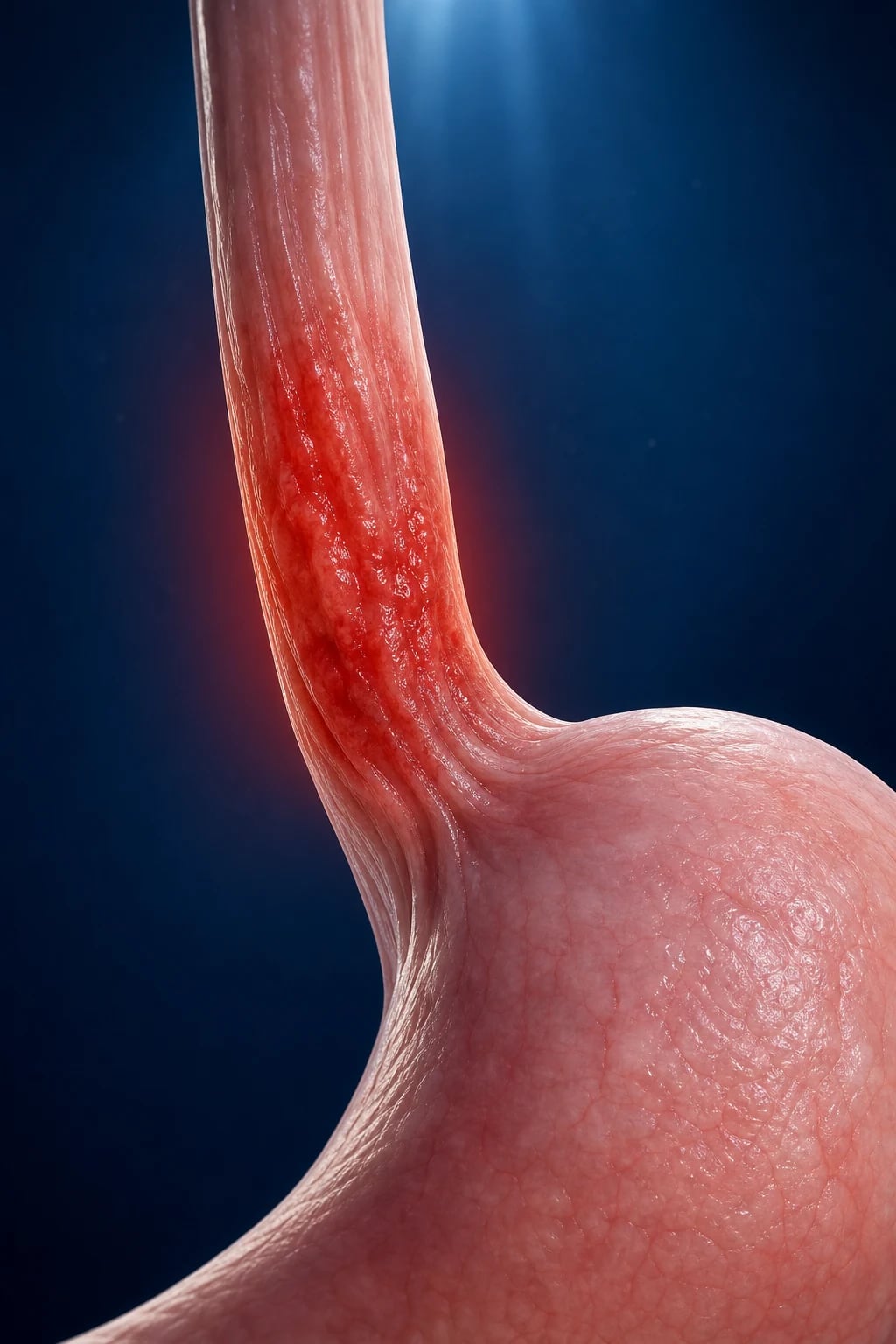
Overview & Definition
Gastro-oesophageal reflux disease (GORD) is defined by the Montreal definition (2006, still the global standard) as a condition that develops when the reflux of stomach contents causes troublesome symptoms and/or complications.[1][2] "Troublesome" is defined operationally: mild symptoms occurring on two or more days a week, or moderate-to-severe symptoms on one or more days a week. The definition is deliberately symptom- and complication-based — it does not require endoscopic oesophagitis, which is why a normal OGD does not exclude GORD.
The Montreal definition organises GORD into syndromes that are examinable as a framework. The oesophageal syndromes are: reflux chest-pain syndrome, reflux oesophagitis syndrome (the erosive phenotype), reflux stricture syndrome, Barrett oesophagus, and oesophageal adenocarcinoma — a spectrum from symptom through erosion, stricture, metaplasia, and cancer. The extra-oesophageal (supraoesophageal) syndromes are established associations (reflux cough, reflux laryngitis, reflux asthma, reflux dental erosion) and proposed associations (pharyngitis, sinusitis, idiopathic pulmonary fibrosis). Critically, the extra-oesophageal syndromes are associations — they require objective evidence of pathological reflux before attribution, because symptoms alone are non-specific and PPI response is unreliable. [1]
A single episode of post-prandial reflux is normal physiology — the average healthy adult has dozens of transient LES relaxations daily. Disease begins when reflux is frequent, severe, persistent, or causes mucosal injury or complications. The clinical importance of GORD is fourfold, and each point is examinable. First, it is extremely common — the commonest GI diagnosis in outpatient practice worldwide and a leading reason for primary-care consultation. Second, it produces a spectrum of disease from occasional heartburn through erosive oesophagitis to Barrett oesophagus and adenocarcinoma, so triage of who needs endoscopy is a core skill. Third, it is the commonest cause of non-cardiac chest pain and must be distinguished from acute coronary syndrome. Fourth — and increasingly examined — it is over-diagnosed and over-treated with long-term PPIs whose risks (osteoporotic fracture, hypomagnesaemia, B12 deficiency, enteric infection, acute interstitial nephritis) are now well recognised. The examinable skill is recognising who needs endoscopy (alarm features), using PPIs judiciously (lowest effective dose, deprescribing), and identifying the Barrett/adenocarcinoma pathway for surveillance. [1]
Classification
GORD is classified along three axes that determine management and cancer risk.[2]
1. By mucosal appearance at endoscopy (the most exam-relevant split): [1]
- Erosive reflux disease (ERD) — visible mucosal breaks in the distal oesophagus; roughly 30 to 40 percent of symptomatic patients. Graded by the Los Angeles classification (reproduced below). Higher Barrett, stricture, and cancer risk.
- Non-erosive reflux disease (NERD) — normal mucosa on OGD but objective evidence of abnormal reflux on pH/pH-impedance monitoring; roughly 60 to 70 percent, the commonest phenotype. Better prognosis, lower Barrett risk.
- Barrett oesophagus — metaplastic change (intestinal metaplasia with goblet cells); the complication-grade phenotype (dedicated section below). [1]
2. By Los Angeles classification of erosive oesophagitis (reproduced verbatim):[1]
- Grade A — one (or more) mucosal break no more than 5 mm long, confined to the mucosal fold.
- Grade B — at least one mucosal break more than 5 mm long, not continuous between the tops of adjacent mucosal folds.
- Grade C — mucosal break(s) that is/are continuous between the tops of two or more adjacent mucosal folds (bridging).
- Grade D — mucosal break involving at least three-quarters of the oesophageal circumference (circumferential). [1]
Grades C and D are severe and, with reflux symptoms, are conclusive for GORD (Lyon Consensus 2.0) and carry the highest Barrett, stricture, and adenocarcinoma risk. Grades A and B are common but non-specific (peptic, pill, infectious causes overlap).[2]
3. By symptom/reflux phenotype (Lyon / Rome IV — increasingly examined): [1]
- Reflux hypersensitivity — normal endoscopy, normal acid exposure, but symptoms triggered by physiological reflux events (visceral hypersensitivity). Rome IV diagnosis; responds to neuromodulators, not PPI escalation.
- Functional heartburn — burning retrosternal pain not explained by reflux, motility, or eosinophilic disease; Rome IV diagnosis. Treatment is neuromodulation (TCAs/SSRIs) and cognitive-behavioural therapy.
- Reflux chest-pain syndrome — chest pain attributable to reflux without typical heartburn/regurgitation.
- Supraoesophageal / extra-oesophageal reflux syndrome — reflux-attributable laryngitis, chronic cough, asthma exacerbation (diagnosis requires objective reflux evidence; symptoms alone are non-specific). [1]
Erosive (ERD)
- Visible mucosal breaks, LA grade A to D
- ~30 to 40 percent of symptomatic patients
- Strong PPI responder; higher Barrett/stricture risk
- Acid exposure time (AET) typically elevated
Non-erosive (NERD)
- Normal mucosa on OGD
- ~60 to 70 percent; commonest phenotype
- Diagnosis needs pH monitoring or PPI response
- Lower Barrett risk; often reflux hypersensitivity overlap
Barrett oesophagus
- Intestinal metaplasia with goblet cells of distal oesophagus
- Salmon-pink tongues above the GE junction
- Premalignant for adenocarcinoma
- Surveillance biopsies per Prague C&M criteria

Epidemiology & Risk Factors
GORD affects 10 to 20 percent of adults in Western populations (North America, Europe, Australasia) and is rising rapidly in Asia (now 5 to 10 percent) in parallel with obesity, dietary westernisation, and Helicobacter pylori eradication (which paradoxically increases reflux by restoring acid secretion in the antrum-predominant pattern).[1] About 20 percent of the adult population experience weekly heartburn. Prevalence peaks in the fifth to seventh decades; severe erosive disease and Barrett are more common in white males, smokers, and the obese. GORD accounts for substantial healthcare expenditure — the largest single prescription-drug cost in many primary-care formularies is the PPI class.
Established risk factors and their mechanism (each is examinable): [1]
| Risk factor | Mechanism / why it matters |
|---|---|
| Obesity (BMI over 30) | Raised intra-abdominal pressure, increased gastro-oesophageal pressure gradient, higher TLESR frequency, shortened LES from visceral fat; strongly linked to erosive disease and Barrett |
| Hiatus hernia (sliding commonest) | Disrupts the diaphragmatic crural pinch and length/pressure of the LES; impairs acid clearance; enlarges the acid pocket |
| Pregnancy | Hormonal LES relaxation (progesterone) plus mechanical compression in 3rd trimester |
| Smoking | Reduces LES pressure, impairs mucosal blood flow and saliva bicarbonate secretion |
| Alcohol, caffeine, chocolate, peppermint, fatty/spicy food | Lower LES tone; fatty meals delay gastric emptying |
| Drugs — nitrates, CCBs, anticholinergics, benzodiazepines, tricyclics, progesterone, theophylline | Reduce LES pressure |
| Delayed gastric emptying / gastroparesis (diabetes) | Increases intragastric volume and post-prandial reflux |
| Scleroderma / CREST | Smooth-muscle atrophy of the LES produces profound hypotension plus aperistalsis |
| Zollinger-Ellison | Massive acid hypersecretion overwhelms mucosal defence |
| Connective tissue disease, Down syndrome, cystic fibrosis | Increased reflux tendency |
| Family history | Polygenic component; Barrett clusters in families |
GORD — high-yield numbers
Pathophysiology
Reflux occurs whenever the anti-reflux barrier at the gastro-oesophageal junction is overcome. The barrier is a composite of four elements: LES tone, the diaphragmatic crural pinch (the right crus of the diaphragm acts as an external sphincter that augments the LES during inspiration and abdominal compression), the angle of His (the acute angle at which the oesophagus enters the stomach creating a flap-valve), and the mucosal rosette (folds of gastric mucosa at the junction). Reflux happens when the LES pressure is inadequate or the sphincter relaxes inappropriately.[1][2]
It is important to understand the LES as a zone of elevated pressure (2 to 4 cm long), not a discrete ring. Its resting pressure is normally 10 to 30 mmHg, with transient increases during abdominal straining (the crural diaphragm contracts in concert). A resting LES pressure under 10 mmHg is abnormal and predisposes to free reflux. [1]
The five mechanisms of GORD (each is examinable): [1]
1. Transient lower-oesophageal sphincter relaxations (TLESRs) — the dominant mechanism in both NERD and most ERD. A TLESR is a vagally-mediated LES relaxation unaccompanied by swallowing, triggered by gastric distension (post-prandial, particularly from the acid pocket — the unbuffered, highly acidic layer of gastric juice that floats on top of a meal at the GE junction for up to an hour after eating). TLESRs account for 50 to 80 percent of reflux episodes in NERD and 60 to 70 percent in ERD. This is why the only drug class specifically designed for GORD by this mechanism — baclofen (a GABA-B agonist) — targets TLESRs (used in refractory disease; limited by CNS side-effects of drowsiness, dizziness, nausea). [1]
2. Weak / hypotensive LES (resting pressure under 10 mmHg) — anatomical or neurological loss of sphincter competence. Causes include scleroderma/CREST (smooth-muscle atrophy of the distal two-thirds of the oesophagus producing aperistalsis and a patulous, hypotensive LES), myotonic dystrophy, mixed connective tissue disease, ageing, and drugs. Allows reflux during ordinary increases in intra-abdominal pressure (bending, straining). [1]
3. Hiatus hernia — the commonest anatomical abnormality in severe GORD; present in over 50 percent of patients with LA C/D oesophagitis and the great majority of those with Barrett. A sliding (type I) hiatus hernia disrupts the crural diaphragm, shortens and weakens the LES, enlarges the acid pocket, and impairs oesophageal clearance (the hernia sac acts as a fluid reservoir that refluxes repeatedly). Paraoesophageal hernias (types II to IV) carry additional mechanical risks (volvulus, strangulation, gastric ischaemia) and warrant surgical repair even if reflux is mild. [1]
4. Impaired oesophageal clearance — once reflux occurs, the oesophagus must clear it by peristalsis (primary = swallow-initiated; secondary = distension-initiated) and neutralise it with saliva (bicarbonate). Clearance is impaired by ineffective peristalsis (over 50 percent failed/weak swallows — common in the elderly and in scleroderma), reduced saliva production (Sjogren syndrome, anticholinergic drugs, smoking, radiation), and hiatus hernia (the sac re-refluxes). Prolonged contact time equals worse mucosal injury. [1]
5. Delayed gastric emptying / gastroparesis — increases intragastric volume, prolongs the post-prandial window, and increases TLESR frequency. Seen in diabetes (vagal autonomic neuropathy), post-viral, hypothyroidism, amyloidosis, and with drugs (opioids, anticholinergics, GLP-1 agonists). [1]
Mucosal defence — the three-tier model (examinable): Oesophageal defence operates in layers. The pre-epithelial defence is the mucus-bicarbonate film and the unstirred water layer ( saliva is the main source). The epithelial defence comprises stratified squamous cell membranes, tight junctions (the rate-limiting barrier), and intracellular bicarbonate buffering. The post-epithelial defence is mucosal blood flow (carrying away H+ and delivering bicarbonate). When the refluxate overwhelms these layers, the injury cascade begins. [1]
Mucosal injury cascade: the refluxate contains hydrochloric acid, pepsin, and (in some) bile acids. Acid triggers intracellular acidification, cytokine release (IL-8), and squamous epithelial cell death; bile acids (in alkaline/duodeno-gastric reflux) act as detergents disrupting the lipid membrane and are independently carcinogenic in the Barrett sequence. The earliest ultrastructural change is dilation of intercellular spaces (visible only on electron microscopy), which explains the pain in NERD where no macroscopic break exists. This progresses to erosion, ulceration, and in chronic disease metaplasia — the squamous epithelium is replaced by specialised intestinal metaplasia (Barrett) as an adaptive but premalignant response to chronic injury. Repeated injury can also produce fibrosis and stricture. [1]
Symptom generation — heartburn arises from acid stimulation of chemosensitive nociceptors (TRPV1, ASIC channels) in the squamous epithelium; in NERD and reflux hypersensitivity, visceral hypersensitivity lowers the pain threshold so that physiological reflux is perceived as painful. This is why symptom severity correlates poorly with mucosal damage — a patient with severe NERD may have disabling symptoms and a pristine mucosa, while an elderly patient with LA D oesophagitis may report no heartburn at all. [1]
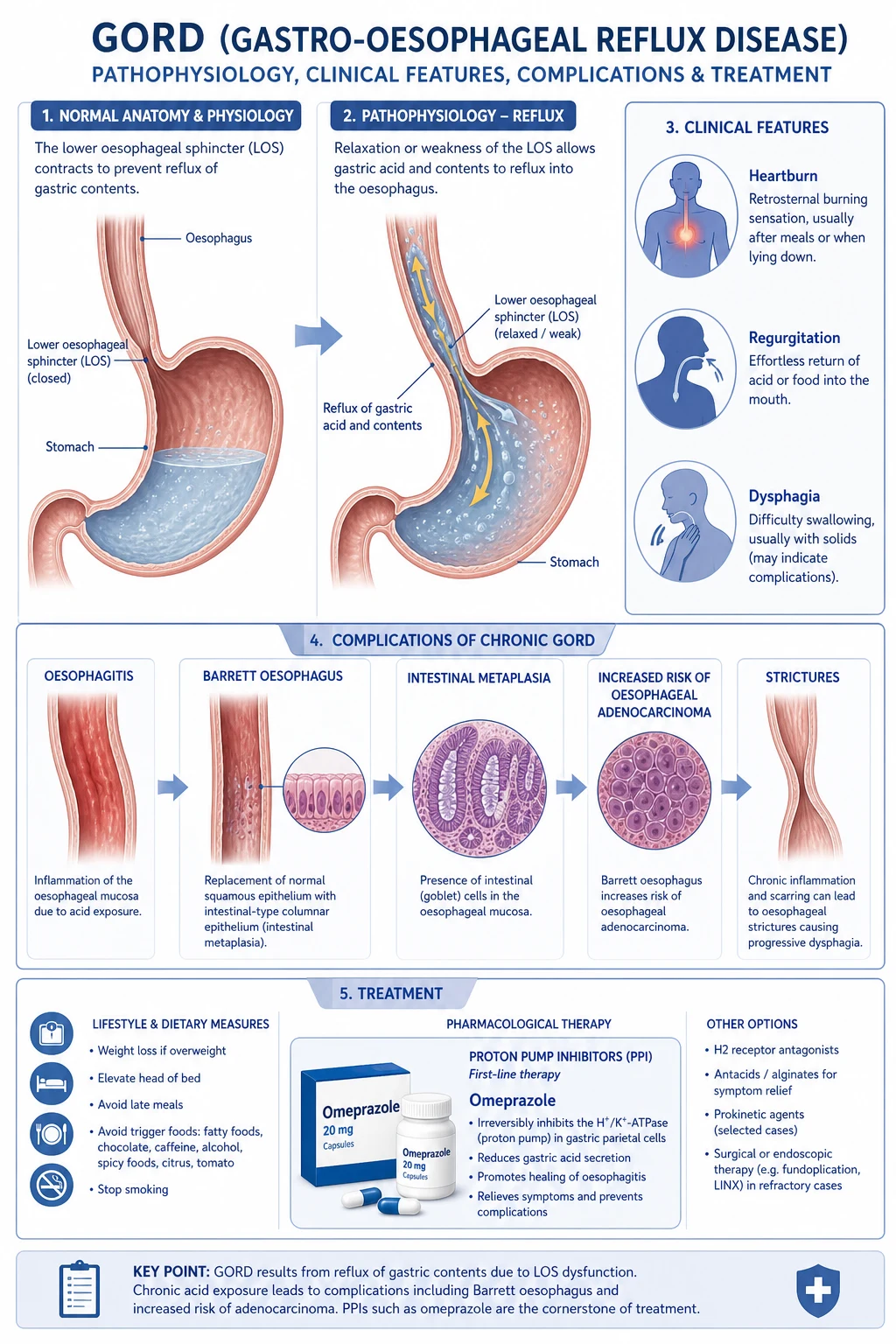
Clinical Presentation
Typical symptoms (the diagnosis is suggested by two cardinal features): [1]
- Heartburn — retrosternal burning sensation radiating from the epigastrium upward toward the neck; worse after meals, on lying down, bending, or after fatty foods; relieved by antacids. The single most sensitive symptom (around 70 percent). Pathognomonic when the pattern is classic.
- Acid regurgitation — effortless return of acidic or sour gastric content into the mouth or hypopharynx, without retching or vomiting; highly specific when present. Bitter or sour taste.
- Water brash — copious, sudden salivation triggered by acid in the distal oesophagus (vagal reflex); distinct from regurgitation (the fluid is saliva, not gastric content). Often confused by students — examinable distinction.
- Dysphagia / odynophagia — dysphagia is an alarm feature requiring endoscopy to exclude stricture, ring, malignancy, or eosinophilic oesophagitis. Odynophagia (painful swallowing) suggests severe oesophagitis, infectious or pill oesophagitis, or malignancy.
- Belching, epigastric pain, nausea — non-specific dyspepsia overlap; GORD and functional dyspepsia coexist frequently. [1]
Atypical / extra-oesophageal ("supraoesophageal") manifestations (high-yield exam favourites): [1]
- Non-cardiac chest pain — GORD is the commonest cause of non-cardiac chest pain (up to 60 percent); burning, non-exertional, post-prandial, relieved by antacid, may radiate to the arm/jaw and so mimic cardiac pain. Always exclude cardiac ischaemia first.
- Chronic cough — reflux microaspiration and a vagal oesophago-bronchial reflex; over 8 weeks duration, the three commonest causes being GORD, asthma, and post-nasal drip (the cough triad). PPI response is unreliable unless objective reflux is confirmed.
- Laryngitis / hoarseness — reflux laryngitis with posterior commissural erythema and oedema, vocal-fold granulomas. Diagnosis requires objective reflux evidence (symptoms are non-specific).
- Asthma exacerbation — reflux triggers bronchospasm by microaspiration and vagal reflex; uncontrolled nocturnal asthma, adult-onset asthma, or steroid-refractory asthma should prompt reflux evaluation.
- Dental erosion — loss of enamel, especially the lingual (palatal) surfaces of the upper incisors; a dentist may be the first to spot chronic occult reflux.
- Globus sensation — a persistent lump-in-the-throat feeling.
- Hiccups, chronic sore throat, halitosis — less common associations. [1]
Atypical presentations in special populations: [1]
- Elderly — blunted symptom perception; may present silently with anaemia, dysphagia, weight loss, or iron-deficiency from Cameron erosions (linear erosions within a hiatus hernia). Severe erosive disease and Barrett are more common yet symptoms milder — a lower threshold for OGD is warranted.
- Pregnant women — first presentation of heartburn in 2nd/3rd trimester; manage conservatively (see Special Populations).
- Diabetics / scleroderma — profound hypotensive LES and poor peristalsis produce severe, often silent, reflux with high stricture risk.
- Children / infants — present with regurgitation, failure to thrive, recurrent pneumonia, irritability, feeding refusal, and apnoea; the "happy spitter" who is thriving needs no treatment. [1]
Differential Diagnosis
The differential of "heartburn / chest pain / dysphagia" is broad; the key exam skill is distinguishing GORD from mimics with different management.[1]
- Cardiac chest pain (ACS / angina) — always exclude first in any retrosternal pain. Exertional, crushing, radiating to arm/jaw, diaphoresis, ECG changes, troponin rise; GORD is a diagnosis of exclusion for non-cardiac chest pain.
- Achalasia — progressive solid and liquid dysphagia, undigested food regurgitation (non-acidic), weight loss; manometry shows failure of LES relaxation (raised integrated relaxation pressure) and aperistalsis; bird's-beak on barium swallow. Often mislabelled as refractory GORD; PPIs make it worse — fundoplication without excluding achalasia is a disaster.
- Eosinophilic oesophagitis — young adults/children, solid-food dysphagia and food impaction, atopy/asthma; OGD shows rings, furrows, white plaques/exudates; biopsy shows over 15 eosinophils per high-power field; PPI-resistant (though a PPI-responsive subtype exists). Treat with topical swallowed steroid (fluticasone or budesonide viscous), elimination diet, or dupilumab.
- Peptic ulcer disease — epigastric pain relieved or worsened by food (duodenal vs gastric), nocturnal burning that wakes the patient; diagnosis by OGD plus H. pylori testing.
- Functional dyspepsia / functional heartburn — Rome IV; burning not explained by reflux, normal OGD and pH monitoring; PPI-poor responders. Treatment is neuromodulation.
- Oesophageal or gastric malignancy — progressive dysphagia, weight loss, anaemia, alarm features; urgent OGD. Oesophageal adenocarcinoma (the Barrett endpoint) and squamous-cell carcinoma present similarly at the late stage.
- Biliary colic / cholecystitis — right upper quadrant pain, post-prandial, fatty-food intolerance, fever; Murphy sign, ultrasound (gallstones, wall thickening).
- Gastroparesis — post-prandial fullness, nausea, vomiting undigested food recognised hours later; diabetes; gastric emptying scintigraphy.
- Coronary microvascular / Prinzmetal angina, musculoskeletal chest pain, anxiety/panic — considerations in non-cardiac chest pain after reflux excluded.
- Infectious / pill oesophagitis — odynophagia onset; recent antibiotics (Candida), doxycycline/KCl/NSAID/bisphosphonate (pill), immunosuppression.
- Rumination syndrome / supragastric belching — behavioural disorders that mimic refractory reflux; pH-impedance shows characteristic patterns; treated with diaphragmatic breathing and biofeedback, not PPIs. [1]
Exam rule: dysphagia, odynophagia, weight loss, anaemia, haematemesis/melaena, vomiting, or new-onset GORD over age 55 are alarm features mandating urgent OGD rather than empirical PPI.[1]
Clinical & Bedside Assessment
GORD is diagnosed clinically in the patient with typical symptoms and no alarm features — most need no initial investigation.[1]
History — characterise heartburn/regurgitation; relation to meals, posture, sleep (nocturnal regurgitation); precipitants (fatty/spicy food, alcohol, NSAIDs); PPI response; review drugs lowering LES pressure (nitrates, CCBs, anticholinergics); screen for alarm features (dysphagia, weight loss, GI bleeding, anaemia, recurrent vomiting, family history of upper-GI cancer, age over 55 at onset); screen for extra-oesophageal features (chronic cough, hoarseness, asthma, dental erosion). [1]
Symptom-based scores (high-yield): [1]
- GerdQ — a 6-item validated questionnaire recalling the past week (heartburn, regurgitation, epigastric pain, nausea — frequency; plus positive impact items of sleep and medication use). A score over 8 predicts GORD; over 3 on the impact items suggests high impact. Useful in primary care to triage PPI trial and referral.
- Reflux Symptom Index (RSI) — a 9-item laryngeal-reflux symptom score (over 13 suggests supraoesophageal reflux disease). [1]
Bedside — examine for complications: epigastric tenderness; signs of anaemia (conjunctival pallor); scleroderma facies/Raynaud phenomenon (clue to severe reflux); chest auscultation (wheeze suggesting asthma–reflux overlap); dental erosion; weight/BMI; abdominal masses (exclude malignancy). GORD itself has no specific physical sign — the absence of findings does not exclude it. The bedside exam's main value is detecting complications and the mimics above. [1]
Investigations
The diagnostic hierarchy (NICE / ACG 2022):[1][1]
-
Empirical PPI trial — first-line for typical symptoms without alarm features. A 4 to 8 week course of a standard-dose PPI (e.g. omeprazole 20 mg once daily or esomeprazole 20 to 40 mg once daily, taken 30 minutes before breakfast). Symptom resolution confirms GORD clinically and is more cost-effective than investigation. Failure to respond prompts review and OGD. [1]
-
Upper GI endoscopy (OGD) — indicated for any alarm feature, age over 55 at onset, persistent symptoms despite PPI, chronic PPI use, suspected Barrett, or before anti-reflux surgery. It allows direct visualisation of mucosa, biopsy, and grading. Findings: erosive oesophagitis (LA grade A to D), peptic strictures, hiatus hernia, Barrett (salmon-pink metaplastic mucosa — biopsy for confirmation and dysplasia), mass lesions. A normal OGD does not exclude GORD (NERD). Biopsy is not routine for reflux but is essential for Barrett confirmation, suspected eosinophilic oesophagitis, and malignancy. [1]
-
Ambulatory pH / pH-impedance monitoring — the gold standard for objective reflux confirmation. Performed off PPI (usually) for 24 to 96 hours via either a transnasal catheter (24-hour impedance-pH) or a wireless Bravo capsule (48 to 96 hours, better tolerated, catheter-free). pH-impedance detects both acid (pH under 4) and weakly-acidic/non-acid (bile) reflux by measuring drops in electrical resistance between electrodes, not just pH. The key metric is the acid exposure time (AET) — the percent of total monitoring time that oesophageal pH is under 4. Lyon Consensus 2.0 thresholds (reproduced):[2]
- AET over 6 percent — conclusive evidence of GORD.
- AET under 4 percent with negative symptom association — GORD excluded.
- AET 4 to 6 percent — inconclusive (use symptom association probability/index and number of reflux episodes to adjudicate).
- Over 40 reflux episodes per day (or over 80 on prolonged monitoring) supports pathological reflux; under 40 argues against.
- Symptom association — symptom association probability (SAP over 95 percent) and symptom index (SI over 50 percent) link symptoms to reflux events, useful in the inconclusive AET band and for extra-oesophageal symptoms. Indications: refractory symptoms, consideration of surgery (must confirm objective reflux), suspected NERD needing objective confirmation, and pre-operative evaluation.
-
High-resolution oesophageal manometry (HREM) — not diagnostic for GORD, but mandatory before anti-reflux surgery. HREM has two surgical-planning roles: (a) exclude achalasia (raised integrated relaxation pressure with aperistalsis — fundoplication without outflow correction causes intractable dysphagia), and (b) assess peristaltic reserve (decides between a complete 360-degree Nissen wrap vs a partial 270-degree Toupet wrap — weak peristalsis favours partial to avoid postoperative dysphagia). Reports LES resting pressure, peristaltal integrity, integrated relaxation pressure, and the Chicago classification diagnosis. [1]
-
Barium swallow — limited role; visualises hiatus hernia, strictures, rings (Schatzki), and the "bird's-beak" tapering of achalasia. Not routine for GORD; useful when OGD is contraindicated or for anatomic questions. [1]
-
Oesophageal biopsy — not routine for GORD; essential for Barrett confirmation (intestinal metaplasia with goblet cells), eosinophilic oesophagitis (over 15 eosinophils per HPF), and suspected malignancy. Seattle protocol (four-quadrant biopsies every 1 to 2 cm) is used for Barrett surveillance. [1]
-
Trial of stopping offending drugs — nitrates, CCBs, anticholinergics, theophyllines where feasible. [1]
Barrett's Oesophagus
Barrett oesophagus is the acquired replacement of the normal stratified squamous epithelium of the distal oesophagus by specialised intestinal metaplasia containing goblet cells — a premalignant lesion and the gateway to oesophageal adenocarcinoma.[3] It arises as an adaptive (but maladaptive) response to chronic acid-bile injury: pluripotent stem cells in the squamocolumnar junction reprogramme toward an intestinal phenotype that resists acid better than squamous mucosa but is prone to neoplastic progression.
Diagnosis requires both endoscopic and histological criteria. Endoscopically, Barrett appears as salmon-pink, velvety, tongue-like extensions of columnar mucosa projecting above the gastro-oesophageal junction. Histologically, biopsies must show specialised intestinal metaplasia with goblet cells (acidic mucin on Alcian blue stain). Note a regional delta: US guidelines require intestinal metaplasia with goblet cells for the diagnosis, whereas UK (BSG) guidelines diagnose Barrett on columnar metaplasia of any length regardless of goblet-cell presence (cancer risk is lower without goblet cells). [1]
Extent — the Prague C&M criteria (examinable): Barrett extent is recorded using the Prague C&M classification (C = circumferential extent, M = maximum extent), both measured in centimetres above the top of the gastric folds. For example, C2M4 means 2 cm of circumferential Barrett with tongues reaching a maximum of 4 cm. Long-segment Barrett (over 3 cm) carries a higher cancer risk than short-segment (under 3 cm). The Prague criteria standardise reporting and stratify surveillance. [1]
Pathology — the metaplasia-dysplasia-carcinoma sequence: Barrett progresses through a defined histological cascade: intestinal metaplasia → indefinite for dysplasia → low-grade dysplasia → high-grade dysplasia → intramucosal carcinoma → invasive adenocarcinoma. Each step is defined on biopsy and confirmed by two specialist GI pathologists (given inter-observer variability). This sequence unfolds over years to decades, which is what makes endoscopic surveillance and eradication effective.[3]
Cancer risk: non-dysplastic Barrett carries an adenocarcinoma risk of approximately 0.5 percent per year (roughly 1 in 200 per year); low-grade dysplasia roughly 0.7 to 1 percent per year; and high-grade dysplasia 5 to 10 percent per year (with a significant short-term risk). This risk gradient drives the surveillance and treatment protocol below. [1]
Risk factors for Barrett/adenocarcinoma: chronic GORD (over 5 years), male sex, white/Caucasian ethnicity, age over 50, obesity (especially visceral/central), smoking, family history of Barrett or oesophageal adenocarcinoma. [1]
Surveillance protocol (ACG / BSG — reproduce these intervals): [1]
| Dysplasia grade | Surveillance interval | Action |
|---|---|---|
| No dysplasia | Repeat OGD at 1 year; if stable, every 3 years (ACG) / every 2 to 5 years (BSG) | Quadratic biopsies q1 to 2 cm (Seattle protocol) |
| Low-grade dysplasia (confirmed) | Every 6 months x 2, then yearly if stable | Consider endoscopic eradication; intensive surveillance if not eradicated |
| High-grade dysplasia | Endoscopic eradication therapy (not surveillance alone) | EMR visible lesions + RFA flat Barrett; oesophagectomy if non-focal/refractory |
Endoscopic therapy for dysplastic Barrett (the modern ladder): [1]
- Radiofrequency ablation (RFA / HALO) — the first-line eradication technique for flat dysplastic Barrett; delivers thermal energy via a balloon or focal catheter to ablate metaplastic mucosa, allowing squamous re-epithelialisation. Achieves complete eradication of intestinal metaplasia (CEIM) in over 90 percent of cases with low recurrence. Now the standard of care for low- and high-grade dysplasia.
- Endoscopic mucosal resection (EMR) — for visible lesions (nodules, plaques, ulcers) within Barrett; provides a histological specimen for staging (depth of invasion). Any visible lesion in Barrett must be resected by EMR before ablation, because ablation destroys the tissue needed to exclude submucosal invasion.
- Endoscopic submucosal dissection (ESD) — en-bloc resection of larger or suspicious lesions (over 15 mm, poorly lifting); offers deeper, single-piece histology than EMR but is technically demanding and not widely available.
- Cryotherapy (spray or balloon) — an alternative ablation modality using liquid nitrogen or nitrous oxide; useful for RFA failures or difficult anatomy.
- Complete eradication of intestinal metaplasia (CEIM) is the treatment endpoint; post-eradication surveillance continues (every 3 to 6 months for high-grade, yearly for low-grade) because recurrence and buried glands can occur.
- Oesophagectomy — reserved for refractory high-grade dysplasia, multifocal disease not amenable to endotherapy, or confirmed submucosal invasion (sm2/sm3) where lymph-node metastasis risk warrants surgical staging. Mortality is 1 to 2 percent in high-volume centres.[3]
RFA
- First-line for flat dysplastic Barrett
- Balloon/focal catheter thermal ablation
- CEIM over 90 percent; low recurrence
- No histology — use EMR for visible lesions first
EMR
- For visible nodules/plaques in Barrett
- Provides histology for T-staging
- Cap-band or snare technique
- Always before ablation to exclude invasion
ESD
- En-bloc resection of larger lesions (over 15 mm)
- Deeper histology than EMR
- Technically demanding, limited availability
- For suspicion of submucosal invasion
Management — Resuscitation

GORD is a chronic ambulatory disease — true resuscitation is rarely required. Two scenarios merit emergency thinking:[1]
- Acute upper GI bleeding (haematemesis/melaena) from severe erosive oesophagitis, Cameron erosions in a hiatus hernia, or a Mallory-Weiss tear complicating retching: ABCDE, two large-bore cannulae, fluid resuscitation, bloods (FBC, U&E, LFT, coagulation, group and save/crossmatch), transfuse to Hb over 70 g/L (over 80 g/L if comorbid), IV PPI (pantoprazole 40 mg bolus then infusion, or omeprazole 80 mg bolus then 8 mg/h infusion), and urgent OGD within 24 hours (within 12 hours if unstable). Risk-stratify with the Glasgow-Blatchford score (zero = consider outpatient).
- Acute food-bolus impaction in a peptic stricture or eosinophilic oesophagitis: nil by mouth, urgent therapeutic OGD for removal/dilatation; rule out complete obstruction (inability to manage secretions = airway risk). [1]
For the vast majority of patients, "management" is the stepwise definitive approach below. [1]
Management — Definitive & Stepwise
A staged approach, escalating only on failure (ACG 2022 / NICE NG188):[1][1]
Step 1 — Lifestyle measures (foundation, all patients):
- Weight loss if overweight/obese — the single most effective lifestyle measure; even a 5 to 10 percent reduction meaningfully reduces symptoms.
- Elevate the head of the bed by 15 to 20 cm on blocks (not extra pillows, which only flex the neck) for nocturnal reflux — uses gravity to aid clearance.
- Avoid eating within 3 hours of bedtime; small, regular meals.
- Reduce triggers: fatty/spicy food, chocolate, peppermint, citrus, tomatoes, caffeine, carbonated drinks, alcohol.
- Stop smoking — raises LES pressure, improves saliva bicarbonate.
- Review and stop/reduce LES-lowering drugs (nitrates, CCBs, anticholinergics, benzodiazepines) where possible. [1]
Step 2 — Antacids / alginates (on-demand for mild intermittent symptoms):
- Gaviscon Advance (sodium alginate 500 mg / potassium bicarbonate 100 mg / calcium carbonate 160 mg) 10 to 20 mL after meals and at bedtime; alginate forms a viscous "raft" floating on gastric content, neutralising and physically reducing post-prandial reflux. Suitable for symptom relief and pregnancy. [1]
Step 3 — H2-receptor antagonists (H2RAs):
- Famotidine 20 mg twice daily (preferred over ranitidine, which is withdrawn globally for NDMA contamination), or nizatidine 150 to 300 mg nocte. Useful for nocturnal acid breakthrough and as an alternative when PPIs are contraindicated. Onset faster than PPIs but tachyphylaxis limits long-term use. [1]
Step 4 — Proton-pump inhibitors (PPIs) — first-line for moderate/severe or confirmed GORD:[1]
- Omeprazole 20 mg once daily (before breakfast) for 4 to 8 weeks — the standard first-line agent.
- Equally effective alternatives: esomeprazole 20 to 40 mg od, lansoprazole 15 to 30 mg od, pantoprazole 40 mg od, rabeprazole 20 mg od, dexlansoprazole 30 mg od. All given 30 minutes before a meal (need active proton pumps to bind).
- Erosive oesophagitis: standard dose for 8 weeks (healing in 80 to 90 percent for LA A to B, lower for C/D which may need double-dose).
- On-demand / maintenance: lowest effective dose; deprescribe if asymptomatic; consider "step-down" to H2RA or antacid.
- Long-term PPI safety — counsel: small increased risks of osteoporotic fracture, hypomagnesaemia (check Mg, especially with diuretics/digoxin), vitamin B12 deficiency, enteric infections (C. difficile, S. pneumoniae), and acute interstitial nephritis. Do not stop abruptly (rebound acid hypersecretion); taper.
Step 5 — Refractory GORD (persistent symptoms on double-dose PPI after 8 weeks):
- Optimise adherence and timing; confirm objective reflux on pH-impedance ON PPI (distinguishes true PPI failure from functional heartburn).
- Double-dose PPI (e.g. omeprazole 40 mg twice daily) for 8 weeks.
- Add nocturnal H2RA (famotidine 20 mg nocte) for acid breakthrough.
- Prokinetic (metoclopramide 5 to 10 mg tds or domperidone 10 mg tds) — limited evidence; caution with metoclopramide (extrapyramidal, max 12 weeks) and domperidone (QT prolongation, max 30 mg/day).
- Baclofen 5 to 10 mg tds (GABA-B agonist) — reduces TLESR frequency by 40 to 60 percent; off-label, CNS side-effects (drowsiness, dizziness).
- Address non-acid (bile) reflux — alginate, bile-acid sequestrants (cholestyramine).
- Re-evaluate: is this really GORD? Consider achalasia, EoE, rumination, supragastric belching. [1]
Step 6 — Anti-reflux surgery and endoscopic therapy:[1][4]
- Indications: confirmed objective GORD (positive pH monitoring or LA C/D), PPI-responsive but intolerant of / unwilling to take lifelong PPIs, or refractory disease. Never operate on symptom-only GORD without objective evidence — outcomes are poor.
- Laparoscopic Nissen fundoplication (360 degree wrap) — the gold-standard; wraps the gastric fundus around the distal oesophagus to restore LES competence and recreate the angle of His. Outcomes equivalent to chronic PPI at 5 years (LOTUS trial), with better control of regurgitation; risks include dysphagia, gas-bloat syndrome, paraoesophageal herniation, and recurrent reflux (10 to 20 percent at 10 years). Pre-operative manometry is mandatory.
- Partial fundoplication (Toupet 270 degree) — preferred when poor peristaltic reserve on manometry (lower dysphagia risk; equal reflux control in most studies).
- LINX magnetic sphincter augmentation — a string of magnetic beads placed around the GE junction that augments LES competence; reversible, preserves gastric anatomy, faster recovery; suitable for carefully selected patients without large hiatus hernia.
- Endoscopic therapy — Stretta (radiofrequency energy delivered to the LES to induce hypertrophy and reduce TLESRs) and Transoral incisionless fundoplication (TIF) (an endoscopically created partial wrap). Both are less invasive with generally inferior durability; not first-line, but reasonable in selected patients unfit for surgery.
- Bariatric surgery (Roux-en-Y gastric bypass) for the morbidly obese — treats reflux by weight loss and by diverting bile away from the refluxate; preferred over fundoplication when BMI is over 35.
Specific Subtypes & Scenarios
- Erosive oesophagitis (LA C/D) — high-grade disease; full 8-week PPI, then maintenance PPI; highest stricture and Barrett risk; surveil if Barrett develops on follow-up OGD.
- Non-erosive reflux disease (NERD) — symptoms with normal OGD; confirm with pH monitoring if persistent; PPI-responsive in around 50 percent; rule out reflux hypersensitivity (treat with neuromodulators — TCAs, SSRIs — and cognitive-behavioural therapy) and functional heartburn.
- Refractory GORD — symptoms despite double-dose PPI for 8 weeks; re-evaluate diagnosis (pH-impedance on PPI, exclude achalasia/EoE/cancer); surgery only with confirmed objective reflux.
- Barrett oesophagus — see the dedicated Barrett section; surveillance per Prague criteria and dysplasia grade.
- Peptic stricture — chronic fibrotic narrowing of the distal oesophagus; presents with progressive solid-food dysphagia; endoscopic dilatation (Savary-Gilliard or balloon) plus lifelong PPI; biopsy the stricture to exclude malignancy before and after dilatation.
- Extra-oesophageal / supraoesophageal GORD — chronic cough, laryngitis, asthma; does not respond reliably to PPI; requires objective reflux confirmation before attribution and treatment; a double-dose PPI trial for 8 to 12 weeks is a reasonable first step.
- GORD with hiatus hernia — sliding (type I) commonest and the main reflux-driver; paraoesophageal (types II to IV) carry mechanical complications (volvulus, strangulation, gastric ischaemia) warranting surgical repair even if reflux is mild.
- Zollinger-Ellison / scleroderma — severe refractory reflux from acid hypersecretion or aperistaltic patulous LES respectively; high-dose PPI; treat the underlying disease; fundoplication is often ineffective in scleroderma (poor motility). [1]
Complications & Pitfalls
Oesophageal:
- Erosive oesophagitis — bleeding (chronic iron-deficiency anaemia from Cameron erosions, or acute GI haemorrhage).
- Peptic stricture — fibrotic narrowing producing dysphagia; dilatation plus PPI.
- Barrett oesophagus — intestinal metaplasia; 0.5 percent per year progression to adenocarcinoma in non-dysplastic Barrett; higher with dysplasia (see the dedicated section for surveillance).
- Adenocarcinoma of the oesophagus / GE junction — the lethal endpoint of the Barrett sequence; presents late with progressive dysphagia and weight loss.
- Oesophageal perforation — rare; from instrumentation of strictures, or from Boerhaave syndrome complicating violent retching against a closed glottis. [1]
Extra-oesophageal: dental erosion, chronic cough, asthma exacerbation, aspiration pneumonia, laryngitis, pulmonary fibrosis (controversial association). [1]
Long-term PPI adverse effects (the modern exam favourite):
- Osteoporotic fracture (hip, spine) — modest risk; ensure adequate calcium/vitamin D; review necessity.
- Hypomagnesaemia (and secondary hypocalcaemia) — check Mg, especially with diuretics/digoxin (arrhythmia risk).
- Vitamin B12 deficiency (food-cobalamin malabsorption) on long-term use.
- Enteric infections — C. difficile, Salmonella, Campylobacter, S. pneumoniae pneumonia (acid-loss of microbial kill).
- Acute interstitial nephritis — idiosyncratic; check creatinine if unexplained.
- Rebound acid hypersecretion on abrupt cessation — taper, do not stop suddenly. [1]
Classic pitfalls: over-diagnosing GORD in achalasia (PPIs make it worse); missing malignancy by skipping OGD for alarm features; reflex long-term PPI without indication or deprescribing; not confirming objective reflux before surgery (poor outcomes and the commonest cause of "failed fundoplication"); confusing functional heartburn (needs neuromodulator, not PPI) with refractory GORD; failing to biopsy a visible Barrett nodule before ablation (risk of missing submucosal cancer). [1]
Prognosis & Disposition
GORD is a chronic relapsing condition. Most patients are well controlled on intermittent or on-demand PPI and never develop complications. NERD has an excellent prognosis with low Barrett/cancer progression. ERD (especially LA C/D) and Barrett carry the cancer-risk burden and need surveillance. Fundoplication gives durable symptom control in 80 to 90 percent at 5 years (LOTUS-equivalent to PPI for heartburn, superior for regurgitation); 10 to 20 percent recur over 10 years and a small proportion require revisional surgery.[4]
PPI efficacy: standard-dose PPI achieves symptom relief in 80 to 90 percent of patients with erosive disease at 8 weeks. The Barrett-to-adenocarcinoma progression is 0.5 percent per year in non-dysplastic Barrett but rises steeply with dysplasia — which is the entire rationale for surveillance and endoscopic eradication.[3]
Disposition: most patients are managed in primary care; refer to gastroenterology for alarm features, refractory disease, suspected Barrett, or pre-surgical evaluation. Counsel patients on the chronic relapsing nature, the goal of lowest effective PPI dose, and the alarm features that warrant re-presentation. [1]
Special Populations
- Pregnancy — heartburn is very common (progesterone relaxes LES; mechanical pressure in the third trimester). First-line: lifestyle plus antacids/alginate (safe). Second-line: H2RAs (ranitidine withdrawn; use famotidine — limited but reassuring data). PPIs — omeprazole/lansoprazole are considered low-risk in pregnancy (FDA category B historically); use if severe and refractory, and avoid in the first trimester where possible. Avoid prokinetics and misoprostol.
- Elderly — blunted symptom perception; maintain a lower threshold for OGD (silent severe disease, Cameron erosions, malignancy); PPI doses unchanged but monitor Mg, B12, bone health, and interactions (clopidogrel — prefer pantoprazole over omeprazole for the elderly on dual antiplatelet therapy).
- Obese — prioritise weight loss; Roux-en-Y gastric bypass is preferred over fundoplication in morbid obesity (also excludes the distal stomach and bile).
- Paediatrics — infants often regurgitate physiologically ("happy spitter", thriving); treat conservatively. Persistent reflux with failure to thrive, oesophagitis, recurrent pneumonia, or apnoea equals GORD; thicken feeds, alginate, H2RA, PPI (omeprazole 0.7 to 1.4 mg/kg/day) for severe; Nissen for refractory neurological impairment.
- Anticoagulated — high INR plus erosive oesophagitis equals bleeding risk; treat reflux aggressively; do not withhold indicated anticoagulation.
- Scleroderma / CREST — profound LES hypotension and aperistalsis produce severe refractory reflux; lifelong high-dose PPI; stricture risk; fundoplication often ineffective (poor motility causes postoperative dysphagia). [1]
Evidence, Guidelines & Regional Differences
Landmark guidelines:
- ACG (American College of Gastroenterology) 2022 (Katz, PMID 34807007) — the current US standard: empirical PPI trial first; OGD for alarm features; objective reflux confirmation (Lyon) before surgery.[1]
- Lyon Consensus 2.0 (Gyawali, Gut 2018, PMID 29437910) — diagnostic thresholds for objective GORD using reflux monitoring.[2]
- NICE NG188 (2023, UK) — prefers a 4-week PPI trial, then review; deprescribe; OGD via 2-week-wait urgent cancer pathway for alarm features.[1]
Landmark trials:
- LOTUS (Hatlebakk, PMID 26226096) — antireflux surgery (fundoplication) equivalent to long-term esomeprazole for heartburn control at 5 years, with better control of regurgitation; established surgery as a durable alternative to chronic PPI.[4]
- Spechler (NEJM 2014, PMID 25162890) — authoritative review of Barrett oesophagus and the metaplasia-dysplasia-adenocarcinoma sequence, framing surveillance and endoscopic eradication.[3]
Regional deltas:
Controversies: the role of prolonged (96-hour) wireless pH (Bravo) capsule versus catheter-based impedance; the PPI-clopidogrel interaction (CYP2C19 inhibition by omeprazole — prefer pantoprazole in dual antiplatelet therapy, though the clinical significance is debated); the cost-effectiveness of routine Barrett surveillance (especially in elderly/comorbid patients with short-segment non-dysplastic Barrett); endoscopic versus surgical anti-reflux therapy in obesity; and the rising use of GLP-1 agonists (which delay gastric emptying and may worsen reflux in some, though weight loss improves it in others). [1]
Exam Pearls
- Heartburn plus regurgitation, worse post-prandial and supine, relieved by antacid equals GORD — a clinical diagnosis needing no test if there are no alarm features.
- PPI first-line: omeprazole 20 mg od, 30 min before breakfast, for 4 to 8 weeks. Erosive disease gets 8 weeks.
- Los Angeles oesophagitis grades (memorable): A = under 5 mm; B = over 5 mm; C = Continuous (folds bridged); D = Done it all (circumferential). C and D equal conclusive GORD plus highest Barrett risk.
- Lyon Consensus 2.0: AET over 6 percent conclusive; under 4 percent excluded; 4 to 6 percent inconclusive.
- Alarm features (urgent OGD): dysphagia, odynophagia, weight loss, anaemia, haematemesis/melaena, recurrent vomiting, onset over age 55, family history of upper-GI cancer.
- Non-cardiac chest pain — the commonest cause is GORD — but always exclude ACS first.
- Chronic cough triad: GORD, asthma, post-nasal drip.
- Refractory "GORD" — think achalasia (bird's-beak, aperistalsis, raised IRP), eosinophilic oesophagitis (over 15 eosinophils per HPF, rings/furrows), functional heartburn.
- Barrett oesophagus = intestinal metaplasia with goblet cells; 0.5 percent/yr adenocarcinoma in non-dysplastic; high-grade dysplasia equals RFA/EMR plus surveillance.
- Prague C and M — Circumferential and Maximum extent in cm; long-segment is over 3 cm.
- Long-term PPI risks: osteoporotic fracture, hypomagnesaemia, B12 deficiency, C. difficile/pneumonia, AIN, rebound. Taper, do not stop.
- Nissen fundoplication: gold standard; needs objective GORD plus normal manometry (exclude achalasia) first. Toupet (partial) for weak peristalsis.
- Pregnancy: alginate first, H2RA second, omeprazole/lansoprazole for severe (avoid 1st trimester).
- Elderly: lower threshold for OGD (silent severe disease, Cameron erosions, malignancy).
- Ranitidine withdrawn globally for NDMA contamination — use famotidine. [1]
GORD alarm features — the mnemonic
ALARM
iron-deficiency from erosive disease or malignancy
unintended — cancer until proven otherwise
new dyspepsia/reflux in older patient — OGD
obstruction or refractory disease — OGD
GI bleeding or palpable mass — urgent OGD
Exam application bank (NEET-PG / INICET)
One-line answer
Gastro-oesophageal reflux disease (GORD) is the condition in which stomach content refluxes into the oesophagus causing troublesome symptoms and/or complications. The cardinal symptoms are retrosternal burning (heartburn) and acid regurgitation; atypical features include chest pain, chronic cough, laryngitis, dental erosion and worsening asthma. Two endoscopic phenotypes: erosive reflux disease (ERD) with visible mucosal breaks graded by the Los Angeles classification (A to D), and non-erosive reflux disease (NERD) (normal mucosa). Pathophysiology centres on transient lower-oesophageal sphincter relaxations (TLESRs), a weak/hypotensive LES, hiatus hernia, impaired oesophageal clearance and delayed gastric emptying. Diagnosis is clinical, confirmed by empirical PPI trial; endoscopy for alarm features or persistent symptoms; ambulatory pH / pH-impedance monitoring (acid exposure time over
Worked stems (answer without another resource)
Stem 1 — Classic presentation. Map symptoms to mechanism; name the first investigation and first treatment step with dose/route if drug therapy is standard. [1]
Stem 2 — Unstable / complicated. List red flags that force immediate resuscitation, theatre, ICU, antidote, or reperfusion — and what you do in the first 15 minutes. [1]
Stem 3 — Atypical group. Elderly, pregnancy, child, or immunocompromised: how presentation and thresholds change. [1]
Stem 4 — Differential trap. Name the three closest mimics and one discriminator for each. [1]
Stem 5 — Disposition. Who goes home with safety-netting, who is admitted, who needs HDU/ICU/theatre, and what follow-up is mandatory. [1]
Rapid viva checklist
- Definition + classification
- Pathophysiology chain
- Bedside signs / criteria
- Score with exact components (if any)
- Emergency bundle
- Definitive therapy with doses
- Complications of disease and of treatment
- Special populations
- Guideline/trial name if classic
- Three exam traps
Coverage self-check
If you cannot answer any stem above from this page alone, re-read the matching section — the page is intended to be self-sufficient for final-prof and NEET-PG/INICET questions on Gastro-Oesophageal Reflux Disease (GORD).
References
- [1]Katz PO, Dunbar KB, Schnoll-Sussman FH, Spechler SJ, Vela MF, Yadlapati R. ACG Clinical Guideline for the Diagnosis and Management of Gastroesophageal Reflux Disease Am J Gastroenterol, 2022.PMID 34807007
- [2]Gyawali CP, Kahrilas PJ, Savarino E, et al. Modern diagnosis of GERD: the Lyon Consensus Gut, 2018.PMID 29437910
- [3]Spechler SJ, Souza RF. Barrett's esophagus N Engl J Med, 2014.PMID 25162890
- [4]Hatlebakk JG, Katz PO, Kuo B, et al. Gastroesophageal Acid Reflux Control 5 Years After Antireflux Surgery, Compared With Long-term Esomeprazole Therapy Clin Gastroenterol Hepatol, 2016.PMID 26226096