General Surgery · General Surgery
Benign Prostatic Hyperplasia
Also known as BPH · Benign prostatic enlargement (BPE) · Lower urinary tract symptoms (LUTS) · Benign prostatic obstruction (BPO) · Prostatism
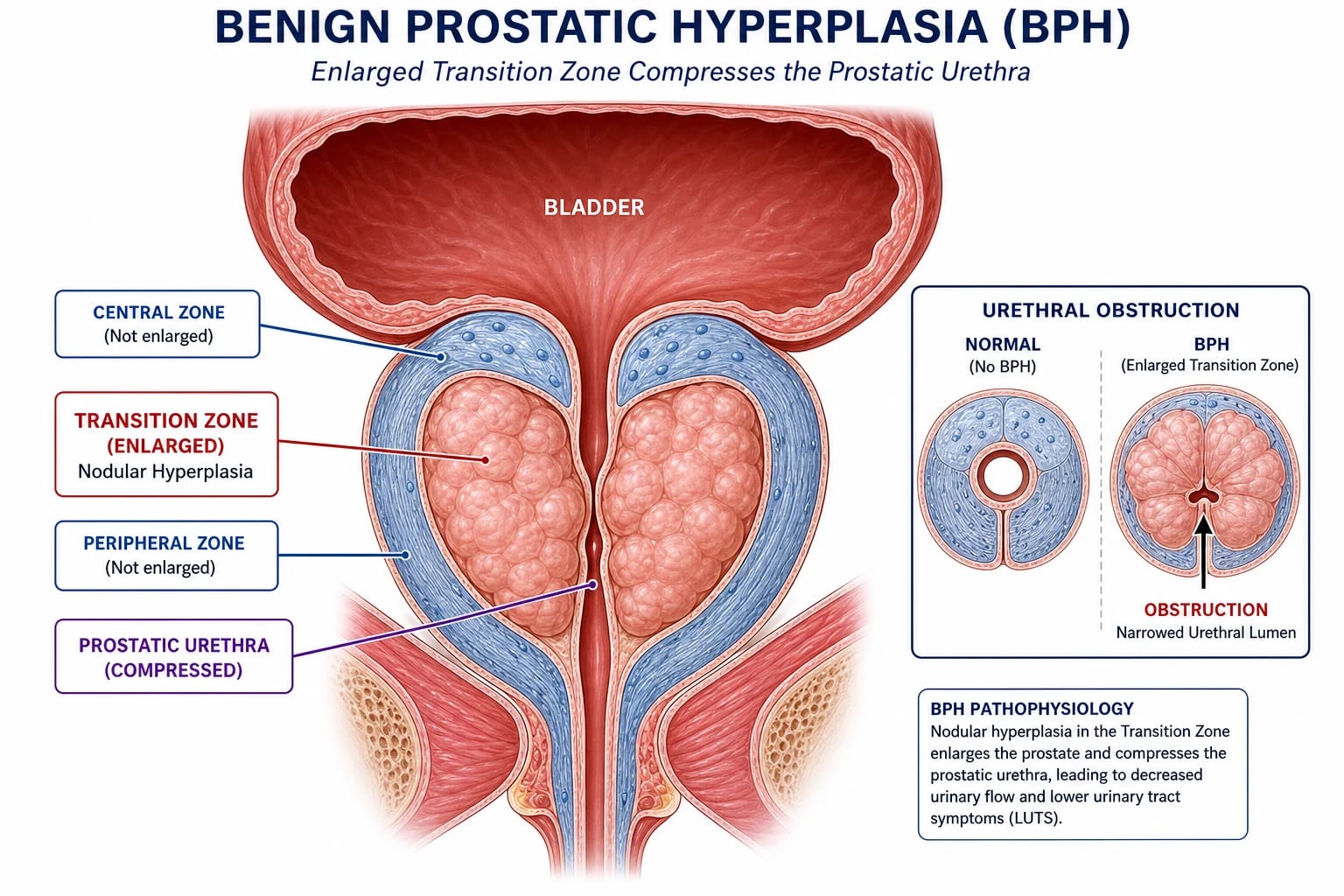
Benign prostatic hyperplasia (BPH) is age-related nodular hyperplasia of the periurethral transition zone causing bladder outlet obstruction. Affects 50% of men over 50, up to 90% over 80. Presents with LUTS: voiding (hesitancy, weak stream, straining, incomplete emptying) and storage (frequency, urgency, nocturia) symptoms. DRE: smooth, symmetrically enlarged, rubbery prostate (vs hard, irregular in cancer). PSA over 4 ng/mL warrants cancer investigation. IPSS scores severity: mild 0 to 7, moderate 8 to 19, severe 20 to 35. Treat: alpha-1-blocker (tamsulosin 0.4 mg OD — rapid relief) plus 5-alpha-reductase inhibitor (finasteride 5 mg OD — shrinks gland over 6 months) for moderate symptoms. TURP (transurethral resection) is the surgical gold standard. TURP syndrome = dilutional hyponatraemia from glycine irrigation. Acute urinary retention = catheterise immediately.
On this page & tools
Your progress
Saved locally on this device.
Exam tags
Red flags
Overview & Definition
Benign prostatic hyperplasia (BPH) is a non-malignant, age-related nodular hyperplasia of the stromal and glandular tissue of the periurethral transition zone of the prostate. It is the most common benign tumour in men and the leading cause of bladder outlet obstruction in older males. The histological process begins in the fourth decade, becomes almost universal in the eighth and ninth decades, and produces a spectrum from silent enlargement to disabling obstruction with renal failure.[1][2]
Modern urological terminology distinguishes four overlapping but separable concepts, because the same patient may have one without the others, and conflating them leads to errors in management:[2]
- BPH — the histological finding (stromal and glandular hyperplasia seen on biopsy or resected chips).
- Benign prostatic enlargement (BPE) — the clinical finding of an enlarged prostate on digital rectal examination (DRE) or imaging (volume over 30 mL).
- Benign prostatic obstruction (BPO) — the urodynamic demonstration of increased urethral resistance during voiding (a pressure-flow diagnosis, not a bedside one).
- Lower urinary tract symptoms (LUTS) — the symptom complex (voiding, storage, and post-micturition symptoms), which may arise from BPO but also from the bladder, urethra, prostate, or neurology.[2]
BPH is not premalignant — it does not increase the risk of prostate cancer. The two conditions coexist in many older men because both are age-related, but they arise in different zones: BPH in the transition zone, adenocarcinoma in the peripheral zone. A man with BPH still has the same age-related risk of prostate cancer as a man without, which is why DRE and PSA remain mandatory in every man with LUTS.[3]
Classification
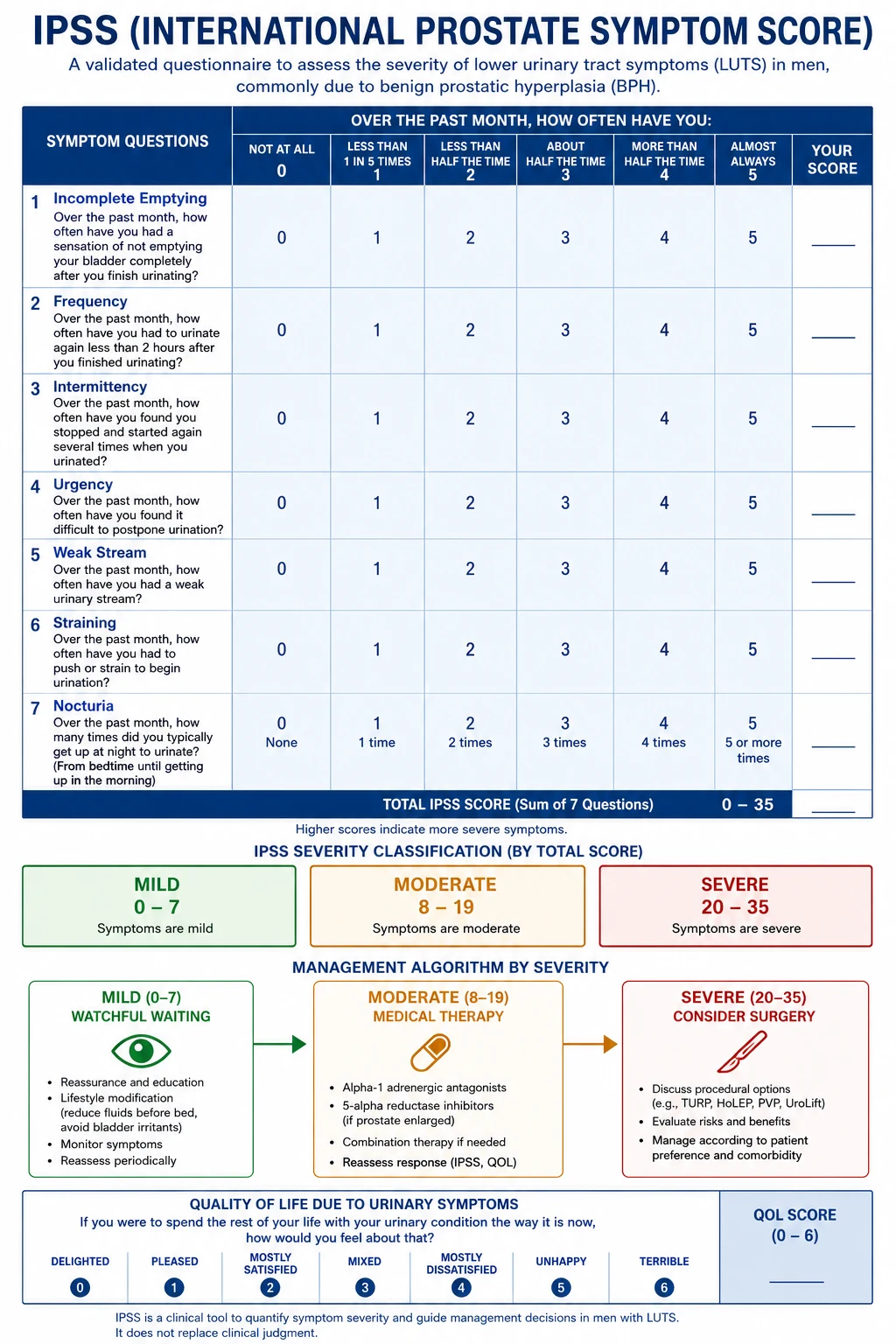
By IPSS severity (the clinical classification that drives management):[1]
| Category | IPSS score | Typical management |
|---|---|---|
| Mild | 0 to 7 | Watchful waiting, lifestyle modifications |
| Moderate | 8 to 19 | Medical therapy (alpha-blocker +/- 5-ARI) |
| Severe | 20 to 35 | Medical therapy; consider surgical intervention. [1] |
By prostate size (guides medical and surgical choice):[5]
- Small (under 30 mL): alpha-blocker may suffice; a 5-ARI adds little.
- Moderate (30 to 80 mL): alpha-blocker plus 5-ARI combination therapy.
- Large (over 80 to 100 mL): consider HoLEP, ThuLEP, or open/laparoscopic simple prostatectomy, as monopolar TURP becomes technically difficult and prolonged (raising TURP syndrome risk).
By symptom phenotype (guides drug selection):[2]
- Voiding-dominant (obstructive): alpha-blocker is the cornerstone.
- Storage-dominant (irritable bladder, overactive bladder features): add an anticholinergic or beta-3 agonist if the post-void residual is low and obstruction has been addressed.
- Mixed: combination alpha-blocker plus anticholinergic/beta-3 agonist, titrated to the dominant complaint.
Epidemiology & Risk Factors
BPH is age-related and androgen-dependent. Histological BPH is found in approximately 8% of men in their 30s, rising to 50% of men aged 51 to 60, 70% in their 70s, and 80 to 90% of men over 80. However, not all histological BPH produces symptoms — about 25 to 50% of men with histological BPH develop clinically significant LUTS, and roughly 25 to 30% of men over 50 will eventually undergo some surgical or procedural intervention for BPH in their lifetime.[2]
Risk factors:[2]
- Age — the dominant factor; rare under 40, almost universal over 80.
- Androgens — BPH requires a functioning testis and dihydrotestosterone (DHT). Men castrated before puberty do not develop BPH; androgen deprivation shrinks established BPH.
- Family history — first-degree relatives of men undergoing prostatectomy for BPH have a four-fold higher risk of needing surgery, suggesting genetic predisposition.
- Obesity and metabolic syndrome — increased BPH risk and severity; visceral fat raises the oestrogen-to-androgen ratio and inflammatory drive.
- Diabetes mellitus — contributes through autonomic neuropathy (impairing detrusor function) and possible direct effects on prostate growth.
- Sedentary lifestyle — physical activity is modestly protective.
- Race and ethnicity — Black men tend to have larger prostates and more severe symptoms; Asian men have lower rates, though this converges with westernisation.
The epidemiology of BPH in one strip
Pathophysiology
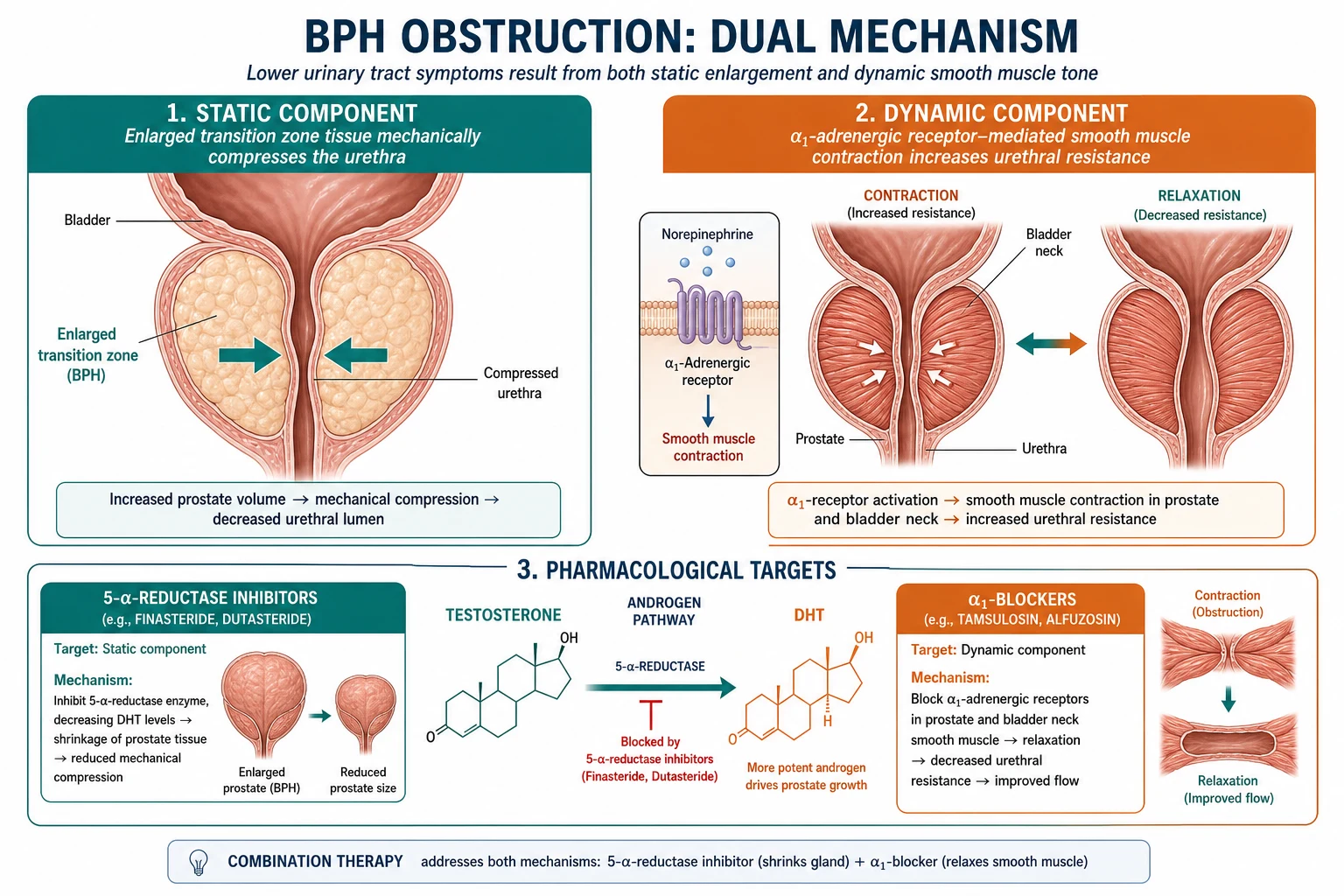
Bladder outlet obstruction in BPH arises from two additive mechanisms — one mechanical, one dynamic. Understanding this duality explains why two entirely different drug classes both work, and why combination therapy outperforms either alone.[2][5]
1. The static (mechanical) component. The hyperplastic transition zone tissue physically compresses the prostatic urethra, narrowing its lumen and elongating the urethral course through the gland. As the adenoma grows, it can elevate the bladder neck and produce a "ball-valve" effect at the internal meatus. This component is the target of 5-alpha-reductase inhibitors (finasteride, dutasteride), which block conversion of testosterone to DHT and produce a 20 to 30% prostate volume reduction over 6 to 12 months.[2]
2. The dynamic component. The smooth muscle of the prostate stroma, bladder neck, and prostatic urethra is densely innervated by alpha-1 adrenergic receptors, predominantly the alpha-1a subtype (which accounts for roughly 70% of prostatic alpha-1 receptors). Background sympathetic tone keeps this muscle contracted, and any surge in sympathetic output — cold weather, stress, alpha-agonist cold remedies, anaesthesia — increases urethral resistance. This component is the target of alpha-1-blockers (tamsulosin, alfuzosin, doxazosin, terazosin, silodosin), which relax the smooth muscle and reduce obstruction within days.[2]
The hormonal engine. Testosterone is converted to dihydrotestosterone (DHT) by the enzyme 5-alpha-reductase, which exists as two isoforms: type 1 (liver, skin, non-prostatic) and type 2 (prostate, genital skin, liver). DHT binds androgen receptors in prostate stromal and epithelial cells, promoting proliferation. Finasteride inhibits type 2 selectively (reducing intraprostatic DHT by about 80%); dutasteride inhibits both types (reducing DHT by over 90%). The ageing testis produces less testosterone but rising peripheral aromatisation of androstenedione to oestrone increases the oestrogen-to-androgen ratio, which may sensitise the stroma to DHT and is part of why BPH progresses with age.[2]
The bladder's response — the cascade to decompensation. This is the pathophysiology examiners probe, because it links obstruction to every complication:[5]
From obstruction to retention — the bladder decompensation cascade
Outlet resistance rises (static + dynamic obstruction)
Detrusor hypertrophies to generate higher voiding pressure (compensated phase)
Trabeculation, cellules, and diverticula form as detrusor fibres strain
Collagen deposition stiffens the bladder wall; compliance falls
Detrusor overactivity produces storage symptoms (frequency, urgency, nocturia)
Detrusor underactivity develops; residual urine accumulates (decompensated phase)
Stasis leads to UTI, bladder stones, and chronic retention
Bilateral ureteric obstruction from the hypertrophied bladder neck causes hydronephrosis and post-renal renal failure
Clinical Presentation
LUTS are conventionally divided into voiding (obstructive), storage (irritative), and post-micturition symptom groups. A single patient usually has a mixture, and the dominant phenotype guides drug choice.[1][3]
Voiding (obstructive) symptoms — produced by the narrowed, high-resistance outlet:[3]
- Hesitancy — an increased interval between arriving at the toilet and the start of flow; the patient must wait or strain.
- Weak (poor) stream — reduced force and calibre of urine; the stream no longer arcs.
- Straining to void — use of abdominal muscle (Valsalva) to expel urine.
- Intermittency — the stream stops and starts during a single void.
- Terminal dribbling — a prolonged end-phase where drops fall onto the footwear.
- Incomplete emptying — the sensation that urine remains in the bladder after voiding.
- Prolonged voiding time — the whole act takes longer.
Storage (irritative) symptoms — produced by detrusor overactivity and reduced bladder compliance:[3]
- Frequency — increased daytime urination (over 8 times per day is a useful flag).
- Urgency — a sudden, compelling need to void that is hard to defer.
- Nocturia — waking at night to void (the single most bothersome symptom and the one most predictive of progression).
- Urge incontinence — leakage accompanying urgency.
- Dysuria — a burning sensation, usually indicating superimposed UTI.
Post-micturition symptoms:[3]
- Post-micturition dribble — leakage of a few drops after leaving the toilet.
Other presentations and complications — BPH often first presents through its complications rather than gradual LUTS:[1]
- Acute urinary retention — sudden, painful inability to void with a tense, palpable bladder. Precipitants include anticholinergics, opioids, alpha-agonists (pseudoephedrine in cold remedies), alcohol, general or spinal anaesthesia, immobility after surgery, and constipation.
- Chronic urinary retention — painless bladder distension with overflow incontinence (constant dribbling from a full bladder). May present insidiously with renal failure (post-renal AKI from bilateral ureteric obstruction) or with delirium in the elderly.
- Haematuria — from the friable vascularity of the hyperplastic transition zone; usually painless and initial or total.
- Recurrent UTIs — residual urine acts as a culture medium.
- Bladder stones — form in stagnant, infected urine.
- Atypical presentation in the elderly: confusion, falls, delirium, or being newly "wet" may be the first sign of retention or UTI on the background of BPH.
BPH (benign)
transition zone
- **Smooth, symmetrically enlarged, rubbery**
- **Preserved median sulcus**
- PSA under 4 (usually)
- Consistency like tip of nose
- Mobile, not fixed
Prostate cancer
peripheral zone
- **Hard, irregular, craggy**
- **Loss of median sulcus**
- PSA over 4 (or rising velocity)
- Consistency like a stone
- May be fixed to pelvic sidewall
Differential Diagnosis
Any cause of bladder outlet obstruction or LUTS can mimic BPH. The differentials must be distinguished because management diverges sharply — operating for BPH on a neurogenic bladder or a urethral stricture harms the patient.[1][2]
| Condition | Key distinguishing feature |
|---|---|
| Prostate cancer | Hard, irregular, craggy prostate on DRE with loss of median sulcus; elevated or rising PSA; biopsy confirms. May coexist with BPH. |
| Urethral stricture | History of trauma, STI (gonococcal), catheterisation, or instrumentation; slow onset; reduced flow with a spraying stream; urethroscopy or urethrography confirms a narrowing. |
| Bladder neck obstruction / stenosis | Younger men; no significant prostate enlargement on DRE; urodynamics show high-pressure, low-flow; cystoscopy shows a high, tight bladder neck. |
| Neurogenic bladder (diabetes, MS, spinal cord injury, Parkinson's) | Neurological deficits on exam; detrusor-sphincter dyssynergia on urodynamics; normal-sized prostate; anal sphincter tone and perineal sensation may be abnormal. |
| Acute or chronic prostatitis | Fever, perineal/rectal pain, exquisitely tender prostate on DRE; positive urine culture; acute onset with systemic upset. |
| Bladder cancer (especially at the bladder neck) | Painless gross haematuria throughout the stream (not just terminal); cystoscopy and biopsy; may produce obstruction if at the neck. |
| Overactive bladder (OAB) | Storage symptoms (frequency, urgency, nocturia) without obstruction; urodynamics show detrusor overactivity; normal prostate and flow rate. |
| Bladder stones | Interrupted stream with penile pain; suprapubic pain; visible on imaging; often a complication of BPH rather than a mimic. [2] |
Clinical & Bedside Assessment
Digital rectal examination (DRE) — the single most important bedside sign and the one most frequently omitted. It must be performed on every man with LUTS, both to assess the prostate for BPH and to screen for cancer. With the patient in the left lateral position, the examining finger evaluates:[3]
- Size — BPH produces symmetric enlargement; record an approximate size in grams.
- Surface — BPH is smooth and regular; cancer is irregular, nodular, or craggy.
- Consistency — BPH is rubbery/firm (like the tip of the nose); cancer is stony hard.
- Median sulcus — preserved in BPH, obliterated in advanced cancer.
- Mobility — BPH is mobile; advanced cancer may be fixed to the pelvic sidewall or rectum.
- Tenderness — a boggy, exquisitely tender prostate indicates prostatitis, not BPH.[3]
Abdominal examination:[3]
- Palpable, distended bladder — dull to percussion above the symphysis pubis; indicates urinary retention.
- Ballotable kidneys — suggest bilateral hydronephrosis from chronic high-pressure retention.
- Suprapubic tenderness — with retention or UTI.
Genital and neurological examination: assess for phimosis or meatal stenosis (urethral causes), and check anal sphincter tone, perineal sensation, and lower-limb reflexes to exclude a neurogenic bladder.[3]
IPSS (International Prostate Symptom Score):[1] a 7-item validated self-administered questionnaire — incomplete emptying, frequency, intermittency, urgency, weak stream, straining, nocturia — each scored 0 (never) to 5 (almost always), total 0 to 35, plus a single quality-of-life (QoL) question ("If you were to spend the rest of your life with your urinary condition the way it is now, how would you feel?") scored 0 (delighted) to 6 (terrible). Severity bands: mild 0 to 7, moderate 8 to 19, severe 20 to 35. The IPSS is the standard tool for initial assessment, monitoring response, and deciding thresholds for intervention.
Investigations
The AUA and EAU agree on a core set of mandatory tests and a selective set reserved for diagnostic uncertainty or specific scenarios.[1][5]
Essential for all patients with LUTS:[2]
- Urinalysis (dipstick) — exclude UTI (leucocytes, nitrites) and screen for bladder cancer and stones (persistent haematuria). The single most cost-effective test.
- U&Es and creatinine — exclude renal impairment from chronic obstruction; an elevated creatinine with bilateral hydronephrosis is post-renal AKI and a surgical emergency.
- PSA (prostate-specific antigen) — over 4 ng/mL warrants further investigation for prostate cancer (multiparametric MRI, then biopsy if indicated). BPH itself mildly elevates PSA (typically under 10 ng/mL) in proportion to gland size. Finasteride halves PSA — when interpreting PSA in a man on a 5-ARI, multiply the measured value by 2.[2]
- Renal and bladder ultrasound — assess prostate size, post-void residual volume (PVR) (over 100 to 200 mL is significant), bladder wall thickness, trabeculation, and diverticula, and upper tract dilation (hydronephrosis from chronic obstruction).[2]
Selected patients:[2]
- Uroflowmetry — the patient voids into a device that records flow rate against time. Peak flow rate (Qmax) under 10 mL/s suggests significant obstruction; under 4 mL/s is severe. A normal bell-shaped curve flattens and elongates as obstruction worsens.
- Post-void residual (PVR) by ultrasound — a non-invasive bladder scan after voiding; over 100 mL suggests incomplete emptying, over 200 to 300 mL indicates decompensation and higher risk of retention.
- Pressure-flow study (urodynamics) — the gold standard for diagnosing bladder outlet obstruction. A detrusor pressure over 40 cmH2O with a Qmax under 10 mL/s defines obstruction. Reserved for diagnostic uncertainty, young men, suspected detrusor underactivity, or prior failed prostate surgery.[5]
- Flexible cystoscopy — visualises the bladder (trabeculation, stones, diverticula, tumours) and the prostatic urethra (degree of lateral-lobe and median-lobe enlargement); essential before TURP and when haematuria is present.[5]
- Transrectal ultrasound (TRUS) — measures prostate volume accurately and guides biopsy if cancer is suspected; not routine for uncomplicated BPH.
- Multiparametric prostate MRI — the modern standard for cancer work-up when PSA or DRE is suspicious.
IPSS — the numbers that decide management
Population: Validated in community and clinic urology populations worldwide
Key finding
7 questions, each 0 to 5, total 0 to 35. Bands: 0 to 7 mild (watchful waiting), 8 to 19 moderate (medical therapy), 20 to 35 severe (consider surgery). A QoL score of 4 or more (mostly dissatisfied to terrible) supports active treatment regardless of the symptom total.
Management — Resuscitation
BPH becomes a time-critical emergency in two scenarios: acute urinary retention and chronic retention with renal failure.[1]
Acute urinary retention (the emergency):[1]
- Immediate urethral catheterisation with a 12 to 14 Fr Foley catheter, 10 mL sterile water in the balloon. This is both diagnostic and therapeutic. Record the residual volume drained (typically 400 to 800 mL in true retention).
- If urethral catheterisation fails, do not force repeated traumatic attempts — use a catheter introducer or guidewire (by an experienced operator) or insert a suprapubic catheter (2 cm above the symphysis pubis in the midline, after confirming a palpable bladder and excluding coagulopathy).
- Check U&Es — post-renal AKI from obstruction.
- Start an alpha-1-blocker (tamsulosin 0.4 mg OD) immediately while the catheter is in place — this roughly doubles the success rate of a subsequent trial without catheter.[1]
- Trial without catheter (TWOC) after 1 to 3 days: clamp then remove the catheter and observe whether the patient voids with a satisfactory PVR. If he voids, continue alpha-blocker (plus a 5-ARI if the prostate is enlarged). If he fails, re-catheterise and schedule definitive surgery (TURP or HoLEP).
Chronic retention with renal impairment:[1]
- Catheterise (urethral or suprapubic) and monitor for post-obstructive diuresis — urine output over 200 mL/h for 2 consecutive hours, or over 3 L in 24 h, after decompression. This is a physiological response to cleared obstruction but can cause hypovolaemia and electrolyte loss.
- Replace with IV 0.9% saline guided by urine output, and check sodium, potassium, and creatinine every 6 to 12 hours; correct electrolytes.
- Plan definitive surgery (TURP) once renal function and electrolytes stabilise; operating on uncorrected uraemia and hyperkalaemia risks arrhythmia and bleeding.
Management — Definitive & Stepwise
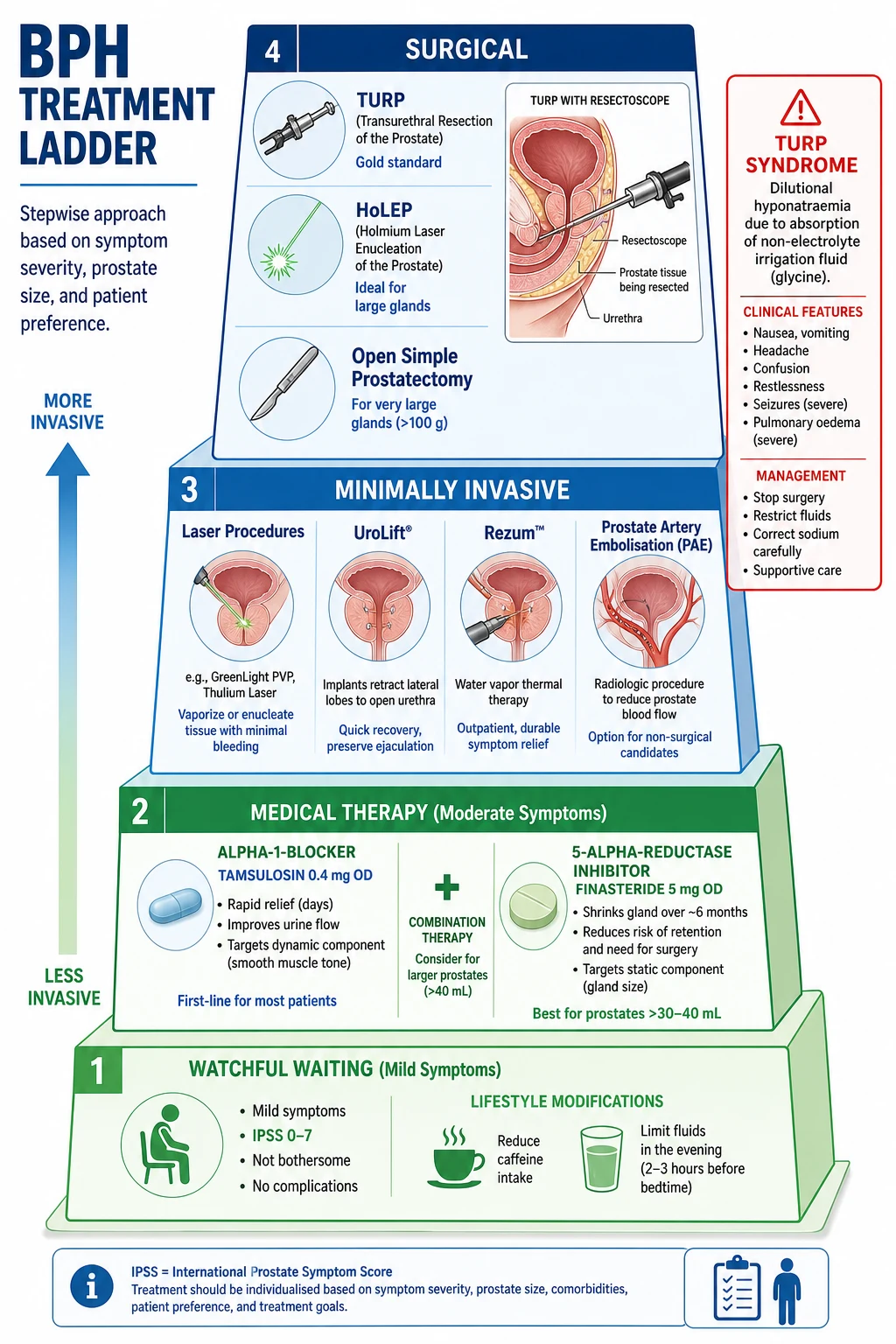
Management is stratified by symptom severity (IPSS), bother, prostate size, PVR, and patient preference. The ladder runs from conservative, through medical, to surgical and minimally invasive options.[1][5]
Conservative (mild symptoms — IPSS 0 to 7, or any patient as baseline)
- Watchful waiting. Reassess IPSS, DRE, and PSA annually. Many men never progress.
- Lifestyle modifications: reduce caffeine and alcohol (both are bladder irritants and diuretics); limit evening fluid intake (to reduce nocturia); timed voiding every 2 to 3 hours; double voiding (void, wait a moment, void again); treat constipation (straining worsens obstruction); review and stop bladder-aggravating drugs where possible (anticholinergics, opioids, diuretics in the evening).[1]
Medical (moderate to severe symptoms — IPSS 8 and above)
-
Alpha-1-adrenergic blockers (first-line for rapid symptom relief):[1]
- Tamsulosin 0.4 mg OD — alpha-1a selective; fewer vascular side effects.
- Silodosin 8 mg OD — highly alpha-1a selective.
- Alfuzosin 10 mg OD (or 5 mg BD) — alpha-1a selective, uroselective.
- Doxazosin 1 to 8 mg OD, terazosin 1 to 10 mg OD — non-selective alpha-1 blockers; start low and titrate to avoid first-dose hypotension.
- Onset: rapid (days to 2 weeks); reduce IPSS by 30 to 40% and raise Qmax by 20 to 30%.
- Side effects: dizziness, postural hypotension (especially non-selective agents), retrograde ejaculation (less with tamsulosin), floppy iris syndrome during cataract surgery (inform the ophthalmologist — the iris billows and prolapses), headache, nasal congestion.
- Do NOT shrink the prostate — they only relax smooth muscle, so symptoms return on cessation.
-
5-Alpha-reductase inhibitors (for prostate over 30 mL or PSA over 1.5 ng/mL):[2]
- Finasteride 5 mg OD — inhibits type 2 5-alpha-reductase.
- Dutasteride 0.5 mg OD — inhibits types 1 and 2.
- Onset: slow (3 to 6 months) to shrink the prostate by 20 to 30%.
- Reduce the long-term risk of acute retention and the need for surgery (MTOPS trial).
- Side effects: reduced libido, erectile dysfunction, ejaculatory dysfunction, gynaecomastia in 5 to 10%; rare breast tenderness.
- Halve PSA — multiply the measured PSA by 2 when interpreting.
-
Combination therapy (alpha-blocker + 5-ARI): the strategy of choice for men with enlarged prostates.[4]
- The MTOPS trial (McConnell et al., NEJM 2003) showed that doxazosin plus finasteride reduced overall clinical progression (acute retention, surgery, symptom worsening, or renal insufficiency) by 66% versus placebo and was superior to either drug alone.[4]
- The CombAT trial (dutasteride plus tamsulosin) confirmed that combination therapy reduced the risk of clinical progression and need for invasive therapy over monotherapy in men with prostates over 30 mL, with nocturia improvements sustained over 2 to 4 years.[6]
- Start both together: the alpha-blocker gives immediate relief while the 5-ARI works over months.
-
PDE5 inhibitors (for concurrent LUTS and erectile dysfunction):[1]
- Tadalafil 5 mg OD — addresses both LUTS and ED; approved for BPH. Mechanism: increased cyclic GMP in prostate and bladder smooth muscle. Avoid with nitrates.
-
Anticholinergics / beta-3 agonists (for predominant storage symptoms):[1]
- Solifenacin 5 to 10 mg OD, tolterodine 4 mg OD, mirabegron 25 to 50 mg OD.
- For overactive bladder symptoms (frequency, urgency, nocturia, urge incontinence) if PVR is low and obstruction has been addressed.
- Caution: can precipitate retention if significant untreated obstruction is present.
-
Phytotherapy (saw palmetto / Serenoa repens, Pygeum africanum, beta-sitosterol):[2]
- Widely used and self-prescribed; trials (including a large NIH-funded study) show no significant benefit over placebo. Best regarded as placebo-equivalent; counsel patients accordingly.
Surgical (severe symptoms, complications, or failure of medical therapy)
Indications for surgery:[1]
- Refractory retention (failed TWOC).
- Recurrent UTIs attributable to residual urine.
- Bladder stones.
- Persistent gross haematuria from BPH refractory to medical therapy.
- Renal impairment from obstruction (bilateral hydronephrosis, rising creatinine).
- Severe symptoms refractory to or intolerant of medical therapy.
-
TURP (transurethral resection of the prostate) — the gold standard.[5]
- Spinal or general anaesthesia; patient in lithotomy position.
- A resectoscope is passed transurethrally. The transition-zone adenoma is resected in chips using a diathermy loop, creating a wide channel through the prostate from bladder neck to verumontanum.
- Chips are sent for histology (incidental prostate cancer is found in 5 to 10% — staged T1a or T1b).
- Irrigation: glycine 1.5% (a non-electrolyte solution is required for monopolar diathermy) — this is the source of TURP syndrome.
- Post-op: 3-way Foley catheter with continuous bladder irrigation for 24 to 48 hours; stay 2 to 4 days.
- Success rate: 85 to 90% symptom improvement.[1]
-
Bipolar TURP (plasma-kinetic resection): uses saline irrigation, eliminating TURP syndrome risk and allowing safe resection of larger glands; increasingly standard.[5]
-
HoLEP (holmium laser enucleation of the prostate):[5]
- A holmium laser enucleates the adenoma along the surgical capsule (like peeling an orange from its skin), and a morcellator removes the tissue.
- Suitable for very large prostates (over 100 mL) where monopolar TURP would take too long.
- Less bleeding, shorter catheter time and hospital stay, no glycine (saline irrigation — no TURP syndrome); durable results. Becoming the new gold standard in specialist centres.
-
GreenLight laser photoselective vaporisation of the prostate (PVP): a potassium-titanyl-phosphate laser vaporises adenomatous tissue with minimal bleeding; suited to anticoagulated patients and day-case settings; less tissue for histology.[1]
-
ThuLEP (thulium laser enucleation): similar to HoLEP with excellent haemostasis.[5]
-
Open or laparoscopic / robotic simple prostatectomy (retropubic Millin or suprapubic Freyer):[5]
- For very large glands (over 80 to 100 g) not suitable for endoscopic enucleation.
- Enucleation of the adenoma through the surgical capsule, leaving the peripheral zone intact.
- Higher morbidity (bleeding, infection, longer stay) but definitive; increasingly replaced by HoLEP.
-
Minimally invasive therapies (MISTs) — selected patients with moderate symptoms:[1]
- UroLift (prostatic urethral lift): small permanent implants hold the lateral lobes apart, opening the urethra without resection. Minimal sexual side effects (no retrograde ejaculation); suitable for small to moderate prostates (30 to 80 mL).
- Rezum (water vapour thermal therapy): steam injections ablate transition-zone tissue; preserves sexual function; for prostates 30 to 80 mL.
- Prostatic artery embolisation (PAE): interventional radiology embolises the prostatic arteries to shrink the gland; for patients unfit for surgery.
- Prostatic stent: a temporary or permanent stent to hold the urethra open; reserved for unfit patients in retention who cannot tolerate definitive surgery.
Specific Subtypes & Scenarios
- Acute urinary retention: catheterise immediately, start tamsulosin 0.4 mg OD, check U&Es, TWOC after 1 to 3 days. If TWOC fails, schedule TURP or HoLEP. A prostate over 40 mL, age over 65, or a drained volume over 1 L predicts TWOC failure.[1]
- Chronic retention with renal impairment: catheterise, monitor for post-obstructive diuresis, correct electrolytes, and plan TURP once stable. Bilateral hydronephrosis with elevated creatinine is a surgical priority.[1]
- BPH with incidental prostate cancer (T1a/T1b): cancer found in 5 to 10% of TURP chips. Discuss at the urology MDT — low-volume, low-grade (T1a, Gleason 6) disease may enter active surveillance; higher-volume or higher-grade (T1b, Gleason 7 and above) disease warrants definitive oncological treatment.[1]
- Large prostate (over 100 mL): HoLEP, ThuLEP, or open/robotic simple prostatectomy preferred over monopolar TURP (resection would be too prolonged, increasing TURP syndrome and bleeding risk).[5]
- Anticoagulated patient: stop warfarin (bridge with LMWH if high thrombotic risk) and hold NOACs before TURP. HoLEP, bipolar TURP, GreenLight, or UroLift are preferred for anticoagulated patients because of superior haemostasis or minimal bleeding. Never perform monopolar TURP on a therapeutically anticoagulated patient.[1]
- Median-lobe enlargement: can cause a ball-valve obstruction and may not be well addressed by UroLift; TURP, HoLEP, or GreenLight preferred.[5]
Complications & Pitfalls
Complications fall into two groups: those of the disease (untreated BPH) and those of TURP and other procedures.[1]
Complications of untreated BPH:[1]
- Acute urinary retention — the commonest emergency presentation.
- Chronic urinary retention with overflow incontinence.
- Chronic renal failure from obstructive nephropathy (bilateral hydronephrosis, cortical thinning) — may be irreversible if decompression is delayed.
- Recurrent UTIs from residual urine.
- Bladder stones from stasis and infection.
- Recurrent gross haematuria from prostatic vascularity.
- Bladder decompensation — a flaccid, trabeculated, underactive detrusor that may not recover even after relief of obstruction.
TURP syndrome — the most feared complication:[5]
- Caused by systemic absorption of glycine 1.5% irrigation fluid through open prostatic venous sinuses during prolonged resection (over 60 to 90 minutes) or when bladder hydrostatic pressure exceeds venous pressure.
- Produces dilutional hyponatraemia (sodium under 125 mmol/L), hypo-osmolality, and glycine toxicity (glycine is an inhibitory neurotransmitter and is metabolised to ammonia and oxalate).
- Presents intra- or early post-operatively with confusion, nausea, visual disturbance (transient blindness from glycine retinal toxicity), hypertension then bradycardia, seizures, and coma.
- Management: stop surgery, secure the airway, give oxygen, treat seizures with benzodiazepines, give furosemide for volume overload, and correct severe symptomatic hyponatraemia with hypertonic saline (3%) slowly (raise sodium by 4 to 6 mmol/L in the first hours, then slower) to avoid osmotic demyelination. Transfer to ICU.
- Prevention: limit resection time, keep irrigation bag height under 60 cm above the patient, use bipolar TURP (saline) or HoLEP — both eliminate glycine and the TURP syndrome entirely.
Other complications of TURP:[1]
- Retrograde ejaculation — the commonest complication (65 to 75%); semen passes backward into the bladder at orgasm because the bladder neck has been resected open. Patients must be counselled pre-operatively; it is not harmful but causes subfertility.
- Urinary incontinence — 1 to 3% (stress or urge); usually temporary but may be permanent from external sphincter injury.
- Erectile dysfunction — 5 to 10% (controversial; may be pre-existing or unrelated).
- Urethral stricture or bladder neck contracture — 3 to 5%; presents weeks to months later with a worsening stream.
- Bleeding requiring transfusion — 2 to 5%.
- UTI / bacteraemia — 5 to 10%; prophylactic antibiotics reduce risk.
- Re-operation for recurrent obstruction — 5 to 10% at 10 years.
Classic pitfalls:[1]
- Not performing DRE — missing prostate cancer (hard, irregular gland).
- Not checking PSA — missing concurrent cancer; not adjusting for finasteride (multiply PSA by 2).
- Prescribing an alpha-blocker without warning about postural hypotension — risk of dizziness and falls, especially first-dose and in the elderly.
- Not counselling about retrograde ejaculation before TURP — avoidable patient dissatisfaction.
- Missing chronic retention with renal impairment — can cause irreversible renal damage.
- Operating on an anticoagulated patient without preparation — catastrophic bleeding.
- Ascribing LUTS to BPH when the cause is neurogenic bladder or urethral stricture — surgery will not help and may harm.
TURP syndrome — the danger
CHOP
and visual disturbance, seizures, coma from hyponatraemia and glycine toxicity
from volume overload and rising intracranial pressure
through open prostatic venous sinuses during prolonged resection
limit resection time, keep bag under 60 cm, use bipolar TURP or HoLEP
Prognosis & Disposition
Medical therapy controls symptoms in 70 to 80% of patients but does not cure BPH — symptoms may progress, and adherence matters. The MTOPS trial showed that combination therapy (doxazosin plus finasteride) reduced the risk of clinical progression (acute retention or surgery) by 66% versus placebo and was superior to either drug alone; finasteride alone reduced retention risk by 68% and surgery risk by 64%.[4]
TURP produces excellent outcomes: 85 to 90% of patients report symptomatic improvement, with a re-operation rate of 5 to 10% at 10 years. HoLEP offers comparable or superior durability with fewer perioperative complications and no TURP syndrome risk.[5]
Untreated BPH is progressive in most men. The 5-year risk of acute retention is approximately 2 to 5% in untreated men with moderate symptoms; it rises steeply with larger prostates, higher PSA, older age, and greater symptom scores. A prostate over 30 mL with a PSA over 1.5 ng/mL and severe LUTS carries the highest progression risk — the very patient who benefits from combination therapy.[2]
Disposition: most stable medical-therapy patients are managed as outpatients with annual review (IPSS, DRE, PSA, and PVR if indicated). Patients presenting in retention are admitted for catheterisation, TWOC planning, and often surgery. Those with renal impairment from chronic retention are admitted for decompression, electrolyte correction, and definitive surgery once stabilised.[1]
Special Populations
- Elderly: higher risk of retention and complications; medical therapy (tamsulosin) is safe and effective. Prefer HoLEP, GreenLight, or bipolar TURP over monopolar TURP for frail patients (less bleeding, shorter stay, no glycine). Watch for drug interactions — alpha-blockers plus antihypertensives cause postural hypotension and falls.[1]
- Anticoagulated patients: stop anticoagulation before TURP (bridge with LMWH if high thrombotic risk); prefer HoLEP, bipolar TURP, GreenLight, or UroLift for superior haemostasis. Never perform monopolar TURP on a therapeutically anticoagulated patient.[1]
- Patients with renal impairment from chronic retention: catheterise, correct renal function and electrolytes before elective surgery, and monitor for post-obstructive diuresis after decompression.[1]
- Men with concurrent prostate cancer: TURP may be used for palliation of obstruction in advanced cancer. Discuss fertility implications of retrograde ejaculation with younger patients.[1]
- Younger men with LUTS: suspect bladder neck stenosis, prostatitis, or a neurogenic bladder — urodynamics and cystoscopy before committing to BPH surgery; BPH severe enough to cause obstruction under 40 is rare.[5]
- Patients on nitrates: tadalafil (PDE5 inhibitor) for BPH-LUTS is contraindicated with nitrates due to profound hypotension.[1]
Evidence, Guidelines & Regional Differences
AUA Guidelines (2021 to 2026):[1][2][3]
- Alpha-blocker as first-line medical therapy for bothersome moderate-to-severe LUTS (all agents equivalent in efficacy; differ in side-effect profile).
- 5-ARI for prostates over 30 mL or PSA over 1.5 ng/mL; reduces prostate size and long-term progression.
- Combination therapy (alpha-blocker + 5-ARI) for larger prostates (MTOPS-driven).
- Tadalafil 5 mg daily for men with concomitant LUTS and ED.
- Anticholinergics or beta-3 agonists added for storage symptoms if PVR is acceptable.
- Surgery for refractory symptoms or complications (retention, stones, recurrent UTI, renal impairment, refractory haematuria).
- HoLEP increasingly preferred over monopolar TURP for large glands.
- MISTs (UroLift, Rezum) for selected patients prioritising preservation of sexual function.
EAU Guidelines (Gratzke et al., 2015):[5]
- Mirror AUA on alpha-blockers, 5-ARIs, and combination therapy.
- Emphasise pressure-flow studies when obstruction is uncertain and before re-operation.
- Endorse HoLEP and laser techniques as size-independent alternatives to TURP.
- Highlight prostate volume and patient values (sexual function, anaesthetic risk, recovery) in procedural choice.
NICE (UK): recommends alpha-blocker for moderate-to-severe LUTS; 5-ARI for prostates over 30 mL or PSA over 1.5 ng/mL; offers combination therapy; recommends offering a choice of surgery (TURP, HoLEP, GreenLight) and MISTs where appropriate, with shared decision-making.[5]
Landmark trials:
- MTOPS (McConnell et al., NEJM 2003): combination doxazosin plus finasteride reduced overall clinical progression by 66% versus placebo and was superior to either monotherapy — the foundation of combination therapy.[4]
- CombAT (Roehrborn et al.): dutasteride plus tamsulosin reduced the risk of BPH progression and invasive therapy versus monotherapy in men with prostates over 30 mL, with sustained nocturia improvement.[6]
- India: BPH is common; many patients present late with complications (retention, renal failure) due to reluctance and access barriers. Monopolar TURP remains widely available and affordable in urban centres; HoLEP is concentrated in tertiary centres. Finasteride is cheap and widely used. Cultural factors and cost may delay presentation, raising the proportion with advanced, complicated disease.
- United States / AUA: early presentation; broad availability of MISTs (UroLift, Rezum), HoLEP, and robotic surgery; emphasis on shared decision-making and sexual-function preservation; PSA screening embedded in initial work-up.
- Europe / EAU: HoLEP and bipolar/laser techniques widely adopted; pressure-flow studies used more liberally before re-operation; emphasis on urodynamic confirmation of obstruction.
- United Kingdom / NICE: structured primary-care pathway with stepped care; emphasis on conservative measures and medical therapy before referral for surgery.[5]
Exam Pearls
- Transition zone = BPH. Peripheral zone = prostate cancer. Different zones, different diseases. BPH is NOT premalignant.[2]
- DRE: BPH = smooth, rubbery, symmetrically enlarged, preserved median sulcus. Cancer = hard, irregular, craggy, lost sulcus. Always do DRE.[3]
- IPSS: 0 to 7 mild, 8 to 19 moderate, 20 to 35 severe. Drives management. The QoL question captures bother.[1]
- Tamsulosin = alpha-1a selective, rapid relief (days), does NOT shrink the prostate. Side effect to counsel: floppy iris syndrome (inform ophthalmologist).[1]
- Finasteride = 5-ARI (type 2), blocks DHT, shrinks prostate over 6 months (20 to 30%). Halves PSA (multiply by 2). Side effects: reduced libido, ED, gynaecomastia.[2]
- Combination therapy (alpha-blocker + 5-ARI) superior to either alone for large prostates — MTOPS trial, 66% reduction in progression.[4]
- TURP = gold standard. Glycine 1.5% irrigation for monopolar diathermy. Retrograde ejaculation = commonest complication (65 to 75%), counsel pre-op.[5]
- TURP syndrome = dilutional hyponatraemia from glycine absorption. Confusion, visual disturbance, hypertension then bradycardia, seizures. Prevent: limit resection time, use bipolar TURP or HoLEP. Treat: furosemide, hypertonic saline for severe symptomatic hyponatraemia.[5]
- Acute retention = catheterise immediately, then tamsulosin + TWOC. A failed TWOC or recurrent retention = surgery.[1]
- PSA over 4 ng/mL = investigate for cancer (MRI, biopsy). Finasteride halves PSA — multiply by 2. BPH itself mildly elevates PSA (under 10).[2]
- Qmax under 10 mL/s suggests obstruction; PVR over 100 to 200 mL suggests decompensation. Pressure-flow study is the gold standard for diagnosing BOO.[2]
- UroLift and Rezum preserve sexual function (no retrograde ejaculation) — for selected patients with moderate symptoms and prostates 30 to 80 mL.[1]
Exam application bank (NEET-PG / INICET)
One-line answer
Benign prostatic hyperplasia (BPH) is age-related nodular hyperplasia of the periurethral transition zone causing bladder outlet obstruction. Affects 50% of men over 50, up to 90% over 80. Presents with LUTS: voiding (hesitancy, weak stream, straining, incomplete emptying) and storage (frequency, urgency, nocturia) symptoms. DRE: smooth, symmetrically enlarged, rubbery prostate (vs hard, irregular in cancer). PSA over 4 ng/mL warrants cancer investigation. IPSS scores severity: mild 0 to 7, moderate 8 to 19, severe 20 to 35. Treat: alpha-1-blocker (tamsulosin 0.4 mg OD — rapid relief) plus 5-alpha-reductase inhibitor (finasteride 5 mg OD — shrinks gland over 6 months) for moderate symptoms. TURP (transurethral resection) is the surgical gold standard. TURP syndrome = dilutional hyponatraemia from glycine irrigation. Acute urinary retention = catheterise immediately. [1]
Worked stems (answer without another resource)
Stem 1 — Classic presentation. Map symptoms to mechanism; name the first investigation and first treatment step with dose/route if drug therapy is standard. [1]
Stem 2 — Unstable / complicated. List red flags that force immediate resuscitation, theatre, ICU, antidote, or reperfusion — and what you do in the first 15 minutes. [1]
Stem 3 — Atypical group. Elderly, pregnancy, child, or immunocompromised: how presentation and thresholds change. [1]
Stem 4 — Differential trap. Name the three closest mimics and one discriminator for each. [1]
Stem 5 — Disposition. Who goes home with safety-netting, who is admitted, who needs HDU/ICU/theatre, and what follow-up is mandatory. [1]
Rapid viva checklist
- Definition + classification
- Pathophysiology chain
- Bedside signs / criteria
- Score with exact components (if any)
- Emergency bundle
- Definitive therapy with doses
- Complications of disease and of treatment
- Special populations
- Guideline/trial name if classic
- Three exam traps
Coverage self-check
If you cannot answer any stem above from this page alone, re-read the matching section — the page is intended to be self-sufficient for final-prof and NEET-PG/INICET questions on Benign Prostatic Hyperplasia.
References
- [1]Sandhu JS, Bixler BR, Dahm P, et al. Management of Lower Urinary Tract Symptoms Attributed to Benign Prostatic Hyperplasia (BPH): AUA Guideline Amendment 2023 J Urol, 2024.PMID 37706750
- [2]Lerner LB, McVary KT, Barry MJ, et al. Management of Lower Urinary Tract Symptoms Attributed to Benign Prostatic Hyperplasia: AUA GUIDELINE PART I-Initial Work-up and Medical Management J Urol, 2021.PMID 34384237
- [3]Goueli R, Badlani GH, Welliver C, et al. Management of Lower Urinary Tract Symptoms Attributed to Benign Prostatic Hyperplasia: AUA Guideline (2026) Part I: Presentation and Evaluation J Urol, 2026.PMID 42095481
- [4]McConnell JD, Roehrborn CG, Bautista OM, et al. The long-term effect of doxazosin, finasteride, and combination therapy on the clinical progression of benign prostatic hyperplasia N Engl J Med, 2003.PMID 14681504
- [5]Gratzke C, Bachmann A, Descazeaud A, et al. EAU Guidelines on the Assessment of Non-neurogenic Male Lower Urinary Tract Symptoms including Benign Prostatic Obstruction Eur Urol, 2015.PMID 25613154
- [6]Oelke M, Roehrborn CG, Wilson TH, et al. Nocturia improvement in the combination of Avodart(®) and tamsulosin (CombAT) study World J Urol, 2014.PMID 24804842