General Surgery · General Surgery
Enhanced Recovery After Surgery (ERAS)
Also known as Fast-track surgery · Enhanced recovery pathway · ERP
ERAS (Enhanced Recovery After Surgery) is a multimodal, evidence-based, protocolised perioperative care pathway that attenuates the surgical stress response, preserves organ function, and accelerates functional recovery. Pioneered by Henrik Kehlet in 1990s colorectal surgery, it reduces length of stay by 2-3 days and complications by approximately 50% without increasing readmission or mortality. The four pillars are: attenuation of the stress response (no fasting, carb loading, regional anaesthesia), maintenance of organ function (goal-directed fluids, normothermia, no tubes), early return of gut function (early feeding, opioid-sparing), and early mobilisation (day 0).
On this page & tools
Your progress
Saved locally on this device.
Practise this topic
Exam tags

Overview & Definition
Enhanced Recovery After Surgery (ERAS), also termed fast-track surgery or enhanced recovery pathway (ERP), is a multimodal, evidence-based, protocolised perioperative care pathway whose explicit aims are threefold: to attenuate the surgical stress response, to maintain organ function, and to accelerate the patient's return to baseline (functional recovery).[2][4] Each component is supported by level I evidence (randomised controlled trials and meta-analyses), and the components act synergistically — a single missing element can lose a substantial proportion of the cumulative benefit.[6]
ERAS is not a single intervention but a structured bundle of approximately twenty discrete care elements spanning the entire perioperative journey: pre-admission optimisation, pre-operative preparation, intra-operative conduct, post-operative care, and discharge with audit. The central insight, articulated by Henrik Kehlet (Copenhagen) in the 1990s, is that traditional perioperative care amplifies the metabolic and neuroendocrine stress of surgery through prolonged fasting, dehydration, mechanical bowel preparation, opioid-heavy analgesia, fluid overload, hypothermia, invasive monitoring, nasogastric tubes, surgical drains, and bed rest — each of which independently worsens outcomes.[2][3] ERAS systematically reverses every one of these harmful traditional practices.
The clinical payoff is among the most robust in all of perioperative medicine. Meta-analyses of randomised trials demonstrate that ERAS reduces total complications by approximately 50%, length of stay by 2 to 3 days, and hospital costs, without any increase in readmission or mortality.[7][8][9] ERAS is therefore the standard of care for elective major surgery in contemporary guidelines worldwide.
[1]Classification
ERAS is best classified by phase of care and by specialty application. [1]
Pre-admission
weeks before surgery
- **Counselling & education** of patient and family on expected milestones
- **Smoking cessation** (target at least 4 weeks preop)
- **Alcohol abstinence** (target at least 4 weeks)
- **Anaemia correction** (IV iron plus or minus erythropoietin)
- **Nutritional optimisation** (MUST screening, oral supplements, prehabilitation)
- **Glycaemic control** in diabetes (HbA1c below 8.5%)
- **Frailty & CPET risk stratification**
- **Exercise/prehabilitation** to raise aerobic capacity
Pre-operative
morning of surgery
- **No prolonged fasting** — clear fluids until 2h, solids/light meal until 6h (the 2-4-6 rule)
- **Carbohydrate loading** — 12.5% maltodextrin drink (400 mL evening before plus 200 mL at 2 to 3h preop)
- **No routine mechanical bowel prep** (exception: low rectal anastomosis)
- **Avoid long-acting sedative premedication**
- **VTE prophylaxis** — LMWH e.g. enoxaparin 40 mg SC 12h preop
Intra-operative
during surgery
- **Minimally invasive** (laparoscopic or robotic) approach where feasible
- **Prophylactic antibiotics** within 60 min of incision
- **Regional or neuraxial anaesthesia** (mid-thoracic epidural T6 to T9 for open, spinal or TAP block otherwise)
- **Goal-directed fluid therapy** — stroke volume optimisation, near-zero balance
- **Normothermia** — forced-air warmer, warmed fluids, core temperature at or above 36 degrees Celsius
- **PONV prophylaxis** — ondansetron 4 mg IV plus dexamethasone 4 to 8 mg IV
- **Protective lung ventilation** (VT 6 to 8 mL/kg, PEEP 4 to 6)
- **Avoid routine NG tubes and surgical drains**
Post-operative
after surgery
- **Early oral intake** within 4 to 6 hours
- **Opioid-sparing analgesia** — paracetamol 1 g QDS regular plus NSAID plus regional
- **Early mobilisation day 0** — sit out of bed at least 2 hours, walk in bay
- **Remove urinary catheter day 1** (unless epidural or spinal)
- **Avoid fluid overload** — maintenance 1 to 2 mL/kg/h, stop when tolerating oral
- **PONV treatment** (cyclizine or ondansetron)
- **VTE prophylaxis** continued — LMWH plus IPC boots
- **Audit compliance and review discharge readiness daily**
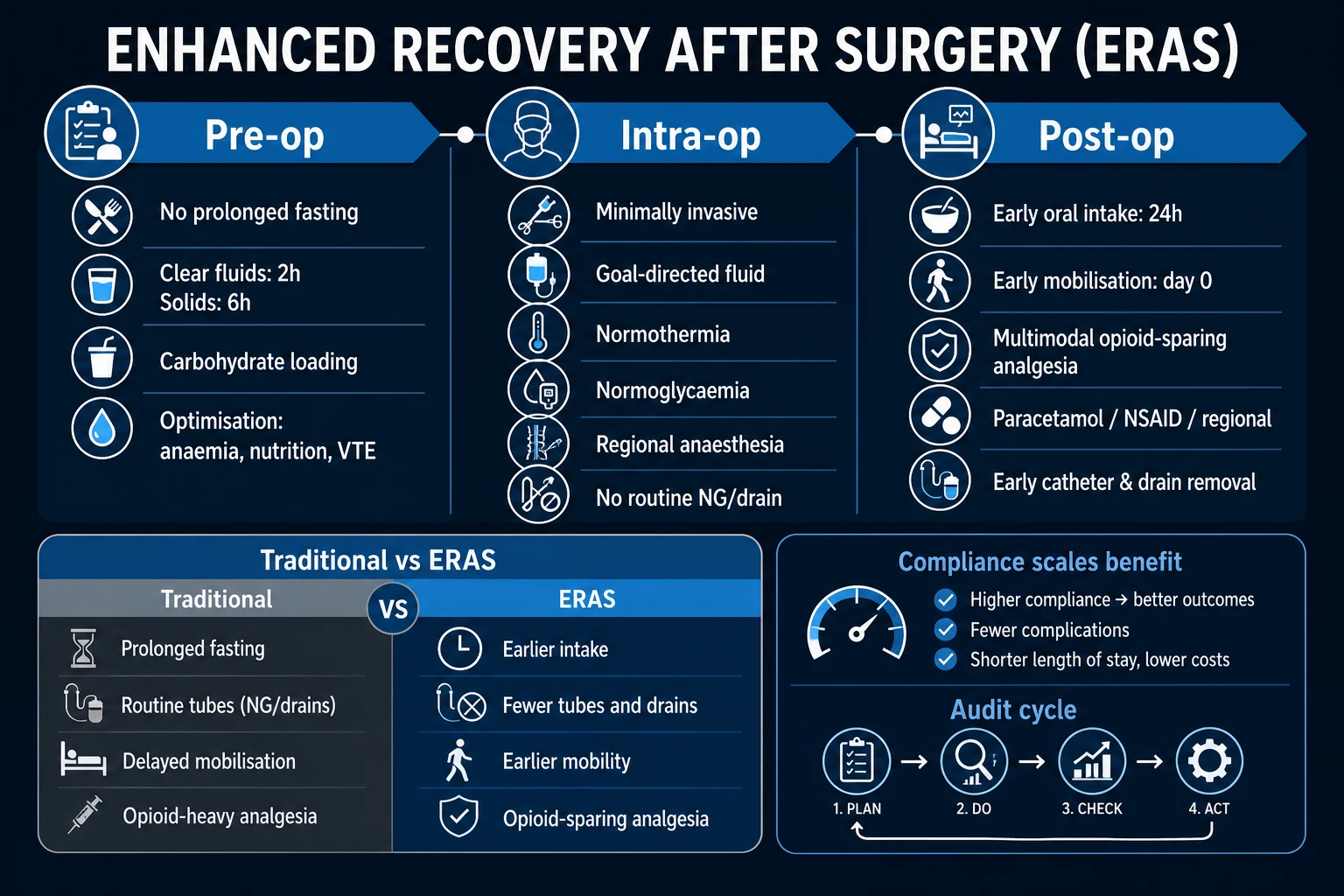
By specialty, ERAS guidelines now exist for colorectal (the prototype), hepatobiliary (liver and pancreas), upper gastrointestinal (oesophagogastric), bariatric, urological (radical cystectomy), orthopaedic (hip and knee replacement), gynaecological, thoracic, breast, and caesarean section, each with procedure-specific modifications published by the ERAS Society (founded 2010).[6][10][11][12][13]
Epidemiology & Risk Factors
ERAS was originally developed for elective colorectal surgery in the 1990s and remains best evidenced there, but the principles are generic and applicable across virtually every surgical specialty.[2] Adoption is now global, with ERAS Society programmes running in more than 80 countries and the ERAS Society Interactive Audit System (EIAS) providing continuous prospective tracking of element adherence and outcomes.[6]
Adoption is variable, and even within specialist centres full protocol compliance rarely exceeds 70 to 80% of elements — a major determinant of the variability in reported outcomes. Compliance itself is the dominant predictor of benefit: studies consistently demonstrate a dose-response relationship between the proportion of elements delivered and the magnitude of outcome improvement, with adherence at or above 70% approximately halving complication rates versus adherence below 50%.[6]
There are no patient-level risk factors for ERAS in the disease sense (it is a care protocol, not a disease). However, several factors modify applicability and benefit: [1]
- Frailty and advanced age paradoxically derive the greatest benefit from early mobilisation (reduced delirium, pneumonia, deep vein thrombosis, deconditioning), but require careful risk stratification.
- Malnutrition (MUST score at or above 2, weight loss above 10% in 6 months, low albumin) is a relative contraindication to immediate surgery — preoperative nutritional support for 7 to 14 days is warranted.
- Uncontrolled diabetes (HbA1c at or above 8.5%, type 1 diabetes, gastroparesis) modifies the carbohydrate drink component.
- Emergency surgery permits only selective application of ERAS principles (the so-called ERAS-e approach).
- Major surgical insult (open, prolonged, high blood loss, multiple compartments) amplifies the stress response and therefore the potential benefit. [1]
Pathophysiology
ERAS is built on a deep understanding of the surgical stress response — the integrated neuroendocrine, inflammatory, and metabolic cascade triggered by tissue injury. Traditional perioperative care amplifies this response; ERAS is designed to counteract each limb of it.[2][4]
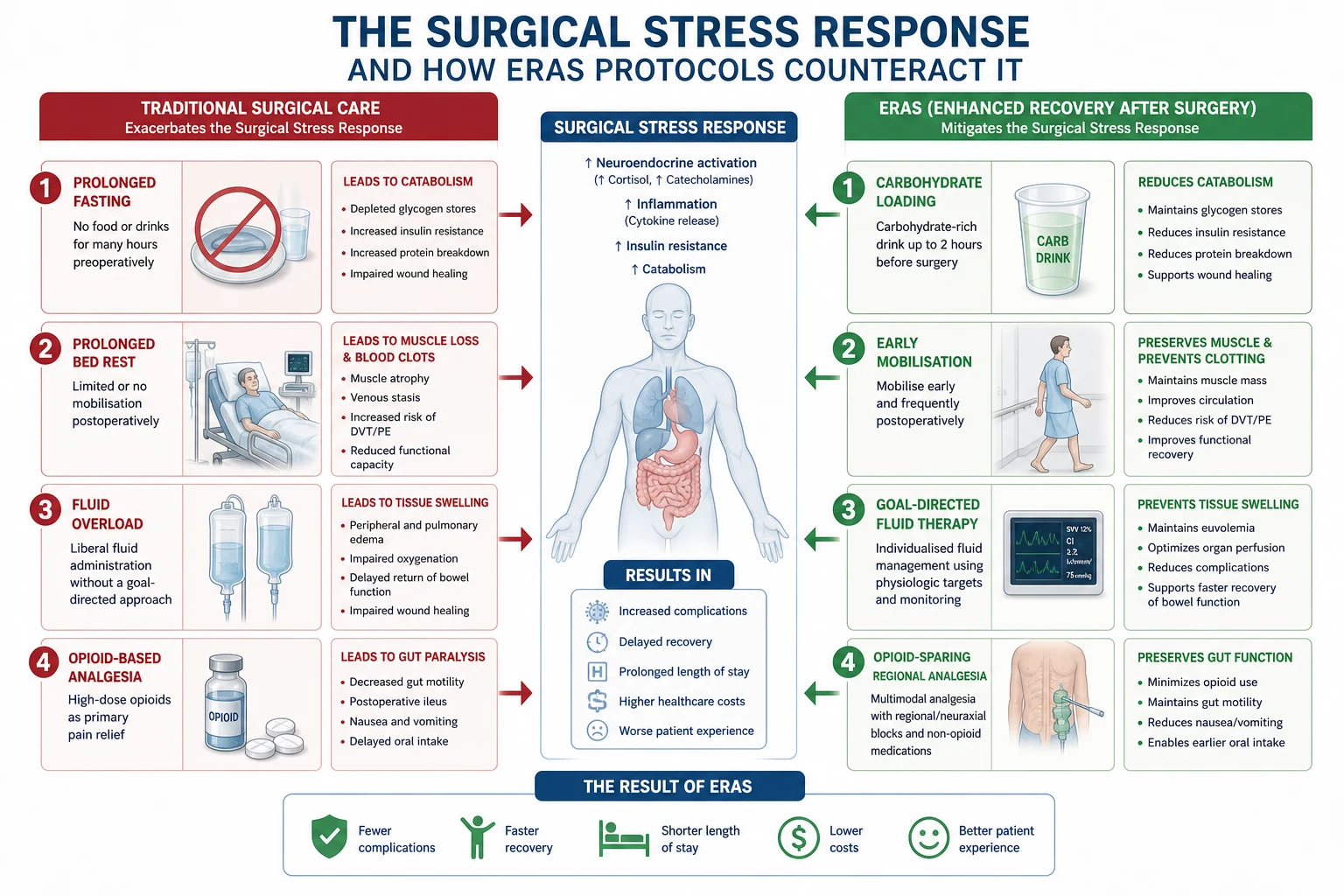
The neuroendocrine limb. Surgical injury triggers a sympathoadrenal surge (catecholamine release), activation of the hypothalamic-pituitary-adrenal axis (cortisol), and counter-regulatory hormone release (glucagon, growth hormone). The net metabolic effect is hyperglycaemia, insulin resistance, and a catabolic state with accelerated muscle protein breakdown and negative nitrogen balance. Unfed patients lose approximately 0.5 kg of lean body mass per day after major surgery, weakening respiratory muscles (atelectasis, pneumonia) and impairing wound healing. [1]
The inflammatory limb. Tissue injury releases pro-inflammatory cytokines — interleukin-1 (IL-1), interleukin-6 (IL-6), and tumour necrosis factor-alpha (TNF-alpha) — producing fever, tachycardia, endothelial activation, and capillary leak. Capillary leak drives third-space fluid losses and interstitial oedema. [1]
The metabolic limb — postoperative insulin resistance. Within hours of surgery, patients develop insulin resistance of a magnitude comparable to type 2 diabetes. The magnitude is proportional to surgical insult and persists for up to three weeks. Insulin resistance worsens hyperglycaemia (infective complications, impaired wound healing), accelerates catabolism, and impairs muscle function. Carbohydrate loading is the specific ERAS intervention against this — switching the patient from a fasted to a fed state reduces postoperative insulin resistance by approximately 50%.[4]
The fluid limb. Surgery activates antidiuretic hormone (ADH) and aldosterone, causing sodium and water retention. Combined with capillary leak, this produces interstitial oedema that impairs wound healing, gut motility (ileus), and anastomotic perfusion. Liberal fluid therapy (more than 3 L positive balance) independently worsens outcomes — prolonged ileus, anastomotic leak, cardiogenic pulmonary oedema, and increased mortality. Goal-directed fluid therapy is the ERAS countermeasure: delivering fluid only to optimise stroke volume, achieving near-zero balance.[6]
The immune limb. Surgery transiently suppresses cell-mediated immunity (reduced T-cell function, NK-cell activity), contributing to postoperative infective complications and (in cancer surgery) potentially impaired oncologic outcomes. Blood transfusion independently worsens immune function and oncologic outcomes, which is why correction of preoperative anaemia with IV iron (avoiding transfusion) is an ERAS priority. [1]
The gut limb — postoperative ileus. Sympathetic overdrive, opioid use, electrolyte disturbance, and intestinal oedema all contribute to postoperative ileus — delayed return of gut function. ERAS counteracts this by minimising opioids (opioid-sparing analgesia), avoiding routine nasogastric tubes, ensuring early enteral feeding, and mobilising early. [1]
[1]Clinical Presentation
ERAS is a care protocol, not a disease entity, so the "presentation" is the perioperative timeline itself. The clinical narrative is one of structured milestones replacing the slow, complication-laden convalescence of traditional care. [1]
Pre-admission clinic (2 to 4 weeks before surgery): the patient undergoes risk stratification (ASA grade, cardiopulmonary exercise testing for major resection in the elderly or comorbid, frailty scoring, nutritional screening), counselling about expected recovery milestones, and optimisation — smoking and alcohol cessation, anaemia correction, nutritional support, glycaemic control, and exercise-based prehabilitation. The patient leaves with a written summary of their ERAS pathway and what to expect on each postoperative day. [1]
Day of surgery: the patient arrives hydrated (having consumed the carbohydrate drink 2 to 3 hours prior), calm (no long-acting sedative premedication), and educated about the day's milestones. Crucially, they are not dehydrated or starved — the single most common error of traditional care. [1]
Intra-operative course: surgery proceeds under regional or neuraxial anaesthesia where possible, with minimally invasive technique, goal-directed fluids, maintained normothermia, and PONV prophylaxis. No routine nasogastric tube or surgical drain is placed. [1]
Postoperative course — the expected ERAS trajectory:
- Hour 0 to 4 (recovery): sips of water, then free fluids; first mobilisation to chair.
- Evening of day 0: light diet tolerated; out of bed at least 2 hours; adequate analgesia with paracetamol plus NSAID plus regional; PONV controlled.
- Day 1: urinary catheter removed; full diet; walking in the bay; structured mobility goals.
- Day 2 to 4 (procedure-dependent): independent mobility, adequate oral analgesia, tolerating solid diet — discharge ready. [1]
Atypical or complex scenarios: emergency surgery (selective ERAS-e principles only); frail elderly requiring tailored mobility targets; malnourished patient needing preoperative support; diabetic with gastroparesis (carbohydrate drink modified or omitted); obstructing tumour requiring stoma (ERAS still applicable but stoma education essential). [1]
Differential Diagnosis
Because ERAS is a protocol, the "differential" is between different perioperative care paradigms, and — when the protocol appears to fail — between the causes of delayed postoperative recovery.[6]
Distinguishing perioperative care paradigms: [1]
| Paradigm | Defining features | When used |
|---|---|---|
| Traditional / conventional care | Nil by mouth from midnight, mechanical bowel prep, opioid analgesia, liberal fluids, NG tubes and drains, bed rest, slow graded diet | Historical; now suboptimal |
| Fast-track surgery (Kehlet's original term, 1990s) | Early multimodal concept, less formalised | Largely superseded by formal ERAS |
| ERAS Society protocol | Standardised, evidence-based, audited bundle of around twenty elements | Current standard for elective major surgery |
| Ambulatory / day-case pathway | Selected low-complexity procedures, same-day discharge | Hernia, minor orthopaedic, breast |
When a patient on an ERAS pathway fails to recover as expected, the differential of delayed recovery includes: [1]
- Postoperative ileus — the most common; minimised by ERAS but can still occur with opioid use, electrolyte disturbance (hypokalaemia), or fluid overload.
- Early small bowel obstruction — usually adhesional; distinguishes from ileus by colicky pain, absent flatus, and dilated loops with cut-off on imaging.
- Anastomotic leak — classically day 5 to 7 with fever, tachycardia, rising CRP, pelvic or abdominal pain; early feeding does not increase leak rate (a persistent myth debunked by ERAS evidence).
- Intra-abdominal collection — fever, raised inflammatory markers; diagnosed on CT with contrast.
- Pneumonia — prevented by early mobilisation and avoidance of NG tubes; presents with productive cough, hypoxia, focal consolidation.
- Acute kidney injury — risk if goal-directed fluid therapy is too restrictive or from hypovolaemia; monitor urine output and creatinine.
- Pulmonary embolism — despite VTE prophylaxis; sudden dyspnoea, pleuritic chest pain, raised D-dimer, right heart strain on CT pulmonary angiogram. [1]
Clinical & Bedside Assessment
Preoperative risk stratification is mandatory and uses validated tools: [1]
- ASA physical status grade (I to VI) — coarse but universal.
- Cardiopulmonary exercise testing (CPET) — the gold standard for major resection in the elderly or comorbid; stratifies by anaerobic threshold (AT) and VE/VCO2 slope. AT below 11 mL/kg/min or VE/VCO2 slope above 34 marks high risk.
- P-POSSUM — predicts operative mortality and morbidity.
- Frailty scores — Clinical Frailty Scale (CFS, 1 to 9), Edmonton Frail Scale — frailty independently predicts complications and length of stay.
- Nutritional screening — MUST (Malnutrition Universal Screening Tool), NRS-2002; SGA (Subjective Global Assessment) for definitive nutritional assessment. [1]
Nutritional assessment includes body mass index, weight loss trajectory (more than 10% in 6 months is significant), serum albumin (low in inflammation as well as malnutrition — interpret with care), prealbumin (shorter half-life, more dynamic), hand-grip strength, and mid-arm muscle circumference. [1]
Functional baseline is recorded as 6-minute walk test distance, daily step count, and activities of daily living — these define the recovery target. [1]
Prehabilitation assessment: smoking status, alcohol intake (AUDIT-C), iron studies for iron-deficiency anaemia ( ferritin below 30 micrograms/L, transferrin saturation below 20%), and glycaemic control (HbA1c — target below 8.5% or 69 mmol/mol for elective surgery). [1]
Audit of compliance is performed prospectively using the ERAS Society Interactive Audit System (EIAS), which records per-element adherence and outcomes. Compliance is the single strongest modifiable determinant of benefit. [1]
Postoperative monitoring on the ward: urine output (target above 0.5 mL/kg/h), vital signs, pain scores (Numerical Rating Scale or Visual Analogue Scale), PONV assessment, daily mobilisation milestones (distance walked, time out of bed), tolerance of oral intake, and daily bloods (day 1 FBC and U&E). A rising C-reactive protein combined with tachycardia and pelvic pain is a red flag for anastomotic leak. [1]
Investigations
Routine preoperative bloods: full blood count, urea and electrolytes, liver function tests, coagulation screen, group and save. HbA1c in all diabetics (and arguably all patients). ECG; chest X-ray only if clinically indicated. [1]
Iron studies and ferritin if anaemic — preoperative iron deficiency is treated with intravenous iron infusion (e.g. ferric carboxymaltose 1000 mg) plus or minus erythropoietin to raise haemoglobin before elective surgery, avoiding transfusion (which independently worsens oncologic outcomes and increases infection). [1]
Cardiopulmonary exercise testing (CPET) for major resection in elderly or comorbid patients — identifies the high-risk subgroup who may need level 2 to 3 care postoperatively. [1]
Nutritional bloods: albumin, prealbumin, transferrin — interpret cautiously, as albumin falls in any inflammatory state (negative acute-phase reactant). [1]
Goal-directed fluid therapy monitoring: options include oesophageal Doppler, arterial pulse contour analysis (LiDCOrapid, FloTrac/Vigileo, PiCCO), and stroke volume optimisation — give 250 mL boluses of crystalloid or colloid until stroke volume plateaus (no further rise of more than 10%). Dynamic indices such as stroke volume variation (SVV) and pulse pressure variation (PPV) predict fluid responsiveness in mechanically ventilated patients. [1]
Postoperative bloods: day 1 FBC and U&E (watch for AKI from over-restriction or hypovolaemia), CRP trend (a rising CRP from day 3 onwards combined with tachycardia mandates CT to exclude anastomotic leak). [1]
Imaging is reserved for suspected complications: CT abdomen and pelvis with intravenous and water-soluble oral contrast for suspected anastomotic leak (typically day 3 to 7); chest X-ray for suspected pneumonia or pulmonary oedema; CT pulmonary angiogram for suspected pulmonary embolism. [1]
Management — Resuscitation & Optimisation
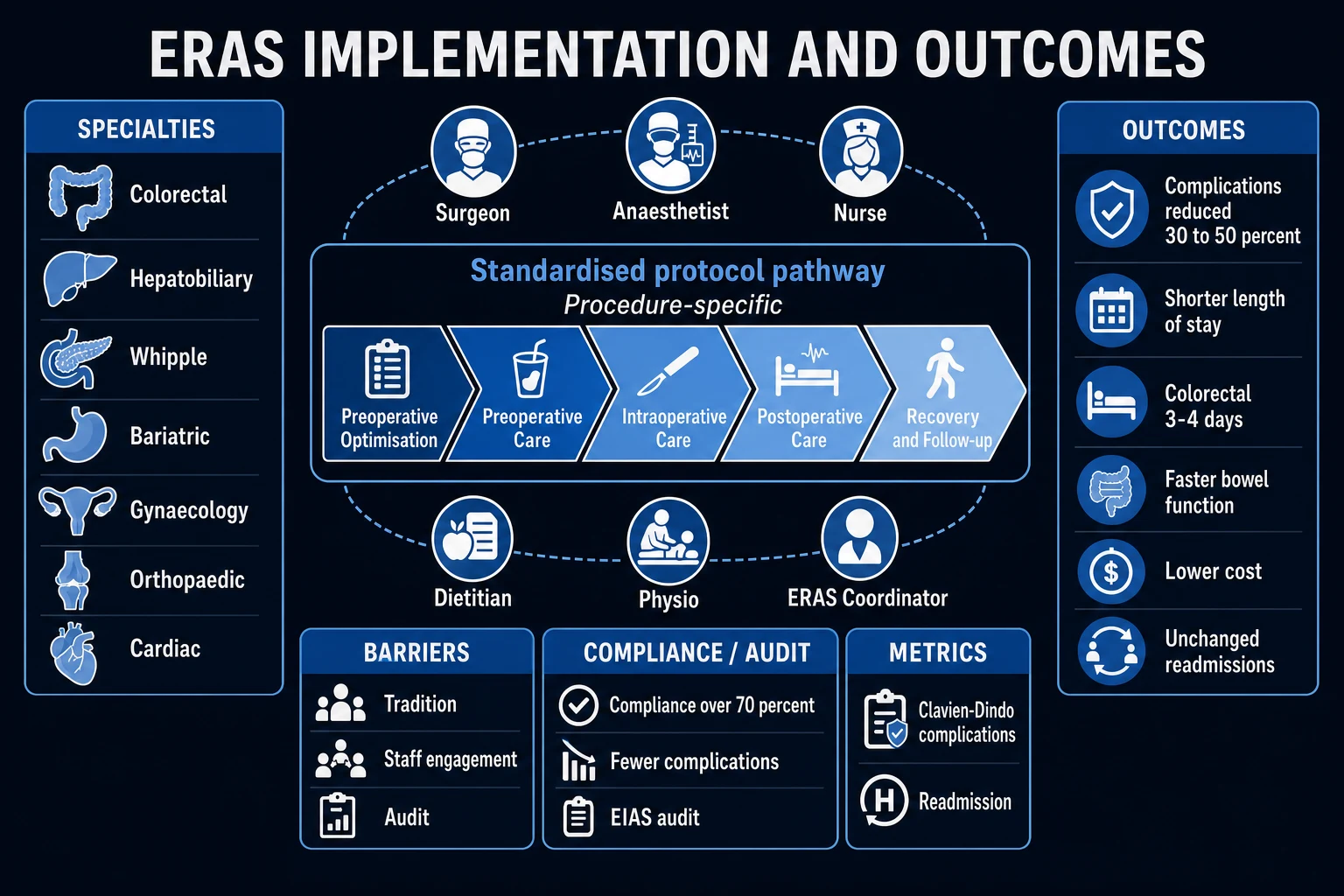
The ERAS framing of "resuscitation" is perioperative haemodynamic optimisation rather than the management of established shock. The goal is euvolaemia, achieved by goal-directed fluid therapy and correction of preoperative dehydration.[6]
Avoid dehydration on the morning of surgery. The single most preventable error in traditional care is sending a starved, dehydrated patient to theatre. ERAS prescribes clear fluids until 2 hours and carbohydrate drink until 2 to 3 hours preop, which maintains intravascular volume, reduces thirst and preoperative discomfort, attenuates insulin resistance, and lowers the risk of postoperative nausea and AKI.[5]
Goal-directed fluid therapy (GDFT). Intraoperatively, fluids are titrated to stroke volume optimisation rather than fixed rates. The clinician gives 250 mL boluses until stroke volume no longer rises by more than 10% (the plateau of the Frank-Starling curve), then maintains a minimal background rate (1 to 2 mL/kg/h of balanced crystalloid). The aim is near-zero fluid balance — both dehydration and liberal fluids (more than 3 L positive) are harmful. Liberal fluids cause tissue oedema (prolonged ileus, impaired anastomotic healing, pulmonary oedema); dehydration causes hypotension, AKI, and lactic acidosis. [1]
Vasopressors over fluid boluses. Under neuraxial or regional anaesthesia, the vasodilatory hypotension that occurs is best treated with vasopressors (noradrenaline infusion, or metaraminol boluses) rather than repeated fluid challenges — preventing fluid overload. [1]
Correct preoperative anaemia before elective surgery with intravenous iron plus or minus erythropoietin, to avoid intraoperative transfusion. [1]
Haemorrhage complicating surgery reverts from goal-directed to standard massive transfusion protocol (packed red cells, fresh frozen plasma, platelets in a ratio approaching 1:1:1, with tranexamic acid). [1]
Management — Definitive & Stepwise
The definitive ERAS protocol is the full bundle of approximately twenty elements, applied across the perioperative timeline. The full element list, with agent, dose, route, timing, and rationale, is reproduced below.[5][6]
Pre-admission (weeks before)
- Counselling and education — written summary of expected milestones; reduces anxiety and improves engagement.
- Smoking cessation — at least 4 weeks preop reduces wound and pulmonary complications.
- Alcohol abstinence — at least 4 weeks preop reduces liver-related and bleeding complications.
- Anaemia correction — intravenous iron (ferric carboxymaltose 1000 mg IV) plus or minus erythropoietin to raise haemoglobin; avoid transfusion.
- Nutritional optimisation — oral nutritional supplements for 7 to 14 days in malnourished (MUST at or above 2); parenteral nutrition if gut unusable.
- Glycaemic control — HbA1c below 8.5% (69 mmol/mol) in diabetics before elective surgery.
- Exercise-based prehabilitation — to raise aerobic capacity and functional reserve.
- Frailty assessment and CPET risk stratification for major resection in the elderly or comorbid. [1]
Pre-operative (morning of surgery)
- No prolonged fasting — the 2-4-6 rule. Clear fluids until 2 hours, breast milk until 4 hours, light meal or solids until 6 hours before anaesthesia. NOT nil by mouth from midnight.[5]
- Carbohydrate loading. 12.5% maltodextrin (complex carbohydrate) drink: 400 mL the evening before and 200 mL at 2 to 3 hours preop. Switches the patient from fasted to fed state, reducing insulin resistance by approximately 50%. Avoid in type 1 diabetes (insulin omission risks ketoacidosis) and poorly controlled type 2 diabetes or gastroparesis.[4]
- No routine mechanical bowel prep for colonic surgery (exceptions: low rectal anastomosis with planned diverting stoma — combined mechanical plus oral antibiotic prep).[6]
- Avoid long-acting sedative premedication — short-acting anxiolytics only if essential.
- VTE prophylaxis — enoxaparin 40 mg SC 12 hours before surgery and continued postoperatively; mechanical prophylaxis with intermittent pneumatic compression (IPC) boots intraoperatively.
Intra-operative
- Minimally invasive (laparoscopic or robotic) approach where feasible — less tissue trauma, less pain, less ileus, earlier discharge.
- Prophylactic antibiotics within 60 minutes of incision (e.g. co-amoxiclav 1.2 g IV or cefuroxime 1.5 g IV plus metronidazole 500 mg IV for colorectal); re-dose at 4 hours or after blood loss above 1500 mL.
- Regional or neuraxial anaesthesia. Mid-thoracic epidural (T6 to T9) for open colorectal or upper GI surgery — blocks afferent nociceptive signalling, dampens the stress response, and provides excellent opioid-sparing analgesia. For laparoscopic surgery the benefit is smaller and may be outweighed by hypotension delaying mobilisation — consider spinal or transversus abdominis plane (TAP) block instead. Local infiltration anaesthesia (LIA) for joint replacement.
- Goal-directed fluid therapy — stroke volume optimisation, near-zero balance; avoid more than 3 L positive balance.
- Normothermia — forced-air warmer, warmed IV fluids, ambient theatre temperature; target core temperature at or above 36 degrees Celsius. Hypothermia triples the rate of surgical site infection and increases bleeding.
- PONV prophylaxis — ondansetron 4 mg IV (5-HT3 antagonist) plus dexamethasone 4 to 8 mg IV at induction; add droperidol or cyclizine for high-risk (Apfel score).
- Protective lung ventilation — tidal volume 6 to 8 mL/kg ideal body weight, PEEP 4 to 6 cm water.
- Avoid routine NG tubes and surgical drains. Routine nasogastric decompression for more than 24 hours increases pneumonia and delays return of gut function.
- Deep neuromuscular block with reversal (sugammadex) to optimise laparoscopic operating conditions and reduce postoperative residual curarisation. [1]
Post-operative
- Early oral intake within 4 to 6 hours — sips of water progressing to free fluids and a light diet on day 0. Early feeding does not increase anastomotic leak rate (a persistent myth).[8]
- No routine NG tube — remove intraoperative NG before reversal unless there is specific indication.
- Opioid-sparing analgesia — paracetamol 1 g QDS regular plus NSAID (e.g. diclofenac 50 mg TDS, ibuprofen 400 mg TDS, or ketorolac) plus regional/neuraxial blockade. Minimise opioids (tramadol or weak opioids as breakthrough); opioids cause ileus, PONV, sedation, and respiratory depression.[14]
- Early mobilisation day 0 — sit out of bed at least 2 hours on evening of surgery; structured mobility goals day 1 to 3 (walking distance, time upright). Prevents DVT, pneumonia, deconditioning, and ileus.
- Remove urinary catheter day 1 unless epidural or spinal still in situ (in which case remove within 24 to 48 hours of catheter removal).
- Avoid fluid overload — maintenance crystalloid 1 to 2 mL/kg/h, stop intravenous fluids when tolerating oral intake.
- PONV treatment — cyclizine 50 mg IV or ondansetron 4 mg IV plus or minus droperidol.
- Multimodal VTE prophylaxis continued — LMWH (enoxaparin 40 mg SC OD) for at least 7 to 10 days (28 to 35 days for major cancer or pelvic surgery) plus IPC boots.
- Audit compliance and review discharge readiness daily.
Discharge criteria
Discharge is permitted when all of the following are met: tolerating a solid diet, adequate oral analgesia, independently mobile (or returned to baseline function), stable observations (afebrile, stable heart rate and blood pressure, adequate urine output), stable haemoglobin, no signs of complication, and the patient agreeable to discharge. Passing flatus or stool is desirable but not an absolute requirement — modern ERAS does not insist on it. [1]
The 20-plus ERAS elements — FAMOUS-CP
FAMOUS-CP
oral intake within 4 to 6 hours; full diet by day 0 to 1
mobilise on day 0; structured goals day 1 to 3
laparoscopic or robotic surgery where feasible
paracetamol plus NSAID plus regional; minimise opioids
stroke volume optimisation, near-zero balance
clear fluids until 2 hours (2-4-6 rule)
12.5% maltodextrin drink 400 mL pre-evening plus 200 mL at 2 to 3h
ondansetron plus dexamethasone; normothermia; no NG or drains
Specific Subtypes & Scenarios
ERAS outcomes by domain
Complications & Pitfalls
ERAS does not eliminate complications but halves their incidence. The principal pitfalls are non-compliance and misapplication.[6]
Common complications (still occur despite ERAS): [1]
- Anastomotic leak (1 to 5% in colorectal) — classically presents day 5 to 7 with fever, tachycardia, rising CRP, pelvic or abdominal pain; managed by radiological drainage or relaparotomy and stoma. Crucially, early feeding does not increase leak rate — the long-held traditional belief that "feeding stresses the anastomosis" is contradicted by ERAS evidence.[8]
- Postoperative ileus — minimised but not abolished; worsened by opioids, electrolyte disturbance (hypokalaemia), and fluid overload.
- Acute kidney injury — risk if goal-directed fluid therapy is too restrictive or if the patient is hypovolaemic; monitor urine output and creatinine daily.
- PONV — prophylaxis (ondansetron plus dexamethasone) reduces but does not abolish; treat with cyclizine or ondansetron.
- Hypotension under neuraxial anaesthesia — treat with vasopressors (noradrenaline, metaraminol), not fluid boluses.
- Hypothermia if warming is inadequate — triples surgical site infection rate, increases bleeding.
- Surgical site infection — prevented by normothermia, prophylactic antibiotics, and avoidance of fluid overload.
Protocol-level pitfalls: [1]
- Poor compliance reduces benefit. A single missing element can lose a disproportionate share of the LOS benefit; the bundle is greater than the sum of its parts. Audit compliance prospectively (EIAS) and feed back to the multidisciplinary team.
- Premature discharge if discharge criteria are not met — readmission risk; structured discharge checklists mitigate.
- Bowel prep complications — dehydration, electrolyte disturbance, patient discomfort — which is precisely why ERAS avoids routine bowel prep.
- Over-resuscitation (liberal fluids) — tissue oedema, prolonged ileus, impaired anastomotic healing, pulmonary oedema.
- Carbohydrate drink in type 1 diabetes — risk of ketoacidosis from insulin omission; avoid.
- Neuraxial anaesthesia and anticoagulation — strict adherence to ASRA or ESRA timing guidelines (LMWH stopped 12 hours before and after neuraxial insertion or removal) to prevent spinal haematoma. [1]
Prognosis & Disposition
The prognosis under ERAS is uniformly favourable relative to traditional care, with a robust evidence base.[7][8][9]
- Length of stay reduced by approximately 2 to 3 days. For colonic resection, traditional 8 to 10 days becomes ERAS 3 to 5 days; for pancreatoduodenectomy, 10 to 14 days becomes 7 to 10 days.
- Total complications reduced by approximately 50% — confirmed by the Varadhan 2010 meta-analysis (open colorectal) and the Zhuang 2013 meta-analysis (broader colorectal).[7][8]
- Readmission rate unchanged at 5 to 10% — early discharge is safe when discharge criteria are met.
- Mortality not increased — some studies suggest a trend towards reduced mortality, particularly in high-risk subgroups.
- Cost reduced by approximately US $2000 to 8000 per patient, driven by shorter LOS and fewer complications.
- Patient satisfaction improved — earlier return to function, work, and family.
- Dose-response to compliance — adherence at or above 70% of elements approximately halves complications versus adherence below 50%; compliance is the dominant modifiable determinant of benefit.[6]
- Emerging oncologic signal — fewer complications may preserve perioperative immune function and translate into better long-term cancer outcomes; this is an active area of research.
Disposition: discharge from hospital when discharge criteria are met (see above). Post-discharge follow-up is typically at 2 weeks (wound check, pathology results) and as required by the underlying diagnosis. Patients are advised to escalate to surgical services if they develop fever, worsening abdominal pain, vomiting, or wound concerns. [1]
Special Populations
Elderly and frail. The frail elderly paradoxically derive the greatest benefit from early mobilisation — reduced delirium, pneumonia, DVT, and deconditioning. Frailty assessment (Clinical Frailty Scale) and CPET risk stratification are mandatory before major resection. Watch carefully for hypotension (reduced physiological reserve) and AKI. [1]
Diabetic patients. The carbohydrate drink is a complex carbohydrate (isotonic 12.5% maltodextrin) that produces a minimal glycaemic excursion. It is safe in well-controlled type 2 diabetes (HbA1c below 8.5%). It must be avoided in type 1 diabetes (insulin omission risks ketoacidosis) and in poorly controlled type 2 diabetes or gastroparesis. For poorly controlled diabetes, perioperative management uses a variable rate intravenous insulin infusion (VRIII or sliding scale) with a glucose-insulin-potassium regimen. [1]
Pregnant patients. ERAS principles apply to elective caesarean section — early feeding, early mobilisation, opioid-sparing analgesia (spinal with intrathecal diamorphine). The carbohydrate drink is avoided in pregnancy because of delayed gastric emptying and increased aspiration risk (Mendelson syndrome); fasting rules are tighter (standard 6-2 rule with assessment of gastric volume by ultrasound in selected cases). [1]
Obese and bariatric patients. High VTE risk — increase LMWH dose (e.g. enoxaparin 40 mg SC BD or weight-based tinzaparin) and continue for 28 to 35 days. Obstructive sleep apnoea — minimise opioids, continue CPAP perioperatively, monitor oxygen saturation. Local infiltration anaesthesia is preferred for some procedures. The carbohydrate drink is safe in obesity. [1]
Malnourished patients. Screen with MUST. Preoperative nutritional support (oral nutritional supplements or enteral feeding for 7 to 14 days; parenteral nutrition if gut unusable) is warranted. Do not delay cancer surgery by more than 4 weeks for nutritional optimisation (oncologic risk). [1]
Emergency surgery. Apply ERAS-e principles — abbreviated preoperative optimisation (correction of volume and electrolyte derangement), but full application of intra-operative (GDFT, normothermia, opioid-sparing, protective ventilation) and post-operative (early feeding, mobilisation, no routine tubes) elements. Evidence is less robust than for elective surgery but growing. [1]
Immunocompromised or neutropenic patients. Early feeding is safe; strict attention to infection control; VTE prophylaxis continued. [1]
Anticoagulated patients. Warfarin or DOAC bridging per protocol (e.g. for mechanical mitral valve or recent VTE). Neuraxial anaesthesia timing per ASRA or ESRA guidelines — LMWH stopped 12 hours before and after neuraxial insertion or removal (24 hours for therapeutic dose); DOACs held for 48 to 72 hours depending on renal function. [1]
Evidence, Guidelines & Regional Differences
ERAS is one of the most rigorously evidence-based fields in perioperative medicine. The landmark publications span three decades.[2][3][4]
Landmark ERAS evidence timeline
Regional differences and controversies. [1]
- Bowel preparation. ERAS Society and most international guidelines do not recommend routine mechanical bowel prep for colonic surgery, but combined mechanical plus oral antibiotic prep is still used for low rectal anastomosis (with planned diverting stoma). Some North American centres use oral antibiotic prep alone.
- Epidural in laparoscopic surgery. For open abdominal surgery, mid-thoracic epidural is strongly recommended. For laparoscopic surgery, the benefit is smaller and may be outweighed by epidural-induced hypotension delaying mobilisation — many centres prefer spinal or TAP block for laparoscopic cases.
- Carbohydrate drink in type 1 diabetes. Universally avoided due to ketoacidosis risk.
- Gastric emptying in obesity and pregnancy. The carbohydrate drink is avoided in pregnancy (aspiration risk) but is safe in obesity.
- ERAS-e (emergency). Less uniformly adopted; evidence is emerging but guidelines are less prescriptive.
- Audit infrastructure. The ERAS Society Interactive Audit System (EIAS) is the international standard for compliance tracking; some centres use local audit tools. [1]
The founding institution and Society. The ERAS Society (founded 2010, Stockholm; Professors Kehlet, Ljungqvist, Fearon, Lobo among the founders) coordinates guideline production, the audit system, and education. The Society publishes consensus guidelines for each surgical procedure, with regular updates. [1]
Exam Pearls
- ERAS = multimodal, evidence-based, protocolised perioperative care pathway. Henrik Kehlet is the father of fast-track surgery.
- The 2-4-6 fasting rule: clear fluids until 2 hours, breast milk until 4 hours, light meal or solids until 6 hours. NOT nil by mouth from midnight.[5]
- Carbohydrate loading: 12.5% maltodextrin drink, 400 mL evening before plus 200 mL at 2 to 3 hours preop. Switches fasted to fed state, reduces insulin resistance by approximately 50%. Avoid in type 1 diabetes and gastroparesis.[4]
- No routine mechanical bowel prep for colonic surgery. Exception: low rectal anastomosis (combined mechanical plus oral antibiotic prep).[6]
- Goal-directed fluid therapy: stroke volume optimisation, near-zero balance. Liberal fluids (more than 3 L positive) worsen outcomes.
- Normothermia: core temperature at or above 36 degrees Celsius. Hypothermia triples the rate of surgical site infection.
- Opioid-sparing analgesia: paracetamol plus NSAID plus regional or neuraxial. Minimise opioids (reduce ileus, PONV, sedation).[14]
- Early mobilisation day 0: sit out of bed at least 2 hours, walk in bay. Prevents DVT, pneumonia, deconditioning, ileus.
- Early oral feeding within 24 hours — does NOT increase anastomotic leak (myth debunked).[8]
- Remove NG tubes, drains, and catheters early. Routine NG for more than 24 hours increases pneumonia.
- PONV prophylaxis: ondansetron 4 mg IV plus dexamethasone 4 to 8 mg IV.
- Outcomes: LOS reduced 2 to 3 days, complications reduced approximately 50%, readmission unchanged, cost reduced.[7]
- Compliance matters: at or above 70% adherence halves complications versus below 50%.
- VTE prophylaxis: enoxaparin 40 mg SC OD plus IPC boots. Neuraxial timing per ASRA guidelines (LMWH 12 hours before and after).
- Elderly and frail derive the greatest benefit. CPET for risk stratification. Diabetic carb drink safe only in well-controlled type 2.
- Specialty-specific: low CVP for liver resection (below 5 mmHg); no routine drains in pancreatoduodenectomy; tranexamic acid plus LIA in joint replacement; VTE prophylaxis critical in bariatric.
Exam application bank (NEET-PG / INICET)
One-line answer
ERAS (Enhanced Recovery After Surgery) is a multimodal, evidence-based, protocolised perioperative care pathway that attenuates the surgical stress response, preserves organ function, and accelerates functional recovery. Pioneered by Henrik Kehlet in 1990s colorectal surgery, it reduces length of stay by 2-3 days and complications by approximately 50% without increasing readmission or mortality. The four pillars are: attenuation of the stress response (no fasting, carb loading, regional anaesthesia), maintenance of organ function (goal-directed fluids, normothermia, no tubes), early return of gut function (early feeding, opioid-sparing), and early mobilisation (day 0).
Worked stems (answer without another resource)
Stem 1 — Classic presentation. Map symptoms to mechanism; name the first investigation and first treatment step with dose/route if drug therapy is standard. [1]
Stem 2 — Unstable / complicated. List red flags that force immediate resuscitation, theatre, ICU, antidote, or reperfusion — and what you do in the first 15 minutes. [1]
Stem 3 — Atypical group. Elderly, pregnancy, child, or immunocompromised: how presentation and thresholds change. [1]
Stem 4 — Differential trap. Name the three closest mimics and one discriminator for each. [1]
Stem 5 — Disposition. Who goes home with safety-netting, who is admitted, who needs HDU/ICU/theatre, and what follow-up is mandatory. [1]
Rapid viva checklist
- Definition + classification
- Pathophysiology chain
- Bedside signs / criteria
- Score with exact components (if any)
- Emergency bundle
- Definitive therapy with doses
- Complications of disease and of treatment
- Special populations
- Guideline/trial name if classic
- Three exam traps
Coverage self-check
If you cannot answer any stem above from this page alone, re-read the matching section — the page is intended to be self-sufficient for final-prof and NEET-PG/INICET questions on Enhanced Recovery After Surgery (ERAS).
References
- [1]Ljungqvist O, Scott M, Fearon KC. Enhanced Recovery After Surgery: A Review. JAMA Surg, 2017.PMID 28097305
- [2]Kehlet H, Wilmore DW Multimodal strategies to improve surgical outcome. Am J Surg, 2002.PMID 12095591
- [3]Kehlet H, Mogensen T Hospital stay of 2 days after open sigmoidectomy with a multimodal rehabilitation programme. Br J Surg, 1999.PMID 10100792
- [4]Fearon KCH, Ljungqvist O, Von Meyenfeldt M, et al. Enhanced recovery after surgery: a consensus review of clinical care for patients undergoing colonic resection. Clin Nutr, 2005.PMID 15896435
- [5]Lassen K, Soop M, Nygren J, et al. Consensus review of optimal perioperative care in colorectal surgery: Enhanced Recovery After Surgery (ERAS) Group recommendations. Arch Surg, 2009.PMID 19841366
- [6]Gustafsson UO, Scott MJ, Hubner M, et al. Guidelines for perioperative care in elective colorectal surgery: Enhanced Recovery After Surgery (ERAS) Society Recommendations 2018. World J Surg, 2019.PMID 30426190
- [7]Varadhan KK, Neal KR, Dejong CHC, Fearon KCH, Ljungqvist O, Lobo DN The enhanced recovery after surgery (ERAS) pathway for patients undergoing major elective open colorectal surgery: a meta-analysis of randomized controlled trials. Clin Nutr, 2010.PMID 20116145
- [8]Zhuang CL, Ye XZ, Zhang XD, Chen BC, Yu Z Enhanced recovery after surgery programs versus traditional care for colorectal surgery: a meta-analysis of randomized controlled trials. Dis Colon Rectum, 2013.PMID 23575408
- [9]Spanjersberg WR, Reurings J, Keus F, van Laarhoven CJ Fast track surgery versus conventional recovery strategies for colorectal surgery. Cochrane Database Syst Rev, 2011.PMID 21328298
- [10]Melloul E, Lassen K, Roulin D, et al. Guidelines for perioperative care for pancreatoduodenectomy: Enhanced Recovery After Surgery (ERAS) recommendations 2019. World J Surg, 2020.PMID 32161987
- [11]Melloul E, Hübner M, Scott M, Snowden C, Prentis J, Dejong CH, et al. Guidelines for Perioperative Care for Liver Surgery: Enhanced Recovery After Surgery (ERAS) Society Recommendations. World J Surg, 2016.PMID 27549599
- [12]Thorell A, MacCormick AD, Awad S, et al. Guidelines for perioperative care in bariatric surgery: Enhanced Recovery After Surgery (ERAS) Society recommendations. World J Surg, 2016.PMID 26943657
- [13]Yamagata Y, Yoshikawa T, Yura M, et al. Current status of the enhanced recovery after surgery program in gastric cancer surgery. Ann Gastroenterol Surg, 2019.PMID 31131351
- [14]Beverly A, Kaye AD, Ljungqvist O, Urman RD Essential elements of multimodal analgesia in Enhanced Recovery After Surgery (ERAS) guidelines. Anesthesiology Clinics, 2017.PMID 28526156