Haematology · Haematology
Anticoagulation Therapy
Also known as Blood thinners · Warfarin therapy · DOAC therapy · Direct oral anticoagulants · Heparin therapy · Vitamin K antagonists
Anticoagulants prevent and treat thromboembolic disease by interfering with the coagulation cascade at specific points: the parenteral heparins (antithrombin-potentiation), the vitamin K antagonist warfarin (impairs II, VII, IX, X, protein C/S synthesis; monitored by INR), the direct oral anticoagulants (DOACs) — dabigatran (direct IIa inhibitor), and rivaroxaban, apixaban, edoxaban (direct Xa inhibitors). Indications: atrial fibrillation (CHA2DS2-VASc), VTE (DVT/PE), mechanical heart valves, ACS. Warfarin requires INR monitoring (target 2–3 for most; 2.5–3.5 for mechanical mitral), has slow onset (3–5 days) needing LMWH bridging, and is reversed by vitamin K + PCC. DOACs need no routine monitoring, have rapid onset, fewer interactions, and renal dose-adjustment; reversed by idarucizumab (dabigatran) and andexanet alfa (Xa inhibitors). Pregnancy: LMWH only (warfarin teratogenic, DOACs contraindicated). Mechanical valve: warfarin only (RE-ALIGN showed dabigatran harmful). Key complications: bleeding, HIT (platelet drop 5–14 days), warfarin skin necrosis (protein C deficiency), heparin-induced osteoporosis.
On this page & tools
Your progress
Saved locally on this device.
Exam tags
Red flags
Overview & Definition
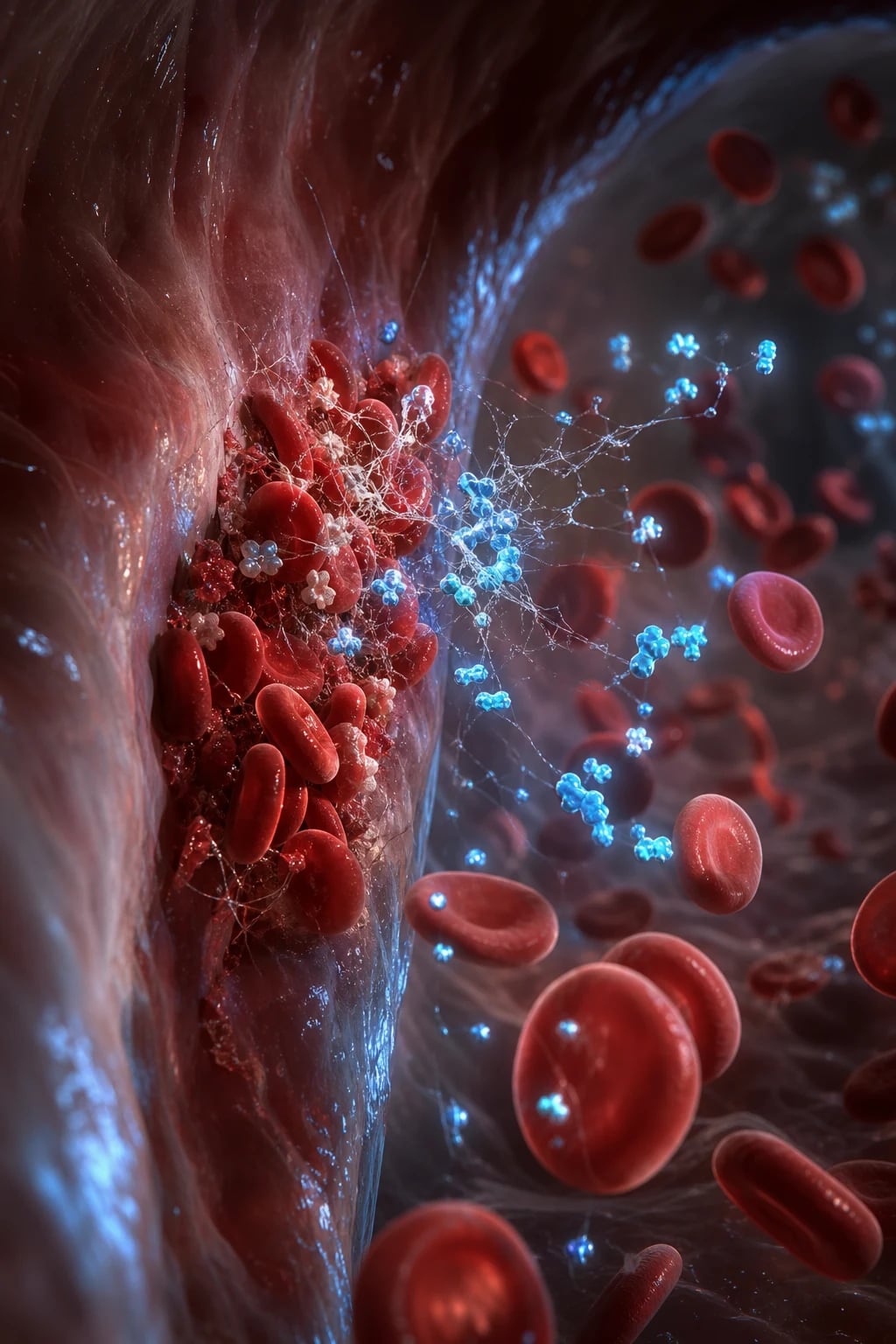
Anticoagulants are drugs that reduce the formation or activity of fibrin clots by interfering with specific steps of the coagulation cascade — they do not "thin" blood, dissolve existing clots (that is thrombolysis), or prevent primary haemostasis (that is antiplatelet therapy — aspirin, clopidogrel). The clinical art of anticoagulation is matching the right drug to the right indication at the right dose, while weighing thrombotic risk (stroke, PE) against bleeding risk (HAS-BLED), and knowing how to initiate, monitor, reverse, and switch between agents.[1]
The decision framework is built on four questions:
- What is the indication? — determines drug choice, intensity, and duration.
- What is the patient's bleeding risk and renal function? — determines dose and safety.
- Are there contraindications to a particular class? — pregnancy excludes warfarin/DOACs; a mechanical valve excludes DOACs; severe renal impairment constrains DOAC dosing.
- How will I monitor or reverse this agent? — warfarin needs INR and has cheap reversal (vitamin K + PCC); DOACs need no monitoring but specific, expensive antidotes. [1]
The last 15 years have transformed the field: the DOACs have largely replaced warfarin for non-valvular AF and VTE, with warfarin now reserved for mechanical heart valves, severe renal failure, antiphospholipid syndrome with triple positivity, and rheumatic mitral stenosis.[1][1]
Classification
Anticoagulants are classified by route (parenteral vs oral) and mechanism of action (site in the cascade): [1]
Parenteral heparins
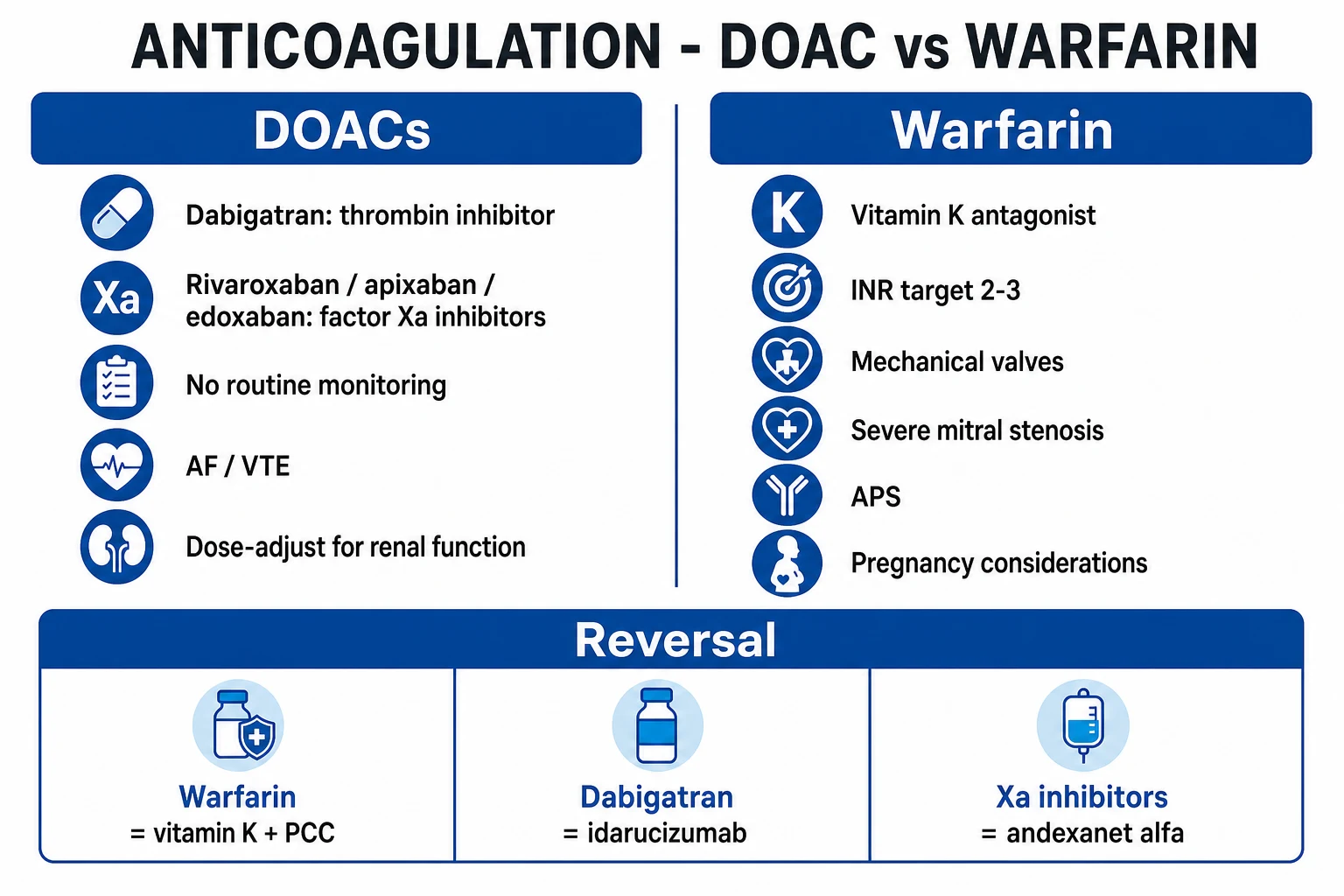
- Unfractionated heparin (UFH): potentiates antithrombin — neutralises BOTH thrombin (IIa) and Xa equally (anti-IIa : anti-Xa ratio 1:1). IV or SC. Short half-life (60-90 min IV). Monitored by aPTT or anti-Xa. Reversed by protamine sulfate.
- Low-molecular-weight heparin (LMWH — enoxaparin, dalteparin, tinzaparin): smaller fragments of heparin; preferentially inhibit Xa over IIa (ratio 1:2 to 1:4). SC. Longer half-life, predictable. No routine monitoring. Partially reversed by protamine. Renal clearance — avoid if eGFR below 30 (use UFH).
- Fondaparinux: synthetic pentasaccharide; pure Xa inhibitor via antithrombin. SC once daily. No HIT risk. No protamine reversal. Renal clearance — contraindicated if eGFR below 30.
Vitamin K antagonist (VKA)
- Warfarin (acenocoumarol, phenindione in India): inhibits vitamin K epoxide reductase (VKORC1) in the liver, blocking gamma-carboxylation of factors II, VII, IX, X and proteins C and S.
- Oral. Slow onset 3-5 days (factor II half-life ~60-72 h is the rate-limiting step). Monitored by INR. Reversed by vitamin K (phytomenadione) + PCC/FFP. Teratogenic (crosses placenta).
Direct oral anticoagulants (DOACs / NOACs)
- Direct thrombin inhibitor: dabigatran etexilate (oral prodrug; reversible direct IIa inhibitor). Reversed by idarucizumab. Predominantly renal clearance (~80%) — most restricted in renal impairment.
- Direct Xa inhibitors: rivaroxaban, apixaban, edoxaban (reversible direct Xa inhibitors). Reversed by andexanet alfa (or PCC if unavailable). Mixed hepatic/renal clearance; apixaban least renal-dependent.
- Oral, rapid onset (1-3 h), predictable pharmacokinetics — no routine monitoring. Short half-lives (8-17 h) mean missed doses matter.
Parenteral direct thrombin inhibitors
- Argatroban (hepatic clearance — drug of choice in HIT with renal failure), bivalirudin (used in PCI), desirudin. Used for HIT or when heparin is contraindicated. Monitored by aPTT. No reversal agent — dialysis (bivalirudin), wait for clearance.
Epidemiology & Risk Factors
Anticoagulants are among the most widely prescribed drugs in the developed world, and anticoagulant-related bleeding is the commonest cause of drug-related hospitalisation in older adults. The two dominant indications are atrial fibrillation (AF) and venous thromboembolism (VTE).[1]
Indications for anticoagulation (and the drugs preferred for each): [1]
| Indication | Drug of first choice | Intensity / duration |
|---|---|---|
| Non-valvular AF (CHA2DS2-VASc ≥2 in men, ≥3 in women) | DOAC (apixaban, rivaroxaban, dabigatran, edoxaban) | Lifelong; standard intensity |
| Rheumatic mitral stenosis with AF | Warfarin (INR 2–3) | Lifelong; DOAC NOT validated |
| Mechanical heart valve | Warfarin ONLY (INR 2.5–3.5 mitral/tricuspid; 2.0–3.0 aortic) | Lifelong; DOAC CONTRAINDICATED |
| VTE (DVT/PE) — provoked or unprovoked | DOAC first-line; LMWH/warfarin if DOAC contraindicated | 3 months (provoked, reversible); lifelong (unprovoked or cancer) |
| Cancer-associated thrombosis | LMWH, apixaban, rivaroxaban or edoxaban (NICE/ITAC 2022) | Lifelong while cancer active |
| Acute coronary syndrome (post-PCI) | Dual antiplatelet + low-dose rivaroxaban (2.5 mg BD) — COMPASS/ATLAS | Variable |
| Antiphospholipid syndrome (triple-positive) | Warfarin preferred over DOAC (Rivaroxaban in APS trial showed more events) | Lifelong |
| Surgical VTE prophylaxis | LMWH (enoxaparin 40 mg SC OD); DOAC post-arthroplasty | 10–35 days depending on surgery |
| Stroke prevention in EF < 30 percent heart failure (sinus rhythm) | Not routinely indicated (COMMANDER HF negative) | — |
Patient factors that modify choice:
- Renal function — DOAC doses must be reduced as eGFR falls; warfarin or UFH preferred in severe CKD/dialysis (LMWH accumulates).
- Body weight — extremes (below 50 kg or above 120 kg) complicate DOAC dosing; apixaban has the best evidence in extremes.
- Age and frailty — apixaban preferred over warfarin in older adults (lower major bleeding); dabigatran 150 mg BD has higher GI bleeding in patients over 75.
- Concurrent antiplatelets — increases bleeding; minimise duration of triple therapy.
- Compliance — DOACs have a narrow therapeutic window with missed doses (short half-life); a missed warfarin dose barely moves INR. [1]
Pathophysiology
The coagulation cascade is a sequence of zymogen-to-enzyme activations converging on thrombin (factor IIa), which converts fibrinogen to fibrin. Anticoagulants interrupt this cascade at defined points:[1]
1. The cascade — where each drug acts: [1]
The extrinsic (tissue factor) pathway is the primary in-vivo initiator: tissue factor (exposed by vascular injury) binds factor VIIa → activates X → Xa + Va form the prothrombinase complex → cleaves prothrombin (II) to thrombin (IIa). Thrombin then: (a) converts fibrinogen to fibrin, (b) activates factors V, VIII, XI (positive feedback), (c) activates platelets via PAR-1/PAR-4, and (d) activates factor XIII (cross-linking). The intrinsic pathway (XII → XI → IX → VIII → X) amplifies the response — measured as the aPTT. [1]
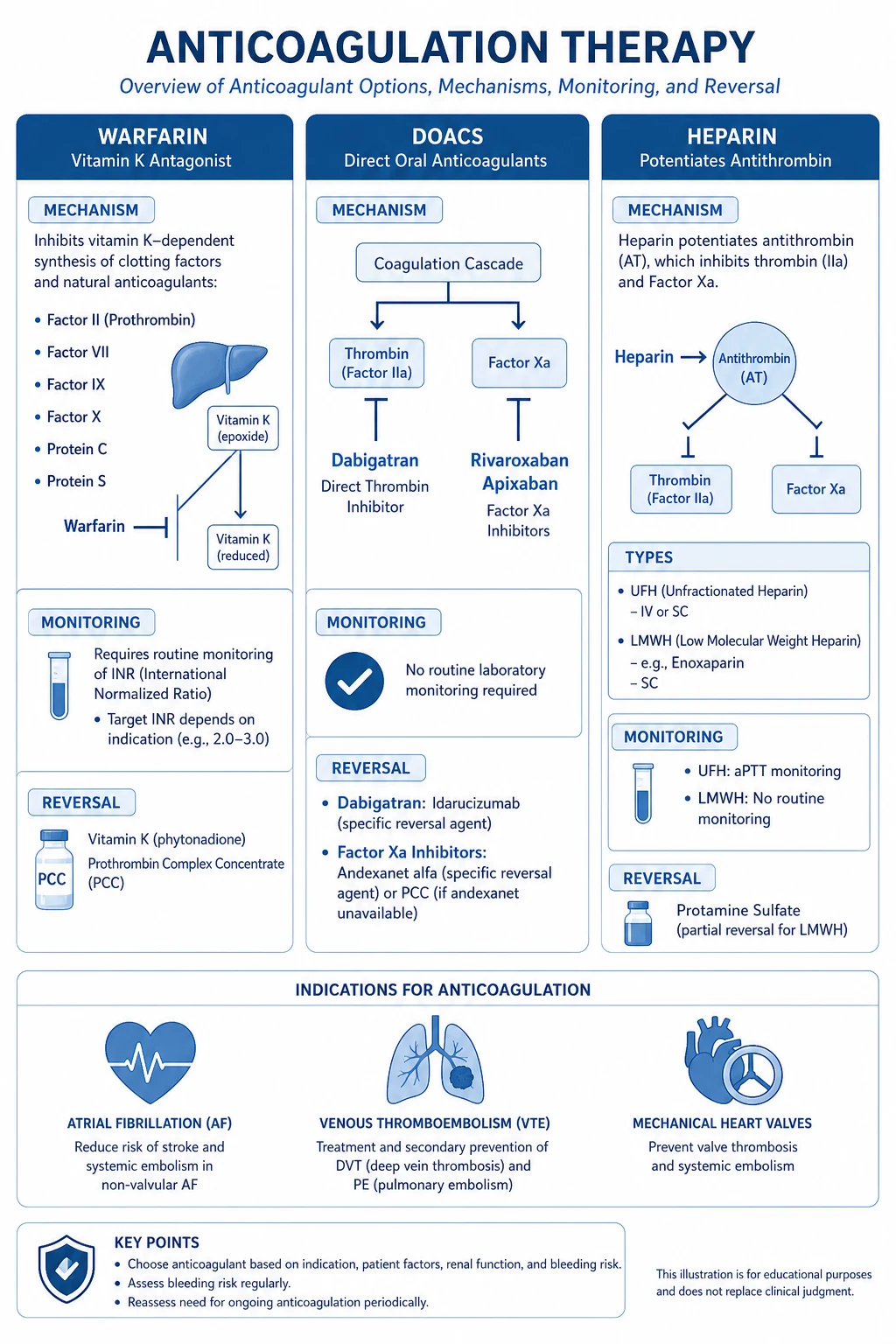
Warfarin's mechanism (the molecular detail examiners love): Vitamin K is a cofactor for gamma-glutamyl carboxylase, which adds a second carboxyl group to specific glutamate residues on factors II, VII, IX, X and proteins C and S — this gamma-carboxylation creates calcium-binding sites that anchor the factors to phospholipid membranes, which is essential for their activity. The carboxylation consumes vitamin K, oxidising it to vitamin K epoxide; vitamin K epoxide reductase (VKORC1) recycles the epoxide back to the active reduced form. Warfarin inhibits VKORC1, so active vitamin K is depleted and the newly synthesised factors are functionally inactive (synthesised but not carboxylated — called PIVKA proteins). Because factor VII has the shortest half-life (~6 h), the PT/INR rises first — but this is misleading, because the antithrombotic effect depends on depleting factor II (prothrombin, half-life ~60-72 h). This is the mechanistic reason for the slow onset and the need for bridging. Warfarin metabolism varies with CYP2C9 polymorphisms (slow metabolisers need lower doses) and VKORC1 polymorphisms — explaining wide inter-individual dosing variation.[1]
Heparin's mechanism: Heparin binds antithrombin (via a specific pentasaccharide sequence), inducing a conformational change that accelerates antithrombin's inhibition of thrombin (IIa) and Xa 1000-fold. UFH (mixed chain lengths, mean ~15 kDa) inhibits both IIa and Xa equally (needs chains long enough — at least 18 saccharides — to bridge antithrombin to thrombin). LMWH (fragments ~4.5 kDa) is too short to bridge antithrombin to thrombin effectively, so it preferentially inhibits Xa (anti-Xa : anti-IIa ratio 2:1 to 4:1) — this gives a more predictable dose-response, longer half-life, and lower HIT/osteoporosis risk. Fondaparinux (a synthetic pentasaccharide) is too short to inhibit thrombin at all — pure Xa inhibitor via antithrombin, with essentially no HIT risk (too short to bridge PF4).[1]
DOAC mechanism: Dabigatran etexilate is an oral prodrug converted by esterases to dabigatran, a reversible, competitive, direct inhibitor of thrombin (IIa) — both free and clot-bound thrombin. By inhibiting thrombin, dabigatran blocks fibrinogen → fibrin, factor XIII activation, and platelet activation (via PAR-1). Rivaroxaban, apixaban, edoxaban are reversible, direct inhibitors of free and clot-bound factor Xa — they block Xa within the prothrombinase complex, preventing prothrombin → thrombin conversion. Because these are direct inhibitors (no antithrombin cofactor, no hepatic synthesis required), they have rapid onset (peak 1–3 h), predictable pharmacokinetics, and no need for routine monitoring.[3][4]
Clinical Presentation
Anticoagulation is a preventive therapy, so patients do not "present with" the condition — they present with either (a) a condition requiring initiation, or (b) a complication of therapy. Three scenarios dominate exams and clinical practice: [1]
Scenario 1 — Patient needs anticoagulation initiated (indication-driven presentation): A patient presents with AF (palpitations, irregular pulse), a confirmed DVT/PE (unilateral leg swelling, pleuritic chest pain, dyspnoea), a mechanical valve at discharge, or an acute coronary syndrome. The clinical task is risk-stratifying (CHA2DS2-VASc for stroke, HAS-BLED for bleeding), choosing the agent, dosing correctly, counselling on the drug, and arranging follow-up.[1]
Scenario 2 — Patient on anticoagulation presents with bleeding: This is the highest-yield exam scenario. Bleeding may be:
- Minor — epistaxis, bruising, microscopic haematuria, gum bleeding. Often manageable by dose-hold and local measures.
- Major (per ISTH criteria): bleeding at a critical site (intracranial, intraspinal, intraocular, pericardial, intra-articular, intramuscular with compartment syndrome, retroperitoneal), bleeding causing a haemoglobin drop of 20 g/L or more, bleeding requiring transfusion of 2 or more units of blood, or bleeding contributing to death.
- Intracranial haemorrhage is the most feared complication — warfarin doubles the case fatality of ICH; DOACs carry roughly half the ICH risk of warfarin. [1]
Scenario 3 — Patient on anticoagulation presents with new thrombosis (treatment failure): Either subtherapeutic anticoagulation (non-adherence, low INR, under-dosed DOAC), or HIT (paradoxical thrombosis on heparin), or antiphospholipid syndrome, or progression of disease despite therapy. [1]
Atypical presentations to know:
- HIT presents paradoxically as new thrombosis (arterial or venous) with falling platelets 5–14 days after heparin — not primarily as bleeding.
- Warfarin-induced skin necrosis presents as painful, dusky, well-demarcated purpura of breast, buttock, thigh, or penis 3–10 days after starting warfarin — a dermatological emergency.
- Heparin-induced osteoporosis presents as vertebral or rib fracture after months of UFH (rarely LMWH) — bone resorption via osteoclast activation.
- Major DOAC overdose (e.g. intentional) may present with prolonged aPTT (dabigatran) or anti-Xa elevation without a clear clinical bleeding marker. [1]
Differential Diagnosis
When a patient on anticoagulation bleeds or has an abnormal coagulation result, consider the broader differential — not all bleeding is from the anticoagulant: [1]
| Cause | Distinguishing features |
|---|---|
| Anticoagulant-related bleeding (over-anticoagulation) | INR supratherapeutic (warfarin), recent dose increase, drug interaction (e.g. macrolide, azole), renal deterioration (DOAC accumulation), concurrent antiplatelet |
| Underlying lesion causing bleed (the most feared — anticoagulant "unmasks" occult pathology) | Frank haematuria → bladder/prostate/renal cancer; GI bleed → colorectal cancer, angiodysplasia; recurrent epistaxis → nasopharyngeal lesion; intracranial → amyloid angiopathy (elderly), AV malformation, metastasis. Always investigate the source, not just reverse the anticoagulant. |
| Thrombocytopenia (ITP, TTP, DIC, leukaemia, sepsis) | Low platelet count on film; schistocytes (TTP); prolonged bleeding time; petechiae |
| Coagulation factor deficiency (acquired haemophilia A — autoantibody to VIII; liver disease; DIC; vitamin K deficiency from malnutrition/antibiotics) | Isolated prolonged aPTT with mixing study correction (factor deficiency) vs no correction (inhibitor); low fibrinogen in DIC/liver |
| VWD or platelet function disorder (congenital or acquired, e.g. uraemic platelet dysfunction) | Normal PT/INR/aPTT; prolonged bleeding time or PFA-100; mucocutaneous bleeding pattern |
| Anatomical/structural cause (post-operative, trauma, ruptured viscus, ectopic pregnancy) | Acute surgical abdomen, focal signs; imaging diagnostic |
| HIT causing bleeding (rare — HIT is thrombotic, but consumption can cause bleeding from limb ischaemia/gangrene) | Falling platelets 5–14 days post-heparin; 4Ts score positive; anti-PF4 ELISA positive |
When a patient on anticoagulation presents with new thrombosis, the differential is:
- Subtherapeutic dosing — non-adherence, subtherapeutic INR (below 2.0), under-dosed DOAC for weight/renal function.
- HIT (if on heparin) — paradoxical thrombosis.
- Antiphospholipid syndrome — particularly if recurrent or at unusual sites.
- Malignancy-associated (Trousseau syndrome) — particularly mucin-producing adenocarcinomas.
- Heparin resistance — antithrombin deficiency, high factor VIII, massive heparin clearance (burns). [1]
Clinical & Bedside Assessment
Assessment of a patient on (or about to start) anticoagulation covers four domains: [1]
1. Thrombotic risk — what is the indication and what is the risk without anticoagulation?
- CHA2DS2-VASc (for non-valvular AF): Congestive heart failure (1), Hypertension (1), Age 75 or over (2), Diabetes (1), Stroke/TIA/thromboembolism (2), Vascular disease (prior MI, PAD, aortic plaque — 1), Age 65–74 (1), Sex category female (1). Anticoagulate at score 2 or more in men, 3 or more in women (NICE NG196).[1]
- PAD/VTE risk after surgery — Caprini score (surgical VTE risk) or Padua Prediction Score (medical inpatient VTE risk).
- Mechanical valve position — mitral/tricuspid higher risk than aortic; older-generation (caged-ball, tilting disc) higher than bileaflet.
2. Bleeding risk — what is the patient's risk of a bleed?
- HAS-BLED (originally for AF, applies generally): Hypertension uncontrolled (SBP over 160, 1), Abnormal renal/liver function (1 each, max 2), Stroke history (1), Bleeding history or predisposition (1), Labile INR — TTR below 60 percent (1), Elderly age over 65 (1), Drugs/alcohol concomitantly — antiplatelets, NSAIDs, excess alcohol (1). Score 3 or more = high bleeding risk — does NOT contraindicate anticoagulation, but prompts correction of modifiable factors (BP, NSAIDs, alcohol) and DOAC preference over warfarin (lower ICH).
- Concurrent antiplatelet therapy — single, dual, or triple therapy greatly increases bleeding; aim to minimise.
- Recent surgery, active ulcer, recent ICH — relative or absolute contraindications. [1]
3. Renal and hepatic function — what dose can the patient tolerate?
- eGFR dictates DOAC dose reduction and LMWH safety.
- LFTs / cirrhosis — synthetic failure reduces factors II, VII, IX, X (baseline INR elevated), making warfarin hazardous; DOACs also partially hepatically cleared. [1]
4. Drug history and interactions — what else is the patient on?
- Warfarin interacts with hundreds of drugs via CYP2C9 (e.g. macrolides, metronidazole, fluconazole, amiodarone, statins, NSAIDs, SSRIs) — check before each new prescription.
- DOACs have fewer interactions but P-glycoprotein inhibitors/inducers matter (verapamil, dronedarone, clarithromycin, rifampicin, St John's wort, ketoconazole, antiepileptics).
- Antiplatelets (aspirin, clopidogrel) and NSAIDs — additive bleeding risk. [1]
Anticoagulation — high-yield numbers
Investigations
Baseline investigations before starting any anticoagulant:
- Full blood count — platelets (baseline for HIT detection; if below 100, defer and investigate), haemoglobin (baseline for bleeding surveillance).
- Coagulation screen — PT/INR, aPTT, fibrinogen, thrombin time (exclude baseline abnormality; thrombin time is markedly prolonged by dabigatran).
- U&E and creatinine / eGFR — DOAC dosing and LMWH clearance; recheck renal function at least annually (3–6 monthly if CKD, after acute illness, or when changing interacting drugs).
- LFTs — synthetic liver function; abnormal baseline complicates warfarin.
- Group and save — for any high-risk initiation (e.g. starting anticoagulation within 14 days of major surgery).
- Urinalysis — baseline haematuria (occult malignancy is not uncommonly detected).
- Pregnancy test — in any woman of childbearing potential before warfarin/DOAC. [1]
Drug-specific monitoring: [1]
Warfarin — INR monitoring:
- Check INR on day 3, then every 2–3 days for the first week, weekly for the second, then every 2 weeks, stretching to every 4–12 weeks once stable.
- Target INR 2.0–3.0 for: AF, VTE (treatment), antiphospholipid syndrome, cardiomyopathy with thrombus, mural thrombus.
- Target INR 2.5–3.5 for: mechanical mitral or tricuspid valve, recurrent VTE despite INR 2–3, mechanical aortic valve with risk factors.
- Target INR 2.0–3.0 for: mechanical aortic bileaflet valve without risk factors.
- Time in Therapeutic Range (TTR) — the proportion of INR readings in range; TTR below 65 percent indicates poor control → consider DOAC switch or address adherence/interactions. [1]
UFH — aPTT or anti-Xa monitoring:
- Weight-based nomogram; check aPTT 6 h after each dose change, target 1.5–2.5 times control (or anti-Xa 0.3–0.7 IU/mL). Heparin resistance (failure to reach target aPTT at expected dose) — check antithrombin, consider anti-Xa monitoring. [1]
LMWH — minimal monitoring:
- No routine monitoring required. Check anti-Xa levels (target 0.5–1.0 IU/mL 4 h post-dose) only in pregnancy, extremes of weight (below 50 kg or above 150 kg), severe renal impairment, or children. [1]
DOACs — NO routine monitoring:
- Renal function at least annually; more often if CKD.
- A normal thrombin time excludes clinically relevant dabigatran; a normal anti-Xa excludes clinically relevant rivaroxaban/apixaban — useful before emergent surgery or after overdose.
- Do NOT use INR or aPTT to monitor DOACs — they may be minimally affected and are misleading. [1]
Investigating a bleeding patient on anticoagulant:
- INR (warfarin), renal function (DOAC clearance), FBC, group and crossmatch, coagulation screen, fibrinogen.
- Imaging at the bleeding source — CT head for any suspected ICH (do NOT delay reversal for imaging — the clinical suspicion of ICH alone justifies empirical reversal).
- Send for occult malignancy workup if unprovoked bleeding at a site (colonoscopy for lower GI bleed, cystoscopy for frank haematuria). [1]
Management — Resuscitation
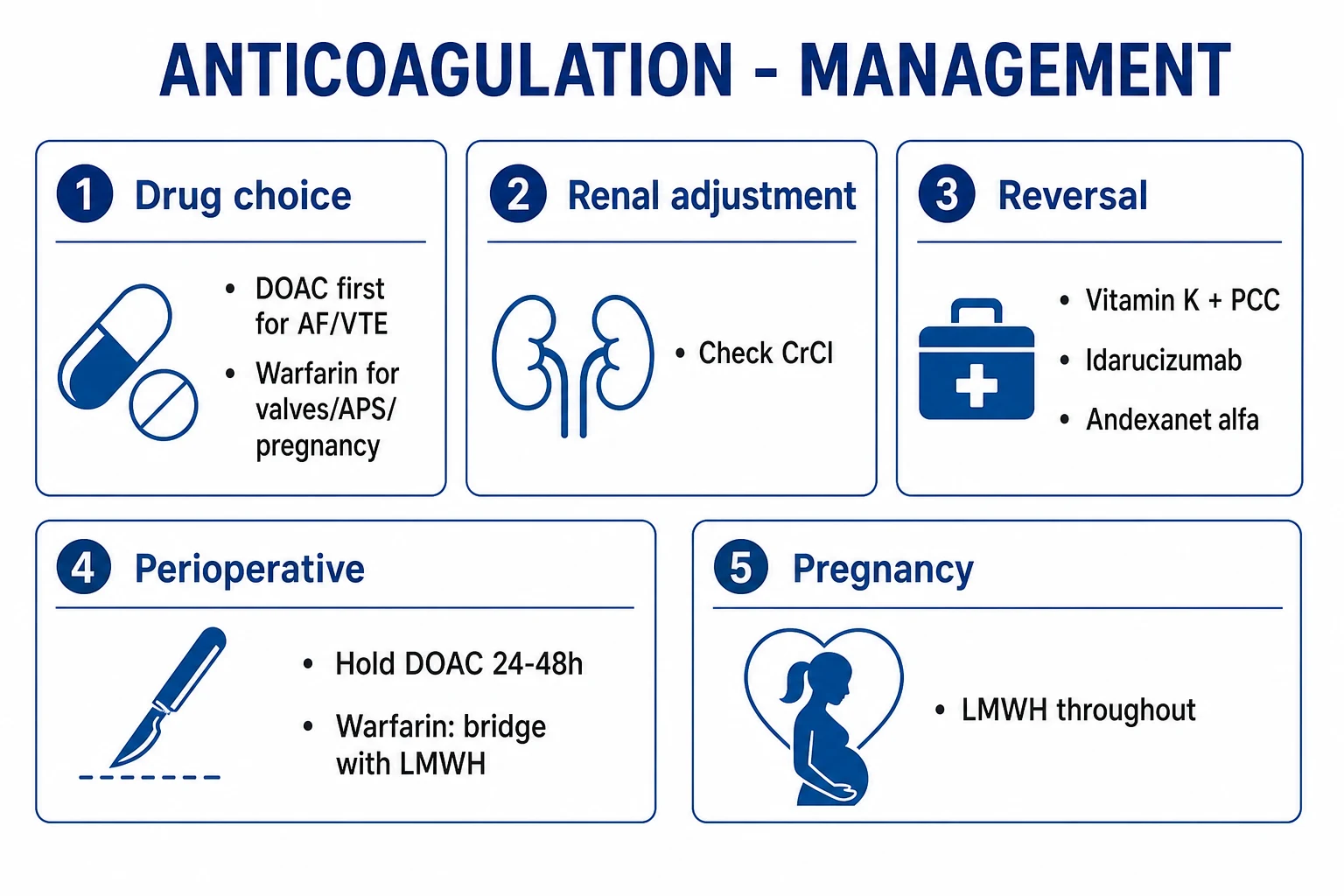
Major bleeding on anticoagulation is a medical emergency. The bundle: stop the drug → local control → reversal → resuscitation → find the source.[1][6][7]
Major anticoagulant bleed — ABC + STOP
REVERSE
ABCDE: high-flow O2, two large-bore cannulae, IV crystalloid 20 mL/kg bolus, crossmatch 4 units; activate major haemorrhage protocol; transfuse to Hb over 70 (over 80 if ICH); target platelets over 50 (over 100 if ICH); cryoprecipitate to fibrinogen over 1.5 g/L
STOP the anticoagulant immediately; stop concurrent antiplatelets/NSAIDs; apply local pressure, endoscopic/surgical/radiological control
Identify agent and last dose; check INR, aPTT, FBC, fibrinogen, U&E, group/crossmatch; for warfarin check INR; for DOAC consider anti-Xa or thrombin time if available; for dabigatran check eGFR (dialysis removes ~50-60 percent)
Warfarin: vitamin K 10 mg IV slow + four-factor PCC 25-50 IU/kg. Dabigatran: idarucizumab 5 g IV. Apixaban/rivaroxaban/edoxaban: andexanet alfa (high or low dose) OR four-factor PCC 50 IU/kg if andexanet unavailable. LMWH: protamine 1 mg per 1 mg LMWH (within 8 h; partial at 50 percent). UFH: protamine 1 mg per 100 IU UFH.
Recheck INR (warfarin) at 30 min post-PCC; reassess haemodynamics continuously; CT to localise bleed; surgical/radiology intervention if needed
Once stable, restart prophylactic LMWH at 24-48 h (after risk-benefit); do NOT give vitamin K again (lasts days); plan transition to long-term anticoagulant once bleeding source controlled
ICU for any haemodynamic instability or ICH; involve haematology and the relevant surgical specialty (neurosurgery, gastroenterology, urology)
Reversal agents in detail (know doses for exams): [1]
| Agent | Drug reversed | Dose & route | Onset / duration | Notes |
|---|---|---|---|---|
| Vitamin K (phytomenadione) | Warfarin | 10 mg IV slow over 10 min (life-threatening bleed); 5–10 mg IV (INR over 8 no bleed); 1–3 mg oral (INR 5–9, minor) | INR falls in 6–12 h IV, peak at 24 h; lasts 7–14 d | IV route can cause anaphylactoid reaction — slow push, resuscitation ready. Reverses warfarin for ~7 d (re-dose if INR rebounds) |
| Four-factor PCC (Beriplex/Octaplex) | Warfarin | 25–50 IU/kg IV (dose by INR/weight) | Immediate; lasts 6–8 h | Faster, smaller volume, lower infection risk than FFP. Always give WITH vitamin K (PCC factors will decay; vitamin K synthesises new ones) |
| Fresh frozen plasma | Warfarin (if PCC unavailable) | 15 mL/kg (4–6 units in adult) | Immediate; lasts 6 h | Large volume, slower to thaw/infuse; not first-line if PCC available |
| Idarucizumab (Praxbind) | Dabigatran | 5 g IV as two consecutive 2.5 g infusions (or bolus) | Immediate | Fully humanised monoclonal Fab; binds dabigatran 350x more avidly than thrombin. No effect on other anticoagulants |
| Andexanet alfa (Andexxa) | Apixaban, rivaroxaban, edoxaban, enoxaparin | High dose: 800 mg IV bolus at 30 mg/min then 8 mg/min infusion for 120 min. Low dose: 400 mg bolus then 4 mg/min for 120 min (low dose if last dose under 7 mg apixaban or under 10 mg rivaroxaban, or over 8 h ago) | Immediate | Recombinant modified Xa (decoy); binds and sequesters Xa inhibitors. May transiently raise INR. Thrombotic risk on restart. Heparin-resistant for ~12 h after |
| Protamine sulfate | UFH, LMWH | UFH: 1 mg per 100 IU UFH (max 50 mg/dose); LMWH: 1 mg per 1 mg LMWH if within 8 h (only ~60 percent neutralised) | Immediate (UFH); partial (LMWH) | Anaphylaxis risk; hypotension if infused fast |
| Activated charcoal | Recent DOAC ingestion (within 2–4 h) | 50 g orally or via NG | Reduces absorption | Only if known recent ingestion of oral agent and airway protected |
| Haemodialysis | Dabigatran (highly protein-bound is not a barrier — it is dialysable) | Standard HD | Removes 50–60 percent of dabigatran | Not effective for Xa inhibitors (highly protein-bound) |
Specific INR thresholds for warfarin reversal (no bleeding):
- INR 5–9, no bleed: hold 1–2 doses, oral vitamin K 1–2.5 mg, recheck in 24–48 h.
- INR over 9, no bleed: hold warfarin, oral vitamin K 2.5–5 mg, recheck in 24 h.
- INR over 9 with minor bleed: hold, vitamin K 5–10 mg IV slow, possible low-dose PCC.
- INR any value with life-threatening bleed (e.g. ICH): hold, vitamin K 10 mg IV slow + four-factor PCC 25–50 IU/kg immediately, scan, neurosurgery if needed. [1]
Management — Definitive & Stepwise
The stepwise approach to choosing, initiating, and maintaining anticoagulation: [1]
Step 1 — Confirm indication and quantify risk-benefit: Calculate CHA2DS2-VASc (stroke risk) and HAS-BLED (bleeding risk). A high HAS-BLED does not contraindicate anticoagulation — it flags modifiable risks. The annual stroke risk in AF without anticoagulation rises from ~1 percent (score 0) to ~12 percent (score 8); warfarin/DOACs reduce stroke by ~64 percent.[1]
Step 2 — Choose agent by indication and patient factors: [1]
| Indication | First-line | Second-line | Avoid |
|---|---|---|---|
| Non-valvular AF | DOAC (apixaban, rivaroxaban, dabigatran, edoxaban) | Warfarin (mechanical valve, severe CKD, APS triple-positive, anticoagulation failure) | — |
| Mechanical heart valve | Warfarin ONLY (INR 2.5–3.5 mitral; 2.0–3.0 aortic) | — | ALL DOACs (RE-ALIGN — dabigatran harmful)[5] |
| Rheumatic mitral stenosis ± AF | Warfarin | DOAC (less evidence) | — |
| VTE (DVT/PE), unprovoked | DOAC | LMWH → warfarin (bridge if pregnant, severe CKD, antiphospholipid) | — |
| Cancer-associated thrombosis | LMWH (dalteparin 200 IU/kg OD month 1 then 150 IU/kg) OR apixaban 10 mg BD × 7 d then 5 mg BD OR rivaroxaban/edoxaban | Warfarin (if non-adherent to injection/DOAC) | Switch to DOAC if stable after 6 mo LMWH |
| Antiphospholipid syndrome | Warfarin (esp. triple-positive: lupus anticoagulant + anticardiolipin + anti-beta2-GPI) | DOAC (rivaroxaban — RAPS trial; controversial) | — |
| Pregnancy (any indication) | LMWH (enoxaparin) throughout pregnancy; switch to warfarin or LMWH postpartum | UFH (renal failure) | Warfarin (teratogenic weeks 6–12), DOACs (insufficient data), fondaparinux (limited) |
| Acute coronary syndrome | Antiplatelet (DAPT) ± low-dose rivaroxaban 2.5 mg BD (if low bleed risk) | Warfarin (if AF + ACS) | Triple therapy prolonged |
Step 3 — Dose correctly (know the standard treatment doses): [1]
Warfarin initiation:
- Loading dose 5 mg or 10 mg oral on day 1 (use 5 mg in elderly, hepatic impairment, frail, low body weight, or known sensitive CYP2C9/VKORC1 genotype; 10 mg in young, fit, otherwise). Then 5 mg daily, adjusting to INR from day 3.
- Bridge with LMWH or UFH for any major indication (AF, VTE, mechanical valve) — continue parenteral anticoagulant until INR is in range for two consecutive days (typically 5 days), then stop heparin.
- Avoid loading doses over 10 mg — increases risk of early supratherapeutic INR. [1]
LMWH (enoxaparin):
- Treatment dose: 1.5 mg/kg SC once daily (standard VTE/AF) or 1 mg/kg SC twice daily (cancer, pregnancy, high-risk).
- Prophylactic dose: 40 mg SC once daily (surgical/medical VTE prophylaxis; reduce to 20 mg if eGFR below 30).
- Avoid if eGFR below 30 — switch to UFH or dose-reduce to 1 mg/kg once daily.
- Give first treatment dose within 12–24 h post-op for prophylaxis (after surgical haemostasis). [1]
UFH:
- Loading 80 IU/kg IV bolus, then 18 IU/kg/h IV infusion, adjusted by aPTT nomogram. Or 15,000–25,000 IU SC every 12 h for subcutaneous prophylaxis/treatment (now rarely used as definitive therapy — LMWH preferred). [1]
Dabigatran (Pradaxa):
- 150 mg oral twice daily for AF, VTE treatment (after 5–10 days parenteral).
- 110 mg twice daily if age over 80, or if concurrent verapamil, or eGFR 30–50 with additional risk.
- 75 mg twice daily if eGFR 15–30 (avoid if below 30 in US; 110 mg BD accepted in Europe if eGFR 30–50).
- Take with food reduces dyspepsia (capsule shells contain tartaric acid core — must swallow whole, do not crush). [1]
Rivaroxaban (Xarelto):
- AF: 20 mg oral once daily (15 mg once daily if eGFR 15–50).
- VTE treatment: 15 mg twice daily for 3 weeks, then 20 mg once daily (food improves absorption — take with food at the 15 mg dose).
- VTE prophylaxis post-arthroplasty: 10 mg once daily for 35 days (hip) or 12 days (knee) — no renal dose reduction at this dose.
- ACS: 2.5 mg twice daily (with DAPT).
- Avoid if eGFR below 15 (or below 30 in some countries). [1]
Apixaban (Eliquis):
- AF: 5 mg oral twice daily; reduce to 2.5 mg twice daily if TWO of: age 80 or over, body weight 60 kg or less, serum creatinine 133 micromol/L (1.5 mg/dL) or more.
- VTE treatment: 10 mg twice daily for 7 days, then 5 mg twice daily; after 6 months, 2.5 mg twice daily for extended prophylaxis.
- Post-arthroplasty VTE prophylaxis: 2.5 mg twice daily for 12 days (knee) or 35 days (hip).
- Avoid if eGFR below 15 (rarely used in dialysis). [1]
Edoxaban (Lixiana/Savaysa):
- AF or VTE (after 5 days parenteral): 60 mg oral once daily; reduce to 30 mg once daily if any: weight 60 kg or less, eGFR 15–50, or concurrent P-gp inhibitor (verapamil, dronedarone, quinidine).
- Avoid if eGFR over 95 in AF (less effective — ENGAGE-AF) and if CrCl below 15. [1]
Fondaparinux (Arixtra):
- VTE treatment: 7.5 mg SC once daily (5 mg if under 50 kg; 10 mg if over 100 kg).
- VTE prophylaxis: 2.5 mg SC once daily.
- Contraindicated if eGFR below 30 (renal clearance). [1]
Step 4 — Counselling (every patient on anticoagulant must know):
- Bleeding signs to report: unexplained bruising, prolonged bleeding from cuts, blood in urine/stool/vomit, severe headache (ICH), joint pain/swelling.
- Drug interactions (warfarin): inform every prescriber; carry an anticoagulant card.
- Missed dose: warfarin — take if remembered the same day, skip if next day; DOAC — take if remembered within half the dosing interval, skip if closer to next dose; never double up.
- Diet: warfarin — consistent vitamin K intake (do not start/stop broccoli, spinach, Brussels sprouts); cranberry juice can increase INR.
- Alcohol: avoid binge (acutely raises INR).
- Surgery/dental: inform dentist/surgeon; most dental work does not require stopping (use local measures); major surgery needs careful interruption protocol.
- Pregnancy: warfarin must be switched before 6 weeks gestation to LMWH; counselling on contraception. [1]
Step 5 — Peri-operative management:
- Warfarin: stop 5 days pre-op, check INR under 1.5 on day of surgery; bridge with LMWH if high thrombotic risk (mechanical mitral valve, recent VTE under 3 months, stroke under 3 months, AF with CHA2DS2-VASc over 6); restart warfarin on day 1–2 post-op when haemostasis secure.
- DOACs: stop 24–48 h pre-op (48 h if high bleed risk or eGFR below 50); restart 24 h after low-bleed-risk surgery, 48–72 h after high-bleed-risk surgery. No bridging — DOACs have rapid onset. [1]
Specific Subtypes & Scenarios
Atrial fibrillation (non-valvular):
- DOAC first-line in most patients. Apixaban preferred in elderly (lower major bleeding than warfarin in ARISTOTLE; lower GI bleeding than dabigatran/rivaroxaban).[4]
- Dabigatran 150 mg BD superior to warfarin for stroke reduction in RE-LY; 110 mg BD non-inferior with less bleeding.[3]
- Warfarin remains first-line for severe CKD/dialysis (limited DOAC data), antiphospholipid syndrome, patient preference with established stable TTR, mechanical valve.[1]
Mechanical heart valve (the absolute warfarin-only scenario):
- Warfarin INR 2.5–3.5 for mitral (caged-ball, tilting disc, or bileaflet with risk factors) and tricuspid; 2.0–3.0 for aortic bileaflet without risk factors.
- RE-ALIGN trial (2013) randomised mechanical valve patients to dabigatran vs warfarin — stopped early because dabigatran had more thromboembolic events (valve thrombosis, stroke) AND more bleeding. ALL DOACs are contraindicated in mechanical valves.[5]
- Bridging at surgery: continue warfarin if low bleed risk (e.g. dental), or stop 5 days pre-op with IV UFH or LMWH bridge for major surgery.
Acute VTE (DVT/PE):
- DOAC monotherapy from day 1 (rivaroxaban, apixaban) — no parenteral lead-in needed.
- Dabigatran or edoxaban — start after 5 days parenteral LMWH/UFH.
- Cancer-associated thrombosis — LMWH (dalteparin) historically first-line; apixaban or rivaroxaban now preferred in selected patients per ITAC 2022 / NICE.[2]
- Massive PE (haemodynamic instability) — IV UFH + consider systemic thrombolysis (alteplase 50 mg IV over 2 h or 100 mg over 2 h) or catheter-directed thrombolysis or surgical embolectomy if lytic contraindicated.
- Submassive PE — anticoagulation alone; consider thrombolysis only if high-risk features (RV strain, biomarker rise) and low bleed risk.
Pregnancy (special population — see below):
- LMWH (enoxaparin) throughout pregnancy; switch to warfarin or LMWH postpartum (warfarin safe in breastfeeding).
- Warfarin crosses placenta — teratogenic (weeks 6–12) causing nasal hypoplasia, stippled epiphyses (chondrodysplasia punctata), and fetal/intracranial bleeding in 2nd/3rd trimester; also associated with fetal loss.
- DOACs contraindicated (animal data — embryo-fetal toxicity; insufficient human data).
- Anti-Xa monitoring in pregnancy (LMWH pharmacokinetics shift).
- Aspirin alone insufficient for mechanical valve pregnancy — combine LMWH with adjusted-dose aspirin. [1]
Renal impairment:
- Mild (eGFR 50–80): all DOACs at standard dose.
- Moderate (eGFR 30–50): dose-reduce per agent (rivaroxaban 15 mg OD, edoxaban 30 mg OD, dabigatran 110 mg BD); apixaban standard unless other criteria met.
- Severe (eGFR 15–30): apixaban 2.5 mg BD; rivaroxaban 15 mg OD; dabigatran 75 mg BD (US) or avoid (Europe); edoxaban avoid.
- Dialysis (eGFR below 15): warfarin preferred; apixaban 2.5 mg BD has limited observational data.
- LMWH: avoid if eGFR below 30 (accumulate); use UFH. [1]
Hepatic impairment:
- Warfarin problematic — already elevated INR from synthetic failure; small additional dose may overshoot.
- DOACs — contraindicated in Child-Pugh C cirrhosis (apixaban, rivaroxaban); use with caution in Child-Pugh B; LMWH preferred.
- Portal vein thrombosis in cirrhosis — DOACs increasingly used if low bleed risk; consider warfarin/LMWH. [1]
Antiphospholipid syndrome (APS):
- Warfarin preferred in triple-positive APS (lupus anticoagulant + anticardiolipin + anti-beta-2-glycoprotein-I) — TRAPS trial showed rivaroxaban had more thrombotic events than warfarin.
- INR target 2.0–3.0 for first VTE; 3.0–4.0 for recurrent events (controversial — many use 2.0–3.0 plus another agent).
- Catastrophic APS — IV heparin + glucocorticoid + plasma exchange ± rituximab. [1]
Elderly (over 75):
- Apixaban preferred — lower major bleeding than warfarin; dabigatran 150 mg BD associated with excess GI bleeding (use 110 mg BD).
- Frailty — weigh falls risk; anticoagulation still beneficial in AF unless very limited life expectancy.
- Renal dose-adjust; recheck eGFR 3–6 monthly. [1]
Complications & Pitfalls
1. Bleeding — the dominant complication:
- Annual major bleeding incidence: ~2–5 percent on warfarin (ICH ~0.5 percent/yr); ~1–3 percent on DOACs (ICH ~0.2–0.3 percent/yr).
- GI bleeding — slightly higher with dabigatran 150 mg BD and rivaroxaban than warfarin; lowest with apixaban.
- ICH — half the risk on DOACs vs warfarin.
- ISTH major bleed criteria reproduced above (resuscitation section). [1]
2. Heparin-induced thrombocytopenia (HIT) — exam classic:
- Type I (non-immune) — mild platelet drop in first 4 days, benign, no action.
- Type II (immune) — IgG antibody against the heparin-PF4 complex activates platelets → both thrombosis and thrombocytopenia. Onset 5–14 days after starting heparin (or sooner if prior heparin in 30 days — "rapid onset HIT"); platelets fall 50 percent or to below 150, nadir usually above 10 (distinguishes from DIC, TTP).
- Paradoxical thrombosis is the danger — venous (DVT, PE, limb gangrene, adrenal haemorrhage) and arterial (limb ischaemia, stroke, MI). Mortality 20–30 percent if untreated.
- Diagnosis — the 4Ts score: Thrombocytopenia (0–2), Timing of platelet fall (0–2), Thrombosis or other sequelae (0–2), Therapeutic alternatives (oTher cause for thrombocytopenia, 0–2). Score 0–3 = unlikely (do not treat); 4–8 = possible HIT — send anti-PF4 ELISA / serotonin release assay, and START treatment.
- Management: STOP ALL HEPARIN (UFH, LMWH, heparin flushes, heparin-coated lines). Start a non-heparin anticoagulant — argatroban (hepatic clearance — preferred in renal failure; aPTT monitored) or danaparoid or bivalirudin (renal). Do NOT give platelet transfusion (fuels thrombosis). Do NOT give warfarin alone initially — can cause venous limb gangrene (skin necrosis-like); only start warfarin once platelets recovering AND continue non-heparin agent for overlap until platelets normal AND INR in range for 2 days. Avoid fondaparinux (mixed evidence; preferred if argatroban unavailable in some centres).
- Re-exposure to heparin: only if life-saving and previous HIT over 100 days ago (antibodies usually fade). [1]
3. Warfarin-induced skin necrosis:
- Onset 3–10 days after starting warfarin.
- Mechanism: warfarin depletes protein C and S (anticoagulants with short half-lives ~8 h and ~30 h) faster than procoagulant factors (II ~60-72 h) → transient pro-thrombotic state → dermal vascular thrombosis → cutaneous infarction.
- Risk factors: congenital protein C or S deficiency (heterozygotes — diagnose after recovery), factor V Leiden, high loading doses (over 10 mg), obesity, no bridging heparin.
- Sites: breast, buttock, thigh, penis (areas with adipose tissue).
- Management: stop warfarin immediately, vitamin K, therapeutic heparin (or LMWH), wound care, debridement if needed, protein C concentrate if available. Re-challenge warfarin slowly with full heparin overlap and lower doses.
- Always bridge warfarin with heparin to prevent this complication. [1]
4. Heparin-induced osteoporosis:
- UFH over 1 month (rarely LMWH) — osteoclast activation → vertebral/rib fracture in ~1–3 percent.
- Calcium/vitamin D, DXA scan, prefer LMWH over UFH for long-term therapy. [1]
5. Purple toe syndrome (rare warfarin complication):
- Cholesterol embolisation — painful purple toes, livedo reticularis, renal dysfunction, eosinophilia. Stop warfarin. [1]
6. DOAC-specific adverse effects:
- Dabigatran dyspepsia (~10 percent) — capsule shell (tartaric acid core); take with food; do not crush/break capsule.
- Hepatotoxicity (rare) — edoxaban, rivaroxaban warnings; monitor LFTs. [1]
7. Pitfalls:
- Treating INR with vitamin K too aggressively when INR minimally elevated (5–8, no bleed) — causes prolonged warfarin resistance, then rebound thrombosis. Reserve IV vitamin K for serious bleeds.
- Not bridging warfarin for high-thrombotic-risk indications (mechanical mitral, recent VTE) when interrupting for surgery.
- Bridging DOACs — unnecessary (rapid onset); increases bleeding.
- Forgetting that DOACs need renal dose adjustment with acute illness (dehydration, AKI) — recheck eGFR.
- Continuing DOACs peri-operatively at full dose in renal impairment — prolongs effect.
- Misreading a normal PT/INR as "DOAC safe" for surgery — INR and aPTT are insensitive to DOACs; use anti-Xa or wait longer.
- Not investigating the source of bleed — occult colorectal cancer is found in up to 5–10 percent of patients presenting with lower GI bleed on anticoagulation. [1]
Prognosis & Disposition
- Efficacy: anticoagulation reduces AF-related stroke by ~64 percent and all-cause mortality by ~26 percent. In VTE, anticoagulation reduces recurrence from ~50 percent/year (untreated) to under 5 percent/year.
- Net clinical benefit (stroke prevented minus major bleeding) is positive for most patients with AF and CHA2DS2-VASc of 2 or more, even in the elderly and those at higher bleeding risk.
- Major bleed prognosis — 30-day mortality of warfarin-related ICH is ~50 percent; rapid reversal (within 1–2 h) with PCC improves outcomes (FFP is too slow). DOAC-related ICH has slightly better prognosis (smaller haematoma expansion).
- Duration of anticoagulation:
- Provoked VTE (surgery, fracture, immobility, oestrogen) — 3 months, then stop.
- Unprovoked VTE — at least 3 months; consider indefinite (most unprovoked proximal DVT/PE are treated long-term).
- Cancer-associated VTE — lifelong while cancer active.
- AF — lifelong.
- Mechanical valve — lifelong.
- APS first VTE — lifelong.
- Disposition: initiation of DOACs can be outpatient for stable AF or low-risk DVT (rivaroxaban, apixaban — no parenteral lead-in). Warfarin initiation in VTE requires bridge with LMWH (5 days) — often outpatient via LMWH. Hospital admission for massive PE, ICH/major bleed, HIT, or first presentation requiring aggressive workup. ICU for haemodynamic instability, ICH, or HIT with thrombosis. [1]
Special Populations
Pregnancy (the highest-yield special population):
- LMWH (enoxaparin) is the anticoagulant of choice in pregnancy — does not cross placenta, safe in breastfeeding. Dose-adjusted to anti-Xa 0.5–1.0 IU/mL 4 h post-dose in the third trimester (pharmacokinetics shift; dose usually increases).
- Warfarin is TERATOGENIC: crosses placenta. Weeks 6–12 — nasal hypoplasia, stippled epiphyses, chondrodysplasia punctata, limb hypoplasia. Weeks 13–35 — CNS abnormalities (optic atrophy, developmental delay), fetal intracranial bleeding, fetal loss. Switch to LMWH before 6 weeks gestation (or pre-conception).
- DOACs contraindicated — embryo-fetal toxicity in animal studies; insufficient human data.
- Fondaparinux — second-line if heparin allergy/HIT (limited data).
- Peripartum: switch LMWH to IV UFH at 36 weeks (shorter half-life, more rapid reversal for epidural/spinal); stop UFH 4–6 h before planned delivery; restart LMWH 12 h postpartum (after haemostasis). Avoid neuraxial anaesthesia within 12 h of last LMWH prophylactic dose or 24 h of therapeutic dose.
- Postpartum: warfarin or LMWH safe in breastfeeding; continue for 6 weeks (provoked VTE) to lifelong (mechanical valve).
- Mechanical valve in pregnancy — high-risk: warfarin throughout is safest for mother in some guidelines but harmful to fetus; most centres use dose-adjusted LMWH plus aspirin throughout, with high anti-Xa targets (0.8–1.2 IU/mL); switch to UFH near term. [1]
Elderly (over 75):
- Apixaban preferred — better safety profile, twice-daily dosing improves consistency.
- Renal dose-reduce dabigatran to 110 mg BD; rivaroxaban to 15 mg OD.
- Falls risk does not negate the net benefit of anticoagulation in AF unless very limited life expectancy.
- Polypharmacy — drug interactions common; review NSAIDs, antiplatelets, SSRIs. [1]
Renal impairment:
- See "Specific Subtypes" — dose reduction and drug choice table.
- LMWH accumulates in CKD — prefer UFH, or dose-reduce LMWH with anti-Xa monitoring.
- Dabigatran is most renal-dependent (~80 percent renal) — avoid if eGFR below 30. [1]
Hepatic impairment:
- Warfarin: hazardous in synthetic failure (baseline INR elevated); start at lower doses.
- DOACs: contraindicated in Child-Pugh C for rivaroxaban and apixaban; caution in Child-Pugh B.
- LMWH preferred in moderate cirrhosis. [1]
Paediatric anticoagulation:
- LMWH (enoxaparin) weight-based: 1.5 mg/kg SC BD (under 2 months: 1.5 mg/kg BD; 2 months–18 years: 1 mg/kg BD), monitor anti-Xa 0.5–1.0 IU/mL.
- Warfarin — loading 0.2 mg/kg, then maintenance; INR targets same as adults; difficult in infants due to variable diet and physiology.
- DOACs — dabigatran, rivaroxaban, apixaban now licensed in children over certain ages/weights for VTE. [1]
Patient already anticoagulated (introducing new therapy):
- Antiplatelet added (post-ACS) — minimise triple therapy (PIONEER-AF, AUGUSTUS, ENTRUST-AF all support dual therapy with DOAC + single antiplatelet at 1–4 weeks post-PCI for low bleed risk).
- NSAIDs — avoid; use paracetamol or opioid. [1]
Evidence, Guidelines & Regional Differences
Landmark trials (must know): [1]
| Trial | Comparison | Key finding |
|---|---|---|
| RE-LY (2009)[3] | Dabigatran 150/110 mg BD vs warfarin in AF | 150 mg superior for stroke/systemic embolism with similar major bleeding; 110 mg non-inferior with less bleeding; both with half the ICH risk |
| ROCKET-AF (2011) | Rivaroxaban 20 mg OD vs warfarin in AF | Non-inferior for stroke; similar major bleeding; less fatal bleeding/ICH; more GI bleeding |
| ARISTOTLE (2011)[4] | Apixaban 5 mg BD vs warfarin in AF | Superior for stroke prevention, less major bleeding, less all-cause mortality — best all-round profile |
| ENGAGE-AF (2013) | Edoxaban 60/30 mg OD vs warfarin in AF | Non-inferior; less bleeding/ICH; less effective if CrCl over 95 (avoid in high CrCl) |
| RE-ALIGN (2013)[5] | Dabigatran vs warfarin in mechanical valves | Stopped early — dabigatran had MORE thrombosis (valve thrombosis, stroke) AND more bleeding. DOACs contraindicated in mechanical valves. |
| EINSTEIN-DVT/PE | Rivaroxaban vs LMWH/warfarin in VTE | Non-inferior, similar major bleeding; oral monotherapy from day 1 |
| AMPLIFY | Apixaban vs LMWH/warfarin in VTE | Non-inferior, less major bleeding |
| RE-COVER | Dabigatran vs warfarin in VTE (after 5 d parenteral) | Non-inferior, similar bleeding |
| Hokusai-VTE | Edoxaban vs warfarin in VTE | Non-inferior; better in cancer subgroup |
| SELECT-D | Rivaroxaban vs dalteparin in cancer VTE | Less recurrent VTE; more major (non-significant) bleeding |
| CARAVAGGIO (2020) | Apixaban vs dalteparin in cancer VTE | Non-inferior, no excess major bleeding — apixaban now a first-line option |
| TRAPS (2018) | Rivaroxaban vs warfarin in triple-positive APS | Rivaroxaban had MORE thrombotic events — warfarin preferred in triple-positive APS |
| RE-VERSE AD (2015)[7] | Idarucizumab for dabigatran reversal | Rapid, complete reversal of dabigatran anticoagulant effect |
| ANNEXA-4 (2017)[6] | Andexanet alfa for Xa inhibitor major bleed | Excellent haemostatic efficacy (82 percent); thrombotic risk on restart |
| Rivaroxaban in APS (RAPS) | Rivaroxaban in single/double-positive APS | Non-inferior — but TRAPS overturned this in triple-positive |
Guidelines:
- NICE NG196 (2021, UK) — AF: DOAC first-line, warfarin for mechanical valve/rheumatic MS; HAS-BLED for bleeding risk assessment.[1]
- European Society of Cardiology (ESC, 2020) — AF: DOACs preferred over warfarin in eligible patients; integrated ABC pathway.
- American College of Chest Physicians (ACCP, CHEST 2021) — VTE: DOAC first-line; LMWH in cancer; warfarin in pregnancy, severe CKD, mechanical valve.
- BSH (British Society for Haematology) — HIT guidelines, peri-operative anticoagulation.
- ITAC 2022 — Cancer-associated VTE[2] — LMWH, apixaban, rivaroxaban, edoxaban all valid first-line in selected patients.
Regional deltas:
- US (AHA/ACC/HRS): endorses DOACs broadly; warfarin preferred for mechanical valves and rheumatic MS; DOACs may be used in CKD down to CrCl 15.
- UK (NICE): DOAC first-line for AF; apixaban commonly used in elderly.
- India (CSI): endorses DOACs but cost drives warfarin dominance; rheumatic mitral stenosis prevalent — always warfarin; acenocoumarol widely used as a VKA alternative.
- Europe (ESC): DOACs preferred; edoxaban not recommended if CrCl over 95 (less effective). [1]
Controversies:
- DOAC monitoring — currently none recommended, but anti-Xa assays are increasingly available; debate over whether routine levels improve safety in extremes of weight/age.
- DOACs in mechanical valves — settled (do not use); but apixaban trials ongoing for surgical bioprosthetic valves.
- DOACs in antiphospholipid syndrome — DOACs acceptable for non-triple-positive APS but warfarin remains first-line for triple-positive.
- Extended VTE prophylaxis (medically ill patients) — bleeding risk may outweigh benefit (MAGNUS-SCU negative); selective use only. [1]
Exam Pearls
- Warfarin target INR: 2–3 for AF, VTE, APS, mural thrombus; 2.5–3.5 for mechanical mitral/tricuspid valve; 2.0–3.0 for aortic bileaflet valve.[1]
- Warfarin onset 3–5 days — because factor II (prothrombin) half-life is 60–72 h. Always bridge with LMWH for VTE, mechanical valve, AF in high-risk.
- Warfarin reversal ladder: no bleed INR 5–9 → hold + oral vitamin K 1–2.5 mg; INR over 9 → vitamin K 2.5–5 mg oral; major bleed → vitamin K 10 mg IV slow + four-factor PCC 25–50 IU/kg (faster than FFP).
- DOACs: no routine monitoring, rapid onset (1–3 h), short half-life (missed doses matter).
- Apixaban dose-reduction for AF: 2.5 mg BD if two of three — age 80+, weight under 60 kg, creatinine over 133.
- Rivaroxaban VTE: 15 mg BD for 3 weeks then 20 mg OD (with food).
- Dabigatran reversal: idarucizumab 5 g IV. Apixaban/rivaroxaban reversal: andexanet alfa (or PCC if unavailable).[6][7]
- Mechanical valve: warfarin ONLY. RE-ALIGN showed dabigatran harmful (more thrombosis AND bleeding).[5]
- Pregnancy: LMWH ONLY. Warfarin teratogenic (weeks 6–12 — nasal hypoplasia, stippled epiphyses). DOACs contraindicated.
- HIT — platelets drop 5–14 days after heparin; stop ALL heparin; use argatroban (hepatic clearance, drug of choice in renal failure) or danaparoid. Do NOT transfuse platelets.
- Warfarin skin necrosis — protein C deficiency; 3–10 days post-start; breast/buttock/thigh; stop warfarin, give vitamin K + heparin.
- HAS-BLED 3+ = high bleed risk — but does NOT contraindicate anticoagulation; modify reversible factors.
- CHA2DS2-VASc ≥2 (men), ≥3 (women) → anticoagulate; HAS-BLED high → still anticoagulate but address modifiable risks.
- Cancer-associated VTE: apixaban, rivaroxaban, LMWH (dalteparin 200 IU/kg month 1 then 150 IU/kg) — all first-line.[2]
- Heparins reversed by protamine — UFH 1 mg per 100 IU; LMWH only partially reversed.
- Fondaparinux = no HIT risk (too short to bridge PF4).
- DOACs reduce ICH by ~50 percent vs warfarin — major reason for first-line use in AF.
- Vitamin K IV can cause anaphylactoid reaction — slow infusion, resuscitation ready.
- Time in Therapeutic Range (TTR) under 65 percent → poor warfarin control → switch to DOAC.
- CYP2C9 and VKORC1 polymorphisms explain warfarin dose variability — pharmacogenomic dosing not yet routine.
- Triple-positive antiphospholipid syndrome → warfarin (TRAPS — rivaroxaban had more events).
- Edoxaban less effective if CrCl over 95 in AF — avoid.
Warfarin indications & targets
WARM
Mechanical mitral 2.5-3.5, aortic 2.0-3.0 — DOACs contraindicated (RE-ALIGN)
INR 2-3; non-valvular = DOAC first
Higher intensity INR 2.5-3.5
Warfarin mandatory
Exam application bank (NEET-PG / INICET)
One-line answer
Anticoagulants prevent and treat thromboembolic disease by interfering with the coagulation cascade at specific points: the parenteral heparins (antithrombin-potentiation), the vitamin K antagonist warfarin (impairs II, VII, IX, X, protein C/S synthesis; monitored by INR), the direct oral anticoagulants (DOACs) — dabigatran (direct IIa inhibitor), and rivaroxaban, apixaban, edoxaban (direct Xa inhibitors). Indications: atrial fibrillation (CHA2DS2-VASc), VTE (DVT/PE), mechanical heart valves, ACS. Warfarin requires INR monitoring (target 2–3 for most; 2.5–3.5 for mechanical mitral), has slow onset (3–5 days) needing LMWH bridging, and is reversed by vitamin K + PCC. DOACs need no routine monitoring, have rapid onset, fewer interactions, and renal dose-adjustment; reversed by idarucizumab (dabigatran) and andexanet alfa (Xa inhibitors). Pregnancy: LMWH only (warfarin teratogenic, DOACs co
Worked stems (answer without another resource)
Stem 1 — Classic presentation. Map symptoms to mechanism; name the first investigation and first treatment step with dose/route if drug therapy is standard. [1]
Stem 2 — Unstable / complicated. List red flags that force immediate resuscitation, theatre, ICU, antidote, or reperfusion — and what you do in the first 15 minutes. [1]
Stem 3 — Atypical group. Elderly, pregnancy, child, or immunocompromised: how presentation and thresholds change. [1]
Stem 4 — Differential trap. Name the three closest mimics and one discriminator for each. [1]
Stem 5 — Disposition. Who goes home with safety-netting, who is admitted, who needs HDU/ICU/theatre, and what follow-up is mandatory. [1]
Rapid viva checklist
- Definition + classification
- Pathophysiology chain
- Bedside signs / criteria
- Score with exact components (if any)
- Emergency bundle
- Definitive therapy with doses
- Complications of disease and of treatment
- Special populations
- Guideline/trial name if classic
- Three exam traps
Coverage self-check
If you cannot answer any stem above from this page alone, re-read the matching section — the page is intended to be self-sufficient for final-prof and NEET-PG/INICET questions on Anticoagulation Therapy.
[1]References
- [1]Harter K, Levine M, Henderson SO. Anticoagulation drug therapy: a review West J Emerg Med, 2015.PMID 25671002
- [2]Farge D, Frere C, Connors JM, et al. 2022 international clinical practice guidelines for the treatment and prophylaxis of venous thromboembolism in patients with cancer, including patients with COVID-19 Lancet Oncol, 2022.PMID 35772465
- [3]Connolly SJ, Ezekowitz MD, Yusuf S, et al. Dabigatran versus warfarin in patients with atrial fibrillation N Engl J Med, 2009.PMID 19717844
- [4]Granger CB, Alexander JH, McMurray JJV, et al. Apixaban versus warfarin in patients with atrial fibrillation N Engl J Med, 2011.PMID 21870978
- [5]Eikelboom JW, Connolly SJ, Brueckmann M, et al. Dabigatran versus warfarin in patients with mechanical heart valves N Engl J Med, 2013.PMID 23991661
- [6]Connolly SJ, Milling TJ Jr, Eikelboom JW, et al. Andexanet Alfa for Acute Major Bleeding Associated with Factor Xa Inhibitors N Engl J Med, 2016.PMID 27573206
- [7]Pollack CV Jr, Reilly PA, Eikelboom J, et al. Idarucizumab for Dabigatran Reversal N Engl J Med, 2015.PMID 26095746