Infectious Diseases · General Medicine
Gonorrhoea & Chlamydia (Urogenital STIs)
Also known as Gonorrhoea · Neisseria gonorrhoeae · Chlamydia · Chlamydia trachomatis · Urethritis · Cervicitis · Pelvic inflammatory disease · Disseminated gonococcal infection
Gonorrhoea (Neisseria gonorrhoeae) and chlamydia (Chlamydia trachomatis serovars D-K) are the commonest bacterial sexually transmitted infections, causing urethritis, cervicitis, proctitis and pharyngitis, and — in women — ascending infection causing pelvic inflammatory disease (PID), ectopic pregnancy and tubal-factor infertility, plus neonatal conjunctivitis/pneumonia. Most infections are asymptomatic, so the clinical skill is screening high-risk, asymptomatic people and treating empirically + tracing partners. Disseminated gonococcal infection produces migratory polyarthralgia, tenosynovitis and a pustular rash. Diagnosis is NAAT on urine and genital, rectal and pharyngeal swabs. Gonorrhoea: ceftriaxone IM (single dose); chlamydia: doxycycline 7 days (azithromycin in pregnancy); PID adds metronidazole for 14 days. Antimicrobial resistance drives the gonococcal regimen; newer oral agents (zoliflodacin) are emerging.
On this page & tools
Your progress
Saved locally on this device.
Exam tags
Red flags
Overview & Definition
Gonorrhoea and chlamydia are the two commonest bacterial sexually transmitted infections (STIs), together causing an estimated 82 million and 128 million new infections worldwide each year (WHO). They are grouped in a single topic because they share an overlapping clinical syndrome (urethritis, cervicitis, often asymptomatic), the same primary diagnostic tool (NAAT), the same high rate of co-infection (10 to 30 percent of patients with gonorrhoea also have chlamydia), and the same public-health control logic — screen high-risk people, treat empirically for both organisms, trace and treat partners, and screen for co-infections (HIV, syphilis, hepatitis).[1]
Gonorrhoea is caused by Neisseria gonorrhoeae — a Gram-negative, oxidase-positive, catalase-positive DIPLOCOCCUS that infects non-cornified columnar or transitional epithelium of the urethra, endocervix, rectum, pharynx and conjunctiva. It grows on Thayer-Martin selective chocolate agar in 5 percent CO2, ferments glucose but not maltose (distinguishing it from N. meningitidis), produces an IgA protease, and displays type IV pili that mediate adhesion and undergo antigenic variation (the reason no protective immunity develops and re-infection is common). [1]
Chlamydia is caused by Chlamydia trachomatis serovars D-K — an obligate intracellular Gram-negative bacterium with a unique biphasic (elementary body / reticulate body) developmental cycle. It cannot grow on cell-free media (it requires living host cells, classically McCoy or HeLa cells), forms intracellular inclusions stained by iodine (glycogen) or fluorescein-conjugated antibody, and has an atypical cell wall that lacks peptidoglycan/muramic acid — so beta-lactam antibiotics do NOT kill the replicating reticulate body.[1]
Why this topic matters to the practising doctor. Three facts explain the entire clinical approach: [1]
- Most infections are silent. Fifty to seventy percent of women and up to half of men with chlamydia, and up to half of women with gonorrhoea, are asymptomatic. A clinician who waits for symptoms will miss most cases and most of the harm.
- Silent infection causes irreversible harm in women. Ascending infection (cervix to tubes) produces pelvic inflammatory disease (PID), the leading preventable cause of tubal-factor infertility and ectopic pregnancy worldwide. Even a single treated episode of PID reduces future fertility.[3]
- Resistance is outpacing drugs. N. gonorrhoeae has developed resistance to every class used against it — penicillins, tetracyclines, fluoroquinolones and now declining cephalosporin susceptibility — which is why ceftriaxone remains the cornerstone and new oral agents such as zoliflodacin are being developed.[2][5]
Classification
Gonorrhoea and chlamydia are best classified by the anatomical site / clinical syndrome they produce (the syndromic approach used for management) and, for chlamydia, by serovar (which determines the clinical phenotype).[1]
C. trachomatis serovar classification (high-yield): [1]
- Serovars A, B, Ba, C — trachoma (eye-to-eye transmission; leading infectious cause of blindness worldwide).
- Serovars D-K — genital STI (this topic): urethritis, cervicitis, PID, neonatal conjunctivitis/pneumonia.
- Serovars L1, L2, L3 — lymphogranuloma venereum (LGV): painless genital ulcer, inguinal buboes (the groove sign), and severe ulcerating proctitis in MSM; treated with doxycycline for 21 days (not 7). [1]
Syndromic classification (drives management): [1]
Epidemiology & Risk Factors
Gonorrhoea and chlamydia have a worldwide distribution and together are the commonest reportable bacterial infections in most high-income countries. WHO estimates about 82 million new gonococcal infections and 128 million new chlamydial infections each year.[1]
Gonorrhoea & chlamydia by the numbers
Transmission and natural history[1]
- Route: vaginal, anal and oral sexual contact. Oral sex is an important driver of pharyngeal gonorrhoea, a reservoir for resistant strains.
- Incubation: gonorrhoea 2 to 7 days (often 2 to 5); chlamydia 1 to 3 weeks (often 7 to 14 days). Disseminated gonococcal infection (DGI) appears about 2 to 3 weeks after mucosal acquisition.
- Communicability: an infected (often asymptomatic) person transmits with each unprotected contact; infectivity falls rapidly after effective treatment.
- Asymptomatic carriage is the dominant reservoir: women with chlamydia (50 to 70 percent), men with chlamydia (up to 50 percent), women with gonorrhoea (up to 50 percent), men with gonococcal urethritis (less than 10 percent). [1]
Risk factors[1]
- Young age (under 25) — adolescent cervical ectopy (columnar epithelium exposed on the ectocervix) increases chlamydial susceptibility.
- New or multiple sexual partners; inconsistent condom use; partner with known STI.
- Men who have sex with men (MSM) — high rectal and pharyngeal carriage; high LGV and macrolide-resistant M. genitalium risk.
- Prior STI; commercial sex contact; substance misuse; lower socioeconomic status; residing in a high-prevalence area. [1]
Co-infection is the rule, not the exception. Ten to thirty percent of people with gonorrhoea also have chlamydia; trichomoniasis, Mycoplasma genitalium, HIV, syphilis, HSV and hepatitis B are all over-represented. A diagnosis of one STI mandates a full STI screen.[4]
The gonococcal resistance crisis (the reason the treatment regimen keeps changing). N. gonorrhoeae has acquired resistance to every class: penicillins (penicillinase-producing, PPNG), tetracyclines (tetM), fluoroquinolones (parC/gyrA mutations — now near-universal), and now declining cephalosporin susceptibility (penA mosaic + mtrR mutations). Surveillance (Golparian 2024) shows ongoing MIC creep. Oral cefixime monotherapy is no longer first-line; IM ceftriaxone is the global cornerstone.[5]
Pathophysiology
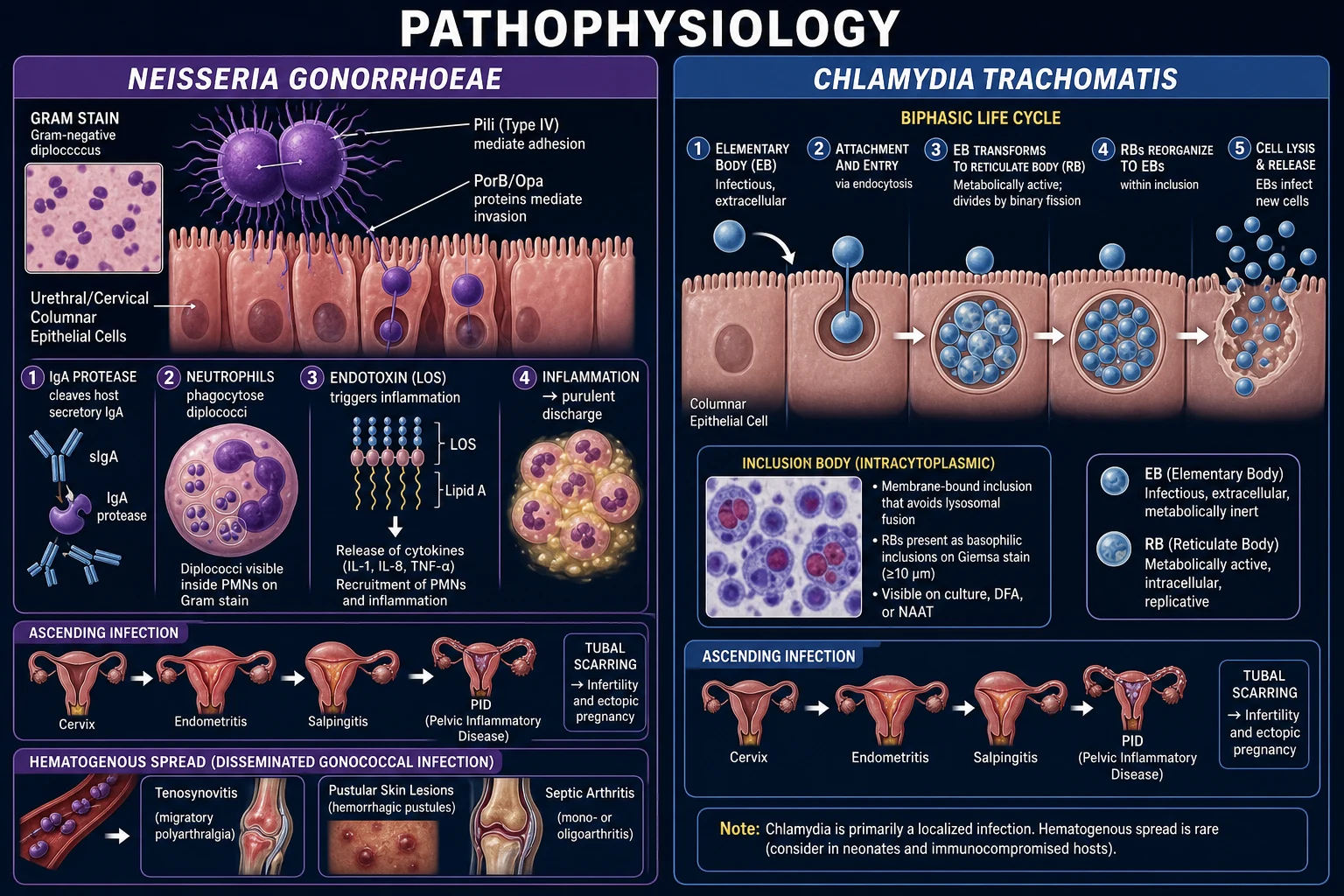
Neisseria gonorrhoeae — the diplococcus and its virulence. [1]
The organism is a Gram-negative diplococcus (paired, kidney-bean-shaped) found characteristically inside polymorphonuclear leucocytes on Gram stain. Its outer membrane carries lipooligosaccharide (LOS), the PorB porin, Opacity (Opa) proteins, Rmp (reduction-modifiable protein) and type IV pili.[1][5]
- Pili are the principal virulence factor: they mediate adherence to non-ciliated columnar epithelium and undergo antigenic variation (more than 10 forms via recombination at the pilE locus). This is why no protective immunity develops and re-infection is common — the immune system never quite catches the moving target.
- Opa proteins drive intimate adhesion and invasion into epithelial cells; IgA protease cleaves host secretory IgA1, subverting mucosal humoral defence.
- After attachment the gonococcus is endocytosed, replicates intracellularly, transcytoses through the epithelium into the submucosa and elicits a brisk neutrophilic inflammatory response — the purulent discharge.
- LOS activates TLR4 and cytokine release (IL-1, IL-6, TNF-alpha). The organism evades complement by binding factor H and sialylating its LOS. [1]
Ascending infection in women: cervix → endometrium (endometritis) → fallopian tubes (salpingitis) → tubo-ovarian abscess. Tubal mucosal destruction and scarring cause tubal-factor infertility and ectopic pregnancy. Perihepatic spread up the right paracolic gutter causes Fitz-Hugh-Curtis (perihepatitis).[3]
Disseminated gonococcal infection (DGI) occurs in 0.5 to 3 percent of untreated cases. The strains that disseminate are typically complement-resistant (bind factor H, sialylate LOS), often of the AHU/IA auxotype and PorB IA serotype. Bacteraemia seeds skin (pustules), synovium and tendon sheaths (tenosynovitis, septic arthritis) and, rarely, endocardium (aortic valve) or meninges. Complement deficiency (C5-C9) markedly increases the risk of recurrent neisserial bacteraemia — a testable association in anyone with recurrent DGI.[5]
Chlamydia trachomatis — the obligate intracellular life cycle. [1]
C. trachomatis is an obligate intracellular Gram-negative bacterium with an atypical cell wall that lacks peptidoglycan (muramic acid) — hence beta-lactams do not kill the replicating form. It cannot be grown on cell-free media and depends entirely on a biphasic developmental cycle:[1]
- Elementary body (EB) — the infectious, extracellular, metabolically inert, small (about 300 nm), electron-dense form. It attaches to a susceptible columnar epithelial cell and enters by clathrin-mediated endocytosis.
- Inside the host cell, the EB differentiates into the reticulate body (RB) — large (about 1000 nm), metabolically active, non-infectious, which replicates by binary fission inside a membrane-bound inclusion. Crucially, the inclusion does NOT fuse with lysosomes — this is the key immune-evasion manoeuvre, mediated by type III secretion system effectors (Inc proteins).
- RBs re-differentiate back into EBs; the inclusion ruptures or the cell exocytoses, releasing EBs to infect neighbouring cells. [1]
Persistence and scarring. Repeated or persistent infection drives a Th1 / IFN-gamma-mediated fibrotic response; expression of chlamydial HSP60 (heat-shock protein 60) on tubal epithelium triggers delayed-type hypersensitivity and tubal scarring — the molecular basis of PID, infertility and the blinding pannus of trachoma.[3]
Host immunity is incomplete. Humoral antibodies to MOMP (major outer membrane protein) are serovar-specific, so re-infection with a different serovar is common; there is no lasting protective immunity to either organism. [1]
Clinical Presentation
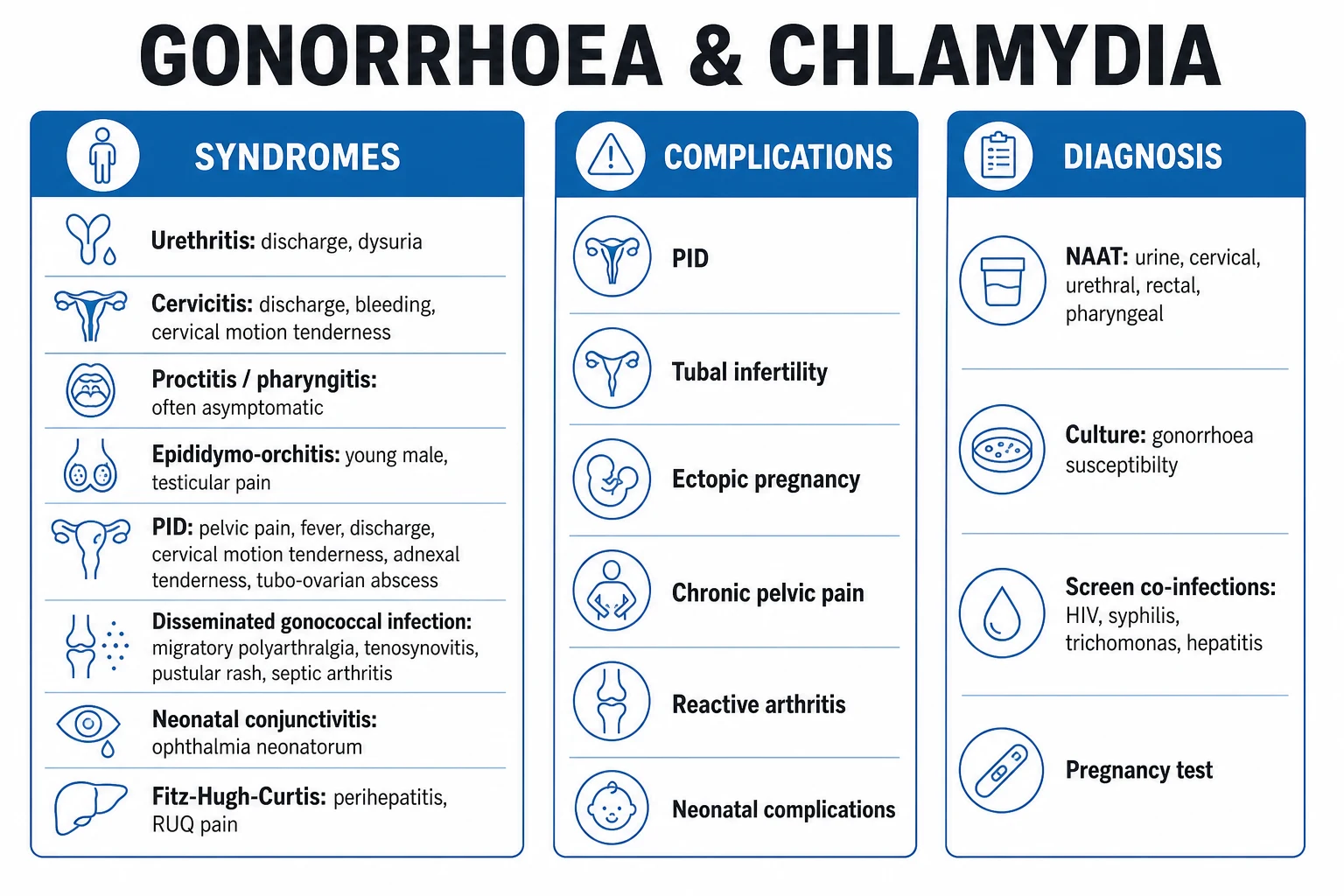
The clinical picture is shaped by site of infection, sex, and whether the organism has disseminated. The single most important fact is that most infections are asymptomatic — symptomatic disease is the tip of the iceberg.[1]
Gonococcal urethritis in men (the classic symptomatic phenotype): purulent or mucopurulent urethral discharge plus dysuria, beginning 2 to 5 days after exposure. Untreated, the discharge subsides over weeks but infection persists. Gonococcal discharge tends to be frankly purulent, chlamydial milder (clear/mucoid). [1]
Chlamydial urethritis / non-gonococcal urethritis (NGU): milder — mucoid/clear discharge, dysuria, urethral itch; 1 to 3 week incubation; up to half are asymptomatic. M. genitalium, Ureaplasma, Trichomonas, HSV and adenovirus are the other causes of NGU. [1]
Cervicitis in women: mucopurulent cervical discharge, cervical friability (contact bleeding on swabbing), an oedematous ectropion. Symptoms — increased or abnormal vaginal discharge, postcoital or intermenstrual bleeding, dysuria. The majority are asymptomatic. Dysuria-pyuria syndrome (dysuria with sterile pyuria in a young woman) — chlamydia is the leading cause. [1]
Proctitis (rectal infection): from receptive anal sex or, in women, perineal auto-inoculation. Anal discharge, pruritus, bleeding, tenesmus, constipation — often asymptomatic, especially gonococcal. Severe ulcerating proctitis suggests LGV (L1-L3) rather than D-K chlamydia. [1]
Pharyngitis: usually asymptomatic; mild sore throat. The pharynx is an important reservoir for resistant gonococci and is poorly eradicated by some regimens — always sample the pharynx in MSM and oral-sex contacts. [1]
Epididymo-orchitis (men under 35): unilateral testicular pain, swelling, tenderness, fever. Usually STI (chlamydia or gonorrhoea). In men over 35 or MSM, enteric organisms are more likely. Always exclude testicular torsion first (Doppler ultrasound within 6 hours). [1]
Pelvic inflammatory disease (PID): the fertility-threatening ascending complication. Lower abdominal or pelvic pain (bilateral, often dull), deep dyspareunia, abnormal bleeding (postcoital, intermenstrual), increased discharge, fever, malaise. Examination — cervical motion tenderness, uterine and adnexal tenderness; a tubo-ovarian abscess (palpable adnexal mass, more severe systemic illness). PID may be subclinical (silent) — infertility may be the first clue to a past, unrecognised episode.[3]
Disseminated gonococcal infection (DGI): the highest-yield exam vignette. [1]
- Arthritis-dermatitis syndrome (bacteraemic phase): migratory polyarthralgia, tenosynovitis (inflamed tendon sheaths — wrists, fingers, ankles, knees) and a pustular skin rash: typically 5 to 40 haemorrhagic pustules on the extensor surfaces of distal extremities, often over joints. The lesions are tender (a key distinction from the painless lesions of reactive arthritis).
- Septic arthritis phase: mono- or oligo-articular suppurative arthritis (knee, wrist, ankle) with effusion; synovial culture positive in this phase.
- Rarely endocarditis (aortic valve, aggressive) or meningitis — the life-threatening DGI complications. [1]
Ophthalmia neonatorum (neonatal conjunctivitis acquired at birth). The day of onset discriminates the cause: [1]
- Day 1 — chemical (silver nitrate prophylaxis; mild, self-limiting).
- Day 2 to 5 — gonococcal: hyperacute, intensely purulent, marked lid oedema and chemosis; rapid corneal ulceration and perforation → blindness if untreated. A medical emergency.
- Day 5 to 14 — chlamydial: mucopurulent, less acute; may be followed by neonatal chlamydial pneumonia at 1 to 3 months (afebrile, staccato cough, tachypnoea, diffuse infiltrates, eosinophilia, elevated IgM).
- Day 6 to 14 — HSV: vesicles, dendritic keratitis. [1]
Fitz-Hugh-Curtis syndrome (perihepatitis): right upper quadrant pleuritic pain and fever in a woman with PID; laparoscopy shows 'violin-string' perihepatic adhesions; gonococcal or chlamydial. [1]
Atypical presentations. Pregnancy: cervicitis often asymptomatic but threatens the neonate. Elderly: discharge may be attributed to UTI or atrophic vaginitis — consider STI in any sexually active older adult. Terminal complement deficiency: recurrent disseminated neisserial infection. [1]
Differential Diagnosis
The differential depends on the presenting syndrome. The clinical task is to distinguish gonorrhoea/chlamydia from look-alikes and not to miss a surgical emergency.[1][3]
Differential of genital discharge in women — cervicitis vs vaginitis
Cervicitis (gonorrhoea/chlamydia)
- Mucopurulent cervical discharge, cervical FRIABILITY (bleeding on swabbing); cervical motion tenderness if PID
- pH usually normal (below 4.5) or only slightly raised; KOH whiff NEGATIVE
- Saline microscopy: abundant WBCs (more than 10 per hpf); NAAT positive for N. gonorrhoeae/C. trachomatis
Bacterial vaginosis
- Thin, homogeneous, FISHY (amine) discharge coating vaginal walls; NO inflammation, NO itch
- pH above 4.5; POSITIVE whiff (KOH); CLUE CELLS on saline microscopy
- Treat with oral metronidazole 400-500 mg twice daily for 5-7 days (or clindamycin cream)
Vulvovaginal candidiasis
- Thick, white, curdy discharge with intense itch and dyspareunia; vulval erythema/oedema
- pH below 4.5; NEGATIVE whiff; budding yeasts/pseudohyphae on saline/KOH microscopy
- Treat with oral fluconazole 150 mg single dose or topical azole (clotrimazole)
Trichomoniasis
- Frothy yellow-green discharge; STRAWBERRY CERVIX on speculum; intense itch/dyspareunia
- pH above 4.5; MOTILE TRICHOMONADS on warm saline wet mount
- Treat with oral metronidazole 2 g single dose (or 400-500 mg bd for 5-7 days); treat partner
Differential of urethral discharge in men (NGU causes). Once gonococci are excluded on Gram stain/NAAT, NGU is caused by C. trachomatis (about 40 percent), Mycoplasma genitalium (10 to 25 percent, increasingly macrolide-resistant — distinguish because it changes first-line therapy), Ureaplasma, Trichomonas vaginalis (rare in MSM, common in hyperendemic regions), HSV, and adenovirus.[4]
Differential of pelvic pain in a young woman
Pelvic inflammatory disease
- Bilateral lower abdominal pain + cervical motion tenderness ± discharge ± fever; NAAT may be positive
- Pregnancy test NEGATIVE; raised inflammatory markers; responds to PID antibiotics
- Empirical treatment is appropriate if clinical criteria met (do not delay for NAAT)
Ectopic pregnancy
- POSITIVE beta-hCG; unilateral pain; rupture -> haemodynamic collapse, shoulder-tip pain
- Transvaginal US: empty uterus ± adnexal mass/free fluid
- Surgical or medical (methotrexate) emergency - ALWAYS exclude with a pregnancy test
Ovarian torsion
- Sudden, severe, unilateral pain with nausea/vomiting; may be intermittent
- Doppler US: absent/reduced ovarian venous flow
- Surgical emergency - detorse within 6 hours to save the ovary
Appendicitis
- Migrating periumbilical to RIF pain, anorexia, nausea, low-grade fever; McBurney point tenderness
- Raised WCC/CRP; US/CT where doubt
- Surgical referral - a pelvic appendix can mimic PID
Differential of the acute scrotum. Testicular torsion is the surgical emergency that must be excluded in ANY young male with acute testicular pain: sudden onset, high-riding, horizontal testis, absent cremasteric reflex, severe pain, nausea and vomiting; a testis is salvageable if detorsed within 6 hours. Send for urgent Doppler ultrasound and urology review; if torsion cannot be excluded, explore surgically.[1]
Disseminated gonococcal infection vs reactive arthritis (Reiter syndrome)
Disseminated gonococcal infection (DGI)
- Preceding asymptomatic MUCOSAL gonorrhoea; high yield NAAT at genital/rectal/pharyngeal sites
- Painful/tender PUSTULAR rash (few, distal, extensor); TENOSYNOVITIS; migratory polyarthralgia
- Synovial/blood culture may be positive early; respond rapidly to IV CEFTRIAXONE; NO HLA-B27 link
Reactive arthritis (Reiter syndrome)
- 1-4 weeks after chlamydia (urethritis) or GI infection (Campylobacter/Salmonella/Shigella); HLA-B27 associated
- PAINLESS lesions: keratoderma blennorrhagicum, circinate balanitis, conjunctivitis/uveitis; asymmetric oligoarthritis, enthesitis, dactylitis (sausage digit)
- Sterile joint (cultures negative); self-limiting over months; NSAIDs ± DMARDs if persistent
Differential of neonatal conjunctivitis (by day of onset): chemical (day 1, silver nitrate), gonococcal (day 2 to 5, hyperacute), chlamydial (day 5 to 14, mucopurulent ± pneumonia), HSV (day 6 to 14, vesicles and dendritic keratitis), other bacteria (Staph, Strep, Haemophilus — day 4+). [1]
Clinical & Bedside Assessment
The diagnostic task at the bedside is (i) recognise the syndrome, (ii) exclude surgical emergencies (torsion, ectopic), and (iii) decide who to treat empirically while awaiting NAAT.[1]
Named signs. [1]
- Mucopurulent cervicitis — yellow/green pus at the cervical os or on the swab tip, with friability (contact bleeding). The bedside hallmark of gonococcal/chlamydial cervicitis.
- Cervical motion tenderness ("chandelier sign") — pain on moving the cervix on bimanual exam = PID until proven otherwise.
- Strawberry cervix — petechial haemorrhages on the ectocervix — classically trichomoniasis, not gonorrhoea/chlamydia (a key distinction in a woman with discharge).
- DGI triad — migratory polyarthralgia + tenosynovitis + tender pustular rash on distal extremities. [1]
Examination sequence. [1]
- Urethra (men): milk the urethra from base to glans (before the patient voids) to express discharge; note colour (purulent = gonococcal; mucoid = chlamydial/NGU).
- Pelvic examination (speculum + bimanual): inspect the cervix for discharge and friability; assess cervical motion, uterine and adnexal tenderness; feel for a tubo-ovarian mass. Test vaginal pH and KOH whiff to separate cervicitis from vaginitis.
- Joints and skin (suspected DGI): examine all joints and tendon sheaths for tenosynovitis; inspect the extensor surfaces of distal limbs for the characteristic few tender pustules.
- Scrotum (young male): exclude torsion — lie, cremasteric reflex, prehn sign; arrange Doppler US within 6 hours if torsion cannot be excluded.
- Eye (neonate / adult conjunctivitis): lid eversion, fluorescein for corneal ulcer, Gram stain of exudate. [1]
History essentials. Number and gender of partners, new partners in the last 3 months, condom use, sites of exposure (vaginal/anal/oral), partner symptoms, prior STI, HIV status, last menstrual period / contraception. Pregnancy test is mandatory in any woman with pelvic pain. [1]
Screen for co-infections. HIV, syphilis (RPR/VDRL + TPHA), hepatitis B (HBsAg, anti-HBs, anti-HBc), hepatitis C (MSM/IDU), Trichomonas (women in endemic areas), M. genitalium (where tested). [1]
Confidentiality, consent and safeguarding. STI consultations are confidential. Offer partner notification. In a child or vulnerable adult, an STI mandates a safeguarding referral (consider sexual abuse); in the UK, those under 13 cannot legally consent (use Fraser competence for under-16s). [1]
Investigations
First-line test: NAAT (nucleic acid amplification test — PCR, SDA, TMA).[1]
- Sensitivity above 95 percent, specificity above 99 percent for both organisms.
- Specimen: first-catch urine (first 10 to 20 mL of stream) in men and women; vaginal swab (self-collected is as good as clinician-collected) in women — more sensitive than urine; cervical swab; urethral, rectal and pharyngeal swabs for MSM and any oral/anal exposure.
- Sample ALL exposed sites — a negative urine NAAT does not exclude rectal or pharyngeal infection; NAAT is site-specific.
- Caveat: NAAT detects organism DNA/RNA, not viability, so it may remain positive for up to 2 weeks after successful treatment. Do NOT use it for a test of cure within 2 weeks of treatment. [1]
Gram stain of urethral discharge (symptomatic men): intracellular Gram-negative diplococci within polymorphs — highly specific (above 95 percent) for gonorrhoea. A negative Gram stain does not exclude gonorrhoea (use NAAT). Gram stain is not valid for rectal/pharyngeal specimens (commensal Neisseria). [1]
Culture. N. gonorrhoeae grows on Thayer-Martin (chocolate agar with vancomycin, colistin, nystatin — selective for pathogenic Neisseria) in 5 percent CO2 at 35 to 37°C within 24 to 48 hours; oxidase-positive, Gram-negative diplococcus; ferments glucose but not maltose (distinguishes from N. meningitidis). Culture is essential for antimicrobial susceptibility testing (the only way to track resistance), required for DGI synovial fluid, and preferred for medico-legal / sexual-assault cases. Chlamydia culture (McCoy/HeLa cells) is difficult and now rarely used except for medico-legal evidence in children.[5]
Point-of-care NAAT (e.g., GeneXpert) — same-day result enabling same-visit treatment, useful in outreach and high-prevalence settings. [1]
Other tests. Full blood count and CRP/ESR (raised in PID/DGI); pregnancy test (exclude ectopic); HIV, syphilis, hepatitis B/C serology (mandatory co-infection screen); urine dipstick and culture (sterile pyuria suggests chlamydia). [1]
Imaging. Transvaginal ultrasound for suspected PID — tubo-ovarian abscess, hydrosalpinx, free fluid; scrotal Doppler ultrasound to exclude torsion in epididymo-orchitis; laparoscopy (gold standard for PID but invasive) rarely needed except for severe/atypical disease or to exclude ectopic/appendicitis. [1]
Named criteria — clinical diagnosis of PID (CDC 2021). Treat empirically if no other cause is identified and ANY ONE of the minimum criteria is present:[1][3]
- cervical motion tenderness, OR
- uterine tenderness, OR
- adnexal tenderness. [1]
Specificity is improved by (additional criteria): oral temperature above 38.3°C, abnormal mucopurulent cervical/vaginal discharge, abundant WBC on saline microscopy, elevated ESR or CRP, and laboratory confirmation of cervical N. gonorrhoeae or C. trachomatis. The most specific criteria are endometrial biopsy (endometritis), transvaginal ultrasound/MRI showing thickened fluid-filled tubes or tubo-ovarian abscess, and Doppler evidence of tubal hyperaemia. [1]
DGI-specific tests. Blood cultures (early bacteraemic phase), synovial fluid (Gram stain, culture, cell count — typically above 50,000 WBC in the septic phase), skin lesion Gram stain/culture/PCR. The highest-yield test in DGI is often NAAT of mucosal (genital, rectal, pharyngeal) sites, because disseminated lesions are frequently culture-negative. [1]
Test of cure (NAAT) — not routinely required after standard treatment, except in pregnancy, persistent symptoms, suspected re-infection, suspected treatment failure/resistance, or in high-resistance regions. If done, perform at least 4 weeks after completing therapy to avoid a false-positive from residual DNA. [1]
Resurveillance. Re-test at 3 months (re-infection rate 10 to 20 percent) regardless of whether partners were treated; in pregnancy, re-test in the third trimester. [1]
Management — Resuscitation
Most gonorrhoea/chlamydia is ambulatory. Resuscitation applies to disseminated gonococcal infection (septic arthritis, rarely endocarditis), severe PID with tubo-ovarian abscess or sepsis, and gonococcal ophthalmia (a sight-threatening emergency).[1]
ABCDE. Airway patent; give oxygen if septic or hypoxic. Circulation — IV access; for septic shock give 30 mL/kg crystalloid bolus, reassess, and add vasopressors (noradrenaline) if MAP is below 65 mmHg. [1]
Septic arthritis (DGI phase 2): urgent joint aspiration (Gram stain, cell count, culture) before antibiotics if possible — but do not delay antibiotics; admit for IV ceftriaxone; orthopaedic washout if the joint is frankly septic or not responding. [1]
Tubo-ovarian abscess: IV antibiotics (PID regimen), analgesia, IV fluids; monitor for rupture (peritonitis, septic shock); surgical or radiological drainage if over 8 cm, persistent fever, or rupture; gynaecology involvement. [1]
Gonococcal ophthalmia (any age): urgent ophthalmology review, saline irrigation, IV/IM ceftriaxone, topical antibiotics; fluorescein examination for corneal ulcer. This is sight-threatening.[1]
Two exclusions you must NEVER miss before treating empirically: [1]
- Ectopic pregnancy in any woman with pelvic pain — serum beta-hCG + transvaginal US before attributing the pain to PID.
- Testicular torsion in any young male with acute scrotum — Doppler ultrasound within 6 hours; explore if torsion cannot be excluded. [1]
Management — Definitive & Stepwise
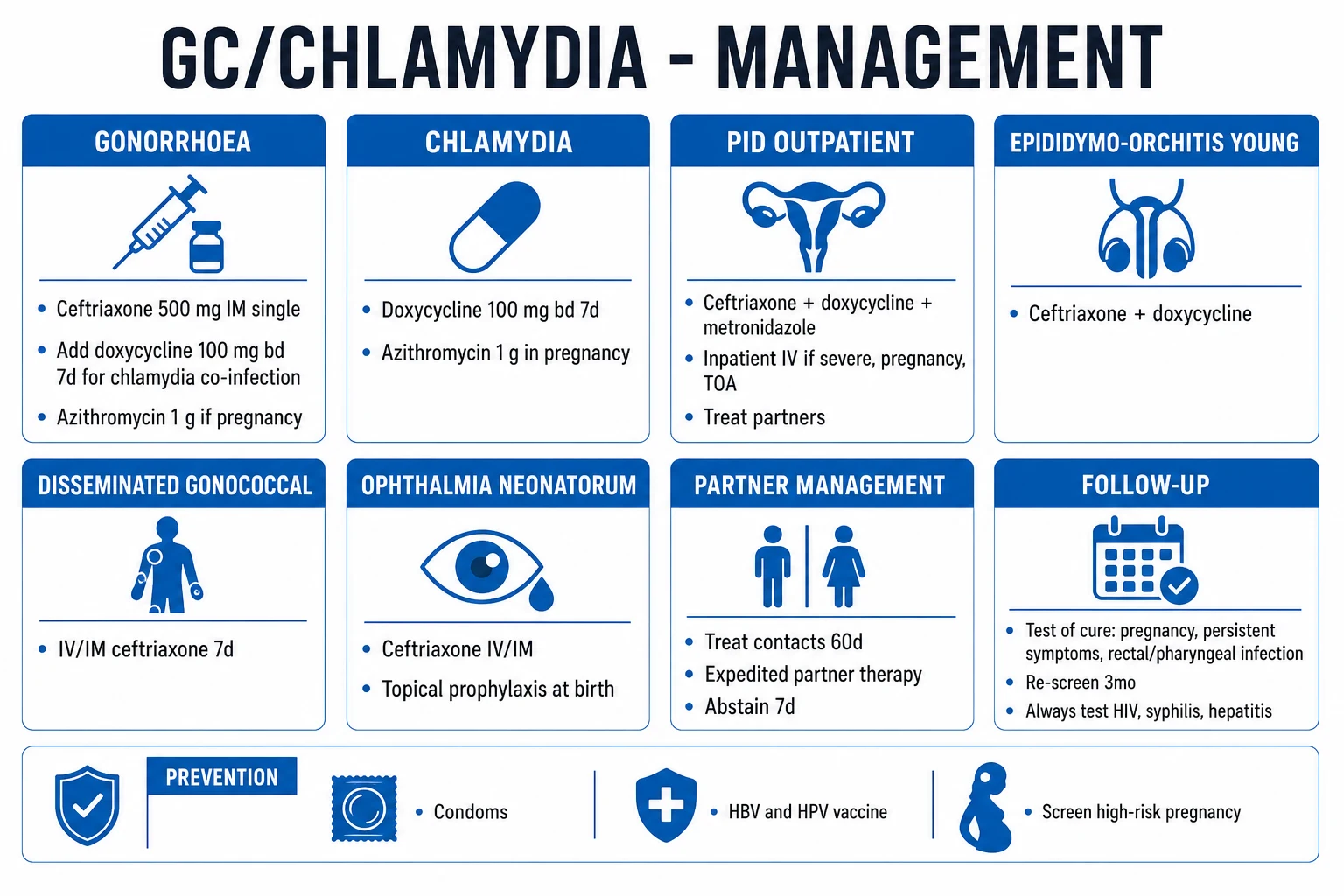
Six general principles apply to every case:[1]
- Treat empirically AND for BOTH organisms (gonorrhoea + chlamydia) — co-infection is too common to gamble on.
- Trace and treat partners of the last 60 days; consider expedited partner therapy (EPT).
- Screen for co-infections — HIV, syphilis, hepatitis B/C, Trichomonas, M. genitalium.
- Advise sexual abstinence for 7 days after single-dose therapy (or until a 7-day course is completed) AND until partners are treated.
- Re-test at 3 months (re-infection), not as test of cure.
- Test of cure only in pregnancy, persistent symptoms, suspected resistance, or high-resistance regions. [1]
Uncomplicated gonorrhoea (urethra, cervix, rectum, pharynx)
CDC 2021 first-line: ceftriaxone 500 mg IM single dose (use 1 g IM if body weight over 150 kg), PLUS doxycycline 100 mg PO twice daily for 7 days to cover co-existent chlamydia. This replaced the historical ceftriaxone + azithromycin dual therapy — the change was driven by macrolide-resistance concerns in M. genitalium (each azithromycin dose selects resistant strains) and emerging azithromycin resistance in N. gonorrhoeae itself.[1][4]
If cephalosporin allergy / not available: gemifloxacin 320 mg PO single dose OR gentamicin 240 mg IM single dose, PLUS azithromycin 2 g PO single dose. Avoid fluoroquinolones as first-line (widespread resistance); only use if the strain is known susceptible. [1]
Uncomplicated chlamydia (D-K; urethra, cervix, rectum)
First-line: doxycycline 100 mg PO twice daily for 7 days (preferred — superior cure, especially for rectal infection, Peuchant 2022). Alternative: azithromycin 1 g PO single dose (preferred in pregnancy and adherence concerns). Levofloxacin 500 mg daily for 7 days is another option. Cochrane (2019) confirms doxycycline is microbiologically superior to azithromycin, especially at the rectum.[6][7]
In pregnancy
- Chlamydia: azithromycin 1 g single dose (NOT doxycycline — tetracyclines are teratogenic: fetal bone and tooth dysplasia, hepatotoxicity).
- Gonorrhoea: ceftriaxone 500 mg IM (safe in pregnancy).
- Test of cure at 4 weeks, and re-test in the third trimester. [1]
Pelvic inflammatory disease
Outpatient (mild-moderate, no TOA, not pregnant, tolerates oral): ceftriaxone 500 mg IM single dose + doxycycline 100 mg PO twice daily for 14 days + metronidazole 500 mg PO twice daily for 14 days (anaerobe cover). Review at 48 to 72 hours; admit if no improvement.[1][3]
Inpatient (severe, pregnant, TOA, failed outpatient, surgical abdomen not excluded, non-adherent, IUD in situ with severe disease): IV ceftriaxone 1 g daily + IV doxycycline 100 mg twice daily + IV metronidazole 400 to 500 mg three times daily; switch to oral doxycycline + metronidazole to complete 14 days when improving. Tubo-ovarian abscess over 8 cm or ruptured — surgical or radiological drainage. [1]
Epididymo-orchitis (men under 35)
Ceftriaxone 500 mg IM single dose + doxycycline 100 mg PO twice daily for 10 to 14 days (cover gonorrhoea + chlamydia). In men over 35 or MSM with enteric risk, use ofloxacin or levofloxacin for 10 to 14 days. ALWAYS exclude testicular torsion first. [1]
Disseminated gonococcal infection
- Arthritis-dermatitis syndrome (no septic arthritis, no endocarditis/meningitis): ceftriaxone 1 g IV/IM daily for 7 days (at least 24 to 48 hours after improvement, then switch to oral — e.g., cefixime 400 mg twice daily — if susceptible).
- Septic arthritis: ceftriaxone 1 g IV daily for 7 to 14 days; joint washout/drainage if frankly septic; longer for prosthetic joints.
- Endocarditis or meningitis (rare): ceftriaxone 1 to 2 g IV every 12 hours for 10 to 14 days (meningitis) or 28 days (endocarditis); cardiology/neurology; valve replacement if needed. [1]
Ophthalmia neonatorum and neonatal chlamydia
- Gonococcal ophthalmia: ceftriaxone 25 to 50 mg/kg IV/IM single dose (max 125 mg) + saline irrigation; admit, isolate, ophthalmology review. Avoid ceftriaxone in hyperbilirubinaemic neonates (use cefotaxime). Treat the mother and partner.
- Chlamydial conjunctivitis / pneumonia: oral erythromycin 50 mg/kg/day in 4 divided doses for 14 days (azithromycin 20 mg/kg day 1 then 10 mg/kg days 2 to 5 is an alternative). Topical therapy alone is inadequate (does not eradicate nasopharyngeal carriage). Treat mother and partner.
- Prophylaxis at birth — 1 percent silver nitrate, 0.5 percent erythromycin eye drops, or 2.5 percent povidone-iodine prevent gonococcal ophthalmia but not chlamydial. [1]
Partner management and public health
- Partner notification: trace partners of the last 60 days; treat them empirically (or by their NAAT result).
- Expedited partner therapy (EPT): where legal, give the index patient a prescription or medication to deliver to the partner without the partner being clinically evaluated — CDC-recommended; reduces re-infection.
- Abstinence: until 7 days after single-dose therapy (or completion of a 7-day course) AND until partners are treated.
- Re-test at 3 months for re-infection (10 to 20 percent).
- Notification: gonorrhoea and chlamydia are notifiable diseases in most jurisdictions. [1]
New and emerging agents
Zoliflodacin (an oral spiropyrimidinetrione, inhibits bacterial DNA gyrase B by a distinct mechanism) was non-inferior to ceftriaxone plus azithromycin for uncomplicated urogenital gonorrhoea in a phase 3 international trial (Luckey 2026, Lancet) — developed through a WHO/GARDP partnership with GSK. It is positioned as a future oral option for cephalosporin-resistant gonorrhoea. Gepotidacin (a triazaacenaphthylene, inhibits DNA gyrase/topoisomerase IV by a novel mechanism) is another agent in late-stage trials.[2]
Drugs NOT to use
- Penicillins (resistance — PPNG), fluoroquinolones (near-universal resistance; contra-indicated in pregnancy and children), macrolides as monotherapy for gonorrhoea (inadequate, drives resistance).
- Tetracyclines in pregnancy and children under 8 (teratogenic, tooth discolouration).
- Topical therapy alone for chlamydial neonatal disease (fails to eradicate nasopharyngeal carriage). [1]
Specific Subtypes & Scenarios
- Uncomplicated gonococcal urethritis/cervicitis — the commonest phenotype; ceftriaxone + doxycycline.
- Asymptomatic screening-detected infection — the public-health priority; treat identically; trace partners.
- Gonococcal/chlamydial proctitis and pharyngitis — require site-specific NAAT; pharyngeal gonorrhoea is harder to eradicate and is a resistance reservoir — consider test of cure.
- PID — mild (outpatient) vs severe/TOA (inpatient); the fertility-threatening ascending complication.
- Fitz-Hugh-Curtis (perihepatitis) — RUQ pain in a woman with PID; treat the PID regimen.
- Epididymo-orchitis in young men — STI cover; exclude torsion.
- Disseminated gonococcal infection — arthritis-dermatitis vs septic arthritis phase; IV ceftriaxone; rare endocarditis/meningitis.
- Ophthalmia neonatorum — by onset day: gonococcal (day 2 to 5, hyperacute) vs chlamydial (day 5 to 14) vs chemical (day 1) vs HSV (day 6 to 14).
- Neonatal chlamydial pneumonia (1 to 3 months, staccato cough, afebrile, eosinophilia, high IgM).
- Lymphogranuloma venereum (LGV, L1-L3) — separate phenotype: painless ulcer + inguinal buboes (groove sign) and severe ulcerating proctitis in MSM; doxycycline for 21 days.
- Trachoma (A-C) — eye-to-eye, leading infectious cause of blindness; azithromycin mass treatment (SAFE strategy).
- Mycoplasma genitalium — related STI causing NGU and PID; rising macrolide resistance; recommended first-line is moxifloxacin after macrolide failure. Distinguish from chlamydia because macrolide resistance changes management.[4]
Complications & Pitfalls
In women: PID (in 10 to 20 percent of untreated chlamydia, similar for gonorrhoea), tubal-factor infertility (about 12 percent after one PID episode, over 50 percent after three), ectopic pregnancy (6 to 10 fold increased), chronic pelvic pain (up to 30 percent after PID), tubo-ovarian abscess, Fitz-Hugh-Curtis perihepatitis.[3]
In men: epididymo-orchitis (rarely infertility — usually unilateral), urethral stricture (historical; rare now), prostatitis (rare). [1]
In pregnancy and the neonate: preterm labour, premature rupture of membranes, postpartum endometritis, neonatal conjunctivitis (ophthalmia neonatorum) and neonatal pneumonia; maternal gonorrhoea is associated with miscarriage and neonatal sepsis. [1]
Disseminated gonococcal infection: septic arthritis (joint destruction if untreated), tenosynovitis, pustular dermatitis; rarely gonococcal endocarditis (aortic valve, aggressive) and meningitis — the life-threatening DGI complications. [1]
Increased HIV transmission: genital gonorrhoea/chlamydia increases HIV acquisition and transmission 2 to 5 fold (mucosal inflammation recruits HIV target cells); treating STIs reduces HIV incidence. [1]
Reiter syndrome (reactive arthritis) after chlamydia: asymmetric oligoarthritis, conjunctivitis, urethritis, HLA-B27; painless keratoderma blennorrhagicum; distinguish from DGI. [1]
Classic pitfalls (the examiner's favourites):[1][3]
- Treating the index patient and missing the partner (re-infection) — always partner notification / EPT.
- Treating only the symptomatic site — missing rectal/pharyngeal infection (sample all exposed sites).
- Using azithromycin for gonorrhoea (inadequate, drives resistance).
- Using doxycycline in pregnancy (teratogenic).
- Not screening for co-infections (HIV/syphilis/hepatitis).
- Missing DGI by attributing the rash/arthritis to reactive or rheumatological disease.
- Missing testicular torsion in "epididymo-orchitis."
- Missing ectopic pregnancy in "PID."
- Not re-testing at 3 months (re-infection).
- Using a NAAT test of cure too early (false positive from residual DNA).
- Not considering LGV (L1-L3) in severe proctitis.
- Missing the safeguarding issue of an STI in a child. [1]
Prognosis & Disposition
- Uncomplicated gonorrhoea/chlamydia: cure rates above 95 to 99 percent with correct regimen and adherence; no long-term sequelae if treated before ascending/dissemination.
- PID: even with correct treatment, fertility is reduced — cumulative infertility about 12 percent after one episode, 25 percent after two, over 50 percent after three; ectopic pregnancy risk 6 to 10 fold; chronic pelvic pain in up to 30 percent. Hence the imperative for early empirical treatment.
- DGI arthritis-dermatitis: complete recovery with IV ceftriaxone; septic arthritis may leave residual joint damage if treatment is delayed; endocarditis/meningitis carry serious mortality.
- Ophthalmia neonatorum: gonococcal — blindness if untreated within 24 to 48 hours; chlamydial usually resolves but may scar the cornea. [1]
Disposition. Outpatient for uncomplicated urethritis/cervicitis/proctitis/pharyngitis and mild PID. Admit for severe PID or TOA, pregnancy with PID, DGI with septic arthritis/endocarditis/meningitis, gonococcal ophthalmia (any age), failed outpatient therapy, non-adherence, an unexcluded surgical abdomen, or safeguarding concerns.[1]
Follow-up: clinical review at 48 to 72 hours for PID (admit if worse); test of cure (NAAT at 4 weeks) in pregnancy or persistent symptoms; re-test (NAAT) at 3 months for re-infection. [1]
Special Populations
- Pregnancy: screen ALL women at the first antenatal visit (and high-risk in the third trimester); chlamydia with azithromycin 1 g (not doxycycline), gonorrhoea with ceftriaxone 500 mg IM (safe); test of cure at 4 weeks and re-test third trimester; prevents neonatal ophthalmia/pneumonia and preterm birth.
- Neonates: prophylaxis at birth (silver nitrate / erythromycin / povidone-iodine); treat gonococcal ophthalmia with ceftriaxone 25 to 50 mg/kg (max 125 mg) — avoid ceftriaxone in hyperbilirubinaemia; treat chlamydial conjunctivitis/pneumonia with oral erythromycin for 14 days. Doxycycline and fluoroquinolones are contra-indicated in children.
- Children (non-neonatal) with an STI: mandatory safeguarding / child-protection referral — consider sexual abuse; culture (not NAAT alone) may be needed for medico-legal evidence.
- MSM: screen at ALL exposed sites (urethral/urine, rectal, pharyngeal) every 3 to 6 months if high-risk; rising antimicrobial-resistant gonorrhoea; high LGV risk in severe proctitis; add hepatitis C screen; consider HIV PrEP.
- HIV-positive: no change to gonorrhoea/chlamydia regimen, but screen for all co-infections and recognise that STIs increase HIV transmission; anogenital LGV more aggressive.
- Elderly: STIs increasingly recognised; atypical discharge attributed to UTI or atrophic vaginitis — consider STI in any sexually active older adult; condom use is lower.
- Terminal complement deficiency (C5-C9): markedly increased risk of disseminated neisserial infection — screen for complement deficiency in anyone with recurrent DGI or DGI plus a meningococcal history; vaccinate (meningococcal) if deficient.
- Sexual assault / rape: full STI screen at presentation and at 2 weeks, 4 to 6 weeks and 3 months; HIV and hepatitis B post-exposure prophylaxis within 72 hours; emergency contraception within 120 hours; forensic specimens (culture, chain of custody); psychological support; report per jurisdiction.
- Breastfeeding: ceftriaxone and azithromycin are safe; doxycycline is traditionally avoided (single-dose azithromycin is the safer default for chlamydia in lactation). [1]
Evidence, Guidelines & Regional Differences
- CDC 2021 STI Treatment Guidelines (Workowski, MMWR Recomm Rep 2021; PMID 34292926) — the current international standard for treatment of gonorrhoea, chlamydia, PID, epididymo-orchitis and DGI; shifted gonorrhoea therapy from dual ceftriaxone + azithromycin to ceftriaxone monotherapy (with chlamydia cover by doxycycline) to slow macrolide resistance in M. genitalium.[1]
- Luckey et al. (Lancet 2026; PMID 41391465) — phase 3 non-inferiority trial of oral zoliflodacin versus ceftriaxone plus azithromycin for uncomplicated urogenital gonorrhoea; the first new-in-class oral agent for resistant gonorrhoea, developed through the WHO/GARDP partnership with GSK.[2]
- Brunham et al. (NEJM 2015; PMID 25992748) — the definitive modern review of pelvic inflammatory disease: pathogenesis, clinical approach, treatment, and the long-term consequences (infertility, ectopic, chronic pain) that justify early empirical PID treatment.[3]
- Machalek et al. (Lancet Infect Dis 2020; PMID 32622378) — prevalence of macrolide and fluoroquinolone resistance mutations in M. genitalium; rationale for shifting azithromycin away from empiric NGU cover.[4]
- Golparian et al. (Lancet Microbe 2024; PMID 38614111) — antimicrobial-resistant N. gonorrhoeae in Europe 2020 vs prior years; the surveillance basis for treatment recommendations and the resistance crisis driving the ceftriaxone-dose increase.[5]
- Peuchant et al. (Lancet Infect Dis 2022; PMID 35550262) — randomised trial of doxycycline versus azithromycin for anorectal chlamydia; doxycycline is superior, especially for rectal infection; basis for doxycycline as preferred first-line chlamydia therapy.[6]
- Paez-Canro et al. (Cochrane Database Syst Rev 2019; PMID 30682211) — Cochrane review of antibiotics for urogenital chlamydia; doxycycline and azithromycin both highly effective; doxycycline microbiologically superior.[7]
- USA CDC 2021 — ceftriaxone 500 mg IM monotherapy + doxycycline for chlamydia.
- UK BASHH 2019 — ceftriaxone 1 g IM + azithromycin 2 g dual.
- WHO 2016 guidelines — global syndromic and etiologic recommendations; basis for India's NACP syndromic approach.
- India / NACO / NACP — syndromic case management (treat urethral discharge as gonorrhoea + chlamydia empirically with ceftriaxone plus azithromycin or doxycycline) in peripheral settings; NAAT at district/tertiary level. [1]
Controversies. Azithromycin as "cover" in gonorrhoea (CDC dropped routine dual therapy); cost-effectiveness of universal chlamydia screening of women under 25 (USPSTF supports); doxycycline post-exposure prophylaxis (doxy-PEP) — 200 mg within 24 to 72 hours after condomless sex reduces bacterial STIs in MSM and transgender women (CDC and IAS-USA 2023), with concern about resistance and the microbiome. [1]
Exam Pearls
[1]EB-RB — the chlamydial developmental cycle
CSI-GH — ophthalmia neonatorum by day of onset
APT — the disseminated gonococcal triad
Exam application bank (NEET-PG / INICET)
One-line answer
Gonorrhoea (Neisseria gonorrhoeae) and chlamydia (Chlamydia trachomatis serovars D-K) are the commonest bacterial sexually transmitted infections, causing urethritis, cervicitis, proctitis and pharyngitis, and — in women — ascending infection causing pelvic inflammatory disease (PID), ectopic pregnancy and tubal-factor infertility, plus neonatal conjunctivitis/pneumonia. Most infections are asymptomatic, so the clinical skill is screening high-risk, asymptomatic people and treating empirically + tracing partners. Disseminated gonococcal infection produces migratory polyarthralgia, tenosynovitis and a pustular rash. Diagnosis is NAAT on urine and genital, rectal and pharyngeal swabs. Gonorrhoea: ceftriaxone IM (single dose); chlamydia: doxycycline 7 days (azithromycin in pregnancy); PID adds metronidazole for 14 days. Antimicrobial resistance drives the gonococcal regimen; newer oral
Worked stems (answer without another resource)
Stem 1 — Classic presentation. Map symptoms to mechanism; name the first investigation and first treatment step with dose/route if drug therapy is standard. [1]
Stem 2 — Unstable / complicated. List red flags that force immediate resuscitation, theatre, ICU, antidote, or reperfusion — and what you do in the first 15 minutes. [1]
Stem 3 — Atypical group. Elderly, pregnancy, child, or immunocompromised: how presentation and thresholds change. [1]
Stem 4 — Differential trap. Name the three closest mimics and one discriminator for each. [1]
Stem 5 — Disposition. Who goes home with safety-netting, who is admitted, who needs HDU/ICU/theatre, and what follow-up is mandatory. [1]
Rapid viva checklist
- Definition + classification
- Pathophysiology chain
- Bedside signs / criteria
- Score with exact components (if any)
- Emergency bundle
- Definitive therapy with doses
- Complications of disease and of treatment
- Special populations
- Guideline/trial name if classic
- Three exam traps
Coverage self-check
If you cannot answer any stem above from this page alone, re-read the matching section — the page is intended to be self-sufficient for final-prof and NEET-PG/INICET questions on Gonorrhoea & Chlamydia (Urogenital STIs).
References
- [1]Workowski KA, Bachmann LH, Chan PA, et al. Sexually Transmitted Infections Treatment Guidelines, 2021 MMWR Recomm Rep, 2021.PMID 34292926
- [2]Luckey A, Balasegaram M, Barbee LA, et al. Zoliflodacin versus ceftriaxone plus azithromycin for treatment of uncomplicated urogenital gonorrhoea: an international, randomised, controlled, open-label, phase 3, non-inferiority clinical trial Lancet, 2026.PMID 41391465
- [3]Brunham RC, Gottlieb SL, Paavonen J. Pelvic inflammatory disease N Engl J Med, 2015.PMID 25992748
- [4]Machalek DA, Tao Y, Shilling H, et al. Prevalence of mutations associated with resistance to macrolides and fluoroquinolones in Mycoplasma genitalium: a systematic review and meta-analysis Lancet Infect Dis, 2020.PMID 32622378
- [5]Golparian D, Tabrizi EA, Bazzo M, et al. Antimicrobial-resistant Neisseria gonorrhoeae in Europe in 2020 compared with in 2013 and 2018: a retrospective genomic surveillance study Lancet Microbe, 2024.PMID 38614111
- [6]Peuchant O, Le Roy C, Desveaux C, et al. Doxycycline versus azithromycin for the treatment of anorectal Chlamydia trachomatis infection in women concurrent with vaginal infection (CHLAZIDOXY study): a multicentre, open-label, randomised, controlled, superiority trial Lancet Infect Dis, 2022.PMID 35550262
- [7]Páez-Canro C, Alcaide ML, Bares SH, et al. Antibiotics for treating urogenital Chlamydia trachomatis infection in men and non-pregnant women Cochrane Database Syst Rev, 2019.PMID 30682211