Infectious Diseases · Infectious Diseases
HIV / AIDS
Also known as Human immunodeficiency virus infection · Acquired immunodeficiency syndrome · HIV disease · Retroviral disease
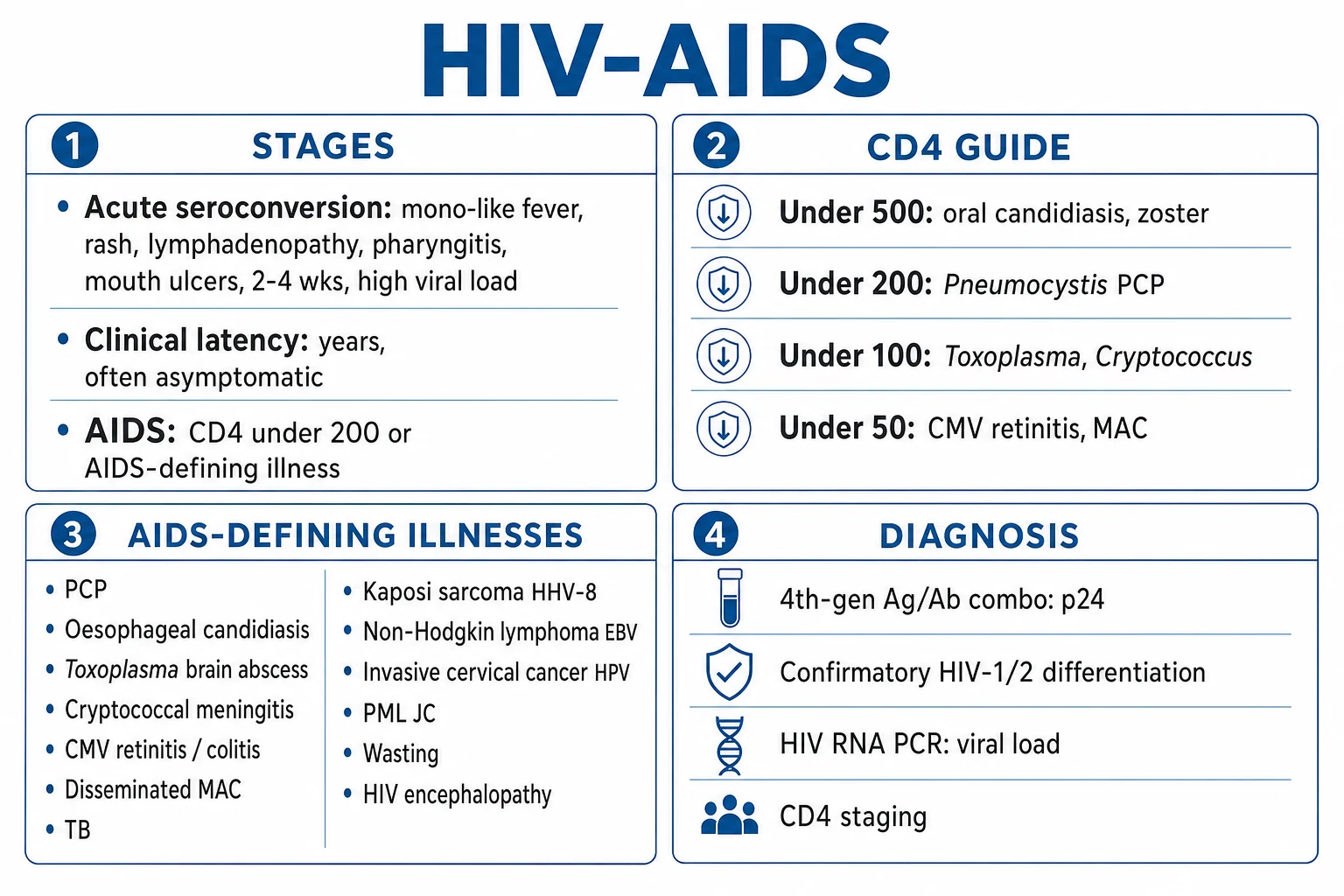
HIV is a retrovirus (lentivirus) that infects and depletes CD4+ T-helper lymphocytes, producing progressive cell-mediated immunodeficiency. AIDS is the advanced stage, defined by CD4 under 200 cells/uL, a CD4 percentage below 14%, or any AIDS-defining illness (PJP, toxoplasmosis, CMV, MAC, Kaposi sarcoma, CNS lymphoma, etc.). Transmitted by sexual contact, blood/blood products, needle-sharing, and mother-to-child. Acute infection is a mononucleosis-like illness 2 to 4 weeks after exposure, followed by years of clinical latency, then opportunistic infections and tumours as CD4 falls. Diagnosis: 4th-generation Ag/Ab combo assay (p24 + antibody) confirmed by HIV-1/2 differentiation; staging by CD4 count and HIV RNA viral load. Treatment is combination antiretroviral therapy (cART) for every person with HIV regardless of CD4 (START trial): a backbone of 2 NRTIs plus an integrase strand-transfer inhibitor (INSTI) — e.g. tenofovir + emtricitabine + dolutegravir or bictegravir. Suppression to undetectable viral load prevents sexual transmission (U=U, HPTN 052). PCP prophylaxis with co-trimoxazole at CD4 under 200; toxo at under 100; MAC and CMV at under 50. PrEP (tenofovir-emtricitabine or long-acting cabotegravir) for high-risk negatives; PEP is a 28-day 3-drug regimen started within 72 hours. With modern ART, near-normal life expectancy is achievable.
On this page & tools
Your progress
Saved locally on this device.
Exam tags
Red flags
Overview & Definition
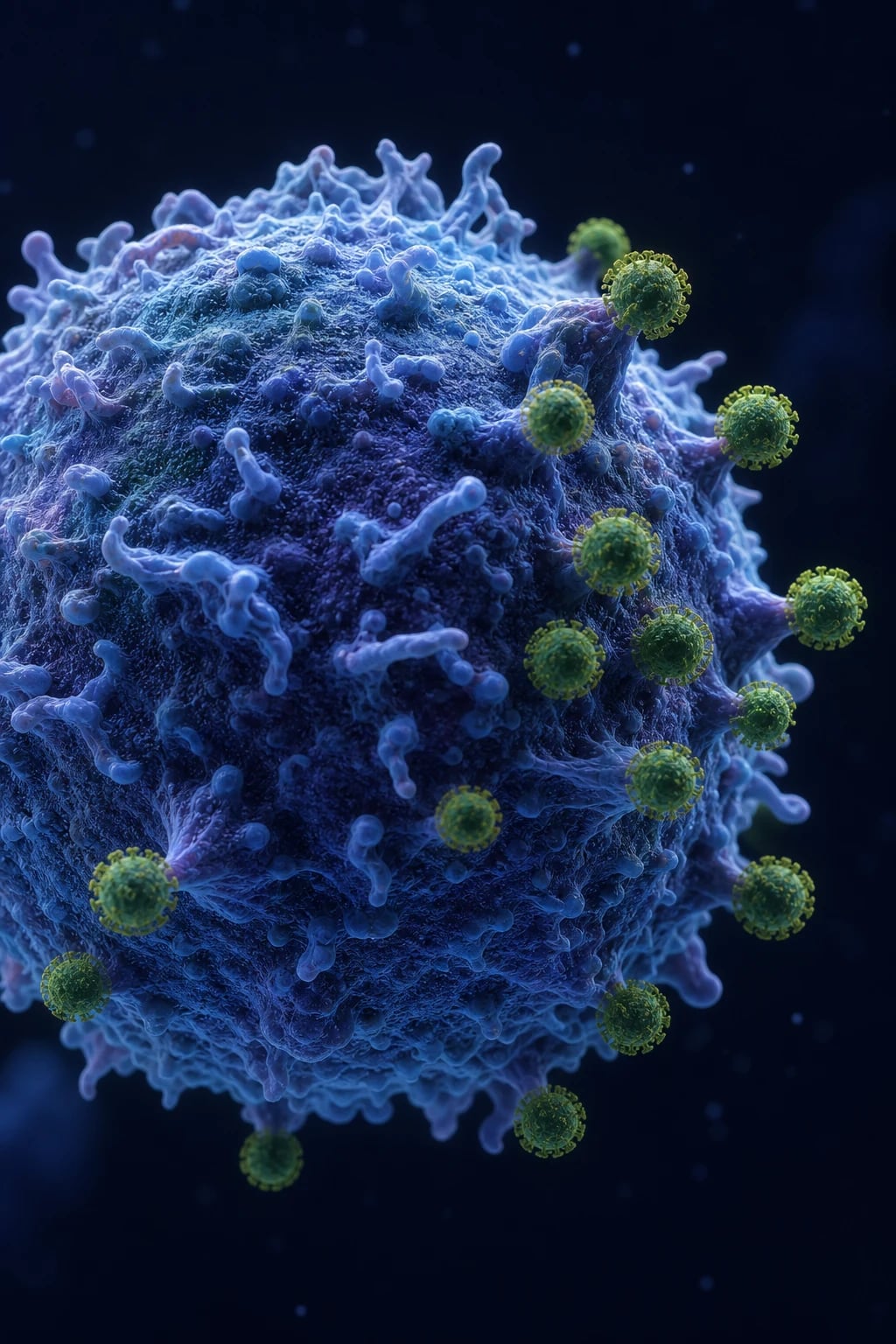
Human immunodeficiency virus (HIV) infection is a chronic, sexually and blood-borne retroviral disease caused by HIV-1 (the pandemic strain, responsible for over 95% of global infections) or HIV-2 (confined largely to West Africa, with slower progression and intrinsic resistance to non-nucleoside reverse-transcriptase inhibitors, NNRTIs). The virus infects CD4+ T-helper lymphocytes, monocyte-macrophages, dendritic cells and microglial cells, causing progressive depletion of cell-mediated immunity.[2]
Acquired immunodeficiency syndrome (AIDS) is the advanced clinical stage of HIV infection, formally defined (US CDC 1993, still used worldwide) by any one of: [1]
- A CD4+ T-lymphocyte count under 200 cells/uL (normal 500 to 1500) in an HIV-positive person, or
- A CD4 percentage below 14% of total lymphocytes, or
- The presence of any of the 27 AIDS-defining clinical conditions (see Classification) — these can occur at any CD4 count but most appear only with profound immunodeficiency. [1]
The clinical skill in HIV medicine is fourfold: (i) recognising primary (acute) HIV in the febrile patient (the single most-missed diagnosis); (ii) predicting the opportunistic infection from the CD4 count; (iii) choosing and monitoring cART; and (iv) preventing transmission through treatment-as-prevention (U=U), PrEP and PEP. The single most important intervention in the entire disease is early, lifelong combination antiretroviral therapy (cART) — the START trial (2015) proved this for every adult regardless of CD4.[3][1]
Classification
HIV-1 vs HIV-2
HIV-1 (group M = pandemic)
- Responsible for over 95% of global infections
- Group M subtypes A to K; subtype C dominant in India and southern Africa
- Rapid progression without ART (8 to 10 yr to AIDS)
- Susceptible to all drug classes including NNRTIs
- Diagnosed by all standard Ag/Ab assays
HIV-2
- Largely West Africa; lower viral load, slower decline in CD4
- Naturally resistant to NNRTIs (efavirenz, nevirapine, rilpivirine, doravirine) — do not use
- Many strains resistant to enfuvirtide; lower genetic barrier to PIs
- First-line: boosted PI (darunavir/r or lopinavir/r) + 2 NRTIs + INSTI
- Cross-reacts on screening assays but confirm with type-specific differentiation immunoassay
HIV-1 groups and subtypes (molecular epidemiology)
HIV-1 is divided into four groups: M (main, pandemic), N (non-M/non-O, rare), O (outlier, Cameroon), and P (closest to SIV of gorillas, single case reports). Group M has nine recognised subtypes or clades — A, B, C, D, F, G, H, J, K — plus circulating recombinant forms (CRFs). Subtype C causes the majority of infections globally (southern Africa, India, China); subtype B dominates in North America, Western Europe and Australia; CRF01_AE and CRF07_BC are common in South-East Asia.[11]
CDC clinical classification (1993) — A / B / C with CD4 strata 1 / 2 / 3
Each HIV-positive person is categorised by clinical stage (A, B or C) and immunological stage (1, 2 or 3) — combined into a code such as A2 or C3 (AIDS). [1]
- Category A — asymptomatic HIV infection, persistent generalised lymphadenopathy (PGL), or acute (primary) HIV infection.
- Category B — symptomatic conditions not in category C but attributed to HIV or indicative of defective cell-mediated immunity: bacillary angiomatosis, candidiasis (oropharyngeal or vulvovaginal, persistent), cervical dysplasia/carcinoma in situ, oral hairy leukoplakia, idiopathic thrombocytopenic purpura (ITP), listeriosis, pelvic inflammatory disease, peripheral neuropathy, Herpes zoster involving more than one dermatome.
- Category C (AIDS-defining) — the 27 conditions below. [1]
CD4 strata: 1 = at least 500/uL; 2 = 200 to 499/uL; 3 = under 200/uL. [1]
AIDS-defining illnesses (Category C) — the list to reproduce
| System | AIDS-defining condition |
|---|---|
| Fungal | Candidiasis of oesophagus, bronchi, trachea, or lungs (not just oral); Coccidioidomycosis, disseminated or extrapulmonary; Cryptococcosis, extrapulmonary; Histoplasmosis, disseminated or extrapulmonary; Pneumocystis jirovecii pneumonia (PJP) |
| Bacterial | Mycobacterium tuberculosis, any site (pulmonary or extrapulmonary); M. avium complex or other non-tuberculous mycobacteria, disseminated or extrapulmonary; Salmonella septicaemia, recurrent; Bacterial pneumonia, recurrent (2 or more episodes in 12 months) |
| Viral | Cytomegalovirus retinitis or disease (other than liver, spleen, nodes); Herpes simplex chronic ulcer more than 1 month, or bronchitis, pneumonitis, oesophagitis; Progressive multifocal leukoencephalopathy (JC virus) |
| Parasitic | Cryptosporidiosis, chronic intestinal (more than 1 month); Isosporiasis, chronic intestinal; Toxoplasmosis of brain ( cerebral ) |
| Malignancy | Kaposi sarcoma; non-Hodgkin lymphoma (Burkitt, immunoblastic, primary CNS lymphoma); invasive cervical carcinoma |
| Wasting / HIV | HIV encephalopathy (AIDS dementia complex); HIV wasting syndrome (over 10% weight loss + chronic diarrhoea or weakness) |
WHO clinical staging (used in resource-limited settings such as India / NACO)
- Stage 1 — asymptomatic; persistent generalised lymphadenopathy.
- Stage 2 — minor mucocutaneous manifestations (seborrhoeic dermatitis, fungal nail infections, oral ulceration, angular cheilitis); Herpes zoster within past 5 years; recurrent upper respiratory tract infections; unexplained weight loss under 10%.
- Stage 3 — oral candidiasis (thrush); oral hairy leukoplakia; pulmonary TB within past year; severe presumed bacterial infections; chronic diarrhoea over 1 month; unexplained fever over 1 month; weight loss over 10%; severe weight loss.
- Stage 4 (= AIDS) — includes PJP, extrapulmonary TB, Kaposi sarcoma, CNS toxoplasmosis, cryptococcal meningitis, CMV disease, disseminated MAC, chronic HSV, HIV wasting, HIV encephalopathy, disseminated mycoses, recurrent bacteraemia, invasive cervical carcinoma, lymphoma, PML.[1]
Epidemiology & Risk Factors
HIV/AIDS remains one of the largest pandemics in human history. UNAIDS estimates roughly 39 to 40 million people were living with HIV at the end of 2023, with about 1.3 million new infections and 630,000 AIDS-related deaths annually — a fall of over 60% and 70% respectively from peak years, driven by cART scale-up. Sub-Saharan Africa carries about 65% of the global burden (highest in eastern and southern Africa); India has the third-largest HIV epidemic (about 2.4 million people), concentrated in Maharashtra, Andhra Pradesh/Telangana, Karnataka, Tamil Nadu, Manipur and Nagaland.[2][11]
Modes of transmission (with approximate per-act transmission risk — single-event): [1]
| Route | Per-act risk (approximate, untreated source) |
|---|---|
| Blood transfusion (HIV-positive unit) | 90 to 95% |
| Needle-sharing (IDU) | 0.6 to 0.7% |
| Receptive anal intercourse | 1.4% (highest sexual risk) |
| Insertive anal intercourse | 0.1% |
| Receptive vaginal intercourse | 0.08% |
| Insertive vaginal intercourse | 0.04% |
| Oral sex | very low (less than 0.01%) but not zero |
| Percutaneous needlestick (occupational) | 0.3% |
| Mucous-membrane splash | 0.09% |
| Mother-to-child (no intervention) | 15 to 45% (with full PMTCT cascade below 1%, with cART under 1%) |
Note: these risks collapse toward zero when the source is on effective cART with an undetectable viral load (U=U — HPTN 052, PARTNER, Opposites Attract).[5][6]
Risk factors (high-yield): [1]
- Unprotected sexual contact (vaginal, anal) with an HIV-positive partner not on suppressive ART; men who have sex with men (MSM) carry the highest sexual risk globally; concurrent STIs (syphilis, HSV, gonorrhoea, chlamydia) amplify transmission by mucosal inflammation.
- Injecting drug use with shared needles/syringes — the dominant driver of the eastern European and north-east Indian epidemics (Manipur, Nagaland).
- Blood and blood products — historically devastating (haemophilia cohorts in the 1980s; now near-eliminated by mandatory screening in India and worldwide since the mid-1990s); occupational needlestick in healthcare workers.
- Vertical (mother-to-child) transmission — in utero, at delivery (most), or via breastfeeding; PMTCT with maternal cART and infant prophylaxis reduces transmission to under 1%.
- Endemic / demographic: high-prevalence geography (sub-Saharan Africa, Caribbean, north-east India, parts of south-east Asia); adolescent girls and young women in eastern and southern Africa (2 to 4 times higher prevalence than male peers); transgender women; sex workers and their clients; prisoners.
- Co-infections amplify risk: HSV-2 (genital ulceration), syphilis, chancroid; bacterial vaginosis; M. tuberculosis (TB is the leading cause of death in people with HIV).
- Medical procedures with poor infection control, unsterile circumcision, unsafe injections (historically important in some regions). [1]
HIV is NOT transmitted by casual contact, kissing, sharing utensils, mosquitoes, toilet seats, sweat, tears, or saliva.[2]
Pathophysiology
The viral life cycle — and the drugs that target it
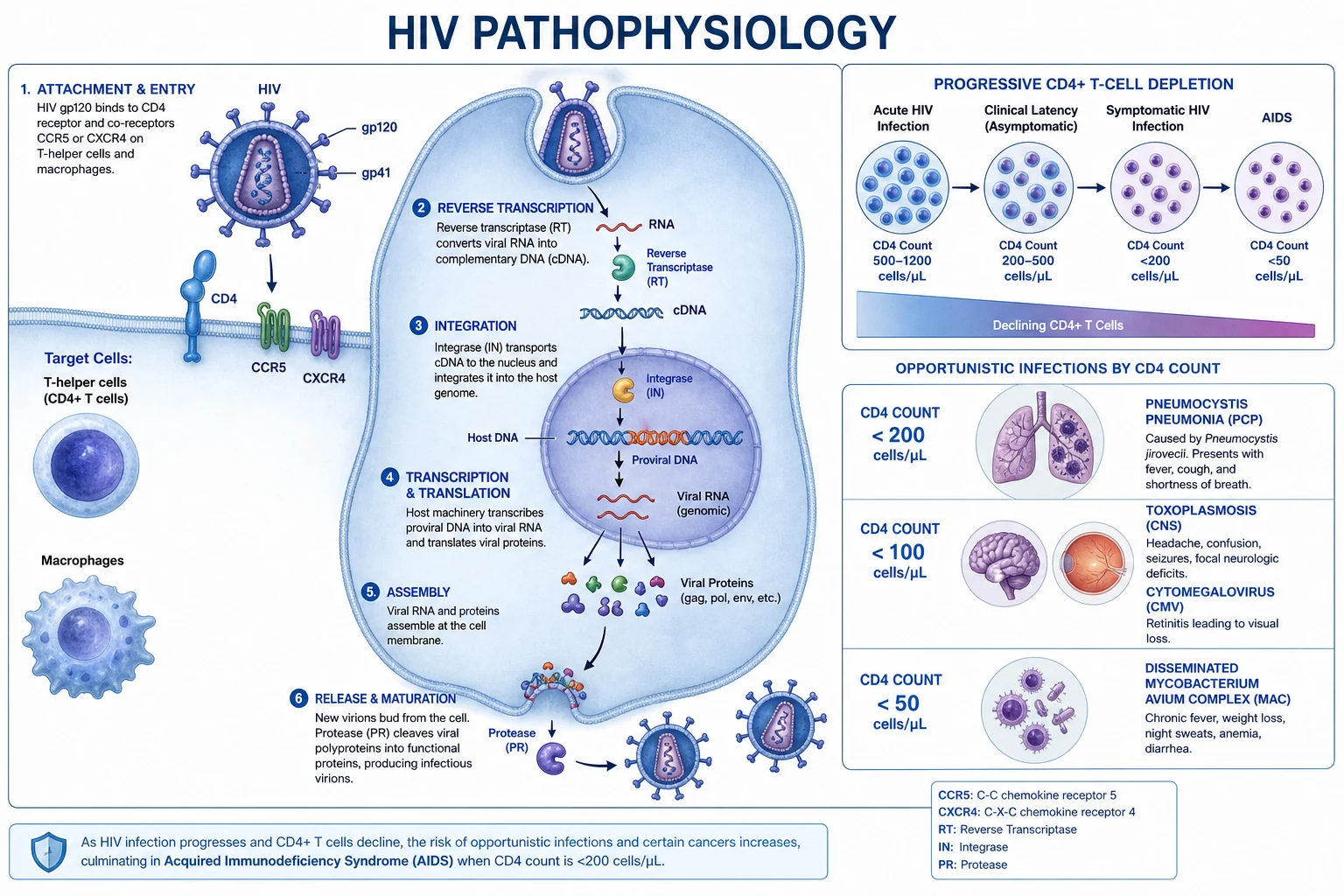
The HIV virion is a spherical enveloped retrovirus. Its envelope is studded with the gp120 (surface) and gp41 (transmembrane) glycoproteins, derived from cleavage of the gp160 precursor by host furin. Inside are the conical capsid (p24), two copies of single-stranded positive-sense RNA, and three viral enzymes: reverse transcriptase (RT), integrase (IN), and protease (PR) — all targets of antiretroviral drugs.[2]
Step-by-step replication cycle (memorise — every step is a drug target): [1]
- Attachment / binding — gp120 binds CD4 on the host T-helper cell (and macrophage, dendritic cell, microglia), inducing a conformational change that exposes the co-receptor-binding site. Co-receptor is CCR5 (early infection, M-tropic/R5 strains) or CXCR4 (late, T-tropic/X4 strains). Drugs: maraviroc (CCR5 antagonist — requires tropism testing to confirm R5 virus); ibalizumab (CD4 post-attachment mAb); fostemsavir (gp120 attachment inhibitor).
- Fusion — gp41 mediates fusion of viral and host membranes; the capsid enters the cytoplasm. Drug: enfuvirtide (fusion inhibitor, subcutaneous).
- Reverse transcription — viral reverse transcriptase (RT) converts the RNA genome into double-stranded DNA (a provirus). RT lacks proofreading, so mutation is frequent — the basis of viral diversity and drug resistance. Drugs: NRTIs (nucleoside/nucleotide analogues: tenofovir, emtricitabine, lamivudine, abacavir, zidovudine) competitively inhibit RT; NNRTIs (efavirenz, nevirapine, rilpivirine, doravirine, etravirine) allosterically inhibit RT.
- Integration — the proviral DNA is transported to the nucleus and integrated into the host chromosome by viral integrase, forming the latent reservoir that cART cannot eliminate. Drugs: INSTIs (integrase strand-transfer inhibitors: dolutegravir, bictegravir, raltegravir, elvitegravir, cabotegravir).
- Transcription and translation — host RNA polymerase II transcribes viral mRNA from the integrated provirus, which is spliced and translated into polyproteins (Gag, Gag-Pol, Env).
- Assembly and budding — new virions assemble at the cell membrane and bud. Viral protease cleaves the Gag-Pol polyprotein into mature proteins (maturation), producing an infectious virion. Drugs: PIs (atazanavir, darunavir, lopinavir, ritonavir as booster); capsid inhibitor lenacapavir (long-acting, every 6 months). [1]
Mechanism of CD4 depletion and immunodeficiency
HIV causes CD4+ T-cell loss by multiple mechanisms: direct viral cytopathic effect (syncytium formation), apoptosis of uninfected bystander cells (gp120 cross-linking CD4 → Fas-mediated apoptosis), pyroptosis of abortively infected resting CD4+ T-cells in lymphoid tissue, CTL-mediated killing of infected cells, and impaired thymic and bone-marrow regeneration. The result is progressive loss of T-helper function → failure of macrophage activation, defective cell-mediated immunity (intracellular pathogens — TB, MAC, toxo, cryptococcus, CMV, HSV, PJP), impaired B-cell help (recurrent bacterial infection), and loss of tumour immune surveillance (Kaposi, lymphoma, cervical cancer).[2]
Why latency is not silent: even during the asymptomatic years there is massive viral turnover (about 10 billion virions produced per day) and T-cell destruction and replacement — a dynamic steady-state that ultimately exhausts T-cell regenerative capacity. [1]
Latent reservoir
Integrated provirus in long-lived resting memory CD4+ T cells (and possibly macrophages, microglia) is the barrier to cure — it is unaffected by cART and reignites viraemia within weeks of stopping therapy. This is why ART must be lifelong. [1]
Clinical Presentation
HIV infection classically runs through three phases — primary (acute) infection, chronic (latent) infection, and AIDS. [1]
1. Primary (acute) HIV infection — "seroconversion illness"
Occurs 2 to 4 weeks after exposure (range 1 to 6 weeks) and lasts 1 to 2 weeks. Up to 60% of patients are symptomatic, and the illness is mononucleosis-like — frequently missed or labelled "flu". The fever is high and accompanied by a maculopapular rash (face, trunk, palms and soles — involving palms/soles is a strong clue), mucocutaneous ulcers (oral, oesophageal, genital), generalised lymphadenopathy, pharyngitis, myalgia, arthralgia, headache, diarrhoea, and aseptic meningitis or meningoencephalitis. Leucopenia, thrombocytopenia, and mild transaminitis are common on bloods.[2]
Critical exam point: in acute HIV, the standard HIV antibody test is NEGATIVE (the patient is seroconverting). The diagnostic test is HIV RNA (viral load) by PCR, which is sky-high (often over 1 million copies/mL), plus a p24 antigen (positive before antibody). The 4th-generation combo assay will be positive for p24 but the antibody differentiation may be negative or indeterminate. Untreated, symptoms resolve and the patient enters clinical latency — but their reservoir is now permanently established and they are highly infectious. [1]
2. Chronic (asymptomatic / latent) infection
Lasts 8 to 10 years untreated (range 1 to 15+ years). The patient is clinically well, but CD4 falls steadily (50 to 100 cells/uL per year) and HIV RNA remains detectable. Persistent generalised lymphadenopathy (PGL = lymph nodes over 1 cm at two or more non-contiguous extra-inguinal sites for over 3 months) may be the only sign. Minor opportunistic problems begin as CD4 drops below 500: oral candidiasis, oral hairy leukoplakia (EBV, lateral tongue borders, white non-removable streaks), seborrhoeic dermatitis, recurrent Herpes zoster, ITP, recurrent bacterial pneumonia, cervical dysplasia. [1]
3. AIDS — opportunistic infections and tumours
When CD4 falls below 200, PJP, oesophageal candidiasis, Kaposi sarcoma, recurrent bacterial pneumonia, extrapulmonary TB, ITP emerge. Below 100, cerebral toxoplasmosis, cryptococcal meningitis, cryptosporidiosis, disseminated HSV. Below 50, CMV retinitis, disseminated MAC, primary CNS lymphoma, PML.[2]
Cardinal clinical syndromes (with characteristic features)
- Pneumocystis jirovecii pneumonia (PJP / PCP): subacute (weeks) exertional dyspnoea, dry cough, fever, chest tightness; hypoxaemia disproportionate to CXR findings; CXR classically bilateral perihilar interstitial / "ground-glass" infiltrates (but may be normal early); pneumothorax is a known complication; elevated serum LDH (often over 500 U/L); pneumocystis cannot be cultured — diagnose by sputum or BAL with immunofluorescence or PCR. Treat with high-dose co-trimoxazole; add corticosteroids if PaO2 under 70 mmHg or A-a gradient over 35.
- Cerebral toxoplasmosis: headache, confusion, fever, focal neurological deficit, seizures; multiple ring-enhancing lesions at the grey-white junction and basal ganglia on contrast MRI/CT; Toxoplasma IgG usually positive (reactivation). Treat with pyrimethamine + sulfadiazine + leucovorin (trimethoprim-sulfamethoxazole if sulfa-allergic). Differential: primary CNS lymphoma (typically single lesion, EBV-positive on CSF PCR, thallium-SPECT-avid).
- Cryptococcal meningitis: subacute meningitis / meningoencephalitis over 1 to 2 weeks — headache, fever, altered mental status; raised intracranial pressure is common and may require repeated therapeutic LPs; CSF India ink positive in about 60%, cryptococcal antigen (CrAg) positive in CSF and serum (sensitivity over 99%); culture positive. Treat with liposomal amphotericin B + flucytosine for 2 weeks induction, then high-dose fluconazole consolidation and maintenance; defer ART for 4 to 6 weeks to avoid IRIS.
- Cytomegalovirus (CMV) retinitis: painless progressive visual loss, floaters, photophobia; fundoscopy shows "pizza-pie" / "ketchup-and-cheese" appearance with retinal whitening and haemorrhage along vessels. Treat with valganciclovir (oral) or ganciclovir / foscarnet (IV/intravitreal). Re-occurs with immune recovery as immune recovery uveitis.
- Disseminated Mycobacterium avium complex (MAC): fever, night sweats, weight loss, abdominal pain, diarrhoea, hepatosplenomegaly, pancytopenia; blood cultures (lytic) or bone-marrow biopsy positive; CD4 usually under 50. Treat with azithromycin + ethambutol +/- rifabutin.
- Kaposi sarcoma (HHV-8): violaceous / dark-red macules, plaques and nodules on skin, oral mucosa (hard palate), viscera (GI bleed, pulmonary); can occur at any CD4.
- Primary CNS lymphoma (EBV-driven): single intra-axial lesion, often periventricular, homogeneous ring enhancement, EBV-positive CSF PCR; treat with ART and methotrexate-based chemotherapy.
- HIV-associated neurocognitive disorder (HAND) / AIDS dementia complex: subcortical dementia with psychomotor slowing, apathy, memory loss, gait disturbance; associated with CSF viral escape and white-matter changes.
- Wasting syndrome: over 10% body-weight loss plus chronic diarrhoea or weakness, not explained by other illness.
- HIV nephropathy: collapsing FSGS in African-Americans (associated with APOL1 risk variants). [1]
Atypical presentations
- Acute HIV (seroconversion) — easily confused with EBV mononucleosis, secondary syphilis, rubella, measles, enterovirus, hepatitis A/B, dengue. The rash, mucosal ulcers, and high-risk exposure history are the clues; atypical lymphocytes are less prominent than in EBV.
- Late presenter (CD4 under 200 or already symptomatic at first test) — common in low-and-middle-income settings; present with the AIDS-defining illness itself (PJP, TB, cryptococcus).
- Acute, severe immune recovery — IRIS: paradoxical worsening of a known OI within weeks of starting ART, presenting as fever, lymphadenitis, expanding CNS lesions, worsening pneumonia. Risk: low baseline CD4, high baseline VL, and an unrecognised subclinical OI. Manage by treating the OI and continuing ART; short-course steroids for severe inflammation (e.g., TB-IRIS, cryptococcal-IRIS).
- Pregnant woman — may present for booking with acute HIV or established HIV; concerns are MTCT and ART safety in pregnancy.
- Healthcare worker needlestick — asymptomatic; the issue is PEP within 2 hours.
- Older person newly diagnosed — increasing; presents atypically with wasting, dementia, "failure to thrive", recurrent bacterial infection, unexplained cytopenia. [1]
Differential Diagnosis
For each of the four common presenting syndromes, the differential and distinguishing features: [1]
Acute febrile illness with rash and lymphadenopathy (acute HIV vs mimics)
- Infectious mononucleosis (EBV) — younger patient, splenomegaly, exudative pharyngitis, atypical lymphocytes on film, positive Monospot / heterophile antibody; rash may be precipitated by ampicillin; HIV RNA negative. (CMV mononucleosis similar but less pharyngitis.)
- Secondary syphilis — bilateral palm-and-sole rash, condylomata lata, mucous patches, VDRL/TPHA strongly positive; rash classically involves palms and soles (also seen in acute HIV — do both syphilis serology and HIV RNA).
- Rubella / measles — vaccination status; Koplik spots (measles), post-auricular lymphadenopathy (rubella); serology positive.
- Acute hepatitis A or B — jaundice, markedly elevated transaminases (over 1000), IgM anti-HAV or HBsAg positive.
- Dengue / malaria / enteric fever — travel history, positive fever-screen tests; thick film for malaria, NS1 for dengue, Widal/blood culture for typhoid.
- Drug reaction (DRESS / serum sickness) — recent drug, eosinophilia, no mucosal ulceration, HIV RNA negative.
- Acute CMV infection — like EBV but less pharyngitis; CMV IgM positive. [1]
Key discriminator: the combination of rash, mucocutaneous ulcers, high-risk exposure and a markedly high HIV RNA with negative or evolving antibody is acute HIV. [1]
Immunodeficiency states other than HIV
- Primary immunodeficiencies — early childhood onset; recurrent sinopulmonary infection, low immunoglobulins (CVID, X-linked agammaglobulinaemia) or T-cell defects (SCID, DiGeorge).
- Iatrogenic immunosuppression — transplant recipients (calcineurin inhibitors, anti-CD20, anti-TNF), high-dose / long-term corticosteroids, chemotherapy. These patients get PJP and CMV but rarely Kaposi unless on specific agents.
- Malignancy — Hodgkin or non-Hodgkin lymphoma (cellular immunity), acute leukaemia (neutropenia), myeloma (humoral).
- Malnutrition — profound protein-energy malnutrition produces a TB-/HIV-like cellular immune defect.
- Idiopathic CD4 lymphocytopenia — CD4 under 300 in the absence of HIV (rare). [1]
Persistent generalised lymphadenopathy
- Tuberculosis (especially HIV-TB co-infection) — firm, matted, often cervical or supraclavicular nodes; night sweats, weight loss, cough; node biopsy / FNA shows caseating granulomas, AFB positive.
- Lymphoma (Hodgkin or non-Hodgkin) — hard, rubbery, progressive, often B symptoms, lactate dehydrogenase elevated; excision biopsy.
- Sarcoidosis — bilateral hilar lymphadenopathy, erythema nodosum, hypercalcaemia, non-caseating granulomas.
- Secondary syphilis — generalised non-tender lymphadenopathy, palm/sole rash; positive syphilis serology.
- Castleman disease (especially multicentric, HHV-8-driven in HIV) — fever, cytopenia, generalized lymphadenopathy. [1]
CD4 under 200 with pulmonary infiltrate (PJP vs mimics)
- Bacterial pneumonia — abrupt onset, purulent sputum, lobar consolidation, higher fever, leukocytosis.
- Pulmonary tuberculosis — cough, haemoptysis, night sweats, upper-lobe cavitation, AFB / Xpert MTB-RIF positive.
- Fungal pneumonia — histoplasmosis, coccidioidomycosis (geography); urinary/serum antigen positive.
- Lymphoma / Kaposi sarcoma of the lung — nodular or pleural-based lesions; bronchoscopic biopsy.
- Pulmonary embolism — sudden dyspnoea, pleuritic pain, D-dimer / CTPA. [1]
CD4 under 100 with focal brain lesion
- Cerebral toxoplasmosis — multiple ring-enhancing lesions at grey-white junction; Toxo IgG positive.
- Primary CNS lymphoma — usually single lesion, periventricular, EBV-positive CSF PCR, thallium-avid.
- Tuberculoma — often convexity or cerebellar, basal meningeal enhancement, chest TB / positive IGRA; MRI shows target sign.
- Cryptococcoma — rare; CSF CrAg strongly positive.
- Progressive multifocal leukoencephalopathy (PML) — non-enhancing demyelinating parieto-occipital lesion, JC virus in CSF.
- Bacterial brain abscess / neurocysticercosis — prior infection, single/multiple cysts, scolex; serology. [1]
Clinical & Bedside Assessment
A new diagnosis of HIV mandates a full baseline clinical assessment. The bedside examination should specifically look for stigmata of immunodeficiency and co-infection: [1]
- Mouth — oral candidiasis (thrush), oral hairy leukoplakia (white corrugated lateral border of tongue, cannot be scraped off — unlike candidiasis), aphthous ulcers, Kaposi sarcoma (hard palate, violaceous), periodontal disease, gingivitis.
- Skin — seborrhoeic dermatitis (nasolabial, scalp), eosinophilic folliculitis, molluscum contagiosum (often giant in advanced disease), extensive / recurrent Herpes zoster, condylomata, bacillary angiomatosis (vascular lesions mimicking Kaposi), psoriasis exacerbation, drug rashes.
- Lymph nodes — persistent generalised lymphadenopathy (cervical, axillary, inguinal); rapidly growing or asymmetric nodes need biopsy to exclude lymphoma or TB.
- Respiratory — signs of PJP, TB, bacterial pneumonia, Kaposi of the lung (look for skin KS if dyspnoea present).
- Abdomen — hepatosplenomegaly (MAC, lymphoma, viral hepatitis co-infection), abdominal masses.
- Neurological — HAND (psychomotor slowing, frontal release signs), focal deficits (toxo, PML, lymphoma), meningism (cryptococcus, TB).
- Eyes — fundoscopy for CMV retinitis (any CD4 under 50 with visual symptoms; also screen on diagnosis with low CD4).
- Genital — co-existing STI screen (syphilis, HSV, gonorrhoea, chlamydia, hepatitis B/C), cervical examination / cervical cytology, anal examination (anal dysplasia / HSIL in MSM). [1]
Named bedside scores / assessments specific to HIV: [1]
- MSK wasting assessment — weight, BMI, mid-arm circumference.
- Cage / AUDIT, PHQ-9 — mental health and substance use underpin adherence.
- Adherence readiness assessment before starting ART — ART start should never be delayed for "adherence counselling" beyond the first encounter in most settings. [1]
Investigations
Diagnosis of HIV infection
The testing algorithm (modern CDC/WHO 4-step laboratory algorithm): [1]
- HIV 4th-generation combination Ag/Ab immunoassay (CIA / EIA) — detects p24 antigen (HIV-1) plus antibodies to HIV-1 and HIV-2. Window period: 18 to 45 days (p24 appears 15 to 20 days after infection; antibody at 3 to 12 weeks). This is the screening test of choice.[1]
- If reactive → HIV-1/HIV-2 differentiation immunoassay (replaces the older Western blot) — distinguishes HIV-1 from HIV-2.
- If Ag/Ab reactive but differentiation is negative or indeterminate and acute HIV is suspected → HIV-1 RNA nucleic acid test (NAT) (window 10 to 33 days; the earliest positive test).
- 5th-generation assays additionally distinguish p24 antigen from antibody, providing even earlier diagnosis.
Window-period rule of thumb (NEET-PG favourite):
- Nucleic acid (RNA PCR) / viral load — positive from about day 10.
- p24 antigen — positive from about day 16.
- 4th-gen Ag/Ab combo — positive from about day 18.
- 3rd-gen antibody (ELISA) — positive from about day 21 to 28.
- Rapid point-of-care antibody tests (oral fluid, finger-prick) — positive from about day 28 to 90 (least sensitive in early infection). [1]
Rapid tests / point-of-care — finger-prick or oral-fluid antibody tests are excellent for screening in clinics, labour wards, and outreach, but negative results in a patient with a recent high-risk exposure must be confirmed by RNA PCR after the window period. [1]
Reporting: Always give a reactive screening result as "preliminary positive" and confirm before informing — except where the testing algorithm has already done so. [1]
Baseline work-up at HIV diagnosis (the "first visit" panel)
| Domain | Test | Why |
|---|---|---|
| HIV staging | CD4 count (normal 500 to 1500/uL); HIV RNA viral load (RT-PCR, units copies/mL; undetectable below 20 to 50 copies/mL) | Stage disease; guide when to start OI prophylaxis; baseline for monitoring response |
| Resistance | HIV genotypic resistance testing (reverse transcriptase, protease, integrase) before starting ART | Detect transmitted resistance; choose regimen |
| Tropism (if maraviroc planned) | Trofile / population tropism assay | Confirm R5 virus |
| Hepatitis | HBsAg, anti-HBs, anti-HBc, HCV antibody (and HCV RNA if positive), HAV IgG | Co-infection is common; choose ART active against HBV (tenofovir); DAAs for HCV |
| Other STIs | Syphilis serology (RPR / VDRL + TPHA), gonorrhoea / chlamydia NAAT (urethral, rectal, pharyngeal by risk) | Treat co-transmitted infections |
| TB | Symptom screen (cough, fever, night sweats, weight loss); IGRA or tuberculin skin test; chest X-ray; Xpert MTB/RIF on sputum if symptomatic | TB is the leading killer; baseline and at every visit |
| OIs | Toxoplasma IgG, Cryptococcal antigen (CrAg) if CD4 under 100, CMV PCR if symptomatic | Pre-emptive treatment of asymptomatic cryptococcal antigenaemia reduces mortality |
| Routine bloods | FBC, reticulocytes, U&E, eGFR, LFTs, fasting glucose, lipid profile, HbA1c, urinalysis, pregnancy test (women) | Baseline before potentially nephrotoxic / hepatotoxic / diabetogenic drugs |
| Pharmacogenomic | HLA-B*5701 before abacavir (predicts hypersensitivity); G6PD before dapsone (predicts haemolysis) | Avoid fatal hypersensitivity / haemolysis |
| Other | Cervical cytology / HPV co-testing for women; anal cytology for high-risk MSM; ECG, bone density (DEXA) if risk | HIV increases HPV-related and bone disease |
Monitoring on ART
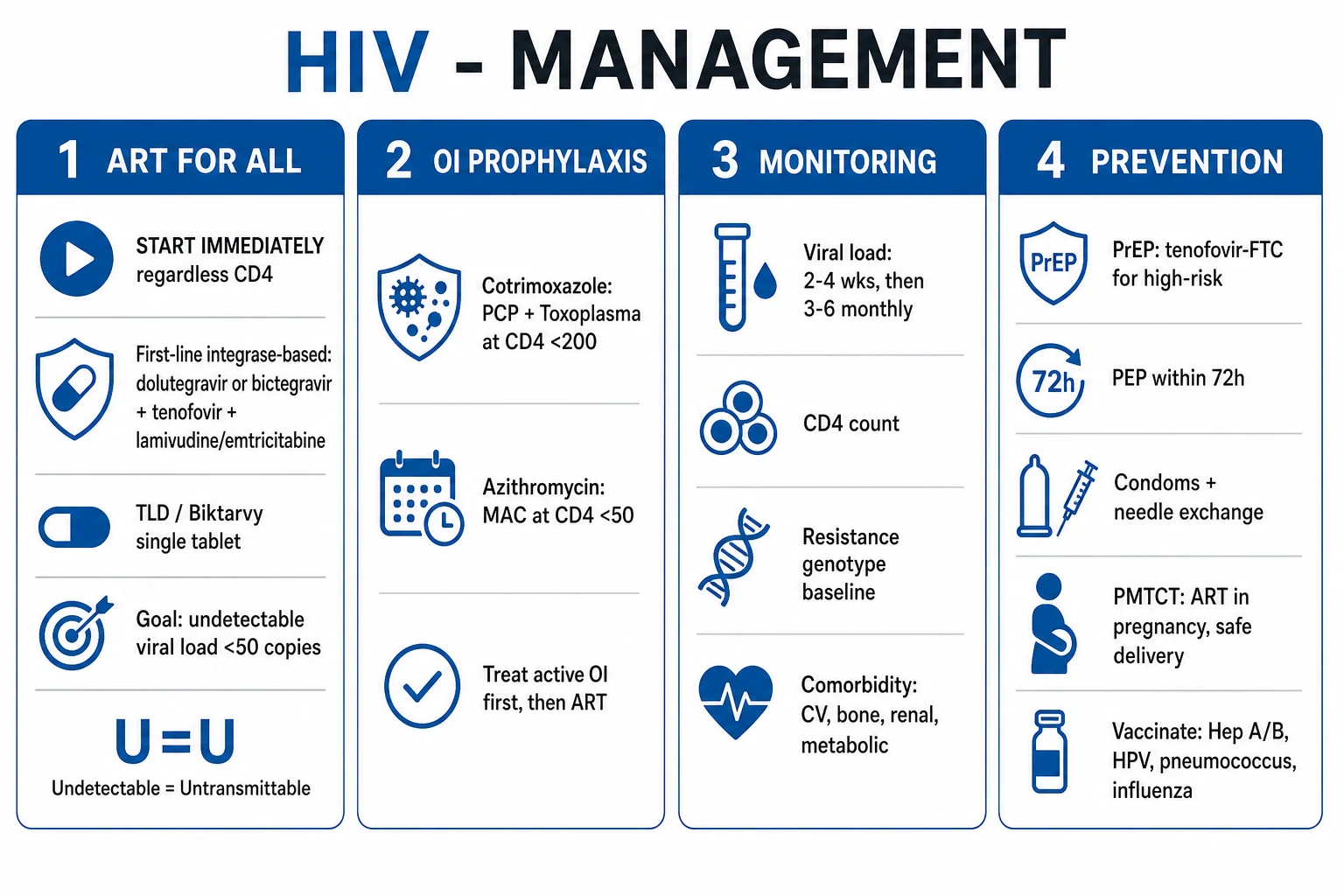
- Viral load at 2 to 4 weeks after starting (expect a fall of at least 1 log), then at 3 months (expect undetectable or near), then every 6 months once stable. Treatment failure = a confirmed viral load over 200 copies/mL (this is the threshold above which resistance can be selected).
- CD4 count at 3 to 6 months after start, then 6 to 12 monthly until stable above 300; afterwards may be measured less frequently.
- Routine safety bloods per drug: renal function and urinalysis (proteinuria, eGFR) with tenofovir, LFTs with NNRTIs and PIs, fasting glucose/lipids at baseline and on PIs, HbA1c.
- Adherence assessment at every visit — self-report, pharmacy refill data, pill count. [1]
Named scores reproduced
- CDC clinical and immunological classification (A/B/C and 1/2/3) — see Classification.
- WHO clinical staging 1 to 4 — see Classification.
- PHQ-9 / alcohol AUDIT-C / DAST — mental health and substance use screening.
- Karnofsky performance score — prognostic. [1]
Management — Resuscitation
The acutely unwell HIV-positive patient usually has an opportunistic infection. Resuscitation is ABCDE plus simultaneous treatment of the suspected OI: [1]
- Airway / Breathing — oxygen to target SpO2 94 to 98% (or 88 to 92% if co-existing COPD). PJP with PaO2 under 70 mmHg or A-a gradient over 35 → add corticosteroids (prednisolone 40 mg BD 5 days, then taper over 3 weeks) 24 to 72 h before or with co-trimoxazole — proven mortality benefit. Suspect pneumothorax in sudden deterioration. Respiratory failure → non-invasive ventilation (CPAP/BiPAP) may avert intubation.
- Circulation — septic shock from bacterial pneumonia, disseminated MAC, salmonella, TB: apply Surviving Sepsis hour-1 bundle (cultures, lactate, broad-spectrum antibiotics within 1 hour, balanced crystalloid 30 mL/kg, vasopressors). Empirical cover must include anti-pseudomonal / anti-MRSA cover in neutropenic or catheterised patients.
- Disability / neurology — acute focal deficit, seizure, depressed GCS → urgent CT brain then LP if no mass: consider cerebral toxoplasmosis (start pyrimethamine + sulfadiazine + leucovorin empirically if multiple ring-enhancing lesions and CD4 under 100), cryptococcal meningitis (CrAg; ICP management with repeated therapeutic LPs or VP shunt; amphotericin + flucytosine; DEFER ART), TB meningitis, HSV encephalitis (start acyclovir), bacterial meningitis (start ceftriaxone).
- Exposure / glucose / temperature — BM, blood cultures, malaria film in endemic areas, ECG (HIV and ART both prolong QT — efavirenz, atazanavir, macrolides, fluoroquinolones).
- Empirical "HIV bundle" in the deteriorating ward patient: blood cultures, chest X-ray, LDH, arterial blood gas, sputum for AFB and Xpert MTB/RIF, urine Legionella and pneumococcal antigen, CrAg if CD4 under 100, HSV / CMV PCR if indicated. Treat the suspected OI promptly — do NOT wait for confirmation in the deteriorating patient. [1]
HIV thresholds — numbers every clinician must know
Management — Definitive & Stepwise
Principle 1 — Start cART for EVERY adult and adolescent with HIV regardless of CD4
The START trial (NEJM 2015) randomised 4685 adults with CD4 over 500 to immediate vs deferred ART; immediate ART reduced serious AIDS/non-AIDS events and death by 57%. The TEMPRANO (Cote d'Ivoire) and HPTN 052 trials corroborated: early ART reduces mortality, TB, malignancy, and transmission by 93 to 96%.[3][4][5]
Principle 2 — Use a regimen of two NRTIs plus an INSTI (first-line globally)
First-line INSTI-based (preferred, IAS-USA / WHO / NACO)
- Tenofovir (TDF or TAF) + emtricitabine (or lamivudine) + dolutegravir (DTG)
- Single-tablet: TDF/FTC/DTG, TAF/FTC/BIC (bictegravir)
- Bictegravir/TAF/FTC (Biktarvy) — single tablet, well-tolerated
- Cabotegravir + rilpivirine long-acting injections every 2 months (ATLAS/FLAIR)
- High genetic barrier; well-tolerated; weight gain and rare neuropsychiatric effects with DTG
Alternative regimens
- DTG + ABC + 3TC (Kivexa) — only if HLA-B*5701 negative
- DTG + 3TC (Dovato) — 2-drug, NOT for VL over 100,000 or HBV co-infection
- Boosted darunavir (DRV/c or DRV/r) + TDF/FTC — PI-based
- Doravirine / rilpivirine / efavirenz-based — where INSTI not feasible
- Atazanavir/r — once-daily PI but hyperbilirubinaemia and stones
WHO 2024 first-line (adults and adolescents): TDF + 3TC (or FTC) + DTG — Dolutegravir-based, fixed-dose combination, once daily.[1]
NACO India 2022 first-line: TDF + 3TC + DTG (replaced efavirenz); efavirenz-based regimens retained in specific situations.[1]
Principle 3 — Choose the regimen to match the patient
Adjust the regimen for:
- HBV co-infection — always include tenofovir (TDF or TAF) + lamivudine or emtricitabine (active against both HBV and HIV) — never stop these abruptly (HBV flare).
- Renal disease (eGFR under 60) — prefer TAF over TDF (less nephrotoxic); dose-adjust NRTIs.
- Pregnancy or planning — DTG is safe and preferred; efavirenz 600 mg is acceptable; avoid DTG in early first trimester only if folate not supplemented (NTD signal, now resolved); avoid cobicistat-boosted PIs late in pregnancy (low levels).
- TB co-infection on rifampicin — DTG must be dose-increased to 50 mg twice daily (rifampicin induces DTG metabolism); avoid efavirenz 600 mg if baseline weight over 60 kg (use DTG); adjust PIs.
- Adherence challenges — consider long-acting cabotegravir + rilpivirine injections every 2 months.
- Transmitted resistance — INSTI-resistant virus: use boosted darunavir or dolutegravir with a dual-NRTI backbone chosen by genotype. [1]
Principle 4 — Prophylaxis against opportunistic infections (CD4-driven)
| CD4 count | Prophylaxis | Drug, dose, route |
|---|---|---|
| Under 200 (or oral candidiasis, or prior PJP) | PJP prophylaxis | Co-trimoxazole 960 mg (1 double-strength tablet) PO once daily (alternatives: dapsone 100 mg daily, atovaquone 1500 mg daily, aerosolised pentamidine 300 mg monthly) |
| Under 100 and Toxoplasma IgG positive | Toxoplasma prophylaxis | Co-trimoxazole 960 mg daily (covers PJP too); dapsone-pyrimethamine-leucovorin if sulfa-allergic |
| Under 50 | MAC prophylaxis | Azithromycin 1200 mg PO once weekly (alternative: clarithromycin 500 mg BD; rifabutin if MAC not yet isolated — but rifamycin interactions) |
| Disseminated MAC (already had it) | Secondary prophylaxis | lifelong until immune reconstituted |
| TB (any CD4, in high-prevalence settings) | TB preventive treatment | 3HP (rifapentine + isoniazid weekly x 3 months), 4R (rifampicin daily x 4 months), or 6H / 9H (isoniazid x 6 to 9 months) |
| Pregnant with HBsAg positive and high VL | PMTCT | cART in pregnancy + infant prophylaxis (see Special Populations) |
Stop primary prophylaxis when CD4 rises above the threshold for more than 3 to 6 months on ART (e.g., stop co-trimoxazole when CD4 above 200 on two occasions; stop MAC prophylaxis above 100). [1]
Principle 5 — Monitoring, switching, and managing failure
- Treatment failure = confirmed viral load over 200 copies/mL after 6 months on ART (after adherence addressed). Perform genotypic resistance testing and switch the entire regimen guided by resistance (use at least 2 and preferably 3 fully active drugs, often including a boosted PI and/or INSTI with new agent).
- Drug interactions — HIV drugs interact with statins (simvastatin — avoid with PIs), anticoagulants (rivaroxaban), anticonvulsants, antimalarials, methadone, oral contraceptives (cobicistat/ritonavir reduce ethinyl-oestradiol); consult the Liverpool HIV Drug Interactions checker before prescribing anything.
- Adverse effects by class — NRTIs: lactic acidosis, hepatic steatosis (stavudine, didanosine — now obsolete), nephrotoxicity and bone loss (TDF), hypersensitivity (abacavir — HLA-B*5701); NNRTIs: rash, hepatotoxicity, neuropsychiatric (efavirenz — vivid dreams, depression, suicidality), hepatotoxicity (nevirapine — especially CD4 over 250 women / over 400 men); INSTIs: weight gain, insomnia, mood changes, rare hepatotoxicity; PIs: hyperlipidaemia, insulin resistance, lipodystrophy, hyperbilirubinaemia (atazanavir), nephrolithiasis (atazanavir, indinavir), GI intolerance. [1]
Principle 6 — Prevention in HIV-negative people
- PrEP (pre-exposure prophylaxis) for high-risk negatives: daily oral tenofovir-emtricitabine (TDF 300 mg / FTC 200 mg) — 75 to 99% reduction in MSM (iPrEx, PROUD), in heterosexual men and women (Partners PrEP, TDF2), and in injecting drug users (Bangkok Tenofovir Study).[7] On-demand ("2-1-1") dosing for MSM: 2 tablets 2 to 24 h before sex, 1 tablet 24 h later, 1 tablet 48 h later. Long-acting injectable cabotegravir every 2 months (HPTN 083 in MSM / transgender women, HPTN 084 in cisgender women — superior to daily oral TDF/FTC).[8]
- PEP (post-exposure prophylaxis) for occupational or sexual exposure within 72 hours (best within 2 hours): 3-drug regimen = TDF (or TAF) + FTC + DTG (or raltegravir) for 28 days; baseline and 3-month HIV testing; offer PrEP thereafter if ongoing risk.
Principle 7 — TasP (treatment as prevention) — U=U
HPTN 052 (NEJM 2011, 2016) randomised serodiscordant couples to immediate vs delayed ART: immediate ART reduced linked HIV transmission by 93% (96% when VL suppressed) — zero transmissions when viral load was stably suppressed.[5][6] Corroborated by PARTNER and PARTNER 2 and Opposites Attract — across thousands of couple-years of condomless sex with suppressed viraemia, zero linked transmissions. U=U (undetectable equals untransmittable) is now global public-health consensus and is the cornerstone of HIV elimination modelling.[10]
Specific Subtypes & Scenarios
Acute (primary) HIV
Diagnosis is by HIV RNA PCR (high) with negative or evolving antibody. Treat immediately with cART — early therapy limits reservoir size, preserves immune function, and reduces onward transmission (high viral load in primary infection drives population spread). [1]
Late presenter (CD4 under 200 or AIDS-defining illness at diagnosis)
Start cART within 2 weeks of starting treatment of most OIs, BUT:
- PJP — start cART within 2 weeks of PJP diagnosis (no survival benefit to deferring).
- Cryptococcal meningitis — defer cART 4 to 6 weeks after starting antifungal therapy (reduced mortality; higher IRIS risk if early).
- TB — start cART within 2 weeks if CD4 under 50; within 8 weeks if CD4 50 or more (SAPiT / TIME / CAMELIA).[9]
- Toxoplasmosis — start cART within 2 to 3 weeks.
- Disseminated MAC — start cART within 2 weeks.
Immune reconstitution inflammatory syndrome (IRIS)
Paradoxical worsening of a known OI (or unmasking of a previously subclinical OI) within weeks to months of starting ART, due to recovery of pathogen-specific immune responses. Classic TB-IRIS (worsening fever, lymphadenitis, expanding lesions), cryptococcal-IRIS (recurrent meningitis), Herpes zoster-IRIS, CMV immune recovery uveitis, Kaposi-IRIS. Management: continue ART, treat the underlying OI, and use corticosteroids (prednisolone 1 to 1.5 mg/kg/day, tapering) for severe or organ-threatening IRIS. [1]
HIV-TB co-infection
TB is the leading cause of death in people with HIV globally. Every HIV-positive person is screened for TB at every visit (4-symptom screen: current cough, fever, night sweats, weight loss). Xpert MTB/RIF Ultra is the diagnostic standard. Treat TB first, then add ART: CD4 under 50 → ART within 2 weeks; CD4 50 or more → ART within 8 weeks (SAPiT). Rifampicin induces DTG metabolism — use DTG 50 mg twice daily (not once daily). Consider rifabutin as an alternative rifamycin if on PI-based ART. All HIV-positive people without active TB should receive TB preventive treatment (TPT) after excluding active TB.[9]
HIV-HBV co-infection
Use tenofovir (TDF or TAF) + lamivudine or emtricitabine as the ART backbone (active against both HBV and HIV). Do not stop these without an alternative anti-HBV agent — abrupt discontinuation causes severe HBV flare and hepatic decompensation. HBsAg-positive patients with high viral load should be on cART regardless of CD4. Curative HCV therapy with direct-acting antivirals (DAAs) is given once on stable cART (beware interactions — some DAAs interact with efavirenz, cobicistat, ritonavir-boosted PIs). [1]
Kaposi sarcoma
HHV-8-driven vascular tumour — epidemic (HIV-associated), classic (Mediterranean / Ashkenazi), endemic (sub-Saharan Africa), iatrogenic (post-transplant). In HIV, KS often regresses with cART alone; chemotherapy (liposomal doxorubicin or paclitaxel) for extensive, progressive, or visceral disease; radiotherapy for local control. [1]
HIV-associated nephropathy (HIVAN)
Collapsing FSGS, almost exclusively in patients of African descent with APOL1 risk variants; presents with nephrotic-range proteinuria and rapidly progressive renal failure. cART is the cornerstone; ACE inhibitors; steroids in selected cases. [1]
Complications & Pitfalls
Opportunistic infections — see the CD4 ladder. Top killers (untreated / late presenters): TB, bacterial sepsis, PJP, cryptococcal meningitis, toxoplasmosis, CMV disease. [1]
Malignancies (AIDS-defining and non-AIDS) — Kaposi sarcoma, non-Hodgkin lymphoma (including primary CNS lymphoma), invasive cervical carcinoma (the three AIDS-definers); on ART, an increased risk of non-AIDS malignancies (lung, liver, anal, Hodgkin lymphoma) driven by chronic inflammation, smoking, co-infections (HPV, HBV/HCV, EBV). [1]
Cardiovascular disease — people with HIV on ART have a 1.5 to 2-fold increased risk of MI and stroke, driven by chronic inflammation, antiretroviral metabolic effects (PIs, abacavir — D:A:D study), dyslipidaemia, insulin resistance, and high smoking prevalence. Aggressively manage modifiable risk factors; avoid abacavir in patients with high cardiovascular risk; prefer TAF / INSTI over TDF / boosted-PI if lipids are uncontrolled. [1]
Renal — tenofovir disoproxil fumarate (TDF) nephrotoxicity (Fanconi syndrome, eGFR decline), atazanavir nephrolithiasis, HIVAN, drug-induced interstitial nephritis. [1]
Bone — reduced BMD and osteoporosis / osteomalacia (TDF, tenofovir; chronic inflammation); consider DEXA and vitamin D; prefer TAF. [1]
Neurocognitive (HAND) — mild to severe; partially prevented by early ART; CSF viral escape in some. [1]
Metabolic — lipodystrophy / lipoatrophy (older drugs — stavudine, zidovudine, PIs), insulin resistance / diabetes, dyslipidaemia, weight gain (especially with INSTIs and TAF). [1]
Drug interactions and toxicity — see Management — the Liverpool HIV interactions checker is mandatory before any new prescription. [1]
Mental health / adherence — depression, anxiety, substance use, stigma, intimate-partner violence — major drivers of non-adherence, virological failure, and resistance. [1]
Classic pitfalls:
- Missing acute HIV because the antibody test is negative in seroconversion — order HIV RNA / p24 antigen in any mononucleosis-like illness with risk factors.
- Mis-attributing weight loss to HIV when the patient has TB, lymphoma, or disseminated MAC.
- Single ring-enhancing brain lesion labelled as toxo when it is primary CNS lymphoma — biopsy if atypical, single, EBV-positive, or no response to anti-toxo therapy in 2 weeks.
- Treating cryptococcal meningitis and starting ART too early — increased mortality from IRIS; defer 4 to 6 weeks.
- Failing to screen for / treat HBV and HCV in newly diagnosed HIV.
- Stopping co-trimoxazole or MAC prophylaxis prematurely (CD4 must be above threshold on ART for at least 3 to 6 months, not just once).
- Not dose-adjusting DTG to BD with rifampicin during TB therapy → virological failure.
- Not starting PEP within 72 hours of a needlestick or sexual assault exposure.
- Forgetting U=U — counselling patients (and partners, magistrates, employers) that suppressed viral load = no sexual transmission. [1]
Prognosis & Disposition
With modern cART started early, near-normal life expectancy is achievable — a 20-year-old newly diagnosed today can expect to live into their 70s. Five-year mortality for untreated AIDS is essentially 100%; with cART, 5-year survival exceeds 95%.[4]
Predictors of poor outcome: late presentation (CD4 under 200 or AIDS-defining illness at diagnosis), low baseline CD4 nadir (poor CD4 recovery), high baseline viral load, older age, comorbidity (cardiovascular, hepatic, renal), poor adherence, virological failure, transmitted drug resistance, advanced OI at presentation (especially cryptococcal meningitis and drug-resistant TB), and IRIS requiring ICU. [1]
Disposition — most newly diagnosed patients are managed as outpatients, started on cART within 1 to 2 weeks (sooner if pregnant, acute HIV, or low CD4). Admit for acute OIs (PJP with respiratory failure, cryptococcal meningitis, cerebral toxoplasmosis, severe IRIS, sepsis) and for social emergencies (suicidality, homelessness, intimate-partner violence). Multidisciplinary care — HIV physician, nurse, pharmacist, mental health, social work, peer navigator — improves adherence and outcomes. [1]
Follow-up — VL at 2 to 4 weeks and 3 months after start, then 6-monthly; CD4 6-monthly until stable above 300; annual STI screen, cervical / anal cytology, fasting lipids and glucose, mental health, and adherence review. Lifelong cART with no planned breaks. [1]
Special Populations
Pregnancy and mother-to-child transmission (PMTCT)
- All pregnant women with HIV start cART (preferably DTG-based) at diagnosis, regardless of CD4 or trimester — for their own health and to prevent MTCT.
- Untreated MTCT risk is 15 to 45% (in utero, intrapartum, breastfeeding); with effective cART and infant prophylaxis it falls to under 1%.
- Mode of delivery: vaginal delivery is safe if maternal viral load is undetectable (or under 50 copies/mL) at 36 weeks; elective caesarean at 38 weeks if VL is over 1000 copies/mL or unknown.
- Avoid breastfeeding only in high-income settings where formula is safe and sustainable; WHO (2016 onwards) recommends breastfeeding for at least 12 months alongside maternal cART in low- and middle-income settings, because the mortality benefit of breastfeeding outweighs the small residual transmission risk.
- Neonatal prophylaxis: nevirapine syrup for 6 weeks (low risk, mother suppressed) or triple-drug infant prophylaxis (NVP + ZDV + 3TC) for high risk (mother unsuppressed, late presentation).
- Avoid in pregnancy: efavirenz was historically avoided in the first trimester (NTD signal) but is now considered safe at 600 mg; delavirdine, cobicistat-boosted elvitegravir late in pregnancy (low levels); didanosine, stavudine. [1]
Infants and children
- Diagnosis in infants under 18 months uses HIV DNA or RNA PCR (maternal antibody crosses placenta and gives false-positive serology); WHO recommends virological testing at 4 to 6 weeks, 9 months, and 18 months for HIV-exposed infants.
- All children diagnosed with HIV start cART regardless of CD4 or age (CHER trial showed early ART reduces mortality by 76% in infants).
- Drug dosing is weight-based and changes with growth — consult paediatric dosing tables. [1]
Elderly
- Increasing proportion of new diagnoses and of the prevalent cohort; multimorbidity (CVD, renal, malignancy, neurocognitive) accumulates earlier than in the general population — screen aggressively.
- Polypharmacy and drug interactions are major; TAF preferred over TDF; prefer INSTI-based, low-interaction regimens. [1]
Health-care workers and occupational exposure
- Needlestick / mucocutaneous exposure — wash the wound, do NOT squeeze or apply caustic agents; assess the source (HIV, HBV, HCV status — rapid-test if unknown); assess the exposure (deep, hollow needle, visible blood = higher risk); if source HIV-positive or unknown with risk → PEP within 2 hours (within 72 hours at the latest): TDF + FTC + DTG (or raltegravir) for 28 days; baseline, 6-week, 3-month HIV testing; offer HBV vaccination / immunoglobulin and HCV follow-up. PEP is not 100% effective but reduces transmission by about 80%. [1]
Men who have sex with men, transgender women, sex workers, people who inject drugs
- Heightened risk — ensure routine opt-out HIV testing, PrEP, STI screening (3-monthly), vaccinations (HAV, HBV, HPV, meningococcal), harm-reduction (needle-syringe programmes, opioid substitution therapy), and gender-affirming care (avoid ART ART ART interactions with oestrogens — prefer non-interacting regimens). [1]
Patients with non-communicable disease or immunosuppression
- Transplant recipients and oncology patients — coordinate between HIV and transplant/oncology teams; cART interacts with calcineurin inhibitors, chemotherapy, corticosteroids; avoid enfwvirtide, maraviroc if no specific indication. [1]
Evidence, Guidelines & Regional Differences
Landmark trials (every examiner's friend): [1]
- START (NEJM 2015; long-term NEJM Evidence 2023) — immediate ART at CD4 over 500 reduces serious AIDS/non-AIDS events and death by 57%; 10-year follow-up shows reduced cancer and severe bacterial infection — establishes ART for all.[3][4]
- HPTN 052 (NEJM 2011, 2016) — early ART in serodiscordant couples reduced linked transmission by 93 to 96%; zero transmissions when VL suppressed — establishes U=U.[5][6]
- iPrEx (NEJM 2010) — daily TDF/FTC reduces HIV acquisition by 44% in MSM, 92% among those with detectable drug levels — establishes oral PrEP.[7]
- HPTN 084 / 083 (Lancet 2021, NEJM 2021) — long-acting injectable cabotegravir every 2 months is superior to daily oral TDF/FTC in cisgender women (HPTN 084) and MSM / transgender women (HPTN 083) — first-in-class long-acting PrEP.[8]
- SAPiT (NEJM 2010, 2011) — integrated TB-HIV therapy; start ART within 4 weeks of TB treatment in patients with CD4 under 50 (mortality benefit).[9]
- TEMPRANO (NEJM 2015) — early ART and 6-month isoniazid preventive therapy in Cote d'Ivoire reduced severe morbidity.
- PARTNER / PARTNER 2 (Lancet 2019) — zero phylogenetically linked transmissions in serodiscordant couples having condomless sex when VL was suppressed (over 126,000 sex acts).
- CHER (NEJM 2008) — early ART in HIV-infected infants reduces mortality by 76%.
- D:A:D — abacavir and didanosine associated with MI; cumulative PI use and MI.
- Granich modelling (Lancet 2009) — universal test-and-treat could eliminate HIV in South Africa.[10]
95-95-95 (UNAIDS 2025 targets)
By 2025: 95% of people living with HIV know their status, 95% of diagnosed people are on ART, 95% of those on ART are virally suppressed. Many high-income countries have met this; sub-Saharan Africa and south/south-east Asia are improving but lagging in men, adolescents, and key populations. [1]
Controversies
- When to start ART in cryptococcal / TB meningitis — recent CRYPTOIMPLICIT / ACTA trials have refined the timing; consensus now favours earlier ART in TB-meningitis but a 4-week deferral in cryptococcal meningitis with low intracranial pressure.
- Treatment interruptions / analytic cure — the "shock-and-kill" and "block-and-lock" strategies for reservoir elimination remain experimental (only documented cures: Berlin, London, Düsseldorf, New York patients — all required stem-cell transplant for concurrent malignancy).
- Long-acting PrEP access — cabotegravir-LA is more acceptable and effective than daily oral PrEP but expensive and injection-clinic-dependent in low-income settings. [1]
Exam Pearls
- CD4 under 200 = AIDS. Below 200 → PJP, oral hairy leukoplakia, ITP, recurrent bacterial pneumonia, Kaposi. Below 100 → toxo, cryptococcus, cryptosporidiosis. Below 50 → CMV retinitis, MAC, CNS lymphoma, PML.
- p24 antigen appears before antibody — basis of 4th-generation testing; HIV RNA PCR is the earliest test (positive ~day 10).
- Reverse transcriptase lacks proofreading — high mutation rate, viral diversity, drug resistance.
- HIV targets CD4+ T cells, macrophages, dendritic cells, microglia via gp120-CD4 binding + CCR5/CXCR4 co-receptor.
- ART = 2 NRTIs + 1 INSTI (DTG or BIC) — preferred first-line globally.
- Start ART for ALL regardless of CD4 (START).
- U=U — undetectable viral load = untransmittable (HPTN 052).
- PrEP — daily TDF/FTC or long-acting cabotegravir (HPTN 083/084).
- PEP — 3 drugs (TDF + FTC + DTG) for 28 days, within 72 h (ideally 2 h).
- TB co-infection — start ART within 2 weeks if CD4 under 50, within 8 weeks otherwise; double DTG to BD with rifampicin.
- Pregnancy — cART for all; C-section if VL over 1000 at 36 weeks; MTCT drops from 15 to 45% to under 1% with cART.
- PCP — co-trimoxazole high-dose + steroids if hypoxic.
- Toxo — pyrimethamine + sulfadiazine + leucovorin.
- Cryptococcal meningitis — liposomal amphotericin B + flucytosine induction; defer ART 4 to 6 weeks; manage raised ICP.
- MAC — azithromycin + ethambutol +/- rifabutin; azithromycin weekly for prophylaxis at CD4 under 50.
- Kaposi sarcoma, NHL, invasive cervical cancer = AIDS-defining malignancies.
- HLA-B*5701 before abacavir (hypersensitivity). G6PD before dapsone (haemolysis). APOL1 risk variants and HIVAN.
- Drug side effects (high-yield): abacavir → hypersensitivity; TDF → nephrotoxicity, bone loss; TAF → less renal/bone toxicity but weight gain; stavudine / didanosine → lactic acidosis, neuropathy, pancreatitis (obsolete); efavirenz → vivid dreams, depression, teratogenicity (older view); nevirapine → hepatotoxicity, rash (avoid if CD4 over 250 women / 400 men); atazanavir → unconjugated hyperbilirubinaemia (Gilbert-like), nephrolithiasis; darunavir → rash (sulfa moiety), lipid; ritonavir / cobicistat → CYP3A4 boosters, drug interactions; INSTIs (DTG, BIC) → weight gain, rare neuropsychiatric, no food interactions.
- Maraviroc = CCR5 antagonist (needs tropism test). Enfuvirtide = fusion inhibitor (SC injections). Fostemsavir = gp120 attachment. Ibalizumab = CD4 mAb. Lenacapavir = capsid inhibitor (every 6 months).
- Viral load over 200 copies/mL confirmed = treatment failure → switch with genotype.
- Hand-foot rash + mucosal ulcers + recent sexual exposure = acute HIV — order RNA PCR.
- Single ring-enhancing brain lesion + EBV CSF PCR positive = CNS lymphoma; multiple = toxo.
- "Pizza-pie" fundus = CMV retinitis (CD4 under 50).
- HIV-2 is intrinsically NNRTI-resistant — use boosted PI-based regimen. [1]
HIV-A
HIV-A
gp120-CD4 binding → CCR5/CXCR4 → fusion → RT → integrase → protease (life cycle = drug targets)
RNA PCR (earliest, day 10) → p24 (day 16) → Ag/Ab combo (day 18) → antibody (day 21+)
CD4 under 200 = AIDS; PCP at 200; toxo at 100; CMV/MAC at 50; VL over 200 = failure
2 NRTIs + INSTI for everyone (START); U=U (HPTN 052); PrEP TDF/FTC; PEP 3 drugs x 28 days
Exam application bank (NEET-PG / INICET)
One-line answer
HIV is a retrovirus (lentivirus) that infects and depletes CD4+ T-helper lymphocytes, producing progressive cell-mediated immunodeficiency. AIDS is the advanced stage, defined by CD4 under 200 cells/uL, a CD4 percentage below 14%, or any AIDS-defining illness (PJP, toxoplasmosis, CMV, MAC, Kaposi sarcoma, CNS lymphoma, etc.). Transmitted by sexual contact, blood/blood products, needle-sharing, and mother-to-child. Acute infection is a mononucleosis-like illness 2 to 4 weeks after exposure, followed by years of clinical latency, then opportunistic infections and tumours as CD4 falls. Diagnosis: 4th-generation Ag/Ab combo assay (p24 + antibody) confirmed by HIV-1/2 differentiation; staging by CD4 count and HIV RNA viral load. Treatment is combination antiretroviral therapy (cART) for every person with HIV regardless of CD4 (START trial): a backbone of 2 NRTIs plus an integrase strand-trans
Worked stems (answer without another resource)
Stem 1 — Classic presentation. Map symptoms to mechanism; name the first investigation and first treatment step with dose/route if drug therapy is standard. [1]
Stem 2 — Unstable / complicated. List red flags that force immediate resuscitation, theatre, ICU, antidote, or reperfusion — and what you do in the first 15 minutes. [1]
Stem 3 — Atypical group. Elderly, pregnancy, child, or immunocompromised: how presentation and thresholds change. [1]
Stem 4 — Differential trap. Name the three closest mimics and one discriminator for each. [1]
Stem 5 — Disposition. Who goes home with safety-netting, who is admitted, who needs HDU/ICU/theatre, and what follow-up is mandatory. [1]
Rapid viva checklist
- Definition + classification
- Pathophysiology chain
- Bedside signs / criteria
- Score with exact components (if any)
- Emergency bundle
- Definitive therapy with doses
- Complications of disease and of treatment
- Special populations
- Guideline/trial name if classic
- Three exam traps
Coverage self-check
If you cannot answer any stem above from this page alone, re-read the matching section — the page is intended to be self-sufficient for final-prof and NEET-PG/INICET questions on HIV / AIDS.
References
- [1]Gandhi RT, Landovitz RJ, Sax PE, et al. Antiretroviral Drugs for Treatment and Prevention of HIV in Adults: 2024 Recommendations of the International Antiviral Society-USA Panel JAMA, 2025.PMID 39616604
- [2]Bekker LG, Beyrer C, Mgodi N, et al. HIV infection Nat Rev Dis Primers, 2023.PMID 37591865
- [3]INSIGHT START Study Group; Lundgren JD, Babiker AG, Gordin F, et al. Initiation of Antiretroviral Therapy in Early Asymptomatic HIV Infection N Engl J Med, 2015.PMID 26192873
- [4]Lundgren JD, Babiker AG, Gordin F, et al. Long-Term Benefits from Early Antiretroviral Therapy Initiation in HIV Infection NEJM Evid, 2023.PMID 37213438
- [5]Cohen MS, Chen YQ, McCauley M, et al. (HPTN 052 Study Team). Prevention of HIV-1 infection with early antiretroviral therapy N Engl J Med, 2011.PMID 21767103
- [6]Cohen MS, Chen YQ, McCauley M, et al. Antiretroviral Therapy for the Prevention of HIV-1 Transmission N Engl J Med, 2016.PMID 27424812
- [7]Grant RM, Lama JR, Anderson PL, et al. (iPrEx Study Team). Preexposure chemoprophylaxis for HIV prevention in men who have sex with men N Engl J Med, 2010.PMID 21091279
- [8]Delany-Moretlwe S, Hughes JP, Bock P, et al. (HPTN 084). Cabotegravir for the prevention of HIV-1 in women: results from HPTN 084, a phase 3, randomised clinical trial Lancet, 2022.PMID 35378077
- [9]Abdool Karim SS, Naidoo K, Grobler A, et al. (SAPiT Trial). Integration of antiretroviral therapy with tuberculosis treatment N Engl J Med, 2011.PMID 22010915
- [10]Granich RM, Gilks CF, Dye C, De Cock KM, Williams BG. Universal voluntary HIV testing with immediate antiretroviral therapy as a strategy for elimination of HIV transmission: a mathematical model Lancet, 2009.PMID 19038438
- [11]Hemelaar J, Elangovan R, Yun J, et al. Global and regional molecular epidemiology of HIV-1, 1990-2015: a systematic review, global survey, and trend analysis Lancet Infect Dis, 2019.PMID 30509777