Infectious Diseases · Infectious Diseases
Malaria
Also known as Malaria · Falciparum malaria · Cerebral malaria · Tertian fever · Blackwater fever
Malaria is a mosquito-borne protozoan illness caused by the apicomplexan parasite Plasmodium and transmitted by the bite of an infected female Anopheles mosquito. Five species infect humans — P. falciparum (most lethal), P. vivax (commonest relapsing form), P. ovale, P. malariae and the zoonotic P. knowlesi. Classical presentation is a fever paroxysm (cold, hot and sweating stages) with chills, rigors, headache and splenomegaly, but in many endemic areas the periodicity is irregular and the illness is indistinguishable from other febrile syndromes. P. falciparum causes severe malaria — cerebral malaria, severe malarial anaemia, ARDS, acute kidney injury, hypoglycaemia and acidosis — through cytoadherence, sequestration and rosetting of parasitised erythrocytes in the microvasculature. Diagnosis is by thick blood film (detection sensitivity) and thin film (species identification and parasitaemia quantification) plus rapid diagnostic tests (HRP-2 / pLDH). Treatment is species- and severity-driven: artemisinin-based combination therapy (ACT) — artemether-lumefantrine, artesunate-amodiaquine, dihydroartemisinin-piperaquine — for uncomplicated falciparum; intravenous artesunate (2.4 mg/kg at 0, 12 and 24 h) for severe disease; primaquine (after G6PD screening) for radical cure of vivax/ovale; chemoprophylaxis (atovaquone-proguanil, doxycycline, mefloquine) for travellers. With prompt, correct treatment uncomplicated malaria is cured in three days; cerebral malaria still carries 15 to 20 per cent mortality.
On this page & tools
Your progress
Saved locally on this device.
Exam tags
Red flags
Overview & Definition
Malaria is an acute and sometimes chronic protozoan illness caused by haemosporidian parasites of the genus Plasmodium and transmitted to humans by the bite of an infected female Anopheles mosquito. Five species cause human disease — P. falciparum, P. vivax, P. ovale, P. malariae and the simian zoonosis P. knowlesi — and the clinical pattern, periodicity, severity and treatment strategy differ across them.[1]
The clinical art in malaria lies in three skills: (1) recognising malaria in a febrile patient (and not missing the diagnosis in a traveller, a pregnant woman or a partially immune adult), (2) distinguishing P. falciparum (potentially fatal) from the benign species and grading severity, and (3) choosing the right ACT for uncomplicated disease and giving intravenous artesunate within minutes for severe disease. A single missed dose of artesunate in cerebral malaria multiplies mortality.[2][4]
Classification
By causative species (the classification that drives treatment, prognosis and public-health response):[1]
- Plasmodium falciparum — commonest cause of severe malaria worldwide; malignant tertian; high parasitaemia, cytoadherence, sequestration; no hypnozoite (no relapse); gametocytocidal drug useful for transmission blocking.
- Plasmodium vivax — commonest cause of malaria outside Africa; benign tertian; forms hypnozoites (dormant liver forms that relapse weeks to years later); preferentially invades reticulocytes (so parasitaemia is low); splenic rupture a recognised complication.
- Plasmodium ovale — relapsing tertian, hypnozoite, milder than vivax, mostly West Africa; rare.
- Plasmodium malariae — quartan (72-hour cycle); chronic low-grade infection persisting for decades; classical association with immune-complex membranous nephropathy (quartan malarial nephrotic syndrome).
- Plasmodium knowlesi — simian parasite of macaques in Southeast Asia (Malaysia, Philippines); quotidian (24-hour) cycle; rapidly rising parasitaemia; mimics falciparum in severity; no hypnozoite. [1]
P. falciparum (malignant)
- Tertian cycle (48 h) but fever often IRREGULAR
- Invades RBCs of ALL ages — high parasitaemia possible
- CYTOADHERENCE + sequestration + rosetting → severe disease
- No hypnozoite — no relapse (but recrudescence if inadequately treated)
- Ring forms (delicate, double chromatin, appliqué/accolé), banana-shaped gametocyte
P. vivax (benign)
- Tertian cycle (48 h) — classical periodicity
- Invades RETICULOCYTES only — parasitaemia usually under 2 per cent
- HYNOZOITES in liver → relapse weeks to years later
- Enlarged amoeboid trophozoite, Schüffner's dots, enlarged RBC
- Primaquine (G6PD-screened) for radical cure
P. malariae
- QUARTAN cycle (72 h)
- Invades OLDER RBCs — very low parasitaemia
- No hypnozoite — but persists 30+ years
- Band-shaped trophozoite across RBC, rosette schizont
- Associated with membranous nephrotic syndrome (immune complex)
P. knowlesi
- Zoonotic — macaque reservoir — Malaysia, SE Asia
- QUOTIDIAN cycle (24 h) — rapid rise in parasitaemia
- Early trophozoite resembles falciparum; band trophozoite resembles malariae
- Can be severe/fatal — treat as for falciparum
- No hypnozoite
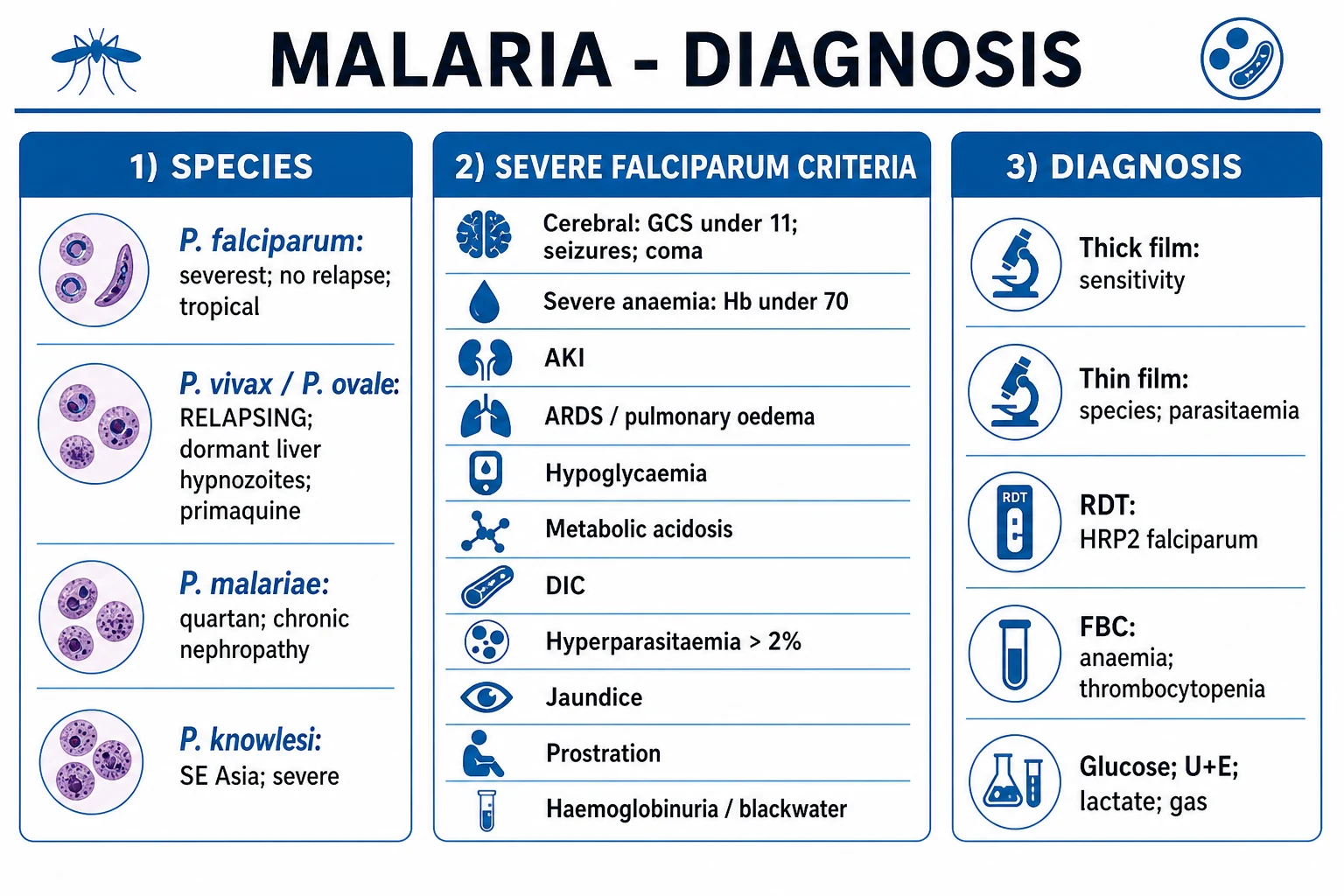
By severity (WHO 2014/2015 — defines "severe malaria" and mandates parenteral artesunate):[2]
- Cerebral malaria — unrousable coma (Blantyre coma score 2 or less in children, GCS under 11 in adults) not attributable to another cause.
- Severe malarial anaemia — Hb under 7 g/dL (under 5 g/dL in children under 12 months) with parasitaemia over 10,000/μL.
- Acidosis — base deficit over 8, bicarbonate under 15 mmol/L, or capillary lactate over 5 mmol/L (the strongest predictor of death).
- Acute kidney injury — creatinine over 3 mg/dL or urine output under 0.5 mL/kg/h.
- ARDS / pulmonary oedema — SpO2 under 92 per cent on room air, respiratory rate over 30, bilateral infiltrates.
- Hypoglycaemia — blood glucose under 2.2 mmol/L (40 mg/dL).
- Hypotension / "algid malaria" — systolic BP under 80 with shock (often concomitant bacterial sepsis).
- Bleeding / DIC — spontaneous bleeding or prolonged PT/aPTT with low platelets and fibrinogen.
- Hyperparasitaemia — over 2 per cent (low transmission), over 10 per cent (hyperendemic area), or over 4 per cent in pregnancy.
- Hyperbilirubinaemia / jaundice — bilirubin over 3 mg/dL.
- Haemoglobinuria (blackwater fever) — dark urine, intravascular haemolysis.
- Multiple seizures, prostration, hyperpyrexia, impaired consciousness (any degree) — also WHO severity criteria. [1]
By epidemiological setting:
- Indigenous / acquired locally vs imported (returning traveller).
- Relapse (hypnozoite reactivation, vivax/ovale) vs recrudescence (incomplete blood-stage clearance, falciparum) vs reinfection (new inoculation) — these three are not the same and the distinction matters for treatment and prognosis. [1]
Epidemiology & Risk Factors
Malaria remains one of the top three infectious killers worldwide. The WHO World Malaria Report records roughly 240 million cases and over 600,000 deaths each year, of which more than 95 per cent occur in sub-Saharan Africa; children under five and pregnant women bear the heaviest burden.[1]
India accounts for the great majority of malaria outside Africa. Transmission is driven by NVBDCP (National Vector-Borne Disease Control Programme) surveillance; both P. vivax (around half) and P. falciparum (around half) circulate, with falciparum concentrated in tribal, forested and hilly belts of Odisha, Chhattisgarh, Jharkhand, Madhya Pradesh, the North-Eastern states and the Andaman & Nicobar Islands. The principal vectors in India are Anopheles culicifacies (rural, 60 to 70 per cent of cases), An. stephensi (urban), An. fluviatilis (foothills), An. minimus and An. dirus (north-east), and An. sundaicus (coastal Andaman).[1]
[1]Malaria — numbers that examiners love
Risk factors for acquisition: [1]
- Geography — travel to or residence in the tropics/subtropics (sub-Saharan Africa, South and Southeast Asia, South Pacific, Amazon basin). The higher the transmission intensity in the source country, the higher the risk to a returning traveller.
- Lack of chemoprophylaxis in travellers — single biggest preventable risk.
- Lack of insecticide-treated bed nets — protection halves all-cause child mortality in endemic areas.
- Pregnancy — reduced cellular immunity, sequestration in placenta, higher parasitaemia.
- Age — non-immune children under five in endemic areas; non-immune travellers of any age.
- Asplenia / hyposplenism (surgical, sickle-cell autosplenectomy, coeliac) — risk of overwhelming falciparum and malariae infection.
- HIV/AIDS — higher parasitaemia, worse outcomes in pregnancy.
- Blood transfusion, needle-sharing, vertical (congenital) transmission — bypass the hepatic stage, so incubation is shorter and there are no hypnozoites (no relapse). [1]
Risk factors for severe disease (in a smear-positive patient): non-immune (traveller, child under 5 in low-transmission area), pregnancy, splenectomy/asplenia, HIV, delayed treatment, infection with P. falciparum or P. knowlesi, mixed infections, and intense transmission superimposed on poor access to care.[4]
Pathophysiology
Malaria has two hosts — the female Anopheles mosquito (definitive host — sexual sporogony) and the human (intermediate host — asexual schizogony). A full grasp of the life cycle unlocks every exam question on pathogenesis, relapse, treatment targets and prevention.[1]
The life cycle, step by step: [1]
- Inoculation. During a blood meal, the infected Anopheles female injects sporozoites from her salivary glands into the human dermis.
- Hepatic (pre-erythrocytic / exoerythrocytic) schizogony (7 to 30 days; asymptomatic). Sporozoites drain to the liver and invade hepatocytes. Over one to two weeks each sporozoite generates a liver schizont containing 10,000 to 30,000 merozoites. The hepatocyte ruptures, releasing merozoites into the bloodstream.
- P. vivax and P. ovale ONLY form hypnozoites — dormant parasites in hepatocytes that wake weeks to years later, causing relapse. Radical cure requires primaquine or tafenoquine (no blood schizonticide reaches hypnozoites).
- Erythrocytic schizogony (the symptomatic blood stage). Merozoites invade red cells via parasite ligand–erythrocyte receptor pairs (e.g. P. falciparum erythrocyte membrane protein / EBA-175 to glycophorin A; P. vivax Duffy-binding protein to the Duffy antigen / Fy). Inside the RBC the parasite passes through ring → trophozoite → schizont stages over 48 hours (tertian; malariae 72 h; knowlesi 24 h). The schizont ruptures, releasing 8 to 24 fresh merozoites, each re-invading a new RBC — and synchronously releasing haemozoin ("malaria pigment") and parasite toxins that trigger the TNF-alpha / IL-1 / IFN-gamma cytokine cascade producing the fever paroxysm.[1]
- Gametocytogenesis. A fraction of merozoites differentiate into sexual gametocytes (falciparum takes around 10 days; crescent/banana-shaped; infectious to the mosquito). Drugs that target gametocytes (primaquine) reduce transmission — the basis of population-level malaria control.
- Mosquito stage (sporogony). The mosquito ingests gametocytes during a blood meal; fertilisation in the midgut produces an ookinete → oocyst → sporozoites that migrate to the salivary glands, completing the cycle.
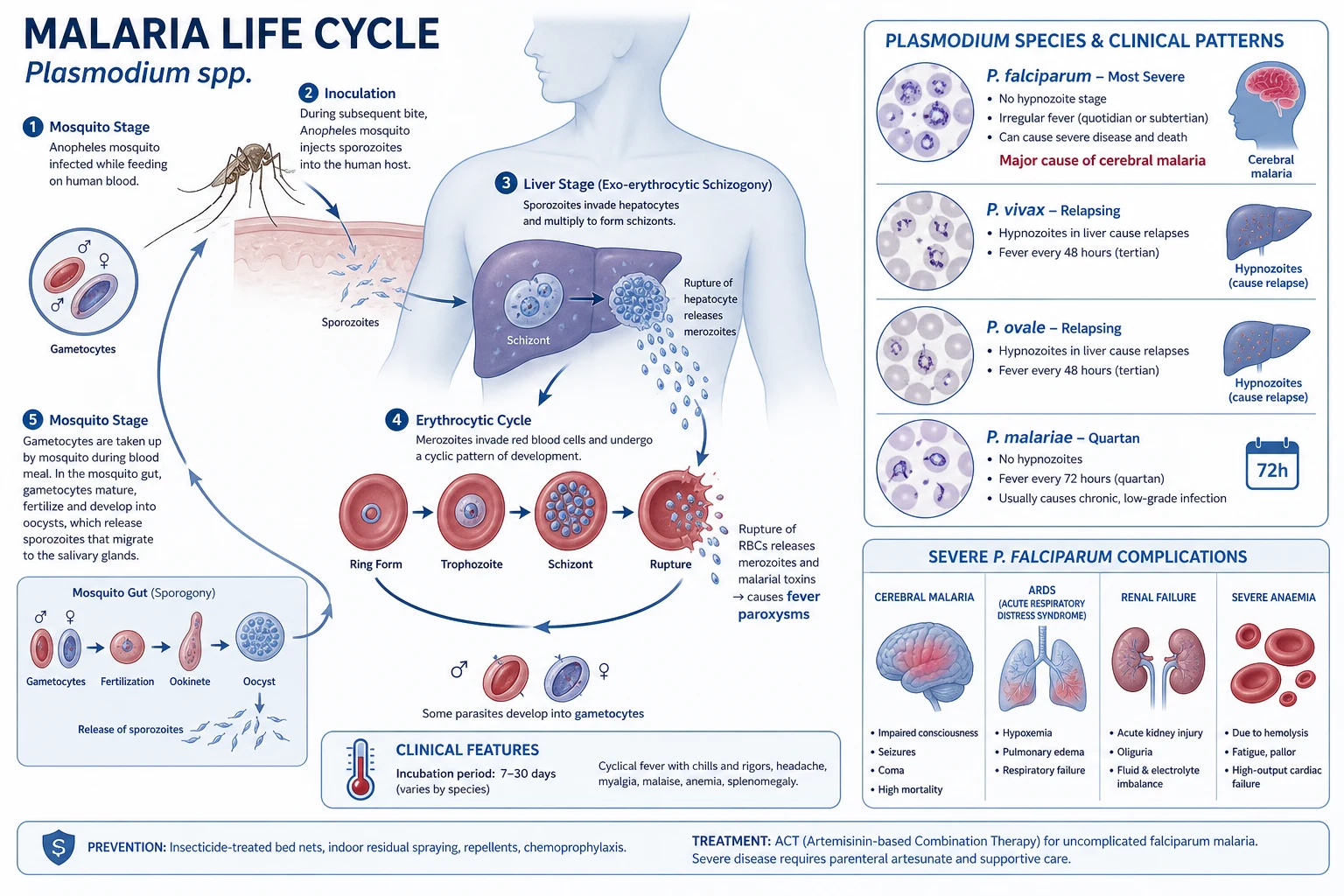
Why is P. falciparum the killer? Cytoadherence, sequestration, rosetting. [1]
- Parasitised RBCs (PRBCs) display P. falciparum erythrocyte membrane protein 1 (PfEMP-1) on their surface (encoded by the var gene family, ~60 copies, antigenic variation). PfEMP-1 binds endothelial receptors — ICAM-1, E-selectin, VCAM-1, CD36, chondroitin sulphate A (placenta), thrombospondin — sequestering PRBCs in the cerebral, renal, pulmonary, intestinal and placental microvasculature, away from splenic clearance.
- Rosetting — PRBCs bind uninfected RBCs, forming aggregates that further obstruct flow.
- Cytokine storm (TNF-alpha, IFN-gamma, IL-1) disrupts the blood–brain barrier, causing cerebral oedema, petechial haemorrhage and coma; loss of endothelial protein C receptor links coagulation and inflammation to sequestration.[9]
- End-organ consequences: cerebral malaria (coma, seizures), severe anaemia (haemolysis + dyserythropoiesis + hypersplenism), ARDS (pulmonary capillary leakage), AKI (acute tubular necrosis from sequestration + haemolysis), hypoglycaemia (parasite consumption of glucose + quinine-driven hyperinsulinaemia), lactic acidosis, and disseminated intravascular coagulation.[4][5]
Cerebral malaria — the prototypical severe phenotype. In African children the dominant picture is seizures, deep coma, opisthotonus, decerebrate posturing, abnormal respiratory patterns and retinal whitening (malarial retinopathy); in Asian adults the pattern is severe anaemia, AKI, ARDS, jaundice and metabolic acidosis.[5][6]
Blackwater fever — massive intravascular haemolysis with haemoglobinuria (dark-red/black urine), classically seen with intermittent quinine use in semi-immune patients (the modern antimalarials have reduced its incidence, but it still occurs). Mechanism: immune-mediated haemolysis, often with quinine-dependent antibodies.[12]
Pathophysiology in one sentence: falciparum kills by microvascular obstruction (cytoadherence + rosetting + sequestration) producing tissue hypoxia, with cytokine-driven systemic inflammation and massive haemolysis as the mediators of coma, anaemia, AKI, ARDS, hypoglycaemia and acidosis. [1]
Clinical Presentation
The classical malaria paroxysm (best seen in primary non-immune vivax infection; often blurred in semi-immune adults and in falciparum) lasts 6 to 10 hours and has three stages:[1]
- Cold stage (15 to 60 min) — intense chills, rigors, shivering; the patient is pale, cyanotic, and feels cold despite a rising core temperature.
- Hot stage (2 to 6 h) — fever (39 to 41 °C), headache, nausea, vomiting, myalgia, cough; skin hot and dry.
- Sweating stage (2 to 4 h) — profuse sweating, fever defervesces, the patient is exhausted and often sleeps. [1]
Periodicity by species (when synchronised — often irregular early in illness): [1]
| Species | Cycle | Classical name |
|---|---|---|
| P. vivax / P. ovale | every 48 h (tertian) | Benign tertian |
| P. falciparum | 48 h but usually irregular | Malignant tertian |
| P. malariae | every 72 h (quartan) | Quartan |
| P. knowlesi | every 24 h (quotidian) | Quotidian |
Uncomplicated malaria — symptoms and signs. Fever (often continuous at first), headache, malaise, myalgia, arthralgia, nausea, vomiting, diarrhoea (mimics gastroenteritis), dry cough and abdominal pain. Examination: splenomegaly (develops after several days; a soft, tender spleen), mild hepatomegaly, mild jaundice, pallor, mild tachypnoea. Children may have only fever and refusal of feeds. [1]
Atypical presentations to expect on an exam: [1]
- Traveller returning from an endemic area — incubation usually 7 to 30 days after the last exposure, but can be months (rarely years) for vivax/ovale (hypnozoite) or malariae; up to 1 year even with chemoprophylaxis. Always include malaria in any febrile traveller for a year after return.
- Pregnant woman — higher parasitaemia, hypoglycaemia, pulmonary oedema, severe anaemia, miscarriage, stillbirth, low-birth-weight baby (the single biggest contributor to malaria-attributable infant mortality); the placenta sequesters PRBCs (cytoadherence to chondroitin sulphate A) so peripheral parasitaemia underestimates the true burden.
- Children — may present with seizures, prostration, deep breathing (acidotic Kussmaul), impaired consciousness without the classical paroxysm; severe anaemia may be the only sign.
- Elderly / comorbid — atypical blunted presentation, rapid progression to multi-organ failure, higher mortality; quinine is poorly tolerated.
- Asplenic / splenectomised patient — overwhelming, rapidly fatal falciparum or malariae infection; can present in septic shock within hours.
- Partially immune adult in an endemic area — may have low-grade fever and parasitaemia that mimics viral illness; asymptomatic parasitaemia is common and the fever may be due to a concomitant bacterial or viral illness — always look for another cause, do not assume the smear is the answer. [1]
Severe falciparum malaria — clinical features by organ (any one mandates IV artesunate and ICU):[4]
- Cerebral — impaired consciousness (GCS under 11), seizures (especially children), decorticate/decerebrate posturing, dysconjugate gaze, mandibular breathing, absent corneal reflexes, malarial retinopathy (whitened retina, orange-white vessel changes, haemorrhages) — the most specific marker at autopsy-proven cerebral malaria.
- Respiratory — tachypnoea, deep (Kussmaul) breathing (acidosis), chest crackles, ARDS (worsening hypoxia with bilateral infiltrates; risk highest around day 2 to 3, often after the patient is improving).
- Renal — oliguria / anuria, dark urine (blackwater), oedema.
- Metabolic — hypoglycaemia (sweating, tremor, confusion, coma — overlaps with cerebral malaria; check glucose in any unconscious malaria patient), severe acidosis (Kussmaul breathing, low bicarbonate, high lactate).
- Haematological — severe pallor, jaundice, spontaneous bleeding (DIC), petechiae.
- Cardiovascular — shock / "algid malaria" (cold peripheries, weak pulse, hypotension; frequently with concomitant Gram-negative septicaemia). [1]
Differential Diagnosis
In a febrile patient from an endemic area, malaria shares the stage with a long list — and more than one may coexist.[1]
Dengue
- High fever, RETRO-ORBITAL headache, severe myalgia, maculopapular rash, leucopenia, THROMBOCYTOPAENIA
- Positive tourniquet test, plasma leakage (haematocrit rises over 20 per cent), narrow pulse pressure
- NS1 antigen in first 5 days; IgM after day 5
- Bilateral malar flush, no splenomegaly early
Enteric (typhoid) fever
- STEP-LADDER fever rising over days, RELATIVE BRADYCARDIA, coated tongue, rose spots, constipation early then diarrhoea
- Leucopenia, eosinopenia; positive Widal, blood/bone-marrow culture
- No splenomegaly early; abdominal tenderness
Leptospirosis
- Biphasic fever, severe MYALGIA (calves), CONJUNCTIVAL SUFFUSION, jaundice, AKI, haemoptysis (Weil disease)
- Occupational exposure (farmer, sewer worker, animal handler); post-flood
- IgM ELISA / MAT; rising titres
Scrub typhus
- Fever, headache, ESCHAR at inoculation site, lymphadenopathy, maculopapular rash, AKI, ARDS
- Rural/forested exposure (mite); responds within 24-48 h to doxycycline
- IgM ELISA / Weil-Felix OX-K
Influenza / COVID-19
- Acute onset dry cough, sore throat, coryza, myalgia, dyspnoea; CXR infiltrates (COVID-19)
- Respiratory symptoms dominate; leucopenia common
- PCR on nasopharyngeal swab
Visceral leishmaniasis (kala-azar)
- CHRONIC (weeks-months) spiking fever, MASSIVE SPLENOMEGALY, pancytopenia, weight loss, darkening of skin
- Endemic in Bihar, Jharkhand, West Bengal; rK39 strip test
- Blackish pigmentation (kala-azar = black sickness)
Septicaemia / pyogenic infection
- High fever, rigors, hypotension, focus (pneumonia, UTI, abscess, meningitis)
- Leucocytosis with left shift; positive blood cultures
- Empirical broad-spectrum antibiotics — do NOT wait
Hepatitis (viral) / yellow fever
- Jaundice + markedly raised transaminases (over 10 times normal), anorexia, dark urine
- Low-grade fever; HSV/EBV/drug causes
- Serology (HAV IgM, HBsAg, HEV IgM)
Three classical pitfalls to anticipate on an MCQ or viva: [1]
- Malaria + dengue co-infection is common in India — a positive dengue NS1 does not exclude malaria; send both films.
- Malaria + bacterial septicaemia ("algid malaria") — a smear-positive patient in shock should receive IV artesunate AND empirical broad-spectrum antibiotics within the hour.
- Typhoid with thrombocytopenia or scrub typhus with splenomegaly can perfectly mimic malaria — the smear (and the eschar) are decisive. [1]
Clinical & Bedside Assessment
ABCDE first, with particular attention to: [1]
- Airway/Breathing — respiratory rate (the most sensitive marker of severity in children), SpO2, work of breathing, Kussmaul breathing (acidosis), crackles (pulmonary oedema/ARDS).
- Circulation — pulse, BP, capillary refill, postural drop (occult hypovolaemia), jugular venous pressure.
- Disability — Blantyre Coma Score (children, motor/verbal/eye, max 5) or GCS (adults); pupils, blood glucose at the bedside (every hour in severe disease, especially on quinine), look for retinal changes (malarial retinopathy).
- Exposure — full skin exam (rash, eschar, bleeding, jaundice, pallor), abdominal exam for splenomegaly (soft, tender) and hepatomegaly, look for neck stiffness (always exclude meningitis in an unconscious malaria patient — lumbar puncture once safe). [1]
Named bedside findings worth knowing: [1]
- Malarial retinopathy (Whitworth / Beare): retinal whitening, orange-white vessel discolouration, haemorrhages, papilloedema — most specific clinical marker of true cerebral malaria (versus parasitaemia with coma from another cause).[6]
- Hepatosplenomegaly with mild jaundice and pallor in a returned traveller — think malaria (also kala-azar, haemolytic anaemia, lymphoma).
- Tachypnoea with deep breathing = metabolic acidosis (poor prognostic marker — base deficit over 8 predicts death).
- Cold peripheries with weak pulse = "algid malaria" (look for bacteraemia).
- Dark urine with pallor and jaundice = blackwater fever.[12]
History to extract in five questions: [1]
- Travel history — exact countries, dates, compliance with chemoprophylaxis, mosquito-avoidance measures, blood transfusion in the past 3 months.
- Fever pattern — onset, periodicity, rigors, sweating; remember the cycle is often irregular.
- Symptoms of severe disease — confusion, drowsiness, seizures, breathlessness, dark urine, bleeding.
- Pregnancy / comorbidity — splenectomy, sickle cell, HIV, diabetes, cardiac disease.
- Prior malaria / treatment so far — drug names and doses (resistance, recrudescence). [1]
Investigations
Tier 1 — confirm the parasite (and rule in/out falciparum):[1]
- Thick blood film (3 drops, no fixation, Giemsa/Field stain) — the gold standard for DETECTION; 20 to 40 times more sensitive than thin film because the RBCs are lysed and many fields are scanned; sensitivity down to around 50 to 100 parasites/μL.
- Thin blood film (fixed with methanol, Giemsa) — SPECIES IDENTIFICATION and parasitaemia quantification. Examine for ring forms, trophozoite morphology, Schüffner dots, schizonts, gametocytes (banana-shaped = falciparum). Three smears at 12- to 24-hour intervals are required before declaring a patient smear-negative.
- Rapid Diagnostic Test (RDT) — immunochromatographic on finger-prick blood:
- HRP-2 (histidine-rich protein 2) — P. falciparum only; persists for weeks after treatment (so cannot diagnose a treatment failure or new infection). Note HRP-2 gene deletions in parts of South America, Africa and India make some falciparum strains HRP-2-negative.
- pLDH (parasite lactate dehydrogenase) — species-specific and clears in 1 to 2 weeks (better for treatment response).
- Aldolase — pan-malarial.
- PCR — most sensitive and specific; distinguishes species and mixed infections; used for confirmation, research and outbreak investigation. Not point-of-care. [1]
How to calculate parasitaemia (%) on a thin film: [1]
- Count parasitised RBCs per 1,000 RBCs; multiply by 100 for percentage.
- Or: parasites/μL = (parasites counted / WBC counted) × 8,000 (using a thick film).
- Hyperparasitaemia = over 2 per cent (low transmission), over 10 per cent (hyperendemic), or over 4 per cent in pregnancy — consider exchange transfusion above 10 per cent with severe disease.[4]
Species morphological clues (a high-yield table): [1]
| Species | RBC size | Trophozoite | Schizont | Gametocyte | Pigment |
|---|---|---|---|---|---|
| P. falciparum | normal, multiple rings/cell | delicate ring, accolé/appliqué, double chromatin | rare in peripheral blood (sequestered) | crescent / banana | coarse black |
| P. vivax | enlarged | amoeboid, Schüffner's dots | 12 to 24 merozoites | round, large | brown-yellow |
| P. ovale | oval, fimbriated | compact, Schüffner's dots | 6 to 12 merozoites | round | brown-black |
| P. malariae | normal | band across cell | rosette (8 merozoites around pigment) | round | dark brown-black |
Tier 2 — assess severity and complications (admitted / severe patient): [1]
- Full blood count — anaemia (haemolysis, splenic sequestration, dyserythropoiesis), thrombocytopenia (in virtually all species — a useful clue), leucopenia or normal WCC (a high neutrophilia suggests concomitant bacterial sepsis).
- Blood glucose — hypoglycaemia (under 2.2 mmol/L) — check on admission and hourly on quinine.
- U&E + creatinine — AKI (creatinine over 3 mg/dL), hyponatraemia (SIADH or adrenal in some).
- LFTs — bilirubin (haemolysis, hepatic sequestration), AST/ALT moderately raised, hypoalbuminaemia.
- ABG / venous lactate — metabolic acidosis (base deficit over 8, lactate over 5 mmol/L = poor prognosis).
- Coagulation — PT, aPTT, fibrinogen, D-dimer (DIC).
- G6PD assay — before primaquine or tafenoquine in anyone with relapsing malaria or for gametocytocidal use.
- Blood cultures — in any severe case (concomitant bacteraemia is common, mortality high).
- Urine — dipstick (haemoglobinuria, proteinuria), MC&S; pregnancy test in any woman of reproductive age.
- CXR, ECG (especially on quinine / chloroquine — QTc prolongation).[13]
Tier 3 — special situations: [1]
- Lumbar puncture if any meningism or persistent altered consciousness — to exclude bacterial meningitis (do CT first if focal signs or papilloedema).
- USS abdomen if suspected splenic rupture (sudden abdominal pain + shoulder-tip + falling haematocrit in vivax malaria). [1]
Severity criteria (WHO 2014/2015) — reproduced verbatim, any one defines severe malaria (and triggers IV artesunate + ICU):[2][4]
- Cerebral malaria: impaired consciousness (Blantyre under 3 / GCS under 11) or multiple seizures.
- Prostration: generalised weakness, unable to sit, stand or walk without assistance.
- Respiratory distress (acidotic breathing or SpO2 under 92 per cent on room air).
- Shock ("algid malaria"): capillary refill over 3 s, SBP under 80 adults (under 70 children).
- Abnormal bleeding / DIC.
- Jaundice: bilirubin over 3 mg/dL.
- Haemoglobinuria (blackwater).
- Severe anaemia: Hb under 7 g/dL (under 5 g/dL in infants).
- Hypoglycaemia: under 2.2 mmol/L.
- Acidosis: bicarbonate under 15 mmol/L or base deficit over 8.
- Hyperparasitaemia: over 2 per cent / over 4 per cent (pregnancy) / over 10 per cent (hyperendemic).
- AKI: creatinine over 3 mg/dL or urine output under 0.5 mL/kg/h.
- Pulmonary oedema / ARDS.
- Hyperpyrexia (over 41 °C). [1]
Management — Resuscitation
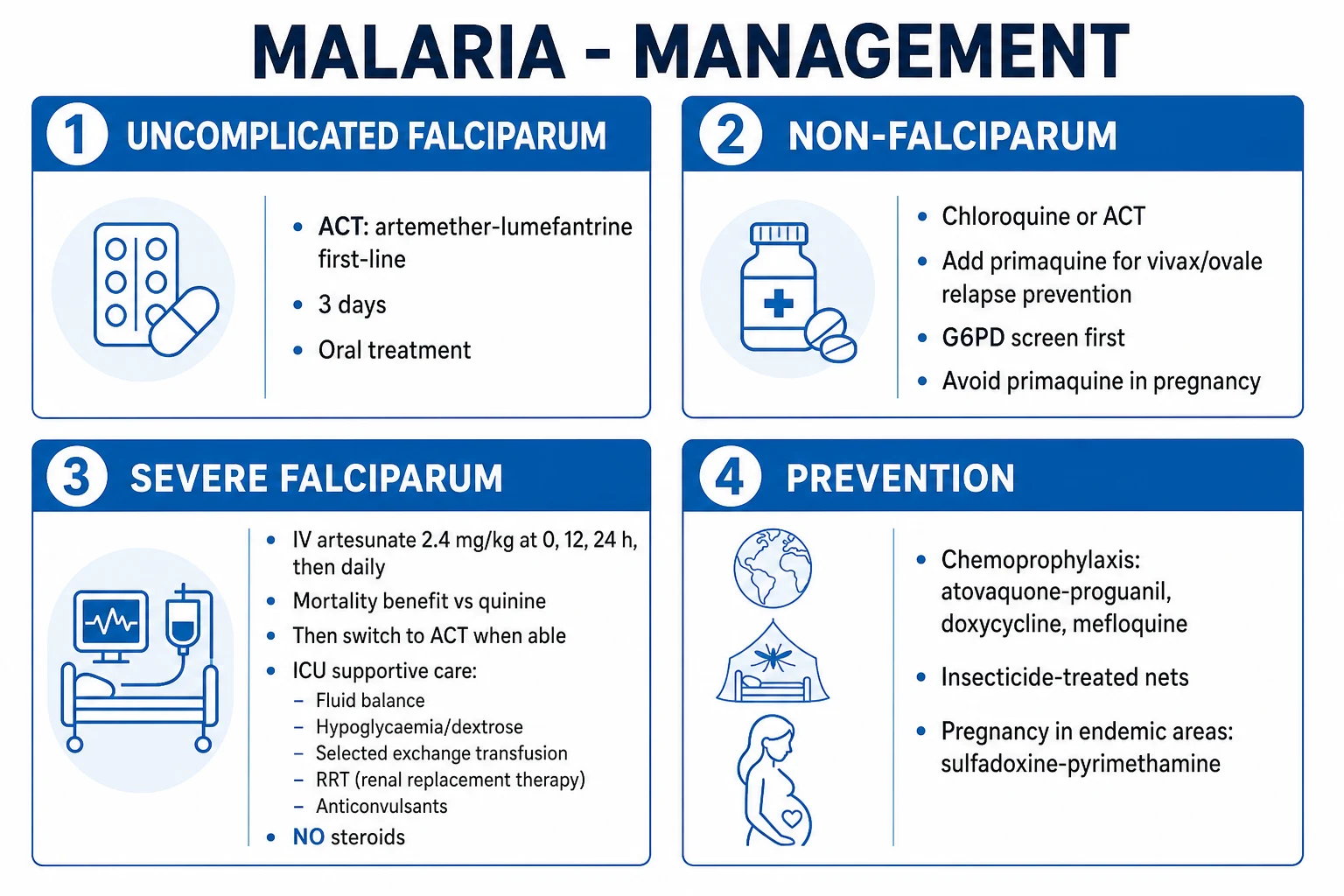
Severe malaria is a medical emergency: the dose of IV artesunate must be drawn up the moment the diagnosis is suspected — do NOT wait for parasitaemia results.[2][4]
- ABCDE. Airway protected; oxygen for SpO2 under 92 per cent (target 94 per cent or above); IV access × 2; cross-match.
- Stat IV artesunate. 2.4 mg/kg IV at hour 0, 12 and 24, then once daily until the patient can tolerate oral therapy (at least 24 h after the last dose, total minimum 3 doses). Children under 20 kg: 3 mg/kg per dose (higher weight-based dose reflects faster clearance). Reconstitute in supplied bicarbonate/saline, give as a slow IV push over 2 to 3 minutes (or as a short infusion).[2][3]
- If artesunate is unavailable for the first 24 h: IV quinine dihydrochloride 20 mg/kg loading dose in 5 per cent dextrose over 4 h, then 10 mg/kg every 8 h (max 1.8 g/24 h) — but switch to artesunate as soon as it arrives.
- Bedside glucose. Treat hypoglycaemia (under 2.2 mmol/L) immediately with 50 mL of 50 per cent dextrose IV (children: 5 mL/kg of 10 per cent dextrose) followed by an IV 10 per cent dextrose infusion at 1 to 2 mL/kg/h; recheck every hour on quinine.
- Fluids — cautiously. Severe malaria is the one disease in which aggressive resuscitation kills (pulmonary oedema / ARDS). Give only enough crystalloid to restore perfusion; reassess responsiveness with passive leg raise / IVC ultrasound; avoid fluid boluses over 20 mL/kg in children (FEAST trial showed excess mortality).
- Seizures — IV lorazepam 4 mg (0.1 mg/kg) or diazepam 10 mg (0.15 mg/kg), repeated once; then IV levetiracetam or phenytoin for control. Prophylactic phenobarbital is NOT recommended (excess mortality with 20 mg/kg in cerebral malaria).
- Severe anaemia — transfuse packed red cells when Hb under 7 g/dL (under 5 in infants) or under 9 in pregnancy or with decompensation; transfuse 10 to 20 mL/kg over 3 to 4 h.
- Acidosis — treat the cause (hypovolaemia, anaemia, sepsis); bicarbonate is not routinely indicated.
- AKI — fluid balance, IV furosemide if volume-overloaded, renal replacement therapy (haemofiltration preferred) for refractory hyperkalaemia, acidosis or fluid overload.
- ARDS — oxygen, non-invasive ventilation or mechanical ventilation with lung-protective settings (tidal volume 6 mL/kg ideal body weight, plateau pressure under 30 cmH2O); avoid fluid overload.
- Shock / algid malaria — empirical broad-spectrum antibiotics (e.g. ceftriaxone 2 g IV) plus artesunate; vasopressors (noradrenaline) for fluid-refractory shock.
- Hyperparasitaemia over 10 per cent with severe disease — consider exchange transfusion (role has been questioned in adults but remains an option in selected cases).
- Monitor — at minimum hourly: GCS/Blantyre, glucose (esp. on quinine), RR, SpO2, urine output; parasitaemia every 12 h until falling; daily U&E, FBC, LFTs, lactate. A rising parasitaemia in the first 12 to 24 h is expected after artesunate (pitting of ring forms); judge response at 24 to 48 h.[4]
SEVERE MALARIA — the emergency bundle
ARTESUNATE
and oxygen if SpO2 under 92 per cent
ICU / ID consult; ask about drug availability
cross-match; cultures
at 0, 12, 24 h (3 mg/kg if under 20 kg)
FBC, U&E, glucose, LFTs, lactate, coagulation, G6PD, cultures, pregnancy test
catheterise; monitor hourly
10 per cent dextrose infusion; check hourly on quinine
crystalloid cautiously; ARDS is lethal
seizures, anaemia, AKI, ARDS, shock
if parasitaemia over 10 per cent with severe disease
Management — Definitive & Stepwise
Strategy is driven by (1) species — falciparum/knowlesi vs vivax/ovale vs malariae; (2) severity — uncomplicated vs severe; (3) special situations — pregnancy, children, splenectomy, G6PD deficiency, prior treatment.[1]
Uncomplicated P. falciparum (and P. knowlesi) — ACT, 3 days
The WHO mandates artemisinin-based combination therapy (ACT) as first-line — the artemisinin partner clears parasites rapidly (10,000-fold reduction per cycle), the partner drug (long half-life) clears the residual and protects the artemisinin against resistance.[1]
Artemether-lumefantrine (AL, Coartem, Falcigo, Lumerax) — first-line in India, US, UK: [1]
- Adult tablet = 20/120 mg (artemether/lumefantrine).
- Adult (35 kg or above): 4 tablets per dose at 0, 8, 24, 36, 48 and 60 h (twice daily for 3 days, 6 doses, 24 tablets in total).
- 5 to 14 kg: 1 tablet/dose; 15 to 24 kg: 2; 25 to 34 kg: 3.
- Must be taken with fatty food (absorption of lumefantrine is fat-dependent — a common cause of treatment failure is taking it on an empty stomach). [1]
Artesunate-amodiaquine (AS+AQ) — 4 mg/kg AS + 10 mg/kg base AQ daily × 3 days; widely used in Africa. [1]
Dihydroartemisinin-piperaquine (DHA-PPQ, Eurartesim) — 4 mg/kg DHA + 18 mg/kg PPQ daily × 3 days; longer post-treatment prophylaxis; some resistance in the Greater Mekong.[8]
Artesunate-mefloquine (AS-MQ) — 4 mg/kg AS + 8 mg/kg MQ daily × 3 days; used in parts of Southeast Asia and Brazil. [1]
Artesunate-pyronaridine (Pyramax) — newer ACT. [1]
Partner drugs and their characteristic adverse effects (high-yield): [1]
- Lumefantrine — QT prolongation (avoid with other QT drugs, grapefruit).[13]
- Amodiaquine — hepatotoxicity, agranulocytosis; avoid in HIV with efavirenz/zidovudine.
- Piperaquine — QT prolongation.
- Mefloquine — neuropsychiatric (anxiety, insomnia, vivid dreams, psychosis, seizures); avoid in epilepsy, depression.
- Quinine — cinchonism (tinnitus, deafness, headache, nausea), hypoglycaemia (insulin release), QT prolongation, blackwater fever.[12]
Uncomplicated P. vivax and P. ovale — blood-stage + radical cure
- Blood-stage (chloroquine-sensitive — most of India and the world): chloroquine 25 mg base/kg total over 3 days (10 mg/kg day 1, 10 mg/kg day 2, 5 mg/kg day 3).
- Chloroquine-resistant vivax (Indonesia, Papua New Guinea, parts of South America) — use an ACT (DHA-PPQ or AS-MQ) as for falciparum.
- Radical cure of hypnozoites — primaquine 0.25 mg/kg daily for 14 days (Asia; 0.5 mg/kg in Oceania / some East African strains); always screen G6PD first (haemolysis risk). Tafenoquine 300 mg single dose (Krintafel) is an alternative in G6PD-normal adults (long half-life, single-dose advantage; contraindicated in G6PD deficiency and pregnancy). [1]
Uncomplicated P. malariae
- Chloroquine 25 mg base/kg over 3 days (uniformly chloroquine-sensitive); no radical cure (no hypnozoite). [1]
Severe P. vivax or P. knowlesi
- Treat as severe falciparum — IV artesunate 2.4 mg/kg regimen; vivax is increasingly recognised as a cause of severe disease (especially in Indonesia / Papua).[4]
Pregnancy — special drug selection
- First trimester (all species) — IV quinine 10 mg/kg every 8 h plus IV clindamycin 5 mg/kg every 8 h for 7 days for severe; oral quinine + clindamycin × 7 days for uncomplicated. (Artesunate in early pregnancy carries theoretical embryotoxicity; recent data are reassuring and the WHO now permits artesunate if quinine unavailable.)[1]
- Second and third trimester — ACT as in non-pregnant women (artemether-lumefantrine is the best-studied); IV artesunate for severe disease.
- Radical cure with primaquine / tafenoquine is CONTRAINDICATED in pregnancy (foetal G6PD unknown) — defer until after delivery.
Step-down and discharge
- After IV artesunate: switch to a full course of oral ACT once the patient can tolerate oral and parasitaemia is falling (usually within 24 to 48 h); continue ACT for the full 3 days.
- Parasite clearance is typically within 48 to 72 h on artesunate. A parasitaemia still over 10 per cent at 24 h or any parasites at 72 h suggests artemisinin resistance (especially if from the Greater Mekong) — escalate to a second ACT and seek expert advice.[7][8]
- FBC at 4 weeks after artesunate — delayed haemolysis occurs in up to 25 per cent of travellers treated with artesunate (post-artemisinin haemolysis), peaking around day 14; look for falling haemoglobin and rising lactate dehydrogenase.
Chemoprophylaxis (for travellers from non-endemic areas)
Atovaquone-proguanil (Malarone)
- Adult: 250/100 mg **once daily**; paediatric 62.5/25 mg by weight
- Start 1 to 2 days before travel, daily during, **continue 7 days after return**
- Well tolerated; very few side effects; expensive
- Suitable for last-minute and short trips
Doxycycline
- Adult: 100 mg **once daily**
- Start 1 to 2 days before, daily during, **continue 4 weeks after return**
- Photosensitivity, oesophagitis, GI upset, vaginal candidiasis; **contra-indicated in pregnancy and under 8 years**
- Cheapest; useful for last-minute travellers
Mefloquine (Lariam)
- Adult: 250 mg **once weekly**
- Start **2 to 3 weeks before travel**, weekly during, **continue 4 weeks after return**
- **Neuropsychiatric side effects** — anxiety, vivid dreams, seizures, psychosis; CI in epilepsy, depression, psychosis, cardiac conduction disease
- Useful for long trips; resistance in SE Asia
Chloroquine-proguanil
- Chloroquine 300 mg base weekly + proguanil 200 mg daily
- Use only where parasites are chloroquine-sensitive (very limited — Caribbean, Central America north of Panama, parts of Middle East)
- Start 1 week before; continue 4 weeks after
Universal mosquito-avoidance — long sleeves and trousers at dusk and dawn, DEET (20 to 50 per cent) on exposed skin, permethrin-impregnated long-lasting insecticidal nets (LLIN), screened/air-conditioned accommodation. Insecticide-treated bed nets alone reduce all-cause child mortality by around 20 per cent in Africa. [1]
Vaccine — RTS,S/AS01 (Mosquirix). First malaria vaccine recommended by WHO (2021) for children in moderate-to-high transmission areas of sub-Saharan Africa. Phase 3 trial: 4-dose schedule from 5 months of age; around 36 per cent efficacy against clinical malaria and 32 per cent against severe malaria over 4 years, with waning protection; modest impact on population-level mortality and an important addition to (not replacement for) existing tools.[10][11]
Specific Subtypes & Scenarios
Cerebral malaria
- Definition — unrousable coma (Blantyre under 3 / GCS under 11), P. falciparum asexual forms on smear, no other identifiable cause.
- Presentation — seizures (especially children), opisthotonus, decorticate/decerebrate posturing, abnormal breathing, conjugate deviation of eyes, retinal whitening (malarial retinopathy is the most specific ante-mortem marker).[5][6]
- Pathology — cerebral capillaries and venules packed with sequestered PRBCs, ring haemorrhages, Dürck's granulomas, brain swelling; cytokine (TNF-alpha)–mediated blood–brain barrier disruption.[9]
- Management — IV artesunate, head elevation 30°, avoid unnecessary fluid, treat seizures and fever, exclude hypoglycaemia, monitor glucose hourly, watch for ARDS (often around day 2-3), do NOT give prophylactic phenobarbital, exclude bacterial meningitis by LP once the patient is stable.
- Outcome — case-fatality 15 to 20 per cent in adults, 10 to 15 per cent in African children; 10 to 20 per cent of survivors have residual neurological deficits (hemiparesis, cortical blindness, ataxia, epilepsy, cognitive impairment).[6]
Severe malarial anaemia
- Predominantly children in high-transmission Africa; mechanism = haemolysis + dyserythropoiesis + hypersplenism; presents as pallor, breathlessness, heart failure, Hb under 7 g/dL (under 5 in infants).
- Manage with packed RBC transfusion (10 to 20 mL/kg over 3 to 4 h); beware circulatory overload in heart failure — consider exchange transfusion or slow transfusion with furosemide. [1]
Blackwater fever
- Massive intravascular haemolysis with haemoglobinuria (dark red/black urine), classically associated with intermittent quinine in semi-immune individuals; modern antimalarials have reduced incidence.[12]
- Stop quinine; switch to artesunate; supportive care (renal support, transfusion); manage complications (AKI, DIC).
Malaria in pregnancy
- Higher parasitaemia (placental sequestration), hypoglycaemia (especially on quinine), pulmonary oedema, severe anaemia, miscarriage, stillbirth, low birth weight; peripheral smear underestimates true burden.
- Treat all falciparum malaria in pregnancy as severe if any severity criterion is met; IV artesunate (2nd/3rd trimester) or quinine + clindamycin (1st trimester).
- Sulphadoxine-pyrimethamine (SP) intermittent preventive treatment in pregnancy (IPTp) — at least 3 doses in the 2nd and 3rd trimester at antenatal visits in moderate-high transmission Africa. [1]
Congenital / transfusion-transmitted malaria
- Bypasses the hepatic stage; no hypnozoites (no relapse); incubation shorter (around 1 to 4 weeks).
- Treat with blood-stage therapy only (ACT for falciparum; chloroquine for vivax); no primaquine. [1]
Hyperreactive malarial splenomegaly (HMS / tropical splenomegaly syndrome)
- Chronic antigenic stimulation → polyclonal B-cell activation → high IgM, massive splenomegaly, pancytopenia; diagnosed by parasitaemia absent or scanty, IgM markedly raised, response to long-term antimalarial prophylaxis.
- Treat with long-term antimalarial prophylaxis (e.g. proguanil weekly). [1]
Mixed infections
- P. falciparum + P. vivax co-infection is common in India and Papua; the falciparum dominates severity but the vivax hypnozoite will relapse later — treat the falciparum with ACT AND give primaquine for the vivax after G6PD screening. [1]
P. knowlesi infection
- Zoonotic; macaque reservoir in Malaysia / Philippines; rapidly rising quotidian parasitaemia that can be fatal; morphologically mimics P. falciparum (early rings) and P. malariae (band forms); PCR or specific RDT needed; treat as for falciparum with IV artesunate if severe. [1]
Co-infection with bacterial sepsis ("algid malaria")
- A smear-positive patient in shock is not just malaria — bacteraemia (Gram-negative especially) coexists in a substantial minority; give artesunate AND empirical broad-spectrum antibiotics within the hour. [1]
Complications & Pitfalls
Specific organ complications (overlap with severity criteria above):[4]
- Cerebral: seizures, coma, post-malaria neurological syndrome (transient psychosis, ataxia, seizures 1 to 4 weeks after recovery), cognitive and behavioural sequelae in children.
- Pulmonary: ARDS — classically around day 2 to 3, may develop as the patient is otherwise improving; treat with lung-protective ventilation, avoid fluid overload.
- Renal: acute tubular necrosis / AKI, haemoglobinuric nephropathy, requiring RRT.
- Haematological: severe anaemia, DIC, splenic rupture (mainly vivax, especially after repeated palpation), post-artemisinin delayed haemolysis (PADH) — occurs in up to 25 per cent of non-immune travellers treated with artesunate; check FBC at week 2 and week 4.
- Metabolic: hypoglycaemia (parasite-driven AND quinine-induced), lactic acidosis (strongest mortality predictor).
- Cardiovascular: "algid malaria" — shock, often with concomitant bacteraemia.
- Obstetric: miscarriage, stillbirth, low birth weight, vertical transmission. [1]
Classic pitfalls (each costs an MCQ): [1]
- Diagnosing a febrile returning traveller with "flu" and not sending a malaria film — always send a film within 12 h of any fever in a returning traveller for up to 1 year after return.
- Sending one smear and declaring the patient malaria-free — three smears at 12- to 24-h intervals are needed to exclude malaria.
- Treating falciparum with chloroquine — never use chloroquine monotherapy for falciparum anywhere (universal resistance).
- Giving primaquine without a G6PD assay — haemolysis in deficient patients.
- Taking artemether-lumefantrine on an empty stomach — absorption failure and recrudescence (lumefantrine is fat-dependent).
- Forgetting the gametocyte — a smear clears but the patient is still infectious; primaquine (single 0.25 mg/kg) is gametocytocidal in falciparum and reduces transmission.
- Confusing relapse with recrudescence — relapse is hypnozoite-driven (vivax/ovale, weeks-months later, needs primaquine); recrudescence is incomplete blood clearance (falciparum, days-weeks later, needs a different ACT).
- Over-resuscitating fluids — pulmonary oedema / ARDS.
- Missing concomitant bacterial sepsis in "algid" malaria.
- Misreading P. knowlesi as P. falciparum or P. malariae on microscopy. [1]
Prognosis & Disposition
Uncomplicated malaria treated with ACT — cure within 3 days; case-fatality under 0.1 per cent. Treated vivax can still relapse unless primaquine radical cure is given (and the patient completes the 14-day course).[1]
Severe falciparum — even with optimal artesunate, mortality is 8 to 15 per cent overall and rises sharply with coma (cerebral malaria 15 to 20 per cent), ARDS (over 50 per cent), metabolic acidosis (lactate over 5), renal failure, and high parasitaemia (over 10 per cent). Children may have residual epilepsy, motor deficits, cognitive impairment, behavioural problems.[2][6]
Disposition: [1]
- Uncomplicated — oral ACT as an outpatient only if (a) smear confirmed non-falciparum or low-parasitaemia falciparum, (b) no severity criterion, (c) reliable follow-up at 48-72 h, (d) tolerating oral therapy. Admit any semi-immune traveller, pregnant woman, child under 5, or anyone without reliable follow-up.
- Severe — ICU; transfer to a higher centre if no ICU/ICU capability locally; IV artesunate should be started before transfer.
- Follow-up — repeat smear at 48-72 h (parasitaemia should be falling), clinical review at day 7, FBC at week 2 and 4 (post-artemisinin haemolysis), counsel on recurrence vs relapse vs reinfection. [1]
Special Populations
- Children (weight-based dosing) — all antimalarial doses are mg/kg. IV artesunate 3 mg/kg per dose if under 20 kg; artemether-lumefantrine dose stepped by weight band (1/2/3/4 tablets for 5-14/15-24/25-34/35+ kg). Children present with seizures, prostration, anaemia, acidotic breathing rather than the classical paroxysm; avoid aggressive fluid boluses (FEAST trial — excess mortality).
- Pregnancy — higher severity, hypoglycaemia, pulmonary oedema; quinine + clindamycin in 1st trimester, ACT/IV artesunate in 2nd-3rd; no primaquine/tafenoquine; IPTp-SP in endemic Africa.
- Elderly / comorbid — blunted presentation, rapid progression, more drug adverse effects; quinine dose-reduce in hepatic/renal impairment.
- Asplenic / hyposplenic — rapidly fatal malaria; advise rigorous prophylaxis and bed nets; treat any smear-positive as severe.
- HIV / immunocompromised — higher parasitaemia, worse pregnancy outcomes, drug-drug interactions (amodiaquine with zidovudine/efavirenz — hepatotoxicity); check ART compatibility.
- Returning traveller to a non-endemic country — admit for first-dose observation, especially if falciparum; check for mixed species; specialist ID input.
- G6PD deficiency — primaquine and tafenoquine are contraindicated in deficiency (severe haemolysis); in mild deficiency, weekly primaquine 0.75 mg/kg × 8 weeks may be used under supervision. Screen before either drug. [1]
Evidence, Guidelines & Regional Differences
Landmark trials every MBBS student should know: [1]
- SEAQUAMAT (Dondorp 2005, Lancet) — Southeast Asian trial of IV artesunate vs quinine in severe falciparum. Mortality 22 per cent (quinine) vs 15 per cent (artesunate) — a 35 per cent relative reduction. Established IV artesunate as the global standard for severe malaria in adults.[2]
- AQUAMAT (Dondorp 2010, Lancet) — African children with severe falciparum. Mortality 10.9 per cent (artesunate) vs 8.5 per cent (quinine)... in fact artesunate 8.5 vs quinine 10.9 — a 22.5 per cent relative reduction. Extended the artesunate standard to African children.[3]
- Dondorp 2009 (NEJM) — first definitive description of artemisinin resistance in western Cambodia (slow parasite clearance).[7]
- Ashley 2014 (NEJM, TRAC) — spread of artemisinin resistance across the Greater Mekong subregion; ring-stage reduction in susceptibility; mechanistically linked to kelch-13 (K13) propeller mutations. Drives the shift to longer ACT courses and triple ACTs.[8]
- Wassmer 2013 (Blood) — loss of endothelial protein C receptor links coagulation, inflammation and sequestration in cerebral malaria.[9]
- RTS,S phase 3 (Lancet 2015) — first malaria vaccine to show efficacy (around 36 per cent clinical, 32 per cent severe over 4 years; waning protection); WHO recommended in 2021; pilot implementation ongoing in Ghana, Kenya, Malawi.[10][11]
- FEAST (Maitland 2011, NEJM) — bolus fluid resuscitation in African children with severe febrile illness (including malaria) increased mortality — practice-changing for fluid therapy.
Controversies and emerging issues: [1]
- Artemisinin resistance — spreading from the Greater Mekong to Africa; threatens the global ACT backbone. Mitigation: K13 surveillance, triple ACTs (DHA-PPQ-mefloquine), longer courses.[8]
- Exchange transfusion — historically recommended above 10 per cent parasitaemia; evidence is weak and use is now more selective.
- Steroids in cerebral malaria — no benefit, possible harm; not recommended.
- Prophylactic phenobarbital — harmful (excess respiratory depression/mortality) in cerebral malaria.
- Pre-referral rectal artesunate — shown to reduce mortality in severely ill children in Africa when used before transfer, but a recent meta-analysis raised concerns in Asian adults; use per local guideline.
- Tafenoquine vs primaquine for vivax radical cure — single-dose tafenoquine (300 mg) is equivalent to 14 days of primaquine in compliance terms but strictly contraindicated in G6PD deficiency and pregnancy.
- RTS,S vaccine roll-out — modest efficacy but unprecedented public-health benefit at scale; second-generation vaccines (R21/Matrix-M, ~77 per cent efficacy) entering implementation.
Exam Pearls
- Thick film for DETECTION (sensitivity); thin film for SPECIES + PARASITAEMIA (quantification).
- Three negative smears at 12- to 24-h intervals are required to EXCLUDE malaria.
- RDT-HRP2 is falciparum only and persists for weeks — cannot diagnose recrudescence or new infection.
- P. falciparum is the most severe species — cytoadherence, sequestration, rosetting via PfEMP-1 on PRBC surface (encoded by var genes, antigenic variation).
- Hypnozoites (only vivax and ovale) — relapse weeks to years later; radical cure with primaquine (G6PD-screened) or tafenoquine.
- P. vivax invades reticulocytes (low parasitaemia); P. malariae invades senescent cells (low parasitaemia, quartan, chronic); P. falciparum all RBC ages (high parasitaemia).
- ACT — first-line for uncomplicated falciparum; artemether-lumefantrine (4 tablets BD × 3 days, with fatty food).
- IV artesunate 2.4 mg/kg at 0, 12, 24 h then daily for severe — 3 mg/kg if under 20 kg.
- Primaquine: G6PD screen first; haemolysis in deficiency.
- Quinine — cinchonism, hypoglycaemia (insulin release), QT prolongation, blackwater fever.
- Mefloquine — neuropsychiatric adverse effects.
- Cerebral malaria: 15 to 20 per cent mortality; malarial retinopathy is the most specific marker.
- Hypoglycaemia — common in severe falciparum (parasite + quinine) — check bedside glucose hourly.
- Thrombocytopenia is common in ALL species of malaria.
- Blackwater fever — intravascular haemolysis, dark urine, classically with quinine.[12]
- Post-artemisinin delayed haemolysis (PADH) — up to 25 per cent of non-immune travellers; check FBC at 2 and 4 weeks.
- Prophylaxis — atovaquone-proguanil (start 1-2 d before, 7 d after), doxycycline (start 1-2 d before, 4 wks after), mefloquine (start 2-3 wks before, 4 wks after).
- Kelch-13 (K13) mutations — marker of artemisinin resistance (Greater Mekong, emerging in Africa).[7]
- Periodicity: tertian (48 h) = vivax, ovale, falciparum; quartan (72 h) = malariae; quotidian (24 h) = knowlesi.
- Relapse vs recrudescence vs reinfection — relapse (hypnozoite, weeks-months); recrudescence (incomplete clearance, days-weeks); reinfection (new inoculation).
- Congenital / transfusion malaria — no hepatic stage, no hypnozoite, no relapse, shorter incubation.
- Vaccine: RTS,S/AS01 (Mosquirix) — first WHO-recommended malaria vaccine (2021); R21/Matrix-M is second-generation.
Exam application bank (NEET-PG / INICET)
One-line answer
Malaria is a mosquito-borne protozoan illness caused by the apicomplexan parasite Plasmodium and transmitted by the bite of an infected female Anopheles mosquito. Five species infect humans — P. falciparum (most lethal), P. vivax (commonest relapsing form), P. ovale, P. malariae and the zoonotic P. knowlesi. Classical presentation is a fever paroxysm (cold, hot and sweating stages) with chills, rigors, headache and splenomegaly, but in many endemic areas the periodicity is irregular and the illness is indistinguishable from other febrile syndromes. P. falciparum causes severe malaria — cerebral malaria, severe malarial anaemia, ARDS, acute kidney injury, hypoglycaemia and acidosis — through cytoadherence, sequestration and rosetting of parasitised erythrocytes in the microvasculature. Diagnosis is by thick blood film (detection sensitivity) and thin film (species identifica
Worked stems (answer without another resource)
Stem 1 — Classic presentation. Map symptoms to mechanism; name the first investigation and first treatment step with dose/route if drug therapy is standard. [1]
Stem 2 — Unstable / complicated. List red flags that force immediate resuscitation, theatre, ICU, antidote, or reperfusion — and what you do in the first 15 minutes. [1]
Stem 3 — Atypical group. Elderly, pregnancy, child, or immunocompromised: how presentation and thresholds change. [1]
Stem 4 — Differential trap. Name the three closest mimics and one discriminator for each. [1]
Stem 5 — Disposition. Who goes home with safety-netting, who is admitted, who needs HDU/ICU/theatre, and what follow-up is mandatory. [1]
Rapid viva checklist
- Definition + classification
- Pathophysiology chain
- Bedside signs / criteria
- Score with exact components (if any)
- Emergency bundle
- Definitive therapy with doses
- Complications of disease and of treatment
- Special populations
- Guideline/trial name if classic
- Three exam traps
Coverage self-check
If you cannot answer any stem above from this page alone, re-read the matching section — the page is intended to be self-sufficient for final-prof and NEET-PG/INICET questions on Malaria.
References
- [1]Phillips MA, Burrows JN, Manyando C, van Huijsduijnen RH, Van Voorhis WC, Wells TNC. Malaria Nat Rev Dis Primers, 2017.PMID 28770814
- [2]Dondorp AM, Fanello CI, Hendriksen IC, Gomes E, Seni A, Chhaganlal KD, et al. Artesunate versus quinine for treatment of severe falciparum malaria: a randomised trial Lancet, 2005.PMID 16125588
- [3]Dondorp AM, Fanello CI, Hendriksen IC, Gomes E, Seni A, Chhaganlal KD, et al. Artesunate versus quinine in the treatment of severe falciparum malaria in African children (AQUAMAT): an open-label, randomised trial Lancet, 2010.PMID 21062666
- [4]Plewes K, Turner GDH, Dondorp AM. Pathophysiology, clinical presentation, and treatment of coma and acute kidney injury complicating falciparum malaria Curr Opin Infect Dis, 2018.PMID 29206655
- [5]Idro R, Jenkins NE, Newton CRJC. Pathogenesis, clinical features, and neurological outcome of cerebral malaria Lancet Neurol, 2005.PMID 16297841
- [6]Idro R, Marsh K, John CC, Newton CRJC. Cerebral malaria: mechanisms of brain injury and strategies for improved neurocognitive outcome Pediatr Res, 2010.PMID 20606600
- [7]Dondorp AM, Nosten F, Yi P, Das D, Phyo AP, Tarning J, et al. Artemisinin resistance in Plasmodium falciparum malaria N Engl J Med, 2009.PMID 19641202
- [8]Ashley EA, Dhorda M, Fairhurst RM, Amaratunga C, Lim P, Suon S, et al. Spread of artemisinin resistance in Plasmodium falciparum malaria N Engl J Med, 2014.PMID 25075834
- [9]Moxon CA, Heyderman RS, Wassmer SC. Loss of endothelial protein C receptors links coagulation and inflammation to parasite sequestration in cerebral malaria in African children Blood, 2013.PMID 23741007
- [10]RTS,S Clinical Trials Partnership. Efficacy and safety of RTS,S/AS01 malaria vaccine with or without a booster dose in infants and children in Africa: final results of a phase 3, individually randomised, controlled trial Lancet, 2015.PMID 25913272
- [11]World Health Organization. Malaria vaccine: WHO position paper, January 2016 - Recommendations Vaccine, 2018.PMID 28385607
- [12]Rodari P, Maitrot-Mantelet L, Chauvin P, Aberkane B, Gallien P, Branger P, et al. Physiopathology and clinical management of blackwater fever: a scoping review Clin Microbiol Infect, 2024.PMID 37739261
- [13]Saito M, Mansoor R, Kennon K, Haeusler IL, Murphy S, Nadjm B, et al. Randomized Controlled Trial of the Electrocardiographic Effects of Four Antimalarials for Pregnant Women with Uncomplicated Malaria on the Thailand-Myanmar Border Antimicrob Agents Chemother, 2021.PMID 33495217