Infectious Diseases · General Medicine
Mumps (Epidemic Parotitis)
Also known as Mumps · Epidemic parotitis · Infectious parotitis · Mumps virus infection
Mumps (epidemic parotitis) is an acute, vaccine-preventable, self-limiting viral infection caused by the mumps virus — a Rubulavirus within the Paramyxoviridae (enveloped, non-segmented, negative-sense single-stranded RNA) — transmitted by respiratory droplets and saliva. The cardinal feature is nonsuppurative, painful parotid swelling (parotitis) that lifts the ear lobe and obliterates the jaw angle (bilateral in 70 percent), accompanied by fever and malaise. After a 16 to 18 day incubation, illness lasts 7 to 10 days. The clinical importance of mumps lies less in the parotitis than in its complications — orchitis/oophoritis (post-pubertal), aseptic meningitis/meningoencephalitis, pancreatitis, sensorineural deafness and myocarditis — which can occur without parotitis. Diagnosis is clinical, confirmed by buccal-swab RT-PCR or mumps IgM (PCR preferred in the vaccinated, who may be IgM-negative). Treatment is supportive (hydration, analgesia, compresses); no antiviral is of proven benefit. Isolate (droplet) for 5 days after parotitis onset; mumps is notifiable. Prevention: MMR vaccine — two doses, ~88 percent effective; live vaccine, CONTRAINDICATED in pregnancy and immunocompromise.
On this page & tools
Your progress
Saved locally on this device.
Practise this topic
Exam tags
Red flags
Overview & Definition
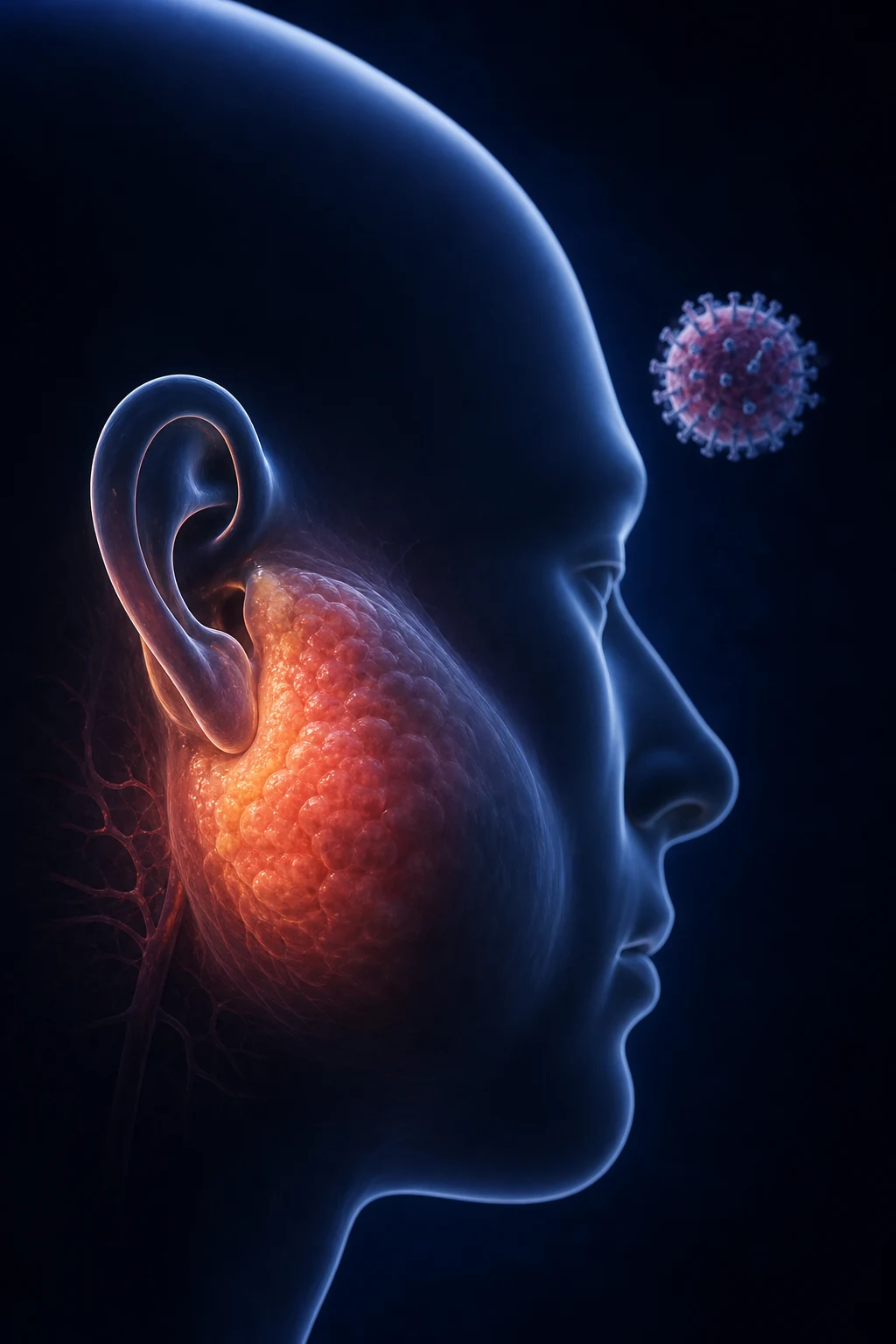
Mumps (epidemic parotitis) is an acute, self-limiting, vaccine-preventable viral infection caused by the mumps virus — a Rubulavirus in the Paramyxoviridae family (enveloped, non-segmented, negative-sense single-stranded RNA) — and characterised by nonsuppurative, painful swelling of one or more salivary glands, most commonly the parotid (parotitis), accompanied by a systemic febrile illness.[1][3]
The disease matters to the practising doctor less for the (usually benign) parotitis than for four pivotal facts that examiners return to again and again: [1]
- Mumps is a systemic illness with tropism for glandular epithelium — the parotid is the most obvious target, but the testes, ovaries, pancreas, meninges, choroid plexus, inner ear and myocardium are all seeded by viraemia, which is why orchitis, meningitis, pancreatitis, deafness and myocarditis occur — sometimes without any parotid swelling.[1]
- Complications can precede, accompany, or occur entirely without parotitis — mumps is in the differential of aseptic meningitis, acute pancreatitis, sudden sensorineural hearing loss and acute scrotum in the unvaccinated or under-vaccinated.[2][4]
- Mumps is vaccine-preventable — the MMR vaccine (measles-mumps-rubella), given as two doses, is about 88 percent effective at preventing mumps. Waning immunity drives outbreaks even in highly vaccinated populations of older children, college students and military recruits, and is the rationale for a third outbreak-control dose.[5][6]
- There is no specific antiviral — treatment is supportive and the public-health response (5-day isolation after parotitis, contact tracing, vaccination of susceptible contacts, notification) is what limits transmission.[1]
Humans are the only natural reservoir. Transmission is by respiratory droplets, saliva and fomites, with peak transmissibility from 2 days before to 5 days after parotitis onset.[1]
Classification
Mumps is best classified by clinical phenotype and by the strain (genotype) responsible:[1][3]
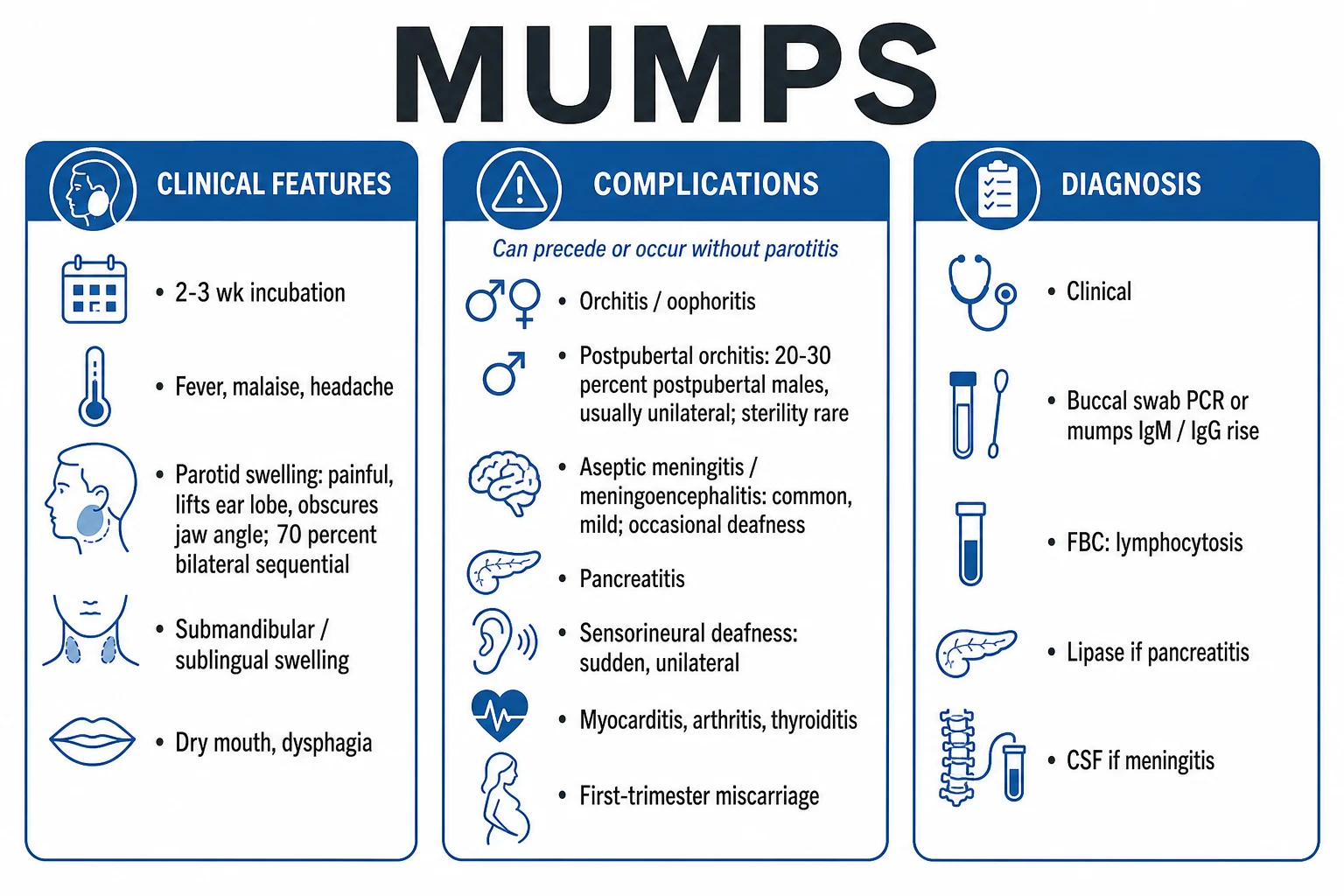
- Classic mumps parotitis — the textbook phenotype: bilateral (70 percent) or unilateral (30 percent) tender parotid swelling, often sequential, with fever and malaise; submandibular and sublingual glands involved in up to 10 percent.
- Mumps without parotitis (subclinical / atypical) — about 20 to 30 percent of infections are subclinical; some present only with prodromal symptoms, respiratory symptoms alone, or only a complication (orchitis, meningitis, pancreatitis, deafness) and no salivary gland swelling at all.
- Mumps meningitis / meningoencephalitis — cerebrospinal fluid (CSF) pleocytosis is detectable in 50 to 60 percent even when asymptomatic; symptomatic meningitis occurs in 1 to 10 percent; overt meningoencephalitis is rarer (about 0.1 percent).
- Mumps orchitis / oophoritis — post-pubertal glandular involvement (see Complications).
- Mumps pancreatitis — 2 to 5 percent; one of the viral causes of acute pancreatitis in children and young adults.
- Mumps with rare end-organ disease — thyroiditis, mastitis, myocarditis, arthritis, glomerulonephritis, thrombocytopenia, optic neuritis, facial palsy. [1]
By virus strain: there are 12 named mumps virus genotypes (designated A through N, excluding E and M); genotype G is the most common in recent Western outbreaks. Genotype does not reliably predict clinical severity and is used for epidemiological tracking rather than individual prognosis.[1][5]
The operational case definition used by surveillance authorities (CDC, WHO) is: acute onset of unilateral or bilateral parotitis lasting 2 days or more, without another apparent cause. Confirmed cases require laboratory confirmation (PCR, IgM seroconversion, viral culture) or an epidemiological link to a confirmed case.[7]
Epidemiology & Risk Factors
Mumps has a worldwide distribution. Before universal vaccination it was a near-universal childhood infection — seroprevalence approached 95 percent by age 15.[1]
Mumps by the numbers
Transmission and natural history[1][3]
- Reservoir: humans only.
- Route: respiratory droplets, saliva, direct contact, fomites.
- Infectivity: from about 2 days before parotitis to 5 days after; the basis for the 5-day isolation rule.
- Incubation: 16 to 18 days (range 12 to 25 days).
- Seasonality: late winter to spring peak.
- Immunity: natural infection confers lifelong immunity in almost all cases; reinfection is rare. Vaccine-induced immunity wanes over 10 to 20 years. [1]
Risk factors for mumps in the post-vaccine era:[5][6]
- Under-vaccination — zero or only one MMR dose.
- Waning immunity — especially 10 to 20 years after the second dose; the driver of outbreaks in older adolescents and young adults.
- Crowded institutional settings — schools, colleges, university dormitories, military barracks, prisons, refugee camps.
- International travel to endemic regions; attendance at large gatherings.
- Immunocompromise — patients who cannot mount vaccine responses (HIV with low CD4, transplant recipients, chemotherapy) are at risk of severe disease and cannot receive the live MMR vaccine. [1]
Geography and the Indian context. Mumps remains endemic in India and is a common childhood infection; in 2024 mumps is still not part of the Indian Universal Immunisation Programme (UIP), although the Indian Academy of Pediatrics (IAP) recommends the MMR vaccine in the private sector. The result is that mumps (with its complications — deafness, orchitis, meningitis) continues to cause significant morbidity in India, and the question of adding mumps to the national schedule remains an active public-health controversy.[3][5]
Pathophysiology
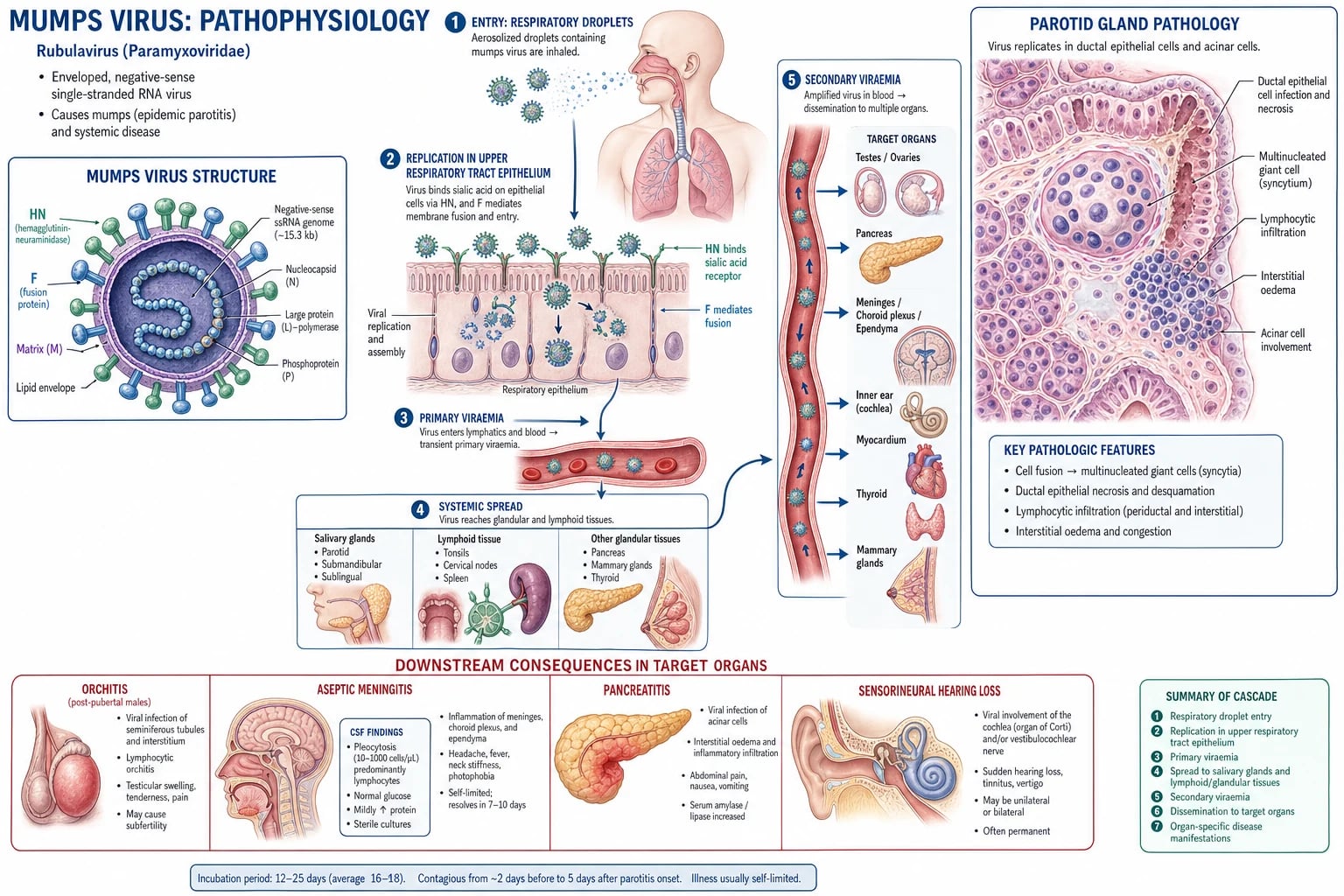
The virus. Mumps virus is an enveloped, non-segmented, negative-sense single-stranded RNA virus of the Paramyxoviridae family, Rubulavirus genus. Two surface glycoproteins mediate attachment and entry:[1][3]
- HN (haemagglutinin-neuraminidase) — binds sialic-acid-containing receptors on host epithelial cells; also cleaves sialic acid to release new virions.
- F (fusion) glycoprotein — mediates viral envelope fusion with the host plasma membrane AND cell-to-cell fusion, producing the cytopathic hallmark of paramyxoviruses: multinucleated giant cells (syncytia). [1]
Entry and primary replication. Virus enters via the respiratory tract, replicates in the nasopharyngeal and upper-airway epithelium, and spreads to regional lymph nodes. From there a primary viraemia seeds the glandular and lymphoid tissues, with the parotid the dominant clinical target.[1]
Secondary viraemia amplifies systemic spread and seeds testes, ovaries, pancreas, thyroid, mammary glands, kidneys, myocardium, and — critically — the choroid plexus, ependyma and leptomeninges. This glandular epithelial tropism explains why mumps produces a multisystem illness rather than a pure salivary-gland disease.[3]
Histopathology of the parotid. Affected glands show interstitial oedema, periductal and perivascular lymphocytic infiltration, serofibrinous exudate, and necrosis/desquamation of the ductal epithelium. Importantly the gland is inflamed but NOT suppurative (no pus) — which is why the Stensen duct orifice, though red and oedematous, expresses no frank pus in mumps, in contrast to bacterial (suppurative) parotitis.[1][8]
Organ-specific consequences of tropism: [1]
- Parotid and salivary glands — painful inflammatory swelling (the cardinal clinical sign).
- Testes and ovaries — orchitis/oophoritis with interstitial oedema, haemorrhage and (later) tubular atrophy in the testis.
- Pancreas — acinar and islet-cell inflammation; transient hyperglycaemia is occasionally reported.
- Choroid plexus and ependyma — viral replication in CSF-secreting tissue seeds the subarachnoid space; this is the basis for the very high rate of CSF pleocytosis and symptomatic aseptic meningitis.
- Stria vascularis of the inner ear — viral replication causes sudden unilateral sensorineural hearing loss.
- Myocardium — interstitial myocarditis (rare). [1]
The clinical illness is in part immune-mediated: the T-lymphocyte-mediated cellular response to virally infected epithelium contributes to the glandular swelling and tissue damage; this is why symptoms persist for several days after peak viral replication.[7]
Immunity. Natural infection produces lifelong humoral and cellular immunity in virtually all cases. Vaccine-induced immunity wanes over 10 to 20 years, which is why outbreaks occur in older vaccinated cohorts and why a third outbreak-control dose has a role.[5][7]
Clinical Presentation
The clinical picture is shaped by vaccination status, age and the dominant end-organ involved. In unvaccinated populations mumps is a classic childhood illness; in the post-vaccine era it presents more often in adolescents and young adults, in whom complications are more prominent.[1][5]
Prodrome (1 to 2 days; may be absent): low-grade fever, malaise, headache, anorexia, myalgia. Many patients report pain or tenderness at the angle of the jaw or an earache exacerbated by chewing or by acidic/citrus foods before any visible swelling. [1]
Established parotitis (the cardinal syndrome): [1]
- Progressive, tender, nonsuppurative swelling of the parotid gland that lifts the ear lobe upwards and forwards and obliterates the angle (line) of the mandible — the anatomical hallmark that distinguishes true parotid swelling from cervical lymphadenopathy (which lies below and behind the angle of the jaw and does not lift the ear lobe).[8]
- Bilateral in ~70 percent, unilateral in ~30 percent; when bilateral the swelling is usually sequential rather than simultaneous, the second side following the first by 1 to 5 days.
- The swelling peaks in 1 to 3 days and resolves over 5 to 10 days.
- The submandibular and sublingual glands are involved in up to 10 percent of cases; sublingual involvement may produce submental swelling, tongue oedema and dysphagia.
- The Stensen duct orifice (parotid; opposite the upper second molar) and Wharton duct orifice (submandibular; floor of mouth) are red and oedematous but express no frank pus in mumps (pus indicates bacterial parotitis).
- Fever is typically moderate (38 to 39.5 degrees C), resolving over 3 to 7 days. Severe or prolonged fever suggests a complication (orchitis, meningitis, pancreatitis).
Beyond parotitis — the complications (any of which may be the presenting feature): [1]
- Orchitis (post-pubertal males): occurs in 20 to 30 percent of post-pubertal males, usually unilateral (~70 percent), typically 4 to 10 days after parotitis but may precede parotitis or occur without it. The testis is swollen, exquisitely tender, with high fever, chills, nausea and vomiting. Testicular atrophy may follow in up to 50 percent of affected testes over months, but infertility is rare even when bilateral.[4]
- Oophoritis (post-pubertal females): in about 5 percent; lower abdominal/pelvic pain, fever; infertility extremely rare.
- Aseptic meningitis: symptomatic in 1 to 10 percent (CSF pleocytosis in up to 50 to 60 percent). Headache, photophobia, neck stiffness, vomiting; benign course; may occur without parotitis.[2]
- Meningoencephalitis (rarer, ~0.1 percent): confusion, seizures, depressed consciousness, focal deficits; the rare severe neurological form, with a small mortality.
- Pancreatitis: 2 to 5 percent; severe epigastric pain radiating to the back, vomiting, elevated serum amylase and lipase.
- Sensorineural deafness: about 1 in 20,000 cases; usually unilateral, sudden, often permanent; a leading acquired cause of unilateral childhood deafness where mumps is endemic.
- Other recognised features: myocarditis, arthritis (especially adult females), thyroiditis, mastitis, nephritis, thrombocytopenia, optic neuritis, transient facial palsy.
- Subclinical infection (20 to 30 percent): no symptoms or only a nonspecific upper-respiratory illness.
- Mumps presenting as a complication without parotitis — the single most-missed pattern: consider mumps in any unvaccinated or under-vaccinated patient with aseptic meningitis, acute pancreatitis, sudden sensorineural hearing loss, or acute scrotum with compatible epidemiology.
- Elderly / debilitated: may mimic bacterial (suppurative) parotitis (check for pus); lower-grade fever; orchitis/complications less prominent than in young adults.
- Immunocompromised: more severe, prolonged disease; cannot receive the live vaccine. [1]
Differential Diagnosis
Parotid swelling has a wide differential; mumps must be distinguished from suppurative, calculous, neoplastic and autoimmune causes, and the systemic complications each have their own differential.[1][8]
Differential diagnosis of acute parotid / salivary gland swelling
Bacterial (suppurative) parotitis
- Unilateral, very tender, hot, indurated gland; FRANK PUS expressed from Stensen duct on milking
- Elderly, dehydrated, postoperative, diabetic, HIV, Sjogren; Staphylococcus aureus, Strep pyogenes
- Leucocytosis with left shift; treat with IV flucloxacillin 1-2 g 6-hourly + hydration; abscess needs surgical drainage
Other viral parotitis
- Coxsackie A and B, parainfluenza 1 and 3, influenza A, EBV, CMV, HIV, lymphocytic choriomeningitis virus
- Clinically indistinguishable from mumps; diagnose by epidemiology and PCR/serology
- Especially HIV-associated salivary gland disease (chronic, bilateral, with lymphadenopathy)
Sialolithiasis (salivary duct calculus)
- Unilateral, episodic, painful swelling at meal times, no fever, gland empties between meals
- Usually submandibular (Wharton duct); diagnose by ultrasound or sialography
- Remove calculus (massage, sialendoscopy, intra-oral incision)
Salivary gland tumour
- Unilateral, slow-growing, PAINLESS, firm or hard mass; facial nerve involvement suggests malignancy (e.g., mucoepidermoid, adenoid cystic)
- Pleomorphic adenoma is the commonest benign; no fever, no systemic illness
- Ultrasound + MRI + fine-needle aspiration; surgical excision
Juvenile recurrent parotitis (of childhood)
- Repeated episodes of unilateral or bilateral, non-purulent parotid swelling in children (usually age 3-6 years)
- Idiopathic/autoimmune; sialography shows sialectasis
- Resolves spontaneously by adolescence; supportive; prophylactic antibiotics in selected cases
Sjogren syndrome and sarcoidosis (Heerfordt syndrome)
- Bilateral, CHRONIC, painless or mildly tender gland enlargement with sicca (dry eyes/mouth), uveitis, arthralgia
- Anti-Ro/anti-La antibodies (Sjogren); elevated ACE and biopsy non-caseating granulomas (sarcoid)
- Rheumatology/immunology referral; immunosuppression as indicated
Cervical lymphadenitis / scrofula
- Swelling BELOW and BEHIND the angle of jaw; does NOT lift the ear lobe
- Reactive (pharyngitis, dental), tuberculous (scrofula), atypical mycobacteria
- Tuberculin/IGRA, node aspirate/biopsy for AFB and culture
Odontogenic infection (lower molar)
- Peri-oral/perioral swelling pointing to tooth origin; fluctuant abscess; dental pain
- Dental X-ray; incision and drainage + dental extraction + antibiotics
Differential of mumps orchitis — the acute scrotum:[4]
- Testicular torsion — surgical emergency; sudden onset, severe pain, high-riding transverse testis, absent cremasteric reflex, nausea and vomiting; always exclude first with urgent Doppler ultrasound and urology review (explore if torsion cannot be excluded).
- Bacterial epididymo-orchitis — UTI or sexually transmitted (Chlamydia, Gonorrhoea) in young males; usually gradual onset, fever, urethral discharge, cremasteric reflex present; first-void urine for NAAT.
- Incarcerated inguinal hernia — groin/scrotal mass, bowel obstruction features. [1]
Differential of mumps aseptic meningitis — enteroviruses (commonest), HSV-2, VZV, lymphocytic choriomeningitis virus, HIV seroconversion, partially-treated bacterial meningitis, tuberculous meningitis, drug-induced (NSAIDs, TMP-SMX).[2]
Differential of mumps pancreatitis — gallstones, alcohol, hypertriglyceridaemia, drugs, trauma, ERCP, autoimmune; even when mumps is suspected, work the full pancreatitis differential.[1]
Clinical & Bedside Assessment
The diagnosis is clinical, supported by laboratory confirmation when atypical, sporadic, or for outbreak/public-health purposes. The bedside assessment must screen for the complications that change management (orchitis, meningitis, pancreatitis, deafness, myocarditis).[1][8]
Named signs and the anatomical hallmark: [1]
Named signs and bedside manoeuvres in mumps
Parotid swelling lifting the ear lobe
- True parotid swelling pushes the EAR LOBE UPWARDS AND FORWARDS and OBLITERATES the ANGLE of the MANDIBLE
- Cervical lymphadenopathy, by contrast, sits BELOW and BEHIND the angle of the jaw and does NOT lift the lobe
- This single distinction is the highest-yield bedside observation in mumps
Stensen duct examination
- Orifice opposite the UPPER SECOND MOLAR on the buccal mucosa
- Red and oedematous in mumps; GENTLY milk the gland — typically NO frank pus (pus = bacterial parotitis)
- Also examine the Wharton duct (submandibular) on the floor of the mouth
Pain on acidic foods (Mump sign / sour test)
- Chewing or sipping acidic/citrus juices reproduces or worsens the parotid pain
- A historical clue to parotid (vs lymph node) origin
- Counsel patients to AVOID acidic juices while unwell
The structured examination: [1]
- Vital signs and hydration — fever pattern, tachycardia, dehydration; reassess for complications.
- Both parotid, submandibular and sublingual glands — bilateral/unilateral, sequential/simultaneous, size, tenderness, overlying skin, lifting of the ear lobe.
- Oral cavity — Stensen and Wharton duct orifices; milking for pus; dentition (exclude odontogenic source); oropharyngeal exudate (suggests EBV/strep).
- Testes (after consent and chaperone, in post-pubertal males) — size, tenderness, lie, cremasteric reflex (to exclude torsion), epididymis, inguinal canals.
- Neurological — neck stiffness, photophobia, Kernig and Brudzinski signs, conscious level (Glasgow Coma Scale: eye opening, verbal response, motor response, each 1 to 4/5/6; total 3 to 15), focal deficits; tuning-fork hearing test (Rinne/Weber) for sensorineural loss.
- Abdomen — epigastric tenderness (pancreatitis), lower abdominal/pelvic tenderness (oophoritis), renal angle, hepatosplenomegaly (consider EBV/CMV/leukaemia).
- Skin and lymph nodes — rash (measles, rubella, Kawasaki), cervical lymphadenopathy (below/behind jaw), epitrochlear nodes (EBV), parotid-tumour features.
- Cardiac — rare myocarditis (tachycardia out of proportion, gallop, murmurs). [1]
History essentials: number and dates of MMR doses; recent outbreak or case contact; school/college/military attendance; travel to endemic regions; immune status (pregnancy, immunocompromise); onset, sequence and duration of swelling; systemic symptoms; hearing; abdominal pain; testicular pain. [1]
Investigations
Diagnosis is clinical when the picture is classic in a known outbreak setting. Laboratory confirmation is required for sporadic, atypical, parotitis-negative, or institutional/outbreak cases, and to differentiate from bacterial and other viral parotitides.[1][3][7]
First-line laboratory work-up: [1]
- Buccal-swab RT-PCR for mumps virus RNA — the preferred confirmatory test, most sensitive in the first 3 days of parotitis; swab the Stensen duct orifice (buccal mucosa). PCR is also the test of choice in previously vaccinated people, who may be IgM-negative.[7]
- Mumps-specific serology — mumps IgM (a single raised value suggests recent/acute infection) and paired IgG (a fourfold rise between acute and convalescent sera confirms). Caveat: in previously vaccinated people IgM may be absent or delayed — a negative IgM does NOT exclude mumps; PCR then becomes essential.[7]
- Viral culture of throat washings, saliva or urine — slower than PCR; mostly historical or for surveillance/genotyping.
- Full blood count — typically normal or mild lymphocytosis; leucocytosis with left shift suggests bacterial parotitis or a complication.
- Serum amylase and lipase — elevated in about 30 to 50 percent of mumps (salivary isoamylase from parotitis); in mumps pancreatitis, lipase is disproportionately raised with epigastric pain.
- CRP, electrolytes, U&E, LFTs, glucose — baseline; derangement points to complication.
Lumbar puncture / CSF analysis (in symptomatic neurological disease):[2]
- CSF cell count — lymphocytic pleocytosis, typically 100 to 1000 cells per microlitre (occasionally several thousand); may persist for weeks after clinical recovery.
- CSF protein — mildly raised (0.5 to 1.5 g/L).
- CSF glucose — usually normal (occasionally mildly reduced).
- CSF mumps PCR — positive; CSF viral culture may also isolate virus. [1]
Imaging: [1]
- Ultrasound of the parotid/scrotum — enlarged, oedematous gland; testicular Doppler ultrasound is mandatory to exclude torsion (absent/whirlpool flow) versus orchitis (increased/hypervascular flow) and to screen for later atrophy.[4]
- US/CT abdomen for pancreatitis (or to exclude abscess).
- MRI brain for meningoencephalitis, deafness, focal neurology.
- Audiometry — baseline and follow-up if hearing loss is suspected (sensorineural, usually unilateral).
Notification and surveillance: mumps is a notifiable disease in most jurisdictions. Report to public health; send samples to the reference laboratory for confirmation and genotyping (used for epidemiological tracking). The WHO/CDC operational case definition is acute unilateral or bilateral parotitis lasting 2 days or more, without another apparent cause.[7]
Not first-line (only if the differential demands): Mantoux/IGRA (tuberculosis), HIV serology, autoimmune screen (ANA, anti-Ro/La, rheumatoid factor, immunoglobulins) for Sjogren, sialography for recurrent sialadenitis, FNA for suspected tumour. [1]
Management — Resuscitation
Most mumps is ambulatory and self-limiting; resuscitation is reserved for the rare severe complication (severe meningitis/encephalitis, severe pancreatitis, myocarditis, dehydration, impending airway compromise from massive sublingual swelling).[1][4]
ABCDE approach; the time-critical exclusions first: [1]
- Exclude testicular torsion in ANY post-pubertal male with acute scrotum — urgent Doppler ultrasound and urology review; if torsion cannot be excluded, surgical exploration (torsion is a surgical emergency; mumps orchitis is not).
- Airway/breathing — massive parotid or sublingual swelling rarely compromises the airway; assess for stridor, drooling, muffled voice. Humidified oxygen, sit upright, urgent ENT/anaesthetic review to secure the airway if needed.
- Circulation / hydration — dehydration from fever, reduced oral intake and dysphagia. IV fluids: compound sodium lactate (Hartmann) or 0.9% sodium chloride 1 to 2 L bolus (10 to 20 mL/kg in children), then maintenance; reassess.
- Pain control — paracetamol 1 g PO/IV every 6 hours (max 4 g/day adult; 15 mg/kg/dose in children); ibuprofen 400 mg PO every 8 hours (5 to 10 mg/kg/dose every 6 to 8 hours in children over 3 months); morphine 2.5 to 5 mg IV for severe orchitis or pancreatitis pain.
- Meningoencephalitis — supportive; treat seizures (IV lorazepam 0.1 mg/kg, max 4 mg), manage raised intracranial pressure (head elevation 30 degrees, mannitol 0.5 g/kg IV, hypertonic saline 3% 2 to 3 mL/kg); ITU if depressed consciousness (Glasgow Coma Scale eye, verbal, motor total under 12) or compromised airway. CSF examination if severe/atypical or to exclude bacterial meningitis — empirical bacterial meningitis antibiotics (ceftriaxone 2 g IV 12-hourly + aciclovir 10 mg/kg IV 8-hourly) until CSF excludes bacterial/HSV disease.[2]
- Severe pancreatitis — nil by mouth, IV crystalloid resuscitation, analgesia (fentanyl preferred — morphine can spasm the sphincter of Oddi), antiemetics; monitor for complications (pseudocyst, necrosis, organ failure); follow the local severe-acute-pancreatitis pathway.
- Myocarditis — arrhythmia monitoring, treat heart failure; cardiology/ITU involvement.
Management — Definitive & Stepwise
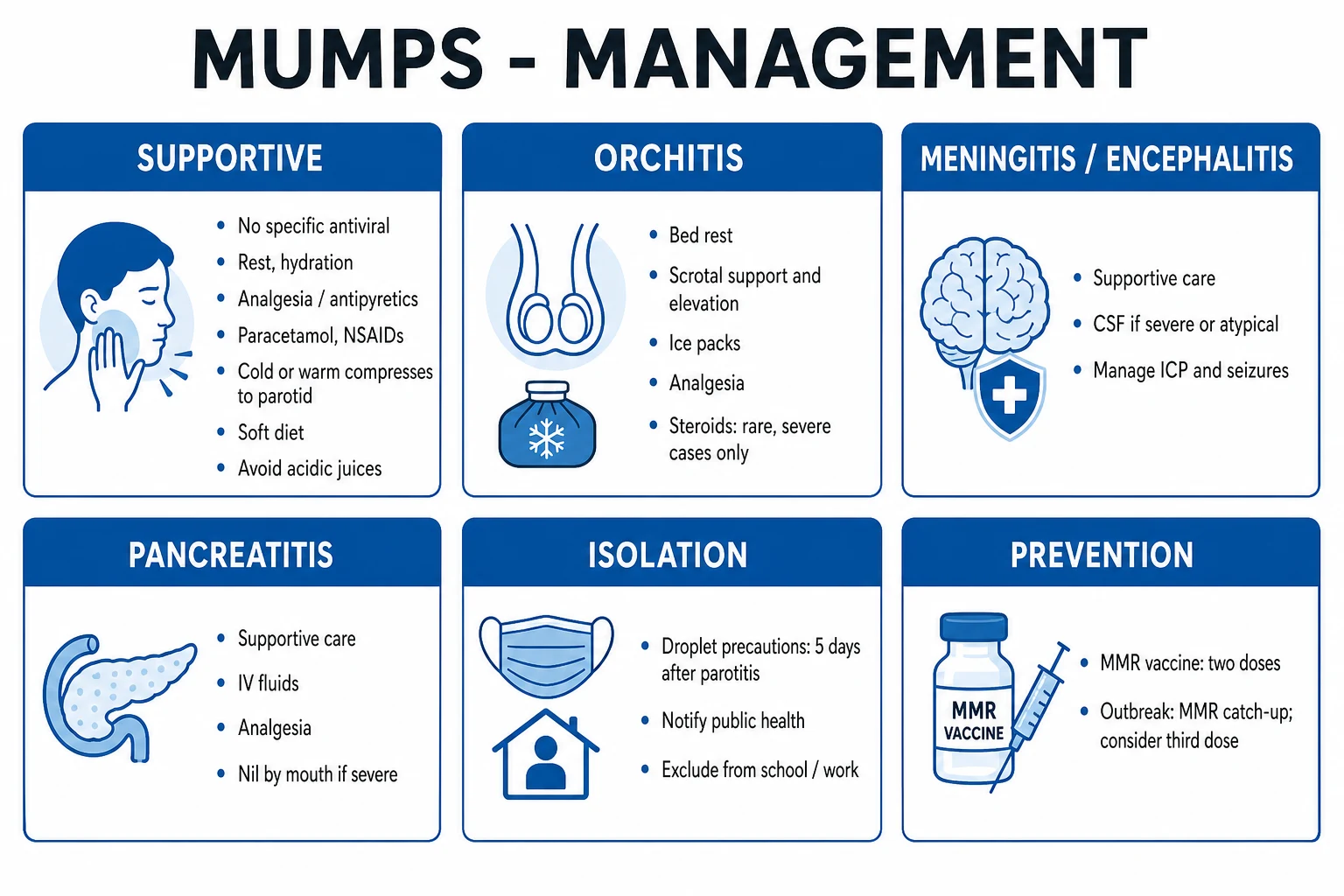
The mainstay is supportive care and public-health action; there is no specific antiviral of proven benefit for mumps.[1][3]
1. Supportive care (the mainstay): [1]
- Rest as tolerated — strict bed rest is not required unless orchitis or severe complication is present.
- Adequate hydration — oral fluids if tolerated; IV if dehydrated or unable to swallow.
- Soft, non-acidic diet — avoid citrus/acidic juices (which aggravate parotid pain); soft or liquid diet while chewing is painful.
- Analgesia/antipyretics:
- Paracetamol 1 g PO/IV every 6 hours (max 4 g/day adult; 15 mg/kg/dose in children, max 60 mg/kg/day).
- Ibuprofen 400 mg PO every 8 hours (5 to 10 mg/kg/dose every 6 to 8 hours in children over 3 months) for fever and parotid/testicular pain.
- Local measures: warm or cold compresses over the parotid; salt-water gargles; good oral hygiene. [1]
2. Specific complication management: [1]
Complication-specific management in mumps
Orchitis (post-pubertal male)
- Bed rest; FIRM SCROTAL SUPPORT/elevation (rolled towel); ICE PACKS; NSAIDs/paracetamol
- Severe pain: spermatic-cord nerve block; short course corticosteroid (prednisolone 40 to 60 mg/day for 1 to 2 weeks, taper) for selected severe cases — reduces pain/inflammation but does NOT prevent atrophy/infertility
- ALWAYS exclude testicular TORSION first; urology review if severe; antibiotics add nothing (viral)
Aseptic meningitis
- Supportive: analgesia, antiemetics, IV fluids; most recover fully within days without sequelae
- CSF examination if severe/atypical or to exclude bacterial meningitis (empirical ceftriaxone + aciclovir until CSF excludes bacterial/HSV)
- Manage raised ICP/seizures if encephalitic; ITU if depressed consciousness (GCS eye/verbal/motor under 12)
Pancreatitis
- Supportive acute-pancreatitis pathway: IV fluids, analgesia (fentanyl preferred), nil by mouth if severe, gradual refeeding
- Monitor for complications (pseudocyst, necrosis, organ failure); no specific antiviral
Sensorineural deafness
- Urgent audiology/ENT; high-dose corticosteroid (prednisolone 60 mg/day for 1 to 2 weeks, taper) is often tried but evidence is limited
- Many cases are permanent; counsel and arrange hearing rehabilitation
Myocarditis / other end-organ disease
- Arrhythmia monitoring; treat heart failure; cardiology/ITU
- Arthritis, thyroiditis, thrombocytopenia: supportive ± corticosteroid for severe immune-mediated manifestations
3. Drugs NOT routinely indicated: [1]
- Antivirals (ribavirin, interferon) — no proven benefit; not recommended.[1]
- Corticosteroids for uncomplicated mumps or routine orchitis — not routinely indicated; reserve for severe orchitis (pain refractory to NSAIDs/scrotal support) or sensorineural deafness; steroids do NOT prevent infertility.
- Antibiotics — add nothing to viral mumps; reserve for proven bacterial parotitis or a bacterial complication (e.g., secondary pneumonia).
4. Isolation and public-health action (the highest-yield exam point): [1]
- Droplet isolation for 5 days AFTER the onset of parotid swelling (peak infectivity is the 2 days before to 5 days after parotitis).[1]
- Exclude from school, work and group activities for the same period.
- Notify public health (mumps is notifiable).
- Identify and vaccinate susceptible contacts (see below); quarantine non-immune contacts during the incubation window where indicated.
- Healthcare workers: exclude for 5 days after parotitis onset; ensure two documented MMR doses; furlough non-immune exposed staff from day 12 to day 25 after exposure.[3]
5. Prevention — MMR vaccination:[1][6]
- MMR vaccine (measles-mumps-rubella) — live attenuated (Jeryl Lynn strain in most Western schedules).
- Schedule (CDC/ACIP, NHS): first dose at 12 to 15 months; second dose at 4 to 6 years (at least 28 days after the first).
- Efficacy: about 78 percent after one dose and 88 percent after two doses against mumps.[6]
- Waning immunity over 10 to 20 years drives outbreaks in older vaccinated cohorts.
- Outbreak control: a third MMR dose for previously vaccinated people at risk (ACIP/CDC guidance) reduces attack rate.[5]
- Post-exposure prophylaxis: MMR vaccine does NOT prevent disease in already-exposed individuals (incubation too long for antibody response) but should be given to susceptible contacts to protect against future exposures. Immune globulin (IGIM/IVIG) is NOT effective for mumps post-exposure prophylaxis.[3]
- CONTRAINDICATIONS to MMR (live vaccine): pregnancy (avoid conception for 1 month after vaccination), severe immunocompromise (leukaemia, lymphoma, chemotherapy, high-dose steroids, advanced HIV/AIDS, transplant), severe allergy to a prior dose or component (gelatin, neomycin), recent immunoglobulin (interferes with vaccine response).[6]
6. Patient counselling: explain the disease course (acute illness 7 to 10 days; complications may extend recovery), the drug and activity advice (avoid acidic foods; rest; scrotal support), and warning signs that mandate return — severe headache, neck stiffness, confusion, severe abdominal or back pain, severe testicular pain, sudden hearing loss, chest pain, breathlessness. [1]
Specific Subtypes & Scenarios
- Classic childhood mumps parotitis (the archetype). Bilateral, sequential, painful parotid swelling with fever; managed supportively with hydration, analgesia, isolation and counselling.[1]
- Mumps without parotitis (subclinical / complication-only). About 20 to 30 percent of infections are subclinical; some present only with respiratory symptoms, orchitis, meningitis, pancreatitis or sudden deafness and no salivary gland swelling — mumps belongs in the differential of each.[1]
- Mumps orchitis (post-pubertal male). 20 to 30 percent; usually unilateral; always exclude testicular torsion; bed rest, scrotal support, NSAIDs ± short-course corticosteroid for severe pain; infertility is rare even with bilateral disease.[4]
- Mumps oophoritis (post-pubertal female). About 5 percent; pelvic pain; infertility extremely rare.
- Mumps aseptic meningitis. Symptomatic in 1 to 10 percent (CSF pleocytosis in 50 to 60 percent); benign; may occur without parotitis.[2]
- Mumps meningoencephalitis. About 0.1 percent; the severe neurological form; seizures, coma, focal deficits; small mortality.
- Mumps pancreatitis. 2 to 5 percent; one of the viral causes of acute pancreatitis in children and young adults.
- Mumps with rare end-organ disease — thyroiditis, mastitis, myocarditis, arthritis (migratory, adult females), glomerulonephritis, thrombocytopenia, optic neuritis, facial palsy.
- Mumps in pregnancy. Increased rate of first-trimester spontaneous miscarriage; no proven teratogenicity (unlike rubella); perinatal transmission can cause neonatal mumps (rare, severe) — isolate the mother from the neonate during the infectious period if mumps occurs near delivery.[1]
- Mumps in the immunocompromised. More severe disease; MMR is CONTRAINDICATED (live vaccine); supportive care and strict isolation; immune globulin is ineffective.[6]
Complications & Pitfalls
Glandular: orchitis (post-pubertal males, 20 to 30 percent; unilateral in ~70 percent; testicular atrophy in up to 50 percent of affected testes, but infertility rare), oophoritis (5 percent of post-pubertal females; infertility extremely rare), mastitis, thyroiditis.[1][4]
Neurological: aseptic meningitis (1 to 10 percent symptomatic; CSF pleocytosis in 50 to 60 percent; benign course), meningoencephalitis (about 0.1 percent; small mortality), sensorineural deafness (about 1 in 20,000; usually unilateral, sudden, often permanent), rare facial palsy, optic neuritis, transverse myelitis, Guillain-Barre-like syndromes, cerebellitis.[2]
Pancreatic: pancreatitis (2 to 5 percent; usually mild but can be severe; transient hyperglycaemia occasionally reported). [1]
Cardiac (rare): myocarditis (usually mild with transient ECG changes; rare heart failure; the leading rare cause of mumps death in some series), pericarditis. [1]
Other: arthritis (migratory, especially adult females), glomerulonephritis, thrombocytopenia. [1]
Obstetric: increased first-trimester miscarriage rate; no proven teratogenicity; neonatal mumps (rare, severe if acquired perinatally). [1]
Classic pitfalls (the examiner's favourites):[1][4][8]
- Missing testicular torsion in a young male labelled "mumps orchitis" — always exclude torsion first with Doppler ultrasound and urology review; explore if torsion cannot be excluded.
- Misdiagnosing mumps meningitis as bacterial (or vice versa) — examine the CSF; if uncertain, give empirical bacterial meningitis antibiotics (ceftriaxone + aciclovir) until CSF excludes bacterial/HSV disease.
- Treating mumps with antibiotics for "bacterial parotitis" — viral mumps has no pus from Stensen duct; antibiotics add nothing.
- Missing the diagnosis in parotitis-negative presentations — consider mumps in any unvaccinated or under-vaccinated patient with aseptic meningitis, pancreatitis, sudden sensorineural hearing loss, or acute scrotum with compatible epidemiology.
- Failing to isolate (5 days after parotitis) and triggering an outbreak.
- Giving MMR to a pregnant or immunocompromised patient (live vaccine contraindicated).
- Assuming immunity from a distant single MMR dose — waning immunity causes vaccine failures; outbreaks occur in highly vaccinated populations.
- Relying on IgM in the vaccinated — vaccinated patients may be IgM-negative; PCR is preferred.[7]
Prognosis & Disposition
- Acute parotitis resolves in 7 to 10 days; systemic symptoms usually settle within 2 weeks.
- Mumps meningitis has an excellent prognosis — full recovery is usual within days.
- Meningoencephalitis has a small but real mortality (about 1 percent of encephalitis cases); permanent neurological deficit is rare.
- Testicular atrophy occurs in up to 50 percent of affected testes months after orchitis, but infertility is rare; bilateral orchitis only very rarely causes azoospermia.[4]
- Sensorineural deafness is usually permanent; early corticosteroid is often tried with limited evidence.
- Overall case-fatality is very low (about 1 to 3 deaths per 10,000 cases), usually from encephalitis or myocarditis.
- Lifelong immunity follows natural infection; reinfection is rare.
Disposition. Nearly all cases are managed as outpatients with supportive care, isolation and counselling. Admit for:[1]
- Severe dehydration or inability to swallow (IV fluids).
- Suspected meningitis/encephalitis (CSF examination, neurological monitoring).
- Severe pancreatitis (IV fluids, analgesia, monitoring).
- Severe orchitis requiring analgesia ± corticosteroid, or to exclude torsion.
- Myocarditis (arrhythmia monitoring, cardiac support).
- Social reasons (institutional outbreak control, homelessness, vulnerable contacts). [1]
Special Populations
- Paediatrics. Classic age in unvaccinated populations (2 to 12 years); dosing is weight-based for paracetamol (15 mg/kg/dose, max 60 mg/kg/day) and ibuprofen (5 to 10 mg/kg/dose every 6 to 8 hours in children over 3 months); sublingual involvement may compromise the airway; ensure MMR is up to date; isolate for 5 days after parotitis onset; exclude from school.[1]
- Pregnancy. Increased rate of first-trimester spontaneous miscarriage; no proven teratogenicity (unlike rubella, the classic teratogenic exanthem). MMR is CONTRAINDICATED in pregnancy (give postpartum, avoid conception for 1 month after vaccination). Perinatal mumps can be severe in the neonate — isolate the mother from the neonate during the infectious period if mumps occurs near delivery.[1][6]
- Post-pubertal males. The group at highest risk of orchitis; counsel on the rarity of infertility even with bilateral disease; always exclude testicular torsion.[4]
- Adolescents, young adults, and institutional outbreaks. The post-vaccine-era phenotype; third MMR dose for outbreak control per ACIP/CDC; counsel on waning immunity.[5]
- Elderly. Atypical; may mimic bacterial (suppurative) parotitis (check for pus from Stensen duct); lower-grade fever; consider dehydration as a precipitant; exclude Sjogren and tumour for chronic/recurrent parotid swelling.[8]
- Immunocompromised (HIV with low CD4, transplant, chemotherapy, high-dose steroids). More severe disease; MMR is CONTRAINDICATED (live vaccine); manage with supportive care and strict isolation; immune globulin is ineffective; rely on herd immunity.[6]
- Healthcare workers. Exclude from work for 5 days after parotitis onset; ensure two documented MMR doses; furlough non-immune exposed staff from day 12 to day 25 after exposure.[3]
- Travellers to endemic regions / international students. Confirm two MMR doses at least 2 weeks before travel.
Evidence, Guidelines & Regional Differences
- Cochrane systematic review (Di Pietrantonj et al., Cochrane Database Syst Rev 2021) — MMR vaccine is effective for preventing mumps (one dose ~78 percent, two doses ~88 percent); adverse events are minor and self-limited; the meta-analysis does NOT support any link between MMR and autism.[6]
- Hviid, Rubin and Muhlemann (Lancet 2008) — the definitive modern clinical review of mumps, covering epidemiology, pathogenesis, complications and vaccine.[1]
- Su et al. (Int J Environ Res Public Health 2020) — contemporary review of mumps epidemiology, pathogenesis and vaccine, including the resurgence in vaccinated populations.[3]
- Rubin, Kennedy and Poland (Pediatr Infect Dis J 2016) — emerging mumps infection in the post-vaccine era; waning immunity is the basis for booster vaccination.[5]
- Latner and Hickman (PLoS Pathog 2015) — immunology of vaccine-induced and natural mumps immunity; the serological diagnosis pitfalls (IgM-negative in vaccinated people) that necessitate PCR.[7]
- Masarani et al. (J R Soc Med 2006) — mumps orchitis: clinical features, testicular atrophy and fertility outcomes.[4]
- Gundamraj and Hasbun (Curr Opin Infect Dis 2023) — viral meningitis and encephalitis update; mumps among the leading viral causes of aseptic meningitis.[2]
- Wilson, Meier and Ward (Am Fam Physician 2014) — salivary gland disorders in primary care; differentiating viral mumps from bacterial parotitis, calculus, tumour and Sjogren.[8]
- India / IAP / NTAGI: mumps is NOT in the national Universal Immunisation Programme (UIP) as of 2024, although the Indian Academy of Pediatrics (IAP) recommends the MMR vaccine in the private sector. Mumps therefore remains common in India with significant morbidity (deafness, orchitis, meningitis); the question of including mumps in the national schedule is an active controversy.
- UK/NHS and US/ACIP-CDC: MMR is universal (two doses); 5-day isolation after parotitis; third-dose outbreak control.
- Controversy — third MMR dose for outbreak control: ACIP recommends it; the debate continues on durability and cost-effectiveness.
- Autism controversy: the Wakefield study (1998) was retracted; the Cochrane 2021 meta-analysis confirms no MMR-autism link.[6]
Exam Pearls
[1]OOMPH — the complications of mumps
LIFT-UP — the mumps triage essentials
Exam application bank (NEET-PG / INICET)
One-line answer
Mumps (epidemic parotitis) is an acute, vaccine-preventable, self-limiting viral infection caused by the mumps virus — a Rubulavirus within the Paramyxoviridae (enveloped, non-segmented, negative-sense single-stranded RNA) — transmitted by respiratory droplets and saliva. The cardinal feature is nonsuppurative, painful parotid swelling (parotitis) that lifts the ear lobe and obliterates the jaw angle (bilateral in 70 percent), accompanied by fever and malaise. After a 16 to 18 day incubation, illness lasts 7 to 10 days. The clinical importance of mumps lies less in the parotitis than in its complications — orchitis/oophoritis (post-pubertal), aseptic meningitis/meningoencephalitis, pancreatitis, sensorineural deafness and myocarditis — which can occur without parotitis. Diagnosis is clinical, confirmed by buccal-swab RT-PCR or mumps IgM (PCR preferred in the vaccinated, who may be IgM-ne
Worked stems (answer without another resource)
Stem 1 — Classic presentation. Map symptoms to mechanism; name the first investigation and first treatment step with dose/route if drug therapy is standard. [1]
Stem 2 — Unstable / complicated. List red flags that force immediate resuscitation, theatre, ICU, antidote, or reperfusion — and what you do in the first 15 minutes. [1]
Stem 3 — Atypical group. Elderly, pregnancy, child, or immunocompromised: how presentation and thresholds change. [1]
Stem 4 — Differential trap. Name the three closest mimics and one discriminator for each. [1]
Stem 5 — Disposition. Who goes home with safety-netting, who is admitted, who needs HDU/ICU/theatre, and what follow-up is mandatory. [1]
Rapid viva checklist
- Definition + classification
- Pathophysiology chain
- Bedside signs / criteria
- Score with exact components (if any)
- Emergency bundle
- Definitive therapy with doses
- Complications of disease and of treatment
- Special populations
- Guideline/trial name if classic
- Three exam traps
Coverage self-check
If you cannot answer any stem above from this page alone, re-read the matching section — the page is intended to be self-sufficient for final-prof and NEET-PG/INICET questions on Mumps (Epidemic Parotitis).
References
- [1]Hviid A, Rubin S, Mühlemann K. Mumps Lancet, 2008.PMID 18342688
- [2]Gundamraj V, Hasbun R. Viral meningitis and encephalitis: an update Curr Opin Infect Dis, 2023.PMID 37093042
- [3]Su SB, Chang HL, Chen AK. Current Status of Mumps Virus Infection: Epidemiology, Pathogenesis, and Vaccine Int J Environ Res Public Health, 2020.PMID 32150969
- [4]Masarani M, Wazait H, Dinneen M. Mumps orchitis J R Soc Med, 2006.PMID 17082302
- [5]Rubin S, Kennedy R, Poland G. Emerging Mumps Infection Pediatr Infect Dis J, 2016.PMID 27097351
- [6]Di Pietrantonj C, Rivetti A, Marchione P, et al. Vaccines for measles, mumps, rubella, and varicella in children Cochrane Database Syst Rev, 2021.PMID 34806766
- [7]Latner DR, Hickman CJ. Remembering mumps PLoS Pathog, 2015.PMID 25951183
- [8]Wilson KF, Meier JD, Ward PD. Salivary gland disorders Am Fam Physician, 2014.PMID 25077394