Infectious Diseases · General Medicine
Syphilis (Treponema pallidum)
Also known as Syphilis · Treponema pallidum · Lues · Neurosyphilis · Congenital syphilis · The great imitator
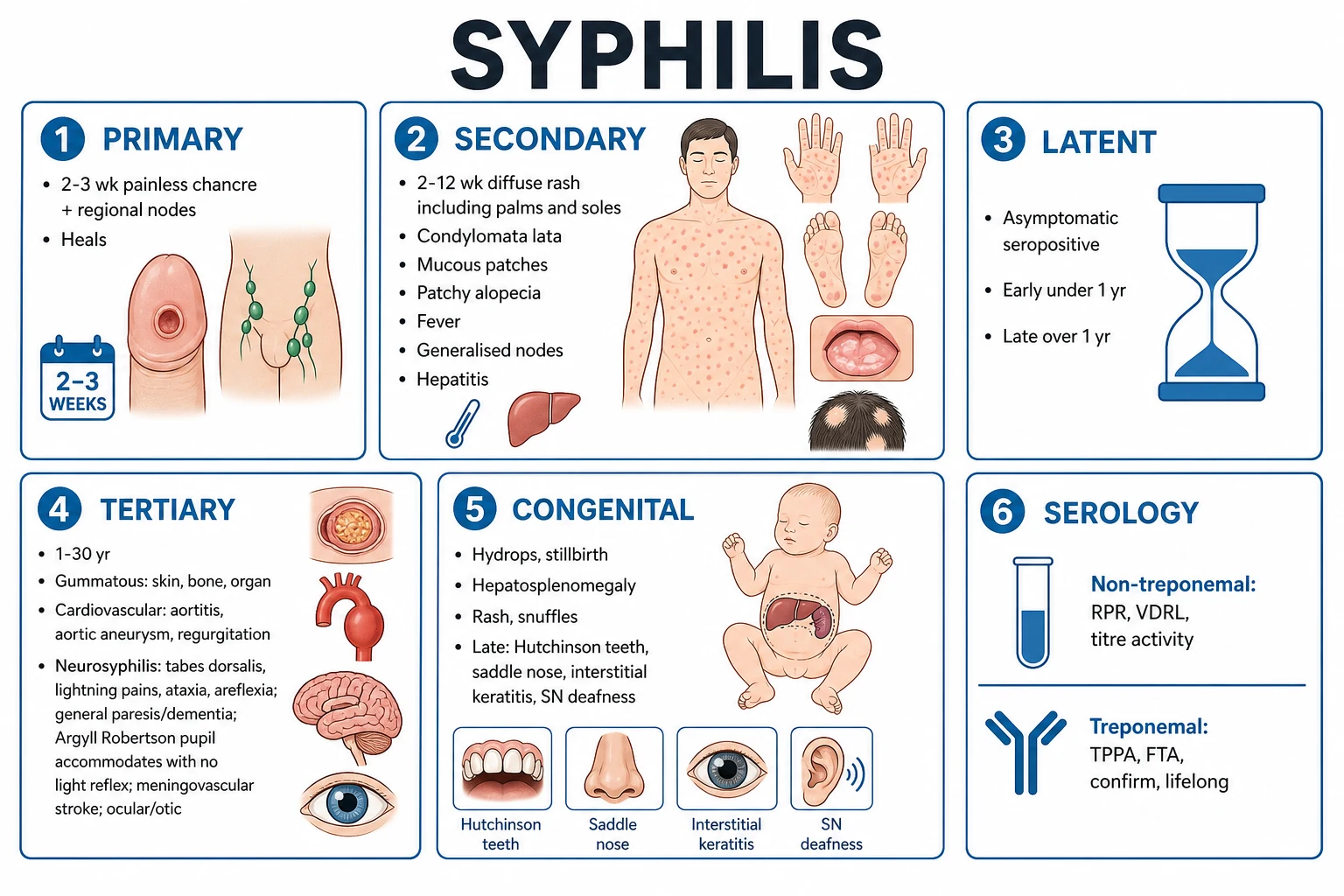
Syphilis is a chronic systemic infection by the spirochete Treponema pallidum subsp. pallidum, acquired sexually or vertically, that progresses through four clinical stages if untreated: primary (painless indurated chancre at the inoculation site with rubbery regional lymphadenopathy), secondary (systemic illness with a diffuse non-itchy maculopapular rash involving the palms and soles, mucous patches, condylomata lata, generalised lymphadenopathy and moth-eaten alopecia), latent (asymptomatic but seropositive), and tertiary (years later: gummas, cardiovascular syphilis with ascending aortic aneurysm and aortic regurgitation, and neurosyphilis — tabes dorsalis, general paresis, Argyll Robertson pupil, meningovascular stroke, ocular and otic syphilis). Neurosyphilis can occur at any stage. Congenital syphilis causes stillbirth, hydrops and the late stigmata (Hutchinson triad, saddle nose, saber shin, snuffles). Diagnosis rests on two-tier serology: non-treponemal (RPR/VDRL — activity, titre and treatment response) plus treponemal (TPPA/FTA — confirm, lifelong positive); dark-field microscopy shows the motile spirochete from moist lesions. Penicillin is first-line for every stage — benzathine penicillin G IM (single dose for primary/secondary/early latent; weekly x 3 for late latent/tertiary) and IV aqueous crystalline penicillin for neurosyphilis for 10 to 14 days. The Jarisch-Herxheimer reaction is common after the first dose. All patients must be tested for HIV, partners notified and treated, and every pregnancy screened and treated urgently to prevent congenital syphilis.
On this page & tools
Your progress
Saved locally on this device.
Exam tags
Red flags
Overview & Definition
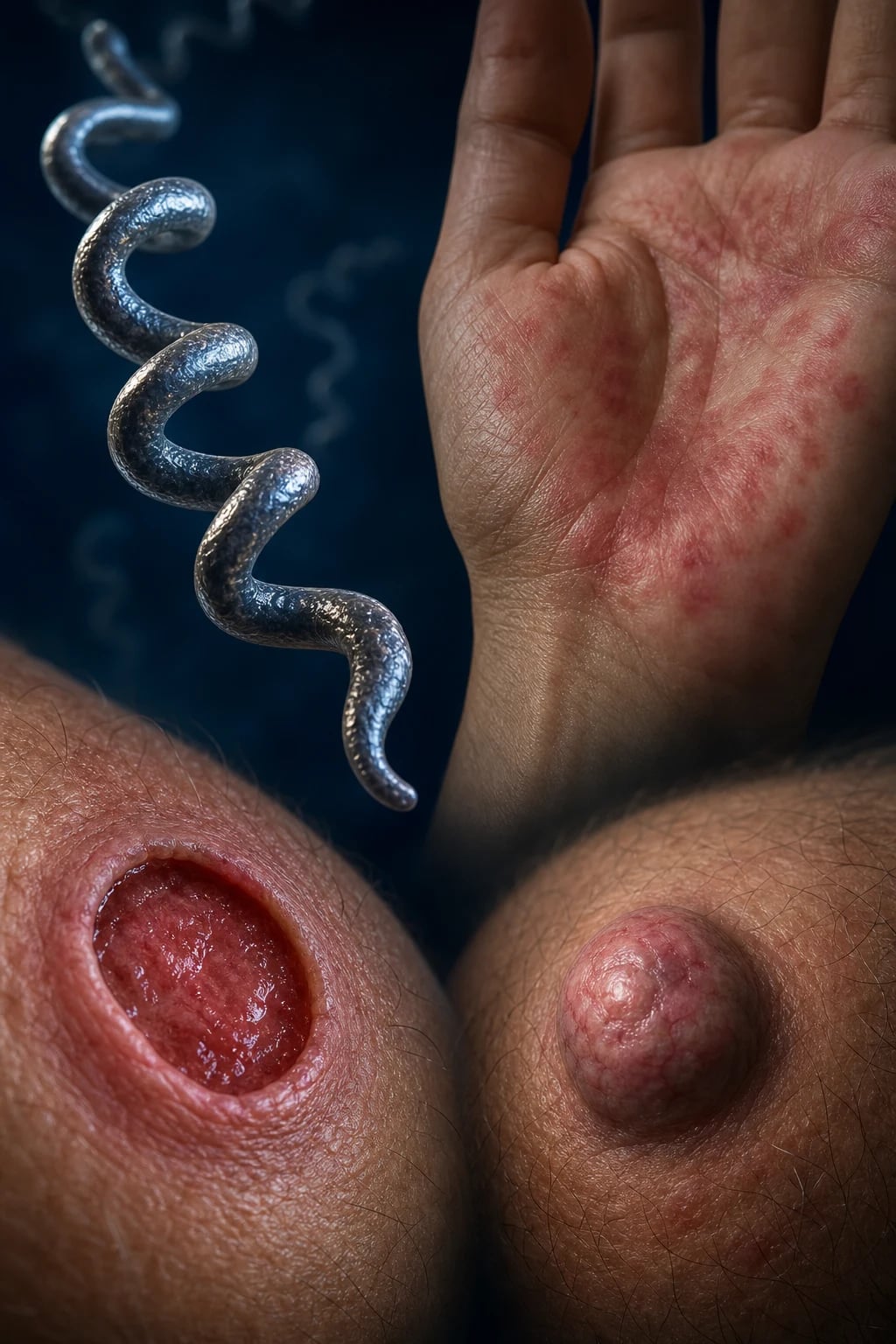
Syphilis is a chronic, systemic, sexually and vertically transmitted infection caused by the spirochete Treponema pallidum subsp. pallidum, whose defining clinical feature is its progression through well-demarcated stages — primary, secondary, latent and tertiary — each with characteristic (and often highly specific) clinical features, separated by periods of clinical quiescence.[1][2]
The disease is the original "great imitator" — across its stages it can mimic almost any disease, from a painless genital ulcer (chancre) to a diffuse rash, a stroke in a young person, an aortic aneurysm, a chronic dementing illness, a uveitis, or a stillbirth. The clinical skill the examiner is testing is threefold: (1) recognising each stage and its specific features (the indurated painless chancre; the palmar and plantar rash with mucous patches; the gumma; the Argyll Robertson pupil and tabetic gait); (2) understanding the two-tier serological strategy (non-treponemal tests such as RPR/VDRL to screen and to follow disease activity and treatment response by the titre; treponemal tests such as TPPA/FTA to confirm and which stay positive for life); and (3) knowing that penicillin is first-line for every stage of syphilis and has remained universally effective for over 70 years — no resistance has ever been documented.[1][6]
Three facts anchor the modern importance of syphilis. First, it has resurged globally since 2000 after near-elimination in the 1990s, driven principally by epidemics in men who have sex with men (MSM) but increasingly affecting heterosexual populations. Second, congenital syphilis has resurged dramatically — over 700,000 syphilis-associated adverse pregnancy outcomes globally in 2022, the majority preventable by a single course of antenatal penicillin. Third, syphilis and HIV potentiate one another: the syphilitic chancre increases HIV acquisition and transmission risk several-fold, so every syphilis diagnosis mandates HIV testing (and vice versa).[2][7]
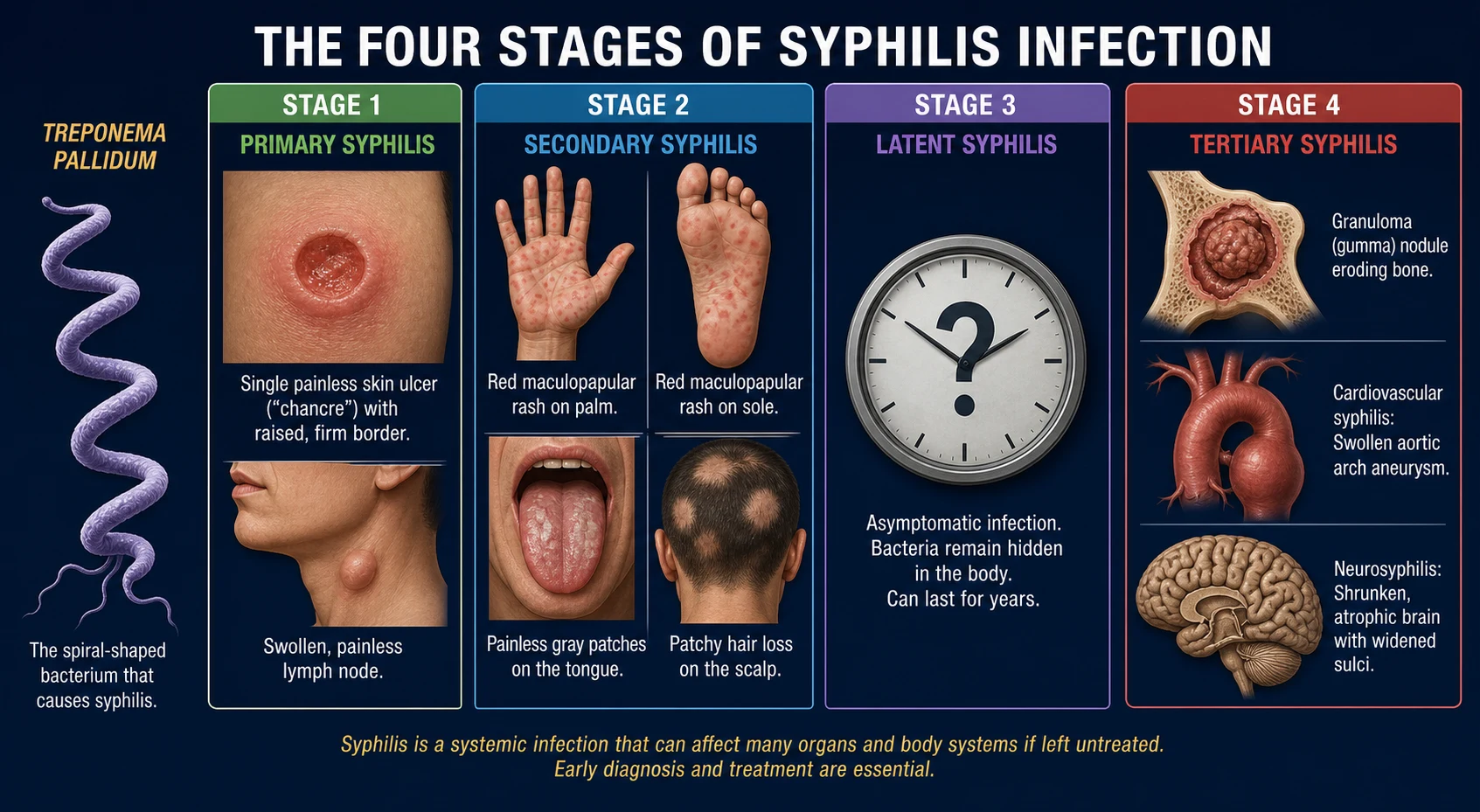
The organism is a thin (0.1 to 0.2 micrometre wide, 6 to 20 micrometres long), tightly coiled spirochete with 6 to 14 spirals, too thin to be seen on conventional light microscopy but visible on dark-field microscopy of moist lesion exudate as a motile, corkscrewing organism. It cannot be cultured on artificial media (it is cultured only in rabbit testes, a research tool), which is why diagnosis rests on serology and direct visualisation rather than culture.[2]
Classification
Syphilis is classified by mode of acquisition and by clinical stage, the latter being the operational framework that determines both the clinical picture and the treatment regimen.[1][12]
By acquisition: [1]
- Acquired syphilis — transmitted by sexual contact (the dominant mode) or, rarely, by blood transfusion, needlestick, or direct contact with an infectious lesion.
- Congenital syphilis — transmitted transplacentally from mother to fetus (from about 16 weeks' gestation) or, less often, at delivery through contact with an infectious genital lesion. [1]
By stage (acquired syphilis): [1]
- Primary syphilis — the chancre appears 9 to 90 days (average 21 days, about 3 weeks) after exposure.
- Secondary syphilis — the systemic stage, 2 to 12 weeks after the chancre; the two may overlap.
- Latent syphilis — asymptomatic with positive serology, subdivided into early latent (within 1 year of infection; the CDC uses 1 year, the European/BASHH guideline uses 2 years) and late latent / unknown duration (beyond that). The distinction matters because early latent is treated with a single benzathine dose and late latent/unknown with three weekly doses.[1][12]
- Tertiary syphilis — 1 to 30 years after infection, in roughly one-third of untreated patients, with three sub-forms: gummatous, cardiovascular, and neurosyphilis.
Neurosyphilis is classified separately because it can occur at any stage, not only tertiary:[3][4]
- Asymptomatic neurosyphilis — CSF abnormalities (pleocytosis, raised protein, positive CSF-VDRL) without neurological symptoms.
- Symptomatic neurosyphilis — meningeal (acute syphilitic meningitis), meningovascular (endarteritis causing stroke), general paresis (parenchymal chronic encephalitis with dementia), tabes dorsalis (posterior column degeneration), ocular syphilis (uveitis, optic neuritis), and otic syphilis (sensorineural hearing loss, vertigo). [1]
Subspecies of T. pallidum and the endemic treponematoses. T. pallidum subsp. pallidum causes venereal syphilis; subsp. pertenue causes yaws; subsp. endemicum causes endemic (non-venereal) syphilis (bejel); and subsp. carateum causes pinta. All four are serologically indistinguishable — they give identical positive RPR/VDRL and treponemal tests — so a positive syphilis serology in a person from an endemic-treponematoses region (tropical Africa, Asia, Pacific) may reflect yaws or bejel rather than venereal syphilis, a clinical history point the examiner may probe.[2]
Epidemiology & Risk Factors
Syphilis has a worldwide distribution and has resurged since 2000 after near-elimination in high-income countries in the 1990s. The WHO estimated approximately 8 million new adults (15 to 49 years) acquired syphilis in 2022, and congenital syphilis now accounts for over 700,000 adverse pregnancy outcomes annually — stillbirths, neonatal deaths and congenitally infected infants — the vast majority preventable.[2][7]
Syphilis by the numbers
Reservoir and transmission. Humans are the only reservoir of T. pallidum. The principal mode is sexual contact, with the organism entering through mucosal or abraded skin surfaces. Vertical (transplacental) transmission occurs from about 16 weeks' gestation, and the pregnant woman remains infectious to her fetus throughout. Rare modes include blood transfusion (now exceedingly rare with serological screening), needlestick, and direct non-sexual contact with an infectious lesion (e.g., a healthcare worker inoculating a finger — an extragenital chancre).[1][2]
Infectivity by stage. Infectivity is highest in primary and secondary syphilis, when the mucocutaneous lesions (chancre, mucous patches, condylomata lata) teem with spirochetes. Latent and tertiary cases are essentially non-infectious to sexual partners, but a woman with latent syphilis can still transmit transplacentally. This asymmetry is the rationale for the stage-based treatment and the public-health emphasis on early disease.[1]
Risk factors: [1]
- Men who have sex with men (MSM) — the dominant epidemic in high-income countries.
- HIV co-infection — bidirectional synergy; syphilis increases HIV transmission and vice versa.
- Multiple sexual partners, condom non-use, commercial sex work, recreational drug use (especially chemsex).
- Adolescents and young adults (peak incidence 15 to 35 years).
- Partners of individuals diagnosed with early syphilis.
- Pregnant women in whom untreated infection is devastating to the fetus.
- Socioeconomic deprivation and limited healthcare access — drive the congenital syphilis epidemic through missed antenatal screening.[2]
Syphilis–HIV synergy. The syphilitic chancre and genital ulcers of secondary syphilis disrupt mucosal integrity and recruit HIV-susceptible cells (CD4+ T-cells, macrophages, dendritic cells), increasing the risk of HIV acquisition and transmission two- to fivefold. Conversely, HIV co-infection alters the natural history of syphilis (more rapid progression, atypical and multiple lesions, higher risk of neurosyphilis, and prozone false-negative serology). Every patient diagnosed with syphilis must be tested for HIV (and vice versa) — this is non-negotiable and a perennial exam point.[1][3]
[1]Pathophysiology
The organism. Treponema pallidum subsp. pallidum is a thin, tightly coiled, motile spirochete, 0.1 to 0.2 micrometres wide and 6 to 20 micrometres long, with 6 to 14 helical coils. Two structural features explain its biology:[2]
- An outer membrane that is hyposialylated and poor in transmembrane (surface-exposed) proteins — this is the basis of its immune evasion and persistence: there are very few targets for antibody and complement on its surface, so it eludes humoral clearance.
- Endoflagella (also called periplasmic flagella) that lie in the periplasmic space between the outer membrane and the peptidoglycan layer; their rotation drives the corkscrew (rotational) motility that allows the organism to penetrate intact mucosa and micro-abraded skin and to swim through viscous tissue fluids. [1]
T. pallidum cannot be grown on artificial media — it lacks the biosynthetic machinery for many amino acids, fatty acids and vitamins and depends on a living host. It is cultivated only by intratesticular inoculation of rabbits (the Nichols pathogenic strain, a research tool), which is why laboratory diagnosis relies on dark-field microscopy of lesion exudate and on serology, not on culture.[2]
Entry and early dissemination. The organism enters through mucosa or abraded skin at the inoculation site and divides locally about once every 30 hours. Crucially, dissemination begins within hours: organisms enter the lymphatics, reach regional nodes, and then stream into the bloodstream (spirochetemia) well before the chancre appears. The chancre is therefore not a localised early event but the cutaneous sign of an already-disseminated infection — which is why treatment of even an isolated-appearing chancre must be systemic and stage-based, and why secondary syphilis can develop even after the chancre has healed.[1][2]
The histopathological hallmark — obliterative endarteritis. Every syphilitic lesion, from chancre to gumma to aortic aneurysm, shares the same vascular lesion: a perivascular infiltrate of lymphocytes and plasma cells with proliferation of endothelial cells that narrows (obliterates) the vessel lumen — obliterative endarteritis and periarteritis. Tissue ischaemia and the host inflammatory response produce the clinical lesion. The relative paucity of organisms in tertiary lesions (the gumma is essentially a host hypersensitivity response to a few remaining organisms) explains why tertiary disease is destructive but poorly transmissible.[2]
Stage-by-stage mechanism: [1]
- Primary (chancre). At the inoculation site, intense local multiplication produces a painless, clean-based, indurated ulcer with the characteristic perivascular plasma-cell and lymphocytic infiltrate and endarteritis. The induration (firmness) reflects this dense inflammatory infiltrate. The chancre heals spontaneously in 3 to 6 weeks even without treatment, but the organism has long since disseminated.[1]
- Secondary. Immune-complex deposition and widespread vasculitis and endarteritis in skin and mucosa produce the diffuse maculopapular rash, mucous patches and condylomata lata; lesions are teeming with spirochetes and highly infectious. Systemic features (fever, malaise, lymphadenopathy, hepatitis, nephrotic syndrome from immune-complex glomerulonephritis) reflect cytokine release and multi-organ seeding.[2]
- Latent. The cellular and humoral immune response partially controls the infection; spirochetes persist in low numbers in lymph nodes, CNS and other tissue. The patient is asymptomatic but seropositive and (in pregnancy) can still transmit transplacentally.[1]
- Gummatous (tertiary). A type IV (delayed) hypersensitivity granulomatous response to a few persistent organisms; central caseous (gum-like) necrosis surrounded by epithelioid cells, multinucleated giant cells, plasma cells and obliterative endarteritis. Gummas are paucibacillary (few organisms) — destructive but not highly infectious.[2]
- Cardiovascular syphilis. T. pallidum seeds the vasa vasorum of the ascending aorta and aortic arch, producing obliterative endarteritis of the nutrient vessels and consequent ischaemic medial necrosis with loss of elastic fibres → aortic dilatation → ascending aortic aneurysm, aortic regurgitation and coronary ostial stenosis. The classic gross appearance is the "tree-bark" wrinkling of the intima. The aneurysm characteristically involves the ascending aorta and arch and spares the aorta distal to the renal arteries (a distinction from atherosclerotic aneurysm). It manifests 15 to 30 years after infection.[2]
- Neurosyphilis. T. pallidum invades the CNS early — CSF pleocytosis is detectable in up to 40% of early syphilis even without neurological symptoms. The clinical syndromes depend on the dominant compartment:[3][4]
- Meningeal — acute basilar meningitis (headache, meningism, cranial nerve palsies of VII and VIII, seizures).
- Meningovascular — endarteritis of cerebral vessels producing stroke, classically in the middle cerebral artery territory in a young person, 5 to 10 years after infection.
- General paresis — chronic progressive meningo-encephalitis producing cortical atrophy (widened sulci, shrunken gyri), progressive dementia, personality change, psychiatric features (classically grandiosity and delusions of grandeur), a tremulous tongue and facial muscles, dysarthria, and the Argyll Robertson pupil. Develops 15 to 20 years after infection.
- Tabes dorsalis — degeneration of the dorsal columns and dorsal nerve roots of the spinal cord, producing lightning (lancinating) neuropathic pains, sensory ataxia with a positive Romberg sign and a high-stepping stamping gait, loss of vibration and joint position sense, hyporeflexia/areflexia in the legs, Charcot (neuropathic) joints, and visceral crises (gastric, rectal, laryngeal). Develops 15 to 25 years after infection.[4]
- Ocular syphilis — uveitis (anterior, intermediate or posterior), optic neuritis/retinitis, panophthalmitis; can cause permanent visual loss.
- Otic syphilis — sensorineural hearing loss, tinnitus, vertigo.
Argyll Robertson pupil. A small, irregular pupil that constricts on accommodation (near effort) but does NOT constrict to light — memorably "the prostitute pupil: it accommodates but does not react." The lesion is in the dorsal midbrain (pretectal) fibres that mediate the light reflex but spare the near-reflex pathway to the Edinger-Westphal nucleus. Classic for neurosyphilis (tabes dorsalis and general paresis) but not pathognomonic — it also occurs in diabetes (autonomic neuropathy) and other dorsal midbrain lesions.[3][4]
Congenital syphilis — mechanism. T. pallidum crosses the placenta from about 16 weeks' gestation (when trophoblastic involution reduces the barrier). The fetal inflammatory response produces hepatosplenomegaly, anaemia, thrombocytopenia, hydrops fetalis and stillbirth; surviving neonates show early congenital syphilis (hepatosplenomegaly, rash, snuffles, periostitis) and late stigmata (Hutchinson triad, saddle nose, saber shin) caused by persistent infection and the chronic inflammatory response in developing teeth, bone, cornea, and the eighth nerve.[7][8]
Jarisch-Herxheimer reaction — mechanism. Within 2 to 24 hours of the first antibiotic dose (especially penicillin), massive lipoprotein release from dying spirochetes triggers a cytokine storm (TNF-alpha, IL-6, IL-8), producing fever, chills, myalgia, headache, exacerbation of rash and transient hypotension. It is self-limiting (resolves in 12 to 24 hours), self-limiting, and NOT a drug allergy — penicillin must be continued. It is commonest in early (high-spirochete-load) disease (up to 70% of secondary syphilis), and is clinically important in pregnancy (can precipitate fetal distress, preterm labour, stillbirth — monitor the fetus) and in cardiovascular/neurosyphilis (transient clinical worsening of an aneurysm or neurology). Antipyretic pretreatment does not reliably prevent it.[11]
Clinical Presentation
The clinical picture is dictated by stage, modified by HIV status, pregnancy and immune competence. Recognising the stage is the central clinical skill.[1][2]
Primary syphilis (the chancre). 9 to 90 days (average 21 days) after exposure, a single, painless, clean-based, indurated (firm, cartilaginous) ulcer appears at the inoculation site — most often the glans penis, prepuce, shaft, labia, cervix, or anal margin, less often the lip, tongue, pharynx, finger, nipple or rectum. The ulcer has a raised, firm border, a smooth clean base with a clear serum exudate teeming with spirochetes, and is accompanied by non-tender, rubbery regional lymphadenopathy (inguinal for a penile chancre). The chancre heals spontaneously in 3 to 6 weeks even without treatment, leaving a faint scar. Atypical primary: extragenital chancre (anal, oral) is easily missed; a cervical chancre is invisible and highly infectious; in HIV co-infection, chancres may be multiple or atypical; rarely the chancre is painful if secondarily infected.[1]
Secondary syphilis (the systemic stage). 2 to 12 weeks after the chancre (the two may overlap, so a patient may still have a healing chancre when the rash appears). The cardinal features are:[1][2]
- Diffuse, symmetric, non-itchy maculopapular rash (the syphilide), coppery-red, classically involving the PALMS and SOLES (the single highest-yield cutaneous clue) — also trunk, flexures, face. It may be subtle or florid.
- Condylomata lata — broad, flat, moist, grey-white, highly infectious papules/plaques in warm moist intertriginous sites (perianal, vulval, scrotal, inframammary, axillary). Distinct from viral warts (condyloma acuminata), which are dry and cauliflower-like.
- Mucous patches — painless, grey-white, slightly eroded patches on the tongue, buccal mucosa, lips, palate, pharynx; the "snail-track" ulcer is the confluent form. Highly infectious.
- Generalised, non-tender lymphadenopathy — epitrochlear, cervical, axillary, inguinal nodes are typically rubbery and discrete.
- Patchy ("moth-eaten") alopecia of the scalp, beard, eyebrows and eyelashes — a classic specific feature.
- Systemic symptoms — low-grade fever, malaise, headache, sore throat, arthralgia, myalgia, anorexia, weight loss.
- Less common features: hepatitis (usually mild, raised ALT, asymptomatic), immune-complex membranous nephropathy (nephrotic syndrome), gastritis, iritis/uveitis, periostitis (especially of the skull and long bones, causing nocturnal bone pain), split papules at the oral commissures, and meningitis with cranial nerve (VII, VIII) involvement.[2]
The rash, condylomata and mucous patches all teem with spirochetes — secondary syphilis is the most infectious stage. The lesions resolve spontaneously over weeks even without treatment, but the patient is now seropositive and may progress to latent and tertiary disease.[1]
Latent syphilis. Asymptomatic but seropositive. No clinical signs; detected on serology (antenatally, in STI screening, at blood donation, or in a contact trace). Early latent (within 1 year of infection, CDC; 2 years, BASHH) — infectious to partners and fetus. Late latent / unknown duration — non-infectious to sexual partners but still transmissible transplacentally.[1][12]
Tertiary syphilis (in roughly one-third of untreated patients, 1 to 30 years after infection). Three sub-forms, which may coexist:[2]
- Gummatous — granulomatous nodules, plaques or ulcers with central gum-like necrosis on skin, mucosa, bone (skull, tibia, palate, nasal septum), and viscera (liver, testis, lung). Cutaneous gummas form "punched-out" ulcers; bone gummas cause pain, swelling and pathological fracture; palatal and nasal septum gummas perforate, causing the saddle-nose deformity.
- Cardiovascular — ascending aortic aneurysm (expansile supraclavicular/suprasternal mass, tracheal tug, hoarseness from recurrent laryngeal nerve stretch, dysphagia, risk of fatal rupture), aortic regurgitation (collapsing water-hammer pulse, wide pulse pressure, early diastolic murmur at the left sternal edge, bounding peripheral pulses), coronary ostial stenosis (angina without atherosclerotic coronary disease). Manifests 15 to 30 years after infection.[2]
- Neurosyphilis — see above (meningeal, meningovascular stroke, general paresis, tabes dorsalis, ocular, otic). Can occur at any stage.[3][4]
Congenital syphilis. The fetus infected in utero may present with hydrops fetalis, miscarriage or stillbirth; the liveborn neonate shows early congenital syphilis (under 2 years): hepatosplenomegaly, jaundice, petechiae/purpura (thrombocytopenia), "snuffles" (a blood-stained, highly infectious nasal discharge), maculopapular rash, periostitis and osteochondritis, anaemia, failure to thrive. Late stigmata (over 2 years) are the classic exam features:[7][8]
- Hutchinson triad — (1) Hutchinson teeth (notched, peg-shaped, widely spaced central incisors); (2) interstitial keratitis (leading to corneal scarring and visual impairment); (3) sensorineural deafness (eighth nerve). Together these constitute the pathognomonic triad.
- Saddle nose (depressed nasal bridge from gummatous destruction of the nasal septum).
- Saber shin (anterior bowing of the tibia from periostitis).
- Mulberry molars (multicuspid malformed first molars).
- Frontal bossing of the skull; short maxilla and protuberant mandible.
- Rhagades (linear perioral scars from healed fissures).
- Clutton joints (painless synovitis with effusion of the knees).
- Neurodevelopmental impairment, hydrocephalus, mental retardation. [1]
Atypical presentations the examiner may probe:[1][3]
- HIV co-infection — multiple or atypical chancres; rapid progression to neurosyphilis; prozone false-negative non-treponemal serology (antibody excess interferes with flocculation) or false-positive results.
- Pregnancy — usually asymptomatic (latent), detected on antenatal screening, yet devastating to the fetus.
- Elderly — may present with cardiovascular syphilis (aneurysm, aortic regurgitation) or general paresis (dementia) decades after an unrecalled primary infection.
- Young person with a stroke — always consider meningovascular syphilis alongside carotid dissection and other causes.
- Any unexplained uveitis, optic neuritis or sudden sensorineural hearing loss — consider syphilis. [1]
Differential Diagnosis
Because syphilis is the "great imitator," each stage has its own differential, and the discriminating feature is usually a specific clinical detail plus the serology.[1][2]
Differential diagnosis of the genital ulcer (chancre)
Primary syphilis (the chancre)
- PAINLESS, SINGLE, clean-based, INDURATED (firm/cartilaginous) ulcer with a raised border and clear serum exudate
- Regional nodes are NON-TENDER and RUBBERY; dark-field microscopy of exudate shows MOTILE spirochetes; positive RPR/VDRL + TPPA
- Treat with benzathine penicillin G 2.4 MU IM single dose; treat partners
Herpes simplex (HSV-1/2)
- PAINFUL, MULTIPLE, shallow, vesicular ulcers on an erythematous base; recurrent; prodromal tingling
- Tender inguinal adenopathy; positive HSV PCR from a swab; Tzanck smear shows multinucleated giant cells
- Treat with oral aciclovir 400 mg three times daily for 5 to 10 days (or valaciclovir 500 mg twice daily)
Chancroid (Haemophilus ducreyi)
- PAINFUL, ragged, purulent, non-indurated ulcer with an undermined edge; TENDER, UNILATERAL inguinal bubo that may suppurate
- Gram stain shows Gram-negative coccobacilli in a 'school of fish' pattern; culture/PCR
- Treat with azithromycin 1 g PO single dose OR ceftriaxone 250 mg IM single dose; drain fluctuant bubo
Lymphogranuloma venereum (Chlamydia trachomatis L1-L3)
- Small, painless, self-healing primary ulcer, then LARGE TENDER INGUINAL BUBO with the GROOVE SIGN (nodes above and below the inguinal ligament)
- PCR for C. trachomatis L-serovars from ulcer/bubo; systemic illness, proctitis in MSM
- Treat with doxycycline 100 mg twice daily for 21 days (or erythromycin 500 mg four times daily for 21 days in pregnancy)
Granuloma inguinale / Donovanosis (Klebsiella granulomatis)
- PAINLESS, BEEFY-RED, GRANULOMATOUS, slowly progressive, highly vascular ulcer that bleeds easily; NO significant lymphadenopathy
- Tissue crush smear / biopsy shows intracytoplasmic DONOVAN BODIES in macrophages (bipolar 'safety-pin')
- Treat with azithromycin 1 g weekly for 3 weeks, or doxycycline 100 mg twice daily for 3 weeks
Fixed drug eruption
- Round, well-demarcated, dusky erythematous plaque recurring at the SAME site on re-exposure to a drug (NSAIDs, sulfonamides, tetracyclines, paracetamol)
- History of drug ingestion; biopsy if needed; no regional adenopathy; serology negative
- Withdraw the offending drug; topical corticosteroid
Behcet syndrome
- Recurrent painful oral and genital aphthous ulcers, uveitis, skin lesions (erythema nodosum, pathergy); may have arthralgia, CNS vasculitis
- Clinical diagnosis; positive pathergy test; syphilis serology negative
- Rheumatology/dermatology; topical and systemic immunosuppression
Squamous cell carcinoma
- Chronic, non-healing, indurated, often painful ulcer or fungating mass in an older patient; palpable regional nodes may be malignant
- Biopsy is essential; syphilis serology negative
- Surgical excision + radiotherapy/chemotherapy as indicated
Differential of the secondary syphilis rash (maculopapular, palms and soles): pityriasis rosea (herald patch, fir-tree trunk distribution, spares palms/soles), drug eruption (eosinophilia, temporal link), measles, rubella, infectious mononucleosis rash (especially after amoxicillin), meningococcaemia, Rocky Mountain spotted fever, guttate psoriasis, tinea corporis, hand-foot-mouth disease, scabies (itchy, burrows). The discriminating features are: secondary syphilis rash is NON-ITCHY, involves the palms and soles, and is accompanied by mucous patches, condylomata lata, lymphadenopathy and positive serology.[1][2]
Condylomata lata vs condyloma acuminata (viral warts, HPV 6/11): lata are flat, moist, grey-white and teeming with spirochetes (highly infectious); acuminata are dry, exophytic, cauliflower-like. The distinction matters because the treatment is entirely different (penicillin vs wart destruction).[1]
Differential of cardiovascular syphilis (aortic aneurysm / aortic regurgitation): atherosclerosis, bicuspid aortic valve, Marfan syndrome and other connective-tissue disorders, aortic dissection, ankylosing spondylitis, rheumatic heart disease, Takayasu arteritis. The syphilitic aneurysm classically involves the ascending aorta and arch and spares the aorta distal to the renal arteries, and shows the "tree-bark" intimal wrinkling — confirmed by positive serology.[2]
Differential of general paresis (young/atypical dementia or new psychiatric illness): Alzheimer disease, frontotemporal dementia, vascular dementia, HIV encephalopathy, neurosyphilis (always exclude with serology), Wilson disease, neurodegenerative and autoimmune encephalitides. Syphilis serology is part of the reversible-dementia screen in any young or atypical dementia.[3][4]
Differential of tabes dorsalis (sensory ataxia, lancinating pains): vitamin B12 deficiency (subacute combined degeneration — also dorsal columns but with UMN signs and macrocytosis), vitamin E deficiency, hereditary sensory and autonomic neuropathy, diabetic neuropathy, multiple sclerosis. Tabes is distinguished by the Argyll Robertson pupil, lancinating pains, areflexia and positive Romberg with positive syphilis serology.[4]
Differential of a young-adult stroke: carotid or vertebral artery dissection, patent foramen ovale (paradoxical embolism), antiphospholipid syndrome, vasculitis, Fabry disease, meningovascular syphilis — send syphilis serology as part of the young-stroke work-up.[3]
Differential of stillbirth / hydrops fetalis / neonatal sepsis: parvovirus B19, Rh alloimmunisation, CMV, toxoplasmosis, listeria, GBS — and congenital syphilis. Send maternal syphilis serology and treat empirically if positive.[7][8]
Clinical & Bedside Assessment
Syphilis is systemic — the chancre is the visible tip of an already-disseminated infection. The assessment must therefore examine skin and mucosa, lymph nodes, abdomen, cardiovascular system, nervous system and eyes, and elicit a full sexual and (in pregnancy) obstetric history.[1][2]
Named signs and bedside manoeuvres (the examiner's favourites): [1]
Named signs of syphilis and how to elicit them at the bedside
The chancre (primary)
- PAINLESS, SINGLE, clean-based, INDURATED (firm, cartilaginous) ulcer with a raised border
- The INDURATION is the discriminating feature: herpes is soft and vesicular; chancroid is purulent and ragged
- Regional nodes are NON-TENDER and RUBBERY (rubberiness distinguishes syphilitic nodes from the tender, fluctuant bubo of chancroid)
Palmar and plantar rash (secondary)
- A NON-ITCHY maculopapular rash on the palms and soles is highly suggestive of secondary syphilis
- Also consider meningococcaemia, Rocky Mountain spotted fever, hand-foot-mouth disease, Kawasaki disease — but the constellation with mucous patches/condylomata lata is syphilis until proven otherwise
- Examine the entire skin, including between the toes and on the soles
Condylomata lata (secondary)
- Broad, flat, MOIST, grey-white papules/plaques in intertriginous sites (perianal, vulval, inframammary, axillary)
- TEEMING with spirochetes — handle with gloves; dark-field positive
- Distinct from viral warts (condyloma acuminata), which are dry and cauliflower-like
Moth-eaten alopecia (secondary)
- Patchy, non-scarring hair loss of the scalp, beard and eyebrows with a 'moth-eaten' appearance
- Distinguishes syphilitic alopecia from other causes (alopecia areata, telogen effluvium, tinea capitis)
Argyll Robertson pupil (neurosyphilis)
- SMALL, IRREGULAR pupil that ACCOMMODATES (constricts on near effort) but does NOT REACT TO LIGHT
- Test: ask the patient to look at your finger 15 cm away (it constricts), then shine a bright pen torch (it does not constrict) — the 'prostitute pupil'
- Lesion in the dorsal midbrain (pretectal) light-reflex fibres, sparing the near-reflex pathway; classic for tabes/general paresis; also diabetes
Tabes dorsalis signs
- LANCINATING (lightning) pains; SENSORY ATAXIA with a POSITIVE ROMBERG (marked increase in unsteadness with eyes closed vs open)
- HIGH-STEPPING/STAMPING gait; ABSENT REFLEXES in the legs (especially ankle jerks); loss of VIBRATION and JOINT POSITION sense distally
- CHARCOT (neuropathic) joints — painless, grossly enlarged, destructive arthropathy of knees, hips, ankles
General paresis signs
- Progressive DEMENTIA with PERSONALITY CHANGE and GRANDIOSITY/MEGALOMANIA (historic 'general paresis of the insane')
- TREMOR of the tongue (tremulous protruded tongue) and facial muscles; DYSARTHRIA; Argyll Robertson pupil
- Cortical release signs may be present; late-stage immobility, incontinence, seizures
Cardiovascular syphilis signs
- COLLAPSING (water-hammer) pulse and WIDE PULSE PRESSURE; bounding peripheral pulses
- EARLY DIASTOLIC MURMUR of aortic regurgitation at the LEFT STERNAL EDGE, patient sitting forward in held expiration
- Expansile supraclavicular/suprasternal mass (aneurysm), TRACHEAL TUG, hoarseness (recurrent laryngeal nerve), dysphagia; signs of heart failure
The structured examination: [1]
- Skin and mucosa — palms, soles, trunk, flexures (condylomata), scalp (alopecia), oral mucosa (mucous patches, snail-track ulcers), genital and perianal area (chancre, condylomata lata). Wear gloves — moist lesions are infectious.
- Lymph nodes — epitrochlear, cervical, axillary, inguinal (rubbery, non-tender, generalised in secondary).
- Abdomen — hepatosplenomegaly (secondary, congenital).
- Cardiovascular — aortic regurgitation, aneurysm, heart failure.
- Neurological — pupils (Argyll Robertson), higher mental function (dementia, grandiosity), cranial nerves (VII, VIII palsies), gait (sensory ataxia, positive Romberg), reflexes (areflexia in tabes), sensation (vibration and joint position), and a screen for stroke (focal deficits).
- Ophthalmic — visual acuity, slit-lamp (uveitis), optic disc (optic neuritis/atrophy), red eye.
- Obstetric (in pregnancy) — fundal height, ultrasound for hydrops, hepatosplenomegaly and growth restriction; fetal monitoring. [1]
History essentials: sexual contacts (number, gender, dates, condom use), last sexual contact, known STIs and HIV status, drug/alcohol use; in pregnancy — gestation, prior antenatal syphilis results, prior treatment, partner's status; in suspected tertiary disease — onset and progression of dementia, psychiatric change, gait disturbance, pains, visual/hearing change, cardiovascular symptoms. [1]
Investigations
Diagnosis rests on two-tier serology plus, in early disease, direct visualisation of the organism from moist lesions. There is no culture. Neurosyphilis requires CSF examination, and tertiary disease needs imaging.[1][2][10]
Direct visualisation — dark-field microscopy. Exudate from a moist lesion (chancre, mucous patch, condyloma lata) is examined under dark-field illumination and shows motile spirochetes — the definitive test for early infectious lesions. Limitations: not useful for oral or rectal lesions (commensal spirochetes give false-positives); requires a viable lesion and an experienced microscopist; sensitivity falls after topical antibiotics. PCR of lesion swab is a modern alternative where available.[2]
The two-tier serological strategy (the cornerstone). Serology is interpreted as a pair of test types: [1]
Two-tier serology of syphilis — non-treponemal vs treponemal
Non-treponemal tests (RPR, VDRL)
- Detect NON-SPECIFIC 'reagin' antibodies (anti-cardiolipin-cholesterol-lecithin), NOT anti-treponemal antibodies
- Use: SCREENING (paired with a treponemal test) and MONITORING DISEASE ACTIVITY + TREATMENT RESPONSE via the TITRE
- A FOURFOLD (two-dilution) RISE or FALL is clinically significant (e.g. 1:16 to 1:4 after treatment, or 1:8 to 1:32 re-infection)
- Can be FALSE-POSITIVE (pregnancy, SLE, antiphospholipid, vaccination, malaria, leprosy, TB, IV drug use) and FALSE-NEGATIVE in PROZONE (antibody excess in secondary syphilis)
- After successful treatment the titre FALLS (often to seronegative in early disease) — used for follow-up
Treponemal tests (TPPA, TPHA, FTA-ABS, treponemal EIA/CIA, rapid point-of-care)
- Detect SPECIFIC anti-Treponema pallidum antibodies
- Use: CONFIRM a reactive non-treponemal test; TPPA is the most sensitive and specific treponemal test
- Generally remain POSITIVE FOR LIFE even after adequate treatment — a positive treponemal test cannot distinguish past-treated from current infection
- A positive treponemal with a NEGATIVE non-treponemal suggests late/treated syphilis OR very early primary disease (treponemal becomes positive earlier than non-treponemal)
- Rapid point-of-care treponemal tests enable screening in resource-limited settings but are less sensitive in early primary disease
The PROZONE phenomenon. A false-NEGATIVE non-treponemal test in secondary syphilis caused by antibody EXCESS interfering with the flocculation reaction. Suspect it when a clinically typical secondary syphilis has a negative RPR/VDRL — request dilution of the serum, which unmasks the true high titre. More common in HIV co-infection and pregnancy, both high-spirochete-load states.[1][10]
False-positive RPR/VDRL. Distinguish acute (under 6 months — recent vaccination, acute viral infection, malaria, pregnancy) from chronic (over 6 months — SLE, antiphospholipid syndrome, chronic infections, IV drug use, malignancy, ageing). A false-positive non-treponemal test is confirmed by a NEGATIVE treponemal test.[1][10]
Screening algorithms — traditional vs reverse. The traditional algorithm screens with a non-treponemal test (RPR) first, then confirms positives with a treponemal test. The reverse algorithm screens with a treponemal test (EIA/CIA) first, then reflexes to RPR for activity and a discordant-resolving test. The reverse algorithm catches more late/latent cases (which may have a negative RPR) but generates more false-positives needing clinical adjudication. Many laboratories now use the reverse algorithm.[1]
CSF examination (for suspected neurosyphilis). Indicated in: neurological, ocular or otic signs; treatment failure (titre not falling fourfold by 6 to 12 months); tertiary disease; HIV co-infection with late latent syphilis and a high non-treponemal titre (over 1:32); and suspected congenital syphilis. CSF findings:[3][4]
- CSF-VDRL (or CSF-RPR) — HIGHLY SPECIFIC but INSENSITIVE. A POSITIVE CSF-VDRL confirms neurosyphilis; a NEGATIVE result does NOT exclude it (sensitivity only 30 to 70%).
- CSF-FTA / CSF-TPPA — more sensitive but less specific; a negative CSF-FTA/TPPA argues against neurosyphilis.
- CSF cell count — lymphocytic pleocytosis (over 5 cells per microlitre).
- CSF protein — raised (over 0.45 g/L).
- CSF glucose — usually normal (may be low in meningeal disease).
- CSF IgG index / oligoclonal bands — raised, supporting intrathecal synthesis. [1]
Imaging: [1]
- MRI brain — for meningovascular syphilis (cortical and subcortical infarcts, meningeal enhancement), gumma (ring-enhancing mass that may mimic tumour/abscess), and general paresis (mesiotemporal T2/FLAIR hyperintensity with cortical atrophy).[5]
- CT/MR angiography — for stroke and for arteritic changes.
- Echocardiography and CT/MR aortography — for cardiovascular syphilis (ascending aortic aneurysm, aortic regurgitation, characteristic "tree-bark" aorta).[2]
- Plain radiographs — for gummatous bone disease (skull, tibia), and in suspected congenital syphilis (Wimberger sign — destruction of the medial proximal tibial metaphysis; periostitis of long bones; osteochondritis).[8]
Other laboratory tests: FBC (anaemia in congenital/secondary; thrombocytopenia), LFTs (hepatitis in secondary), urinalysis (proteinuria/nephrotic in secondary), HIV test (mandatory — co-infection changes management), hepatitis B and C serology; in pregnancy — ultrasound for hydrops/hepatosplenomegaly/growth restriction; in suspected congenital syphilis — neonatal examination, long-bone radiographs, CSF, FBC, LFTs, and placental pathology.[1]
Antenatal screening (the TORCH/STORCH screen). Syphilis is part of the antenatal STORCH screen (Syphilis, Toxoplasma, Rubella, CMV, HSV). Universal screening at booking is standard; in high-prevalence settings repeat at 28 weeks and at delivery. A positive screen must be confirmed and the woman treated the same day with penicillin appropriate to her stage.[13]
There is no single named clinical scoring system for syphilis; the operational diagnostic framework is the CDC/WHO case definition combined with the stage-based serological titre response (a fourfold fall confirming cure, a fourfold rise indicating re-infection or treatment failure).[1]
Management — Resuscitation
Most syphilis is managed electively in outpatient sexual-health or dermato-venereology clinics. Resuscitation is reserved for the rare acute presentation: stroke from meningovascular syphilis, cardiovascular collapse (aortic dissection/rupture, severe aortic regurgitation with heart failure), ocular emergency (acute visual loss), a clinically significant Jarisch-Herxheimer reaction (especially in pregnancy), and severe congenital syphilis.[1][3]
ABCDE approach; the time-critical scenarios: [1]
- Meningovascular stroke / acute meningo-encephalitis — secure airway if GCS reduced; oxygen; IV access; treat seizures (IV lorazepam 0.1 mg/kg, max 4 mg); control raised intracranial pressure (head elevation 30 degrees, mannitol 0.5 g/kg IV or hypertonic 3% saline 2 to 3 mL/kg); arrange urgent CT/MRI brain; start empirical bacterial meningitis cover (ceftriaxone 2 g IV 12-hourly plus aciclovir 10 mg/kg IV 8-hourly) until CSF/serology clarifies; involve neurology/ID and neurosurgery if needed; once neurosyphilis is confirmed, switch to IV aqueous crystalline penicillin G 18 to 24 MU/day for 10 to 14 days.[3][4]
- Cardiovascular emergency (aortic aneurysm leak/rupture, acute severe aortic regurgitation) — two large-bore cannulae; crossmatch; treat shock with cautious IV crystalloid (avoid over-resuscitation raising shear stress on the aneurysm); urgent CT aortogram; cardiothoracic surgery; IV penicillin once stable. Note: vasculitis of the vasa vasorum continues despite antibiotics, so the aneurysm will progress — surgery is definitive for the aneurysm, antibiotics for the infection.[2]
- Ocular emergency (acute visual loss, syphilitic uveitis/optic neuritis) — urgent ophthalmology; IV aqueous crystalline penicillin G 18 to 24 MU/day for 10 to 14 days PLUS topical and systemic corticosteroid to limit inflammatory damage once antibiotics are underway; check HIV.[9]
- Jarisch-Herxheimer reaction (within 2 to 24 hours of the first penicillin dose) — self-limiting; reassure; give paracetamol 1 g PO/IV and fluids; observe for 24 hours, especially in pregnancy (fetal distress, preterm labour — fetal monitoring) and in cardiovascular/neurosyphilis (transient clinical worsening). It is NOT allergy — continue penicillin.[11]
- Severe congenital syphilis — paediatric/neonatal ID; evaluate for hydrops, hepatic failure, pneumonitis, neurosyphilis; IV aqueous crystalline penicillin G 50,000 units/kg/dose IV every 12 hours (first week of life) then every 8 hours for 10 days; supportive care.[7][8]
- Pregnancy — the time-critical bundle. Any woman with positive syphilis serology in pregnancy must be treated the SAME DAY with penicillin appropriate to the stage — efficacy falls if treatment is completed less than 30 days before delivery. Never defer treatment to await confirmatory tests when the index of suspicion is high.[13]
Management — Definitive & Stepwise
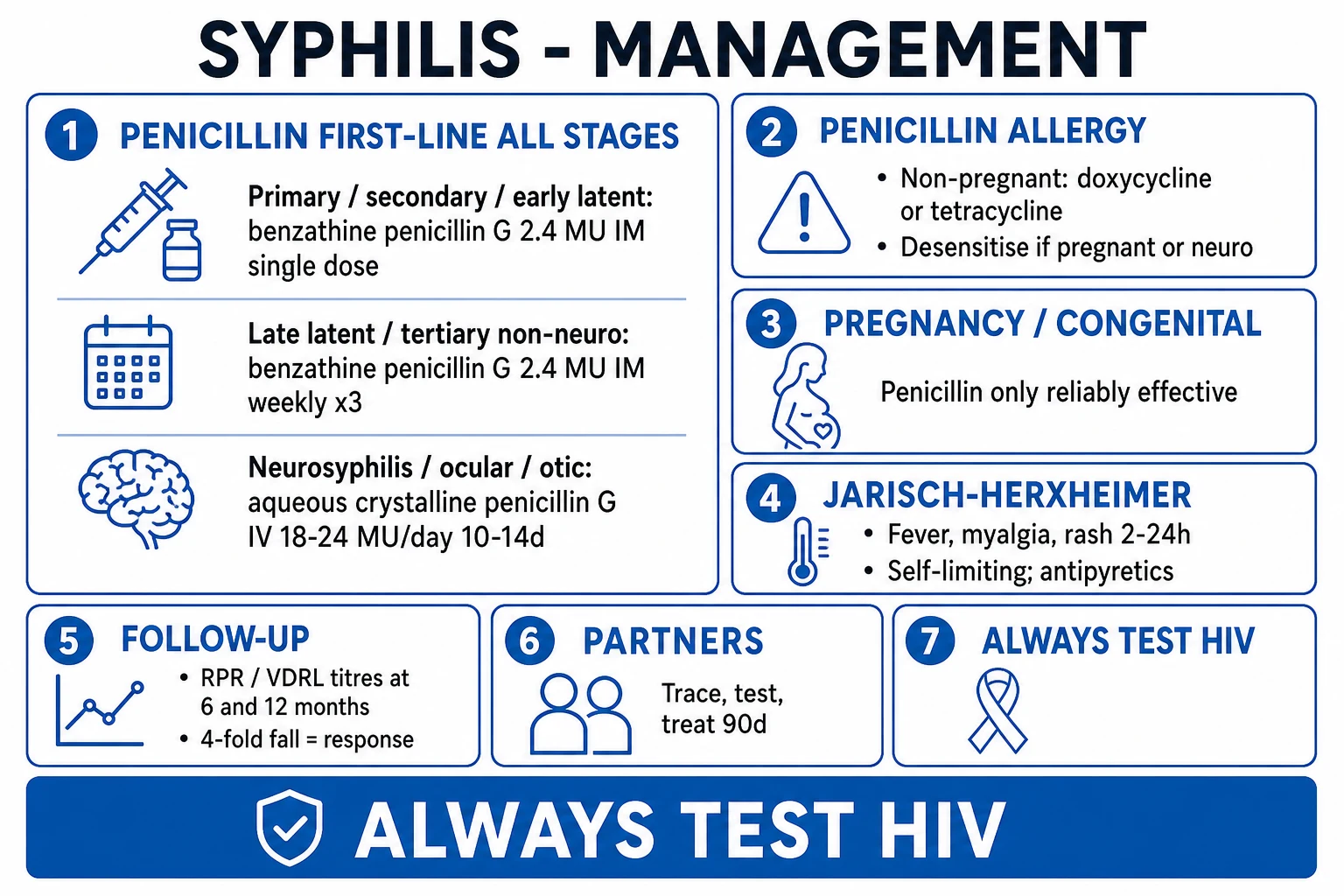
Penicillin is first-line for every stage of syphilis and has remained universally effective for over 70 years — no resistance has ever been documented. The regimen is determined by stage.[1][6]
Stage-based treatment of syphilis (CDC 2021 and European/BASHH 2020 guidelines)
Primary, secondary and EARLY latent syphilis
- BENZATHINE PENICILLIN G 2.4 million units IM as a SINGLE dose (1.2 MU into each buttock)
- Penicillin allergy (NON-pregnant): DOXYCYCLINE 100 mg PO twice daily for 14 days OR TETRACYCLINE 500 mg PO four times daily for 14 days
- Alternative: CEFTRIAXONE 1 to 2 g IV/IM daily for 8 to 10 days (less evidence). Azithromycin NOT recommended (resistance via 23S rRNA A2058G mutation)
Late latent, latent of UNKNOWN duration, and tertiary NON-neuro (gummatous, cardiovascular)
- BENZATHINE PENICILLIN G 2.4 million units IM ONCE WEEKLY for 3 doses (total 7.2 MU) over 3 consecutive weeks
- If any interval between doses is MORE than 14 days, RESTART the course from the beginning
- Penicillin allergy (NON-pregnant): DOXYCYCLINE 100 mg PO twice daily for 28 days OR TETRACYCLINE 500 mg PO four times daily for 28 days
Neurosyphilis (and ocular/otic syphilis)
- AQUEOUS CRYSTALLINE PENICILLIN G 18 to 24 million units/day IV, as 3 to 4 million units IV every 4 hours OR continuous infusion, for 10 to 14 days
- Alternative (procaine + probenecid): PROCAINE PENICILLIN G 2.4 million units IM daily PLUS PROBENECID 500 mg PO four times daily, both for 10 to 14 days
- After the IV/IM course, consider BENZATHINE PENICILLIN 2.4 MU IM weekly for 3 weeks to complete the latent regimen; CEFTRIAXONE 2 g IV daily for 10 to 14 days is an alternative
Syphilis in pregnancy
- PENICILLIN is the ONLY recommended treatment — same stage-based regimen as the non-pregnant patient
- Doxycycline and tetracycline are CONTRAINDICATED (teratogenic, tooth/bone effects in the fetus)
- A penicillin-allergic pregnant woman MUST be DESENSITISED and treated with penicillin — no substitute is acceptable. Treat the SAME DAY
Congenital syphilis (proven or highly probable disease)
- AQUEOUS CRYSTALLINE PENICILLIN G 50,000 units/kg/dose IV every 12 hours in the first 7 days of life, then every 8 hours, for 10 days
- Alternative: PROCAINE PENICILLIN G 50,000 units/kg IM daily for 10 days
- If more than 1 day of treatment is missed, RESTART the course. Infants with normal exam whose mother was inadequately treated: benzathine penicillin 50,000 units/kg IM single dose IF full evaluation normal and follow-up assured
Penicillin allergy and desensitisation. In pregnancy and in neurosyphilis, penicillin cannot be substituted — there is no acceptable alternative that reliably achieves treponemicidal levels in the fetus and the CSF. Perform skin testing (where available) and incremental oral or IV desensitisation in a monitored setting (start with approximately 1 unit, doubling every 15 to 30 minutes to reach the full dose over about 4 hours), then treat with penicillin. Desensitisation is temporary (re-sensitise for each subsequent course) and is performed even in those with a history of anaphylaxis, because the risk of untreated syphilis (congenital syphilis, neurosyphilis) exceeds the risk of a managed desensitisation.[1]
Jarisch-Herxheimer reaction management. Warn every patient before the first dose. Give an antipyretic (paracetamol 1 g) and hydration; observe for 24 hours, especially in pregnancy (fetal monitoring for distress and preterm labour) and in cardiovascular/neurosyphilis (transient clinical worsening of an aneurysm or neurology). The reaction is self-limiting in 12 to 24 hours and does NOT indicate allergy — penicillin must be continued. Antipyretic pretreatment may attenuate but does not reliably prevent the reaction.[11]
Follow-up and serological response. Repeat RPR/VDRL at 6, 12 and 24 months. Expect a fourfold (two-dilution) fall in titre by 6 to 12 months in primary and secondary syphilis. Treatment failure or re-infection is defined as a titre that does not fall fourfold by 6 to 12 months, or that rises fourfold — re-evaluate (HIV status, CSF examination, adherence, partner re-exposure) and re-treat. HIV co-infection requires closer follow-up (3-monthly) and a lower threshold for CSF examination.[1][3]
Partner notification and epidemiological treatment. Trace, test and epidemiologically treat all sexual contacts of primary, secondary and early latent syphilis — presumptive treatment with benzathine penicillin G 2.4 MU IM single dose for partners exposed within the previous 90 days (regardless of their serology, since they may be in the window). Advise sexual abstinence until lesions have healed and treatment is complete. Re-test for HIV at 3 months (to cover the seroconversion window).[1]
Co-management and counselling. Test every patient for HIV (and treat if positive), hepatitis B (vaccinate if non-immune) and hepatitis C. Treat other coexisting STIs. Offer hepatitis A and B vaccination for MSM. Counsel on condom use and risk reduction, and consider HIV PrEP for high-risk HIV-negative individuals.[1]
Drugs NOT to use: azithromycin single-dose (high-level resistance via the 23S rRNA A2058G mutation is common); doxycycline or tetracycline in pregnancy (teratogenic, tooth/bone effects); topical treatment alone (inadequate); corticosteroid as monotherapy (no antitreponemal effect — use only adjunctively in ocular syphilis or to limit the Jarisch-Herxheimer reaction in cardiovascular/neurosyphilis); ciprofloxacin; oral penicillin V (insufficient treponemicidal levels).[1][6]
Notifiable disease. Syphilis is statutorily notifiable in most jurisdictions — report to public health. Congenital syphilis is a sentinel event that triggers review of maternal screening and treatment.[2]
Specific Subtypes & Scenarios
- Primary syphilis — painless chancre + rubbery regional nodes; single benzathine penicillin dose; warn about the Jarisch-Herxheimer reaction; trace and treat partners; test HIV.[1]
- Secondary syphilis — systemic rash on palms and soles, mucous patches, condylomata lata, lymphadenopathy, fever; highly infectious; single benzathine dose; watch for a prozone false-negative RPR; Jarisch-Herxheimer reaction risk; check for ocular and neuro involvement.[1]
- Early latent — asymptomatic, within 1 year of infection; single benzathine dose; infectious to partners and fetus.[1]
- Late latent / unknown duration — asymptomatic, beyond 1 year; three weekly benzathine doses (restart if any gap over 14 days); non-infectious to partners but still transmissible in pregnancy; check CSF if neurological signs or HIV with high titre.[1]
- Gummatous (tertiary) — granulomatous skin/bone/organ lesions; paucibacillary; three weekly benzathine doses; biopsy to exclude malignancy and tuberculosis.[2]
- Cardiovascular syphilis — ascending aortic aneurysm, aortic regurgitation, coronary ostial stenosis; three weekly benzathine doses; cardiothoracic surgery for the aneurysm and valve; vasculitis continues despite antibiotics.[2]
- Neurosyphilis (meningeal, meningovascular, general paresis, tabes dorsalis, ocular, otic) — IV aqueous penicillin 18 to 24 MU/day for 10 to 14 days; MRI brain; CSF examination; manage complications; functional recovery depends on the stage at treatment (early syndromes recover well; chronic parenchymal disease recovers only partially).[3][4]
- Ocular / otic syphilis — uveitis, optic neuritis, sensorineural deafness, vertigo; treat as neurosyphilis (IV penicillin 10 to 14 days) PLUS corticosteroid adjunct; urgent ophthalmology/ENT; outcome depends on the speed of treatment.[9]
- Asymptomatic neurosyphilis — CSF abnormalities without symptoms; treat as neurosyphilis if CSF is abnormal, especially in HIV co-infection.[3]
- Syphilis in pregnancy — penicillin by stage; treat the same day; desensitise if allergic; fetal monitoring for the Jarisch-Herxheimer reaction; re-screen in the third trimester and at delivery in high-risk women.[13]
- Congenital syphilis — early (hepatosplenomegaly, snuffles, rash, periostitis, stillbirth) and late stigmata (Hutchinson triad, saddle nose, saber shin); IV aqueous penicillin for 10 days in the neonate; prevention by maternal screening and treatment before 20 weeks.[7][8]
- Syphilis in HIV co-infection — atypical or multiple lesions, rapid progression, prozone false-negative and false-positive serology, higher neurosyphilis risk; standard penicillin regimens (no increased dose); closer serological follow-up (3-monthly); lower threshold for CSF examination; treat HIV with antiretroviral therapy concurrently.[1][3]
Complications & Pitfalls
Progression to tertiary disease in roughly one-third of untreated patients — gummas, cardiovascular syphilis, and neurosyphilis.[2]
Cardiovascular: ascending aortic aneurysm (risk of fatal rupture), aortic regurgitation and heart failure, coronary ostial stenosis and myocardial infarction.[2]
Neurological: stroke (meningovascular), dementia and psychiatric disease (general paresis), sensory ataxia and Charcot joints (tabes dorsalis), blindness (optic atrophy), deafness, urinary and faecal incontinence, seizures, cranial nerve palsies.[3][4]
Gummatous destruction: palate perforation, nasal septum collapse (saddle nose), bone fracture, hepatic, pulmonary and gastric gummas.[2]
Obstetric and congenital: miscarriage, stillbirth, hydrops fetalis, preterm birth, neonatal death, congenital syphilis with lifelong disability (Hutchinson triad, deafness, skeletal and neurodevelopmental stigmata).[7][8]
Jarisch-Herxheimer reaction: fever, myalgia, rash exacerbation, hypotension; in pregnancy can precipitate fetal distress, preterm labour and stillbirth; in cardiovascular/neurosyphilis can cause transient clinical worsening.[11]
Diagnostic pitfalls (the examiner's favourites): [1]
- Missing the prozone phenomenon — a false-negative RPR/VDRL in florid secondary syphilis. Always dilute the serum if the picture is typical but the screen is negative.[1][10]
- Misreading a false-positive RPR — pregnancy, SLE, antiphospholipid syndrome. Confirm with a treponemal test before labelling the patient as having syphilis.[1]
- Forgetting that treponemal tests stay positive for life — a positive treponemal with a negative non-treponemal could be past-treated OR very early primary syphilis; the titre (and the history) resolves it.
- Missing congenital syphilis in an asymptomatic neonate of an inadequately treated mother — the neonate must be fully evaluated (exam, FBC, LFT, CSF, long-bone X-ray) and treated.[8]
- Attributing a young person's stroke to vasculitis or dissection without testing for syphilis.[3]
- Failing to test HIV in every syphilis case (and vice versa) — the bidirectional synergy is a perennial exam point.[1]
- Treating late latent with a single dose — late latent, unknown duration and tertiary non-neuro need three weekly doses; a gap over 14 days means restart.
- Using doxycycline or tetracycline in pregnancy — contraindicated; desensitise to penicillin.
- Using azithromycin — resistance is common; not recommended.[1]
Treatment failure and re-infection: a titre that does not fall fourfold by 6 to 12 months, or that rises fourfold, indicates failure or re-infection — re-evaluate (HIV? CSF? adherence? re-infection?) and re-treat with the appropriate stage-based regimen (re-treatment of late latent/unknown-duration disease uses three weekly benzathine doses).[1]
Penicillin allergy (anaphylaxis) is rare but is the reason desensitisation is mandatory in pregnancy and neurosyphilis — no substitute is acceptable.[1]
Prognosis & Disposition
- Primary syphilis — chancre heals in 3 to 6 weeks; with penicillin, cure is near-universal; without treatment, roughly one-third progress.[1]
- Secondary syphilis — rash and systemic features resolve spontaneously within weeks; without treatment, roughly one-third progress to latent then tertiary.[2]
- Latent syphilis — with adequate penicillin, disease activity ceases; the serological titre falls slowly (the treponemal test may never become seronegative, staying positive for life).[1]
- Tertiary gummatous — penicillin halts progression and heals active gummas but does not reverse established structural damage.[2]
- Cardiovascular syphilis — penicillin halts the vasculitis but does not reverse aneurysm or aortic regurgitation; surgery is needed; prognosis is determined by the cardiovascular complications.[2]
- Neurosyphilis — outcome depends on the stage at treatment. Meningeal and meningovascular disease may recover well. General paresis and tabes dorsalis (chronic parenchymal destruction) recover only partially; CSF abnormalities (cells, protein) normalise over months, but functional recovery is limited once parenchymal destruction has occurred.[3][4]
- Ocular / otic syphilis — outcome depends on the speed of treatment; early IV penicillin can restore vision and hearing; delay risks permanent loss.[9]
- Congenital syphilis — early detection and treatment of the neonate can resolve acute disease but cannot reverse established stigmata (Hutchinson teeth, saddle nose, deafness, neurodevelopmental damage); prevention by maternal treatment before 16 to 20 weeks is near-total.[7][8]
Disposition. Most cases are managed as outpatients in sexual-health/dermatology with IM penicillin and follow-up serology. Admit for neurosyphilis (IV penicillin for 10 to 14 days), cardiovascular complications, ocular emergency, severe congenital syphilis, and pregnant women with high-spirochete-load secondary syphilis needing Jarisch-Herxheimer observation.[1]
Mortality. Untreated syphilis reduces life expectancy by roughly 15 percent historically (the Tuskegee study). Death is from aneurysm rupture, neurosyphilis, or congenital infection. With penicillin, mortality is essentially that of any residual structural damage.[2]
Special Populations
- Pregnancy — universal serological screening at booking (first antenatal visit) and repeat in the third trimester (28 weeks) and at delivery in high-prevalence settings; treat the same day with penicillin by stage; the only recommended drug (doxycycline/tetracycline contraindicated); desensitise penicillin-allergic women; risk of congenital syphilis falls from 70 to 100 percent (untreated primary/secondary) to under 2 percent with adequate treatment before 16 to 20 weeks; fetal monitoring for the Jarisch-Herxheimer reaction (which can precipitate fetal distress, preterm labour, stillbirth).[13]
- Congenital / neonate — evaluate (exam, FBC, LFT, CSF, long-bone X-ray, audiology, ophthalmology); treat proven or highly probable disease with IV aqueous crystalline penicillin G 50,000 units/kg every 12 hours (first 7 days) then every 8 hours for 10 days; for the infant with normal exam whose mother was inadequately treated, benzathine penicillin 50,000 units/kg IM single dose if full evaluation is normal and follow-up assured.[7][8]
- HIV co-infection — atypical or multiple chancres; rapid progression; prozone false-negative RPR; higher risk of neurosyphilis; standard penicillin regimens (no increased dose) but closer serological follow-up (3-monthly) and lower threshold for CSF examination; treat HIV with antiretroviral therapy; check for other STIs.[1][3]
- Paediatrics (acquired) — rare; usually sexual abuse or vertical transmission; rule out sexual abuse with forensic and safeguarding input; benzathine penicillin 50,000 units/kg IM (max 2.4 MU) single dose for early syphilis; weight-based dosing for doxycycline in children over 8 years (under 8 years, avoid doxycycline — tooth discoloration).[1]
- Elderly — may present with cardiovascular syphilis (aneurysm, aortic regurgitation), general paresis (dementia) or tabes dorsalis decades after an unrecalled primary infection; treatment as per stage; structural damage is irreversible.[2][4]
- Immunocompromised (beyond HIV) — transplant recipients, malignancy on chemotherapy: more aggressive disease, atypical serology; standard penicillin; involve infectious diseases.
- Men who have sex with men — the dominant epidemic in high-income countries; routine screening every 3 to 6 months; check HIV, hepatitis A, B and C; vaccinate against hepatitis A and B; offer HIV PrEP; partner notification and risk-reduction counselling.[1]
- Penicillin allergy — non-pregnant, non-neuro: doxycycline 100 mg twice daily (early 14 days / late 28 days) or tetracycline 500 mg four times daily; ceftriaxone 1 to 2 g daily for 8 to 10 days (less evidence); pregnant or neurosyphilis: desensitise to penicillin — no substitute is acceptable.[1]
- Anticoagulated / cirrhotic / renal impairment — benzathine penicillin is renally excreted but safe in renal impairment (no dose adjustment); IM injection carries a risk of haematoma if anticoagulated — use a small needle, apply prolonged pressure, or consider an IV regimen if the INR is significantly elevated; no interaction with warfarin or DOACs.[1]
Evidence, Guidelines & Regional Differences
- CDC Sexually Transmitted Infections Treatment Guidelines, 2021 (Workowski et al., MMWR 2021) — the primary US treatment reference; benzathine penicillin G 2.4 MU IM single dose for primary, secondary and early latent; weekly for 3 doses for late latent/tertiary non-neuro; IV aqueous penicillin 18 to 24 MU/day for 10 to 14 days for neurosyphilis; defines the reverse screening algorithm and the fourfold titre follow-up thresholds.[1]
- 2020 European Guideline on the Management of Syphilis (Janier et al., JEADV 2021) — the European (BASHH/IUSTI) reference; uses a 2-year cut-off for early vs late latent syphilis (vs the 1-year US cut-off); doxycycline 100 mg twice daily for 14 days (early) or 28 days (late) as second-line; same penicillin doses; recommends CSF examination in neurological/ocular/otic signs, treatment failure, tertiary disease, and HIV with high titre.[12]
- Treatment of syphilis: a systematic review (Clement, Okeke, Hicks; JAMA 2014) — confirms penicillin as first-line; the randomised evidence base is limited; doxycycline/tetracycline and ceftriaxone are supported mainly by observational data — the evidence for non-penicillin regimens is weaker.[6]
- Syphilis — Lancet Seminar (Peeling, Mabey, Chen et al., 2023) — comprehensive contemporary review of epidemiology, pathogenesis, diagnosis, treatment and global control; documents the global resurgence and the congenital syphilis emergency.[2]
- State-of-the-Art Review: Neurosyphilis (Hamill, Ghanem, Tuddenham; Clin Infect Dis 2024) and Neurosyphilis in 2025 (Sethi, Marks; Curr Opin Neurol 2025) — contemporary neurosyphilis review; CSF-VDRL is specific but insensitive; IV aqueous penicillin for 10 to 14 days; CSF follow-up at 6 months; ocular and otic syphilis treated as neurosyphilis.[3][14]
- Neurosyphilis — Continuum (Chow, 2021) — clinical features of the neurosyphilis syndromes; MRI findings (mesiotemporal T2 hyperintensity in general paresis, infarcts and arteritis in meningovascular).[4]
- Imaging features of neurosyphilis (Correa et al., J Neuroradiol 2023) — neuroradiological patterns (cortical infarcts, gumma, mesiotemporal changes, arteritis).[5]
- Sensitivity and specificity of treponemal-specific tests (Park et al., Clin Infect Dis 2020) — TPPA is the most sensitive and specific treponemal test; FTA-ABS is less specific; rapid point-of-care tests are useful in resource-limited settings but less sensitive in early primary disease.[10]
- Jarisch-Herxheimer reaction after antibiotic treatment of spirochetal infections (Butler, Am J Trop Med Hyg 2017) — cytokine-mediated (TNF-alpha, IL-6, IL-8); commonest in early syphilis (up to 70 percent in secondary) and in leptospirosis/borreliosis; self-limiting in 12 to 24 hours; antipyretics and fluids.[11]
- Congenital syphilis — global epidemiology (Gilmour, Walls; Clin Microbiol Rev 2023) and illustrative review (Sankaran et al., Children 2023) — global resurgence; prevention by maternal screening and treatment before 20 weeks; late stigmata are irreversible.[7][8]
- Ocular syphilis (Furtado et al., Surv Ophthalmol 2022) — uveitis, optic neuritis; treat as neurosyphilis with IV penicillin plus corticosteroid adjunct; visual outcome depends on the speed of treatment.[9]
- Syphilis screening in pregnancy: no time for complacency (Singh, Wong, Robinson; Curr Opin Obstet Gynecol 2025) — reaffirms universal antenatal screening, repeat third-trimester/delivery testing in high-prevalence settings, and same-day treatment to prevent congenital syphilis.[13]
Regional deltas. All major guidelines agree that penicillin is first-line for every stage and that universal antenatal screening is the cornerstone of congenital syphilis prevention, but they differ in detail:[1][12]
- United States (CDC 2021) — 1-year cut-off for early vs late latent; reverse (treponemal-first) screening algorithm increasingly used; repeat screening in pregnancy at 28 weeks and at delivery in high-risk groups.
- Europe (BASHH/IUSTI 2020) — 2-year cut-off for early vs late latent; doxycycline 14 vs 28 days as second-line.
- WHO — supports point-of-care treponemal testing and syndromic STI management in resource-limited settings where laboratory infrastructure is limited; three-pronged "triple elimination" of mother-to-child transmission of HIV, syphilis and hepatitis B.
- India (NACO) — syphilis management is integrated into the National AIDS Control Organisation's syndromic STI management (treat genital ulcer disease syndromically, including for syphilis and herpes); maternal syphilis screening under the National RMNCHA+A programme using rapid plasma reagin at the first antenatal visit; benzathine penicillin is the mainstay of treatment. [1]
Exam Pearls
[1]GUMMA-CAN — the manifestations of tertiary syphilis
PEN-RX — the treatment ladder for syphilis
Exam application bank (NEET-PG / INICET)
One-line answer
Syphilis is a chronic systemic infection by the spirochete Treponema pallidum subsp. pallidum, acquired sexually or vertically, that progresses through four clinical stages if untreated: primary (painless indurated chancre at the inoculation site with rubbery regional lymphadenopathy), secondary (systemic illness with a diffuse non-itchy maculopapular rash involving the palms and soles, mucous patches, condylomata lata, generalised lymphadenopathy and moth-eaten alopecia), latent (asymptomatic but seropositive), and tertiary (years later: gummas, cardiovascular syphilis with ascending aortic aneurysm and aortic regurgitation, and neurosyphilis — tabes dorsalis, general paresis, Argyll Robertson pupil, meningovascular stroke, ocular and otic syphilis). Neurosyphilis can occur at any stage. Congenital syphilis causes stillbirth, hydrops and the late stigmata (Hutchinson triad, saddle n
Worked stems (answer without another resource)
Stem 1 — Classic presentation. Map symptoms to mechanism; name the first investigation and first treatment step with dose/route if drug therapy is standard. [1]
Stem 2 — Unstable / complicated. List red flags that force immediate resuscitation, theatre, ICU, antidote, or reperfusion — and what you do in the first 15 minutes. [1]
Stem 3 — Atypical group. Elderly, pregnancy, child, or immunocompromised: how presentation and thresholds change. [1]
Stem 4 — Differential trap. Name the three closest mimics and one discriminator for each. [1]
Stem 5 — Disposition. Who goes home with safety-netting, who is admitted, who needs HDU/ICU/theatre, and what follow-up is mandatory. [1]
Rapid viva checklist
- Definition + classification
- Pathophysiology chain
- Bedside signs / criteria
- Score with exact components (if any)
- Emergency bundle
- Definitive therapy with doses
- Complications of disease and of treatment
- Special populations
- Guideline/trial name if classic
- Three exam traps
Coverage self-check
If you cannot answer any stem above from this page alone, re-read the matching section — the page is intended to be self-sufficient for final-prof and NEET-PG/INICET questions on Syphilis (Treponema pallidum).
References
- [1]Workowski KA, Bachmann LH, Chan PA, et al. Sexually Transmitted Infections Treatment Guidelines, 2021 MMWR Recomm Rep, 2021.PMID 34292926
- [2]Peeling RW, Mabey D, Chen XS, et al. Syphilis Lancet, 2023.PMID 37481272
- [3]Hamill MM, Ghanem KG, Tuddenham S. State-of-the-Art Review: Neurosyphilis Clin Infect Dis, 2024.PMID 37593890
- [4]Chow F. Neurosyphilis Continuum (Minneap Minn), 2021.PMID 34623102
- [5]Correa DG, de Souza SR, Freddi TAL, et al. Imaging features of neurosyphilis J Neuroradiol, 2023.PMID 36641134
- [6]Clement ME, Okeke NL, Hicks CB. Treatment of syphilis: a systematic review JAMA, 2014.PMID 25387188
- [7]Gilmour LS, Walls T. Congenital Syphilis: a Review of Global Epidemiology Clin Microbiol Rev, 2023.PMID 36920205
- [8]Sankaran D, Partridge E, Lakshminrusimha S. Congenital Syphilis-An Illustrative Review Children (Basel), 2023.PMID 37628309
- [9]Furtado JM, Simoes M, Vasconcelos-Santos D, et al. Ocular syphilis Surv Ophthalmol, 2022.PMID 34147542
- [10]Park IU, Tran A, Pereira L, et al. Sensitivity and Specificity of Treponemal-specific Tests for the Diagnosis of Syphilis Clin Infect Dis, 2020.PMID 32578866
- [11]Butler T. The Jarisch-Herxheimer Reaction After Antibiotic Treatment of Spirochetal Infections: A Review of Recent Cases and Our Understanding of Pathogenesis Am J Trop Med Hyg, 2017.PMID 28077740
- [12]Janier M, Unemo M, Dupin N, et al. 2020 European guideline on the management of syphilis J Eur Acad Dermatol Venereol, 2021.PMID 33094521
- [13]Singh AE, Wong T, Robinson J. Syphilis screening in pregnancy: no time for complacency Curr Opin Obstet Gynecol, 2025.PMID 40574693
- [14]Sethi V, Marks M. Neurosyphilis in 2025 Curr Opin Neurol, 2025.PMID 40605685