Nephrology · General Medicine
Drug Dosing in Kidney Disease
Also known as Drug dosing in CKD · Prescribing in renal impairment · Renal pharmacology · Medication review in kidney disease
Drug dosing in kidney disease is the systematic discipline of estimating kidney function, reviewing every drug, adjusting the dose or interval, avoiding nephrotoxins, monitoring levels, and reassessing at every visit — the two commonest preventable errors are not adjusting a renally-cleared drug (toxicity) and missing a nephrotoxin that worsens kidney function (AKI). Estimate function with Cockcroft-Gault (for dosing) or eGFR CKD-EPI (for staging); both are invalid during AKI. Dose-adjust: vancomycin, aminoglycosides, beta-lactams, gabapentin/pregabalin, digoxin, DOACs, allopurinol. Avoid/caution: NSAIDs, iodinated contrast, ACEi/ARB in volume depletion; nitrofurantoin under 30, lithium, metformin under 30, bisphosphonates under 30. Monitor: vancomycin AUC, aminoglycoside, digoxin, lithium, tacrolimus, methotrexate levels.
On this page & tools
Your progress
Saved locally on this device.
Practise this topic
Exam tags
Red flags
Overview & Definition
Drug dosing in kidney disease is the systematic discipline of prescribing safely when the kidney — the principal organ of elimination for many drugs and metabolites — is failing. It is not a single calculation but a five-step process applied at every clinical contact: estimate kidney function, review every drug on the list, adjust the dose or dosing interval, monitor levels where indicated, and reassess at every high-risk moment (AKI, declining GFR, polypharmacy, new prescription, contrast).[1]
Two facts drive the entire discipline. First, many drugs and their water-soluble metabolites are cleared by the kidney, so a falling GFR causes predictable accumulation and dose-dependent toxicity unless the maintenance dose or interval is changed. Second, a separate set of drugs directly injure the kidney — NSAIDs, iodinated contrast, ACE inhibitors/ARBs in volume depletion, aminoglycosides, calcineurin inhibitors, tenofovir, cisplatin — and precipitate or worsen AKI, especially when stacked or combined with volume depletion. The harm prevented is large: adverse drug events are among the commonest preventable causes of inpatient morbidity, and a substantial fraction are renal.[1][2]
The clinical skill is therefore not memorising a single dose for each drug — it is the systematic review that catches both the renally-cleared drug that needs reducing and the nephrotoxin that needs withholding. Every NEET-PG/INICET stem on this topic tests that distinction. [1]
Classification
The drugs on a CKD patient's list fall into three actionable categories — dose-adjust, avoid, and monitor — and the act of prescribing in CKD is, in effect, sorting every drug into one of these three boxes.[1][2]
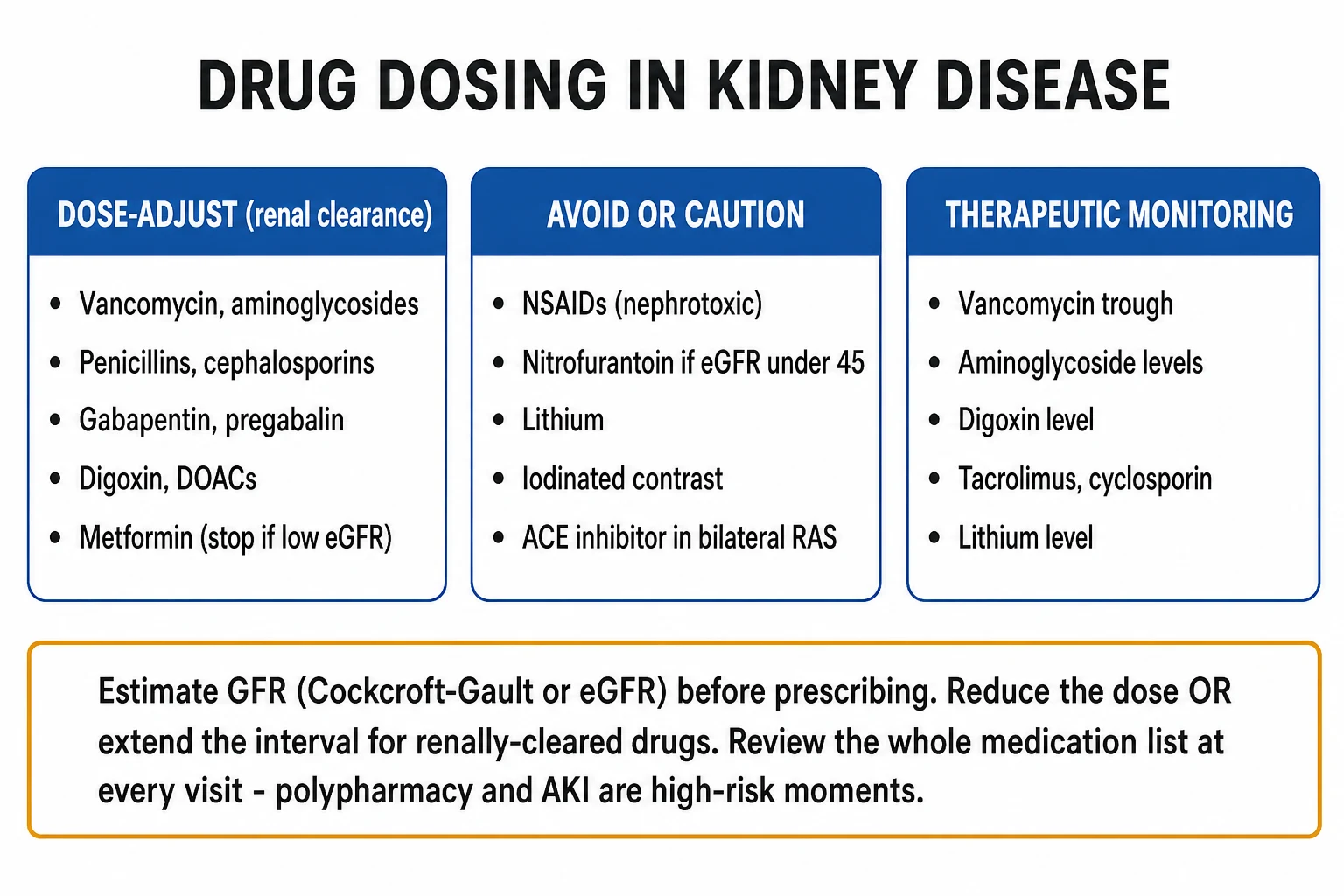
Dose-adjust (renal clearance)
- Vancomycin — AUC/trough-guided after weight-based load
- Aminoglycosides — extended-interval (Hartford nomogram)
- Penicillins & cephalosporins — interval extension at low GFR
- Gabapentin / pregabalin — halve dose under GFR 30
- Digoxin — reduce dose and monitor level
- DOACs — dabigatran avoid CrCl under 30; apixaban rule of 2/3
- Allopurinol — reduce under GFR 30
Avoid or caution (nephrotoxic)
- NSAIDs — afferent arteriolar vasoconstriction, AKI
- Iodinated contrast — direct tubular toxicity
- ACEi/ARB in volume depletion / bilateral RAS
- Nitrofurantoin — avoid under eGFR 30, caution 30 to 45
- Lithium — avoid in severe CKD
- Metformin — do not initiate under 30, stop under 30
- Bisphosphonates — avoid under 30 to 35
Monitor levels (TDM)
- Vancomycin — AUC/MIC 400 to 600, trough 15 to 20 mg/L
- Aminoglycosides — peak/trough or Hartford
- Digoxin — trough 0.5 to 0.9 ng/mL (CKD)
- Lithium — 12 h post-dose 0.4 to 1.0 mEq/L
- Tacrolimus / cyclosporin — trough
- Methotrexate — at 24/48/72 h with folinic acid
Estimating kidney function: the foundation
Before any drug decision, estimate kidney function. Two formulae coexist, and the examiner rewards knowing which to use for what:[3][4]
- eGFR (CKD-EPI 2021, race-free) — the best estimate of GFR for staging CKD and following progression. Reported automatically by most laboratories in mL/min/1.73 m². Not the basis of most drug labels.[3]
- Estimated creatinine clearance (Cockcroft-Gault) — the formula on which most drug labels and TDM nomograms were originally validated, and therefore the preferred estimate for drug dosing.[4][6]
Cockcroft-Gault formula (reproduced verbatim — exam favourite): [1]
Cockcroft-Gault — the dosing formula
CrCl (mL/min) = [(140 − age) × weight in kg] / [72 × serum creatinine in mg/dL], then multiply by 0.85 for women.[6]
Worked example. A 70-year-old woman, 60 kg, creatinine 1.5 mg/dL: CrCl = [(140 − 70) × 60] / [72 × 1.5] × 0.85 = (70 × 60)/(108) × 0.85 = 4200/108 × 0.85 ≈ 33 mL/min. Many drugs on her list will need dose adjustment at this clearance. [1]
[1]Epidemiology & Risk Factors
Adverse drug events are among the commonest preventable causes of inpatient harm, and renal drugs and nephrotoxins account for a disproportionate share. The risk rises with falling GFR, rising age, and polypharmacy.[1]
Patient risk factors for drug harm in CKD: [1]
- Older age — sarcopenia falsely lowers creatinine (overestimates GFR), high polypharmacy, reduced hepatic reserve.
- Low muscle mass — amputees, cirrhosis, frailty, cachexia: Cockcroft-Gault and creatinine-based eGFR overestimate true GFR.
- High muscle mass or obesity — body-builders: eGFR underestimates; obesity: Cockcroft-Gault with actual body weight overestimates.
- Diabetes, heart failure, cirrhosis, sepsis — comorbid kidney injury plus polypharmacy.
- AKI on CKD — the single most dangerous moment; drugs accumulate within hours.
- Polypharmacy — the strongest single predictor of adverse drug events; every additional drug raises interaction and accumulation risk. [1]
High-risk moments that mandate an immediate medication review (the safety-critical trigger list): [1]
- New AKI or rapidly rising creatinine
- Declining eGFR at a routine visit
- Hospital admission and discharge (medication reconciliation)
- Starting or stopping dialysis
- Contrast administration
- Any new prescription, especially by another team
- ICU admission — the highest-density polypharmacy environment [1]
High-risk moments for a medication review
HOSPITAL
any new vancomycin, aminoglycoside, NSAID, DOAC, contrast
before imaging with iodinated contrast
any AKI — hold renal and nephrotoxic drugs
five or more drugs; review every visit
highest drug density; reconcile daily
admission, discharge, transfer — reconcile
lower muscle mass; start low, go slow
eGFR falling at routine visits
Pathophysiology
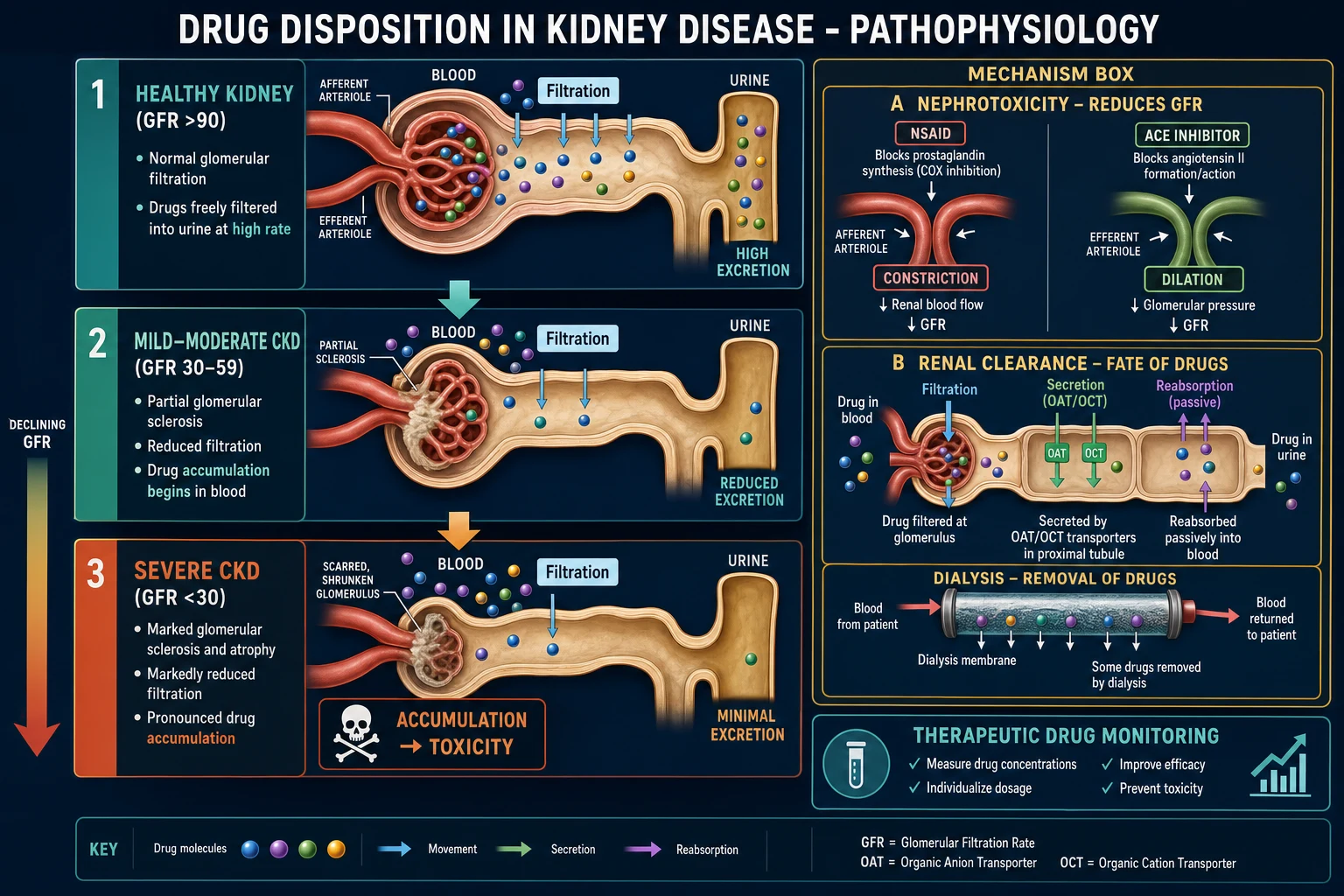
The kidney handles drugs by three mechanisms operating in series along the nephron:[1]
- Glomerular filtration — only free (unbound, uncharged) drug below the molecular-weight cut-off is filtered. Highly protein-bound drugs (warfarin, phenytoin) are not filtered to a clinically important degree.
- Tubular secretion — active transport into the proximal tubular lumen by OAT (organic anion transporter — penicillins, cephalosporins, diuretics, methotrexate, NSAIDs) and OCT (organic cation transporter — metformin, lamivudine, amiloride). This is saturable and is the site of important drug–drug interactions (probenecid blocks OAT and raises penicillin levels).
- Passive reabsorption — lipid-soluble, non-ionised drug is reabsorbed in the distal nephron down a concentration gradient. Urine flow rate and urine pH modify this: alkalinising the urine (sodium bicarbonate) traps weak acids (salicylate, methotrexate) and enhances their elimination. [1]
As GFR falls, the renal clearance of every filtrable drug falls in parallel, and the maintenance dose or dosing interval must change to keep the average steady-state concentration within its therapeutic window. The loading dose is usually unchanged, because volume of distribution is determined by body composition, not by GFR (an exception: volume-overload states increase Vd for water-soluble drugs).[1]
Mechanisms of nephrotoxicity
A second, distinct class of drugs injure the kidney by altering renal haemodynamics or directly damaging tubular cells. The two classical haemodynamic mechanisms — both exam favourites — are:[1]
- NSAIDs inhibit cyclo-oxygenase, depleting the prostaglandins that vasodilate the afferent arteriole. The afferent arteriole constricts, glomerular hydrostatic pressure falls, and GFR drops. Catastrophic in volume depletion, heart failure, cirrhosis, and CKD.
- ACE inhibitors and ARBs block angiotensin II, which normally constricts the efferent arteriole to maintain intraglomerular pressure. The efferent arteriole dilates, GFR falls, and in bilateral renal artery stenosis (single kidney, transplant) the drop is precipitous and AKI ensues. [1]
- Aminoglycosides are taken up by the proximal tubule via the megalin/cubilin receptor, accumulate in lysosomes, and cause oxidative injury and non-oliguric AKI with potassium and magnesium wasting; they also cause ototoxicity (cochlear hair-cell destruction).[2]
- Iodinated contrast causes renal medullary vasoconstriction, direct tubular toxicity and cast formation — characteristically a transient creatinine rise peaking at 48 to 72 hours.
- Amphotericin B causes tubular injury with a Fanconi-like syndrome (glycosuria, aminoaciduria, phosphaturia) and a distal renal tubular acidosis with potassium and magnesium wasting.
- Tenofovir (disoproxil fumarate) causes proximal tubular injury and Fanconi syndrome via mitochondrial toxicity; the alafenamide prodrug has substantially lower renal toxicity.
- Cisplatin causes cumulative tubular injury with magnesium wasting.
Mechanism of metformin-associated lactic acidosis
Metformin is cleared unchanged by the kidney via OCT. At low GFR it accumulates, suppressing hepatic gluconeogenesis and impairering hepatic lactate uptake; in the setting of tissue hypoxia (shock, sepsis, hypoperfusion) lactate accumulates rapidly. The combination of accumulation (drug cause) and hypoperfusion (physiological cause) produces the rare but often fatal metformin-associated lactic acidosis that drives the eGFR cutoffs.[1]
Dialysis and drug removal
Drugs removed efficiently by haemodialysis share features: low molecular weight, low protein binding, small volume of distribution, water-soluble. Examples include aminoglycosides, most beta-lactams, metformin, lithium, salicylate, methotrexate. These need a supplemental (top-up) dose after each dialysis session. Drugs that are NOT meaningfully removed — highly protein-bound or large Vd (digoxin, amiodarone, warfarin, phenytoin, benzodiazepines) — do not need a post-dialysis top-up. Peritoneal dialysis removes drugs more slowly and less completely. Continuous renal replacement therapy (CRRT) clears drugs actively, often requiring higher doses than standard renal-failure dosing.[1]
Clinical Presentation
Drug harm in CKD presents in one of four patterns, and recognising the pattern points back to the offending drug.[1]
1. Drug toxicity (accumulation). Often the patient is on a stable dose that has silently become toxic as GFR has fallen: [1]
- Neurological — gabapentin/pregabalin (sedation, ataxia, myoclonus), opioids (narcosis, miosis, respiratory depression), lithium (coarse tremor, ataxia, confusion, seizures), high-dose penicillin/cephalosporin (encephalopathy, myoclonus, seizures).
- Cardiac — digoxin (nausea, vomiting, confusion, visual disturbance — yellow-green halos (xanthopsia), arrhythmia).
- Haematological — DOACs (bleeding), anticoagulants.
- Metabolic — metformin (lactic acidosis — hyperventilation, abdominal pain, hypotension, high lactate, low pH), sulfonylureas (hypoglycaemia), statins at high dose in CKD (rhabdomyolysis). [1]
2. Drug-induced AKI. Rising creatinine, oliguria, hyperkalaemia after an NSAID, iodinated contrast, ACEi/ARB (especially in volume depletion or bilateral RAS), aminoglycoside, or vancomycin + piperacillin-tazobactam combination. [1]
3. Electrolyte disturbance. Hyperkalaemia (ACEi/ARB, spironolactone/amiloride, trimethoprim, tacrolimus), hyponatraemia (thiazides, SSRIs), metabolic acidosis (metformin, topiramate). [1]
4. Atypical presentation in the elderly. Drug toxicity in an older patient may declare itself only as delirium, falls, anorexia, or functional decline — there may be no classic textbook feature. A low threshold to perform a full medication review is essential, because the elderly have both the lowest muscle mass (false reassurance from a "normal" creatinine) and the highest polypharmacy. [1]
5. Dialysis-patient presentation. A drug given between dialysis sessions may accumulate and present just before the next session — for example gabapentin myoclonus, vancomycin Red Man syndrome after a rapid post-dialysis dose, or pericarditis/uraemic features from under-dialysis compounded by a retained drug. [1]
Differential Diagnosis
A deteriorating CKD patient is not always suffering drug toxicity. Distinguish:[1]
- Drug toxicity vs disease progression. Temporal relationship to a dose change or a fall in GFR; drug levels where available; reversibility on withdrawal of the suspected drug. A patient whose creatinine has crept up over months is more likely progressing CKD; one who deteriorated over days after a new drug has drug-induced injury.
- Drug-induced AKI vs other causes of AKI. True volume depletion (history, examination, response to fluids), sepsis (fever, leucocytosis, source), obstruction (bladder scan, ultrasound), acute interstitial nephritis (eosinophiluria, rash, fever — days to weeks after the offending drug), rapidly progressive GN (active urinary sediment, systemic features). Muddy brown granular casts on urine microscopy point to acute tubular necrosis — the typical pattern of ischaemic and nephrotoxic AKI.
- Metformin-associated lactic acidosis vs type A lactic acidosis. The hallmark is metformin accumulation (high drug level) PLUS a precipitant (sepsis, shock, hypoxia, AKI). When lactate is high but metformin level is normal and there is clear tissue hypoperfusion, the metformin is an innocent bystander and the prognosis is that of the underlying shock. Haemodialysis removes both metformin and lactate and is indicated when pH is under 7.0, lactate is over 15 to 20, or standard therapy is failing.
- Aminoglycoside vs amphotericin vs contrast nephrotoxicity. Aminoglycoside: non-oliguric, slow onset over 5 to 7 days, potassium and magnesium wasting. Amphotericin B: tubular, Fanconi-like, distal RTA. Contrast: transient creatinine rise peaking at 48 to 72 h, often resolves within a week. [1]
Drugs that falsely raise creatinine WITHOUT reducing GFR (an examiner trap): trimethoprim, cimetidine, cobicistat (and other tubular-secretion blockers) inhibit creatinine secretion in the proximal tubule, raising serum creatinine with no change in true GFR. Always check these before declaring AKI. [1]
Clinical & Bedside Assessment
The bedside skill is the systematic medication review, not the stethoscope. Conduct it at every visit and at every transition of care.[1]
- Obtain an accurate list — from the patient, family, and ideally the community pharmacy; reconcile it against the inpatient chart. Include over-the-counter NSAIDs, herbal products (St John's Wort, aristolochic acid), and "as-needed" drugs.
- Flag every drug as one of: renal-cleared (needs adjustment), nephrotoxic (avoid/caution), narrow-therapeutic-index (needs TDM), or safe-unchanged.
- Active toxicity signs to look for: coarse tremor (lithium), nystagmus/ataxia (phenytoin, gabapentin), yellow-green visual halos / xanthopsia (digoxin), sedation/miosis (opioid), bleeding (DOAC), hyperventilation + abdominal pain + high lactate (metformin), hyperreflexia (SSRI). [1]
Assess volume status before prescribing ACEi/ARB or diuretics — postural blood pressure drop, JVP, peripheral oedema, lung bases, skin turgor. Volume depletion converts a "safe" dose into a nephrotoxic one for ACEi/ARB, NSAIDs, and diuretics. [1]
Weigh the patient (for Cockcroft-Gault and weight-based doses) and choose actual body weight, ideal body weight, or an adjusted (e.g. 40 %) weight in obesity — this is where most dose errors arise. A useful rule: if actual weight exceeds ideal by more than 20 %, use a corrected weight for Cockcroft-Gault.[6]
Investigations
Estimating kidney function — which test, when
- For CKD staging and progression — eGFR CKD-EPI (2021 race-free), reported automatically. Use the urine albumin-to-creatinine ratio (ACR) in parallel (albuminuria stages A1 to A3) because risk and decisions depend on both.[3]
- For drug dosing — Cockcroft-Gault using actual or corrected body weight and a stable serum creatinine. Most drug labels and TDM nomograms were validated against Cockcroft-Gault.[4]
- When formulae are unreliable — measured creatinine clearance (24-hour urine) or cystatin C-based eGFR for amputees, body-builders, cirrhosis, pregnancy, very low or high muscle mass, and where eGFR and Cockcroft-Gault disagree substantially.[3]
KDIGO CKD GFR categories — the dosing thresholds
KDIGO GFR categories — dose-relevant thresholds
Therapeutic drug monitoring — levels and targets
Drug
- Vancomycin — AUC/MIC 400 to 600 (trough 15 to 20 mg/L for serious MRSA)
- Aminoglycosides — peak (5 to 10 mg/L gent) and trough (under 2)
- Digoxin — trough 0.5 to 0.9 ng/mL (CKD target LOWER)
- Lithium — 12 h post-dose 0.4 to 1.0 mEq/L
- Tacrolimus / cyclosporin — trough (transplant-dependent)
- Methotrexate — at 24/48/72 h with folinic acid rescue
Sampling rule
- Draw at steady-state (4 to 5 half-lives)
- TROUGH just before next dose (most drugs)
- PEAK 30 min after infusion for aminoglycosides
- Vancomycin: pre-4th-dose trough OR Bayesian AUC
- Lithium: strict 12 h post-dose (not random)
- Sample BEFORE dialysis for pre-dialysis interpretation
Investigations in suspected drug-induced AKI
- Urine microscopy — muddy brown granular casts = acute tubular necrosis (the signature of nephrotoxic and ischaemic AKI); WBC casts / eosinophiluria = acute interstitial nephritis (low sensitivity, do not rely).
- Creatine kinase — rhabdomyolysis (statin, especially with macrolide interaction or fibrates in CKD).
- Serum lactate, pH, metformin level — in suspected metformin-associated lactic acidosis.
- Digoxin level (and potassium — toxicity worse in hypokalaemia) — in suspected digoxin toxicity.
- Lithium level (12 h post-dose), vancomycin trough/AUC, methotrexate at defined intervals. [1]
Management — Resuscitation
In suspected severe drug toxicity: stop the offending drug, ABCDE, supportive care, and give the specific antidote where one exists.[1]
Antidotes and emergency doses: [1]
- Digoxin toxicity (arrhythmia, hyperkalaemia, severe poisoning): digoxin-specific Fab antibody fragments (Digibind/DigiFab) — dose by the digoxin level or the amount ingested; corrects hyperkalaemia and arrhythmia within minutes.
- Opioid toxicity (narcosis, miosis, respiratory depression): naloxone 0.4 to 2 mg IV, repeat every 2 to 3 min up to 10 mg; an infusion may be needed for long-acting opioids.
- Severe metformin-associated lactic acidosis (pH under 7.0, lactate over 15 to 20, shock, failure of standard therapy): haemodialysis removes metformin and lactate, and corrects acidosis — discuss early with ICU/nephrology.
- Severe beta-blocker / calcium-channel-blocker / local-anaesthetic toxicity: intravenous lipid emulsion (20 %, 1.5 mL/kg bolus then infusion).
- Salicylate toxicity (level over 100 mg/dL or severe acidosis): alkalinise urine (sodium bicarbonate), haemodialysis.
- Lithium toxicity (level over 4 mEq/L, or over 2.5 with severe symptoms): haemodialysis. [1]
Drug-induced hyperkalaemia (ACEi/ARB, trimethoprim, K-sparing diuretics, tacrolimus): calcium gluconate 10 % — 10 mL IV over 5 to 10 min for cardioprotection, then insulin-dextrose (10 units soluble insulin + 25 g IV glucose), salbutamol 10 to 20 mg nebulised, and remove potassium with calcium resonium, patiromer, or dialysis. [1]
Emergency dose-adjustments during evolving AKI — the single most important resuscitative act: [1]
- HOLD ACEi/ARB, NSAIDs, diuretics (if hypovolaemic), metformin, potassium-sparing drugs, and any drug on the "avoid at low GFR" list.
- Reduce the vancomycin interval and check a level; switch extended-interval aminoglycosides to traditional dosing or stop.
- Reassess daily — during AKI the GFR is changing and every dose is a moving target. [1]
Management — Definitive & Stepwise
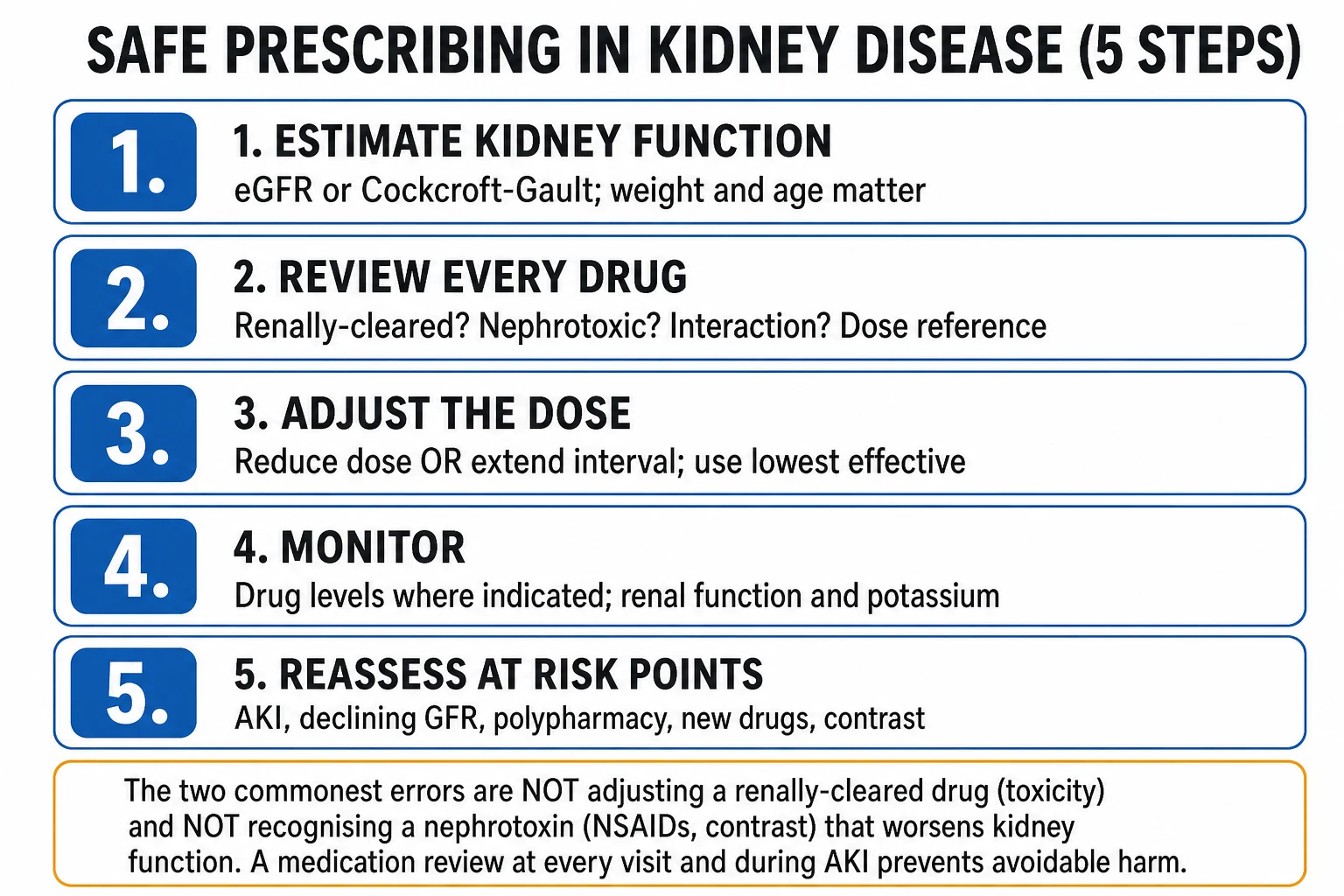
The systematic five-step approach is the framework examiners reward:[1]
- Estimate kidney function — Cockcroft-Gault for dosing, eGFR for staging, measured CrCl/cystatin C where formulae are unreliable.
- Review every drug — renal-cleared? nephrotoxic? interaction? Check a renal dosing reference.
- Adjust the dose OR the interval — reduce the maintenance dose, or extend the dosing interval, to keep the steady-state concentration within its therapeutic window. Loading doses are usually unchanged.
- Monitor — drug levels where indicated; renal function and potassium.
- Reassess at risk points — AKI, declining GFR, polypharmacy, new drugs, contrast, transitions. [1]
The two methods of dose adjustment — with worked examples
Either or both can be used; the goal is the same average steady-state concentration.[1]
- Maintenance-dose reduction (keep the interval, lower the dose). Example: gabapentin 300 mg twice daily at normal GFR becomes gabapentin 100 mg twice daily at GFR under 30 mL/min.
- Interval extension (keep the dose, lengthen the interval). Example: gentamicin 5 to 7 mg/kg once daily at normal GFR becomes 5 to 7 mg/kg every 36 to 48 hours at GFR under 40 mL/min, guided by a drug-hold level (the Hartford nomogram). [1]
Antibiotic dose-adjustment rules
Antibiotics are the commonest class needing adjustment and the commonest cause of nephrotoxic AKI.[2]
- Vancomycin — loading 20 to 25 mg/kg (actual body weight), then trough/AUC-guided. The 2020 ASHP/IDSA consensus shifted monitoring from trough-only to AUC/MIC 400 to 600 (trough 15 to 20 mg/L for serious MRSA). Draw the level before the 4th dose. Nephrotoxicity risk is markedly higher with concurrent piperacillin-tazobactam — consider cefepime or an alternative.[5]
- Aminoglycosides (gentamicin, tobramycin, amikacin) — extended-interval dosing with a drug-hold level at 6 to 14 hours interpreted on the Hartford nomogram to set the next interval (24 / 36 / 48 h). At low GFR, switch to traditional divided dosing with peak/trough monitoring. Avoid if possible; limit to under 5 to 7 days.
- Penicillins and cephalosporins — most need interval extension at low GFR (e.g. piperacillin-tazobactam 4.5 g 6-hourly becomes 8-hourly then 12-hourly). Penicillin neurotoxicity (seizures) is the classic accumulation feature.
- Cotrimoxazole — halve the dose at GFR under 30.
- Nitrofurantoin — avoid under eGFR 30 (ineffective, peripheral neuropathy and hepatitis); caution 30 to 45.
- Aciclovir — reduce dose at low GFR (CrCl under 50) and give by slow infusion with pre-hydration to prevent crystalline nephropathy.
Drug-avoidance rules with thresholds
| Drug | Avoidance threshold | Rationale |
|---|---|---|
| Metformin | Do not initiate under eGFR 30; stop under 30; review at 30 to 45 | Lactic acidosis (rare, often fatal) |
| Nitrofurantoin | Avoid under eGFR 30; caution 30 to 45 | Ineffective; neuropathy, hepatitis |
| NSAIDs | Avoid if possible under eGFR 60; contraindicated in AKI | Afferent arteriolar vasoconstriction |
| Lithium | Avoid in severe CKD; monitor level and TSH | Direct tubular toxicity, nephrogenic DI |
| Bisphosphonates | Avoid under eGFR 30 to 35 | Acute tubular injury |
| Iodinated contrast | Avoid in AKI; pre-hydrate and consider alternative if GFR under 30 | Contrast-induced AKI |
| Dabigatran | Avoid if CrCl under 30 | Bleeding (90 % renal clearance) |
DOAC dose-adjustment
- Dabigatran (80 % renally cleared) — avoid if CrCl under 30 mL/min.
- Apixaban — standard dose unless two of three criteria: age over 80, weight under 60 kg, creatinine over 1.5 mg/dL (133 µmol/L); then halve the dose.
- Rivaroxaban — CrCl-dependent reduction for some indications (e.g. atrial fibration: 20 mg OD if CrCl over 50, 15 mg OD if 15 to 50). [1]
Anticoagulation in CKD more broadly
- Warfarin — no renal dose adjustment, but bleeding risk rises with CKD; the INR target may be lowered.
- LMWH (enoxaparin) — 1 mg/kg once daily if CrCl under 30 mL/min (instead of twice daily); prefer unfractionated heparin in severe CKD or dialysis. [1]
Dosing on dialysis and CRRT
- Supplemental dose after haemodialysis for water-soluble drugs (aminoglycosides, most beta-lactams, vancomycin, metformin, methotrexate).
- Drugs NOT needing top-up — highly protein-bound or large Vd (digoxin, amiodarone, warfarin).
- Peritoneal dialysis removes drugs slowly; doses are usually between the standard and the haemodialysis-adjusted doses.
- CRRT actively clears drugs — many antibiotics and anticoagulants need higher doses than standard renal-failure dosing (the filter clearance is similar to a GFR of 20 to 40 mL/min); consult CRRT-specific dosing references.[1]
Specific Subtypes & Scenarios
- Septic CKD patient needing vancomycin + piperacillin-tazobactam. The combination is markedly more nephrotoxic than either alone — consider cefepime or another beta-lactam, monitor vancomycin AUC closely, and reassess daily. If AKI develops, switch and hold.
- Diabetic with CKD needing antiglycaemic therapy. Metformin (rules above); SGLT2 inhibitors (canagliflozin, dapagliflozin) renoprotective but hold during illness/hospitalisation, dehydration, or AKI (euglycaemic ketoacidosis); DPP-4 inhibitors (linagliptin needs no adjustment, sitagliptin reduced); GLP-1 agonists (no renal adjustment for most); insulin dose falls as GFR falls (insulin clearance drops) — reduce by 25 to 50 % at GFR under 30.
- Pain management in CKD. Avoid NSAIDs. Use paracetamol (max 4 g/day, lower if decompensated liver); weak opioids with caution — tramadol reduce, codeine avoid (active metabolite accumulates), morphine reduce dose and extend interval, avoid pethidine (norpethidine neurotoxicity), gabapentin/pregabalin dose-adjust and review.
- Anticoagulation — warfarin unchanged, DOAC dose rules above, LMWH reduction at low CrCl, UFH preferred in dialysis.
- HIV/antiviral therapy. Tenofovir disoproxil nephrotoxic (proximal tubular injury, Fanconi) — prefer tenofovir alafenamide; aciclovir reduce dose and pre-hydrate; protease-inhibitor interactions with TDM drugs.
- Chemotherapy. Methotrexate (excreted unchanged) — vigorous hydration, urinary alkalinisation (sodium bicarbonate to keep urine pH over 7), folinic acid rescue, and glucarpidase in severe renal failure; cisplatin nephrotoxic (magnesium wasting); carboplatin dosed by the Calvert formula using GFR (dose = target AUC × (GFR + 25)). [1]
Complications & Pitfalls
Drug toxicity
- Neuro — gabapentin, opioids, lithium, beta-lactam encephalopathy
- Cardiac — digoxin (arrhythmia, xanthopsia)
- Bleeding — DOACs, anticoagulants
- Metabolic — metformin lactic acidosis, hypoglycaemia
Drug-induced AKI
- NSAIDs, contrast, ACEi/ARB
- Aminoglycosides, vancomycin + pip-tazo
- Amphotericin B, tenofovir, cisplatin
- Calcineurin inhibitors (tacrolimus, cyclosporin)
Electrolytes
- Hyperkalaemia — RAAS, trimethoprim, K-sparing
- Hyponatraemia — thiazides, SSRIs
- Metabolic acidosis — metformin, topiramate
Reduced efficacy
- Over-adjusting under-treats infection (beta-lactams)
- Under-dosing diuretics in oedema
- Inadequate anticoagulation
The six classic dosing pitfalls (each a likely exam distractor):[4][6]
- Using eGFR where Cockcroft-Gault is needed (or vice-versa) — most labels use Cockcroft-Gault.
- Using actual body weight in obesity without correction — Cockcroft-Gault then overestimates CrCl and the dose is too high; use an adjusted weight.
- Ignoring AKI — formulae are invalid; assume GFR is low and hold.
- Missing an inherited contraindicated drug — a patient started on metformin at eGFR 60 that has drifted to eGFR 25; the drug must be reviewed at every visit.
- Trimethoprim falsely raising creatinine (and real hyperkalaemia) — distinguish from true AKI; the creatinine normalises on stopping.
- Not giving a post-dialysis top-up for water-soluble drugs — the patient is effectively under-dosed between sessions. [1]
Prognosis & Disposition
With systematic estimation, adjustment, monitoring and review, most renally-cleared drugs can be used safely across the CKD spectrum, and drug-induced injury is largely preventable.[1]
Unrecognised accumulation or nephrotoxicity, however, causes significant preventable morbidity. A single episode of drug-induced AKI lengthens hospital stay, raises mortality, and accelerates progression to end-stage kidney disease — even when the creatinine appears to recover. This is why the emphasis is on the medication review at every visit and during AKI, not on isolated dose calculations. [1]
Disposition of a patient with resolved drug toxicity: review the medication list before discharge, deprescribe where possible, provide written patient advice (especially sick-day rules for metformin, ACEi/ARB, diuretics, SGLT2 inhibitors), communicate every change to the GP and community pharmacy, and schedule renal-function follow-up (creatinine/eGFR and electrolytes) within 1 to 2 weeks for high-risk drugs. [1]
Patient sick-day rules (the safety-net examiners reward): "If you develop vomiting, diarrhoea, or fever and cannot drink normally: temporarily stop your metformin, ACEi/ARB, diuretics, SGLT2 inhibitor, and NSAIDs; keep drinking; restart when you are eating and drinking normally again for 24 to 48 hours; seek help if you do not improve." [1]
Special Populations
- Elderly. Sarcopenia falsely lowers creatinine (overestimates GFR); high polypharmacy; reduced hepatic reserve. Start low, go slow. Avoid drugs on the Beers criteria / STOPP-START list inappropriate in older adults: long-acting benzodiazepines, long-acting sulfonylureas (glibenclamide — hypoglycaemia), NSAIDs, anticholinergics.
- Pregnancy. eGFR formulae invalid (use 24-h creatinine clearance); GFR physiologically rises by about 50 %, so doses are usually unchanged or increased. Avoid ACEi/ARB (teratogenic — renal agenesis, oligohydramnios), NSAIDs after 20 weeks (premature ductus arteriosus closure, oligohydramnios), nitrofurantoin near term (haemolytic anaemia of the neonate, especially G6PD deficiency).
- Paediatric. Weight-based dosing in mg/kg; adjust for age-related GFR (full-term neonatal GFR is low at birth and reaches adult levels by 1 to 2 years); aminoglycoside extended-interval is standard in most children beyond the neonatal period.
- Cirrhosis. Serum creatinine underestimates renal dysfunction (low muscle mass, low production); prefer cystatin C or measured CrCl. Avoid NSAIDs and aminoglycosides (high nephrotoxicity in hepatorenal physiology); use paracetamol at reduced dose (2 g/day in decompensated cirrhosis).
- Dialysis. Post-haemodialysis top-up for water-soluble drugs; drugs not removed (digoxin, amiodarone, warfarin) need no top-up; peritoneal dialysis removes drugs slowly; CRRT requires higher-than-standard renal-failure doses.
- Amputation / body-builder / extreme body habitus. Estimating formulae fail — use cystatin C-based eGFR or measured creatinine clearance.[3]
Evidence, Guidelines & Regional Differences
- KDIGO 2024 CKD guideline — estimate GFR (CKD-EPI), adjust doses, review every drug at every visit, engage clinical pharmacy; emphasises the 5-step systematic approach.[1]
- FDA 2016 metformin guidance revision — the absolute contraindication below eGFR 60 was relaxed to: eGFR over 45 safe; 30 to 45 use with caution (do not initiate); under 30 do not use; reassess eGFR at least annually and more often if borderline. This was driven by pooled data showing metformin is safer than historically feared.
- ASHP/IDSA/PIDS/SIDP 2020 vancomycin consensus — shifted monitoring from trough-only to AUC/MIC 400 to 600 using Bayesian methods or two-level AUC; loading 20 to 25 mg/kg; explicitly recognises the nephrotoxicity of vancomycin + piperacillin-tazobactam.[5]
- Cockcroft-Gault vs eGFR for drug dosing (Stevens 2009 AJKD) — reclassification of dose category is small (around 20 to 40 % of patients) but present, especially at extremes of body size; most labels still use Cockcroft-Gault.[4]
In resource-limited settings without routine eGFR reporting or TDM, paper-based renal dosing references (the Renal Drug Handbook, Medscape, UpToDate) and the WHO/ICMR antimicrobial guidance are the practical mainstays; cockcroft-gault is calculated manually and aminoglycosides are dosed conservatively.
Exam Pearls
- One-liner: "Estimate GFR, review every drug, adjust or avoid, monitor, reassess."
- Cockcroft-Gault for dosing; eGFR (CKD-EPI) for staging. Both invalid in AKI.[4]
- Thresholds to memorise: metformin under 30 (stop; do not initiate), nitrofurantoin under 30 (avoid), dabigatran CrCl under 30 (avoid), bisphosphonates under 30 to 35 (avoid).
- Nephrotoxins — "the dirty half-dozen plus": NSAIDs, ACEi/ARB, contrast, aminoglycosides, vancomycin + pip-tazo, amphotericin B, calcineurin inhibitors, tenofovir, cisplatin.
- Renally-cleared drugs needing dose-adjustment — "VAB-GP-DOMA": Vancomycin, Aminoglycosides, Beta-lactams, Gabapentin/pregabalin, Phenytoin, Digoxin, Opoids, Metformin, Alpurinol.
- False creatinine elevation (no real GFR change): trimethoprim, cimetidine, cobicistat — inhibit tubular secretion.
- False potassium elevation (real): ACEi/ARB, trimethoprim, K-sparing diuretics, tacrolimus.
- Vancomycin + piperacillin-tazobactam = synergistic AKI (examiner-loved distractor).
- Apixaban "rule of 2 of 3": age over 80, weight under 60 kg, creatinine over 1.5 — halve the dose.
- Calvert formula for carboplatin: dose = target AUC × (GFR + 25).
- The two errors examiners reward naming: "not adjusting a renal drug (toxicity)" and "missing a nephrotoxin (AKI)".
The 5-step safe-prescribing framework
EAR-MR
Cockcroft-Gault for dosing, eGFR for staging
reduce dose OR extend interval; loading unchanged
renal-cleared? nephrotoxic? TDM? interaction?
vancomycin, aminoglycoside, digoxin, lithium, tacrolimus, methotrexate
AKI, declining GFR, polypharmacy, contrast, transitions
Exam application bank (NEET-PG / INICET)
One-line answer
Drug dosing in kidney disease is the systematic discipline of estimating kidney function, reviewing every drug, adjusting the dose or interval, avoiding nephrotoxins, monitoring levels, and reassessing at every visit — the two commonest preventable errors are not adjusting a renally-cleared drug (toxicity) and missing a nephrotoxin that worsens kidney function (AKI). Estimate function with Cockcroft-Gault (for dosing) or eGFR CKD-EPI (for staging); both are invalid during AKI. Dose-adjust: vancomycin, aminoglycosides, beta-lactams, gabapentin/pregabalin, digoxin, DOACs, allopurinol. Avoid/caution: NSAIDs, iodinated contrast, ACEi/ARB in volume depletion; nitrofurantoin under 30, lithium, metformin under 30, bisphosphonates under 30. Monitor: vancomycin AUC, aminoglycoside, digoxin, lithium, tacrolimus, methotrexate levels.
Worked stems (answer without another resource)
Stem 1 — Classic presentation. Map symptoms to mechanism; name the first investigation and first treatment step with dose/route if drug therapy is standard. [1]
Stem 2 — Unstable / complicated. List red flags that force immediate resuscitation, theatre, ICU, antidote, or reperfusion — and what you do in the first 15 minutes. [1]
Stem 3 — Atypical group. Elderly, pregnancy, child, or immunocompromised: how presentation and thresholds change. [1]
Stem 4 — Differential trap. Name the three closest mimics and one discriminator for each. [1]
Stem 5 — Disposition. Who goes home with safety-netting, who is admitted, who needs HDU/ICU/theatre, and what follow-up is mandatory. [1]
Rapid viva checklist
- Definition + classification
- Pathophysiology chain
- Bedside signs / criteria
- Score with exact components (if any)
- Emergency bundle
- Definitive therapy with doses
- Complications of disease and of treatment
- Special populations
- Guideline/trial name if classic
- Three exam traps
Coverage self-check
If you cannot answer any stem above from this page alone, re-read the matching section — the page is intended to be self-sufficient for final-prof and NEET-PG/INICET questions on Drug Dosing in Kidney Disease.
References
- [1]Lea-Henry TN, Carland JE, Stocker SL, Graham GG, Day RO, Williams KM. Clinical Pharmacokinetics in Kidney Disease: Fundamental Principles Clin J Am Soc Nephrol, 2018.PMID 29934432
- [2]Eyler RF, Shvets K. Clinical Pharmacology of Antibiotics Clin J Am Soc Nephrol, 2019.PMID 30862698
- [3]Levey AS, Stevens LA, Schmid CH, et al. A new equation to estimate glomerular filtration rate Ann Intern Med, 2009.PMID 19414839
- [4]Stevens LA, Nolin TD, Richardson MM, et al. Comparison of drug dosing recommendations based on measured GFR and kidney function estimating equations Am J Kidney Dis, 2009.PMID 19446939
- [5]Rybak MJ, Le J, Lodise TP, et al. Therapeutic Monitoring of Vancomycin for Serious Methicillin-resistant Staphylococcus aureus Infections: A Revised Consensus Guideline and Review by the American Society of Health-system Pharmacists, the Infectious Diseases Society of America, the Pediatric Infectious Diseases Society, and the Society of Infectious Diseases Pharmacists Clin Infect Dis, 2020.PMID 32658968
- [6]Wilhelm SM, Kale-Pradhan PB. Estimating creatinine clearance: a meta-analysis Pharmacotherapy, 2011.PMID 21923452