Nephrology · Nephrology
Hepatorenal Syndrome
Also known as Hepatorenal syndrome · HRS · HRS-AKI · Functional renal failure of cirrhosis
Hepatorenal syndrome (HRS) is a functional, potentially reversible acute kidney injury (AKI) that occurs in patients with ascites and advanced cirrhosis (or acute liver failure / acute-on-chronic liver failure), in the absence of any other identifiable renal injury. The kidneys are structurally normal and recover after liver transplantation. The dominant mechanism is splanchnic and peripheral arterial vasodilation (driven by portal hypertension, nitric oxide and other vasodilators) producing a reduced effective arterial blood volume, with compensatory activation of the renin-angiotensin-aldosterone system, sympathetic nervous system and non-osmotic vasopressin causing intense renal vasoconstriction. HRS is a diagnosis of exclusion — cirrhosis with ascites plus AKI plus no response to albumin and diuretic withdrawal, and no shock, nephrotoxin or structural renal disease. Treat with terlipressin plus albumin (or noradrenaline plus albumin); liver transplantation is the only definitive cure. Untreated HRS type 1 carries a median survival of under 2 weeks.
On this page & tools
Your progress
Saved locally on this device.
Exam tags
Red flags
Overview & Definition
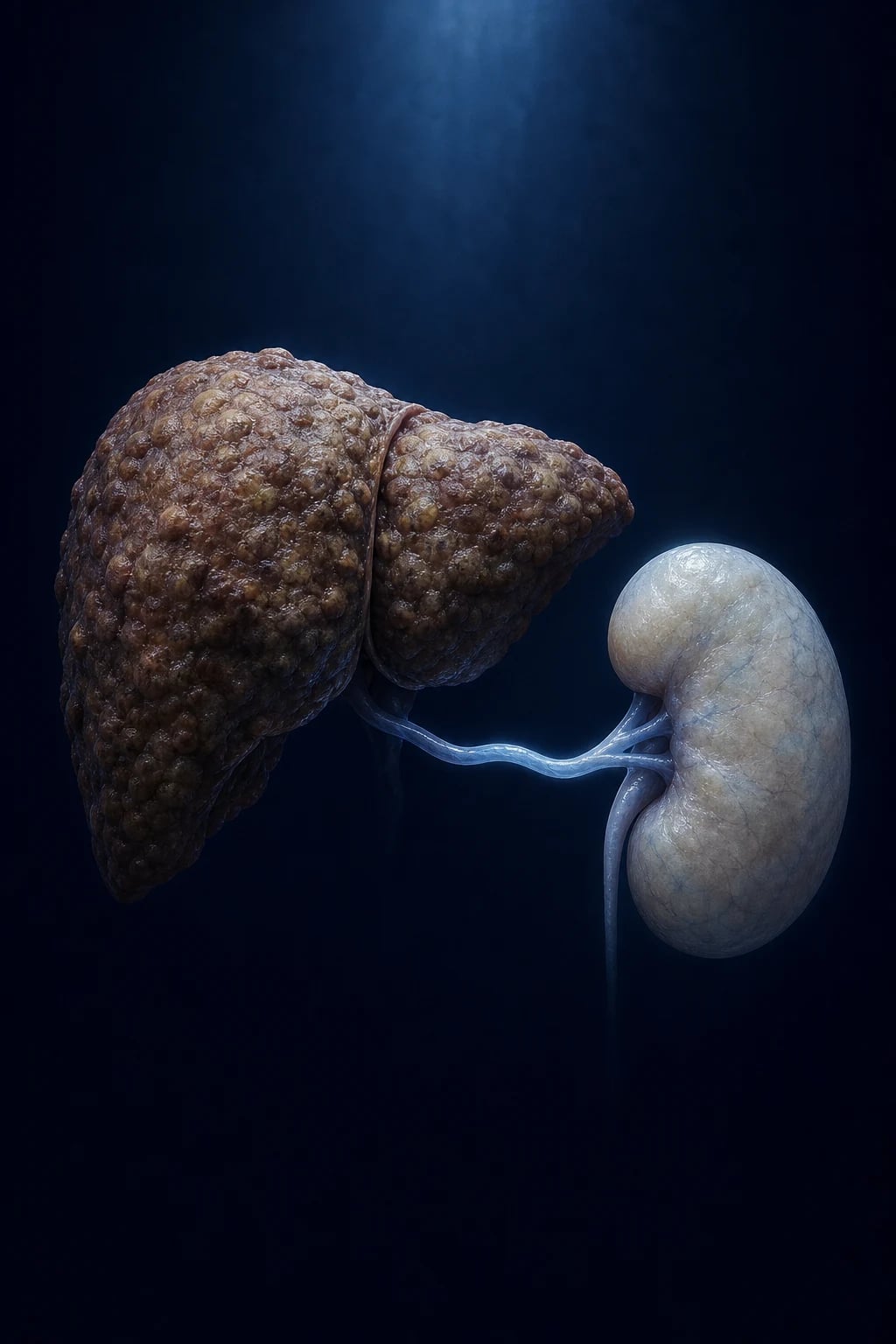
Hepatorenal syndrome (HRS) is a functional, potentially reversible form of acute kidney injury (AKI) that develops in patients with advanced cirrhosis and ascites (and less commonly in acute liver failure or acute-on-chronic liver failure).[1][4] The pathological signature of HRS is that the kidneys are structurally normal: there is no glomerular, tubular or interstitial disease. Renal function recovers — often dramatically — after liver transplantation or, in selected cases, after pharmacological correction of the splanchnic vasodilation with vasoconstrictors plus albumin. This reversibility is the single fact that defines the syndrome and unifies its pathophysiology, diagnosis and treatment.[4]
HRS sits within the broader problem of AKI in cirrhosis, which is common (occurring in roughly half of hospitalised cirrhotics) and carries a markedly worse prognosis than AKI without cirrhosis. The clinical skill is not naming the syndrome — it is systematically excluding every other cause of AKI in cirrhosis (volume-responsive pre-renal AKI, acute tubular necrosis, glomerular disease, obstruction, drug injury) before arriving at HRS, and then moving quickly to vasoconstrictor therapy, precipitant control and transplant referral. Mislabelling another cause as HRS (or vice versa) is the classic examination and bedside error.[3][6]
Classification
HRS is classified along two axes — kidney-injury tempo (AKI vs AKD vs CKD) and clinical phenotype (formerly the type 1 / type 2 dichotomy). The modern framework replaces the old dichotomy with the umbrella term HRS-AKI, but the older nomenclature is still examined and clinically useful.[3]
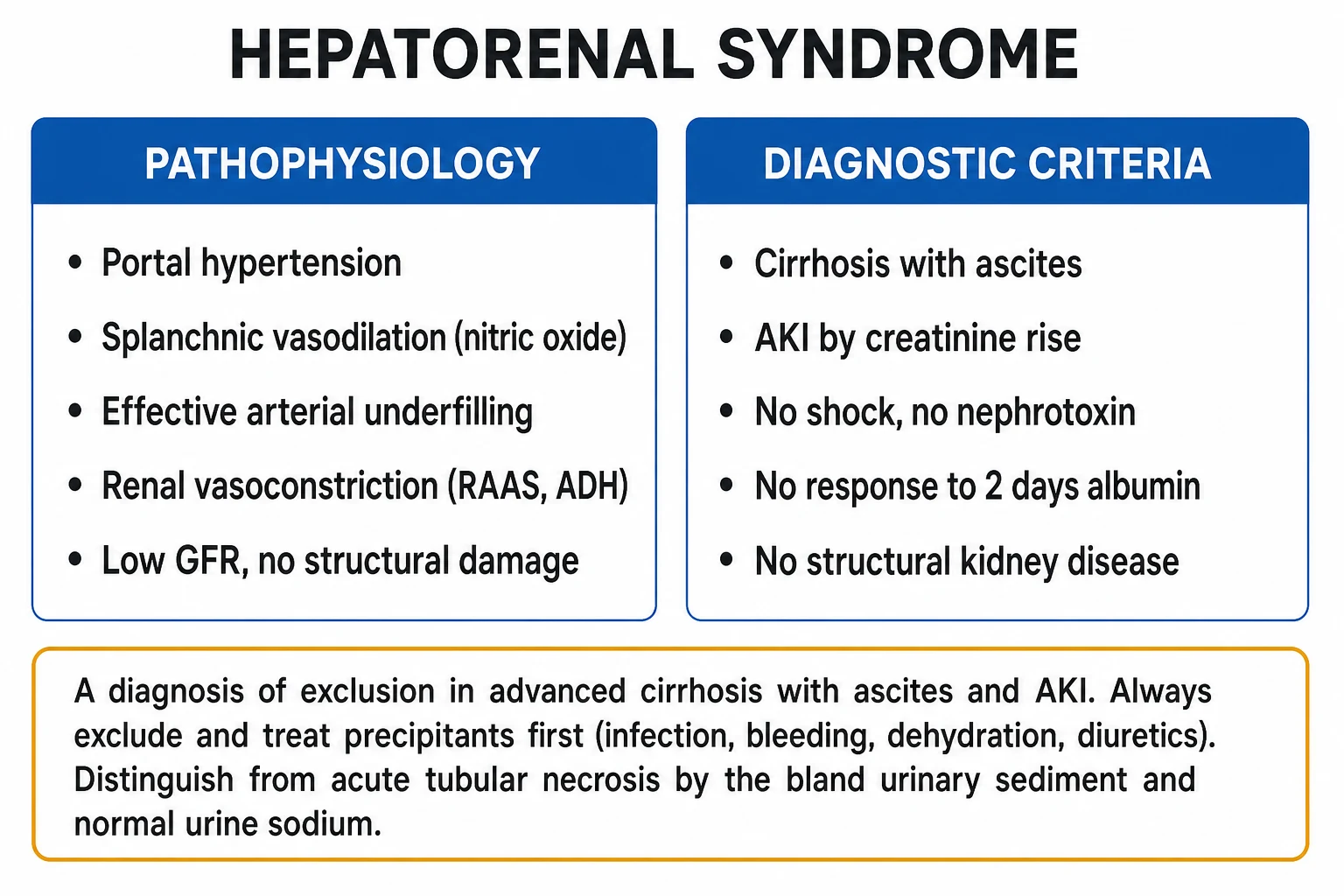
The 2015 ICA AKI definition in cirrhosis (this is the foundation of all HRS diagnosis) — reproduce verbatim:[3]
- An increase in serum creatinine of at least 0.3 mg/dL (26.5 micromol/L) within 48 hours, OR
- A 50% or greater rise in serum creatinine from baseline within the prior 7 days, OR
- A urine volume under 0.5 mL/kg/h for at least 6 hours. [1]
HRS-AKI (former type 1)
Rapid, malignant form
- Meets ICA AKI criteria (creatinine rise at least 0.3 mg/dL in 48 h, or 50% rise in 7 days)
- Often precipitated by SBP, variceal bleed, over-diuresis, or large-volume paracentesis without albumin
- Untreated median survival under 2 weeks; over 80% mortality at 2 weeks
- Responds to terlipressin plus albumin in 30 to 50% of cases; definitive cure is liver transplant
HRS-NAKI (former type 2)
Slow, indolent form
- Sub-divided into HRS-AKD (creatinine rise over 48 h to 90 days) and HRS-CKD (GFR under 60 for over 3 months)
- Moderate renal dysfunction (creatinine 1.5 to 2.5 mg/dL) with refractory ascites and dilutional hyponatraemia
- Median survival 4 to 6 months untreated
- Managed with TIPS where suitable, vasoconstrictors, and eventual transplant assessment
Epidemiology & Risk Factors
HRS occurs in roughly one in five cirrhotic patients with ascites hospitalised for any reason. The cumulative probability of HRS in a cirrhotic with ascites is approximately 18% at 1 year and approaches 40% at 5 years.[4][6]
Precipitants of HRS (the high-yield list every examiner probes) — the syndrome usually appears not de novo but triggered by a second hit:[4]
- Spontaneous bacterial peritonitis (SBP) — the single commonest precipitant, accounting for roughly a third of cases; even subclinical SBP drives HRS.
- Large-volume paracentesis without albumin expansion — paracentesis-induced circulatory dysfunction.
- Gastrointestinal bleeding — variceal haemorrhage with hypovolaemia.
- Over-diuresis and aggressive diuretic use — volume depletion.
- Other bacterial infections — pneumonia, cellulitis, bacteraemia, infected ascites.
- Alcoholic hepatitis — systemic inflammation and hepatocyte necrosis.
- Nephrotoxic drugs — NSAIDs (prostaglandin inhibition), aminoglycosides (ATN), iodinated contrast media, ACE inhibitors and ARBs (efferent arteriolar dilatation dropping GFR), tenofovir (Fanconi/ATN).
- Acute kidney insults superimposed on cirrhosis — hypovolaemia from any cause. [1]
Hepatorenal syndrome — the numbers that matter
Risk modifiers — any cirrhotic with ascites is at risk, but the risk rises with dilutional hyponatraemia (serum sodium under 130 mmol/L), high plasma renin activity, low mean arterial pressure (under 80 mmHg), and low cardiac output (the cirrhotic cardiomyopathy phenotype).[4]
Indian epidemiology: alcohol-associated cirrhosis and hepatitis B are the dominant underlying aetiologies; HRS presents late due to delayed healthcare access; access to liver transplantation is limited, making terlipressin affordability, SBP prophylaxis, and precipitant control the most practical interventions.[3]
Pathophysiology
The dominant mechanism is the peripheral arterial vasodilation hypothesis (the "first hit"), amplified by a cardiac and/or inflammatory second hit. The kidney — structurally normal — is an innocent victim of the systemic haemodynamic collapse.[3][4]
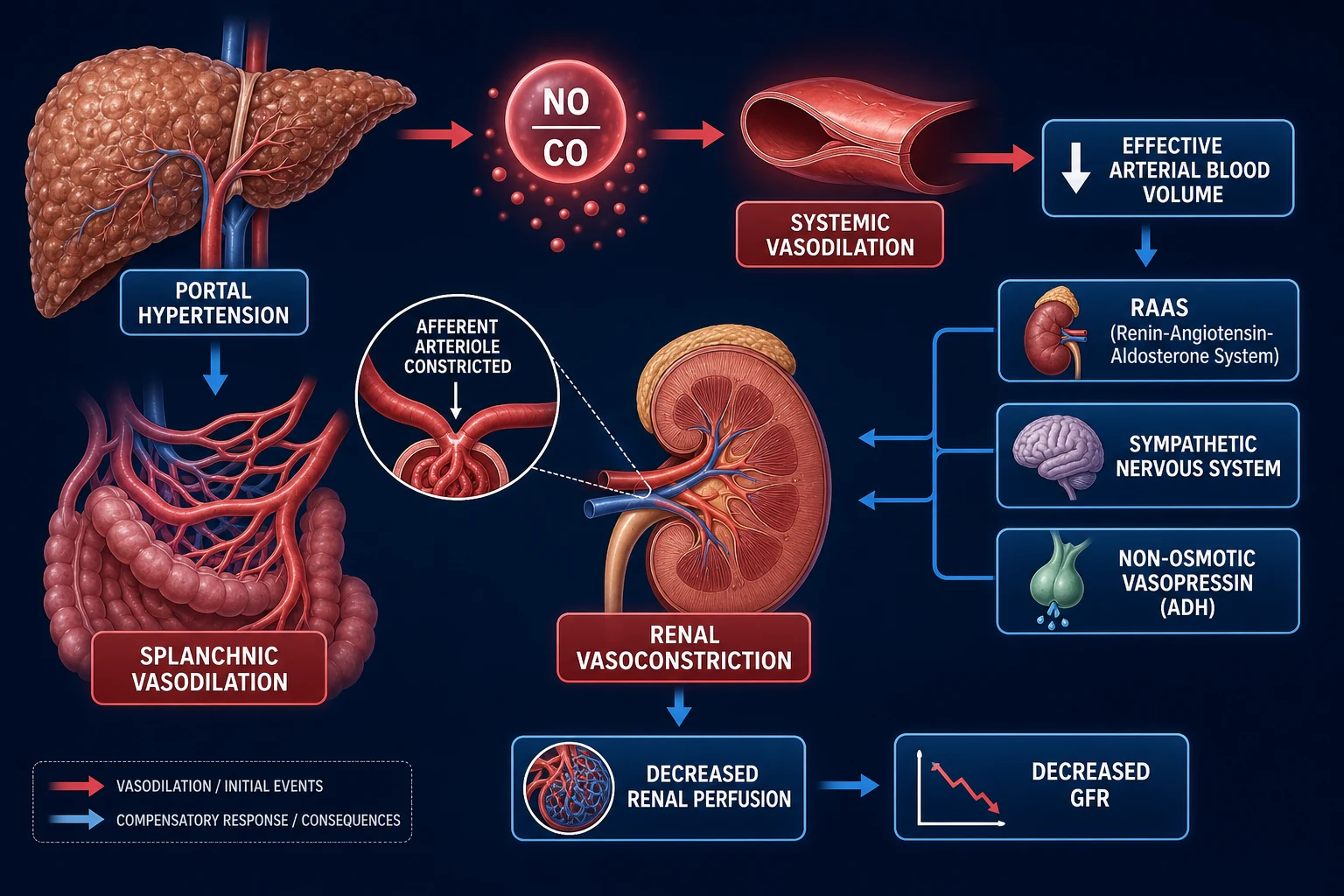
Step 1 — Splanchnic vasodilation (the first hit). Portal hypertension upregulates endothelial nitric oxide synthase (eNOS) in the splanchnic circulation, generating supraphysiological nitric oxide. Other vasodilators — carbon monoxide (haem oxygenase-derived), glucagon, calcitonin gene-related peptide and endocannabinoids — compound the effect. The result is a markedly dilated splanchnic vascular bed that sequesters blood and lowers the systemic vascular resistance. In early cirrhosis, the circulation compensates with high cardiac output (the hyperdynamic circulation).[4]
Step 2 — Reduced effective arterial blood volume. Despite a high total blood volume (ascites, increased plasma volume), the effective arterial blood volume — the volume actually sensed by arterial baroreceptors and perfusing vital organs — is critically reduced. The body interprets this as underfilling.[3]
Step 3 — Neurohormonal compensation. The juxtaglomerular apparatus and carotid/aortic baroreceptors trigger the three classic vasoconstrictor/antinatriuretic systems: [1]
- Renin-angiotensin-aldosterone system (RAAS) — angiotensin II causes renal (especially efferent but also afferent) arteriolar vasoconstriction; aldosterone drives sodium retention.
- Sympathetic nervous system (SNS) — catecholamines cause renal vasoconstriction and renin release.
- Non-osmotic vasopressin (ADH) — driven by a non-osmotic (haemodynamic) stimulus rather than osmolality, V2 stimulation in the collecting duct reabsorbs free water, producing dilutional hyponatraemia.[3]
Step 4 — Renal vasoconstriction dominates. At the glomerulus, afferent arteriolar vasoconstriction (driven by angiotensin II, SNS activity, cysteinyl leukotrienes, F2-isoprostanes, and endothelin) is normally opposed by protective renal vasodilator prostaglandins (PGE2, prostacyclin PGI2) that autoregulate glomerular perfusion. In HRS, this protective prostaglandin-mediated vasodilation fails (this is exactly why NSAIDs precipitate HRS — they inhibit the protective prostaglandins), tipping the balance toward glomerular ischaemia and a falling GFR.[4]
Step 5 — The second hit. The first hit (splanchnic vasodilation) is necessary but not sufficient. Most HRS episodes are precipitated by a second insult: a fall in cardiac output (cirrhotic cardiomyopathy with systolic and/or diastolic dysfunction, blunted beta-adrenergic responsiveness and electrophysiological abnormalities that the stressed heart cannot overcome), and/or an inflammatory/infectious insult — classically SBP — that produces systemic inflammation (PAMPs, TLR4 activation, cytokines) and overwhelms the vasoconstrictor reserve.[3]
Why the urine is "bland" with very low sodium. Because the tubules are intact, they avidly reabsorb sodium under aldosterone and SNS drive, giving the hallmark urine sodium under 10 mEq/L and fractional excretion of sodium under 1%, with a bland sediment and no significant proteinuria — a pure pre-renal/functional picture.[4]
Why the kidney recovers after transplantation. HRS is a haemodynamic (functional) AKI. Removing the cirrhotic liver eliminates portal hypertension, switches off the splanchnic vasodilator drive, restores effective arterial blood volume, and collapses the RAAS/SNS/ADH axis — the renal vasoconstriction resolves and GFR returns. This reversibility is the proof that the kidney was never intrinsically diseased.[9]
The hepatorenal reflex — a proposed hepatic-renal neural axis that may directly suppress GFR in severe liver failure — is a minor contributor and not the dominant mechanism.[4]
Clinical Presentation
The classical presentation is a patient with established cirrhosis and ascites (stigmata of chronic liver disease — jaundice, spider naevi, palmar erythema, clubbing, gynaecomastia, testicular atrophy, parotid enlargement, caput medusae, asterixis) who develops progressive oliguria, a rising creatinine, and often a clear precipitant — fever or abdominal pain of SBP, haematemesis or melaena of variceal bleeding, over-diuresis, or recent paracentesis without albumin.[4]
Typical findings: [1]
- Falling urine output under 0.5 mL/kg/h.
- Rising serum creatinine per ICA AKI criteria.
- Dilutional hyponatraemia — serum sodium often under 130, sometimes under 125 mmol/L.
- Hypotension with a low mean arterial pressure (under 80 mmHg) due to the vasodilated circulation.
- Bland urine — no casts, no significant proteinuria.
- Stigmata of the precipitant — fever, abdominal tenderness, melaena, signs of sepsis. [1]
HRS is a diagnosis of exclusion. There is no other identifiable cause of AKI (no shock, no nephrotoxin, no obstruction), and the patient does not improve after diuretic withdrawal and albumin challenge (1 g/kg/day for 48 hours).[3]
Atypical presentations (examiner favourites): [1]
- Elderly cirrhotic — presents with confusion or encephalopathy rather than oliguria; the AKI is found incidentally on bloods.
- Diabetic cirrhotic — may have underlying diabetic nephropathy (proteinuria), masking or blending with HRS; the diagnosis requires careful exclusion of structural kidney disease.
- Chronic diuretic user — presents with volume depletion that mimics or triggers HRS; the picture clarifies only after the albumin challenge.
- Acute liver failure / ACLF — HRS physiology presents more acutely, often overlaid with sepsis and multi-organ failure, and the classical splanchnic vasodilation phenotype is obscured by systemic inflammation.[3]
- HRS type 2 (chronic) — presents indolently with refractory ascites, a slowly rising creatinine and dilutional hyponatraemia; easily mistaken for "just progression of cirrhosis".[4]
Differential Diagnosis
The central exam task in HRS is distinguishing it from every other cause of AKI in cirrhosis. Reproduce this differential table verbatim.[3][4]
| Cause of AKI in cirrhosis | Key distinguishing features |
|---|---|
| Volume-responsive pre-renal AKI (hypovolaemia from diuretics, GI bleed, diarrhoea, vomiting) | Improves within 48 h of albumin 1 g/kg/day and diuretic withdrawal. FeNa under 1% (overlaps with HRS — does NOT distinguish). |
| Acute tubular necrosis (ATN) | High urine sodium over 40 mEq/L, muddy brown granular casts, clear ischaemic/nephrotoxic/septic insult, FeNa over 2%, urine-to-plasma creatinine ratio under 30. |
| Glomerular disease (IgA nephropathy in cirrhosis, cryoglobulinaemia in HCV, HBV-associated GN) | Proteinuria (often nephrotic-range), haematuria, casts, low complement in immune-complex disease — none seen in HRS. |
| Post-renal / obstruction (prostate, pelvic tumour) | Renal ultrasound shows hydronephrosis; resolves with drainage. |
| Drug-induced AKI (NSAIDs, ACE inhibitors/ARBs, aminoglycosides, tenofovir, contrast) | History and timeline; NSAIDs cause afferent vasoconstriction; ACE inhibitors/ARBs cause efferent dilatation; aminoglycosides cause ATN. |
| Septic-shock AKI in cirrhosis | Persistent hypotension despite fluids, vasopressor requirement, features of ATN. HRS lacks shock physiology at the outset (though SBP may precipitate). |
| Hepatorenal syndrome | All the above excluded. Bland urine, low urine sodium under 10 mEq/L, FeNa under 1%, no response to albumin challenge, no shock, no nephrotoxin. |
The single most-tested distinction: HRS vs volume-responsive pre-renal AKI. Both have low FeNa and low urine sodium. The discriminator is the response to albumin — pre-renal AKI improves within 48 hours; HRS does not. FeNa does not reliably distinguish them in cirrhosis (and is misleading on diuretics — use fractional excretion of urea under 35% if the patient is on diuretics).[3][6]
Clinical & Bedside Assessment
Focused assessment of a cirrhotic with AKI: [1]
- Vital signs including mean arterial pressure (often under 80 mmHg in HRS) and a careful volume status assessment (JVP, peripheral oedema, daily weight, strict fluid balance, urinary catheter for accurate hourly output).
- Stigmata of chronic liver disease and decompensation — jaundice, spider naevi, palmar erythema, parotid enlargement, gynaecomastia, testicular atrophy, ascites, caput medusae, asterixis/flap (encephalopathy), pleural effusion (hepatic hydrothorax).
- Active search for a precipitant — this is mandatory and high-yield:
- Diagnostic ascitic tap in ALL cirrhotics with ascites and AKI — SBP may be clinically silent (no fever, no abdominal pain).
- GI bleed — melaena or haematemesis, signs of shock.
- Drug history — NSAIDs, ACE inhibitors, ARBs, diuretics, aminoglycosides, recent contrast.
- Recent paracentesis without albumin.
- Other infection — cellulitis, pneumonia, bacteraemia, chest.
- Volume challenge with albumin 1 g/kg/day for 48 hours — both diagnostic (response excludes HRS) and therapeutic.[3]
ABCDE approach in the unstable cirrhotic with AKI; assess concomitantly for sepsis, hepatic encephalopathy, variceal bleeding and respiratory failure (hepatic hydrothorax, aspiration risk).[4]
Investigations
The investigations serve two purposes — confirm the AKI and exclude every alternative cause before diagnosing HRS. [1]
First-line tests: [1]
- Serum creatinine (rise per ICA AKI criteria) and baseline (best baseline is a stable creatinine within the prior 3 months; if unknown, the last inpatient creatinine is used).
- Urea and electrolytes — dilutional hyponatraemia is typical; watch for hyperkalaemia as GFR falls.
- LFTs and coagulation — to define the underlying liver failure; low albumin, raised INR.
- Urinalysis and microscopy — reagent strip for blood and protein; phase-contrast microscopy for casts. HRS has bland sediment, no significant proteinuria.
- Urine sodium and fractional excretion of sodium (FeNa) — HRS: sodium under 10 mEq/L, FeNa under 1%.
- Renal tract ultrasound — to exclude obstruction and assess kidney size/parenchyma (small echogenic kidneys suggest CKD).
- Diagnostic ascitic tap — in all cirrhotics with ascites and AKI; ascitic polymorph neutrophil count over 250 cells/mm³ = SBP.[2]
- Blood cultures, lactate, FBC, CRP — to detect sepsis.
Exclusion of structural kidney disease — significant proteinuria (over 500 mg/day), microhaematuria (over 50 RBCs per high-power field), or abnormal renal ultrasound formally excludes HRS under the ICA criteria and mandates a search for glomerular disease.[3]
Renal biopsy in cirrhosis — indicated when proteinuria, haematuria or unexplained findings suggest glomerular disease (IgA nephropathy, cryoglobulinaemia in HCV, HBV-associated GN). Performed via the transjugular route in coagulopathic cirrhotics to avoid bleeding.[4]
Emerging biomarkers — urine NGAL (neutrophil gelatinase-associated lipocalin) and cystatin C help separate structural AKI (ATN — high NGAL) from functional AKI (HRS — low NGAL). These are increasingly used in specialist centres though not yet universal.[6]
The ICA 2015 diagnostic criteria for HRS — reproduced verbatim
This is the single most exam-reproduced item. State all six:[3]
- Diagnosis of cirrhosis with ascites.
- Diagnosis of AKI per ICA criteria: creatinine rise at least 0.3 mg/dL (26.5 micromol/L) within 48 hours, OR at least 50% rise in creatinine from baseline within the prior 7 days, OR urine volume under 0.5 mL/kg/h for at least 6 hours.
- No response after 2 consecutive days of diuretic withdrawal and plasma volume expansion with albumin 1 g/kg body weight per day.
- Absence of shock.
- No current or recent use of nephrotoxic drugs (NSAIDs, aminoglycosides, iodinated contrast media, ACE inhibitors, ARBs).
- No macroscopic signs of structural kidney injury — defined as proteinuria (over 500 mg/day), microhaematuria (over 50 RBCs per high-power field), and/or abnormal renal ultrasonography. [1]
Management — Resuscitation
The immediate bundle to a cirrhotic with new AKI:[3][7]
- ABCDE, oxygen if hypoxic, IV access, bloods (U&E, LFT, coagulation, lactate, blood cultures), diagnostic ascitic tap, urinalysis and microscopy, ECG, renal ultrasound.
- Albumin challenge — 1 g/kg/day (maximum 100 g/day) of 20% human albumin for 48 hours. This is both diagnostic (response within 48 hours excludes HRS) and therapeutic.[7]
- Stop ALL nephrotoxins immediately — NSAIDs, ACE inhibitors, ARBs, aminoglycosides, diuretics (withdrawal is itself an ICA diagnostic criterion). Avoid iodinated contrast unless essential, with prophylaxis.
- Identify and treat any precipitant aggressively:
- SBP — cefotaxime 2 g IV every 12 hours (or ceftriaxone 2 g IV daily) for 5 to 7 days, PLUS albumin 1.5 g/kg on day 1 and 1 g/kg on day 3 (the Sort regimen — reduces HRS incidence and mortality).[2]
- Variceal bleed — terlipressin 2 mg IV every 4 hours (also acts as a splanchnic vasoconstrictor), endoscopic band ligation within 12 hours, and prophylactic antibiotics (ceftriaxone 1 g IV daily for up to 7 days).
- Alcoholic hepatitis — prednisolone 40 mg/day for 4 weeks then taper if severe (Maddrey discriminant function at least 32) and no contraindication (sepsis, GI bleed).
- Other sepsis — source control and broad-spectrum antibiotics per local protocol.
- Correct volume depletion where present with balanced crystalloid or albumin; avoid uncontrolled saline overload which worsens ascites. Monitor response with urine output, creatinine, MAP.
- Treat life-threatening complications concomitantly — severe hyperkalaemia (calcium gluconate, insulin-dextrose, salbutamol), metabolic acidosis, hypoglycaemia, hepatic encephalopathy (lactulose titrated to 2 to 3 soft stools/day, rifaximin 550 mg BD), and coagulopathy (fresh frozen plasma and vitamin K only for active bleeding — do NOT correct INR prophylactically, as INR does not predict bleeding risk in cirrhosis).[4]
Management — Definitive & Stepwise
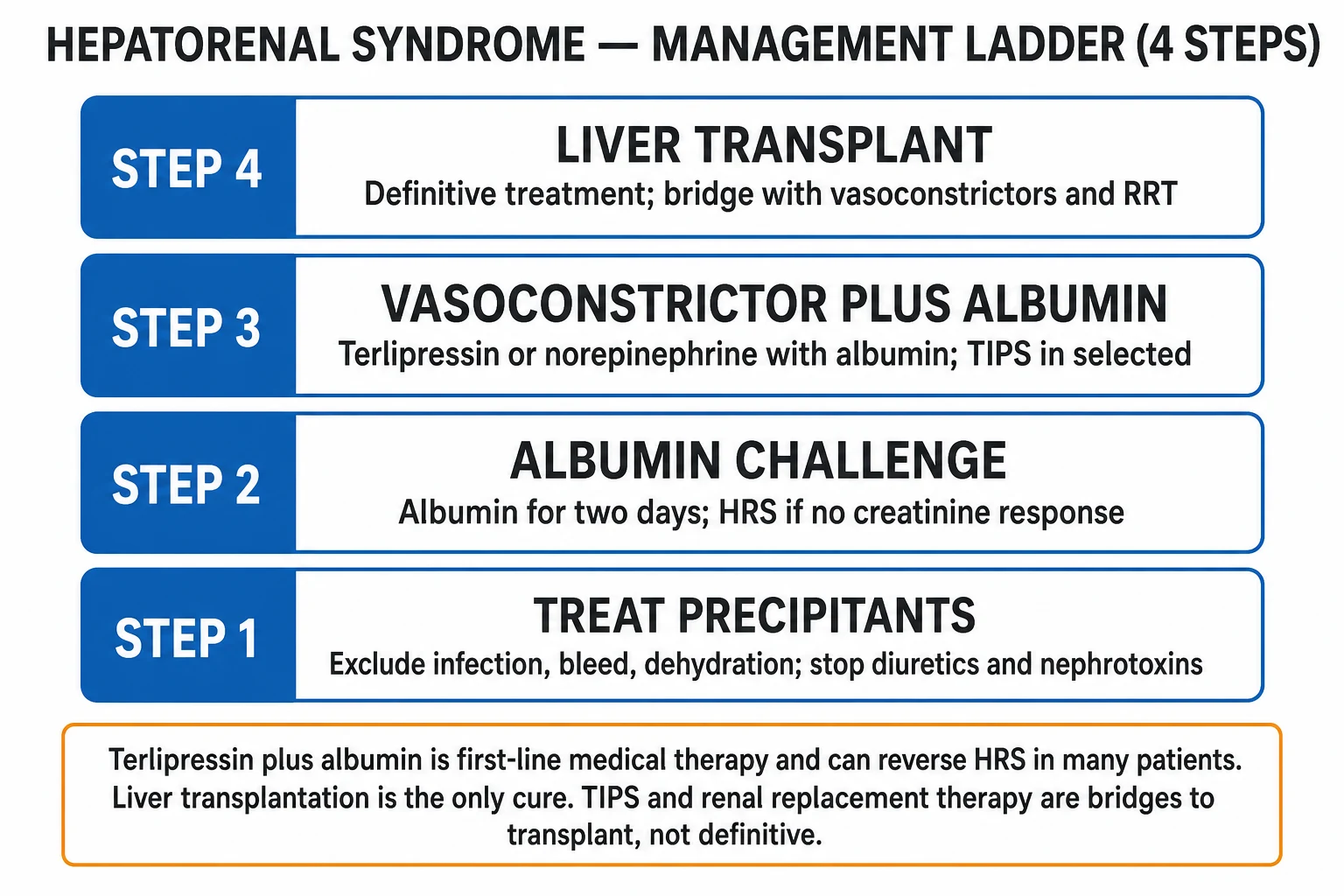
Once HRS is confirmed, the management ladder is vasoconstrictor plus albumin, escalating to renal replacement therapy and liver transplantation as the only definitive cure.[5][7]
Step 1 — Confirm diagnosis and exclude alternatives. Complete the albumin challenge, urine microscopy, ascitic tap, ultrasound, and nephrotoxin review before declaring HRS.[3]
Step 2 — Vasoconstrictor plus albumin (definitive pharmacotherapy). The combination reverses splanchnic vasodilation, increases effective arterial blood volume, suppresses RAAS/SNS/ADH and improves renal perfusion. Terlipressin plus albumin is the gold-standard first-line regimen in most of the world (including India, UK, Europe; FDA-approved in the USA only in 2022).[5][7]
Terlipressin plus albumin — gold-standard HRS regimen
Definitions of response: [1]
- Complete response (HRS reversal) — decrease in serum creatinine to under 1.5 mg/dL (133 micromol/L).
- Partial response — fall of at least 50% toward that target without reaching it.
- No response — failure to meet either criterion by day 14.
- Recurrence after stopping can be re-treated with the same regimen.[5]
Step 3 — Noradrenaline (norepinephrine) alternative. Used in ICU and equally effective to terlipressin in meta-analyses; preferred where terlipressin is unavailable or in centres with established protocols.[8]
- Noradrenaline 0.5 to 3 mg/h continuous IV infusion, titrated to MAP at least 85 mmHg, plus albumin. [1]
Step 4 — Midodrine plus octreotide (less effective, fallback). Used when neither terlipressin nor ICU noradrenaline is available; modest efficacy, inferior to terlipressin/noradrenaline.[8]
- Midodrine 7.5 mg orally TDS (titrate to 12.5 mg TDS), PLUS octreotide 100 to 200 micrograms subcutaneously TDS (or infusion 25 to 50 micrograms/h), PLUS albumin. [1]
Step 5 — Renal replacement therapy (RRT). Initiate when vasoconstrictors fail or are contraindicated, with the standard indications — refractory hyperkalaemia, metabolic acidosis, fluid overload, uraemia. Continuous RRT (CVVHDF) is often preferred for haemodynamic instability. RRT is a bridge to transplant; in non-transplant candidates, RRT-dependent HRS has a dismal prognosis.[9]
Step 6 — Liver transplantation (the only definitive cure). Corrects portal hypertension and switches off the vasoconstrictor milieu. Patients who respond to vasoconstrictors have better post-transplant outcomes; those transplanted on RRT do worse — so bridging with vasoconstrictors is critical. Simultaneous liver-kidney (SLK) transplant is indicated for patients on RRT over 4 to 6 weeks or with irreversible kidney injury.[9]
TIPS (transjugular intrahepatic portosystemic shunt). Reduces portal pressure and may improve HRS in selected patients — HRS type 2 / refractory ascites, no severe encephalopathy, reasonable liver function. Contraindicated in advanced liver failure (MELD over 18 to 25, bilirubin over 5 mg/dL, severe encephalopathy, severe cardiopulmonary disease).[6]
Prevention of HRS (the high-yield preventive bundle):[2][3]
- Primary SBP prophylaxis — norfloxacin 400 mg/day or ciprofloxacin 500 mg/day in cirrhotics with ascitic protein under 1.5 g/dL plus impaired renal function (creatinine over 1.2, BUN over 25, serum sodium under 130) or severe liver failure; reduces HRS incidence.
- Albumin during large-volume paracentesis — 6 to 8 g albumin per litre of ascites removed (8 g/L if over 5 L removed) prevents paracentesis-induced circulatory dysfunction.
- Albumin after SBP — the Sort regimen (1.5 g/kg day 1, 1 g/kg day 3) reduces HRS incidence and mortality.[2]
- Avoid nephrotoxins — NSAIDs, ACE inhibitors, ARBs, aminoglycosides; cautious contrast.
- Treat GI bleeds early with vasoactive drugs, endoscopic therapy and prophylactic antibiotics.
- Pentoxifylline 400 mg TDS historically reduced HRS in severe alcoholic hepatitis (no longer first-line; corticosteroids are preferred where not contraindicated).
Escalation triggers to ICU, RRT and urgent transplant assessment: failure to respond to vasoconstrictor plus albumin after 48 to 72 hours, worsening encephalopathy, refractory acidosis or hyperkalaemia, fluid overload.[6]
Specific Subtypes & Scenarios
- HRS-AKI (former type 1) — rapid onset, ICA AKI criteria met, typically precipitated by SBP; the more malignant form; managed as above; untreated median survival under 2 weeks.[3]
- HRS-NAKI (former type 2 / chronic) — insidious, moderate renal dysfunction (creatinine 1.5 to 2.5 mg/dL), refractory ascites and dilutional hyponatraemia; median survival 4 to 6 months; managed with TIPS where suitable, vasoconstrictors, and eventual transplant assessment.[4]
- HRS in acute-on-chronic liver failure (ACLF) — a systemic inflammatory phenotype often with sepsis and multi-organ failure; vasoconstrictor response lower; outcomes worse; transplant often the only option.[3]
- HRS-like physiology in acute liver failure — rare; managed with the same vasoconstrictor principles, often with urgent transplant for the liver failure itself.
- Post-SBP HRS — albumin 1.5 g/kg day 1 and 1 g/kg day 3 with cefotaxime reduces the incidence of HRS after SBP — a key preventive intervention.[2]
- HRS-CKD / coexisting CKD — distinction is challenging; biopsy if proteinuria or haematuria; treat the HRS physiology with vasoconstrictors and plan simultaneous liver-kidney transplant if both organs fail.[9]
Complications & Pitfalls
Complications of HRS itself: [1]
- Progression to irreversible ATN — if renal hypoperfusion persists, the functional AKI converts to structural ATN, making reversibility impossible even after transplantation.
- Death from progressive liver failure, sepsis or variceal bleeding during the HRS episode.
- Consequences of dilutional hyponatraemia — cerebral oedema, seizures.[4]
Complications of vasoconstrictor therapy (terlipressin): ischaemic and cardiovascular adverse effects — myocardial ischaemia or infarction, mesenteric ischaemia, digital ischaemia, arrhythmia, hypertension, and the CONFIRM trial signal of respiratory failure (limiting use in volume-overloaded patients).[5]
Classic pitfalls (each is examinable):[3]
- Volume overload — over-aggressive albumin or crystalloid causes pulmonary oedema and worsening ascites; titrate to MAP and central volume assessment, not blindly.
- Misdiagnosis — treating ATN or glomerular disease as HRS (or vice versa). Always complete the albumin challenge, urine microscopy, ascitic tap, ultrasound, and exclude nephrotoxins before diagnosing HRS.
- Diuretic continuation — continuing diuretics in a cirrhotic with AKI worsens volume depletion and mimics or precipitates HRS; withdrawal is both diagnostic and therapeutic.
- SBP miss — failing to do a diagnostic ascitic tap in a cirrhotic with ascites and AKI misses the commonest precipitant and the most preventable cause; SBP may be clinically silent.
- Over-correction of coagulopathy — giving fresh frozen plasma for a raised INR in cirrhosis without active bleeding does not prevent bleeding and risks volume overload; INR does not predict bleeding risk in cirrhosis.
- False reassurance of a "normal" creatinine in a cirrhotic — due to low muscle mass, low creatinine production, and increased tubular secretion, serum creatinine underestimates GFR in cirrhosis; a creatinine of 1.5 mg/dL may already reflect a GFR under 30 mL/min. Always have a low threshold for AKI diagnosis.[4]
Prognosis & Disposition
HRS carries an extremely poor prognosis untreated. Median survival is under 2 weeks for type 1 and 4 to 6 months for type 2 (chronic). Even with treatment, HRS carries a high 90-day mortality.[4][6]
Vasoconstrictor therapy reverses HRS in 30 to 50% of cases. Responders have significantly better survival and post-transplant outcomes than non-responders; bridging with vasoconstrictors before transplant reduces post-transplant RRT need.[5][9]
Predictors of poor outcome: high MELD score, high Child-Pugh score, sepsis/SBP, high baseline creatinine, low serum sodium, low MAP, need for RRT, ACLF grade 2 to 3, and non-response to vasoconstrictors.[6]
Disposition: HRS is an in-hospital diagnosis; patients need ward or HDU/ICU care depending on severity. All patients with HRS should be assessed for liver transplantation. Non-transplant candidates who become RRT-dependent have a dismal prognosis, and goals-of-care discussions are appropriate.[9]
MELD in prioritisation — MELD incorporates bilirubin, INR and creatinine; the MELD-Na variant adds serum sodium. The HRS-driven creatinine rise pushes the MELD score up appropriately, prioritising the patient for transplant. The worsening sodium of dilutional hyponatraemia further raises MELD-Na.[4]
Post-reversal course — HRS can recur after vasoconstrictor withdrawal, especially if the precipitant persists; close outpatient monitoring and transplant referral are essential.[5]
Special Populations
- Paediatric HRS — rare; occurs in children with biliary atresia and other chronic cholestatic disease. Terlipressin and albumin regimens are extrapolated with weight-based dosing; liver transplantation is the definitive therapy.[4]
- Pregnancy — rare; cirrhosis in pregnancy is uncommon. Management principles are the same with careful attention to teratogenicity (avoid ACE inhibitors, NSAIDs); obstetric and hepatology multidisciplinary input.
- Elderly cirrhotic — atypical presentation (confusion, falls, anorexia), comorbid CKD and cardiovascular disease, higher risk of nephrotoxicity from polypharmacy, worse tolerance of volume shifts, and lower transplant candidacy — emphasise precipitant prevention and gentle vasoconstrictor use.
- Immunocompromised (post-transplant, HIV, on immunosuppression) — higher risk of opportunistic infection (CMV, fungal) precipitating HRS, drug interactions with calcineurin inhibitors (which themselves cause renal vasoconstriction and can worsen the AKI).
- Anticoagulated cirrhotic — rare, as cirrhosis is a hypocoagulable state, but relevant post-transplant or with mechanical valves; balance bleeding with thrombosis; paracentesis is safe with INR under 2.0 and platelets over 50.
- Resource-limited settings (India) — emphasise early precipitant control (SBP prophylaxis, albumin during paracentesis), the affordability of terlipressin, limited transplant access, and the importance of treating infections and avoiding nephrotoxins as the most practical interventions.[3]
Evidence, Guidelines & Regional Differences
International Club of Ascites (ICA) 2015 / 2019 criteria are the international diagnostic foundation. The 2015 revision (Angeli et al.) replaced the HRS type 1 / type 2 dichotomy with HRS-AKI and broadened the AKI definition in cirrhosis (the 0.3 mg/dL within 48 h criterion).[3]
APASL and INASL guidance on acute-on-chronic liver failure (Asia-Pacific / India); terlipressin has been used in India and Europe for decades as an affordable, off-patent agent. Resource considerations make precipitant prevention, SBP prophylaxis and albumin during paracentesis particularly important.[3]
Landmark trials and what they changed: [1]
- CONFIRM (Wong et al., NEJM 2021)[5] — pivotal RCT of terlipressin plus albumin versus placebo for HRS-AKI. Terlipressin achieved higher reversal (32% vs 17%) but with increased respiratory failure — caution with volume status, and the basis for the FDA approval.
- Angeli et al., J Hepatol 2019[3] — formalised the HRS-AKI / HRS-AKD / HRS-CKD nomenclature and integrated biomarkers (NGAL) into stratification.
- Sort et al., NEJM 1999[2] — the landmark trial showing albumin (1.5 g/kg day 1, 1 g/kg day 3) with cefotaxime reduces HRS incidence and mortality after SBP — a board-rewarded preventive intervention.
- Best et al., Cochrane 2019[8] — network meta-analysis confirming terlipressin plus albumin and noradrenaline plus albumin are equivalent and superior to other regimens.
- Weinberg et al., Liver Transpl 2024[9] — pre-transplant terlipressin treatment of HRS-1 reduces the need for post-transplant RRT, justifying pharmacological bridging.
Controversies: continuous infusion versus bolus terlipressin; terlipressin versus noradrenaline (similar efficacy, cost/availability differ); the respiratory failure signal of CONFIRM (limiting use in volume-overloaded patients); albumin supply and cost in resource-limited settings; TIPS in HRS (effective in selected patients, contraindicated in advanced disease); SLK allocation criteria.[5][6]
Exam Pearls
- One-liner: HRS is a functional, potentially reversible AKI of cirrhosis with ascites, caused by splanchnic vasodilation reducing effective arterial blood volume; treated with terlipressin plus albumin, cured by liver transplant.
- The ICA diagnostic triad: cirrhosis with ascites PLUS AKI PLUS no response to 48 hours of albumin and diuretic withdrawal, AND no shock / nephrotoxin / structural renal injury.
- Mnemonic for ICA exclusion criteria: "No Shock, No Drug, No Structure."
- Mnemonic for HRS precipitants: "SPINAL" — Spontaneous bacterial peritonitis, Paracentesis (large-volume without albumin), Infection, NSAIDs, Alcoholic hepatitis, Low-output (bleeding).
- Urine findings one-liner: "Bland urine, low sodium" — urine sodium under 10 mEq/L, FeNa under 1%, bland sediment, no proteinuria — the pre-renal picture of a structurally normal kidney.
- Pharmacology pearl: terlipressin is a V1 vasopressin receptor agonist causing splanchnic (and systemic) vasoconstriction — the opposite of the V2 effect used in desmopressin for haemophilia and von Willebrand disease; the two must not be confused.
- Dosing pearl: terlipressin 1 to 2 mg IV every 4 to 6 hours PLUS albumin 20 to 40 g/day for up to 14 days; target reversal (creatinine under 1.5 mg/dL) or MAP at least 75 to 85 mmHg.
- Creatinine-in-cirrhosis pearl: serum creatinine underestimates GFR in cirrhosis due to low muscle mass, low production and increased tubular secretion; a "normal" creatinine of 1.2 to 1.5 mg/dL may already be a GFR under 30 mL/min — have a low threshold for AKI diagnosis.[4]
- Transplant pearl: liver transplantation is the only definitive cure; simultaneous liver-kidney transplant is indicated for patients on RRT over 4 to 6 weeks or with irreversible kidney injury.[9]
- Contraindication pearl: terlipressin is contraindicated in ischaemic heart disease, peripheral vascular disease and severe arrhythmia; monitor for digital/mesenteric ischaemia and respiratory failure.[5]
- SBP-albumin pearl: albumin 1.5 g/kg day 1 and 1 g/kg day 3 with cefotaxime reduces HRS incidence and mortality after SBP — a board-rewarded preventive intervention.[2]
- Frequently-misremembered fact: FeNa does NOT reliably distinguish pre-renal AKI from HRS in cirrhosis — both are under 1%; the discriminator is the response to albumin challenge. FEUrea under 35% may help if the patient is on diuretics.[3]
- NSAIDs pearl: NSAIDs precipitate HRS by inhibiting the protective renal vasodilator prostaglandins (PGE2, PGI2) — this is the mechanistic explanation for the ban on NSAIDs in cirrhosis.[4]
Exam application bank (NEET-PG / INICET)
One-line answer
Hepatorenal syndrome (HRS) is a functional, potentially reversible acute kidney injury (AKI) that occurs in patients with ascites and advanced cirrhosis (or acute liver failure / acute-on-chronic liver failure), in the absence of any other identifiable renal injury. The kidneys are structurally normal and recover after liver transplantation. The dominant mechanism is splanchnic and peripheral arterial vasodilation (driven by portal hypertension, nitric oxide and other vasodilators) producing a reduced effective arterial blood volume, with compensatory activation of the renin-angiotensin-aldosterone system, sympathetic nervous system and non-osmotic vasopressin causing intense renal vasoconstriction. HRS is a diagnosis of exclusion — cirrhosis with ascites plus AKI plus no response to albumin and diuretic withdrawal, and no shock, nephrotoxin or structural renal disease. Treat with terlip
Worked stems (answer without another resource)
Stem 1 — Classic presentation. Map symptoms to mechanism; name the first investigation and first treatment step with dose/route if drug therapy is standard. [1]
Stem 2 — Unstable / complicated. List red flags that force immediate resuscitation, theatre, ICU, antidote, or reperfusion — and what you do in the first 15 minutes. [1]
Stem 3 — Atypical group. Elderly, pregnancy, child, or immunocompromised: how presentation and thresholds change. [1]
Stem 4 — Differential trap. Name the three closest mimics and one discriminator for each. [1]
Stem 5 — Disposition. Who goes home with safety-netting, who is admitted, who needs HDU/ICU/theatre, and what follow-up is mandatory. [1]
Rapid viva checklist
- Definition + classification
- Pathophysiology chain
- Bedside signs / criteria
- Score with exact components (if any)
- Emergency bundle
- Definitive therapy with doses
- Complications of disease and of treatment
- Special populations
- Guideline/trial name if classic
- Three exam traps
Coverage self-check
If you cannot answer any stem above from this page alone, re-read the matching section — the page is intended to be self-sufficient for final-prof and NEET-PG/INICET questions on Hepatorenal Syndrome.
References
- [1]Arroyo V, Ginès P, Gerbes AL, et al. Definition and diagnostic criteria of refractory ascites and hepatorenal syndrome in cirrhosis. International Ascites Club Hepatology, 1996.PMID 8550036
- [2]Sort P, Navasa M, Arroyo V, et al. Effect of intravenous albumin on renal impairment and mortality in patients with cirrhosis and spontaneous bacterial peritonitis N Engl J Med, 1999.PMID 10432325
- [3]Angeli P, Garcia-Tsao G, Nadim MK, Parikh CR, Pons M, Pospisil J, Arroyo V News in pathophysiology, definition and classification of hepatorenal syndrome: A step beyond the International Club of Ascites (ICA) consensus document J Hepatol, 2019.PMID 31302175
- [4]Francoz C, Durand F, Kahn JA, Nadim MK Hepatorenal Syndrome Clin J Am Soc Nephrol, 2019.PMID 30996046
- [5]Wong F, Pappas SC, Curry MP, Reddy KR, Rubin RA, Perri RE, Lee H, Majumdar A, Flamm S, Bzowej N, Woldeguiorgis G, Tata M, Yee C, Kowdley KV, Biggins SW, Alkhouri N, Vargas HE, Brown RS Jr, Haffegee A, Fagan A, Payance A, Bissonnette J, Garcia-Tsao G, Boyer TD Terlipressin plus Albumin for the Treatment of Type 1 Hepatorenal Syndrome N Engl J Med, 2021.PMID 33657294
- [6]Khemichian S, Francoz C, Nadim MK Advances in management of hepatorenal syndrome Curr Opin Nephrol Hypertens, 2021.PMID 34397647
- [7]Garcia-Tsao G, Abraldes JG, Rich NE, Dahmus J, Tabibian J, Bsat J, Bajaj J, Boyett S, Saloner B, Tapper EB, Singal AK, Kanwal F AGA Clinical Practice Update on the Use of Vasoactive Drugs and Intravenous Albumin in Cirrhosis: Expert Review Gastroenterology, 2024.PMID 37978969
- [8]Best LM, Freeman SC, Sutton AJ, Cooper NJ, Milne EJ, Musgrove H, Czajkowski AM, Dore M, Mehrabian A, Ray S, Shah T, Wright K, Ching KK, Khanna R, Sheidadmar F, Rose E, Koushan K, Gilroy DW, Davidson BR, Gurusamy KS, Tsochatzis E Treatment for hepatorenal syndrome in people with decompensated liver cirrhosis: a network meta-analysis Cochrane Database Syst Rev, 2019.PMID 31513287
- [9]Weinberg EM, Wong F, Vargas HE, Brown RS Jr, Pappas SC, Boyer TD, Kamath PS, Brown DM, Khemichian S, Nadim MK, Biggins SW, Saxena R, Flamm SL, Landis C, Czerwein M, Bzowej N, Vittal A, Wisocky J, Enns J, Satoskar R, Yee C, Kowdley KV, Curry MP, Reddy KR, Rubin RA, Lee H, Majumdar A, Alkhouri N, Woldeguiorgis G, Tata M, Sanyal AJ, Wong F, Fagan A, Payance A, Bissonnette J, Garcia-Tsao G, Aqel B, Rosenthal E, Kuo A, Ennin I, Patel D, Rogalla S, Foster K, Das A, Haffegee A Decreased need for RRT in liver transplant recipients after pretransplant treatment of hepatorenal syndrome-type 1 with terlipressin Liver Transpl, 2024.PMID 37801553