Nephrology · General Medicine
Urinary Tract Infection & Pyelonephritis
Also known as Urinary tract infection · UTI · Cystitis · Pyelonephritis · Urosepsis
Urinary tract infection (UTI) is microbial invasion and multiplication in the normally sterile urine and urothelium, classified by site into lower (cystitis — dysuria, frequency, urgency, suprapubic pain) and upper (pyelonephritis — fever, rigors, flank pain, systemic illness), and by complexity into uncomplicated (non-pregnant woman, no abnormality) versus complicated (man, pregnancy, obstruction, catheter, diabetes, immunocompromise). Escherichia coli causes 75 to 85 percent; others include Staphylococcus saprophyticus (young sexually active women), Klebsiella, Proteus (struvite stones), Enterococcus, Pseudomonas (catheter/recurrent), Candida (diabetic/catheter). Diagnose with urinalysis (nitrites, leucocyte esterase) and urine culture. Uncomplicated cystitis is treated with nitrofurantoin 5 days, trimethoprim 3 days, or fosfomycin single dose; pyelonephritis needs 7 to 14 days of a fluoroquinolone or beta-lactam (IV if septic). Always treat UTI in pregnancy (including asymptomatic bacteriuria). Do NOT treat asymptomatic bacteriuria in catheterised, diabetic, or elderly patients. Watch for urosepsis, pyonephrosis (emergency decompression), emphysematous pyelonephritis (diabetics), and renal abscess.
On this page & tools
Your progress
Saved locally on this device.
Exam tags
Red flags
Overview & Definition
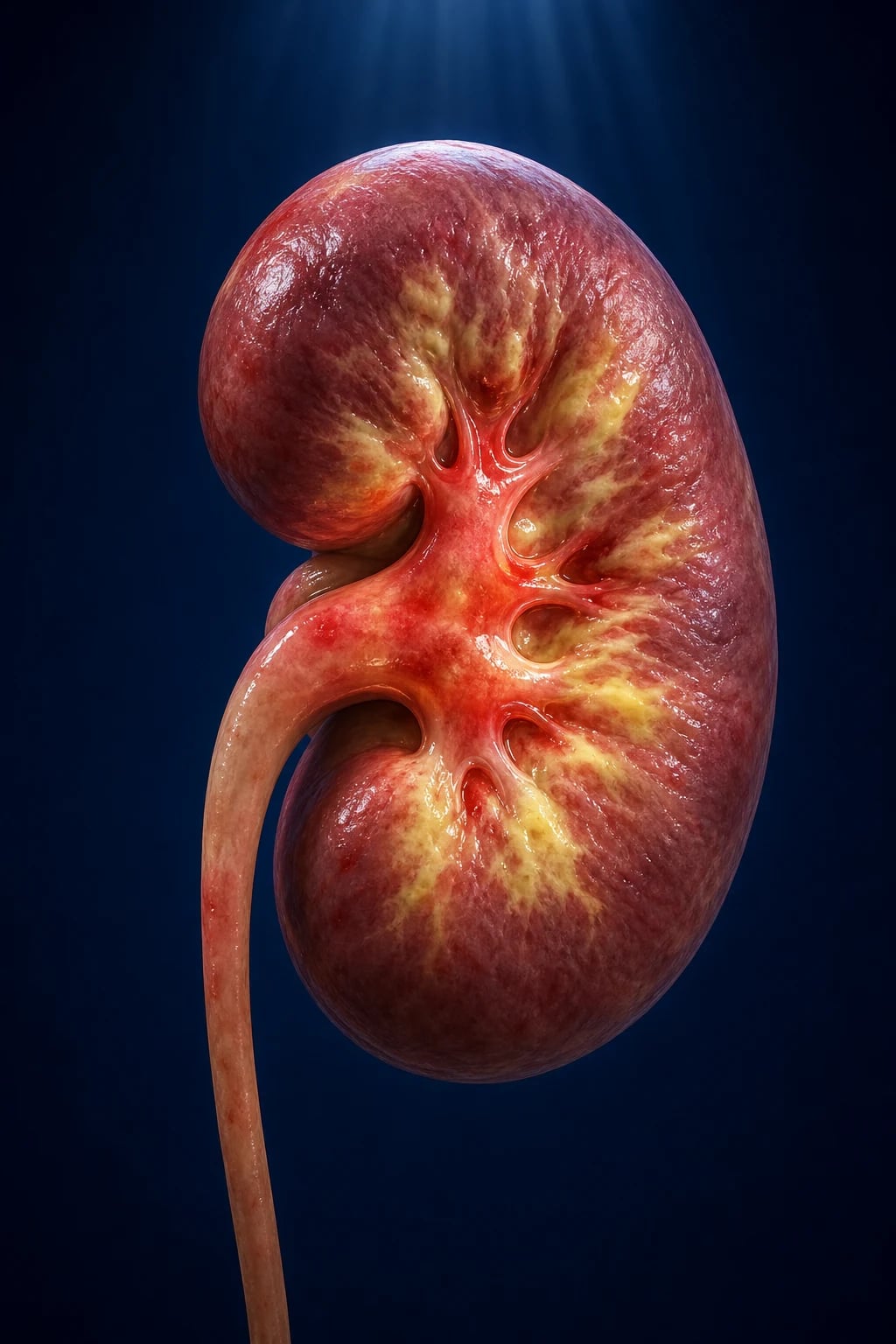
Urinary tract infection (UTI) is microbial invasion and multiplication in the normally sterile urine and urothelium, producing a clinical syndrome whose severity depends on how far up the tract the infection has ascended and on host factors. It is among the commonest bacterial infections of humans, and the clinical art lies in four judgments: (1) localise — lower (cystitis) versus upper (pyelonephritis); (2) stratify — uncomplicated versus complicated; (3) confirm microbiologically where it matters; and (4) choose an antibiotic of the right drug, dose, route, and duration — while flagging the dangerous presentations (urosepsis, obstruction, emphysematous pyelonephritis).[1][6]
The single most over-used diagnosis in medicine is "UTI" in an asymptomatic catheterised or elderly patient — the most important evidence-based reflex of the modern era is to NOT treat asymptomatic bacteriuria in these groups, because doing so drives antimicrobial resistance, Clostridioides difficile infection, and toxicity without any clinical benefit.[3]
Classification
UTI is classified along two axes that matter for management — site and complexity — plus special categories (recurrent, catheter-associated, asymptomatic).[2]
By anatomical site (localise — it changes antibiotic duration): [1]
- Lower UTI — cystitis (bladder), urethritis (urethra), prostatitis (prostate). Dysuria, frequency, urgency, suprapubic pain, ± haematuria; usually no fever and no systemic illness. Treated with 3 to 5 days of oral antibiotics.
- Upper UTI — pyelonephritis (renal pelvis and parenchyma). Fever (often over 38.5 °C), rigors, unilateral flank/loin pain, nausea, vomiting, systemic illness; risk of permanent renal scarring and sepsis. Treated with 7 to 14 days. [1]
By complexity (changes organism spectrum, drug choice, and duration): [1]
- Uncomplicated UTI — acute cystitis or pyelonephritis in a non-pregnant adult woman with no structural, functional, or metabolic abnormality and no recent instrumentation. This is the population on which empirical antibiotic durations are based.
- Complicated UTI — any UTI occurring in a man, pregnant woman, child, frail elderly patient, or in the presence of obstruction, stones, catheter, neurogenic bladder, immunocompromise, diabetes, renal impairment, recent urinary tract instrumentation, or infection with resistant organisms.[1]
Special categories: [1]
- Asymptomatic bacteriuria (ASB) — significant bacteriuria (≥10⁵ CFU/mL) without urinary symptoms; treat only in pregnancy and before selected urological procedures.
- Recurrent UTI — ≥2 episodes in 6 months OR ≥3 in 12 months; sub-classified as relapse (same organism within 2 weeks — persistent focus) versus reinfection (different organism or sterile interval over 2 weeks).
- Catheter-associated UTI (CAUTI) — symptomatic UTI in a patient with an indwelling or recently removed (within 48 hours) catheter. [1]

Cystitis vs Pyelonephritis — the localisation that decides duration
Lower UTI — Cystitis
- Site: bladder urothelium
- Symptoms: dysuria, frequency, urgency, suprapubic pain, ± haematuria
- Fever: usually absent (under 38 °C)
- Systemic illness: none
- Sign: suprapubic tenderness
- Duration: 3 to 5 days oral antibiotics
- Agents: nitrofurantoin, trimethoprim, fosfomycin
- Imaging: not routinely required
Upper UTI — Pyelonephritis
- Site: renal pelvis and parenchyma
- Symptoms: fever, rigors, flank pain, vomiting, ± preceding cystitis
- Fever: typically over 38.5 °C with rigors
- Systemic illness: prominent (malaise, nausea, sepsis)
- Sign: costovertebral angle tenderness (Murphy's punch)
- Duration: 7 to 14 days (quinolone 7 d, beta-lactam 10 to 14 d)
- Agents: ciprofloxacin, co-amoxiclav, ceftriaxone (IV if septic)
- Imaging: if no response at 48 to 72 h (abscess, obstruction)
Epidemiology & Risk Factors
UTI is the commonest bacterial infection in women — about 50 to 60 percent of all women will have at least one UTI in their lifetime, and roughly 1 in 3 women by age 24. The female-to-male ratio is 8:1 in young adults, explained by the short female urethra (4 cm versus 20 cm), its proximity to the perianal/vulval flora, and sexual activity. A first UTI in a young man is rare (under 0.1 percent per year) and should prompt a search for a structural cause.[1]
Recurrence is common: 20 to 30 percent of women with a first UTI have a second within 6 months, and 40 to 50 percent within a year, with risk concentrated in those with a maternal history of UTI and an early first infection.[1]
Host and environmental risk factors (and the organism they favour — a frequent exam stem): [1]
| Risk factor / host | Organism / scenario to consider |
|---|---|
| Young sexually active woman | E. coli; Staphylococcus saprophyticus |
| Diabetic | E. coli, Klebsiella; emphysematous pyelonephritis; Candida |
| Catheterised / instrumented / recurrent | Pseudomonas, Proteus, Enterococcus, Candida, ESBL-producers |
| Struvite (infection) stone | Proteus mirabilis (urease splits urea → alkaline urine) |
| Pregnancy | E. coli, group B strep; physiological ureteric dilation raises pyelonephritis risk |
| Postmenopausal | Vaginal oestrogen deficiency → loss of lactobacilli → E. coli colonisation |
| Immunocompromised / transplant | Enterococcus, Pseudomonas, Candida; graft dysfunction |
Pathophysiology
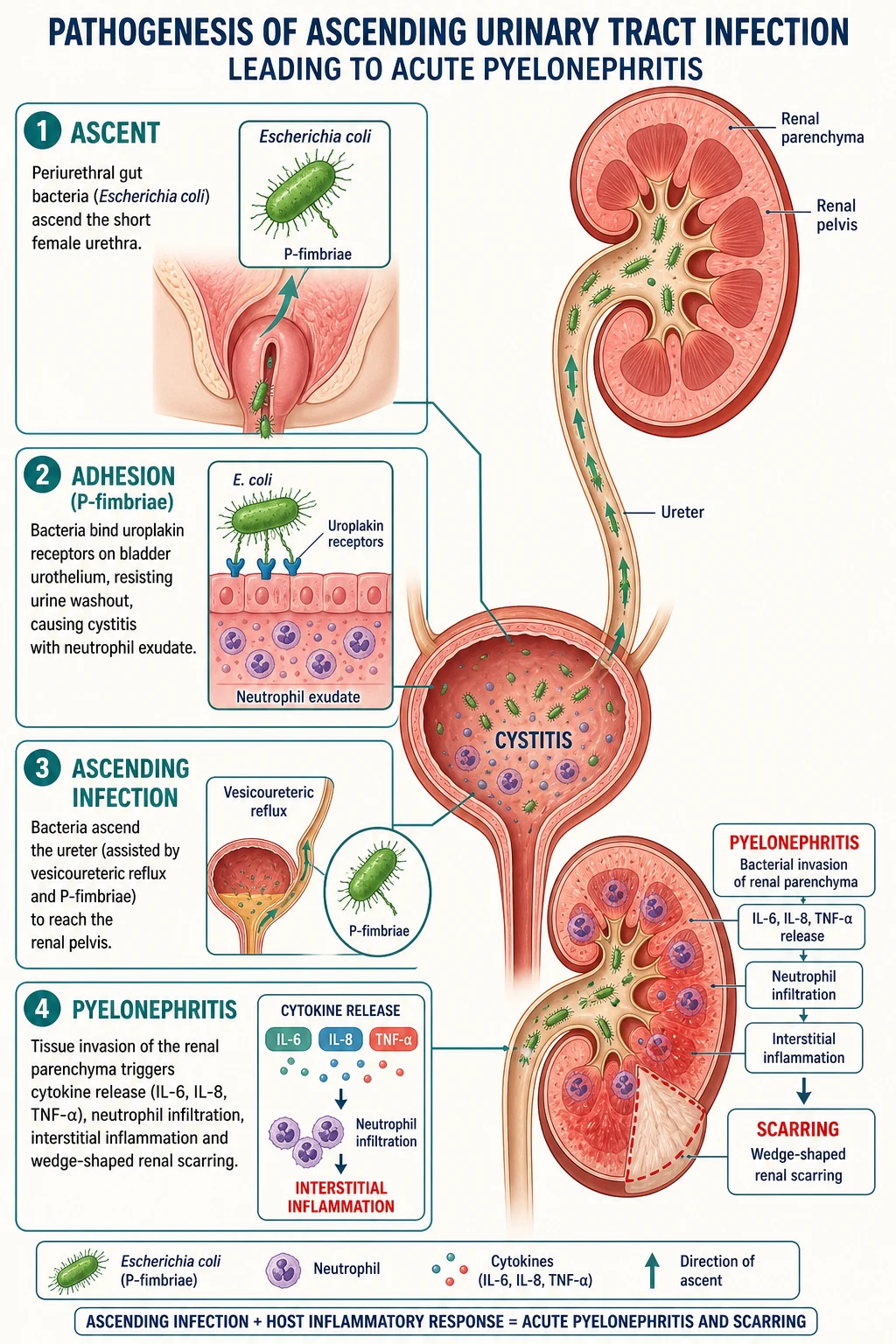
The urine below the bladder neck is normally sterile, defended by complete bladder emptying (mechanical washout), high urine flow and osmolality, low urine pH, Tamm-Horsfall protein (uromodulin) that traps type-1-fimbriated E. coli, secretory IgA, the bladder mucopolysaccharide (GAG) layer, and the bactericidal effect of urea. UTI occurs when these defences are overwhelmed or bypassed.[1]
The route is overwhelmingly ASCENDING. Periurethral and perineal bowel flora (classically E. coli from the gut) ascend the urethra into the bladder (cystitis), then via the ureters to the kidney (pyelonephritis). Haematogenous spread (e.g. Staphylococcus aureus, candidaemia, tuberculosis) is uncommon and occurs in bacteraemia or endocarditis. [1]
Uropathogenic E. coli (UPEC) virulence factors — the molecular basis of infection: [1]
- P-fimbriae (pyelonephritis-associated pili) bind the Gal-α-1-4-Gal receptor on uroepithelial and kidney cells — strongly associated with pyelonephritis.
- Type-1 fimbriae bind uroplakin Ia on bladder urothelium — the hallmark of cystitis.
- Haemolysin, siderophores (aerobactin) for iron acquisition, and K capsule antigen resist complement and neutrophil killing. [1]
Biofilm and intracellular reservoirs: UPEC invade urothelial cells and form intracellular bacterial communities (IBCs), protected from antibiotics and immune attack. These latent reservoirs seed recurrent infection — explaining why recurrence is simultaneously reinfection (new external strain) and relapse (re-emergence of an old intracellular reservoir).[1]
Once bacteria establish in the bladder, they trigger urothelial Toll-like receptor 4 (TLR4) signalling and NF-κB activation, releasing IL-6, IL-8 (a neutrophil chemoattractant), and TNF-α. Neutrophil influx produces the dysuria, urgency, and pyuria; systemic cytokine spill produces the fever, rigors, and systemic illness of pyelonephritis. In the renal parenchyma, this same process produces intense neutrophilic interstitial inflammation, microabscesses, and — with recurrence or reflux — wedge-shaped cortical scars that are permanent. [1]
Risk amplifiers upset the host-pathogen balance: urinary stasis (incomplete emptying, obstruction, neurogenic bladder, or the physiological ureteric dilation and reduced peristalsis of pregnancy from progesterone), foreign body (catheter, stone), impaired mucosal immunity (postmenopausal oestrogen deficiency reduces vaginal lactobacilli and protective acidity), and hyperglycaemia (glycosuria feeds bacteria and impairs neutrophil function). [1]
Why diabetics get emphysematous pyelonephritis: E. coli or Klebsiella ferment glucose in the hyperglycaemic renal parenchyma, producing CO₂ gas that tracks through renal and perinephric tissue — a surgical emergency.[4]
Clinical Presentation
Acute uncomplicated cystitis in a woman — acute onset of dysuria (burning on urination), frequency (voiding more than 8 times/day, small volumes), urgency, suprapubic discomfort or pain, cloudy or malodorous urine, ± visible haematuria; no fever and no flank pain. The combination of dysuria, frequency, and suprapubic pain in a non-pregnant woman with no vaginal discharge or irritation is over 90 percent predictive of UTI — empiric therapy without culture is acceptable.[6]
Acute pyelonephritis — fever (often over 38.5 °C) with rigors, unilateral flank/loin pain or tenderness (positive Murphy's punch sign — fist percussion tenderness over the costovertebral angle), nausea and vomiting, headache, malaise, and often preceding or accompanying lower-tract symptoms (dysuria, frequency). [1]
Organism-specific and scenario pearls (a favourite exam stem): [1]
- Staphylococcus saprophyticus — second commonest cause of cystitis in young, sexually active women; otherwise healthy.
- Proteus mirabilis — alkaline urine (urease splits urea to ammonia), struvite (magnesium ammonium phosphate) stones.
- Pseudomonas aeruginosa — catheterised, recurrent, healthcare-associated, or instrumented patients.
- Klebsiella — diabetics, healthcare-associated; a cause of emphysematous pyelonephritis.
- Candida — diabetic, catheterised, immunocompromised, or on broad-spectrum antibiotics. [1]
Atypical presentations — examiners test these deliberately:[1]
- Elderly (over 65): blunted or absent fever/dysuria; presentation with new confusion or delirium, falls, functional decline, anorexia, drowsiness, new or worsening incontinence. A low threshold to test urine is essential — but asymptomatic bacteriuria is common and must not be over-treated.[3]
- Diabetic: may present with severe pyelonephritis, papillary necrosis (sloughed papilla causing ureteric obstruction and colic), emphysematous pyelonephritis, perinephric abscess, fungal UTI, or DKA/HHS triggered by the infection.
- Pregnancy: physiological ureteric dilation and stasis raise pyelonephritis risk; pyelonephritis risks preterm labour, sepsis, ARDS, and fetal loss; asymptomatic bacteriuria in pregnancy progresses to pyelonephritis in 30 to 40 percent if untreated.[3]
- Immunocompromised / transplant: low-grade or absent fever, unusual organisms (Pseudomonas, Enterococcus, Candida), graft dysfunction mimicking rejection, and rapid progression.
- Catheterised: bacteriuria is universal and asymptomatic bacteriuria must NOT be treated; treat only when new symptoms develop (new fever, rigors, suprapubic pain, altered consciousness, haemodynamic instability).
- Men: suspect prostatitis (perineal/rectal pain, obstructive voiding, tender boggy prostate) or obstruction (BPH, stricture); a first UTI in a man warrants investigation.
Differential Diagnosis
Not every dysuria is a UTI, and not every flank pain is pyelonephritis. Distinguish:[1][6]
- Vaginitis / vulvovaginal candidiasis / bacterial vaginosis / trichomoniasis — vaginal discharge, itch, irritation, dyspareunia; dysuria is external (urine contacts inflamed vulva); urine sterile. Examine the vagina and treat the cause (e.g. fluconazole 150 mg single dose for candidiasis; metronidazole 400 mg BD for 5 to 7 days for BV).
- Sexually transmitted infection (urethritis) — Chlamydia trachomatis, Neisseria gonorrhoeae, Mycoplasma genitalium; urethral discharge, recent new partner; dysuria but urine culture negative. Diagnose on NAAT; treat with doxycycline 100 mg BD for 7 days (chlamydia) plus ceftriaxone 500 mg IM single dose (gonorrhoea).
- Interstitial cystitis / bladder pain syndrome / urethral syndrome — dysuria and frequency with sterile culture and negative workup; chronic relapsing course; requires urology.
- Renal colic / nephrolithiasis — sudden severe flank pain radiating to groin, restless patient, haematuria, no fever (unless infected stone); struvite stones link to Proteus and may coexist with UTI. CT KUB is gold standard.
- Appendicitis / diverticulitis / pelvic inflammatory disease / ectopic pregnancy — lower abdominal pain that may mimic cystitis; retrocaecal appendicitis can cause dysuria. Pelvic exam, imaging and a pregnancy test distinguish.
- Epididymo-orchitis / acute prostatitis (men) — testicular pain/swelling (epididymitis) or perineal/rectal pain, fever, obstructive voiding, tender prostate on DRE (be gentle — DRE may precipitate bacteraemia in acute prostatitis).
- Renal / perinephric abscess — flank pain and fever that fails to settle after 48 to 72 hours of appropriate antibiotics; needs CT and drainage.
- Renal tuberculosis — sterile pyuria with recurrent UTI symptoms, haematuria, negative routine cultures, history of TB; send 3 early-morning urines for AFB and TB-PCR.
- Bladder tumour — painless haematuria or storage symptoms with negative cultures; persistent haematuria after a UTI mandates cystoscopy to exclude malignancy. [1]
Clinical & Bedside Assessment
Focused history: tempo and localisation of symptoms (lower versus upper); fever/rigors; vaginal discharge/irritation (vaginitis/STI); urethral discharge (urethritis); sexual history; last menstrual period / pregnancy (any woman of reproductive age); prior UTI and recurrence; recent antibiotic exposure (resistance); comorbidity (diabetes, immunosuppression, renal stones, BPH); catheterisation/instrumentation; and flank/loin pain. [1]
Vital signs and sepsis screen: temperature, heart rate, blood pressure, respiratory rate, oxygen saturation, capillary refill, conscious level. Apply qSOFA (RR ≥22, altered mentation, SBP ≤100) to flag sepsis risk. Look for flank tenderness (pyelonephritis/abscess) and suprapubic tenderness (cystitis). [1]
Pelvic examination if vaginal discharge, irritation, dyspareunia, or STI risk — the manoeuvre that distinguishes cystitis from vaginitis/STI. In men, examine the genitalia (phimosis, balanitis, urethral discharge), testes (epididymo-orchitis), and prostate (gentle DRE — a tender, boggy prostate suggests prostatitis). [1]
Abdominal exam: palpable bladder (retention), enlarged tender kidney (pyelonephritis or obstruction), suprapubic tenderness (cystitis), and costovertebral angle (renal angle) tenderness — Murphy's punch sign (fist percussion tenderness) supports pyelonephritis. [1]
Bedside test of choice — the urine dipstick: assess nitrites, leucocyte esterase, blood, protein, and leukocytes. [1]
Clinical decision reflex: a classic cystitis picture (dysuria, frequency, no vaginal discharge) in a non-pregnant woman needs no culture; any pyelonephritis, pregnancy, male, recurrent, complicated, severe, or antibiotic-resistant case needs a urine culture before antibiotics where feasible.[2]
Investigations
Urine dipstick — nitrites and leucocyte esterase
The bedside test that decides whether to treat empirically.[6]
- Nitrites — specificity 90 to 99 percent (a positive nitrite strongly supports UTI), sensitivity only 30 to 80 percent. False negatives are common: frequent voiding, dilute urine, and organisms that do not reduce nitrate — Enterococcus, Staphylococcus saprophyticus, Pseudomonas, Serratia.
- Leucocyte esterase — sensitivity 70 to 95 percent, specificity 50 to 85 percent (pyuria indicator). False positives: vaginal contamination, Trichomonas; false negatives: proteinuria, glycosuria, high specific gravity, vitamin C.
- Both positive — likelihood ratio about 4 to 7; reasonably confirms UTI. Both negative in the absence of red flags — likelihood ratio negative about 0.2; UTI is unlikely. [1]
Rule of thumb: in a classic cystitis woman, either nitrites or leucocyte esterase positive supports empirical treatment; both negative makes UTI unlikely (consider urethritis, vaginitis). [1]
Urine microscopy, culture, and thresholds
Microscopy: pyuria (more than 10 white cells/µL, or more than 5 to 10 per high-power field) is present in symptomatic UTI; haematuria common in cystitis; WBC casts indicate pyelonephritis (sterile pyuria with casts suggests interstitial nephritis or TB). [1]
Urine culture is the gold standard. Collection: midstream clean-catch in adults (after cleansing the perineum); catheter specimen if retention/incontinence; suprapubic aspiration in infants. [1]
Diagnostic thresholds (Kass, refined by IDSA):[2]
| Specimen / syndrome | Threshold |
|---|---|
| Symptomatic woman, midstream | ≥10³ CFU/mL of a single uropathogen (modern IDSA — 80 percent sensitive) |
| Classical Kass threshold | ≥10⁵ CFU/mL — highly specific but misses 30 to 50 percent of true symptomatic cystitis |
| Asymptomatic screening (women) | ≥10⁵ CFU/mL on two occasions |
| Asymptomatic screening (men) | ≥10⁵ CFU/mL on one occasion |
| Catheter specimen | ≥10⁴ CFU/mL of a single organism |
| Suprapubic aspirate | Any growth is significant |
ALWAYS culture (not just dipstick) when: pyelonephritis, complicated UTI, pregnancy, male sex, recurrent UTI, recent instrumentation, suspected sepsis, antibiotic resistance, failed empirical therapy, or immunocompromise. [1]
Bloods
In pyelonephritis/sepsis: FBC (leukocytosis), CRP (raised), urea and electrolytes (AKI), blood cultures (positive in 10 to 20 percent of pyelonephritis), glucose, lactate (sepsis severity). Pregnancy test in any woman of reproductive age before prescribing. [1]
Imaging
- Ultrasound — first-line for: suspected obstruction (especially a stone in a single kidney, anuria, renal failure), pyelonephritis not responding to 48 to 72 hours of antibiotics, recurrent pyelonephritis, complicated UTI in men, suspected abscess or emphysematous pyelonephritis.
- CT abdomen (contrast-enhanced, CT urogram) — gold standard for complications: renal/perinephric abscess, emphysematous pyelonephritis (gas in renal parenchyma), papillary necrosis, xanthogranulomatous pyelonephritis, and to define obstruction/stones. [1]
Sterile pyuria — the exam trap
Pyuria without bacteriuria on routine culture. Consider: TB (send 3 early-morning urines for AFB), fastidious organisms (Ureaplasma, Chlamydia), fungal UTI, interstitial nephritis, nephrolithiasis, bladder tumour, partially treated UTI, or contamination from vaginal leucocytes. [1]
Investigation of recurrent UTI
In a woman, usually no imaging needed (idiopathic); investigate if upper-tract infection, atypical organism, persistent haematuria, or male sex (ultrasound, cystoscopy, post-void residual, urology referral).[1]
Management — Resuscitation
ABCDE first. Oxygen to target SpO₂ 94 to 98 percent (or 88 to 92 percent in COPD). [2]
Recognise UROSEPSIS early: pyelonephritis (or an obstructed/infected system) with hypotension, tachycardia, raised lactate, oliguria, confusion, or organ dysfunction. Apply the Surviving Sepsis hour-1 bundle: blood cultures, lactate, broad-spectrum IV antibiotics within 1 hour, balanced crystalloid 30 mL/kg bolus, noradrenaline for fluid-refractory shock, and reassess fluid responsiveness (passive leg raise, IVC, pulse-pressure variation) before further boluses.[2]
Do NOT delay antibiotics for cultures if septic — take cultures then give antibiotics immediately. In stable pyelonephritis, send urine (and blood) culture first, then start empirical antibiotics. [1]
Analgesia and antiemetics: paracetamol 1 g QDS oral/IV (or 15 mg/kg IV), NSAIDs (avoid in AKI, dehydration, elderly, pregnancy third trimester), ondansetron 4 mg IV for vomiting; ensure adequate hydration (oral if tolerating, IV crystalloid if dehydrated). [1]
Special situations: [1]
- Pregnant with pyelonephritis — admit for IV antibiotics (ceftriaxone or co-amoxiclav); monitor uterine activity and fetal wellbeing; risk of preterm labour and ARDS; avoid aminoglycosides where possible (fetal ototoxicity).
- Diabetic with emphysematous pyelonephritis or abscess — aggressive fluids, IV insulin (DKA/HHS protocol if ketotic), broad-spectrum IV antibiotics covering E. coli and Klebsiella, and urgent urology for drainage/nephrectomy.[4]
Management — Definitive & Stepwise
Empirical antibiotics are guided by syndrome (cystitis versus pyelonephritis), complication status, pregnancy, local resistance (community E. coli resistance over 20 percent to an agent precludes empirical use), and allergy.[2][6]
Acute uncomplicated cystitis (non-pregnant woman)
First-line (IDSA/ESCMID): [1]
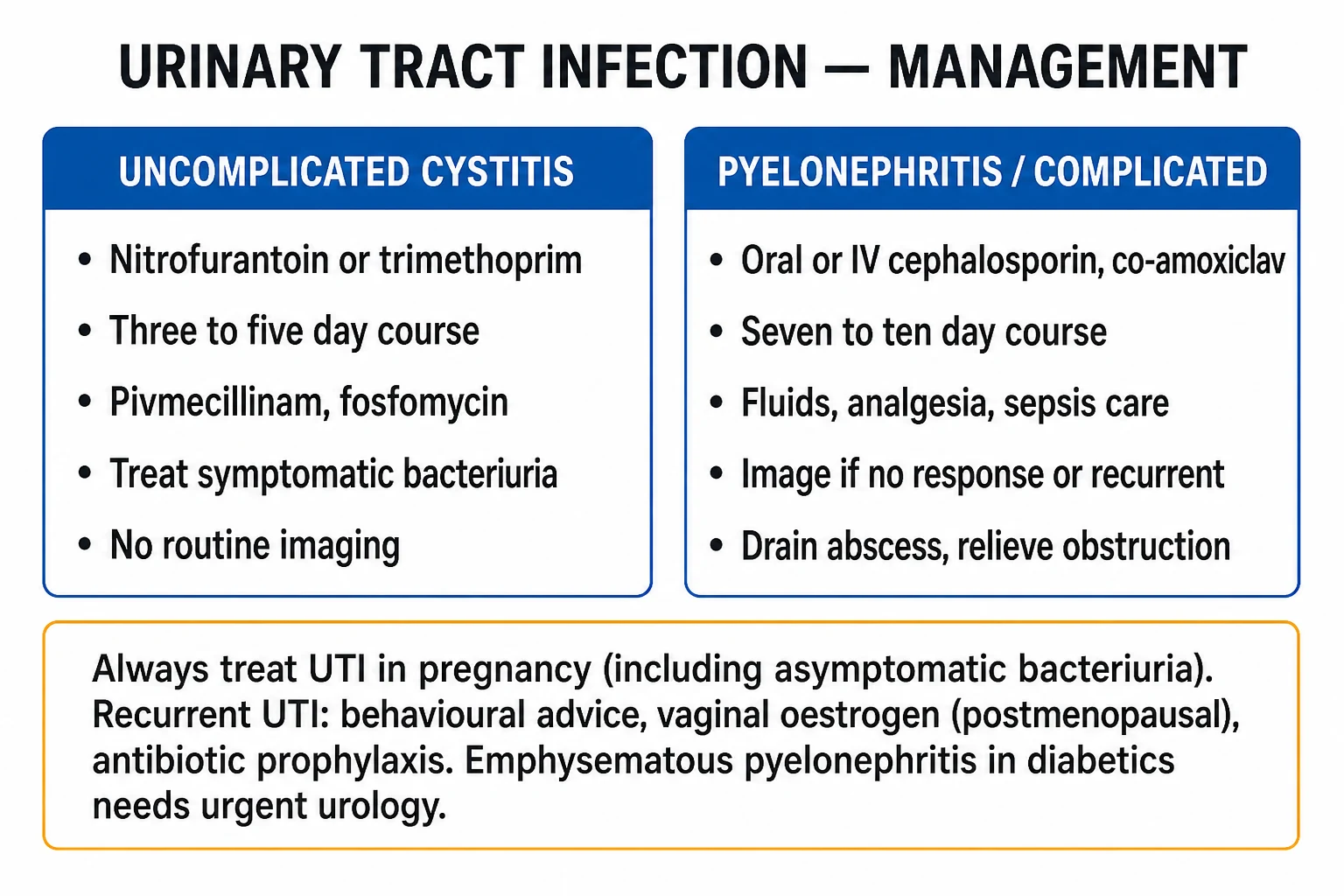
- Nitrofurantoin 100 mg modified-release BD (or 50 mg QDS) for 5 days — first-line; avoids disturbing gut flora; avoid if eGFR under 30 mL/min (urinary concentration inadequate) and in late pregnancy.
- Trimethoprim 200 mg BD for 3 days — where local E. coli resistance is under 20 percent and not recently used as prophylaxis. Avoid in first trimester of pregnancy (folate antagonist) and trimethoprim-sulphamethoxazole at term.
- Fosfomycin 3 g single dose — single dose; convenient; less effective than nitrofurantoin for some organisms.
- Pivmecillinam 400 mg BD for 3 to 7 days — first-line in many European guidelines. [1]
Avoid amoxicillin and ampicillin as empirical monotherapy (E. coli resistance over 30 percent).[2]
DURATION
Not one-size-fits-all — nitrofurantoin 5 d, trimethoprim 3 d, fosfomycin single dose
3 to 5 days oral; no routine culture or imaging in a non-pregnant woman
Not first-line for cystitis; resistance and side effects
E. coli resistance over 30 percent — do not use as empirical monotherapy
Including asymptomatic bacteriuria; use cefalexin or nitrofurantoin (not at term)
Pyelonephritis not improving in 48 to 72 h — abscess, obstruction, resistant organism; CT
Pyonephrosis — emergency nephrostomy or stent; antibiotics alone cannot sterilise it
First-line for uncomplicated cystitis; avoid if eGFR under 30 or at term
Acute pyelonephritis (uncomplicated, non-pregnant)
Outpatient if stable and able to tolerate oral; inpatient if septic, vomiting, pregnant, immunocompromised, or failing oral. [1]
Oral agents (high renal tissue penetration): [1]
- Ciprofloxacin 500 mg BD for 7 days (avoid if local quinolone resistance over 10 percent).
- Levofloxacin 750 mg OD for 5 days.
- Co-amoxiclav 500/125 mg TDS for 7 to 10 days (if susceptible).
- Cefpodoxime 200 mg BD for 7 to 10 days. [1]
IV regimens (septic or inpatient): [1]
- Ceftriaxone 1 to 2 g IV OD, OR
- Co-amoxiclav 1.2 g IV TDS, OR
- Ciprofloxacin 400 mg IV BD, OR
- Gentamicin (5 to 7 mg/kg IV OD, weight-based extended-interval dosing — monitor levels) ± ampicillin.
- Add MRSA/antipseudomonal cover (piperacillin-tazobactam 4.5 g IV TDS, meropenem 1 g IV TDS) for healthcare-associated, known colonisation, or septic shock.[2]
IV-to-oral switch: once afebrile 24 to 48 hours, clinically improving, and able to swallow/absorb. Total duration 7 to 14 days (7 days for fluoroquinolone, 10 days for beta-lactam in pyelonephritis). [1]
Complicated UTI
Culture MUST guide therapy; broader cover (e.g. co-amoxiclav, ceftriaxone, or piperacillin-tazobactam) for 7 to 14 days; address the underlying cause (relieve obstruction, remove/change catheter, treat stone). Admit if septic. [1]
UTI in pregnancy (any UTI, including asymptomatic bacteriuria)
Screen with urine culture at booking; treat asymptomatic bacteriuria (≥10⁵ CFU/mL single organism).[3]
| Drug | Dose / duration | Caution |
|---|---|---|
| Nitrofurantoin | 100 mg BD for 5 to 7 days | AVOID at term (3rd trimester) — neonatal haemolysis |
| Cefalexin | 500 mg BD for 7 days (cystitis); 1 g BD for 10 days (pyelonephritis) | Safe in pregnancy |
| Co-amoxiclav | 500/125 mg TDS for 5 to 7 days | Safe |
| Trimethoprim | — | AVOID first trimester (folate antagonist, teratogenic) |
| Nitrofurantoin at term | — | AVOID 3rd trimester |
| Fluoroquinolones | — | AVOID — cartilage toxicity |
| Tetracyclines | — | AVOID — teeth/bone |
| Sulphonamides at term | — | AVOID 3rd trimester — kernicterus |
Asymptomatic bacteriuria (IDSA 2019)[3]
DO NOT screen or treat in: non-pregnant women, elderly institutionalised women, diabetic women, patients with spinal cord injury, or patients with indwelling catheters. [1]
DO screen and treat in: pregnancy (at least one culture in early pregnancy), and before transurethral prostate resection (TURP) or other urological procedures with mucosal bleeding. [1]
Screening/treatment is NOT recommended for solid-organ transplant, joint replacement, or non-urological surgery. [1]
Recurrent UTI prevention
Non-antibiotic measures first: [1]
- Behavioural: void after intercourse, increase fluid intake (over 2 L/day), wipe front-to-back, avoid spermicide/diaphragm.
- Vaginal oestrogen (topical estriol cream) in postmenopausal women — restores lactobacilli and vaginal acidity; effective.[1]
- D-mannose and cranberry products (proanthocyanidins inhibit E. coli adhesion) — modest evidence; the Cochrane review supports cranberry as an adjunct in recurrent UTI.[5]
Antibiotic prevention: [1]
- Continuous low-dose prophylaxis — nitrofurantoin 50 to 100 mg ON, or trimethoprim 100 mg ON, or co-trimoxazole 480 mg ON for 6 to 12 months.
- Post-coital prophylaxis — single dose of nitrofurantoin, trimethoprim, or co-trimoxazole after intercourse.
- Patient-initiated self-start therapy — a 3-day course at symptom onset, for informed women with predictable recurrence.[1]
Catheter-associated UTI (CAUTI)
Treat only symptomatic infection. Change the catheter if it has been in situ over 7 days before sampling; 7 days of culture-guided therapy (shorter if rapid response); NEVER treat asymptomatic catheter bacteriuria.[3]
Acute bacterial prostatitis
2 to 4 weeks of a fluoroquinolone (ciprofloxacin 500 mg BD or levofloxacin 500 mg OD) or co-trimoxazole 960 mg BD that penetrate the prostate; IV if septic; catheterisation (consider suprapubic if retention is severe) may be needed. [1]
Duration of therapy by syndrome — memorise this
Uncomplicated cystitis
- 3 to 5 days oral
- Nitrofurantoin 5 d / trimethoprim 3 d / fosfomycin single
Uncomplicated pyelonephritis
- 7 to 14 days
- Quinolone 7 d, beta-lactam 10 to 14 d; IV if septic
Complicated UTI
- 7 to 14 days
- Culture-guided; relieve obstruction / remove catheter
Pregnancy (cystitis / pyelo)
- 5 to 7 days / 10 to 14 days
- Always treat incl. ASB; pregnancy-safe drugs
Acute prostatitis
- 2 to 4 weeks
- Ciprofloxacin or co-trimoxazole (penetrate prostate)
CAUTI (symptomatic)
- 7 days
- Treat only symptomatic; change long-standing catheter
Specific Subtypes & Scenarios
- Acute uncomplicated cystitis in women — 3 to 5 days oral nitrofurantoin/trimethoprim/fosfomycin; no routine culture or imaging.
- Acute uncomplicated pyelonephritis — 7 to 10 days oral (ciprofloxacin or co-amoxiclav) if stable; IV if septic; image if no response at 48 to 72 hours.
- Recurrent UTI in women — behavioural and non-antibiotic measures first (vaginal oestrogen if postmenopausal; cranberry, D-mannose); continuous, post-coital, or self-start antibiotic prophylaxis if persistent; investigate only if upper-tract infection, atypical organism, or male.[5]
- Complicated UTI — culture-guided 7 to 14 days; relieve obstruction, remove catheter/stone; broaden empirically (Pseudomonas, ESBL); admit if septic.
- UTI in pregnancy — always treat (including ASB); pregnancy-safe antibiotics; admit pyelonephritis for IV therapy; screening urine culture at booking.[3]
- Asymptomatic bacteriuria — treat ONLY in pregnancy and before selected urological procedures; do NOT treat in catheterised, diabetic, elderly, or spinal-cord-injured patients.[3]
- Catheter-associated UTI — treat only symptomatic; change long-standing catheter before sampling; 7-day culture-guided course.
- Emphysematous pyelonephritis (diabetics) — gas in renal parenchyma on imaging; medical (IV antibiotics, fluid, insulin) plus percutaneous drainage for class I (gas in parenchyma only); nephrectomy for class II (extension of gas or destruction beyond kidney) or unstable patients; mortality 10 to 40 percent.[4]
- Renal / perinephric abscess — flank pain/fever not settling on antibiotics; CT diagnostic; percutaneous or surgical drainage plus IV antibiotics; usually S. aureus (haematogenous) or E. coli/Proteus (ascending).
- Acute bacterial prostatitis — fever, perineal/rectal pain, obstructive voiding, tender prostate; 2 to 4 weeks fluoroquinolone or co-trimoxazole; retention needs catheter.
- Xanthogranulomatous pyelonephritis — chronic destruction of renal parenchyma with lipid-laden macrophages, usually with obstruction/staghorn stone and Proteus/E. coli; CT shows a non-functioning mass with calculi (mimics tumour); treatment is nephrectomy.
- Fungal UTI (Candida) — catheterised, diabetic, immunocompromised, or on broad-spectrum antibiotics; remove/change catheter, stop unnecessary antibiotics; treat symptomatic with oral fluconazole 200 mg OD for 7 to 14 days; asymptomatic candiduria usually does not need treatment.
Complications & Pitfalls
Early / local: renal/perinephric abscess, pyonephrosis (obstructed infected kidney — emergency), papillary necrosis (sloughed papilla causing ureteric obstruction and colic; classically in diabetics, sickle cell, TB, NSAID overuse), emphysematous pyelonephritis (diabetics, gas-forming organisms).[4]
Systemic: urosepsis and septic shock, bacteraemia (positive blood cultures in 10 to 20 percent of pyelonephritis), AKI (dehydration, sepsis, obstruction), ARDS (especially in pregnancy), and metastatic infection (endocarditis, vertebral osteomyelitis, septic arthritis — consider in S. aureus bacteraemia). [1]
Pregnancy-specific: pyelonephritis risks preterm labour, premature rupture of membranes, low birthweight, fetal loss, and maternal ARDS — the rationale for universal ASB screening in pregnancy.[3]
Long-term: renal scarring (after pyelonephritis, especially with reflux or recurrence), hypertension, and (rarely, with extensive bilateral scarring) chronic kidney disease. Xanthogranulomatous pyelonephritis may mimic renal cell carcinoma and require nephrectomy. [1]
Classic pitfalls (the preventable errors examiners reward you for naming): [1]
- Treating asymptomatic bacteriuria in catheterised, elderly, or diabetic patients — drives resistance, no benefit, causes C. difficile.[3]
- Missing an obstructed infected kidney (pyonephrosis) — antibiotics cannot cure an obstructed system; decompress.
- Under-dosing or short-course therapy for pyelonephritis — needs 7 to 14 days, not 3.
- NOT screening/treating ASB in pregnancy — risks pyelonephritis and preterm labour.[3]
- Over-imaging uncomplicated cystitis — not needed.
- Missing emphysematous pyelonephritis in a diabetic who is septic with flank pain.
- Mislabelling STI/vaginitis as UTI — urine sterile, examination reveals discharge; wrong antibiotic, no resolution.
Prognosis & Disposition
Uncomplicated cystitis: resolves in 2 to 3 days with appropriate antibiotics; 20 to 30 percent recur within 6 months; excellent prognosis with no long-term renal damage. [1]
Uncomplicated pyelonephritis: fever should settle within 48 to 72 hours of appropriate antibiotics; failure to improve suggests abscess, obstruction, resistant organism, or complication (image!); full recovery is usual; small risk of permanent renal scarring (more with recurrent episodes or reflux).[2]
Complicated UTI: outcome depends on the underlying cause (relief of obstruction, removal of stone/catheter); longer treatment and broader cover needed; higher risk of recurrence and resistance. [1]
Urosepsis: mortality 10 to 20 percent, rising with delay in source control; early antibiotics within 1 hour and prompt decompression of obstruction are the major determinants of survival. [1]
Emphysematous pyelonephritis: mortality 10 to 40 percent even with treatment; severe (class II) or unstable patients need nephrectomy.[4]
Disposition: [1]
- Uncomplicated cystitis — outpatient; safety-net to return if not improved at 48 hours.
- Pyelonephritis — outpatient if stable with oral therapy and reliable follow-up; admit if septic, vomiting, pregnant, immunocompromised, diabetic, unable to tolerate oral, or failing oral therapy; ICU if septic shock. [1]
Follow-up: routine post-treatment culture not needed if asymptomatic; repeat culture if symptoms recur, in pregnancy, or after complicated UTI; persistent haematuria after a UTI mandates cystoscopy to exclude bladder tumour. [1]
Special Populations
- Pregnancy — physiological ureteric dilation (progesterone) and stasis raise pyelonephritis risk; screen urine culture at booking and treat ASB (≥10⁵ CFU/mL); cystitis 5 to 7 days, pyelonephritis 10 to 14 days; avoid trimethoprim first trimester, nitrofurantoin at term (3rd trimester), fluoroquinolones, tetracyclines, sulphonamides at term; admit pyelonephritis for IV therapy (ceftriaxone or co-amoxiclav).[3]
- Elderly — atypical/blunted presentation (confusion, falls, anorexia); lower threshold to test urine, but DO NOT treat asymptomatic bacteriuria (common; treatment does not improve outcomes and causes harm); ensure hydration and address reversible causes (constipation, atrophic vaginitis, obstruction, catheter).[3]
- Men — a first UTI warrants investigation (ultrasound, post-void residual, urology) for obstruction (BPH, stricture), stone, or prostatitis; prostatitis needs 2 to 4 weeks (acute) or 4 to 6 weeks (chronic) of a prostate-penetrating agent (fluoroquinolone or co-trimoxazole).
- Diabetes — higher risk of complicated infection, emphysematous pyelonephritis, papillary necrosis, fungal UTI (Candida), and antibiotic resistance; control glucose, ensure drainage; ASB not treated in diabetes.[3][4]
- Renal transplant / immunocompromised — atypical organisms (Enterococcus, Pseudomonas, Candida); graft dysfunction may mimic rejection; broaden empirically, culture early, lower threshold to admit.
- Catheterised patients — bacteriuria is universal (3 to 7 percent per day of catheterisation); treat only symptomatic infection; change long-standing catheter before sampling; minimise catheter duration and use sterile closed drainage to prevent CAUTI.[3]
Evidence, Guidelines & Regional Differences
IDSA/ESCMID 2010 (Gupta, PMID 21292654) — the international guideline for acute uncomplicated cystitis and pyelonephritis in women; establishes nitrofurantoin, trimethoprim, fosfomycin, pivmecillinam as first-line for cystitis, fluoroquinolones and beta-lactams for pyelonephritis, and the local-resistance threshold (over 20 percent) at which trimethoprim should not be used empirically.[2]
IDSA Asymptomatic Bacteriuria 2019 (Nicolle, PMID 31506700) — the modern standard; explicitly recommends AGAINST screening or treating ASB in non-pregnant women, elderly, diabetics, spinal cord injury, and catheterised patients; FOR screening and treatment in pregnancy and before urological procedures with mucosal bleeding. This document ended widespread over-treatment of catheter and elderly bacteriuria.[3]
Cochrane — Cranberries for preventing UTI (Jepson 2023, PMID 38096261) — evidence that cranberry products (juice, capsules) reduce the risk of symptomatic, culture-verified UTI in women with recurrent UTI and in children; benefit modest and preparation variable; supports cranberry as an adjunct in recurrent UTI.[5]
Short-course antibiotic evidence (Dawson-Hahn 2017, PMID 28486675) — for several common infections including cystitis, short courses (3 to 5 days) of effective agents achieve equivalent outcomes to longer courses with fewer side effects — underpinning modern 3 to 5 day cystitis durations.[7]
Regional deltas in empirical cystitis therapy: [1]
- US (IDSA/ESCMID): nitrofurantoin 5 days, trimethoprim 3 days (if resistance under 20 percent), fosfomycin single dose, pivmecillinam 3 to 7 days — first-line.
- UK (NICE): nitrofurantoin 100 mg BD for 3 days (if eGFR at least 45) or trimethoprim 200 mg BD for 3 days first-line; pivmecillinam and fosfomycin as alternatives.
- India (ICMR/NCDC AMR guidelines): nitrofurantoin 100 mg BD for 5 days, or oral co-trimoxazole/cefuroxime where local susceptibility supports it; rising ESBL prevalence drives broader empiric cover (co-amoxiclav, oral cephalosporins) and culture more often before therapy.[1]
Controversies: [1]
- Duration of cystitis — 3 days (trimethoprim) versus 5 days (nitrofurantoin) versus single dose (fosfomycin); agent-specific rather than one-size-fits-all.
- Antibiotic prophylaxis for recurrent UTI — effective but increases resistance and C. difficile; non-antibiotic measures (vaginal oestrogen, D-mannose, cranberry, behavioural) preferred first; self-start therapy empowers women.[5]
- Asymptomatic bacteriuria in pregnancy — most guidelines treat ASB at ≥10⁵ CFU/mL; recent data question the threshold and the benefit on perinatal outcomes, but universal screening in pregnancy remains the standard.[3]
- Antimicrobial resistance — rising ESBL-producing E. coli and quinolone resistance globally narrows empirical options; local antibiograms and stewardship (right drug, right dose, right duration) are essential; avoid fluoroquinolones as first-line for uncomplicated cystitis where alternatives exist.[1]
Exam Pearls
- Commonest UTI organism: Escherichia coli (75 to 85%). In young sexually active women add Staph saprophyticus; Proteus (struvite stones, alkaline urine); Pseudomonas and Candida in catheterised/diabetic/immunocompromised.
- Cystitis: dysuria, frequency, urgency, suprapubic pain, no fever. Pyelonephritis: fever, rigors, flank pain, vomiting, systemic illness. Localise — it changes antibiotic duration (3 to 5 days versus 7 to 14 days).
- Dipstick: nitrites (specific; false negative with Enterococcus, Staph saprophyticus, Pseudomonas which do not reduce nitrate) and leucocyte esterase (sensitive). Both negative makes UTI unlikely; both positive reasonably confirms it.
- Urine culture thresholds (Kass): symptomatic woman ≥10³ CFU/mL single uropathogen (modern IDSA); classical ≥10⁵ CFU/mL highly specific but misses many; asymptomatic needs ≥10⁵ on two occasions (women).
- Uncomplicated cystitis (non-pregnant woman): nitrofurantoin 100 mg BD 5 days, OR trimethoprim 200 mg BD 3 days (if local resistance under 20 percent), OR fosfomycin 3 g single dose. NO routine culture or imaging.
- Pyelonephritis: 7 to 14 days; ciprofloxacin 7 days or co-amoxiclav/cephalosporin 10 to 14 days; IV if septic. IMAGE if no improvement at 48 to 72 hours (abscess, obstruction, resistant organism).
- ALWAYS treat UTI in pregnancy — including asymptomatic bacteriuria (screen at booking). Use nitrofurantoin (not at term), cefalexin, co-amoxiclav; AVOID trimethoprim first trimester, nitrofurantoin at term, fluoroquinolones, tetracyclines, sulphonamides at term.[3]
- Asymptomatic bacteriuria: treat ONLY in pregnancy and before urological procedures with mucosal bleeding. Do NOT treat in catheterised, elderly, diabetic, or spinal-cord-injured patients (no benefit, drives resistance).[3]
- Urosepsis + an obstructed kidney (pyonephrosis): UROLOGICAL EMERGENCY — percutaneous nephrostomy or stent for source control; antibiotics alone cannot sterilise an obstructed system.
- Emphysematous pyelonephritis: diabetic, septic, flank pain, GAS in renal parenchyma on imaging; IV antibiotics, insulin, fluid resuscitation, and urology (drainage or nephrectomy); mortality 10 to 40 percent.[4]
- Sterile pyuria: TB (send 3 early-morning urines for AFB), interstitial nephritis, nephrolithiasis, fastidious organisms, partially treated UTI, bladder tumour.
- Murphy's punch sign (fist percussion tenderness over the costovertebral angle) supports pyelonephritis; suprapubic tenderness supports cystitis.
- Recurrent UTI (≥2 in 6 months or ≥3 in 12 months): relapse (same organism within 2 weeks = persistent focus) versus reinfection (different organism or sterile interval); behavioural measures, vaginal oestrogen if postmenopausal, continuous/post-coital/self-start antibiotic prophylaxis.
- Acute prostatitis: fever, perineal/rectal pain, obstructive voiding, tender boggy prostate on DRE (gentle!); 2 to 4 weeks of ciprofloxacin or co-trimoxazole; retention needs catheter (suprapubic if severe).
- Duration mnemonic: cystitis 3 to 5 days, pyelonephritis 7 to 14 days, complicated UTI 7 to 14 days, prostatitis 2 to 4 weeks (chronic 4 to 6 weeks).
Exam application bank (NEET-PG / INICET)
One-line answer
Urinary tract infection (UTI) is microbial invasion and multiplication in the normally sterile urine and urothelium, classified by site into lower (cystitis — dysuria, frequency, urgency, suprapubic pain) and upper (pyelonephritis — fever, rigors, flank pain, systemic illness), and by complexity into uncomplicated (non-pregnant woman, no abnormality) versus complicated (man, pregnancy, obstruction, catheter, diabetes, immunocompromise). Escherichia coli causes 75 to 85 percent; others include Staphylococcus saprophyticus (young sexually active women), Klebsiella, Proteus (struvite stones), Enterococcus, Pseudomonas (catheter/recurrent), Candida (diabetic/catheter). Diagnose with urinalysis (nitrites, leucocyte esterase) and urine culture. Uncomplicated cystitis is treated with nitrofurantoin 5 days, trimethoprim 3 days, or fosfomycin single dose; pyelonephritis needs 7 to 14 days of a fl
Worked stems (answer without another resource)
Stem 1 — Classic presentation. Map symptoms to mechanism; name the first investigation and first treatment step with dose/route if drug therapy is standard. [1]
Stem 2 — Unstable / complicated. List red flags that force immediate resuscitation, theatre, ICU, antidote, or reperfusion — and what you do in the first 15 minutes. [1]
Stem 3 — Atypical group. Elderly, pregnancy, child, or immunocompromised: how presentation and thresholds change. [1]
Stem 4 — Differential trap. Name the three closest mimics and one discriminator for each. [1]
Stem 5 — Disposition. Who goes home with safety-netting, who is admitted, who needs HDU/ICU/theatre, and what follow-up is mandatory. [1]
Rapid viva checklist
- Definition + classification
- Pathophysiology chain
- Bedside signs / criteria
- Score with exact components (if any)
- Emergency bundle
- Definitive therapy with doses
- Complications of disease and of treatment
- Special populations
- Guideline/trial name if classic
- Three exam traps
Coverage self-check
If you cannot answer any stem above from this page alone, re-read the matching section — the page is intended to be self-sufficient for final-prof and NEET-PG/INICET questions on Urinary Tract Infection & Pyelonephritis.
References
- [1]Foxman B. Urinary tract infection syndromes: occurrence, recurrence, bacteriology, risk factors, and disease burden Infect Dis Clin North Am, 2014.PMID 24484571
- [2]Gupta K, Hooton TM, Naber KG, et al. International clinical practice guidelines for the treatment of acute uncomplicated cystitis and pyelonephritis in women: A 2010 update by the Infectious Diseases Society of America and the European Society for Microbiology and Infectious Diseases Clin Infect Dis, 2011.PMID 21292654
- [3]Nicolle LE, Gupta K, Bradley SF, et al. Clinical Practice Guideline for the Management of Asymptomatic Bacteriuria: 2019 Update by the Infectious Diseases Society of America Clin Infect Dis, 2019.PMID 31506700
- [4]Bibi M, et al. Comparison of prognosis of five scoring systems in emphysematous pyelonephritis patients requiring intensive care Int Urol Nephrol, 2023.PMID 37556105
- [5]Jepson RG, Williams G, Craig JC. Cranberries for treating urinary tract infections Cochrane Database Syst Rev, 2023.PMID 38096261
- [6]Colgan R, Williams M. Asymptomatic Bacteriuria Am Fam Physician, 2020.PMID 32667160
- [7]Dawson-Hahn EE, et al. Short-course versus long-course oral antibiotic treatment for infections treated in outpatient settings: a review of systematic reviews Fam Pract, 2017.PMID 28486675