Neurology · Neurology
Headache
Also known as Cephalalgia · Migraine · Tension-type headache · Cluster headache · Trigeminal autonomic cephalalgia · Medication-overuse headache · Thunderclap headache
Headache (cephalalgia) is pain arising from the pain-sensitive structures of the head (dura, vessels, sinuses, scalp, cervical roots, cranial nerves V, VII, IX, X) but NOT the brain parenchyma itself (it is insensate). The single most important clinical step is to separate primary from secondary headache using the SNNOOP10 red-flag screen: a secondary headache has an underlying cause (haemorrhage, infection, mass, giant-cell arteritis, raised pressure) and may be life-threatening. The three primary headaches are migraine (unilateral throbbing, 4 to 72 h, photophobia, phonophobia, nausea, aura in one-third), tension-type (bilateral pressing band, no nausea, not aggravated by routine), and cluster (unilateral periorbital excruciating 15 to 180 min attacks in bouts, ipsilateral autonomic features and Horner syndrome). A thunderclap headache (peak intensity within 1 minute) is subarachnoid haemorrhage until proven otherwise — emergency CT then LP if CT negative (xanthochromia). Acute migraine: oral sumatriptan 50 to 100 mg or NSAID + antiemetic; migraine prophylaxis if 4 or more days/month: propranolol, topiramate, amitriptyline, candesartan, flunarizine, or a CGRP-pathway monoclonal antibody (erenumab, fremanezumab, galcanezumab). Cluster acute: 100 percent oxygen 12 to 15 L/min via non-rebreather for 15 to 20 min OR subcutaneous sumatriptan 6 mg; cluster prophylaxis verapamil 240 to 960 mg/day. Medication-overuse headache: triptans/opioids/combination analgesics on 10 or more days/month for over 3 months — withdraw the offending drug.
On this page & tools
Your progress
Saved locally on this device.
Practise this topic
Exam tags
Red flags
Overview & Definition
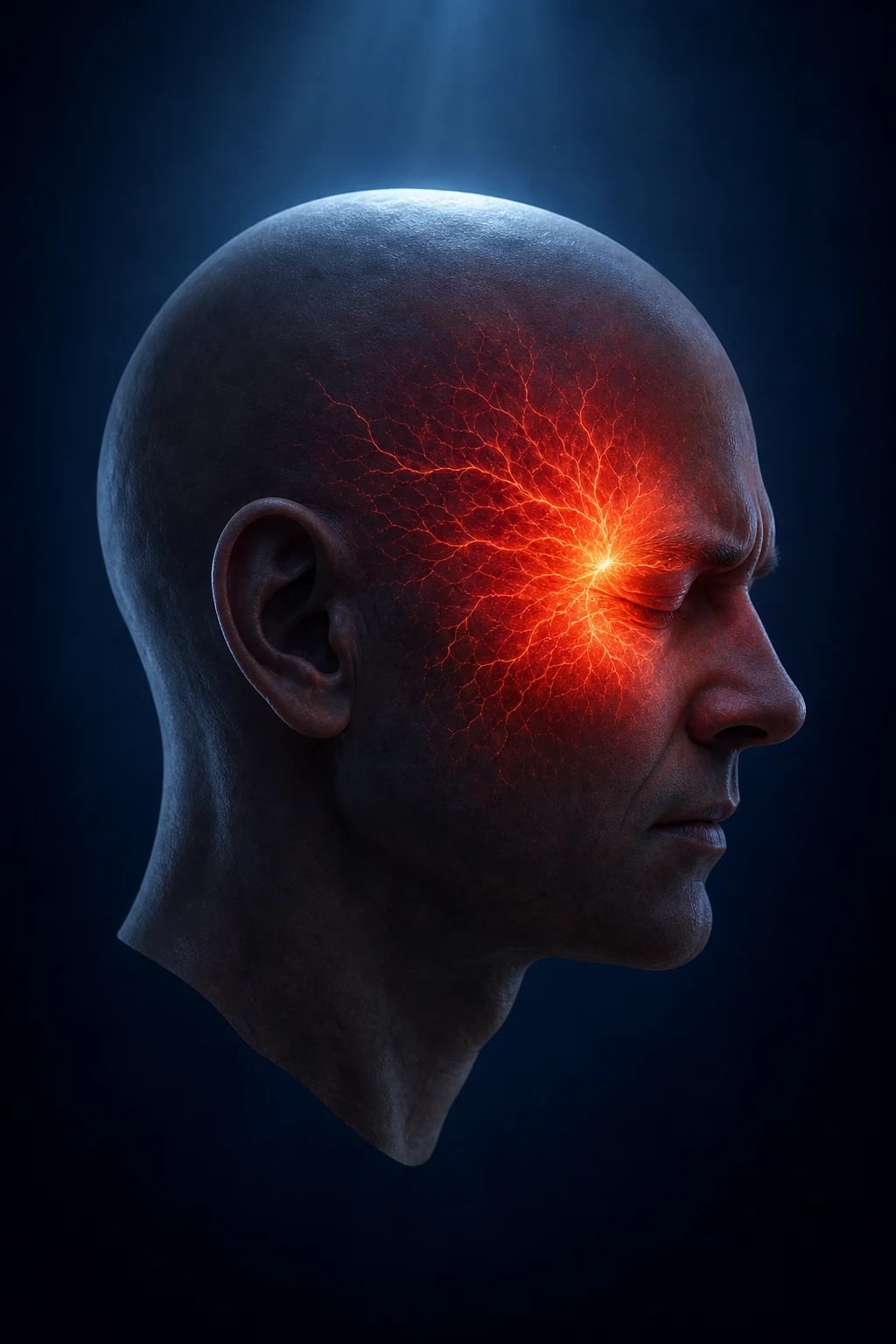
Headache (cephalalgia) is pain in any region of the head or upper neck arising from stimulation, inflammation, traction, or dilation of pain-sensitive structures. A foundational neuroanatomy point examiners love: the brain parenchyma itself is insensitive to pain. The pain-sensitive structures are:[2][5]
- Intracranial — the dura (especially at the skull base and the venous sinuses), the large intracranial arteries (internal carotid, vertebral, basilar, middle and anterior cerebral arteries), and the dural sinuses. The brain substance, ependyma, choroid plexus, and most of the pia-arachnoid are pain-insensitive.
- Extracranial — the scalp, skull periosteum, cervical muscles, the extracranial arteries (superficial temporal, occipital), the eyes, ears, paranasal sinuses, teeth, and temporomandibular joint.
- Cranial nerves carrying pain sensation: trigeminal (V) to the anterior two-thirds of the head (forehead, temples, eyes, face to the vertex), facial (VII), glossopharyngeal (IX), and vagus (X) to the posterior fossa structures, and upper cervical roots (C2, C3) to the occiput, posterior neck, and posterior scalp. Hence headache and neck pain share pathways. [1]
The clinical art of headache is not making a primary diagnosis (the pattern usually declares itself) but excluding a secondary cause. The disciplined approach is therefore: (1) screen every headache patient with SNNOOP10 red flags; (2) if any red flag is present, investigate for a secondary cause; (3) if no red flags, characterise the primary headache by ICHD-3 criteria and treat it.[4]
Classification
Headache disorders are classified by the International Classification of Headache Disorders, 3rd edition (ICHD-3) into three broad categories.[3]
Category 1 — Primary headache disorders (the headache itself is the disease; no underlying structural cause): [1]
- Migraine — subtype migraine without aura (about 75 to 80 percent) and migraine with aura (about 20 to 25 percent); chronic migraine (15 or more days/month for over 3 months, of which at least 8 have migraine features).
- Tension-type headache (TTH) — infrequent episodic, frequent episodic, or chronic.
- Trigeminal autonomic cephalalgias (TACs) — cluster headache, paroxysmal hemicrania, SUNCT/SUNA. United by unilateral trigeminal-distribution pain with ipsilateral cranial autonomic features.
- Other primary headaches — primary stabbing headache, primary cough headache, primary exercise headache, primary headache associated with sexual activity, primary thunderclap headache, hypnic headache (always wakes from sleep, elderly), new daily persistent headache (NDPH). [1]
Category 2 — Secondary headache disorders (attributable to an underlying disorder). The mnemonic is "VENOM" — Vascular, Infectious, Neoplasm, Other (idiopathic intracranial hypertension, low CSF pressure), Medication/Metabolic: subarachnoid haemorrhage, meningitis/encephalitis, brain tumour, idiopathic intracranial hypertension (IIH), spontaneous intracranial hypotension, giant-cell arteritis, acute angle-closure glaucoma, hypertensive crisis, cerebral venous sinus thrombosis (CVST), reversible cerebral vasoconstriction syndrome (RCVS), carbon monoxide poisoning, trauma. [1]
Category 3 — Painful cranial neuropathies, other facial pains, and other headaches — trigeminal neuralgia, glossopharyngeal neuralgia, occipital neuralgia, persistent idiopathic facial pain. [1]
Migraine
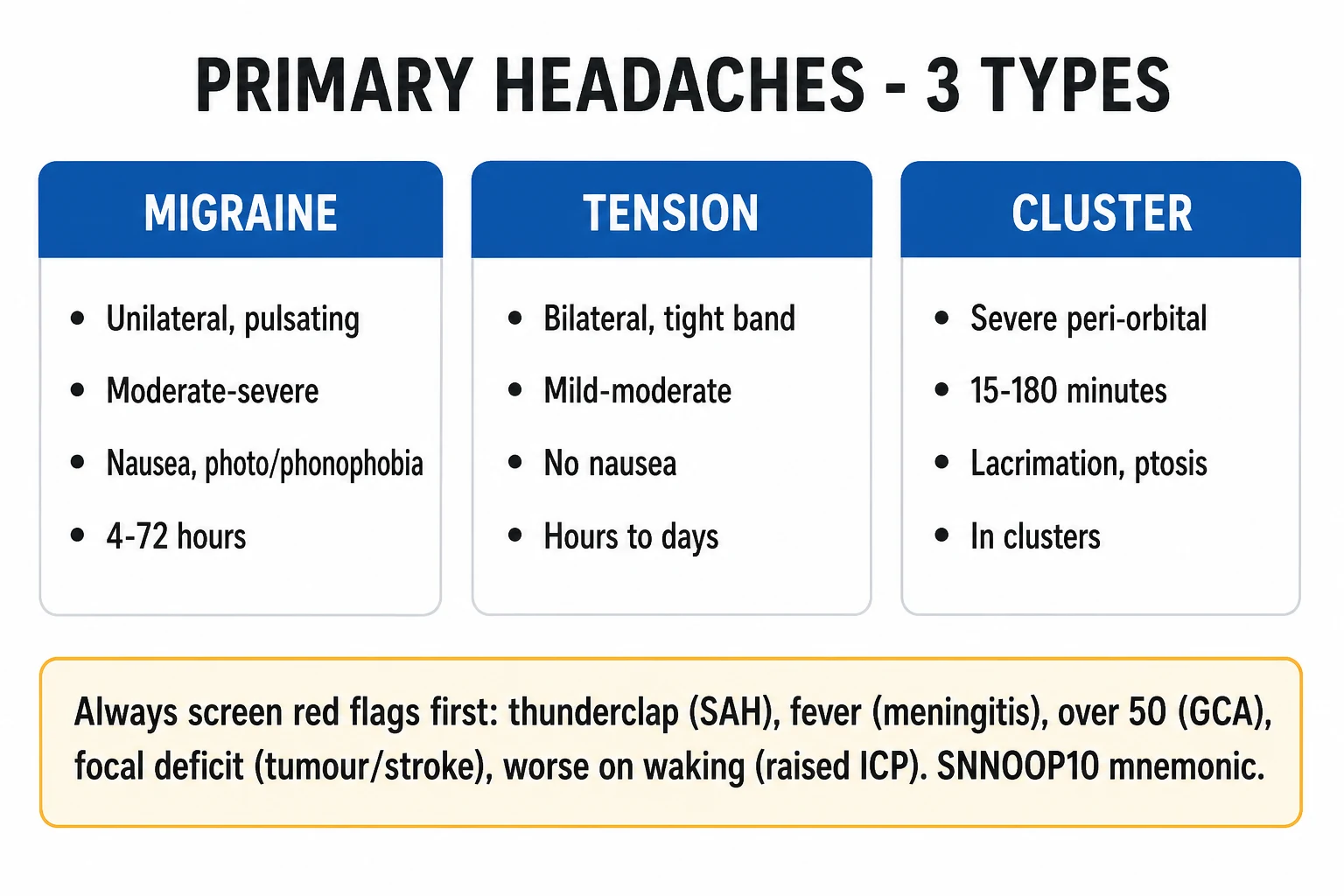
- Unilateral (60%), throbbing/pulsating, moderate-to-severe
- Duration 4 to 72 h; aggravated by routine physical activity (walking stairs)
- Photo + phonophobia; nausea ± vomiting
- Aura (visual scintillating scotoma) in ~one-third; 5 to 60 min preceding pain
- Female 3:1; age 15 to 45; family history common
Tension-type
- Bilateral, pressing/tightening (band-like), mild-to-moderate
- 30 min to 7 days; NOT aggravated by routine activity
- No nausea; photophobia OR phonophobia (not both); no aura
- Most common primary headache (~70%)
- Stress/neck-muscle trigger; female slight predominance
Cluster
- Strictly unilateral periorbital/temporal, excruciating (drilling, boring)
- 15 to 180 min per attack; 1 every other day to 8/day, in bouts (weeks-months)
- Ipsilateral autonomic: lacrimation, nasal congestion, ptosis, miosis (Horner)
- Restless, pacing (unlike migraine who lies still)
- Male 3 to 4:1; smoker; nocturnal/circadian pattern
Secondary
- Red flags: thunderclap, fever, neck stiffness, focal neurology, papilloedema
- New or progressive; worst-ever; change in pattern; age over 50
- Positional (worse upright = low pressure; worse lying = raised pressure)
- Triggered by Valsalva/cough/exertion/sexual activity
- Immunocompromised, pregnancy/postpartum, malignancy history
Epidemiology & Risk Factors
Headache is one of the commonest of all human symptoms — lifetime prevalence approaches 96 percent for any headache, and headache is the leading cause of neurological disability worldwide. Migraine alone is the single largest contributor to years lived with disability (YLDs) in the under-50s.[1][2]
Primary headaches — prevalence and demographics: [1]
| Disorder | Lifetime prevalence | Sex ratio | Typical onset |
|---|---|---|---|
| Tension-type headache | ~70 percent (any); ~3 percent chronic | Female slight (5:4) | Any age |
| Migraine | ~15 percent (1-year); 18 percent women, 6 percent men | Female 3:1 | 15 to 45 years; puberty |
| Cluster headache | ~0.1 percent (124 per 100,000) | Male 3 to 4:1 | 20 to 40 years |
| Medication-overuse headache | 1 to 2 percent | Female 3:1 | 30 to 50 years |
Risk factors — by headache type: [1]
- Migraine: female sex, family history (polygenic; first-degree relative confers 2 to 3 times risk), hormonal triggers (menstruation, oral contraceptive pill, perimenopause), obesity, stress and let-down after stress, sleep disturbance, skipping meals, specific foods/withdrawal (red wine, aged cheese, chocolate, caffeine withdrawal), weather/altitude change, head trauma (post-traumatic migraine). Migraine prevalence falls after menopause, supporting an oestrogen role.
- Tension-type headache: stress, anxiety, depression, poor posture/neck strain, temporo-mandibular joint dysfunction, sleep deprivation, excessive caffeine. Chronic TTH frequently co-exists with mood disorder.
- Cluster headache: male sex, smoking (over 70 percent are current or ex-smokers), strong family history in 5 to 10 percent, alcohol triggers attacks during a bout (but not in remission), high altitude.
- Medication-overuse headache (MOH): pre-existing migraine or TTH (almost universal prerequisite), opioid or combination-analgesic use, chronic daily headache at baseline, anxiety/depression, obesity, low socioeconomic status. [1]
Secondary headache — risk factors by cause: age over 50 (giant-cell arteritis, mass lesion); immunocompromise (opportunistic infection, toxoplasmosis, lymphoma); pregnancy/peripartum (pre-eclampsia, CVST, pituitary apoplexy, RCVS); recent head trauma (subdural, traumatic SAH); anticoagulation (intracerebral haemorrhage, subdural); cancer (metastasis); connective tissue disease (CVST, GCA); uncontrolled hypertension (hypertensive encephalopathy, posterior reversible encephalopathy syndrome). [1]
Pathophysiology
The three primary headaches have distinct mechanisms — a favourite examination area because the molecular detail drives the drug choice. [1]
Migraine — three converging mechanisms
Migraine is a sensory-processing disorder of the brain, not simply a vascular event. Three mechanisms interact:[5][1]
- Cortical spreading depression (CSD) of Leão — a self-propagating wave of neuronal and glial depolarisation that moves across the cortex at 2 to 6 mm/min, followed by prolonged depolarisation block / spreading depression of activity. CSD is the neural substrate of the migraine aura (the visual scintillating scotoma that marches across the visual field at the same speed). CSD also activates the trigeminovascular system (via release of potassium, glutamate, nitric oxide, and CGRP at the meningeal surface) and underlies the postdrome (cognitive sluggishness). Calcitonin gene-related peptide (CGRP) release is the central molecular mediator.
- Trigeminovascular activation — the trigeminal nerve (V1) innervates the meningeal vessels. Activation releases CGRP and substance P from perivascular trigeminal afferents → vasodilation, mast-cell degranulation, and plasma protein extravasation (neurogenic inflammation) → sensitisation of the trigeminal nucleus caudalis. This is the pain of migraine. Triptans (5-HT1B/1D agonists) work by (a) vasoconstriction via 5-HT1B on meningeal vessels, (b) inhibition of neuropeptide release via 5-HT1D on trigeminal terminals, and (c) inhibition of nociceptive transmission in the trigeminal nucleus caudalis.
- Cental sensitisation and brainstem modulation — PET shows activation of the dorsolateral pons and the dorsal midbrain during migraine (the "migraine generator"), and allodynia (a normally non-painful stimulus such as brushing hair becomes painful) signals central sensitisation of third-order neurons in the thalamus. Allodynia predicts a poorer response to triptans (treat early, before central sensitisation sets in). [1]
The role of CGRP is now central: CGRP levels rise during a migraine attack, intravenous CGRP triggers migraine in sufferers, and the entire new drug class — gepants (small-molecule CGRP receptor antagonists) and monoclonal antibodies against CGRP or its receptor (erenumab, fremanezumab, galcanezumab, eptinezumab) — targets this pathway.[9]
Hormonal link: oestrogen withdrawal (perimenstrual fall) is a powerful trigger — the oestrogen-fluctuation hypothesis explains the female predominance, the menstrual-migraine pattern, and the improvement with pregnancy and after menopause. [1]
Tension-type headache — muscle and central sensitisation
Tension-type headache is driven by peripheral nociception from sustained contraction of pericranial and cervical muscles (the original "muscle-tension" theory), compounded by central sensitisation of second-order neurons in the trigeminal nucleus caudalis and reduced descending inhibition from supraspinal structures. Chronic TTH is associated with central sensitisation resembling that of chronic migraine — hence the response to tricyclic antidepressants (amitriptyline), which increase descending serotonergic and noradrenergic inhibition.[10]
Cluster headache — hypothalamic circadian dysfunction
Cluster headache is a neurovascular disorder of the hypothalamus. PET during attacks shows activation of the ipsilateral posterior/inferior hypothalamus (the "cluster generator"), the brain region governing circadian and circannual rhythms — explaining the striking clockwork regularity of attacks (same time each day, often nocturnal) and the seasonal clustering into bouts.[8]
The pain pathway: hypothalamic activation drives trigeminovascular and superior salivatory-parasympathetic (via the sphenopalatine ganglion) discharge → ipsilateral periorbital/trigeminal pain (CGRP release) plus ipsilateral cranial autonomic features (lacrimation, nasal congestion, conjunctival injection, ptosis, miosis from parasympathetic overflow and Horner syndrome). The hypothalamic origin is why deep-brain stimulation of the posterior hypothalamus works in refractory cases, and why verapamil (with hypothalamic/limbic effects) is the prophylaxis of choice. [1]
Secondary headache — mechanism by cause
- Subarachnoid haemorrhage — blood irritates the pain-sensitive basal meninges and vessels → sudden, severe, diffuse pain.
- Meningitis/encephalitis — meningeal inflammation and raised ICP.
- Mass lesion (tumour, abscess, haematoma) — traction on pain-sensitive dura and vessels as the lesion expands; pain worse with raised ICP (early-morning, worse on bending/coughing).
- Idiopathic intracranial hypertension — raised CSF pressure without a mass → headache + papilloedema + VI palsy.
- Giant-cell arteritis — granulomatous inflammation of the temporal and other cranial arteries → ischaemic pain from the affected vessel.
- Angle-closure glaucoma — raised intraocular pressure stretches the ciliary nerves.
- Hypertensive crisis — cerebral autoregulation breakthrough with vasogenic oedema. [1]
Clinical Presentation
Migraine — ICHD-3 criteria reproduced verbatim
Migraine without aura (ICHD-3 code 1.1) — at least five attacks fulfilling:[3]
- B. Headache attacks lasting 4 to 72 hours (untreated or unsuccessfully treated).
- C. Headache has at least two of: unilateral location; pulsating/throbbing quality; moderate or severe pain intensity; aggravation by or causing avoidance of routine physical activity (e.g. walking or climbing stairs).
- D. During headache at least one of: nausea and/or vomiting; photophobia AND phonophobia.
- E. Not better accounted for by another ICHD-3 diagnosis. [1]
Migraine with aura (ICHD-3 1.2) — at least two attacks with fully reversible aura (visual, sensory, language, motor, brainstem) of 5 to 60 minutes duration, with at least one aura symptom spreading gradually over 5 minutes, and headache beginning with or within 60 minutes of the aura. [1]
Visual aura is commonest: the scintillating scotoma — a jagged, expanding, shimmering (fortification) zigzag that marches across the visual field over 20 to 30 minutes, often leaving a scotoma. Sensory aura (marching paraesthesia) and dysphasic aura follow. Motor aura defines hemiplegic migraine (familial — CACNA1A, ATP1A2, SCN1A mutations). [1]
Phases of a migraine attack (examiners test these): prodrome (premonitory) — hours to days before: yawning, mood change, food cravings, neck stiffness, photophobia, frequent urination; aura (one-third); headache (4 to 72 h); postdrome — up to 48 h of fatigue, cognitive sluggishness ("migraine hangover"), mood change. [1]
Behaviour during the attack: the patient lies still in a dark, quiet room (the hallmark contrast with cluster), is photophobic and phonophobic, often nauseated and vomiting. Migraine is reliably worsened by movement — the single most discriminating feature from tension-type. [1]
Tension-type headache — ICHD-3 criteria
Infrequent episodic TTH (2.1) / frequent episodic TTH (2.2) / chronic TTH (2.3, 15 or more days/month): at least 10 episodes lasting 30 minutes to 7 days, with at least two of: bilateral location; pressing/tightening (non-pulsating) quality; mild or moderate intensity; not aggravated by routine physical activity. Both of: no nausea or vomiting (anorexia may occur); no more than one of photophobia OR phonophobia. Chronic TTH: 15 or more days/month for over 3 months. [1]
The patient typically describes a "tight band around the head" or a "weight pressing on the top", often bilateral, building gradually, often related to stress or screen work, with pericranial muscle tenderness on palpation. They continue with daily activities (the opposite of migraine). [1]
Cluster headache — ICHD-3 criteria
Cluster headache (3.1.1): at least five attacks of severe or very severe unilateral orbital, supraorbital and/or temporal pain lasting 15 to 180 minutes if untreated, with at least one of the following ipsilateral features:[3][8]
- Conjunctival injection and/or lacrimation
- Nasal congestion and/or rhinorrhoea
- Eyelid oedema
- Forehead and facial sweating
- Miosis and/or ptosis (partial Horner syndrome)
- A sense of restlessness or agitation (the patient paces) [1]
Attack frequency: from one every other day to eight per day, in bouts (cluster periods) lasting weeks to months, separated by remission. Episodic cluster headache (3.1.1, 80 percent): bouts of 7 days to 1 year separated by remission of at least 1 month. Chronic cluster headache (3.1.2, 20 percent): attacks recur for over 1 year without remission, or remission under 1 month. [1]
The circadian/circannual regularity is pathognomonic — attacks often wake the patient at the same hour each night (typically 1 to 2 hours into sleep, around 2 am), and bouts cluster in spring and autumn. Alcohol and nitroglycerin trigger attacks during a bout but not in remission. The pain is described as boring, drilling, "a hot poker in the eye", so severe patients may bang their heads or contemplate suicide. [1]
The other primary headaches
- Paroxysmal hemicrania (TAC) — unilateral, 2 to 30 min attacks, 5 or more/day, autonomic features — absolutely responsive to indomethacin (the diagnostic test).
- SUNCT/SUNA (TAC) — Short-lasting Unilateral Neuralgiform headache attacks with Conjunctival injection and Tearing / cranial Autonomic features: very brief (1 to 600 s), high frequency (3 to 200/day), triggered by touch.
- Hemicrania continua — strictly unilateral continuous headache with exacerbations; responsive to indomethacin.
- Primary thunderclap headache (4.1) — peak intensity within 1 minute, lasting 5 minutes to 24 h; diagnosis of exclusion after SAH and other causes are ruled out.
- Hypnic headache — always wakes the patient from sleep, age over 50, 15 min to 4 h, responds to lithium or caffeine at bedtime ("alarm-clock headache").
- New daily persistent headache (NDPH) — daily from onset, unremitting, the patient remembers the exact first day; often follows a viral illness. [1]
Secondary headaches — presentation by cause
- Subarachnoid haemorrhage — thunderclap: maximum intensity within 1 minute ("worst headache of my life"), often occipital, may have brief loss of consciousness, meningism, photophobia. Sentinel headache may precede rupture.
- Meningitis — subacute-onset headache with fever, neck stiffness, photophobia, altered mental status, ± rash (meningococcaemia); Kernig and Brudzinski signs.
- Brain tumour — progressive headache, worse in morning, worse on bending/coughing/Valsalva, with focal neurology or papilloedema.
- Giant-cell arteritis — age over 50, new headache (often temporal), jaw claudication (the most specific feature), scalp tenderness, visual symptoms (amaurosis, diplopia, sight loss), polymyalgia rheumatica, systemic features (fever, weight loss, malaise).
- Idiopathic intracranial hypertension — young overweight woman, daily headache, pulsatile tinnitus, transient visual obscurations, papilloedema, VI nerve palsy; worse on bending.
- Cerebral venous sinus thrombosis — subacute headache, often with seizures, focal deficit, or a delirium, risk factors (pregnancy, OCP, prothrombotic state).
- Acute angle-closure glaucoma — painful red eye, reduced vision, haloes, mid-dilated fixed pupil, nausea; ophthalmic emergency.
- Carbon monoxide poisoning — headache + nausea + flu-like symptoms in several household members; winter, faulty heater. [1]
Atypical presentations (high-yield)
- Elderly — any new headache over 50 is GCA until ESR/CRP exclude it; presentation may be atypical (fever of unknown origin, weight loss, "malaise", occult cough). Subdural haematoma may present with headache and confusion alone after a forgotten minor fall.
- Pregnant/postpartum — pre-eclampsia (headache + hypertension + proteinuria after 20 weeks), CVST (postpartum, headache + seizures), pituitary apoplexy (sudden severe headache + ophthalmoplegia + visual loss), reversible cerebral vasoconstriction syndrome (RCVS) — thunderclap headache postpartum.
- Immunocompromised — toxoplasmosis, cryptococcal meningitis, lymphoma, progressive multifocal leukoencephalopathy may present with headache alone.
- Children — migraine is often bilateral, shorter (1 to 72 h), and more likely to involve vomiting and abdominal pain (abdominal migraine, cyclic vomiting syndrome). Headache that wakes a child from sleep, is worsening, or is associated with vomiting on waking needs imaging. [1]
Differential Diagnosis
A complete differential with distinguishing features:[2][4]
| Diagnosis | Distinguishing features |
|---|---|
| Migraine | 4 to 72 h, unilateral throbbing, photo/phonophobia, nausea, aggravated by movement, lies still, family history |
| Tension-type | Bilateral band, no nausea, not aggravated by movement, continues activity |
| Cluster | 15 to 180 min, strictly unilateral periorbital, autonomic features + Horner, bouts, paces, nocturnal |
| Subarachnoid haemorrhage | Thunderclap peak within 1 min, worst-ever, occipital, meningism, loss of consciousness |
| Meningitis/encephalitis | Fever, neck stiffness, photophobia, rash, altered mental status, Kernig/Brudzinski |
| Brain tumour / mass | Progressive, morning, worse on Valsalva, focal neurology, papilloedema |
| Giant-cell arteritis | Age over 50, jaw claudication (most specific), tender thick pulseless temporal artery, raised ESR/CRP, visual loss risk |
| Idiopathic intracranial hypertension | Young obese woman, papilloedema, pulsatile tinnitus, transient visual obscurations; normal MRI/CT, raised opening LP pressure |
| Spontaneous intracranial hypotension | Orthostatic (worse on standing, relieved by lying flat), low CSF volume (post-LP or spontaneous dural tear) |
| Cerebral venous sinus thrombosis | Subacute, seizures, focal deficit, risk factors (pregnancy, OCP, prothrombotic) |
| Acute angle-closure glaucoma | Painful red eye, haloes, mid-dilated fixed pupil, raised intraocular pressure |
| Hypertensive encephalopathy / PRES | Severely raised BP, encephalopathy, visual symptoms |
| Trigeminal neuralgia | Brief (under 2 min) electric shocks in V2/V3, triggered by touch/chewing/cold wind — not a continuous headache |
| Post-traumatic headache | Onset within 7 days of head injury |
| Carbon monoxide poisoning | Multiple household members affected, winter, gas heater |
Key discriminating questions: Sudden (thunderclap)? → SAH. Fever/neck stiffness? → meningitis. Worse upright? → low-pressure headache. Worse lying/coughing/morning? → raised ICP / mass. Jaw claudication, age over 50? → GCA. Red eye + haloes? → angle-closure glaucoma. Brief electric shocks on face? → trigeminal neuralgia. [1]
Clinical & Bedside Assessment
Every headache patient needs: a focused history (above), vital signs (including BP both arms), general examination (skin rash, temporal artery, sinus tenderness, dental/TMJ), and a complete neurological examination including fundoscopy for papilloedema, meningeal signs (Kernig, Brudzinski), and a mental-status screen. [1]
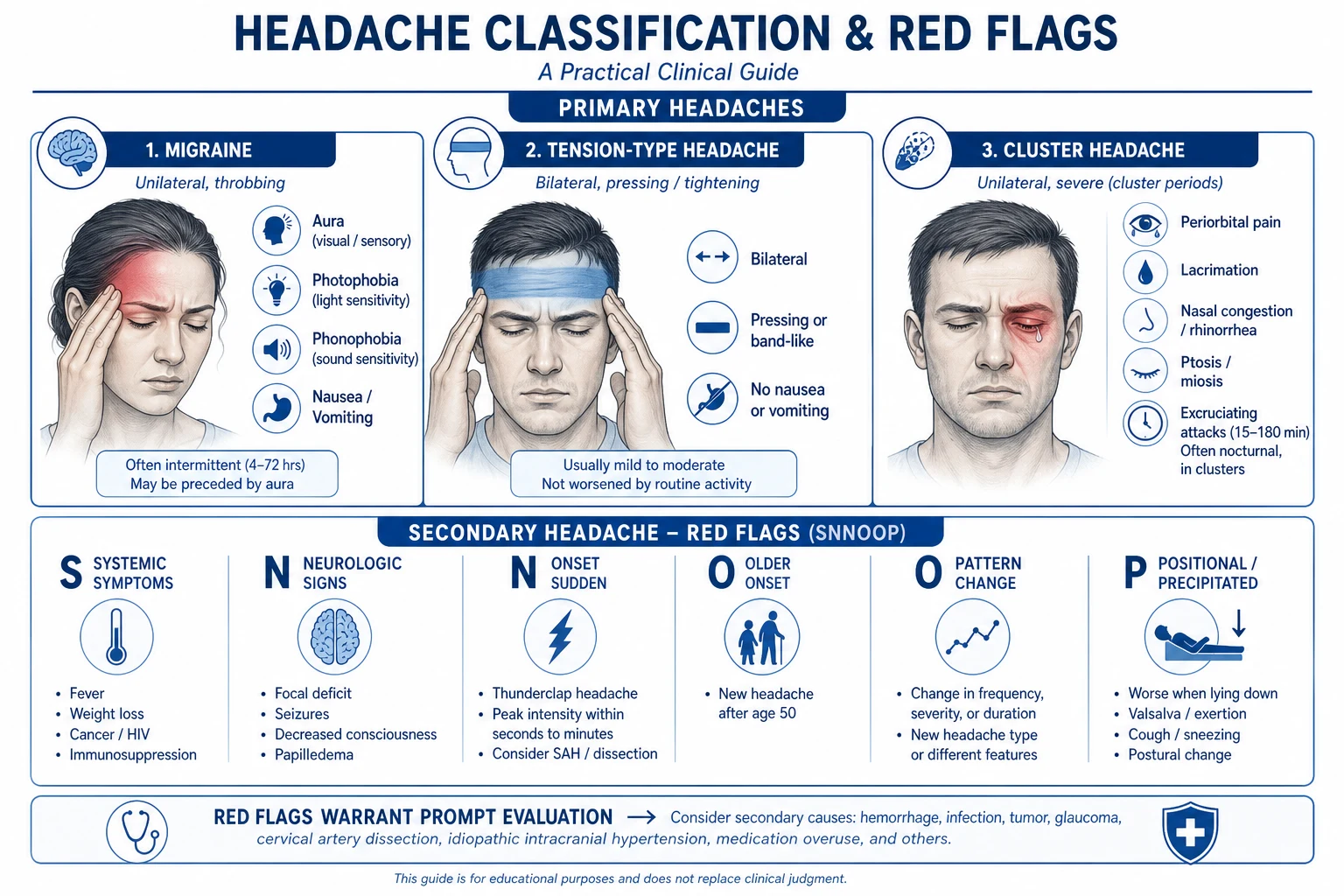
The SNNOOP10 mnemonic (Dodick) — the single highest-yield bedside screen for secondary headache. Any positive answer mandates investigation.[4]
SNNOOP10 — red flags of secondary headache
SNNOOP10
Systemic symptoms/signs (fever, chills, weight loss, pregnancy/puerperium, HIV, malignancy)
Neoplasm history (current or past) — metastatic disease
Neurologic deficit or dysfunction (altered mentation, confusion, focal signs, seizures)
Onset is sudden or thunderclap (peak within 1 minute) — think SAH
Older age (new-onset progressive headache over age 50) — think GCA, mass
Pattern change (new or different headache; loss of typical pattern)
Positional (worse on standing = low CSF pressure; worse lying flat = raised pressure)
Precipitated by sneezing, coughing, Valsalva, or exercise — Chiari, posterior fossa, mass
Papilloedema on fundoscopy — raised intracranial pressure (tumour, IIH, CVST)
Progressive headache or atypical presentation, or trauma
Named signs and bedside manoeuvres: [1]
- Kernig sign — with the patient supine and hip flexed 90°, attempted knee extension produces resistance/pain in the hamstrings (meningeal irritation).
- Brudzinski sign — passive neck flexion produces involuntary hip and knee flexion (meningeal irritation).
- Temporal artery palpation — in suspected GCA: a tender, thickened, pulseless or nodular temporal artery strongly supports the diagnosis; its absence does not exclude it.
- Fundoscopy — papilloedema (blurred disc margins, loss of venous pulsation) signals raised ICP; require bed-level fundoscopy on every headache patient where red flags exist.
- Horners syndrome (ptosis, miosis, anhidrosis) — a partial Horner between cluster attacks is a key clue.
- Intraocular pressure measurement where glaucoma is suspected. [1]
Investigations
Principle: primary headaches are a clinical diagnosis — no investigation is needed when SNNOOP10 is negative and the pattern is typical. Investigation is driven by red flags.[4][7]
Neuroimaging — when and what: [1]
- Non-contrast CT head — the first-line emergency imaging for any thunderclap or red-flag headache. Highest sensitivity for acute haemorrhage (SAH) in the first 6 hours (approaching 100 percent within 6 hours on modern multidetector CT); sensitivity falls thereafter.
- CT angiography (CTA) — to identify the aneurysm if SAH is found; also for RCVS, arterial dissection, CVST.
- MRI brain (with contrast) — for subacute/progressive headache, mass lesion, CVST (MRV), cerebral venous disease, posterior fossa lesions, Chiari malformation, and to clarify equivocal CT. [1]
Lumbar puncture (LP) — indications in headache: [1]
- Suspected SAH with negative CT — LP is mandatory. Xanthochromia (yellow discolouration of CSF supernatant from bilirubin, a breakdown product of haemoglobin) is the diagnostic finding; it appears 12 hours after the bleed and persists for up to 2 weeks. Opening pressure must always be measured. Three-tube rule (uniform RBC in all tubes) suggests SAH; falling RBC count favours a traumatic tap (but is unreliable — xanthochromia is the key).
- Suspected meningitis/encephalitis — CSF cell count, protein, glucose, Gram stain, culture, viral PCR (HSV).
- Suspected idiopathic intracranial hypertension — raised opening pressure (over 25 cmH2O) with normal CSF composition, after a normal CT/MRI to exclude a mass. (Never LP before imaging if papilloedema or focal neurology is present — risk of herniation.)
- Suspected spontaneous intracranial hypotension — low opening pressure, often failing to flow. [1]
Blood tests by clinical context: [1]
- ESR and CRP — mandatory in any new headache over age 50; GCA classically has ESR over 50 mm/h (often 80 to 100). Approximately 4 percent of biopsy-proven GCA have a normal ESR — a raised CRP increases sensitivity to over 95 percent.
- FBC — anaemia/polycythaemia, infection markers.
- Coagulation, U&E, LFT, glucose — baseline; especially before LP or in pregnancy.
- Beta-hCG — in any woman of reproductive age with new headache.
- Carboxyhaemoglobin — carbon monoxide poisoning. [1]
Specific named investigations / scores reproduced verbatim: [1]
- Ottawa Subarachnoid Haemorrhage Rule (Perry) — identifies patients with acute headache who need a workup for SAH. Investigate (CT, ± LP) if any present: age 40 or older; neck pain or stiffness; witnessed loss of consciousness; onset during exertion; thunderclap (instantly peaking) headache; limited neck flexion on examination. Sensitivity ~100 percent for SAH; not designed to rule in (low specificity).[7]
- Temporal artery biopsy — the gold standard for GCA; shows granulomatous arteritis with multinucleated giant cells and disruption of the internal elastic lamina. Because GCA has skip lesions, a negative biopsy does not exclude GCA — take a long segment (at least 1 cm), ideally within 2 weeks of starting steroids (do NOT delay steroids for biopsy).
Score: Migraine Disability Assessment (MIDAS) — quantifies headache-related disability over 3 months (days of lost productivity in work, school, household, leisure) to guide prophylaxis decisions: score 0 to 5 little/none; 6 to 10 mild; 11 to 20 moderate; 21 or more severe — prophylaxis strongly indicated. [1]
Management — Resuscitation
The time-critical resuscitation scenarios are the secondary headaches:[7][11]
Suspected subarachnoid haemorrhage (thunderclap headache):
- ABCDE; secure airway if GCS reduced.
- Immediate non-contrast CT head — within hours. If CT positive for blood → CTA to localise the aneurysm → urgent neurosurgical / endovascular referral (clipping or coiling).
- If CT negative but clinical suspicion remains → lumbar puncture at 12 or more hours after onset, measuring opening pressure and looking for xanthochromia. (CT and LP both negative at 6 hours, no xanthochromia → SAH effectively excluded.)
- Blood pressure control (target systolic under 160 mmHg before aneurysm secured) to reduce re-bleeding; nimodipine 60 mg orally every 4 hours for 21 days to prevent delayed cerebral vasospasm and ischaemic deficits. [1]
Suspected bacterial meningitis:
- Do NOT delay antibiotics for LP or imaging. Give empirical IV antibiotics within 1 hour: ceftriaxone 2 g IV 12-hourly (plus vancomycin if pneumococcal resistance) + vancomycin + ampicillin if listeria risk (age over 50, immunocompromised); add aciclovir 10 mg/kg IV 8-hourly if herpes simplex encephalitis possible. Dexamethasone 10 mg IV 6-hourly before or with the first antibiotic dose in suspected pneumococcal meningitis. Blood cultures first if obtainable immediately. [1]
Suspected giant-cell arteritis with visual symptoms:
- Start high-dose corticosteroid immediately — do NOT wait for biopsy. Sight is at risk. Prednisolone 40 to 60 mg daily for uncomplicated GCA; IV methylprednisolone 500 mg to 1 g daily for 3 days if visual loss/amaurosis (to protect the fellow eye), followed by high-dose oral. Arrange temporal artery biopsy within 2 weeks. Add low-dose aspirin unless contraindicated. [1]
Hypertensive emergency (encephalopathy/PRES): controlled IV antihypertensive (e.g. labetalol infusion), target 10 to 20 percent MAP reduction in the first hour. [1]
Management — Definitive & Stepwise
Migraine — acute (abortive) therapy
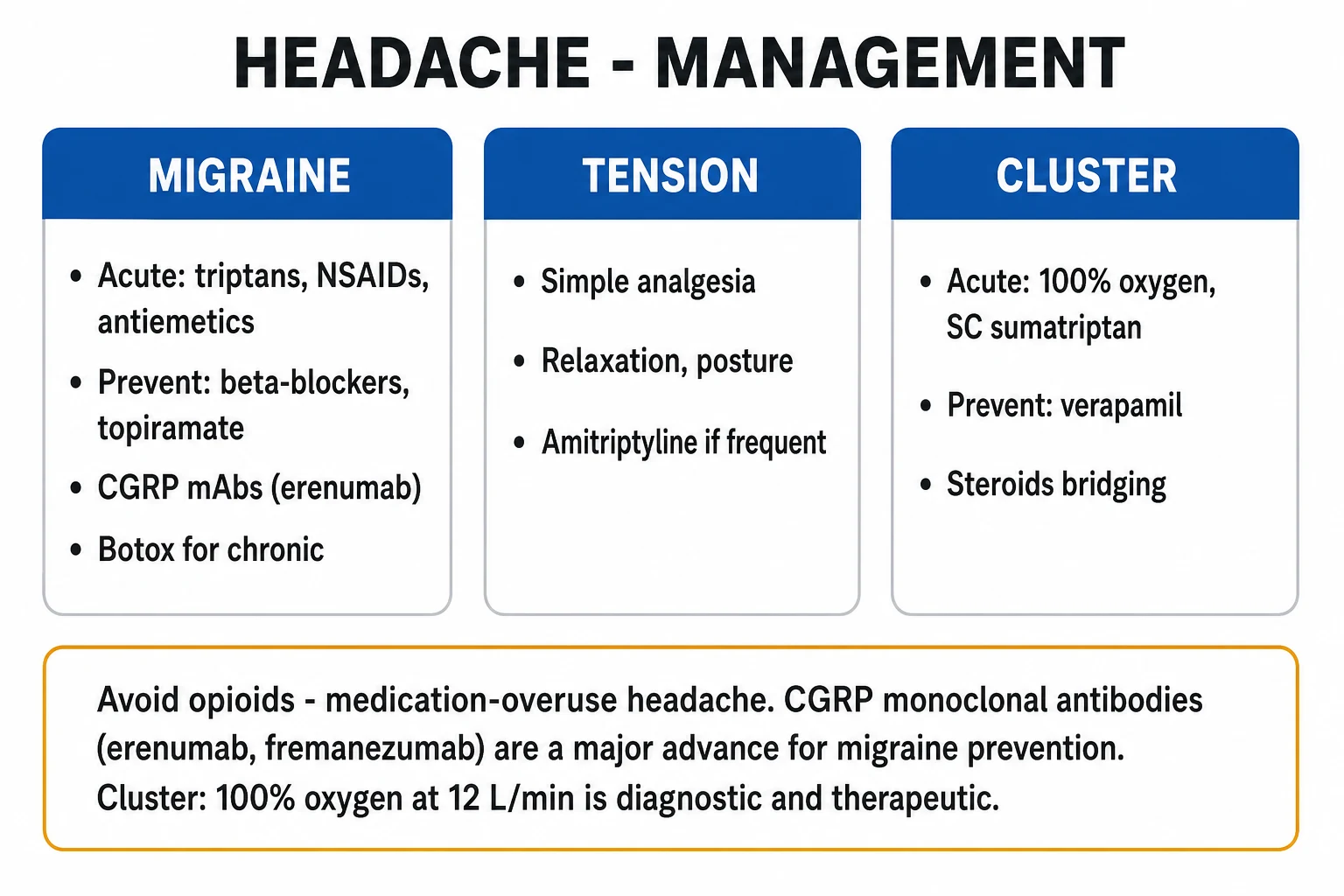
Treat early in the attack, before allodynia and central sensitisation develop (which reduces triptan efficacy). Choose by severity and prior response:[1][5]
Step 1 — Mild to moderate attack:
- Simple oral analgesia: ibuprofen 400 to 600 mg PO OR naproxen 500 to 1000 mg PO OR paracetamol 1 g PO OR aspirin 900 to 1000 mg PO, ideally with an antiemetic (e.g. metoclopramide 10 mg PO/PR or prochlorperazine) which both treats nausea and improves gastric motility and absorption (gastric stasis occurs in migraine). [1]
Step 2 — Moderate to severe, or failure of simple analgesia:
- Triptans — 5-HT1B/1D receptor agonists. First-line: sumatriptan 50 to 100 mg PO (repeat once after 2 hours if partial response; max 200 mg/24 h). Alternatives by route/severity: sumatriptan 20 mg intranasal; sumatriptan 6 mg subcutaneously (most effective for severe attack or vomiting; max 12 mg/24 h); rizatriptan 10 mg PO wafer (fast onset); zolmitriptan 2.5 to 5 mg PO or 5 mg intranasal; eletriptan 20 to 40 mg PO; almotriptan 12.5 mg PO; naratriptan 2.5 mg PO (slowest, longest half-life — useful for prolonged attacks; lowest recurrence).
- Triptan + NSAID combination (e.g. sumatriptan 85 mg + naproxen 500 mg) is more effective than either alone.
- Gepants — small-molecule CGRP receptor antagonists: ubrogepant 50 to 100 mg PO, rimegepant 75 mg PO (also approved as prophylaxis), zavegepant 10 mg nasal spray. Not vasoconstrictive — therefore usable where triptans are contraindicated (coronary disease, uncontrolled hypertension, hemiplegic migraine).
- Lasmidistant — a 5-HT1F agonist (non-vasoconstrictive), 100 mg PO; an option for the same contraindicated groups. [1]
Triptan contraindications (high-yield): ischaemic heart disease, prior MI, Prinzmetal angina, uncontrolled hypertension, hemiplegic or basilar migraine, pregnancy (relative — avoid), and concurrent ergotamine/other triptan within 24 hours. Stop at least 24 hours before general anaesthesia. [1]
Step 3 — Severe / status migrainosus (migraine over 72 hours):
- IV metoclopramide 10 mg or prochlorperazine 10 mg IV (often dramatically effective as monotherapy).
- IV fluids; IV chlorpromazine 0.1 mg/kg (with monitoring); IV ketorolac 30 mg; IV dihydroergotamine (DHE) 0.5 to 1 mg (avoid with recent triptan); IV valproate 300 to 1000 mg; magnesium sulphate 1 to 2 g IV (especially in migraine with aura).
- A short course of oral corticosteroid (prednisolone 50 mg for 5 days) or IV dexamethasone may shorten status, but is not routine for the individual attack. [1]
Migraine — prophylaxis
Start prophylaxis if: 4 or more headache days per month; disability despite acute therapy; acute therapy failure, contraindication, or overuse; hemiplegic, basilar, or prolonged aura with infarct risk; or patient preference. Aim: 50 percent reduction in attack frequency; review at 3 months and 6 months; trial 2 to 3 agents before declaring failure. The traditional oral options and the new CGRP class:[1][9]
Migraine prophylaxis — oral agents
Beta-blockers that work for migraine prophylaxis: propranolol, metoprolol, timolol, atenolol, nadolol — NOT those with intrinsic sympathomimetic activity (pindolol). CGRP-pathway monoclonal antibodies (injectable prophylaxis, few drug interactions, no need for monitoring):
- Erenumab (anti-CGRP-receptor) 70 mg SC monthly (can increase to 140 mg).
- Fremanezumab (anti-CGRP) 225 mg SC monthly or 675 mg quarterly.
- Galcanezumab (anti-CGRP) 240 mg SC loading then 120 mg monthly.
- Eptinezumab (anti-CGRP) 100 to 300 mg IV every 3 months. [1]
Botulinum toxin type A (onabotulinumtoxinA, 155 units in 31 head/neck sites every 12 weeks) is licensed specifically for chronic migraine (15 or more days/month) — not episodic. [1]
Non-pharmacological prophylaxis: regular sleep, meals, hydration and exercise; trigger avoidance; biofeedback, cognitive behavioural therapy, relaxation; magnesium 400 to 600 mg/day, riboflavin 400 mg/day, coenzyme Q10 100 to 300 mg/day (evidence-supported nutraceuticals). [1]
Tension-type headache — management
- Acute: ibuprofen 400 mg or paracetamol 1 g PO; avoid opioids and combination analgesics (overuse risk). Heat, massage, posture correction.
- Prophylaxis (frequent/chronic TTH): amitriptyline 10 to 75 mg nocte is first-line (start at 10 mg, titrate). Evidence from the Holroyd JAMA trial shows TCA + stress management superior to either alone.[10] Alternatives: mirtazapine, venlafaxine, topiramate (chronic). Address anxiety, depression, sleep.
Cluster headache — management
Acute attack (must act within minutes — oral drugs are too slow):[8][9]
- 100 percent oxygen at 12 to 15 L/min via a non-rebreather mask for 15 to 20 minutes — aborts about 70 percent of attacks within 15 minutes. Cheap, safe, no systemic side effects; the patient sits and bends forward. Contraindication: severe COPD (use with care).
- Subcutaneous sumatriptan 6 mg — most effective drug; can repeat once in 24 hours. (Intranasal sumatriptan 20 mg is an alternative but slower.) Oral triptans are NOT useful in cluster (too slow).
- Intranasal lidocaine 4 percent as adjunct.
Transitional therapy (to bridge while prophylaxis builds): oral corticosteroid (prednisolone 40 to 60 mg tapering over 2 to 3 weeks), or greater occipital nerve block with steroid/local anaesthetic. [1]
Prophylaxis (during a bout):
- Verapamil 240 to 960 mg/day in divided doses — the first-line agent; start at 240 mg sustained-release daily, titrate every 1 to 2 weeks; obtain a baseline ECG and repeat with each dose increment above 240 mg (risk of arrhythmia and heart block). Maximum effective dose often 480 to 720 mg/day.
- Lithium 600 to 900 mg/day (monitor levels 0.4 to 0.8 mmol/L, renal and thyroid function) — useful in chronic cluster.
- Topiramate 100 to 200 mg/day; corticosteroid short course for bout onset; methysergide (rare; retroperitoneal fibrosis risk).
- Galcanezumab 300 mg SC monthly is emerging evidence for episodic cluster.
- Neuromodulation for refractory disease: non-invasive vagus nerve stimulation (nVNS), sphenopalatine ganglion stimulation, occipital nerve stimulation, or deep brain stimulation of the posterior hypothalamus. [1]
Medication-overuse headache (MOH)
Definition (ICHD-3): headache occurring on 15 or more days/month for over 3 months in a patient with a pre-existing headache disorder, caused by regular medication overuse: ergotamine, triptans, opioids, or combination analgesics on 10 or more days/month for over 3 months, or simple analgesics (paracetamol, NSAIDs) on 15 or more days/month for over 3 months.[6]
Management: withdraw the overused medication — the definitive treatment. Triptans/ergots can be stopped abruptly (expect worsening for 2 to 10 days — the "withdrawal headache" — then improvement); opioids should be tapered. Start or optimise prophylaxis (topiramate, amitriptyline, onabotulinumtoxinA for chronic migraine). Bridge therapy with naproxen or a short prednisolone taper may ease withdrawal. Most patients improve within 2 months of withdrawal; relapse is common without ongoing prophylaxis. [1]
Specific Subtypes & Scenarios
- Menstrual migraine — attacks 2 days before to 3 days after menses, without aura, often refractory. Acute: triptan (e.g. frovatriptan, naratriptan — long half-life). Perimenstrual prophylaxis: frovatriptan 2.5 mg BD or naproxen 500 mg BD for the perimenstrual window; combined OCP continuous use may help.
- Vestibular migraine — recurrent episodic vertigo with migraine features; commonest cause of spontaneous recurrent vertigo. Treat as migraine.
- Hemiplegic migraine — motor aura (limb weakness) lasting hours; familial (FHM, autosomal dominant — CACNA1A [FHM1], ATP1A2 [FHM2], SCN1A [FHM3]). Avoid triptans and ergots (theoretical vasoconstrictive risk; not contraindicated in practice but standard advice is to avoid).
- Basilar migraine (now "migraine with brainstem aura") — aura arising from brainstem (dysarthria, vertigo, tinnitus, diplopia, ataxia, bilateral paraesthesia), no motor weakness.
- Chronic migraine — 15 or more headache days/month for over 3 months, of which at least 8 have migraine features; treat with onabotulinumtoxinA or CGRP-mAb.
- Status migrainosus — a debilitating migraine lasting over 72 hours; IV therapy (above) and short steroid course.
- Paroxysmal hemicrania & hemicrania continua — absolutely responsive to indomethacin 25 to 50 mg TDS (the diagnostic/therapeutic test).
- Hypnic headache — bedtime lithium 300 to 600 mg or caffeine (a cup of strong coffee before bed); also indomethacin.
- Idiopathic intracranial hypertension — weight loss (most effective long-term); acetazolamide 1 to 4 g/day; topiramate; severe/visual loss → repeat LP or ventriculoperitoneal/ lumboperitoneal shunt or optic nerve sheath fenestration to save vision.
- Spontaneous intracranial hypotension — conservative (bed rest, hydration, caffeine); epidural blood patch if persistent. [1]
Complications & Pitfalls
- Medication-overuse headache — the commonest iatrogenic complication; failure to recognise and withdraw the offending drug guarantees chronicity. Always ask about analgesic intake.[6]
- Chronic migraine — progression from episodic to chronic (15 or more days/month) is driven by acute-medication overuse, obesity, depression, and snoring/sleep apnoea.
- Status migrainosus — dehydration from vomiting, electrolyte disturbance; rare migraine infarction (aura lasting over 60 minutes with neuroimaging-confirmed infarction).
- Giant-cell arteritis — irreversible blindness: the biggest pitfall is delaying steroids for biopsy or specialist review. Treat empirically and immediately. The fellow eye is at risk within days.
- Subarachnoid haemorrhage — missed diagnosis: the "sentinel bleed" is often misdiagnosed as migraine or tension-type; any thunderclap must be worked up. Re-bleeding and delayed vasospasm (days 4 to 14) carry high mortality.
- Triptan overuse / coronary vasospasm — prescribing a triptan to a patient with unrecognised coronary disease.
- Misdiagnosing angle-closure glaucoma as migraine — the red, painful eye with a fixed pupil must be examined; missing it costs sight.
- Inappropriate LP before imaging when papilloedema or focal neurology is present — risk of tonsillar herniation.
- Carbon monoxide poisoning missed in winter — a cluster of household members with headache.
Prognosis & Disposition
- Primary headaches are chronic relapsing conditions; with correct diagnosis, trigger management, acute therapy, and (when needed) prophylaxis, most patients achieve meaningful control. Migraine often improves after menopause and with age; cluster headache may remit permanently in a minority. MOH is reversible if the offending drug is withdrawn.
- Discharge: most primary headache patients are managed as outpatients. Admit for: status migrainosus requiring IV therapy, intractable vomiting/dehydration, suicidal cluster pain, suspected secondary cause needing inpatient workup (SAH, meningitis, RCVS, severe GCA, IIH with threatened vision).
- Secondary headaches: prognosis is that of the underlying cause — SAH case fatality up to 50 percent; bacterial meningitis mortality 10 to 30 percent; GCA irreversible visual loss if untreated but excellent with steroids; IIH vision-threatening if papilloedema uncontrolled. [1]
Special Populations
- Pregnancy and breastfeeding — migraine often improves in pregnancy (especially the second and third trimesters) but may worsen postpartum. Acute therapy safe in pregnancy: paracetamol (first-line), metoclopramide, propranolol. Avoid NSAIDs in the third trimester (premature closure of ductus arteriosus, oligohydramnios); avoid triptans in pregnancy (limited safety data; sumatriptan has the most reassuring registry data if essential). Prophylaxis: propranolol (avoid near term — neonatal hypoglycaemia, bradycardia); avoid topiramate and valproate (teratogenic). New headache in pregnancy/postpartum: think pre-eclampsia, CVST, pituitary apoplexy, RCVS, posterior reversible encephalopathy syndrome (PRES) — all need imaging.
- Elderly (over 50) — any new headache is GCA until ESR/CRP exclude it; mass lesion (metastasis, subdural, glioma) and giant-cell arteritis dominate the differential. Hypnic headache is a disease of the elderly. Avoid NSAIDs where renal function, heart failure, peptic ulcer, or anticoagulation make them hazardous. Triptans more often contraindicated (coronary disease).
- Children — migraine is often bilateral, shorter (1 to 72 h), with vomiting and abdominal pain rather than headache (abdominal migraine, cyclic vomiting). Acute therapy: ibuprofen 10 mg/kg, paracetamol 15 mg/kg; triptans licensed by age/agent (e.g. rizatriptan, sumatriptan nasal). Prophylaxis: propranolol, topiramate, amitriptyline, cyproheptadine. Always image a child with headache that wakes from sleep, is progressive, or is accompanied by vomiting on waking, focal neurology, or papilloedema.
- Women of childbearing age — avoid valproate (teratogenic — Pregnancy Prevention Programme); counsel on topiramate (teratogenic). Use propranolol, amitriptyline, CGRP-mAb (limited pregnancy data) where possible.
- Anticoagulated patients — any new or thunderclap headache is intracranial haemorrhage until proven otherwise; image immediately; reverse anticoagulation if haemorrhage confirmed.
- Immunocompromised — lower threshold to image and LP; consider toxoplasmosis, cryptococcus, lymphoma, PML. [1]
Evidence, Guidelines & Regional Differences
ICHD-3 (2018, International Headache Society) — the diagnostic criteria for every headache disorder worldwide; the framework reproduced above.[3]
NICE (UK, CG150 / NG) — emphasises SNNOOP-style red-flag assessment, avoid opioids, triptan first-line for migraine, prophylaxis review at 6 months, and specialist referral for treatment failure. Avoid codeine and opioids for headache. [1]
AAN/AHS (American Academy of Neurology / American Headache Society) — guidelines endorse propranolol, timolol, topiramate, valproate, and onabotulinumtoxinA (chronic) with strong evidence, and now the CGRP monoclonal antibodies.[9]
European Headache Federation (EHF) — similar acute ladder; supports CGRP-mAb and botulinum toxin for chronic migraine. [1]
Landmark evidence:[5][6][8][10]
- Goadsby NEJM 2002 (PMID 11807151) — landmark review of migraine pathophysiology (CSD, trigeminovascular, CGRP) and treatment.
- May et al., Lancet 1998 (PMID 9690407) — PET demonstration of hypothalamic activation in cluster headache, establishing the hypothalamic origin.
- Diener et al., Lancet Neurology 2019 (PMID 31174999) — definitive review of medication-overuse headache pathophysiology, prevention, and treatment.
- Perry et al., JAMA 2013 (PMID 24065011) — derivation of the Ottawa Subarachnoid Haemorrhage Rule, with sensitivity near 100 percent.
- Holroyd et al., JAMA 2001 (PMID 11325322) — RCT showing amitriptyline + stress management is the most effective therapy for chronic tension-type headache. [1]
Exam Pearls
- Brain parenchyma is insensitive to pain — pain arises from dura, vessels, sinuses, scalp, cervical roots, cranial nerves V, VII, IX, X.
- Trigeminal (V1) supplies the anterior two-thirds of the head; C2/C3 the posterior third.
- Migraine = unilateral throbbing, 4 to 72 h, photo + phonophobia, nausea, aggravated by movement; lies still.
- Migraine aura = fully reversible, develops over 5 minutes, lasts under 60 minutes, then headache within 60 minutes. Visual scintillating scotoma commonest.
- Triptans are 5-HT1B/1D agonists. Mechanism: vasoconstriction (1B) + inhibition of neuropeptide release (1D) + block in trigeminal nucleus caudalis.
- Triptan contraindications = ischaemic heart disease, Prinzmetal angina, uncontrolled hypertension, hemiplegic/basilar migraine, pregnancy, recent ergot/other triptan.
- Migraine prophylaxis (4 or more days/month): propranolol, topiramate, amitriptyline, valproate, flunarizine, candesartan; CGRP-mAb (erenumab/fremanezumab/galcanezumab); onabotulinumtoxinA for chronic migraine only.
- Tension-type: bilateral band, no nausea, not aggravated by movement. Prophylaxis: amitriptyline.
- Cluster: 15 to 180 min, strictly unilateral periorbital, ipsilateral autonomic features + Horner, bouts, paces, nocturnal. Acute: 100 percent O2 12 to 15 L/min OR SC sumatriptan 6 mg. Prophylaxis: verapamil (ECG-guided).
- Cluster pathophysiology: hypothalamic activation (May, Lancet 1998); circadian pattern is the clue.
- Thunderclap (peak within 1 minute) = subarachnoid haemorrhage until proven otherwise. CT then LP for xanthochromia if CT negative (after 12 hours).
- Giant-cell arteritis: age over 50, jaw claudication (most specific), tender temporal artery, ESR over 50. Start prednisolone 40 to 60 mg immediately — do NOT delay for biopsy. Fellow eye at risk.
- MOH: 15 or more headache days/month, analgesic/triptan overuse (10 or more days/month for over 3 months). Treatment: withdraw the drug + start prophylaxis.
- Ottawa SAH Rule: age 40 or over, neck pain/stiffness, witnessed LOC, exertional onset, thunderclap, limited neck flexion — investigate.
- Paroxysmal hemicrania and hemicrania continua are absolutely indomethacin-responsive — the diagnostic test.
- Idiopathic intracranial hypertension: young obese woman, papilloedema, raised opening LP pressure (over 25 cmH2O) with normal CSF. Treat: weight loss + acetazolamide.
- Hypnic headache: always wakes from sleep, age over 50; responds to lithium or caffeine at bedtime.
- Pregnancy: avoid NSAIDs in 3rd trimester; avoid topiramate and valproate (teratogenic). Paracetamol + metoclopramide safe.
- CGRP is the central molecular mediator of migraine — gepants (ubrogepant, rimegepant) and monoclonal antibodies target it. [1]
Exam application bank (NEET-PG / INICET)
One-line answer
Headache (cephalalgia) is pain arising from the pain-sensitive structures of the head (dura, vessels, sinuses, scalp, cervical roots, cranial nerves V, VII, IX, X) but NOT the brain parenchyma itself (it is insensate). The single most important clinical step is to separate primary from secondary headache using the SNNOOP10 red-flag screen: a secondary headache has an underlying cause (haemorrhage, infection, mass, giant-cell arteritis, raised pressure) and may be life-threatening. The three primary headaches are migraine (unilateral throbbing, 4 to 72 h, photophobia, phonophobia, nausea, aura in one-third), tension-type (bilateral pressing band, no nausea, not aggravated by routine), and cluster (unilateral periorbital excruciating 15 to 180 min attacks in bouts, ipsilateral autonomic features and Horner syndrome). A thunderclap headache (peak intensity within 1 minute) is subarachnoid h
Worked stems (answer without another resource)
Stem 1 — Classic presentation. Map symptoms to mechanism; name the first investigation and first treatment step with dose/route if drug therapy is standard. [1]
Stem 2 — Unstable / complicated. List red flags that force immediate resuscitation, theatre, ICU, antidote, or reperfusion — and what you do in the first 15 minutes. [1]
Stem 3 — Atypical group. Elderly, pregnancy, child, or immunocompromised: how presentation and thresholds change. [1]
Stem 4 — Differential trap. Name the three closest mimics and one discriminator for each. [1]
Stem 5 — Disposition. Who goes home with safety-netting, who is admitted, who needs HDU/ICU/theatre, and what follow-up is mandatory. [1]
Rapid viva checklist
- Definition + classification
- Pathophysiology chain
- Bedside signs / criteria
- Score with exact components (if any)
- Emergency bundle
- Definitive therapy with doses
- Complications of disease and of treatment
- Special populations
- Guideline/trial name if classic
- Three exam traps
Coverage self-check
If you cannot answer any stem above from this page alone, re-read the matching section — the page is intended to be self-sufficient for final-prof and NEET-PG/INICET questions on Headache.
References
- [1]Eigenbrodt AK, Ashina H, Khan S, et al. Diagnosis and management of migraine in ten steps Nat Rev Neurol, 2021.PMID 34145431
- [2]Rizzoli P, Mullally WJ. Headache Am J Med, 2018.PMID 28939471
- [3]Headache Classification Committee of the International Headache Society (IHS). Headache Classification Committee of the International Headache Society (IHS) The International Classification of Headache Disorders, 3rd edition Cephalalgia, 2018.PMID 29368949
- [4]Dodick DW. Diagnosing Secondary and Primary Headache Disorders Continuum (Minneap Minn), 2021.PMID 34048392
- [5]Goadsby PJ, Lipton RB, Ferrari MD. Migraine--current understanding and treatment N Engl J Med, 2002.PMID 11807151
- [6]Diener HC, Holle D, Solbach K, Gaul C. Pathophysiology, prevention, and treatment of medication overuse headache Lancet Neurol, 2019.PMID 31174999
- [7]Perry JJ, Stiell IG, Sutherland MR, et al. Clinical decision rules to rule out subarachnoid hemorrhage for acute headache JAMA, 2013.PMID 24065011
- [8]May A, Bahra A, Buchel C, Frackowiak RS, Goadsby PJ. Hypothalamic activation in cluster headache attacks Lancet, 1998.PMID 9690407
- [9]Ogunlaja OI, Schmidig D, Patel P, et al. Headache: Treatment update eNeurologicalSci, 2022.PMID 36636337
- [10]Holroyd KA, O'Donnell FJ, Stensland M, et al. Management of chronic tension-type headache with tricyclic antidepressant medication, stress management therapy, and their combination: a randomized controlled trial JAMA, 2001.PMID 11325322
- [11]Ducros A, Bousser MG. Thunderclap headache BMJ, 2013.PMID 23303883