Neurology · General Medicine
Restless Legs Syndrome & Sleep Disorders
Also known as Restless legs syndrome · RLS · Ekbom syndrome · Willis-Ekbom disease · Obstructive sleep apnoea · OSA · Insomnia · Narcolepsy · Periodic limb movement disorder
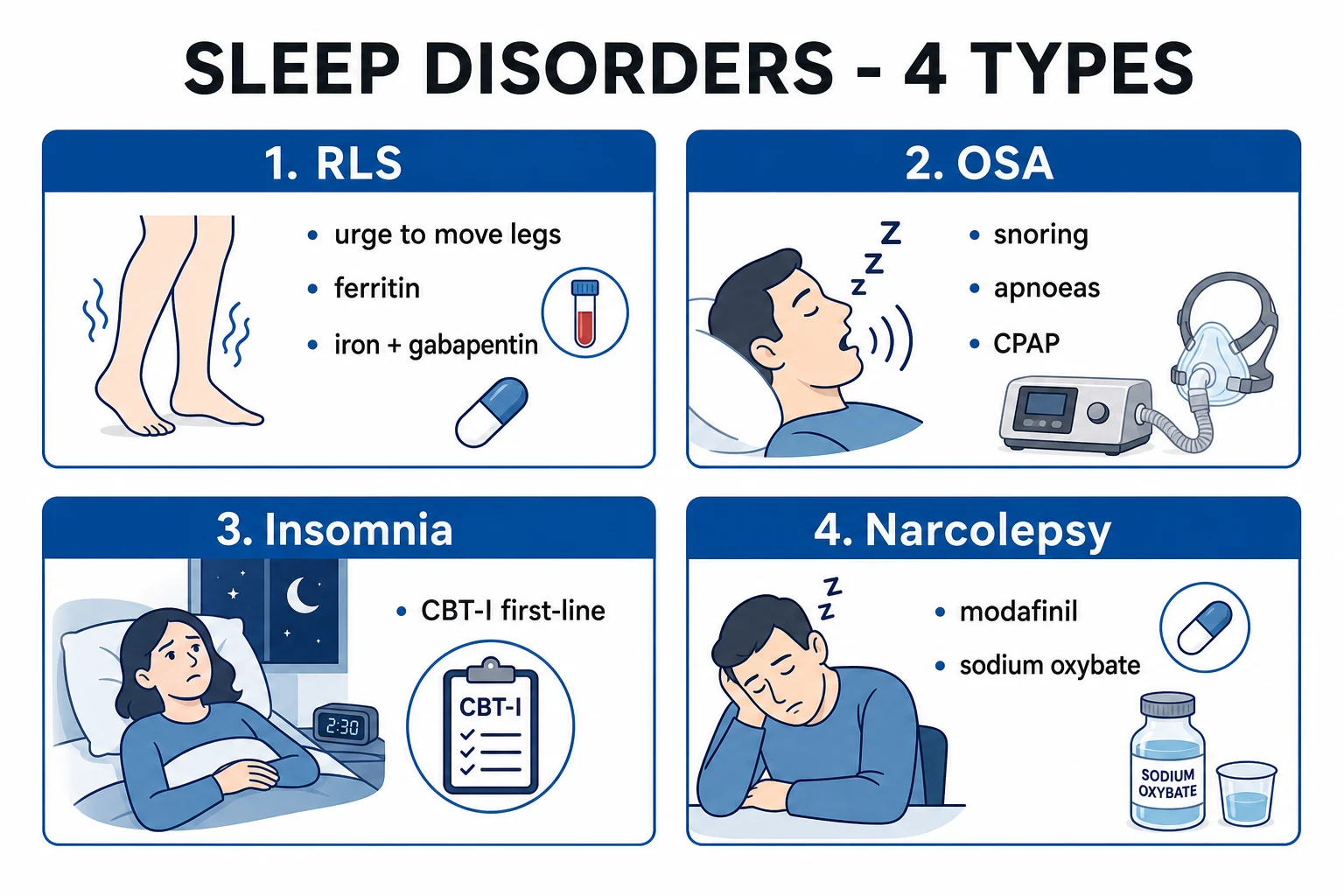
Restless legs syndrome (RLS) is an irresistible urge to move the legs, worse at rest and in the evening, relieved by movement, and tightly linked to brain-iron deficiency — so check ferritin and replace it if under 75 ug/L before anything else. First-line drug therapy is an alpha-2-delta ligand (gabapentin, pregabalin) or, alternatively, a non-ergot dopamine agonist (pramipexole 0.125 to 0.5 mg, ropinirole 0.25 to 4 mg, rotigotine patch) — but beware augmentation with long-term dopamine agonists. Obstructive sleep apnoea (OSA) is recurrent upper-airway obstruction during sleep producing snoring, witnessed apnoeas and daytime somnolence; screen with STOP-BANG, confirm with polysomnography (Apnoea-Hypopnoea Index over 5) and treat with CPAP plus weight loss — untreated OSA drives resistant hypertension, atrial fibrillation, stroke and heart failure. Insomnia is managed first-line with CBT-I (more effective than hypnotics), reserving short-term z-drugs (zopiclone 3.75 to 7.5 mg, zolpidem 5 to 10 mg). Narcolepsy (daytime sleepiness with cataplexy and REM-sleep intrusion, from autoimmune loss of hypothalamic hypocretin neurons) is treated with modafinil 200 mg once daily and sodium oxybate.
On this page & tools
Your progress
Saved locally on this device.
Exam tags
Red flags
Overview & Definition
Sleep disorders are among the commonest yet most underdiagnosed neurological conditions — obstructive sleep apnoea (OSA) affects 10 to 20 percent of adults, restless legs syndrome (RLS) 5 to 10 percent, chronic insomnia 10 to 15 percent, and narcolepsy about 1 in 2000. They are united by a single presenting complaint — sleep that does not restore — but they are biologically distinct and demand a structured, symptom-led workup rather than a blanket prescription for a hypnotic. The clinical discipline is to take a structured sleep history (snoring, witnessed apnoeas, daytime somnolence, restless legs, sleep latency, awakenings, cataplexy), use validated scales (STOP-BANG, Epworth Sleepiness Scale, IRLS), and treat with evidence-based, guideline-anchored interventions (CPAP, iron, CBT-I, modafinil). The four disorders a final-prof student must own are restless legs syndrome (RLS), obstructive sleep apnoea (OSA), insomnia and narcolepsy, with a working knowledge of parasomnias and circadian-rhythm disorders.[1][3]
The reason sleep disorders matter beyond the bedroom is cardiovascular and neuropsychiatric risk. Untreated OSA drives resistant hypertension, atrial fibrillation, heart failure, stroke and road-traffic accidents. Severe RLS and chronic insomnia erode quality of life as much as type 2 diabetes or congestive cardiac failure, and chronic sleep deprivation is a recognised driver of depression and impaired cognition. Recognising and treating these conditions is therefore as much a preventive-cardiology and public-safety task as a neurological one. [1]
Restless legs syndrome — the definition
Restless legs syndrome (also called Willis-Ekbom disease) is a sensorimotor neurological disorder defined by an urge to move the legs, usually accompanied by uncomfortable and unpleasant sensations, that begins or worsens during rest, is partially or totally relieved by movement, and peaks in the evening or night. It is one of the commonest causes of sleep-onset insomnia, and because the symptoms are subjective and nocturnal, it is frequently mislabelled as anxiety, insomnia, peripheral neuropathy or "growing pains" in children. [1]
The diagnosis is entirely clinical, made with the five IRLSSG essential criteria (see box below). A supportive feature that strongly corroborates the diagnosis is a family history (early-onset RLS is autosomal dominant in many families), a response to dopaminergic therapy, and the presence of periodic limb movements of sleep (PLMS) on polysomnography — present in 80 to 90 percent of RLS patients but not, on its own, diagnostic. [1]
[1]The fifth criterion — not solely accounted for by another condition — was added in 2014 specifically to exclude mimics, and is the commonest reason a "restless legs" presentation is something else entirely. [1]
Classification
The International Classification of Sleep Disorders, 3rd edition (ICSD-3) divides sleep disorders into six families. The four that dominate clinical practice are insomnia, sleep-related breathing disorders, central disorders of hypersomnolence, and sleep-related movement disorders.[3][5]
- Insomnia — difficulty initiating or maintaining sleep, or early awakening, occurring at least 3 nights per week for at least 3 months with daytime impairment, despite adequate opportunity and circumstances for sleep; a disorder of hyperarousal, not merely of a short night.
- Sleep-related breathing disorders — obstructive sleep apnoea (recurrent upper-airway obstruction despite ongoing respiratory effort), central sleep apnoea (cessation of airflow with absent respiratory effort — e.g. Cheyne-Stokes respiration in heart failure), sleep-related hypoventilation (obesity hypoventilation syndrome, neuromuscular disease), and sleep-related hypoxaemia.
- Central disorders of hypersomnolence — narcolepsy type 1 (with cataplexy and low CSF hypocretin-1), narcolepsy type 2 (without cataplexy, normal hypocretin), idiopathic hypersomnia (long unrefreshing sleep, no cataplexy, few SOREMPs), and Kleine-Levin syndrome (recurrent episodic hypersomnia with behavioural disturbance).
- Circadian-rhythm sleep-wake disorders — delayed sleep-wake phase disorder, advanced sleep-wake phase disorder, shift-work disorder, jet-lag disorder, and non-24-hour sleep-wake rhythm disorder (common in blindness).
- Sleep-related movement disorders — restless legs syndrome (RLS) and periodic limb movement disorder (PLMD), sleep-related leg cramps, bruxism, and rhythmic movement disorder.
- Parasomnias — NREM (disorders of arousal: sleepwalking, sleep terrors, confusional arousals) and REM (REM sleep behaviour disorder (RBD), recurrent isolated sleep paralysis, nightmare disorder). RBD — loss of REM-atonia with dream enactment — is now recognised as a prodrome to alpha-synucleinopathies (Parkinson disease, dementia with Lewy bodies, multiple system atrophy). [1]
Epidemiology & Risk Factors
OSA affects about 10 to 20 percent of adults (moderate-to-severe disease, AHI over 15, in roughly 1 in 7 adults) and is the commonest sleep-related breathing disorder; its prevalence has risen with the obesity epidemic. Risk factors are captured by STOP-BANG — Snoring, Tiredness, Observed apnoea, high blood Pressure, BMI over 35, Age over 50, Neck circumference over 40 cm, male Gender (3 or more = high risk; 5 to 8 = high probability of moderate-to-severe OSA). Craniofacial features (retrognathia, macroglossia, tonsillar hypertrophy, high arched palate), menopause, smoking, nasal obstruction, and a family history all add risk.[3]
RLS affects 5 to 10 percent of adults — it is twice as common in women and rises with age, peaking in late middle age. Onset before age 45 (early-onset RLS) is usually familial and runs an autosomal-dominant pattern; genome-wide association studies implicate BTBD9, MEIS1, MAP2K5/SKOR1, TOX3 and PTPRD loci (the BTBD9 variant alone doubles RLS risk and correlates with PLMS). Secondary (symptomatic) RLS is precipitated by iron deficiency, pregnancy (especially the third trimester), end-stage renal disease and uraemia, peripheral neuropathy (especially diabetic), Parkinson disease, multiple sclerosis, spinal-cord lesions, and a long list of drugs — SSRIs/SNRIs, mirtazapine, antipsychotics, antiemetic dopamine antagonists (metoclopramide, prochlorperazine), sedating antihistamines, and lithium.[1]
Insomnia affects 10 to 15 percent of adults chronically; risk factors are female sex, older age, psychiatric illness (depression, anxiety), shift work, chronic pain, and caffeine or alcohol misuse. It is the commonest sleep complaint in primary care. [1]
Narcolepsy is uncommon — 25 to 50 per 100 000 (about 1 in 2000) — equally common in men and women, with onset typically in adolescence or the early twenties (a second, smaller peak around age 35). It is strongly associated with HLA-DQB1*06:02 (>90 percent of type 1) and caused by autoimmune destruction of hypothalamic hypocretin/orexin neurons, often after an influenza (H1N1) or streptococcal trigger; the 2009 Pandemrix H1N1 vaccination campaign was linked to a surge in childhood narcolepsy type 1.[5]
Pathophysiology
The four disorders have distinct but memorable mechanisms. Understanding why each happens predicts both the symptoms and the treatment.[1][2][5]
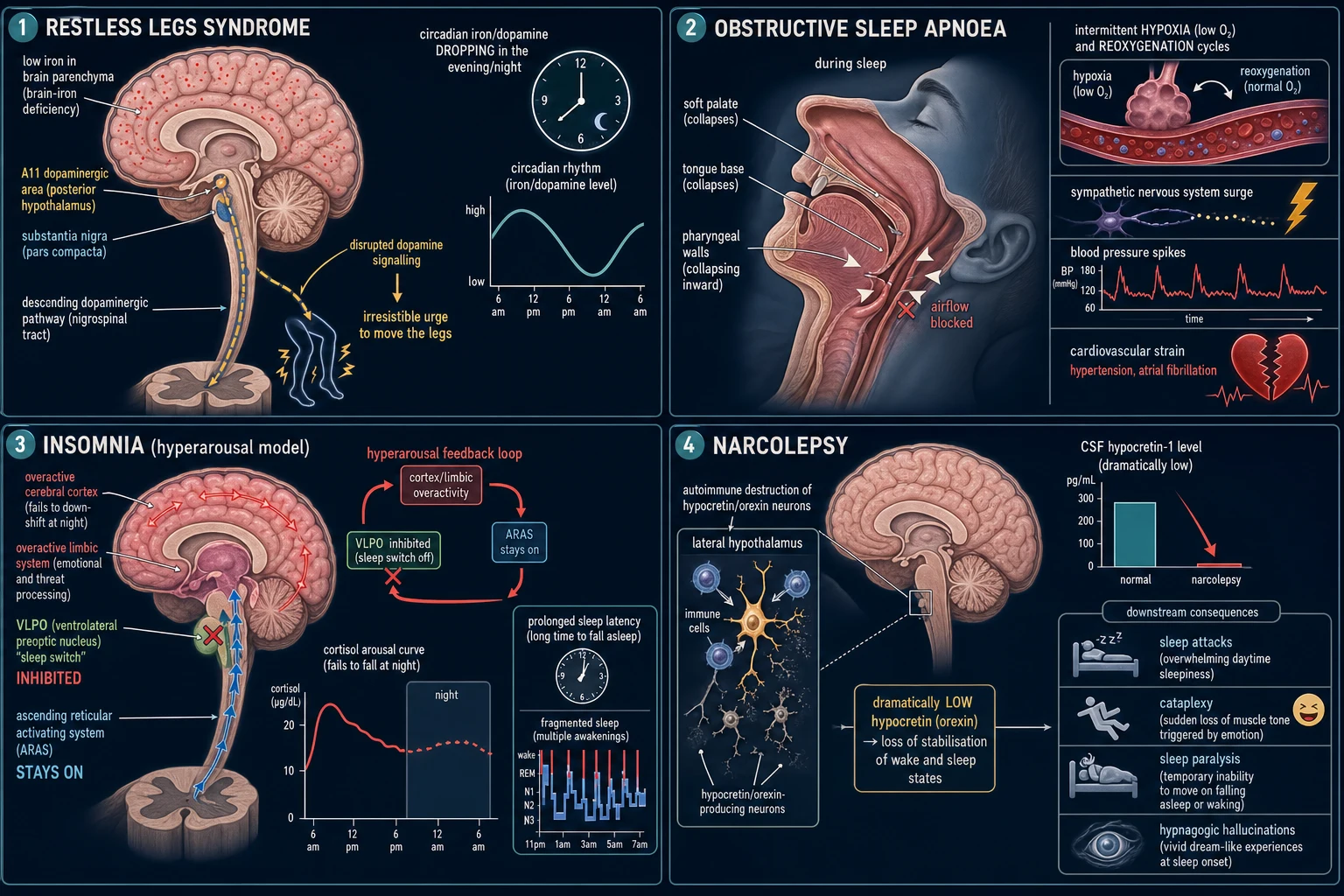
- Restless legs syndrome — brain-iron deficiency plus dopaminergic, opioidergic and glutamatergic dysregulation. Iron is a cofactor for tyrosine hydroxylase (the rate-limiting enzyme in dopamine synthesis) and the dopamine D2 receptor. Brain-iron deficiency (detectable on MRI in the substantia nigra and the A11 dopaminergic area of the posterior hypothalamus — even when the peripheral ferritin is normal) disrupts the descending A11 dopaminergic pathways that normally inhibit spinal sensory and motor circuits. The unopposed spinal circuitry generates the sensory urge and the periodic limb movements of sleep (PLMS). The opioid system is also disordered (explaining the response to low-dose opioids in refractory disease, and the dysphoric "urge"), and glutamatergic hyperexcitability in the thalamus may drive the sensory component. The striking circadian pattern — symptoms peaking between midnight and 2 a.m. — reflects a circadian dip in dopamine and iron availability in the brain.
- Obstructive sleep apnoea — sleep-related loss of upper-airway dilator tone. During wakefulness the genioglossus and other pharyngeal dilator muscles hold the airway open. During sleep (especially REM) their tone falls, and in an anatomically narrow, collapsible pharynx (obesity, retrognathia, macroglossia) the airway collapses during inspiration against the closed glottis. Recurrent obstruction produces intermittent hypoxia and reoxygenation (an oxidative-stress cycle), sympathetic nervous-system surges (blood-pressure spikes), large negative intrathoracic pressure swings (cardiac preload/afterload strain) and repeated micro-arousals from sleep — the combination that drives cardiovascular disease and fragmented, non-restorative sleep.
- Insomnia — the hyperarousal model. The ventrolateral preoptic nucleus (VLPO) of the hypothalamus — the brain's sleep switch, which normally inhibits the ascending reticular activating system (ARAS) — is functionally underactive. The cortex and limbic system remain hyperarousable, with elevated cortisol, body temperature and autonomic tone, producing prolonged sleep latency and fragmented sleep. Behavioural conditioning (the bed becoming a cue for wakefulness and frustration) then perpetuates the disorder.
- Narcolepsy — autoimmune loss of hypocretin/orexin neurons. The lateral hypothalamus hypocretin neurons that normally stabilise the sleep-wake switch (promoting wakefulness and suppressing inappropriate REM transitions) are destroyed by an autoimmune process strongly linked to HLA-DQB1*06:02 and to autoreactive T-cells, producing near-absent CSF hypocretin-1 in type 1. Without this stabiliser, REM sleep intrudes into wakefulness — producing sleep attacks, cataplexy (emotion-triggered loss of muscle tone, reflecting the atonia of REM intruding into wake), sleep paralysis and hypnagogic hallucinations (dream imagery at sleep onset). Type 2 narcolepsy has normal hypocretin and an as-yet unclear mechanism. [1]
Clinical Presentation
A structured sleep history defines the disorder. Ask systematically about: bedtime and wake time; sleep latency (time to fall asleep); nocturnal awakenings (number and whether the patient can return to sleep); total sleep time; snoring and witnessed apnoeas (a partner's report is invaluable); restless legs and nocturnal leg movements; daytime sleepiness (grade with the Epworth Sleepiness Scale); cataplexy (emotion-triggered weakness); caffeine, alcohol and recreational-drug use; prescription drugs (antidepressants, antipsychotics, sedatives); mood; shift work; and the bedroom environment.[3]
- RLS — an urge to move the legs, usually with creeping, crawling, pulling, itching or dysesthetic sensations deep in the calves or thighs (patients often struggle to find the word); worse at rest (sitting in a cinema, on a long flight, lying in bed); relieved by movement (walking, stretching, flexing); peaking in the evening or night; and causing sleep-onset insomnia because symptoms flare precisely when the patient tries to sleep. Periodic limb movements of sleep (repetitive dorsiflexion of the big toe and ankle every 20 to 40 seconds) fragment sleep and are reported by the bed partner. Early-onset RLS is often familial and slowly progressive; late-onset RLS is more likely secondary (iron deficiency, uraemia, neuropathy) and may remit if the cause is treated.
- OSA — loud, habitual snoring, witnessed apnoeas (the partner sees the patient stop breathing, then gasp or choke), gasping or choking that wakes the patient, non-restorative sleep, excessive daytime sleepiness (falling asleep reading, watching television, or — dangerously — driving), morning headache, dry mouth and nocturia; physical consequences include hypertension (especially resistant), atrial fibrillation, stroke, heart failure, type 2 diabetes and road-traffic accidents. The classic patient is a middle-aged, overweight, hypertensive man with a thick neck, but OSA in women and thin people is commonly missed.
- Insomnia — sleep latency over 30 minutes, frequent awakenings, early-morning awakening (a classic feature of depression but also of primary insomnia), daytime fatigue, irritability, poor concentration and anxiety about sleep; the patient develops a fixed, conditioned association between the bed and wakefulness/frustration ("conditioned arousal"), so that they can sleep anywhere except their own bed.
- Narcolepsy — the classic tetrad is excessive daytime sleepiness (irresistible sleep attacks in inappropriate settings, relieved by brief naps), cataplexy (sudden, bilateral loss of muscle tone triggered by laughter or strong positive emotion, with consciousness preserved — pathognomonic of type 1), sleep paralysis (inability to move on falling asleep or waking, lasting seconds to minutes, often terrifying), and hypnagogic or hypnopompic hallucinations (vivid dream imagery at sleep onset or on waking). Night sleep is fragmented with frequent awakenings. Not all four are present in every patient: cataplexy defines type 1; type 2 has sleepiness without cataplexy. Automatic behaviours (driving or talking on "autopilot" with amnesia) are common. [1]
Atypical presentations worth flagging — children with RLS may present as "growing pains", restlessness, or attention-deficit hyperactivity symptoms; women whose OSA worsens after menopause; thin, young women with upper-airway resistance syndrome (snoring and sleepiness without full apnoeas); and the elderly in whom OSA masquerades as cognitive decline or nocturnal confusion. [1]
Differential Diagnosis
A disciplined differential distinguishes each disorder from its mimics. The SLEEP screen is a useful prompt for RLS mimics — Sleep disturbance, Legs/vascular, Endocrine (hypothyroid myalgia), Essential (no pathology), Pharmacological (akathisia, cramps), with neuropathy, arthropathy and positional ischaemia also excluded by the fifth IRLSSG criterion.[1][3][5]
Restless legs syndrome
- Urge to move legs with dysesthesia; **worse at rest, relieved by movement, peaks evening/night**
- Linked to **iron deficiency** (ferritin under 75 ug/L), pregnancy, renal failure, neuropathy, Parkinson disease
- Diagnosis is **clinical** using the five IRLSSG criteria; **ferritin** in every patient
- Treat with **iron** plus an **alpha-2-delta ligand (gabapentin, pregabalin)** or a **dopamine agonist**; beware **augmentation**
Obstructive sleep apnoea
- **Snoring, witnessed apnoeas, choking, daytime somnolence** in an obese, hypertensive patient
- **STOP-BANG** to screen (3 or more = high risk); **Epworth** to grade sleepiness
- **Polysomnography** is diagnostic; **AHI over 5** (mild 5 to 14, moderate 15 to 30, severe over 30)
- **CPAP** is gold standard for moderate-to-severe disease; **weight loss, alcohol avoidance, mandibular device**; driving restriction
Insomnia
- **Difficulty initiating or maintaining sleep** over 3 nights/week for 3 months with daytime impairment
- Hyperarousal model — VLPO sleep-switch failure; conditioned arousal around the bed
- **CBT-I is first-line and more effective than hypnotics** (sleep restriction, stimulus control, cognitive therapy)
- Hypnotics (**zopiclone, zolpidem**) for **short-term use only** — avoid long-term benzodiazepines
Narcolepsy
- **Excessive daytime sleepiness** plus **cataplexy** (emotion-triggered atonia, preserved consciousness), **sleep paralysis**, **hypnagogic hallucinations**
- Autoimmune loss of **hypothalamic hypocretin/orexin neurons**; HLA-DQB1*06:02; **low CSF hypocretin** in type 1
- **PSG plus MSLT**: mean sleep latency **under 8 min** with **2 or more SOREMPs**
- **Modafinil/armodafinil** for sleepiness, **sodium oxybate** for cataplexy and fragmented sleep, **pitolisant**, planned naps
Key mimics to exclude: nocturnal leg cramps (painful sustained muscle contractions relieved by stretching, not by movement — and absent the circadian rest/relief pattern), akathisia (an inner restlessness driven by neuroleptics, present all day, not relieved by walking, without a circadian pattern), peripheral neuropathy (persistent stocking-glove numbness and burning, not relieved by movement), vascular claudication (brought on by walking and relieved by rest — the opposite of RLS), positional discomfort, arthritis, venous stasis, and restless-legs-like symptoms from spinal stenosis. For OSA, exclude central sleep apnoea / Cheyne-Stokes respiration (heart failure; loss of drive, not obstruction), obesity hypoventilation syndrome (awake hypercapnia — needs NIV, not CPAP alone), and simple snoring (no apnoeas, no sleepiness). For narcolepsy, exclude insufficient sleep syndrome (the commonest mimic — resolved by extending sleep), OSA with severe sleepiness, idiopathic hypersomnia (long unrefreshing naps, no cataplexy, fewer than 2 SOREMPs), and depression with hypersomnia.[3][5]
Clinical & Bedside Assessment
- For OSA — apply the STOP-BANG questionnaire (8 items, below; 3 or more = high risk, 5 to 8 = high probability of moderate-to-severe OSA) and the Epworth Sleepiness Scale (over 10 = excessive, over 16 = severe). Examine BMI, neck circumference, oropharynx (Mallampati score, tonsillar hypertrophy, macroglossia, retrognathia), blood pressure, and screen for cor pulmonale (raised JVP, loud P2, right ventricular heave, peripheral oedema) and metabolic syndrome.[3]
- For RLS — confirm the five IRLSSG criteria (above) and grade severity with the IRLS severity scale (10 items, 0 to 40; mild 1 to 10, moderate 11 to 20, severe 21 to 30, very severe 31 to 40). Ask about family history (early-onset is genetic), pregnancy, renal disease, neuropathy and precipitating drugs. A focused neurological exam is usually normal in primary RLS — a hard neurological deficit points to secondary/neuropathic RLS.
- For insomnia — use a two-week sleep diary; screen for depression (PHQ-9) and anxiety (GAD-7); assess caffeine, alcohol, and dysfunctional beliefs and attitudes about sleep.
- For narcolepsy — take a careful history for cataplexy (the Cataplexy Emotional Trigger Questionnaire helps) and other REM-intrusion phenomena; document onset (usually adolescence or young adulthood) and exclude insufficient sleep.
Screening OSA — STOP-BANG
STOP-BANG
loud snoring reported by a partner
excessive daytime sleepiness
witnessed cessation of breathing
treated or untreated hypertension
body mass index over 35 kg/m2
over 50 years
circumference over 40 cm
male
The Epworth Sleepiness Scale asks the patient to rate, from 0 (would never doze) to 3 (high chance of dozing), the chance of dozing in eight situations: sitting and reading; watching television; sitting inactive in a public place; as a passenger in a car for an hour; lying down to rest in the afternoon; sitting and talking to someone; sitting quietly after lunch without alcohol; and in a car stopped in traffic. The maximum is 24; a score of 0 to 9 is normal, 10 to 12 mild, 13 to 15 moderate, and 16 to 24 severe sleepiness. A score over 10 warrants a sleep study. [1]
Investigations
OSA — polysomnography (PSG) is the gold standard. In-laboratory or home respiratory polygraphy records EEG, EOG, EMG, oronasal airflow, respiratory effort (chest and abdominal belts), pulse oximetry and ECG, and from these calculates the Apnoea-Hypopnoea Index (AHI) — the number of apnoeas (10-second or longer pauses in airflow) plus hypopnoeas (reductions in airflow with a 3 to 4 percent oxygen desaturation or an arousal) per hour of sleep. Severity: mild AHI 5 to 14, moderate 15 to 30, severe over 30 events per hour. Home sleep apnoea testing is acceptable for high-probability, uncomplicated OSA; in-laboratory PSG is needed when comorbidity (heart failure, neuromuscular disease) or another sleep disorder (narcolepsy, parasomnia, RLS needing quantification) is suspected. The oxygen-desaturation index and arousal index support the diagnosis.[3]
RLS — a clinical diagnosis, but always check ferritin. The single essential blood test in every RLS patient is serum ferritin (replace if under 75 ug/L, ideally with a transferrin saturation over 20 percent) — a low or even low-normal ferritin is the commonest reversible cause and predicts a response to iron. Also screen for anaemia (full blood count, iron studies), renal failure (urea and creatinine), thyroid disease, pregnancy, and diabetes; nerve conduction studies if a neuropathy is suspected. No routine PSG unless PLMD severity must be quantified. A normal neurological examination is the rule in primary RLS; abnormal findings prompt a search for secondary causes.[1]
Narcolepsy — overnight PSG followed by a multiple sleep latency test (MSLT). The PSG excludes other causes of sleepiness (OSA) and documents night-time fragmentation; the MSLT the following day comprises four or five nap opportunities at two-hour intervals. Diagnostic criteria: mean sleep latency under 8 minutes with 2 or more sleep-onset REM periods (SOREMPs) (one SOREMP may come from the preceding night's PSG, so a PSG SOREMP counts toward the total). CSF hypocretin-1 is under 110 pg/mL (or under one-third of the mean reference value) in narcolepsy type 1, confirming the diagnosis where the MSLT is equivocal, contraindicated (the patient is on stimulants that cannot be washed out), or the result is borderline. HLA typing (DQB1*06:02) is supportive but not diagnostic — it is present in up to a third of the general population.[5]
Insomnia — no routine investigations. A sleep diary and validated questionnaires (Insomnia Severity Index) suffice; polysomnography is reserved for suspected comorbid sleep apnoea, restless legs or parasomnia, not for insomnia itself. Actigraphy can document circadian-rhythm disorders (delayed sleep phase, shift-work disorder). [1]
Management — Resuscitation & Safety
Sleep disorders rarely present as an acute resuscitation, but several situations are safety-critical and must be acted on immediately.[2][3]
- Commercial or professional driver with suspected OSA — impose a driving restriction until formally assessed and treated; untreated OSA causes road-traffic and occupational accidents (the crash risk is roughly two to seven times higher). DVLA / regional licensing rules require the patient to notify the authority once OSA causes excessive sleepiness.
- Untreated severe OSA with cardiovascular sequelae — drives resistant hypertension, atrial fibrillation, heart failure, stroke and increased all-cause mortality; treat with CPAP urgently and address cardiovascular risk.
- Obesity hypoventilation syndrome — awake hypercapnia (PaCO2 over 45 mmHg) with hypoxaemia, usually in a patient with BMI over 35 — needs non-invasive ventilation (BiPAP), not CPAP alone, because the problem is hypoventilation, not pure obstruction.
- Severe cataplexy in narcolepsy — risk of falls and injury (especially with head drop); treat early and counsel about activity safety.
- Severe sleep deprivation from refractory RLS or insomnia — can drive depression and suicidal ideation; address the cause and treat urgently, including low-dose opioids for severe refractory RLS.
- REM sleep behaviour disorder with injurious dream enactment — protect the bed partner and the patient (move the bed from windows/walls, pad the environment); treat with melatonin or clonazepam. [1]
Management — Definitive & Stepwise
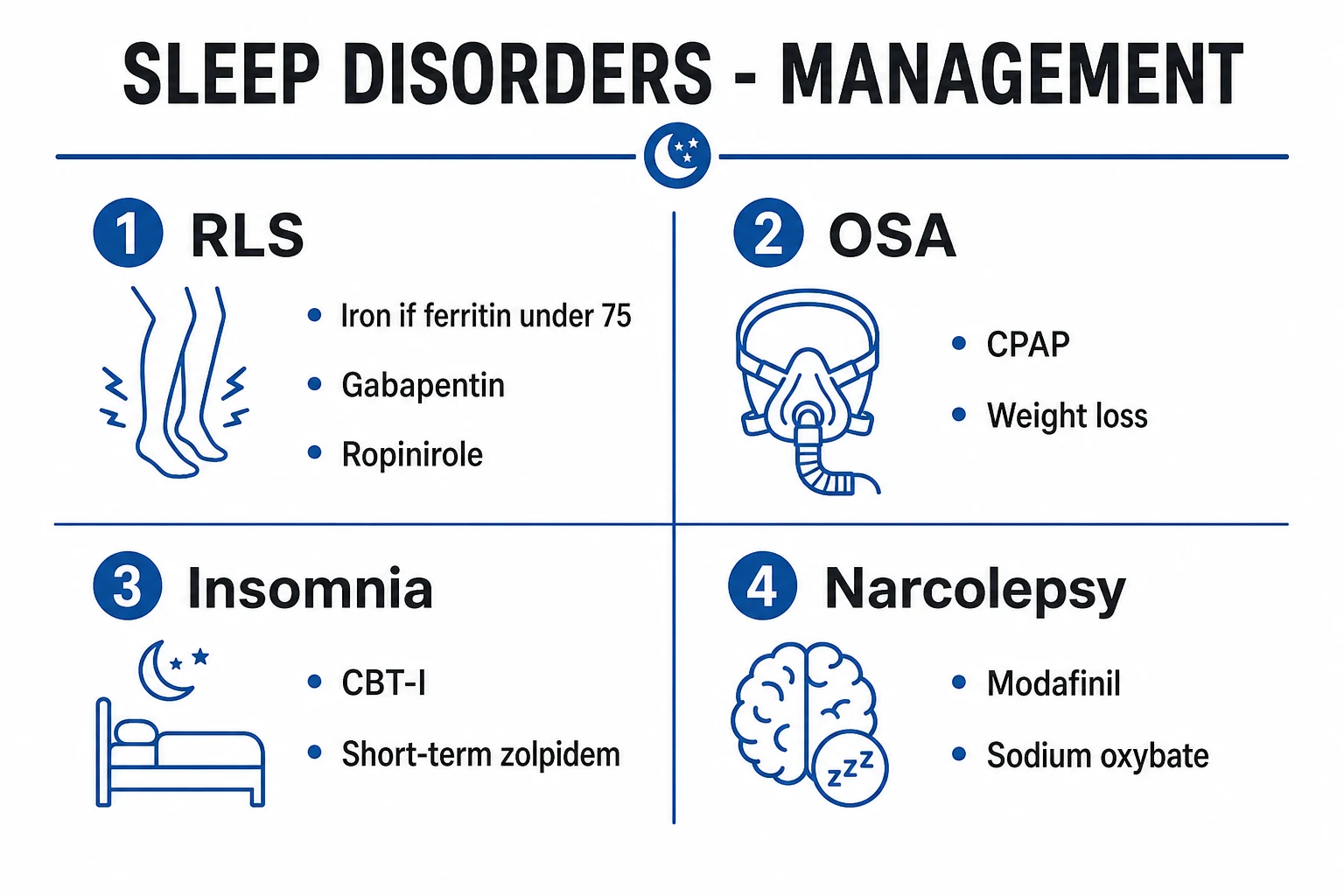
Restless legs syndrome — iron first, then an alpha-2-delta ligand or dopamine agonist
The guiding principle is iron first: no symptomatic drug works well in the face of uncorrected iron deficiency, and replacing iron may alone abolish symptoms. After iron, current guidance now prefers an alpha-2-delta ligand as first-line (especially when symptoms are painful or associated with neuropathy/anxiety), reserving dopamine agonists as an alternative because of the risk of augmentation with long-term use.[1]
- Correct iron deficiency — oral ferrous sulphate 325 mg (65 mg elemental iron) with vitamin C, two to three times daily, recheck ferritin after three to four months. In refractory disease, malabsorption, intolerance or severe deficiency, give intravenous iron (ferric carboxymaltose or iron sucrose) — a single infusion can durably raise brain iron and improve symptoms for months. Ferritin target over 75 ug/L, transferrin saturation over 20 percent.
- Alpha-2-delta calcium-channel ligand (now preferred first-line) — gabapentin (titrated from 300 mg to 600 to 1800 mg at bedtime), pregabalin (75 to 300 mg), or gabapentin enacarbil 600 to 1200 mg; effective for sensory symptoms and sleep, with very low augmentation risk. The PREGABALIN vs pramipexole trial showed pregabalin had lower augmentation rates at 40 weeks.
- Non-ergot dopamine agonist (alternative first-line or add-on) — pramipexole 0.125 to 0.5 mg one to three hours before bed (start at 0.125 mg, titrate weekly); ropinirole 0.25 to 4 mg (start 0.25 mg, titrate); or the rotigotine transdermal patch 1 to 3 mg per 24 hours (the only dopamine agonist with low augmentation rates reported, by virtue of continuous delivery). Keep the dose as low as possible to minimise augmentation.
- Refractory disease — a low-dose opioid (oxycodone 5 to 15 mg, or methadone 5 to 10 mg at bedtime) is highly effective for severe refractory RLS and is the rescue therapy for augmentation; use with a clear contract and monitoring.
- Remove triggers — review and where possible stop antidepressants (SSRIs, SNRIs, mirtazapine), sedating antihistamines, antiemetic dopamine antagonists (metoclopramide) and antipsychotics; treat coexisting neuropathy. [1]
Obstructive sleep apnoea — CPAP plus lifestyle measures
- CPAP is the gold standard for moderate-to-severe OSA; it delivers a continuous positive pressure that pneumatically splints the airway open, abolishes apnoeas, lowers blood pressure, restores sleep architecture and improves sleepiness, quality of life and mood. Adherence (at least 4 hours per night on 70 percent of nights) determines outcome.
- Lifestyle — weight loss (a 10 percent body-weight loss can halve the AHI), avoid alcohol and sedatives in the evening, stop smoking, treat nasal obstruction, and positional therapy (a wedge or tennis-ball vest) for supine-predominant events.
- Mandibular advancement device — a custom dental appliance that protrudes the mandible and tongue base; for mild OSA or CPAP intolerance, but less effective than CPAP in severe disease.
- Surgery — uvulopalatopharyngoplasty (UPPP), maxillomandibular advancement, and hypoglossal-nerve stimulation (an implantable device synchronised to inspiration) only in carefully selected, CPAP-intolerant patients; upper-airway surgery is not first-line. [1]
Insomnia — CBT-I first, hypnotics short-term
- CBT-I is first-line and more effective than hypnotics, with durable benefit — it combines sleep restriction (temporarily limiting time in bed to consolidate sleep), stimulus control (use the bed only for sleep; leave the bed if unable to sleep), cognitive restructuring (challenging dysfunctional beliefs about sleep), relaxation, and sleep hygiene.[4]
- Sleep hygiene — a fixed wake time; avoid caffeine after noon, nicotine, alcohol and heavy meals before bed; a dark, quiet, cool bedroom; regular exercise (not within 3 hours of bed); limit screen/blue light before sleep.
- Short-term pharmacotherapy — a z-drug: zolpidem 5 to 10 mg or zopiclone 3.75 to 7.5 mg at bedtime, for under 4 weeks with periodic reassessment; melatonin (2 mg modified-release) for circadian-rhythm problems and older adults. The "Z-drugs" act on the GABA-A alpha-1 subunit.
- Avoid long-term benzodiazepines — dependence, tolerance, falls, fractures and cognitive impairment (especially in the elderly), and rebound insomnia on withdrawal.
Narcolepsy — wake-promoting agents plus cataplexy therapy
- Scheduled short naps (two or three planned 15- to 20-minute naps) and sleep hygiene as the foundation.
- Modafinil 200 mg once daily in the morning (or armodafinil 150 to 250 mg) is first-line for daytime sleepiness; it is generally well tolerated (headache, nausea, rarely a rash). Methylphenidate or amphetamines are reserved for inadequate response.
- Sodium oxybate (gamma-hydroxybutyrate) is the most effective agent for cataplexy and also consolidates fragmented night sleep and improves daytime sleepiness; start at 4.5 g per night in two divided doses and titrate to 6 to 9 g per night. It is a controlled drug (misuse potential) and needs careful counselling.
- Pitolisant (a histamine H3 inverse agonist) treats both sleepiness and cataplexy; SSRIs (fluoxetine) or SNRIs (venlafaxine) suppress cataplexy by suppressing REM and are useful adjuncts.[5]
Sleep disorders — key numbers
Specific Subtypes & Scenarios
- RLS in pregnancy and renal failure — pregnancy RLS peaks in the third trimester (related to iron and folate demands) and usually remits postpartum; manage with iron and folate supplementation and conservative measures, avoiding dopamine agonists and sodium oxybate. End-stage renal disease RLS is common (20 to 50 percent of dialysis patients), worsens quality of life and survival, and is managed by iron optimisation, dialysis adequacy, correction of anaemia, and — in selected cases — renal transplantation, which can cure it.[1]
- Paediatric OSA — usually due to adenotonsillar hypertrophy; adenotonsillectomy is first-line rather than CPAP. Overlap syndrome (COPD plus OSA) carries a high cardiovascular risk and needs non-invasive ventilation rather than CPAP alone.
- Circadian-rhythm disorders — shift-work disorder: timed bright light on the night shift, melatonin before day sleep, and planned naps; jet lag: eastward travel advances the clock (use morning light and evening melatonin), westward travel delays it. Delayed sleep phase disorder (common in adolescents): morning bright light and evening melatonin to advance the phase.
- REM sleep behaviour disorder (RBD) — loss of REM atonia with dream enactment (shouting, punching, kicking); the patient is more often injured than the partner. It is often a prodrome to alpha-synucleinopathies — Parkinson disease, dementia with Lewy bodies, multiple system atrophy — by years to decades (over 80 percent phenoconvert over 14 years in longitudinal cohorts). Treat with melatonin 3 to 12 mg at bedtime (first-line, preserves tone) or clonazepam 0.5 to 2 mg (avoid in dementia and sleep apnoea).[5]
- Periodic limb movement disorder (PLMD) — repetitive stereotyped leg jerks during sleep (every 20 to 40 seconds), often with RLS, causing sleep fragmentation and daytime sleepiness; treat with the same agents as RLS when symptomatic. PLMS alone, without symptoms, is a finding, not a diagnosis.
- NREM parasomnias — sleepwalking and sleep terrors arise from deep NREM (slow-wave) sleep in children, with no memory of the event; protect the patient from injury, ensure adequate sleep (sleep deprivation is a trigger), and treat only if injurious or frequent (low-dose clonazepam or melatonin).
- Central sleep apnoea / Cheyne-Stokes respiration in heart failure — managed with optimisation of heart-failure therapy and, in selected patients, adaptive servo-ventilation (ASV) (avoid ASV in heart failure with reduced ejection fraction, per the SERVE-HF finding of increased mortality).
Complications & Pitfalls
- Augmentation in RLS — the cardinal long-term complication of dopamine agonists and the single biggest reason they are no longer first-line. Augmentation means the symptoms are worse than before treatment: earlier onset in the day (spreading into the afternoon), spread to the arms and trunk, shorter latency at rest, shorter relief per dose, and the need for escalating doses that make things worse. Risk factors are high daily dose (pramipexole over 0.5 mg, ropinirole over 4 mg), low ferritin, and long duration. Management: taper and withdraw the agonist (slowly, to avoid withdrawal-RLS), switch to an alpha-2-delta agent, check and replete iron, and — for severe refractory augmentation — consider a low-dose opioid (oxycodone or methadone).[1]
- Impulse control disorders with dopamine agonists — pathological gambling, hypersexuality, compulsive eating and shopping (as in Parkinson disease); counsel every patient started on a dopamine agonist.
- Cardiovascular disease from untreated OSA — resistant hypertension, atrial fibrillation, heart failure, pulmonary hypertension, stroke and increased all-cause mortality; CPAP lowers blood pressure (roughly 2 mmHg systolic on average) and reduces this load.[2]
- CPAP non-adherence — roughly half of patients use it suboptimally; common problems are mask leak, rhinitis, claustrophobia and pressure intolerance; improve with humidification, mask refit, pressure relief (EPR/C-Flex), heated tubing and behavioural support.
- Harms of long-term hypnotics — dependence, tolerance, falls and fractures in the elderly (hip fractures), cognitive impairment, parasomnias (sleepwalking, sleep-eating with zolpidem), and rebound insomnia on withdrawal; this is the rationale for CBT-I as first-line.[4]
- Diagnostic pitfalls — treating RLS without checking ferritin; missing OSA in a snorer with hypertension or atrial fibrillation; prescribing hypnotics for insomnia driven by depression or occult sleep apnoea; diagnosing narcolepsy without excluding insufficient sleep and OSA; labelling cataplexy as seizures or syncope; and over-prescribing high-dose dopamine agonists that trigger augmentation.
Prognosis & Disposition
- RLS is chronic but usually well-controlled with iron correction and an alpha-2-delta ligand; augmentation is the main long-term problem on dopamine agonists, and the shift away from them as first-line has improved long-term outcomes. Disposition is outpatient, with periodic ferritin monitoring.[1]
- OSA prognosis is determined by CPAP adherence and weight management; untreated severe OSA increases cardiovascular and accident mortality, while effective CPAP restores life expectancy and quality of life. Patients need lifelong CPAP and annual review of adherence and pressure requirements.[3]
- Chronic insomnia often persists for years without CBT-I, but a course of CBT-I produces durable remission in most patients — unlike hypnotics, whose benefit fades.[4]
- Narcolepsy is lifelong but manageable with modafinil/armodafinil, sodium oxybate and scheduled naps; cataplexy may lessen over decades. Education, driving advice and workplace accommodations are central to function.[5]
- REM sleep behaviour disorder predicts a future alpha-synucleinopathy (Parkinson disease, dementia with Lewy bodies, multiple system atrophy) by years to decades; patients should be counselled and monitored for early motor and cognitive signs.
Special Populations
- Elderly — high prevalence of insomnia and OSA; dose-reduce hypnotics and gabapentinoids (falls, renal clearance, the "start low, go slow" rule); screen for OSA before prescribing any sedative; lower CPAP pressures where tolerated. Avoid benzodiazepines entirely (Beers criteria).
- Pregnancy — manage RLS with iron and sleep hygiene; avoid dopamine agonists (especially in the first trimester) and sodium oxybate; minimise hypnotics (CBT-I and sleep hygiene first). OSA in pregnancy (especially with pre-eclampsia and gestational diabetes) raises maternal and fetal risk and is treated with CPAP, which is safe.
- Children and adolescents — paediatric OSA is usually adenotonsillar (adenotonsillectomy first-line); narcolepsy often presents in adolescence (consider it in any teenager with sleepiness and weight gain); delayed sleep phase disorder is common and treated with morning bright light and evening melatonin.
- Obesity and the bariatric pathway — optimise CPAP perioperatively (re-titrate after major weight loss); address metabolic syndrome and type 2 diabetes; obesity hypoventilation syndrome needs NIV.
- Heart failure and neuromuscular disease — Cheyne-Stokes and central apnoea may need adaptive servo-ventilation (avoid in HFrEF per SERVE-HF); COPD plus OSA (overlap syndrome) needs NIV; neuromuscular disease (ALS, myopathies) causes nocturnal hypoventilation needing NIV, detected by falling overnight saturations and rising morning PaCO2. [1]
Evidence, Guidelines & Regional Differences
AASM (American Academy of Sleep Medicine) and NICE broadly agree: CPAP for moderate-to-severe OSA; CBT-I as first-line for chronic insomnia; ferritin-first, then an alpha-2-delta ligand for RLS (with dopamine agonists demoted because of augmentation); and modafinil/armodafinil plus sodium oxybate for narcolepsy. The ICSD-3 (2014) framework underpins classification and diagnostic criteria worldwide.
- CPAP evidence — robustly lowers blood pressure and improves sleepiness, mood and quality of life. The large SAVE trial (NEJM 2016) found CPAP did not significantly reduce major cardiovascular events in established CV disease beyond standard care (largely because of modest adherence), though per-protocol analyses and observational data support a cardiovascular benefit in adherent patients; the CAT trial improved sleepiness. The lesson: CPAP's symptomatic benefit is clear; its event-reducing benefit tracks adherence.[2]
- CBT-I evidence — a systematic review and meta-analysis confirms it is effective and durable for chronic insomnia, and superior to hypnotics; it is the only insomnia therapy with benefit that persists after treatment ends.[4]
- RLS first-line shift — the move away from dopamine agonists (because of augmentation, documented in up to a third of patients over years) toward alpha-2-delta ligands is now embedded in AASM and European guidance; IV iron is increasingly recommended for ferritin-deficient refractory disease.[1]
- Regional deltas — the regulation of sodium oxybate (a controlled substance with restricted access programmes) differs across India, UK, US and ANZ; z-drug prescribing is more restricted in some regions (long-term zopiclone is discouraged); and modafinil licensing for narcolepsy varies. The ferritin threshold (under 75 ug/L, or TSAT under 20 percent) is widely accepted, though some UK centres set it lower and emphasise IV iron for refractory disease. DVLA-equivalent driving rules for OSA differ by country but all require notification once excessive sleepiness impairs driving.
Exam Pearls
- RLS one-liner — urge to move legs, worse at rest and evening, relieved by movement; check ferritin and replace if under 75 ug/L; iron plus gabapentin (or pregabalin) as first-line, dopamine agonist as alternative — beware augmentation.[1]
- OSA one-liner — snoring plus witnessed apnoeas plus daytime somnolence; screen with STOP-BANG; diagnose with polysomnography (AHI over 5); treat with CPAP plus weight loss.[3]
- Insomnia one-liner — difficulty initiating/maintaining sleep for 3 nights a week over 3 months; CBT-I first-line (more effective than drugs); short-term z-drugs only.[4]
- Narcolepsy one-liner — sleepiness plus cataplexy plus REM intrusion; MSLT with 2 SOREMPs and latency under 8 min; modafinil plus sodium oxybate.[5]
- Augmentation = RLS symptoms worse, earlier, spreading to arms on a dopamine agonist; taper the agonist, switch to an alpha-2-delta agent, replete iron, consider an opioid.
- REM sleep behaviour disorder is a prodrome to Parkinson disease (and other alpha-synucleinopathies) by years to decades — a frequently examined pearl.
- HLA-DQB1*06:02 and autoimmune hypocretin-neuron loss underpin narcolepsy type 1; the Pandemrix H1N1 vaccine was linked to a surge in childhood cases.
- Periodic limb movements of sleep are present in 80 to 90 percent of RLS patients but are not diagnostic on their own.
- Untreated OSA doubles cardiovascular risk and raises road-accident risk two- to seven-fold.
- Ferritin under 75 ug/L (or TSAT under 20 percent) is the trigger to replace iron first in every RLS patient — the single highest-yield action in the topic.
Exam application bank (NEET-PG / INICET)
One-line answer
Restless legs syndrome (RLS) is an irresistible urge to move the legs, worse at rest and in the evening, relieved by movement, and tightly linked to brain-iron deficiency — so check ferritin and replace it if under 75 ug/L before anything else. First-line drug therapy is an alpha-2-delta ligand (gabapentin, pregabalin) or, alternatively, a non-ergot dopamine agonist (pramipexole 0.125 to 0.5 mg, ropinirole 0.25 to 4 mg, rotigotine patch) — but beware augmentation with long-term dopamine agonists. Obstructive sleep apnoea (OSA) is recurrent upper-airway obstruction during sleep producing snoring, witnessed apnoeas and daytime somnolence; screen with STOP-BANG, confirm with polysomnography (Apnoea-Hypopnoea Index over 5) and treat with CPAP plus weight loss — untreated OSA drives resistant hypertension, atrial fibrillation, stroke and heart failure. Insomnia is managed first-line with CBT- [1]
Worked stems (answer without another resource)
Stem 1 — Classic presentation. Map symptoms to mechanism; name the first investigation and first treatment step with dose/route if drug therapy is standard. [1]
Stem 2 — Unstable / complicated. List red flags that force immediate resuscitation, theatre, ICU, antidote, or reperfusion — and what you do in the first 15 minutes. [1]
Stem 3 — Atypical group. Elderly, pregnancy, child, or immunocompromised: how presentation and thresholds change. [1]
Stem 4 — Differential trap. Name the three closest mimics and one discriminator for each. [1]
Stem 5 — Disposition. Who goes home with safety-netting, who is admitted, who needs HDU/ICU/theatre, and what follow-up is mandatory. [1]
Rapid viva checklist
- Definition + classification
- Pathophysiology chain
- Bedside signs / criteria
- Score with exact components (if any)
- Emergency bundle
- Definitive therapy with doses
- Complications of disease and of treatment
- Special populations
- Guideline/trial name if classic
- Three exam traps
Coverage self-check
If you cannot answer any stem above from this page alone, re-read the matching section — the page is intended to be self-sufficient for final-prof and NEET-PG/INICET questions on Restless Legs Syndrome & Sleep Disorders.
References
- [1]Trenkwalder C, Allen R, Hogl B, et al. Comorbidities, treatment, and pathophysiology in restless legs syndrome Lancet Neurol, 2018.PMID 30244828
- [2]Ayas NT, Taylor CM, Laher I, et al. Cardiovascular consequences of obstructive sleep apnea Curr Opin Cardiol, 2016.PMID 27652812
- [3]Gottlieb DJ, Punjabi NM. Diagnosis and Management of Obstructive Sleep Apnea: A Review JAMA, 2020.PMID 32286648
- [4]Trauer JM, Qian MY, Doyle JS, et al. Cognitive Behavioral Therapy for Chronic Insomnia: A Systematic Review and Meta-analysis Ann Intern Med, 2015.PMID 26054060
- [5]Bassetti CLA, Adamantidis A, Burdakov D, et al. Narcolepsy - clinical spectrum, aetiopathophysiology, diagnosis and treatment Nat Rev Neurol, 2019.PMID 31324898