Obstetrics & Gynaecology · Obstetrics & Gynaecology
Menopause & Hormone Replacement Therapy
Also known as Menopause · Climacteric · Hormone replacement therapy · HRT · Perimenopause · Menopausal transition · Premature ovarian insufficiency · POI
Menopause is the permanent cessation of menstruation, defined retrospectively as 12 months of amenorrhoea without any other cause (average age 50 to 52; premature ovarian insufficiency before 40). It results from depletion of ovarian follicles producing loss of oestradiol and inhibin, so FSH and LH rise. Symptoms cluster into vasomotor (hot flushes, night sweats — over 75 percent), the genitourinary syndrome of menopause (vaginal dryness, dyspareunia, urinary symptoms) and psychological / sleep disturbance. Long-term oestrogen deficiency drives osteoporosis, cardiovascular disease and urogenital atrophy. Diagnosis is clinical in women over 45; measure FSH only if under 45, after hysterectomy, suspected POI, or atypical. Treatment is individualised HRT — oestrogen (most effective for vasomotor, bone and GSM) plus a progestogen if the uterus is intact (unopposed oestrogen causes endometrial cancer). Transdermal oestrogen carries lower VTE risk; vaginal oestrogen treats isolated GSM. Start HRT under 60 or within 10 years of menopause ('timing hypothesis'). Postmenopausal bleeding = endometrial cancer until proven.
On this page & tools
Your progress
Saved locally on this device.
Exam tags
Red flags
Overview & Definition
Menopause is high-yield for one reason: it sits at the intersection of endocrine physiology (the follicle-depleted ovary), symptom management (the most common reason a middle-aged woman sees her doctor), a risk-benefit drug decision (HRT), and a red-flag referral rule (postmenopausal bleeding). Every examiner has a question on the timing hypothesis, the progestogen-for-the-uterus rule, or the work-up of PMB, because each tests whether a candidate can reason rather than recite. [1]
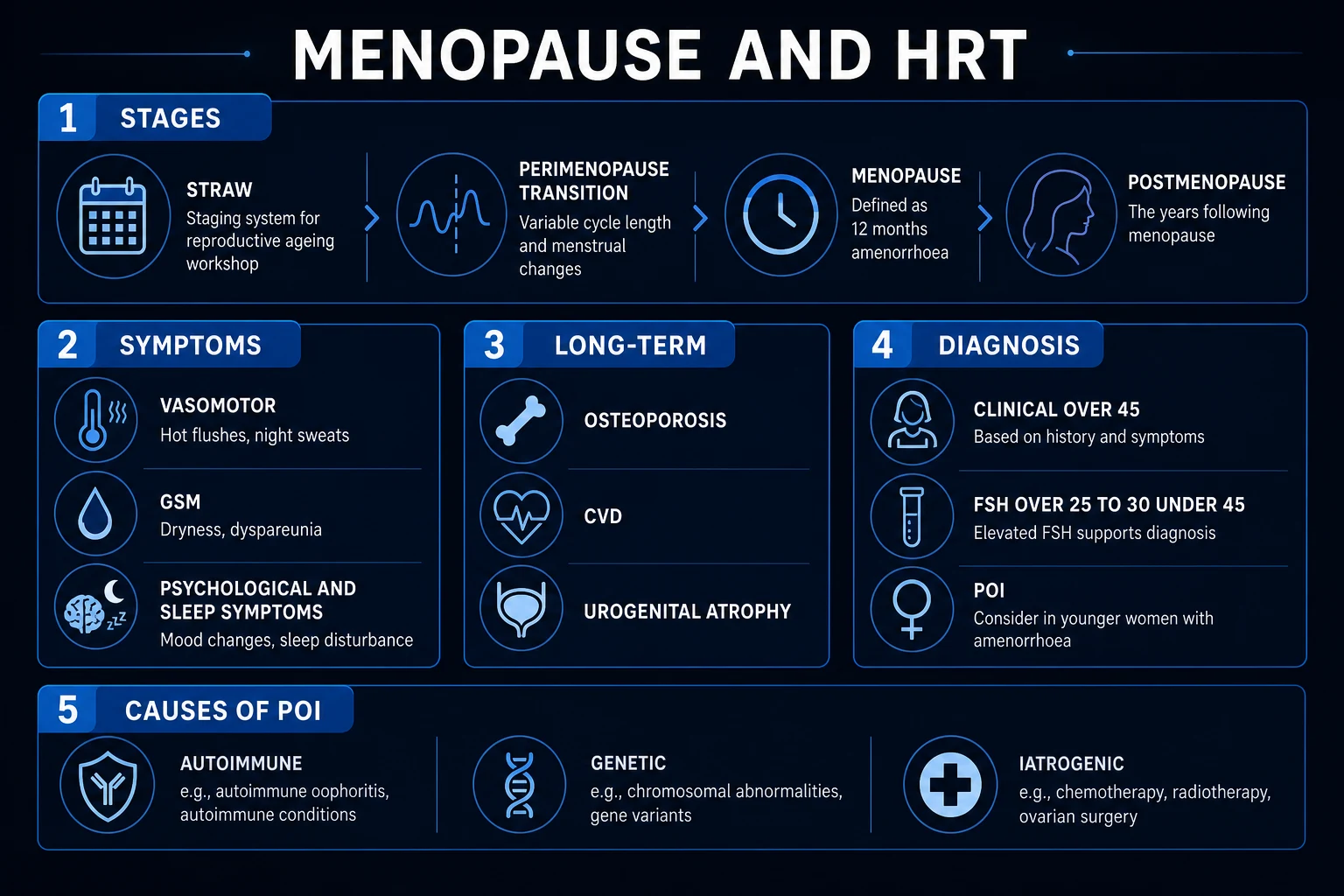
Definition. Menopause is the permanent cessation of menstruation, defined retrospectively as 12 consecutive months of amenorrhoea in a woman of the expected age, in the absence of any other pathological or physiological cause.[1] The average age is 50 to 52 years in most populations; the accepted normal range is 45 to 55. The years flanking the final menstrual period — when endocrine, biological and clinical features of approaching menopause begin — are the menopausal transition (perimenopause), ending 12 months after the last period.[1][5]
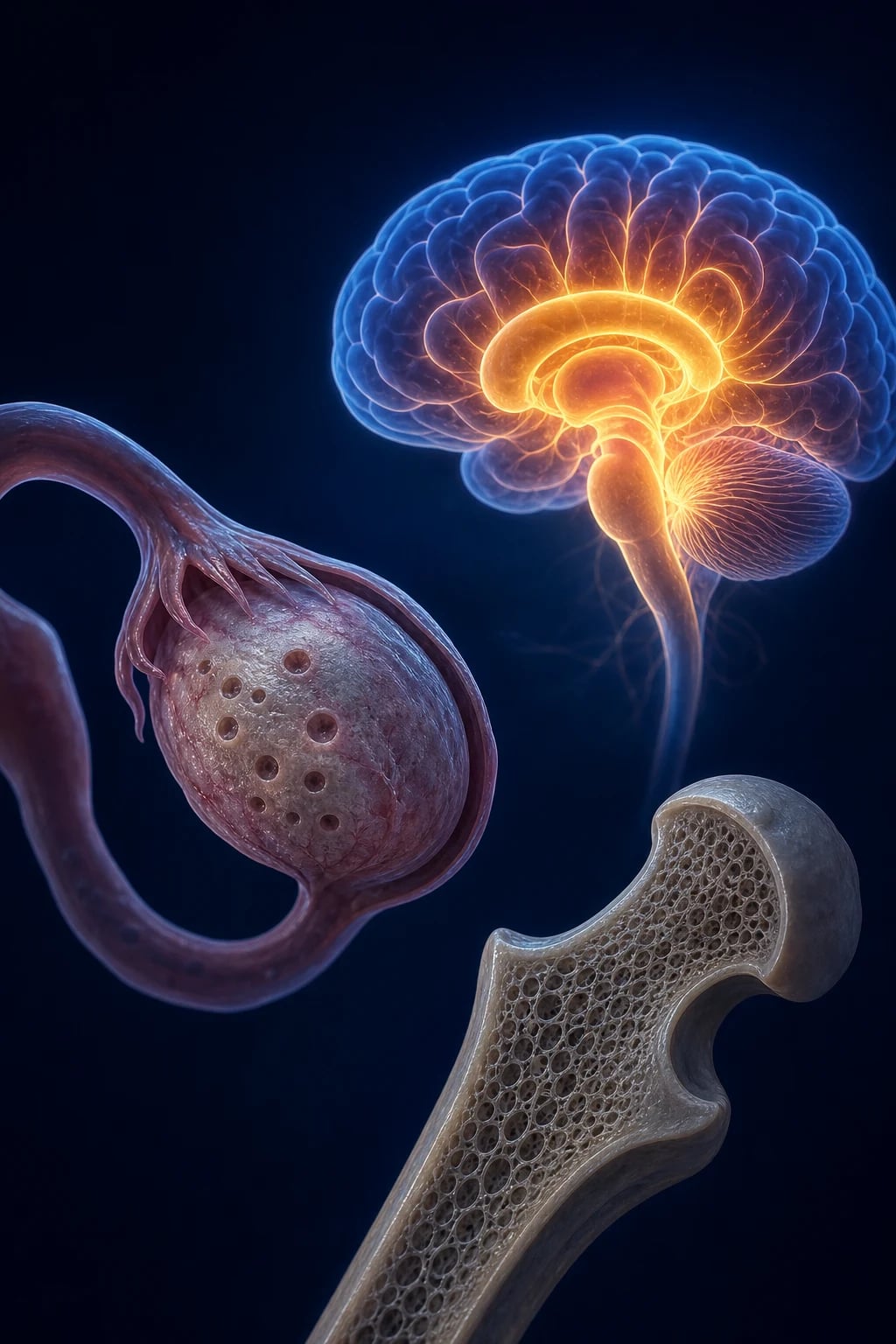
The key concept is that menopause is a diagnosis of follicle depletion. A female fetus carries 6 to 7 million oogonia; by birth about 1 to 2 million; by menarche 300,000 to 500,000; and by the menopause fewer than 1000 follicles remain. When the follicle reserve can no longer produce enough oestradiol to drive cyclic endometrial growth, menses cease.[1]
Classification
Menopause is classified by age at onset and by cause, both of which drive management. The most clinically useful framework is the STRAW +10 (Stages of Reproductive Aging Workshop) staging system, which anchors every other discussion.[1]
- Age 45 to 55 (avg 50 to 52)
- Follicle depletion — physiological
- Gradual symptom onset over months to years
- Diagnosis clinical if over 45
- Menopause between 40 and 45 yr
- Idiopathic, smoking, autoimmune
- Symptoms and risks as for natural menopause
- HRT recommended until 51
- Onset before 40 yr
- FSH over 25 IU/L twice (4–6 wk apart)
- Autoimmune, genetic (Turner, FMR1 premutation), iatrogenic
- Combined HRT or COCP until age 51
- After bilateral oophorectomy, chemo- or pelvic radiotherapy
- Abrupt and severe symptoms
- Higher bone and cardiovascular risk
- HRT until 51 if no contraindication
Epidemiology & Risk Factors
Menopause is universal in women who live long enough, but its timing and severity vary. About 75 percent of perimenopausal and postmenopausal women experience vasomotor symptoms, and over 25 percent describe them as severe.[1] Symptoms last an average of 7 years and persist for over a decade in 10 to 15 percent — a fact that refutes the common misconception that "it lasts a year or two".
POI affects about 1 percent of women under 40 and 0.1 percent under 30. Risk factors for an earlier menopause include smoking (brings menopause forward by 1 to 2 years through accelerated follicle atresia), nulliparity, family history of early menopause, autoimmune disease, and iatrogenic causes (chemotherapy, pelvic radiotherapy, bilateral oophorectomy). Risk factors for more severe vasomotor symptoms include obesity (insulation theory plus altered thermoregulation), smoking, anxiety and depression, low socioeconomic status, and sedentary lifestyle.[1]
Pathophysiology
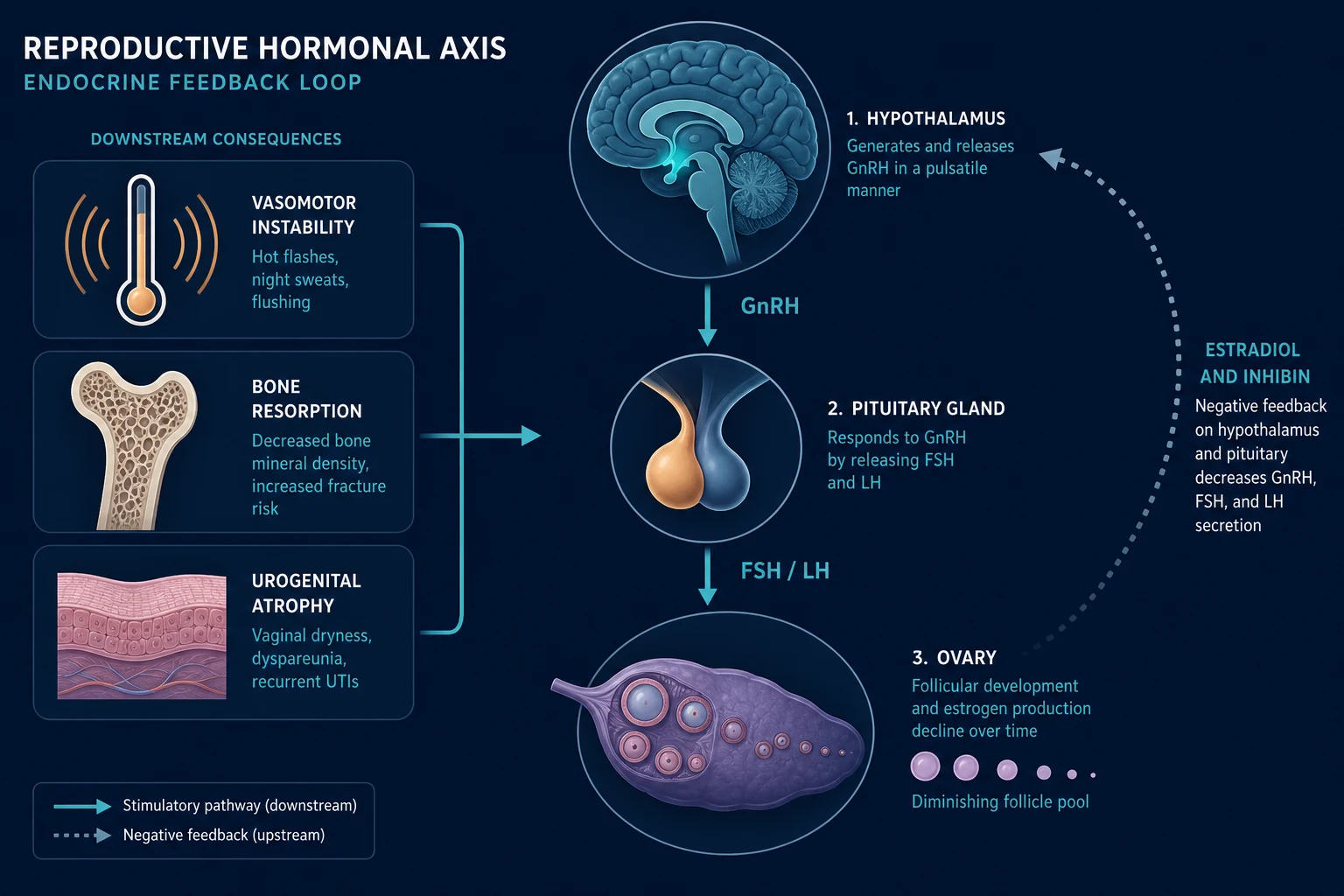
The mechanism of menopause is a loss of negative feedback. The ovarian follicle is the only source of cyclic oestradiol and inhibin B in a reproductive-age woman. As the follicle pool depletes, both fall; the pituitary, released from inhibition, secretes progressively more FSH (and LH). A persistently raised FSH over 25 to 30 IU/L is the biochemical signature of ovarian failure.[1]
The perimenopause is hormonally paradoxical: oestradiol fluctuates wildly (sometimes to supranormal levels because the high FSH over-drives the remaining follicles each cycle), while inhibin B is low and cycles become anovulatory. This explains the heavy, irregular bleeding of the transition and the unpredictability of symptoms — a woman can have severe hot flushes one week and breast tenderness the next. [1]
- Loss of oestradiol narrows the hypothalamic thermoneutral zone
- Noradrenergic and serotonergic dysregulation
- Small core-temperature rise triggers exaggerated heat dissipation
- Sweating, flushing, palpitation, then chill
- Oestrogen normally restrains osteoclasts (via RANKL ↓, osteoprotegerin ↑)
- Loss → unopposed resorption over formation
- ~10% cortical and ~15% trabecular loss in first 5 yr
- Sustained acceleration through late postmenopause
- Oestrogen receptors throughout vulva, vagina, lower urinary tract
- Epithelium thins; glycogen and lactobacilli fall
- Vaginal pH rises (>5) → dysbiosis, recurrent UTI
- Dryness, dyspareunia, urgency, incontinence
- Unfavourable lipid shift (↑LDL, ↑total cholesterol)
- Endothelial dysfunction, reduced nitric oxide
- Loss of oestrogen's vasodilator and anti-atherogenic effect
- Underlies the postmenopausal rise in CV events
The GnRH pulse generator: KNDy neurons
At the centre of the HPO axis sits the GnRH pulse generator — a population of kisspeptin, neurokinin B and dynorphin (KNDy) neurons in the hypothalamic arcuate nucleus. Kisspeptin is the most potent upstream activator of GnRH neurons known; neurokinin B stimulates pulse frequency while dynorphin provides the off-switch that sculpts each pulse. In the menopause, loss of oestradiol and inhibin negative feedback on KNDy neurons produces high-amplitude, high-frequency GnRH pulses, which in turn drive the disproportionately high FSH that is the biochemical signature. This is why FSH rises before LH in the transition (FSH is more pulse-frequency-sensitive than LH) and why an elevated FSH can be detected years before the final menstrual period while cycles are still regular.[1]
Folliculogenesis and the marker of ovarian reserve
Follicular development is a continuous process that begins in fetal life and does not pause. Primordial follicles are recruited continuously into the growing pool; each cycle, a cohort is recruited and a single dominant follicle is selected. Anti-Müllerian hormone (AMH), produced by the granulosa cells of small growing follicles, is the best quantitative marker of ovarian reserve. AMH falls progressively throughout reproductive life and becomes undetectable as the menopause approaches — it typically declines before FSH rises, making it the earliest indicator of declining reserve. In clinical practice AMH is not needed to diagnose natural menopause (it is a clinical diagnosis over the age of 45), but it is useful in fertility assessment, in the work-up of POI, and to predict the menopausal transition in women undergoing chemotherapy. Inhibin B is produced by the dominant follicle and corpus luteum and selectively suppresses FSH; its loss in the transition is the reason FSH climbs. [1]
The hot flush — the thermoneutral zone model
The modern mechanistic explanation of the hot flush is the thermoneutral zone model (Freedman). Core body temperature is normally defended within a narrow zone (about 0.4 degrees Celsius) between the thresholds for sweating (heat loss) and shivering (heat generation). Oestradiol normally widens this zone. In oestrogen deficiency the zone narrows markedly, so even a tiny upward drift in core temperature — from a warm room, a hot drink, stress, or the normal pre-ovulatory or nocturnal rise — triggers an exaggerated heat-dissipation response: a sudden surge of cutaneous vasodilation (especially of the face, neck and upper chest, producing the visible flush), profuse sweating, and a reflex tachycardia with a transient fall in blood pressure. The patient then perceives an overshoot chill as the temperature drops below the narrowed zone. The neuronal pathway involves noradrenergic projections from the brainstem and the KNDy neurons in the arcuate nucleus, which explains why neuroactive drugs (SSRIs, SNRIs, gabapentin, clonidine) can dampen flushes without replacing oestrogen. [1]
Bone loss — the RANKL / osteoprotegerin axis
Bone is remodelled continuously in coupled units of osteoclast-mediated resorption followed by osteoblast-mediated formation. The master switch of osteoclastogenesis is RANKL (Receptor Activator of Nuclear factor kappa-B Ligand), expressed by osteoblasts and marrow stromal cells; it binds the RANK receptor on osteoclast precursors and drives their maturation and activation. Osteoprotegerin (OPG) is a soluble decoy receptor that mops up RANKL and inhibits osteoclastogenesis. Oestrogen normally upregulates OPG and downregulates RANKL, restraining resorption and promoting osteoblast survival. Loss of oestrogen removes this restraint: RANKL rises, OPG falls, osteoclasts over-activate, and each remodelling cycle removes slightly more bone than is replaced. The result is high-turnover bone loss — about 10 percent of cortical and up to 15 to 20 percent of trabecular bone over the first five years after menopause, with vertebral (trabecular) bone lost earliest and fastest. This is also why denosumab (a monoclonal anti-RANKL antibody) and oestrogen both work for postmenopausal osteoporosis — they target the same final common pathway. [1]
Genitourinary atrophy — histology and microbiome
The vulva, vagina and lower urinary tract are rich in oestrogen receptors. In reproductive life the vaginal epithelium is a thick, stratified squamous epithelium rich in glycogen (deposited under oestrogen stimulation). Lactobacilli metabolise glycogen to lactic acid, maintaining a vaginal pH of 3.8 to 4.5 that inhibits pathogens. In oestrogen deficiency the epithelium thins to a few parabasal cell layers, glycogen is lost, lactobacilli disappear, and the vaginal pH rises above 5 — producing the characteristic vaginal maturation index shift (parabasal cells predominate, intermediate and superficial cells vanish). The tissue becomes pale, thin, dry and fragile, with loss of rugae and elasticity; the urethra and bladder trigone, which share the same embryological origin, undergo parallel atrophy — explaining the dyspareunia, recurrent UTI, urgency and incontinence of the genitourinary syndrome of menopause, and why low-dose vaginal oestradiol reverses these changes locally with negligible systemic absorption. [1]
Cardiovascular consequences
Oestrogen has multiple favourable cardiovascular effects: it improves the lipid profile (lower LDL and total cholesterol, higher HDL — though also a small rise in triglycerides with oral therapy), enhances endothelial function via nitric oxide and prostacyclin, supports endothelial progenitor cell mobilisation, and is anti-atherogenic. Loss of oestrogen around the menopause coincides with the postmenopausal acceleration of atherosclerosis and the rising cardiovascular event rate in women in their 50s and 60s. This biological substrate underlies the 'timing hypothesis' — replacing oestrogen early, before established plaque, may be protective, while giving it late, to a woman with established atherosclerosis, can destabilise plaque and precipitate events (the WHI cardiovascular signal in older starters). [1]
Clinical Presentation
The menopausal presentation clusters into four symptom domains, each with a specific mechanism and treatment. A candidate who can name all four and their temporal order has answered most of the clinical viva before it is asked.[1]
Vasomotor symptoms are the hallmark. A hot flush is a sudden, intense sensation of heat over the face, neck and chest, lasting 1 to 5 minutes, accompanied by flushing, sweating, palpitations and occasionally a follow-on chill. Flushes are worse at night (then called night sweats), with heat, stress, spicy food, caffeine and alcohol. They disrupt sleep, which in turn drives the fatigue, low mood and cognitive "brain fog" of the transition. [1]
Genitourinary syndrome of menopause (GSM) is the modern term for vulvovaginal and lower-urinary-tract atrophy. Symptoms include vaginal dryness, itching, burning, dyspareunia, postcoital bleeding, and urinary urgency, dysuria, recurrent UTI and incontinence. Unlike vasomotor symptoms, GSM tends to worsen without treatment and rarely remits spontaneously. [1]
Psychological and sleep symptoms — mood swings, irritability, low mood, anxiety, sleep disturbance with early-morning waking, and the subjective cognitive "brain fog" of poor concentration. The mood change is partly direct (oestrogen modulates serotonin and noradrenaline) and partly the consequence of sleep disruption from night sweats. [1]
Menstrual change in the perimenopause — cycles initially shorten (short follicular phase), then lengthen and vary, flow becomes variable, cycles are anovulatory, and ultimately menses cease. Heavy, irregular bleeding in the transition must always prompt consideration of endometrial pathology. [1]
Long-term somatic consequences of unrecognised or untreated oestrogen deficiency — osteopenia and osteoporosis (with height loss, kyphosis and fragility fracture), urogenital atrophy, skin thinning and breast atrophy, central fat redistribution, and a rising cardiovascular risk profile. [1]
The temporal sequence — what comes first
Symptoms do not arrive all at once, and recognising the sequence helps distinguish the transition from mimics. The earliest endocrine change is a rise in FSH with a shortening of the follicular phase (cycles become shorter, often 21 to 24 days) and heavier flow — sometimes years before any vasomotor symptom. Vasomotor symptoms typically begin in late perimenopause and peak in the first one to two years postmenopause, then gradually fade. The genitourinary syndrome usually becomes clinically significant later — often years into the postmenopause, as oestrogen-dependent tissues slowly atrophy — and, unlike vasomotor symptoms, progresses without treatment. Mood and cognitive symptoms cluster with the vasomotor phase, while bone and cardiovascular consequences accumulate silently over decades. [1]
Quantifying the symptoms
Two validated instruments are widely used. The Menopause Rating Scale (MRS) scores eleven symptoms across somatic, psychological and urogenital domains and is useful for baseline and follow-up. The Greene Climacteric Scale similarly quantifies vasomotor, psychological and somatic symptoms. In practice the decision to treat is clinical — a woman whose vasomotor symptoms disrupt her sleep, work or relationships warrants treatment regardless of the score. [1]
Sleep architecture and the "brain fog"
Sleep disturbance in the transition is partly direct (oestrogen modulates sleep architecture, reducing slow-wave sleep) and partly the consequence of night sweats that fragment sleep with frequent awakenings. The resulting sleep deprivation drives the daytime fatigue, irritability, poor concentration and subjective "brain fog" — symptoms that overlap with, but are mechanistically distinct from, a primary depressive disorder. Restoring sleep (with HRT, with CBT, or with gabapentin when night sweats dominate) often resolves the cognitive symptoms without an antidepressant. [1]
The genitourinary syndrome — the symptom that progresses
The genitourinary syndrome of menopause is often under-recognised because women are reluctant to volunteer sexual symptoms and clinicians do not routinely ask. The progression is predictable: vaginal dryness and itching appear first, then dyspareunia (entry dyspareunia from introital narrowing and loss of distensibility), then postcoital bleeding from fragile atrophic epithelium, then recurrent urinary tract infection and urgency / incontinence as the lower urinary tract atrophies. Untreated, the vagina can shorten and narrow, producing a functional vaginal stenosis that makes pelvic examination — and sexual intercourse — painful or impossible. The early use of low-dose vaginal oestrogen can prevent this progression. [1]
Differential Diagnosis
Menopause is usually obvious, but its individual symptoms are not. The differentials below are the ones examiners probe. [1]
Differential of hot flushes — hyperthyroidism (weight loss, tremor, heat intolerance, tachycardia), carcinoid syndrome (diarrhoea, wheeze, flushing, valvular disease), phaeochromocytoma (paroxysmal hypertension, headache, palpitation), infection (fever pattern), anxiety / panic disorder (psychological trigger, dyspnoea, paraesthesia), and drug-related (niacin, calcium-channel blockers, tamoxifen, GnRH analogues, steroids).[1]
Differential of postmenopausal bleeding (PMB), ranked by urgency — endometrial cancer (always exclude first), endometrial hyperplasia, atrophic vaginitis / GSM, cervical cancer, endometrial / cervical polyp, HRT-related withdrawal, and rarely oestrogen-secreting ovarian tumour (granulosa-cell). About 5 to 10 percent of women with PMB have endometrial cancer; the rate rises with age and risk factors. [1]
Differential of low mood in the transition — menopausal mood disturbance, major depressive disorder, thyroid dysfunction, adjustment disorder, anxiety disorder, and substance misuse. Distinguish by timing (worse in the late transition), prior psychiatric history, persistence independent of vasomotor symptoms, and the cardinal features of depression (anhedonia, suicidal ideation). [1]
- Age-appropriate (45+)
- Night-time predominance, heat triggers
- Ovarian failure pattern (high FSH if measured)
- Normal thyroid function
- Heat intolerance, weight loss, tremor
- Tachycardia, atrial fibrillation, lid lag
- Suppressed TSH, raised free T4/T3
- No cyclic pattern
- Patchy erythema, watery diarrhoea, wheeze
- Right heart valvular lesions
- Raised 24-h urinary 5-HIAA
- Triggered by alcohol / cheese
- Paroxysmal hypertension, throbbing headache
- Palpitations, profound sweating
- Raised plasma / 24-h urine metanephrines
- No heat or sleep trigger
Clinical & Bedside Assessment
The focused history captures the symptom cluster, the impact on life, the contraindications to HRT, and the risk factors for osteoporosis and cardiovascular disease. Ask about age, menstrual pattern, vasomotor, genitourinary, mood, sleep, libido, lifestyle (smoking, alcohol, exercise, diet), drug history (OCP, prior HRT, tamoxifen), and a personal and family history of breast cancer, VTE, stroke, cardiovascular disease and osteoporosis.[5]
Examination should include BMI, blood pressure, breast examination, abdominal and pelvic examination (speculum to assess vaginal atrophy, cervical status and any bleeding source; bimanual for uterine size, masses and tenderness), and a search for signs of thyroid disease and anaemia. The genitourinary syndrome can be quantified at the bedside by vaginal inspection (thinning, pallor, loss of rugae, dryness, petechiae) and a vaginal pH over 5. [1]
Absolute contraindications to systemic oestrogen that must be actively sought at every consult: current or past breast cancer, oestrogen-sensitive cancer, active liver disease, personal history of VTE or ischaemic stroke, unexplained vaginal bleeding until investigated, and pregnancy.[2][5]
Absolute versus relative contraindications — the viva distinction
Examiners distinguish absolute from relative contraindications because the response differs: an absolute contraindication means no systemic oestrogen at all (use non-hormonal options); a relative contraindication means modify the regimen (typically switch to transdermal and seek specialist input). [1]
- Current or past breast cancer
- Any oestrogen-sensitive cancer (endometrial)
- Active liver disease (acute hepatitis, severe cirrhosis)
- Personal history of VTE or ischaemic stroke
- Unexplained vaginal bleeding until investigated
- Pregnancy; active porphyria cutanea tarda
- Migraine with aura → transdermal oestrogen
- Uncontrolled hypertension → control BP first
- Hypertriglyceridaemia → transdermal (avoid oral)
- Gallstones / biliary disease → transdermal
- Obesity (BMI over 30) → transdermal
- Smoking over age 35 → transdermal; advise cessation
HORMONES
Investigations
Menopause is a clinical diagnosis in a woman over 45 with typical symptoms — no routine blood tests are required.[5] Investigations are reserved for specific indications.
WHEN FSH
Tests before starting HRT — blood pressure, BMI, breast awareness (and mammography per the national screening programme), lipid and glucose profile if risk factors, and a baseline DEXA if osteoporosis risk factors are present. [1]
Investigating postmenopausal bleeding — transvaginal ultrasound first: an endometrial thickness over 4 to 5 mm warrants biopsy. Perform out-patient endometrial biopsy (Pipelle); if sampling is inadequate or bleeding is recurrent, proceed to hysteroscopy with targeted biopsy. Always also inspect the cervix (exclude cervical cancer) and vagina (exclude atrophic or neoplastic causes). [1]
Work-up of POI after a raised FSH is confirmed — karyotype, fragile X (FMR1) premutation screen, adrenal (21-hydroxylase) and thyroid antibodies, pelvic ultrasound (autoimmune oophoritis, follicles), and a baseline DEXA.[1]
DEXA in the menopausal woman — universal screening at age 65 (or earlier if risk factors: POI / early menopause, BMI under 20, smoking, glucocorticoids over 5 mg prednisolone daily for 3 months, parental hip fracture, rheumatoid arthritis, excess alcohol). Use FRAX to estimate the 10-year probability of hip and major osteoporotic fracture and to guide the threshold for pharmacotherapy. [1]
Interpreting the hormone panel — patterns at a glance
When a hormone panel is performed (typically only in younger women, suspected POI, or atypical presentations), the pattern of FSH, LH, oestradiol, prolactin and TSH is more informative than any single value. The table below is the viva-ready reference for distinguishing the major causes of amenorrhoea in a woman of menopausal age. [1]
- FSH raised (over 25–30 IU/L)
- LH raised (less than FSH)
- Oestradiol low
- Prolactin and TSH normal
- Diagnosis: ovarian failure
- FSH low or inappropriately normal
- LH low
- Oestradiol low
- Prolactin and TSH normal
- Trigger: weight loss, exercise, stress, eating disorder
- FSH low or normal
- LH low or normal
- Oestradiol low or normal
- PROLACTIN RAISED
- Cause: prolactinoma, drugs, pregnancy, hypothyroidism
- FSH normal
- LH often raised (LH:FSH ratio)
- Oestradiol normal or high
- Testosterone raised; prolactin/TSH normal
- Rotterdam: 2 of oligo/anovulation, hyperandrogenism, polycystic ovaries
- FSH suppressed
- LH suppressed
- Oestradiol and progesterone high
- BETA-HCG RAISED
- ALWAYS exclude first — most common cause of secondary amenorrhoea
- FSH low
- LH low
- Oestradiol low
- Multiple axes low (TSH, ACTH, GH, prolactin)
- Cause: pituitary adenoma, apoplexy, postpartum infarction
The progestogen challenge test
In a woman with amenorrhoea and an intact uterus whose diagnosis is unclear, the progestogen challenge test localises the problem. Give medroxyprogesterone 10 mg daily for 5 to 10 days (or norethisterone 5 mg three times daily for 5 to 10 days). A withdrawal bleed within 2 to 7 days means the woman produces adequate endogenous oestrogen (she is anovulatory — think PCOS or early perimenopause) and has a patent outflow tract. No bleed means either hypoestrogenism (POI, hypothalamic amenorrhoea, menopause) or an outflow obstruction (Asherman syndrome, cervical stenosis). The next step after a negative progestogen challenge is the oestrogen-progestogen challenge: a course of combined oestrogen then progestogen — a bleed confirms a patent uterus with hypoestrogenism; no bleed confirms an outflow obstruction (Asherman), best confirmed by hysteroscopy. [1]
Management — Resuscitation & Immediate
There is no resuscitation in the usual sense, but a small set of presentations need urgent referral or escalation and must not be managed routinely: [1]
- Suspected cancer (postmenopausal or persistent irregular bleeding, a breast lump, or an abnormal cervix) → 2-week-wait / urgent suspected-cancer pathway to gynaecology or breast services.
- Severe depression or suicidal ideation in the transition → urgent mental-health assessment; treat the depression on its own merits (HRT is not first-line for major depressive disorder).
- Suspected VTE or stroke on HRT → stop systemic oestrogen immediately, investigate, and anticoagulate as appropriate; future oestrogen must be transdermal only (with haematology input).
- Heavy irregular perimenopausal bleeding — first exclude pregnancy and endometrial pathology; then tranexamic acid 1 g four times daily plus an NSAID (mefenamic acid 500 mg three times daily) during heavy days; the levonorgestrel intrauterine system is highly effective long-term; norethisterone 5 mg three times daily on days 5 to 26 if cycles are anovulatory.[5]
Management — Definitive & Stepwise
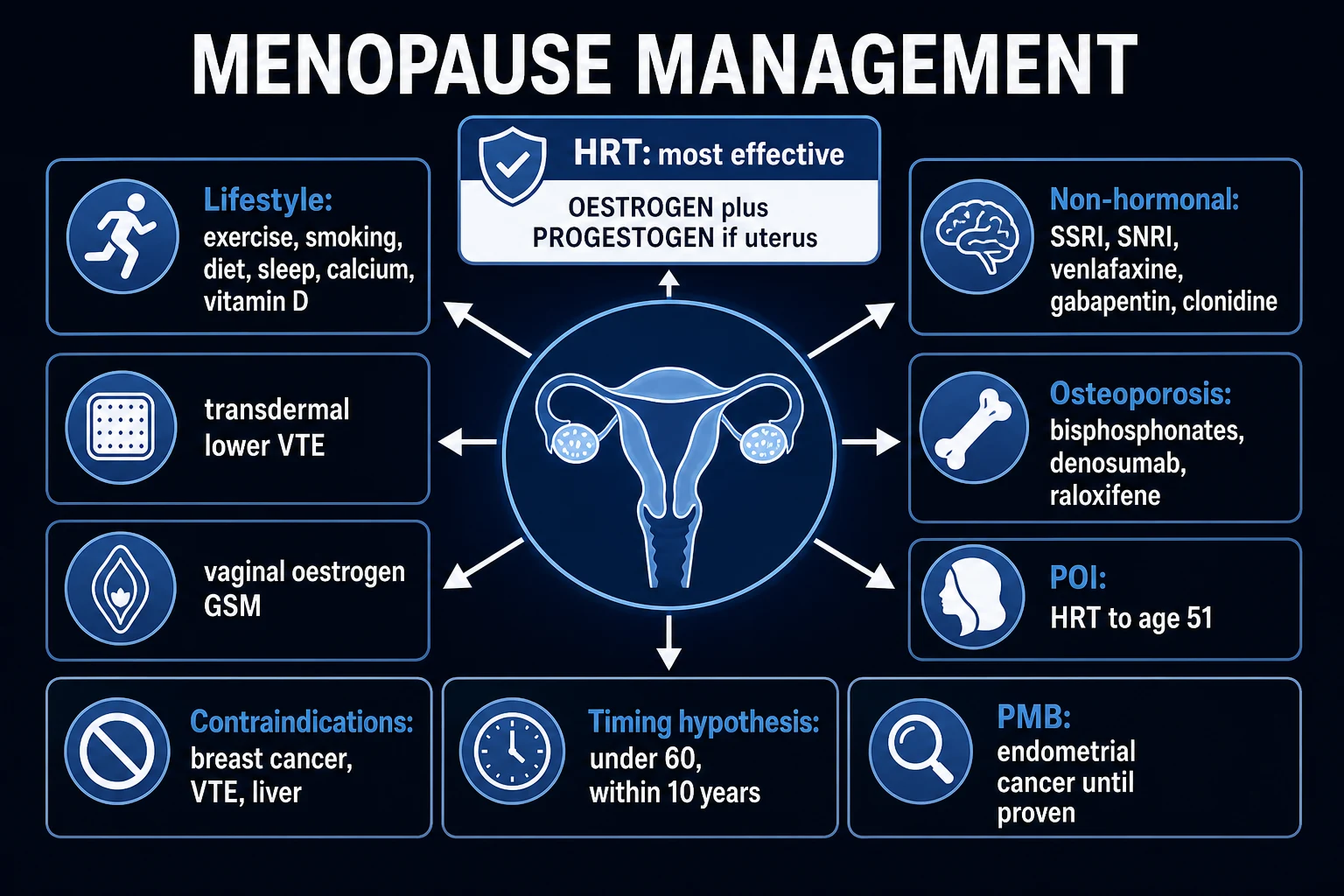
Treatment is individualised — the right patient, the right agent, the right route, the right timing. The four pillars are lifestyle for all, HRT when indicated, non-hormonal options when HRT is contraindicated, and bone-protective therapy. [1]
1. Lifestyle measures (every woman)
Weight-bearing and aerobic exercise (bone, cardiovascular, mood, weight), smoking cessation (reduces flushes, protects bone, lowers cardiovascular risk, may delay menopause), moderation of alcohol and caffeine (reduce vasomotor triggers), a healthy diet rich in calcium and vitamin D, sleep hygiene, layered clothing and fans, and weight management. Cognitive behavioural therapy (CBT) has evidence for vasomotor and mood symptoms.[1]
2. Hormone replacement therapy (HRT)
HRT is the most effective treatment for vasomotor symptoms (over 75 percent reduction), for GSM and for bone protection, and is indicated for symptomatic women under 60 or within 10 years of menopause with no contraindication.[3][5]
Oestrogen — oral (conjugated equine oestrogen, oestradiol valerate; convenient but higher VTE/stroke risk), transdermal (patch or gel — preferred when VTE risk, migraine with aura, obesity, hypertriglyceridaemia, gallstones, smoking over 35), vaginal (low-dose oestradiol cream or tablets — for GSM only, minimal systemic absorption). [1]
Progestogen — micronised progesterone (200 mg nocte for 12 days cyclically, or 100 mg daily continuously) and dydrogesterone are preferred — neutral breast and vascular profile. Medroxyprogesterone acetate was the WHI trial agent and is less preferred. Norethisterone and the levonorgestrel IUS are practical alternatives.[2][5]
Regimens — cyclical / sequential for the perimenopause and within 1 to 2 years of the last period (continuous oestrogen with a progestogen for 12 to 14 days each month → a regular withdrawal bleed). Continuous combined for postmenopausal women more than 1 to 2 years past the last period (daily oestrogen plus progestogen → bleed-free after a few months). [1]
Tibolone — a synthetic STEAR (Selective Tissue Estrogenic Activity Regulator) with weak oestrogenic, progestogenic and androgenic activity; for postmenopausal women only; may improve libido and has lower breast tenderness; not used in the perimenopause (irregular bleeding). [1]
3. Vaginal oestrogen for isolated GSM
First-line for the genitourinary syndrome in any woman, with or without systemic HRT. Vaginal oestradiol tablets (10 mcg) or cream (0.01 percent) twice weekly, continued long-term; systemic absorption is minimal so progestogen cover is usually not required even with a uterus, provided low doses are used.[5]
4. Non-hormonal options for vasomotor symptoms
For women in whom systemic oestrogen is contraindicated or declined: [1]
- Venlafaxine 37.5–75 mg (most evidence)
- Escitalopram, citalopram
- AVOID paroxetine with tamoxifen (CYP2D6)
- Side-effects: nausea, insomnia, sexual dysfunction
- Gabapentin 300–900 mg nocte
- Useful when night sweats dominant
- Side-effects: sedation, dizziness
- Pregabalin 75–150 mg daily
- 50 mcg twice daily
- Limited efficacy; dry mouth, hypotension
- Avoid in hypotension / depression
- Now historical third-line
- Oxybutynin 2.5–5 mg (anticholinergic)
- CBT (level-1 evidence for symptoms and impact)
- Stellate ganglion block (specialist)
- Avoid compounded 'bioidentical' hormones
5. Bone protection
When HRT is not used or is stopped, give calcium (1000 to 1200 mg/day) and vitamin D (800 to 1000 IU/day) supplementation, weight-bearing exercise, smoking cessation and alcohol moderation. Pharmacotherapy (when FRAX thresholds met): bisphosphonates (alendronate 70 mg weekly, risedronate, zoledronic acid 5 mg IV annually), denosumab 60 mg subcutaneously six-monthly, the SERM raloxifene 60 mg daily (also reduces breast cancer risk), and teriparatide (anabolic, for severe osteoporosis). [1]
6. Testosterone for hypoactive sexual desire disorder
A 6-month trial of transdermal testosterone (a 5 mg male patch or gel, applied at a quarter to a third of the male dose) may be offered to a postmenopausal woman with hypoactive sexual desire disorder (HSDD) that persists despite adequate systemic oestrogen. Monitor levels and review at six months; stop if no benefit.[5]
7. HRT pharmacology reference — every agent, every dose
The single most common reason a candidate loses marks on a menopause viva is a vague answer about HRT doses. The table below is the reference a marker expects: the oestrogen, the route and dose, the progestogen and dose, and the regimen. [1]
- Oestradiol valerate or hemihydrate 1–2 mg daily
- Conjugated equine oestrogen 0.3–0.625 mg daily
- Convenient; first-pass raises VTE/stroke risk
- Avoid in VTE risk, migraine aura, obesity
- Patch 25–100 mcg/24 h, twice weekly
- Gel 0.5–1.5 mg daily (e.g. 2–3 pumps of Oestrogel)
- Spray 1–3 sprays daily to forearm
- Bypasses hepatic first-pass — lower VTE, preferred in risk factors
- Cream 0.01% nightly for 2 wk then twice weekly
- Tablet/insert 10 mcg nightly for 2 wk then twice weekly
- Ring (Estring) 7.5 mcg/24 h, changed 3-monthly
- GSM ONLY — negligible systemic absorption; progestogen usually not needed
- Cyclical: 200 mg nocte for 12 days each month
- Continuous: 100 mg nocte daily
- Neutral breast and vascular profile (preferred)
- Derived from yam; 'body-identical', not compounded
- Cyclical: 10 mg daily for 12–14 days each month
- Continuous: 5–10 mg daily
- Neutral breast profile (E3N cohort)
- Preferred second to micronised progesterone
- Cyclical: 5 mg daily for 12 days each month
- Continuous: 1–2.5 mg daily
- Often combined in a single patch with oestradiol
- Androgenic progestin — practical alternative
- 2.5–10 mg daily (continuous) or 5–10 mg cyclical
- The WHI trial progestin — less preferred
- Higher breast-cancer signal than micronised
- Largely superseded in UK/US guidance
- 52 mg intrauterine system (Mirena)
- Released 20 mcg/24 h, lasts 5 yr (8 yr off-license for HRT)
- Provides endometrial protection + contraception
- Ideal in perimenopause with heavy or irregular bleeding
- 2.5 mg daily (postmenopausal women only)
- STEAR: weak oestrogenic + progestogenic + androgenic
- Improves libido; lower breast tenderness
- Avoid in perimenopause — irregular bleeding; caution in breast-cancer survivors
- Male gel/patch at a quarter to a third of male dose (about 5 mg daily)
- For HSDD persisting despite adequate oestrogen
- Monitor total testosterone (aim low-normal female range)
- Trial 6 months; stop if no benefit
Dose titration. Start at a standard dose (e.g. oestradiol patch 50 mcg/24 h, or oral 1 to 2 mg) and review at 3 months. Up-titrate if symptoms persist after 3 months (the next patch step is 75 to 100 mcg/24 h; gel can be increased pump by pump). Down-titrate at the annual review toward the lowest effective dose once symptoms are controlled. Do not titrate by serum oestradiol — there is no validated target level and it correlates poorly with symptoms. [1]
Trigger points
- Start at 3 months: review symptom control and side-effects, titrate dose.
- Annual review: blood pressure, weight, breast awareness, assess ongoing need; the aim is the lowest effective dose for the shortest necessary time — but there is no mandatory time limit and duration is individualised.
- Stop when symptoms have resolved (typically 2 to 5 years); taper or stop abruptly — there is no safety requirement to wean, though tapering reduces symptom rebound.
- Urgent review for any unscheduled or postmenopausal bleeding, chest pain, calf pain or swelling, breathlessness, or a sudden severe headache. [1]
Managing common HRT side-effects
Side-effects are common in the first weeks to months of HRT and usually settle as the body equilibrates. A structured approach prevents premature discontinuation (the commonest reason HRT "fails"). [1]
- Commonest early side-effect
- Reduce oestrogen dose; switch oral to transdermal
- Ensure progestogen is taken nocte
- Usually settles by 6–12 wk
- Cyclical regimen: bleeding at the wrong time
- Continuous combined: bleeding after 6 mo
- ALWAYS investigate persistent PMB/unscheduled bleeding
- Transvaginal US → endometrial biopsy if ET over 4–5 mm
- Often first-pass / dose-related
- Switch oral to transdermal
- Reduce dose; review at 3 mo
- Exclude migraine with aura before continuing oral
- Some progestogens are mood-negative (MPA, norethisterone)
- Switch to micronised progesterone or the LNG-IUS
- Distinguish from a primary mood disorder
- Review at 3 mo
- Often attributed but evidence is weak
- Address lifestyle; review dose
- Rule out undertreated hypothyroidism
- Reassure — menopause itself shifts fat centrally
- Fluid retention with oral oestrogen
- Switch to transdermal
- Monitor BP at 3 mo and annually
- Treat hypertension on its own merits
Unscheduled bleeding on HRT — the algorithm
Unscheduled bleeding on HRT is the single most common reason a candidate must demonstrate a structured answer. The principle is identical to that for postmenopausal bleeding: never assume it is the drug. [1]
-
When does bleeding count as "unscheduled"? On a cyclical regimen, any bleeding outside the expected progestogen-withdrawal window. On continuous combined therapy, any bleeding after the first 6 months (light irregular spotting in the first 3 to 6 months is common and acceptable). [1]
-
What to do. (i) Examine — speculum (cervical/vaginal cause, atrophy, polyp) and bimanual (uterine size, tenderness). (ii) Transvaginal ultrasound — measure endometrial thickness. (iii) If the endometrial thickness is over 4 to 5 mm, perform out-patient endometrial biopsy (Pipelle). (iv) If sampling is inadequate, bleeding is recurrent, or the ultrasound is suspicious, proceed to hysteroscopy with targeted biopsy. [1]
-
If pathology is excluded and bleeding persists, increase the progestogen duration (e.g. from 12 to 14 days in a cyclical regimen) or switch the progestogen (to micronised progesterone or the levonorgestrel IUS); consider switching from continuous combined to a cyclical regimen if the woman is actually still perimenopausal.[5]
Contraception and the perimenopause — the often-missed rule
HRT does not suppress ovulation, and a perimenopausal woman can still conceive. Continue a separate contraceptive method until she is definitively postmenopausal: two years of amenorrhoea before age 50, or one year of amenorrhoea after age 50. The combined oral contraceptive pill can be used off-label until age 50 in non-smokers without contraindications (it both controls cycle irregularity and provides vasomotor relief); the levonorgestrel IUS (Mirena) is an excellent dual-purpose option that also provides the progestogen component of HRT. Sterilisation and barrier methods remain valid throughout. Fertility declines sharply in the late transition but is never zero until the menopause is confirmed.[5]
Specific Subtypes & Scenarios
- Premature ovarian insufficiency (under 40) — after confirming FSH over 25 IU/L twice, work up the cause (karyotype, FMR1 premutation, adrenal and thyroid antibodies, DEXA). Treat with combined HRT or the combined oral contraceptive pill until age 51; this is replacement, not the "HRT" of older women — the risks quoted for late-start HRT do not apply. Address fertility (oocyte donation IVF), contraception (spontaneous ovulation may still occur), and psychological support.[1][5]
- Surgical menopause (bilateral oophorectomy) — symptoms are abrupt and severe; HRT until 51 if no contraindication; higher osteoporosis and cardiovascular risk mandates long-term bone and cardiovascular follow-up. Pre-operative counselling is essential.
- Chemotherapy / pelvic radiotherapy — may be permanent; younger women may recover. Address bone and cardiovascular protection, and fertility counselling before treatment; offer HRT or non-hormonal options as appropriate afterwards.
- Woman with a uterus versus hysterectomised — uterus intact needs progestogen; after hysterectomy oestrogen alone (add progestogen transiently if residual endometriosis).
- Perimenopausal woman still needing contraception — HRT does not suppress ovulation. Combine HRT with a separate contraceptive until 2 years of amenorrhoea under 50 or 1 year over 50. The combined oral contraceptive pill may be used off-label until age 50 in non-smokers without contraindications.[5]
- History of VTE or migraine with aura — transdermal oestrogen preferred (avoids the prothrombotic first-pass); involve haematology or neurology.
- Refractory GSM — optimise systemic HRT, add vaginal moisturisers and lubricants, pelvic floor physiotherapy, vaginal dilators for stenosis, vaginal DHEA (prasterone), and psychosexual counselling.
Complications & Pitfalls
Risks of combined HRT (per 1000 women per year, roughly, from WHI and the 13-year extended follow-up): VTE — about 2 to 3 excess events (mostly in the first 1 to 2 years, higher with oral route, obesity and age); stroke — about 1 excess event; breast cancer — about 1 excess after 5 or more years of combined continuous oestrogen-plus-progestogen; gallbladder disease — modest increase with oral therapy. Oestrogen alone in hysterectomised women did not show an increased breast-cancer risk and may even have been modestly protective.[3][4]
BEAST
Why oral oestrogen has higher VTE risk than transdermal — the first-pass hepatic effect reduces antithrombin III and increases factor VII and fibrinogen, tipping the balance toward thrombosis. Transdermal oestrogen bypasses the first pass and does not activate coagulation — the safer route when any VTE or cardiovascular risk factor is present.[4]
Classic pitfalls — assuming amenorrhoea is menopause without excluding pregnancy; relying on a single FSH in the perimenopause (it fluctuates); missing POI in a young amenorrhoeic woman; ignoring postmenopausal bleeding; giving unopposed oestrogen to a woman with a uterus; using the COCP as HRT in POI (the COCP is acceptable but physiological HRT is preferred for long-term replacement); chasing a "low oestradiol" to titrate HRT dose (it should not be used this way). [1]
Endometrial surveillance on HRT — investigate any unscheduled bleeding (transvaginal US, biopsy, hysteroscopy). Routine surveillance of asymptomatic women on HRT is not recommended and does not improve outcomes. [1]
Prognosis & Disposition
Vasomotor symptoms spontaneously resolve in most women within 4 to 7 years; 10 to 15 percent have symptoms for over a decade. The genitourinary syndrome, in contrast, worsens without treatment. Long-term outlook is shaped by age at menopause, lifestyle, bone mineral density, and cardiovascular risk-factor control. [1]
Duration of HRT is individualised — review annually; taper or stop when symptoms resolve (typically 2 to 5 years), but there is no mandatory stop-date for a woman doing well, and the decision balances symptom control against the small duration-dependent breast-cancer risk. [1]
Disposition — most menopausal women are managed in primary care. Refer to a specialist menopause clinic for POI / early menopause, contraindications (breast cancer, VTE), persistent or refractory symptoms, surgical / iatrogenic menopause, and complex hormonal scenarios. [1]
Safety-net — review at 3 months (efficacy and tolerability), annually thereafter (blood pressure, weight, breast awareness, ongoing need), and urgently for any unscheduled or postmenopausal bleeding, chest pain, calf pain, breathlessness, or a sudden severe headache. [1]
Special Populations
Premature ovarian insufficiency (POI, under 40)
POI is the most important special population because the consequences of untreated hypoestrogenism act over a longer horizon and because the standard HRT risk calculus does not apply. After confirming the diagnosis (FSH over 25 IU/L on two samples 4 to 6 weeks apart, with a low oestradiol, and exclusion of pregnancy), investigate the cause: a karyotype (Turner syndrome and other chromosomal causes), an FMR1 fragile-X premutation screen (the commonest single-gene cause in Caucasians), adrenal 21-hydroxylase and thyroid antibodies (autoimmune polyglandular failure), and a baseline DEXA. Treat with combined transdermal oestradiol plus a cyclical progestogen (or the combined oral contraceptive pill, which is acceptable but less physiological) continued until the average age of menopause (51). This is replacement of a missing hormone, not the "HRT" of older women — the risks quoted for late-start HRT do not apply, and a woman with POI should never be denied oestrogen out of fear of those risks. Address fertility (oocyte donation IVF is the principal route; spontaneous ovulation may resume unpredictably, so contraception is still needed if pregnancy is undesired), bone health (DEXA follow-up, calcium, vitamin D, weight-bearing exercise), and psychological support (the diagnosis of POI carries a significant emotional burden).[1][5]
Breast cancer survivors
Systemic oestrogen is contraindicated in a woman with a current or past history of hormone-receptor-positive breast cancer. The management ladder is: (i) lifestyle — weight-bearing exercise, weight management, sleep hygiene, layered clothing and fans; (ii) cognitive behavioural therapy, which has level-1 evidence for both vasomotor symptoms and the psychological impact; (iii) pharmacological non-hormonal options — venlafaxine (37.5 to 75 mg daily) or escitalopram (10 to 20 mg daily), with a critical caveat: avoid paroxetine and fluoxetine in a woman on tamoxifen, because they are potent CYP2D6 inhibitors and reduce tamoxifen's conversion to its active metabolite endoxifen; gabapentin (300 to 900 mg nocte) when night sweats dominate; clonidine as a historical third-line option; (iv) vaginal oestrogen for the genitourinary syndrome — only with oncology input, because systemic absorption is minimal but not zero; and (v) consideration of oxybutynin or a stellate ganglion block in refractory cases. Never give systemic oestrogen without a clear oncology-led multidisciplinary decision.[5]
Personal history of VTE or thrombophilia
A personal history of VTE (or a known thrombophilia) is a contraindication to oral oestrogen because the first-pass hepatic effect lowers antithrombin III and raises clotting factors. Transdermal oestrogen bypasses the first pass and does not activate coagulation — so it is the preferred route after haematology input, with the uterus protected by a progestogen (preferably the levonorgestrel IUS, which avoids any additional systemic procoagulant effect). In a woman at high thrombotic risk (e.g. antithrombin deficiency, antiphospholipid syndrome, recent VTE, active malignancy), avoid systemic oestrogen entirely and use non-hormonal options plus vaginal oestrogen for GSM. Always anticoagulate as the primary disease demands; HRT is an adjunct, not a substitute.[4]
Migraine with aura and cardiovascular disease
Migraine with aura is itself a risk factor for ischaemic stroke and is a relative contraindication to oral combined hormonal contraception; the same first-pass logic applies to oral oestrogen in HRT. Transdermal oestradiol avoids the prothrombotic effect and does not appear to increase stroke or VTE risk — it is the route of choice in a woman with migraine with aura, established cardiovascular disease, or multiple vascular risk factors. The same logic applies in women with hypertriglyceridaemia (oral oestrogen can precipitate pancreatitis), gallstones, and uncontrolled hypertension — switch to transdermal and manage the underlying condition.[4]
After hysterectomy — and the endometriosis caveat
A woman who has had a hysterectomy needs oestrogen alone — no progestogen is required because there is no endometrium to protect, and removing the progestogen removes its mood and vascular side-effects. The one exception is a woman with a history of endometriosis who has had a hysterectomy but retains residual endometriotic deposits: add a progestogen (or use tibolone) for a period to suppress any residual disease and avoid the rare but serious complication of malignant transformation of residual endometriosis under unopposed oestrogen. Surgical menopause (bilateral oophorectomy) at any age produces abrupt, severe symptoms and higher long-term bone and cardiovascular risk — start HRT immediately after surgery (unless contraindicated) and continue until the average age of menopause.[5]
Perimenopausal contraception — the often-missed rule
HRT does not suppress ovulation, and a perimenopausal woman can still conceive. Continue a separate contraceptive method until she is definitively postmenopausal — two years of amenorrhoea before age 50 or one year of amenorrhoea after age 50. The combined oral contraceptive pill can be used off-label until age 50 in non-smokers without contraindications; it controls cycle irregularity, provides vasomotor relief, and offers contraception. The levonorgestrel IUS (Mirena) is an excellent dual-purpose option that provides the progestogen component of HRT, controls heavy menstrual bleeding, and offers contraception for up to 5 to 8 years. Sterilisation and barrier methods remain valid throughout the transition. Fertility declines sharply in the late transition but is never zero until the menopause is confirmed.[5]
Obesity
Obesity independently increases VTE risk and worsens vasomotor symptoms (the "insulation" plus altered thermoregulation effect). Oral oestrogen adds a further prothrombotic increment, so the transdermal route is preferred in a woman with a BMI over 30. Weight management is itself a symptomatic and cardiovascular intervention. Vaginal oestrogen can be added for GSM without systemic concerns.[4]
Evidence, Guidelines & Regional Differences
The Women's Health Initiative (WHI, 2002) reported that combined conjugated equine oestrogen plus medroxyprogesterone acetate increased breast cancer, VTE, stroke and coronary events in largely older postmenopausal women, leading to a dramatic global fall in HRT use.[3] Subsequent age-stratified re-analysis (and the 13-year extended follow-up, Manson 2013) showed the excess cardiovascular risk applied principally to women starting over 60 or more than 10 years past menopause.[4]
The 'timing hypothesis' — supported by the Nurses' Health Study, the WHI age-stratified re-analysis, and the KEEPS and ELITE trials — holds that HRT initiated within 10 years of menopause or under age 60 has a neutral or favourable cardiovascular profile, slowing early atherogenesis.[4][5]
The landmark trials — what each showed and what it changed
The evidence base for menopausal hormone therapy is one of the most contested in modern medicine. A candidate who can name the trial, state its population, and summarise its finding will out-perform one who recites a slogan. The trials below are the canon. [1]
- Postmenopausal Estrogen/Progestin Interventions
- First RCT of oral CEE ± progestin vs placebo
- Oestrogen improved lipids and bone density
- Unopposed oestrogen → endometrial hyperplasia; progestogens prevented it (the uterus rule, RCT-proven)
- Heart and Estrogen/progestin Replacement Study
- Secondary prevention in women with prior CHD
- No overall CV benefit; early HARM in year 1 (more events)
- Killed the 'HRT prevents heart disease in everyone' belief
- CEE + medroxyprogesterone acetate vs placebo
- Average age 63, 10+ yr from menopause
- Increased breast cancer, VTE, stroke, CHD
- Triggered the global collapse in HRT prescribing
- CEE alone in hysterectomised women
- No increased breast cancer (trend to LOWER)
- No increase in CHD; reduced fracture
- Oestrogen-alone has a DIFFERENT risk profile from combined
- 13-yr cumulative follow-up of both WHI arms
- Age-stratified reanalysis supports the timing hypothesis
- Younger women (50–59) had neutral/favourable CV outcomes
- Rehabilitated appropriately-timed HRT
- Kronos Early Estrogen Prevention Study
- Recently menopausal women (avg age 52)
- Oral CEE vs transdermal oestradiol vs placebo
- No progression of carotid intima-media thickness; both routes well tolerated
- Early vs Late Intervention Trial with Estradiol
- Stratified by less than 6 yr vs over 10 yr from menopause
- Less atherosclerosis progression in EARLY starters
- Direct RCT evidence for the timing hypothesis
- Women's International Study of long Duration Oestrogen
- Started combined HRT in women OVER 65
- Significant early excess of CV and VTE events
- Confirms that late-start combined HRT is harmful
- Large prospective observational cohort
- Oestradiol + MICRONISED or DYDROGESTERONE
- NO significant increase in breast cancer
- Contrasts with MPA — supports preferred progestogens
- Meta-analysis of long-term HT
- Within 10 yr of menopause: reduced mortality and CV events
- Over 10 yr or after 60: increased events
- Synthesises the timing hypothesis across RCTs
The narrative these trials tell. Early observational data (Nurses' Health Study, E3N) suggested that HRT was cardioprotective, prompting HERS and WHI to test this in trials. HERS showed no benefit and early harm in women with established coronary disease; WHI extended that to a broader population of older postmenopausal women and showed the now-familiar risk pattern. The 2013 extended follow-up, plus KEEPS and ELITE, reframed the question: when HRT is started close to the menopause, the cardiovascular profile is neutral or favourable; when started late, in a woman with established (but subclinical) atherosclerosis, it can destabilise plaque and cause events. The Cochrane meta-analysis formalised this as the timing hypothesis. Meanwhile, the breast-cancer signal was always stronger with combined therapy (especially MPA) than with oestrogen-alone, and the E3N cohort suggested that modern oestrogen-plus-micronised-progesterone may carry little or no excess breast-cancer risk — though definitive confirmatory RCT data are still awaited.[3][4][6]
NICE NG23 (2015, updated 2019) — the UK standard
The NICE menopause guideline was commissioned specifically because women were being denied effective treatment on the basis of a misreading of WHI. Its headline messages: diagnose menopause clinically in women over 45 (no FSH needed); offer HRT for vasomotor symptoms after an individualised risk-benefit discussion; consider HRT for POI and continue to the average age of menopause; offer cognitive behavioural therapy for vasomotor symptoms and for low mood; offer vaginal oestrogen for GSM and consider continuing it long-term; do not use compounded bioidentical hormones; explain the VTE and breast-cancer risks and that transdermal oestrogen lowers the VTE risk.[5]
The 2022 NAMS Position Statement (US) and NICE NG23 (UK, 2015, updated 2019) both conclude that HRT is the most effective treatment for vasomotor symptoms and is generally safe for symptomatic women under 60 or within 10 years of menopause, with benefits outweighing risks in this group; treatment must be individualised.[5] The International Menopause Society (IMS) 2021 and EMAS statements align. FOGSI and Indian menopause guidance endorse the same principles but historically had higher use of medroxyprogesterone acetate in some regions.
Where evidence is weak or controversial — the effect of HRT on cognitive decline and dementia (the WHI Memory Study suggested harm in older starters, but the question is unresolved in younger women); the long-term breast cancer risk of modern micronised-progesterone regimens (thought to be lower than MPA, but definitive data are awaited); and the role of vaginal laser therapy for GSM (emerging, randomised data limited). [1]
Complementary and alternative therapies — what works and what doesn't
Many women ask about "natural" alternatives. A candidate should know the evidence (or its absence) for each. [1]
- Plant oestrogens in soy, red clover
- Weak evidence — modest benefit at best
- Avoid in oestrogen-sensitive breast cancer
- No endometrial protection — add progestogen if uterus intact
- Most-studied herbal for flushes
- Trials mixed; no consistent benefit beyond placebo
- Rare hepatotoxicity — avoid in liver disease
- Not recommended as first-line
- Modest evidence for vasomotor symptoms
- POTENT CYP3A4 / P-gp inducer — reduces warfarin, statins, tamoxifen, the COCP
- Interactions make it dangerous
- Avoid in women on multiple medications
- No active progesterone — the plant steroid is not converted in humans
- Marketed as 'natural progesterone'
- No efficacy
- Do not recommend
- Acupuncture: benefit no greater than sham
- CBT and clinical hypnosis have level-1 evidence
- Yoga, mindfulness, exercise help mood and sleep
- Reasonable adjuncts, not substitutes for HRT
- Individualised pharmacy mixes
- NOT recommended (NAMS/NICE/IMS/EMAS)
- Variable pharmacokinetics, unreliable salivary monitoring
- Licensed micronised progesterone IS bioidentical and quality-controlled
Oestrogen deficiency and bone — the silent thief
Postmenopausal osteoporosis is the most clinically important long-term consequence of oestrogen deficiency and the one most tested alongside the menopause itself. The mechanism (RANKL / osteoprotegerin, above) explains why both oestrogen and denosumab (anti-RANKL) work. Vertebral (trabecular) bone is lost earliest and fastest — which is why the first fractures are often wrist and spine (trabecular-rich sites), with hip fracture following a decade or more later. The DEXA T-score defines osteoporosis (T-score at or below minus 2.5) and osteopenia (between minus 1.0 and minus 2.5). Use FRAX to integrate BMD with clinical risk factors and decide who needs pharmacotherapy beyond calcium, vitamin D and lifestyle. First-line pharmacotherapy for postmenopausal osteoporosis is an oral bisphosphonate (alendronate 70 mg weekly); alternatives include denosumab, the SERM raloxifene (which also reduces breast-cancer risk), zoledronic acid, and teriparatide for severe disease. HRT is a second-line osteoporosis agent in older women (because of its risks) but is first-line in POI and early menopause, where its risks do not apply and its benefit is physiological replacement. [1]
Communication and counselling — the OSCE station
Menopause is a common communication OSCE. The marking domains reward shared decision-making, exploration of the patient's concerns, a balanced presentation of risks and benefits, and a safety-net — not a monologue about the HPA axis. [1]
A counselling framework. (i) Explore — what are her symptoms, their impact on sleep, work, mood, relationships, libido? What does she already know or believe about HRT? What are her priorities (symptom relief, bone, avoiding breast-cancer risk, fertility, contraception)? (ii) Explain the diagnosis — menopause is a clinical diagnosis; her symptoms are real and treatable, not "just getting older". (iii) Present the options — lifestyle for all; HRT (most effective) for symptomatic women under 60 / within 10 years of menopause with no contraindication; non-hormonal alternatives; vaginal oestrogen for GSM. (iv) Discuss risks honestly — VTE (oral more than transdermal), breast cancer (small excess with combined therapy after about 5 years; not with oestrogen-alone), stroke; frame in absolute terms ("a few extra events per 1000 women per year") and contrast with the background risk. (v) Agree a plan — start at a standard dose, review at 3 months, annual review thereafter, with a clear safety-net for unscheduled bleeding, calf pain, chest pain or severe headache. (vi) Check understanding and invite questions. (vii) Provide written information and a follow-up appointment. [1]
Embedded practice — quick-test questions
Use <Reveal> to self-test on the highest-yield discriminators before reading the answer. [1]
A 36-year-old amenorrhoeic woman has FSH 32 IU/L on one sample. What is the diagnosis, and what must you do next?
Premature ovarian insufficiency is suspected but NOT yet diagnosed — the criterion is FSH over 25 IU/L on TWO samples at least 4 to 6 weeks apart. Repeat the FSH. If confirmed, exclude other causes (pregnancy first, then thyroid and prolactin), perform a karyotype, FMR1 fragile-X premutation screen, adrenal and thyroid antibodies, a baseline DEXA, and start combined HRT or the COCP until age 51. Counsel about fertility (oocyte donation IVF) and contraception (spontaneous ovulation may resume). The risks of older-start HRT do not apply — this is physiological replacement. [1]
A breast-cancer survivor on tamoxifen has severe flushes. Which SSRI is contraindicated and why?
Paroxetine (and to a lesser extent fluoxetine) — they are potent CYP2D6 inhibitors, and CYP2D6 is the enzyme that converts tamoxifen to its active metabolite endoxifen. Inhibiting it reduces tamoxifen's anti-cancer efficacy. Use venlafaxine or escitalopram instead, both of which have evidence for vasomotor symptoms and minimal CYP2D6 inhibition. Avoid systemic oestrogen entirely in this patient. [1]
A 53-year-old on continuous combined HRT has one episode of bleeding 4 months in. Do you investigate?
Yes — but the bar to investigate rises after 6 months. Light irregular spotting in the first 3 to 6 months of continuous combined therapy is common and acceptable as the endometrium adjusts. Persistent or heavy bleeding, or any bleeding after 6 months, must be investigated exactly like postmenopausal bleeding: examine (speculum and bimanual), transvaginal ultrasound, endometrial biopsy if thickness over 4 to 5 mm, hysteroscopy if sampling inadequate or bleeding recurrent. Never assume unscheduled bleeding is "just the HRT" until endometrial pathology is excluded. [1]
Exam Pearls
- Definition — 12 months of amenorrhoea in a woman of expected age without other cause; average 50 to 52.
- POI — under 40, FSH over 25 IU/L twice; combined HRT or COCP until 51.
- Uterus rule — oestrogen + a progestogen or the levonorgestrel IUS if the uterus is intact; unopposed oestrogen = endometrial cancer.
- Timing hypothesis — start HRT under 60 / within 10 years of menopause.
- PMB — endometrial cancer until proven; transvaginal US → biopsy → hysteroscopy.
- Safest route in VTE / migraine / obesity — transdermal oestrogen.
- Tamoxifen interaction — avoid paroxetine (CYP2D6); use venlafaxine or escitalopram.
- WHI 2002 was combined CEE + MPA in older women — the source of the "HRT causes breast cancer and heart disease" doctrine; oestrogen-alone (hysterectomised women) did not increase breast-cancer risk.
- The COCP is acceptable HRT for POI but physiological oestradiol-based HRT is preferred for long-term replacement.
- Distinguish menopausal mood change from a primary depressive disorder — the latter needs psychiatric treatment on its own merits; HRT is not first-line for major depression. [1]
Exam application bank (NEET-PG / INICET)
One-line answer
Menopause is the permanent cessation of menstruation, defined retrospectively as 12 months of amenorrhoea without any other cause (average age 50 to 52; premature ovarian insufficiency before 40). It results from depletion of ovarian follicles producing loss of oestradiol and inhibin, so FSH and LH rise. Symptoms cluster into vasomotor (hot flushes, night sweats — over 75 percent), the genitourinary syndrome of menopause (vaginal dryness, dyspareunia, urinary symptoms) and psychological / sleep disturbance. Long-term oestrogen deficiency drives osteoporosis, cardiovascular disease and urogenital atrophy. Diagnosis is clinical in women over 45; measure FSH only if under 45, after hysterectomy, suspected POI, or atypical. Treatment is individualised HRT — oestrogen (most effective for vasomotor, bone and GSM) plus a progestogen if the uterus is intact (unopposed oestrogen causes endometria
Worked stems (answer without another resource)
Stem 1 — Classic presentation. Map symptoms to mechanism; name the first investigation and first treatment step with dose/route if drug therapy is standard. [1]
Stem 2 — Unstable / complicated. List red flags that force immediate resuscitation, theatre, ICU, antidote, or reperfusion — and what you do in the first 15 minutes. [1]
Stem 3 — Atypical group. Elderly, pregnancy, child, or immunocompromised: how presentation and thresholds change. [1]
Stem 4 — Differential trap. Name the three closest mimics and one discriminator for each. [1]
Stem 5 — Disposition. Who goes home with safety-netting, who is admitted, who needs HDU/ICU/theatre, and what follow-up is mandatory. [1]
Rapid viva checklist
- Definition + classification
- Pathophysiology chain
- Bedside signs / criteria
- Score with exact components (if any)
- Emergency bundle
- Definitive therapy with doses
- Complications of disease and of treatment
- Special populations
- Guideline/trial name if classic
- Three exam traps
Coverage self-check
If you cannot answer any stem above from this page alone, re-read the matching section — the page is intended to be self-sufficient for final-prof and NEET-PG/INICET questions on Menopause & Hormone Replacement Therapy.
References
- [1]Santoro N, Roeca C, Peters BA, et al. The Menopause Transition: Signs, Symptoms, and Management Options J Clin Endocrinol Metab, 2021.PMID 33095879
- [2]Cameron CR, Cohen S, Sewell K. The Art of Hormone Replacement Therapy (HRT) in Menopause Management J Pharm Pract, 2024.PMID 37002679
- [3]Writing Group for the Women's Health Initiative Investigators. Risks and benefits of estrogen plus progestin in healthy postmenopausal women: principal results From the Women's Health Initiative randomized controlled trial JAMA, 2002.PMID 12117397
- [4]Manson JE, Chlebowski RT, Stefanick ML, et al. Menopausal hormone therapy and health outcomes during the intervention and extended poststopping phases of the Women's Health Initiative randomized trials JAMA, 2013.PMID 24084921
- [5]The 2022 Hormone Therapy Position Statement of The North American Menopause Society Advisory Panel. The 2022 hormone therapy position statement of The North American Menopause Society Menopause, 2022.PMID 35797481
- [6]Marjoribanks J, Farquhar C, Roberts H, Lethaby A. Cochrane corner: long-term hormone therapy for perimenopausal and postmenopausal women Heart, 2018.PMID 28739806