obstetrics-gynaecology · obstetrics-gynaecology
Polycystic Ovary Syndrome
Also known as PCOS · PCOD · Stein-Leventhal syndrome · Polycystic ovarian disease · Hyperandrogenic chronic anovulation
Polycystic ovary syndrome (PCOS) is a heterogeneous, lifelong reproductive and metabolic disorder of reproductive-age women characterised by ovulatory dysfunction, hyperandrogenism (clinical or biochemical), and polycystic ovarian morphology (PCOM), defined by the Rotterdam 2003 consensus as any two of those three features, after exclusion of other causes. Insulin resistance with compensatory hyperinsulinaemia is the central driver in 70 to 80% of patients, augmented by gonadotropin dysregulation (elevated LH:FSH ratio) and low-grade chronic inflammation. Presentation clusters around oligomenorrhoea or amenorrhoea, hirsutism (modified Ferriman-Gallwey score over 4 to 6), acne, central obesity, acanthosis nigricans, and anovulatory infertility. Management is stratified by the patient's presenting complaint: lifestyle (5 to 10% weight loss) for all; combined oral contraceptive pill (COCP) for cycle control, endometrial protection and acne; anti-androgens (spironolactone, cyproterone acetate) for hirsutism; letrozole as first-line ovulation induction (superior to clomiphene, PPCOS II); metformin for insulin resistance or metabolic features. Lifelong surveillance is mandatory: type 2 diabetes mellitus (3 to 7x risk), metabolic syndrome in 40%, endometrial cancer (around 3x), and cardiovascular disease. The 2023 International Evidence-based Guideline reaffirms letrozole as first-line fertility therapy and introduces the use of anti-Mullerian hormone as a substitute marker for PCOM in adults.
On this page & tools
Your progress
Saved locally on this device.
Exam tags
Red flags
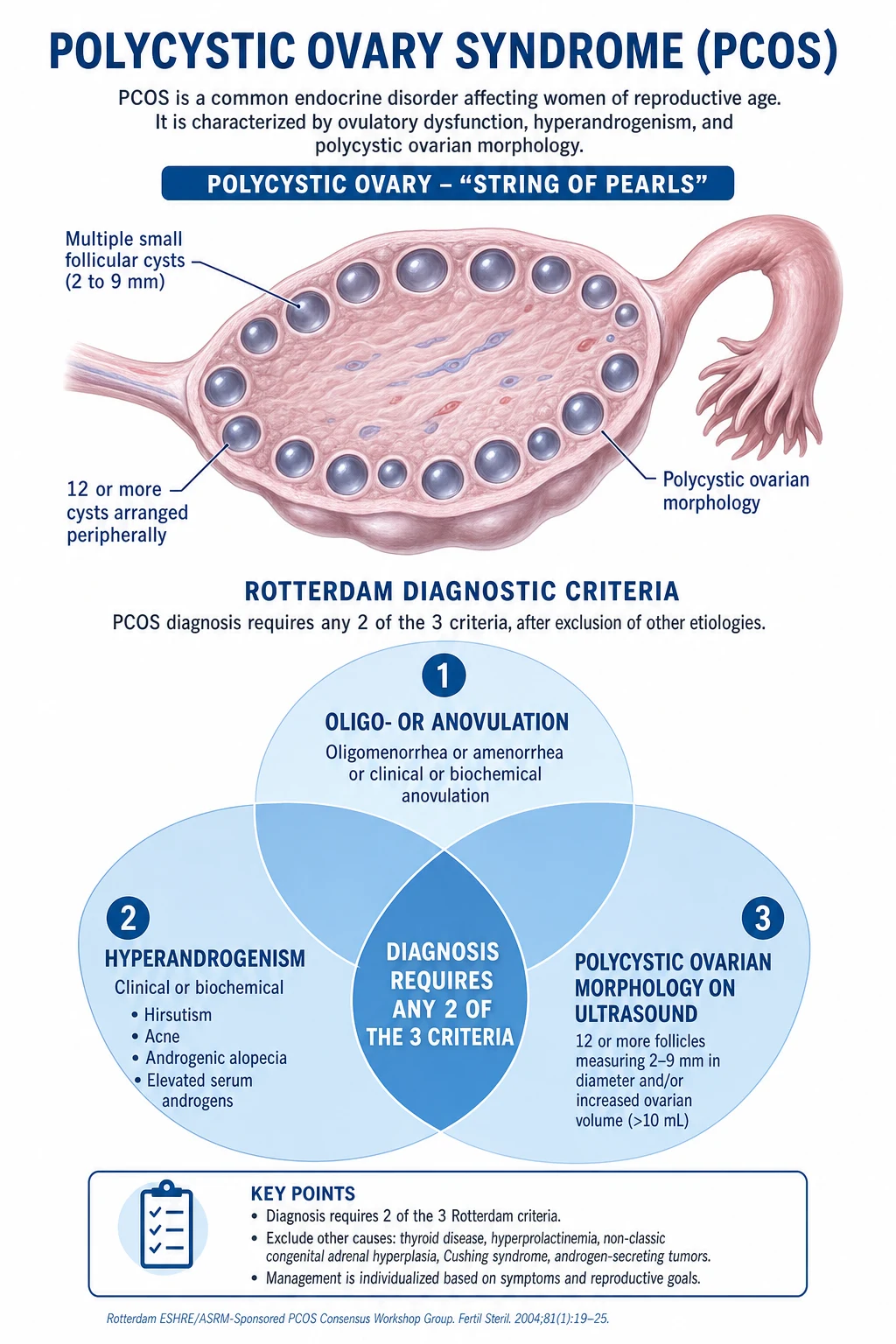
Overview & Definition
Polycystic ovary syndrome (PCOS) is the commonest endocrine disorder of reproductive-age women, affecting approximately 5 to 10% of this population worldwide, and the leading cause of anovulatory infertility.[6][7] It is a heterogeneous, multisystem syndrome — not simply a "cyst" problem — defined by a combination of ovulatory dysfunction, androgen excess and a characteristic ovarian morphology. The polycystic ovary is a sign, not a diagnosis in itself: 20 to 30% of regularly cycling women have polycystic ovarian morphology (PCOM) on ultrasound without the syndrome, while a symptomatic woman with normal-appearing ovaries can still have PCOS.[6]
Three diagnostic frameworks are in active use, all of which mandate that other causes of hyperandrogenism or anovulation have been excluded first:[1][5]
Rotterdam 2003
most widely used (ESHRE/ASRM)
- Any 2 of 3 features required
- (1) Oligo/anovulation
- (2) Hyperandrogenism — clinical or biochemical
- (3) PCOM on ultrasound
- Highest sensitivity, identifies 4 phenotypes
- Endorsed by 2018/2023 International Guideline
NIH 1992 (NICHD)
original criteria
- Both features required
- Hyperandrogenism (clinical or biochemical)
- AND ovulatory dysfunction (oligo/anovulation)
- Ultrasound NOT required
- Identifies the more severe, classic phenotype
- More restrictive — misses ovulatory PCOS
AE-PCOS 2006
Androgen Excess Society
- Hyperandrogenism is MANDATORY
- PLUS ovarian dysfunction (oligo-anovulation and/or PCOM)
- Positions PCOS as a hyperandrogenic disorder
- Identifies women at higher metabolic risk
- Intermediate between NIH and Rotterdam
The contemporary consensus (2018 and 2023 International Evidence-based Guidelines) endorses Rotterdam as the diagnostic standard for adults, while emphasising the exclusion of mimics (congenital adrenal hyperplasia, hyperprolactinaemia, thyroid disease, Cushing syndrome, androgen-secreting tumours) before the label is applied.[3][12]
South Asian and Indian populations: PCOS prevalence ranges from 3.7 to 22.5% depending on the criteria used, with higher prevalence reported in urban populations. South Asian women develop PCOS at a lower BMI than Caucasian women and show more severe insulin resistance, a phenotype sometimes termed the "thin PCOS" of the subcontinent. Hirsutism may be under-recognised on lighter scoring thresholds; the modified Ferriman-Gallwey threshold should be lowered (over 4 to 6 in Mediterranean and South Asian populations, over 2 to 3 in East Asians).[9] Cultural weight on infertility makes the psychosocial burden of PCOS substantial; the infertility-focused work-up should be initiated early.
Classification — Rotterdam Phenotypes

Once the diagnosis is made, the patient is classified into one of four Rotterdam phenotypes. Phenotype matters because it predicts metabolic severity and guides surveillance intensity.[1][12]
Phenotype A
classic PCOS (full phenotype)
- Hyperandrogenism + anovulation + PCOM
- Most common presentation
- Highest metabolic risk
- Highest endometrial-cancer risk
- Most obese phenotype
Phenotype B
non-PCOM classic
- Hyperandrogenism + anovulation
- No PCOM on ultrasound
- Still meets Rotterdam (2 of 3)
- Equivalent metabolic risk to phenotype A
- Effectively the old NIH phenotype
Phenotype C
ovulatory PCOS
- Hyperandrogenism + PCOM
- Regular ovulatory cycles
- Frequently missed (regular cycles)
- Mild-moderate metabolic risk
- Often presents with hirsutism/acne
Phenotype D
non-hyperandrogenic (mildest)
- Anovulation + PCOM only
- No clinical or biochemical hyperandrogenism
- Lowest metabolic risk
- Exclusion of other causes essential
- Not recognised by AE-PCOS 2006
Phenotypes A and B (classic PCOS) carry the highest prevalence of obesity, insulin resistance, dyslipidaemia and metabolic syndrome; phenotype C is intermediate; phenotype D carries the lowest cardiometabolic burden but still requires cycle control and endometrial protection.[12]
Epidemiology & Risk Factors
PCOS — epidemiology at a glance
PCOS begins at puberty (perimenarche) and persists across the reproductive lifespan, although menstrual cycles often regularise as menopause approaches while the metabolic risk does not.[6] Risk factors include family history (sisters of affected women have a 30 to 50% chance; mothers carry a 24% prevalence), premature pubarche or adrenarche, low birth weight followed by rapid postnatal catch-up growth, early menarche, obesity (which both exacerbates and unmasks insulin resistance), and a personal or family history of type 2 diabetes.[7][9]
The heritability is estimated at around 70%, but the inheritance is not Mendelian: it is polygenic, with over 20 replicated susceptibility loci (DENND1A, THADA, LHCGR, FSHB, TOX3, YAP1, RAD50, GATA4, INS-VNTR among the best characterised). Many of these loci overlap with type 2 diabetes and metabolic syndrome susceptibility, reinforcing the metabolic core of the syndrome.[6]
Pathophysiology
PCOS is best understood as a self-perpetuating triad: disordered gonadotropin regulation, insulin resistance with hyperinsulinaemia, and ovarian androgen excess. Each element amplifies the others, generating the vicious cycle that maintains the phenotype.[4][6]
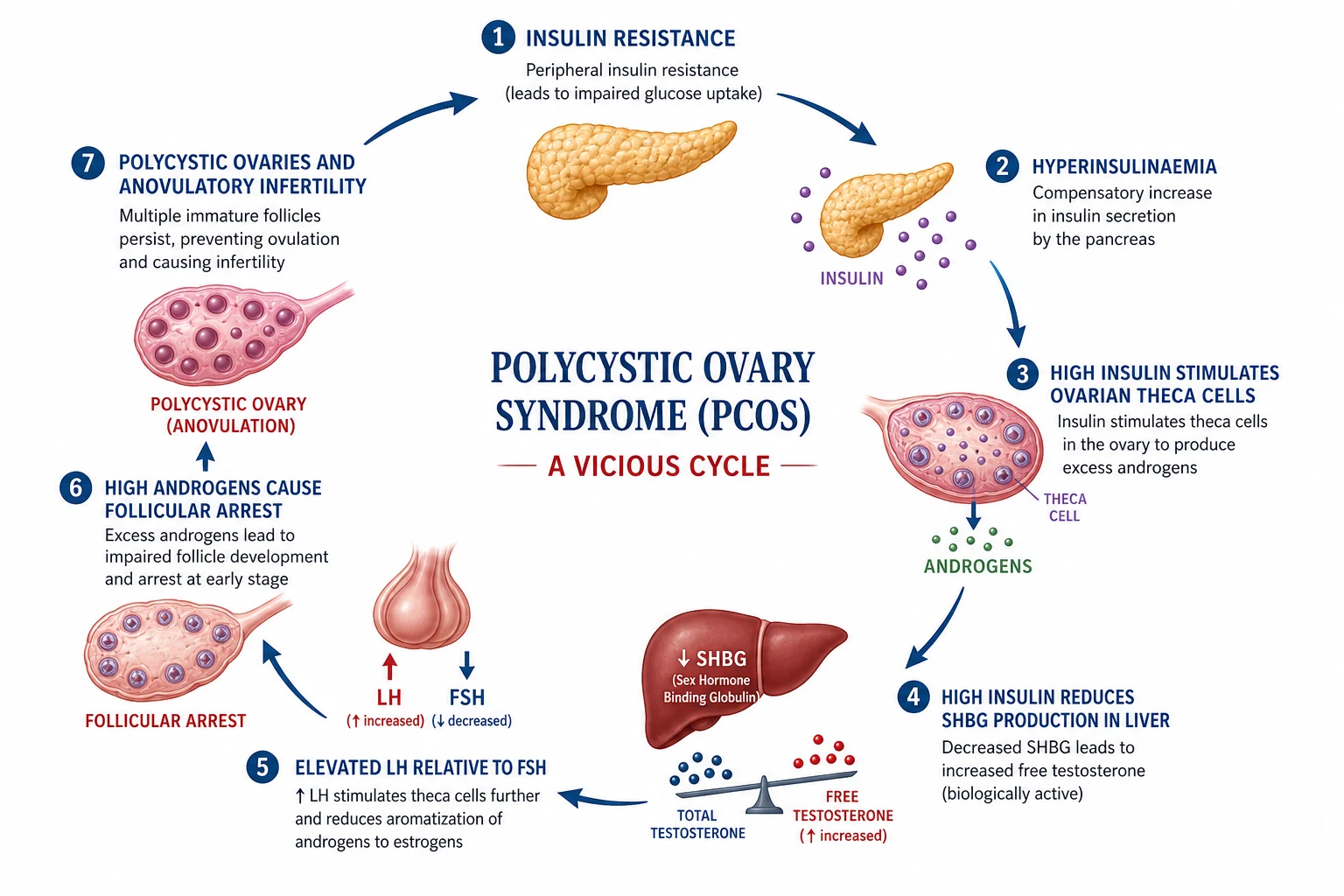
1. Neuroendocrine abnormality — gonadotropin dysregulation
In PCOS the hypothalamic gonadotropin-releasing hormone (GnRH) pulse generator is accelerated, favouring pituitary luteinising hormone (LH) secretion over follicle-stimulating hormone (FSH). LH pulse amplitude and frequency are increased, FSH is relatively low or normal, producing the characteristic LH:FSH ratio over 2:1 to 3:1 (although the 2023 Guideline downgrades LH/FSH ratio to a supportive rather than diagnostic marker, since sensitivity is only around 60%).[3] Elevated LH tonically stimulates the ovarian theca interna cells to overproduce androstenedione and testosterone; relative FSH deficiency impairs the granulosa-cell aromatisation of these androgens to oestradiol, and impairs follicular maturation.
2. Insulin resistance and hyperinsulinaemia
Insulin resistance is present in 70 to 80% of women with PCOS (95% of obese, 60 to 70% of lean phenotypes) and is independent of obesity — that is, a PCOS-specific defect in insulin signalling (post-receptor, with serine rather than tyrosine phosphorylation of the insulin receptor).[4][7] The result is compensatory hyperinsulinaemia, which has three downstream effects:
- Direct ovarian stimulation: insulin synergises with LH to upregulate CYP17A1 (17,20-lyase) activity in theca cells, increasing ovarian androgen synthesis.
- Hepatic SHBG suppression: insulin inhibits hepatic sex-hormone-binding globulin synthesis in a dose-dependent manner; SHBG falls, raising the free androgen index (total testosterone divided by SHBG) even when total testosterone is only mildly elevated.
- Reduced IGF-1 binding protein: free insulin-like growth factor-1 rises, further stimulating theca-cell androgen production. [1]
Insulin resistance is also the bridge to the metabolic phenotype: the patient develops dyslipidaemia (low HDL, high triglycerides), impaired glucose tolerance, hypertension and central adiposity, comprising the metabolic syndrome. [1]
3. Androgen excess and follicular arrest
Hyperandrogenaemia — compounded by reduced SHBG — exerts the follicular-arrest phenotype: an exaggerated cohort of pre-antral follicles is recruited, but selection of the dominant follicle fails, producing the "necklace" of 12 or more peripheral follicles (2 to 9mm) on ultrasound and an enlarged, stroma-rich ovary. Failure of ovulation produces unopposed oestrogen (from peripheral aromatisation of androstenedione to oestrone in adipose tissue), which drives endometrial proliferation, hyperplasia and, over time, carcinoma.[8]
4. Low-grade chronic inflammation and HPA-axis dysfunction
Women with PCOS have elevated CRP, IL-6, TNF-alpha and white-cell counts independent of obesity, suggesting a state of low-grade chronic inflammation that amplifies insulin resistance and ovarian androgen production.[6] A subset also show mild HPA-axis activation with mildly elevated cortisol, though this does not reach Cushing thresholds.
5. Genetic and developmental programming
The polygenic background is described above. A provocative developmental hypothesis suggests antenatal androgen exposure programs the PCOS phenotype in the next generation: female fetuses exposed to high androgen in utero develop a PCOS-like phenotype in adulthood, with transmitted epigenetic marks.[6]
The 5 drivers of the PCOS vicious cycle
ALOHA
theca cell overproduction, free testosterone raised by low SHBG
LH:FSH over 2:1 to 3:1, GnRH pulse accelerated
follicular arrest, polycystic morphology, anovulation
insulin resistance in 70 to 80%, drives androgens, lowers SHBG
central obesity, low-grade inflammation, premature pubarche
Clinical Presentation
PCOS presents across a spectrum that mixes reproductive, androgenic, metabolic and psychological features. The tempo is chronic, beginning at puberty, but decompensation — virilisation, severe obesity, infertility — brings the patient to medical attention in the late teens to early 30s.[4]
[1]The Ferriman-Gallwey (mFG) score
The modified Ferriman-Gallwey score grades terminal (androgen-responsive) hair growth on nine body sites: upper lip, chin, chest, upper back, lower back, upper abdomen, lower abdomen, upper arms, and thighs. Each site is scored 0 (no terminal hair) to 4 (frankly male pattern), for a maximum of 36.[3][12] The diagnostic threshold for hirsutism is ethnicity-dependent:
Modified Ferriman-Gallwey thresholds for hirsutism
Atypical presentations examiners test deliberately
- Adolescent PCOS — irregular cycles are normal for 2 years post-menarche; do not diagnose PCOS on ultrasound alone within 8 years of menarche (PCOM is over-diagnosed in adolescents). The 2018 Guideline requires all three Rotterdam features in this group.[12]
- Lean PCOS — BMI under 25 but insulin resistance, hirsutism, infertility still present; common in South Asian populations; the metabolic burden is under-recognised.[9]
- Ovulatory PCOS (phenotype C) — regular cycles, hirsutism and PCOM; often missed because the GP attributes the hirsutism to constitutional causes.
- Post-pill PCOS — menstrual irregularity emerging after stopping the COCP is sometimes labelled PCOS, but the syndrome must fulfil Rotterdam criteria; the COCP may simply have masked pre-existing PCOS.
- Pregnancy and postpartum — fertility-treatment pregnancies carry higher rates of gestational diabetes and pre-eclampsia (see Special Populations).
Differential Diagnosis
Hyperandrogenism and anovulation have a wide differential. PCOS is a diagnosis of exclusion — every patient must be screened for the mimics below before the label is assigned.[4][11]
Non-classic congenital adrenal hyperplasia (NCCAH)
21-hydroxylase deficiency
- Prevalence 1 to 10% of hyperandrogenic women
- 17-OH progesterone elevated (over 6 nmol/L or 200 ng/dL)
- Diagnose with morning 17-OHP on day 3 to 5 follicular phase
- Confirm with ACTH (Synacthen) stimulation test if borderline
- Cycles irregular, hirsutism; PCOM in 50%
Cushing syndrome
hypercortisolism
- Look for proximal myopathy, purple striae, bruising, moon facies
- 24-hr urinary free cortisol, overnight dexamethasone suppression, late-night salivary cortisol
- Hyperandrogenism is mild, ovarian function preserved
Androgen-secreting tumour
ovarian or adrenal
- Rapid onset, severe virilisation, clitoromegaly, voice deepening
- Total testosterone over 5 nmol/L or DHEAS over 700 microg/dL
- Imaging: pelvic US for ovarian, CT/MRI for adrenal
- Sertoli-Leydig, hilus, granulosa-theca tumours; adrenal carcinoma
Hyperprolactinaemia
anovulation, galactorrhoea
- Serum prolactin elevated (typically over 25 ng/mL)
- Anovulation, oligomenorrhoea, galactorrhoea
- Exclude pregnancy, hypothyroidism, drugs (antipsychotics)
Thyroid disease
hyper- or hypothyroidism
- TSH deranged, free T4 abnormal
- Both cause menstrual irregularity, weight change, infertility
- Easy to screen — do TSH in every PCOS work-up
Idiopathic hirsutism
normal cycles, normal androgens
- Regular ovulatory cycles
- Normal serum androgens
- No PCOM; diagnosis of exclusion
- Treat cosmetically or with anti-androgens
Acromegaly
growth hormone excess
- Coarse facial features, prognathism, large hands
- IGF-1 elevated, GH not suppressed by glucose
- Rare; consider in refractory or atypical PCOS
Drug-induced
exogenous androgens
- Anabolic steroids, danazol, valproate
- Careful medication history
- Cycles usually remain irregular until drug withdrawn
The single most important "rule-out" test is a morning 17-hydroxyprogesterone to exclude non-classic CAH, followed by TSH, prolactin, cortisol (if clinical features suggest Cushing) and DHEAS (if adrenal tumour suspected).[11]
Clinical & Bedside Assessment
The focused PCOS examination has four objectives: (a) document hyperandrogenism, (b) grade insulin resistance clinically, (c) screen the metabolic syndrome, and (d) exclude mimics.[4]
Bedside examination: [1]
- Anthropometry: weight, height, BMI, waist circumference (over 80cm in women = central obesity, South Asian cut-off).
- Blood pressure — hypertension accelerates the metabolic phenotype and is a target of therapy.
- Skin — score modified Ferriman-Gallwey (9 sites), inspect for acne (jawline, chest, back), acanthosis nigricans (nape of neck, axillae, groin, knuckles — a clinical marker of insulin resistance), skin tags, striae (Cushing screen).
- Hair — male-pattern temporal/vertex alopecia.
- Pelvic examination — clitoromegaly (virilisation marker; if present, exclude tumour), ovarian enlargement (rarely palpable; bimanual in virginal patients avoided).
- Breast examination — galactorrhoea (hyperprolactinaemia).
- General — moon facies, proximal muscle weakness, central fat distribution (Cushing screen). [1]
Investigations
The investigation strategy is structured into three tiers: confirm the diagnostic criteria, exclude the mimics, and assess the metabolic phenotype.[3][11]
PCOS — Rotterdam criteria confirmation
Tier 1 — Confirm diagnostic features
- Menstrual history + day 21 serum progesterone: progesterone under 3 ng/mL (under 10 nmol/L) on day 21 confirms anovulation in that cycle.
- Total testosterone (preferably morning, fasting, drawn in early follicular phase): mildly elevated (typically 1.5 to 2.5 nmol/L; over 5 nmol/L = exclude tumour). The 2023 Guideline uses high-quality liquid chromatography–mass spectrometry (LC-MS/MS) assays, and recommends free testosterone or calculated free androgen index as the most sensitive biochemical marker.[3]
- SHBG: low — the cause of the raised free androgen index. Free androgen index = (total testosterone divided by SHBG) times 100.
- Anti-Mullerian hormone (AMH): typically 2 to 4 times higher in PCOS; the 2023 Guideline allows AMH as a substitute marker for PCOM in adults (using validated cut-offs of AMH over 3.2 to 5.5 ng/mL depending on assay). It is not recommended in adolescents or as a fertility-prognosis tool.[3]
- Transvaginal ultrasound (TVUS): PCOM = 12 or more follicles (2 to 9mm) per ovary OR ovarian volume over 10mL (Rotterdam 2003). With high-frequency transducers (8MHz or higher), the threshold is updated to 20 or more follicles per ovary and/or ovarian volume of 10mL or more.[3] Only one ovary meeting criteria is sufficient. Note PCOM alone (without hyperandrogenism or ovulatory dysfunction) does not diagnose PCOS in adolescents within 8 years of menarche.
Tier 1b — Diagnostic accuracy and interpretation pitfalls
The 2023 Guideline emphasises assay quality and interpretation in context, because naïve use of single markers misclassifies many patients.[3]
- Total testosterone alone has low sensitivity (around 30 to 60%) in PCOS because levels overlap with the upper reference range; free testosterone or the calculated free androgen index (sensitivity 70 to 90%) is the preferred biochemical marker.[3] Use liquid chromatography–mass spectrometry (LC-MS/MS) if available — direct immunoassays overestimate testosterone at the low female range and are not comparable across laboratories.
- SHBG is suppressed by insulin, androgens, glucocorticoids, hypothyroidism and growth hormone; it is raised by the COCP, pregnancy and hyperthyroidism. Always interpret the free androgen index in the light of current medications.
- 17-Hydroxyprogesterone is falsely elevated in the luteal phase or in pregnancy — draw it in the early follicular phase (day 3 to 5), in the morning, fasting.[11] A borderline result (2 to 6 nmol/L) requires an ACTH stimulation test (250 microg Synacthen IV, measure 17-OHP at 0 and 60 min); a stimulated peak over 30 to 65 nmol/L confirms non-classic CAH.
- Transvaginal ultrasound has limited utility in obese women (poor visualisation) and in adolescents within 8 years of menarche (PCOM is physiologic). The 2023 Guideline does not require ultrasound if both oligo/anovulation and hyperandrogenism are already documented — a clinical diagnosis is acceptable.[3]
- Anti-Mullerian hormone is age-dependent, falling from 25 to 35 years. The cut-off (over 3.2 to 5.5 ng/mL) is assay-specific and should be used cautiously in women over 35. AMH does not predict natural fertility, time to menopause, or response to ovulation induction in PCOS.[3]
Tier 2 — Exclude mimics
- 17-Hydroxyprogesterone (17-OHP): morning sample, follicular phase (day 3 to 5). Baseline over 6 nmol/L (200 ng/dL) suggests non-classic CAH; confirm with ACTH stimulation (Synacthen) test and genotype for CYP21A2.[11]
- TSH: exclude thyroid disease in every PCOS work-up.
- Prolactin: exclude hyperprolactinaemia (false-positive with macroprolactin — request PEG precipitation if discordant).
- DHEAS: adrenal androgen marker. Levels over 700 microg/dL (around 18.5 micromol/L) suggest an adrenal tumour.
- Overnight dexamethasone suppression test or 24-hr urinary free cortisol or late-night salivary cortisol: only if clinical features of Cushing.
- IGF-1 / oral glucose tolerance test for GH: only if acromegaly features.
Tier 3 — Metabolic assessment (annual, lifelong)
- Fasting glucose + fasting insulin or HOMA-IR — screen for insulin resistance and prediabetes.
- Oral glucose tolerance test (75g, 2-hour) — recommended at baseline, then every 1 to 3 years (more frequently if obese, gaining weight, or with first-degree family history of T2DM).[12]
- HbA1c — annual; cut-off 5.7% defines prediabetes, 6.5% defines diabetes.
- Lipid profile — total cholesterol, LDL, HDL (typically low), triglycerides (typically high), every 1 to 2 years.
- AST, ALT — screen for non-alcoholic fatty liver disease (NAFLD), present in 30 to 60% of PCOS.
- Endometrial biopsy (Pipelle) — if cycles are over 90 days apart, prolonged amenorrhoea, or abnormal uterine bleeding, to exclude endometrial hyperplasia or carcinoma (around 3x risk); hysteroscopy and directed biopsy if Pipelle non-diagnostic.[8]
- Sleep study (polysomnography) — if symptoms of obstructive sleep apnoea (snoring, witnessed apnoea, daytime sleepiness).
Management — Resuscitation
PCOS is not a medical emergency; the resuscitation domain is essentially one of recognising and managing the acute, severe, life-altering decompensations that can complicate its course. Two situations deserve specific mention: [1]
- Severe metabolic decompensation — a previously undiagnosed PCOS patient may present in diabetic ketoacidosis or hyperosmolar hyperglycaemic state as the first manifestation of unrecognised type 2 diabetes. Manage with the standard DKA/HHS protocol (IV fluids, IV insulin, electrolyte replacement), and treat the underlying PCOS subsequently.
- Suspected androgen-secreting tumour — sudden, severe virilisation (clitoromegaly, voice deepening, male-pattern baldness over months) with total testosterone over 5 nmol/L or DHEAS over 700 microg/dL is a "red-flag" requiring urgent imaging (pelvic ultrasound, adrenal CT or MRI) and surgical referral.[11]
Otherwise, management is ambulatory, chronic, and stratified by the patient's presenting complaint. [1]
Management — Definitive & Stepwise
PCOS management is symptom-targeted, because the syndrome has no cure. The 2023 International Evidence-based Guideline organises therapy by indication: lifestyle, menstrual irregularity/endometrial protection, hirsutism/acne, insulin resistance/metabolic features, fertility, and psychological wellbeing.[3]
Step 1 — Lifestyle (first-line for ALL patients, every phenotype)
- Weight loss of 5 to 10% of body weight — restores spontaneous ovulation in 30 to 60%, reduces hirsutism, improves insulin sensitivity, lowers androgens, and is the single most cost-effective intervention.[12]
- Diet: hypocaloric (500 to 750 kcal/day deficit), Mediterranean-style, low glycaemic index, high fibre.
- Exercise: at least 150 minutes per week of moderate aerobic activity plus 2 sessions of resistance training; intensity matters more than modality.
- Behavioural: sleep, stress, smoking cessation, alcohol reduction.
- Bariatric surgery: consider in morbid obesity (BMI over 40, or over 35 with comorbidity) where medical therapy fails.
Step 2 — Menstrual cycle regulation and endometrial protection
- Combined oral contraceptive pill (COCP) — first-line. Regulates cycles, protects the endometrium from unopposed oestrogen (reduces endometrial cancer risk), treats acne and hirsutism, raises SHBG (lowering free testosterone).[3]
- Drug: choose a COCP with an anti-androgenic progestogen — 30 microg ethinylestradiol plus drospirenone 3mg (e.g. Yasmin) or cyproterone acetate 2mg (co-cyprindiol, e.g. Dianette), or 30 microg ethinylestradiol with desogestrel 150 microg (Marvelon) if anti-androgenic effect is not the priority.
- Alternative (when COCP is contraindicated) — cyclical oral progestogen: medroxyprogesterone acetate 5 to 10mg daily for 12 to 14 days every 1 to 3 months, or dydrogesterone 10mg daily for 12 to 14 days, to induce a withdrawal bleed and protect the endometrium.
- Withdrawal bleeding must occur at least every 3 months (90 days) — the 2023 Guideline emphasises this as the threshold for endometrial surveillance.[3]
Step 3 — Hirsutism and acne
- COCP alone first for 3 to 6 months before adding an anti-androgen.
- Cyproterone acetate 2mg (in co-cyprindiol) or up to 50 to 100mg daily on cycle days 1 to 10 — potent anti-androgen.
- Spironolactone 100 to 200mg daily in divided doses — aldosterone antagonist with anti-androgen effect (competes for the androgen receptor, reduces testosterone synthesis). Most widely used anti-androgen. Avoid pregnancy (feminisation of male fetus); use with reliable contraception (the COCP).
- Eflornithine 13.9% cream topically twice daily to the face — inhibits ornithine decarboxylase, slows hair growth. May be combined with laser/photoepilation.
- Cosmetic: laser photoepilation (best on dark hair, light skin), electrolysis, bleaching, waxing. Finasteride (5mg daily) is third-line; flutamide is hepatotoxic and should be avoided.[11]
- Acne: topical retinoids and benzoyl peroxide, oral antibiotics (doxycycline 100mg daily), or isotretinoin for severe nodulocystic disease — in addition to COCP.
Step 4 — Insulin sensitiser therapy (metformin)
- Metformin 500mg once daily, titrated weekly by 500mg to a target of 1500 to 2000mg daily (typically 1000mg twice daily or 500mg three times daily). Slow titration reduces gastrointestinal side effects; the modified-release formulation improves tolerability.[3]
- Indications: impaired glucose tolerance, type 2 diabetes, metabolic syndrome, adjunct to lifestyle for weight management, ovarian dysfunction not controlled by the COCP.
- Effects: improves insulin sensitivity and glycaemic control, modest weight loss, restores ovulation in some (live-birth benefit only as adjunct to fertility therapy), small reduction in androgens. Limited effect on hirsutism.
- Side effects: nausea, diarrhoea, abdominal cramps (titrate slowly); lactic acidosis is rare; long-term use reduces vitamin B12 (monitor annually on chronic therapy).
- Other insulin sensitisers: pioglitazone 15 to 30mg daily (limited by weight gain, fluid retention, fracture risk), GLP-1 receptor agonists (liraglutide, semaglutide) for obesity with PCOS, increasingly used.
Step 5 — Fertility (ovulation induction)
- Letrozole 2.5mg daily on cycle days 3 to 7 (or 2 to 6), increasing to 5mg and 7.5mg in subsequent cycles if no response — FIRST-LINE pharmacological ovulation induction for PCOS-related anovulatory infertility.[2][10] The PPCOS II randomised trial demonstrated live birth rate 27.5% with letrozole vs 19.1% with clomiphene, with higher ovulation and fewer multiple pregnancies. The Cochrane review (2022) confirms superiority in live birth and ovulation.[10] The 2023 International Guideline reaffirms letrozole as first-line.[3]
- Clomiphene citrate 50mg on days 2 to 6 (titrate to 100mg, 150mg) — selective oestrogen receptor modulator that blocks hypothalamic oestrogen feedback, raising FSH. Second-line; risk of multiple ovulation (8 to 10% twins), ovarian hyperstimulation, anti-oestrogenic effect on cervical mucus and endometrium. Limit to 6 cycles (cumulative ovarian cancer risk if prolonged).[2]
- Metformin — adjunct for women with BMI over 30 or impaired glucose tolerance; improves ovulation rate but has no live-birth benefit as monotherapy.[12]
- Gonadotrophins (recombinant FSH) — second-line if oral agents fail. Use a low-dose step-up protocol: start 37.5 to 50 IU subcutaneously daily from day 2 or 3, hold for 7 to 14 days, then increase by 50% increments only if no follicular response. Monitor with transvaginal ultrasound plus serum oestradiol every 1 to 3 days; cancel the cycle if more than 2 dominant follicles over 16mm develop or oestradiol exceeds 1000 pg/mL to prevent ovarian hyperstimulation syndrome (OHSS) and higher-order multiples. Trigger ovulation with hCG 5000 to 10000 IU when the lead follicle reaches 17 to 18mm. Live birth 15 to 25% per cycle; multiple pregnancy 5 to 10%; OHSS 1 to 5%.[12]
- Laparoscopic ovarian drilling (LOD) — second-line surgical alternative to gonadotrophins in clomiphene- or letrozole-resistant PCOS. Technique: 4 to 6 punctures per ovary with unipolar diathermy (40W for 4 seconds) or laser at 4mm depth; the physical destruction of androgen-producing theca-stroma reduces ovarian androgen output and normalises the LH:FSH ratio. Advantages: single procedure, no OHSS, no multiple-pregnancy risk, no intensive monitoring. Risks: adhesion formation (20 to 30%, mostly mild), reduction in ovarian reserve, theoretical risk of premature ovarian insufficiency. Reserve for women with normal pelvic anatomy who desire pregnancy and have failed oral induction.[13]
- In vitro fertilisation (IVF) — third-line when ovulation induction fails, or with coexisting tubal disease, severe male factor, or advanced maternal age. PCOS patients carry a 2 to 3 times higher risk of OHSS because of their exaggerated follicular cohort; mitigate with a GnRH antagonist protocol plus GnRH-agonist trigger (triptorelin 0.2mg) instead of hCG, a freeze-all strategy with elective single frozen embryo transfer, and co-prescription of metformin 1500 to 2000mg daily through stimulation. Live birth 25 to 35% per fresh transfer; cumulative up to 60 to 70% with frozen transfers.[3]
- Inositol (myo-inositol 2 to 4g daily, or combined with folic acid) — over-the-counter supplement with modest insulin-sensitising and ovulation-restoring effect; endorsed as adjunct in some guidelines.[3]
WHO Essential Medicines List 2023: the WHO removed clomiphene from the core list in 2023, replacing it with letrozole as the essential medicine for ovulation induction. This aligns the global formulary with the 2023 International PCOS Guideline. UK NICE and most national guidelines now reflect letrozole as first-line. Older Indian textbooks may still state clomiphene as first-line; the modern evidence is clear.[3][10]
Step 6 — Long-term metabolic protection
- Statins (atorvastatin 20 to 40mg daily) for dyslipidaemia — modest reduction in LDL; small reduction in testosterone; not recommended in pregnancy.
- Antihypertensives as needed for blood pressure targets.
- Annual screening for type 2 diabetes (HbA1c and/or fasting glucose), lipids, blood pressure, weight.
- Bariatric surgery if BMI over 40 (or over 35 with metabolic comorbidity) and lifestyle plus pharmacotherapy fail. [1]
Specific Subtypes & Scenarios
-
Adolescent PCOS — diagnosis requires all three Rotterdam features (not 2 of 3) within 8 years of menarche, because oligomenorrhoea and PCOM are common physiologically in early adolescence.[3] Avoid labelling a 14-year-old with irregular cycles as PCOS without full work-up. Treatment focuses on cycle control (COCP) and lifestyle; avoid fertility drugs. Metformin is reserved for impaired glucose tolerance.
-
Lean PCOS (BMI under 25) — insulin resistance is still present in 60 to 70%; metformin and lifestyle remain effective; the metabolic burden is often under-recognised.
-
Pregnancy in PCOS — see Special Populations below.
-
Perimenopause and menopause — cycles often regularise as ovarian function declines, but metabolic risk persists and may worsen; continue annual diabetes and lipid screening, weight management, and consider hormone replacement therapy for vasomotor symptoms.[12]
Complications & Pitfalls
Reproductive
ovarian + uterine
- Infertility (anovulation)
- Recurrent early miscarriage
- Endometrial hyperplasia and carcinoma (around 3x risk)
- Ovarian hyperstimulation syndrome (with fertility drugs)
- Higher multiple pregnancy rate with ovulation induction
Metabolic
insulin-resistance mediated
- Type 2 diabetes (3 to 7x risk)
- Impaired glucose tolerance (around 30%)
- Metabolic syndrome (around 40%)
- Dyslipidaemia (low HDL, high triglycerides)
- Non-alcoholic fatty liver disease (30 to 60%)
- Obstructive sleep apnoea (10 to 30%)
Cardiovascular
long-term risk
- Hypertension
- Subclinical atherosclerosis (increased carotid IMT)
- Increased cardiovascular event risk in later life
- Endothelial dysfunction
Oncological
oestrogen-mediated
- Endometrial cancer: 3x risk (over 9x if BMI over 30)
- Ovarian cancer: slight increase (post-menopausal)
- Breast cancer: probably no overall increase, possible post-menopausal rise
Psychological
quality of life
- Depression (3 to 4x)
- Anxiety
- Eating disorders (especially binge-eating)
- Body-image distress, sexual dysfunction
- Reduced health-related quality of life
PCOS — long-term health risks at a glance
Classic pitfalls
- Diagnosing PCOS without excluding CAH — non-classic 21-hydroxylase deficiency occurs in 1 to 10% of hyperandrogenic women and is treated with glucocorticoids, not the COCP or letrozole. Always send 17-OH progesterone before committing to PCOS.[11]
- Treating hirsutism without the COCP — anti-androgens (spironolactone, cyproterone) must be given with reliable contraception; feminising effects on a male fetus make monotherapy in a sexually active, possibly fertile PCOS woman hazardous.
- Overusing clomiphene — over 6 cycles the cumulative ovarian cancer risk rises; switch to letrozole or gonadotrophins if pregnancy does not occur.[12]
- Missing the endometrium — long-standing amenorrhoea in PCOS silently produces endometrial hyperplasia and carcinoma; ensure withdrawal bleeding is induced at least every 90 days.[8]
- Ignoring pregnancy risk — OHSS, multiple pregnancy and GDM are all real; PCOS pregnancies are higher-risk.
- Dismissing psychological morbidity — depression, anxiety and eating disorders are common and independently impair quality of life; screen and refer.[3]
Prognosis & Disposition
PCOS is a chronic, lifelong condition with no cure, but it is highly manageable. Prognosis depends on phenotype, adiposity, insulin resistance, and adherence to lifestyle and surveillance.[6]
- Cycle and fertility: weight loss of 5 to 10% restores ovulation in 30 to 60%; letrozole achieves live birth in around 27.5% per cycle in PPCOS II; cumulative live birth after 5 cycles of letrozole can reach 60 to 70%.[2]
- Diabetes: 25 to 30% of women with PCOS develop impaired glucose tolerance by age 30; 8 to 15% develop type 2 diabetes by age 40. Annual screening and metformin for high-risk patients slows progression.[9]
- Endometrial cancer: 3x background risk (9x with obesity); protective effect of regular withdrawal bleeds and the COCP.[8]
- Quality of life: significant impairment from hirsutism, infertility and obesity; appropriate treatment restores it.
- Lifespan: PCOS does not shorten lifespan directly, but it accelerates cardiovascular and metabolic disease trajectories.
Disposition: PCOS is managed outpatient by the GP, gynaecologist, reproductive endocrinologist, or endocrinologist depending on the dominant complaint. Acute admission is reserved for OHSS, surgical complications (LOD, bariatric surgery), or decompensated metabolic emergencies. [1]
Special Populations
Adolescents
Diagnosis requires all three Rotterdam features within 8 years of menarche (because irregular cycles and PCOM are physiologically common). The 2018 Guideline and its 2023 update caution against over-diagnosis; use phenotype-based criteria and prefer the COCP for cycle control over diagnostic labels that stigmatise.[3] Metformin is reserved for impaired glucose tolerance, and lifestyle is paramount.
Pregnancy
PCOS pregnancies carry 2 to 3 times the risk of gestational diabetes (screen with OGTT at 16 to 18 weeks and again at 24 to 28 weeks), 2 to 3 times the risk of pre-eclampsia, 1.5 to 2 times the risk of preterm delivery, and a higher rate of miscarriage. Pre-conception optimisation (weight loss, glycaemic control, folic acid 400 microg daily, withdrawal of anti-androgens, statins, and teratogenic agents before pregnancy) is essential. Metformin may be continued through the first trimester in some women to reduce miscarriage risk, with shared decision-making.[3]
Perimenopausal and menopausal women
Menstrual cycles often regularise as ovarian function declines, but the metabolic phenotype persists and may worsen. Continue annual diabetes and lipid screening; address vasomotor symptoms with HRT (no contraindication from PCOS); reassess cardiovascular risk. [1]
Lean phenotype (BMI under 25)
Insulin resistance is still present in 60 to 70%; metabolic syndrome is less pronounced but not absent. Treatment principles are the same; letrozole and lifestyle are first-line. [1]
Evidence, Guidelines & Regional Differences
PCOS consensus across regions: (1) Rotterdam diagnostic standard for adults; (2) Exclusion of mimics mandatory; (3) Lifestyle first for all phenotypes; (4) Letrozole first-line for ovulation induction; (5) COCP for cycle control and endometrial protection; (6) Annual metabolic screening for life. The controversies concern metformin's place (adjunct vs first-line), the role of AMH in diagnosis, and the optimal threshold for PCOM on modern ultrasound equipment.
Exam Pearls & High-Yield Minutiae
Exam application bank (NEET-PG / INICET)
One-line answer
Polycystic ovary syndrome (PCOS) is a heterogeneous, lifelong reproductive and metabolic disorder of reproductive-age women characterised by ovulatory dysfunction, hyperandrogenism (clinical or biochemical), and polycystic ovarian morphology (PCOM), defined by the Rotterdam 2003 consensus as any two of those three features, after exclusion of other causes. Insulin resistance with compensatory hyperinsulinaemia is the central driver in 70 to 80% of patients, augmented by gonadotropin dysregulation (elevated LH:FSH ratio) and low-grade chronic inflammation. Presentation clusters around oligomenorrhoea or amenorrhoea, hirsutism (modified Ferriman-Gallwey score over 4 to 6), acne, central obesity, acanthosis nigricans, and anovulatory infertility. Management is stratified by the patient's presenting complaint: lifestyle (5 to 10% weight loss) for all; combined oral contraceptive pill (COCP)
Worked stems (answer without another resource)
Stem 1 — Classic presentation. Map symptoms to mechanism; name the first investigation and first treatment step with dose/route if drug therapy is standard. [1]
Stem 2 — Unstable / complicated. List red flags that force immediate resuscitation, theatre, ICU, antidote, or reperfusion — and what you do in the first 15 minutes. [1]
Stem 3 — Atypical group. Elderly, pregnancy, child, or immunocompromised: how presentation and thresholds change. [1]
Stem 4 — Differential trap. Name the three closest mimics and one discriminator for each. [1]
Stem 5 — Disposition. Who goes home with safety-netting, who is admitted, who needs HDU/ICU/theatre, and what follow-up is mandatory. [1]
Rapid viva checklist
- Definition + classification
- Pathophysiology chain
- Bedside signs / criteria
- Score with exact components (if any)
- Emergency bundle
- Definitive therapy with doses
- Complications of disease and of treatment
- Special populations
- Guideline/trial name if classic
- Three exam traps
Coverage self-check
If you cannot answer any stem above from this page alone, re-read the matching section — the page is intended to be self-sufficient for final-prof and NEET-PG/INICET questions on Polycystic Ovary Syndrome.
[1]Exclude before diagnosing PCOS
CATCH
cortisol — purple striae, moon facies, 24-hr urinary free cortisol
rapid virilisation; testosterone over 5 nmol/L or DHEAS over 700 microg/dL
TSH deranged — both hyper- and hypothyroid cause menstrual irregularity
17-OH progesterone over 6 nmol/L on day 3 to 5
prolactin raised, galactorrhoea
PCOS — long-term health risks
RISK
infertility, recurrent miscarriage, endometrial hyperplasia and cancer (3x)
type 2 diabetes (3 to 7x), metabolic syndrome (40%), NAFLD, sleep apnoea
obstructive sleep apnoea, hypertension, dyslipidaemia, CVD
hirsutism, acne, obesity, depression (3 to 4x), anxiety, eating disorders
Quick self-test: A 28-year-old with oligomenorrhoea, mFG score 9, BMI 31, and 14 follicles per ovary on TVUS. Which criteria are met, and what is the first pharmacological step if she wants fertility?
All three Rotterdam features are met (oligo/anovulation, clinical hyperandrogenism, PCOM). After excluding 17-OHP, TSH, prolactin, the diagnosis is PCOS, phenotype A. If she wants fertility, first pharmacological step is letrozole 2.5mg on cycle days 3 to 7, preceded by lifestyle (weight loss 5 to 10%). Letrozole achieves live birth in around 27.5% per cycle (PPCOS II). Clomiphene is second-line.[2]
Quick self-test: Same patient declines fertility, but cycles are every 60 to 90 days. What is the endometrial-protection strategy?
The risk of unopposed oestrogen endometrial hyperplasia and carcinoma rises with prolonged amenorrhoea. Strategy: combined oral contraceptive pill (preferred — also treats hirsutism and acne) OR cyclical progestogen (medroxyprogesterone acetate 5 to 10mg for 12 to 14 days every 1 to 3 months) to ensure withdrawal bleeding at least every 90 days. The 2023 Guideline emphasises this 90-day threshold.[3][8]
Summary
Polycystic ovary syndrome is a chronic, multisystem, reproductive-metabolic disorder that every generalist and gynaecologist will encounter repeatedly. Master the three diagnostic frameworks (Rotterdam, NIH, AE-PCOS), classify the phenotype, exclude the mimics with a focused biochemical panel, and treat the symptom in front of you — lifestyle for all, COCP for cycles and endometrium, anti-androgens for hirsutism, letrozole for fertility, metformin for insulin resistance. Above all, screen for life annually: HbA1c, lipids, blood pressure, mood, and (when amenorrhoea is prolonged) the endometrium. The PCOS patient is yours for life — make that life longer, healthier and more fertile by getting the basics right. [1]
References
- [1]Rotterdam ESHRE/ASRM-Sponsored PCOS Consensus Workshop Group. Revised 2003 consensus on diagnostic criteria and long-term health risks related to polycystic ovary syndrome Fertil Steril, 2004.PMID 14711538
- [2]Legro RS, Brzyski RG, Diamond MP, Courfaris C, Schlaff WD, Casson P, et al. Letrozole versus clomiphene for infertility in the polycystic ovary syndrome N Engl J Med, 2014.PMID 25006718
- [3]Teede HJ, Tay CT, Laven JJE, Dokras A, Moran LJ, Piltonen TT, et al. Recommendations from the 2023 International Evidence-based Guideline for the Assessment and Management of Polycystic Ovary Syndrome Fertil Steril, 2023.PMID 37589624
- [4]McCartney CR, Marshall JC. CLINICAL PRACTICE. Polycystic Ovary Syndrome N Engl J Med, 2016.PMID 27406348
- [5]Azziz R, Carmina E, Dewailly D, Diamanti-Kandarakis E, Escobar-Morreale HF, Futterweit W, et al. Positions statement: criteria for defining polycystic ovary syndrome as a predominantly hyperandrogenic syndrome: an Androgen Excess Society guideline J Clin Endocrinol Metab, 2006.PMID 16940456
- [6]Stener-Victorin E, Padmanabhan V, Walters KA, Garcia-Rudaz C, Norman RJ, Belani M, et al. Polycystic ovary syndrome Nat Rev Dis Primers, 2024.PMID 38637590
- [7]Norman RJ, Dewailly D, Legro RS, Hickey TE. Polycystic ovary syndrome Lancet, 2007.PMID 17720020
- [8]Barry JA, Azizia MM, Hardiman PJ. Risk of endometrial, ovarian and breast cancer in women with polycystic ovary syndrome: a systematic review and meta-analysis Hum Reprod Update, 2014.PMID 24688118
- [9]Kakoly NS, Khan SMB, Mishra GD, Teede HJ, Moran LJ. Ethnicity, obesity and the prevalence of impaired glucose tolerance and type 2 diabetes in PCOS: a systematic review and meta-regression Hum Reprod Update, 2018.PMID 29590375
- [10]Franik S, Le TD, Homburg R, Mol BWJ, Kemper E, van Wely M. Aromatase inhibitors (letrozole) for ovulation induction in infertile women with polycystic ovary syndrome Cochrane Database Syst Rev, 2022.PMID 36165742
- [11]Goodman NF, Cobin RH, Futterweit W, Glueck JS, Legro RS, Carmina E, et al. AMERICAN ASSOCIATION OF CLINICAL ENDOCRINOLOGISTS, AMERICAN COLLEGE OF ENDOCRINOLOGY, AND ANDROGEN EXCESS AND PCOS SOCIETY DISEASE STATE CLINICAL REVIEW: GUIDE TO THE BEST PRACTICES IN THE EVALUATION AND TREATMENT OF POLYCYSTIC OVARY SYNDROME - PART 2 Endocr Pract, 2015.PMID 26642102
- [12]Teede HJ, Misso ML, Costello MF, Dokras A, Laven J, Moran L, et al. Recommendations from the international evidence-based guideline for the assessment and management of polycystic ovary syndrome Fertil Steril, 2018.PMID 30033227
- [13]Fauser BCJM, Tarlatzis BC, Rebar RW, Legro RS, Balen AH, Lobo R, et al. Consensus on women's health aspects of polycystic ovary syndrome (PCOS): the Amsterdam ESHRE/ASRM-Sponsored 3rd PCOS Consensus Workshop Group Fertil Steril, 2012.PMID 22153789