Obstetrics & Gynaecology · Obstetrics & Gynaecology
Pelvic Inflammatory Disease
Also known as PID · Salpingitis · Acute salpingitis · Upper genital tract infection · Pyosalpinx
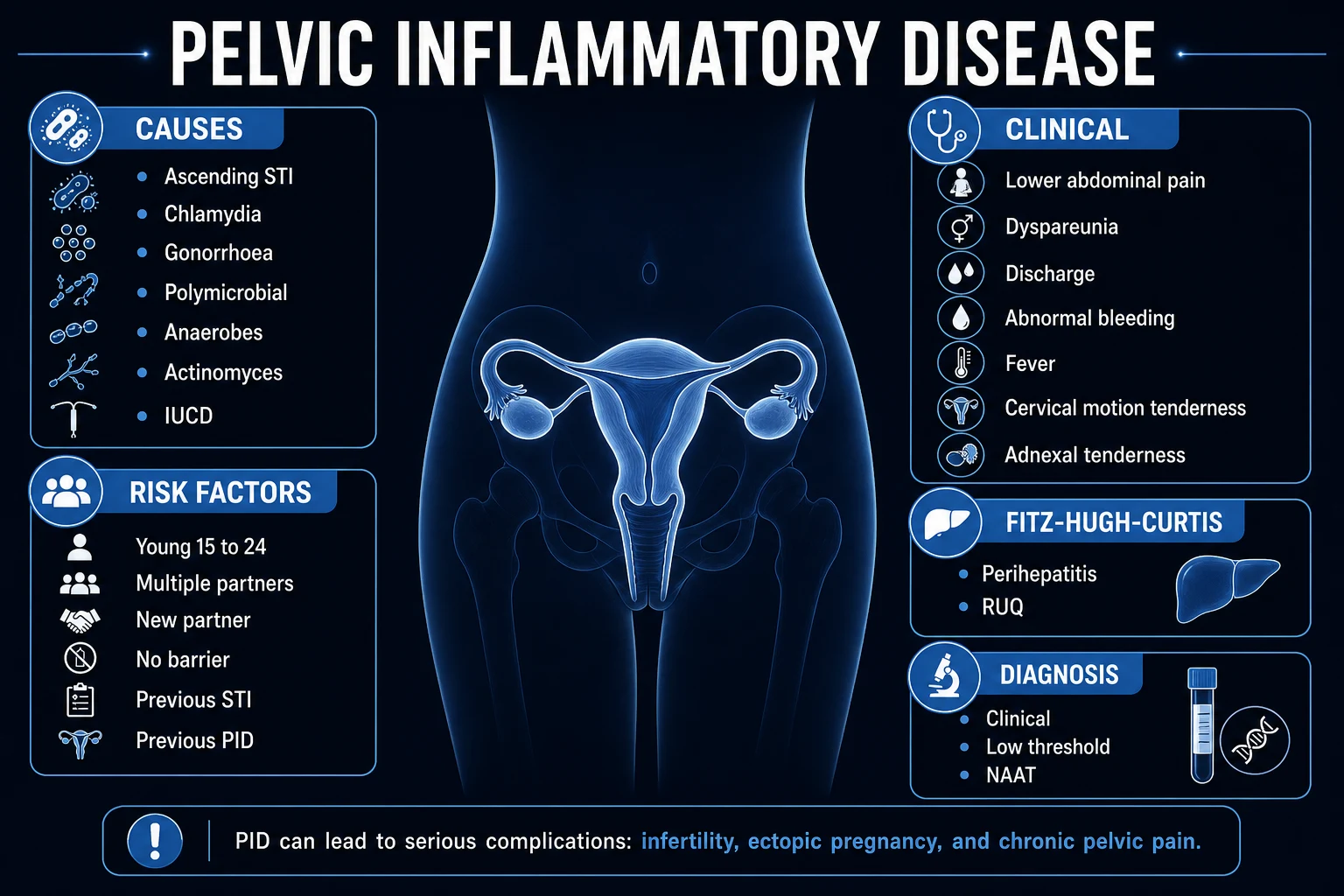
Pelvic inflammatory disease (PID) is an ascending, polymicrobial infection of the upper female genital tract — endometrium (endometritis), fallopian tubes (salpingitis), ovaries (oophoritis) and pelvic peritoneum. The classical organisms are Chlamydia trachomatis and Neisseria gonorrhoeae, with Mycoplasma genitalium, anaerobes and bacterial-vaginosis-associated organisms also important. Presents with bilateral lower abdominal pain, deep dyspareunia, abnormal vaginal discharge and cervical motion tenderness, but is often subtle or silent — the missed case is the one that causes tubal infertility. Diagnosis is clinical (minimum criterion: cervical motion, uterine or adnexal tenderness in a sexually active young woman with no other cause). Outpatient therapy: ceftriaxone 500 mg IM once + doxycycline 100 mg BD 14 days + metronidazole 500 mg BD 14 days; treat partners (60-day window); admit if pregnant, severe, TOA, failed oral therapy or diagnostic uncertainty. Complications: tubal infertility (12 percent after one episode), ectopic pregnancy (6 to 10-fold risk), chronic pelvic pain, tubo-ovarian abscess and Fitz-Hugh-Curtis perihepatitis.
On this page & tools
Your progress
Saved locally on this device.
Exam tags
Red flags
Overview & Definition
Pelvic inflammatory disease (PID) is a clinical syndrome caused by ascending infection of the upper female genital tract — the endometrium (endometritis), the fallopian tubes (salpingitis), the ovaries (oophoritis), the parametrium (parametritis) and the pelvic peritoneum. It is a continuum, not a single disease: a single inflammatory event spreads contiguously along the mucosal surfaces from cervix, through the endometrial cavity, into the tubal lumen, out through the fimbrial end and onto the ovarian and peritoneal surfaces. The label PID therefore encompasses everything from mild endometritis to a ruptured tubo-ovarian abscess with peritonitis and septic shock.[1][3]
The upper tract is normally sterile — the cervical mucus plug, local secretory IgA, and the lactobacillus-dominated acidic vagina are the principal barriers. PID represents a breach of this barrier: sexually transmitted pathogens plus opportunistic vaginal anaerobes traverse the cervix and establish infection in tissues that are normally defended. The clinical skill in PID is not the textbook diagnosis but three judgement calls: [1]
- Recognising the atypical and silent case. Up to two-thirds of women with tubal infertility attributable to PID give no history of a symptomatic acute episode — "silent PID". A low threshold to treat empirically protects fertility.[3]
- Treating empirically and immediately on minimum clinical criteria — before NAAT results return — because delay increases tubal scarring and infertility, and because every additional day of untreated salpingitis measurably worsens tubal function.[1]
- Distinguishing PID from its surgical mimics (appendicitis, ectopic pregnancy, ovarian torsion, ruptured TOA) and deciding who needs admission, parenteral therapy or surgery.[2]
PID is a notifiable consideration only indirectly — gonorrhoea and chlamydia are reportable diseases in most jurisdictions, and the diagnosis of PID mandates partner notification, STI screening and, in many health systems, case reporting to public health for contact tracing. [1]
Classification
PID is classified along three exam-relevant axes. The first — anatomical extent — is the one that maps directly to severity, to the surgical decision and to the long-term reproductive risk. [1]
By anatomical extent (the ascending continuum): [1]
Endometritis
- Inflammation limited to the **endometrium** (uterine lining)
- **Intermenstrual bleeding**, abnormal discharge, midline uterine tenderness
- **Earliest** stage; histological finding on endometrial biopsy is one of the most specific criteria for PID
Salpingitis
- Inflammation of the **fallopian tube** — the lesion that drives **tubal infertility and ectopic pregnancy**
- **Bilateral** adnexal tenderness; the tube becomes oedematous, hyperaemic, and purulent
- **Pyosalpinx** = pus-filled tube; **hydrosalpinx** = chronically fluid-distended, damaged tube
Tubo-ovarian abscess (TOA)
- **Ovary + tube become a single inflammatory mass** walled off as an abscess
- **Palpable adnexal mass**, high fever, severe pain; **may rupture** causing acute peritonitis and septic shock
- **Indication for admission, IV antibiotics and often drainage**
Pelvic peritonitis / Fitz-Hugh-Curtis
- Spread to **pelvic peritoneum** — peritonism, rebound, guarding
- **Fitz-Hugh-Curtis syndrome** = perihepatitis: RUQ pleuritic pain, **violin-string adhesions** on the liver capsule
By setting / clinical syndrome: [1]
- Acute PID — the classic presentation, symptoms under 30 days; the form most often tested.
- Subclinical (silent) PID — histological salpingitis without classic symptoms; the commonest driver of tubal infertility and the reason minimum-criterion treatment exists.[3]
- Chronic / recurrent PID — repeated episodes; each multiplies the infertility risk and produces dense pelvic adhesions.
- Residual disease — chronic pelvic pain persisting after the acute infection resolves, driven by adhesions, tubal distortion and nerve injury.
By severity (this drives site of care): [1]
- Mild-to-moderate — outpatient oral therapy; the PEACH trial validated this strategy.[5]
- Severe — inpatient parenteral therapy (high fever, peritonitis, vomiting, TOA, pregnancy, sepsis, or failure of oral therapy).
Epidemiology & Risk Factors
PID is one of the commonest preventable gynaecological infections worldwide and a leading cause of acquired tubal infertility. In the United States alone, an estimated one million cases are diagnosed each year, with direct costs exceeding two billion dollars annually; the global burden, dominated by regions with limited screening, is far higher. Lifetime risk in women with untreated chlamydial infection progressing to PID is approximately 10 to 15 percent (estimated from cohort and modelling studies), and each successive episode compounds the tubal damage.[2][3]
Peak incidence: sexually active women aged 15 to 24 years — the same window as the highest chlamydia and gonorrhoea prevalence. The biological reason is cervical ectopy: the adolescent cervix exposes a large surface of columnar epithelium (the transformation zone) to the vaginal vault, and Chlamydia replicates specifically in columnar cells. Ectopy shrinks with age as squamous metaplasia advances, which is why PID incidence falls steeply after 25. [1]
PID — the numbers that drive decisions
Risk factors — the STI / ascending-infection profile. Risk factor assessment is not a box-ticking exercise; it raises (or lowers) the pre-test probability of PID and shapes the threshold to treat empirically and to admit. [1]
| Risk factor | Why it matters |
|---|---|
| Multiple sexual partners | Increases exposure to N. gonorrhoeae, C. trachomatis, M. genitalium |
| New sexual partner | The strongest behavioural risk; same with a partner who has urethritis or a known STI |
| Age 15 to 24 | Cervical columnar ectopy makes the adolescent cervix vulnerable to chlamydia |
| No barrier contraception | Condoms reduce STI acquisition; spermicide has no protective role and may irritate |
| Previous PID | Recurrence risk is high; tubal damage is cumulative and largely irreversible |
| Bacterial vaginosis | Altered vaginal flora (anaerobes, sialidase) facilitates ascending infection |
| Vaginal douching | Mechanically flushes organisms into the upper tract; no health benefit |
| IUD (first 3 weeks only) | Small excess risk in the first 3 weeks after insertion; no increased risk thereafter in low-STI-risk women |
| Partner with STI / NGU | Reinfection source — partner treatment is mandatory |
UK (BASHH/RCOG): the British Association for Sexual Health and HIV endorses a near-identical empirical regimen, with ceftriaxone 1 g IM reflecting local gonococcal epidemiology and resistance patterns. Screening: sexually active women under 25 are offered annual chlamydia screening through the National Chlamydia Screening Programme (NCSP). India (FOGSI / NCDC / ICMR): gonococcal resistance is rising and genital tuberculosis (tubal TB) is an important differential for tubal infertility and a structural mimic of chronic PID — always consider when there is chronic pelvic pain, infertility and a positive Mantoux or interferon-gamma release assay. Empirical admitted-PID therapy is typically ceftriaxone 1 g IV/IM + doxycycline + metronidazole; apply local antibiograms. Access to NAAT and ultrasound is uneven — clinical diagnosis and a low threshold to treat remain standard. Global (WHO): PID is among the commonest reproductive tract infections; syndromic management (treat on the basis of symptoms and signs) is used where laboratory testing is unavailable, with the understanding that over-treatment is expected and partner management is emphasised.
Pathophysiology
The upper female genital tract is normally sterile. The cervix is the first barrier — its mucus (which thickens at the oestrogen-poor mid-cycle), local immunoglobulins (secretory IgA) and the acidic (pH under 4.5) vaginal environment suppress ascending organisms. PID occurs when these defences are bypassed or overwhelmed — most often by a sexually transmitted pathogen that has evolved specifically to colonise cervical columnar epithelium.[2][3]
The ascending cascade (mechanism): [1]
- Lower-tract colonisation — N. gonorrhoeae and C. trachomatis attach to the cervical columnar epithelium (aided by adolescent cervical ectopy). Chlamydia is an obligate intracellular organism that replicates within membrane-bound inclusion bodies; Neisseria uses type IV pili and Opa (opacity) proteins for adhesion and IgA protease to cleave local antibody. BV organisms (Gardnerella vaginalis, Prevotella, Atopobium) raise the vaginal pH, produce sialidase that degrades protective mucus, and form a polymicrobial biofilm on the vaginal epithelium that resists host defences.
- Cervicitis — organisms multiply in endocervical cells, producing mucopurulent discharge, friability and contact bleeding.
- Ascent to the endometrium — especially during menstruation (loss of the cervical mucus plug and blood as a culture medium), or facilitated by intercourse, douching, or instrumentation (IUD insertion, hysterosalpingography, hysteroscopy, termination). The result is endometritis.
- Salpingitis — the fertility-defining lesion — organisms reach the tubal mucosa and destroy the ciliated epithelium. Chlamydia triggers a TH1/TH17 cell-mediated immune response with IFN-gamma, TNF-alpha and IL-1, causing scarring and tubal obstruction; the severity of chlamydial PID is driven more by the host immune response than by the bacterial load — which is why repeated exposure (reinfection) is so damaging. Gonococcus produces a neutrophil-predominant, exudative salpingitis with frank pus (pyosalpinx) and rapidly destroys the tubal mucosa through proteases and endotoxin (lipooligosaccharide, LOS).
- Ovarian and peritoneal spread — the fimbriae lie over the ovarian surface; infection reaches the ovary (oophoritis) and the pelvic peritoneum (peritonitis). The tube and ovary become matted into a tubo-ovarian complex or, when walled off with pus, a tubo-ovarian abscess.
- Contiguous perihepatitis — capsular inflammation tracks up the right paracolic gutter to the liver capsule (Fitz-Hugh-Curtis syndrome), producing RUQ pleuritic pain and, over time, violin-string adhesions between the liver capsule and the anterior abdominal wall. The left side is rarely involved, reflecting the anatomy of peritoneal fluid flow. [1]
Why PID scars tubes — the molecular link to infertility. Chlamydial heat-shock protein 60 (cHSP-60) drives a delayed-type hypersensitivity reaction analogous to the ocular scarring of trachoma; persistent antigen (and the aberrant persistent body form Chlamydia adopts under IFN-gamma pressure) leads to fibrosis, tubal mucosal adhesions (follicular salpingitis) and fimbrial damage. Loss of ciliary transport and tubal patency is the structural basis of tubal infertility, ectopic implantation and chronic pelvic pain. Crucially, subclinical PID inflicts the same tubal damage as symptomatic disease — the asymptomatic case is not a benign case, and this single fact underpins the entire empirical-treatment strategy.[3]
Clinical Presentation
The classic acute presentation (the exam favourite) — a sexually active young woman with: [1]
- Bilateral lower abdominal pain — usually of gradual onset (this distinguishes PID from the abrupt, catastrophic pain of ectopic rupture or ovarian torsion), worse with intercourse (deep dyspareunia), and often maximal during or just after a period.
- Abnormal vaginal discharge — often mucopurulent; may be the only presenting symptom.
- Abnormal vaginal bleeding — postcoital, intermenstrual, or heavier and more painful periods (menorrhagia and dysmenorrhoea are common).
- Dysuria — the acute urethral syndrome (dysuria and frequency with a sterile routine culture on standard media) is a classic chlamydia clue and should always trigger an STI screen.
- Fever — may be low-grade or absent; high fever with rigors suggests TOA or peritonitis.
- Systemic upset — malaise, nausea, vomiting (more common with severe disease, TOA or peritonitis). [1]
Silent / subclinical PID (the fertility-threatening form). The majority of women with tubal-factor infertility give no history of a symptomatic episode — they may have had only mild, self-limited symptoms (spotting, mild dyspareunia, a "low-grade pelvic ache") that were never treated, never swabbed and never attributed to infection. This is the rationale for empirical treatment on minimum criteria: the cost of over-treating a non-PID case with one course of oral antibiotics is trivial; the cost of missing a true PID is irreversible tubal infertility.[3]
Fitz-Hugh-Curtis syndrome (perihepatitis). A right upper quadrant pleuritic pain and tenderness in the setting of PID, often mimicking acute cholecystitis. The pain is sharp, worse on deep inspiration and coughing, and may be the dominant complaint. Liver enzymes are normal or only mildly raised — a key clue that the liver parenchyma is not the problem; the capsule is. Classical laparoscopic finding: violin-string adhesions between the liver capsule and the anterior abdominal wall or parietal peritoneum. Originally attributed to N. gonorrhoeae, C. trachomatis is now the more commonly identified organism.[2]
Atypical and high-risk presentations (do not miss):
- The adolescent (15 to 19 years) — cervical ectopy makes chlamydia highly efficient; presentation may be only dysuria and spotting. Always take a sexual history and do a pregnancy test.
- The woman with an IUD — risk is confined to the first 3 weeks after insertion; an IUD user who develops PID is treated the same way (the device can usually stay).
- The pregnant patient — PID in pregnancy is uncommon but serious; always exclude ectopic pregnancy and admit for parenteral therapy.
- The immunocompromised / HIV-positive woman — more likely to have severe disease, TOA and treatment failure; admit early and broaden cover.
- Post-instrumentation — symptoms within days to weeks of IUD insertion, hysteroscopy, termination of pregnancy or delivery (postpartum / post-abortal infection). [1]
Differential Diagnosis
Acute lower abdominal pain in a young woman is one of medicine's broadest differentials. PID is a diagnosis of synthesis — the specific features below distinguish it from its mimics. The non-negotiable first step in every case is a pregnancy test to exclude the lethal mimic (ectopic).[2]
Ectopic pregnancy
- **Unilateral**, often **sudden/severe** pain; **missed period**, **dark scanty** vaginal bleeding
- **Positive beta-hCG**; **empty uterus** with adnexal mass on ultrasound; signs of rupture (shoulder-tip pain, shock)
- Distinguisher: PID is bilateral and gradually onset; ectopic is unilateral and may collapse the patient. **Always do a pregnancy test.**
Appendicitis
- **Periumbilical pain migrating to the RIF**, anorexia, nausea, low-grade fever
- **McBurney point** tenderness, Rovsing sign, rebound; **no vaginal discharge or CMT**
- Distinguisher: central-then-RIF migration; no cervical motion tenderness; raised inflammatory markers without STI risk
Ovarian torsion / cyst rupture
- **Sudden, severe unilateral** pain; torsion may have nausea/vomiting and a palpable mass
- Ultrasound: enlarged oedematous ovary with **absent/reduced Doppler flow** (torsion) or **free fluid** (rupture)
- Distinguisher: acute unilateral onset; no discharge or CMT; surgical emergency — do not delay for swabs
Endometriosis
- **Cyclical** pain (dysmenorrhoea, deep dyspareunia, dyschezia) over **months to years**, not acute
- Fixed retroverted uterus, adnexal tenderness or nodularity in uterosacral ligaments
- Distinguisher: chronic cyclical course; **no fever or purulent discharge**
Urinary tract infection / cystitis
- Dysuria, frequency, urgency, suprapubic pain; **no discharge or CMT**
- **Positive urine culture**; sterile-culture dysuria points to chlamydia (acute urethral syndrome)
- Distinguisher: pain is suprapubic/urethral, not adnexal; no sexual-pain component
Septic miscarriage / endometritis (postpartum or post-abortion)
- Recent pregnancy event; **retained products of conception**, foul lochia, uterine tenderness
- **Fever, tachycardia**, tender bulky uterus; open cervical os
- Distinguisher: temporal link to delivery or miscarriage; **needs uterine evacuation** and IV antibiotics
Irritable bowel syndrome / functional pain
- **Chronic, fluctuating** pain with altered bowel habit; **no inflammatory, no STI, no objective findings**
- Normal examination and investigations
- Distinguisher: a diagnosis of exclusion — never label acute pelvic pain as functional without excluding PID and ectopic
Bottom line: every sexually active woman with acute pelvic pain needs a pregnancy test, a speculum and bimanual examination, and consideration of ultrasound before the pain is attributed to a benign cause. Three diagnoses are time-critical: ectopic pregnancy, ovarian torsion and a ruptured TOA. PID, by contrast, is the diagnosis for which empirical treatment is safest to begin while awaiting confirmation. [1]
Clinical & Bedside Assessment
History must include a confidential sexual history (number of partners, new partner, partner symptoms, contraception, previous STI/PID, last menstrual period, douching). Confidentiality is not optional — the quality of the sexual history directly determines the pre-test probability and the threshold to treat.[1][2]
Speculum examination: inspect the cervix for mucopurulent discharge, cervical ectopy, friability and contact bleeding; take endocervical (and/or vaginal self-taken) NAAT swabs for N. gonorrhoeae and C. trachomatis, a high-vaginal swab for wet mount, and (where indicated) gonococcal culture for sensitivity testing. Self-taken vaginal NAAT swabs are at least as sensitive as clinician-taken endocervical swabs and are preferred in many screening programmes. [1]
Bimanual (pelvic) examination — the decisive bedside test: [1]
- Cervical motion tenderness (CMT) — "chandelier sign": excruciating pain on moving the cervix, so named because the patient "reaches for the chandelier". It is sensitive (around 80 percent) but not specific (around 50 percent) for PID — it simply reflects peritoneal irritation by the inflamed adnexa, and is also positive in any pelvic peritonism.
- Uterine tenderness — on palpating the fundus (endometritis).
- Adnexal tenderness — usually bilateral; a unilateral tender mass raises TOA, ectopic or torsion and mandates ultrasound. [1]
The key exam skill: do not wait for swab results to treat. If the minimum criteria are met and no other cause is found, start empirical antibiotics immediately. The additional (specificity-increasing) criteria are useful when the diagnosis is uncertain — each one present raises the likelihood of PID, but none is required to begin treatment, and demanding them at the bedside delays the very treatment that protects fertility.[1]
Investigations
PID is a clinical diagnosis; investigations support it, exclude mimics and identify complications. Empirical treatment should never be delayed for test results — start antibiotics on minimum criteria, then send the tests.[1]
Bedside / first-line: [1]
- Pregnancy test (urine beta-hCG) — mandatory in every case to exclude ectopic pregnancy (the lethal mimic). A negative test does not exclude PID; it simply removes the most dangerous alternative.
- Endocervical or vaginal self-taken NAAT for N. gonorrhoeae and C. trachomatis — high sensitivity (over 95 percent) and specificity; a negative result does not exclude PID (the upper-tract infection may be established even with a negative cervical swab).
- Mycoplasma genitalium NAAT — where available; rising importance due to macrolide resistance, which now affects a substantial proportion of isolates and changes management.[3]
- Wet mount / Gram stain of vaginal discharge — white blood cells (over three to five per high-power field supports the diagnosis), clue cells (BV, over 20 percent of epithelial cells), motile trichomonads (trichomoniasis).
- Urinalysis / urine culture — to distinguish UTI; sterile pyuria (pyuria with a negative standard culture) suggests chlamydia.
Bloods: [1]
- Full blood count — leucocytosis (non-specific).
- CRP and ESR — raised inflammatory markers support the diagnosis and are part of the specificity-increasing criteria; CRP correlates loosely with severity.
- Urea and electrolytes, liver function tests — baseline if sepsis, vomiting, or RUQ pain (to interpret Fitz-Hugh-Curtis).
- Blood cultures — only if septic or TOA; bacteraemia is uncommon in uncomplicated PID but the organisms (often anaerobes or gonococcus) guide ongoing therapy when positive. [1]
Serology (STI screen at the same visit): [1]
- HIV (4th-generation combination antigen/antibody), syphilis (treponemal EIA/TPPA plus RPR/VDRL), and consider hepatitis B and C. A diagnosis of PID is a mandate to screen for all blood-borne and sexually transmitted infections — co-infection is common and changes management, counselling and partner notification.[1]
Imaging: [1]
- Transvaginal pelvic ultrasound — the workhorse for tubo-ovarian abscess, pyosalpinx, free fluid, and to exclude ectopic. Findings supporting PID: thickened, fluid-filled tubes (pyosalpinx), a complex multiseptate adnexal mass (TOA), increased colour Doppler flow (hyperaemia), and free pelvic fluid. A normal ultrasound does not exclude PID — early salpingitis may be sonographically occult.
- CT / MRI — for large or atypical TOA, when ultrasound is non-diagnostic, or to exclude appendicitis and other intestinal pathology; MRI avoids radiation and gives excellent soft-tissue detail.
- Endometrial biopsy — histological endometritis (plasma cells in the endometrial stroma) is one of the most specific non-invasive confirmatory tests but is not routinely performed.
- Laparoscopy — the gold standard (allows direct visualisation of tubes, pus collection and adhesions, plus division of violin-string adhesions in Fitz-Hugh-Curtis) but is invasive and not required for typical cases; reserved for diagnostic uncertainty, severe disease, a surgical emergency that cannot be excluded, and for drainage of TOA.[4]
Management — Resuscitation
Most PID is managed as an outpatient; resuscitation applies to the severe, pregnant or TOA case presenting with systemic upset.[1]
- ABCDE assessment. Intravenous access; fluid resuscitation for hypotension or sepsis (balanced crystalloid such as Hartmann's or Plasma-Lyte, reassess responsiveness and avoid over-resuscitation).
- Septic-shock bundle if hypotensive: blood cultures, serum lactate, broad-spectrum IV antibiotics within 1 hour, fluid boluses (typically 30 mL/kg crystalloid), and noradrenaline for fluid-refractory shock (Surviving Sepsis hour-1 bundle). Source control — drainage of a TOA — is part of resuscitation in sepsis.
- Analgesia — NSAIDs plus simple analgesia; avoid masking a surgical abdomen with opioids before surgical review.
- Surgical review if a ruptured TOA (acute peritonitis, septic shock) or an alternative surgical emergency (appendicitis, ectopic, torsion) cannot be excluded.
- Anti-emetics for vomiting. [1]
Management — Definitive & Stepwise
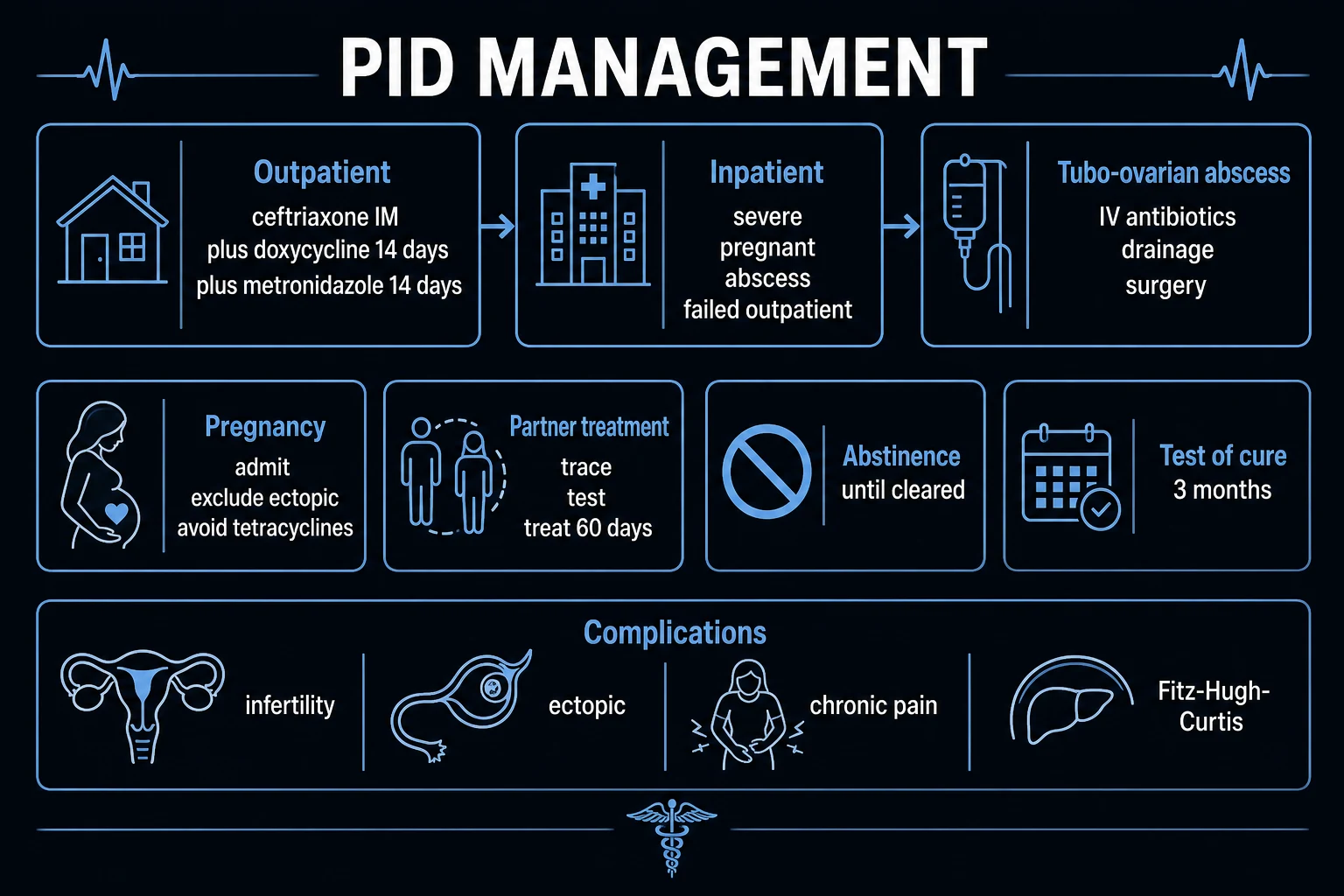
Empirical therapy must cover N. gonorrhoeae, C. trachomatis, M. genitalium and anaerobes, and be started on the day of diagnosis — the same visit on which minimum criteria are met. Delaying even a few days measurably worsens tubal outcomes.[1]
Outpatient (mild-to-moderate) — CDC 2021 recommended regimen
Outpatient PID — the CDC 2021 triple regimen
Covers Neisseria gonorrhoeae; use 1 g IM if body weight 150 kg or more. The 500 mg dose replaced the older 250 mg dose in 2020 to maintain efficacy against strains with reduced cephalosporin susceptibility.
Covers Chlamydia trachomatis and Mycoplasma genitalium (where macrolide-resistant). Tetracycline-class; advise sun protection and avoid in pregnancy and lactation. Take with water, away from milk/antacids (divalent cations chelate the drug).
Covers anaerobes and BV-associated organisms. Added as routine (not optional) in the 2021 update. Warn about the disulfiram-like reaction with alcohol; advise abstinence for the course and 48 hours after.
If no improvement, admit, re-image (ultrasound for TOA), reconsider appendicitis or ectopic, and switch to parenteral therapy.
Confirm symptom resolution; verify partner treatment; rescreen NAAT at 3 months to detect reinfection.
Metronidazole is now routine (not optional) — added in the 2021 update to cover anaerobes and BV-associated organisms that drive treatment failure. The pre-2021 two-drug regimen (ceftriaxone plus doxycycline) was associated with clinically important treatment failures traced to anaerobic co-infection.[1]
Inpatient (parenteral) — CDC 2021 regimens
Three regimens provide equivalent empirical cover; choice is driven by local resistance, allergy and severity: [1]
- Regimen A: Ceftriaxone 1 g IV once daily + doxycycline 100 mg PO/IV twice daily + metronidazole 500 mg IV twice daily (or 500 mg PO twice daily). The most widely used; closest to the outpatient regimen.
- Regimen B: Cefotetan 2 g IV every 12 hours + doxycycline 100 mg PO/IV every 12 hours. The cephalosporin covers anaerobes, so additional metronidazole is not required — but TOA warrants it.
- Regimen C: Clindamycin 900 mg IV every 8 hours + gentamicin (loading 2 mg/kg then 1.5 mg/kg every 8 hours, OR a once-daily 5 mg/kg regimen). Useful for severe penicillin allergy; provides excellent anaerobic cover and is preferred for TOA, but carries C. difficile risk and requires renal-dose gentamicin monitoring. [1]
Switch IV to oral after 24 to 48 hours of sustained clinical improvement (afebrile, falling pain and tenderness, improving inflammatory markers), and complete a total of 14 days (doxycycline 100 mg BD + metronidazole 500 mg BD orally).[1]
Tubo-ovarian abscess
- IV antibiotics as above + additional anaerobic cover (clindamycin or metronidazole) — Regimen C is often preferred for TOA because clindamycin penetrates abscesses well.
- Drain the TOA if it is over 8 cm in diameter, if it fails to improve on 48 to 72 hours of IV antibiotics, or if it ruptures.
- Image-guided drainage (transvaginal ultrasound or CT-guided) is preferred to open surgery — it is faster, less invasive and preserves ovarian tissue.
- Laparoscopy or laparotomy is reserved for rupture, failure of percutaneous drainage, diagnostic uncertainty, or when a surgical mimic cannot be excluded; at laparotomy, salpingo-oophorectomy may be required for a destroyed or ruptured tube-ovary.
- Recent data favour drainage from around 5 cm, particularly with sepsis — the classic 8 cm threshold reflects older surgical practice, and larger abscesses left undrained have higher failure and recurrence rates.[3]
Surgical management
Surgery plays a limited, targeted role in PID — most disease is medical. The specific indications are: ruptured TOA with peritonitis or septic shock (laparotomy, peritoneal lavage, drainage or salpingo-oophorectomy), TOA unresponsive to antibiotics and drainage, diagnostic uncertainty where laparoscopy both confirms PID and excludes appendicitis or torsion, and Fitz-Hugh-Curtis with chronic RUQ pain where laparoscopic adhesiolysis of violin-string adhesions relieves symptoms. The principle in fertile women is conservation of ovarian function wherever possible — unilateral salpingo-oophorectomy for a destroyed adnexum preserves the contralateral ovary and future fertility. [1]
Admission criteria (CDC) — admit if any of:
PID admission criteria
SPIT-A
Cannot exclude appendicitis, ectopic or torsion
Always admit for parenteral therapy; exclude ectopic
Severe pain, high fever, vomiting, TOA, peritonitis, sepsis
Cannot tolerate or adhere to oral therapy
No improvement at 48 to 72 hours of oral therapy
Adjunctive and public-health measures (mandatory, not optional)
- Treat sexual partners of the preceding 60 days, regardless of their symptoms; offer expended partner therapy (EPT — delivering a prescription or medication for the partner without clinical examination) where permitted. Reinfection from an untreated partner is the commonest cause of recurrent PID and multiplies tubal damage.[1]
- Abstain from intercourse for 7 days after completion of treatment and until all partners are treated.
- Rescreen with NAAT at 3 months — reinfection is common, often asymptomatic, and is the principal driver of cumulative tubal damage.
- Test of cure is required if symptoms persist, if M. genitalium was treated with a macrolide (macrolide resistance demands a moxifloxacin salvage), or if an alternative less-effective regimen was used.[3]
- Pain management — NSAIDs; consider the role of pelvic-floor physiotherapy for chronic pain after the acute infection resolves.
- Contraception and STI prevention counselling — condoms, vaccination against HPV and hepatitis B, and smoking cessation (smoking is an independent risk factor for tubal infertility).
Specific Subtypes & Scenarios
- Fitz-Hugh-Curtis syndrome (perihepatitis): PID with RUQ pleuritic pain, often mimicking biliary disease. LFTs normal or mildly raised. Manage as standard PID (the same regimen) — perihepatitis does not change the antibiotics; adhesions may cause chronic pain and are divided at laparoscopy if symptomatic.[2]
- Tubo-ovarian abscess: see above — IV antibiotics plus drainage for large (over 8 cm) or unresponsive abscesses. Rupture is a surgical emergency (acute peritonitis, septic shock) requiring laparotomy.
- Pyosalpinx / hydrosalpinx: a pus-filled or chronically fluid-filled, damaged tube — the long-term scar of salpingitis. Hydrosalpinx reduces IVF success (the toxic tubal fluid refluxes into the uterine cavity) and may require salpingectomy before fertility treatment.
- Silent / subclinical PID: treat on minimum criteria; the asymptomatic case still causes tubal damage — maintain a low threshold.[3]
- Chronic / recurrent PID: each episode multiplies the infertility risk; reinforce partner treatment, condom use and rescreening.
- Postpartum / post-abortal endometritis: retained products of conception drive infection; management combines IV antibiotics with surgical uterine evacuation — a different algorithm from STI-PID, and one where delaying evacuation guarantees failure.
Complications & Pitfalls
Local: tubo-ovarian abscess, pyosalpinx, pelvic peritonitis, dense pelvic adhesions, chronic tubal damage, ruptured TOA leading to peritonitis and sepsis. Hepatic: Fitz-Hugh-Curtis perihepatitis and chronic RUQ pain. Reproductive (the exam-heavy sequelae): the Lund cohort (Westrom) established the cumulative reproductive burden — each untreated or recurrent episode stacks tubal damage.[2][3]
The reproductive sequelae of PID — risk rises with each episode
The biological thread connecting all these sequelae is tubal mucosal scarring with loss of ciliary transport and fimbrial function. The tube becomes a fibrotic, partially obstructed structure: sperm and egg cannot meet (infertility), and a fertilised ovum is trapped in damaged mucosa (ectopic implantation, usually ampullary). Chronic pelvic pain reflects dense adhesions between tube, ovary, bowel and pelvic sidewall, with nerve injury and central sensitisation. [1]
Classic pitfalls:
- Waiting for NAAT results before treating — the single commonest error; treat on minimum criteria.
- Forgetting the pregnancy test and missing an ectopic.
- Not treating the partner(s) — reinfection causes recurrent PID and multiplies tubal damage; always offer EPT.
- Under-dosing anaerobic cover (omitting metronidazole) — now routine since the 2021 update.
- Missing a TOA — any unilateral tender mass or failure to respond needs ultrasound.
- Labelling acute pain "functional" in a young woman without excluding PID and ectopic.
- Failing to rescreen at 3 months — reinfection is common and often asymptomatic.
- Over-reliance on the IUD as the cause — IUD risk is confined to the first 3 weeks; do not remove unnecessarily, and do not attribute all pelvic pain in an IUD user to the device. [1]
Self-test: which single error causes the most preventable infertility in PID?
Waiting for swab results before treating. The CDC minimum criterion (cervical motion, uterine or adnexal tenderness in a sexually active young woman with no other cause) is sufficient to start empirical antibiotics on the day of presentation. A negative NAAT does not exclude upper-tract infection, and each day of delay worsens cumulative tubal damage. Treat now, confirm later.
Prognosis & Disposition
- Early, appropriate treatment of mild-to-moderate PID yields excellent short-term outcomes; the PEACH trial showed outpatient and inpatient strategies had equivalent short- and long-term outcomes for mild-to-moderate disease, supporting outpatient management for patients who can tolerate and adhere to oral therapy.[5]
- Long-term sequelae are driven by delayed or incomplete treatment and by reinfection — tubal infertility, ectopic pregnancy and chronic pelvic pain can follow even a single treated episode, and the risk rises steeply with each recurrence.
- Disposition: outpatient for mild-to-moderate disease (with a 48 to 72-hour review); inpatient for the SPIT-A criteria; ICU for septic shock or a ruptured TOA.
- Follow-up at 48 to 72 hours to confirm clinical improvement; rescreen NAAT at 3 months; partner treatment verified.
- Fertility evaluation if pregnancy has not occurred after 12 months of trying (or 6 months if over 35) — tubal patency testing (hysterosalpingogram, laparoscopy and dye test) and IVF referral as needed, with salpingectomy first if a hydrosalpinx is present (it halves IVF success).
Special Populations
- Pregnancy: PID is uncommon but serious — admit for parenteral antibiotics, exclude ectopic pregnancy by ultrasound, and avoid tetracyclines (doxycycline) because of fetal bone and tooth effects; substitute according to local guidance (the regimen is individualised in pregnancy, often a cephalosporin plus azithromycin with metronidazole).[1]
- Adolescents (15 to 19): cervical ectopy increases chlamydial susceptibility; screen annually, maintain a low threshold to treat, and ensure confidential partner notification.
- IUD users: risk is confined to the first 3 weeks after insertion; treat PID as standard and the IUD can usually remain — remove only if no improvement at 48 to 72 hours or if the device is the suspected source (e.g. actinomycosis with symptoms).[1]
- HIV-positive / immunocompromised: same regimens but more likely to need admission, to have TOA and to experience treatment failure — lower threshold for parenteral therapy and for broader cover including candidal and mycobacterial causes.
- Women who have sex with women: lower STI baseline but chlamydia and gonorrhoea still transmit via shared vaginal fluids and sex toys — screen and treat on the same criteria.
- Men who have sex with men (for partner management): ensure the male partner is screened for gonorrhoea, chlamydia, syphilis, HIV and hepatitis.
- The post-instrumentation case: symptoms within days to weeks of IUD insertion, hysteroscopy, termination or delivery — broaden cover and consider retained products of conception.
Evidence, Guidelines & Regional Differences
CDC 2015 to 2021 update (the headline change): the addition of metronidazole to the outpatient PID regimen, in recognition that anaerobic and BV organisms are central to PID pathophysiology and to treatment failure. The same update retained the 2020 increase of the ceftriaxone dose from 250 mg to 500 mg IM (1 g if 150 kg or more), driven by rising gonococcal minimum inhibitory concentrations to cephalosporins.[1]
PEACH trial (Ness et al., 2002): the landmark randomised controlled trial that established outpatient therapy as non-inferior to inpatient therapy for mild-to-moderate PID, with equivalent short-term and long-term reproductive outcomes — the basis for modern outpatient management and for the principle that severity, not setting, determines outcome.[5]
Regional deltas (exam-relevant): [1]
European (IUSTI 2017): ceftriaxone 500 mg IM + doxycycline + metronidazole, with azithromycin-based alternatives where gonorrhoea is excluded.[4] WHO: syndromic management in low-resource settings, with mandatory partner treatment and a strong emphasis on integratable sexual and reproductive health services.
Controversies:
- Whether to routinely test and pre-emptively treat M. genitalium before macrolide resistance outstrips options — current guidance favours testing where available, with resistance-guided therapy (extended azithromycin or moxifloxacin).[3]
- The optimal drainage threshold for TOA — classically 8 cm, but recent data favour intervention from around 5 cm, particularly with sepsis.
- The role of laparoscopy in routine diagnosis — now reserved for atypical or severe cases and for therapeutic drainage.
- Whether anaerobic testing of the vaginal microbiome should guide individualised therapy.
Exam Pearls
- PID = ascending, polymicrobial upper genital tract infection; classical organisms Chlamydia trachomatis and Neisseria gonorrhoeae, also Mycoplasma genitalium and anaerobes.
- Minimum CDC criterion (treat on this): cervical motion, uterine or adnexal tenderness in a sexually active young woman with pelvic pain and no other cause. Do not wait for NAAT.[1]
- Standard outpatient regimen: ceftriaxone 500 mg IM once + doxycycline 100 mg BD 14 days + metronidazole 500 mg BD 14 days (metronidazole is routine since 2021).[1]
- Always do a pregnancy test — ectopic is the lethal mimic.
- Fitz-Hugh-Curtis: perihepatitis, RUQ pleuritic pain, violin-string adhesions, normal or mildly raised LFTs; managed as standard PID.[2]
- Tubo-ovarian abscess: drain if over 8 cm or failing 48 to 72 hours of IV antibiotics; image-guided drainage preferred.[3]
- Sequelae (cumulative with each episode): infertility 12 percent / 25 percent / over 50 percent after 1 / 2 / 3+ episodes; ectopic 6 to 10-fold; chronic pelvic pain in about one-third.[2]
- Admit (SPIT-A): surgical mimic, Pregnancy, Illness/severe, Tolerate/adhere, Absent response.
- Treat partners of the preceding 60 days; abstain until both treated; rescreen NAAT at 3 months.
- IUD risk is confined to the first 3 weeks after insertion — beyond that, IUD users are at standard risk; the IUD usually stays when PID develops.
- Douching has no health benefit and increases PID risk — counsel against it.
- PEACH trial: outpatient is non-inferior to inpatient for mild-to-moderate PID.[5]
Exam application bank (NEET-PG / INICET)
One-line answer
Pelvic inflammatory disease (PID) is an ascending, polymicrobial infection of the upper female genital tract — endometrium (endometritis), fallopian tubes (salpingitis), ovaries (oophoritis) and pelvic peritoneum. The classical organisms are Chlamydia trachomatis and Neisseria gonorrhoeae, with Mycoplasma genitalium, anaerobes and bacterial-vaginosis-associated organisms also important. Presents with bilateral lower abdominal pain, deep dyspareunia, abnormal vaginal discharge and cervical motion tenderness, but is often subtle or silent — the missed case is the one that causes tubal infertility. Diagnosis is clinical (minimum criterion: cervical motion, uterine or adnexal tenderness in a sexually active young woman with no other cause). Outpatient therapy: ceftriaxone 500 mg IM once + doxycycline 100 mg BD 14 days + metronidazole 500 mg BD 14 days; treat partners (60-day window); admit i [1]
Worked stems (answer without another resource)
Stem 1 — Classic presentation. Map symptoms to mechanism; name the first investigation and first treatment step with dose/route if drug therapy is standard. [1]
Stem 2 — Unstable / complicated. List red flags that force immediate resuscitation, theatre, ICU, antidote, or reperfusion — and what you do in the first 15 minutes. [1]
Stem 3 — Atypical group. Elderly, pregnancy, child, or immunocompromised: how presentation and thresholds change. [1]
Stem 4 — Differential trap. Name the three closest mimics and one discriminator for each. [1]
Stem 5 — Disposition. Who goes home with safety-netting, who is admitted, who needs HDU/ICU/theatre, and what follow-up is mandatory. [1]
Rapid viva checklist
- Definition + classification
- Pathophysiology chain
- Bedside signs / criteria
- Score with exact components (if any)
- Emergency bundle
- Definitive therapy with doses
- Complications of disease and of treatment
- Special populations
- Guideline/trial name if classic
- Three exam traps
Coverage self-check
If you cannot answer any stem above from this page alone, re-read the matching section — the page is intended to be self-sufficient for final-prof and NEET-PG/INICET questions on Pelvic Inflammatory Disease.
References
- [1]Workowski KA, Bachmann LH, Chan PA, et al. Sexually Transmitted Infections Treatment Guidelines, 2021 MMWR Recomm Rep, 2021.PMID 34292926
- [2]Das BB, Ronda J, Trent M. Pelvic Inflammatory Disease: Diagnosis, Management, and Prevention Am Fam Physician, 2019.PMID 31524362
- [3]Mitchell CM, Anyalechi GE, Helfer J, et al. Management of Pelvic Inflammatory Disease in Clinical Practice Ther Clin Risk Manag, 2023.PMID 36814428
- [4]Ross J, Guaschino S, Cusini M, Jensen J. 2017 European guideline for the management of pelvic inflammatory disease Int J STD AIDS, 2018.PMID 29198181
- [5]Ness RB, Soper DE, Holley RL, et al. Effectiveness of inpatient and outpatient treatment strategies for women with pelvic inflammatory disease: results from the Pelvic Inflammatory Disease Evaluation and Clinical Health (PEACH) Randomized Trial Am J Obstet Gynecol, 2002.PMID 12015517