Obstetrics & Gynaecology · Obstetrics & Gynaecology
Preterm Labour & Preterm Birth
Also known as Preterm labour · Preterm birth · Tocolysis · Cervical cerclage · PPROM · Cervical insufficiency
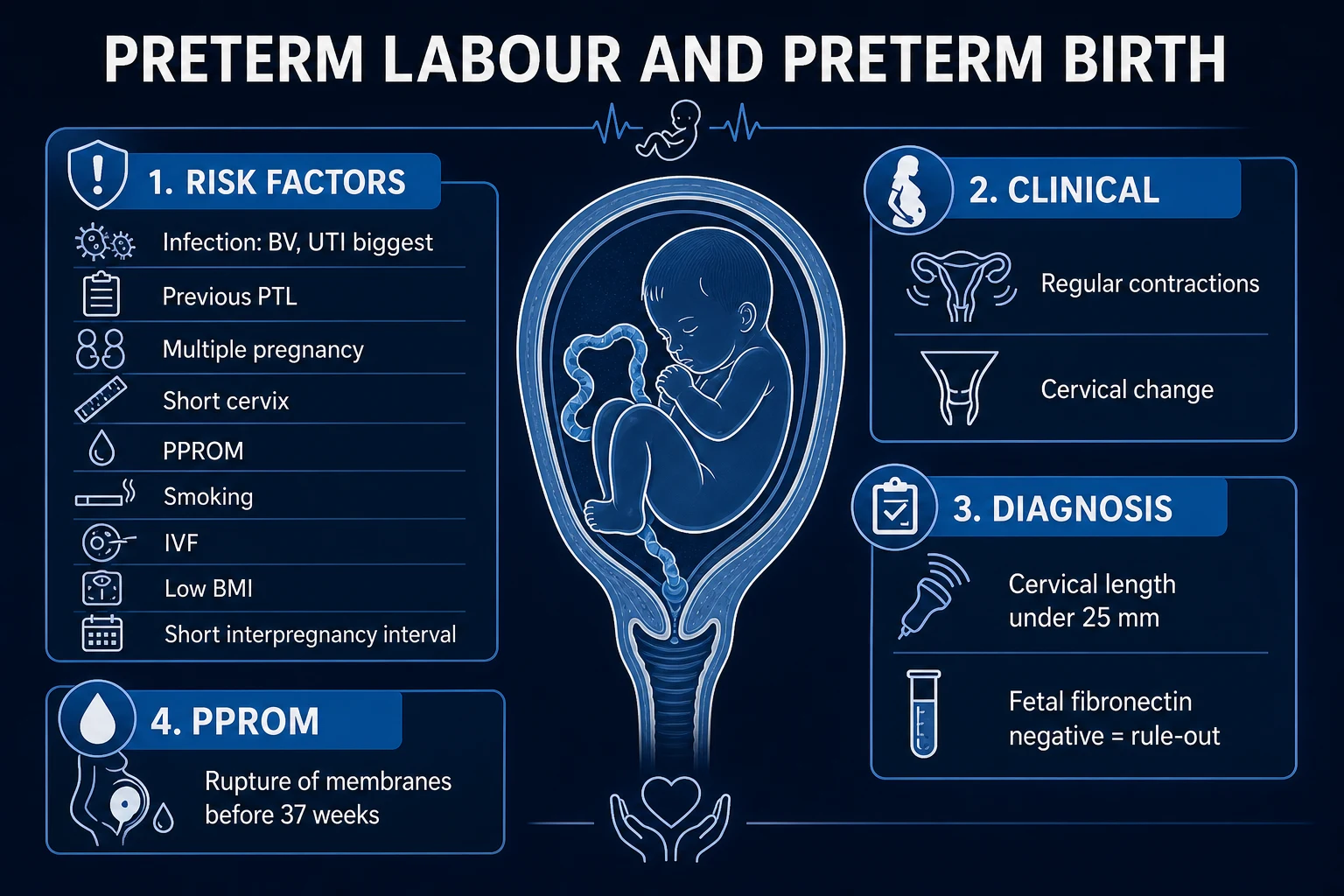
Preterm labour (PTL) is the onset of regular painful uterine contractions with cervical change before 37 completed weeks of gestation; preterm birth (PTB) is delivery before 37 weeks — the commonest cause of neonatal mortality and a leading cause of childhood disability. Risk factors: infection (intra-amniotic, BV, UTI, STI — the biggest reversible driver), previous preterm birth (recurrence 20 to 30 percent), multiple pregnancy, short cervix, PPROM, uterine anomaly, prior cervical surgery, smoking, low BMI, short interpregnancy interval, IVF. Diagnosis: contractions with cervical change; prediction by TVUS cervical length under 25 mm and fetal fibronectin (negative is a powerful rule-out). Management goal: delay birth 48 h for antenatal corticosteroids (24 to 34w) + magnesium sulfate neuroprotection (under 32w) + in-utero transfer — tocolysis with nifedipine (first-line); PPROM → erythromycin + surveillance, deliver at 34w; never tocolyse chorioamnionitis or fetal compromise. Prevention: vaginal progesterone (short cervix), cervical cerclage (history/ultrasound-indicated), smoking cessation, treat infection, interval planning.
On this page & tools
Your progress
Saved locally on this device.
Exam tags
Red flags
Overview & Definition
Preterm birth (PTB) is delivery before 37 completed weeks (259 days) of gestation, counting from the first day of the last menstrual period. It complicates about 10.6 percent of all live births worldwide (roughly 14.8 million babies in 2014) and is the single largest contributor to under-5 mortality and the commonest cause of neonatal death in the first month of life.[1]
Preterm labour (PTL) is the onset of regular, painful uterine contractions producing cervical change (effacement and/or dilatation) before 37 completed weeks. Crucially, labour is defined by the contraction-cervical-change pairing — contractions alone (without cervical change) are merely "threatened" or "irritable" PTL and warrant observation rather than full intervention. [1]
The clinical and conceptual heart of the topic is this: the goal of managing established PTL is almost never to stop labour indefinitely. Once the common pathway of parturition is fully activated, it usually cannot be reversed. Instead, the aims are tightly bounded and time-critical: [1]
- Delay birth for approximately 48 hours so that antenatal corticosteroids can accelerate fetal lung maturation (reducing RDS, IVH, NEC and neonatal death),[2] and so that magnesium sulfate can be administered for fetal neuroprotection (reducing cerebral palsy in survivors born under 32 weeks).[3]
- Arrange in-utero transfer to a unit with neonatal intensive care (NICU) capability, where outcomes are substantially better.
- Treat reversible precipitants (especially infection) and exclude contraindications to tocolysis (chorioamnionitis, fetal compromise, abruption, severe pre-eclampsia, advanced gestation).
- Prevent recurrence in subsequent pregnancies through progesterone, cervical cerclage, and risk modification.
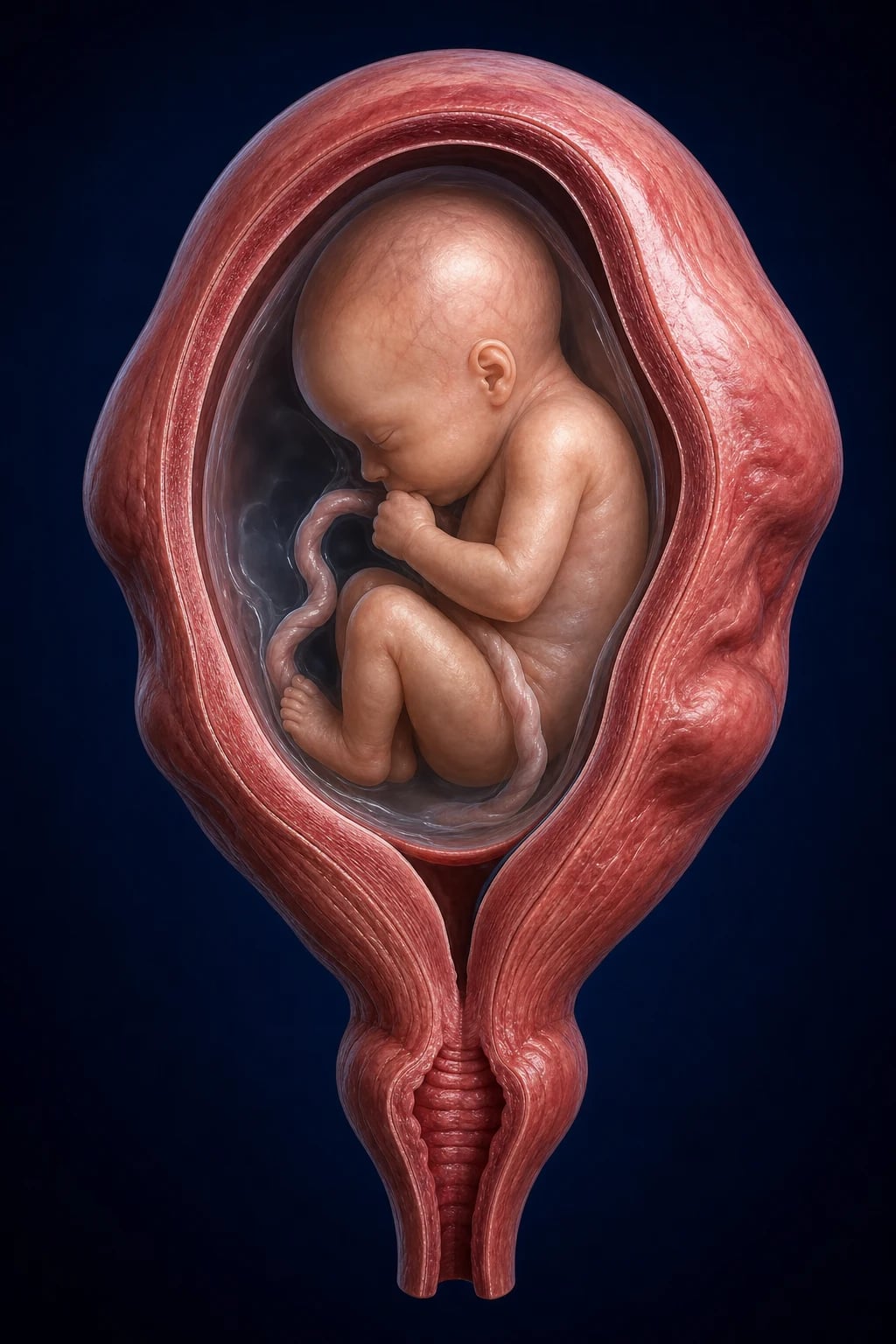
Classification
Preterm birth is classified in two complementary ways — by gestational age (which drives prognosis) and by clinical phenotype (which drives aetiology and management). [1]
By gestational age (prognostic)
Extremely preterm
under 28 weeks
- Highest mortality and morbidity
- Survival about 50 percent at 24 weeks in modern NICU
- Magnesium neuroprotection and corticosteroids essential
- Periviability counselling (23 to 25 weeks) decision-sensitive
Very preterm
28 to under 32 weeks
- Survival about 80 percent at 28 weeks
- High risk of IVH, RDS, NEC, BPD
- Full PTL bundle: corticosteroids + magnesium + tocolysis
- Cerebral palsy risk markedly reduced by magnesium
Moderate–late preterm
32 to under 37 weeks
- Over 70 percent of all preterm births
- Survival over 95 percent at 32 weeks
- Magnesium generally not indicated after 32 weeks
- Lower morbidity but still significant (jaundice, feeding, hypoglycaemia, RDS at 32 to 34 weeks)
By clinical phenotype (aetiologic)
Two phenotypes of preterm birth
- Spontaneous PTB — presents as spontaneous preterm labour (contractions with cervical change) or preterm prelabour rupture of membranes (PPROM) followed by labour. The target of prevention and tocolysis.
- Indicated (iatrogenic) PTB — delivery is intentionally brought forward for maternal or fetal indications (pre-eclampsia/eclampsia, severe fetal growth restriction, abruption, placenta praevia with haemorrhage, deteriorating maternal medical disease). Tocolysis is logically irrelevant; management is dictated by the primary disorder.
- Cervical insufficiency — a distinct but overlapping phenotype: painless cervical shortening and dilatation in the second trimester without contractions, often in women with prior cervical surgery, trauma, or congenital uterine anomaly. The hallmark management is cervical cerclage. [1]
Epidemiology & Risk Factors
Preterm birth affects about one in ten pregnancies globally, with the highest burden in low- and middle-income countries, including India.[1] It is a multifactorial condition and most cases are spontaneous. The single strongest individual predictor is a previous spontaneous preterm birth (recurrence approximately 20 to 30 percent, rising with each prior PTB and falling with each intervening term birth).[12]
Risk factors (organised by mechanism)
Infection / inflammation (the single biggest reversible driver):
- Bacterial vaginosis, urinary tract infection (including asymptomatic bacteriuria), chlamydia/gonorrhoea, trichomoniasis.
- Intra-amniotic infection / chorioamnionitis (often subclinical, microbial invasion of the amniotic cavity).
- Periodontal disease (emerging but consistent association). [1]
Uterine overdistension:
- Multiple pregnancy (twins, higher-order — a major contributor).
- Polyhydramnios. [1]
Cervical and uterine factors:
- Short cervix on TVUS (25 mm or less at 20 to 24 weeks).[10]
- Cervical insufficiency (painless dilatation).
- Uterine anomaly (septate, bicornuate uterus).
- Prior cervical surgery (cold-knife cone biopsy, LEEP, trachelectomy), cervical trauma from prior difficult delivery.
- Prior large uterine surgery (myomectomy breach into cavity).
Vascular / placental:
- Placental abruption, placenta praevia, hypertensive disease of pregnancy, fetal growth restriction, antenatal haemorrhage — reflect placental insufficiency. [1]
Maternal and behavioural:
- Smoking and substance use (cocaine), low BMI (under 19.8), short interpregnancy interval (under 6 months), extremes of maternal age (under 18 or over 35), low socioeconomic status, psychosocial stress, strenuous physical work, poor nutrition. [1]
Reproductive / iatrogenic:
- Assisted reproductive technology / IVF conception (partly via multiple pregnancy, partly intrinsic).
- Indicated PTB for maternal/fetal disease (above). [1]
Pathophysiology
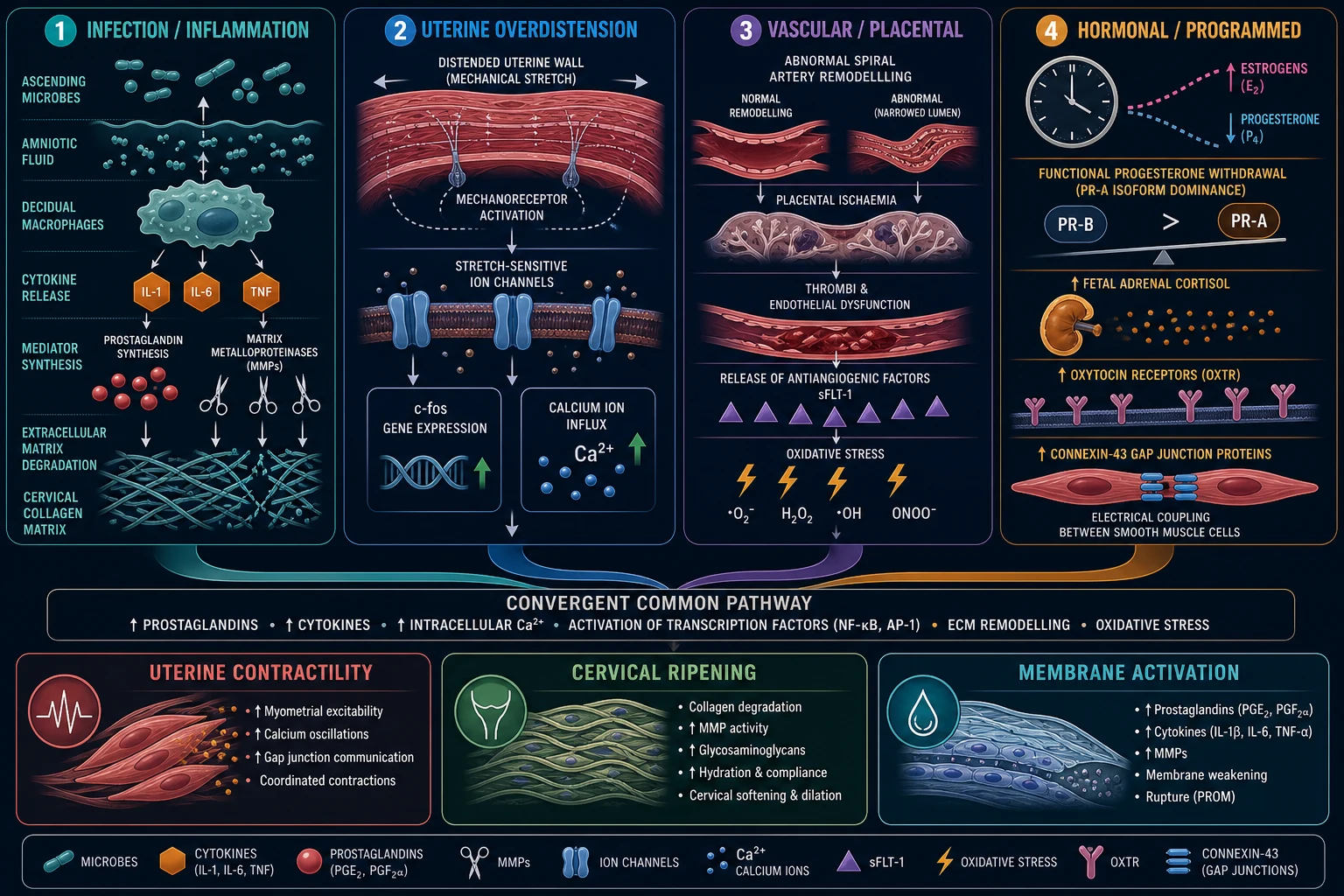
Preterm labour represents premature activation of the same common pathway of parturition that operates at term. The final common pathway has three coordinated limbs: [1]
- Uterine contractility — up-regulation of oxytocin receptors and formation of gap junctions (connexin-43) between myometrial smooth muscle cells, producing synchronised, fundal-dominant contractions; intracellular calcium influx drives the actin-myosin contractile apparatus.
- Cervical ripening and shortening — degradation of cervical collagen by matrix metalloproteinases (MMP-8, MMP-9) and remodelling of the extracellular matrix, softening and effacing the cervix.
- Membrane and decidual activation — prostaglandin-driven apoptosis of amniochorionic cells and MMP-mediated weakening of the fetal membranes, culminating in membrane rupture; decidual activation is the trigger for the contractile cascade. [1]
Four upstream mechanistic pathways converge onto this common pathway. Understanding them explains both the risk factors and the drug targets. [1]
Pathway 1 — Infection / inflammation (the dominant driver, especially under 32 weeks)
Ascending vaginal/cervical microbes (commonly Ureaplasma, Mycoplasma, Gardnerella, E. coli, group B streptococcus) breach the mucus plug and colonise the decidua and chorion, sometimes invading the amniotic cavity (microbial invasion of the amniotic cavity, detectable by amniocentesis PCR in a subset of idiopathic PTL). [1]
Infected decidual macrophages and neutrophils release a cytokine cascade — interleukin-1β (IL-1β), interleukin-6 (IL-6), tumour necrosis factor-alpha (TNF-α). These cytokines: [1]
- Up-regulate cyclo-oxygenase-2 (COX-2) → drive synthesis of prostaglandin E2 and F2α, which stimulate myometrial contraction and cervical ripening.
- Activate nuclear factor-κB (NF-κB) → amplifies cytokine and prostaglandin production in a positive-feedback loop.
- Up-regulate MMPs → collagen degradation in cervix and membranes → effacement and rupture. [1]
Clinically, intra-amniotic infection underlies a large fraction of very preterm births and explains why maternal fever, fetal tachycardia, uterine tenderness, foul liquor and raised inflammatory markers (CRP, WCC) are red flags that forbid tocolysis and mandate delivery. [1]
Pathway 2 — Uterine overdistension
Multiple pregnancy and polyhydramnios stretch the myometrium, activating stretch-sensitive ion channels and the c-fos / c-jun early-response genes. Stretch up-regulates connexin-43 gap junctions, oxytocin receptors, and prostaglandin synthesis, lowering the threshold for contraction. This is why twins and polyhydramnios have such high rates of spontaneous PTB and why prophylactic progesterone, cerclage and pessary have NOT been shown to prevent PTB in uncomplicated twin pregnancies. [1]
Pathway 3 — Vascular / placental
Abnormal remodelling of the spiral arteries (the same defect underlying pre-eclampsia and fetal growth restriction) produces uteroplacental ischaemia, infarction, and oxidative stress. Release of antiangiogenic factors (sFLT-1) and generation of reactive oxygen species trigger decidual activation, thrombosis, and — in the extreme — placental abruption. This pathway explains the overlap between pre-eclampsia, FGR, abruption and indicated PTB, and underlies the partly-shared prevention strategy of low-dose aspirin. [1]
Pathway 4 — Endocrine / programmed
Term labour is governed by a hormonal switch: functional progesterone withdrawal (not a fall in circulating progesterone, but a shift in the ratio of progesterone-receptor isoforms PR-A to PR-B, with PR-A acting as a repressor), rising fetal adrenal cortisol (driving placental oestrogen synthesis), increased oestrogen, and up-regulation of oxytocin receptors and connexin-43. Premature triggering of this endocrine switch — by stress, infection, or genetic/epigenetic programming — initiates the common pathway early. This pathway underlies stress- and anxiety-associated PTL and is the rationale for progesterone supplementation in prevention. [1]
The molecular targets translate directly into drug classes
Pathway → drug-class mapping
PTL DRUG
→ blocked by INDOMETHACIN (COX inhibitor) — a tocolytic
→ blocked by NIFEDIPINE (calcium-channel blocker) — first-line tocolytic
→ blocked by ATOSIBAN (oxytocin antagonist) — IV tocolytic
→ addressed by treating infection + antibiotics (PPROM only)
→ VAGINAL PROGESTERONE / CERVICAL CERCLAGE
→ MAGNESIUM SULFATE neuroprotection under 32w
→ ANTENATAL CORTICOSTEROIDS (24 to 34w)
Clinical Presentation
Typical presentation
The textbook presentation of established PTL is:
- Regular, painful uterine contractions (increasing in frequency, duration and intensity — classically every 5 to 10 minutes, lasting over 30 seconds).
- Constant low backache or pelvic pressure (often described as "the baby is pushing down").
- Change in vaginal discharge — increased amount, watery, mucous or blood-stained ("show").
- Cramping, sometimes with diarrhoea or nausea.
- Rupture of membranes — a gush or continuous leak of amniotic fluid (PPROM if before labour onset). [1]
Subtle and atypical presentations (often dismissed — a key pitfall)
Many women describe non-specific symptoms for hours to days before recognising labour: a dull low backache, pelvic heaviness, urinary frequency, a feeling that "something is different", or mild menstrual-like cramps. These are frequently dismissed as Braxton Hicks contractions or minor complaints. Failing to assess the cervix in a woman under 37 weeks with persistent new abdominal or back symptoms is a classic missed-diagnosis pitfall. [1]
Special situations
- Cervical insufficiency — characteristically painless cervical shortening and dilatation in the second trimester, often with bulging membranes on speculum/TVUS, in a woman with prior cervical surgery, trauma, uterine anomaly, or repeated second-trimester losses. May present with vaginal discharge, pelvic pressure, or no symptoms at all until membranes prolapse.
- PPROM — the leak or gush of fluid is the dominant feature; contractions typically follow within hours to days (median latency shorter at later gestations).
- Multiple pregnancy / polyhydramnios — symptoms may be masked or attributed to the underlying condition; routine serial TVUS cervical length is how silent shortening is detected.
- Obese women — uterine palpation and symptom perception are less reliable; index of suspicion and TVUS are important. [1]
Differential Diagnosis
The differential of "abdominal pain/cramping in a woman under 37 weeks" must be worked through systematically — speculum before digital VE until placenta praevia is excluded. [1]
Braxton Hicks (false labour)
rule-out by history
- Irregular, infrequent, often painless contractions
- No progressive cervical change on serial VE
- Relieved by rest, hydration, sedation or simple analgesia
- No change in vaginal discharge / no show
Urinary tract infection / pyelonephritis
screen always
- Lower abdominal/loin pain, dysuria, frequency, fever
- Urine dipstick (nitrites, leucocytes) and MSU culture positive
- May trigger true PTL — treat AND assess cervix
- Tenderness in renal angle (pyelo)
Placental abruption
emergency
- Painful vaginal bleeding (concealed or revealed)
- Uterus tense, woody, tender; frequent tonic contractions
- Fetal distress / demise; often with hypertension or trauma
- DO NOT do digital VE; deliver
Placenta praevia
painless bleeding
- Painless, bright-red vaginal bleeding after 20 weeks
- No pain, no uterine tenderness, normal CTG initially
- High presenting part; previous LSCS increases risk
- SPECULUM only; NO digital VE until praevia excluded by ultrasound
Gastrointestinal causes
non-uterine
- Gastroenteritis, appendicitis, ovarian torsion, round-ligament pain
- Localised pain, vomiting, bowel symptoms; no uterine pattern
- No cervical change; normal cervical length on TVUS
Distinguishing features (≥3, reproduced)
- The presence of progressive cervical change is the single most reliable discriminator of true PTL from false labour and non-obstetric causes.
- The character of the pain — painful, regular, increasing-frequency contractions suggest labour; constant, severe abdominal pain with a woody tender uterus suggests abruption; colicky/localised pain with bowel symptoms suggests a gastrointestinal cause.
- The bleeding pattern — painless bright red bleeding favours praevia (speculum only); painful dark/clotted bleeding with a tense uterus favours abruption.
- TVUS cervical length and fetal fibronectin are powerful rule-out tests that distinguish true threatened PTL from other causes in the symptomatic woman. [1]
Clinical & Bedside Assessment
A focused, sterile and praevia-aware assessment is the cornerstone of management. [1]
History
- Confirm gestational age (early dating scan is most reliable) — defines the entire management pathway (especially the 32-week magnesium and 34-week corticosteroid/tocolysis thresholds).
- Onset, frequency, duration and intensity of contractions/pain; rupture of membranes (timing, colour, odour); vaginal bleeding or show; fetal movements.
- Risk factor review: previous PTB/loss, cervical surgery, multiple pregnancy, infection symptoms, smoking, IVF, interval.
- Maternal wellbeing: fever, dysuria, loin pain (infection/chorio). [1]
Examination
- Maternal observations: temperature (chorioamnionitis), pulse, blood pressure (pre-eclampsia/abruption), respiratory rate, oxygen saturation, urine output and dipstick.
- Abdominal examination: fundal height (multiple pregnancy, polyhydramnios, growth restriction); uterine tone and tenderness (a tender, woody uterus suggests abruption; fundal tenderness with fever suggests chorio); lie, presentation, engagement; contraction frequency, duration and intensity by palpation.
- Speculum examination (sterile) BEFORE digital VE — to: (a) exclude placenta praevia (no active bleeding from cervical os); (b) assess liquor pooling in the posterior fornix (PPROM — confirm with nitrazine/Actim PROM and fern test); (c) visually inspect the cervix for dilatation/effacement and bulging membranes; (d) take swabs — high vaginal swab, endocervical chlamydia/gonorrhoea NAAT, and a fetal fibronectin swab from the posterior fornix (BEFORE any digital VE, which invalidates the test).
- Digital vaginal examination (sterile) — only after praevia excluded: cervical dilatation (0 to 10 cm), effacement, consistency, position, station, presentation, membrane status and liquor colour (meconium/blood). Minimise repeated VEs (infection risk). [1]
Fetal assessment
- Fetal heart rate — intermittent auscultation or continuous CTG (look for tachycardia — a marker of chorio or fetal infection/anaemia; decelerations — compromise).
- Ultrasound — presentation, fetal biometry/growth, amniotic fluid volume (AFI/deepest pool), umbilical artery Dopplers if growth-restricted. [1]
Investigations
Key point-of-care tests (the two rule-out tests)
The diagnostic strategy in the symptomatic woman with intact membranes and no bleeding rests on two powerful rule-out tests that, when negative, allow safe discharge and avoidance of unnecessary tocolysis and transfer. [1]
[1]Combined point-of-care strategy
Combined qfFN + TVUS decision-making
Infection screen (mandatory — infection is the biggest driver)
- Midstream urine culture (asymptomatic bacteriuria, UTI).
- High vaginal swab + endocervical chlamydia/gonorrhoea NAAT; screen for bacterial vaginosis (Amsel criteria or Gram-stain Nugent score with clue cells).
- Maternal bloods: full blood count (leucocytosis), C-reactive protein (rising trend suggests chorioamnionitis), group and save.
- Amniocentesis with PCR/culture — if intra-amniotic infection is suspected (especially idiopathic very preterm labour) and delivery is not imminent; detects microbial invasion of the amniotic cavity. [1]
Confirming PPROM
- History (gush/leak) + sterile speculum showing fluid pooling in the posterior fornix.
- Nitrazine test (amniotic fluid is alkaline, turns nitrazine paper blue) — false positives with blood/semen.
- Fern test (microscopy of dried fluid shows ferning pattern) — confirmatory.
- Actim PROM bedside test (monoclonal antibody to IGFBP-1) where available.
- TVUS — reduced amniotic fluid volume supports the diagnosis. [1]
Fetal investigations
- Ultrasound — fetal biometry and growth, estimated fetal weight, presentation, amniotic fluid index, umbilical artery Doppler (if FGR).
- CTG — fetal heart rate baseline, variability, decelerations. [1]
Management — Resuscitation (time-critical bundle)
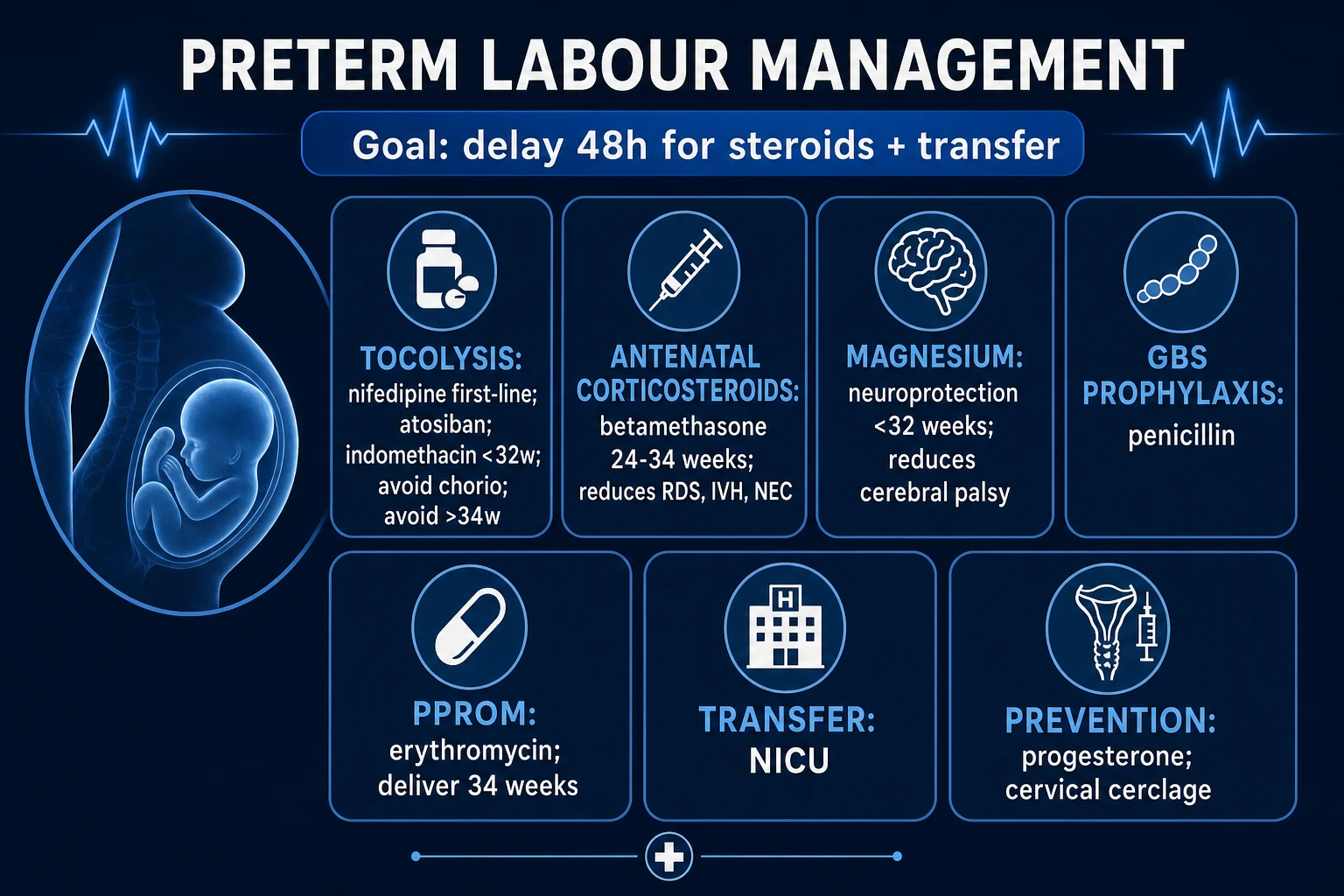
Established PTL is a time-critical obstetric emergency requiring a standardised bundle delivered promptly. The components below should be initiated simultaneously, not sequentially. [1]
Immediate maternal measures
- Call for help — obstetrician, midwife, neonatal team (neonatal nurse/doctor should attend preterm deliveries), anaesthetist if needed.
- IV access — cannulae, baseline FBC, group and save, CRP, U&E, glucose.
- Position — left lateral (maternal comfort, aortocaval decompression); avoid supine.
- Fluid balance — IV crystalloid if hypotensive or in haemorrhage; otherwise maintain hydration; avoid fluid overload (especially with tocolytics that cause vasodilatation).
- Analgesia — paracetamol, opioid (e.g. morphine) as needed; epidural if appropriate.
- Sterile speculum BEFORE digital VE — sample fetal fibronectin, swabs, assess liquor; exclude placenta praevia. [1]
Exclude the contraindications to tocolysis (the pivotal fork)
Tocolysis is contraindicated and delivery should proceed if ANY of the following is present: [1]
- Chorioamnionitis — maternal fever, fetal tachycardia, uterine tenderness, foul liquor, raised inflammatory markers. Deliver. (Continuing pregnancy risks maternal sepsis and fetal death.)
- Non-reassuring fetal status / fetal compromise on CTG — deliver.
- Suspected placental abruption — painful bleeding, woody tender uterus, fetal distress — deliver.
- Severe pre-eclampsia / eclampsia / HELLP or other serious maternal indication — deliver (the disease, not the labour, dictates).
- Advanced gestation (34 weeks or more) — tocolysis not recommended; risks of tocolysis outweigh benefits; neonatal outcomes are excellent.
- Lethal fetal anomaly or intrauterine fetal death — no fetal benefit to delaying.
Initiate the PTL bundle (if tocolysis is appropriate)
Once contraindications are excluded, start in parallel: [1]
- Antenatal corticosteroids (24 to 34 weeks).
- Magnesium sulfate (under 32 weeks) — neuroprotection.
- Tocolysis — to delay birth for approximately 48 hours.
- GBS prophylaxis if indicated.
- Antibiotics for PPROM (erythromycin) if membranes ruptured.
- Arrange in-utero transfer to a unit with NICU if required. [1]
Management — Definitive & Stepwise
Aim and principles
The aim of tocolysis is to delay birth for approximately 48 hours, during which corticosteroids take effect and in-utero transfer can be arranged. Tocolysis is NOT used after 34 weeks, and is not continued beyond 48 hours in most guidelines. No tocolytic has been convincingly shown to improve perinatal survival — the benefit is buying time. [1]
Tocolytic ladder (agent + dose + route + timing + rationale + contraindications)
NIFEDIPINE
first-line; calcium-channel blocker
- DOSE: 20 mg PO loading, then 10 to 20 mg every 6 to 8 h (max 160 mg/24h, max 48h)
- ROUTE/TIMING: oral; onset 20 to 30 min
- RATIONALE: blocks L-type calcium channels → uterine smooth muscle relaxation; cheap, oral, effective — WHO first-line
- SIDE-EFFECTS: maternal flushing, headache, hypotension, tachycardia; fetal (rare)
- AVOID: sublingual route (unpredictable hypotension); AVOID with magnesium (severe hypotension) and beta-blockers
ATOSIBAN
oxytocin antagonist; NICE-preferred (UK)
- DOSE: 6.75 mg IV bolus over 1 min, then 18 mg/h for 3 h, then 6 mg/h up to 45 h
- ROUTE/TIMING: IV infusion; onset rapid
- RATIONALE: competitive oxytocin-V1a receptor antagonist at decidua/myometrium
- SIDE-EFFECTS: fewer than nifedipine — nausea, vomiting, headache, tachycardia
- LIMIT: expensive; as effective as nifedipine with better maternal tolerability
INDOMETHACIN
NSAID / COX inhibitor
- DOSE: 50 to 100 mg loading (PO/PR), then 25 to 50 mg every 4 to 6 h
- ROUTE/TIMING: oral or rectal; max 48h, under 32 weeks
- RATIONALE: blocks prostaglandin synthesis (the final common mediator of contraction and ripening)
- SIDE-EFFECTS: maternal GI/renal; FETAL — constriction of ductus arteriosus, oligohydramnios (via fetal renal effect)
- AVOID: over 32 weeks (PDA closure risk); prolonged use; renal impairment
Beta-agonists (ritodrine/salbutamol)
largely abandoned
- DOSE: salbutamol IV infusion titrated to contractions
- RATIONALE: β2-adrenergic stimulation → cAMP → uterine relaxation
- SIDE-EFFECTS: maternal tachycardia, palpitations, hypotension, hyperglycaemia, hypokalaemia, PULMONARY OEDEMA (esp with steroids, multiple pregnancy, fluid overload)
- STATUS: largely superseded — high maternal morbidity; still used in some resource-limited settings
Antenatal corticosteroids (the single most important intervention)
Antenatal corticosteroids are the single intervention with the strongest evidence for improving neonatal survival and reducing morbidity in preterm birth.[2]
- Indication: any woman at risk of preterm birth between 24+0 and 34+0 weeks (some extend to 23 weeks and to late preterm 34 to 36+6 weeks with the ALPS-style approach in selected cases).
- Regimens (equivalent efficacy):
- Betamethasone 12 mg IM, two doses 24 hours apart (total 24 mg).
- Dexamethasone 6 mg IM, four doses 12 hours apart (total 24 mg).
- Effect (Cochrane, Roberts & Dalziel 2017): reduces neonatal death, respiratory distress syndrome, intraventricular haemorrhage, periventricular leukomalacia, necrotising enterocolitis, need for mechanical ventilation, and systemic infection in the first 48 hours. [2] Greatest benefit if birth occurs 24 hours to 7 days after administration.
- Repeat (rescue) course: considered if over 14 days have elapsed since the first course, the woman remains under 34 weeks, and is again at imminent risk. Multiple routine repeat courses are not recommended (possible harm to growth/neurodevelopment).
- Caution in maternal sepsis / chorioamnionitis: corticosteroids may worsen infection — balance fetal benefit against maternal risk; many units still give a single course.
Magnesium sulfate for fetal neuroprotection
Magnesium sulfate given before 32 weeks reduces the risk of cerebral palsy and substantial gross motor dysfunction in surviving very preterm infants (NNT about 63 for cerebral palsy).[3]
- Indication: women at risk of imminent preterm birth under 32 weeks (under 30 weeks in some guidelines; up to 33+6 in others).
- Regimens (any of the accepted):
- 4 g IV loading over 30 minutes, then 1 g/hour infusion for 24 hours or until birth (most common).
- Alternatively 4 g IV bolus then 1 g/h for 20 hours, or a single 4 g IV bolus if birth imminent.
- Monitoring: deep tendon reflexes, respiratory rate, oxygen saturation, urine output; calcium gluconate (1 g IV) at the bedside as the antidote for magnesium toxicity. Signs of toxicity: loss of reflexes → respiratory depression → cardiac arrest.
- NOT a tocolytic in this context — the dose for neuroprotection is lower than the (now obsolete) high-dose tocolytic regimen; do not combine with nifedipine. [1]
GBS prophylaxis (intrapartum)
- Indications: GBS bacteriuria this pregnancy, previous infant with invasive GBS disease, GBS status unknown with risk factors (PTL, PPROM over 18h, intrapartum fever), or known GBS-positive on screening.
- Regimen: intravenous benzylpenicillin (penicillin G) 3 g, then 1.5 g every 4 hours until delivery. Clindamycin 900 mg IV every 8 hours (or vancomycin) if penicillin-allergic. [1]
Antibiotics in PPROM (and the crucial negative in intact membranes)
- PPROM: erythromycin 250 mg orally four times daily for 10 days (or amoxicillin plus erythromycin for the first 48 hours then erythromycin alone) — extends latency and reduces chorioamnionitis and neonatal infection (Kenyon Cochrane, ORACLE).[5]
- AVOID amoxicillin-clavulanate — associated with necrotising enterocolitis.
- Intact membranes (no infection): routine antibiotics do NOT delay preterm labour or improve outcomes (Flenady Cochrane)[4] — do NOT prescribe antibiotics for threatened PTL with intact membranes and no infection. Treat only documented infection.
In-utero transfer
Where delivery is expected of a baby below the local unit's threshold for neonatal care (commonly under 32 to 34 weeks or below an estimated fetal weight of 1500 to 1800 g), transfer the mother (in-utero transfer) to a tertiary obstetric unit with NICU. Outcomes are better than transferring a sick neonate (ex-utero transfer). Tocolysis is given partly to enable safe transfer. [1]
PPROM management pathway
- Confirm (speculum, nitrazine/fern/Actim PROM).
- Erythromycin 10 days; antenatal corticosteroids (24 to 34w); magnesium if under 32w and in labour.
- Expectant management with surveillance: maternal observations (temperature, pulse, fundal tenderness), CTG, WCC/CRP, weekly ultrasound. Avoid repeated digital VE.
- Deliver at 34 weeks (risk of chorioamnionitis and stillbirth rises), or earlier if infection, non-reassuring CTG, abruption, or labour. [1]
Mode and conduct of delivery
- Vaginal delivery is preferred unless there is an obstetric indication for caesarean.
- Routine episiotomy and routine operative delivery are NOT recommended for preterm babies.
- Delayed cord clamping (30 to 60 seconds) improves neonatal iron stores and outcomes (avoid if immediate neonatal resuscitation is needed).
- Senior neonatal team present at delivery; prepare for resuscitation and surfactant.
- For breech presentation at very preterm gestations, the mode of delivery is debated; many units offer caesarean for breech at gestations where the baby is thought to be viable and intact. [1]
Specific Subtypes & Scenarios
Threatened PTL (contractions without cervical change)
Observe, investigate (TVUS CL, fFN, infection screen). If both rule-out tests negative, the risk of imminent delivery is very low — discharge with safety-net advice, avoid tocolysis. If cervical change develops, treat as established PTL. [1]
Established PTL
Full PTL bundle as above. Continue tocolysis only until corticosteroids/magnesium/transfer complete (about 48 hours). [1]
Cervical insufficiency
- Diagnosis: painless cervical shortening/dilatation (often with bulging membranes) in the second trimester, typically with a risk factor.
- Management: cervical cerclage — McDonald (purse-string suture at the cervicovaginal junction) or Shirodkar (submucosal, higher). Removed at 36 to 37 weeks (or earlier if labour/PPROM/infection).
- Rescue (ultrasound-indicated) cerclage if TVUS shows a shortening cervix before 24 weeks, especially with a history of PTB. [1]
PPROM (preterm prelabour rupture of membranes)
- Definition: rupture of membranes before the onset of labour and before 37 weeks.
- Epidemiology: complicates about 3 percent of pregnancies; accounts for roughly one-third of all preterm births.
- Management: erythromycin + corticosteroids + surveillance; deliver at 34 weeks (earlier if infection/compromise).[5]
- Complications: chorioamnionitis, placental abruption, cord prolapse, neonatal sepsis, RDS.
Multiple pregnancy
- High baseline PTB rate (largely spontaneous or PPROM-driven, by overdistension).
- The PTL bundle (tocolysis, corticosteroids, magnesium) applies with the same principles.
- Prophylactic progesterone, cerclage and pessary have NOT been shown to prevent PTB in uncomplicated twin pregnancies — do not use them for primary prevention in twins.
- Serial TVUS cervical length may detect early shortening. [1]
Indicated (iatrogenic) PTB
- Deliver for the primary indication (pre-eclampsia, FGR, abruption, placenta praevia, deteriorating maternal disease). Tocolysis is not relevant. Give corticosteroids if time allows and magnesium if under 32 weeks. [1]
Periviability (23 to 25 weeks)
- A decision-sensitive grey zone. Counselling by senior neonatology and obstetrics on survival (about 40 to 55 percent at 24 weeks in modern NICU) and major morbidity (severe IVH, BPD, neurodevelopmental impairment). Resuscitation status decided with the parents. Corticosteroids and magnesium offered if active management chosen. [1]
Complications & Pitfalls
Neonatal complications (the burden of prematurity)
Neonatal complications by system
Also: patent ductus arteriosus, neonatal sepsis, hypothermia, hypoglycaemia, apnoea of prematurity, feeding intolerance, and death. Gestational age at birth is destiny — survival is about 50 percent at 24 weeks, around 80 percent at 28 weeks, and over 95 percent at 32 weeks in modern neonatal intensive care. [1]
Maternal complications
- Tocolytic side-effects (see ladder): nifedipine hypotension/flushing/headache; indomethacin GI/renal; magnesium flushing/weakness and (rare) pulmonary oedema; atosiban nausea.
- Infection — chorioamnionitis, postpartum endometritis.
- Psychological burden of preterm delivery and neonatal intensive care admission.
- Future recurrence risk of PTB in subsequent pregnancies. [1]
Pitfalls (high-yield errors to avoid)
- Performing a digital VE before excluding placenta praevia in a bleeding patient — catastrophic haemorrhage.
- Doing a digital VE before sampling fetal fibronectin — invalidates the test (false positive from blood/semen).
- Combining nifedipine with magnesium — severe, potentially life-threatening maternal hypotension.
- Using amoxicillin-clavulanate in PPROM — neonatal necrotising enterocolitis.
- Giving routine antibiotics for PTL with intact membranes and no infection — no benefit, drives resistance.[4]
- Continuing tocolysis in the face of chorioamnionitis, abruption, fetal compromise, or beyond 34 weeks — delays necessary delivery, harms mother/baby.
- Missing subtle/ atypical presentations (low backache, pelvic pressure) as Braxton Hicks in a high-risk woman under 37 weeks.
- Forgetting magnesium neuroprotection under 32 weeks — a missed opportunity to prevent cerebral palsy.
Prognosis & Disposition
- Gestational age at birth is the dominant determinant of both survival and long-term morbidity. Outcomes improve dramatically with each week of gestation gained.
- Cerebral palsy risk falls steeply with advancing gestational age; magnesium halves the risk of severe disability in survivors born under 32 weeks.[3]
- Recurrence of PTB in a subsequent pregnancy is 20 to 30 percent after one spontaneous PTB (higher with each prior PTB); this is reduced by vaginal progesterone or cervical cerclage in selected women.[8][9]
- After PPROM, the latency from rupture to delivery averages about 12 days at 24 to 26 weeks and about 4 days at 32 to 34 weeks; chorioamnionitis complicates about 15 to 30 percent.
- Disposition: women in established PTL below the local neonatal threshold should be transferred in-utero to a tertiary unit. After delivery, the neonate is admitted to NICU/SCBU as appropriate; the mother receives postnatal care with attention to infection, lactation support, contraception, and prepregnancy counselling for the next pregnancy.
Special Populations
Previous preterm birth / second-trimester loss
- Highest recurrence risk group. Offer serial TVUS cervical length every 1 to 2 weeks from 16 to 24 weeks.
- History-indicated cervical cerclage (12 to 14 weeks) for women with one or more prior spontaneous PTB or second-trimester loss under 34 weeks (with shortened cervix) — or three or more prior second-trimester losses/PTB (depending on guideline).
- Vaginal progesterone (200 mg nocte from 18 to 24 weeks to 36 weeks) for short cervix; note the evolving controversy on 17-OHPC — see Evidence section.[6][7]
Asymptomatic short cervix on universal screening
- Universal TVUS cervical length at the 18 to 24-week anomaly scan is supported by evidence as it identifies the highest-risk women.[10]
- Vaginal progesterone for a singleton with CL 25 mm or less (and especially 15 mm or less) reduces PTB and perinatal death.[8]
- Ultrasound-indicated (rescue) cerclage if CL shortens before 24 weeks, especially with a prior PTB; progesterone and cerclage have comparable efficacy in this group.[9]
Multiple pregnancy
- High baseline PTB rate. No benefit from progesterone, cerclage or pessary for primary prevention in uncomplicated twins.
- Serial TVUS may guide care; treat established PTL with the standard bundle. [1]
Uterine anomaly / prior cervical surgery
- Individualise — ultrasound-indicated cerclage if the cervix shortens. Counselling about risk at the booking visit. [1]
Periviability and extreme prematurity (under 26 weeks)
- Senior multidisciplinary counselling; corticosteroids and magnesium offered if active management. Survival and major-morbidity thresholds are gestation- and unit-specific. [1]
PPROM before viability (under 23 to 24 weeks)
- Expectant management with counselling of guarded prognosis; antibiotics; surveillance; hospital admission. Risk of pulmonary hypoplasia and contractures from oligohydramnios. [1]
Evidence, Guidelines & Regional Differences
Landmark trials and systematic reviews
- Roberts & Dalziel, Cochrane 2017 (PMID 28321847) — antenatal corticosteroids reduce neonatal death, RDS, IVH, NEC, PVL and need for ventilation.[2] The cornerstone intervention.
- Doyle/Crowther, Cochrane 2009 (PMID 19160238) — antenatal magnesium sulfate reduces cerebral palsy in survivors born under 32 weeks.[3]
- Flenady, Cochrane 2013 (PMID 24307518) — routine antibiotics do not delay preterm labour with intact membranes; do not use them.[4]
- Kenyon, Cochrane 2010 (PMID 20687063) — antibiotics in PPROM (erythromycin) extend latency and reduce infection.[5]
- Romero, 2018 AJOG (PMID 29157866) — vaginal progesterone in singletons with a short cervix reduces PTB, neonatal death and adverse outcomes.[8]
- Conde-Agudelo & Romero, 2018 (PMID 29630885) — vaginal progesterone is as effective as cervical cerclage in singletons with short cervix and prior PTB.[9]
- Berghella/Hessami, 2024 (PMID 38479489) — supports universal cervical-length screening.[10]
The progestogen controversy (high-yield)
- Meis 2003, NEJM (PMID 12802023) — 17-alpha-hydroxyprogesterone caproate (17-OHPC) reduced recurrent PTB; led to FDA approval (Makena).[6]
- PROLONG, Blackwell 2020 (PMID 31652479) — the confirmatory trial failed to replicate the benefit.[7]
- FDA withdrew Makena approval in 2023. The role of 17-OHPC is now controversial and largely abandoned; vaginal progesterone (for short cervix) retains support.[8]
India-specific context: India has one of the largest absolute burdens of preterm births in the world.[1] Contributing factors include high rates of infection (UTI, BV, STI), anaemia, low BMI, short interpregnancy interval, adolescent pregnancy, and limited access to antenatal corticosteroids and neonatal care in rural areas. The Janani Shishu Suraksha Karyakram has improved institutional delivery and free referral transport. National programmes promote antenatal corticosteroid use for threatened preterm labour at peripheral facilities with referral to SNCUs/NICUs. Smoking is less common in women than in high-income countries, but second-hand smoke, biomass-fuel exposure and infection are major contributors.
Exam Pearls
- PTL = regular contractions + cervical change before 37w; PTB = delivery before 37w.[1]
- Four convergent pathways (infection, overdistension, vascular/placental, endocrine/programmed) → common pathway (contractility + cervical ripening + membrane activation).[12]
- Two rule-out tests: TVUS CL 30 mm or more AND negative fetal fibronectin → under 1 percent deliver in 7 to 14 days.[12]
- Goal of tocolysis = delay 48 h (not stop indefinitely): nifedipine first-line, atosiban (NICE), indomethacin (under 32w, short course).[11]
- ALWAYS give corticosteroids 24 to 34w (betamethasone 12 mg IM x2, or dexamethasone 6 mg IM x4).[2]
- Magnesium neuroprotection under 32w (4 g IV load then 1 g/h) — reduces cerebral palsy.[3]
- NEVER tocolyse chorioamnionitis, fetal compromise, abruption, severe pre-eclampsia, or 34w+.
- AVOID nifedipine + magnesium (severe hypotension); AVOID amoxicillin-clavulanate in PPROM (NEC); AVOID routine antibiotics with intact membranes (no benefit).[4]
- PPROM → erythromycin 10 days + surveillance, deliver at 34w.[5]
- GBS prophylaxis: IV benzylpenicillin 3 g then 1.5 g every 4 h.
- Prevention: vaginal progesterone (short cervix, singleton); cerclage (history/ultrasound-indicated); smoking cessation; treat infection; interpregnancy interval.[8][9]
- 17-OHPC (Makena) approval withdrawn 2023 after PROLONG — vaginal progesterone preferred for short cervix.[7]
- Recurrence 20 to 30 percent after one spontaneous PTB; survival about 50 percent at 24w, over 95 percent at 32w.
- Speculum before digital VE; fFN before VE (avoids false positives).[12]
- Gestational age is destiny — every week gained matters.
Exam application bank (NEET-PG / INICET)
One-line answer
Preterm labour (PTL) is the onset of regular painful uterine contractions with cervical change before 37 completed weeks of gestation; preterm birth (PTB) is delivery before 37 weeks — the commonest cause of neonatal mortality and a leading cause of childhood disability. Risk factors: infection (intra-amniotic, BV, UTI, STI — the biggest reversible driver), previous preterm birth (recurrence 20 to 30 percent), multiple pregnancy, short cervix, PPROM, uterine anomaly, prior cervical surgery, smoking, low BMI, short interpregnancy interval, IVF. Diagnosis: contractions with cervical change; prediction by TVUS cervical length under 25 mm and fetal fibronectin (negative is a powerful rule-out). Management goal: delay birth 48 h for antenatal corticosteroids (24 to 34w) + magnesium sulfate neuroprotection (under 32w) + in-utero transfer — tocolysis with nifedipine (first-line); PPROM → erythr
Worked stems (answer without another resource)
Stem 1 — Classic presentation. Map symptoms to mechanism; name the first investigation and first treatment step with dose/route if drug therapy is standard. [1]
Stem 2 — Unstable / complicated. List red flags that force immediate resuscitation, theatre, ICU, antidote, or reperfusion — and what you do in the first 15 minutes. [1]
Stem 3 — Atypical group. Elderly, pregnancy, child, or immunocompromised: how presentation and thresholds change. [1]
Stem 4 — Differential trap. Name the three closest mimics and one discriminator for each. [1]
Stem 5 — Disposition. Who goes home with safety-netting, who is admitted, who needs HDU/ICU/theatre, and what follow-up is mandatory. [1]
Rapid viva checklist
- Definition + classification
- Pathophysiology chain
- Bedside signs / criteria
- Score with exact components (if any)
- Emergency bundle
- Definitive therapy with doses
- Complications of disease and of treatment
- Special populations
- Guideline/trial name if classic
- Three exam traps
Coverage self-check
If you cannot answer any stem above from this page alone, re-read the matching section — the page is intended to be self-sufficient for final-prof and NEET-PG/INICET questions on Preterm Labour & Preterm Birth.
References
- [1]Chawanpaiboon S, Vogel JP, Silveira M, et al. Global, regional, and national estimates of levels of preterm birth in 2014: a systematic review and modelling analysis Lancet Glob Health, 2019.PMID 30389451
- [2]Roberts D, Brown J, Medley N, Dalziel SR. Antenatal corticosteroids for accelerating fetal lung maturation for women at risk of preterm birth Cochrane Database Syst Rev, 2017.PMID 28321847
- [3]Doyle LW, Crowther CA, Middleton P, Marret S, Rouse D. Magnesium sulphate for women at risk of preterm birth for neuroprotection of the fetus Cochrane Database Syst Rev, 2009.PMID 19160238
- [4]Flenady V, Hawley G, Stock OM, Kenyon S, Badawi N. Prophylactic antibiotics for inhibiting preterm labour with intact membranes Cochrane Database Syst Rev, 2013.PMID 24307518
- [5]Kenyon S, Boulvain M, Neilson JP. Antibiotics for preterm rupture of membranes Cochrane Database Syst Rev, 2010.PMID 20687063
- [6]Meis PJ, Klebanoff M, Thom E, et al. Prevention of recurrent preterm delivery by 17 alpha-hydroxyprogesterone caproate N Engl J Med, 2003.PMID 12802023
- [7]Blackwell SC, Gyamfi-Bannerman C, Biggio JR, et al. 17-OHPC to Prevent Recurrent Preterm Birth in Singleton Gestations (PROLONG Study): A Multicenter, International, Randomized Double-Blind Trial Am J Perinatol, 2020.PMID 31652479
- [8]Romero R, Conde-Agudelo A, Da Fonseca E, et al. Vaginal progesterone for preventing preterm birth and adverse perinatal outcomes in singleton gestations with a short cervix: a meta-analysis of individual patient data Am J Obstet Gynecol, 2018.PMID 29157866
- [9]Conde-Agudelo A, Romero R. Vaginal progesterone is as effective as cervical cerclage to prevent preterm birth in women with a singleton gestation, previous spontaneous preterm birth, and a short cervix: updated indirect comparison meta-analysis Am J Obstet Gynecol, 2018.PMID 29630885
- [10]Hessami K, et al. Universal cervical length screening and risk of spontaneous preterm birth: a systematic review and meta-analysis Am J Obstet Gynecol MFM, 2024.PMID 38479489
- [11]Townsend NS, Drummond SB, Sammel MD, et al. Tocolytic Therapy Inhibiting Preterm Birth in High-Risk Populations: A Systematic Review and Meta-Analysis Children (Basel), 2023.PMID 36980001
- [12]Girsen AI, Carmichael SL, Lyell DJ, et al. Predictors of preterm birth Best Pract Res Clin Obstet Gynaecol, 2018.PMID 30309793