Paediatrics · Paediatrics
Developmental Milestones
Also known as Developmental Milestones
Developmental milestones are age-specific functional skills achieved by children across four domains: gross motor, fine motor, language, and social/adaptive. Principles: cephalocaudal (head to toe), proximodistal (centre to periphery). Screening tools: ASQ-3, Denver II, Bayley scales. Red flags: loss of any skill (regression), no smile by 8 weeks, no words by 16 months, no 2-word phrases by 24 months, asymmetric movements. Global developmental delay = delay in 2+ domains; specific delay = 1 domain.
On this page & tools
Your progress
Saved locally on this device.
Exam tags
Red flags
Overview
Developmental milestones are age-specific functional skills that most children acquire in a predictable sequence across four domains — gross motor, fine motor, language, and social or cognitive. Two cardinal principles govern the sequence: cephalocaudal development (head and trunk control mature before sitting and walking) and proximodistal development (shoulder and proximal control mature before finger precision). Knowing the normal trajectory lets the clinician detect delay early, when intervention is most effective.[1]
Gross Motor Milestones
| Age | Milestone |
|---|---|
| 3 months | Head control in prone, lifts chest |
| 4-6 months | Rolls front to back (4) then back to front (6) |
| 6 months | Sits unsupported |
| 9 months | Crawls, pulls to stand |
| 12-15 months | Walks independently |
| 18 months | Runs |
| 2 years | Kicks ball, goes up stairs |
| 3 years | Alternating feet on stairs, tricycle |
| 4 years | Hops on one foot |
| 5 years | Skips |
Gross motor maturation follows the cephalocaudal principle: head control at around 3 months precedes independent sitting at 6 months and walking at 12 to 15 months. Delay is suggested by persistent head lag beyond 4 months, inability to bear weight, or asymmetry of movement; early asymmetric findings or persistent fisting raise cerebral palsy and warrant neurology referral.[6]
Fine Motor Milestones
| Age | Milestone |
|---|---|
| 3 months | Tracks objects, reaches |
| 4-6 months | Transfers hand to hand |
| 9-12 months | Pincer grasp (thumb-finger) |
| 15 months | Scribbles, builds tower of 2 cubes |
| 2 years | Tower of 6 cubes, uses spoon |
| 3 years | Copies circle, tower of 9 cubes |
| 4 years | Copies cross/square |
| 5 years | Copies triangle, ties shoelaces |
Fine motor development parallels proximodistal maturation: an ulnar-palmar grasp at 4 months evolves into a thumb-finger pincer grasp by 9 to 12 months, enabling self-feeding and tool use. Delayed or asymmetric hand use, hand dominance before 12 months, or loss of fine motor skill warrants assessment for hemiplegia, dyspraxia, or a neurodegenerative process.[6]
Language Milestones
| Age | Milestone |
|---|---|
| 2 months | Coos |
| 4 months | Laughs |
| 6 months | Babbles (ba-ba-ba) |
| 9-12 months | Mama/dada specific, first words |
| 18 months | 10-20 words, follows simple commands |
| 2 years | 50+ words, 2-word phrases |
| 3 years | 3-word sentences, stranger can understand 75% |
| 4-5 years | Tells stories, fully intelligible |
Language is the domain in which delay is most often flagged by parents. Cooing at 2 months progresses to canonical babbling by 9 months, first words by 12 to 16 months, and two-word phrases by 24 months. Any speech-language delay mandates a hearing assessment first, because undetected hearing loss is the commonest reversible cause.[1]
Social/Cognitive Milestones
| Age | Milestone |
|---|---|
| 6-8 weeks | Social smile |
| 3 months | Recognises mother |
| 6-9 months | Stranger anxiety |
| 9-18 months | Separation anxiety |
| 2 years | Parallel play |
| 3-4 years | Cooperative play |
| 18 months | Pretend/imaginative play |
| 9 months | Joint attention (pointing, sharing gaze) |
| 3-4 years | Theory of mind (understanding others' perspectives) |
Social and cognitive milestones track the emergence of reciprocal interaction: the social smile by 8 weeks, stranger anxiety by 6 to 9 months, joint attention and pointing by 9 months, and symbolic pretend play by 18 months. Absent joint attention or absent pretend play is the earliest marker of autism spectrum disorder and prompts autism-specific screening.[1]
Newborn Reflexes
Primitive reflexes are mediated by brainstem and spinal circuits and are suppressed as the cortex matures; their persistence beyond the expected age indicates upper motor neuron dysfunction and is a sensitive early sign of cerebral palsy. The parachute response appears at 6 to 9 months and persists for life as a protective fall reflex.[6]
Red Flags for Developmental Delay
[1] [1]Causes of Developmental Delay
| Category | Examples |
|---|---|
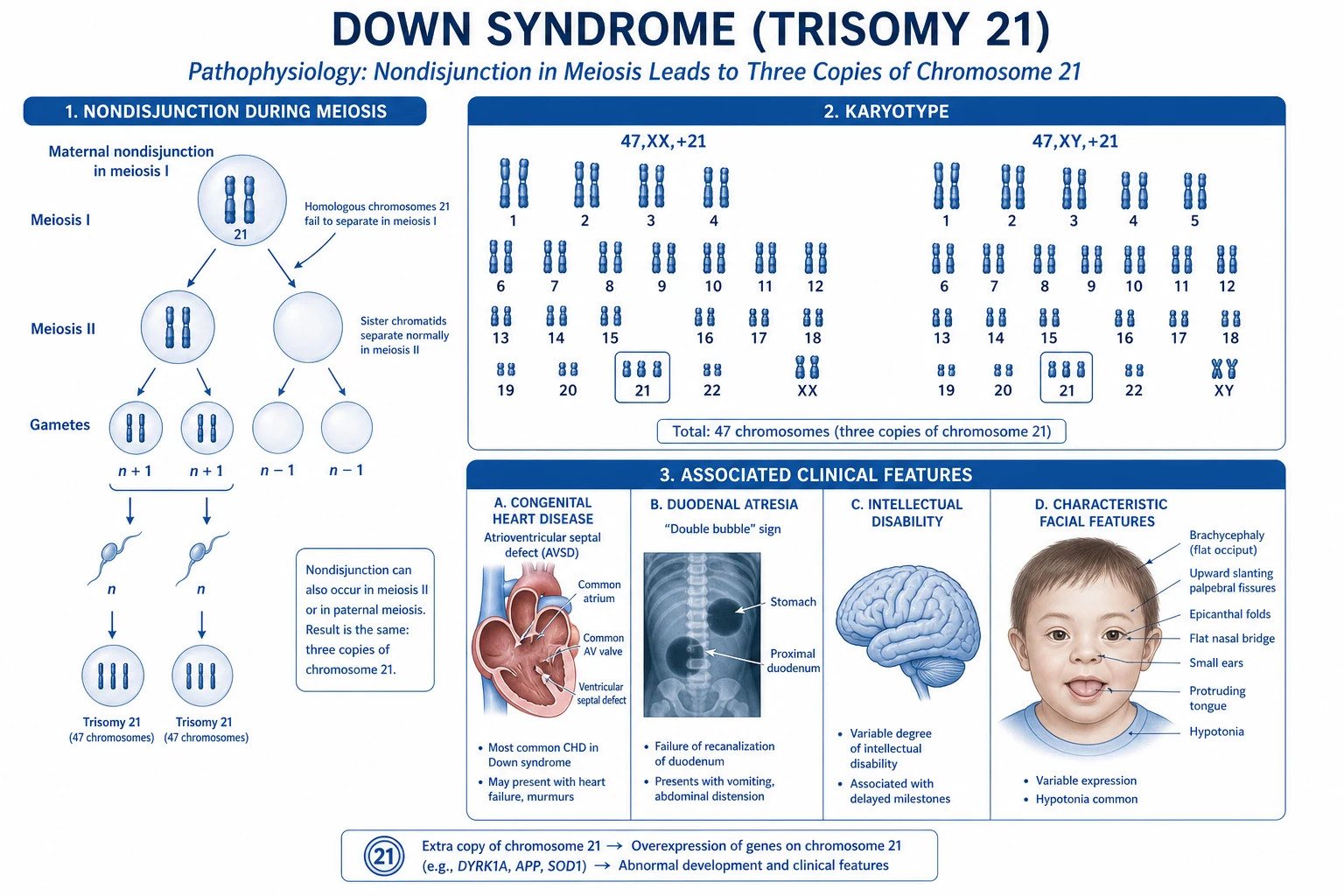
| Chromosomal | Down syndrome (1:700), Fragile X (most common inherited ID) |
| Neurological | Cerebral palsy, neural tube defects, hydrocephalus |
| Metabolic | Hypothyroidism, PKU, storage disorders |
| Infectious | Congenital infections (TORCH), meningitis/encephalitis |
| Environmental | Neglect, FAS, lead poisoning, deprivation |
| Sensory | Hearing loss, visual impairment |
An aetiology is found in roughly 60 to 75 percent of children with global developmental delay when a tiered evaluation is used. Chromosomal and submicroscopic copy-number variants are now the leading identified cause, followed by monogenic disorders such as fragile X, cerebral palsy, and metabolic disease; environmental causes such as fetal alcohol spectrum disorder and severe deprivation remain common worldwide.[2]
Assessment
- Detailed history: pregnancy, birth, neonatal course, milestone trajectory, regression, family history
- Examination: growth parameters (weight, height, head circumference), dysmorphic features, tone, reflexes, hearing, vision
- Investigations (guided by clinical picture): karyotype/microarray, fragile X, CK (for dystrophy), TFTs, metabolic screen, MRI brain, ABR for hearing [1]
RED FLAGS
Developmental Surveillance and Screening
Developmental surveillance is a flexible, longitudinal, continuous process performed at every well-child visit — integrating history, observation of the parent-child interaction, direct examination, and the sharing of concerns — whereas developmental screening is the brief, standardised, formal use of a validated tool to identify children at risk of delay.[1] The AAP recommends surveillance at every health supervision visit and formal standardised screening with a validated parent-completed or directly administered tool at the 9-month, 18-month, and 30-month visits, plus autism-specific screening with the M-CHAT-R at the 18- and 24-month visits, because universal screening doubles the identification rate of developmental disorders compared with surveillance alone.[1] A failed screen is never a diagnosis; it is a trigger for a diagnostic developmental evaluation, an audiology referral, and enrolment in early intervention while the work-up proceeds — "wait and see" is inappropriate after a positive validated screen.[1]
Standardised Assessment Tools
Three families of instruments dominate practice: parent-completed screening questionnaires (ASQ-3, Parents' Evaluation of Developmental Status or PEDS), directly administered screening tests (Denver II), and comprehensive diagnostic developmental batteries (Bayley-III).[6] A 2026 umbrella review and meta-analysis confirmed that the ASQ-3 and Denver-style direct screens offer the best balance of sensitivity and specificity for identifying developmental delay in children under five, while the Bayley-III remains the reference-standard diagnostic instrument for establishing a developmental quotient.[10]
ASQ-3 (Ages and Stages)
- Parent-completed; 21 age-specific questionnaires spanning 1 to 66 months; 30 items across five domains (communication, gross motor, fine motor, problem-solving, personal-social)
- Each domain scored 0 to 60; a score at or below the referral zone (around the 1 SD cutoff) flags that domain; sensitivity roughly 0.85 to 0.92, specificity 0.78 to 0.92
- Takes 10 to 15 minutes, is cheap and repeatable, and is ideal for universal 9-, 18- and 30-month screening
- The domain-specific flag allows targeted referral — a communication-only delay goes straight to audiology and speech therapy
Denver II
- Directly administered clinician screen; 125 items across four sectors (personal-social, fine motor, language, gross motor)
- Each item is plotted on age bars and rated **Advanced / Normal / Caution (failing between the 75th and 90th percentile) / Delayed (below the 90th percentile)**; a **Suspect** result is one Delayed or two Caution items; refusal rates an item Untestable
- The 1992 re-standardisation of the 1967 Denver Developmental Screening Test; widely taught but lower sensitivity (about 0.5 to 0.7), so it is best used as a structured surveillance aid rather than a sole diagnostic tool
- Administered in 20 to 30 minutes and requires a trained examiner and a calibrated kit
Bayley-III (diagnostic)
- Gold-standard **diagnostic** battery administered by a psychologist; the Cognitive, Language, and Motor scales yield composite standard scores (mean 100, SD 15) and scaled subtest scores (mean 10, SD 3)
- A Cognitive or Language composite below 70 (more than 2 SD under the mean) defines developmental delay or intellectual-disability risk and provides a **Developmental Quotient (DQ)**
- Supplemented by Social-Emotional and Adaptive Behavior scales completed by the parent; administration takes 45 to 90 minutes
- Not a screening tool — used to **confirm and quantify** delay after a positive screen and to monitor the response to early intervention
Domain-Specific Red Flags by Age
Red flags are milestone absences that, at a given age, carry a high enough probability of true disorder to mandate prompt evaluation. The principle is straightforward: a child near the 95th centile (the age by which most children achieve a milestone) is not necessarily delayed, but a child who has passed that centile without the skill, or who has lost a skill, requires referral. The four domains are screened independently because a focal delay — especially in language or motor — carries a different differential and investigation pathway than a global delay.[1]
| Domain | Age | Red flag (refer if absent) |
|---|---|---|
| Social | 8 weeks | No social smile |
| Social | 9 months | No reciprocal vocalisation, no joint attention |
| Language | 10 months | No babbling (consonant sounds) |
| Language | 16 months | No single words |
| Language | 24 months | Fewer than 50 words, no two-word phrases |
| Motor | 4 months | No head control, persistent head lag |
| Motor | 6 months | Not rolling, no weight-bearing on legs |
| Motor | 9 months | Not sitting independently |
| Motor | 18 months | Not walking independently |
| Fine motor | 12 months | No pincer grasp, no pointing |
| Any | Any age | Loss (regression) of any previously acquired skill |
| Any | Under 12 months | Persistent hand dominance (suggests hemiplegic cerebral palsy) |
Differential Diagnosis of Developmental Delay
The first diagnostic step is to distinguish global developmental delay (two or more domains, pointing to a central, often genetic or metabolic cause) from a specific (isolated) delay in a single domain (pointing to a focal cause such as hearing loss for language delay or diplegic cerebral palsy for motor delay). The second step separates a static encephalopathy (cerebral palsy, chromosomal abnormality — a fixed deficit) from a progressive or regressive one (Rett syndrome, metabolic disease, neurodegeneration — loss of skills), because regression mandates urgent neurology and a fundamentally different work-up. A normal early course that plateaus or regresses argues against a fixed congenital cause and towards an acquired or metabolic process.[2]
Global delay (2+ domains)
- Chromosomal / copy-number variant (Down syndrome, microdeletions), Fragile X, metabolic disease, cerebral palsy, congenital infection, severe environmental deprivation
- Investigate with chromosomal microarray plus Fragile X plus metabolic screen plus MRI — the high-yield work-up
Isolated language delay
- Permanent or fluctuating hearing loss (the commonest reversible cause), autism spectrum disorder, specific language impairment, severe environmental deprivation, selective mutism in older children
- Audiology first; observe closely for autism features such as absent joint attention and absent pretend play
Isolated motor delay
- Diplegic or hemiplegic cerebral palsy, Duchenne muscular dystrophy (in a boy), spinal muscular atrophy, developmental coordination disorder, benign congenital hypotonia
- Creatine kinase, focused neurological examination, and MRI brain or spine if there is focal sign or abnormal tone
Regression (any domain)
- Autism with regression, Rett syndrome (girls), Landau-Kleffner (acquired epileptic aphasia), late-onset metabolic disease, subacute sclerosing panencephalitis
- Urgent neurology, MRI brain, sleep EEG, and a metabolic and genetic work-up — never delay
Investigation of Global Developmental Delay
Global developmental delay (GDD) is defined operationally as a significant delay — two or more standard deviations below the mean — in two or more developmental domains in a child under five years; in older children the equivalent term is intellectual disability. A systematic, tiered evaluation identifies an aetiology in roughly 60 to 75 percent of cases, with chromosomal microarray now the single highest-yield first-line test. The guiding rule is to screen every child for the common, the treatable, and the genetic causes first, then pursue syndrome-directed testing guided by history and examination.[2]
Tier 1 — first-line investigations for all children with unexplained GDD
| Test | Yield and rationale |
|---|---|
| Chromosomal microarray (CMA) | First-tier test; detects submicroscopic copy-number variants (CNVs) missed by karyotype; diagnostic yield about 15 to 20 percent in unexplained GDD or intellectual disability[5] |
| Fragile X (FMR1) testing | Most common inherited cause of intellectual disability; send if any feature of fragile X (long face, large ears, post-pubertal macro-orchidism) or a family history of intellectual disability[9] |
| Treatable metabolic screen | TSH and free T4 (congenital hypothyroidism), plasma amino acids, urine organic acids, lactate, ammonia, creatine kinase, biotinidase, homocysteine, acylcarnitine profile — targets treatable disorders[4] |
| Hearing assessment | Audiometry, or auditory brainstem response in a young or uncooperative child — mandatory in any speech-language delay; undetected hearing loss is the commonest reversible cause[3] |
| Vision assessment | Visual acuity, fundoscopy, and fixation — cortical visual impairment and refractive errors compound any delay[3] |
| Blood lead level | In high-risk exposure settings; lead neurotoxicity both mimics and worsens intellectual disability |
Tier 2 — targeted and second-line testing guided by phenotype
| Indication | Test |
|---|---|
| Regression in a girl; hand-wringing, deceleration of head growth | MECP2 sequencing (Rett syndrome)[8] |
| Microcephaly, seizures, hypotonia, or dysmorphism not explained by CMA | Gene panel or whole-exome sequencing (yield 25 to 40 percent) |
| Abnormal head size, focal neurology, regression, or unexplained GDD | MRI brain (abnormal in roughly 30 to 65 percent when head size or focal signs are abnormal; lower yield if isolated mild delay and a normal examination)[3] |
| Language regression with seizures or behaviour change | Sleep-deprived EEG — Landau-Kleffner syndrome |
| Male with hypotonia, obesity, obsessive behaviour | Methylation for Prader-Willi or Angelman syndrome (15q11) |
| Floppy infant with tongue fasciculations or cardiomyopathy | Creatine kinase (muscular dystrophy) and SMN1 (spinal muscular atrophy) |
Exam application bank (NEET-PG / INICET)
One-line answer
Developmental milestones are age-specific functional skills achieved by children across four domains: gross motor, fine motor, language, and social/adaptive. Principles: cephalocaudal (head to toe), proximodistal (centre to periphery). Screening tools: ASQ-3, Denver II, Bayley scales. Red flags: loss of any skill (regression), no smile by 8 weeks, no words by 16 months, no 2-word phrases by 24 months, asymmetric movements. Global developmental delay = delay in 2+ domains; specific delay = 1 domain.
Worked stems (answer without another resource)
Stem 1 — Classic presentation. Map symptoms to mechanism; name the first investigation and first treatment step with dose/route if drug therapy is standard. [1]
Stem 2 — Unstable / complicated. List red flags that force immediate resuscitation, theatre, ICU, antidote, or reperfusion — and what you do in the first 15 minutes. [1]
Stem 3 — Atypical group. Elderly, pregnancy, child, or immunocompromised: how presentation and thresholds change. [1]
Stem 4 — Differential trap. Name the three closest mimics and one discriminator for each. [1]
Stem 5 — Disposition. Who goes home with safety-netting, who is admitted, who needs HDU/ICU/theatre, and what follow-up is mandatory. [1]
Rapid viva checklist
- Definition + classification
- Pathophysiology chain
- Bedside signs / criteria
- Score with exact components (if any)
- Emergency bundle
- Definitive therapy with doses
- Complications of disease and of treatment
- Special populations
- Guideline/trial name if classic
- Three exam traps
Coverage self-check
If you cannot answer any stem above from this page alone, re-read the matching section — the page is intended to be self-sufficient for final-prof and NEET-PG/INICET questions on Developmental Milestones.
Management and Early Intervention Programmes
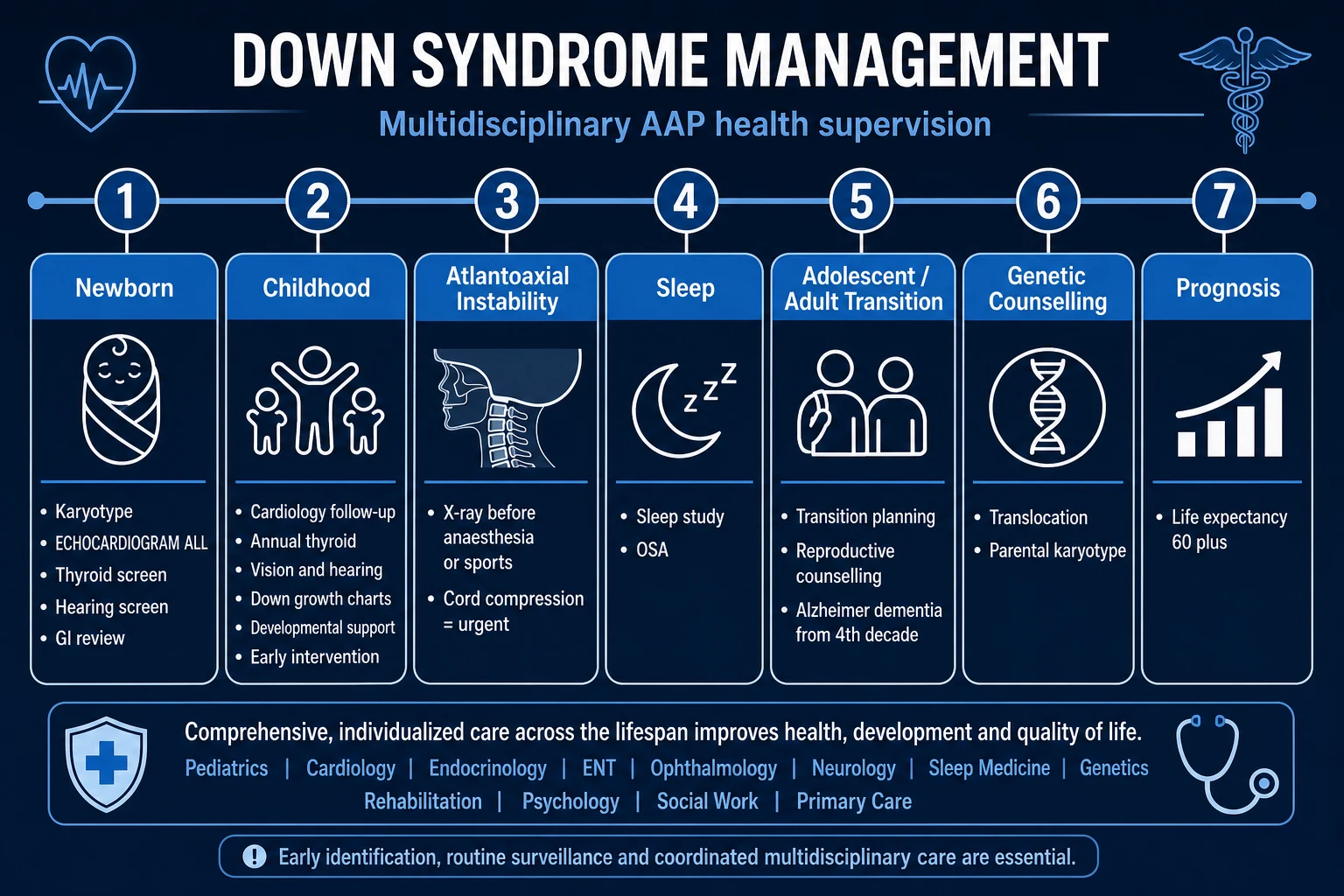
Management is aetiology-specific (treat the cause where it is treatable) layered on domain-specific, function-focused therapy for every child. The neurodevelopmental principle that drives urgency is neural plasticity: intervention in the first three years, when synaptic proliferation and pruning are most active, consistently improves cognitive, language, and adaptive outcomes compared with later initiation.[7]
Aetiology-specific (treatable) treatments
| Cause | Treatment | Dose |
|---|---|---|
| Congenital hypothyroidism | Levothyroxine, started immediately on diagnosis | 10 to 15 mcg/kg/day oral, titrated to keep free T4 in the upper half of the reference range[2] |
| Biotinidase deficiency | Biotin, prevents or reverses neurological injury | 5 to 10 mg/day oral[4] |
| Primary carnitine deficiency | L-carnitine, prevents cardiomyopathy and encephalopathy | 50 to 100 mg/kg/day oral, divided[4] |
| Phenylketonuria (PKU) | Phenylalanine-restricted diet; sapropterin if BH4-responsive | Age-titrated diet; sapropterin 10 to 20 mg/kg/day[4] |
| Pyridoxine-dependent epilepsy | Pyridoxine | 50 to 100 mg IV trial, then 15 to 30 mg/kg/day oral[4] |
These five conditions are the priority because each has a specific, outcome-altering therapy; missing any one forfeits the single chance to prevent irreversible intellectual disability, and all are detectable on a tier-1 metabolic or newborn-screen work-up.[4]
Domain-specific early intervention services
Speech and language therapy targets communication delay and provides augmentative and alternative communication (including PECS and signing) for non-verbal children, and is pivotal in autism and hearing impairment. Physiotherapy addresses gross motor delay, cerebral palsy, and neuromuscular disease with a focus on strength, gait, posture, and functional mobility. Occupational therapy targets fine motor delay, sensory processing, feeding, and activities of daily living. Special education and developmental preschool deliver structured, individualised programming — an Individualized Family Service Plan from birth to three years and an Individualized Education Program from three years onward.[7]
Behavioural intervention (Applied Behaviour Analysis, the Early Start Denver Model, and naturalistic developmental behavioural interventions) is first-line for autism spectrum disorder; intensive early programmes of 20 to 40 hours per week improve IQ and adaptive function when started before age three. Family support, care coordination, and parent training reduce parental stress and amplify the effect of direct therapies, and are now considered core, not optional, components of any programme.[7]
Under India's Rashtriya Bal Swasthya Karyakram, children aged 0 to 18 are screened for the 4 Ds — Defects at birth, Diseases, Deficiencies, and Developmental delays including Disabilities — at Anganwadi centres and schools, and referred to District Early Intervention Centres for confirmation and therapy. The WHO recommends developmental monitoring at every under-five contact as part of the Integrated Management of Childhood Illness.[1]
Prognosis by Cause
Prognosis is determined chiefly by the aetiology, the severity of the delay, the presence of comorbidities (epilepsy, autism, sensory impairment), and — most modifiable of all — the timing and intensity of intervention. A specific genetic or metabolic diagnosis provides recurrence-risk counselling, syndrome-specific surveillance, and access to clinical trials, and it changes the prognostic estimate considerably.[2]
| Cause | Typical cognitive outcome | Key modifiers |
|---|---|---|
| Isolated mild delay, no cause found | Often normalises or improves with intervention; best prognosis | Socioeconomic factors and parental engagement |
| Down syndrome (T21) | Mild to moderate intellectual disability (IQ 30 to 70); strong receptive-language and social strengths | Early intervention; comorbid cardiac, thyroid, and hearing disease |
| Fragile X syndrome | Moderate intellectual disability in males (IQ 40 to 85); variable in females; autism and anxiety common | Behavioural and educational therapy; emerging targeted treatments |
| Rett syndrome (MECP2) | Progressive loss of purposeful hand use and language after 6 to 18 months; stabilises but profound disability | Supportive care; disease-modifying therapies in trials[8] |
| Cerebral palsy | Cognition varies by subtype; often preserved in pure diplegia; spastic quadriplegia carries worse outcome | GMFCS level, epilepsy, and feeding |
| Congenital hypothyroidism (treated early) | Normal IQ if levothyroxine is started within 2 weeks and adherence is good | Treatment delay causes irreversible intellectual disability — the paradigm of a treatable cause[2] |
| Treatable metabolic (PKU, biotinidase) | Near-normal if treated presymptomatically via newborn screening | Late presentation causes irreversible injury |
| Severe hypoxic-ischaemic encephalopathy | Often severe; correlates with the MRI pattern | Therapeutic hypothermia improves outcome |
| Environmental (neglect, fetal alcohol, lead) | Variable; fetal alcohol spectrum disorder causes lifelong intellectual disability; deprivation is recoverable if reversed early | Removal of the insult plus developmental enrichment |
Follow-Up and Monitoring
Children with confirmed delay require structured, longitudinal follow-up — both to monitor the developmental trajectory and the response to therapy, and because the clinical picture often evolves: a global delay in a two-year-old may declare itself as autism, cerebral palsy, or a specific syndrome by age four. Re-administer standardised tools (ASQ-3, then Bayley-III or a WISC at school age) at intervals to track the developmental quotient, and re-screen for emerging comorbidities — autism (M-CHAT-R at 18 and 24 months and whenever concerns arise), epilepsy, attention-deficit/hyperactivity disorder, sensory impairment, and behavioural disturbance.[1]
At each visit reassess the four domains, plot growth including head circumference (centiles crossing downwards suggest acquired microcephaly and warrant neuroimaging), review adherence to aetiology-specific therapy, and update the individualised education or health plan. Counsel the family on the diagnosis, recurrence risk, and realistic expectations, and coordinate care through a single lead clinician — usually the community or neurodevelopmental paediatrician — to prevent fragmentation. Transition planning to adult services should begin in early adolescence for children with persistent intellectual disability.[2]
Cerebral Palsy
Cerebral palsy (CP) is the commonest physical disability of childhood — a group of permanent, non-progressive disorders of movement and posture caused by a lesion of the developing fetal or infant brain. The defining word is motor: CP is primarily a disorder of movement, but it is frequently accompanied by epilepsy (about one-third), intellectual disability (up to half), sensory impairment (visual and hearing), and communication and behavioural comorbidities. The unchanging lesion distinguishes CP from neurodegenerative disease; the motor syndrome may evolve as the brain matures, but the underlying pathology is static. Preterm birth, low birthweight, periventricular leukomalacia, perinatal hypoxic-ischaemic injury, neonatal encephalopathy, intrauterine infection, and chorioamnionitis are the leading antenatal and perinatal risk factors.[2]
Topographical classification
CP is classified by the distribution of the motor abnormality, which in turn points to the likely aetiology and prognosis: [1]
| Subtype | Distribution | Clues |
|---|---|---|
| Spastic diplegia | Predominantly legs more than arms; bilateral | Most common in preterm infants (periventricular leukomalacia); scissoring gait and toe-walking; often preserved cognition |
| Spastic hemiplegia | One side of the body; unilateral | Term infants; focal arterial infarct or periventricular haemorrhage; arm worse than leg; hand preference before 12 months is a red flag |
| Spastic quadriplegia | All four limbs; bilateral and severe | Often the most severe subtype; associated with intellectual disability, epilepsy, feeding difficulty, and the highest risk of hip dislocation and scoliosis |
| Dyskinetic (extrapyramidal) | Involuntary movements — dystonia, choreo-athetosis | Classically kernicterus or severe hypoxic-ischaemic encephalopathy; intact cognition may be masked by severe motor impairment |
| Ataxic | Loss of coordination and balance | Least common; cerebellar origin |
Gross Motor Function Classification System (GMFCS)
The GMFCS (Palisano, 1997) is a five-level, age-banded, family-centred classification of functional motor ability that has replaced topographical labels as the single best predictor of long-term mobility. It classifies what a child does (spontaneous movement, sitting, walking, use of assistive devices) rather than what is structurally wrong.[11]
| Level | Functional capacity (school-age child) |
|---|---|
| I | Walks without limitations; climbs stairs without a railing; runs and jumps, with reduced coordination |
| II | Walks in most settings; difficulty with long distances, uneven terrain, and stairs; minimal need for assistive devices |
| III | Walks with hand-held mobility devices (crutches, walker) indoors; uses a wheelchair for distance and community mobility |
| IV | Uses a wheelchair in most settings; may walk short distances with extensive support; limited self-mobility |
| V | Severe limitations; transported in a wheelchair everywhere; unable to maintain antigravity postures or achieve independent mobility |
GMFCS level at age two predicts adult mobility with good accuracy: children at levels I and II will walk independently, level III will walk with aids, and levels IV and V will use a wheelchair. The Gross Motor Function Curve shows that motor function plateaus between ages five and seven at a level predicted by the GMFCS — a crucial and reassuring prognostic message for families.[11]
Management of Cerebral Palsy
CP management is multidisciplinary and function-focused, not curative. The goal is maximising participation, independence, and quality of life rather than normalising movement. Therapy is built around goal-directed functional training and task-specific practice. [1]
| Modality | Role |
|---|---|
| Physiotherapy and occupational therapy | Cornerstone: stretching, strengthening, gait training, orthoses, serial casting, adaptive equipment, and activities of daily living |
| Oral baclofen | First-line for spasticity; a GABA-B agonist; limited by sedation and poor central penetration at high dose |
| Botulinum toxin A (BoNT-A) injections | Focal spasticity in specific muscle groups (calf, adductors, hamstrings); peak effect at 4 weeks, duration 3 to 4 months; combined with stretching and casting |
| Intrathecal baclofen pump | Severe generalised spasticity or dystonia unresponsive to oral therapy; a test bolus is given before pump implantation |
| Selective dorsal rhizotomy (SDR) | Neurosurgical division of selected lumbar sensory rootlets; best for spastic diplegia (GMFCS II to III) in children 3 to 10 years; reduces spasticity and improves gait; randomised-trial meta-analysis supports sustained benefit, but it demands intensive postoperative physiotherapy and carries a small risk of scoliosis and bladder dysfunction[14] |
| Orthopaedic surgery | Single-event multilevel surgery (SEMLS) for fixed contractures, hip subluxation, and scoliosis; typically deferred until after age seven, when the gait pattern has matured |
| Comorbidity management | Antiepileptics for seizures, speech and language therapy with augmentative communication, gastrostomy for safe nutrition, treatment of drooling, pain management, and surveillance hip radiographs from 18 months |
Autism Spectrum Disorder
Autism spectrum disorder (ASD) is a neurodevelopmental disorder characterised by persistent deficits in social communication and social interaction across multiple contexts, together with restricted, repetitive patterns of behaviour, interests, or activities. DSM-5 merged the former separate diagnoses of autistic disorder, Asperger disorder, and pervasive developmental disorder–not otherwise specified into a single spectrum, recognising that they share core features that differ only in severity. Symptoms must be present in the early developmental period, cause significant functional impairment, and not be better explained by intellectual disability alone.[12]
DSM-5 diagnostic criteria
ASD requires both of the following, present currently or by history: [1]
- Persistent deficits in social communication and social interaction across three sub-domains: (a) social-emotional reciprocity (failure of back-and-forth conversation, reduced sharing of interests and affect), (b) nonverbal communicative behaviours (poor or atypical eye contact, absent or abnormal gestures, atypical facial expression), and (c) developing, maintaining, and understanding relationships (difficulty adjusting behaviour to context, absent pretend play, little interest in peers).
- Restricted, repetitive patterns of behaviour, at least two of four: (a) stereotyped or repetitive motor movements, speech, or object use (hand-flapping, echolalia, lining up toys), (b) insistence on sameness and inflexible adherence to routines (distress at small changes, greeting rituals), (c) highly restricted, fixated interests of abnormal intensity, and (d) hyper- or hyporeactivity to sensory input (adverse reaction to sound, fascination with lights, apparent indifference to pain). [1]
Severity is graded level 1 (requiring support), level 2 (requiring substantial support), or level 3 (requiring very substantial support), reflecting the intensity of support needed. Specifiers capture the presence of intellectual disability, language impairment, associated medical or genetic conditions (such as fragile X syndrome or tuberous sclerosis), and catatonia.[12]
Screening and the M-CHAT-R
The AAP recommends universal, standardised autism-specific screening with the Modified Checklist for Autism in Toddlers, Revised with Follow-up (M-CHAT-R/F) at the 18- and 24-month well-child visits, in addition to general developmental screening. The M-CHAT-R is a 20-item parent-completed questionnaire; a positive screen on two critical items or three total items triggers the structured Follow-up (M-CHAT-R/F) interview to confirm the parental report. This two-step process raises specificity substantially — the positive predictive value of a failed follow-up is roughly 48 per cent, and the screen identifies the majority of true cases in a large community sample. Any child with a failed M-CHAT-R/F, or whose parents report loss of words or social engagement, is referred for a comprehensive diagnostic evaluation, audiology, and early intervention without delay.[13]
Management and early intervention
Management is individualised and lifelong, built on structured, evidence-based behavioural and developmental programmes. Early intensive behavioural intervention — Applied Behaviour Analysis (ABA) and naturalistic developmental behavioural interventions such as the Early Start Denver Model — delivered at 20 to 40 hours per week and begun before age three, improves cognitive ability, language, and adaptive function and reduces the severity of autism features. Speech and language therapy addresses communication, and augmentative and alternative communication (PECS, signing, speech-generating devices) is pivotal for non-verbal children. Occupational therapy targets sensory processing, fine motor skills, self-care, and adaptive functioning. There is no medication that treats the core features of autism; pharmacotherapy is reserved for comorbid symptoms — irritability and aggression (risperidone and aripiprazole, both licensed for this indication in children), attention-deficit/hyperactivity disorder, anxiety, and sleep disturbance. Family-centred support, parent training, and structured educational placement (with an individualised education program) are core, not optional, components.[12]
Learning Disability, Global Developmental Delay, and Intellectual Disability
These three terms are related but distinct, and examiners expect precise use. Confusion arises because the same words ("learning disability") carry different meanings in different countries and contexts. [1]
| Term | Definition | Key features |
|---|---|---|
| Global developmental delay (GDD) | Significant delay (two or more standard deviations below the mean) in two or more developmental domains in a child under five years | A description of a young child's current functioning, not a diagnosis; spans motor, speech-language, cognition, and social-adaptive domains |
| Intellectual disability (ID) | Deficits in general mental abilities (both intellectual functioning and adaptive functioning) with onset in the developmental period (DSM-5 / ICD-11) | The diagnostic term used in children five years and older and in adults; IQ below 70 plus impaired adaptive functioning |
| Learning disability (UK usage) | Synonymous with intellectual disability; graded mild, moderate, severe, or profound by IQ | A medical term in NHS usage; NOT the same as the United States "learning disability" |
| Specific learning disorder (US) / specific learning difficulty (UK) | Difficulty in one academic domain (reading or dyslexia, writing, mathematics or dyscalculia) despite normal intelligence | The academic learning problem; IQ is average or above and only one domain is affected |
IQ thresholds and severity grading
For intellectual disability, DSM-5 and ICD-11 severity is defined by adaptive functioning, not IQ alone — because adaptive functioning determines the level of support required and is more clinically meaningful than the test score. Nonetheless, IQ ranges remain widely used and examined: [1]
| Severity | IQ range | Adaptive functioning |
|---|---|---|
| Mild | 50 to 69 | Achieves academic skills to roughly the level of a typical 9- to 12-year-old; can live independently with support |
| Moderate | 35 to 49 | Academic skills to roughly a 6- to 9-year level; works in supervised settings |
| Severe | 20 to 34 | Limited academic skills; requires daily support for self-care |
| Profound | below 20 | Very limited communication; dependent for all care |
The critical distinctions
The age cut-off of five years is the practical hinge: a child under five with significant cross-domain delay is labelled with GDD, and the same child who continues to show deficits after age five is re-labelled with intellectual disability, because formal IQ testing becomes reliable only after about five years. Specific (isolated) delay in one domain — such as an isolated language delay — is not GDD, and an isolated academic difficulty such as dyslexia is not intellectual disability, because general intelligence and adaptive functioning are preserved. Always test adaptive functioning formally (Vineland Adaptive Behavior Scales) before assigning intellectual disability, because an IQ score alone, without impaired adaptation, does not satisfy the diagnosis.[2]
Global developmental delay
- Under 5 years; 2 or more domains, each 2 SD below the mean
- Descriptive, not diagnostic; prompts tiered investigation
- Many children later meet criteria for intellectual disability, but some catch up with early intervention
Intellectual disability
- Age 5 and older; IQ below 70 PLUS impaired adaptive functioning
- Severity by adaptive functioning, not IQ alone (DSM-5 / ICD-11)
- Onset in the developmental period — distinguishes it from acquired cognitive impairment in adults
Specific learning disorder
- Normal general intelligence (IQ 70 or above); one academic domain affected (reading, writing, maths)
- Not a global deficit; reading equals dyslexia, maths equals dyscalculia
- Targeted remedial education; normal life trajectory with support
References
- [1]Lipkin PH, Macias MM, Council on Children with Disabilities Promoting Optimal Development: Identifying Infants and Young Children With Developmental Disorders Through Developmental Surveillance and Screening Pediatrics, 2020.PMID 31843861
- [2]Moeschler JB, Shevell M, Committee on Genetics Comprehensive evaluation of the child with intellectual disability or global developmental delays Pediatrics, 2014.PMID 25157020
- [3]Shevell M, Ashwal S, Donley D, et al. Practice parameter: evaluation of the child with global developmental delay [RETIRED]: report of the Quality Standards Subcommittee of the American Academy of Neurology and The Practice Committee of the Child Neurology Society Neurology, 2003.PMID 12578916
- [4]Michelson DJ, Shevell MI, Sherr EH, et al. Evidence report: Genetic and metabolic testing on children with global developmental delay [RETIRED]: report of the Quality Standards Subcommittee of the American Academy of Neurology and the Practice Committee of the Child Neurology Society Neurology, 2011.PMID 21956720
- [5]Miller DT, Adam MP, Aradhya S, et al. Consensus statement: chromosomal microarray is a first-tier clinical diagnostic test for individuals with developmental disabilities or congenital anomalies Am J Hum Genet, 2010.PMID 20466091
- [6]Rydz D, Shevell MI, Majnemer A, Oskoui M Developmental screening J Child Neurol, 2005.PMID 15791916
- [7]Guralnick MJ, Connor RT, Neville B, Hammond MA Promoting the peer-related social development of young children with mild developmental delays: effectiveness of a comprehensive intervention Am J Ment Retard, 2006.PMID 16968142
- [8]Percy AK, Ananth A, Neul JL Rett Syndrome: The Emerging Landscape of Treatment Strategies CNS Drugs, 2024.PMID 39251501
- [9]Lubala TK, Lumaka A, Kanteng G, et al. Fragile X checklists: A meta-analysis and development of a simplified universal clinical checklist Mol Genet Genomic Med, 2018.PMID 29624914
- [10]Arefadib N, Stewart B, Crespo-Gonzalez C, et al. Umbrella Review and Meta-Analysis: Screening Tools for the Identification of Developmental Delay in Early Childhood J Am Acad Child Adolesc Psychiatry, 2026.PMID 40975434
- [11]Palisano R, Rosenbaum P, Walter S, et al. Development and reliability of a system to classify gross motor function in children with cerebral palsy Dev Med Child Neurol, 1997.PMID 9183258
- [12]Hyman SL, Levy SE, Myers SM, et al. Identification, Evaluation, and Management of Children With Autism Spectrum Disorder Pediatrics, 2020.PMID 31843864
- [13]Robins DL, Casagrande K, Barton M, et al. Validation of the modified checklist for Autism in toddlers, revised with follow-up (M-CHAT-R/F) Pediatrics, 2014.PMID 24366990
- [14]Armstrong RW The first meta-analysis of randomized controlled surgical trials in cerebral palsy (2002) Dev Med Child Neurol, 2008.PMID 18352992