Psychiatry · Psychiatry
Adjustment Disorders & Grief
Also known as Adjustment disorder · Grief · Bereavement · Prolonged grief disorder · Complicated grief · PGD
Adjustment disorders are emotional or behavioural symptoms arising within 3 months of an identifiable stressor, disproportionate to the stressor and causing impairment, that do not meet criteria for another mental disorder and resolve within 6 months of the stressor (or its consequences) ending. Normal grief (bereavement) is the universal human response to loss: sadness that comes in waves, longing for the deceased, preserved self-esteem and capacity for positive memories, with gradual re-engagement in life over weeks to months. Prolonged grief disorder (PGD) — added to the DSM-5-TR in 2022 and to the ICD-11 (6B42) — is intense yearning/longing for, or preoccupation with, the deceased, plus at least 3 of identity disruption, disbelief, avoidance, emotional pain, difficulty reintegrating, numbness, meaninglessness and loneliness, present most days for at least 12 months in adults (6 months in children), causing impairment beyond cultural norms. PGD affects 7 to 10 percent of bereaved people and is treated with complicated grief therapy (CGT), a 16-session dual-process treatment that outperforms interpersonal therapy and standard CBT.
On this page & tools
Your progress
Saved locally on this device.
Exam tags
Red flags
Overview & Definition
Adjustment disorders and the grief response are among the commonest psychiatric presentations in primary care and consultation-liaison psychiatry — every clinician will see them, and the core clinical skill is to distinguish normal distress from a disorder requiring treatment, and to separate grief from major depressive disorder. Two related but distinct phenomena are covered here, plus the universal normal experience of bereavement: [1]
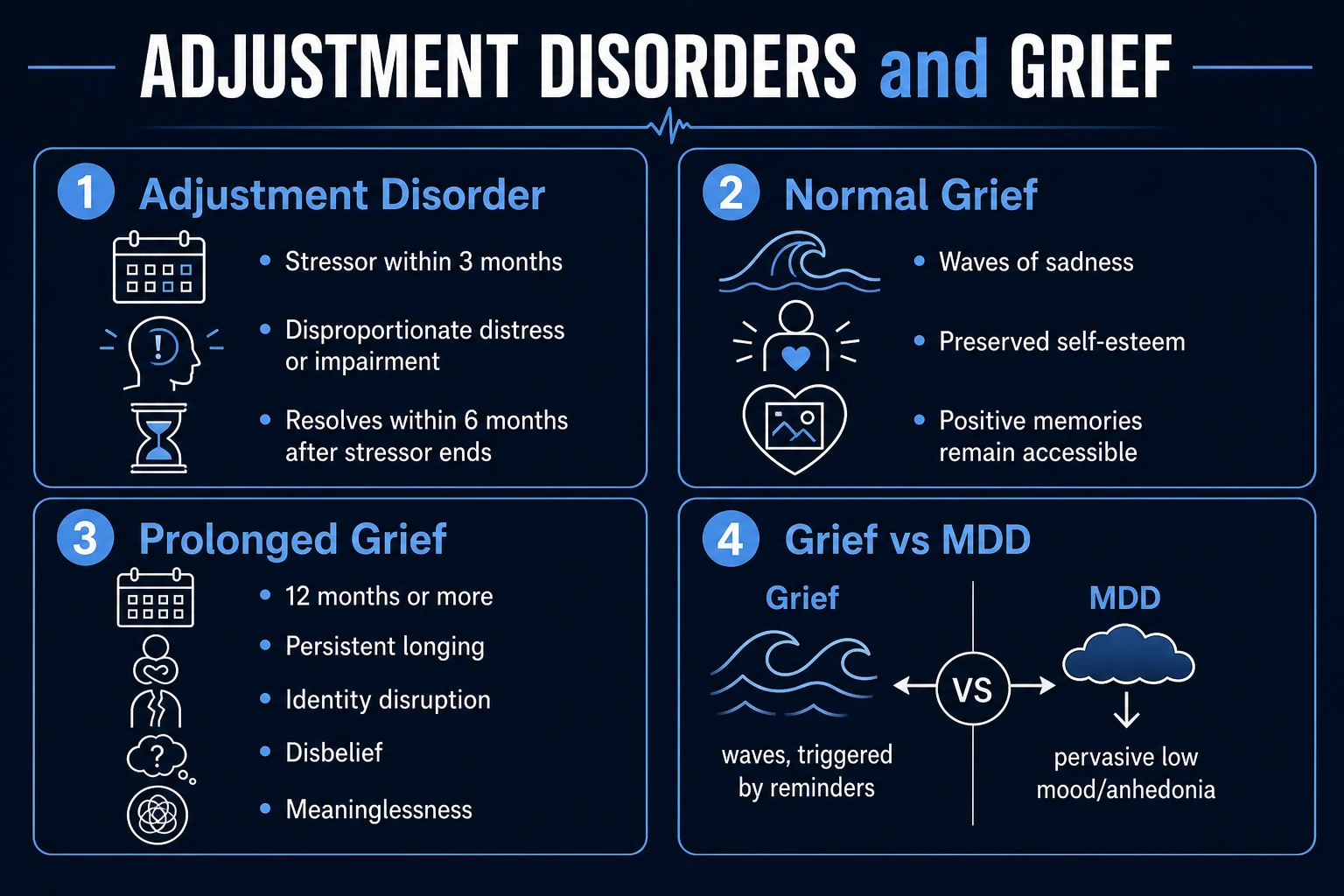
- Adjustment disorder (DSM-5-TR / ICD-11) — a maladaptive reaction to an identifiable stressor that is disproportionate to the stressor severity (taking cultural and contextual factors into account), causes significant functional impairment, does not meet full criteria for another mental disorder (major depressive disorder, GAD, PTSD), and is not normal bereavement. Symptoms arise within 3 months of the stressor and resolve within 6 months of the stressor (or its consequences) ending. It is, by definition, a sub-threshold, time-limited diagnosis of exclusion.[1]
- Normal grief (bereavement) — the natural, universal response to the loss of a loved one (or significant attachment figure). Most people who are bereaved do not need psychiatric treatment: their grief is painful but adaptive, comes in waves, preserves their sense of self and capacity for positive memories, and integrates over weeks to months. Treatment of uncomplicated grief is supportive, not medical.[1]
- Prolonged grief disorder (PGD) — the 7 to 10 percent of bereaved people whose grief becomes stuck, intense, preoccupying and disabling, persisting well beyond cultural norms (DSM-5-TR: at least 12 months in adults, 6 months in children and adolescents; ICD-11: at least 6 months). It was added to the DSM-5-TR in 2022 and the ICD-11 (code 6B42) in 2022, replacing the older terms complicated grief, traumatic grief and persistent complex bereavement disorder. It has a specific, evidence-based psychotherapy: complicated grief therapy (CGT).[1][3][4]
The pivotal clinical questions are: (1) Is this distress within the range of a normal response, or is it disproportionate and impairing (an adjustment disorder)? (2) Is this grief, or is it major depressive disorder (MDD) — and could it be both? (3) Has normal grief become prolonged grief disorder, requiring CGT? (4) Is there suicidal ideation or comorbidity that changes management? [1]
Classification
Adjustment disorder
- DSM-5-TR subtypes: with depressed mood; with anxiety; with mixed anxiety and depressed mood (commonest); with disturbance of conduct; with mixed disturbance of emotions and conduct; unspecified
- Onset within 3 months of identifiable stressor; resolves within 6 months of stressor ending (chronic specifier if stressor is persistent)
- Diagnosis of exclusion — does not meet criteria for MDD, GAD, PTSD or another Axis I disorder
- Not normal bereavement
Normal grief (bereavement)
- Universal response to loss of a loved one
- Sadness comes in waves (pangs); preserved self-esteem; positive memories alongside sadness
- Longing for the deceased, but capacity to engage in non-loss activities gradually returns
- No treatment required; bereavement support, education, watchful waiting
Prolonged grief disorder (PGD)
- DSM-5-TR (2022) — at least 12 months (adults) / 6 months (children) since the death
- Intense yearning/longing for the deceased OR preoccupation with the deceased or circumstances of the death
- At least 3 of: identity disruption, disbelief, avoidance of reminders, intense emotional pain, difficulty reintegrating, emotional numbness, feeling life is meaningless, loneliness
- Impairing, exceeding cultural/religious/social norms; not better explained by another disorder
- Treated with complicated grief therapy (CGT); SSRIs only for comorbid MDD/anxiety
Acute stress disorder / PTSD
- Requires exposure to a traumatic event meeting Criterion A (actual/threatened death, serious injury, sexual violence)
- ASD: 3 days to 1 month of symptoms; PTSD: more than 1 month
- Intrusion, avoidance, negative mood/cognition, arousal — fear/anxiety-based, not yearning-based
- May co-occur with PGD after violent or sudden loss

Epidemiology & Risk Factors
Adjustment & grief — the numbers that matter
Adjustment disorder is among the commonest psychiatric diagnoses in primary care and consultation-liaison psychiatry. General-population prevalence is roughly 2 to 8 percent; in mental health services the figure rises to 10 to 20 percent, and in oncology, HIV, dialysis and post-stroke populations to 12 to 15 percent or higher. It is the single most frequent diagnosis made in C-L psychiatry for medical inpatients. Risk factors: female sex, younger age, accumulating life stressors (job loss, divorce, illness, migration, financial difficulty), limited coping resources, low social support, prior psychiatric history, personality vulnerabilities (cluster B, dependent, avoidant traits), and chronic medical illness. In children and adolescents, family conflict, school transition, bullying, parental separation, and academic failure are common precipitants.[1]
Bereavement is universal — virtually every adult will experience the loss of a close attachment figure. Only a minority develops prolonged grief disorder. The best contemporary estimate is 7 to 10 percent of bereaved adults meeting PGD criteria; rates are higher in specific populations: ~20 percent of bereaved parents, 15 percent of those bereaved by violent/sudden death, and elevated after loss of a spouse, after stillbirth or neonatal death, and after the death of an only child. Risk factors for PGD: [1][4]
- Nature of the death — sudden, violent, or traumatic death; suicide; loss of a child; death after a long and difficult illness in which the caregiver was intensely involved; death perceived as preventable.
- Relationship to the deceased — dependent, anxious or insecure attachment; very close, exclusive or conflictual relationship; the deceased being a child.
- Individual vulnerability — prior mood or anxiety disorder; history of childhood adversity, abuse or neglect; insecure (anxious/ambivalent) attachment style; prior history of PGD; personality disorder.
- Contextual factors — low social support; social isolation; stigma (suicide, disenfranchised loss); lack of preparation for the death; concurrent life stressors; cultural barriers to mourning. [1]
The widowhood effect describes the increased all-cause mortality of bereaved spouses in the first 6 months after loss — most marked in older men — and reflects the combined effects of autonomic surge, immune suppression, treatment non-adherence, and substance use. Takotsubo (stress) cardiomyopathy ("broken heart syndrome") is the most dramatic cardiovascular complication of acute emotional stress: approximately 90 percent of cases are female, typically post-menopausal, presenting within hours to days of an intense emotional trigger with chest pain, ECG changes (often deep T-wave inversion and QT prolongation), mild troponin rise and apical ballooning on imaging.[1]
Pathophysiology
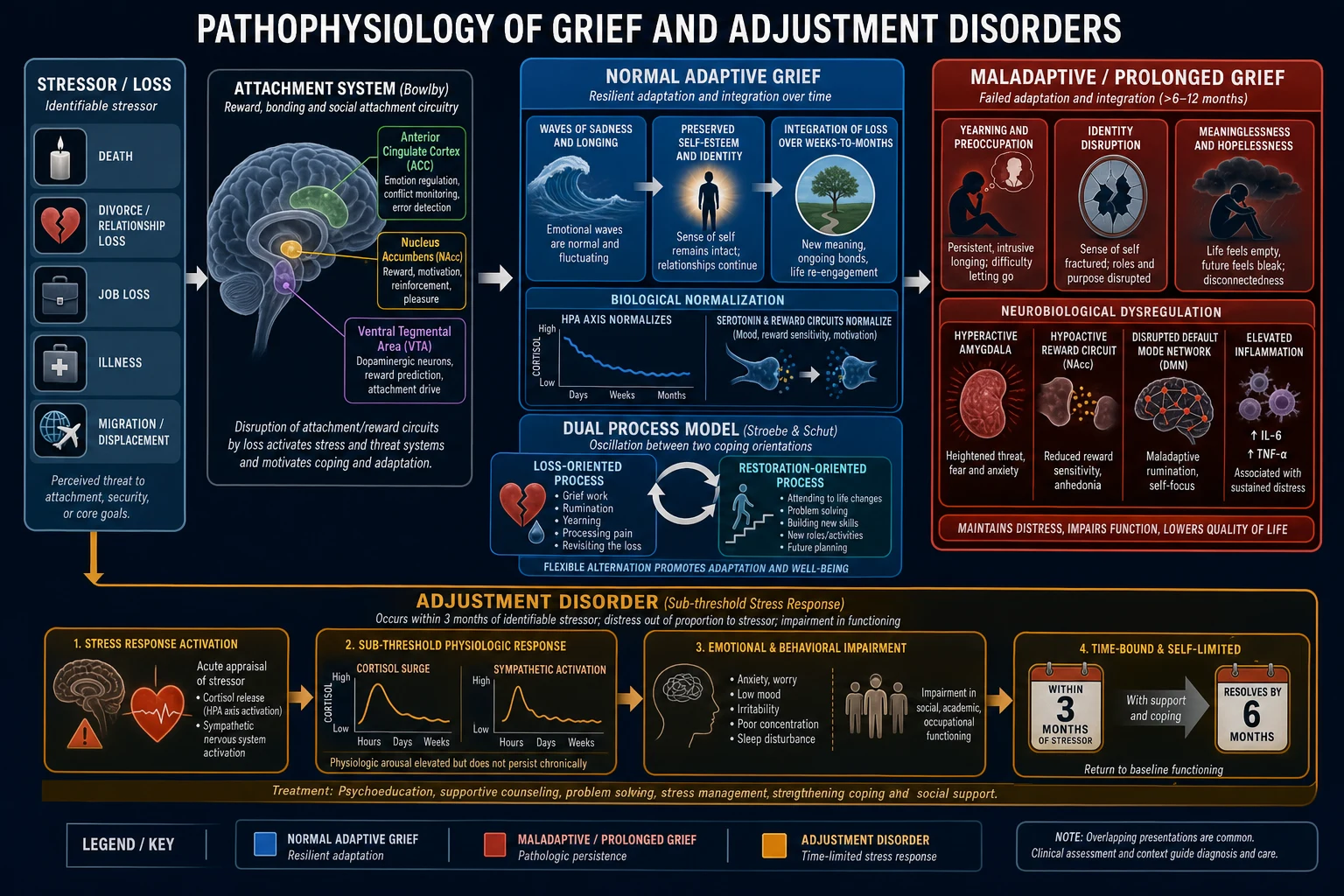
Grief is a neurobiological process of adaptation, not a passive emotional reaction. Understanding its mechanism requires four overlapping frameworks: [1]
1. Bowlby's attachment theory (1961). John Bowlby reframed grief as a biologically programmed separation response, the inescapable cost of a species that forms strong attachment bonds. The bereaved infant (and adult) moves through three phases: protest — active searching, crying, calling, hyperarousal (the attachment figure must be "found"); despair — withdrawal, sadness, reduced activity, hopelessness (the search is abandoned); and detachment/reorganisation — the bond is internally revised and new attachments become possible. Attachment figures are internalised as internal working models that guide expectations, behaviour and identity; bereavement requires the painful updating of these models.[2]
2. The Stroebe-Schut Dual Process Model of coping with bereavement (1999). Healthy grief requires oscillation between two orientations: loss-oriented coping (grief work — processing the pain, yearning, reviewing the loss) and restoration-oriented coping (attending to life changes — new roles, practical tasks, distraction, building a future). The two occur in alternation, not simultaneously. Prolonged grief disorder is the failure of this oscillation: the bereaved person becomes stuck in loss-orientation, unable to engage with restoration, and the loss processing itself becomes rigid and preoccupying rather than integrative. This model directly underpins complicated grief therapy (CGT), which targets both processes.[1]
3. Worden's Tasks of Mourning (a clinical framework, not a stage model): (1) accept the reality of the loss; (2) process the pain of grief; (3) adjust to a world without the deceased — external (environment, roles), internal (identity, self-esteem), and spiritual (meaning, beliefs); (4) find an enduring connection with the deceased while embarking on a new life. Healthy grief integrates the loss; it does not "move on" by severing the bond. [1]
4. The neurobiology of grief. Functional imaging of bereaved individuals shows that grief activates the brain's reward and attachment circuitry — the ventral tegmental area, nucleus accumbens, ventral pallidum and anterior cingulate cortex — the same circuitry that built the bond. Loss produces a reward prediction error: the brain expects the attachment figure and the expectation is violated, generating a craving-like signal that drives yearning and search behaviour. In prolonged grief disorder, three neural signatures emerge: (i) blunted reward response to non-loss-related stimuli (a hallmark of "stuck" grief, paralleling the anhedonia of MDD but specific to non-loss rewards); (ii) hyperactive amygdala and insula to reminders of the deceased, reflecting the persistent emotional charge; and (iii) altered default mode network connectivity — the network that sustains self-referential processing and identity — explaining the identity disruption and meaninglessness of PGD. Peripherally, PGD shows elevated inflammatory markers (IL-6, TNF-alpha, CRP) and dysregulated cortisol — a pro-inflammatory phenotype that may explain the increased cardiovascular and infectious morbidity of bereavement.[1]
Adjustment disorder pathophysiology is less well defined but reflects a sub-threshold stress-response cascade: corticotropin-releasing hormone release, HPA axis activation, sympathetic nervous system surge, and allostatic load in a person whose coping resources are overwhelmed by an identifiable stressor. The reaction does not cross the threshold into a defined mental disorder (no full MDD, GAD or PTSD syndrome) but is severe enough to cause functional impairment. Resolution occurs once the stressor ends or effective coping is established — the time-limited course is intrinsic to the diagnosis.[1]
A note on the Kübler-Ross "five stages" (denial, anger, bargaining, depression, acceptance): these were originally described for the experience of patients facing their own death, not for bereavement, and were never proposed as a rigid linear sequence. Empirical work (Maciejewski et al., JAMA 2007) showed that the actual trajectory of bereavement does not follow these stages in order; yearning (not depression) is the dominant early symptom, and acceptance increases steadily over time. Do not impose the stages as a checklist on a grieving patient.[5]
Clinical Presentation
Adjustment disorder
The presenting symptoms are heterogeneous and map onto the DSM-5-TR subtypes: [1]
- With depressed mood — tearfulness, sadness, hopelessness that does not meet MDD threshold.
- With anxiety — nervousness, worry, jitteriness that does not meet GAD threshold.
- With mixed anxiety and depressed mood (the commonest subtype) — combination of the above.
- With disturbance of conduct — violation of societal norms or the rights of others (truancy, vandalism, reckless behaviour, conflict with the law); more common in children and adolescents.
- With mixed disturbance of emotions and conduct — both emotional and conduct symptoms.
- Unspecified — atypical presentations causing impairment that do not fit the above. [1]
The defining feature is the temporal link to an identifiable stressor (onset within 3 months), the disproportionate severity of the reaction relative to the stressor, the functional impairment it causes, and the exclusion of another mental disorder. The patient typically recognises that the reaction is excessive ("I should be over this by now"). Common precipitants include job loss, retirement, financial difficulty, relationship breakdown, divorce, migration, diagnosis of a serious illness (own or family member's), major surgery, leaving home, school transition, and the stress of caregiving. [1]
Normal grief (bereavement)
The cardinal features are: [1]
- Sadness in waves or "pangs" — intense, often triggered by reminders, but not pervasive or constant; between waves the person can experience positive emotion.
- Longing and yearning for the deceased — the wish for their presence; sometimes visible "searching" behaviour early on.
- Preoccupation with memories of the deceased — but with both positive and negative memories; the deceased is not idealised exclusively.
- Preserved self-esteem — the bereaved does not feel globally worthless or hopeless about themselves.
- Capacity for pleasure and engagement in non-loss-related activities — laughter at a joke, enjoyment of a meal, interest in family; this returns gradually over weeks.
- Sleep and appetite disturbance — common in the early weeks, gradually normalising.
- Guilt, when present, is focused on the deceased or the death ("I should have visited more", "I should have called an ambulance sooner") rather than global self-condemnation.
- The deceased may be seen or heard — brief sensory experiences of the deceased's voice or presence are common in normal grief across cultures and are not in themselves psychotic.
- Functional impairment is mild and time-limited — most bereaved people return to work and family roles within weeks, with full re-engagement over months. [1]
Prolonged grief disorder
PGD is distinguished from normal grief by intensity, pervasiveness, duration, and functional impairment. The DSM-5-TR criteria require, since the death (at least 12 months ago in adults, 6 months in children/adolescents):[1][4]
- Intense yearning/longing for the deceased, OR intense preoccupation with the deceased or the circumstances of the death (the gateway symptom).
- At least 3 of the following, on most days, to a clinically significant degree:
- Identity disruption (e.g., feeling that part of oneself has died).
- Marked sense of disbelief about the death.
- Avoidance of reminders that the deceased is dead (situational or cognitive).
- Intense emotional pain (anger, bitterness, sorrow) related to the death.
- Difficulty with reintegration into life (e.g., problems engaging with friends, pursuing interests, planning ahead).
- Emotional numbness, particularly about one's relationship to others.
- Feeling that life is meaningless as a result of the death.
- Intense loneliness as a result of the death.
- The symptoms cause clinically significant distress or impairment and exceed cultural, religious or age-appropriate norms.
- The disturbance is not better explained by another mental disorder (MDD, PTSD) or substance. [1]
The presentation is one of being "stuck" — daily, disabling preoccupation with the loss, an inability to imagine a meaningful future, and (often) avoidance of the very reminders and re-engagement that would allow integration. Patients with PGD have higher rates of suicidal ideation, substance use, sleep disorders, cardiovascular disease and quality-of-life impairment than non-PGD bereaved people.[6]
Atypical presentations
- Older adults — grief may present with somatisation (new physical complaints), cognitive complaints (the "pseudodementia" of depression), social withdrawal mistaken for dementia, or refusal to eat or take medications. Comorbid physical illness and polypharmacy complicate the picture. Bereavement may unmask or worsen pre-existing cognitive impairment. The widowhood effect (increased mortality in the first 6 months, especially in men) is most visible here.
- Children and adolescents — grief is expressed behaviourally rather than verbally: regression (bedwetting, clinging, separation anxiety), behavioural disturbance (oppositionality, conduct problems, school refusal), decline in school performance, somatic complaints, and play that re-enacts the loss. Adjustment disorder with disturbance of conduct is more common in boys. Children often believe they caused the death (magical thinking) and need explicit reassurance.
- Men — may present with irritability, anger, substance use, or conduct disturbance rather than tearful sadness; grief is under-recognised.
- Bereaved parents — intense guilt, persistent search behaviour, intrusive memories of the child, and a uniquely high risk of PGD (~20 percent) and suicide. Parental bereavement requires long-term, sensitive follow-up.
- Cultural presentations — hearing or seeing the deceased, "ghost" visitations, possession states, or ritualised mourning behaviours are culturally normative in many communities and must not be labelled psychotic; cultural assessment is mandatory before psychiatric formulation.[1]
Differential Diagnosis
The differentials cluster around three questions: is this grief or MDD? is this adjustment disorder or another mental disorder? is this normal or prolonged grief? [1]
- Major depressive disorder (MDD) — see KeyFact above. Five or more of the SIGECAPS symptoms for at least 2 weeks, including depressed mood or anhedonia; the bereavement exclusion was removed in DSM-5, so a bereaved person meeting MDD criteria can be diagnosed with MDD (and should be treated).
- Generalised anxiety disorder (GAD) — excessive worry across multiple life domains for at least 6 months, not tied to a specific stressor; differentiated from adjustment disorder with anxiety by pervasiveness, duration, and the absence of a single precipitant.
- Acute stress disorder (ASD) and PTSD — require exposure to a traumatic event (Criterion A: actual/threatened death, serious injury, sexual violence). ASD: 9 or more of a defined symptom cluster (intrusion, negative mood, dissociation, avoidance, arousal) for 3 days to 1 month after trauma. PTSD: more than 1 month of intrusion, avoidance, negative alterations in cognition and mood, and arousal symptoms. PTSD may co-occur with PGD after violent or witnessed death; the central affect in PTSD is fear and horror, whereas in PGD it is yearning and longing.
- Normal grief vs PGD — distinguished by duration (PGD: 12 months adults / 6 months children), intensity (daily yearning and preoccupation), pervasiveness (identity disruption, meaninglessness), functional impairment exceeding cultural norms, and the failure of oscillation between loss- and restoration-oriented coping.
- Substance-induced disorder / substance use disorder — bereavement commonly triggers alcohol, sedative or opioid self-medication; the primary diagnosis may be substance use disorder, which then requires its own treatment.
- Somatic symptom disorder — preoccupation with physical symptoms disproportionate to medical findings; sometimes presents after loss with the bereaved person developing persistent unexplained physical complaints.
- Personality disorder (especially emotionally unstable / borderline) — abandonment, separation or loss triggers intense, disproportionate reactions that mimic adjustment disorder; the underlying PD drives chronic interpersonal dysfunction and recurrent similar reactions across the lifespan.
- Bipolar depression — bereavement may precipitate a depressive episode in bipolar disorder; a lifetime history of mania/hypomania must be excluded before starting an SSRI.
- Organic mimics — delirium, thyroid disease (hypothyroidism), anaemia, vitamin B12 deficiency, medication side-effects, occult infection, hyponatraemia, paraneoplastic syndromes. Always screen with baseline bloods in any new psychiatric presentation, especially in the elderly. Recently bereaved patients presenting with collapse or chest pain need ECG and troponin for takotsubo cardiomyopathy.
- Grief hallucinations vs psychotic disorders — transient, culturally normative hearing/seeing the deceased is common in normal grief; psychotic disorder is suggested by fear, paranoid or persecutory content, complex delusional systems, command hallucinations, or a pre-existing psychotic history. [1]
Clinical & Bedside Assessment
The assessment serves three goals: (1) characterise the stressor/loss and the symptom profile; (2) distinguish adjustment disorder / normal grief / PGD / MDD; (3) assess risk (suicide, self-neglect, comorbidity).[1]
History. Establish the nature, timing and severity of the stressor or loss; obtain collateral from family where possible (the patient may minimise or maximise). Map the symptom profile against the adjustment-disorder subtypes and the PGD criteria. Determine onset (adjustment disorder requires onset within 3 months of the stressor; PGD requires at least 12 months since the loss in adults). Quantify functional impairment (work, study, relationships, self-care). Take a full psychiatric history (prior mood/anxiety/PTSD episodes, prior bereavement responses, treatment history), personality vulnerabilities, substance use, medical history and medications. Explore coping resources, social support, and any protective factors (dependants, faith, responsibilities). Take a sensitive cultural and religious history: norms for mourning duration and expression vary widely. [1]
Mental state examination. Note the predominant affect (sadness, anxiety, irritability, anhedonia), its quality (waves vs pervasive), and congruence with thought content. Probe thought content for hopelessness, worthlessness, guilt (specific vs global), and suicidal ideation — suicidal ideation is common in PGD and bereavement-related MDD and must be assessed in every bereaved patient. Note perception: hearing or seeing the deceased is common and not in itself pathological; complex, frightening, or command hallucinations suggest comorbid psychiatric disorder. Assess insight — most patients with adjustment disorder and grief retain good insight and recognise that their reaction is excessive or painful. [1]
Distinguishing grief from MDD at the bedside — apply the KeyFact rule above. Ask explicitly: "Between the sad moments, can you still enjoy things — a meal, a grandchild, a joke?" (grief: yes; MDD: no). "Do you feel you are a worthwhile person?" (grief: usually yes; MDD: often no). "Is the sadness always there, or does it come and go?" (grief: comes and goes in waves; MDD: a constant, pervasive low mood). [1]
Validated scales (used to support, not replace, clinical judgement). [1]
- PG-13 (Prolonged Grief-13, Prigerson) — the most widely used research and clinical scale for PGD; assesses the gateway symptom (yearning/preoccupation at least once daily or to a disabling degree) plus cognitive, emotional and behavioural symptoms. The DSM-5-TR criteria operationalise PG-13.[4]
- Inventory of Complicated Grief (ICG) / Brief Grief Questionnaire (BGQ) — screening tools for PGD severity.
- PHQ-9 (depression severity), GAD-7 (anxiety severity), C-SSRS (suicidality) — to characterise comorbidity and risk.
Suicide risk assessment is mandatory in every bereaved or adjustment-disorder patient. Bereavement is an independent suicide risk factor; bereaved parents, older widowers, and those with comorbid MDD, substance use or prior attempts are at highest risk. Apply the structured suicide risk assessment (see the suicide-risk-assessment topic). Szanto and colleagues (2006) showed that complicated grief is independently associated with indirect self-destructive behaviour and overt suicidality, even after controlling for comorbid depression.[6]
Investigations
There is no laboratory or imaging test for adjustment disorder or grief — both are clinical diagnoses. Investigations serve to exclude organic mimics and characterise comorbidity.[1]
- Baseline bloods — FBC (anaemia, infection), U&E (hyponatraemia — common in elderly, SSRI-related, or in malnutrition from self-neglect), LFT (alcohol, metastatic disease), TFT (hypothyroidism mimics depression), calcium, glucose, B12 and folate (deficiency in the elderly or malnourished), vitamin D. Urine drug screen if substance use is suspected.
- Cognitive screen (MMSE or MoCA) in elderly patients presenting with apparent "dementia-like" withdrawal after loss — to distinguish the pseudodementia of depression from a true neurocognitive disorder.
- ECG and troponin in any recently bereaved patient with chest pain, dyspnoea, palpitations or syncope — takotsubo cardiomyopathy and acute coronary events spike in the bereavement period. ECG (QTc) before starting any SSRI or TCA.
- Neuroimaging (CT or MRI brain) if first psychiatric presentation over 40, focal neurological signs, cognitive impairment, or any suspicion of an intracranial lesion.
- Validated scales (above) are used clinically to support diagnosis and monitor response — they are not diagnostic in themselves. [1]
Reproduce the PGD diagnostic criteria verbatim (DSM-5-TR, code 302.82 / F43.81). Since the death of a loved one (at least 12 months ago in adults; 6 months in children and adolescents), the person has, on more days than not, intense yearning/longing for the deceased, or intense preoccupation with the deceased or the circumstances of the death, plus at least 3 of: identity disruption, marked disbelief, avoidance of reminders, intense emotional pain, difficulty with reintegration, emotional numbness, feeling life is meaningless, intense loneliness — causing clinically significant distress or impairment, exceeding cultural/religious/social norms, and not better explained by another mental disorder.[1][4]
Reproduce the adjustment disorder criteria verbatim (DSM-5-TR). (A) Development of emotional or behavioural symptoms in response to an identifiable stressor, occurring within 3 months of the stressor. (B) Clinically significant response: either marked distress out of proportion to the severity/intensity of the stressor (taking external context and cultural factors into account) OR significant impairment in social, occupational or other important areas of functioning. (C) The stress-related disturbance does not meet criteria for another mental disorder (including normal bereavement) and is not merely an exacerbation of a pre-existing disorder. (D) The symptoms do not represent normal bereavement. (E) Once the stressor (or its consequences) has terminated, symptoms resolve within 6 months. Specify subtype: depressed mood; anxiety; mixed anxiety and depressed mood; disturbance of conduct; mixed disturbance of emotions and conduct; unspecified. Specify if acute (under 6 months) or chronic (6 months or more, when the stressor is persistent). [1]
Management — Resuscitation
Adjustment disorders and grief presentations rarely require resuscitation, but a focused screen for the medical and psychiatric emergencies that bereavement and acute stress can trigger is mandatory: [1]
- Takotsubo (stress) cardiomyopathy — any recently bereaved patient with chest pain, dyspnoea, palpitations or syncope needs an ECG and troponin, urgent cardiology assessment, and treatment per the local acute coronary syndrome pathway. The clinical and ECG presentation can mimic STEMI; echocardiography shows apical ballooning with basal hyperkinesis, and coronary angiography is typically unobstructed. Management is supportive (beta-blocker, ACE inhibitor, diuretics for heart failure); most recover within weeks.[1]
- Suicide attempt or active suicidal intent/plan — do not discharge. Psychiatric assessment, means restriction (secure firearms, medication, ligature points), collaborative safety planning, and consider admission (involuntary under the Mental Health Act / Mental Healthcare Act 2017 if risk is imminent and capacity is impaired). See the suicide-risk-assessment topic.
- Acute intoxication or withdrawal (alcohol, sedatives, opioids) — manage per the relevant substance protocol before psychiatric formulation.
- Severe self-neglect (dehydration, malnutrition, hypothermia in an acutely grieving elderly person) — medical admission for rehydration, warming, treatment of intercurrent illness.
- Acute behavioural disturbance (rare; e.g., aggression in adjustment disorder with disturbance of conduct) — de-escalation first; pharmacological sedation (oral or IM lorazepam, haloperidol or olanzapine per local protocol) only if there is a risk to self or others, never as a routine.
- Means restriction counselling (CALM) for any bereaved person at risk: secure firearms, limit medication quantities dispensed, address ligature points. Means restriction is one of the most effective suicide-prevention interventions.
Management — Definitive & Stepwise
Management follows a stepped-care model, scaled to severity and complexity:[1][7]
Step 1 — Normal grief: support, education, watchful waiting
For the vast majority of bereaved people, the right treatment is no specific psychiatric treatment. Provide empathic support, education about the normal course and variability of grief (it comes in waves, it can intensify at anniversaries, hearing the deceased is common), reassurance that grieving is adaptive and time-limited, and practical help with the bureaucracy of death (registration, wills, finances). Signpost peer bereavement support (CRUSE Bereavement Support in the UK; local hospice and charity services; faith community resources). Self-help: bibliotherapy, online resources, exercise, sleep hygiene, social engagement. Wittouck and colleagues' meta-analysis (2011) found that preventive interventions for uncomplicated bereavement are not effective — do not medicalise normal grief.[7]
Step 2 — Adjustment disorder: brief psychological therapy
First-line treatment of adjustment disorder is brief psychological intervention: [1]
- Brief supportive psychotherapy — 5 to 12 sessions; validation, emotional processing, problem-solving around the stressor.
- Cognitive-behavioural therapy (CBT) — cognitive restructuring of maladaptive appraisals ("I will never recover", "this means I am a failure"), behavioural activation, coping-skills training, graded exposure to avoided situations.
- Problem-solving therapy (PST) — structured 6 to 8 session approach; particularly effective when the stressor is a concrete, solvable problem (debt, housing, employment).
- Interpersonal therapy (IPT) — useful when the stressor involves role transition, interpersonal dispute or grief. [1]
Address the stressor where possible: marital/couples therapy for relationship breakdown, occupational-health input for workplace stress, financial/debt advice, treatment of the medical illness, housing support, social-services referral. Watchful waiting is appropriate for mild cases that are already improving. [1]
Pharmacotherapy is not first-line for adjustment disorder itself. An SSRI (e.g. sertraline 50 mg once daily, titrating to 100 to 200 mg; or escitalopram 10 mg once daily, titrating to 20 mg) is reserved for the patient with significant comorbid depressive or anxiety symptoms that meet MDD or GAD threshold — at which point the primary diagnosis is MDD or GAD, not adjustment disorder. Avoid benzodiazepines beyond short-term (2 to 4 weeks) crisis use; they impair adaptive coping and carry dependence risk. [1]
Most adjustment disorders resolve within 6 months of the stressor ending — by definition. Failure to resolve should prompt diagnostic review (has MDD, GAD, PTSD, substance use or a personality disorder emerged?). [1]
Step 3 — Prolonged grief disorder: complicated grief therapy (CGT)
The evidence-based treatment for PGD is complicated grief therapy (CGT), developed by Katherine Shear and colleagues. CGT is a 16-session manualised individual psychotherapy integrating techniques from exposure therapy, CBT and motivational interviewing, organised around the Stroebe-Schut Dual Process Model:[1][3]
- Loss-focused work — imaginal revisiting (the patient retells the story of the death in detail, repeatedly, with therapist guidance, to integrate the reality of the loss and process the pain); situational revisiting (graded real-world exposure to avoided reminders — the bedside, the cemetery, the bedroom, photographs); addressing maladaptive beliefs about the death, the deceased, or one's role in it.
- Restoration-focused work — re-engagement with life: setting personal goals, rebuilding identity and roles, restoring relationships and activities, considering the future, attending to self-care and health.
- Oscillation — the therapist actively works to restore the alternating movement between loss- and restoration-orientation that is impaired in PGD. [1]
The HEAL trial (Shear et al., JAMA 2005) randomised 95 participants with complicated grief to CGT or interpersonal therapy (IPT); CGT produced significantly higher response rates than IPT (51 percent vs 28 percent), with the largest effects in patients with comorbid depression. A subsequent three-site trial replicated this finding, and combined CGT plus citalopram was particularly effective when comorbid depression was present. Internet-based CGT (Kersting et al.) and brief CBT for PGD (Boelen et al.) also have evidence, expanding access.[3]
Pharmacotherapy in PGD. SSRIs are not first-line for grief itself but are first-line for comorbid MDD or anxiety complicating PGD (sertraline, escitalopram, fluoxetine). There is no evidence that an SSRI alone treats the core yearning/preoccupation of PGD — combining SSRI (for the comorbidity) with CGT (for the grief) is the evidence-based approach. Avoid long-term benzodiazepines. [1]
Mnemonic — when brief CBT is NOT enough, escalate to CGT for PGD. [1]
GRIEF — when normal grief has become PGD
GRIEF
Gateway symptom: intense yearning/longing OR preoccupation with the deceased, daily, disabling
Duration exceeds 12 months (adults) or 6 months (children) since the loss
Impairment exceeding cultural, religious or social norms — stuck, unable to re-engage
Exclude MDD, PTSD, substance use, organic causes — but PGD can co-occur
Formulate to dual-process model: failure of oscillation; treat with CGT, not standard CBT
Escalation triggers (to specialist mental health)
- Active suicidality, plan or attempt.
- Psychotic features.
- Severe functional impairment, self-neglect, weight loss.
- Comorbid MDD, bipolar disorder, PTSD, substance use disorder.
- Failure to respond to step-2 intervention by 3 to 6 months.
- Suspicion of an underlying personality disorder.
- Child safeguarding concerns (an impaired bereaved parent, or a bereaved child).
- Diagnostic uncertainty (is this grief, MDD, delirium, or an organic mimic?). [1]
Specific Subtypes & Scenarios
- Adjustment disorder with disturbance of conduct — commoner in children and adolescents; behavioural disturbance (truancy, aggression, vandalism, rule-breaking) in response to a stressor (parental separation, school transition, bullying). Treatment: family/adolescent-focused CBT, school liaison, parent training, addressing the stressor; avoid pathologising normative adolescent distress.
- Adjustment disorder in medical illness — frequent in oncology (new cancer diagnosis, recurrence, treatment failure), post-MI, post-stroke, in dialysis, and after HIV diagnosis. Address both the psychological reaction and the underlying illness; involve the medical team; pharmacotherapy if MDD/anxiety threshold is crossed.
- Bereaved parent — uniquely high risk of PGD (~20 percent), with intense guilt, search behaviour and suicidal ideation. Long-term sensitive follow-up; specialist bereavement services (e.g., The Compassionate Friends); CGT for PGD.
- Bereaved by suicide — higher risk of PGD, PTSD, MDD, and suicide (suicide bereavement is itself a suicide risk factor); stigma, isolation, abandonment feelings, and trauma from discovery of the body. Specialist bereavement services (Survivors of Bereavement by Suicide); trauma-focused therapy if PTSD is present, alongside grief work.
- Bereaved by violent or witnessed death — PTSD-PGD comorbidity is the rule; trauma-focused CBT or EMDR to process the traumatic elements, alongside or before CGT for the grief.
- Stillbirth and neonatal death — high PGD and postpartum depression risk; mother-and-baby-sensitive bereavement care; subsequent pregnancy may reactivate grief.
- Anticipatory grief — grieving before the actual loss (terminal illness, dementia caregiver bereavement). Can be adaptive (preparing emotionally) or pathological (premature detachment from a still-living person); distinguish carefully.
- Disenfranchised grief — grief that is not openly acknowledged, socially validated or publicly mourned (extra-marital relationship, ex-partner, foster carer, pet loss, suicide, stigmatised death). Higher risk of becoming prolonged because the loss cannot be openly processed. Validate the loss explicitly.
- Cumulative and collective grief — multiple losses (pandemic, war, mass casualty, refugee migration, healthcare-worker exposure); bereavement overload raises PGD risk; systemic and community-level interventions matter.
- Cultural bereavement — loss of homeland, language, ritual and community in migration. Consult cultural/religious leaders; recognise mourning-period norms (13-day Hindu mourning period; 40-day Islamic period; Sikh 10-day Akhand Path reading; varied across communities).
- Adjustment disorder in children/adolescents — school refusal, regression, somatic complaints, behavioural change. Reassure the child they are not responsible; maintain routine; involve school and CAMHS if severe or prolonged. [1]
Complications & Pitfalls
Complications of untreated or mismanaged adjustment and grief include: [1]
- Progression to major depressive disorder, generalised anxiety disorder, or PTSD (adjustment disorder is a risk factor).
- Progression of normal grief to prolonged grief disorder in 7 to 10 percent.
- Suicide — bereavement is an independent suicide risk factor; bereaved parents and older widowers are at highest risk; PGD itself is associated with overt suicidality independent of comorbid depression.[6]
- Substance use disorder — alcohol, sedative and opioid self-medication of grief.
- Takotsubo cardiomyopathy and increased cardiovascular events in the first weeks of bereavement.
- Immune suppression and increased infection/mortality in the first 6 months of widowhood.
- Family and parenting disruption — an impaired bereaved parent is a risk to their children (safeguarding concern); bereaved children themselves are at risk of PGD, behavioural disturbance and academic decline.
- Chronicity — untreated PGD persists for years and predicts future MDD, substance use, cardiovascular disease and reduced quality of life.
Pitfalls (avoid these at all costs): [1]
- Over-medicalising normal grief — most grief needs support, not diagnosis or medication. Wittouck's meta-analysis showed preventive interventions for uncomplicated bereavement are not effective.[7]
- Missing comorbid MDD by labelling everything "grief" — DSM-5 removed the bereavement exclusion; a bereaved person who meets MDD criteria has MDD and should be treated for it.
- Prescribing benzodiazepines long-term — they impair grief processing and carry dependence risk; limit to short-term crisis use.
- Failing to screen for suicidality in every bereaved or adjustment-disorder patient.
- Failing to recognise PTSD/trauma components after violent, sudden or witnessed death.
- Failing to involve children's services when a bereaved parent is impaired, or when a child is bereaved and at risk.
- Relying on the Kübler-Ross "stages" as a checklist — they are not evidence-based for grief and are not linear.[5]
- Cultural insensitivity — treating normal cultural mourning (hearing the deceased, ritualised wailing, prolonged visible grief) as pathological.
- Using "no-suicide contracts" — they have no protective value and may create false reassurance.
- Confusing adjustment disorder with normal stress — the diagnosis requires disproportionate severity and functional impairment; not every upset person has an adjustment disorder.
Prognosis & Disposition
- Adjustment disorder — by definition resolves within 6 months of the stressor (or its consequences) ending. A chronic specifier applies when the stressor is persistent (chronic illness, ongoing unemployment, chronic caregiving). Most patients recover fully with brief therapy or time; a minority go on to develop MDD, GAD, PTSD or substance use disorder. Prognosis is better with intact social support, effective coping, and successful resolution of the stressor.
- Normal grief — most bereaved people return to baseline functioning within 6 to 12 months, with continuing bonds to the deceased (the goal is not to "get over" the loss but to integrate it). Waves of grief continue throughout life at anniversaries, triggers and milestones but are not impairing. About 7 to 10 percent develop PGD.
- Prolonged grief disorder — persists for years if untreated, with accumulating morbidity (MDD, substance use, cardiovascular disease, suicide). CGT produces response rates of roughly 50 to 70 percent, with maintenance of gains at follow-up. Untreated PGD is a chronic, disabling condition.
- Protective factors across all three: secure attachment style, strong social support, sense-making of the death, ability to engage in restoration activities, a continued but non-impairing bond with the deceased, treatment engagement, and the absence of comorbidity. [1]
Disposition. Most adjustment and grief reactions are managed in primary care with GP, community mental health and bereavement services. Specialist psychiatric referral is indicated for suicidality, comorbid MDD/PTSD/substance use, treatment-resistant PGD, severe functional impairment, child safeguarding concerns, diagnostic uncertainty, or when CGT is required (typically via a clinical psychologist or specialist grief service). Admission is rare and reserved for suicide risk, severe self-neglect, or comorbid illness requiring inpatient care. [1]
Special Populations
- Children and adolescents — explain death honestly and concretely (avoid euphemisms like "passed away" or "gone to sleep", which young children may interpret literally and become fearful of sleep). Maintain routine; involve school; answer the same questions repeatedly (children process loss iteratively); reassure the child they are not responsible and cannot bring the person back. Watch for regression (bedwetting, separation anxiety), behavioural change, school refusal and somatic complaints. A bereaved child is at greatest risk when the surviving parent is impaired; involve CAMHS if severe or prolonged. Bereaved adolescents may present with risk-taking, substance use or conduct disturbance rather than tearful grief.
- Older adults — the widowhood effect (increased all-cause mortality in the first 6 months, especially in men) is most visible here. Bereavement may unmask dementia or present as the pseudodementia of depression. Comorbid physical illness and polypharmacy complicate management: avoid TCAs (anticholinergic, falls, cardiac conduction effects) and prefer sertraline for comorbid depression (fewer drug interactions, lower hyponatraemia risk than some alternatives). Address practical supports (meals, transport, finances, social contact), sensory impairment and pain, all of which aggravate isolation. Hearing or seeing the deceased is very common in this group and is not in itself pathological.
- Pregnancy and the postpartum period — perinatal loss (miscarriage, stillbirth, neonatal death, termination for fetal anomaly) carries a high risk of PGD and postpartum depression. Provide mother-and-baby-sensitive bereavement care; memory-making (photographs, handprints), lactation suppression, follow-up in a subsequent pregnancy. Screening for postpartum depression is essential; mother-and-baby admission if severe.
- Bereaved by suicide or violent death — high rates of PTSD-PGD comorbidity, MDD, substance use, and suicide (suicide bereavement is itself a suicide risk factor). Stigma and isolation compound the loss. Specialist bereavement services, trauma-focused therapy, and CGT are typically required.
- Intellectual disability and autism — adapted grief support; concrete explanation matched to cognitive level; behavioural equivalents of distress (agitation, self-injury, regression); caregiver education on recognising grief; consistent routine and visual supports.
- Patients with serious medical illness — anticipatory grief is common (the patient grieving the loss of function, role, future, body integrity); adjustment disorder is frequent in oncology, dialysis, post-MI, post-stroke, post-amputation, and after an HIV or motor-neuron-disease diagnosis. Address both the psychological reaction and the underlying illness; treat comorbid MDD/anxiety actively.
- Cultural, religious and migrant groups — respect rituals and mourning norms; consult cultural and religious leaders; recognise cultural bereavement (loss of homeland, language, ritual in migration); some cultures expect prolonged visible mourning that should not be pathologised; some communities have specific bereavement rituals that aid adaptation. [1]
Evidence, Guidelines & Regional Differences
Landmark trials and studies [1]
- Shear K, Frank E, Houck PR, Reynolds CF 3rd. Treatment of complicated grief: a randomized controlled trial (JAMA, 2005) — the HEAL trial; 95 participants randomised to CGT or IPT; CGT response 51 percent vs IPT 28 percent; CGT particularly effective with comorbid depression. The foundational trial of CGT.[3]
- Shear MK. Clinical practice. Complicated grief (New England Journal of Medicine, 2015) — the definitive clinical review of normal grief, PGD and CGT for the practising clinician.[1]
- Prigerson HG et al. Prolonged grief disorder: Psychometric validation of criteria proposed for DSM-V and ICD-11 (PLoS Medicine, 2009) — established the PG-13 criteria that became the basis of DSM-5-TR and ICD-11 PGD.[4]
- Maciejewski PK, Zhang B, Block SD, Prigerson HG. An empirical examination of the stage theory of grief (JAMA, 2007) — prospectively tested Kübler-Ross stages in 233 bereaved individuals; yearning (not depression) was the dominant negative emotion, and acceptance increased monotonically — empirically refuting the linear stage model.[5]
- Szanto K et al. Indirect self-destructive behavior and overt suicidality in patients with complicated grief (Journal of Clinical Psychiatry, 2006) — complicated grief is independently associated with suicidality, even after controlling for comorbid depression.[6]
- Wittouck C et al. The prevention and treatment of complicated grief: a meta-analysis (Clinical Psychology Review, 2011) — preventive interventions for uncomplicated bereavement are not effective; only indicated interventions for those who develop PGD help. Do not medicalise normal grief.[7]
Classification landmarks [1]
- DSM-5 (2013) removed the bereavement exclusion from MDD — a bereaved person meeting MDD criteria can be diagnosed with MDD (controversial: critics feared over-diagnosis of normal grief as MDD).
- DSM-5-TR (2022) officially added Prolonged Grief Disorder (302.82 / F43.81) with the 12-month (adult) / 6-month (child) duration criterion.
- ICD-11 (WHO, 2022) — code 6B42 Prolonged Grief Disorder, with a 6-month duration criterion applicable across ages. [1]
Guidelines and regional deltas [1]
- NICE (UK) NG222 (2022) — bereavement care after a death; against routine pharmacological treatment of grief; psychological therapy for PGD; bereavement services in primary and community care. CRUSE Bereavement Support and hospice services are the main UK community resources.
- US DSM-5-TR (APA, 2022) — the 12-month (adult) / 6-month (child) duration criterion is more conservative than ICD-11's 6-month rule; this is a deliberate choice to reduce false-positive diagnosis of PGD in the first year of normal grief.
- India (NEET-PG/INICET context) — the Mental Healthcare Act 2017 guarantees rights-based access to mental health care, decriminalises attempted suicide, and underwrites government-funded services (though delivery is uneven). Formal bereavement services are limited; the family and community carry most bereavement support, with strong cultural mourning rituals (13-day Hindu mourning period; 40-day Islamic mourning; Sikh 10-day Akhand Path; Christian and tribal community practices vary widely). General hospital psychiatry, district mental health programmes, and increasingly telepsychiatry provide access to CBT and CGT. Stigma around mental health and around certain deaths (suicide, HIV) delays help-seeking; cultural sensitivity is essential.
- Australia — beyond-bereavement services; perinatal, paediatric and Indigenous-specific programmes. [1]
Controversy — should PGD be a diagnosis at all? Critics argue that medicalising grief pathologises a universal human experience, risks over-prescribing, and imposes a Western timeline on a culturally variable process. Proponents counter that the 7 to 10 percent of bereaved people with disabling, persistent symptoms unresponsive to reassurance deserve recognition, research, and reimbursed, evidence-based treatment (CGT) — and that PGD is reliably distinguishable from normal grief and from MDD on structured assessment. The DSM-5-TR's conservative 12-month threshold reflects this compromise. [1]
Exam Pearls
- Adjustment disorder: symptoms within 3 months of an identifiable stressor; disproportionate to the stressor (cultural/contextual judgement); impairing; does not meet criteria for another mental disorder (MDD, GAD, PTSD); not normal bereavement; resolves within 6 months of the stressor ending (chronic specifier if the stressor persists).
- Normal grief vs MDD — reproduce verbatim: grief = waves/pangs of sadness, preserved self-esteem, positive memories alongside sadness, longing without pervasive meaninglessness; MDD = pervasive anhedonia, worthlessness, hopelessness, psychomotor change, suicidal ideation not limited to the deceased. Both can coexist — DSM-5 removed the bereavement exclusion.
- Prolonged grief disorder (DSM-5-TR): death at least 12 months ago (adults) / 6 months (children); intense yearning/longing OR preoccupation with the deceased or circumstances of death; at least 3 of identity disruption, disbelief, avoidance of reminders, intense emotional pain, difficulty reintegrating, emotional numbness, meaninglessness, loneliness; impairing; exceeding cultural norms; not better explained by another disorder.
- ICD-11 PGD (6B42) uses a 6-month duration threshold across all ages.
- Treatment of PGD = complicated grief therapy (CGT) — 16 sessions; dual-process (loss-focused: imaginal revisiting of the death, situational revisiting of avoided reminders; restoration-focused: re-engagement, goals, identity). The HEAL trial (JAMA 2005) showed CGT superior to IPT (51 percent vs 28 percent response).
- SSRIs treat comorbid MDD/anxiety, NOT grief itself. Avoid long-term benzodiazepines — they impair grief processing.
- Bowlby's attachment theory: phases of protest → despair → detachment/reorganisation.
- Stroebe-Schut Dual Process Model: oscillation between loss-oriented and restoration-oriented coping; PGD = failure of oscillation (stuck in loss-orientation).
- Worden's 4 Tasks of Mourning: accept reality of loss; process pain; adjust to world without the deceased; find enduring connection while embarking on new life.
- Kübler-Ross "five stages" are NOT evidence-based for grief and are not linear — Maciejewski (JAMA 2007) showed yearning (not depression) dominates early bereavement, and acceptance increases monotonically.
- Hearing or seeing the deceased is common in normal grief — NOT necessarily psychotic.
- Widowhood effect: increased mortality in the first 6 months, especially in older men.
- Takotsubo cardiomyopathy ("broken heart syndrome"): ECG + troponin in any recently bereaved patient with chest pain; ~90 percent female.
- Bereavement by suicide is itself a suicide risk factor; high PGD/PTSD comorbidity.
- Most grief needs support, not treatment — Wittouck's meta-analysis (2011) showed preventive interventions for uncomplicated bereavement are not effective. Do not medicalise normal grief. [1]
Exam application bank (NEET-PG / INICET)
One-line answer
Adjustment disorders are emotional or behavioural symptoms arising within 3 months of an identifiable stressor, disproportionate to the stressor and causing impairment, that do not meet criteria for another mental disorder and resolve within 6 months of the stressor (or its consequences) ending. Normal grief (bereavement) is the universal human response to loss: sadness that comes in waves, longing for the deceased, preserved self-esteem and capacity for positive memories, with gradual re-engagement in life over weeks to months. Prolonged grief disorder (PGD) — added to the DSM-5-TR in 2022 and to the ICD-11 (6B42) — is intense yearning/longing for, or preoccupation with, the deceased, plus at least 3 of identity disruption, disbelief, avoidance, emotional pain, difficulty reintegrating, numbness, meaninglessness and loneliness, present most days for at least 12 months in adults (6 month
Worked stems (answer without another resource)
Stem 1 — Classic presentation. Map symptoms to mechanism; name the first investigation and first treatment step with dose/route if drug therapy is standard. [1]
Stem 2 — Unstable / complicated. List red flags that force immediate resuscitation, theatre, ICU, antidote, or reperfusion — and what you do in the first 15 minutes. [1]
Stem 3 — Atypical group. Elderly, pregnancy, child, or immunocompromised: how presentation and thresholds change. [1]
Stem 4 — Differential trap. Name the three closest mimics and one discriminator for each. [1]
Stem 5 — Disposition. Who goes home with safety-netting, who is admitted, who needs HDU/ICU/theatre, and what follow-up is mandatory. [1]
Rapid viva checklist
- Definition + classification
- Pathophysiology chain
- Bedside signs / criteria
- Score with exact components (if any)
- Emergency bundle
- Definitive therapy with doses
- Complications of disease and of treatment
- Special populations
- Guideline/trial name if classic
- Three exam traps
Coverage self-check
If you cannot answer any stem above from this page alone, re-read the matching section — the page is intended to be self-sufficient for final-prof and NEET-PG/INICET questions on Adjustment Disorders & Grief.
References
- [1]Shear MK. Clinical practice. Complicated grief N Engl J Med, 2015.PMID 25564898
- [2]Bowlby J. Processes of mourning Int J Psychoanal, 1961.PMID 13872076
- [3]Shear K, Frank E, Houck PR, Reynolds CF 3rd. Treatment of complicated grief: a randomized controlled trial JAMA, 2005.PMID 15928281
- [4]Prigerson HG, Horowitz MJ, Jacobs SC, Parkes CM, Aslan M, Goodkin K, et al. Prolonged grief disorder: Psychometric validation of criteria proposed for DSM-V and ICD-11 PLoS Med, 2009.PMID 19652695
- [5]Maciejewski PK, Zhang B, Block SD, Prigerson HG. An empirical examination of the stage theory of grief JAMA, 2007.PMID 17312291
- [6]Szanto K, Shear MK, Houck PR, Reynolds CF 3rd, Frank E, Caroff K, Prigerson HG. Indirect self-destructive behavior and overt suicidality in patients with complicated grief J Clin Psychiatry, 2006.PMID 16566618
- [7]Wittouck C, Van Autreve S, De Jaegere E, Portzky G, van Heeringen K. The prevention and treatment of complicated grief: a meta-analysis Clin Psychol Rev, 2011.PMID 21130937