Psychiatry · Psychiatry
Anxiety and Panic Disorder
Also known as Panic disorder · Generalised anxiety disorder (GAD) · Panic attack · Agoraphobia · Social anxiety disorder · Specific phobia
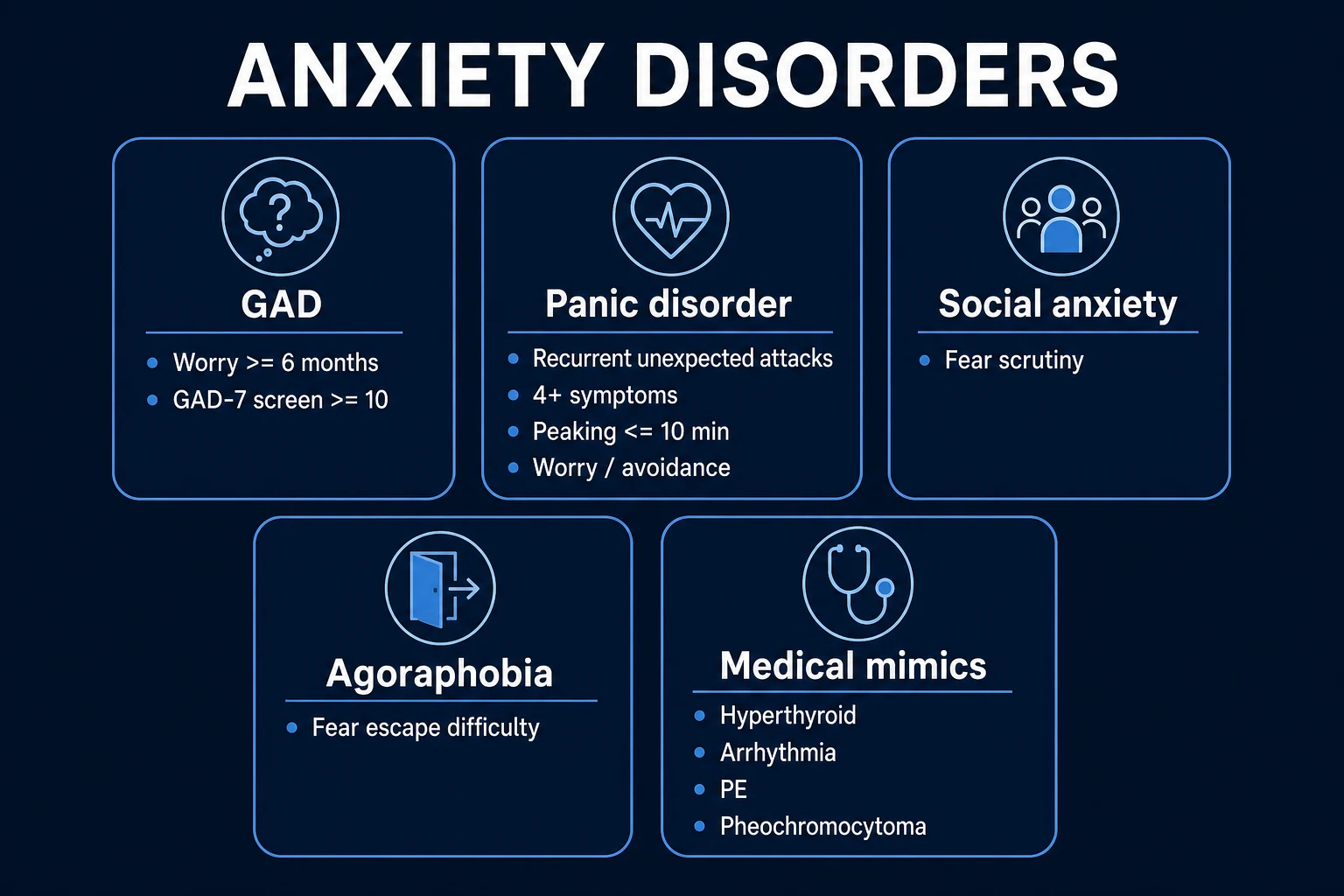
Anxiety disorders are the most prevalent of all mental disorders. A panic attack is an abrupt surge of intense fear peaking within minutes with at least 4 of 13 autonomic/cognitive symptoms; it is a specifier, not a diagnosis. Panic disorder requires recurrent unexpected panic attacks followed by at least 1 month of persistent concern about further attacks, anticipatory anxiety, or maladaptive behaviour change. Generalised anxiety disorder (GAD) is excessive, difficult-to-control worry occurring more days than not for at least 6 months plus at least 3 of 6 somatic/cognitive symptoms (restlessness, fatigue, concentration, irritability, muscle tension, sleep). Lifetime prevalence: panic disorder about 2 to 5%, GAD about 5 to 6%; female 2:1; onset late teens to early 30s. First-line treatment is an SSRI (sertraline, escitalopram) — onset 4 to 6 weeks, full effect 8 to 12 weeks — combined with cognitive-behavioural therapy. Benzodiazepines are for short-term (2 to 4 weeks) rescue only because of dependence. Always exclude cardiac, thyroid and substance causes before diagnosing primary panic.
On this page & tools
Your progress
Saved locally on this device.
Exam tags
Red flags

Overview & Definition
Anxiety is a normal, future-oriented emotion characterised by apprehension, somatic symptoms of tension and vigilance for threat. It becomes a disorder when it is excessive, persistent, out of proportion to the actual threat, and causes clinically significant distress or functional impairment. The anxiety disorders form the single largest cluster of mental disorders in the DSM-5-TR and ICD-11 and are the commonest reason for psychiatric presentation in primary care — surpassing depression in population prevalence.[1][2]
The two disorders that dominate undergraduate and postgraduate exams are: [1]
- Panic disorder — characterised by recurrent, unexpected panic attacks followed by persistent worry about having further attacks, worry about the consequences of attacks (going crazy, having a heart attack), or maladaptive behaviour change (avoidance of unfamiliar situations, agoraphobia). The hallmark is unpredictability — attacks arise "out of the blue" rather than in clearly threatening situations (though situational and cued attacks also occur).[1]
- Generalised anxiety disorder (GAD) — characterised by excessive, difficult-to-control worry about a number of events or activities, occurring more days than not for at least 6 months, accompanied by at least 3 of 6 somatic/cognitive symptoms. The worry in GAD is pervasive, free-floating and chronic, shifting between health, family, finance and work topics — in contrast to the focused, episodic fear of panic disorder.[1]
The clinical task has four parts: (1) recognise the panic attack or the chronic worry; (2) exclude medical, substance-induced and other psychiatric causes (cardiac, thyrotoxicosis, phaeochromocytoma, caffeine, withdrawal, depression) — at least a third of emergency presentations for chest pain that are not cardiac turn out to be panic; (3) deliver first-line treatment (SSRI plus CBT, or NICE stepped care); and (4) prevent the complications of agoraphobic avoidance, depression, substance misuse and suicidality.[1]
Panic attack — a specifier, not a diagnosis
A panic attack is a specifier, not a standalone diagnosis. It can occur in any anxiety disorder, in mood disorders, in psychotic disorders, in substance intoxication or withdrawal, and in medical conditions. The presence of panic attacks signals severity and is associated with greater comorbidity, suicide risk, and poorer function — but it does not, by itself, make the diagnosis of panic disorder. Panic disorder requires unexpected attacks (with no obvious trigger) plus a sustained period (at least 1 month) of at least one of: concern about further attacks, worry about their implications, or maladaptive behaviour change.[1]
[1]Classification
DSM-5-TR groups the anxiety disorders as a distinct chapter, separated from obsessive-compulsive and related disorders, trauma- and stressor-related disorders, and dissociative disorders (which were all subsumed under "Anxiety Disorders" in DSM-IV). ICD-11 follows a similar structure. The classification is by trigger, chronicity and symptom pattern.[1]
Panic disorder
- Recurrent, UNEXPECTED panic attacks (out of the blue, no trigger)
- At least 1 MONTH of persistent concern about further attacks, worry about consequences, or maladaptive behaviour change (avoidance)
- Lifetime prevalence about 2 to 5%; female 2:1; onset late teens to early 30s
- Strongly associated with agoraphobia, depression, suicidality and substance misuse
Generalised anxiety disorder (GAD)
- Excessive, difficult-to-control worry about MULTIPLE topics, more days than not for at least 6 MONTHS
- At least 3 of 6 somatic/cognitive symptoms: restlessness, fatigue, concentration, irritability, muscle tension, sleep disturbance
- Lifetime prevalence about 5 to 6%; female 2:1; onset more gradual than panic, often in 20s to 30s
- Often comorbid with depression — 'anxious depression' is the commonest presentation in primary care
Agoraphobia
- Marked fear or anxiety about at least 2 of 5 situations: public transport, open spaces, enclosed places, standing in line/crowd, being outside the home alone
- Fears that escape might be difficult or help unavailable; persistent for at least 6 months
- DSM-5 de-coupled agoraphobia from panic disorder — now a standalone diagnosis even without panic attacks
- Lifetime prevalence about 1.4%; higher in those with panic disorder (about 1 in 3)
Social anxiety disorder (social phobia)
- Marked, persistent fear of one or more SOCIAL or PERFORMANCE situations involving scrutiny, embarrassment, humiliation
- Triggered by, not avoided only in, social exposure; average onset 13 years; lifetime prevalence about 7 to 12%
- First-line: SSRI (sertraline, paroxetine) and individual CBT with EXPOSURE; beta-blockers (propranolol) for isolated performance anxiety
Specific phobia
- Marked, persistent fear of a SPECIFIC object or situation (animals, blood-injection-injury, situational, natural environment, other)
- Immediate, often discrete trigger; avoidance; onset in childhood; lifetime prevalence about 7 to 9%
- Treatment of choice is EXPOSURE THERAPY — single-session prolonged exposure can cure blood-injection-injury phobia; pharmacotherapy rarely needed
Separation anxiety disorder
- Developmentally inappropriate, excessive fear of separation from major attachment figures, lasting at least 4 weeks in children (any duration in adults)
- New in DSM-5 to allow adult diagnosis; somatic symptoms and school refusal common in children
Selective mutism
- Consistent failure to speak in specific social situations (school) despite speaking in others (home), at least 1 month, interfering with education/communication
- Onset before 5 years; often co-occurs with social anxiety
DSM-5-TR diagnostic criteria — panic attack (reproduced)
An abrupt surge of intense fear or intense discomfort that reaches a peak within minutes, and during which time 4 (or more) of the following 13 symptoms occur (note: a limited-symptom panic attack has fewer than 4): [1]
- Palpitations, pounding heart, or accelerated heart rate
- Sweating
- Trembling or shaking
- Sensations of shortness of breath or smothering
- Feeling of choking
- Chest pain or discomfort
- Nausea or abdominal distress
- Feeling dizzy, unsteady, light-headed, or faint
- Chills or heat sensations
- Paraesthesias (numbness or tingling), usually of the hands, feet or perioral region
- Derealisation (feelings of unreality) or depersonalisation (being detached from oneself)
- Fear of losing control or going crazy
- Fear of dying [1]
DSM-5-TR diagnostic criteria — panic disorder (reproduced)
A. Recurrent, unexpected panic attacks (no obvious trigger; "out of the blue"). B. At least one of the attacks has been followed by 1 month (or more) of one (or more) of the following:
- Persistent concern or worry about having additional attacks
- Worry about the implications or consequences of the attacks (losing control, having a heart attack, going crazy)
- A significant maladaptive behaviour change related to the attacks (avoidance of unfamiliar situations, agoraphobia) C. The disturbance is not attributable to the physiological effects of a substance (caffeine, cocaine, thyroid hormone) or another medical condition (hyperthyroidism, phaeochromocytoma, cardiopulmonary). D. The disturbance is not better explained by another mental disorder (social anxiety — attacks only in social situations; specific phobia — only to the phobic object; OCD — only to obsessions; PTSD — only to trauma cues; separation anxiety — only to separation). [1]
DSM-5-TR diagnostic criteria — generalised anxiety disorder (reproduced)
A. Excessive anxiety and worry occurring more days than not for at least 6 months, about a number of events or activities. B. The individual finds it difficult to control the worry. C. The anxiety and worry are associated with 3 (or more) of the following 6 symptoms (at least some present more days than not for 6 months; only 1 item required in children):
- Restlessness or feeling keyed up or on edge
- Being easily fatigued
- Difficulty concentrating or mind going blank
- Irritability
- Muscle tension
- Sleep disturbance (difficulty falling or staying asleep, restless, unsatisfying sleep) D. Causes clinically significant distress or impairment. E. Not attributable to a substance or medical condition. F. Not better explained by another mental disorder (e.g. worry about panic attacks in panic disorder, negative evaluation in social anxiety, contamination in OCD, weight in anorexia). [1]
Epidemiology & Risk Factors
Anxiety disorders are the most prevalent category of mental disorder, with an estimated 14% lifetime prevalence across the European population and even higher figures globally; they account for the largest share of the cost of brain disorders in Europe.[2] Specific prevalences:[1][11]
| Disorder | Lifetime prevalence | Female-to-male ratio | Mean age of onset |
|---|---|---|---|
| Specific phobia | 7 to 9% | 2:1 to 3:1 | Childhood (7 to 11) |
| Social anxiety disorder | 7 to 12% | 1.5:1 | 13 years (median) |
| GAD | 5 to 6% | 2:1 | Late 20s to 30s |
| Panic disorder | 2 to 5% | 2:1 | Late teens to early 30s (peak 20 to 24) |
| Agoraphobia (DSM-5) | about 1.4% | 2:1 | Variable (often second decade) |
| Separation anxiety | 4 to 5% (adult) | 1.5:1 | Childhood (7 to 9) |
Anxiety disorders — key numbers
Risk factors (high-yield):[1]
| Factor | Effect / mechanism |
|---|---|
| Female sex | 2:1 across all anxiety disorders — hormonal (oestrogen and progesterone modulate GABA and 5-HT), psychological (rumination, threat appraisal), and reporting differences |
| Family history | First-degree relatives of panic disorder probands have a 4 to 8x risk; heritability 30 to 40% (twin studies). GWAS identifies polygenic risk in glutamatergic, serotonergic and neurodevelopmental loci[9] |
| Childhood adversity | Physical, sexual, emotional abuse or neglect — strongest single environmental risk; sensitises the HPA axis and amygdala (epigenetic effects on the NR3C1 glucocorticoid-receptor gene) |
| Behavioural inhibition | A temperament trait in toddlers — about 1 in 5 children; predicts later social anxiety disorder |
| Anxiety sensitivity | Fear of anxiety-related bodily sensations ("the belief that these sensations have harmful consequences") — strongest cognitive risk factor for panic |
| Major life stress | Loss, interpersonal conflict, work stress, financial strain — common precipitant of the first panic attack |
| Medical illness | Asthma, COPD, hyperthyroidism, cardiac arrhythmia, mitral valve prolapse, irritable bowel syndrome — bidirectional risk |
| Substances | Caffeine, cannabis, cocaine, amphetamines, MDMA; alcohol and benzodiazepine withdrawal are potent triggers |
| Smoking | Adolescents who smoke daily have a 4x risk of panic attacks; nicotine dysregulates noradrenergic and respiratory function |
Pathophysiology
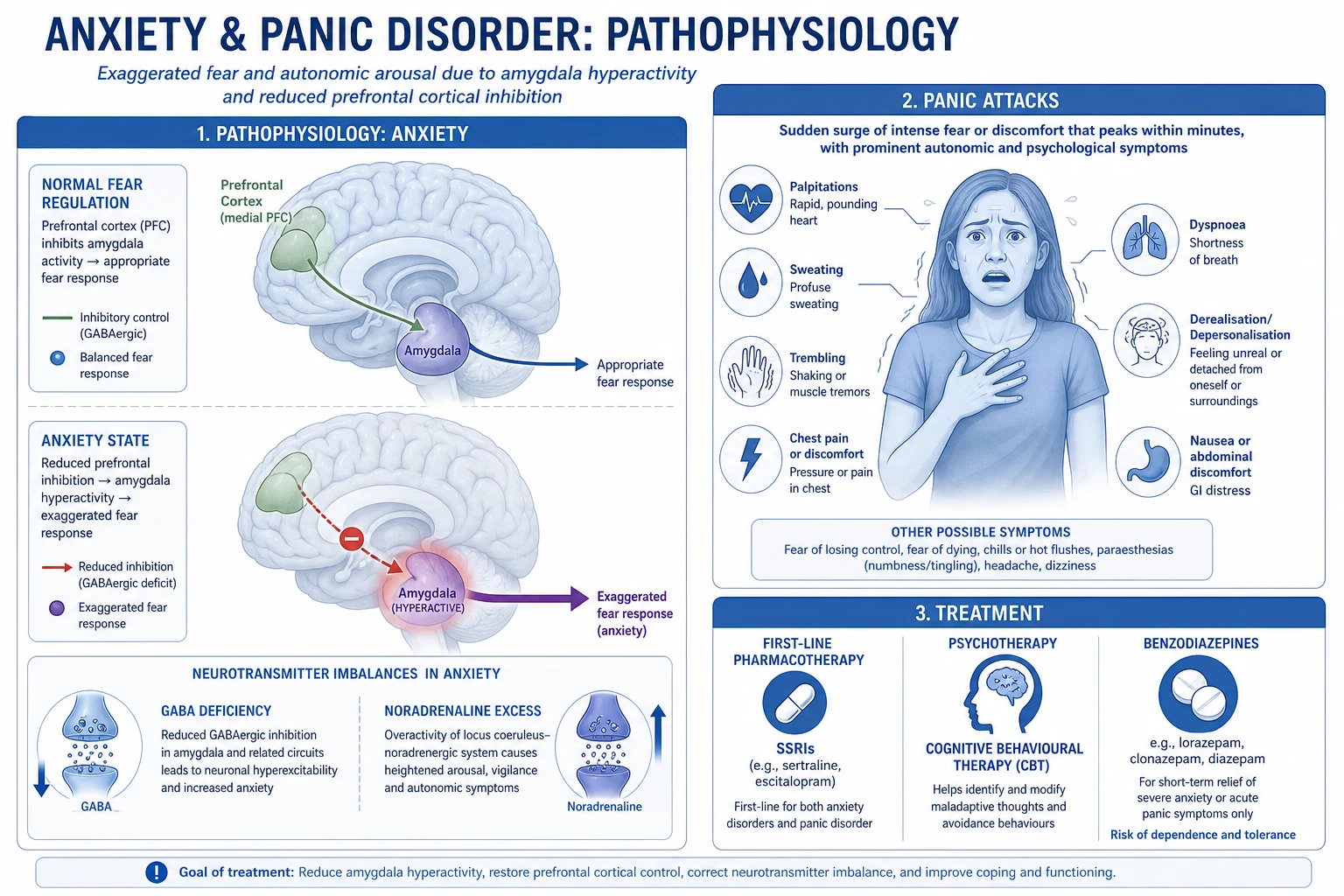
Panic and the anxiety disorders are best understood as a failure of normal threat-detection and regulatory circuits rather than as a single chemical imbalance. The relevant systems are the amygdala–prefrontal fear circuit, the brainstem respiratory chemoreceptors, the noradrenergic (locus coeruleus), serotonergic (dorsal raphe) and GABAergic systems, and the HPA axis.[1][7]
The amygdala–prefrontal fear circuit (the master regulator)
The basolateral amygdala assigns emotional salience to sensory inputs (including interoceptive signals such as a racing heart). In threat, it activates the central nucleus of the amygdala, which projects to the periaqueductal grey (freezing/escape behaviour), the locus coeruleus (noradrenaline release → tachycardia, sweating, tremor), the dorsal motor nucleus of the vagus (gastrointestinal symptoms), and the hypothalamus (HPA axis → cortisol). In health, the medial prefrontal cortex (mPFC) and dorsolateral PFC exert top-down inhibition on the amygdala — telling it that the feared stimulus is not actually dangerous (extinction learning, the basis of exposure therapy).[12]
Functional-imaging meta-analyses (Etkin and Wager 2007) show that across the anxiety disorders there is hyperactivity of the amygdala and insula (threat detection and interoception) and hypoactivity of the dorsal PFC and ventromedial PFC (impaired top-down regulation).[12] Successful treatment with SSRIs or CBT normalises these patterns — objective evidence that treatment is reversing the underlying neural dysregulation rather than only masking symptoms.
Monoamines and GABA
- Noradrenaline (locus coeruleus) — hyperactive in panic. Yohimbine (an α2 antagonist that fires the locus coeruleus) provokes panic in patients but not controls; clonidine (an α2 agonist) dampens it.
- Serotonin (5-HT, dorsal raphe) — complex role, but SSRIs work, suggesting serotonergic deficit impairs the PFC's ability to inhibit the amygdala. The 5-HT1A receptor is down-regulated in panic.
- GABA — the brain's main inhibitory neurotransmitter; deficiency reduces inhibition of the amygdala. Benzodiazepines (positive allosteric modulators of the GABA-A receptor) abort panic within minutes. Mice with knockout of the GABA-A receptor α2 subunit in the amygdala show panic-like behaviour. [1]
The False Suffocation Alarm theory (Donald Klein, 1993)
Klein proposed that panic disorder is a dysfunction of a phylogenetically ancient brain-stem suffocation detector. In predisposed individuals, the detector fires a false alarm — generating a sudden, overwhelming sensation of suffocation with breathlessness, choking and chest tightness, even when blood gases are normal. This explains two findings that classic behavioural theories cannot:[7]
- Separation anxiety in childhood is strongly predictive of later panic disorder — both involve the same phylogenetic alarm system (separation = threat to the air supply in dependent young).
- Respiratory panic provocation — patients with panic disorder (but not healthy controls) reliably panic in response to 5 to 35% CO2 inhalation, sodium lactate infusion, doxapram, bicarbonate and caffeine — all agents that increase brain-stem pH sensing or ventilatory drive. This sensitivity to CO2 is the most reproducible biological marker of panic disorder.[7]
Modern work locates the false-alarm system in the amygdala, bed nucleus of the stria terminalis (BNST) and brain-stem chemoreceptors of the retrotrapezoid nucleus/medulla.[7]
The learning / conditioning model (Bouton, Mineka, Barlow 2001)
A panic attack is initially triggered by an internal bodily sensation (e.g. exercise-induced tachycardia, hypoglycaemia, caffeine). Through interoceptive conditioning, the patient learns to fear these sensations themselves. The amygdala encodes the association, so that a future mild elevation in heart rate triggers a full panic attack. Anticipatory anxiety (worrying about the next attack) and avoidance (of situations, exercise, caffeine, and ultimately of any place where a panic attack would be embarrassing or escape difficult — agoraphobia) then develop through negative reinforcement.[8]
This model explains why exposure therapy works: by repeatedly experiencing the feared bodily sensations (interoceptive exposure — spinning, hyperventilation, breathing through a straw) and the avoided situations without the feared consequence, the patient extinguishes the conditioned fear response. [1]
HPA axis and stress
Chronic anxiety produces sustained HPA activation with elevated cortisol, but the response in panic is acute and phasic (a sharp cortisol spike during the attack, normalising afterwards) — in contrast to the chronically elevated cortisol of major depression. Childhood adversity sensitises the HPA axis through epigenetic methylation of the NR3C1 glucocorticoid-receptor gene, producing a lifelong hyper-reactive stress response. [1]
Genetics
Panic disorder is heritable (30 to 40%) with a 4 to 8-fold risk in first-degree relatives. It is polygenic: candidate-gene studies implicated the COMT Val158Met polymorphism (catecholamine clearance), the 5-HTTLPR short allele (serotonin transporter — though this is contested), and RGS2 (G-protein signalling). Large GWAS (e.g. Army STARRS, Hettema 2020) confirm shared polygenic risk across anxiety disorders, overlapping with depression and neurodevelopmental loci, with no single gene of large effect.[9]
Clinical Presentation
Panic disorder and GAD are clinical diagnoses made from the history. The defining feature of panic disorder is the recurrent, unexpected panic attack (see DSM-5 criteria above — 4 of 13 symptoms, peak within minutes); of GAD, the chronic, uncontrollable worry. [1]
Panic attack — the symptoms the patient reports
The attack is abrupt, peaks within 10 minutes, lasts on average 5 to 20 minutes (rarely up to an hour), and is followed by exhaustion, fear of recurrence and avoidance. The most common symptoms are palpitations, chest tightness or pain, dyspnoea, sweating, trembling, dizziness, derealisation, paraesthesia and a fear of dying or losing control. The patient typically presents to the emergency department believing they are having a heart attack, stroke or suffocating. Nocturnal panic attacks — waking from sleep in a panic, without dream recall — occur in up to two-thirds of patients and should not be confused with post-traumatic nightmares or sleep apnoea.[1]
Panic disorder — beyond the attack
Between attacks, the patient has anticipatory anxiety (persistent worry about the next attack), phobic avoidance (of places or activities associated with attacks — public transport, supermarkets, queues, driving on motorways, exercise, caffeine), and health anxiety (worry that the symptoms reflect undiagnosed cardiac or neurological disease). When avoidance becomes widespread, agoraphobia develops — the patient becomes housebound in severe cases. Up to 1 in 3 patients with panic disorder develop agoraphobia; conversely, about half of patients with agoraphobia also have panic disorder.[11]
GAD — the worry illness
The worry in GAD is pervasive ("free-floating"), uncontrollable and somatic. Patients describe their mind "racing", inability to relax, muscle tension (especially neck, shoulders, jaw), headache, irritability, poor concentration, easy fatigue, and non-restorative sleep with difficulty falling asleep. Somatic symptoms dominate primary-care presentation: chest tightness, dyspepsia, irritable-bowel symptoms, frequent urination, dysmenorrhoea. The course is chronic and fluctuating, often worsening with stress. Patients with GAD are frequent "worried well" attenders in primary care and disproportionately utilise medical services. [1]
Agoraphobia
The DSM-5 criteria require fear or anxiety about at least 2 of 5 situations: using public transport, being in open spaces, being in enclosed places, standing in line or being in a crowd, and being outside of the home alone. The patient fears that escape might be difficult or that help might not be available if panic-like symptoms occur. The fear is out of proportion, persistent (at least 6 months), leads to avoidance or endurance with intense fear, and causes significant distress or impairment.[11]
Atypical presentations (always examine for)
- Cardiac/pulmonary masquerade (most common error): a young or middle-aged patient (often female) repeatedly presenting to ED with chest pain, dyspnoea and palpitations, normal ECG and troponin, discharged with reassurance — diagnosed only after multiple attendances. About a third of patients presenting to cardiology with chest pain and normal coronals have panic disorder.[1]
- Elderly onset: first panic attack over age 45 should trigger aggressive search for an organic cause (cardiac arrhythmia, pulmonary embolism, hyperthyroidism, phaeochromocytoma, hypoglycaemia, drug withdrawal, temporal lobe epilepsy). Late-onset anxiety in the elderly is usually secondary to a medical illness, medication, or depression — primary anxiety disorder rarely first presents in older adults.
- Children and adolescents: school refusal, recurrent abdominal pain, headaches, separation anxiety, sleep disturbance, somatic complaints — anxiety is the default differential for any child with medically unexplained somatic symptoms. Selective mutism and school refusal are often the presenting features of social or separation anxiety.
- Pregnancy and postpartum: pregnancy often improves panic (progesterone is anxiolytic via its neurosteroid metabolite allopregnanolone); the postpartum period is a high-risk window for both relapse of pre-existing anxiety and new-onset panic or GAD (sleep deprivation, hormonal withdrawal, the relentless responsibility of infant care).
- Comorbid depression: the most common comorbidity (40 to 50% lifetime in GAD, 30 to 60% in panic). When anxiety and depression co-occur ("anxious depression"), the prognosis is worse, suicidality higher, and treatment response slower — always screen every anxious patient for depression and suicidality.
- Substance misuse: up to 30% of patients with panic disorder misuse alcohol or benzodiazepines for symptom relief — screen, and treat both.
Differential Diagnosis
The cardinal diagnostic rule in any patient presenting with episodic autonomic symptoms or chronic anxiety is: exclude organic causes first, then decide whether the symptoms are primary anxiety or secondary to another psychiatric disorder. The single most frequent error is labelling a cardiac, endocrine or withdrawal presentation as "just anxiety".[1]
| Differential | Key distinguishing features |
|---|---|
| Cardiac: ACS / angina / arrhythmia | Chest pain that is crushing/pressure, radiating to arm/jaw, exertional, with diaphoresis and nausea; ECG changes (ST elevation/depression, T inversion, AV block); raised troponin. Panic pain is sharp, fleeting, non-radiating, with normal ECG. Always do an ECG on any chest-pain patient, even young women. |
| Cardiac: paroxysmal SVT / AF / WPW / long-QT / hypertrophic cardiomyopathy | Sudden regular or irregular palpitations with rapid heart rate on ECG monitor, structurally abnormal heart, syncope, family history of sudden cardiac death. Capture the episode on Holter monitor. Palpitations in panic are perceived as racing but heart rate is typically 100 to 130, not 200+. |
| Hyperthyroidism / thyrotoxicosis | Weight loss with increased appetite, heat intolerance, fine tremor, lid lag, goitre, suppressed TSH with raised free T4/T3, exophthalmos (Graves'). Check TSH on every anxious patient. |
| Phaeochromocytoma | Triad of episodic headache, sweating and tachycardia with paroxysmal severe hypertension (though 50% are normotensive between attacks); palpitations, anxiety, pallor. Confirm with 24-hour urine fractionated metanephrines or plasma free metanephrines. Rule of 10 (10% familial, 10% bilateral, 10% malignant, 10% extra-adrenal). |
| Hypoglycaemia | Episodes during fasting, exercise or after insulin/oral hypoglycaemic; sweating, tremor, palpitations, confusion; Whipple's triad; low capillary glucose; resolves with carbohydrate. Especially in patients with diabetes on insulin or sulphonylureas, and in insulinoma. |
| Asthma exacerbation | Wheeze, prolonged expiratory phase, poor peak flow; responds to bronchodilator. Dyspnoea in panic is subjective, with normal oxygen saturation and clear lungs. |
| Pulmonary embolism | Sudden dyspnoea, pleuritic chest pain, haemoptysis, hypoxia, risk factors (immobility, recent surgery, malignancy, OCP); raised D-dimer, CTPA filling defect. |
| Temporal lobe epilepsy / complex partial seizures | Episodic intense fear ("ictal fear"), aura, automatisms, postictal confusion, EEG changes, memory gap. Seizures are typically shorter (under 2 minutes) and stereotyped. |
| Vestibular disorders (BPPV, Ménière's, vestibular migraine) | Positional vertigo, nystagmus, hearing loss; dizziness in panic is non-vertiginous ("giddiness", unsteadiness, derealisation). |
| Caffeine, cocaine, amphetamine, MDMA intoxication | History of use, dilated pupils, hypertension, agitation, mydriasis; toxicology screen. Caffeine intake over 250 mg can provoke panic in susceptible individuals. |
| Alcohol / benzodiazepine / opioid withdrawal | Onset 6 to 72 hours after last dose, tremor, autonomic hyperactivity, hallucinations, seizures; history of dependence; CIWA-Ar score elevated. Treat with tapering benzodiazepine (chlordiazepoxide). |
| Medication-induced (thyroxine, theophylline, sympathomimetics in cold remedies, corticosteroids, levodopa, MAOIs with tyramine) | Temporal relationship to drug initiation or dose increase; resolves on withdrawal. |
| Major depressive disorder | Persistent low mood and anhedonia for at least 2 weeks, worse in the morning, biological symptoms (early waking, weight/appetite change, reduced libido). Anxiety frequently coexists with depression. |
| Bipolar depression / mixed state | History of manic or hypomanic episodes; mixed states with racing thoughts and agitation. Avoid antidepressants without mood-stabiliser cover. |
| OCD | Anxiety is triggered by obsessions and relieved by compulsions; insight is often present. |
| PTSD | Anxiety and panic triggered by trauma cues; intrusive memories, nightmares, hypervigilance; clear traumatic antecedent. |
| Social anxiety disorder | Attacks only in social or performance situations where scrutiny is feared — not unexpected. |
| Specific phobia | Fear is circumscribed to one object or situation; never "out of the blue". |
| Illness anxiety disorder (hypochondriasis) | Preoccupation with having a serious illness (in panic disorder the patient fears dying during an attack, not that they have an underlying illness in between). |
| Personality disorder (especially borderline, avoidant, dependent) | Lifelong, pervasive, ego-syntonic patterns; chronic emptiness, self-harm, fear of abandonment. |
Distinguishing features examiners reward: (a) temporal pattern (panic = episodic, GAD = chronic, depression = anhedonia-dominant); (b) precipitant (panic = unexpected, social = scrutiny, phobia = circumscribed object, PTSD = trauma cue, OCD = obsession); (c) atypical features (chest pain, syncope, late onset, weight loss, hypertension, neurological signs all demand investigation); (d) toxicology and drug history; (e) between-episode worry content (heart disease vs scrutiny vs contamination). [1]
Clinical & Bedside Assessment
Anxiety disorders are diagnosed by structured clinical interview (the gold standard is the Structured Clinical Interview for DSM-5, SCID-5, or the Mini International Neuropsychiatric Interview, MINI). The history focuses on the phenomenology of the attacks/worry, triggers, avoidance behaviour, inter-episode function, comorbidity and risk.[1]
History — what to elicit: [1]
- Panic attacks — first one (often a clear precipitant — stress, cannabis, caffeine, illness), frequency, duration, peak symptoms, nocturnal vs diurnal, situational vs unexpected.
- Anticipatory anxiety and avoidance — what situations does the patient now avoid? Use a list: public transport, queues, supermarkets, cinemas, driving, motorways, lifts, being alone, leaving home.
- Worry content (for GAD) — health, family, money, work, future; how much of the day; can they control it?
- Somatic symptoms — chest pain, dyspnoea, palpitations, GI, dizziness; what medical workup has been done?
- Substance use — caffeine (count cups of coffee/tea, energy drinks), alcohol, cannabis, cocaine, amphetamine, current benzodiazepines.
- Medications — thyroid hormone, theophylline, sympathomimetics, steroids, OCP, recent SSRI/SNRI initiation (can worsen anxiety for the first 2 weeks).
- Medical history — asthma, COPD, hyperthyroidism, cardiac disease, mitral valve prolapse, irritable bowel, diabetes (hypoglycaemia).
- Family history — anxiety, depression, bipolar, suicide, cardiac disease, sudden death.
- Developmental/childhood history — separation anxiety, school refusal, behavioural inhibition, abuse, neglect.
- Psychosocial — relationships, work, finances, recent life events.
- Risk assessment — suicidal ideation, plan, intent, means; comorbid depression, hopelessness, substance use (anxiety disorders carry an independent suicide risk — Khan 2002 meta-analysis showed over 4x excess suicide in patients with anxiety disorders in FDA trial datasets).[10]
- Symptom-driven disability — work, social, relationships (often the patient presents via a family member who has noticed withdrawal).
Mental state examination (typical panic disorder, between attacks): [1]
- Appearance/behaviour — may look anxious, restless, hypervigilant; may clutch chest, breathe rapidly, sweat; trembling hands; avoids eye contact if comorbid social anxiety.
- Speech — normal rate and rhythm; may be breathless during the interview.
- Mood — "anxious", "terrified", "fed up".
- Affect — anxious, apprehensive, reactive; mood-congruent.
- Thought — preoccupation with bodily sensations and fear of further attacks; no delusions or thought disorder (their presence suggests depression, psychosis or organic cause).
- Perception — no hallucinations; derealisation/depersonalisation during attacks is normal.
- Cognition — intact (impairment suggests organic or depression).
- Insight — usually good (recognises the attacks as anxiety, may fear a missed medical diagnosis). [1]
Physical examination (to exclude organic causes and reassure): [1]
- Vital signs — pulse, BP, respiratory rate, oxygen saturation, temperature (rule out arrhythmia, hypertension, hypoxia, infection).
- Cardiovascular — murmurs (mitral valve prolapse — mid-systolic click), AF, heart failure.
- Respiratory — wheeze (asthma), consolidation, effusion.
- Neurological — focal signs (space-occupying lesion, stroke), tremor (hyperthyroid), nystagmus (vestibular), gait.
- Endocrine — goitre, exophthalmos, lid lag, warm moist palms, proximal myopathy (thyrotoxicosis); central obesity, striae, bruising (Cushing); cachexia, pigmentation (Addisonian crisis).
- Skin — injection track marks, alcohol stigmata. [1]
Screening instruments: [1]
- GAD-7 — 7-item self-report (score 0 to 21) — the primary-care screening tool. Score 5 mild, 10 moderate, 15 severe. Sensitivity for GAD about 89% at a cut-off of 10; also detects panic, social anxiety and PTSD.
- PHQ (Patient Health Questionnaire) panic disorder module — 5 items; positive screen warrants full assessment.
- PDSS (Panic Disorder Severity Scale) — 7 items rated 0 to 4 (total 0 to 28); used to monitor panic severity and treatment response; remission usually defined as PDSS below 5.
- HAM-A (Hamilton Anxiety Rating Scale) — 14-item clinician-rated scale, used in trials.
- PSWQ (Penn State Worry Questionnaire) — 16-item scale specific to pathological worry in GAD.
- Agoraphobic Cognitions Questionnaire (ACQ) and Mobility Inventory (MI) — for avoidance and catastrophic cognitions. [1]
Investigations
There is no laboratory test for panic disorder or GAD — they are clinical diagnoses. Investigations serve three purposes: (1) exclude organic mimics in any first episode or atypical presentation, (2) establish a baseline before drug treatment, and (3) monitor drug safety.[1][5]
Baseline (any new presentation with panic-like symptoms): [1]
- 12-lead ECG — mandatory in any patient with chest pain, palpitations, syncope, dyspnoea, or first presentation over age 40. Look for ischaemia (ACS), arrhythmia (AF, SVT, long-QT, WPW, Brugada pattern), LVH (HOCM), voltage criteria for cardiomyopathy. About 25 to 60% of ED chest-pain attendees with normal troponins have panic disorder — but this is a diagnosis of exclusion after the ECG and troponin are normal.
- Troponin (high-sensitivity) — if chest pain; rule out ACS.
- Full blood count — anaemia (tachycardia), infection, alcohol macrocytosis.
- Fasting glucose / HbA1c — hypoglycaemia, diabetes.
- Thyroid function (TSH, free T4) — thyrotoxicosis mimics panic and is a mandatory test in any new anxiety presentation.
- U&E, creatinine, LFTs — baseline before SSRI/SNRI; exclude electrolyte disturbance (hypokalaemia, hypomagnesaemia causing palpitations) and hepatic disease affecting drug choice.
- Calcium — hypercalcaemia can present with anxiety and depression.
- Urinalysis and pregnancy test (in women of childbearing age) — pregnancy, UTI.
- Drug screen — urine toxicology for cannabis, cocaine, amphetamines, benzodiazepines, opioids; alcohol history with AUDIT-C.
- Chest X-ray — if respiratory symptoms, hypoxia, smoking history.
- D-dimer and CTPA / VQ scan — if PE suspected (Wells score).
- 24-hour Holter monitor — if paroxysmal palpitations not captured on ECG.
- 24-hour urine fractionated metanephrines — if episodic headache, sweating, hypertension (phaeo).
- CT / MRI brain and EEG — if focal neurology, new-onset over 50, suspected seizure, or atypical features. [1]
Baseline before SSRI/SNRI: [1]
- BP, weight, height, BMI
- U&E, LFT (rare hyponatraemia with SIADH; LFT derangement)
- ECG before tricyclic or in cardiac history [1]
Drug levels / monitoring — not needed for SSRIs/SNRIs. If clomipramine used, monitor level and ECG (QT). For benzodiazepines, no routine monitoring. [1]
GAD-7 — reproduced
The GAD-7 is the standard 7-item self-report measure for anxiety in primary care. Over the last 2 weeks, how often have you been bothered by: [1]
- Feeling nervous, anxious, or on edge
- Not being able to stop or control worrying
- Worrying too much about different things
- Trouble relaxing
- Being so restless that it is hard to sit still
- Becoming easily annoyed or irritable
- Feeling afraid as if something awful might happen [1]
Each item is scored 0 (not at all), 1 (several days), 2 (more than half the days), 3 (nearly every day). Total range 0 to 21. Cut-offs: 5 to 9 mild, 10 to 14 moderate, 15 to 21 severe. A score of 10 or more is the standard cut-off for further assessment and treatment; the tool also screens for panic, social anxiety and PTSD. [1]
Management — Resuscitation
Panic disorder is rarely a physiological emergency, but a panic attack in the ED, on a ward, or in clinic can be terrifying for the patient and challenging for staff. The priorities are safety, reassurance, exclusion of an organic cause, and rapid symptomatic relief.[1][5]
Acute management of a panic attack in the ED or ward: [1]
- Move the patient to a quiet, low-stimulus area with a calm, confident member of staff.
- Assess airway, breathing, circulation, oxygen saturation, glucose, ECG — first episode, chest pain, abnormal vitals, or age over 40 → rule out ACS, PE, arrhythmia, hypoglycaemia.
- Reassure — explain that the symptoms are due to a panic attack, that they will pass within minutes, that the patient is safe and not having a heart attack.
- Breathing retraining — only if hyperventilation is clearly present and the workup is normal: encourage slow abdominal breathing (in through the nose for 4 seconds, out through the mouth for 6 to 8 seconds). Avoid paper-bag rebreathing — it can cause dangerous hypoxia in patients with undiagnosed asthma, PE or cardiac disease.
- Pharmacological rescue — if symptoms are severe and persistent and the diagnosis is established, a short-acting benzodiazepine can abort the attack: oral diazepam 2 to 5 mg, oral lorazepam 0.5 to 1 mg, or oral alprazolam 0.25 to 0.5 mg. Reserve for severe distress; emphasise that this is a one-off, not a regular treatment.
- Refer for definitive assessment and treatment — discharge with clear safety-net advice, a GAD-7, and an appointment with the GP or IAPT / NHS Talking Therapies within 2 weeks. Do not discharge with only a benzodiazepine prescription. [1]
Safety and risk: [1]
- Suicide risk — every anxious patient should be assessed for suicidal ideation. Anxiety disorders carry an independent suicide risk (Khan 2002 meta-analysis of FDA datasets showed an over 4-fold excess of suicide in patients with anxiety disorders compared with placebo).[10] Comorbid depression, hopelessness, substance misuse and a recent loss multiply the risk.
- Mental Capacity Act / Mental Health Act — capacity is usually preserved in anxiety; compulsory admission is rarely needed. If severe self-neglect, suicidality, or comorbid severe depression with risk, admit.
Management — Definitive & Stepwise
Treatment is delivered through the NICE stepped-care model (UK), which matches the intensity of treatment to the severity of the disorder. The two evidence-based pillars are cognitive-behavioural therapy (CBT) and pharmacotherapy (SSRI or SNRI); combination therapy is superior to either alone in moderate-to-severe cases.[1][4][5]
NICE stepped care (CG113)
| Step | Intervention | Population |
|---|---|---|
| 1 | Identification, assessment, psychoeducation, signposting | All patients in primary care |
| 2 | Low-intensity psychological interventions: guided self-help based on CBT; non-facilitated self-help; psychoeducational groups | GAD with mild functional impairment; mild panic without agoraphobia |
| 3 | High-intensity CBT OR drug treatment (SSRI/SNRI), or both | GAD with marked functional impairment; panic disorder; no response to Step 2 |
| 4 | Highly specialist mental health services (CMHT); combinations; pharmacotherapy review; consideration of comorbidity; rare drug options | Treatment-refractory, complex, severe with marked impairment |
Cognitive-behavioural therapy (CBT) — first-line psychological therapy
CBT for panic disorder is built on three components:[4]
- Psychoeducation — explain the cognitive model: bodily sensations are misinterpreted catastrophically (palpitations → "I'm having a heart attack"; dyspnoea → "I'm suffocating"; dizziness → "I'm going to faint"). This catastrophic misinterpretation amplifies the sensation, completing a vicious cycle.
- Cognitive restructuring — challenge the catastrophic cognitions, examine the evidence, generate alternative interpretations.
- Exposure — both interoceptive exposure (deliberately inducing the feared bodily sensations — spinning in a chair, hyperventilating for 60 seconds, breathing through a straw — and staying with the sensations without escaping) and in-vivo exposure (gradually returning to avoided situations using a hierarchy). [1]
Efficacy: Carpenter 2018 meta-analysis of CBT for anxiety disorders found a moderate-to-large effect size (Hedges' g about 0.73) versus waitlist, sustained at follow-up; response rates 60 to 80%.[4] CBT prevents relapse after discontinuation — a major advantage over drugs. NICE recommends 12 to 15 weekly sessions of high-intensity CBT for panic disorder and GAD.
Pharmacotherapy — first-line drug treatment
Selective serotonin reuptake inhibitors (SSRIs) are first-line for panic disorder, GAD and social anxiety. They are effective, non-sedating, non-addictive and safe in overdose.[3][5][6]
| Drug | Starting dose | Target dose (panic / GAD) | Maximum | Notes |
|---|---|---|---|---|
| Sertraline | 25 to 50 mg OD | 100 to 200 mg OD | 200 mg OD | NICE first-line; best evidence; fewest interactions; safe in cardiac disease |
| Escitalopram | 5 to 10 mg OD | 10 to 20 mg OD | 20 mg OD | Cleanest profile; QT prolongation at higher doses |
| Citalopram | 10 mg OD | 20 to 40 mg OD | 40 mg OD (20 mg over 65) | QT prolongation — dose-limiting |
| Paroxetine | 10 mg OD | 20 to 40 mg OD | 60 mg OD | Effective but worst discontinuation syndrome; avoid in young adults (suicidality signal) |
| Fluoxetine | 10 to 20 mg OD | 20 to 60 mg OD | 60 mg OD | Long half-life — least discontinuation syndrome; activating |
| Fluvoxamine | 50 mg ON | 100 to 300 mg OD | 300 mg OD | Useful in OCD and panic; many interactions |
Critical points about SSRIs in panic disorder: [1]
- Start LOW and titrate slowly — patients with panic disorder are highly sensitive to the activating effect of SSRIs; the first 1 to 2 weeks can paradoxically increase anxiety, jitteriness and insomnia ("jitteriness syndrome"). Start at half the depression dose (e.g. sertraline 25 mg) and titrate weekly.
- Onset 4 to 6 weeks; full effect 8 to 12 weeks — counsel the patient; do not stop early.
- Continue for at least 12 months after remission to prevent relapse (relapse rates of 30 to 50% on early discontinuation).
- Withdraw gradually over at least 4 weeks (especially paroxetine, venlafaxine) to avoid discontinuation syndrome — flu-like symptoms, dizziness, nausea, "brain zaps", insomnia, irritability, anxiety rebound. [1]
SNRIs — alternative first-line
- Venlafaxine XR 75 to 225 mg OD — NICE-recommended alternative first-line for GAD; effective for both anxiety and depression. Watch for hypertension at higher doses.
- Duloxetine 30 to 120 mg OD — also effective; useful if comorbid chronic pain. [1]
Pregabalin — second-line for GAD
Pregabalin 150 to 600 mg/day in divided doses is licensed for GAD in the UK and recommended by NICE as an alternative when SSRI/SNRI is ineffective or not tolerated. It binds the α2δ subunit of voltage-gated calcium channels in the amygdala, reducing excessive glutamate release. Onset is rapid (1 week); not addictive in the classic sense but misuse is recognised, and abrupt withdrawal causes a discontinuation syndrome — taper. [1]
Other agents
- Buspirone 5 to 30 mg TDS — a 5-HT1A partial agonist, non-sedating and non-addictive, effective for GAD (not panic). Slow onset (2 to 4 weeks); little evidence beyond GAD; rarely used first-line now.
- Tricyclic antidepressants (clomipramine, imipramine) — effective but poor tolerability (anticholinergic, cardiac, overdose toxicity); reserve for treatment-resistant cases. Clomipramine 75 to 250 mg OD is effective for panic and OCD.
- Mirtazapine 15 to 45 mg ON — useful when insomnia and poor appetite prominent.
- Beta-blockers (propranolol 10 to 40 mg TDS PRN) — block peripheral adrenergic symptoms (palpitations, tremor); useful for isolated performance anxiety (musicians, public speakers) but not core treatment for panic or GAD. Avoid in asthma.
- Benzodiazepines — see below — short-term only. [1]
Benzodiazepines — strictly short-term
Benzodiazepines are positive allosteric modulators of the GABA-A receptor. They rapidly abolish panic and anxiety (within 30 to 60 minutes) but carry serious risks of tolerance, dependence and withdrawal — dependence can develop within 4 to 6 weeks of regular use.[5]
| Drug | Onset | Half-life | Equivalent dose |
|---|---|---|---|
| Diazepam | 30 to 60 min | 20 to 100 h | 5 mg |
| Lorazepam | 30 min | 10 to 20 h | 1 mg |
| Alprazolam | 30 min | 6 to 12 h | 0.5 mg |
| Clonazepam | 30 to 60 min | 18 to 50 h | 0.25 mg |
| Chlordiazepoxide | 1 to 4 h | 5 to 30 h | 10 mg |
Indications (NICE / WFSBP): short-term (2 to 4 weeks maximum) rescue for severe distressing anxiety that has not responded to non-pharmacological measures, while waiting for an SSRI to work, or for acute crisis. Avoid in chronic use, in patients with a history of substance misuse, in elderly (falls, confusion), in pregnancy (neonatal withdrawal syndrome, floppy baby syndrome), and in those with sleep apnoea. [1]
Benzodiazepine withdrawal syndrome: anxiety, insomnia, tremor, sweating, palpitations, perceptual disturbance, seizures (especially with abrupt cessation of high doses); can be life-threatening. Always taper slowly (e.g. diazepam 2 mg every 1 to 2 weeks) over weeks to months, switching to a long-acting agent (diazepam) first. The CIWA-Ar scale (Clinical Institute Withdrawal Assessment – Alcohol revised) and benzodiazepine-specific protocols guide withdrawal. [1]
Combination therapy and treatment resistance
For patients who do not respond to first-line CBT plus SSRI: [1]
- Optimise SSRI dose (to maximum tolerated) and duration (12 weeks at full dose before declaring failure).
- Switch SSRI (e.g. sertraline → escitalopram) or to SNRI (venlafaxine).
- Combine high-intensity CBT with the SSRI if not already done.
- Add pregabalin or switch to duloxetine.
- Augment with low-dose atypical antipsychotic (quetiapine 50 to 150 mg OD; aripiprazole 2 to 5 mg OD) — evidence is modest; use only under specialist supervision.
- Refer to specialist services (Step 4) for refractory cases. [1]
Lifestyle and self-help
- Reduce caffeine to under 200 mg/day (about 2 cups of coffee); high-dose caffeine reliably provokes panic in susceptible individuals.
- Stop cannabis and stimulant use — cannabis and cocaine can precipitate and worsen panic.
- Regular aerobic exercise (30 minutes, 5 times per week) — comparable efficacy to SSRIs in mild-moderate anxiety.
- Sleep hygiene — regular sleep–wake cycle, no screens in the bedroom, no caffeine after midday.
- Alcohol reduction — alcohol is an anxiolytic acutely but causes rebound anxiety, withdrawal and dependence; "self-medication" is a major pathway to alcohol use disorder.
- Mindfulness-based stress reduction (MBSR) and applied relaxation — modest evidence as adjuncts. [1]
Specific Subtypes & Scenarios
- Panic disorder — recurrent unexpected attacks plus anticipatory anxiety and avoidance. Treat with high-intensity CBT (interoceptive and in-vivo exposure) plus an SSRI; benzodiazepines for short-term rescue only. Agoraphobia develops in up to 1 in 3; treat avoidance with graded exposure.
- Generalised anxiety disorder (GAD) — chronic pervasive worry for over 6 months. First-line: SSRI (sertraline, escitalopram) and individual CBT-focused on worry (worry time, problem-solving, cognitive restructuring). Pregabalin and venlafaxine are effective alternatives. Combination of CBT plus medication is superior for severe GAD. Course is chronic; aim for sustained remission with maintenance treatment for at least 12 months.
- Agoraphobia — graded exposure therapy is the core treatment; an SSRI helps comorbid panic. Avoidance reduces exposure to disconfirming evidence, so the therapist must actively structure exposure (walking to the supermarket alone, riding a bus for 30 minutes, sitting in a cinema).
- Social anxiety disorder (CG159) — CBT with exposure (Clark and Wells model — focus on self-focused attention, safety behaviours, video feedback) and an SSRI (sertraline, paroxetine, escitalopram) are first-line and equally effective. Beta-blockers (propranolol 10 to 40 mg PRN) are useful for isolated performance anxiety (musicians, public speaking) but not for generalised social anxiety. Phenelzine (MAOI) is effective but reserved for treatment resistance due to dietary restrictions.
- Specific phobia — exposure therapy is the treatment of choice and is curative; single-session prolonged exposure for blood-injection-injury phobia can achieve remission in 1 session. Pharmacotherapy rarely needed. For blood-injection-injury phobia, teach applied tension (to prevent the vasovagal faint that distinguishes this subtype).
- Separation anxiety disorder — child-focused CBT, family work; SSRIs in severe cases. School refusal is a common presentation — early intervention is critical.
- Selective mutism — behavioural intervention (stimulus fading, shaping); SSRIs in older children with comorbid anxiety.
- Anxiety in medical illness — patients with COPD, asthma, cardiac disease, cancer or chronic pain have high rates of anxiety; treat the anxiety with an SSRI and CBT, which improves both quality of life and the medical outcome. Statin and beta-blocker myths: statins and beta-blockers do not cause anxiety. [1]
Complications & Pitfalls
Disease-related complications
- Agoraphobia — without treatment, 30% of patients with panic disorder develop disabling avoidance; some become housebound.
- Major depression — develops in 30 to 50% of patients with panic disorder; suicide risk then rises sharply. Always screen every anxious patient for depression.
- Substance use disorders — 20 to 30% of patients with panic disorder develop alcohol or benzodiazepine misuse through self-medication.
- Suicide — anxiety disorders carry an independent suicide risk (Khan 2002 meta-analysis of FDA datasets: over 4-fold excess suicide in patients with anxiety disorders compared with placebo).[10] Risk is amplified by comorbid depression, hopelessness, substance misuse and recent loss.
- Somatic complications of chronic anxiety — hypertension (intermittent), irritable bowel syndrome, tension headache, chronic pain, insomnia.
- Healthcare overutilisation — repeated ED attendances, cardiac and gastroenterology referrals, unnecessary investigations; panic disorder is among the most costly medical conditions in primary care because of this.
Drug-related complications
- SSRI adverse effects — initial jitteriness and worsening anxiety (first 1 to 2 weeks), gastrointestinal upset (nausea, diarrhoea), headache, insomnia or sedation, sexual dysfunction (30 to 50%: anorgasmia, reduced libido, delayed ejaculation), hyponatraemia (SIADH) especially in the elderly, GI bleeding (with NSAIDs/warfarin), QT prolongation (citalopram, escitalopram), serotonin syndrome (with triptans, tramadol, MAOIs, linezolid, St John's wort — agitation, clonus, hyperreflexia, hyperthermia, autonomic instability). Black-box warning: a small increase in suicidal ideation in adolescents and young adults under 25 in the first weeks of treatment — counsel and review weekly.
- Benzodiazepine adverse effects — sedation, cognitive impairment, falls (especially in elderly — avoid), tolerance and dependence (within 4 to 6 weeks of regular use), disinhibition (occasionally paradoxical agitation), respiratory depression in overdose (especially with opioids or alcohol — the lethal combination). Pregnancy: neonatal benzodiazepine withdrawal syndrome (floppy baby syndrome, hypotonia, poor suck, respiratory depression) and preterm delivery.
- Pregabalin — sedation, dizziness, weight gain, peripheral oedema; misuse and withdrawal syndrome.
- Beta-blockers — fatigue, cold extremities, bradycardia, bronchospasm (avoid in asthma), masking of hypoglycaemia in diabetics. [1]
Pitfalls (common errors)
- Labelling a cardiac, endocrine or withdrawal presentation as "just anxiety" — always do an ECG, TSH, glucose, troponin if chest pain; toxicology; rule out withdrawal. A young woman with repeated chest pain has been killed by missed MI; a thyrotoxic patient has been mismanaged as panic.
- Using depression-dose SSRI — start at half the depression dose and titrate; otherwise jitteriness worsens panic and the patient abandons treatment.
- Stopping the SSRI at 4 to 6 weeks when the patient feels better — the early improvement is often placebo or natural fluctuation; the true therapeutic effect comes at 8 to 12 weeks.
- Prescribing benzodiazepines beyond 4 weeks — tolerance and dependence develop insidiously; the patient returns requesting more; tapering becomes a major problem. NICE is explicit: max 2 to 4 weeks.
- Paper-bag rebreathing for hyperventilation — can cause dangerous hypoxia in patients with undiagnosed asthma, PE or cardiac disease; avoid.
- Missing comorbid depression, bipolar disorder, substance use or suicidality — every anxious patient needs a full psychiatric history; missing bipolar II and giving an SSRI without mood-stabiliser cover can precipitate mania.
- Diagnosing panic disorder on the basis of one attack — panic disorder requires recurrent attacks plus at least 1 month of anticipatory anxiety or behaviour change.
- Confusing a panic attack with the diagnosis of panic disorder — a panic attack is a specifier; it can occur in any disorder. [1]
Prognosis & Disposition
Panic disorder and GAD are chronic, fluctuating disorders. Untreated, the course is recurrent over years with episodes of worsening precipitated by stress, substance use and intercurrent illness. With appropriate treatment (SSRI plus CBT), 60 to 80% of patients achieve a sustained response and 30 to 50% achieve full remission; relapse rates after stopping treatment are 30 to 50% within 2 years, lower with maintenance CBT and continued SSRI.[1][4]
Good-prognostic factors: acute onset, clear precipitant, mild agoraphobic avoidance, no comorbidity, good insight, good social support, early evidence-based treatment, good therapeutic alliance. [1]
Poor-prognostic factors: severe agoraphobia (housebound), comorbid depression (especially with melancholic features), substance misuse, personality disorder, severe childhood adversity, long duration of untreated illness, poor adherence, ongoing life stress. [1]
Mortality: anxiety disorders reduce life expectancy by about 3 to 5 years on average, attributable to suicide, cardiovascular disease (chronic sympathetic activation), and substance misuse. Effective treatment reduces cardiovascular events and suicide.[10]
Disposition: most care is delivered in primary care and IAPT / NHS Talking Therapies (Steps 1 to 3). Refer to specialist mental health services (CMHT, Step 4) for treatment-refractory illness, diagnostic uncertainty, severe agoraphobia or houseboundness, complex comorbidity (substance, personality, severe depression), suicidality, or need for psychological intervention beyond high-intensity CBT. Admission is rarely required — reserve for crisis, suicidality with plan and intent, severe self-neglect, or comorbid severe depression or psychosis. [1]
Special Populations
- Pregnancy and breastfeeding — anxiety in pregnancy is common and undertreated; untreated maternal anxiety predicts preterm delivery, low birth weight, and postnatal anxiety and depression in the mother, and adverse neurodevelopmental outcomes in the child. CBT is preferred first-line. If medication is needed, sertraline is the SSRI of choice in pregnancy and breastfeeding (lowest milk transfer, largest safety database). Avoid benzodiazepines (neonatal withdrawal / floppy baby syndrome, preterm delivery). Avoid paroxetine in the first trimester (small absolute increase in cardiac defects). The postpartum period is a high-risk window for relapse and new-onset anxiety — monitor closely, restart SSRI if previously effective.
- Children and adolescents — present with somatic complaints (recurrent abdominal pain, headache), school refusal, separation anxiety, sleep disturbance. First-line is CBT (family-informed) and lifestyle; SSRIs (especially fluoxetine, the only SSRI licensed under 8 years in the UK, and sertraline) are second-line and used cautiously (start low; weekly review for the black-box suicidality signal in under-25s). Avoid benzodiazepines (paradoxical agitation). Parental involvement and school liaison are essential.
- Elderly — first presentation of anxiety over age 45 should prompt aggressive search for an organic cause (cardiac, thyroid, phaeo, drugs, depression, early dementia). Chronic anxiety in the elderly often coexists with depression, cognitive impairment, and physical illness. SSRIs are still first-line but start at half the adult dose; avoid benzodiazepines (falls, hip fracture, cognitive impairment, delirium — Beers criteria). Watch for SSRI-induced hyponatraemia and GI bleeding (with NSAIDs).
- Comorbid cardiac disease — anxiety is common after MI (15 to 20%) and in heart failure; it worsens prognosis. Sertraline is the SSRI of choice (best cardiac safety data, from SADHART). Avoid TCAs (arrhythmogenic, QT prolongation). Avoid benzodiazepines in severe heart failure (respiratory depression). CBT improves both anxiety and quality of life in cardiac patients.
- Comorbid asthma / COPD — anxiety worsens dyspnoea and causes frequent exacerbations and ED attendance; treat anxiety with SSRI and CBT. Avoid beta-blockers (bronchospasm); avoid benzodiazepines in severe COPD (CO2 retention, respiratory depression).
- Substance misuse — bidirectional relationship: anxiety drives self-medication, and substance use (cannabis, cocaine, alcohol withdrawal) precipitates panic. Treat both concurrently; avoid benzodiazepines in active substance misuse; CBT, SSRI and addiction services.
- Cultural factors — anxiety presents differently across cultures: koro (genital retraction anxiety, Southeast Asia), taijin kyofusho (a culture-bound social anxiety in Japan centred on offending others rather than embarrassing self), ataque de nervios (Hispanic — shouting, crying, trembling, dissociation, often in response to family stress, similar to panic attack but with cultural meaning). Cultural formulation improves engagement. [1]
Evidence, Guidelines & Regional Differences
Landmark trials and meta-analyses: [1]
- Cipriani 2018 (Lancet network meta-analysis) — 21 antidepressants in major depression; all SSRIs were more efficacious than placebo, with escitalopram and sertraline having the best combination of efficacy and tolerability. Although focused on depression, the same drugs at the same doses are first-line for anxiety disorders.[3]
- Carpenter 2018 (Depress Anxiety meta-analysis) — CBT versus psychological placebo for anxiety disorders; CBT was significantly more effective (g about 0.73), with sustained benefit and superiority to waitlist; effect comparable to pharmacotherapy.[4]
- Guaiana 2023 (Cochrane NMA, pharmacological treatments for panic disorder) — SSRIs, SNRIs and TCAs all more effective than placebo; SSRIs had the best balance of efficacy and acceptability; benzodiazepines effective short-term but with dependence.[6]
- WFSBP 2023 guidelines (Bandelow) — recommended SSRI or SNRI first-line, CBT or combination; benzodiazepines only as short-term adjunct; pregabalin for GAD.[5]
- Etkin and Wager 2007 (Am J Psychiatry meta-analysis) — across anxiety disorders, hyperactive amygdala and insula, hypoactive dorsal PFC, normalising with successful treatment.[12]
- Bouton, Mineka, Barlow 2001 (Psychol Rev) — the modern learning-theory model of panic; basis of interoceptive exposure.[8]
- Khan 2002 (J Affect Disord) — FDA-data meta-analysis establishing the independent suicide risk of anxiety disorders.[10]
- Hettema 2020 (Am J Med Genet B) — GWAS of shared liability to anxiety disorders confirming polygenic, not single-gene inheritance.[9]
Guidelines: [1]
- NICE CG113 (2011, updated 2020) — Generalised anxiety disorder and panic disorder (with or without agoraphobia) in adults. Stepped-care model; SSRI/SNRI + high-intensity CBT; benzodiazepines max 2 to 4 weeks; self-help at Step 2.
- NICE CG159 (2013) — Social anxiety disorder; CBT (Clark and Wells) and SSRI first-line.
- WFSBP 2023 (Bandelow) — international; SSRI/SNRI first-line, pregabalin for GAD, CBT.
- APA (American Psychiatric Association) — DSM-5-TR diagnostic criteria and practice guidance; SSRI first-line.
- Canadian CANMAT — SSRI first-line for GAD, panic, social anxiety.
- NICE NHS Talking Therapies — rebranded IAPT; provides stepped-care psychological therapy in England. [1]
Regional differences: [1]
- UK (NICE) — stepped care with psychological therapy accessed directly via NHS Talking Therapies (no GP referral needed); benzodiazepine prescribing strictly limited to short-term; sertraline the formulary first SSRI; emphasis on recovery-focused outcomes (PHQ-9 and GAD-7 measured at every session).
- USA (APA) — biopsychosocial model; SSRI first-line; benzodiazepines more liberally prescribed than in UK; FDA black-box warning on antidepressants and suicidality in under-25s.
- India — high prevalence of anxiety masked by somatic presentation ("weakness", "gas", "palpitations"); SSRIs affordable and accessible (sertraline, escitalopram); benzodiazepine overprescription remains a problem (clonazepam, alprazolam available OTC in some states); NEET-PG and INICET exam questions focus on DSM-5 criteria, SSRI first-line, benzodiazepine short-term, lactate/CO2 challenge, false suffocation alarm theory, GAD-7 and Hamilton scales.
- Europe (WFSBP) — close to UK approach; emphasis on SSRI/SNRI and CBT. [1]
Exam Pearls
[1]Panic attack — the 13 DSM-5 symptoms (STUDENTS FEAR CHEST PAIN)
STUDENTS
Diaphoresis, often profuse
Shaking, especially hands
Light-headed, faint
World feels unreal; self feels detached
Smothering, choking sensation
GI upset, urge to defecate
Perioral or digital numbness from hyperventilation-induced alkalosis
Hot or cold flushes
Panic attack — fear cognition
FEAR
Patient believes they are having a heart attack, stroke or suffocating
Palpitations, pounding chest, tachycardia
Going crazy, embarrassing self, screaming in public
Chest pain or discomfort — distinguish from cardiac pain
GAD — the 6 somatic/cognitive symptoms
WORRYS
Feeling keyed up, on edge, unable to relax
Easily tired from chronic tension
Mind goes blank, distractible
Short-tempered, snappy
Tight neck, shoulders, jaw; tension headaches
Difficulty falling asleep, restless, non-restorative
Medical causes of panic-like symptoms — exclude first
PANIC MD
Triad of headache, sweating, tachycardia; episodic hypertension; 24-hour urine metanephrines
Capture on ECG or Holter; structural echo
Postictal confusion, EEG, positional vertigo
Tox screen; history; pupil exam
ECG, troponin; radiating crushing pain
Temporal link; resolves on withdrawal
Onset 6 to 72 h after cessation; CIWA-Ar; tremor, autonomic hyperactivity
Exam application bank (NEET-PG / INICET)
One-line answer
Anxiety disorders are the most prevalent of all mental disorders. A panic attack is an abrupt surge of intense fear peaking within minutes with at least 4 of 13 autonomic/cognitive symptoms; it is a specifier, not a diagnosis. Panic disorder requires recurrent unexpected panic attacks followed by at least 1 month of persistent concern about further attacks, anticipatory anxiety, or maladaptive behaviour change. Generalised anxiety disorder (GAD) is excessive, difficult-to-control worry occurring more days than not for at least 6 months plus at least 3 of 6 somatic/cognitive symptoms (restlessness, fatigue, concentration, irritability, muscle tension, sleep). Lifetime prevalence: panic disorder about 2 to 5%, GAD about 5 to 6%; female 2:1; onset late teens to early 30s. First-line treatment is an SSRI (sertraline, escitalopram) — onset 4 to 6 weeks, full effect 8 to 12 weeks — combined
Worked stems (answer without another resource)
Stem 1 — Classic presentation. Map symptoms to mechanism; name the first investigation and first treatment step with dose/route if drug therapy is standard. [1]
Stem 2 — Unstable / complicated. List red flags that force immediate resuscitation, theatre, ICU, antidote, or reperfusion — and what you do in the first 15 minutes. [1]
Stem 3 — Atypical group. Elderly, pregnancy, child, or immunocompromised: how presentation and thresholds change. [1]
Stem 4 — Differential trap. Name the three closest mimics and one discriminator for each. [1]
Stem 5 — Disposition. Who goes home with safety-netting, who is admitted, who needs HDU/ICU/theatre, and what follow-up is mandatory. [1]
Rapid viva checklist
- Definition + classification
- Pathophysiology chain
- Bedside signs / criteria
- Score with exact components (if any)
- Emergency bundle
- Definitive therapy with doses
- Complications of disease and of treatment
- Special populations
- Guideline/trial name if classic
- Three exam traps
Coverage self-check
If you cannot answer any stem above from this page alone, re-read the matching section — the page is intended to be self-sufficient for final-prof and NEET-PG/INICET questions on Anxiety and Panic Disorder.
[1]References
- [1]Craske MG, Stein MB. Anxiety Lancet, 2016.PMID 27349358
- [2]Wittchen HU, Jacobi F, Rehm J, et al. The size and burden of mental disorders and other disorders of the brain in Europe 2010 Eur Neuropsychopharmacol, 2011.PMID 21896369
- [3]Cipriani A, Furukawa TA, Salanti G, et al. Comparative efficacy and acceptability of 21 antidepressant drugs for the acute treatment of adults with major depressive disorder: a systematic review and network meta-analysis Lancet, 2018.PMID 29477251
- [4]Carpenter JK, Andrews LA, Witcraft SM, et al. Cognitive behavioral therapy for anxiety and related disorders: A meta-analysis of randomized placebo-controlled trials Depress Anxiety, 2018.PMID 29451967
- [5]Bandelow B, Allgulander C, Costa DL, et al. World Federation of Societies of Biological Psychiatry (WFSBP) guidelines for treatment of anxiety, obsessive-compulsive and posttraumatic stress disorders - Version 3. Part II: OCD and PTSD World J Biol Psychiatry, 2023.PMID 35900217
- [6]Guaiana G, Koesters M, Kuroda E, et al. Pharmacological treatments in panic disorder in adults: a network meta-analysis Cochrane Database Syst Rev, 2023.PMID 38014714
- [7]Nardi AE, De Macedo DA, Freire RC, et al. The amygdala might be the main target for Donald Klein´s Real False Suffocation Alarm hypothesis for triggering panic attacks Biol Psychol, 2022.PMID 35278528
- [8]Bouton ME, Mineka S, Barlow DH. A modern learning theory perspective on the etiology of panic disorder Psychol Rev, 2001.PMID 11212632
- [9]Hettema JM, Sun C, Chen X, et al. Genome-wide association study of shared liability to anxiety disorders in Army STARRS Am J Med Genet B Neuropsychiatr Genet, 2020.PMID 31886626
- [10]Khan A, Leventhal RM, Khan SR, Brown WA. Suicide risk in patients with anxiety disorders: a meta-analysis of the FDA database J Affect Disord, 2002.PMID 12063146
- [11]Roest AM, de Jonge P, Williams C, de Vries YA, Schoevers RA, Turner SM. A comparison of DSM-5 and DSM-IV agoraphobia in the World Mental Health Surveys Depress Anxiety, 2019.PMID 30726581
- [12]Etkin A, Wager TD. Functional neuroimaging of anxiety: a meta-analysis of emotional processing in PTSD, social anxiety disorder, and specific phobia Am J Psychiatry, 2007.PMID 17898336