Psychiatry · Psychiatry
Bipolar Affective Disorder
Also known as Bipolar disorder · Manic depression · Manic-depressive illness · Bipolar affective disorder (BPAD) · Bipolar I disorder
Bipolar affective disorder is a chronic, relapsing episodic mood disorder defined by one or more manic or hypomanic episodes, usually alternating with major depressive episodes. Lifetime prevalence about 1% for Bipolar I (Bipolar spectrum up to 2 to 4%); equal sex ratio; onset 15 to 30; the most heritable major psychiatric disorder (heritability 60 to 85%). A manic episode is distinctly elevated, expansive or irritable mood with abnormally increased energy for at least 1 week; hypomania is 4 days plus, observable, no marked impairment and no psychosis. Acute mania is treated by stopping any antidepressant and giving an antipsychotic plus a mood stabiliser; lithium is the gold-standard mood stabiliser (therapeutic 0.4 to 1.0 mmol/L, narrow index), reduces relapse by about a third and suicide by up to 60%. Valproate is teratogenic (neural tube defects) and is contraindicated in women of childbearing potential; lithium carries a small Ebstein-anomaly risk. Lifetime suicide mortality is the highest of any mental disorder (about 6 to 15% die by suicide).
On this page & tools
Your progress
Saved locally on this device.
Practise this topic
Exam tags
Red flags
Overview & Definition
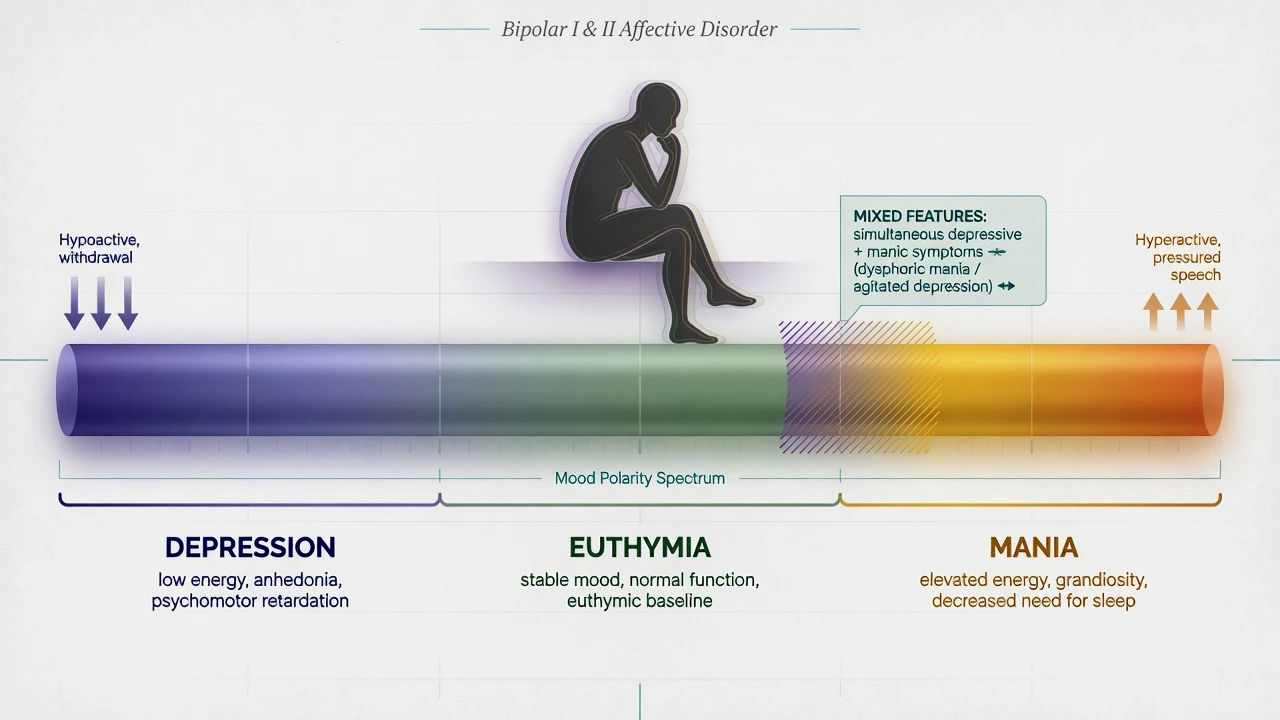
Bipolar affective disorder (BPAD), historically called manic-depressive illness (Kraepelin, 1899), is a chronic, relapsing, episodic mood disorder defined pathognomonically by the occurrence of at least one manic (Bipolar I) or hypomanic (Bipolar II) episode. The illness is "bipolar" because mood swings between two poles — the manic pole (elevation/expansion/irritability with increased energy) and the depressive pole (lowered mood, anhedonia, retardation). Crucially, it is the manic/hypomanic pole that defines the diagnosis: a patient with recurrent depression who has had even one hypomanic episode has Bipolar II, not unipolar depression — a distinction that changes treatment, because antidepressants given without mood-stabiliser cover can precipitate mania, mixed states and rapid cycling.[1][2]
The clinical task has four parts: (1) recognise the elevated pole (mania/hypomania), which is frequently missed — patients seek help in depression and under-report past highs, so most bipolar patients are misdiagnosed with unipolar depression for 8 to 10 years on average; (2) exclude organic and substance-induced causes of elevation (thyrotoxicosis, corticosteroids, stimulants); (3) phase-specific treatment — acute mania, acute bipolar depression and maintenance are treated with different drug hierarchies; and (4) reduce suicide risk and long-term harm through mood-stabiliser prophylaxis, psychoeducation and circadian-rhythm protection. Bipolar disorder carries the highest suicide rate of any psychiatric disorder (around 0.4% per year), so risk assessment is central to every contact.[1][6]
[1]Classification
Bipolar disorders are classified in DSM-5-TR and ICD-11 along a spectrum defined by the severity/polarity of the highs, the presence of full manic episodes, and the chronicity of mood instability. The two axes examiners test are: (a) does the patient ever reach a full manic episode? (separates Bipolar I from II) and (b) are full episode criteria met? (separates Bipolar I/II from cyclothymia).[2][11]
Bipolar I disorder
- At least ONE full MANIC episode (over 1 week, or any duration if hospitalised); marked impairment or psychosis
- Major depressive and hypomanic episodes are common but NOT required for diagnosis
- Most severe form; highest suicide and hospitalisation risk
- Mania may be preceded or followed by hypomanic or major depressive episodes
Bipolar II disorder
- At least ONE HYPOMANIC episode (over 4 days) PLUS at least ONE major depressive episode; NEVER a full manic episode
- Hypomania = observable change, no marked impairment, no psychosis, no hospitalisation
- The depressive pole dominates morbidity (depressive episodes are longer, more frequent)
- Often misdiagnosed as unipolar depression; HIGH suicide risk (depressive burden)
Cyclothymic disorder
- At least 2 YEARS of CHRONIC, fluctuating mood instability — numerous hypomanic SYMPTOMS (not meeting full hypomania) and numerous depressive SYMPTOMS (not meeting full MDE)
- Symptom-free for no more than 2 consecutive months; not due to substance/medical
- Insidious onset in teens/early 20s; 15 to 50% escalate to Bipolar I or II
- Mistaken for 'mood swings'/borderline personality; treat with psychoeducation, monitor
Other specified / unspecified bipolar
- Bipolar features that cause distress/impairment but do not meet full criteria (e.g. short-duration hypomania 2 to 3 days; hypomania with insufficient symptoms)
- Used when clinician wants to record the specific reason it does not meet criteria
Bipolar due to another medical condition / substance-induced
- Mania/hypomania caused by corticosteroids, stimulants (cocaine, amphetamines), thyrotoxicosis, Cushing, brain lesion, multiple sclerosis, HIV, post-stroke
- Coded separately; treating the cause is primary

DSM-5-TR diagnostic criteria — manic episode (reproduced)
- Criterion A — a distinct period of abnormally and persistently elevated, expansive, or irritable mood and abnormally and persistently increased activity or energy, lasting at least 1 week (or any duration if hospitalisation is necessary), present most of the day, nearly every day.
- Criterion B — during the mood disturbance, 3 or more of the following (4 if mood is only irritable) are present to a significant degree: (1) inflated self-esteem or grandiosity; (2) decreased need for sleep (feels rested after only a few hours — one of the most characteristic signs); (3) more talkative than usual or pressure of speech; (4) flight of ideas or subjective experience that thoughts are racing; (5) distractibility; (6) increase in goal-directed activity or psychomotor agitation; (7) excessive involvement in activities with high potential for painful consequences (sexual indiscretions, gambling, reckless spending, foolish investments).
- Criterion C — the disturbance is sufficiently severe to cause marked impairment in social/occupational functioning, OR necessitates hospitalisation, OR is associated with psychotic features.
- Criterion D — not attributable to substance or another medical condition.
- Criterion E — criteria are not met for a major depressive episode (but full depressive symptoms concurrent with mania = a manic episode with mixed features).[2]
DSM-5-TR diagnostic criteria — hypomanic episode (reproduced)
- Criterion A — same mood/activity change as mania, but lasting at least 4 consecutive days, present most of the day, nearly every day.
- Criterion B — same 3-of-7 symptom list as mania.
- Criterion C — an unequivocal change in functioning that is uncharacteristic of the person.
- Criterion D — the disturbance is observable by others.
- Criterion E — not severe enough to cause marked impairment or hospitalisation, and there are no psychotic features (if either is present, it is by definition a manic episode).
- Criterion F — not attributable to substance or medical cause (antidepressant treatment that triggers elevation counts if it persists beyond the physiological drug effect).[2]
The single examinable distinction: marked functional impairment, hospitalisation, or psychosis converts hypomania into mania, and Bipolar II into Bipolar I. [1]
Epidemiology & Risk Factors
Bipolar I has a lifetime prevalence of about 1%; the broad bipolar spectrum (I, II, cyclothymia and subthreshold forms) reaches 2 to 4%. The sex ratio is equal overall (unlike unipolar depression, which is 2:1 female), although Bipolar II and rapid cycling are more common in women. Mean age of onset is 15 to 30 years (earlier than unipolar depression), and onset after age 50 should prompt an aggressive search for an organic cause. Bipolar disorder accounts for a large share of global psychiatric disability and is a leading cause of years lost to disability in the 15 to 44 age band.[1]
Bipolar disorder — key numbers
Risk factors (high-yield): [1]
| Factor | Effect / mechanism |
|---|---|
| Family history (strongest risk factor) | One affected first-degree relative raises risk to about 10%; both parents affected 40 to 70%; monozygotic concordance 40 to 70% vs dizygotic about 20% |
| Genetics (most heritable mental disorder) | Heritability 60 to 85%; polygenic — replicated loci include CACNA1C, ANK3, ODZ4/TENM4, NCAN; rare copy-number variants; overlap with schizophrenia risk loci |
| Female sex (Bipolar II, rapid cycling) | More depressive episodes, rapid cycling, mixed features; postpartum trigger |
| Antidepressant / stimulant / steroid exposure | Can precipitate a first or recurrent manic/hypomanic episode (a key historical clue) |
| Sleep disruption | Sleep deprivation, shift work, transmeridian travel and childbirth (postpartum) can trigger mania — circadian disruption is mechanistic, not merely a symptom |
| Substance use | Alcohol, cannabis, cocaine and amphetamines worsen course, accelerate cycling and confound diagnosis |
| Childhood adversity / high expressed emotion | Earlier onset, more severe episodes, poorer lithium response |
| Medical causes of mania (organic) | Thyrotoxicosis, Cushing syndrome, corticosteroids/anabolic steroids, multiple sclerosis, traumatic brain injury, stroke, HIV, syphilis, brain tumour, temporal lobe epilepsy, post-operative |
Pathophysiology
Bipolar disorder is a heterogeneous, multisystem illness involving genetic susceptibility, monoamine dysregulation, circadian-rhythm disruption, abnormalities of intracellular signalling, neuroprogression and inflammation. No single mechanism explains it, but several interlocking models are examinable.[1][4]
Genetics — the strongest single contributor
Bipolar disorder is the most heritable of the major psychiatric disorders (heritability 60 to 85%, higher than schizophrenia or unipolar depression). It is polygenic: genome-wide association studies have replicated risk variants in CACNA1C (L-type voltage-gated calcium channel subunit), ANK3 (ankyrin-G, axonal scaffolding), ODZ4/TENM4 and NCAN (neurocan), and shown substantial genetic overlap with schizophrenia (shared variants at CACNA1C, ZNF804A) while remaining clinically distinct. Rare copy-number variants also contribute. The high heritability underpins the cardinal clinical question — always ask about a family history of mood disorder, suicide or psychiatric admission.[4]
Monoamine dysregulation — the classical model
Historically, the catecholamine hypothesis linked mania to excess noradrenaline and dopamine and depression to their deficiency. The pharmacological evidence: amphetamine and cocaine (which release dopamine and noradrenaline) produce a mania-like state; L-dopa can trigger mania in predisposed people; reserpine (which depletes monoamines) precipitated depression; and all effective antimanic antipsychotics block D2 receptors, while lithium dampens overactive second-messenger signalling downstream. The modern view is of regional, phase-dependent monoamine dysregulation rather than a simple global excess or deficiency. [1]
Kindling and behavioural sensitisation (Post)
The kindling / sensitisation model proposes that, like epilepsy, repeated mood episodes lower the threshold for further episodes, so that episodes become more frequent, more severe and more spontaneous over time. Early episodes may be triggered by clear psychosocial stress, but later ones arise without obvious triggers. This is the biological justification for early, continuous mood-stabiliser prophylaxis even after a first episode, and it explains why untreated illness is associated with cognitive decline and treatment resistance (neuroprogression). [1]
Circadian-rhythm disruption — core to bipolar
Disrupted biological rhythms are central, not incidental, to bipolar disorder. Reduced need for sleep is one of the most specific manic symptoms, sleep deprivation reliably precipitates mania, and childbirth (with its acute sleep loss) is a potent postpartum trigger. Variants in clock genes (CLOCK, BMAL1, PER3) and the response of bipolar patients to sleep deprivation, light therapy and social-rhythm therapy all implicate circadian machinery. Interpersonal and social rhythm therapy (IPSRT) was designed specifically to stabilise these rhythms. [1]
Intracellular signalling — why lithium works (high-yield)
Lithium's therapeutic action arises not from a single receptor but from intracellular second-messenger and kinase pathways. Lithium (the Li+ ion, given as lithium carbonate) substitutes for magnesium and inhibits two key enzymes: [1]
- Glycogen synthase kinase-3 (GSK-3β) — lithium is a direct GSK-3 inhibitor. Inhibition of GSK-3 increases neurotrophic factors (BDNF), anti-apoptotic Bcl-2, neurogenesis and circadian-gene regulation, and is considered a major contributor to lithium's neuroprotective and antimanic/prophylactic effect.
- Inositol monophosphatase (IMPase) — lithium depletes intracellular myo-inositol, dampening the phosphatidylinositol (PIP2/IP3/DAG) second-messenger cascade that amplifies neurotransmitter signalling (the "inositol depletion hypothesis"). [1]
These converging molecular effects — reduced GSK-3 activity, inositol depletion, enhanced BDNF/Bcl-2, normalisation of circadian-gene expression — explain how a single ion can stabilise mood across both poles. This molecular mechanism is a favourite viva question.[3]
Neuroendocrine, structural and inflammatory changes
- HPA-axis dysregulation (elevated cortisol, non-suppression on the dexamethasone-suppression test) is most marked during depressive episodes.
- Structural neuroimaging: mild ventricular enlargement, white-matter hyperintensities (especially subcortical), reduced prefrontal cortical and anterior cingulate volume, amygdala enlargement and reduced hippocampal volume — findings that accumulate with episode count (neuroprogression).
- Inflammation and oxidative stress (the Berk group): raised CRP, cytokines (IL-6, TNF-α), oxidative damage and mitochondrial dysfunction are described; N-acetylcysteine (NAC) targets glutathione and shows benefit as an adjunct in bipolar depression, exemplifying this model.[1]

Clinical Presentation
Bipolar disorder is episodic. Patients present in one of three phases — mania/hypomania, major depression, or euthymia (with residual symptoms) — and the history (especially collateral history, because patients under-report past highs) determines the diagnosis. [1]
Manic episode — DIGFAST (the high-yield mnemonic)
Mania — the DIGFAST mnemonic
DIGFAST
Attention easily drawn to irrelevant external stimuli; cannot sustain a conversation
Sleeps little, feels fully rested — one of the MOST specific features (not just insomnia, but reduced NEED for sleep)
Inflated self-esteem, overconfidence, believes they have special powers or a divine mission
Rapid succession of thoughts; subjective racing thoughts; speech jumps topic to topic by clang associations or distracting cues
Increased goal-directed activity (new projects, over-busy) OR psychomotor agitation; cannot sit still
Loud, rapid, hard to interrupt; cannot get a word in; sometimes incoherent at the extreme (clang associations, neologisms)
Pleasurable activities with high painful consequences — sexual indiscretions, gambling, reckless spending, dangerous driving, foolish business investments
Other classical manic features: elevated/expansive or irritable mood (irritability is common and easily misread as aggression or borderline personality), hyper-religiosity, hypersexuality, bright/expensive/clashing clothing, increased appetite and libido, overspending (multiple credit cards, extravagant gifts), alcohol and substance misuse, psychotic symptoms that are typically mood-congruent (grandiose/religious delusions of wealth, power, divine mission; persecutory delusions), and complete lack of insight. First-rank-symptom-type thought disorder and passivity can occur, mimicking schizophrenia, but the prominent mood syndrome and the episodic course with full or near-full inter-episode recovery point to bipolar.[2]
Hypomania — "mania lite"
The same symptoms as mania but less severe: observable change in functioning, no marked impairment, no psychotic features, no hospitalisation needed. The patient typically feels well or "better than well", is productive and creative, and rarely presents voluntarily — the history is usually uncovered by collateral or during assessment of a depressive episode. Ask every depressed patient: "Have you ever had periods of needing very little sleep yet feeling full of energy, being unusually productive or making impulsive decisions?" [1]
Bipolar depression
A major depressive episode in a bipolar patient is clinically similar to unipolar depression but tends to show more atypical features: hypersomnia (rather than insomnia), hyperphagia and weight gain, leaden paralysis (heavy limbs), psychomotor retardation, psychotic features, and more frequent, shorter, treatment-resistant episodes. The crucial point — depressive episodes dominate the morbidity of Bipolar II and carry the suicide risk, and they are routinely misdiagnosed as unipolar depression, leading to treatment that can precipitate mania. [1]
Mixed features (DSM-5) — a high-risk state
A mixed episode (DSM-5 now "with mixed features") is a manic/hypomanic episode with at least 3 depressive symptoms (e.g. sadness, anergia, hopelessness, suicidal ideation) OR a major depressive episode with at least 3 manic/hypomanic symptoms (e.g. elevated mood, grandiosity, flight of ideas, reduced sleep need). Mixed states carry an exceptionally high risk of suicide, respond poorly to antidepressants, and should be managed as mania (antipsychotic/mood stabiliser; avoid antidepressants).[2]
Atypical presentations
- Postpartum onset — childbirth is a potent trigger; postpartum psychosis is strongly associated with bipolar disorder (a personal or family history of bipolar raises postpartum-psychosis risk 100-fold). Onset within 2 weeks; elation, confusion, delusions about the baby — an obstetric and psychiatric emergency.
- Adolescents — mood lability, irritability, explosive anger and mixed states; diagnosis is harder and overlaps with ADHD; a strong family history and episodic, distinct-from-baseline elevation support bipolar.
- Elderly — first-onset mania after 50 is almost always organic (stroke, tumour, steroids, thyrotoxicosis, dementia); investigate aggressively. Cognitive impairment may be comorbid or lithium-related.
- Rapid cycling — at least 4 mood episodes in 12 months; more common in women, associated with hypothyroidism, antidepressant use and substance use; responds poorly to lithium (favour valproate); affects 10 to 20% of bipolar patients.
- Comorbidity — substance misuse (in over half), anxiety disorders, ADHD, borderline and other personality disorders, migraine, metabolic syndrome. These complicate diagnosis and worsen prognosis. [1]
Differential Diagnosis
The cardinal diagnostic rule is: always exclude an organic or substance-induced cause for any first manic episode, then decide whether the elevation is primary (bipolar), secondary to a medical cause, or part of another psychiatric disorder (schizoaffective, personality disorder).[2]
| Differential | Key distinguishing features |
|---|---|
| Unipolar (major) depression | No history of mania or hypomania. The differentiator is the elevated pole — always screen every depressed patient for past hypomania (MDQ, structured interview). A family history of bipolar, early-onset depression, atypical features (hypersomnia, hyperphagia, leaden paralysis) and antidepressant-induced elevation all flag bipolar II. |
| Schizoaffective disorder, bipolar type | Psychosis occurs for at least 2 weeks in the ABSENCE of a mood episode (unlike bipolar, where psychosis occurs only during the mood episode). Periods of psychosis without mood symptoms + a major mood episode during most of the illness = schizoaffective. |
| Schizophrenia | Prominent negative and disorganised symptoms, continuous rather than episodic course, poor inter-episode function, poor premorbid function; mood symptoms are secondary. In bipolar, psychosis is confined to mood episodes and inter-episode recovery is usually good. |
| Substance-induced mood disorder (cocaine, amphetamines, MDMA, cannabis, anabolic steroids) | Temporal link to intoxication/withdrawal; resolves with abstinence; urine drug screen positive. The single most important exclusion in a young person with first-onset mania. |
| Mania due to a general medical condition | Thyrotoxicosis (weight loss, heat intolerance, tachycardia, goitre, eye signs, high T3/T4, low TSH), Cushing syndrome (striae, moon face, high cortisol), corticosteroid treatment (e.g. prednisolone over 20 mg/day), multiple sclerosis, traumatic brain injury, stroke (especially right hemisphere), HIV, neurosyphilis, brain tumour (frontal/temporal), temporal lobe epilepsy. Look for abnormal vitals, focal neurology, abnormal bloods/imaging. First mania over 50 is organic until proven otherwise. |
| Borderline personality disorder | Chronic, persistent affective instability and fear of abandonment (not discrete episodes); self-harm is for emotional regulation; mood shifts within a day (hours, not days/weeks); no true elevation or grandiosity; comorbid common. |
| Attention-deficit/hyperactivity disorder (ADHD) | Onset before age 12, chronic and continuous (not episodic), no clear mood elevation, no grandiosity; can coexist with bipolar. |
| Cyclothymia vs Bipolar II | Cyclothymia = subthreshold symptoms for over 2 years, never meeting full hypomanic or MDE criteria. |
Distinguishing features examiners reward: (a) the temporal relationship between psychosis and mood (psychosis only with mood = bipolar; psychosis without mood = schizoaffective/schizophrenia); (b) presence of a clear manic/hypomanic episode (bipolar vs unipolar); (c) evidence of a substance or medical cause; (d) episodic vs continuous course; (e) level of inter-episode function. [1]
Clinical & Bedside Assessment
Bipolar disorder is a clinical diagnosis made from a careful psychiatric history (including collateral), a full mental state examination, physical examination and screening investigations to exclude organic causes. Collateral history is essential — patients under-report past highs, especially hypomania, which they experienced as pleasant and productive.[2]
History — what to elicit: [1]
- Presenting episode: polarity (manic, depressive, mixed), onset, duration, precipitants (stress, sleep loss, substance, steroid, postpartum, antidepressant initiation).
- Lifetime mood history — the diagnosis lives here: chart every prior manic/hypomanic, depressive and mixed episode, hospitalisations, suicide attempts and the inter-episode baseline. Ask directly: "Have you ever had days or weeks of feeling unusually high, not needing sleep, full of energy, making big plans, or spending lots of money?"
- Substance and medication history — alcohol, cannabis, cocaine, amphetamines, anabolic steroids; current/recent antidepressants, stimulants, corticosteroids.
- Medical history — thyroid disease, neurological disease, head injury, autoimmune disease.
- Family history — bipolar disorder, depression, suicide, psychiatric admission (the strongest single risk factor).
- Psychosocial — relationships, employment, finances, debts incurred during mania, forensic history (during mania).
- Risk assessment (mandatory) — suicide (bipolar carries the highest rate), self-harm, neglect, risk to others (during mania), vulnerability (sexual/financial exploitation). [1]
Mental state examination in mania: [1]
- Appearance/behaviour — bright/clashing/expensive clothing, make-up, jewellery, psychomotor agitation, intrusiveness, overfamiliarity, disinhibition, singing, may be dishevelled if severe.
- Speech — pressured, loud, rapid, difficult to interrupt; flight of ideas; clang associations.
- Mood — euphoric, expansive, irritable (lability between them); subjective rating "10 out of 10".
- Thought — grandiose (special powers, wealth, divine mission), sometimes persecutory; flight of ideas, racing thoughts; usually no formal thought disorder, but can mimic schizophrenia if severe.
- Perception — mood-congruent delusions (grandiose, religious, persecutory); hallucinations possible; no clouding of consciousness (if clouded, think delirium/organic).
- Cognition — usually intact (impaired attention from distractibility); clouding or disorientation suggests organic.
- Insight — typically absent; poor adherence risk. [1]
Screening instruments: [1]
- Mood Disorder Questionnaire (MDQ) — a screening tool for bipolar spectrum in adults: 13 yes/no items covering manic/hypomanic symptoms, a question on whether symptoms co-occurred ("have several of these ever happened during the same period of time"), and a question on the resulting problem severity. A positive screen (yes to several items, co-occurrence, and moderate-or-severe resulting problem) warrants a structured diagnostic interview.
- Hypomania Checklist-32 (HCL-32) — 32-item checklist detecting past hypomanic episodes, helping separate Bipolar II from unipolar depression.
- Young Mania Rating Scale (YMRS) — the standard severity scale for mania (see Investigations). [1]
Investigations
There is no laboratory test for bipolar disorder — it is a clinical diagnosis. Investigations serve three purposes: (1) exclude organic causes of elevation/depression, (2) establish a safe baseline before mood-stabiliser treatment, and (3) monitor treatment toxicity.[3]
Baseline (every patient, before mood stabilisers): [1]
- U&E, eGFR, creatinine — lithium is renally excreted; valproate and carbamazepine can affect the kidney/liver.
- LFTs — valproate (hepatotoxicity), carbamazepine.
- FBC — carbamazepine (leukopenia, aplastic anaemia), valproate (thrombocytopenia); lithium causes benign leukocytosis.
- TFTs (TSH, free T4) — exclude thyrotoxicosis as a cause of mania; lithium causes hypothyroidism.
- Calcium / PTH — lithium causes hyperparathyroidism.
- Glucose / HbA1c, fasting lipids, weight/BMI, waist circumference — antipsychotics cause metabolic syndrome.
- Pregnancy test (beta-hCG) in all women of childbearing potential — before lithium or valproate (both teratogenic).
- ECG — if cardiac disease, before QT-prolonging antipsychotics or lithium.
- Urinary drug screen — exclude stimulant-induced mania (cocaine, amphetamines).
- MRI brain — if first mania, atypical features, age over 50, focal neurology, or clouding of consciousness (exclude tumour, stroke, demyelination).
- Infection screen, autoimmune (ANA), syphilis serology, HIV — as guided by history. [1]
Drug levels (therapeutic drug monitoring): [1]
| Drug | Target plasma level | Timing |
|---|---|---|
| Lithium | Acute mania 0.8 to 1.2 mmol/L; maintenance 0.6 to 0.8 mmol/L (range often quoted 0.4 to 1.0 mmol/L); toxicity over 1.5 mmol/L | 12-hour post-dose trough, check 5 to 7 days after starting/dose change, then every 3 to 6 months |
| Valproate | 50 to 125 mg/L (350 to 700 micromol/L) | 5 days after dose change |
| Carbamazepine | 4 to 12 mg/L (17 to 51 micromol/L) | 2 to 4 weeks after starting (autoinduction) |
Young Mania Rating Scale (YMRS) — reproduced
The YMRS (Young, Biggs, Ziegler, Meyer, 1978) is the standard clinician-rated severity scale for mania.[8] It has 11 items, scored on a 0 to 5 scale, but items 1 to 5 (and 6) are graded over a wider range in the original; in routine use the first 4 items are given double weight (scored 0, 2, 4, 6, 8) and items 5 to 11 are scored 0, 1, 2, 3, 4, giving a maximum total of 60:
- Elevated mood (double-weighted)
- Increased motor activity / energy (double-weighted)
- Sexual interest (double-weighted)
- Sleep (double-weighted)
- Irritability
- Speech (rate and amount)
- Language–thought disorder
- Content (of thought)
- Disruptive–aggressive behaviour
- Appearance
- Insight [1]
Interpretation: a score below 12 generally indicates no or minimal mania; about 12 to 19 mild/moderate (hypomania range); about 20 to 25 moderate mania; and over 25 to 30 severe mania. The YMRS is used to diagnose severity and track response to antimanic treatment, not to make the categorical diagnosis. [1]
Depression scales used in bipolar depression: HAM-D (Hamilton Depression Rating Scale, 17-item), MADRS (Montgomery–Åsberg, less confounded by somatic side-effects), and the self-rated PHQ-9 — use with caution because somatic items (sleep, appetite, energy) overlap with mania. [1]
Management — Resuscitation

Acute mania is rarely a physiological emergency in the cardiovascular sense, but it is a behavioural and risk emergency — the priorities are safety, control of agitation/aggression, prevention of harm (suicide, recklessness, exploitation), exclusion of an organic cause, and rapid initiation of antimanic treatment.[3][11]
Acute behavioural management (rapid tranquillisation) — stepwise: [1]
- De-escalation first — calm, low-stimulus environment; verbal techniques; respect, time and sufficient trained staff. The least restrictive option that is effective.
- Oral medication if accepted — lorazepam 1 to 2 mg and/or an oral antipsychotic (e.g. olanzapine 10 mg, haloperidol 5 mg, quetiapine, risperidone).
- IM medication if oral refused / severe agitation — lorazepam IM (or olanzapine IM 10 mg) is first-line; haloperidol 5 to 10 mg IM plus promethazine 25 to 50 mg IM is an established combination (but do not mix olanzapine IM with parenteral benzodiazepines in the same hour — risk of profound sedation and respiratory depression; observe ECG, oxygen saturation and respirations). After IM medication, observe the patient closely (vital signs, airway) for at least 1 hour.
- Re-assess after 30 to 60 minutes; repeat or escalate as needed; review the cause; document capacity and legal authority. [1]
Safety and legal framework: [1]
- Admit under the Mental Health Act (UK Section 2 assessment, up to 28 days; Section 3 treatment, up to 6 months renewable; Section 5(2) inpatient holding power) when the patient lacks capacity, refuses admission, or there is risk to health, safety or others. Mania frequently impairs insight and capacity.
- Exclude organic causes — drug screen, glucose, U&E, calcium, TFTs, infection screen, MRI if atypical.
- Identify and treat the underlying episode (see Definitive Management).
- Reduce stimulation — single room, low lighting, remove valuables/credit cards, restrict phone access during acute mania to limit financial/sexual harm; constant observation if high suicide/self-harm risk. [1]
Management — Definitive & Stepwise
Bipolar disorder is managed phase-by-phase — acute mania, acute bipolar depression, and maintenance prophylaxis are treated with different drug hierarchies. A unifying principle: antidepressants must be used cautiously and always with mood-stabiliser cover, because they can precipitate mania, mixed states and rapid cycling.[3][11]
Phase 1 — Acute mania (and mixed states)
Step 1 — STOP any antidepressant. This single action often substantially improves an emerging manic episode. Also stop stimulants and review corticosteroids. [1]
Step 2 — Start an antipsychotic (faster onset than mood stabilisers; controls agitation, psychosis and sleep within hours to days). First-line options: [1]
- Haloperidol 2 to 10 mg orally (or IM 5 to 10 mg) — potent D2 blocker; risk of EPSE/QT prolongation.
- Olanzapine 10 to 15 mg orally (or 10 mg IM) — effective but high metabolic burden.
- Quetiapine up to 800 mg/day; risperidone 2 to 6 mg/day; aripiprazole 10 to 30 mg/day; asenapine 10 to 20 mg/day sublingual; ziprasidone; cariprazine (D3-preferring partial agonist).
- The Cipriani 2011 multiple-treatments meta-analysis (Lancet) confirmed that all antipsychotics and mood stabilisers are superior to placebo; haloperidol, risperidone and olanzapine were among the most effective and best tolerated.[5]
Step 3 — Add or start a mood stabiliser (onset over days to weeks; needed for ongoing control and prophylaxis): [1]
- Lithium — start 400 to 800 mg/day (e.g. 400 mg nocte), check a 12-hour trough level after 5 to 7 days, titrate to a manic-phase level of 0.8 to 1.2 mmol/L (maintenance 0.6 to 0.8).
- Valproate (semisodium) — load 20 to 30 mg/kg/day, titrate to 1000 to 3000 mg/day, target level 50 to 125 mg/L. Useful in rapid cycling, mixed states and substance misuse; avoid in women of childbearing potential (teratogenic). [1]
Step 4 — Combination / refractory: if no response at 2 weeks, combine (lithium plus valproate; lithium/valproate plus an antipsychotic). Carbamazepine (200 to 1800 mg/day, level 4 to 12 mg/L) is an alternative/adjunct (note: CYP3A4 inducer — many drug interactions including oral contraceptive failure). For severe, refractory, life-threatening or pregnant patients — ECT. Clozapine has evidence in treatment-resistant mania. [1]
Step 5 — Supportive: benzodiazepines (lorazepam 1 to 2 mg, clonazepam) for short-term sedation and agitation; treat dehydration, sleep restoration (the patient often improves once sleep is restored). [1]
Phase 2 — Acute bipolar depression
Bipolar depression is harder to treat than mania and carries most of the suicide risk, and antidepressants carry a switch risk (especially in Bipolar I, with TCIs/venlafaxine, and in mixed states).[3]
First-line (CANMAT/ISBD 2021, NICE):[11]
- Quetiapine (300 to 600 mg/day) — the best-evidenced monotherapy; the only single agent with strong evidence across mania, bipolar depression and maintenance.
- Lurasidone (20 to 120 mg/day) — atypical with low metabolic burden, FDA-approved for bipolar I depression.
- Cariprazine (1.5 to 3 mg/day) — D3-preferring partial agonist; evidence in bipolar I depression.
- Lumateperone — newer, FDA-approved for bipolar depression.
- Olanzapine–fluoxetine combination (OFC) — effective for bipolar I depression (higher metabolic burden).
- Lithium — effective in about a third of bipolar depression episodes and provides anti-suicide protection. [1]
Antidepressants — use with caution: give only with a mood-stabiliser/antipsychotic cover, prefer an SSRI (fluoxetine, sertraline) or bupropion (lower switch risk than tricyclics and venlafaxine, which carry the highest switch risk); avoid in Bipolar I, mixed states and rapid cycling; stop if elevation emerges. The STEP-BD programme found that antidepressants added to mood stabilisers did not improve bipolar depression outcomes and increased affective switch in some analyses. [1]
Lamotrigine is valuable for bipolar depression and maintenance (prevents depressive relapse) but not for acute mania; titrate slowly (see below). [1]
Phase 3 — Maintenance prophylaxis
After one definite manic episode, long-term prophylaxis is recommended (the kindling model justifies early, continuous treatment). Options:[3][7]
- Lithium — the gold standard. Reduces relapse by about a third, reduces suicide by up to 60% (Cipriani 2013, BMJ),[6] and is the only mood stabiliser with proven anti-suicidal effect. The BALANCE trial (Lancet 2010) found lithium monotherapy marginally superior to valproate monotherapy, and combination therapy not clearly better than lithium alone — supporting lithium as first-line.[7]
- Valproate — alternative or adjunct, especially for rapid cycling/mixed states.
- Lamotrigine — best for preventing depressive relapse; titrate slowly (25 mg daily for 2 weeks, then 50 mg for 2 weeks, then 100 mg for 1 week, target 200 mg/day; halve the dose if used with valproate, double it if used with carbamazepine). Watch for Stevens–Johnson syndrome.
- Antipsychotics — olanzapine, aripiprazole (including LAI), quetiapine, risperidone LAI for maintenance, especially with prominent mania or poor adherence (a long-acting injectable addresses non-adherence).
- Combination therapy (lithium plus an antipsychotic/anticonvulsant) for refractory or rapid-cycling illness.
Non-pharmacological maintenance: [1]
- Psychoeducation — about the illness, early-warning signs, sleep hygiene, adherence, substance avoidance; reduces relapse and hospitalisation.
- Interpersonal and social rhythm therapy (IPSRT) — stabilises daily routines and sleep–wake cycle; designed for bipolar disorder.
- Cognitive behavioural therapy (CBT), family-focused therapy.
- Advance directives / crisis plans, relapse-prevention cards, regular mood monitoring. [1]
Lithium — the drug to know cold
| Domain | Detail |
|---|---|
| Indication | First-line mood stabiliser: acute mania, maintenance, augmentation in depression; the only drug with proven anti-suicidal effect |
| Form/dose | Lithium carbonate, start 400 to 800 mg/day (single nocte dose common), titrate to level |
| Target level | Mania 0.8 to 1.2 mmol/L; maintenance 0.6 to 0.8 mmol/L; broad therapeutic 0.4 to 1.0 mmol/L; toxicity over 1.5 mmol/L |
| Sampling | 12-hour post-dose (trough) level, recheck 5 to 7 days after any change |
| Pharmacokinetics | Excreted unchanged by the kidney (no metabolism); half-life about 18 to 24 h; narrow therapeutic index |
| Baseline tests | U&E/eGFR, TFTs, calcium, FBC, pregnancy test, ECG if cardiac disease, BMI |
| Monitoring | Lithium level every 3 to 6 months; U&E and TFTs every 6 months (TFTs every 3 months in the first year); calcium annually; eGFR more frequently if renal impairment |
| Drug interactions (raise level) | NSAIDs (except aspirin and sulindac), ACE inhibitors/ARBs, thiazide diuretics, dehydration, renal impairment, low-sodium diet |
| Drug interactions (lower level) | Theophylline, high sodium intake, tetracyclines (variable) |
Specific Subtypes & Scenarios
- Bipolar I — at least one manic episode; treat the index manic episode (antipsychotic plus mood stabiliser), then lifelong maintenance (usually lithium). Antidepressants should generally be avoided without mood-stabiliser cover because of switch risk.
- Bipolar II — hypomania plus major depression; the depression dominates the morbidity and carries the suicide risk. Treat bipolar depression (quetiapine, lurasidine, lithium, lamotrigine) and give maintenance. Antidepressants are slightly less risky than in Bipolar I but still used cautiously.
- Cyclothymia — chronic subthreshold mood instability for over 2 years; psychoeducation, mood monitoring, and SSRI/lamotrigine or low-dose mood stabiliser for the depressive pole; watch for escalation to Bipolar I/II (15 to 50%).
- Rapid cycling (at least 4 episodes/year) — avoid antidepressants (they worsen it), check and treat hypothyroidism, favour valproate/lithium over antidepressants; combination therapy often needed.
- Mixed features — treat as mania (antipsychotic/mood stabiliser); antidepressants can worsen mixed states and increase suicide risk.
- Psychotic mania — antipsychotic plus mood stabiliser; ECT if refractory; the psychosis resolves with the mood episode.
- Postpartum mania / psychosis — emergency: mother-and-baby admission, stop breastfeeding temporarily, antipsychotic plus mood stabiliser (avoid lithium/valproate in breastfeeding), ECT is highly effective and fast; risk of recurrence in future pregnancies is high (offer prophylaxis).
- Adolescent-onset bipolar — family history and clear episodic elevation support the diagnosis; mood stabilisers and atypical antipsychotics; avoid stimulants/antidepressants where possible; involve family. [1]
Complications & Pitfalls
Lithium toxicity (a narrow therapeutic index)
Lithium toxicity is dose-related and level-related and is a recurrent exam favourite. Toxicity is precipitated by dehydration, renal impairment, low sodium, NSAIDs, ACE inhibitors/ARBs, thiazides.[3]
- Mild (over 1.5 mmol/L) — coarse (intention) tremor, gastrointestinal upset (nausea, vomiting, diarrhoea), lethargy, mild confusion, polyuria.
- Moderate (about 1.5 to 2.5 mmol/L) — ataxia, dysarthria, fasciculations, hyperreflexia, coarse nystagmus, drowsiness, seizures.
- Severe (over 2.5 mmol/L) — delirium, coma, seizures, coarse tremor, arrhythmias, hypotension, renal failure, hyperthermia; can be fatal or leave permanent neurological damage (SILENT — Syndrome of Irreversible Lithium-Effectuated Neurotoxicity). [1]
Management of lithium toxicity: STOP lithium; IV normal saline (restores sodium, enhances renal lithium excretion); haemodialysis for severe toxicity (level over 4 mmol/L, or over 2.5 mmol/L with renal impairment/severe symptoms, or neurologically compromised); supportive care (treat seizures, correct electrolytes, monitor renal function and ECG). Charcoal is ineffective (lithium is not protein-bound and has a small volume of distribution handled renally). [1]
Long-term lithium adverse effects
- Nephrogenic diabetes insipidus — lithium reduces the responsiveness of the collecting duct to antidiuretic hormone (vasopressin) (interferes with aquaporin-2 water channels) → polyuria/polydipsia; chronic use can cause chronic interstitial nephritis and a slow fall in GFR. (Treated with amiloride, which also limits lithium entry into collecting-duct cells.)
- Hypothyroidism and goitre — lithium inhibits thyroid hormone release; check TFTs.
- Hyperparathyroidism with hypercalcaemia.
- Weight gain, exacerbation of acne/psoriasis, hair thinning.
- Cardiac — benign T-wave flattening, sinus node dysfunction.
- Leukocytosis (benign).
- Teratogenicity — Ebstein anomaly (apical displacement of the tricuspid septal leaflet, atrialised right ventricle, tricuspid regurgitation); the historical risk estimate was 1 in 1000 (Cohen 1994, JAMA)[10] and modern data (Patorno 2017, NEJM)[9] show a small absolute increase in cardiac malformations (Ebstein risk far lower than the original 400-fold figure). Counsel women, scan the fetus, weigh risk against relapse risk.
Valproate adverse effects and teratogenicity
- Hepatotoxicity (rare fatal hepatic failure; check LFTs), pancreatitis (rare, stop if abdominal pain), thrombocytopenia, weight gain, hair loss (telogen effluvium), tremor, sedation, hyperammonaemia.
- Teratogenicity — neural tube defects (spina bifida), cardiac, facial, limb and urogenital malformations, and reduced IQ / autism in exposed children; risk up to 30 to 40% major anomaly/neurodevelopmental. Contraindicated in women and girls of childbearing potential unless a Pregnancy Prevention Programme (highly effective contraception, negative pregnancy test, annual specialist review, signed acknowledgement) is in place (MHRA/EMA). [1]
Other mood-stabiliser adverse effects
- Carbamazepine — Stevens–Johnson syndrome / toxic epidermal necrolysis (test HLA-B*1502 in Asian ancestry), hyponatraemia (SIADH), leukopenia/aplastic anaemia, hepatotoxicity, ataxia, dizziness, nausea; potent CYP3A4 inducer (oral contraceptive failure — need alternative contraception; interacts with warfarin, statins, many antipsychotics).
- Lamotrigine — Stevens–Johnson syndrome (highest in first 8 weeks; titrate slowly; stop any rash); benign rash must be distinguished from SJS; otherwise well tolerated (weight-neutral, low sedation).
- Antipsychotics — EPSE, NMS, metabolic syndrome (weight, glucose, lipids), hyperprolactinaemia, QT prolongation, sedation (as for schizophrenia). [1]
Disease-related complications
- Suicide — bipolar disorder carries the highest suicide rate of any mental disorder (about 0.4% per year; 6 to 15% die by suicide; 25 to 50% attempt). Risk peaks in depressive and mixed episodes, early in illness, in men, with comorbid substance use, hopelessness, recent discharge/relapse, and during antidepressant-induced mixed states. Lithium is the only treatment proven to reduce suicide.[6]
- Social and occupational harm during mania — debts, broken relationships, divorce, job loss, sexually transmitted infections, unwanted pregnancy, criminal/forensic consequences.
- Cognitive impairment — attention, memory and executive deficits persist in about a third to a half; worsen with episode count (neuroprogression).
- Comorbidity — substance misuse (over half), anxiety disorders, personality disorder, migraine, metabolic syndrome, cardiovascular disease; life expectancy reduced by about 10 to 15 years.
Pitfalls
- Diagnosing unipolar depression and treating with antidepressants without mood-stabiliser cover — precipitates mania, mixed states, rapid cycling. Always screen every depressed patient for past hypomania.
- Missing an organic cause of first-onset mania (thyrotoxicosis, steroids, stimulants, brain lesion). First mania over 50 is organic until proven otherwise.
- Not monitoring lithium levels and renal/thyroid function — toxicity, nephrogenic DI, hypothyroidism.
- Prescribing valproate to a woman of childbearing potential without a Pregnancy Prevention Programme.
- Stopping prophylaxis after remission — relapse is near-universal; lithium must be tapered slowly (rapid discontinuation markedly raises relapse and suicide risk).
- Confusing hypomania with normal happiness or with ADHD/borderline personality. [1]
Prognosis & Disposition
Bipolar disorder is a lifelong, episodic illness with near-universal relapse (about 90% relapse after a first manic episode). However, inter-episode function is often good with adherence to prophylaxis, and lithium substantially improves outcome — reducing relapse by about a third and suicide by up to 60%. Recovery from an index manic episode typically occurs over weeks with treatment.[1][6]
Good-prognostic factors: later onset, acute (rather than insidious) onset, clear precipitant, prominent mood (rather than psychotic) symptoms, few lifetime episodes, good inter-episode function, good adherence, good social support / low expressed emotion, no substance misuse, good response to lithium, no rapid cycling.[3]
Poor-prognostic factors: early onset, rapid cycling, mixed features, prominent psychosis, substance misuse, comorbid anxiety/personality disorder, non-adherence, poor lithium response, long delay to diagnosis/treatment, high expressed emotion, low socioeconomic status. Cognitive impairment and reduced life expectancy (10 to 15 years, from cardiovascular disease and suicide) are long-term consequences.[1]
Disposition: most long-term care is delivered in the community by a community mental health team (or early-intervention service for first episodes), with crisis and home treatment alternatives to admission. Admission is for risk (suicide, severe self-neglect, risk to others), severe/treatment-resistant illness, diagnostic uncertainty, or assessment — often under the Mental Health Act if capacity is impaired. Discharge planning includes relapse-prevention (early-warning-sign) plans, advance statements, crisis plans, financial/debt advice, family/carer support, and follow-up, with particular attention to the high-risk post-discharge period for suicide. [1]
Special Populations
- Pregnancy — the aim is mood stability for the mother (relapse in pregnancy harms both) weighed against fetal drug risk. Lithium carries a small Ebstein-anomaly/cardiac risk (Cohen 1994; Patorno 2017)[9][10] — use the lowest effective level, monotherapy if possible, single nocte dose, monitor level (it rises in pregnancy and falls postpartum), folate 5 mg, and a fetal echocardiogram at 18 to 20 weeks. Valproate is CONTRAINDICATED (neural tube defects and neurodevelopmental harm); carbamazepine also teratogenic (NTD); lamotrigine has the best reproductive safety data among mood stabilisers and is often preferred in pregnancy; antipsychotics (quetiapine, olanzapine) are used for mania. ECT is safe and highly effective for severe perinatal illness. Postpartum relapse risk is very high — restart or continue prophylaxis.
- Breastfeeding — lithium is generally avoided in breastfeeding (high milk levels, infant toxicity), though some centres permit with close infant monitoring; valproate and carbamazepine are relatively safe; lamotrigine with caution (infant levels); antipsychotics case-by-case (olanzapine caution).
- Elderly — lower starting doses, slower titration; check renal function before lithium (reduce dose); minimise anticholinergic burden (delirium, falls); review QT and drug interactions; first mania after 50 demands exclusion of an organic cause (stroke, tumour, steroids, thyrotoxicosis, dementia).
- Women of childbearing potential — contraception counselling at every contact; avoid valproate; document a Pregnancy Prevention Programme if valproate is unavoidable; prefer lamotrigine, lithium or an antipsychotic; folate 5 mg; pre-conception planning with a perinatal psychiatrist.
- Adolescents — diagnosis requires a clear episodic, distinct-from-baseline change with a strong family history; atypical antipsychotics and mood stabilisers are used; avoid stimulants/antidepressants where possible (can precipitate mania); involve the family.
- Substance misuse — dual-diagnosis management; stimulants/cocaine cause or mimic mania (urine drug screen); substance use worsens course and adherence.
Evidence, Guidelines & Regional Differences
Landmark trials and reviews: [1]
- BALANCE (2010, Lancet) — randomised comparison of lithium monotherapy, valproate monotherapy, and combination for maintenance of Bipolar I. Combination was not clearly superior to lithium alone, and lithium was marginally better than valproate — supporting lithium as first-line maintenance.[7]
- Cipriani 2011 antimanic network meta-analysis (Lancet) — all antipsychotics and mood stabilisers were superior to placebo; haloperidol, risperidone and olanzapine were among the most effective and best tolerated; antipsychotics generally more effective than mood stabilisers for acute mania.[5]
- Cipriani 2013 BMJ meta-analysis — lithium reduces the risk of suicide and self-harm in mood disorders versus placebo and is the only mood stabiliser with a proven anti-suicidal effect.[6]
- STEP-BD (NIMH) — large naturalistic programme; most patients recover from index episodes but relapse is common; antidepressants added to mood stabilisers did not improve bipolar depression outcomes and increased affective switch in some analyses.
- Patorno 2017 (NEJM) — lithium in pregnancy associated with a small absolute increase in cardiac malformations; Ebstein risk far lower than historically quoted.[9]
- Cohen 1994 (JAMA) — reevaluation showing Ebstein risk about 1 in 1000 exposed (not 1 in 200).[10]
- CANMAT/ISBD 2021 guidelines (Yatham et al.) — first-line acute mania: olanzapine, risperidone, quetiapine, aripiprazole, asenapine, cariprazine, lithium, divalproex; first-line bipolar depression: quetiapine, lurasidone, cariprazine, lumateperone, olanzapine-fluoxetine, lithium; maintenance: lithium, quetiapine, lamotrigine, aripiprazole, olanzapine, divalproex.[11]
Guidelines: [1]
- NICE CG185 (2014, updated 2023) — UK: antipsychotic for acute mania (stop antidepressants); lithium first-line for long-term treatment; renal/thyroid monitoring every 6 months; valproate Pregnancy Prevention Programme mandatory; IPSRT/CBT/psychoeducation; ECT for refractory/severe.
- CANMAT/ISBD 2021 (Canada/International) — phase-specific hierarchies (above).
- British Association for Psychopharmacology (BAP) 2016 (Goodwin et al.) — consensus on bipolar treatment.
- WFSBP (World Federation of Societies of Biological Psychiatry) biological guidelines.
- DSM-5-TR vs ICD-11 — both retain Bipolar I, Bipolar II and cyclothymia; both dropped the old "mixed episode" diagnosis in favour of a "with mixed features" specifier; ICD-11 uses "bipolar I disorder, current episode manic" specifier codes. [1]
Regional differences: [1]
- UK (NICE) — emphasis on lithium first-line, valproate Pregnancy Prevention Programme (MHRA/EMA regulatory ban on valproate in women of childbearing potential without the programme), Early Intervention in Psychosis models, Mother and Baby Units for perinatal illness, Mental Health Act for compulsory treatment.
- North America (CANMAT/ISBD, APA) — broader first-line lists including lurasidone, cariprazine, lumateperone; wider use of atypical antipsychotics; less stringent (but tightening) valproate restrictions than Europe.
- India (INICET/NEET-PG context) — lithium remains the gold-standard teaching answer; generic availability of lithium, valproate and carbamazepine; ECT widely used and well-accepted for refractory/severe illness; emphasis on the DIGFAST mnemonic and lithium monitoring as exam staples. [1]
Exam Pearls
[1]Lithium toxicity — the toxidrome
TOXIC
Fine tremor is a common side-effect; a COARSE tremor signals toxicity
Toxicity threshold; check a 12-hour trough level
Neurological signs of moderate toxicity; seizures in severe
NSAIDs, thiazides, ACE inhibitors, dehydration, renal failure
Stop drug, IV normal saline, haemodialysis if severe
Valproate vs lithium teratogenicity — never confuse them
V-L-E
Avoid in women of childbearing potential; Pregnancy Prevention Programme
Apical displacement of tricuspid leaflet; small absolute risk; fetal echo at 18 to 20 weeks
Folate 5 mg, lowest effective dose, perinatal psychiatry input
Exam application bank (NEET-PG / INICET)
One-line answer
Bipolar affective disorder is a chronic, relapsing episodic mood disorder defined by one or more manic or hypomanic episodes, usually alternating with major depressive episodes. Lifetime prevalence about 1% for Bipolar I (Bipolar spectrum up to 2 to 4%); equal sex ratio; onset 15 to 30; the most heritable major psychiatric disorder (heritability 60 to 85%). A manic episode is distinctly elevated, expansive or irritable mood with abnormally increased energy for at least 1 week; hypomania is 4 days plus, observable, no marked impairment and no psychosis. Acute mania is treated by stopping any antidepressant and giving an antipsychotic plus a mood stabiliser; lithium is the gold-standard mood stabiliser (therapeutic 0.4 to 1.0 mmol/L, narrow index), reduces relapse by about a third and suicide by up to 60%. Valproate is teratogenic (neural tube defects) and is contraindicated in women of ch [1]
Worked stems (answer without another resource)
Stem 1 — Classic presentation. Map symptoms to mechanism; name the first investigation and first treatment step with dose/route if drug therapy is standard. [1]
Stem 2 — Unstable / complicated. List red flags that force immediate resuscitation, theatre, ICU, antidote, or reperfusion — and what you do in the first 15 minutes. [1]
Stem 3 — Atypical group. Elderly, pregnancy, child, or immunocompromised: how presentation and thresholds change. [1]
Stem 4 — Differential trap. Name the three closest mimics and one discriminator for each. [1]
Stem 5 — Disposition. Who goes home with safety-netting, who is admitted, who needs HDU/ICU/theatre, and what follow-up is mandatory. [1]
Rapid viva checklist
- Definition + classification
- Pathophysiology chain
- Bedside signs / criteria
- Score with exact components (if any)
- Emergency bundle
- Definitive therapy with doses
- Complications of disease and of treatment
- Special populations
- Guideline/trial name if classic
- Three exam traps
Coverage self-check
If you cannot answer any stem above from this page alone, re-read the matching section — the page is intended to be self-sufficient for final-prof and NEET-PG/INICET questions on Bipolar Affective Disorder.
References
- [1]Grande I, Berk M, Birmaher B, Vieta E. Bipolar disorder Lancet, 2016.PMID 26388529
- [2]Phillips ML, Kupfer DJ. Bipolar disorder diagnosis: challenges and future directions Lancet, 2013.PMID 23663952
- [3]Geddes JR, Miklowitz DJ. Treatment of bipolar disorder Lancet, 2013.PMID 23663953
- [4]Craddock N, Sklar P. Genetics of bipolar disorder Lancet, 2013.PMID 23663951
- [5]Cipriani A, Barbui C, Salanti G, et al. Comparative efficacy and acceptability of antimanic drugs in acute mania: a multiple-treatments meta-analysis Lancet, 2011.PMID 21851976
- [6]Cipriani A, Hawton K, Stockton S, Geddes JR. Lithium in the prevention of suicide in mood disorders: updated systematic review and meta-analysis BMJ, 2013.PMID 23814104
- [7]BALANCE investigators and collaborators. Lithium plus valproate combination therapy versus monotherapy for relapse prevention in bipolar I disorder (BALANCE): a randomised open-label trial Lancet, 2010.PMID 20092882
- [8]Young RC, Biggs JT, Ziegler VE, Meyer DA. A rating scale for mania: reliability, validity and sensitivity Br J Psychiatry, 1978.PMID 728692
- [9]Patorno E, Huybrechts KF, Bateman BT, et al. Lithium Use in Pregnancy and the Risk of Cardiac Malformations N Engl J Med, 2017.PMID 28591541
- [10]Cohen LS, Friedman JM, Jefferson JW, Johnson EM, Weiner ML. A reevaluation of risk of in utero exposure to lithium JAMA, 1994.PMID 8031346
- [11]Yatham LN, Kennedy SH, Parikh SV, et al. Canadian Network for Mood and Anxiety Treatments (CANMAT) and International Society for Bipolar Disorders (ISBD) recommendations for the management of patients with bipolar disorder with mixed presentations Bipolar Disord, 2021.PMID 34599629