Psychiatry · Psychiatry
Eating Disorders
Also known as Anorexia nervosa · Bulimia nervosa · Binge eating disorder · Avoidant/restrictive food intake disorder · ARFID · OSFED
Eating disorders are persistent disturbances in eating or eating-related behaviour that impair physical health or psychosocial function and are not better explained by another disorder or a cultural practice. DSM-5-TR groups them under 'Feeding and Eating Disorders' and removed the amenorrhoea criterion for anorexia nervosa. The four examinable entities are anorexia nervosa (AN) — restriction leading to significantly low body weight with intense fear of weight gain and body-image distortion; bulimia nervosa (BN) — recurrent binge eating plus inappropriate compensatory behaviour (vomiting, laxatives, exercise, fasting) at normal weight; binge eating disorder (BED) — recurrent binges without regular compensatory behaviour; and avoidant/restrictive food intake disorder (ARFID) — food restriction driven by sensory aversion, fear of aversive consequences, or lack of interest — not by body image. Lifetime prevalence is about 1 to 4 percent in women, female-to-male roughly 10 to 1 for AN/BN (closer to 2 to 1 for BED); peak onset 15 to 19 years. Anorexia nervosa has the highest mortality of any psychiatric disorder (standardised mortality ratio about 5.9; Arcelus 2011) — deaths from cardiac arrhythmia, refeeding syndrome, medical complications, and suicide. Pathophysiology is bio-psycho-social: genetic (heritability 28 to 74 percent; GWAS shows a metabolic-psychiatric origin, Watson 2019), serotonergic and dopaminergic dysregulation, altered hypothalamic-pituitary axes, starvation-induced neuroplastic change (the 'Minnesota semi-starvation' experiment), and sociocultural thin-ideal pressure. Bedside exam: lanugo, hypothermia, bradycardia, hypotension, acrocyanosis, parotid enlargement, Russell sign (knuckle calluses from induced vomiting), dental erosion, proximal myopathy. SCOFF screens (≥2 positive = likely). Investigations: FBC, U&E (hypokalaemia from vomiting), LFTs, glucose, phosphate, magnesium, calcium, TFTs, cortisol, ECG (QTc prolongation), DEXA (osteoporosis). Management: refeeding syndrome is the time-critical medical risk — give thiamine before feeding, start calories low (about 5 to 20 kcal/kg/day, NICE/MARSIPAN/MEED), supplement phosphate, potassium, magnesium, and escalate slowly. Anorexia: weight restoration first; family-based treatment (Maudsley model) for adolescents is first-line; CBT-ED for adults; no drug is effective for the core symptoms; olanzapine may aid weight gain. Bulimia: fluoxetine 60 mg once daily is the evidence-based drug (Fluoxetine Bulimia Nervosa Collaborative Study Group 1992); CBT-ED first-line. Binge eating disorder: CBT, IPT, and lisdexamfetamine (FDA-approved). Avoid bupropion in any purging patient (seizure threshold). Compulsory admission under the Mental Health Act is used when the patient lacks capacity and the disorder is life-threatening.
On this page & tools
Your progress
Saved locally on this device.
Exam tags
Red flags
Overview & Definition
Eating disorders are a group of serious mental disorders characterised by persistent disturbance of eating or eating-related behaviour that results in impaired consumption or absorption of food and significantly impairs physical health or psychosocial functioning.[1] They are classified by DSM-5-TR in a category called "Feeding and Eating Disorders" and by ICD-11 (6B80-6B83) in essentially the same grouping. The clinical skill is twofold — recognise the syndrome early (the average delay from onset to treatment is several years, and medical risk can accumulate silently) and prevent refeeding syndrome when nutrition is reintroduced.
DSM-5-TR made two pivotal changes from DSM-IV that every examiner tests: (1) amenorrhoea was removed as a criterion for anorexia nervosa (it was neither sensitive nor specific — many women with severe AN continue to menstruate, and males never met it); and (2) the diagnostic threshold was loosened — binge frequency for BN and BED was reduced from twice weekly to once weekly for 3 months, and 'Other Specified Feeding or Eating Disorder' (OSFED) was introduced to capture atypical presentations (atypical anorexia, low-frequency BN/BED, purging disorder, night-eating syndrome) which carry the same medical risk as the full syndromes.[1][4]
Eating disorders are not lifestyle choices, vanity, or fad diets — they are biologically rooted disorders with substantial heritability, characteristic neurocircuitry changes, and one of the highest mortality rates in all of psychiatry. They occupy a privileged place in the exam because they sit at the interface of psychiatry, endocrinology, cardiology, gastroenterology and metabolic medicine — a single viva can probe starvation physiology, electrolyte management, reproductive endocrinology, family therapy technique and Mental Health Act law. [1]
Classification
DSM-5-TR classifies the feeding and eating disorders as follows (with ICD-11 codes):[1]
| DSM-5-TR disorder | ICD-11 | Core feature | Weight |
|---|---|---|---|
| Pica | 6A80 | Persistent eating of non-nutritive, non-food substances | Any |
| Rumination-regurgitation disorder | 6A81 | Repeated regurgitation and rechewing of food, not vomiting | Any |
| Avoidant/restrictive food intake disorder (ARFID) | 6B82 | Food avoidance driven by sensory aversion, fear of aversive consequences, or lack of interest — not body image | Variable, often low |
| Anorexia nervosa (AN) | 6B80 | Restriction leading to significantly low weight + intense fear of weight gain + body-image distortion | Significantly low |
| Bulimia nervosa (BN) | 6B81 | Recurrent binge eating + inappropriate compensatory behaviour, once weekly for 3 months | Normal or high |
| Binge eating disorder (BED) | 6B83 | Recurrent binge eating without regular compensatory behaviour, once weekly for 3 months | Often overweight |
| OSFED | 6B83.y | Atypical AN, low-frequency BN/BED, purging disorder, night-eating syndrome | Variable |
| UFED | — | Unspecified feeding or eating disorder (insufficient information) | Variable |
Anorexia nervosa subtypes (examiner favourite): [1]
- Restricting type (AN-R) — weight loss achieved through dieting, fasting and/or excessive exercise; no recurrent binge or purge in the past 3 months. More common in younger patients; carries the highest genetic loading.
- Binge-eating/purging type (AN-BP) — the patient engages in recurrent binge eating or purging (self-induced vomiting, laxatives, diuretics, enemas) during the past 3 months. Higher medical acuity (electrolyte disturbance, oesophageal injury) and greater comorbidity with substance use, impulsivity and borderline personality traits. [1]
Severity specifiers (DSM-5-TR) — defined differently for AN, BN and BED: [1]
- Anorexia nervosa — by BMI: mild (BMI at or above 17.0 kg/m²), moderate (16.0-16.99), severe (15.0-15.99), extreme (below 15.0). Severity may be increased to reflect clinical features (rapid weight loss, medical risk) even when BMI is in the 'mild' range.
- Bulimia nervosa — by frequency of inappropriate compensatory behaviours: mild (1-3 episodes/week), moderate (4-7), severe (8-13), extreme (14 or more).
- Binge eating disorder — by frequency of binge episodes: mild (1-3/week), moderate (4-7), severe (8-13), extreme (14 or more). [1]
Anorexia nervosa (AN)
- Significantly low weight (BMI commonly under 17.5; DSM severity from 17.0 down)
- Intense fear of weight gain; body-image distortion
- Restricting type OR binge-purge type
- Amenorrhoea NO LONGER required (DSM-5)
- Highest mortality of any psychiatric disorder (SMR ~5.9)
- No drug effective for core; FBT for adolescents; CBT-ED for adults; olanzapine may aid weight gain
Bulimia nervosa (BN)
- NORMAL or near-normal body weight
- Binge eating + inappropriate compensatory behaviour (vomit/laxative/exercise/fasting)
- Once weekly for 3 months (DSM-5 threshold)
- Russell sign, parotid enlargement, dental erosion, hypokalaemic hypochloraemic metabolic alkalosis
- First-line drug: fluoxetine 60 mg daily
- CBT-ED is the most effective psychological therapy
Binge eating disorder (BED)
- Binge episodes WITHOUT regular compensatory behaviour
- Marked distress, rapid eating, eating until uncomfortably full, eating when not hungry, secrecy, self-disgust
- Often OVERWEIGHT or obese
- First-line drug: lisdexamfetamine (FDA-approved)
- CBT and interpersonal therapy (IPT) first-line psychological
ARFID
- Food restriction NOT driven by body image
- Driven by sensory aversion, fear of aversive consequences (choking, vomiting), or lack of interest
- Common in children, autism, chronic disease; can persist to adulthood
- Significant weight loss, nutritional deficiency, dependence on supplements or tube feeding
- Family-based treatment and CBT-AR are first-line; NO medication
OSFED
- Atypical AN (all AN criteria BUT not low weight)
- BN/BED low frequency or short duration
- Purging disorder (purging without binges)
- Night eating syndrome (excess night-time eating)
- Medical risk is as high as full syndromes — do not dismiss
Epidemiology & Risk Factors
Eating disorders are common, chronic, and under-recognised.[1][4]
Lifetime prevalence (Smink 2013; Treasure 2020):[4]
- Anorexia nervosa: about 1 to 4 percent of women and 0.3 percent of men (recent US estimates using DSM-5 criteria are higher than older DSM-IV figures because the threshold dropped and amenorrhoea was removed).
- Bulimia nervosa: about 1 to 2 percent of women, 0.1 to 0.5 percent of men.
- Binge eating disorder: about 2 to 3 percent of women, 0.8 to 2 percent of men — the most common of the three (and the closest to a 2:1 female:male ratio rather than 10:1).
- ARFID: prevalence about 3 to 5 percent in children and adolescents; equally common in boys and girls in prepubertal samples.
- Any eating disorder: lifetime prevalence about 8 to 12 percent of women. [1]
Sex ratio and onset: the female-to-male ratio is roughly 10 to 1 for anorexia and bulimia but closer to 2 to 1 for binge eating disorder and ARFID. Males are under-diagnosed — they meet all criteria but clinicians miss the syndrome because it is 'a girl's disease'. Kask (2017) showed that men with AN have excess mortality and high psychiatric comorbidity that is at least as severe as in women.[14]
Peak onset: 15 to 19 years for anorexia and bulimia (a younger peak around 10 to 14 has emerged with rising early-adolescent incidence); BED peaks later, in the 20s and 30s. ARFID typically begins in early childhood. [1]
Risk factors — the bio-psycho-social model (examiner-friendly): [1]
- Biological / genetic: heritability 28 to 74 percent (highest in restricting-type AN). The 2019 GWAS (Watson/Bulik, Nature Genetics) identified eight risk loci and — strikingly — found that AN clusters genetically with metabolic, lipid and anthropometric traits, supporting a 'metabo-psychiatric' origin rather than a purely psychiatric one.[6] Monozygotic twin concordance for AN is about 50 percent.
- Psychological: perfectionism, harm avoidance, cognitive inflexibility, low self-esteem, anxiety traits, obsessive-compulsive traits, body dissatisfaction. Perfectionism is the single strongest psychological predictor of onset and persistence.
- Sociocultural: thin-ideal internalisation in Western cultures; exposure to social media promoting 'thinspiration' or 'fitspiration'; weight-related occupations and sports (ballet, gymnastics, figure skating, distance running, wrestling, jockeys, modelling); family emphasis on weight or appearance; childhood obesity (which paradoxically predisposes to AN/BN).
- Premorbid: childhood anxiety disorder, childhood obesity, early puberty, gastrointestinal conditions, type 1 diabetes mellitus. Patients with type 1 diabetes have a markedly elevated risk of insulin omission for weight control ('diabulimia') — this doubles the risk of diabetic retinopathy and shortens life expectancy.
- Trauma and life events: sexual abuse, bullying about weight, transition events (puberty, leaving home, university, relationship breakdown).
- Neurodevelopmental: autism spectrum disorder is over-represented in AN (perhaps 20 percent have autistic traits) and predicts a more chronic course; ADHD is over-represented in BED and BN.
Comorbidity burden — almost universal:[1]
- Major depression in 50-70 percent.
- Anxiety disorders in 50-75 percent (especially social anxiety, OCD).
- Substance use disorders in 25-40 percent (especially in AN-BP and BN — alcohol, stimulants).
- Borderline and avoidant personality traits in AN-BP and BN.
- Self-harm and suicidality markedly elevated. [1]
Eating disorders — the numbers examiners want
Pathophysiology
Eating disorders arise from a bio-psycho-social interaction, but the modern understanding — driven by genetics and neuroimaging — is that starvation itself is a perpetuating factor that rewires the brain and the body in ways that make the disorder self-sustaining.[1][6]
The metabolic-psychiatric origin of anorexia nervosa (Watson 2019 GWAS — the high-yield modern fact):[6]
The largest GWAS of anorexia nervosa to date (Watson/Bulik, Nature Genetics 2019, 16,992 cases) identified eight risk loci. Crucially, genetic correlations showed that AN clusters with: [1]
- Other psychiatric disorders (depression, schizophrenia, neuroticism, OCD) — confirming the psychiatric component.
- Metabolic, anthropometric and lipid traits (BMI, body-fat percentage, insulin resistance, HDL, triglycerides) — a finding not seen in any other psychiatric disorder. This is the basis for the new 'metabo-psychiatric' model of AN: the disorder is not purely a psychological rejection of food but a disorder in which metabolic signals — hunger, satiety, body-weight set-point — are also dysregulated. Clinically, this explains why AN patients do not experience hunger normally and why weight gain feels physically threatening. It also implies that future treatments may target metabolism, not just cognition. [1]
Starvation neurobiology — the Minnesota semi-starvation experiment (Keys 1950): [1]
Keys' famous study of conscientious objectors starved to 75 percent of baseline weight reproduced almost every psychological and physical feature of anorexia nervosa in previously healthy men: preoccupation with food, bizarre food rituals, social withdrawal, depression, cognitive rigidity, binge eating on refeeding, and intense distress at weight gain. The lesson is profound: many of the 'symptoms' of anorexia are the predictable consequences of starvation itself, which explains why weight restoration is a prerequisite for psychological recovery — you cannot do therapy on a starved brain. [1]
Neurocircuitry changes (functional MRI): [1]
- Insula — the interoceptive cortex that integrates taste, hunger, body sensation and emotional valence — shows altered activation in AN; patients misperceive hunger, satiety and even cardiac sensation.
- Anterior cingulate cortex (ACC) and orbitofrontal cortex (OFC) — reward and decision-making — show anomalous responses: AN patients show decreased reward response to food and increased reward response to weight loss (the opposite of healthy controls).
- Striatum (caudate) — habit and routine — is hypoactive, supporting the rigid food rituals.
- Dopaminergic reward pathways are dysregulated — dopamine release to palatable food is reduced; weight loss itself becomes rewarding.
- These changes partially reverse with weight restoration — but not entirely, particularly the body-image distortions. [1]
Hypothalamic-pituitary axes — the endocrine phenotype of starvation:[1]
- Hypothalamic-pituitary-gonadal (HPG) axis: suppressed GnRH → low LH/FSH → low oestradiol and testosterone → secondary amenorrhoea, loss of libido, infertility. This is functional hypogonadotropic hypogonadism, reversible with weight restoration (3-6 months after return to a healthy weight).
- Hypothalamic-pituitary-adrenal (HPA) axis: hypercortisolism — elevated cortisol from chronic starvation stress. This drives gluconeogenesis, muscle catabolism, osteoporosis and immunosuppression. Cortisol remains high while the patient is starved; it normalises with weight gain. (Note: the differential is Cushing disease, but the picture is 'sick euthyroid' + high cortisol without striae or buffalo hump.)
- Thyroid axis: 'sick euthyroid' pattern — low or low-normal T3, normal TSH. T3 is reduced to conserve energy. This contributes to bradycardia, hypothermia, constipation, dry skin, bradycardia. Do NOT treat with thyroxine — it normalises with weight gain.
- Growth hormone / IGF-1: paradoxically high GH but low IGF-1 (GH resistance) — a starvation adaptation.
- Leptin and ghrelin: leptin falls (reflecting fat loss) which should stimulate hunger via NPY/AgRP neurones; ghrelin rises before meals but the postprandial ghrelin suppression is blunted in AN. The system is dysregulated such that hunger signals do not translate into eating behaviour — consistent with the 'metabo-psychiatric' model.
- Oxytocin and vasopressin: disturbed — relevant to appetite and social bonding.
- Antidiuretic hormone: occasionally inappropriate SIADH or, more commonly, renal concentrating defect from chronic hypokalaemia in purging — leading to polyuria and polydipsia. [1]
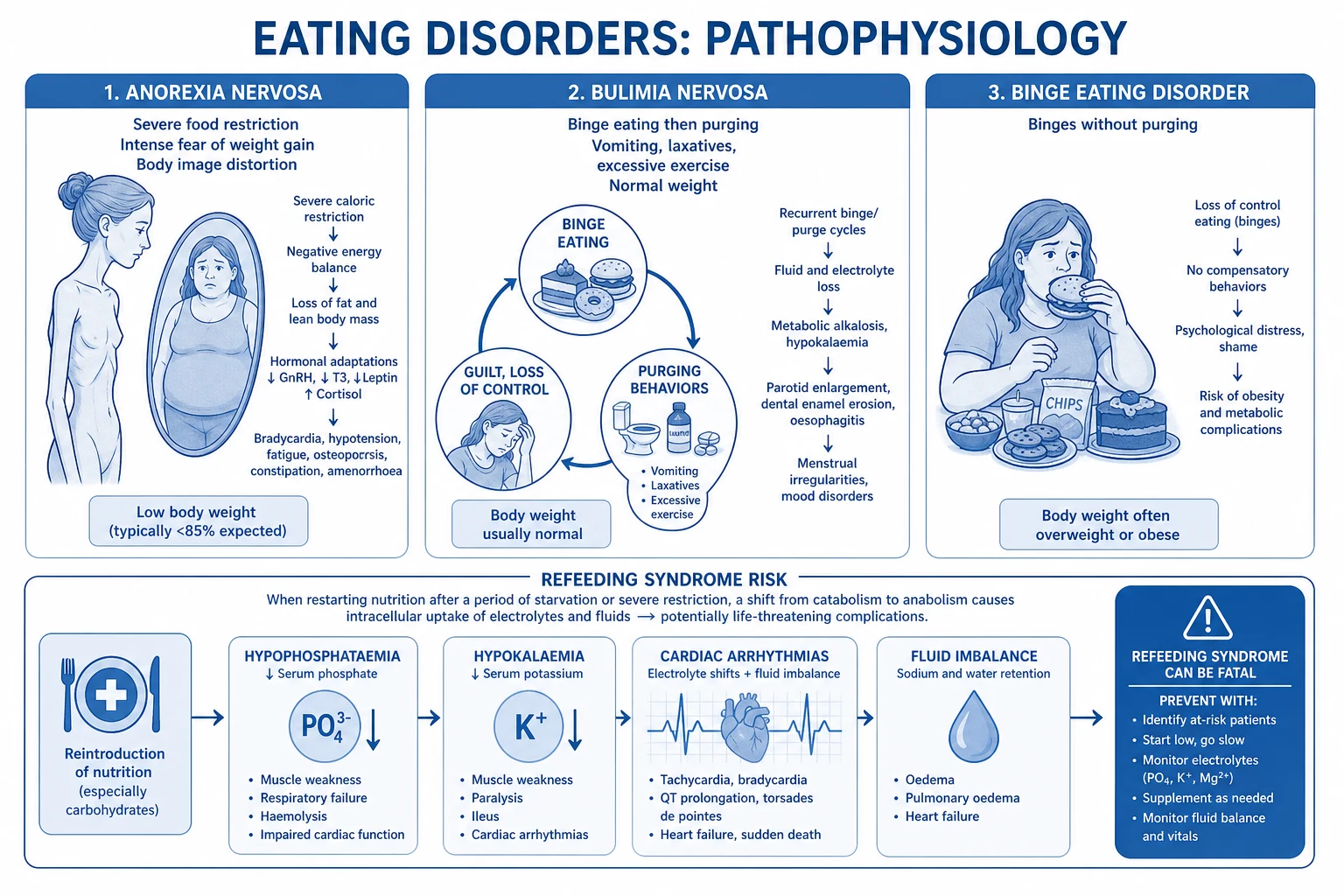
Starvation-induced physiological change — what every examiner probes:[1][3]
| System | Change in starvation | Clinical sign |
|---|---|---|
| Cardiovascular | Bradycardia, hypotension, reduced LV mass, mitral valve prolapse, QTc prolongation | HR under 40; postural drop; syncope; sudden cardiac death |
| Metabolic | Hypoglycaemia, hypothermia, low T3, hypercortisolism | Cold peripheries; lethargy; impaired cognition |
| Haematological | Leukopenia, anaemia, thrombocytopenia; gelatinous marrow transformation | Easy bruising; infections |
| Gastrointestinal | Gastric stasis, slow transit, constipation, raised liver enzymes, fatty liver | Early satiety; abdominal pain; transaminitis |
| Endocrine | Amenorrhoea, low libido, hypercortisolism, low T3, high GH/low IGF-1 | Amenorrhoea; osteoporosis; growth arrest |
| Renal | Concentrating defect, stones (especially with laxatives) | Polyuria; renal colic |
| Musculoskeletal | Muscle catabolism, osteopenia/osteoporosis, proximal myopathy | SUSS test positive; pathological fractures |
| Dermatological | Lanugo (fine body hair), dry skin, brittle hair/nails, carotenoderma, acrocyanosis | 'Anorexic' appearance |
Purging pathophysiology (BN and AN-BP): [1]
- Self-induced vomiting → loss of HCl and K+ → hypochloraemic, hypokalaemic metabolic alkalosis (the classic exam pattern); parotid hypertrophy; dental erosion (perimyolysis, especially lingual surfaces of upper incisors); oesophagitis, Mallory-Weiss tear, Boerhaave syndrome; Russell sign (callus on dorsum of dominant hand from inducing gag).
- Laxative abuse → cathartic colon, hypokalaemia, metabolic acidosis (loss of bicarbonate in stool), dehydration, melanosis coli.
- Diuretic abuse → hypokalaemia, hyponatraemia, metabolic alkalosis, dehydration, renal impairment.
- Insulin omission (in type 1 diabetes) → hyperglycaemia, recurrent DKA, accelerated retinopathy and nephropathy. [1]
The vicious cycle that perpetuates the disorder: [1]
Starvation → reduced serotonin tone → mood and cognitive rigidity worsen → increased anxiety about eating → further restriction → further starvation; the AN patient experiences weight gain as physical threat and weight loss as reward, the inverse of a healthy brain. Treatment must therefore break the starvation cycle by weight restoration before cognitive change is possible.[1]
Eating-disorder pathophysiology — METABOLIC model
STARVE
Keys' Minnesota experiment — starvation itself produces food preoccupation, rigidity, depression; weight restoration is prerequisite for therapy
GWAS shows AN clusters genetically with metabolic traits AND psychiatric traits (Watson 2019, Nature Genetics)
HPG suppressed (amenorrhoea); HPA raised (hypercortisolism); sick euthyroid; high GH/low IGF-1; low leptin, high ghrelin
Insula/ACC/OFC: less reward from food, more reward from weight loss; dopamine dysregulated
Hypochloraemic hypokalaemic metabolic alkalosis; parotid + dental erosion + Russell sign (vomit); cathartic colon (laxatives)
AN is ego-syntonic — patient embraces the disorder — distinguishes it from body dysmorphia (ego-dystonic); drives treatment resistance
Clinical Presentation
The presentation depends on the entity, but the unifying features are disturbed eating behaviour, distress, and physical sequelae.[1]
Anorexia nervosa — DSM-5-TR criteria (reproduce verbatim): [1]
- Criterion A — restriction of energy intake relative to requirements, leading to significantly low body weight in the context of age, sex, developmental trajectory, and physical health. Significantly low is defined as less than minimally normal, or for children/adolescents less than minimally expected.
- Criterion B — intense fear of gaining weight or becoming fat, or persistent behaviour that interferes with weight gain, even though at significantly low weight.
- Criterion C — disturbance in the way one's body weight or shape is experienced, undue influence of body weight or shape on self-evaluation, or persistent lack of recognition of the seriousness of the current low body weight.
- Specify subtype: restricting type; binge-eating/purging type.
- Specify severity: by BMI (mild ≥17.0, moderate 16.0-16.99, severe 15.0-15.99, extreme below 15.0).
- Specify: in remission (after full criteria were previously met, none have been for a sustained period).
- NOTE (examiner trap): amenorrhoea is no longer a criterion. [1]
Bulimia nervosa — DSM-5-TR criteria (reproduce verbatim): [1]
- Criterion A — recurrent episodes of binge eating. An episode is characterised by (1) eating, in a discrete period (e.g., 2 hours), an amount of food that is definitely larger than most people would eat in a similar period under similar circumstances, AND (2) a sense of lack of control during the episode.
- Criterion B — recurrent inappropriate compensatory behaviour to prevent weight gain: self-induced vomiting; misuse of laxatives, diuretics, enemas or other medications; fasting; or excessive exercise.
- Criterion C — the binge eating and inappropriate compensatory behaviours both occur, on average, at least once a week for 3 months.
- Criterion D — self-evaluation is unduly influenced by body shape and weight.
- Criterion E — the disturbance does not occur exclusively during episodes of anorexia nervosa.
- Specify subtype: purging type (regular vomiting/laxatives/diuretics); non-purging type (fasting/exercise only).
- Specify severity: by frequency of compensatory behaviours (mild 1-3/wk, moderate 4-7, severe 8-13, extreme ≥14). [1]
Binge eating disorder — DSM-5-TR criteria (reproduce verbatim): [1]
- Criterion A — recurrent episodes of binge eating (same as BN criterion A).
- Criterion B — binge episodes are associated with three or more of: eating rapidly; eating until uncomfortably full; eating large amounts when not hungry; eating alone (embarrassment); feeling disgust, depression or guilt afterwards.
- Criterion C — marked distress about binge eating.
- Criterion D — occurs, on average, at least once a week for 3 months.
- Criterion E — not associated with recurrent inappropriate compensatory behaviour (i.e., not BN). [1]
ARFID — DSM-5-TR criteria (reproduce verbatim): [1]
- Criterion A — an eating or feeding disturbance (apparent lack of interest in eating; avoidance based on sensory qualities; concern about aversive consequences) manifested by persistent failure to meet appropriate nutritional and/or energy needs associated with one or more of: significant weight loss; significant nutritional deficiency; dependence on enteral feeding or oral nutritional supplements; marked interference with psychosocial functioning.
- Criterion B — not better explained by lack of available food or an associated culturally sanctioned practice.
- Criterion C — does not occur exclusively during AN/BN, and there is no evidence of disturbance in body weight/shape.
- Criterion D — not better explained by another medical or mental disorder (e.g., GI disease, food allergy). [1]
Physical signs of starvation (anorexia) — the bedside checklist (examiner favourite): [1]
- General: cachexia, hypothermia, cold hands and feet, acrocyanosis, lanugo (fine, downy body hair on the back, arms, cheeks — a starvation adaptation to conserve heat), cachexia, sunken cheeks, hollow temples.
- Cardiovascular: bradycardia (often HR under 40), hypotension, postural drop (over 20 mmHg systolic is a red flag), mitral valve prolapse click/murmur, peripheral oedema (especially on refeeding), pericardial effusion (rare).
- Abdomen: scaphoid, mild hepatomegaly from fatty liver, slow bowel sounds.
- Skin and appendages: dry, scaly skin (xerosis); brittle hair; carotenoderma (yellowish palms/soles from excess carotene in low-fat diets); acrocyanosis; Russell sign in purgers.
- Head and neck: parotid enlargement (in purgers); angular cheilitis; dental erosion (perimyolysis) on lingual surfaces of upper incisors in purgers.
- Neurological: proximal myopathy (difficulty standing from squatting — the basis of the SUSS test, Sit Up - Squat - Stand); peripheral neuropathy; cognitive slowing.
- Reproductive: secondary amenorrhoea; loss of libido.
- MSE: thin, withdrawn, often defensive; preoccupation with food, calories, weight; rigid thinking; denial of illness / lack of insight into seriousness; mood often depressed; no psychotic features unless comorbid. [1]
Physical signs of bulimia nervosa (the patient is usually normal weight): [1]
- Russell sign — callus or abrasion on the dorsum of the dominant hand from repeated induction of vomiting. (Pathognomonic when present; absent in most.)
- Parotid (and submandibular) enlargement — 'puffy cheeks' from chronic vomiting-induced hypertrophy and sialadenosis.
- Dental erosion (perimyolysis) — loss of enamel, especially on the lingual surfaces of upper incisors, from gastric acid; increased caries; sensitive teeth.
- Subconjunctival haemorrhage or petechiae around the eyes from the valsalva of induced vomiting.
- Signs of dehydration — dry mouth, postural drop, oliguria.
- Calluses, scarring from laxative/diuretic procurement.
- MSE: often normal weight, ashamed, secretive, comorbid depression/anxiety, sometimes substance use; binge-purge cycle dominates life; insight is variable, often better than AN. [1]
Binge eating disorder: [1]
- Often overweight or obese; eats rapidly, secretly, to discomfort; expresses guilt and disgust but does not purge; may have obesity-related comorbidity (type 2 diabetes, hypertension, sleep apnoea, fatty liver). [1]
ARFID: [1]
- Restricted range of accepted foods (often by texture, colour, brand); anxiety about new foods; weight loss or growth faltering; no body-image distortion; common in autism, sensory processing disorder, post-choking/post-vomiting trauma. [1]
Atypical / masked presentations (examiner favourite): [1]
- 'Diabulimia' in type 1 diabetes — recurrent DKA, omitting insulin, rapid weight loss; this group has the highest mortality of any eating-disorder subgroup because hyperglycaemia compounds starvation.
- Atypical anorexia (OSFED) — all AN criteria but not underweight; the patient has lost substantial weight rapidly from a previously higher weight. Medical risk is as high as in underweight AN because the physiological stress of rapid weight loss is independent of starting weight — examiners test this trap heavily.
- Male AN — under-diagnosed; presents with muscle dysmorphia and exercise-driven restriction; high suicide risk.[14]
- Female athlete triad / RED-S (relative energy deficiency in sport) — low energy availability (with or without disordered eating), menstrual dysfunction, and low bone mineral density; can include stress fractures.
- Pregnancy and postpartum — relapse risk; can present as hyperemesis-like behaviour masking purging; risk of low birth weight, prematurity, postnatal depression.[15]
- Older adults (late-onset AN) — rarer but increasingly recognised; often triggered by bereavement, medical illness, or medication side effects; high medical fragility.
Differential Diagnosis
A patient who has lost weight or who binges/purges is not necessarily an eating disorder. The differential spans organic weight loss and other psychiatric disorders.[1]
The single most-tested organic differential: anorexia nervosa vs unexplained weight loss from organic disease. [1]
| Feature | Anorexia nervosa | Organic weight loss (e.g., IBD, malignancy, hyperthyroidism) |
|---|---|---|
| Body image | Distorted, fears fatness | Body image intact; concerned about the weight loss |
| Attitude to weight gain | Terrified | Welcomes or neutral |
| Food behaviour | Restriction, rituals, calorie counting | Normal appetite (or reduced by disease) |
| Weight | Consciously driven down | Involuntary |
| Menstrual history | Amenorrhoea common | Amenorrhoea possible from chronic disease |
| Family history | Often positive | Often negative |
| Key clues | Lanugo, Russell sign, parotid, dental erosion | Fever, diarrhoea, mass, night sweats, tachycardia (hyperthyroid) |
Organic / medical differentials to actively exclude:[1]
- Hyperthyroidism (Graves disease) — weight loss with increased appetite, tachycardia, tremor, goitre, eye signs; TSH suppressed, T3/T4 raised.
- Type 1 diabetes (especially 'diabulimia') — weight loss, polyuria, polydipsia, hyperglycaemia. Insulin omission is the eating-disorder behaviour.
- Inflammatory bowel disease (Crohn disease) — weight loss, abdominal pain, diarrhoea, perianal disease; raised CRP, anaemia.
- Coeliac disease — weight loss, diarrhoea, iron deficiency; tissue transglutaminase antibodies.
- Addison disease — weight loss, fatigue, hyperpigmentation, hyponatraemia, hyperkalaemia (the opposite electrolyte pattern to AN).
- Malignancy (lymphoma, gastric, pancreatic) — older age, weight loss, organ-specific symptoms.
- Chronic infection (TB, HIV) — weight loss, fever, night sweats.
- Malabsorption (chronic pancreatitis, cystic fibrosis, small-intestinal bacterial overgrowth).
- Superior mesenteric artery syndrome — mechanical duodenal compression in low-weight states; can mimic and coexist with AN. [1]
Psychiatric differentials:[1]
- Major depression — appetite and weight loss are common, but no body-image distortion or weight-phobia; depression is mood-driven, AN is weight-driven.
- Obsessive-compulsive disorder — food rituals, contamination fears, counting, but the obsession is not primarily about weight or shape; insight present.
- Body dysmorphic disorder — preoccupation with perceived defect (often muscle, nose, skin), not primarily weight; ego-dystonic (unlike AN which is ego-syntonic).
- Schizophrenia — food refusal from delusional beliefs (e.g., food is poisoned), not from weight phobia.
- Substance use disorder — stimulant abuse (cocaine, amphetamine) causes weight loss and food restriction; differentiate by history.
- Anxiety disorders — food restriction from social phobia (eating in public), panic (choking), or specific phobia of vomiting (emetophobia, an OSFED-adjacent picture).
- Personality disorder (borderline) — impulsivity, binge-purge, self-harm; frequently comorbid with AN-BP and BN rather than a true differential.
- Somatic symptom disorder / illness anxiety — preoccupation with 'food intolerances', 'allergies', restrictive 'clean eating' (orthorexia, an emerging OSFED-adjacent picture). [1]
Other eating-disorder entities to distinguish: [1]
- ARFID vs AN — ARFID has no body-image distortion, no weight phobia; restriction driven by sensory, fear, or interest factors. Common in autism and children.
- Rumination disorder — effortless regurgitation and rechewing, not vomiting; not weight-phobic.
- Pica — eating non-food substances; not weight-phobic.
- Avoidant/restrictive food intake disorder — distinguished by absence of body image disturbance. [1]
Clinical & Bedside Assessment
Eating disorders are diagnosed clinically by careful history, MSE and physical examination, supported by risk-stratification tools (SCOFF, EDE-Q, MEED/MARSIPAN). The two key bedside skills are weighing the patient (with their back to the scale, blind-weighing to reduce triggering) and assessing medical instability.[1]
History — what to ask: [1]
- Eating behaviour: what, how much, when, with whom, rituals (cutting food into tiny pieces, eating very slowly, spitting out food), avoidance of food groups, calorie counting.
- Binge behaviour: episodes per week, duration, triggers, amount, secrecy.
- Purging: vomiting frequency, laxatives (type, dose), diuretics, enemas, diet pills, exercise (hours/day, compulsive).
- Weight history: highest, lowest, current; desired; rate of recent loss.
- Body image: fear of weight gain, body checking, avoidance of mirrors/scales/clothes sizes.
- Menstrual history (females): last menstrual period, regularity, contraceptive use.
- Comorbidities: depression, anxiety, OCD, substance use, personality, self-harm, suicidality.
- Past medical: type 1 diabetes, GI disease, autoimmune, thyroid.
- Medications: insulin (omission?), laxatives, diuretics, contraceptives, psychotropics.
- Family history: eating disorder, depression, OCD, obesity.
- Social: occupation (sport, dance, modelling?), relationships, pressures, trauma. [1]
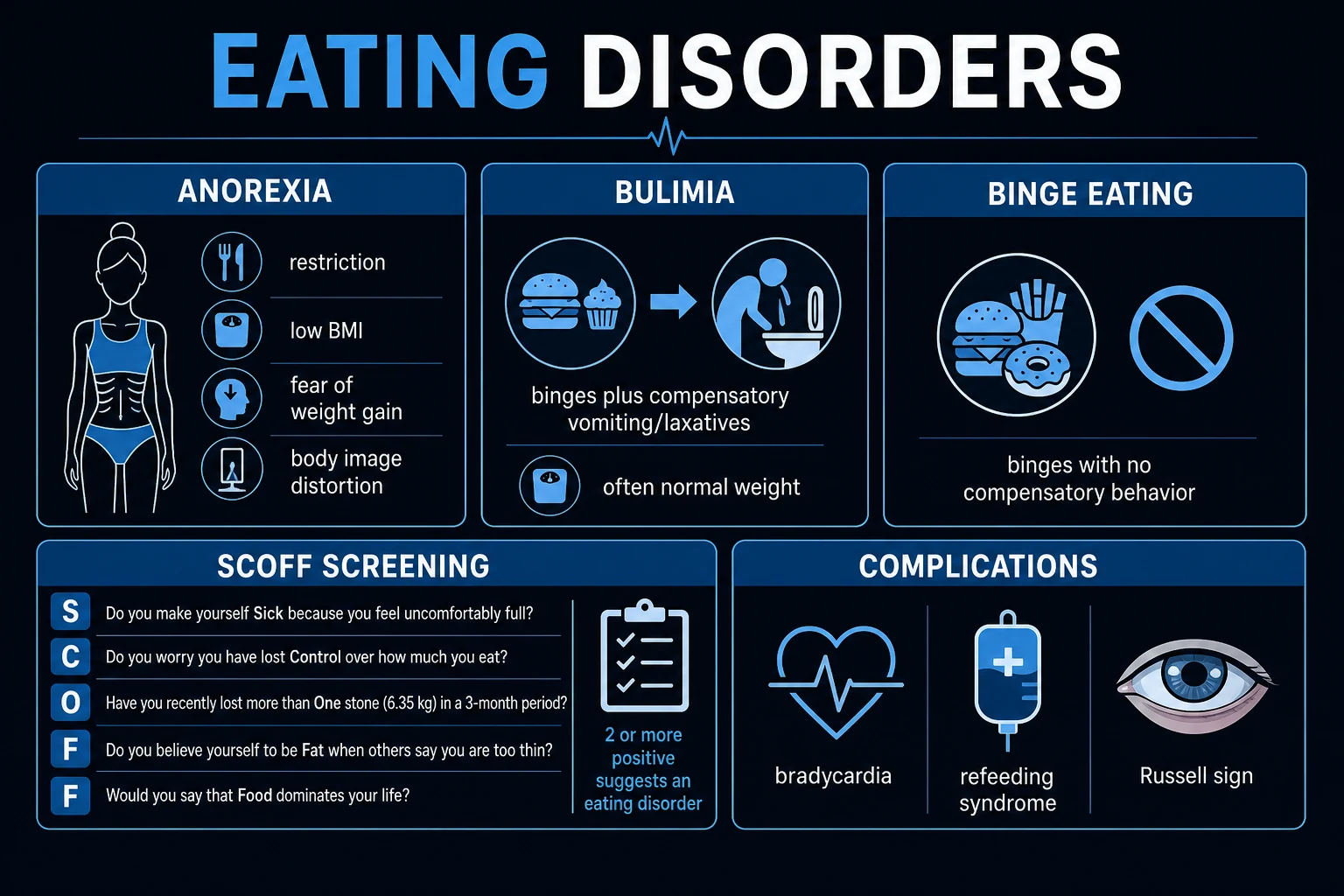
Screening — the SCOFF questionnaire (Morgan 1999, reproduce verbatim — examiner favourite): [1]
- S — Do you ever make yourself Sick because you feel uncomfortably full?
- C — Do you worry you have lost Control over how much you eat?
- O — Have you recently lost more than One stone (about 6 kg / 14 lb) in a 3-month period?
- F — Do you believe yourself to be Fat when others say you are too thin?
- H — Would you say that Food dominates your life? [1]
Scoring: 1 point per 'yes'; 2 or more = likely eating disorder (sensitivity ~85 percent, specificity ~90 percent). [1]
Standardised severity / symptom scales (names examiners reward): [1]
- Eating Disorder Examination (EDE) — semi-structured interview; gold-standard diagnostic.
- EDE-Questionnaire (EDE-Q) — self-report version; 28 items; subscales: restraint, eating concern, shape concern, weight concern; global score 0-6.
- Eating Attitudes Test (EAT-26) — 26-item self-report; score at or above 20 suggests an eating disorder.
- Bulimia Investigatory Test Edinburgh (BITE) — screen for bulimia.
- Clinical Impairment Assessment (CIA) — functional impairment.
- Morgan-Russell scales — outcome assessment.
- MEED risk assessment (UK, 2022) — replaced MARSIPAN (adults) and Junior MARSIPAN (under 18) as the UK standard for assessing medical risk. [1]
Bedside physical examination — the systematic search for the starvation phenotype and the purging phenotype: [1]
- Weight, height, BMI (calculate) — weigh in light clothing, blind-weighed; BMI is the severity marker for AN.
- Vital signs: heart rate (bradycardia under 40 = red flag), blood pressure (postural drop over 20 mmHg systolic = red flag), temperature (under 35.0 deg C = red flag), respiratory rate.
- Cardiovascular: bradycardia, murmurs (mitral valve prolapse), oedema, pericardial rub.
- Abdomen: scaphoid, hepatomegaly, slow bowel sounds; masses (excludes malignancy); perianal disease (excludes IBD).
- Skin: lanugo, xerosis, carotenoderma, acrocyanosis, Russell sign (dorsum of dominant hand), calluses, self-harm scars.
- Head and neck: parotid and submandibular enlargement, angular cheilitis.
- Dentition: dental erosion (perimyolysis), caries.
- Neurological: SUSS test — ask the patient to sit up from supine (uses abdominal muscles) and to squat-stand (uses proximal leg muscles); inability = proximal myopathy from starvation; peripheral neuropathy.
- Mental state: withdrawn, preoccupied with food, defensive about weight; assess mood, suicidal ideation, compulsions, insight (AN is ego-syntonic, so insight into seriousness is often impaired); assess capacity under the Mental Capacity Act.
- Growth and pubertal assessment in children and adolescents (height centile, weight centile, Tanner stage). [1]
Risk stratification — MEED red flags (UK, 2022; high-yield examiner content): [1]
- Blood tests: K+ under 2.5 mmol/L; Na+ under 130 mmol/L; phosphate under 0.5 mmol/L; glucose under 3.0 mmol/L; creatinine raised; transaminases over twice normal; albumin under 35 g/L.
- ECG: HR under 40 bpm; QTc over 450 ms; arrhythmia.
- Cardiovascular: postural systolic drop over 20 mmHg; syncope; failure of HR to rise on standing.
- BMI: under 13 (adults) or under 0.4th centile / 80 percent median BMI (under 18).
- Other: temperature under 35.0 deg C; rapid weight loss (over 1 kg/week over several weeks); SUSS test inability; failure to respond to outpatient treatment. [1]
Investigations
There is no blood test or scan that diagnoses an eating disorder — diagnosis is clinical. Investigations serve three purposes: (1) assess medical risk and instability, (2) detect complications, and (3) provide a baseline before treatment and monitor response and refeeding.[1][3]
Baseline investigations before starting treatment: [1]
- Full blood count — anaemia, leukopenia, thrombocytopenia (starvation causes bone-marrow hypoplasia / gelatinous transformation).
- Urea and electrolytes — hypokalaemia (especially in purgers), hyponatraemia (water loading, SIADH, laxative abuse), hypochloraemia with metabolic alkalosis (vomiting), raised urea (dehydration).
- Glucose — hypoglycaemia (especially chronic); check before refeeding.
- Liver function tests — transaminitis (ALT/AST raised) from fatty liver or starvation; raised bilirubin late.
- Bone profile / calcium, phosphate, magnesium — phosphate (low in refeeding syndrome), magnesium (low), calcium (low or normal).
- Thyroid function — sick euthyroid pattern (low T3, normal TSH); exclude comorbid thyroid disease.
- Cortisol — raised in starvation (do not misdiagnose Cushing); normalises with weight gain.
- Renal function — urea, creatinine, eGFR.
- Coagulation — INR if liver disease severe.
- Amylase — raised in purging (salivary isoenzyme from parotid), or pancreatitis.
- Ferritin, B12, folate, vitamin D — deficiency screening.
- Glucose haemoglobin and ketones in patients with diabetes.
- Pregnancy test in women of childbearing potential.
- ECG (12-lead) — bradycardia, QTc prolongation (over 450 ms = red flag), T-wave inversion, ST depression, ventricular arrhythmias. ECG is mandatory in all patients at presentation and during refeeding.
- DEXA scan — bone mineral density; osteopenia (Z-score between -1 and -2) and osteoporosis (Z-score below -2) are common after 6 months of amenorrhoea; check at presentation in underweight patients. [1]
Monitoring during refeeding (the critical period — first 2 weeks): [1]
- Phosphate, potassium, magnesium — daily for the first 2 weeks (these plummet on refeeding).
- Glucose — frequent (refeeding hyperglycaemia then reactive hypoglycaemia).
- ECG — daily if high risk; watch QTc.
- Fluid balance, weight — daily weight (target gain 0.5-1.0 kg/week outpatient, 0.5-1.4 kg/week inpatient; faster risks refeeding syndrome and oedema).
- Thiamine — replace before feeding (200-300 mg oral or IV).
- Multivitamin and mineral supplement daily. [1]
Management — Resuscitation / Immediate Concerns
Eating disorders have no 'acute resuscitation' in the sepsis sense, but medical instability and refeeding syndrome are the immediate life-threatening risks.[1][9]
Immediate medical stabilisation — admit to a medical bed (under MEED red flags): [1]
- Bradycardia under 40, QTc over 450 ms, arrhythmia, syncope, postural drop over 20 mmHg systolic — admit for cardiac monitoring; correct electrolytes slowly; treat the underlying starvation by carefully planned refeeding.
- Severe hypokalaemia (under 2.5 mmol/L) or other electrolyte disturbance — IV replacement; monitor ECG.
- Hypoglycaemia (under 3.0 mmol/L) — admit; treat with continuous glucose infusion (NOT bolus, which triggers rebound hypoglycaemia via insulin surge) — typically 10 percent dextrose at 100 mL/hr; monitor.
- Severe dehydration or renal failure — IV fluids cautiously (risk of oedema).
- Hypothermia — passive rewarming; do not warm aggressively.
- Suicidal ideation or self-harm — psychiatric admission; risk assessment; one-to-one observation. [1]
Refeeding syndrome — the single most important acute concept in eating disorders (examiner favourite — reproduce the protocol verbatim):[3][9]
Refeeding syndrome is the potentially fatal shift of fluid and electrolytes that occurs when food is reintroduced to a starved patient. The mechanism: carbohydrate intake triggers insulin release, which drives intracellular uptake of phosphate, potassium and magnesium (used to phosphorylate glucose and rebuild ATP and 2,3-DPG in red cells), producing acute hypophosphataemia, hypokalaemia and hypomagnesaemia; sodium retention and insulin cause fluid shift and oedema; thiamine (a co-factor for carbohydrate metabolism) is rapidly depleted, risking Wernicke encephalopathy and cardiac failure. The clinical consequences: arrhythmia, heart failure, seizures, coma, respiratory failure, death — classically within the first 3-7 days of refeeding. [1]
Who is at risk of refeeding syndrome? Any patient with one or more of: [1]
- BMI under 16 (very high risk under 12).
- Little or no nutritional intake for over 10 days.
- Pre-existing hypokalaemia, hypophosphataemia or hypomagnesaemia.
- Pre-existing cardiac or renal disease.
- Alcohol misuse (thiamine depletion).
- Rapid weight loss (over 15 percent body weight in 3-6 months). [1]
The refeeding protocol (NICE NG69 / MARSIPAN / MEED — reproduce): [1]
- Before feeding: give thiamine 200-300 mg (oral, or IV if high risk) plus a high-potency multivitamin and mineral supplement. Continue thiamine for at least 10 days.
- Start calories low: 5-20 kcal/kg/day (NICE NG69; MARSIPAN/MEED start at the lower end — 5 kcal/kg/day for very high risk). The more extreme the starvation, the lower the starting intake.
- Supplement phosphate, potassium and magnesium prophylactically (e.g., oral phosphate 1-2 tablets twice daily, IV if levels low). NICE recommends starting supplementation before refeeding in high-risk patients.
- Escalate slowly: increase by 200-300 kcal every 24-48 hours, only if electrolytes and clinical state are stable; aim to reach a weight-gain intake (about 30-40 kcal/kg/day) within 4-7 days. Do not exceed 20-30 kcal/kg/day in the first week in high-risk patients.
- Monitor: daily weight, U&E, phosphate, magnesium, glucose, fluid balance, ECG for the first 2 weeks; watch for oedema, heart failure.
- Restrict fluids if oedema develops or cardiac failure: 500 mL plus urine output in severe cases.
- Manage hypoglycaemia with continuous dextrose, not bolus.
- Correct electrolytes aggressively but do not delay refeeding — the syndrome is preventable with slow refeeding and supplementation. [1]
Management — Definitive & Stepwise
Treatment is multidisciplinary, evidence-based, and staged by disorder and severity. The framework below follows NICE NG69 (UK, 2017, updated 2020), DSM-5-TR guidance, and RANZCP guidelines (Hay 2014).[1][2][8]
The two pillars of eating-disorder treatment: [1]
- Nutritional rehabilitation (weight restoration + normalisation of eating) — non-negotiable in AN; central in BN/BED.
- Evidence-based psychological therapy — family-based treatment (Maudsley model) for adolescent AN; CBT-ED for adults with any eating disorder and for adolescent BN/BED. [1]
Setting — stepped care: [1]
- Outpatient: most patients; specialist eating-disorder team (psychiatrist, psychologist, dietitian, family therapist, GP).
- Day programme / intensive outpatient: 4-5 days/week; for those needing more structure than outpatient but not admission.
- Inpatient: medical admission for instability; specialist eating-disorder psychiatric admission for failed outpatient treatment, severe symptoms, or where the patient cannot be managed safely at home. Compulsory admission under the Mental Health Act is frequently used in AN — AN has the highest rate of compulsory admission of any psychiatric disorder in the UK.
- Specialist residential: for chronic or treatment-resistant cases. [1]
Anorexia nervosa — definitive treatment
Step 1 — outpatient treatment for uncomplicated AN: [1]
- Weight restoration first: aim for 0.5-1.0 kg/week outpatient, 0.5-1.4 kg/week inpatient. Calorie intake gradually increased from refeeding baseline.
- Family-based treatment (FBT, the Maudsley model) is first-line for adolescents with AN. Three phases: (1) weight restoration — parents take full control of eating, supervised meals, prevention of exercise/purging; (2) gradual return of control over eating to the adolescent once weight is restored; (3) normal adolescent development — addressing identity, autonomy, and other issues now the AN is in remission. Lock 2010 (Arch Gen Psychiatry) showed FBT superior to adolescent-focused individual therapy.[7]
- CBT-ED for adults with AN — about 20-40 sessions over 6-12 months; addresses restriction, weight, body image, perfectionism, and the cognitive distortions maintaining the disorder.
- Maudsley Anorexia Nervosa Treatment for Adults (MANTRA) — a specialist individual therapy developed at the Maudsley, addressing cognitive rigidity, perfectionism, and interpersonal styles.
- Specialist supportive clinical management (SSCM) — combination of clinical management and supportive therapy; effective in some patients.
Step 2 — inpatient specialist admission: [1]
- Indications: MEED red flags, failed outpatient treatment (no weight gain or continued weight loss despite treatment), severe psychiatric comorbidity, suicidality, social factors preventing safe outpatient care.
- Aim: weight restoration to a safe weight (often BMI at least 14.5 for discharge from medical bed, and to an individually agreed healthy weight from psychiatric bed), medical stabilisation, start of psychological therapy. [1]
Step 3 — pharmacotherapy in anorexia nervosa: [1]
- No drug is effective for the core symptoms of anorexia nervosa. SSRIs do not work in the starved brain (serotonin receptor availability is altered; the brain needs to be weight-restored before serotonergic drugs have any effect).
- Olanzapine 2.5-10 mg once daily — may aid weight gain and reduce anxiety/rigidity; modest evidence; off-label in most guidelines. Monitor for metabolic side effects.
- SSRIs (fluoxetine, sertraline) — useful after weight restoration for comorbid depression, anxiety or OCD; NOT for the eating disorder itself in low-weight patients.
- Bisphosphonates (e.g., alendronate 70 mg weekly) — for osteoporosis; not always effective in AN-related bone loss; oestrogen replacement is generally NOT recommended (does not restore bone mass without weight gain).
- Hormone replacement / combined oral contraceptive — for bone protection in some guidelines; does not address the underlying starvation. [1]
Avoid in anorexia: [1]
- Bupropion — lowers seizure threshold; not used in any patient who purges.
- Tricyclic antidepressants — QTc prolongation in low-weight patients; avoid.
- Stimulants (including lisdexamfetamine, used for BED) — never in AN. [1]
Bulimia nervosa — definitive treatment
Step 1 — guided self-help based on CBT-ED: 16-20 sessions of CBT-ED; evidence-based first-line; reduces binge-purge frequency.[10]
Step 2 — full CBT-ED: 16-20 sessions; addresses restriction (which drives binge urges), normalises eating pattern (3 meals + 2-3 snacks), cognitive restructuring of weight/shape overvaluation, body-image exposure, relapse prevention.[2][11]
Step 3 — pharmacotherapy: [1]
- Fluoxetine 60 mg once daily — first-line drug for BN; the Fluoxetine Bulimia Nervosa Collaborative Study Group (1992, Arch Gen Psychiatry) RCT demonstrated a marked reduction in binge frequency at 60 mg/day (the effective dose is HIGHER than for depression; 20 mg is ineffective). Goldstein 1995 confirmed long-term benefit.[12][13]
- Alternative SSRIs (sertraline 100-200 mg, citalopram 20-40 mg) — if fluoxetine not tolerated.
- Avoid bupropion (seizure risk in purgers) and MAOIs (hypertensive crisis with tyramine-rich foods).
Binge eating disorder — definitive treatment
- CBT-ED first-line psychological therapy.[11]
- Interpersonal psychotherapy (IPT) — equal efficacy to CBT in BED; addresses interpersonal triggers of binge eating.
- Lisdexamfetamine 50-70 mg daily — FDA-approved for moderate-to-severe BED; first-line drug; monitor for stimulant side effects (insomnia, hypertension, dependence).
- SSRIs (fluoxetine, sertraline) — moderate evidence for reducing binge frequency.
- Topiramate 50-300 mg/day — reduces binge frequency but cognitive side effects limit use.
ARFID — definitive treatment
- No medication is effective for ARFID.
- Family-based treatment adapted for ARFID and CBT-AR (cognitive behavioural therapy for ARFID) are first-line.
- Address the underlying driver (sensory, fear, interest); gradual exposure to new foods; nutritional rehabilitation including supplements or tube feeding if severely malnourished.
- Treat comorbid autism, anxiety, GI disease. [1]
Psychological therapy — what the examiners expect you to know: [1]
- CBT-ED — enhanced form of CBT developed by Fairburn; addresses the core psychopathology (overvaluation of weight/shape); 16-40 sessions; the most widely evidence-based therapy across AN, BN, BED.
- Family-based treatment (Maudsley model) — three-phase family therapy; first-line for adolescent AN; Lock 2010 RCT.
- Interpersonal psychotherapy (IPT) — equal to CBT in BED and BN; focuses on current interpersonal role transitions, disputes, grief, deficits.
- Maudsley Model of Anorexia Nervosa Treatment for Adults (MANTRA) — specialist motivational/cognitive therapy for adult AN.
- Focal psychodynamic therapy — limited evidence in AN.
- Dialectical behaviour therapy (DBT) — adapted for BN and BED; emotion-regulation focus. [1]
Phases of treatment: [1]
- Acute: medical stabilisation; refeeding; start of therapy; 6-12 weeks.
- Weight restoration / symptom reduction: 3-6 months to reach target weight and reduce binge-purge frequency.
- Maintenance: 6-12 months; consolidate change, prevent relapse, address comorbidities, transition to adult services if adolescent.
- Long-term: many patients need years of follow-up; relapse common. [1]
Bulimia pharmacology — fluoxetine 60 mg
BULIMIA
Fluoxetine 60 mg once daily (BNSG 1992 RCT — 60 mg, NOT 20 mg)
Hypokalaemia from vomiting; metabolic alkalosis; correct before SSRI
Stop laxative/diuretic abuse; cathartic colon risk; wean slowly
BN is ego-DYSTONIC (distressing); AN is ego-SYNTONIC
CBT-ED is the most effective psychological therapy for BN (16-20 sessions)
Historical ipecac abuse causes fatal cardiomyopathy — screen for it
Lowers seizure threshold — never in any purging patient
Specific Subtypes & Scenarios
Each subtype and scenario is handled distinctly — examiners reward this granularity.[1][8]
Anorexia nervosa — restricting type (AN-R): [1]
- The classic young-adolescent presentation: restriction, calorie counting, exercise, food rituals, intense fear of weight gain; no binge-purge.
- Higher genetic loading; more cognitive rigidity and perfectionism.
- Treat: weight restoration + FBT (adolescent) or CBT-ED (adult) + treat comorbid anxiety/OCD. [1]
Anorexia nervosa — binge-eating/purging type (AN-BP): [1]
- Restriction PLUS recurrent binge-purge; higher impulsivity; greater medical acuity (electrolyte disturbance, oesophageal injury).
- Greater comorbidity with substance use, borderline traits, self-harm.
- Treat as AN (weight restoration + FBT/CBT-ED) PLUS address purging; fluoxetine has limited evidence in low-weight patients. [1]
Bulimia nervosa — purging type (most common): vomiting, laxatives, diuretics. [1]
Bulimia nervosa — non-purging type: fasting and excessive exercise to compensate for binges (no vomiting/laxatives); often normal weight and harder to detect. [1]
Binge eating disorder: large binges, marked distress, no compensatory behaviour; often overweight; treat with CBT, IPT, lisdexamfetamine. [1]
ARFID: restriction from sensory aversion, fear of aversive consequences, or lack of interest; not weight-phobic; treat with FBT-ARFID/CBT-AR. [1]
OSFED subtypes (each carries medical risk): [1]
- Atypical anorexia: all AN criteria BUT weight is in or above normal range. Medical risk as high as typical AN because of rapid weight loss.
- Bulimia nervosa of low frequency and/or limited duration: meets all criteria but less than once weekly or less than 3 months.
- Binge eating disorder of low frequency and/or limited duration.
- Purging disorder: purging without binges, at normal weight.
- Night eating syndrome: recurrent episodes of night eating (eating after awakening from sleep or excessive food intake after the evening meal). [1]
'Diabulimia' (eating disorder in type 1 diabetes): [1]
- The most dangerous eating-disorder subgroup; insulin omission for weight loss.
- Presentations: recurrent DKA, poor glycaemic control, rapid weight loss, recurrent hypoglycaemia (when insulin partially restored), accelerated retinopathy/nephropathy/neuropathy.
- Treat: joint diabetes-psychiatry management; never abruptly increase insulin (refeeding-like risk); FBT or CBT-ED; manage medical risk; insulin dosing supervised. [1]
Female athlete triad / RED-S (Relative Energy Deficiency in Sport): [1]
- Triad: low energy availability (with or without disordered eating), menstrual dysfunction (functional hypothalamic amenorrhoea), low bone mineral density.
- RED-S extends this to all physiological systems affected by low energy availability (immune, cardiovascular, GI, endocrine).
- Common in endurance runners, gymnasts, dancers, swimmers; screen with brief eating-disorder questionnaires and bone density.
- Treat: increase energy availability (nutrition + reduce training); FBT/CBT-ED if there is a true eating disorder; do not start OCP for bone (does not work without weight gain). [1]
Pregnancy and the postpartum period:[15]
- Pregnancy often improves symptoms (motivation to protect baby) but postpartum relapse is common.
- Risks: miscarriage, low birth weight, prematurity, postnatal depression, breastfeeding difficulty.
- Micali 2014 showed increased fertility treatment, twin births and unplanned pregnancies in women with eating disorders.[15]
- Treat: close obstetric-psychiatry liaison; weight monitoring; SSRIs (sertraline preferred in breastfeeding) if depression; FBT principles with partner.
Late-onset anorexia (older adults): [1]
- Rarer; often triggered by bereavement, medical illness, medication side effects, sensory loss, social isolation.
- Higher medical fragility; lower threshold for admission. [1]
Anorexia with autism spectrum traits: [1]
- About 20 percent of AN patients have significant autistic traits; predicts a more chronic course and poorer response to standard CBT-ED.
- Adapt therapy: more behavioural, more concrete, address sensory sensitivities, involve carers. [1]
Treatment-resistant anorexia: [1]
- Failed outpatient, day programme, and inpatient; chronic course.
- Manage: harm-reduction; maintain safe weight; treat comorbidities; consider long-term supported accommodation; avoid repeated involuntary admissions if patient has capacity. [1]
Complications & Pitfalls
Eating disorders cause complications across every body system. The acute medical complications are the leading causes of death.[1][3]
Cardiovascular (the leading cause of sudden death in AN): [1]
- Bradycardia, hypotension, QTc prolongation, mitral valve prolapse, pericardial effusion, reduced LV mass, congestive cardiac failure, ventricular arrhythmia, sudden cardiac death.
- Refeeding cardiomyopathy — heart muscle unable to handle the increased metabolic load on refeeding; phosphate and magnesium depletion worsen it. [1]
Electrolyte and metabolic: [1]
- Hypokalaemia, hypochloraemia, metabolic alkalosis (from vomiting); hypokalaemia, metabolic acidosis (from laxatives); hyponatraemia (water loading, SIADH, laxatives); hypoglycaemia (chronic, reactive); hypophosphataemia, hypomagnesaemia (refeeding). [1]
Endocrine: [1]
- Amenorrhoea, infertility, low libido (HPG suppression); hypercortisolism; sick euthyroid; growth retardation in adolescents. [1]
Musculoskeletal: [1]
- Osteopenia and osteoporosis (low BMI, hypo-oestrogenism, hypercortisolism, low IGF-1) — risk of pathological fractures (vertebral, hip, rib); reduced peak bone mass in adolescents.
- Proximal myopathy (SUSS test positive).
- Peripheral neuropathy (B-vitamin deficiency, compression). [1]
Gastrointestinal: [1]
- Gastric stasis, early satiety, constipation, abdominal pain, fatty liver with transaminitis, rarely acute fatty liver or liver failure, gastric dilatation, superior mesenteric artery syndrome, pancreatitis, Mallory-Weiss tear, Boerhaave syndrome (oesophageal rupture — surgical emergency). [1]
Renal: [1]
- Renal concentrating defect (chronic hypokalaemia), nephrolithiasis (especially with laxatives), renal failure (acute tubular necrosis from dehydration or electrolyte disturbance), electrolyte-losing nephropathy. [1]
Haematological: [1]
- Anaemia, leukopenia, thrombocytopenia, gelatinous bone-marrow transformation (reversible with weight gain). [1]
Dermatological: [1]
- Lanugo, xerosis, carotenoderma, acrocyanosis, brittle hair and nails, hair loss (telogen effluvium), Russell sign, self-harm scars. [1]
Dental: [1]
- Dental erosion (perimyolysis), caries, periodontal disease, salivary gland enlargement (sialadenosis). [1]
Psychiatric: [1]
- Major depression (50-70 percent), anxiety disorders, substance use, self-harm, suicide (one in five AN deaths), chronicity. [1]
Reproductive: [1]
- Infertility, miscarriage, premature delivery, low birth weight, postnatal depression. [1]
Classic diagnostic and treatment pitfalls (high-yield errors examiners test): [1]
- Failing to weigh the patient — BMI is the severity marker in AN; missing the weight is missing the diagnosis. Weigh every patient.
- Diagnosing 'Cushing disease' from hypercortisolism — starvation causes hypercortisolism without striae, buffalo hump, or hyperglycaemia; normalises with weight gain.
- Treating sick euthyroid with thyroxine — it normalises with weight gain; do not treat.
- Treating amenorrhoea with the oral contraceptive pill — masks the underlying problem; does not restore bone mass; does not treat the disorder.
- Starting refeeding at full calories — refeeding syndrome kills within days.
- Forgetting thiamine before refeeding — Wernicke encephalopathy is preventable.
- Giving bupropion to a purging patient — seizure risk; never.
- Discharging a patient with QTc over 450 ms — sudden death risk; admit for cardiac monitoring.
- Missing atypical anorexia (OSFED) because the patient is 'not underweight' — medical risk as high as typical AN.
- Missing male anorexia — under-diagnosed; high suicide risk.[14]
- Not screening for insulin omission in type 1 diabetes — diabulimia is common and dangerous.
- Ignoring family accommodation — family members get drawn into rituals and 'enabling'; FBT addresses this.
- Premature discontinuation of therapy — relapse common; treat for at least 12 months after remission.
Prognosis & Disposition
Eating disorders are chronic and relapsing-remitting for many patients, but treatment substantially improves outcome.[1][4]
Anorexia nervosa — course and outcome (the high-yield mortality statistics): [1]
- About 46 percent recover fully, 33 percent improve, 20 percent remain chronic, and the disorder is fatal in about 5-6 percent (long follow-up studies show higher mortality with longer follow-up).
- Standardised mortality ratio (SMR) about 5.9 (Arcelus 2011 meta-analysis of 36 studies, 17,272 patients) — the highest of any psychiatric disorder. One in five deaths is by suicide (suicide SMR about 31).[5]
- Mortality is from cardiac arrhythmia, refeeding syndrome, medical complications of starvation, and suicide.
- Predictors of good prognosis in AN: shorter duration before treatment, adolescent onset (vs adult), early weight restoration, lack of comorbid psychiatric disorder, good family support, restrictive (vs binge-purge) subtype, female sex.
- Predictors of poor prognosis in AN: very low BMI at presentation, late onset, long duration, binge-purge subtype, comorbid personality disorder, substance use, repeated admissions, autistic traits, male sex (under-diagnosed).
Bulimia nervosa — course and outcome: [1]
- About 50-70 percent recover with adequate treatment; relapse rates around 30 percent over 5 years; chronic in 10-20 percent.
- Mortality lower than AN (SMR about 2) but still elevated.
- Predictors of good prognosis: shorter duration, prompt treatment, absence of comorbidity. [1]
Binge eating disorder: [1]
- Variable course; many remit spontaneously; CBT and lisdexamfetamine effective; comorbid obesity worsens outcome. [1]
ARFID: [1]
- Often chronic but responsive to FBT-ARFID/CBT-AR; can persist into adulthood; growth and development can be affected in children. [1]
Disposition: [1]
- Outpatient management for the majority; specialist eating-disorder team; GP for medical monitoring.
- Day programme for moderate severity or after inpatient discharge.
- Inpatient for medical instability, failed outpatient treatment, severe comorbidity.
- Specialist residential for chronic, treatment-resistant cases. [1]
Long-term follow-up: [1]
- AN: minimum 12 months after remission; many patients need years of follow-up; relapse common in first year.
- BN/BED: 6-12 months after symptom resolution.
- Transition from child/adolescent to adult services: structured handover; high-risk period. [1]
Special Populations
Children and adolescents (the highest-yield special population): [1]
- Family-based treatment (FBT, Maudsley model) is first-line for adolescent AN; Lock 2010 RCT.[7]
- Lower refeeding calorie starting points may be considered (especially in younger children); close monitoring.
- Growth and pubertal assessment; bone-density monitoring.
- School liaison; manage school-based food avoidance, bullying, sport.
- Safeguarding considerations — neglect by underfeeding (rare, in parents with eating disorders or Munchausen-by-proxy).
Pregnancy and the postpartum:[15]
- Close obstetric-psychiatry liaison; increased fetal monitoring; weight and electrolyte monitoring.
- Risk of relapse postpartum; breastfeeding support.
- Sertraline preferred SSRI in breastfeeding; fluoxetine avoid in early postpartum (long half-life, infant levels).
- Micali 2014 — increased fertility treatment, twin births, unplanned pregnancies.[15]
Males:[14]
- Under-diagnosed; presentation often with muscle dysmorphia, exercise-driven restriction.
- Higher comorbid substance use; higher suicide risk; lower treatment-seeking.
- Kask 2017 — males with AN have excess mortality and high psychiatric comorbidity.[14]
- Treatment as for females; address body-image issues around muscularity, not just thinness.
Athletes (female athlete triad / RED-S): [1]
- Screen in at-risk sports (distance running, gymnastics, swimming, dance, cycling, lightweight rowing, jockeys, wrestling).
- Address energy availability; reduce training; FBT/CBT-ED if eating disorder; treat bone density; do NOT rely on OCP for bone.
- Coordinate with coach and governing body. [1]
Type 1 diabetes (diabulimia): [1]
- Joint diabetes-psychiatry management.
- Insulin supervised; cautious reintroduction (refeeding-like risk).
- Monitor for DKA, hypoglycaemia, retinopathy progression. [1]
Elderly (late-onset AN): [1]
- Rarer; often triggered by medical illness, bereavement, medication side effects.
- Lower threshold for admission; high medical fragility; address sensory and social factors. [1]
Autism spectrum and intellectual disability: [1]
- Adapt therapy: more behavioural, more concrete, address sensory sensitivities, involve carers.
- Lower SSRI doses; expect more side effects.
- ARFID common; FBT-ARFID/CBT-AR. [1]
Comorbid bipolar disorder: [1]
- Stabilise mood first (mood stabiliser); SSRI with caution (avoid antidepressant monotherapy in bipolar-susceptible). [1]
Comorbid schizophrenia: [1]
- Antipsychotic + CBT-ED; olanzapine may help both AN and psychosis. [1]
Immunocompromised: [1]
- Starvation causes leukopenia; opportunistic infections; treat eating disorder promptly; antibiotic thresholds lower. [1]
Evidence, Guidelines & Regional Differences
DSM-5-TR (2022) — the diagnostic classification change:[1]
- Eating disorders retained under 'Feeding and Eating Disorders' (re-named from DSM-IV 'Eating Disorders').
- Amenorrhoea criterion removed from AN (DSM-5 onward).
- ARFID added (replacing 'feeding disorder of infancy or early childhood').
- Binge eating disorder moved from DSM-IV appendix to a full diagnosis.
- Frequency thresholds loosened (BN/BED: twice weekly → once weekly for 3 months).
- OSFED (other specified) and UFED (unspecified) replace EDNOS. [1]
ICD-11 (2022):[1]
- 6B80 — Anorexia nervosa.
- 6B81 — Bulimia nervosa.
- 6B82 — Binge eating disorder.
- 6B83 — Other specified feeding or eating disorders (includes ARFID, avoidant-restrictive, rumination, pica variants).
- Largely harmonised with DSM-5-TR. [1]
RANZCP guidelines (Hay 2014, Australia/New Zealand):[8]
- CBT and IPT first-line; FBT for adolescent AN; fluoxetine for BN; consider olanzapine for AN. [1]
American Psychiatric Association (APA) / FDA: [1]
- Lisdexamfetamine is FDA-approved for moderate-to-severe BED.
- Fluoxetine is FDA-approved for BN (60 mg/day).
- No medication is FDA-approved for AN. [1]
Landmark trials and reviews: [1]
- Lock 2010 (Arch Gen Psychiatry) — RCT of FBT vs adolescent-focused individual therapy for AN; FBT superior for full remission.[7]
- Fluoxetine Bulimia Nervosa Collaborative Study Group 1992 (Arch Gen Psychiatry) — the pivotal RCT establishing fluoxetine 60 mg/day for BN.[12]
- Goldstein 1995 (Br J Psychiatry) — confirmed long-term fluoxetine benefit in BN.[13]
- Watson/Bulik 2019 (Nature Genetics) — the largest GWAS of AN; 8 loci; genetic correlations with metabolic traits; the metabo-psychiatric origin.[6]
- Arcelus 2011 (Arch Gen Psychiatry) — the definitive meta-analysis of eating-disorder mortality; SMR 5.9 for AN.[5]
- Garber 2016 (Int J Eat Disord) — systematic review of refeeding approaches.[9]
- Solmi 2021 (Lancet Psychiatry) — umbrella review of psychological interventions; CBT-ED most evidence-based.[11]
- Agras 2021 (Annual Review of Clinical Psychology) — review of CBT-ED.[10]
- Monteleone 2022 (Neurosci Biobeiav Rev) — meta-review of treatments.[2]
Regional guideline differences: [1]
- US (APA / FDA) — lisdexamfetamine for BED; fluoxetine for BN; no drug for AN.
- UK (NICE NG69 / MEED) — CBT-ED first-line; FBT for adolescent AN; fluoxetine 60 mg for BN; MEED risk assessment; MHA admission.
- Australia / New Zealand (RANZCP) — CBT, IPT, FBT; fluoxetine for BN.
- Controversies: starting refeeding calories (NICE/MARSIPAN/MEED conservative start at 5-20 kcal/kg/day vs some US centres using higher-calorie refeeding with intensive monitoring); role of olanzapine in AN; role of hormone replacement for bone; management of treatment-resistant AN (compulsory admission vs palliative/harm-reduction). [1]
Exam Pearls
- AN = low weight + intense fear of weight gain + body-image distortion. Amenorrhoea is NO LONGER required (DSM-5).[1]
- BN = binge + purge at NORMAL weight. Once weekly for 3 months (DSM-5).[1]
- BED = binge without regular compensatory behaviour; often overweight.[1]
- ARFID = food restriction driven by sensory aversion, fear, or lack of interest — NOT by body image.
- AN has the HIGHEST mortality of any psychiatric disorder (SMR 5.9, Arcelus 2011); one in five deaths by suicide.[5]
- Russell sign = callus on dorsum of dominant hand (from induced vomiting) — bulimia/purging.[1]
- Hypochloraemic, hypokalaemic metabolic ALKALOSIS = self-induced vomiting.[1]
- QTc prolongation + bradycardia = cardiac risk in AN; do ECG.[1]
- Refeeding syndrome: thiamine BEFORE feeding, start calories low (5-20 kcal/kg/day), supplement phosphate/potassium/magnesium, escalate slowly, monitor daily.[3][9]
- Give thiamine 200-300 mg before the first feed.[3]
- Fluoxetine 60 mg once daily is the evidence-based drug for bulimia (1992 RCT). 20 mg does NOT work.[12][13]
- No drug is effective for the CORE of anorexia nervosa. Olanzapine may aid weight gain.[1]
- Family-based treatment (Maudsley, 3 phases) is first-line for adolescent AN (Lock 2010).[7]
- CBT-ED is the first-line psychological therapy for adults.[10]
- Lisdexamfetamine is FDA-approved for binge eating disorder.[1]
- NEVER give bupropion to a purging patient (seizure risk).[1]
- Watson 2019 GWAS: AN has a metabo-psychiatric origin — genetic correlations with metabolic traits.[6]
- SCOFF questionnaire: 2 or more positive = likely eating disorder.[1]
- MEED red flags (UK): BMI under 13, postural BP drop over 20 mmHg, HR under 40, QTc over 450 ms, temp under 35.0 deg C, phosphate under 0.5 mmol/L, K+ under 2.5, Na+ under 130, glucose under 3.0.[1]
- SUSS test (Sit Up - Squat - Stand) = bedside test of proximal myopathy from starvation.[1]
- Diabulimia = insulin omission in type 1 diabetes for weight control; highest-risk subgroup.[1]
- Atypical anorexia (OSFED): all AN criteria but NOT underweight; medical risk as high as typical AN.[1]
- Female athlete triad: low energy availability + menstrual dysfunction + low bone density.[1]
- Hypercortisolism in AN mimics Cushing but normalises with weight gain.[1]
- Sick euthyroid pattern in AN: low T3, normal TSH; do NOT treat with thyroxine.[1]
- Mental Health Act for life-threatening AN with impaired capacity; AN has the highest rate of compulsory admission of any psychiatric disorder.[1]
Exam application bank (NEET-PG / INICET)
One-line answer
Eating disorders are persistent disturbances in eating or eating-related behaviour that impair physical health or psychosocial function and are not better explained by another disorder or a cultural practice. DSM-5-TR groups them under 'Feeding and Eating Disorders' and removed the amenorrhoea criterion for anorexia nervosa. The four examinable entities are anorexia nervosa (AN) — restriction leading to significantly low body weight with intense fear of weight gain and body-image distortion; bulimia nervosa (BN) — recurrent binge eating plus inappropriate compensatory behaviour (vomiting, laxatives, exercise, fasting) at normal weight; binge eating disorder (BED) — recurrent binges without regular compensatory behaviour; and avoidant/restrictive food intake disorder (ARFID) — food restriction driven by sensory aversion, fear of aversive consequences, or lack of interest — not by body ima
Worked stems (answer without another resource)
Stem 1 — Classic presentation. Map symptoms to mechanism; name the first investigation and first treatment step with dose/route if drug therapy is standard. [1]
Stem 2 — Unstable / complicated. List red flags that force immediate resuscitation, theatre, ICU, antidote, or reperfusion — and what you do in the first 15 minutes. [1]
Stem 3 — Atypical group. Elderly, pregnancy, child, or immunocompromised: how presentation and thresholds change. [1]
Stem 4 — Differential trap. Name the three closest mimics and one discriminator for each. [1]
Stem 5 — Disposition. Who goes home with safety-netting, who is admitted, who needs HDU/ICU/theatre, and what follow-up is mandatory. [1]
Rapid viva checklist
- Definition + classification
- Pathophysiology chain
- Bedside signs / criteria
- Score with exact components (if any)
- Emergency bundle
- Definitive therapy with doses
- Complications of disease and of treatment
- Special populations
- Guideline/trial name if classic
- Three exam traps
Coverage self-check
If you cannot answer any stem above from this page alone, re-read the matching section — the page is intended to be self-sufficient for final-prof and NEET-PG/INICET questions on Eating Disorders.
References
- [1]Treasure J, Duarte TA, Schmidt U. Eating disorders Lancet, 2020.PMID 32171414
- [2]Monteleone AM, Pellegrino F, Croatto G, et al. Treatment of eating disorders: A systematic meta-review of meta-analyses and network meta-analyses Neurosci Biobehav Rev, 2022.PMID 36084848
- [3]American Dietetic Association. Position of the American Dietetic Association: Nutrition intervention in the treatment of anorexia nervosa, bulimia nervosa, and other eating disorders J Am Diet Assoc, 2006.PMID 17186637
- [4]Smink FR, van Hoeken D, Hoek HW. Epidemiology, course, and outcome of eating disorders Curr Opin Psychiatry, 2013.PMID 24060914
- [5]Arcelus J, Mitchell AJ, Wales J, Nielsen S. Mortality rates in patients with anorexia nervosa and other eating disorders. A meta-analysis of 36 studies Arch Gen Psychiatry, 2011.PMID 21727255
- [6]Watson HJ, Yilmaz Z, Thornton LM, et al. Genome-wide association study identifies eight risk loci and implicates metabo-psychiatric origins for anorexia nervosa Nat Genet, 2019.PMID 31308545
- [7]Lock J, Le Grange D, Agras WS, Moye A, Bryson SW, Jo B. Randomized clinical trial comparing family-based treatment with adolescent-focused individual therapy for adolescents with anorexia nervosa Arch Gen Psychiatry, 2010.PMID 20921118
- [8]Hay PJ, Claudino AM, Touyz S, Abd Elbaky G. Royal Australian and New Zealand College of Psychiatrists clinical practice guidelines for the treatment of eating disorders Aust N Z J Psychiatry, 2014.PMID 25351912
- [9]Garber AK, Sawyer SM, Golden NH, et al. A systematic review of approaches to refeeding in patients with anorexia nervosa Int J Eat Disord, 2016.PMID 26661289
- [10]Agras WS, Lock J, Brandt H, et al. Cognitive Behavioral Therapy for the Eating Disorders Annu Rev Clin Psychol, 2021.PMID 33962536
- [11]Solmi M, Collantoni E, Meneghelli A, et al. Comparative efficacy and acceptability of psychological interventions for the treatment of adult outpatients with anorexia nervosa: a systematic review and network meta-analysis Lancet Psychiatry, 2021.PMID 33600749
- [12]Fluoxetine Bulimia Nervosa Collaborative Study Group. Fluoxetine in the treatment of bulimia nervosa. A multicenter, placebo-controlled, double-blind trial. Fluoxetine Bulimia Nervosa Collaborative Study Group Arch Gen Psychiatry, 1992.PMID 1550466
- [13]Goldstein DJ, Wilson MG, Ascroft RC, al-Banna M. Long-term fluoxetine treatment of bulimia nervosa. Fluoxetine Bulimia Nervosa Research Group Br J Psychiatry, 1995.PMID 7620754
- [14]Kask J, Ekselius L, Brandt L, Kollia N, Ekbom A, Papadopoulos FC. Anorexia nervosa in males: excess mortality and psychiatric co-morbidity in 609 Swedish in-patients Psychol Med, 2017.PMID 28162109
- [15]Micali N, Stavola BD, dos-Santos-Silva I, et al. Fertility treatment, twin births, and unplanned pregnancies in women with eating disorders: findings from a population-based birth cohort BJOG, 2014.PMID 24206173