Psychiatry · General Medicine
Perinatal Psychiatry (Postnatal Depression & Postpartum Psychosis)
Also known as Perinatal psychiatry · Postnatal depression · Postpartum depression · Postpartum psychosis · Puerperal psychosis · Maternity blues · Baby blues
Perinatal mental health covers psychiatric disorders arising in pregnancy and the first 12 months postpartum. Three conditions dominate and must be distinguished: baby blues (50 to 80 percent of mothers; days 2 to 14; tearfulness, mood lability; self-limiting — reassure); postnatal depression (PND) (10 to 15 percent; weeks to months postpartum; depressed mood, anhedonia, poor bonding, intrusive thoughts; screen with the Edinburgh Postnatal Depression Scale (EPDS) at 6 to 8 weeks; treat with CBT/IPT and an SSRI, sertraline preferred in breastfeeding); and postpartum (puerperal) psychosis (0.1 to 0.2 percent; onset within 2 to 4 weeks, usually the first 2 weeks; acute delusions, hallucinations, mood disturbance, insomnia; risk 25 to 50 percent in bipolar disorder; a PSYCHIATRIC EMERGENCY — admit to a mother-and-baby unit; risk of infanticide and suicide). Suicide is a leading indirect cause of maternal death — risk assessment is mandatory in every perinatal presentation.
On this page & tools
Your progress
Saved locally on this device.
Exam tags
Red flags
Overview & Definition
Perinatal mental illness is among the leading causes of maternal death and disability in developed countries. In the United Kingdom, MBRRACE-UK (Mothers and Babies: Reducing Risk through Audits and Confidential Enquiries across the UK) repeatedly identifies suicide as the leading indirect cause of maternal death, occurring most often in the late postpartum period and frequently in women whose affective illness was under-recognised or under-treated. The clinical skill in perinatal psychiatry rests on distinguishing three postpartum syndromes that share the setting of childbirth but differ profoundly in prevalence, course, severity and danger: baby blues, postnatal depression (PND) and postpartum (puerperal) psychosis.[2][3]
The perinatal period is defined as pregnancy plus the first 12 months postpartum (NICE, DSM-5). The DSM-5 specifier is "with peripartum onset" (formerly "postpartum onset") — onset of a major depressive or manic episode during pregnancy or within 4 weeks of delivery, although clinical practice extends recognition to 12 months because most PND presents later than 4 weeks. [1]
The pivotal triage question is "which of the three is this, and is there danger?": [1]
- Baby blues is common (50 to 80 percent) and benign — tearfulness and mood lability peaking around days 3 to 5, resolving by 10 to 14 days without treatment. Reassure, support, ensure sleep, re-screen.
- Postnatal depression is common (10 to 15 percent) and treatable — a major depressive episode meeting DSM-5 criteria, onset in pregnancy or (more often) weeks to months postpartum, with characteristic features of poor mother-infant bonding, guilt, intrusive thoughts of harm, and anxiety about the infant. Screen with the EPDS at the 6 to 8-week postnatal check; treat with psychological therapy (CBT or IPT) and/or an SSRI.
- Postpartum psychosis is rare (0.1 to 0.2 percent) and dangerous — an acute, rapidly evolving psychotic illness with delusions, hallucinations, mood disturbance (mania, depression or mixed), confusion and the cardinal feature of insomnia for 2 or more nights despite exhaustion, almost always beginning within the first 2 weeks. It is a psychiatric emergency: admit to a mother-and-baby unit (MBU). The risk of infanticide and suicide is real; the strongest risk factor is pre-existing bipolar disorder (25 to 50 percent risk without prophylaxis).[1][3]
Beyond these three, perinatal psychiatry encompasses antenatal depression (similar prevalence to PND and its strongest predictor), postpartum anxiety disorders (including postpartum OCD with intrusive thoughts of infant harm), postpartum PTSD (after a traumatic birth), father/partner perinatal depression (5 to 10 percent in the first year), and the management of pre-existing severe mental illness (schizophrenia, bipolar disorder) through pregnancy and the puerperium. All share the principle that untreated maternal mental illness harms the mother, the infant, and the developing mother-infant relationship.[2]
Classification
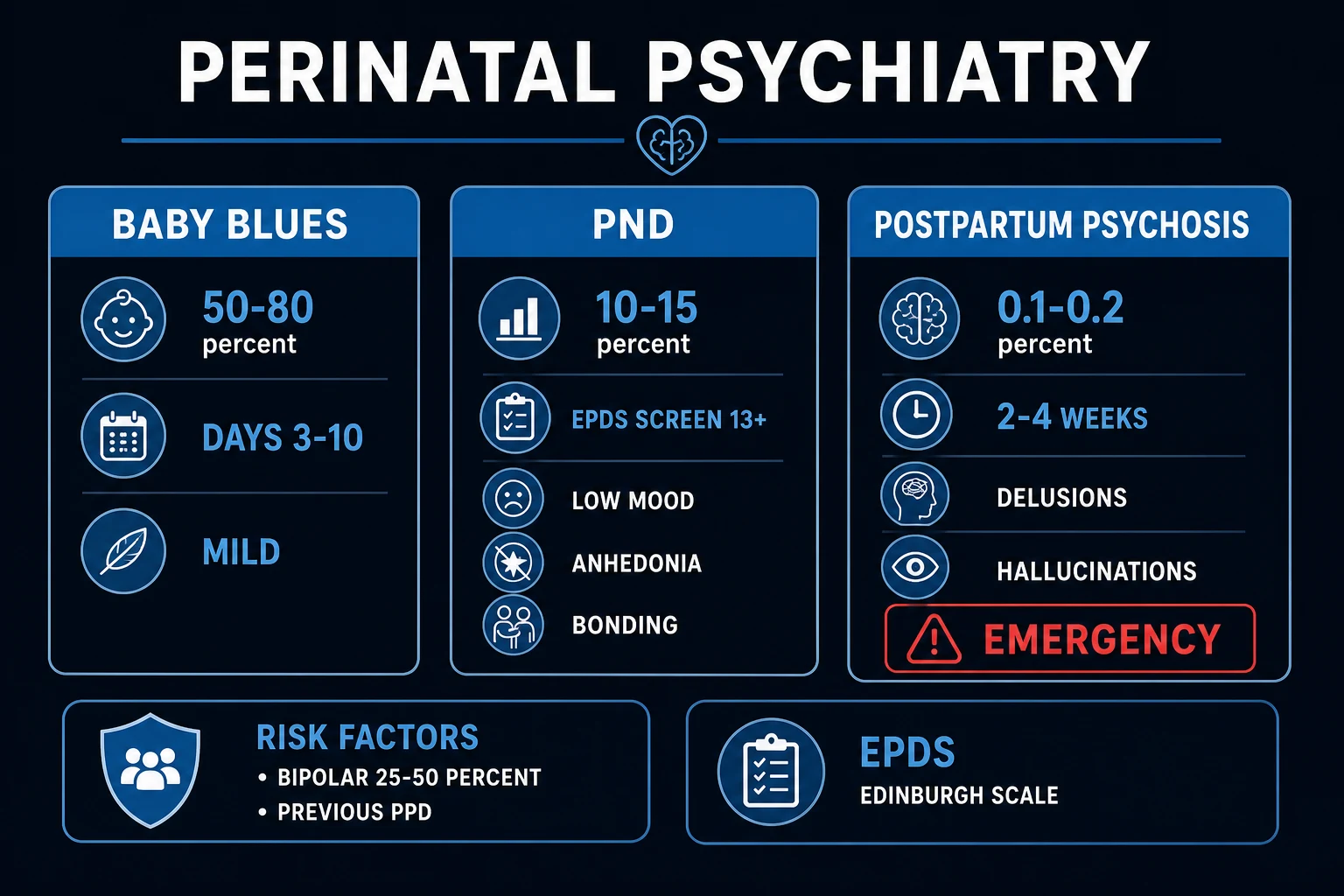
Perinatal psychiatric disorders are classified by timing (antenatal vs postnatal), syndrome (blues, depression, psychosis, anxiety, OCD, PTSD), and relationship to childbirth (triggered by vs coincident with the puerperium). The three postpartum mood syndromes — baby blues, postnatal depression and postpartum psychosis — are distinct entities, not points on a spectrum: baby blues does not "become" PND (although it is a risk marker), and PND does not "become" psychosis (most PND is unipolar; most postpartum psychosis is bipolar-spectrum).[3]
The three postpartum syndromes at a glance
Baby blues (maternity blues)
- Prevalence 50 to 80 percent of postpartum women
- Onset days 2 to 5, peaking day 3; resolves by 10 to 14 days
- Mild mood lability, tearfulness, irritability, feeling overwhelmed, mild insomnia
- Aetiology: hormonal withdrawal, sleep deprivation
- Management: reassurance, education, ensure sleep, practical support; re-screen if persists beyond 2 weeks
- Not a mental disorder; no medication
Postnatal depression (PND)
- Prevalence 10 to 15 percent (up to 20 to 30 percent in low- and middle-income countries)
- Onset weeks to months postpartum, within the first 12 months (commonest 2 to 6 weeks to 6 months)
- DSM-5 major depressive episode with peripartum onset; poor bonding, guilt, intrusive thoughts, anxiety about infant
- Aetiology: previous depression, poor support, stressful pregnancy, infant factors, genetic vulnerability
- Management: CBT or IPT first-line for mild; SSRI (sertraline preferred in breastfeeding) for moderate-severe; ECT if severe or psychotic
- Screen with EPDS at 6 to 8 weeks; cutoff 13 or more
Postpartum (puerperal) psychosis
- Prevalence 1 to 2 per 1000 deliveries (0.1 to 0.2 percent)
- Onset within 2 to 4 weeks, usually the first 2 weeks; acute, evolving over hours to days
- Acute delusions (often about infant), hallucinations, mood disturbance (mania, depression or mixed), confusion, insomnia for 2+ nights despite exhaustion
- Aetiology: bipolar diathesis (25 to 50 percent risk), previous postpartum psychosis (50 percent+ recurrence), primiparity
- Management: PSYCHIATRIC EMERGENCY — admit to a mother-and-baby unit (MBU); antipsychotic, mood stabiliser if bipolar, benzodiazepine; ECT if severe
- Risk of infanticide and suicide — risk assessment mandatory
The DSM-5 frameworks the diagnosis of perinatal depression as Major Depressive Disorder with peripartum onset — that is, the full 5-of-9 symptom criteria for a major depressive episode (depressed mood, anhedonia, weight or appetite change, sleep disturbance, psychomotor change, fatigue, guilt/worthlessness, poor concentration, recurrent thoughts of death), with onset in pregnancy or within 4 weeks of delivery. In practice, the ICD-10/ICD-11 and NICE definitions extend the window to 12 months because most cases present later and are clearly pregnancy-related. Postpartum psychosis is most often coded in DSM-5 as Brief Psychotic Disorder with postpartum onset or as a manic/mixed episode of Bipolar I Disorder triggered by childbirth — the latter is the predominant model, supported by its strong association with bipolar family history and its relapse pattern.[3]
Epidemiology & Risk Factors
Risk factors for postnatal depression cluster into biological, psychological and social domains (a biopsychosocial model): [1]
- Past psychiatric history (strongest single factor): a previous episode of depression or PND increases risk 3- to 5-fold; a woman with a prior PND has roughly a 1 in 3 to 1 in 2 chance of recurrence in the next pregnancy.
- Antenatal depression and anxiety: the strongest predictor of PND is depression during pregnancy itself — about half of women depressed in the third trimester remain depressed postpartum.
- Psychosocial adversity: poor partner or social support, domestic violence (enquire routinely — NICE), housing or financial stress, recent stressful life events, immigration, refugee or asylum-seeker status.
- Obstetric and infant factors: preterm birth, neonatal intensive care admission, breastfeeding difficulties, obstetric complications, emergency operative delivery, a traumatic birth experience.
- Demographic: teenage motherhood, single motherhood, unplanned or unwanted pregnancy, low socioeconomic status, lower educational attainment.
- Biological: family history of depression, postpartum thyroiditis (5 to 10 percent of postpartum women), anaemia, vitamin D deficiency. [1]
Risk factors for postpartum psychosis are narrower and dominated by the bipolar diathesis:[3]
- Pre-existing bipolar disorder (or schizoaffective disorder) — confers a 25 to 50 percent risk of postpartum psychosis, the highest single risk factor in psychiatry.
- A previous episode of postpartum psychosis — recurrence risk of 50 percent or more in subsequent pregnancies.
- Family history of bipolar disorder or postpartum psychosis in a first-degree relative.
- Primiparity — first pregnancies carry roughly double the risk of multiparous deliveries.
- Discontinuation of a mood stabiliser in pregnancy — particularly abrupt lithium or antipsychotic cessation, often undertaken for teratogenic reasons without a relapse-prevention plan.
- Obstetric complications and a personal or family history of psychosis. [1]
Risk factors for postpartum psychosis — BIPOLAR
Pathophysiology
Postpartum mood and psychotic disorders arise from the convergence of (1) an abrupt endocrine transition, (2) a chronic allostatic load of infant care, and (3) underlying genetic and developmental vulnerability. The same hormonal shift occurs in every postpartum woman, yet only a minority develop clinically significant illness — the difference lies in the vulnerable substrate.[2][3]
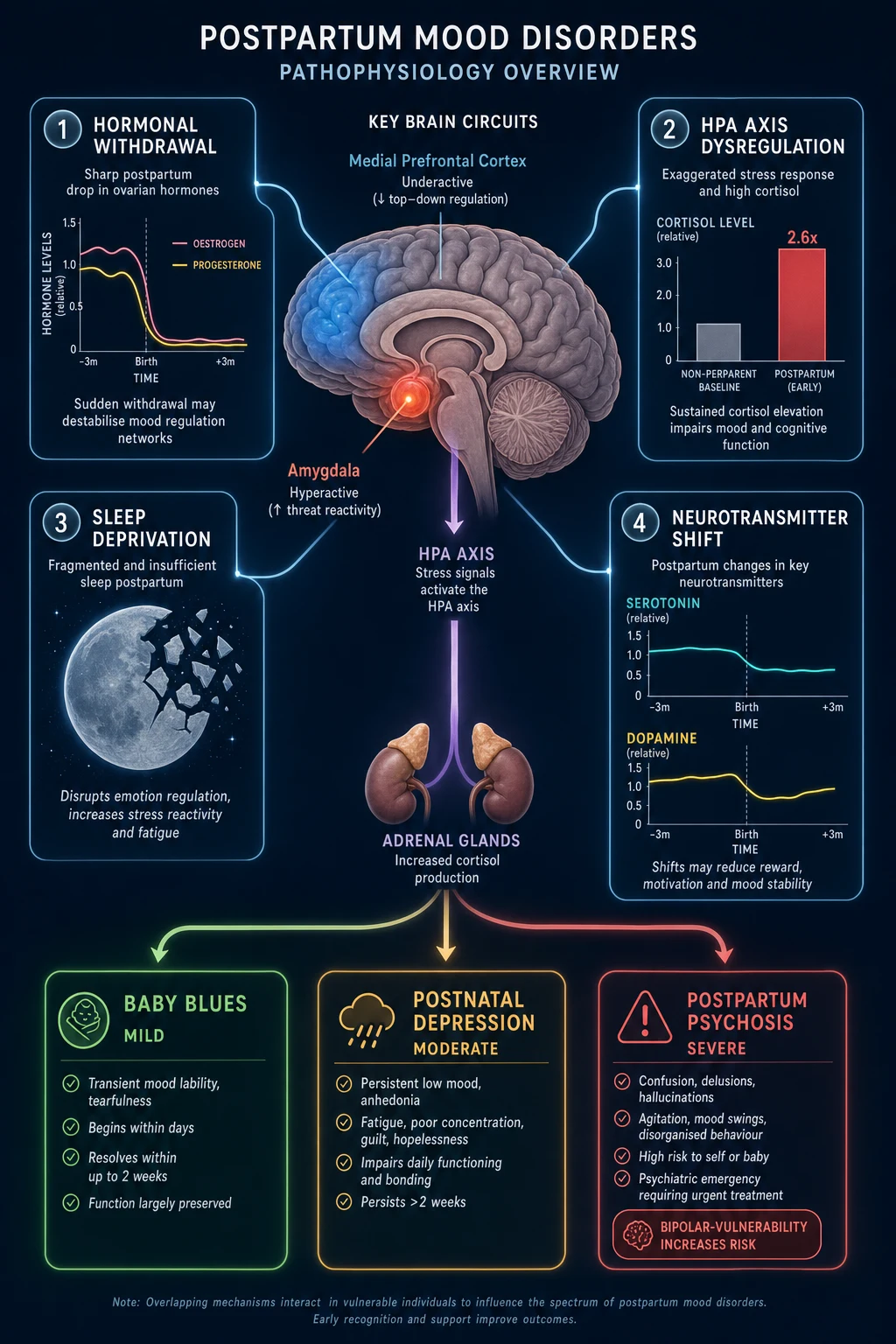
1. Endocrine collapse — the hormonal trigger. The placenta is the dominant source of oestrogen and progesterone in the third trimester, producing levels 100 to 1000 times the non-pregnant baseline. At delivery, placental hormone production ceases within hours, producing the most abrupt endocrine shift in human biology. Two consequences are critical: [1]
- Allopregnanolone crash. Progesterone is metabolised to allopregnanolone, a potent positive allosteric modulator of the GABA-A receptor (at the same site as neurosteroid anaesthetics like alphaxolone). The postpartum collapse of allopregnanolone produces a relative GABA-A hypofunction — effectively a state of endogenous withdrawal from a GABAergic agent — which in vulnerable women (especially those with a bipolar or epilepsy diathesis) lowers the seizure and psychotic threshold. This mechanism is the leading molecular explanation for postpartum psychosis.[3]
- Oestrogen-mediated serotonergic dysregulation. Oestrogen modulates tryptophan hydroxylase (the rate-limiting enzyme in serotonin synthesis), serotonin transporter expression, and postsynaptic 5-HT receptor sensitivity. Its abrupt withdrawal destabilises serotonergic tone, contributing to postnatal depression — the same mechanism proposed for premenstrual and perimenopausal depression, both also oestrogen-withdrawal states.
2. HPA-axis dysregulation. Pregnancy is a state of physiological hypercortisolaemia; the postpartum period is characterised by blunted cortisol suppression (abnormal dexamethasone suppression in depressed postpartum women), elevated corticotropin-releasing hormone (CRH), and sustained hypercortisolaemia driven by the chronic stress of infant care. The HPA-axis dysregulation is indistinguishable in pattern from non-perinatal major depression but is triggered and amplified by the puerperium.[2]
3. Thyroid autoimmunity — postpartum thyroiditis. Pregnancy induces a state of relative immune tolerance; the postpartum immune rebound triggers postpartum thyroiditis in 5 to 10 percent of women (and in up to 50 percent of women with positive thyroid peroxidase antibodies). The classical course is triphasic: a thyrotoxic phase (weeks 2 to 6 — anxiety, palpitations, irritability that can be mistaken for anxiety or early psychosis), a hypothyroid phase (weeks 8 to 24 — fatigue, low mood, depression that meets PND criteria), and recovery. Every woman with postpartum depression should have TSH and free T4 checked, because thyroid replacement alone may resolve a depressive presentation.[2]
4. Immune-inflammatory activation. Postpartum depression is associated with elevated interleukin-6, tumour necrosis factor-alpha and C-reactive protein, and with peripheral and central microglial activation. This mirrors the inflammatory model of major depression and explains the overlap with autoimmune thyroiditis. [1]
5. Neurotransmitter and neurotrophic changes. Relative serotonergic and dopaminergic hypoactivity, reduced brain-derived neurotrophic factor (BDNF), and reduced hippocampal volume (normalising across the postpartum year) are described in PND. In postpartum psychosis, dopaminergic dysregulation (with mania-like features) predominates, consistent with the bipolar-spectrum model.[3]
6. Oxytocin, prolactin and bonding. Oxytocin mediates the maternal bonding response; dysregulation of oxytocinergic and dopaminergic reward circuits is implicated in impaired mother-infant bonding, which is both a symptom and a perpetuator of PND. [1]
7. Genetic vulnerability. Genome-wide studies implicate the 5-HTTLPR short allele (also linked to stress-reactive depression), COMT variants, and polygenic overlap with major depression and bipolar disorder. The dominant inherited risk for postpartum psychosis is the bipolar diathesis — the same genetic loading that underlies bipolar I disorder.[3]
8. The psychosocial amplifier — sleep deprivation. Sleep deprivation is not merely a symptom of postpartum mental illness but a driver of it. The cardinal prodrome of postpartum psychosis is insomnia for 2 or more nights despite exhaustion — total sleep deprivation can induce mania in bipolar-spectrum individuals within 24 to 48 hours. Recognising and treating early insomnia (with a benzodiazepine if necessary) may abort a psychotic episode. [1]
Clinical Presentation
Baby blues (maternity blues, 3rd-day blues)
A self-limiting mood disturbance affecting 50 to 80 percent of postpartum women, peaking around day 3 to 5 and resolving by day 10 to 14. The presentation is characteristic and must be distinguished from PND by its transience, mildness and absence of functional impairment:[1]
- Tearfulness (often without an obvious trigger), mood lability (elation to despair within minutes), irritability, anxiety, feeling overwhelmed or unable to cope.
- Mild insomnia (difficulty settling despite exhaustion), poor concentration, hypersensitivity.
- Intact bonding with the infant and intact reality testing (no delusions or hallucinations).
- Symptoms fluctuate through the day and are typically worse in the evening. [1]
A woman with baby blues is fully oriented, has no thoughts of harming herself or her infant, can care for her baby with support, and improves day by day. Persistence beyond 2 weeks, worsening, functional impairment, or any psychotic feature mandates re-evaluation for PND or postpartum psychosis. [1]
Postnatal depression (PND)
PND presents as a DSM-5 major depressive episode with onset in pregnancy or (more commonly) weeks to months postpartum. The clinical picture resembles non-perinatal major depression but with characteristic perinatal flavour:[1][2]
Core depressive symptoms (need at least 5 of 9 for ≥2 weeks, including at least one of depressed mood or anhedonia):
- Depressed mood most of the day, nearly every day.
- Markedly diminished interest or pleasure (anhedonia), including loss of pleasure in the infant.
- Significant weight or appetite change.
- Insomnia or hypersomnia — the cardinal and discriminating feature in PND is inability to sleep when the infant sleeps (a mother who "cannot nap when the baby naps" is a red flag).
- Psychomotor agitation or retardation.
- Fatigue or loss of energy.
- Feelings of worthlessness or excessive or inappropriate guilt (often focused on being a "bad mother").
- Diminished ability to think or concentrate, indecisiveness.
- Recurrent thoughts of death, suicidal ideation, or — specific to perinatal presentations — intrusive thoughts of harming the infant. [1]
Perinatal-characteristic features:
- Poor mother-infant bonding — feelings of detachment, hostility, or indifference toward the infant; difficulty soothing or enjoying the baby.
- Guilt and shame about not experiencing the expected joy of motherhood.
- Anxiety about the infant's health and safety, often disproportionate (overlap with postpartum anxiety and GAD).
- Intrusive thoughts or images of harming the infant (these are ego-dystonic and distressing in PND — distinguishing them from the ego-syntonic command hallucinations of postpartum psychosis).
- Somatic complaints — fatigue, headaches, musculoskeletal pain, gastrointestinal symptoms.
- Atypical features in some cultures — somatic preoccupation, hypochondriasis, multiple physical complaints rather than verbalised low mood. [1]
Atypical presentations to recognise:
- The smiling, high-functioning mother who denies low mood but has insomnia, weight loss, intrusive thoughts and mounting anxiety — masked PND.
- Women with pre-existing bipolar disorder may present with a mixed or depressive bipolar episode rather than unipolar PND; missing the bipolar diathesis and prescribing an SSRI alone risks switching the patient into mania or postpartum psychosis.
- Postpartum thyroiditis presenting as fatigue, low mood, weight change — check TSH.
- Anaemia or iron deficiency presenting as fatigue, low mood, poor concentration — check FBC and ferritin.
- Father/partner depression — present in 5 to 10 percent of fathers in the first postpartum year, presenting as irritability, withdrawal, substance use, or anger rather than overt sadness; screen if the partner attends clinic.[2]
Postpartum (puerperal) psychosis
A psychiatric emergency presenting with an acute onset, almost always within the first 2 weeks postpartum (DSM-5 allows up to 4 weeks). The picture is a polymorphic psychotic illness with prominent affective features:[3]
Prodrome (hours to 1 to 2 days) — the early warning signs every clinician must recognise:
- Insomnia for 2 or more nights despite exhaustion — the single most reliable prodrome; in a bipolar-spectrum woman, postpartum insomnia is a medical emergency.
- Restlessness, agitation, irritability, feeling "wired" or "speeding up".
- Mild perplexity, feeling that things are "not quite right".
- Rapid mood fluctuations. [1]
Established postpartum psychosis — develops over hours to a few days:
- Delusions — often concerning the infant (that the baby is dead, replaced, demonic, or divinely special), persecutory, grandiose, or nihilistic.
- Hallucinations — auditory (command hallucinations to harm the infant or herself are the most dangerous), visual, tactile, or olfactory.
- Mood disturbance — mania (elation, grandiosity, pressured speech, reduced need for sleep), depression (profound withdrawal, nihilism, suicidality), or a rapidly fluctuating mixed state.
- Confusion and disorientation — clouding of consciousness, perplexity, fluctuating cognition (this can mimic delirium; the distinction is that postpartum psychosis has prominent affective and psychotic features and a more fluctuating, lucid-interval course, whereas delirium has global cognitive impairment and an identifiable organic cause).
- Thought disorder — loosening of associations, incoherence.
- Behavioural disturbance — bizarre behaviour toward the infant (e.g. refusing to feed or hold the baby, attempting to harm the baby), self-neglect, refusal to eat or drink. [1]
Crucial safety point: the risk of infanticide and suicide in untreated postpartum psychosis is real (population-attributable estimates of completed suicide and infanticide are elevated in this group), and command hallucinations or delusional beliefs about the infant are the highest-risk features. The single question "are you having any thoughts or voices telling you to harm your baby?" must be asked directly.[3]
Differential Diagnosis
The differential has two layers: (a) within the perinatal psychiatric syndromes (distinguishing blues from PND from psychosis), and (b) excluding organic mimics (thyroid, anaemia, infection, delirium, substance).[2]
Distinguishing the perinatal syndromes and their mimics
Baby blues
- Onset days 2 to 5, resolves by day 10 to 14
- Mild mood lability and tearfulness; intact bonding, intact reality testing
- No functional impairment, no harm thoughts
- Self-limiting; reassurance and support
Postnatal depression
- DSM-5 major depressive episode; onset weeks to months
- Depressed mood, anhedonia, poor bonding, intrusive ego-dystonic thoughts
- Insomnia (cannot sleep when infant sleeps); EPDS 13 or more
- Treat with CBT/IPT ± SSRI (sertraline)
Postpartum psychosis
- Acute onset within 2 to 4 weeks (usually first 2 weeks)
- Delusions, hallucinations, mood disturbance, insomnia for 2+ nights despite exhaustion
- Strongly linked to bipolar diathesis
- EMERGENCY — admit to MBU; antipsychotic ± mood stabiliser ± ECT
Delirium (organic)
- Global cognitive impairment, fluctuating consciousness, autonomic signs
- Underlying cause: sepsis, hypoxia, electrolyte disturbance, opiate/benzodiazepine
- Investigate and treat the cause; not primarily affective
- Affects ~10 percent of postpartum women with sepsis/eclampsia
Postpartum thyroiditis
- Triphasic: thyrotoxicosis → hypothyroidism → recovery
- TSH suppressed then elevated; anti-TPO positive
- Can present with anxiety, depression, or psychosis-like symptoms
- Treat with thyroid hormone replacement (hypothyroid phase) or beta-blocker (thyrotoxic phase)
Postpartum OCD
- Intrusive, ego-dystonic thoughts of infant harm with avoidance/compulsions
- Mother recognises thoughts as irrational; marked anxiety
- Insight preserved — distinguishes from psychosis
- Treat with SSRI and ERP (exposure and response prevention)
Postpartum PTSD
- Following a traumatic birth (emergency caesarean, severe tearing, loss of control, infant NICU)
- Re-experiencing, avoidance of reminders, hyperarousal, birth flashback
- Distinct from PND — trauma-focused CBT first-line
- Screen with the City Birth Trauma Scale
Substance / medication-induced
- Corticosteroids, hormonal contraception, interferon, antimalarials
- Alcohol or benzodiazepine withdrawal
- Substance intoxication (stimulants, cannabis)
- History and toxicology screen clarify
Three discriminating features worth memorising: [1]
- Insomnia that the mother cannot escape despite exhaustion — points to postpartum psychosis (or severe depression), never to baby blues.
- Ego-dystonic intrusive thoughts of infant harm (the mother is horrified by them) — points to PND or postpartum OCD. Ego-syntonic thoughts or command hallucinations to harm the infant — points to postpartum psychosis.
- Disorientation and clouding of consciousness with an identifiable organic cause — points to delirium, not primary psychiatric illness; investigate aggressively (sepsis is a leading cause of maternal death and can present with confusion). [1]
Clinical & Bedside Assessment
The perinatal psychiatric assessment has four pillars: (1) risk assessment, (2) mental state examination, (3) mother-infant relationship assessment, (4) social and obstetric context.[2]
1. Risk assessment — the non-negotiable first step. In every perinatal presentation, directly ask about:
- Suicidal ideation: "Have you had any thoughts that life isn't worth living, or that you'd be better off dead? Have you had any thoughts of harming yourself?" Use EPDS item 10 ("The thought of harming myself has occurred to me") as a prompt — a score of 1, 2 or 3 mandates exploration.
- Infanticidal ideation: "Have you had any thoughts of harming your baby? Have you had any thoughts, images, or voices telling you to hurt your baby?" Ask directly and without euphemism.
- Intent, plan, access to means, and protective factors (the infant, partner, support).
- Past history of self-harm, suicide attempts, or postpartum psychosis. [1]
2. Mental state examination (MSE) — emphasise:
- Appearance and behaviour: self-care, interaction with the infant (holding, eye contact, responsiveness), psychomotor agitation or retardation.
- Mood and affect: depressed, elated, anxious, labile; congruence.
- Speech: rate, volume, flow (pressured speech in mania).
- Thought: form (loosening of associations, flight of ideas) and content (delusions about the infant — that the baby is dead, replaced, demonic; persecutory, grandiose, nihilistic delusions; obsessional intrusive thoughts).
- Perception: hallucinations — auditory (especially command hallucinations to harm), visual, tactile, olfactory.
- Cognition: orientation to time, place and person (to exclude delirium); short-term memory and concentration.
- Insight and judgement: does the mother recognise her thoughts as abnormal? Will she accept help? [1]
3. Mother-infant relationship assessment — observe:
- How the mother holds, speaks to, and responds to the infant (warmth, eye contact, reciprocity, sensitivity to cues).
- Indicators of impaired bonding: hostility, indifference, detachment, refusal to feed or hold the baby, intrusive thoughts of harm, over-anxious monitoring.
- Use the Mother-to-Infant Bonding Scale or the Postpartum Bonding Questionnaire if available. [1]
4. Social and obstetric context:
- Past psychiatric and obstetric history — previous PND, postpartum psychosis, bipolar disorder, suicide attempts; mode of delivery, complications, infant health.
- Family history of bipolar disorder, postpartum psychosis, suicide.
- Social assessment: partner relationship, support network, domestic violence (NICE mandates routine enquiry), housing, finances, immigration status.
- Substance use and medication history — alcohol, recreational drugs, hormonal contraception, corticosteroids. [1]
Investigations
The Edinburgh Postnatal Depression Scale (EPDS)
The EPDS, developed by Cox, Holden and Sagovsky (1987, British Journal of Psychiatry), is the global standard screening tool for postpartum depression — a 10-item self-report questionnaire that takes about 5 minutes to complete.[1]
How to administer and interpret the EPDS: [1]
- Timing: at the 6 to 8-week postnatal check and at the booking antenatal visit (NICE CG192 recommends screening at first contact in pregnancy and 6 to 8 weeks postpartum; many services re-screen at 3 to 4 months and 6 months).
- The 10 items (each scored 0 to 3, total 0 to 30), reproduced as the patient is asked to respond for the past 7 days:
- I have been able to laugh and see the funny side of things.
- I have looked forward with enjoyment to things.
- I have blamed myself unnecessarily when things went wrong.
- I have been anxious or worried for no good reason.
- I have felt scared or panicky for no very good reason.
- Things have been getting on top of me.
- I have been so unhappy that I have had difficulty sleeping.
- I have felt sad or miserable.
- I have been so unhappy that I have been crying.
- The thought of harming myself has occurred to me.
- Scoring: each item is scored 0, 1, 2 or 3 (with reverse scoring on items 1, 2 and 4 — i.e. the most "well" response scores 3 and the most "unwell" response scores 0 on those items; the rest are scored 0 = well, 3 = unwell). Total score 0 to 30.
- Cutoffs (the most widely used, validated in multiple populations):
- 13 or more — probable major depression; clinical assessment and offer treatment.
- 10 to 12 — possible depression; re-assess and monitor, repeat EPDS in 2 weeks.
- Item 10 score of 1, 2 or 3 — always explore further, regardless of total score; assess suicidal risk directly.[1]
Other investigations
The EPDS screens for depression; further investigations are dictated by the clinical picture and exclude organic mimics:[2]
- PHQ-9 (alternate depression screen, severity-rated) and GAD-7 (anxiety screen) — useful adjuncts.
- Bloods before psychotropic drugs: FBC, ferritin (anaemia), TSH and free T4 (postpartum thyroiditis — check in every woman with PND), vitamin D, vitamin B12 if relevant, U&E, LFT.
- Pregnancy test before starting any potentially teratogenic drug.
- ECG before TCAs or QT-prolonging antipsychotics; lithium level, renal function and thyroid function if using lithium.
- Urine drug screen if substance use suspected.
- Brain imaging (CT or MRI) only if focal neurology, persistent disorientation, or to exclude a structural cause of new-onset psychosis. [1]
Management — Resuscitation
The resuscitation phase applies almost exclusively to postpartum psychosis with acute behavioural disturbance or active risk, and to PND with active suicidal or infanticidal intent.[3]
Postpartum psychosis — the emergency pathway:
- Admit urgently, ideally to a mother-and-baby unit (MBU) (the gold standard, allowing the mother and infant to remain together under supervised care). If no MBU bed is available, admit to an acute psychiatric ward with arrangements for the infant's care; do NOT manage at home.
- Remove the infant from immediate risk — supervised care by partner, family, or safeguarding team if delusions or hallucinations concern the infant.
- Constant observation (1-to-1 nursing) while risk is active; remove access to means of self-harm or harm to the infant.
- Rapid tranquillisation if acutely agitated or distressed:
- Oral first: lorazepam 1 to 2 mg PO, or olanzapine 5 to 10 mg PO, or haloperidol 2 to 5 mg PO.
- IM if oral refused: lorazepam 1 to 2 mg IM, OR olanzapine 5 to 10 mg IM (NOT with IM lorazepam within 1 hour — risk of respiratory depression), OR haloperidol 5 mg IM with promethazine 25 to 50 mg IM.
- Monitor respiratory rate, oxygen saturation, blood pressure and ECG after IM administration.
- Exclude an organic cause — septic screen, TSH, U&E, calcium, glucose, LFT; consider neuroimaging if disoriented. [1]
PND with active suicidal or infanticidal intent:
- Direct risk assessment (intent, plan, means, protective factors).
- Remove access to means (medications, sharp objects); if the infant is at risk, arrange safe care.
- Urgent referral to crisis-resolution/home-treatment team or perinatal mental health service; consider admission if risk cannot be safely managed at home. [1]
Management — Definitive & Stepwise
Management is stratified by syndrome and severity. A stepwise approach is outlined below for each of the three syndromes.[1][6]
Baby blues
- Reassurance and education: explain that this is normal, common, hormonal, and self-limiting.
- Practical support: ensure sleep (the single most important intervention — protect a block of uninterrupted sleep), help with feeding and infant care, partner and family involvement.
- Re-screen: advise the mother and her family to return if symptoms persist beyond 2 weeks, worsen, or if any thought of harming herself or the infant arises. Re-administer the EPDS at the 6 to 8-week check.
- No medication. [1]
Postnatal depression — stepwise
Step 1 — Mild PND (EPDS 10 to 12, no harm thoughts, intact bonding):
- Guided self-help (written or digital CBT-based materials), sleep hygiene, exercise, peer support, signposting to voluntary services (e.g. the PANDAS Foundation in the UK).
- Address psychosocial stressors (housing, finance, relationship, domestic violence).
- Review in 1 to 2 weeks with repeat EPDS; escalate if no improvement. [1]
Step 2 — Moderate PND (EPDS 13 to 19):
- Psychological therapy first-line — cognitive behavioural therapy (CBT) or interpersonal therapy (IPT). IPT has particular evidence in PND because it addresses the role transition to motherhood and the interpersonal losses and gains around it. Group CBT is also effective.
- Consider adding an SSRI if symptoms are moderate-to-severe, if there is a past history of depression responding to an SSRI, or if psychological therapy is not accessible within a reasonable timeframe. [1]
Step 3 — Moderate-to-severe PND (EPDS 20 or more, or functional impairment):
- SSRI first-line. Drug, dose, route, timing and rationale:
- Sertraline 50 mg PO once daily, titrate to 100 to 200 mg/day — preferred SSRI in breastfeeding because of the lowest relative infant dose (~1 to 2 percent of the maternal weight-adjusted dose in breast milk). Full antidepressant effect takes 4 to 6 weeks.
- Alternatives: citalopram 20 mg PO once daily (max 40 mg; max 20 mg in elderly or with QT prolongation), escitalopram 10 to 20 mg PO once daily.
- Counsel about: initial anxiety or nausea (first 1 to 2 weeks), sexual dysfunction, hyponatraemia (especially in dehydration), serotonin syndrome (with other serotonergic agents), and the 4 to 6-week lag to full effect.
- Continue breastfeeding — the benefits of breastfeeding outweigh the small SSRI transfer risk with sertraline.[6][7]
Step 4 — Severe, treatment-resistant or psychotic PND:
- Refer urgently to the perinatal mental health team.
- Consider electroconvulsive therapy (ECT) — fast, effective and safe in pregnancy and the postpartum (see below). ECT is first-line for PND with psychotic features, severe PND with catatonia, active suicidality, or refusal to eat or drink.[9]
- Augmentation strategies (lithium, antipsychotic, combination) under specialist guidance.
Step 5 — Relapse prevention and follow-up:
- Continue the SSRI for at least 6 months after remission, then taper slowly over 4 weeks (to avoid discontinuation symptoms).
- Plan future pregnancies — women with a history of PND have a 1 in 3 to 1 in 2 recurrence risk; consider prophylactic psychological therapy or SSRI in the third trimester.
- Treat comorbid anxiety, OCD, PTSD, partner depression, and substance use.
- Address the mother-infant relationship — parent-infant psychotherapy if bonding is impaired. [1]
Postpartum psychosis — definitive management
Postpartum psychosis is a psychiatric emergency and is managed in hospital (ideally a mother-and-baby unit). The aims are rapid symptom control, restoration of safety for mother and infant, preservation of the mother-infant relationship, and prevention of relapse.[3]
- Admit to a mother-and-baby unit (MBU) — allows joint admission so the mother-infant relationship is supported; if no MBU bed, admit to an acute psychiatric ward with supervised infant visiting.
- Antipsychotic first-line for psychotic features:
- Olanzapine 5 to 20 mg/day PO (or IM in acute agitation) — effective for the manic/psychotic phenotype; monitor weight, glucose, lipids.
- Haloperidol 2 to 5 mg PO/IM (up to 15 mg/day) — if rapid control needed; watch for EPSE and QT prolongation.
- Quetiapine 100 to 400 mg/day PO, risperidone 1 to 6 mg/day PO — alternatives.
- Mood stabiliser if bipolar-spectrum (the majority):
- Lithium — effective for bipolar maintenance and acute mania; restart cautiously, check level (target 0.6 to 1.0 mmol/L), renal and thyroid function. Caution: lithium is usually avoided in breastfeeding (high transfer; infant toxicity — monitor infant levels, TSH, U&E). If used in pregnancy, target the lowest effective level, monitor levels frequently (they rise postpartum with fluid shifts), and counsel about Ebstein anomaly risk (see Special Populations).[4][8]
- Valproate — AVOID in all women of childbearing potential without a PPP (Pregnancy Prevention Programme); never initiate in pregnancy or in a woman who may become pregnant.[5]
- If a mood stabiliser is needed but lithium is unsuitable, consider an antipsychotic with mood-stabilising action (olanzapine, quetiapine) rather than valproate or carbamazepine.
- Benzodiazepine for acute agitation and to restore sleep — lorazepam 1 to 2 mg PO/IM up to 4-hourly; restoring sleep is therapeutic in its own right.
- ECT if severe (life-threatening illness, catatonia, refusal to eat or drink, or rapid deterioration despite medication) — safe in pregnancy and postpartum, and often rapidly effective.[9]
- Supportive care — supervised mother-infant contact, breastfeeding support if compatible with medication, family involvement.
- Prophylaxis in future pregnancies — women with a history of postpartum psychosis have a 50 percent or more recurrence risk; plan pregnancy jointly with perinatal psychiatry, and restart antipsychotic or mood stabiliser immediately postpartum (or in the third trimester) to prevent recurrence.[3]
Specific Subtypes & Scenarios
Bipolar disorder in pregnancy and postpartum
Women with bipolar I disorder have a 25 to 50 percent risk of postpartum psychosis and an even higher risk of postpartum depression or hypomania — the highest single risk in psychiatry. Management principles:[3][8]
- Pre-conception counselling: review medication; weigh teratogenicity against relapse risk; do NOT stop mood stabilisers abruptly (high relapse risk).
- Lithium: continue if possible with careful monitoring (Ebstein anomaly risk ~1 in 650 first-trimester exposure, vs 1 in 20,000 baseline — Patorno 2017 NEJM);[4] monitor levels every 4 weeks to 28 weeks, every 2 weeks to 36 weeks, weekly thereafter; fluid balance in labour; target lower end of therapeutic range.
- Valproate: AVOID entirely in women of childbearing potential without a Pregnancy Prevention Programme (PREVENT) — neural tube defects, cardiac and skeletal anomalies, and a dose-dependent reduction in IQ in exposed children.[5]
- Carbamazepine and lamotrigine: lamotrigine is relatively safer; levels fall markedly in pregnancy (increased clearance) — dose adjustment required.
- Antipsychotics (olanzapine, quetiapine) are often the safest maintenance option in pregnancy.
- Postpartum prophylaxis: restart the antipsychotic or mood stabiliser immediately after delivery to prevent postpartum psychosis.
Postpartum thyroiditis
Affects 5 to 10 percent of postpartum women (50 percent of TPO-antibody-positive women). Triphasic course: thyrotoxicosis (weeks 2 to 6) → hypothyroidism (weeks 8 to 24) → recovery. The hypothyroid phase can present with depression that meets PND criteria. Always check TSH and free T4 in postpartum depression. Treat the hypothyroid phase with levothyroxine; the thyrotoxic phase (if symptomatic) with a short course of propranolol 20 to 40 mg up to three times daily (avoid antithyroid drugs — they treat Graves disease, not thyroiditis). [1]
Postpartum OCD
Presents with intrusive, ego-dystonic thoughts or images of harming the infant (e.g. dropping the baby, stabbing the baby) accompanied by avoidance and compulsive checking. The mother is horrified by the thoughts (insight preserved), distinguishing it from postpartum psychosis. Treat with CBT with exposure and response prevention (ERP) and an SSRI (sertraline) if severe. [1]
Postpartum PTSD
Follows a traumatic birth (emergency operative delivery, severe perineal trauma, shoulder dystocia, infant resuscitation, loss of control, perceived poor care, infant NICU stay). Presents with re-experiencing (flashbacks of the birth), avoidance of reminders (including pregnancy and sexual activity), hyperarousal, and negative alterations in mood and cognition. Treat with trauma-focused CBT or EMDR within 1 to 3 months of the event. Distinct from PND and not responsive to SSRIs alone. [1]
Antenatal depression
Affects 7 to 13 percent of pregnant women; often under-recognised. Risk factors and treatment principles mirror PND. Untreated antenatal depression is the strongest predictor of PND, impairs maternal-fetal bonding, and is associated with preterm birth and low birth weight. Treat with CBT/IPT first-line; SSRI (sertraline preferred) for moderate-severe — weigh small fetal risks (PPHN, neonatal adaptation syndrome) against the substantial harms of untreated depression. [1]
Father/partner perinatal depression
Affects 5 to 10 percent of fathers in the first year; risk factors include maternal PND, financial stress, sleep deprivation, and a history of depression. Presents with irritability, withdrawal, anger, substance use, somatic complaints rather than overt sadness. Screen partners opportunistically. Treat with psychological therapy and SSRI if needed; untreated partner depression impairs the couple's recovery and the infant's outcome.[2]
Complications & Pitfalls
For the mother:
- Suicide — a leading indirect cause of maternal death (MBRRACE-UK); women with postpartum psychosis or severe PND are at highest risk. Suicide in the postpartum year tends to be violent and effective, and is often the index presentation of under-recognised bipolar disorder.[3]
- Infanticide — rare but catastrophic; highest in postpartum psychosis with command hallucinations or delusions about the infant; (neonaticide, killing within 24 hours of birth, is a distinct entity with different psychopathology).
- Chronic or recurrent depression — untreated PND can persist for years and recurs in 30 to 50 percent of future pregnancies.
- Bipolar switch — prescribing an SSRI alone (without a mood stabiliser) to a woman with unrecognised bipolar depression can precipitate mania or postpartum psychosis. Always take a careful personal and family history of bipolar disorder before initiating an SSRI.
- Medication-related harm:
- In pregnancy — valproate (neural tube defects, neurodevelopmental harm), lithium (Ebstein anomaly, neonatal toxicity), paroxetine (small cardiac defect risk), SSRIs in late pregnancy (poor neonatal adaptation syndrome — irritability, feeding difficulty; persistent pulmonary hypertension of the newborn — small absolute risk increase).
- In breastfeeding — lithium (infant toxicity), fluoxetine (high transfer, infant irritability), benzodiazepines (sedation, withdrawal).
- Antipsychotic metabolic effects (olanzapine — weight gain, gestational diabetes).
For the infant and child (Stein et al., Lancet 2014):[2]
- Impaired mother-infant bonding; insecure attachment.
- Behavioural, emotional and cognitive effects persisting into adolescence — untreated maternal depression is associated with lower IQ, increased anxiety and depression, and conduct problems in offspring.
- Breastfeeding cessation (if medication advice is overly cautious) loses the protective effects of breastfeeding on infant cognition, immunity and maternal bonding.
Pitfalls:
- Mistaking baby blues for PND (or vice versa) — the blues resolves by 2 weeks; persistence mandates reassessment.
- Missing bipolar disorder in a woman presenting with PND — prescribing an SSRI without a mood stabiliser risks switching her into mania or postpartum psychosis.
- Failing to ask directly about thoughts of harming the infant — this is the highest-yield question in perinatal psychiatry.
- Over-cautious avoidance of SSRIs in breastfeeding — the small transfer risk of sertraline is outweighed by the harms of untreated maternal depression.
- Discontinuing lithium or antipsychotics abruptly in pregnancy — precipitates relapse; decisions should be made jointly with perinatal psychiatry.
- Neglecting postpartum thyroiditis as a cause of postpartum depression. [1]
Prognosis & Disposition
- Baby blues: resolves within 10 to 14 days without treatment; no long-term sequelae.
- Postnatal depression: with appropriate treatment (CBT and/or SSRI), most women recover within 3 to 6 months. Relapse within 2 years occurs in about 30 percent; recurrence in the next pregnancy is about 1 in 3 to 1 in 2 without prophylaxis. Untreated PND can persist for years and impairs child development.
- Postpartum psychosis: acute response to antipsychotic and/or ECT is typically good; most women recover fully from the index episode. However, recurrence in subsequent pregnancies is around 50 percent, and many women go on to develop bipolar I disorder or schizoaffective disorder. Long-term psychiatric follow-up is essential. [1]
Disposition: baby blues managed in primary care with community midwife and GP follow-up. PND managed jointly between primary care and the perinatal mental health team (community) for most cases; admission for severe, treatment-resistant, or risky presentations. Postpartum psychosis is always admitted (ideally to an MBU). All women with a history of perinatal mental illness should have a written perinatal mental health plan for future pregnancies, communicated to obstetrics, midwifery, primary care, and the woman herself. [1]
Special Populations
Pregnancy (antenatal) medication safety
A summary of psychotropic safety in pregnancy, drawing on Patorno 2017, Alsdorf/Wyszynski 2005 and Cohen 2019:[4][5][8]
| Drug class | Safety in pregnancy |
|---|---|
| SSRIs | Sertraline preferred (lowest transfer); paroxetine — small cardiac defect risk (avoid 1st trimester); late pregnancy: poor neonatal adaptation syndrome, small PPHN risk. Net benefit usually favours treating moderate-severe depression. |
| SNRIs / TCAs | Similar cautions; amitriptyline and nortriptyline have the most reproductive safety data. Avoid MAOIs (hypertensive crisis). |
| Lithium | Ebstein anomaly risk ~1 in 650 first-trimester exposure (vs 1 in 20,000 baseline) — Patorno 2017. Use lowest effective level, monitor levels, hydrate in labour. Often continued if benefit outweighs risk. |
| Valproate | AVOID — neural tube defects, cardiac/skeletal anomalies, neurodevelopmental harm (mean IQ reduction). UK PREVENT programme prohibits without PPP. |
| Carbamazepine | Neural tube defects, facial anomalies; avoid 1st trimester if possible. |
| Lamotrigine | Relatively safer; pregnancy clearance increases markedly — dose adjustment required. |
| Antipsychotics | Olanzapine, quetiapine, chlorpromazine — generally considered safe; metabolic monitoring. Avoid high-potency typicals in late pregnancy (neonatal EPSE). |
| Benzodiazepines | Avoid in 3rd trimester — neonatal "floppy baby" syndrome and withdrawal; short courses acceptable. |
| ECT | Safe in pregnancy and postpartum — first-line for severe psychotic depression, catatonia, life-threatening illness.[9] |
Breastfeeding medication safety
- SSRIs: sertraline preferred (lowest relative infant dose, ~1 to 2 percent); paroxetine and fluvoxamine also low transfer. Fluoxetine — high transfer, accumulates in infant, avoid in neonate. Continue breastfeeding.[6][7]
- TCAs: nortriptyline, imipramine, amitriptyline — relatively safe; monitor infant sedation.
- Lithium: usually avoid breastfeeding (high transfer, infant toxicity — monitor infant levels, TSH, U&E); if essential, counsel carefully and monitor.
- Valproate: relatively safe in breastfeeding.
- Antipsychotics: olanzapine and quetiapine — limited transfer, monitor infant sedation.
- Benzodiazepines: short-acting (lorazepam) acceptable; monitor infant sedation.
Teenage mothers
Higher PND risk, lower social support, higher rates of unintended pregnancy and social adversity. Targeted services (peer support, practical help with housing, education and childcare) and a low threshold for psychological therapy. [1]
IVF and assisted conception
Higher psychological vulnerability; multiple pregnancy; higher preterm birth rate. Specialist perinatal mental health input and proactive screening. [1]
Women with pre-existing severe mental illness
Pre-conception planning with perinatal psychiatry; medication review (teratogenicity vs relapse risk); collaborative perinatal obstetric-psychiatric management plan; prophylactic medication in the third trimester or immediately postpartum. [1]
Evidence, Guidelines & Regional Differences
Landmark studies:[1][2][3][4][6]
- Cox, Holden and Sagovsky (1987, British Journal of Psychiatry) — developed the 10-item Edinburgh Postnatal Depression Scale, still the global screening standard (PMID 3651732).
- Stein et al. (2014, Lancet) — synthesised the evidence on the effects of perinatal mental disorders on the fetus and child, establishing the transgenerational case for active treatment (PMID 25455250).
- Bergink, Rasgon and Wisner (2016, American Journal of Psychiatry) — modern synthesis of postpartum psychosis phenomenology and the bipolar-spectrum model (PMID 27609245).
- Patorno et al. (2017, New England Journal of Medicine) — quantified lithium's cardiac teratogenicity: Ebstein anomaly risk ~1 in 650 with first-trimester exposure, an order of magnitude lower than older estimates but still elevated above baseline (PMID 28591541).
- Pinheiro et al. (2015, Archives of Women's Mental Health) — meta-analysis of sertraline and breastfeeding, establishing sertraline as the SSRI of choice (PMID 25589155).
- Ward et al. (2018, Archives of Women's Mental Health) — proposed clinical protocol for ECT in pregnancy (PMID 29796968). [1]
Guidelines:
- NICE CG192 (Antenatal and postnatal mental health: clinical management and service guidance) — the UK standard: screen at booking and 6 to 8 weeks with Whooley + EPDS; structured perinatal mental health services; MBU access; medication guidance.
- BAP 2017 consensus (British Association for Psychopharmacology) — perinatal psychopharmacology guidance.
- MBRRACE-UK — Confidential Enquiries into Maternal Deaths; repeatedly identifies suicide as a leading indirect cause of maternal death, driving service improvement.
- ACOG Clinical Practice Guideline No. 5 (2023) — perinatal depression management (US).
- Royal Australian and New Zealand College of Psychiatrists (RANZCP) perinatal guidance. [1]
Regional deltas: [1]
[1] [1] [1]Exam Pearls
The three postpartum syndromes — timing
Top high-yield facts for NEET-PG / INICET: [1]
- Three syndromes, three timings: blues days 3 to 10, PND weeks to 12 months, postpartum psychosis 2 to 4 weeks (usually first 2).
- Postpartum psychosis = PSYCHIATRIC EMERGENCY. Admit to a mother-and-baby unit (MBU). Risk of infanticide and suicide.
- Bipolar disorder = 25 to 50 percent risk of postpartum psychosis — give prophylactic antipsychotic or mood stabiliser immediately postpartum.
- EPDS cutoff 13+ for probable PND; item 10 screens for self-harm.
- Sertraline is the preferred SSRI in breastfeeding (lowest milk transfer).
- Valproate AVOID (PREVENT) — teratogenic + neurodevelopmental harm. Lithium — Ebstein anomaly (Patorno 2017 NEJM, ~1 in 650). ECT safe in pregnancy and postpartum.
- Suicide is a leading indirect cause of maternal death (MBRRACE-UK) — risk assessment is mandatory.
- Insomnia for 2+ nights despite exhaustion = prodromal postpartum psychosis — urgent assessment, restore sleep.
- Ego-dystonic thoughts of infant harm = PND or OCD. Ego-syntonic command hallucinations to harm infant = postpartum psychosis.
- DSM-5 specifier "with peripartum onset" = onset during pregnancy or within 4 weeks of delivery.
- Check TSH in every woman with postpartum depression — postpartum thyroiditis affects 5 to 10 percent.
- Do NOT prescribe an SSRI alone to a woman with unrecognised bipolar depression — risks switching to mania or postpartum psychosis. [1]
Exam application bank (NEET-PG / INICET)
One-line answer
Perinatal mental health covers psychiatric disorders arising in pregnancy and the first 12 months postpartum. Three conditions dominate and must be distinguished: baby blues (50 to 80 percent of mothers; days 2 to 14; tearfulness, mood lability; self-limiting — reassure); postnatal depression (PND) (10 to 15 percent; weeks to months postpartum; depressed mood, anhedonia, poor bonding, intrusive thoughts; screen with the Edinburgh Postnatal Depression Scale (EPDS) at 6 to 8 weeks; treat with CBT/IPT and an SSRI, sertraline preferred in breastfeeding); and postpartum (puerperal) psychosis (0.1 to 0.2 percent; onset within 2 to 4 weeks, usually the first 2 weeks; acute delusions, hallucinations, mood disturbance, insomnia; risk 25 to 50 percent in bipolar disorder; a PSYCHIATRIC EMERGENCY — admit to a mother-and-baby unit; risk of infanticide and suicide). Suicide is a leading indirect caus
Worked stems (answer without another resource)
Stem 1 — Classic presentation. Map symptoms to mechanism; name the first investigation and first treatment step with dose/route if drug therapy is standard. [1]
Stem 2 — Unstable / complicated. List red flags that force immediate resuscitation, theatre, ICU, antidote, or reperfusion — and what you do in the first 15 minutes. [1]
Stem 3 — Atypical group. Elderly, pregnancy, child, or immunocompromised: how presentation and thresholds change. [1]
Stem 4 — Differential trap. Name the three closest mimics and one discriminator for each. [1]
Stem 5 — Disposition. Who goes home with safety-netting, who is admitted, who needs HDU/ICU/theatre, and what follow-up is mandatory. [1]
Rapid viva checklist
- Definition + classification
- Pathophysiology chain
- Bedside signs / criteria
- Score with exact components (if any)
- Emergency bundle
- Definitive therapy with doses
- Complications of disease and of treatment
- Special populations
- Guideline/trial name if classic
- Three exam traps
Coverage self-check
If you cannot answer any stem above from this page alone, re-read the matching section — the page is intended to be self-sufficient for final-prof and NEET-PG/INICET questions on Perinatal Psychiatry (Postnatal Depression & Postpartum Psychosis).
References
- [1]Cox JL, Holden JM, Sagovsky R. Detection of postnatal depression. Development of the 10-item Edinburgh Postnatal Depression Scale Br J Psychiatry, 1987.PMID 3651732
- [2]Stein A, Pearson RM, Goodman SH, et al. Effects of perinatal mental disorders on the fetus and child Lancet, 2014.PMID 25455250
- [3]Bergink V, Rasgon N, Wisner KL. Postpartum Psychosis: Madness, Mania, and Melancholia in Motherhood Am J Psychiatry, 2016.PMID 27609245
- [4]Patorno E, Huybrechts KF, Bateman BT, et al. Lithium Use in Pregnancy and the Risk of Cardiac Malformations N Engl J Med, 2017.PMID 28591541
- [5]Alsdorf R, Wyszynski DF, Holmes LB. Teratogenicity of sodium valproate Expert Opin Drug Saf, 2005.PMID 15794725
- [6]Pinheiro E, Bogen D, Hoxha D, Wisner KL. Sertraline and breastfeeding: review and meta-analysis Arch Womens Ment Health, 2015.PMID 25589155
- [7]Lanza di Scalea T, Wisner KL. Antidepressant medication use during breastfeeding Clin Obstet Gynecol, 2009.PMID 19661763
- [8]Cohen JM, Cesta CE, Kjerpeseth L, et al. Anticonvulsant Mood Stabilizer and Lithium Use and Risk of Adverse Pregnancy Outcomes J Clin Psychiatry, 2019.PMID 31237992
- [9]Ward HB, Fromson JA, Cooper JJ. Recommendations for the use of ECT in pregnancy: literature review and proposed clinical protocol Arch Womens Ment Health, 2018.PMID 29796968
- [10]Pinheiro E, Hoxha D, Sosinsky L, Wisner KL. Transdermal estradiol treatment during breastfeeding: maternal and infant serum concentrations Arch Womens Ment Health, 2016.PMID 25956588
- [11]Schipani Bailey E, Byatt N, Carroll S, et al. Results of a Statewide Survey of Obstetric Clinician Depression Practices J Womens Health (Larchmt), 2022.PMID 34491103
- [12]Mills-Koonce WR, Propper CB, Garfinkel AS, et al. The Mood, Mother and Child Study: Protocol for a Prospective Longitudinal Study and Randomized Controlled Trial JMIR Res Protoc, 2023.PMID 37883133