Psychiatry · Psychiatry
Post-Traumatic Stress Disorder (PTSD)
Also known as PTSD · Post-traumatic stress disorder · Trauma- and stressor-related disorder · Combat stress · Shell shock (historical) · Railway spine (historical)
Post-traumatic stress disorder (PTSD) is a trauma- and stressor-related disorder that develops after exposure to actual or threatened death, serious injury, or sexual violence (directly experienced, witnessed, learned about when a violent/accidental event occurred to a close other, or through repeated extreme exposure to aversive details such as in first responders). Symptoms last more than 1 month and cluster in four domains: (1) intrusion (flashbacks, nightmares, intrusive memories, distress at reminders); (2) avoidance (of internal and external reminders); (3) negative alterations in cognition and mood (negative beliefs, blame, detachment, inability to recall key aspects); and (4) alterations in arousal and reactivity (hypervigilance, exaggerated startle, irritability, sleep disturbance, recklessness). Lifetime prevalence is 6 to 9 percent of the general adult population; women are 2 to 3 times more likely than men to develop it. The neurobiology is a hyperreactive amygdala, hypoactive ventromedial prefrontal cortex, smaller hippocampus, paradoxically low cortisol with high corticotropin-releasing hormone, and noradrenergic excess. First-line treatment is trauma-focused cognitive behavioural therapy or Eye Movement Desensitisation and Reprocessing (EMDR) — at least as effective as medication; SSRIs (sertraline, paroxetine are the only two FDA-approved) are first-line pharmacotherapy; prazosin reduces trauma-related nightmares. Benzodiazepines and single-session debriefing are harmful and should not be used. ICD-11 Complex PTSD adds affect dysregulation, negative self-concept and relationship disturbance to the core picture, typically after prolonged repeated interpersonal trauma.
On this page & tools
Your progress
Saved locally on this device.
Exam tags
Red flags
Overview & Definition
Post-traumatic stress disorder (PTSD) is the paradigmatic trauma- and stressor-related disorder — a diagnostic category created in DSM-5 to recognise that trauma is the sine qua non of this group of conditions, separating them from the anxiety disorders in which they had previously been subsumed.[9] Its historical names tell its story: 'railway spine' in the 19th-century aftermath of train crashes, 'shell shock' in the First World War, 'combat fatigue' and 'post-Vietnam syndrome' in the 20th century, and finally PTSD with its formal codification in DSM-III (1980) following sustained advocacy on behalf of Vietnam veterans and survivors of sexual assault.[2]
The clinical skill in PTSD rests on five habits. First, recognise the trauma history — patients rarely volunteer it; you must ask directly and sensitively, because the rest of the diagnosis flows from it. Second, recognise the four-symptom-cluster structure (intrusion, avoidance, negative cognition/mood, hyperarousal) and that the symptoms must last more than 1 month — anything shorter is acute stress disorder. Third, distinguish PTSD from its close mimics, especially adjustment disorder (no qualifying trauma), acute stress disorder (under 1 month) and major depression (low mood dominant, no intrusion). Fourth, treat the patient with trauma-focused psychological therapy first — it is at least as effective as medication and has no metabolic, sexual or dependence burden. Fifth, never prescribe benzodiazepines long-term or offer single-session debriefing — both are explicitly discouraged by every current guideline because they worsen outcomes.[1][7][11]
A central clinical fact that examiners reward: most people exposed to trauma do NOT develop PTSD. Worldwide lifetime prevalence is around 3.9 percent; in the United States, lifetime prevalence is 6 to 9 percent. The conditional probability of PTSD after trauma varies enormously by trauma type — rape carries the highest risk (around 49 percent), followed by combat and childhood abuse, with natural disasters at the lower end. This tells us that the trauma matters, but so do the host factors (female sex, prior trauma, peri-traumatic dissociation, social support, genetics) that determine whether a trauma becomes PTSD.[2][10]

Classification
PTSD is classified as a trauma- and stressor-related disorder in DSM-5 and ICD-11. The two diagnostic systems differ in important ways that examiners test.[9]
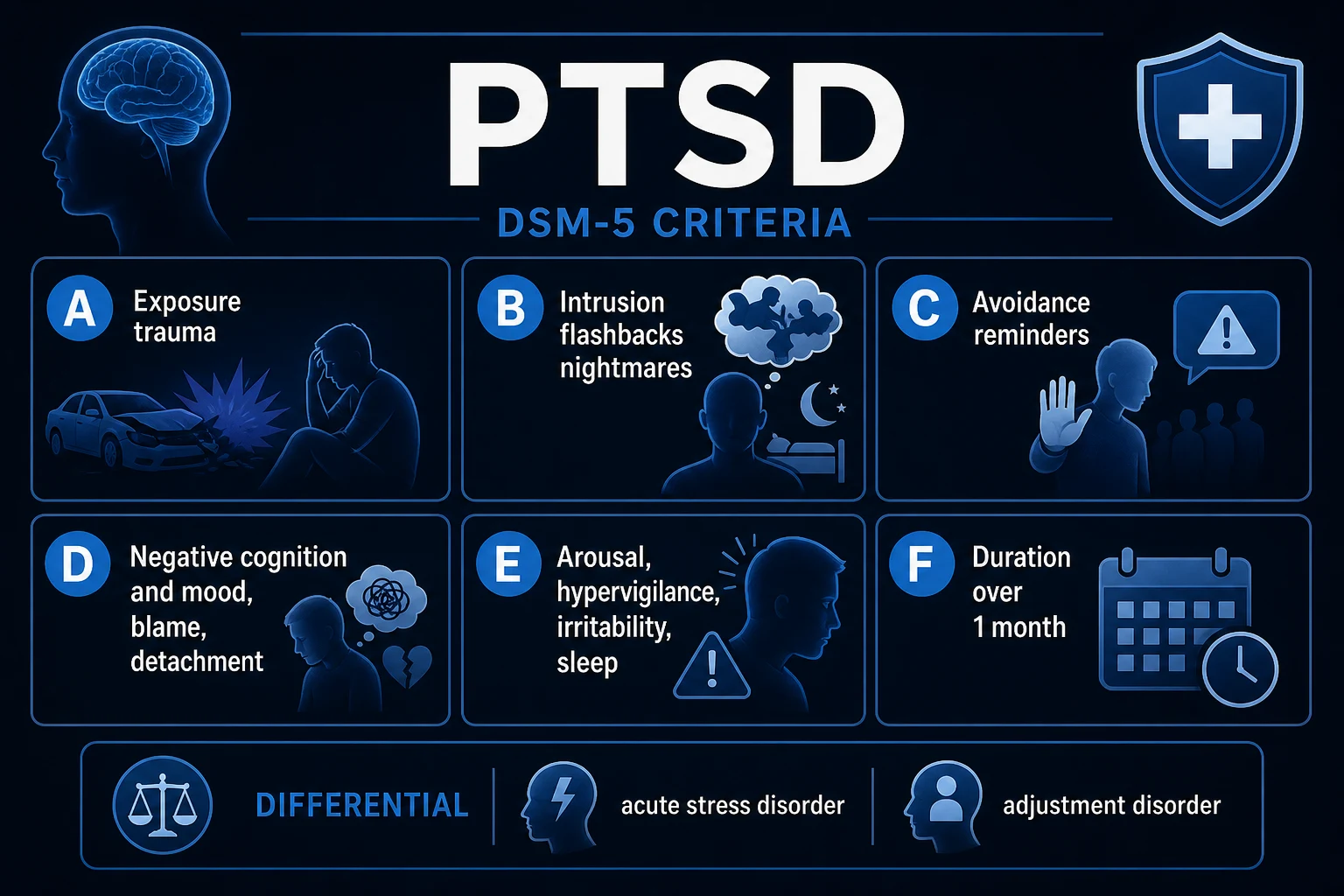
The key contrast with the other trauma-related disorders is the duration and the qualifying trauma: [1]
PTSD (DSM-5)
- Qualifying trauma (Criterion A) — actual/threatened death, serious injury, or sexual violence
- At least 1 intrusion + 1 avoidance + 2 negative-cognition/mood + 3 arousal/reactivity
- Duration MORE THAN 1 month
- Specifiers: with dissociative symptoms; with delayed expression (over 6 months)
Acute stress disorder (ASD)
- Same qualifying trauma and similar symptom picture
- Duration 3 DAYS to 1 MONTH after trauma (DSM-5)
- Many recover spontaneously; if symptoms persist beyond 1 month, reclassify as PTSD
- Bryant 2017: predictors of progression to PTSD include peri-traumatic dissociation and severe early symptoms
Adjustment disorder
- Stressor DOES NOT meet Criterion A (not life-threatening injury, death, or sexual violence)
- Symptoms develop within 3 months of stressor; resolve within 6 months of stressor ending
- Clinically significant distress or impairment out of proportion to stressor
- Symptoms may be depressed mood, anxiety, or disturbance of conduct
Complex PTSD (ICD-11)
- Caused by prolonged, repeated, inescapable interpersonal trauma (childhood abuse, torture, domestic violence, sex trafficking)
- PTSD core (re-experiencing in the present + avoidance + sense of current threat) PLUS
- Disturbances in self-organisation: affect dysregulation, negative self-concept, interpersonal difficulties
- Phase-based therapy: safety/stabilisation, trauma processing, integration
Prolonged grief disorder (ICD-11 / DSM-5-TR)
- Persistent, pervasive grief response to bereavement lasting over 6 months (DSM-5-TR) or over 6 months (ICD-11)
- Yearning/preoccupation with deceased, identity disruption, disbelief, avoidance of reminders, difficulty moving on
- Distinct from PTSD — focused on loss rather than on re-experiencing a feared event
Epidemiology & Risk Factors
PTSD is common, frequently chronic, and carries substantial comorbidity and functional impairment.[2][10]
PTSD by the numbers
Sex. Women are 2 to 3 times more likely than men to develop PTSD across the lifespan, despite having fewer traumatic exposures overall — a finding explained both by the higher conditional risk after rape and sexual assault (which women experience more often) and by sex-linked biological and social factors including differential HPA-axis reactivity and lower average baseline cortisol.[2]
Conditional risk by trauma type — a favourite examiner question. The traumas with the highest probability of leading to PTSD are rape and sexual assault (around 49 percent), followed by combat exposure, severe motor vehicle accidents, childhood physical/sexual abuse, mass violence, with natural disasters and witnessing trauma to others carrying the lowest conditional probabilities. Interpersonal and intentional trauma consistently produces more PTSD than accidental or natural trauma of comparable severity.[1]
Risk factors cluster in three groups:[10]
- Pre-trauma (vulnerability): female sex, younger age, lower socioeconomic status, lower educational attainment, prior psychiatric history, prior trauma (especially childhood adversity), family history of psychiatric disorder, lower IQ, neuroticism, genetic factors (twin-study heritability 30 to 40 percent; FKBP5 and NR3C1 gene-by-environment interactions).
- Peri-traumatic (at the time): peri-traumatic dissociation (a powerful predictor — feeling detached, time slowing, derealisation), intense fear, horror or helplessness, panic attack at the time, peri-traumatic heart rate above 90 bpm in the emergency department, perceived life threat, severity and duration of the trauma.
- Post-traumatic (recovery environment): low social support is among the strongest predictors, ongoing life stress, further traumatic events, subsequent bereavement, loss of employment, financial strain, and absence of acknowledgement of the trauma (e.g. unrecognised sexual assault, combat stigma). [1]
High-prevalence populations that examiners test deliberately include combat veterans (post-deployment screening; comorbid traumatic brain injury and moral injury), refugees and survivors of torture (complex PTSD; ongoing threat), survivors of childhood abuse (complex PTSD; high comorbidity with borderline personality traits, substance use, eating disorders), first responders (repeated exposure to aversive details; peer-support programmes such as Trauma Risk Management, TRiM), ICU survivors (post-intensive care syndrome — screen at 1 to 3 months post-discharge), perinatal PTSD after traumatic birth, stillbirth, or NICU admission, and cancer survivors (especially those with intensive treatment).[1][11]
Pathophysiology
PTSD is a disorder of the fear circuit: a hyperreactive limbic alarm (amygdala) that the prefrontal cortex (the brake) fails to suppress, with a hippocampus (the contextualiser) too small to anchor the trauma memory firmly in the past. The result is that the memory is re-experienced as happening now rather than remembered as something that happened then.[10][2]
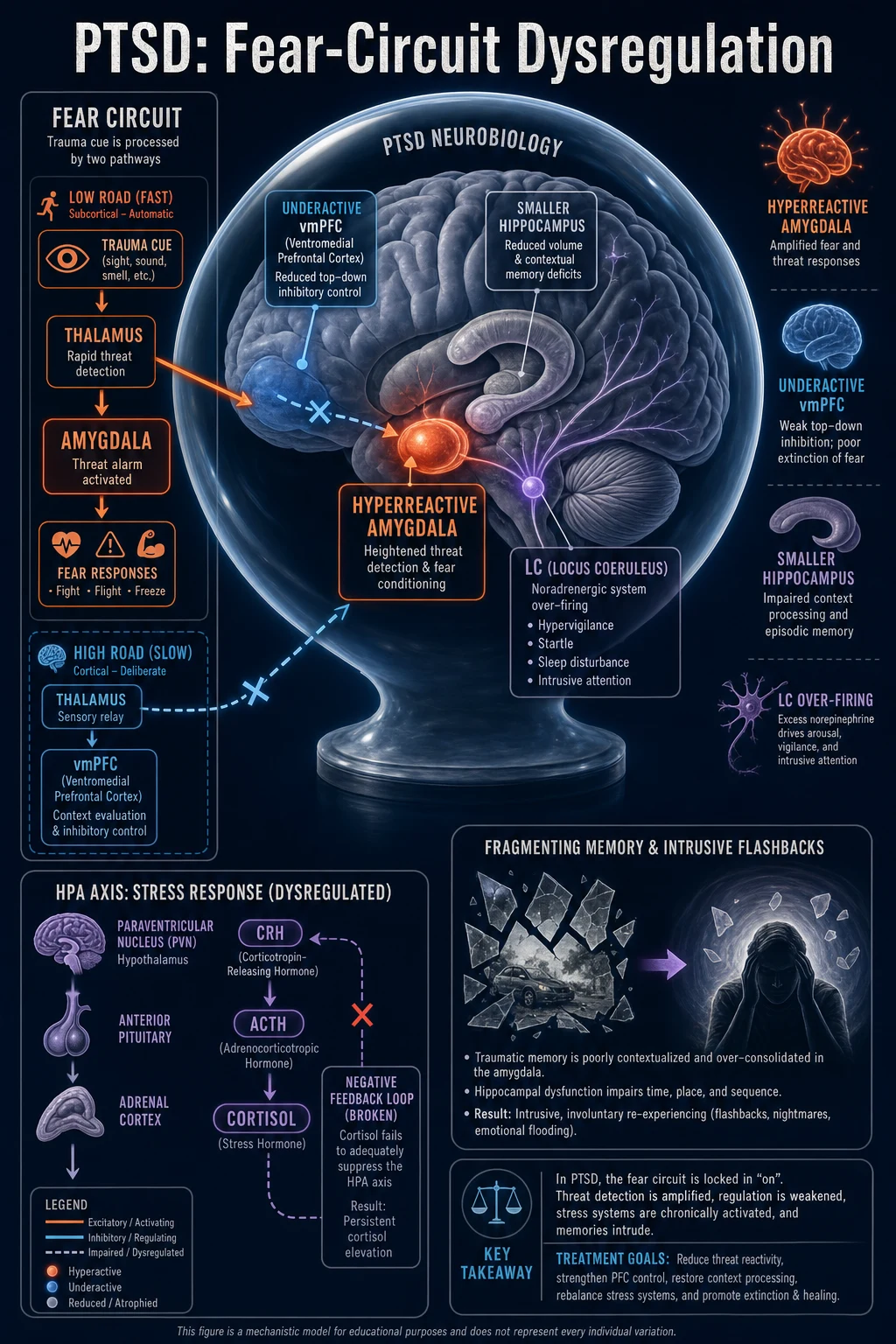
Three converging mechanisms explain the phenotype.[10][2]
1. Fear-circuit dysregulation (the central mechanism). Functional imaging consistently shows amygdala hyperactivity in response to trauma-related (and even neutral) stimuli, paired with vmPFC hypoactivity during fear extinction. The vmPFC normally suppresses amygdala output once a previously conditioned cue is recognised as safe — a process called fear extinction. In PTSD this brake fails: the conditioned fear response, once established by the trauma, persists despite re-exposure to the now-safe cue. The hippocampus (reduced in volume — a finding that may be both consequence and pre-existing risk factor) cannot contextualise the memory — i.e. tag it as belonging to a particular time and place — so the memory is experienced as a current threat rather than a past event. Trauma-focused therapy works precisely by reinstating this top-down inhibition and re-contextualising the memory.[10]
2. HPA-axis and noradrenergic dysregulation. Unlike major depression, in which cortisol is typically elevated, PTSD shows a paradoxical pattern of low basal cortisol with enhanced negative feedback on the dexamethasone suppression test. Corticotropin-releasing hormone (CRH) is, however, elevated, driving central stress responses. The locus coeruleus fires excessively, releasing noradrenaline systemically and centrally — this drives the hyperarousal, the exaggerated startle, the autonomic reactivity, the irritability and the trauma-related nightmares. Blockade of alpha-1 adrenergic receptors with prazosin reduces nightmares, exploiting this mechanism.[10][5]
3. The cognitive model of Ehlers and Clark (the rationale for trauma-focused therapy). Ehlers and Clark proposed that PTSD is maintained because the patient experiences the trauma as a current threat, arising from two cognitive processes: (i) the trauma memory is abnormally encoded — it is poorly elaborated and contextualised (so it is not integrated into autobiographical memory and feels 'here-and-now'), and is richly connected to sensory and emotional cues (so any reminder triggers it vividly); and (ii) the patient makes excessively negative appraisals of the event and its consequences ('the world is entirely dangerous', 'I am to blame', 'I am permanently damaged'). These appraisals drive the avoidance and hyperarousal that prevent natural extinction. Trauma-focused CBT and EMDR target both processes: they help re-elaborate and re-contextualise the memory (so it feels like a memory, not a reliving) and they identify and modify the negative appraisals. Each reactivation of the memory in the safety of therapy opens a reconsolidation window during which the memory can be updated with new information.[1][3]
The neurobiology of PTSD in five letters
ALARM
The limbic alarm fires too readily to trauma cues (and even neutral cues)
Paradoxically LOW basal cortisol; vmPFC (the brake) is underactive
Avoidance prevents fear extinction and natural memory processing — the engine of chronicity
Each cue reactivates the memory but the memory is not updated — felt as 'happening now'
Small hippocampus cannot tag the memory to time and place
Clinical Presentation
The DSM-5 symptom clusters, reproduced verbatim, define the clinical picture and are essential knowledge for any exam stem.[9]
Cluster B — Intrusion symptoms (at least 1 required). Recurrent, involuntary and intrusive distressing memories of the trauma; recurrent traumatic dreams/nightmares (often with content tied to the trauma, but in children may be frightening dreams without recognisable content); dissociative reactions/flashbacks in which the individual feels or acts as if the event is recurring (in children this may manifest as trauma-specific re-enactment in play); intense or prolonged psychological distress at exposure to internal or external cues that symbolise or resemble the trauma; marked physiological reactivity to the same cues (tachycardia, sweating, tremor, breathlessness). The flashbacks are the most distinctive feature — the patient feels the event is happening now, with sensory and emotional richness (smells, sounds, physical sensations).[1]
Cluster C — Avoidance (at least 1 required). Persistent avoidance of, or efforts to avoid, distressing memories, thoughts or feelings about the trauma (the internal reminders); OR avoidance of external reminders — people, places, conversations, activities, objects or situations that arouse distressing memories. Avoidance is the engine of chronicity: it prevents the natural extinction of fear and prevents the memory from being processed and integrated.[1]
Cluster D — Negative alterations in cognition and mood (at least 2 required). Inability to remember an important aspect of the trauma (dissociative amnesia — not due to head injury, alcohol or drugs); persistent and exaggerated negative beliefs or expectations about oneself, others or the world ('I am bad', 'no one can be trusted', 'the world is entirely dangerous'); distorted cognitions causing the individual to blame self or others for the trauma or its consequences; persistent negative emotional state (fear, horror, anger, guilt, shame); markedly diminished interest or participation in significant activities; feelings of detachment or estrangement from others; persistent inability to experience positive emotions (anhedonia for happiness, satisfaction, love). This cluster captures the pervasive demoralisation that distinguishes PTSD from acute stress.[9]
Cluster E — Alterations in arousal and reactivity (at least 3 required). Irritable behaviour and angry outbursts (typically with little provocation), expressed verbally or physically towards people or objects; reckless or self-destructive behaviour; hypervigilance; exaggerated startle response; concentration problems; sleep disturbance (difficulty falling asleep, difficulty staying asleep, restless and non-restorative sleep). This cluster is driven by the noradrenergic excess.[1][10]
Intrusion (cluster B)
- Flashbacks (dissociative — feels as if the event is recurring)
- Nightmares (often trauma-content)
- Intrusive distressing memories
- Psychological AND physiological distress at reminders
- Children re-enact in play
Avoidance (cluster C)
- Avoiding internal memories, thoughts, feelings
- Avoiding external reminders (people, places, activities, objects)
- Avoidance perpetuates PTSD by preventing fear extinction
Negative cognition/mood (cluster D)
- Dissociative amnesia for key trauma aspects
- Negative beliefs ('world is dangerous', 'I am bad')
- Distorted blame of self or others
- Persistent fear, horror, anger, guilt, shame
- Detachment, anhedonia, diminished interest
Arousal/reactivity (cluster E)
- Irritability and angry outbursts
- Reckless or self-destructive behaviour
- Hypervigilance, exaggerated startle
- Concentration problems
- Sleep disturbance (falling or staying asleep)
Onset, tempo and course. PTSD typically begins within the first 3 months of the trauma, but onset can be later. The delayed expression specifier is used when full criteria are not met until at least 6 months after the trauma (whether or not some symptoms were present earlier). Symptoms fluctuate in intensity and may be triggered by reminders, anniversaries, further stressors, or general life difficulties. Approximately 50 percent of adults recover within 3 months of onset; the remainder often follow a chronic course for years or even decades, particularly without treatment. Comorbidity, ongoing stress and avoidant coping predict chronicity.[2]
Atypical presentations (examiners test these deliberately)
PTSD does not always present with the textbook flashback. Be alert for:[1][11]
- Somatic presentation — chronic headaches, irritable bowel, non-cardiac chest pain, fibromyalgia-like widespread pain, sexual dysfunction, gynaecological complaints. Survivors of sexual assault may present repeatedly to primary care or gynaecology with somatic symptoms and never disclose the trauma unless asked directly.
- Dissociative symptoms — depersonalisation (feeling detached from oneself, as if watching from outside), derealisation (the world feels unreal or dreamlike), dissociative amnesia for key aspects of the trauma. The DSM-5 dissociative specifier captures this subtype.
- Aggression and conduct disturbance in children — children may present with new-onset aggression, separation anxiety, regression (bedwetting, loss of speech), school refusal, or re-enactment of the trauma in play. The developmental presentation is markedly different from the adult picture.
- Substance use as the presenting complaint — alcohol, cannabis, opioids or benzodiazepines used to dampen intrusion and hyperarousal. The PTSD may be hidden behind the substance use presentation; take a careful trauma history in every patient with a substance use disorder.
- Cognitive complaints — older adults with previously compensated PTSD may present with apparent cognitive decline when early dementia erodes their compensatory capacity; PTSD is also associated with cognitive complaints independent of dementia.
- Late-life emergence — retirement, bereavement, or onset of dementia can unmask PTSD that was previously well compensated.
- Perinatal PTSD — following traumatic birth, miscarriage, stillbirth or NICU admission; may present with avoidance of the baby, bonding difficulty, intrusive birth memories, and refusal of further pregnancy. [1]
Peri-traumatic features that predict PTSD
The following features at the time of the trauma or immediately afterwards are powerful predictors of later PTSD and may be tested directly:[1][10]
- Peri-traumatic dissociation (feeling detached, time-slowing, derealisation, out-of-body experience) — one of the strongest predictors.
- Intense fear, horror, helplessness at the time (this was Criterion A2 in DSM-IV; removed from DSM-5 but remains clinically predictive).
- Peri-traumatic panic attack.
- Heart rate above 90 bpm measured in the emergency department shortly after trauma.
- Perceived life threat.
- Severity, duration, and physical injury from the trauma.
- Female sex, prior trauma, prior psychiatric history, low social support. [1]
Differential Diagnosis
A wide differential must be navigated, separating PTSD from the other trauma-related disorders, the mood and anxiety disorders, the substance-related disorders, the dissociative and personality disorders, and the organic mimics.[1][11]
Acute stress disorder (ASD)
- Same symptom picture but duration 3 DAYS to 1 MONTH (DSM-5)
- If symptoms persist beyond 1 month, reclassify as PTSD
- Many with ASD recover spontaneously — do NOT treat everyone
- Targeted trauma-focused CBT for those with persistent symptoms at 1 to 2 weeks
Adjustment disorder
- Stressor does NOT meet Criterion A (not life-threatening injury/death/sexual violence)
- Symptoms within 3 months of stressor, resolve within 6 months of stressor ending
- No intrusion cluster — low mood, anxiety, or conduct disturbance dominant
- Treat with supportive therapy, problem-solving, or brief CBT
Major depressive disorder
- Low mood/anhedonia dominant; sleep, concentration, irritability overlap with PTSD
- NO intrusive re-experiencing and NO clear trauma trigger
- Always take a trauma history; comorbidity with PTSD is ~ 50 percent
- Treat both — SSRIs work for both
Generalised anxiety disorder
- Diffuse worry across multiple domains, not tied to trauma cues
- No flashbacks, nightmares or trauma-specific avoidance
- Chronic (over 6 months); motor tension, fatigue, irritability
Panic disorder
- Recurrent unexpected panic attacks, not specifically triggered by trauma cues
- Anticipatory anxiety about future attacks, not about trauma reminders
- No trauma history required; behavioural avoidance is situation-specific
Specific phobia / agoraphobia
- Avoidance of a specific object/situation or being in places where escape is difficult
- No intrusive memories or full PTSD cluster
- Phobic object usually produces anxiety but not the re-experiencing of PTSD
Obsessive-compulsive disorder
- Intrusions are ego-dystonic repetitive thoughts (obsessions), NOT trauma memories
- Insight usually preserved; compulsions present (PTSD avoidance is not ritualistic)
- May be comorbid with PTSD
Substance intoxication / withdrawal
- Alcohol, benzodiazepine, stimulant intoxication or withdrawal mimics hyperarousal
- Take a careful substance history; CIWA-Ar for alcohol withdrawal
- PTSD and substance use are frequently comorbid — integrated dual-diagnosis care
Bipolar affective disorder
- Irritability, decreased need for sleep, recklessness may mimic PTSD hyperarousal
- Look for mood elevation, grandiosity, cycling — NOT trauma-triggered
- SSRI monotherapy can switch — screen for bipolar before starting
Psychotic disorders
- Dissociative flashbacks can be mistaken for hallucinations — in PTSD reality-testing is preserved and content is trauma-tied
- In psychosis, content is unrelated to a specific trauma; delusions and thought disorder are present
Traumatic brain injury / post-concussion syndrome
- Overlap: irritability, concentration problems, sleep disturbance
- Cognitive deficits prominent; amnesia for the event is peri-traumatic, not for the trauma content
- Comorbidity with PTSD is very common in military and motor-vehicle-accident populations
Borderline / personality disorder
- Chronic trauma history, emotional dysregulation, interpersonal difficulties — high comorbidity with PTSD
- Consider Complex PTSD; personality-disorder features may improve once PTSD is treated
Malingering / factitious disorder
- Medicolegal and compensation contexts; inconsistencies across assessments
- Atypical symptom pattern; no consistent physiological reactivity to trauma cues
- Assume genuine PTSD unless objective inconsistency — be cautious
The discriminating features the examiner rewards: (i) a qualifying trauma; (ii) the intrusion cluster (the single most distinctive PTSD feature); (iii) the four-symptom-cluster structure; (iv) symptoms triggered specifically by trauma cues; and (v) duration more than 1 month.[1]
Clinical & Bedside Assessment
The diagnosis is clinical. Begin with a focused psychiatric history: the trauma itself (using a sensitive, non-intrusive opener such as 'Have you ever experienced or witnessed events that were very frightening or harmful, or that overwhelmed you?'), the temporal relationship between the trauma and the symptoms, each of the four symptom clusters, the impact on daily functioning, prior psychiatric and trauma history (childhood adversity especially), substance use, social supports, ongoing life stressors, family psychiatric history, and current medications.[1]
Mental state examination documents appearance (often vigilant, scanning the room, sitting near the door), behaviour (startle response, agitation, avoidance of eye contact), mood (low, anxious, irritable, blunted), thought (intrusive memories, negative beliefs, possible suicidal ideation — assess at every visit), perception (flashbacks, dissociation), cognition (concentration often impaired), and insight. [1]
Suicide risk assessment is mandatory at every visit. PTSD approximately doubles the lifetime suicide rate; combine this with the high rates of comorbid depression and substance use and you have a population at substantial risk. Use a structured tool such as the Columbia Suicide Severity Rating Scale (C-SSRS), the SAD PERSONS scale, or local equivalent; document ideation, intent, plan, access to means, recent attempt, hopelessness, and protective factors.[11]
Collateral history from a partner or family member is invaluable — patients may minimise or be unaware of avoidance, irritability, dissociation, or the impact on the family. School reports are useful in children. [1]
Validated screening and severity instruments
| Instrument | Items | Cut-off / scoring | Use |
|---|---|---|---|
| PC-PTSD-5 (Primary Care PTSD Screen for DSM-5) | 5 yes/no items (one per cluster) | Cut-off 3 of 5 | Quick screening in primary care |
| PCL-5 (PTSD Checklist for DSM-5) | 20 items, 0 to 4 each | Total 0 to 80; cut-off 31 to 33 indicates probable PTSD | Self-report symptom severity and monitoring |
| CAPS-5 (Clinician-Administered PTSD Scale) | 30 items, severity and frequency | Gold-standard structured interview | Diagnostic confirmation and research |
| ITQ (International Trauma Questionnaire) | 18 items | ICD-11 PTSD and Complex PTSD | ICD-11-aligned diagnostic screen |
| PHQ-9, GAD-7, AUDIT-C, DAST | varies | varies | Screen for comorbid depression, anxiety, alcohol, drugs |
| C-SSRS | varies | varies | Suicide risk |
Physical examination is mainly to exclude mimics and to obtain baseline parameters before pharmacotherapy: vital signs (autonomic hyperarousal may produce tachycardia, hypertension, tremor), signs of self-injury or recent trauma, neurological exam if TBI suspected, and weight, BMI and blood pressure for baseline before SSRIs/antipsychotics. [1]
Investigations
PTSD is a clinical diagnosis — there is no confirmatory blood test or imaging. Investigations are for excluding mimics and obtaining baselines before pharmacotherapy.[1]
Exclusion of mimics: [1]
- Urine drug screen and breath/blood alcohol — exclude intoxication or withdrawal as the cause of hyperarousal, anxiety, sleep disturbance.
- TSH — exclude hyperthyroidism, which produces anxiety, irritability, insomnia and tremor.
- FBC, U&E, LFT, glucose, calcium — baseline and exclude metabolic disturbance.
- ECG — exclude arrhythmia; baseline before QT-prolonging drugs (TCAs, some antipsychotics).
- CT/MRI brain — if focal neurology, new-onset dissociation, suspected TBI, or first presentation of psychosis.
- EEG — if seizure-like episodes (both psychogenic non-epileptic seizures and epilepsy are common in trauma populations).
- Random cortisol / dexamethasone suppression test — only if Cushing's or Addison's is being considered; not routinely required. [1]
Baseline before pharmacotherapy: [1]
- Weight, BMI, waist circumference, blood pressure.
- Fasting glucose and lipid profile (baseline before SSRIs/antipsychotics — metabolic monitoring).
- ECG (especially before TCAs or QT-prolonging antipsychotics).
- Sodium (baseline before SSRIs — risk of hyponatraemia especially in older adults).
- LFTs and renal function (dose adjustment).
- Pregnancy test in women of reproductive age before SSRIs. [1]
Neuroimaging findings in PTSD research are not used clinically but are frequently tested: smaller hippocampal volume, hyperactive amygdala, hypoactive vmPFC, and locus coeruleus overactivity.[10]
Management — Resuscitation
PTSD itself is rarely a 'resuscitation' emergency, but the psychiatric emergencies embedded in it must be recognised and acted on at once.[11]
[1]Trauma-informed care applies in the acute phase regardless of setting:[1]
- Explain, ask permission, give choice at every step; never force a recounting of the trauma.
- Support the patient's control (loss of control is at the heart of trauma).
- Ensure a same-sex chaperone for any physical examination of a sexual-assault survivor.
- Provide information and psychoeducation — explain that their reactions are common, that recovery is expected, and that help is available.
- Do NOT offer single-session psychological debriefing (mandatory single-session recounting in the immediate aftermath) — Cochrane review evidence shows it is ineffective and may worsen outcomes.[7]
Management — Definitive & Stepwise
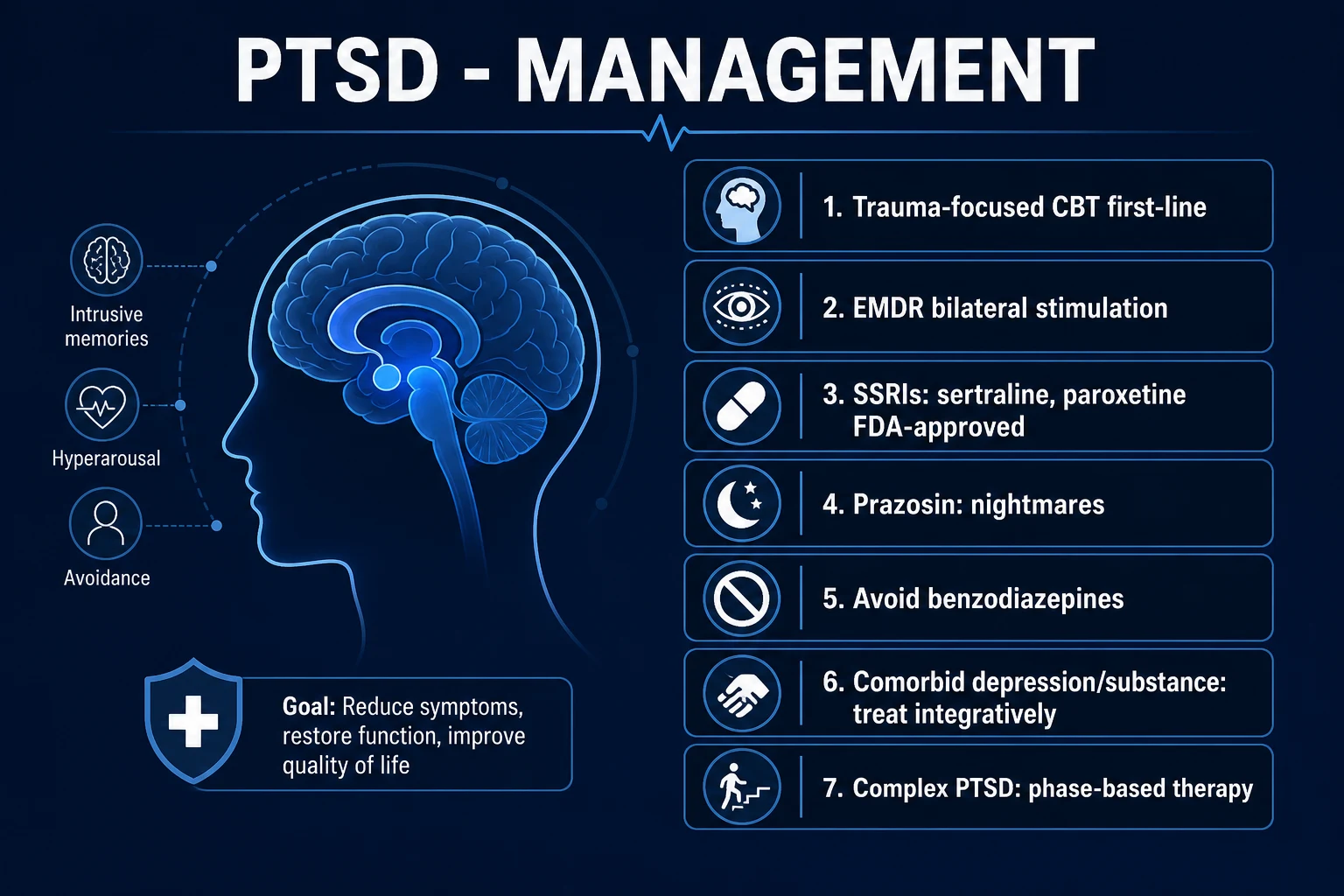
The principle of PTSD management is stepped, evidence-based, and trauma-informed: most patients recover with structured psychological therapy; pharmacotherapy is added when therapy is unavailable, refused, or insufficient; certain drugs and interventions are explicitly discouraged.[11][13]
Step 1 — Psychoeducation, watchful waiting (symptoms under 1 month)
For mild symptoms in the first month after trauma, the right first answer is psychoeducation, support and watchful waiting — not formal therapy and not medication. Explain the nature of trauma reactions (that intrusion, avoidance, hyperarousal are common and that recovery is the expected trajectory), provide written information, advise sleep hygiene and avoidance of alcohol and recreational drugs, encourage gradual return to normal activities, and re-assess at 1 month (the threshold for diagnosis of PTSD). Most patients recover spontaneously in this window.[7][11]
Do NOT offer single-session psychological debriefing — the Roberts 2019 Cochrane review demonstrated that mandatory single-session interventions offered universally to trauma survivors do not prevent PTSD and may worsen outcome (perhaps by disrupting natural recovery and coping). Single-session interventions are now contraindicated by NICE, APA and VA/DoD.[7]
Step 2 — Trauma-focused psychological therapy (first-line for established PTSD)
Trauma-focused psychological therapy is the first-line treatment for PTSD. NICE (NG116, 2018), the APA, the 2023 VA/DoD CPG and the WHO all recommend it as first-line, ahead of medication.[11][12][13] The evidence base is robust: response rates of 50 to 70 percent, with trauma-focused therapy outperforming non-trauma-focused therapy and supportive therapy in the Coventry 2020 network meta-analysis.[13]
Trauma-focused cognitive behavioural therapy (TF-CBT) and prolonged exposure therapy (PE) work by gradual, repeated, controlled exposure to the trauma memory and its reminders (imaginal and in-vivo exposure) combined with cognitive restructuring of the negative appraisals. Sessions are typically 8 to 12, weekly, each 60 to 90 minutes. Mechanism: the repeated exposure allows fear extinction (the cue is relearned as safe) and memory reconsolidation (the memory is integrated into autobiographical memory and updated with new information).[1]
Eye Movement Desensitisation and Reprocessing (EMDR) is an evidence-based alternative with efficacy equivalent to TF-CBT.[3] Its eight-phase protocol is frequently tested:
EMDR is an eight-phase therapy; remember with PRE-PAIR (PREparation + P AIR — Processing, Assessment, Installation, Re-evaluation, plus body-scan)
PRE-PAIR
Identify target memories; assess readiness, stability, supports
Build coping skills, safe-place imagery, stabilisation
Identify image, negative cognition, positive cognition; rate SUDs (Subjective Units of Disturbance 0 to 10) and VoC (Validity of Cognition 1 to 7)
Bilateral stimulation (eye movements, taps, tones) while attending to the trauma memory; continue until SUDs falls to 0 to 1
Strengthen the positive cognition until VoC rises to 7 (fully true)
Scan the body for residual tension; process any remaining somatic disturbance
At the next session, check that the memory remains desensitised and identify the next target
(Phase 7 is Closure — return to a calm state at the end of each session.)[3]
Group therapy (especially for veterans and combat trauma), psychoeducation for the family, and chronic-pain and substance-use management are valuable adjuncts. [1]
Step 3 — SSRI / SNRI pharmacotherapy (when therapy is insufficient or refused)
SSRIs are first-line pharmacotherapy. They reduce PTSD symptoms modestly but reliably, treat comorbid depression, and have a favourable safety profile. Only two SSRIs are FDA-approved for PTSD: sertraline and paroxetine.[6][11]
Sertraline (FDA-approved)
- First-line SSRI for PTSD; favourable safety/tolerability
- Start 25 to 50 mg PO once daily in the morning
- Titrate every 1 to 2 weeks to 50 to 200 mg/day (typical effective dose 100 to 150 mg/day)
- Allow 4 to 8 weeks for full effect; treat for at least 12 months once stable
- Adverse effects: GI upset, sexual dysfunction, insomnia, sweating, hyponatraemia (especially elderly), bleeding risk
Paroxetine (FDA-approved)
- FDA-approved for PTSD; arguably slightly more efficacious than sertraline in some meta-analyses
- Start 20 mg PO once daily in the morning
- Titrate by 10 mg every 1 to 2 weeks to 20 to 60 mg/day
- More sedating, more weight gain, more anticholinergic, more sexual dysfunction than sertraline
- Higher risk of neonatal adaptation syndrome and cardiac defects in pregnancy — AVOID in pregnancy and breastfeeding
Venlafaxine (SNRI, supported by VA/DoD)
- Effective alternative SSRI/SNRI; recommended by 2023 VA/DoD CPG alongside SSRIs
- Start 37.5 mg PO once daily, titrate to 75 to 225 mg/day
- Watch for hypertension at higher doses; taper slowly to avoid discontinuation syndrome
Fluoxetine
- Some evidence of efficacy; long half-life reduces discontinuation syndrome
- Caution in children/adolescents — UK SSRI of choice in under-18s is fluoxetine
Drugs NOT recommended
- Benzodiazepines — no efficacy, impair fear extinction, dependence risk, worsen outcomes
- Antipsychotics (only for comorbid psychosis or severe agitation)
- Bupropion — not effective for PTSD
- TCAs and MAOIs — second-line only; side-effect and overdose burden
- Topiramate, tiagabine — no consistent evidence
Prazosin for trauma-related nightmares.[5][11] An alpha-1 adrenergic antagonist that reduces the noradrenergic hyperactivity driving nightmares. Start 1 mg at bedtime, titrate slowly every 3 to 7 days to a typical effective dose of 6 to 10 mg at night (range 2 to 15 mg). Warn of first-dose hypotension and syncope — especially in older adults, those on antihypertensives, and those who get up at night — give the first dose just before bed. Note on the evidence: the Raskind 2018 NEJM trial of prazosin in military veterans with PTSD did NOT confirm overall benefit on the CAPS-5 total score versus placebo, despite earlier smaller trials showing nightmare benefit. The 2023 VA/DoD CPG therefore gives prazosin only a weak recommendation, generally reserved for nightmare-predominant PTSD as a clinical option rather than a first-line agent. Continue to monitor blood pressure.[5]
Treat the comorbidity. Depression responds to the same SSRI. Substance use requires integrated dual-diagnosis care (trauma-focused therapy alongside relapse-prevention) — do not withhold trauma-focused therapy in patients with active substance use, per the Roberts 2022 systematic review.[14] Sleep hygiene plus prazosin or a sedating antidepressant (mirtazapine, trazodone) for sleep — avoid long-term benzodiazepines and z-drugs. Chronic pain requires a multidisciplinary approach.
Step 4 — Refractory PTSD and Complex PTSD
For refractory PTSD (failure to respond to an adequate trial of trauma-focused therapy AND an SSRI), or for Complex PTSD (ICD-11), specialist pathways are required:[4][11]
- Optimise therapy — extend to 16+ sessions, switch modality (TF-CBT to EMDR or vice versa), consider group-based therapy.
- Optimise pharmacotherapy — switch SSRI, add SNRI, or augment.
- Prazosin for nightmares as above.
- Complex PTSD phase-based treatment — three phases: (1) safety and stabilisation (skills: emotion regulation, grounding for dissociation, safety in relationships, harm reduction); (2) trauma processing (TF-CBT or EMDR for the index traumas); (3) integration and reconnection (identity, relationships, meaning). STAIR Narrative Therapy (Skills Training in Affective and Interpersonal Regulation plus narrative) is one evidence-based phase-based approach.[4]
- Emerging treatments under trial — MDMA-assisted psychotherapy (MAPS phase 3 trials, Mitchell et al. 2021/2023) showed promising response rates in severe chronic PTSD and was the basis of the FDA advisory committee review in 2024; ketamine-assisted therapy; stellate ganglion block. These remain investigational and are NOT routine clinical options; they are listed here for completeness and as controversies.[1]
Specific Subtypes & Scenarios
- Acute stress disorder (ASD) — symptoms 3 days to 1 month after trauma. Many recover spontaneously; targeted trauma-focused CBT is recommended for those with persistent distressing symptoms at 1 to 2 weeks. Do NOT treat all trauma survivors, and do NOT offer single-session debriefing.[7][8]
- PTSD with dissociative symptoms (DSM-5 specifier) — depersonalisation and/or derealisation. Treat with trauma-focused therapy adapted for dissociation — typically phase-based (stabilisation first, processing only when dissociation is controlled).[9]
- PTSD with delayed expression (DSM-5 specifier) — full criteria not met until at least 6 months after the trauma; some symptoms may have been present sub-threshold earlier. Onset may be triggered by a new stressor, retirement, or bereavement.[9]
- Complex PTSD (ICD-11) — caused by prolonged, repeated, inescapable interpersonal trauma (childhood physical or sexual abuse, torture, domestic violence, sex trafficking). Core PTSD plus three self-organisation disturbances: (i) affect dysregulation (heightened emotional reactivity, violent outbursts, dissociation when stressed); (ii) negative self-concept (worthlessness, failure, shame, guilt, emptiness); (iii) disturbances in relationships (difficulty feeling close, mistrust, withdrawal, difficulty sustaining relationships). Treat with phase-based therapy — safety/stabilisation, trauma processing, integration.[4]
- Combat / operational PTSD — military and veteran population. Comorbid TBI, moral injury, depression and substance use are common; veteran-specific services; post-deployment screening; the 2023 VA/DoD CPG applies.[11][12]
- Childhood-trauma / developmental PTSD — developmental trauma, attachment disturbance; trauma-focused CBT adapted for children (TF-CBT-Adolescent or Child) with parent/caregiver involvement; phase-based therapy for complex presentations.
- Refugees, asylum seekers and torture survivors — multiple complex trauma, bereavement, ongoing threat, cultural syndromes of distress, language and interpreter needs (use professional interpreters, not family members); address social and legal needs alongside the trauma work.[1]
- Post-intensive care PTSD — ICU survivors of ARDS, sepsis, prolonged sedation and delirium. Prevention: ICU diaries, early mobilisation, minimise sedation (light sedation protocols), preserve sleep, family involvement, follow-up clinic at 1 to 3 months post-discharge.[11]
- Perinatal PTSD — following traumatic birth, miscarriage, stillbirth or NICU admission; can affect mother-infant bonding. Screen with the City Birth Trauma Scale. Trauma-focused CBT is preferred (avoids fetal/infant drug exposure); if a SSRI is needed in pregnancy, sertraline is the SSRI of choice (lowest fetal-risk profile); avoid paroxetine in pregnancy (cardiac defects) and breastfeeding.[11]
- PTSD in children — re-enactment in play, new fears (monsters, the dark), regression (bedwetting, separation anxiety, loss of speech), somatic complaints, school refusal, aggression. Trauma-focused CBT-A with parent/caregiver involvement; fluoxetine is the SSRI of choice in under-18s in the UK if medication is needed for moderate-to-severe symptoms; safeguarding referral if ongoing abuse.[11]
Complications & Pitfalls
Comorbidity-driven complications dominate the clinical picture. Major depression occurs in roughly 50 percent, substance use disorders in 30 to 50 percent (alcohol, cannabis, opioids, benzodiazepines — typically self-medication), other anxiety disorders in around 40 percent, and personality disorder features especially borderline in those with childhood-trauma histories. The lifetime suicide rate is approximately doubled compared with the general population.[2][11]
Somatic and physical complications arise from chronic autonomic activation: cardiovascular disease (myocardial infarction, hypertension), metabolic syndrome, chronic pain and fibromyalgia-like syndromes, gastrointestinal symptoms, sexual dysfunction, chronic headaches. PTSD is associated with elevated all-cause mortality.[1]
Social and relational complications: relationship breakdown, divorce, occupational and educational underachievement, unemployment, homelessness, social isolation, and inter-generational impact (parental PTSD affects attachment, parenting and child outcomes).[1]
Treatment complications: [1]
- SSRIs — sexual dysfunction, GI upset, sweating, insomnia, hyponatraemia (especially elderly), bleeding risk (with NSAIDs/anticoagulants), serotonin syndrome (with MAOIs, tramadol, triptans, linezolid), switch to mania in undiagnosed bipolar, discontinuation syndrome if stopped abruptly (paroxetine has the highest rate).
- Prazosin — first-dose hypotension/syncope, dizziness, palpitations, priapism (rare), nasal congestion.
- Antipsychotics (when used for comorbid psychosis or severe agitation) — metabolic syndrome, extrapyramidal side effects, QT prolongation, hyperprolactinaemia, sedation, neuroleptic malignant syndrome.
- Benzodiazepines — dependence, withdrawal (including seizures), impairment of fear-extinction learning, worsening of PTSD outcomes, falls in the elderly, respiratory depression with opioids.[11]
Classic pitfalls the examiner tests: (i) missing PTSD because the patient presents with somatic complaints or substance use rather than intrusion; (ii) using single-session psychological debriefing (harmful); (iii) prescribing benzodiazepines long-term (impair fear extinction, dependence); (iv) missing comorbid depression, substance use, or suicide risk; (v) failing to ask about trauma; (vi) diagnosing 'personality disorder' when the underlying process is Complex PTSD; (vii) failing to consider peri-traumatic predictors (dissociation, heart rate over 90) when assessing risk; (viii) overlooking perinatal PTSD after traumatic birth or perinatal loss.[1][7]
Prognosis & Disposition
Approximately 50 percent of adults with PTSD recover within 3 months of onset; the remainder often follow a chronic course, sometimes for decades.[2] With trauma-focused therapy, response rates of 50 to 70 percent are achievable, and many of those who do not fully remit have substantial symptom reduction and improved functioning.[13]
Predictors of chronicity (the negative prognostic features): severity of the trauma, peri-traumatic dissociation, prior psychiatric history, prior trauma (especially childhood adversity), low social support, ongoing life stress, comorbid depression and substance use, female sex, avoidant coping style, and delayed or inadequate treatment.[1]
Predictors of good outcome: strong social support, prompt evidence-based treatment (trauma-focused CBT or EMDR within weeks to months of onset), good premorbid functioning, absence of ongoing stress, and engagement with treatment.[1]
Disposition is outpatient in nearly all cases. Inpatient admission is reserved for: acute suicide risk, severe self-neglect, severe comorbid substance withdrawal, dangerous dissociation or aggression, and severe comorbid depression or psychosis. Day programmes and intensive outpatient programmes are valuable for Complex PTSD and treatment-refractory cases.[11]
Safety net: every PTSD patient needs an explicit written safety plan (warning signs, internal coping strategies, social distractions, people who help, professionals/agencies to contact, making the environment safe), a booked follow-up appointment, GP engagement, and (where relevant) substance-use service and family/carer involvement. Warn the patient and family about warning signs that warrant urgent review (worsening mood, hopelessness, escalating alcohol, new suicidal thoughts, withdrawal).[11]
Special Populations
- Children and adolescents — play-based and trauma-focused CBT-A (age-adapted) with parent/caregiver involvement, school liaison, and safeguarding referral if ongoing abuse. Prioritise safety. The evidence base for prazosin and benzodiazepines is weaker in children and should be avoided. Fluoxetine is the SSRI of choice in under-18s if medication is needed for moderate-to-severe symptoms.[11]
- Pregnancy — trauma-focused therapy preferred (no fetal exposure). If a SSRI is needed, sertraline is the SSRI of choice (lowest fetal-risk profile). Avoid paroxetine in the first trimester (cardiac defects) and third trimester (persistent pulmonary hypertension of the newborn, neonatal adaptation syndrome). Involve the perinatal mental health team.[11]
- Breastfeeding — sertraline is the preferred SSRI (low infant exposure in breast milk). Paroxetine also has low milk transfer but is avoided in pregnancy. Prazosin enters breast milk — caution; benefits may outweigh risks in severe nightmares.
- Older adults — increased risk of SSRI-induced hyponatraemia, falls, drug interactions, and QT prolongation; start low, go slow. Consider cognitive contribution (dementia may unmask previously compensated PTSD). Screen for sensory impairment, polypharmacy and social isolation. Trauma-focused therapy is effective in older adults and should not be withheld on the basis of age.[1]
- Refugees, asylum seekers and torture survivors — complex PTSD, ongoing threat, cultural idioms of distress; use professional interpreters (never family members); trauma-informed care; address social, legal and housing needs alongside the trauma work.[1]
- First responders and military — peer-support programmes (TRiM — Trauma Risk Management), post-deployment screening, integrated veteran services; watch for moral injury and comorbid TBI.[11]
- ICU survivors — post-intensive care syndrome. Prevention: ICU diaries, early mobilisation, light sedation protocols, family involvement; follow-up clinic at 1 to 3 months post-discharge.[11]
- Intellectually disabled and neurodevelopmental populations — adapted trauma-focused therapy; behavioural presentation may be atypical; involve carers; ensure accessible information.
- Medicolegal and compensation contexts — independent forensic assessment; maintain consistency in history; use validated measures; be alert to exaggeration but assume genuine PTSD unless there is objective inconsistency.
Evidence, Guidelines & Regional Differences
NICE guideline NG116 (2018). For adults with PTSD, recommend individual trauma-focused CBT or EMDR as first-line. Do NOT offer benzodiazepines. Do NOT offer single-session interventions (debriefing). For nightmares, prazosin is recommended only within a clinical trial context (softer evidence than CBT/EMDR). Children and young people should be offered trauma-focused CBT.[11][13]
2023 VA/DoD Clinical Practice Guideline (Schnurr 2024 synopsis; Lang 2024 clinician's guide). Strongly recommends trauma-focused psychotherapy (TF-CBT, PE, EMDR, cognitive processing therapy) AND SSRI/SNRI pharmacotherapy (sertraline, paroxetine, venlafaxine). Weakly recommends against routine prazosin (Raskind 2018 NEJM mixed results). Strongly recommends against benzodiazepines, against cannabis/cannabinoids, against ketamine (insufficient evidence at time of CPG), and against single-session debriefing.[11][12]
Hoskins et al. 2021 (Eur J Psychotraumatology) pharmacological therapy systematic review. SSRIs reduce PTSD symptoms modestly; sertraline and paroxetine have the strongest evidence base. No consistent efficacy for benzodiazepines, antipsychotics (except for comorbid psychosis), or prazosin in pooled analysis.[6]
Roberts et al. 2019 Cochrane — multiple session early psychological interventions. When offered universally to all trauma survivors, multiple-session early interventions do not prevent PTSD. Targeted intervention for those with persistent symptoms, especially trauma-focused CBT, is effective. Single-session debriefing is harmful.[7]
Coventry et al. 2020 (PLoS Medicine) network meta-analysis. Trauma-focused therapies outperform non-trauma-focused therapies for adult PTSD. SSRIs/SNRIs are modestly effective. Combined therapy may be advantageous for complex cases with comorbidity.[13]
Roberts et al. 2022 (Eur J Psychotraumatology). For comorbid PTSD and substance use disorder, integrated trauma-focused interventions (concurrent trauma and substance treatment) outperform sequential or substance-only treatment — overturning the older 'stabilise substance use first' approach.[14]
Raskind et al. 2018 NEJM prazosin trial. A 304-veteran randomised trial found prazosin did not significantly improve overall PTSD symptom severity (CAPS-5) versus placebo, despite reducing distressing dreams in earlier smaller trials. The 2023 VA/DoD CPG downgraded prazosin accordingly to a weak recommendation.[5]
Complex PTSD (Maercker 2022 Lancet). The ICD-11 entity of Complex PTSD — PTSD core plus disturbances in self-organisation (affect dysregulation, negative self-concept, interpersonal difficulties) — is increasingly recognised, especially in survivors of childhood abuse and torture. Phase-based treatment (safety/stabilisation, trauma processing, integration) is the standard of care.[4]
MDMA-assisted psychotherapy (MAPS phase 3 trials). Mitchell et al. published phase 3 trials (Nature Medicine 2021, 2023) showing high response rates in severe chronic PTSD. An FDA advisory committee reviewed the application in 2024. MDMA-assisted therapy remains investigational and is not a routine clinical option; it is listed here as an emerging/controversial therapy.[1]
Regional deltas. The US uses DSM-5 (20-symptom construct, four clusters, dissociative and delayed-expression specifiers); the UK, Europe, and most of the rest of the world use ICD-11 (three core elements — re-experiencing in the present, avoidance of threats, sense of current threat — plus a separate Complex PTSD diagnosis). The clinical implications are real: a patient may meet DSM-5 criteria but not ICD-11 (DSM-5 is more inclusive). India has no national PTSD-specific guideline; apply NICE (NG116) and VA/DoD principles using locally available drugs (sertraline, paroxetine, fluoxetine, mirtazapine, propranolol, risperidone; prazosin widely available; venlafaxine and some trauma-focused therapy services may be cost-limited). Trauma-focused CBT and EMDR-trained therapists are scarce in many regions — telehealth-delivered trauma-focused therapy is an emerging solution.
Controversies. The role of prazosin is debated following Raskind 2018. MDMA, ketamine-assisted, and stellate ganglion block treatments remain investigational. Cannabis and cannabinoids are not supported by current evidence and are discouraged. Psychological debriefing is contraindicated. The DSM-5 versus ICD-11 conceptual difference is unresolved; Complex PTSD remains a contested entity in some DSM-5-aligned settings but is increasingly recognised. The legacy of the trauma- versus anxiety-disorders split, and the question of whether PTSD is best understood as a memory disorder, an anxiety disorder, or a dissociative disorder, remains an active academic debate.[1][9]
Exam Pearls
- PTSD = qualifying trauma (Criterion A) + at least 1 intrusion + at least 1 avoidance + at least 2 negative-cognition/mood + at least 3 arousal/reactivity, lasting MORE THAN 1 MONTH (DSM-5).[9]
- Acute stress disorder = same picture, 3 DAYS to 1 MONTH; if it persists beyond 1 month, reclassify as PTSD.[8]
- Adjustment disorder = no qualifying trauma; symptoms within 3 months of a non-Criterion-A stressor; resolve within 6 months of stressor ending.
- First-line treatment is TRAUMA-FOCUSED CBT or EMDR — at least as effective as medication, with no metabolic/sexual/dependence burden.[11]
- Only two SSRIs are FDA-approved for PTSD: SERTRALINE and PAROXETINE.[6]
- PRAZOSIN is the high-yield drug for trauma-related NIGHTMARES (alpha-1 blockade; warn of first-dose syncope). Raskind 2018 NEJM showed no overall CAPS-5 benefit; 2023 VA/DoD weak recommendation, reserved for nightmare-predominant PTSD.[5]
- AVOID BENZODIAZEPINES in PTSD — impair fear-extinction learning, dependence, no efficacy. Frequently tested.[11]
- Single-session PSYCHOLOGICAL DEBRIEFING is HARMFUL (Roberts 2019 Cochrane) — do NOT offer.[7]
- Neurobiology mnemonic — ALARM: Amygdala hyperactive, Low cortisol & Low prefrontal, Avoidance perpetuates, Reconsolidation fails, Memory poorly contextualised (small hippocampus).
- Complex PTSD (ICD-11) = PTSD core + affect dysregulation + negative self-concept + relationship disturbance; caused by prolonged repeated INTERPERSONAL trauma.[4]
- Highest conditional risk of PTSD per trauma exposure: RAPE/sexual assault (~ 49 percent), then combat, then childhood abuse.
- Women are 2 to 3 times more likely to develop PTSD than men despite fewer traumatic exposures.[2]
- Peri-traumatic predictors: dissociation, panic, heart rate over 90 bpm in the ED, perceived life threat, low social support.[1]
- EMDR uses BILATERAL STIMULATION (eye movements, taps, or tones) while processing traumatic memories; eight-phase protocol; evidence-based and equivalent to TF-CBT.[3]
- PTSD carries approximately a 2-fold elevated lifetime suicide risk — assess suicide risk at every visit.[11]
- PTSD does NOT require the patient to recognise the symptoms as excessive (distinguishes from specific phobia, where insight is preserved).
- DSM-5 removed the A2 criterion (intense fear, horror, helplessness at the time of trauma) — it is no longer required, although still clinically predictive.[9]
Exam application bank (NEET-PG / INICET)
One-line answer
Post-traumatic stress disorder (PTSD) is a trauma- and stressor-related disorder that develops after exposure to actual or threatened death, serious injury, or sexual violence (directly experienced, witnessed, learned about when a violent/accidental event occurred to a close other, or through repeated extreme exposure to aversive details such as in first responders). Symptoms last more than 1 month and cluster in four domains: (1) intrusion (flashbacks, nightmares, intrusive memories, distress at reminders); (2) avoidance (of internal and external reminders); (3) negative alterations in cognition and mood (negative beliefs, blame, detachment, inability to recall key aspects); and (4) alterations in arousal and reactivity (hypervigilance, exaggerated startle, irritability, sleep disturbance, recklessness). Lifetime prevalence is 6 to 9 percent of the general adult population; women are 2
Worked stems (answer without another resource)
Stem 1 — Classic presentation. Map symptoms to mechanism; name the first investigation and first treatment step with dose/route if drug therapy is standard. [1]
Stem 2 — Unstable / complicated. List red flags that force immediate resuscitation, theatre, ICU, antidote, or reperfusion — and what you do in the first 15 minutes. [1]
Stem 3 — Atypical group. Elderly, pregnancy, child, or immunocompromised: how presentation and thresholds change. [1]
Stem 4 — Differential trap. Name the three closest mimics and one discriminator for each. [1]
Stem 5 — Disposition. Who goes home with safety-netting, who is admitted, who needs HDU/ICU/theatre, and what follow-up is mandatory. [1]
Rapid viva checklist
- Definition + classification
- Pathophysiology chain
- Bedside signs / criteria
- Score with exact components (if any)
- Emergency bundle
- Definitive therapy with doses
- Complications of disease and of treatment
- Special populations
- Guideline/trial name if classic
- Three exam traps
Coverage self-check
If you cannot answer any stem above from this page alone, re-read the matching section — the page is intended to be self-sufficient for final-prof and NEET-PG/INICET questions on Post-Traumatic Stress Disorder (PTSD).
References
- [1]Merians AN, Spiller T, Harpaz-Rotem I, Krystal JH. Post-traumatic Stress Disorder Med Clin North Am, 2023.PMID 36402502
- [2]Yehuda R. Post-traumatic stress disorder N Engl J Med, 2002.PMID 11784878
- [3]Novo Navarro P, Landin-Romero R, Guardiola-Wanden-Berghe R, et al. 25 years of Eye Movement Desensitization and Reprocessing (EMDR): The EMDR therapy protocol, hypotheses of its mechanism of action and a systematic review of its efficacy in the treatment of post-traumatic stress disorder Rev Psiquiatr Salud Ment (Engl Ed), 2018.PMID 26877093
- [4]Maercker A, Cloitre M, Abdulahma S, et al. Complex post-traumatic stress disorder Lancet, 2022.PMID 35780794
- [5]Raskind MA, Peterson K, Williams T, et al. Trial of Prazosin for Post-Traumatic Stress Disorder in Military Veterans N Engl J Med, 2018.PMID 29414272
- [6]Hoskins MD, Anderson NE, Jones MDD, et al. Pharmacological therapy for post-traumatic stress disorder: a systematic review and meta-analysis of monotherapy, augmentation and head-to-head approaches Eur J Psychotraumatol, 2021.PMID 34992738
- [7]Roberts NP, Kitchiner NJ, Kenardy J, et al. Multiple session early psychological interventions for the prevention of post-traumatic stress disorder Cochrane Database Syst Rev, 2019.PMID 31425615
- [8]Bryant RA. Acute stress disorder Curr Opin Psychol, 2017.PMID 28813311
- [9]Friedman MJ, Resick PA, Bryant RA, Strain J, Horowitz M, Spiegel D. Classification of trauma and stressor-related disorders in DSM-5 Depress Anxiety, 2011.PMID 21681870
- [10]Sherin JE, Nemeroff CB. Post-traumatic stress disorder: the neurobiological impact of psychological trauma Dialogues Clin Neurosci, 2011.PMID 22034143
- [11]Schnurr PP, Spiro A III, Udris I, et al. The Management of Posttraumatic Stress Disorder and Acute Stress Disorder: Synopsis of the 2023 U.S. Department of Veterans Affairs and U.S. Department of Defense Clinical Practice Guideline Ann Intern Med, 2024.PMID 38408360
- [12]Lang AJ, Schnurr PP, Newman Metzger L, et al. A clinician's guide to the 2023 VA/DoD Clinical Practice Guideline for Management of Posttraumatic Stress Disorder and Acute Stress Disorder J Trauma Stress, 2024.PMID 38184799
- [13]Coventry PA, Meader N, Melton H, et al. Psychological and pharmacological interventions for posttraumatic stress disorder and comorbid mental health problems following complex traumatic events: Systematic review and component network meta-analysis PLoS Med, 2020.PMID 32813696
- [14]Roberts NP, Kitchiner NJ, Lewis C, et al. A systematic review and meta-analysis of psychological interventions for comorbid post-traumatic stress disorder and substance use disorder Eur J Psychotraumatol, 2022.PMID 35558682