Psychiatry · Psychiatry
Psychiatric Emergencies & Acute Agitation
Also known as Acute behavioural disturbance · Rapid tranquillisation · Psychiatric emergency · Acute psychosis · Neuroleptic malignant syndrome · Serotonin syndrome · Capacity assessment · Mental Health Act
Psychiatric emergencies are acute situations requiring immediate intervention to prevent harm to the patient or others. The core scenarios are: acute agitation/aggression (de-escalation first, then oral, then rapid tranquillisation — IM lorazepam 2 mg ± haloperidol 5 mg, or IM olanzapine 10 mg, NEVER combined with lorazepam), acute psychosis (risk assessment, antipsychotic, admission if risk), suicide attempt / self-harm (medical stabilisation, psychosocial assessment before discharge), delirium (identify and treat cause), neuroleptic malignant syndrome (stop antipsychotic, dantrolene, bromocriptine, supportive), serotonin syndrome (stop serotonergic agents, cyproheptadine, benzodiazepines), lithium toxicity (saline, haemodialysis), acute dystonia (IM procyclidine/diphenhydramine), catatonia (lorazepam, ECT), and postpartum psychosis (emergency mother-and-baby unit admission). Capacity = understand + retain + weigh + communicate, plus an impairment of mind/brain; if absent, treat under the Mental Health Act or emergency common law.
On this page & tools
Your progress
Saved locally on this device.
Practise this topic
Exam tags
Red flags
Overview & Definition
A psychiatric emergency is any acute disturbance of thought, mood, perception or behaviour that requires immediate intervention to prevent serious harm to the patient or to others. The clinician at the bedside must hold three streams of thought simultaneously: (i) safety (the patient, the staff, other patients, the public); (ii) diagnosis (is this a primary psychiatric presentation, an organic/medical mimic, or a drug effect?); and (iii) law (does the patient have capacity? If not, under what authority can treatment proceed?). The single most dangerous cognitive error in this arena is treating a disturbed patient as "just psychiatric" without considering an organic cause — hypoglycaemia, hypoxia, intracranial bleed, encephalitis, sepsis and drug withdrawal all present with acute behavioural disturbance and kill silently while sedation is being delivered.[1]
The clinically distinct entities that constitute a psychiatric emergency, each with its own time-critical bundle, are:[5]
- Acute agitation and aggression — the most common; can complicate any psychiatric disorder, intoxication or delirium.
- Acute psychosis with risk (command hallucinations, persecutory delusions driving harm).
- Suicide attempt and suicidal crisis — every presentation of self-harm requires psychosocial assessment before discharge.
- Delirium — the most common cause of acute disturbance in medical, surgical and elderly inpatients.
- Drug-induced / substance-related agitation — stimulants, alcohol intoxication and withdrawal, novel psychoactive substances.
- Neuroleptic malignant syndrome (NMS) — antipsychotic-induced hyperthermic rigidity.
- Serotonin syndrome / serotonin toxicity — excess 5-HT from serotonergic polypharmacy.
- Lithium toxicity — narrow therapeutic index, common in overdose.
- Acute dystonia, akathisia — early antipsychotic movement emergencies.
- Catatonia and malignant catatonia — under-recognised, treatable, lethal if missed.
- Postpartum (puerperal) psychosis — onset within two weeks of delivery; dual risk of maternal suicide and infanticide.
- Excited delirium (acute behaviour disturbance in custody) — high sudden-death risk. [1]
The cardinal clinical principles — taught by NICE NG10 (2015), the BAP/NAPICU 2018 consensus and the American Project BETA consensus — are:[5]
- Safety first: enough trained staff, a safe environment, weapons removed, panic alarms, police if firearms are involved.
- De-escalation before medication: verbal techniques, environmental modification, offer oral medication, treat unmet needs (pain, hunger, fear).
- Medication only if necessary, oral before IM: pharmacological calm, not chemical restraint.
- Always exclude a medical cause: blood glucose, oxygenation, vital signs, neurological examination in every disturbed patient.
- Capacity assessment and the lawful basis for any intervention: consent, Mental Capacity Act, Mental Health Act, or emergency common law. [1]
Classification
The emergencies fall into three pathophysiological families — useful because the family determines the drug class.[1][5]
Agitation/aggression
- Behavioural disturbance driving imminent risk
- May complicate any psychiatric disorder, intoxication or delirium
- Drug class: GABA-A agonist (benzodiazepine) ± D2 blocker (antipsychotic)
- First step: de-escalation; oral before IM; IM lorazepam 2 mg ± haloperidol 5 mg, or IM olanzapine 10 mg (never with lorazepam)
Drug-induced hyperthermic syndromes
- NMS — D2 blockade; serotonin syndrome — 5-HT excess; malignant hyperthermia — ryanodine receptor
- Distinguishing features: lead-pipe rigidity + bradyreflexia (NMS) vs clonus + hyperreflexia lower > upper (serotonin)
- Drug class: STOP causative agent; benzodiazepines + specific (bromocriptine/dantrolene for NMS; cyproheptadine for serotonin)
Movement / metabolic emergencies
- Acute dystonia (D2 nigrostriatal blockade → cholinergic overactivity)
- Akathisia (subjective restlessness + objective movement)
- Lithium toxicity (narrow index; coarse tremor, ataxia, seizures)
- Drug class: anticholinergic (procyclidine, diphenhydramine) for dystonia; propranolol for akathisia; saline + haemodialysis for lithium
Special-syndrome emergencies
- Catatonia (GABA-A hypofunction; lorazepam, ECT)
- Postpartum psychosis (1–2 per 1000; emergency mother-and-baby unit)
- Delirium (find and treat the cause; low-dose haloperidol)
- Excited delirium (stimulant-driven; high sudden-death risk)

High-yield numbers
Epidemiology & Risk Factors
Agitation is one of the most common presentations in psychiatric and emergency settings — approximately half of acute psychiatric admissions show some degree of agitation, and violence toward staff occurs in 10 to 20 percent of psychiatric inpatient units per year. The demographics and risk factors differ by syndrome:[1][5]
- Acute agitation/aggression: prior violence, intoxication (especially alcohol and stimulants), active psychosis with persecutory delusions or command hallucinations, non-adherence with treatment, antisocial/borderline personality traits, younger age, male sex, social isolation and recent loss.
- Acute psychosis with risk: schizophrenia, bipolar mania, psychotic depression; risk heightened by comorbid substance use, recent relapse, recent discharge, command hallucinations to harm.
- Suicide attempt: previous attempt (the single strongest risk factor for completed suicide); active depressive or bipolar illness; hopelessness; intoxication; recent loss or crisis; access to lethal means (firearms in USA, pesticides/organophosphates in rural Asia, hanging globally). Completed suicide is the leading cause of psychiatric-emergency death.
- Neuroleptic malignant syndrome: any dopamine antagonist (first-generation more than second-generation; high-potency more than low-potency); recent initiation or dose increase; depot preparations; dehydration, agitation, organic brain disease, iron deficiency; young men. Incidence 0.02 to 0.2 percent of patients on antipsychotics; mortality 5 to 20 percent untreated, under 5 percent with prompt treatment.[4]
- Serotonin syndrome: any combination of serotonergic agents — SSRIs, SNRIs, MAOIs (the classical MAOI + meperidine/tramadol/dextromethorphan interaction), tramadol, pethidine, fentanyl, triptans, linezolid, methylene blue, St John's wort, methylenedioxymethamphetamine (MDMA), 5-HTP. Incidence rising in step with serotonergic polypharmacy.[3]
- Lithium toxicity: narrow therapeutic index (0.6 to 1.2 mmol/L); risk factors include dehydration, renal impairment, hyponatraemia, NSAIDs, ACE inhibitors, diuretics (especially thiazides), and intentional overdose.
- Acute dystonia: 2 to 5 percent on first-generation antipsychotics; peaks 24 to 72 hours after first dose; highest risk in young black men.
- Postpartum psychosis: incidence 1 to 2 per 1000 deliveries; 25 to 50 percent of women with pre-existing bipolar I disorder; onset within the first 2 weeks (peak days 3 to 10); family or personal history of bipolar disorder or a previous postpartum psychosis are the strongest risk factors.[2]
- Catatonia: present in approximately 10 percent of acutely psychiatric inpatients, 15 percent of manic patients and 5 percent of schizophrenia inpatients; medical causes (encephalitis, NMS, autoimmune, metabolic) under-recognised.
- Delirium: 20 to 40 percent of inpatients on medical or surgical wards; in the elderly inpatient population the prevalence exceeds 50 percent. It is the most common cause of acute behavioural disturbance in the elderly and is under-diagnosed.
Pathophysiology

The molecular and circuit-level mechanism unifies the whole topic: [1]
Acute agitation and psychosis. At the circuit level, the disturbance is a hyperactive amygdala-driven threat-detection system with loss of top-down inhibitory control from the prefrontal cortex. Three neurotransmitters dominate. Dopaminergic mesolimbic hyperactivity drives the positive symptoms of psychosis (delusions, hallucinations, paranoia) and contributes to aggression — this is why D2 receptor blockade with antipsychotics is effective. GABAergic underactivity in the limbic system removes inhibitory tone, allowing arousal, fear and motor activation to run unchecked; this is why benzodiazepines (positive allosteric modulators of GABA-A) are effective across nearly every psychiatric emergency. Noradrenergic excess produces the autonomic hyperarousal — tachycardia, hypertension, mydriasis, diaphoresis — seen in agitation, NMS, serotonin syndrome and excited delirium.[1]
Neuroleptic malignant syndrome. NMS is an acute, profound reduction in central dopaminergic tone, most often from sudden D2 receptor blockade (high-potency antipsychotics, depot, or rapid dose escalation) but also from rapid withdrawal of dopamine agonists in Parkinson disease. The consequence is hypothalamic thermoregulatory failure (hyperthermia), basal ganglia rigidity (lead-pipe), autonomic instability (tachycardia, labile blood pressure, diaphoresis, incontinence) and conscious-state depression. The downstream cascade — sustained muscle contraction generating heat, rhabdomyolysis, acute kidney injury, hyperkalaemia, disseminated intravascular coagulation — is what kills. The mechanism parallels malignant hyperthermia clinically but is central (D2 blockade) rather than peripheral (ryanodine receptor), which is why dantrolene works symptomatically in both but bromocriptine is specific to NMS.[4]
Serotonin syndrome (serotonin toxicity). Excessive 5-hydroxytryptamine (5-HT, serotonin) activity in the central and peripheral nervous systems, mediated principally through 5-HT2A and 5-HT1A receptors. The neuromuscular findings (clonus, hyperreflexia, rigidity) reflect 5-HT excess in the spinal cord and brainstem; the autonomic findings (hyperthermia, tachycardia, mydriasis, diaphoresis, diarrhoea) reflect peripheral 5-HT receptor activation. Onset is within hours of a serotonergic agent — classically an SSRI added to an MAOI, or a combination of tramadol/linezolid/triptan with an SSRI/SNRI. The molecular distinction from NMS is fundamental: serotonin toxicity is 5-HT excess with hyperreflexia and clonus; NMS is dopamine deficit with rigidity and bradyreflexia.[3]
Acute dystonia. D2 receptor blockade in the nigrostriatal pathway produces relative cholinergic (muscarinic) overactivity, which drives sustained involuntary muscle spasm. The classic presentations are torticollis, oculogyric crisis, oromandibular dystonia, opisthotonos and — most dangerously — laryngospasm with stridor. Treatment is an anticholinergic (procyclidine, benztropine, diphenhydramine), which restores the dopamine/acetylcholine balance.[1]
Akathisia. D2 blockade produces a subjective, intensely unpleasant inner restlessness with objective movement (pacing, leg crossing). The mechanism is thought to be mesocortical D2 blockade with secondary noradrenergic excess; a lipophilic beta-blocker (propranolol) crosses the blood–brain barrier and is first-line.[1]
Catatonia. A syndrome of GABA-A hypofunction and glutamate excess in the frontal cortex and basal ganglia, manifesting as motor dysregulation (stupor, posturing, waxy flexibility, negativism, catalepsy) and — in malignant catatonia — autonomic instability and hyperthermia indistinguishable from NMS. The reason benzodiazepines and ECT work is exactly this GABA-A deficiency; lorazepam restores inhibitory tone, ECT produces a profound GABAergic reset.[4]
Excited delirium (acute behaviour disturbance in custody). A sympathomimetic-driven state (cocaine, methamphetamine, MDMA) with intense agitation, hyperthermia, metabolic acidosis, rhabdomyolysis and a high risk of sudden death — particularly during restraint, where positional asphyxia and lactic acidosis compound cardiac arrhythmia. The mechanism is peripheral catecholamine excess with skeletal muscle over-activity generating heat and acid. The treatment is benzodiazepines (high dose), cooling and intravenous fluids — not restraint alone.[5]
Lithium toxicity. Lithium has a narrow therapeutic index. Toxicity is through CNS accumulation — coarse tremor, ataxia, dysarthria, fasciculations, confusion, seizures and — at high levels — coma with renal failure and arrhythmia. The mechanism includes inhibition of inositol monophosphatase and effects on second messenger systems; clinically, the treatment is volume expansion and, in severe toxicity, haemodialysis (lithium is small, unbound, and fully dialysable). [1]
Clinical Presentation
The presentations divide by syndrome. Each has classic, often highly characteristic, features and a set of atypical presentations in special populations.[1][3][4]
Acute agitation/aggression. Pacing, shouting, threatening, posturing, clenched fists, throwing objects, weapon access. The patient may be too aroused to give a history; collateral is essential. Risk is imminent when threats name a target or when command hallucinations are present. [1]
Acute psychosis with risk. Persecutory delusions ("the police are coming"), passivity phenomena ("my thoughts are being controlled"), thought broadcasting, and — most importantly for risk — command hallucinations directing harm to self or others. Insight is impaired; the risk is when content drives action. [1]
Suicide attempt. Presentation is by method: overdose (drowsy/agitated, post-paracetamol asymptomatic early — danger of late presentation), hanging (hypoxic brain injury, laryngeal fracture), wrist cutting, organophosphate ingestion (cholinergic toxidrome — miosis, salivation, lacrimation, fasciculations, bronchorrhoea, seizures), jumping (multiple trauma). Always reassess suicide risk once medically stable. [1]
Neuroleptic malignant syndrome — the NMS tetrad. Lead-pipe rigidity, hyperthermia (typically 38.5 to 41 °C, may exceed 41 °C), autonomic instability (tachycardia, labile blood pressure, diaphoresis, incontinence) and altered consciousness (stupor progressing to coma), on a background of recent antipsychotic initiation or dose increase. Laboratory hallmarks are markedly elevated creatine kinase (often greater than 1000 U/L), leukocytosis and transaminitis; acute kidney injury and hyperkalaemia follow rhabdomyolysis. Onset is typically days to weeks after starting the offending drug.[4]
Serotonin syndrome — the triad. (i) Neuromuscular: clonus (especially inducible and lower-limb), hyperreflexia that is greater in the lower than the upper limbs, and rigidity that is most prominent in the lower limbs and abdomen (in contrast to NMS, where it is lead-pipe and generalised); (ii) autonomic: hyperthermia (usually under 41 °C), tachycardia, diaphoresis, mydriasis, diarrhoea; (iii) mental state: agitation, confusion. Onset is within hours of a serotonergic agent (addition, increase, or interaction).[3]
Lithium toxicity. Coarse tremor, gastrointestinal upset (nausea, vomiting, diarrhoea), ataxia, dysarthria, muscle fasciculations, confusion, progressing at high levels to seizures, coma, arrhythmia and renal failure. A level above 2.5 mmol/L with symptoms, or above 4.0 mmol/L acute, warrants haemodialysis.[1]
Acute dystonia. Sudden-onset (within hours to days) sustained muscle spasm: torticollis, oculogyric crisis (eyes forced upward and sideways), oromandibular dystonia (tongue protrusion, jaw clenching), opisthotonos (severe arching), or laryngospasm (life-threatening stridor). Highest risk: young men after their first antipsychotic dose. The response to IM procyclidine or diphenhydramine is dramatic, within minutes. [1]
Akathisia. Subjective inner restlessness with objective movement — pacing, leg crossing, inability to sit still — typically within days of starting or increasing an antipsychotic. It is dose-dependent and carries a high association with suicidality if unrecognised. [1]
Catatonia (DSM-5: 12 features, ≥3 required). Stupor, catalepsy, waxy flexibility, mutism, negativism, posturing, mannerisms, stereotypy, agitation (not influenced by external stimuli), grimacing, echolalia, echopraxia. Malignant catatonia adds fever and autonomic instability; it overlaps phenotypically with NMS (and may be the same entity). [1]
Postpartum psychosis. The cardinal prodrome is insomnia for two or more nights despite exhaustion. This is followed by rapid onset of delusional beliefs about the infant ("the baby is not mine", capgras-type), perceptual abnormalities (auditory hallucinations with threat content), and a labile or expansive mood (mixed affective–psychotic picture). The dual risks are maternal suicide and infanticide, which classically occur in the context of the delusional beliefs.[2]
Alcohol withdrawal and delirium tremens. Coarse tremor, autonomic hyperarousal, visual hallucinations (classically animals — Lilliputian), withdrawal seizures (typically 6 to 48 hours after last drink), and — at 48 to 96 hours — delirium tremens (full delirium, marked autonomic instability, mortality 5 percent untreated). Wernicke encephalopathy presents with the triad of ataxia, ophthalmoplegia (nystagmus or sixth-nerve palsy) and confusion — but only about 10 percent of cases present with the complete triad. [1]
Atypical presentations. The elderly commonly present with quiet delirium, falls, new incontinence or wandering rather than agitation. The pregnant and postpartum patient may conceal intent through shame. The intellectually disabled or autistic patient may show behavioural change rather than verbalised distress. The diabetic with hypoglycaemia may present combative and appear intoxicated; the post-ictal patient may be aggressive. The implication is universal: check the glucose, check the oxygen saturation, examine neurologically and exclude an organic cause before sedation.[5]
Differential Diagnosis
The most important diagnostic step in any psychiatric emergency is to exclude an organic (medical) cause. The standard frame is the functional vs organic distinction, refined for each syndrome.[1][3][4]
Organic mimics of acute agitation
- Delirium (acute, fluctuating, inattention, altered consciousness) — infection, metabolic, hypoxia, post-op
- Hypoglycaemia (check BM in EVERY disturbed patient)
- Hypoxia / hypercapnia (respiratory failure, occult CO2 retention)
- Intracranial bleed — subdural (after fall), extradural, intracerebral
- Encephalitis — especially HSV (fever, seizure, new confusion, CSF lymphocytosis)
- Post-ictal state (subtle; non-convulsive status — EEG)
- Drug intoxication — stimulants (cocaine, methamphetamine, MDMA), anticholinergics, hallucinogens
- Drug withdrawal — alcohol, benzodiazepines (life-threatening)
- Endocrine — thyroid storm, myxoedema madness, hypocalcaemia, Cushing
Functional psychiatric causes
- Schizophrenia / psychotic disorder ( persecutory delusions, command hallucinations)
- Bipolar mania (expansive mood, pressured speech, psychosis, hyperactivity)
- Severe depression with agitation / psychotic depression
- Personality disorder (borderline, antisocial) — escalation, manipulation, risk
- Acute stress reaction / PTSD
- Adjustment disorder
- Drug-induced psychosis (cannabis, stimulants) — primary vs secondary
Distinguishing NMS from serotonin syndrome
- NMS: lead-pipe rigidity, BRADYREFLEXIA, slower onset (days), antipsychotic on board, no diarrhoea/mydriasis
- Serotonin syndrome: CLONUS (spontaneous/inducible/ocular), HYPERREFLEXIA (lower > upper), rapid onset (hours), serotonergic agent on board, diarrhoea and mydriasis common
- Both: hyperthermia, autonomic instability, altered mental state, CK may be elevated
- Different antidote: bromocriptine/dantrolene (NMS) vs cyproheptadine (serotonin)
NMS differential beyond serotonin syndrome
- Malignant hyperthermia (RYR1, volatile anaesthetic/suxamethonium, intraoperative)
- Lethal (malignant) catatonia (same phenotype; responds to lorazepam/ECT)
- Anticholinergic toxicity ('hot as a hare, dry as a bone, red as a beet, blind as a bat, mad as a hatter'): mydriasis, urinary retention, dry skin, NO rigidity
- Heat stroke (hot dry skin, environmental/exercise history, NO rigidity)
- Meningitis/encephalitis, sepsis with rigors, thyrotoxic crisis, phaeochromocytoma
A few specific distinctions worth memorising:[3][4]
- Acute dystonia vs tetanus vs strychnine vs hypocalcaemic tetany: dystonia is focal, sustained and drug-induced; tetanus has trismus, risus sardonicus and opisthotonos with a wound; strychnine causes symmetrical tetany with intact sensorium; tetany has carpopedal spasm and Trousseau/Chvostek signs.
- Postpartum psychosis vs baby blues vs postnatal depression vs postpartum thyroiditis vs postpartum eclampsia: blues are transient (days 3–5), resolve spontaneously, with preserved bonding; PND is over 2 weeks, with pervasive low mood/anhedonia, no psychosis; thyroiditis has lab abnormalities; eclampsia has seizures, hypertension and proteinuria.
- Agitation vs akathisia vs restless legs vs intoxication: akathisia is drug-induced, recent-onset, with subjective restlessness; intoxication has toxidrome features. [1]
Clinical & Bedside Assessment
The structured assessment in a psychiatric emergency proceeds in a fixed sequence, regardless of the underlying cause.[1][5]
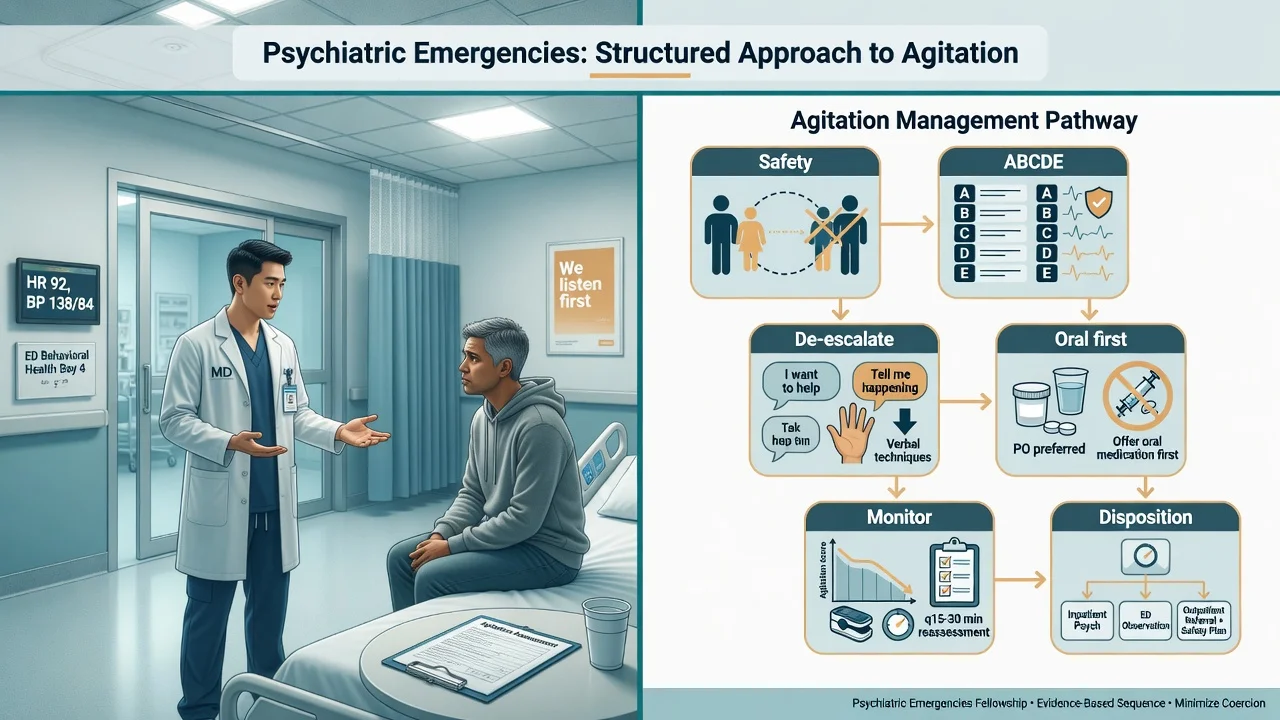
1. Scene safety. Before approaching, ensure: enough trained staff (at least four or five for a restraint team), no weapons visible (ask the patient to relinquish any), a single exit and a clear escape route for staff, panic alarm within reach, removal of objects that could be thrown, and police attendance if a firearm or knife is involved. Never turn your back on an agitated patient; never examine in a confined space alone. [1]
2. ABCDE primary survey — every disturbed patient. Airway patent; Breathing (rate, SpO2, signs of respiratory distress); Circulation (heart rate, blood pressure, capillary refill, signs of injury or bleeding); Disability — Glasgow Coma Scale, blood glucose (BM) and pupils — and Exposure (temperature, signs of trauma, needle marks, hydration). A finger-prick blood glucose is mandatory in every disturbed or unconscious patient because hypoglycaemia mimics anything and is instantly reversible. [1]
3. De-escalation (Project BETA consensus, 2012). The ten core techniques: respect personal space; do not be provocative (no crossed arms, no direct confrontation); establish verbal contact with a single trained staff member; use concise, simple language; identify wants and feelings ("help me understand what you need"); listen closely to what the patient says; agree or agree to disagree ("I understand you are frightened"); set limits clearly; debrief afterwards; offer choices, including oral medication. The aim is to defuse arousal without triggering further escalation. [1]
4. Risk assessment. Structured enquiry: (a) Self-harm/suicide — ideation, intent, plan, access to means, preparatory acts (giving away possessions, writing a note), recent attempt, protective factors; (b) harm to others — threats, weapon access, identifiable victim, command hallucinations to harm, history of violence; (c) self-neglect — refusal to eat/drink, inability to care for self; (d) vulnerability — child safeguarding, elder abuse, domestic abuse, exploitation. Use the Columbia Suicide Severity Rating Scale (C-SSRS) for a structured suicidal-risk assessment. [1]
5. Mental state examination (MSE). Appearance and behaviour (posture, eye contact, motor activity), speech (rate, volume, fluency), mood (subjective and objective — and ask directly about suicidal and homicidal ideation), thought (form — flight of ideas, thought block; content — delusions, obsessions, overvalued ideas), perception (hallucinations — modality, content, third-person vs second-person vs command), cognition (attention — months of the year backwards; orientation — time, place, person — to exclude delirium), and insight. [1]
6. Collateral history. Carers, family, GP, prior psychiatric records, current medications (specifically: recent antipsychotic initiation, lithium therapy, serotonergic combinations), substance use, recent physical illness or surgery, and recent life events. [1]
7. Capacity assessment. Two-stage test under the Mental Capacity Act 2005 (England & Wales): Stage 1 (diagnostic) — is there an impairment of, or disturbance in the functioning of, the mind or brain? (mental disorder, intoxication, delirium, dementia, head injury); Stage 2 (functional) — does the impairment mean the person is unable to make the decision? They are unable if they cannot do any one of: understand the information, retain it (long enough to decide), weigh or use it in the balance, or communicate the decision (by any means). Capacity is decision-specific and time-specific, and is presumed until shown otherwise. [1]
8. Specific bedside manoeuvres for the drug-induced emergencies: [1]
- Inducible clonus at the ankle: with the knee flexed, rapidly dorsiflex the foot — sustained rhythmic contractions indicate 5-HT excess (serotonin syndrome).
- Tone at wrists and elbows: lead-pipe rigidity (sustained, uniform resistance through the range) indicates NMS.
- Reflex testing: hyperreflexia, especially lower-limb and asymmetric (lower greater than upper) in serotonin syndrome; bradyreflexia or normal reflexes in NMS.
- Pupil size and reactivity: mydriasis in serotonin syndrome and anticholinergic toxicity; miosis in opioid or organophosphate toxicity.
- Skin: dry and hot in NMS, anticholinergic toxicity, heat stroke; diaphoretic in serotonin syndrome and alcohol withdrawal. [1]
9. Recognise excited delirium. Agitation with hyperthermia, metabolic acidosis and struggling against restraint — high sudden-death risk. Treat with benzodiazepines, cooling and intravenous fluids; do not allow prolonged prone restraint (positional asphyxia). Continuous SpO2 and cardiac monitoring.[5]
Investigations
Investigations serve two purposes: excluding organic causes and confirming the specific syndrome (NMS, serotonin syndrome, lithium toxicity). The clinician must be careful: many psychiatric-emergency tests are not diagnostic but confirmatory.[3][4]
Bedside. Blood glucose (every disturbed patient); ECG (prolonged QRS in TCA overdose, QTc prolongation with antipsychotics, T-wave changes with lithium); urine drug screen; pregnancy test (β-hCG) in any woman of reproductive age; temperature; alcohol breathalyser or salivary assay. [1]
Bloods. Full blood count (leukocytosis in NMS, sepsis); urea and electrolytes (renal function — lithium toxicity, acute kidney injury from rhabdomyolysis); liver function tests; creatine kinase (NMS typically greater than 1000 U/L, rhabdomyolysis); glucose; calcium; magnesium; phosphate; thyroid-stimulating hormone (thyroid storm, myxoedema); C-reactive protein; troponin; lactate (excited delirium, sepsis); ammonia if liver dysfunction suspected; specific drug levels (lithium; paracetamol 4-hour level; salicylate; valproate; digoxin; iron; methaemoglobin if dapsone/aniline exposure). [1]
Septic and infection screen. Blood cultures; mid-stream urine; chest X-ray; lumbar puncture if meningitic signs or HSV encephalitis suspected (fever, seizure, new confusion) — cerebrospinal fluid for cells, protein, glucose, MCV PCR (HSV), bacterial culture. [1]
Neuroimaging. CT brain if first psychiatric presentation, focal neurology, head injury, anticoagulation, or any atypical feature — to exclude subdural, intracerebral bleed, mass lesion or hydrocephalus. [1]
EEG if non-convulsive status epilepticus suspected (subtle fluctuating conscious state, post-ictal confusion) or to objectively confirm delirium (generalised slowing). [1]
Named diagnostic criteria (reproduce verbatim)
[1] [1]Important caveat on suicide-risk scales. No blood test, biomarker, rating scale or algorithm has sufficient positive predictive value to predict individual suicide. Scales (C-SSRS, SAD PERSONS, Beck Hopelessness Scale) structure and document assessment but cannot substitute for clinical judgement. NICE NG225 (2022) explicitly does not recommend using risk-stratification tools alone to decide whether to admit or discharge a self-harm patient. [1]
Management — Resuscitation

Resuscitation in psychiatric emergencies is time-critical, syndrome-specific and never "give a sedative".[1][3][4][5]
The disturbed/agitated patient — universal resuscitation bundle
- Scene safety — staff (at least four to five for restraint), weapons removed, environment secured, police if firearm.
- ABCDE — oxygen if hypoxic; IV access if needed; blood glucose early.
- De-escalation — Project BETA techniques; offer oral medication; treat unmet needs (pain, hunger, fear).
- Rapid tranquillisation if oral refused and risk is imminent (see Definitive management).
- Post-IM monitoring — blood pressure, pulse, respiratory rate, SpO2, temperature and consciousness every 15 minutes for 1 hour after IM administration; ECG if high-dose or cardiac history. [1]
NMS resuscitation
- STOP the antipsychotic immediately (and any other dopamine antagonist).
- Active cooling — ice packs, evaporative cooling, cold IV fluids, cooling blankets; target normothermia.
- IV fluids — isotonic saline to maintain urine output 1 to 2 mL/kg/h; treat acute kidney injury and rhabdomyolysis; consider sodium bicarbonate if severe rhabdomyolysis with acidosis.
- Benzodiazepines — lorazepam 2 mg IV (repeat as needed) reduces rigidity and arousal, and may accelerate recovery.
- Bromocriptine 2.5 mg PO/NG tds, titrating up to 5 to 15 mg tds — a dopamine D2 agonist that reverses the central blockade; do not use in pregnancy without specialist input.
- Dantrolene 1 mg/kg IV (up to 10 mg/kg/day) — uncouples excitation–contraction in skeletal muscle, reduces rigidity and heat generation; symptomatic (works in MH and NMS).
- ECT in refractory cases or where catatonia cannot be excluded; effective in malignant catatonia and severe NMS.
- ICU for severe cases — airway protection, mechanical ventilation for severe rigidity, vasopressors for haemodynamic instability. [1]
Serotonin syndrome resuscitation
- STOP all serotonergic agents immediately.
- Benzodiazepines — lorazepam 2 mg IV or diazepam 10 mg IV (titrate to control agitation and clonus); first-line and the single most important intervention.
- Active cooling — ice packs, evaporative, cold IV fluids.
- Cyproheptadine — 12 mg PO/NG loading dose, then 2 mg every 2 hours up to 32 mg/day (a 5-HT2A antagonist; only available oral; not for IV).
- AVOID antipyretics — the hyperthermia is muscle-generated, not prostaglandin-mediated; paracetamol is useless.
- Supportive care — IV fluids, treat rigidity, monitor cardiac rhythm.
- Intubation and paralysis with a non-depolarising neuromuscular blocker (vecuronium/rocuronium) if severe hyperthermia (greater than 41.1 °C) — paralyses the skeletal muscle generating the heat; AVOID suxamethonium (hyperkalaemia from rhabdomyolysis).
- ICU for severe cases. [1]
Lithium toxicity resuscitation
- STOP lithium.
- IV normal saline — volume expansion to enhance renal lithium clearance; target good urine output.
- Haemodialysis if level greater than 4.0 mmol/L (acute), greater than 2.5 mmol/L with symptoms (chronic), or any symptomatic toxicity with renal impairment — lithium is small, unbound, fully dialysable; multiple sessions may be needed (post-dialysis rebound from tissue redistribution). [1]
Acute dystonia
- IM procyclidine 5 mg OR IM diphenhydramine 25 to 50 mg OR IV benztropine 1 to 2 mg — response within minutes.
- Prescribe a regular oral anticholinergic (procyclidine 5 mg tds) for 1 to 2 weeks; review antipsychotic choice (switch to atypical). [1]
Akathisia
- Reduce or switch the antipsychotic.
- Propranolol 10 to 30 mg tds (lipophilic, crosses BBB) — first-line.
- Second-line: benzodiazepine, or anticholinergic. [1]
Catatonia
- Lorazepam challenge: 1 to 2 mg IM/IV; a marked response within minutes to hours supports the diagnosis.
- Definitive: lorazepam 2 mg PO every 6 to 8 hours, titrating up to high doses (some patients need 20 mg/day).
- ECT for malignant catatonia, refractory catatonia, or where NMS cannot be excluded. [1]
Wernicke encephalopathy
- High-dose parenteral thiamine BEFORE any glucose — UK practice (BNF/COMA): thiamine 500 mg IV tds for 3 to 5 days (Pabrinex I & II); give glucose only after thiamine to avoid precipitating Korsakoff syndrome. [1]
Excited delirium
- High-dose benzodiazepines — lorazepam or diazepam IV/IM, titrated to arousal.
- Ketamine 4 mg/kg IM is an emerging option for severe excited delirium (off-label, dissociative; monitor airway).
- Cooling, IV fluids, sodium bicarbonate if acidosis.
- Avoid prolonged prone restraint (positional asphyxia); continuous SpO2 and cardiac monitoring.
- ICU for severe cases. [1]
Restraint (if absolutely necessary)
Last resort only, under NICE NG10 (2015): minimum force, trained team, supine or lateral — never prolonged prone, time-limited (review every 15 minutes), documented, with a clear legal basis (Mental Health Act or common-law emergency), and a formal debrief for patient and staff afterwards. [1]
Management — Definitive & Stepwise
Rapid tranquillisation ladder (BAP/NAPICU 2018; NICE NG10; Maudsley Guidelines)
The ladder proceeds in five steps; the cardinal rule is oral before IM, and never combine IM olanzapine with lorazepam.[1][5]
Step 1 — De-escalation + oral offer
- Verbal and environmental de-escalation first
- Offer oral medication
- Oral lorazepam 1–2 mg, OR oral olanzapine 5–10 mg, OR oral promazine 25–50 mg, OR oral haloperidol 2–5 mg + oral lorazepam 1–2 mg
- Review at 30–60 min
Step 2 — IM if oral refused or risk imminent
- First-line IM options:
- IM lorazepam 2 mg (repeat after 30 min if needed)
- OR IM olanzapine 10 mg
- OR IM aripiprazole 9.75–15 mg
- Pick ONE agent — do NOT mix IM olanzapine with IM/IV lorazepam (see Step 4 warning)
Step 3 — Second-line IM combination
- If no response to Step 2 IM lorazepam alone:
- IM haloperidol 5 mg + IM promethazine 25–50 mg (combined deep IM, the TREC regimen)
- ECG monitoring advised — QTc prolongation risk
- Monitor every 15 min × 1 h
Step 4 — Critical safety rule
- NEVER combine IM olanzapine with IM or IV lorazepam — risk of profound respiratory depression and death (FDA black-box; olanzapine SmPC)
- If olanzapine has been given, wait at least 1 hour before any parenteral benzodiazepine
- Document the rationale for any combination
Step 5 — Refractory agitation
- Reassess the diagnosis — is there an organic cause? Intoxication? Delirium? Unmet need?
- Repeat Step 2 or 3 (within daily max: olanzapine 20 mg IM / 30 mg PO; haloperidol 18 mg IM; aripiprazole 30 mg/day)
- Senior review; consider ICU
- Restraint only as last resort, with legal basis
Post-IM monitoring (mandatory)
After IM rapid tranquillisation, monitor every 15 minutes for 1 hour: blood pressure, pulse, respiratory rate, SpO2, temperature and consciousness level. Add a 12-lead ECG if high-dose, history of cardiac disease, electrolyte abnormality, or QTc-prolonging combinations (haloperidol + promethazine, for example). The main complications to detect are respiratory depression (especially after benzodiazepine combinations), postural hypotension (olanzapine, haloperidol) and QTc prolongation with Torsades de Pointes (haloperidol, droperidol — now withdrawn in many countries). [1]
Syndrome-specific definitive management
Acute psychosis with risk. An antipsychotic (olanzapine 10 mg PO/IM, or haloperidol 5 mg PO/IM plus lorazepam 2 mg) controls the immediate psychosis. Urgent psychiatric admission under the Mental Health Act if the patient lacks capacity and refuses treatment and risk is significant. Treat the underlying disorder (see the schizophrenia, bipolar and depression topics). Address substance use if relevant.[1]
Suicide attempt and self-harm. Medical stabilisation first (treat the overdose or injury). Then, before discharge, a psychosocial assessment by a trained clinician (NICE NG225, 2022): understand the patient's history, current circumstances, mental state, suicidal intent and risk, protective factors, and social context; explore the function of the self-harm. Treat the underlying disorder (depression, bipolar, borderline personality disorder). Build a safety plan (Stanley & Brown). Counsel on means restriction. Arrange follow-up within 7 days (the highest-risk window for repeat attempt is the first 1 to 2 weeks). Do not use no-suicide contracts — they have no protective value and may falsely reassure.[5]
Postpartum psychosis. Emergency admission to a mother-and-baby unit (MBU) so that mother and infant remain together under supervised care; if no MBU bed is available, admit to an acute psychiatric ward with a safeguarding plan for the infant. Remove the infant from unsupervised contact while risk is active (partner, family, safeguarding). Exclude an organic cause (sepsis screen, TSH, electrolytes, calcium, glucose, LFT). Pharmacological: an antipsychotic (olanzapine 10 mg, haloperidol 5 mg) ± benzodiazepine (lorazepam 1 to 2 mg). ECT if severe, catatonic or treatment-resistant. Once the acute episode settles, lithium is the most effective long-term mood stabiliser in the bipolar-spectrum puerperal psychoses. Plan future pregnancies: prophylactic medication through pregnancy reduces postpartum relapse from about 66 percent to 23 percent in women with bipolar disorder; restart prophylaxis immediately after delivery.[2]
Acute dystonia. IM procyclidine 5 mg (or IM diphenhydramine 25 to 50 mg, IV benztropine 1 to 2 mg) — dramatic response within minutes. Then a regular oral anticholinergic for 1 to 2 weeks (procyclidine 5 mg tds); review antipsychotic choice and switch to an atypical.[1]
NMS. See resuscitation. Do not reintroduce any antipsychotic for at least 2 weeks (longer if a depot has been given); when restarting, use a low-dose atypical with careful monitoring and informed consent. Document the previous reaction prominently in the chart. [1]
Serotonin syndrome. See resuscitation. After recovery, review the serotonergic medication regimen carefully — cyproheptadine and supportive care resolve the acute episode, but the underlying polypharmacy must be addressed to prevent recurrence. [1]
Lithium toxicity. See resuscitation. After recovery, review the indication, the dose, the renal function, the concurrent medications (NSAIDs, ACE inhibitors, diuretics) and the patient's adherence and education. [1]
Catatonia. Lorazepam challenge (1 to 2 mg IM/IV — response within minutes to hours supports the diagnosis), then scheduled lorazepam 2 mg PO every 6 to 8 hours, titrating up. ECT for malignant or refractory cases. Treat the underlying cause (psychiatric, organic, drug-induced).[4]
Delirium. Treat the cause (infection, metabolic, hypoxia, drug, withdrawal, faecal impaction, urinary retention, pain). Non-pharmacological measures: orientation cues, clocks and calendars, sensory aids (glasses, hearing aids), mobilisation, sleep hygiene, family at bedside, minimised catheters and lines. For distressing agitation unresponsive to non-pharmacological measures: low-dose haloperidol 0.5 to 1 mg PO/IM (AVOID in Parkinson disease and dementia with Lewy bodies — use quetiapine 12.5 to 25 mg). AVOID benzodiazepines except in alcohol or benzodiazepine withdrawal (they worsen delirium from any other cause). [1]
Alcohol withdrawal and delirium tremens. Symptom-triggered benzodiazepine therapy using a validated scale (CIWA-Ar). For mild-to-moderate withdrawal, a chlordiazepoxide reducing regimen (for example 30 mg qds reducing by 5 mg/day per dose over 7 to 10 days). For severe withdrawal or delirium tremens, IV lorazepam or diazepam titrated to symptom control, with ICU monitoring. Thiamine 500 mg IV tds for 3 to 5 days (before glucose) to prevent Wernicke–Korsakoff. Treat seizures with IV lorazepam (2 to 4 mg). Treat hypertension and tachycardia with beta-blocker if required. [1]
Escalation triggers for ICU
- Sustained hyperthermia (greater than 40 °C) not responding to cooling
- Rigidity unresponsive to benzodiazepines
- Rising creatine kinase or acute kidney injury
- Cardiac instability (arrhythmia, ischaemia, hypotension)
- Hypercapnia or respiratory depression (post-sedation or from rigidity)
- Status epilepticus [1]
Disposition and discharge criteria
- ED short-stay / medical admission if medically unstable (overdose, head injury, sepsis).
- Psychiatric inpatient if active suicidal/homicidal risk, severe psychosis, inability to care for self.
- Crisis Resolution Home Treatment Team (CRHT) for moderate risk in the community, with daily contact.
- Outpatient follow-up within 7 days for low-risk discharges; ALL patients receive a safety plan, crisis contacts, means restriction, and carer involvement (with consent / capacity).
- Document the risk formulation, the capacity assessment, and the lawful basis for any non-consensual intervention. [1]
Specific Subtypes & Scenarios
Each major psychiatric emergency has its own time-critical pathway; this section collates them.[1][2][3][4]
Acute agitation/aggression (general adult psychiatry setting). De-escalation succeeds in over 50 percent of cases. If medication is required, oral lorazepam or oral olanzapine is offered first; IM only if refused or risk imminent. The objective is calm (defined as asleep or calm and not aggressive), not deep sedation. [1]
Acute psychosis with command hallucinations or persecutory delusions. Risk is identified when the content drives harm — a hallucination directing the patient to kill a named person, or a delusion that a family member is a persecutor who must be eliminated. Antipsychotic (olanzapine 10 mg or haloperidol 5 mg PO/IM) plus urgent admission under the Mental Health Act if capacity/refusal is an issue. [1]
Suicidal crisis / post-attempt. Every patient who has attempted suicide or self-harmed receives a psychosocial assessment (NICE NG225 2022) before discharge. Treat the underlying disorder. Means restriction. Safety planning. Follow-up within 7 days. [1]
Drug-induced / substance-related agitation. Stimulants (cocaine, methamphetamine, MDMA) — excited delirium pathway (benzodiazepines, cooling, fluids). Cannabis — usually supportive, benzodiazepine if severely agitated. Hallucinogens — supportive ("talk-down"), benzodiazepine if agitation. Novel psychoactive substances (synthetic cannabinoids, cathinones) — unpredictable, supportive. Always rule out delirium and medical complications. [1]
Delirium. Find and treat the cause. Low-dose haloperidol (0.5 to 1 mg) only if severe distress unresponsive to non-pharmacological measures. [1]
Neuroleptic malignant syndrome. Stop antipsychotic, supportive care, benzodiazepine, bromocriptine, dantrolene, ECT if refractory. [1]
Serotonin syndrome. Stop serotonergic, benzodiazepines, cyproheptadine, cooling, supportive. [1]
Lithium toxicity. Saline, haemodialysis for severe. [1]
Acute dystonia. IM procyclidine or diphenhydramine. [1]
Akathisia. Propranolol first-line. [1]
Catatonia / malignant catatonia. Lorazepam ± ECT. [1]
Postpartum psychosis. Emergency MBU admission, antipsychotic ± benzodiazepine, ECT if severe, lithium long-term. [1]
Excited delirium. High-dose benzodiazepines, ketamine option, cooling, fluids, ICU; avoid prolonged prone restraint. [1]
Emergency in children and adolescents (CAMHS). Lower doses (lorazepam 0.05 to 0.1 mg/kg, max 2 mg; olanzapine 2.5 to 5 mg); involve parents/guardians; consider Gillick competence and parental responsibility; minimise restraint; rule out abuse as a driver. [1]
Emergency in pregnancy and postpartum. Avoid valproate, carbamazepine (teratogenic); lithium with caution (Ebstein anomaly, neonatal toxicity); sertraline is the SSRI of choice in breastfeeding; ECT is safe in pregnancy and postpartum; benzodiazepines are acceptable short-term; benzodiazepines late in third trimester risk floppy-infant syndrome. [1]
Emergency in intellectual disability and autism. Behaviour may be communication of pain or distress; sensory-adjusted environment (low stimulation, single room); involve familiar carers; use specialist learning-disability psychiatry; recognise behavioural equivalents of psychiatric symptoms. [1]
Complications & Pitfalls
Mortality remains the central concern: completed suicide is the leading cause of psychiatric-emergency death; NMS mortality is 5 to 20 percent untreated; serotonin syndrome deaths occur with hyperthermia greater than 41.1 °C, seizures or arrhythmia; lithium toxicity can be fatal at high levels; excited delirium carries a real risk of sudden death in custody; untreated postpartum psychosis has a high suicide and infanticide risk.[2][3][4]
Morbidity: rhabdomyolysis and acute kidney injury (NMS, serotonin syndrome, excited delirium, prolonged restraint); hypoxic brain injury after hanging or post-overdose cardiac arrest; contractures and pressure injury from prolonged restraint; trauma to staff and patient; psychological trauma for the patient. [1]
Complications of rapid tranquillisation: over-sedation; respiratory depression (especially with lorazepam + olanzapine combinations, which is why they must never be combined parenterally); postural hypotension (haloperidol, olanzapine); QTc prolongation with Torsades de Pointes (haloperidol, droperidol, especially IV and in elderly/electrolyte-abnormal patients); acute dystonia (early); akathisia (days); NMS (days to weeks); falls and aspiration. [1]
Complications of restraint: positional asphyxia (especially prone), rhabdomyolysis, mechanical injury, psychological trauma, staff injury, and medico-legal consequences. [1]
Legal and medico-legal pitfalls: unlawful restraint; failure to assess capacity; failure to use the Mental Health Act correctly; missed medical cause; wrong-patient or wrong-drug medication error; discharge of a high-risk patient without a safety plan or follow-up; breach of confidentiality to family without consent (except where risk to others mandates disclosure); failure to involve an Independent Mental Capacity Advocate (IMCA) for an unbefriended patient lacking capacity. [1]
Ten deadly pitfalls in psychiatric emergencies
PITFALLS
Prolonged prone restraint kills — use supine or lateral
Always exclude alcohol/drugs and check glucose/oxygen
QTc-prolonging IM combos (haloperidol + promethazine) — ECG
Don't dismiss as infection — think NMS / serotonin syndrome
NEVER — fatal respiratory depression
Stop, saline, dialyse if >2.5 symptomatic or >4.0 acute
Delirium, hypoxia, hypoglycaemia, bleed, encephalitis
Asks directly; no-suicide contracts have NO value; 7-day follow-up
Prognosis & Disposition
Most agitation episodes resolve within 1 hour of an effective intervention, and de-escalation alone succeeds in over half. The key prognostic features by syndrome:[2][4]
- NMS: mortality 5 to 20 percent untreated, under 5 percent with prompt treatment. Poorer prognosis with depot preparations, severe rigidity, very high creatine kinase, renal failure, DIC, and delayed diagnosis. Recovery typically begins within 1 to 2 weeks of drug cessation.
- Serotonin syndrome: most cases resolve within 24 to 72 hours of stopping the serotonergic agent. Severe cases (hyperthermia, seizures, rigidity) carry significant mortality.
- Postpartum psychosis: approximately 90 percent respond to treatment; around 50 percent recurrence in future pregnancies; high suicide and infanticide risk if untreated — which is exactly why emergency MBU admission is mandatory.
- Suicidal crisis: the highest-risk window is the first 1 to 2 weeks after psychiatric discharge and after a recent attempt. Structured follow-up (caring letters, brief contact interventions) reduces repeat attempts.
- Catatonia: lorazepam response in 60 to 80 percent; ECT effective in refractory; untreated malignant catatonia carries high mortality.
- Acute dystonia: complete recovery with anticholinergic.
- Lithium toxicity: full recovery if treated early; chronic neurotoxicity (cerebellar) can be permanent. [1]
Disposition options (matched to risk): [1]
- Emergency department short-stay / medical admission — medical stabilisation (overdose, head injury, sepsis, delirium).
- Psychiatric inpatient — active suicidal or homicidal risk, severe psychosis, inability to care for self, postpartum psychosis (to a MBU).
- Crisis Resolution Home Treatment Team (CRHT) — moderate risk in the community, with daily contact and rapid access back to ward.
- Outpatient follow-up within 7 days — low-risk discharge; ALL patients receive a safety plan, crisis contacts, means restriction, and carer involvement (with consent / capacity). [1]
Document the risk formulation, the capacity assessment, the lawful basis for any non-consensual intervention, and the follow-up plan in the record. [1]
Special Populations
Pregnancy and postpartum. Postpartum psychosis is a psychiatric emergency requiring MBU admission. Avoid valproate (teratogenic, PREVENT programme) and carbamazepine. Lithium with caution (Ebstein anomaly ~1 in 650 first-trimester exposures, neonatal toxicity); sertraline is the SSRI of choice in breastfeeding (lowest relative infant dose); ECT is safe in pregnancy and postpartum; benzodiazepines acceptable short-term (avoid near term — floppy infant, withdrawal).[2]
Children and adolescents. CAMHS pathway. Lower rapid-tranquillisation doses (lorazepam 0.05 to 0.1 mg/kg, max 2 mg; olanzapine 2.5 to 5 mg). Involve parents/guardians; consider Gillick competence (under 16) and parental responsibility; minimise restraint (high psychological and physical risk); rule out abuse as a driver of presentation.[5]
Elderly. Delirium is the most common cause of acute disturbance. Lower antipsychotic doses (haloperidol 0.5 mg, olanzapine 2.5 mg) — antipsychotics carry an FDA black-box warning for increased stroke and mortality in dementia. Avoid benzodiazepines (falls, paradoxical reactions, delirium). Always treat pain, sensory impairment (glasses, hearing aids), infection, constipation, urinary retention and hypoxia first.[5]
Intellectual disability and autism. Behaviour may be communication of pain or distress. Sensory-adjusted environment (low stimulation, single room). Involve familiar carers. Use specialist learning-disability psychiatry. Recognise behavioural equivalents of psychiatric symptoms. Use adapted assessment tools. [1]
Medical inpatients. Delirium from sepsis, post-operative state, ICU, opioids. Liaison psychiatry involvement. Non-pharmacological first. [1]
Anticoagulated or dual-antiplatelet patients. High risk of intracranial bleed from restraint-related head injury. CT brain if any head trauma. Reverse anticoagulation if major bleed (idarucizumab for dabigatran, andexanet or PCC for factor Xa inhibitors, PCC/vitamin K for warfarin). [1]
Substance-intoxicated. Stimulants (cocaine, methamphetamine) — excited delirium; benzodiazepines first. Opioids — naloxone (titrate 0.04 to 0.4 mg IV/IM; beware re-narcotisation with long-acting opioids). Alcohol — thiamine before glucose, benzodiazepine withdrawal regimen. Cannabis — usually supportive. Novel psychoactive substances — unpredictable; supportive. [1]
Cultural and linguistic. Use a professional interpreter; culturally informed assessment; recognise cultural expressions of distress; avoid misdiagnosis. Involve cultural consultants where appropriate. [1]
Evidence, Guidelines & Regional Differences
Controversies. [1]
- Ketamine 4 mg/kg IM for excited delirium is emerging but off-label, with concerns about dissociation, emergence reactions and airway; evidence is from prehospital and emergency medicine literature, not randomised trials.
- Restraint-related deaths and the "excited delirium" nomenclature are contested — some jurisdictions have banned the term in legal settings because of its association with in-custody deaths and racial disparity.
- ECT for catatonia remains under-utilised, despite strong evidence of efficacy; access is variable.
- Lithium anti-suicide effect in mood disorders is supported by meta-analysis (Cipriani 2013, 2005) and remains a key indication.
- Predictive value of suicide-risk scales: scales have low positive predictive value for individual suicide (Large et al.); clinical judgement and structured follow-up matter more than score.
- Restraint and seclusion rates vary widely between services, reflecting culture rather than patient acuity; reduction is a quality target. [1]
Regional deltas. [1]
- United Kingdom: NICE NG10 (aggression), NICE NG225 (self-harm), BAP/NAPICU 2018 (rapid tranquillisation), Mental Capacity Act 2005, Mental Health Act 1983 (amended 2007), Royal College of Psychiatrists standards.
- United States: Project BETA consensus; state-by-state involuntary commitment laws (e.g. Florida Baker Act, California 5150 hold — 72-hour evaluation); EMTALA requires medical screening examination of every emergency patient; CMS and Joint Commission standards on restraint and seclusion.
- India: Mental Healthcare Act 2017 — decriminalisation of suicide (Section 115), presumption of mental illness, rights-based, advance directives, ban on chained restraint, ECT only under anaesthesia and muscle relaxation (banned for minors).
- Australia: state-specific Mental Health Acts (e.g. NSW Mental Health Act 2007); Australia LifeSpan suicide-prevention framework.
- WHO: mhGAP Intervention Guide for non-specialist settings in low- and middle-income countries. [1]
Exam Pearls
Universal sequence
- Safety first → de-escalate → oral → IM rapid tranquillisation
- Every disturbed patient: glucose, oxygen, vital signs, neuro exam — exclude organic cause
- Post-IM monitoring: every 15 min × 1 h (BP, pulse, RR, SpO2, temp, consciousness)
Rapid tranquillisation drug box
- Oral: lorazepam 1–2 mg, olanzapine 5–10 mg, promazine 25–50 mg, haloperidol 2–5 mg + lorazepam 1–2 mg
- IM first-line: lorazepam 2 mg OR olanzapine 10 mg OR aripiprazole 9.75–15 mg
- IM second-line: haloperidol 5 mg + promethazine 25–50 mg (TREC regimen)
- NEVER combine IM olanzapine with IM/IV lorazepam — fatal respiratory depression
NMS box
- Lead-pipe rigidity + hyperthermia + autonomic instability + altered consciousness on antipsychotic (days–weeks)
- CK↑, WCC↑, transaminitis
- STOP antipsychotic, cool, IV fluids, benzodiazepine, bromocriptine, dantrolene, ECT if refractory
- Bradyreflexia; onset days
Serotonin syndrome box
- Clonus (spontaneous, inducible, ocular) + hyperreflexia (lower > upper) + autonomic + agitation within hours of serotonergic
- STOP serotonergic, benzodiazepines, cyproheptadine 12 mg load then 2 mg q2h, cooling
- Avoid antipyretics; paralyse if temp >41.1 °C
- Hunter criteria = current standard
Lithium toxicity box
- Coarse tremor, GI upset, ataxia, dysarthria, fasciculations, seizures, coma
- Saline + haemodialysis (>4.0 acute, >2.5 symptomatic chronic, or renal impairment)
- Risk factors: dehydration, NSAIDs, ACE-I, diuretics, renal impairment
Special syndromes
- Acute dystonia → IM procyclidine 5 mg / diphenhydramine 50 mg — minutes to response
- Akathisia → propranolol 10–30 mg tds first-line
- Catatonia → lorazepam challenge; ECT if malignant/refractory
- Wernicke → thiamine 500 mg IV tds BEFORE glucose
- Postpartum psychosis → emergency MBU admission; 50% recurrence
Exam application bank (NEET-PG / INICET)
One-line answer
Psychiatric emergencies are acute situations requiring immediate intervention to prevent harm to the patient or others. The core scenarios are: acute agitation/aggression (de-escalation first, then oral, then rapid tranquillisation — IM lorazepam 2 mg ± haloperidol 5 mg, or IM olanzapine 10 mg, NEVER combined with lorazepam), acute psychosis (risk assessment, antipsychotic, admission if risk), suicide attempt / self-harm (medical stabilisation, psychosocial assessment before discharge), delirium (identify and treat cause), neuroleptic malignant syndrome (stop antipsychotic, dantrolene, bromocriptine, supportive), serotonin syndrome (stop serotonergic agents, cyproheptadine, benzodiazepines), lithium toxicity (saline, haemodialysis), acute dystonia (IM procyclidine/diphenhydramine), catatonia (lorazepam, ECT), and postpartum psychosis (emergency mother-and-baby unit admission). Capacity = [1]
Worked stems (answer without another resource)
Stem 1 — Classic presentation. Map symptoms to mechanism; name the first investigation and first treatment step with dose/route if drug therapy is standard. [1]
Stem 2 — Unstable / complicated. List red flags that force immediate resuscitation, theatre, ICU, antidote, or reperfusion — and what you do in the first 15 minutes. [1]
Stem 3 — Atypical group. Elderly, pregnancy, child, or immunocompromised: how presentation and thresholds change. [1]
Stem 4 — Differential trap. Name the three closest mimics and one discriminator for each. [1]
Stem 5 — Disposition. Who goes home with safety-netting, who is admitted, who needs HDU/ICU/theatre, and what follow-up is mandatory. [1]
Rapid viva checklist
- Definition + classification
- Pathophysiology chain
- Bedside signs / criteria
- Score with exact components (if any)
- Emergency bundle
- Definitive therapy with doses
- Complications of disease and of treatment
- Special populations
- Guideline/trial name if classic
- Three exam traps
Coverage self-check
If you cannot answer any stem above from this page alone, re-read the matching section — the page is intended to be self-sufficient for final-prof and NEET-PG/INICET questions on Psychiatric Emergencies & Acute Agitation.
References
- [1]Battaglia J. Pharmacological management of acute agitation Drugs, 2005.PMID 15916448
- [2]Jairaj C, Seneviratne G, Bergink V. Postpartum psychosis: A proposed treatment algorithm J Psychopharmacol, 2023.PMID 37515460
- [3]Boyer EW, Shannon M. The serotonin syndrome N Engl J Med, 2005.PMID 15784664
- [4]Gurrera RJ, Caroff SN, Cohen A, et al. An international consensus study of neuroleptic malignant syndrome diagnostic criteria using the Delphi method J Clin Psychiatry, 2011.PMID 21733489
- [5]Wilson MP, Pepper D, Currier GW, Holloman GH, Feifel D. Joint BAP NAPICU evidence-based consensus guidelines for the clinical management of acute disturbance: De-escalation and rapid tranquillisation J Psychopharmacol, 2018.PMID 29882463