Psychiatry · General Medicine
Psychopharmacology Overview
Also known as Psychopharmacology · Psychiatric drugs · Antidepressants · Antipsychotics · Mood stabilisers · Anxiolytics · Stimulants
Psychopharmacology is the framework every doctor uses when prescribing psychiatric drugs, organised around four pillars — antidepressants, antipsychotics, mood stabilisers, and anxiolytics (plus ADHD stimulants and the antidotes). For each class the exam wants four facts: receptor target, first-line agent, signature side-effect profile, and the named emergency (toxidrome). Antidepressants — SSRIs first-line (sertraline preferred; nausea, sexual dysfunction, hyponatraemia in the elderly, GI bleed, QT with citalopram; serotonin syndrome with serotonergic combinations — hyperreflexia, clonus, autonomic instability — stop, cyproheptadine, benzodiazepine, cooling). Antipsychotics — 2nd-generation first-line (olanzapine, risperidone, quetiapine, aripiprazole); D2 blockade is the mechanism (efficacy in mesolimbic, EPS in nigrostriatal, hyperprolactinaemia in tuberoinfundibular); the EPS quartet is acute dystonia, akathisia, parkinsonism, tardive dyskinesia; clozapine is the only drug proven superior in treatment-resistant schizophrenia (mandatory weekly FBC for 18 weeks); NMS (fever, lead-pipe rigidity, high CK, altered consciousness) is the emergency — stop, dantrolene, bromocriptine, ICU. Mood stabilisers — lithium gold standard (level 0.6 to 1.2 mmol/L, monitor renal/thyroid/calcium 6-monthly, toxicity over 1.5 = dialysis if severe); valproate is teratogenic (avoid pregnancy); lamotrigine risks Stevens-Johnson (titrate slowly); carbamazepine needs HLA-B*1502 testing in Asian populations. Benzodiazepines enhance GABA-A — short-term only (dependence, withdrawal seizures; flumazenil reverses cautiously). Antidote mnemonic: NMS dantrolene, serotonin syndrome cyproheptadine, lithium toxicity saline/dialysis, TCA overdose NaHCO3, benzodiazepine overdose flumazenil, acute dystonia anticholinergic. Universal prescribing rule: start low, go slow, monitor, never stop abruptly.
On this page & tools
Your progress
Saved locally on this device.
Exam tags
Red flags
Overview & Definition
Psychopharmacology is the pharmacology of drugs used to treat psychiatric disorders. It is the single highest-yield cross-cutting topic in psychiatry — every prescriber uses these drugs, every examination tests them, and the emergencies (serotonin syndrome, NMS, lithium toxicity, TCA overdose) appear in every general medicine and emergency exam as well as psychiatry. [1]
The mental model that earns full marks is built around four drug classes plus the antidotes:[9]
- Antidepressants — SSRIs, SNRIs, NaSSAs (mirtazapine), NDRIs (bupropion), TCAs, MAOIs.
- Antipsychotics — first-generation (typical: haloperidol) and second-generation (atypical: olanzapine, risperidone, quetiapine, aripiprazole, clozapine).
- Mood stabilisers — lithium, valproate, carbamazepine, lamotrigine.
- Anxiolytics and hypnotics — benzodiazepines, Z-drugs, buspirone, pregabalin. [1]
Plus ADHD stimulants (methylphenidate, lisdexamfetamine) and non-stimulants (atomoxetine, guanfacine), and the antidotes that reverse psychotropic toxicity. [1]
The exam doesn't ask you to memorise the entire BNF — it tests whether you can answer four questions for every drug: (a) what receptor does it target? (b) what is the first-line agent? (c) what is the signature side-effect profile? (d) what is the named emergency? This topic is organised around those four questions for each class.[1][9]
Two principles govern every psychiatric prescription. First, start low, go slow, monitor, taper — psychotropics have wide inter-individual variation in kinetics and a long onset of action, so under-treatment is more common than over-treatment in early prescribing. Second, never stop a psychotropic abruptly — discontinuation syndromes (SSRIs), withdrawal seizures (benzodiazepines), and relapse (lithium) are all predictable and avoidable. [1]
Classification
Psychotropic drugs are classified by mechanism of action at the receptor — this is the examiner-preferred frame because mechanism predicts both efficacy and adverse effects. The first-level distinction within each class is between older, broader-spectrum drugs (more side effects, lethal in overdose) and newer, receptor-selective drugs (fewer side effects, safer in overdose but with their own novel toxicities such as the metabolic syndrome of atypical antipsychotics).[9]
Antidepressants
- SSRIs (sertraline, fluoxetine, escitalopram, paroxetine, citalopram, fluvoxamine) — first-line; block SERT
- SNRIs (venlafaxine, duloxetine) — block SERT and NET; BP rise with venlafaxine
- NaSSA — mirtazapine (alpha-2 antagonist); sedation and weight gain, no sexual SE
- NDRI — bupropion (DA/NA reuptake); no sexual/weight SE; lowers seizure threshold
- TCA (amitriptyline, nortriptyline, clomipramine) — anticholinergic, cardiotoxic overdose
- MAOI (phenelzine, tranylcypromine) — last-line; cheese reaction (tyramine)
Antipsychotics
- 1st-gen/typical (haloperidol, chlorpromazine, trifluoperazine) — D2 blockade; high EPS
- 2nd-gen/atypical (olanzapine, risperidone, quetiapine, aripiprazole, lurasidone) — D2 + 5-HT2A blockade; first-line
- Clozapine — only superior drug for treatment-resistant schizophrenia; FBC monitoring mandatory
- Long-acting depots (risperidone, paliperidone, aripiprazole, haloperidol decanoate) — adherence
- Emergency class effects: EPS quartet, NMS, metabolic syndrome, hyperprolactinaemia, QT
Mood stabilisers
- Lithium — gold standard for bipolar maintenance and suicide prevention; narrow window 0.6 to 1.2 mmol/L
- Valproate — broad-spectrum (mania, mixed, maintenance); TERATOGENIC, avoid in women of childbearing potential
- Carbamazepine — CYP inducer; HLA-B*1502 SJS risk in Asian populations
- Lamotrigine — best for bipolar depression prophylaxis; SJS — slow titration essential
Anxiolytics & hypnotics
- Benzodiazepines (diazepam, lorazepam, alprazolam, clonazepam, chlordiazepoxide) — GABA-A positive modulator; short-term only
- Z-drugs (zolpidem, zopiclone, zaleplon) — alpha-1 selective GABA-A; short-term insomnia
- Buspirone — 5-HT1A partial agonist; GAD; no dependence; 2-week onset
- Pregabalin/gabapentin — alpha-2-delta calcium channel; GAD; renal-dose
- Propranolol — performance anxiety; akathisia
ADHD & stimulants
- Methylphenidate, amphetamine salts, lisdexamfetamine — DA/NA reuptake; controlled drug; monitor growth/BP/HR
- Atomoxetine — NA reuptake inhibitor; non-stimulant; if tics/anxiety comorbid
- Guanfacine MR / clonidine MR — alpha-2 agonist; non-stimulant alternative
Epidemiology & Risk Factors
Psychotropic drugs are among the most prescribed agents in medicine. SSRIs alone are taken by roughly 5 to 10 percent of adults in high-income countries; their use has risen steadily since the early 1990s, accelerated again after the COVID-19 pandemic, and they are now second only to analgesics and antihypertensives in primary-care prescribing volume. Antipsychotic prescribing has also risen substantially, driven by wider indications (bipolar maintenance, treatment-resistant depression augmentation, behavioural disturbance in dementia) as much as by schizophrenia itself.[1]
In the Indian context relevant to NEET-PG and INICET: generic fluoxetine, sertraline, risperidone, olanzapine, haloperidol, chlorpromazine and lithium are on the National List of Essential Medicines, making them the realistic first-line armamentarium across district hospitals. Lithium is under-utilised outside tertiary centres despite being the gold standard mood stabiliser; benzodiazepine over-the-counter and chronic prescribing remains common despite clear guidance limiting use to 2 to 4 weeks; access to specialist monitoring for clozapine is patchy, restricting use of the single most effective antipsychotic.[13]
Risk factors for adverse drug reactions cluster predictably and should be checked before prescribing:[10]
- Older age — hyponatraemia from SSRIs (especially first month), falls and delirium from benzodiazepines, orthostatic hypotension from TCAs and antipsychotics, QT prolongation, increased stroke and mortality risk from antipsychotics in dementia.
- Hepatic or renal impairment — altered kinetics; lithium and gabapentinoids need renal dose adjustment; TCAs/valproate/benzodiazepines problematic in cirrhosis.
- Pregnancy — valproate, carbamazepine teratogenic; lithium carries Ebstein anomaly risk; paroxetine associated with cardiac defects.
- Polypharmacy — CYP450 interactions (fluoxetine, paroxetine, bupropion inhibit CYP2D6; carbamazepine, phenytoin, rifampicin induce CYP3A4); additive QT prolongation; additive sedation.
- Genetic polymorphisms — HLA-B*1502 positive in roughly 10 percent of Han Chinese and South-East Asian populations predicts carbamazepine-induced Stevens-Johnson syndrome (genotype before prescribing); CYP2D6 poor metabolisers accumulate TCAs and many antipsychotics. [1]
Risk factors for the treatment-emergent emergencies that examiners test deliberately:[2][7]
- Serotonin syndrome — multiple serotonergic agents (SSRI + MAOI, SSRI + tramadol, SSRI + triptan, linezolid, methylene blue, dextromethorphan, St John's wort), rapid dose escalation, recent addition of a second serotonergic agent.
- Neuroleptic malignant syndrome — high-potency first-generation antipsychotics (haloperidol), rapid upward titration, intramuscular route, dehydration, catatonia, organic brain disease, recent ECT.
- Lithium toxicity — dehydration, intercurrent illness with reduced intake, NSAIDs, ACE inhibitors, angiotensin receptor blockers, thiazide and loop diuretics, renal impairment, acute kidney injury.
- TCA overdose — intentional self-harm; the classic cardiotoxic overdose in any patient on amitriptyline or related drugs. [1]
Pathophysiology
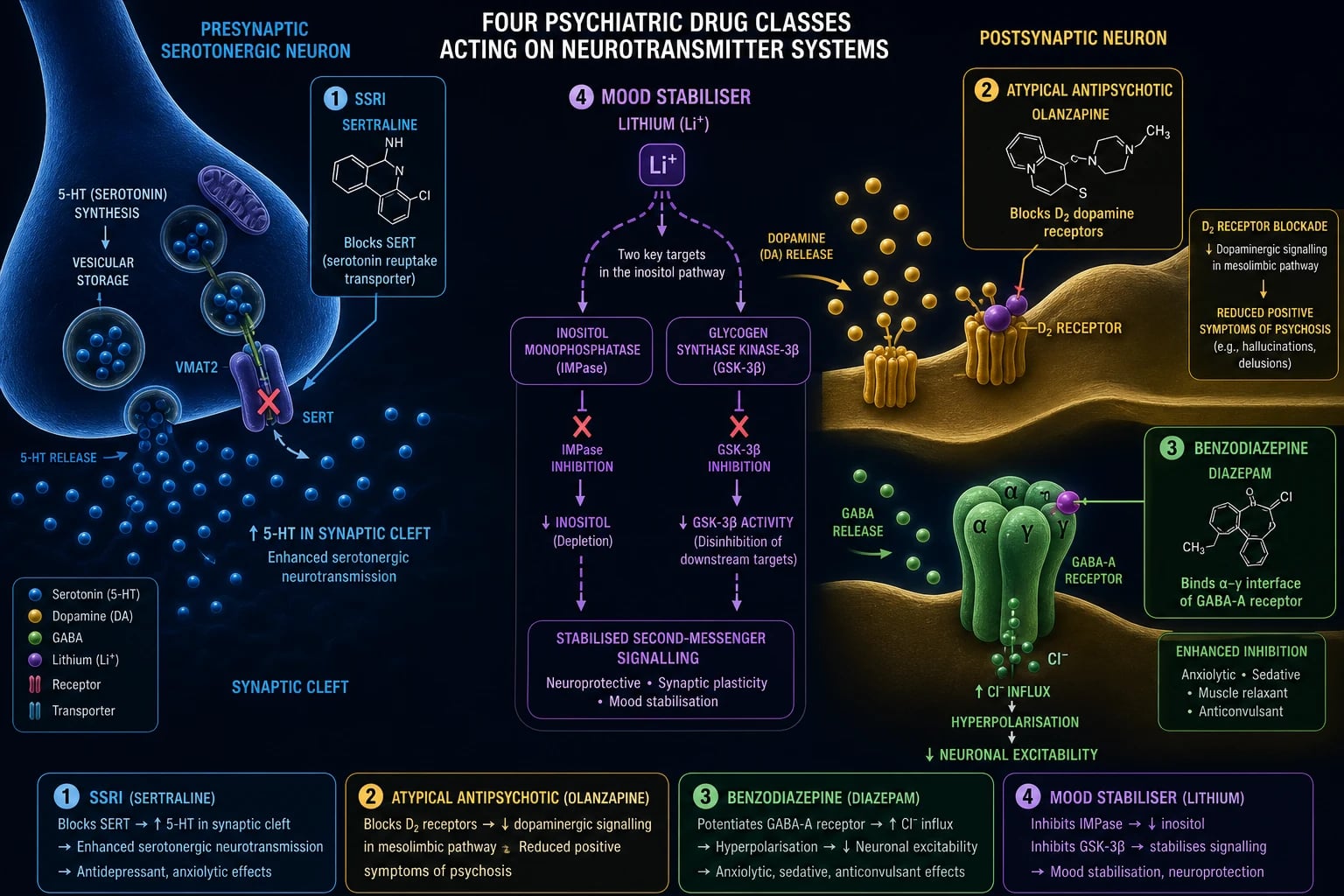
Psychotropic drugs act by modulating central neurotransmitter systems — the monoamines serotonin (5-HT), noradrenaline (NA), dopamine (DA), the inhibitory transmitter gamma-aminobutyric acid (GABA), and the excitatory transmitter glutamate. The receptor profile of each drug determines both its therapeutic class effects and its side-effect signature. [1]
The monoamine hypothesis and antidepressant mechanism
Depression and anxiety are associated (in the classical model) with deficiency of synaptic monoamines — serotonin and noradrenaline — in limbic and frontal cortical circuits. All current antidepressants ultimately increase synaptic monoamine availability, but through different routes: SSRIs block the serotonin transporter (SERT) so 5-HT accumulates in the synaptic cleft; SNRIs block both SERT and the noradrenaline transporter (NET); TCAs block SERT, NET and also muscarinic, histamine H1 and alpha-1 receptors (which is the source of their side effects); MAOIs irreversibly inhibit the enzyme that breaks down monoamines inside the presynaptic terminal.[1]
A central exam point: the acute rise in synaptic serotonin occurs within hours of an SSRI dose, but clinical antidepressant effect takes 2 to 6 weeks. The explanation is that early in treatment the increased 5-HT stimulates somatodendritic 5-HT1A autoreceptors that inhibit further serotonin release; over weeks these receptors desensitise, and downstream 5-HT1A postsynaptic receptor sensitisation, increased BDNF (brain-derived neurotrophic factor) expression, and hippocampal neuroplasticity and neurogenesis deliver the mood-elevating effect. This delay is the pharmacological basis for insisting on an adequate trial (4 to 6 weeks at adequate dose) before declaring treatment failure.[1]
Antipsychotic mechanism — the four dopamine pathways
Antipsychotics block the D2 subtype of the dopamine receptor. Therapeutic efficacy for positive symptoms of psychosis correlates with about 60 to 80 percent D2 receptor occupancy in the mesolimbic pathway (ventral tegmental area to nucleus accumbens). Below 60 percent occupancy, antipsychotics are ineffective; above 80 percent, extrapyramidal side effects (EPS) appear. This narrow therapeutic window is the rationale for PET-imaging-guided dosing in research and for the superiority of partial agonists like aripiprazole that self-limit occupancy.[9]
The four dopamine pathways every candidate must be able to draw:[9]
- Mesolimbic (VTA to nucleus accumbens) — reward, motivation, and the positive symptoms of psychosis (delusions, hallucinations). D2 blockade here = therapeutic antipsychotic effect.
- Mesocortical (VTA to prefrontal cortex) — cognition, executive function, and the negative symptoms of schizophrenia. D2 blockade here may worsen negative symptoms (one limit of D2 antagonists).
- Nigrostriatal (substantia nigra to dorsal striatum) — motor control. D2 blockade here = the EPS quartet (acute dystonia, akathisia, parkinsonism, tardive dyskinesia), the motor side effects that distinguish the typicals from the atypicals.
- Tuberoinfundibular (hypothalamus to pituitary) — tonic inhibition of prolactin release. D2 blockade removes this inhibition, causing hyperprolactinaemia (galactorrhoea, gynaecomastia, amenorrhoea, sexual dysfunction, osteoporosis). [1]
Atypical antipsychotics additionally block 5-HT2A receptors. The 5-HT2A receptor normally inhibits dopamine release in the nigrostriatal and tuberoinfundibular pathways; by blocking 5-HT2A, atypicals release dopaminergic tone in those pathways, protecting against EPS and hyperprolactinaemia. This is the basis of the "atypical" label — lower EPS liability (in practice not as clean as the marketing suggested, but a real pharmacological distinction). Clozapine's superior efficacy is attributed to its broader receptor profile (D4 affinity, 5-HT2A, glutamatergic, and other actions still under investigation).[9]
Mood stabiliser mechanisms
- Lithium has multiple targets and no single "receptor" — it inhibits glycogen synthase kinase-3-beta (GSK-3β), modulates the inositol phosphate (PIP2) second-messenger cycle (depleting inositol and dampening overactive phospholipase-C-coupled receptors), reduces protein kinase C activity, and enhances BDNF and other neuroprotective signalling. Its narrow therapeutic window (0.6 to 1.2 mmol/L) and near-exclusive renal handling explain both the need for level monitoring and the predictable renal, thyroid and parathyroid toxicities.[5]
- Valproate blocks voltage-gated sodium channels, enhances GABA activity, and inhibits histone deacetylase (HDAC) — an epigenetic effect increasingly relevant to its mood-stabilising action.
- Lamotrigine blocks voltage-gated sodium channels, reducing presynaptic glutamate release — this is why it is particularly useful in bipolar depression and why rapid titration (and combination with valproate, which doubles lamotrigine levels) precipitates Stevens-Johnson syndrome.[17]
- Carbamazepine blocks sodium channels and is a potent CYP3A4 inducer — the source of its many drug interactions and its autoinduction of its own metabolism.
Anxiolytic and stimulant mechanism
Benzodiazepines are positive allosteric modulators of the GABA-A receptor. They bind between the alpha and gamma subunits (distinct from the barbiturate site and from GABA itself) and increase the frequency of chloride channel opening, hyperpolarising the postsynaptic neuron and producing anxiolysis, sedation, muscle relaxation, anterograde amnesia and anticonvulsant effects. The alpha-1 subunit confers sedation; alpha-2 and alpha-3 confer anxiolysis and muscle relaxation. Z-drugs (zolpidem, zopiclone, zaleplon) bind preferentially to the alpha-1 subunit, hence their relative selectivity for sleep induction.[15]
Stimulants (methylphenidate, amphetamine, lisdexamfetamine) block the dopamine transporter (DAT) and noradrenaline transporter (NET), increasing cortical catecholamine availability — paradoxically calming and focusing the ADHD brain rather than stimulating it.[14]
Cytochrome P450 — the interaction map examiners love
The P450 system governs the majority of clinically important psychotropic interactions:[1]
- CYP2D6 inhibitors — fluoxetine, paroxetine, bupropion. Co-prescription raises levels of TCAs, atomoxetine, many antipsychotics (risperidone, aripiprazole, haloperidol), codeine (paradoxically reduces efficacy because codeine needs CYP2D6 to be converted to morphine).
- CYP3A4 inducers — carbamazepine, phenytoin, rifampicin, St John's wort, modafinil. Lower levels of oral contraceptives, lamotrigine, many antipsychotics, benzodiazepines.
- CYP3A4 inhibitors — ketoconazole, itraconazole, clarithromycin, erythromycin, ritonavir, grapefruit juice. Raise levels of many psychotropics.
- Carbamazepine autoinduces its own metabolism — dose must be increased over the first 3 to 4 weeks as clearance accelerates.
- Lithium has essentially no hepatic metabolism — interactions are entirely renal (NSAIDs, ACE inhibitors, angiotensin receptor blockers, diuretics reduce clearance and raise levels). [1]
Clinical Presentation
In psychopharmacology the "presentation" is the indication (when the drug is used) plus the signature side-effect profile that examiners test. Each class has a recognisable ADR cluster. [1]
Antidepressants — indications and adverse-effect signature
Indications: major depressive disorder, generalised anxiety disorder, panic disorder, obsessive-compulsive disorder, post-traumatic stress disorder, social anxiety disorder, bulimia nervosa, premature ejaculation (SSRIs), neuropathic pain (TCAs, duloxetine), nocturnal enuresis (TCAs in children), premenstrual dysphoric disorder (SSRIs).[1]
SSRI adverse effects (the high-yield cluster to memorise verbatim):
- Gastrointestinal — nausea, vomiting, diarrhoea (serotonin receptors in the gut); usually settles in 1 to 2 weeks. Take with food; start at half the target dose to minimise.
- Sexual dysfunction — delayed ejaculation, anorgasmia, reduced libido. Common (up to 30 to 50 percent), under-reported, often the cause of non-adherence. Consider switching to bupropion or mirtazapine, or adding bupropion.
- Hyponatraemia — SIADH pattern; especially in the elderly, in the first 4 weeks, in women, in patients on diuretics. Check sodium at baseline and within 2 weeks for high-risk patients.[10]
- GI bleed — platelet serotonin depletion impairs aggregation; risk with concurrent NSAIDs, warfarin, antiplatelets.
- QT prolongation — dose-dependent, especially citalopram and escitalopram (citalopram maximum 40 mg/day, 20 mg in elderly).
- Discontinuation syndrome — flu-like symptoms, dizziness, electric-shock sensations ("brain zaps"), anxiety, insomnia, nausea; worst with short-half-life agents (paroxetine, venlafaxine); least with fluoxetine (long half-life, self-tapers). Prevent by tapering over weeks.
- Bleeding, osteoporosis with long-term use (emerging evidence).
Antidepressant selection by side-effect profile
TCA adverse effects — anticholinergic (dry mouth, blurred vision, urinary retention, constipation, confusion in elderly), antihistaminic (sedation, weight gain), alpha-1 blockade (orthostatic hypotension, dizziness), and sodium-channel blockade (the basis of cardiotoxicity in overdose — wide QRS, arrhythmia). The classic ECG finding in TCA overdose is a rightward terminal QRS axis with a tall R wave in lead aVR. [1]
MAOI adverse effects — orthostatic hypotension, weight gain, sexual dysfunction, oedema, and the cheese reaction (tyramine in fermented foods — cheese, pickled herring, fermented meats, red wine — displaces noradrenaline from sympathetic nerve terminals, causing a hypertensive crisis with occipital headache, sweating, agitation, and possible intracranial haemorrhage). Treated with phentolamine or a rapid-acting calcium channel blocker. [1]
Antipsychotic adverse effects — the EPS quartet and beyond
The EPS quartet is the highest-yield antipsychotic side-effect cluster:[9]
Acute dystonia
- Onset hours to days (peak 5 days) after starting or raising antipsychotic dose
- Sustained abnormal posture: torticollis, oculogyric crisis (eyes deviated upward), tongue protrusion, trismus, laryngospasm (rare but life-threatening)
- Highest risk: young men, high-potency typicals (haloperidol, fluphenazine), IM route, first episode
- Treatment: IV/IM procyclidine 5 mg or diphenhydramine 25 to 50 mg or benztropine 1 to 2 mg; reverses within minutes. Follow with 3-day oral course.
Akathisia
- Onset days to weeks; subjective inner restlessness with objective movement (pacing, leg crossing)
- Commonest EPS; can drive suicidality and aggression; easily mistaken for psychotic agitation (and then worsened by raising the dose)
- Highest risk: high-potency typicals, risperidone, high-dose atypicals
- Treatment: reduce dose or switch; propranolol 10 to 30 mg TDS, or benzodiazepine, or anticholinergic
Parkinsonism
- Onset weeks to months; bradykinesia, rigidity, masked face, shuffling gait, 'pill-rolling' tremor
- Symmetric and rapid in onset (unlike idiopathic Parkinson's); no tremor predominance
- Treatment: reduce dose or switch to quetiapine/clozapine; anticholinergic (procyclidine, benztropine) if needed
Tardive dyskinesia
- Onset months to years; often irreversible; choreoathetoid movements of face/tongue (lip-smacking, tongue protrusion), limbs and trunk
- Risk increases with cumulative dose and duration; higher with typicals, risperidone
- Treatment: switch to clozapine or quetiapine; VMAT2 inhibitors (valbenazine 40 to 80 mg daily, tetrabenazine) reduce movements
- PREVENTION is key — use lowest effective dose, switch to atypical, regular AIMS monitoring
Neuroleptic malignant syndrome (NMS) is the antipsychotic emergency — covered in depth in Management — Resuscitation. [1]
Metabolic syndrome is the major long-term harm of second-generation antipsychotics, especially olanzapine and clozapine (greatest weight gain, type 2 diabetes, dyslipidaemia), with risperidone and quetiapine intermediate, and aripiprazole, ziprasidone, lurasidone lowest. Baseline and 3-monthly monitoring of weight, waist circumference, HbA1c (or fasting glucose), and fasting lipids is mandatory; lifestyle counselling, metformin (effective for antipsychotic-induced weight gain), and switching to a less obesogenic agent are the management levers.[9]
Hyperprolactinaemia is greatest with risperidol and typicals (galactorrhoea, gynaecomastia, amenorrhoea, sexual dysfunction, osteoporosis); switch to aripiprazole (partial agonist — does not raise prolactin) or quetiapine. Sedation (quetiapine, olanzapine, clozapine, chlorpromazine), orthostatic hypotension (TCAs, low-potency typicals, clozapine, quetiapine), QT prolongation (IV haloperidol, pimozide, ziprasidone, high-dose citalopram, methadone), and lowering of seizure threshold (clozapine, chlorpromazine, high-dose typicals) complete the antipsychotic ADR list.[9]
Mood stabiliser adverse effects
Lithium signature — fine postural tremor (hands), polyuria and polydipsia (nephrogenic diabetes insipidus via renal concentrating defect), hypothyroidism (and rarely hyperparathyroidism with hypercalcaemia), weight gain, acne, worsening psoriasis, mild cognitive dulling, leukocytosis. Toxicity signature (level over 1.5) — coarse tremor, ataxia, dysarthria, fasciculations, hyperreflexia, confusion, seizures, arrhythmia, coma.[5]
Valproate signature — nausea (initially, take with food), weight gain, hair loss (thinning, curly regrowth), thrombocytopenia, tremor, mild transaminitis, rare but serious hepatotoxicity, pancreatitis, polycystic-ovary-syndrome-like features, and teratogenicity (neural tube defects, fetal valproate syndrome with developmental delay and autism risk).[13]
Carbamazepine signature — ataxia, dizziness, diplopia (dose-related), hyponatraemia (SIADH), leukopenia, rarely aplastic anaemia and agranulocytosis, hepatotoxicity, Stevens-Johnson syndrome / TEN (especially in HLA-B*1502 carriers).[17]
Lamotrigine signature — benign rash (common, ~10 percent), but Stevens-Johnson syndrome / toxic epidermal necrolysis in roughly 1 in 1000 adults and 1 in 100 children. Risk is highest in the first 8 weeks, with rapid titration, and when valproate is co-prescribed (valproate doubles lamotrigine levels — halve the lamotrigine dose). Patient must be warned to report any rash immediately and stop the drug.[17]
Benzodiazepine adverse effects
Sedation, ataxia, dysarthria, anterograde amnesia, cognitive impairment, falls (especially in the elderly — a major cause of hip fracture), respiratory depression (especially with opioids or alcohol), dependence, tolerance, and a withdrawal syndrome that resembles alcohol withdrawal (anxiety, insomnia, tremor, sweating, perceptual disturbance, and in severe cases withdrawal seizures and psychosis).[15]
Stimulant adverse effects
Appetite suppression and weight loss, insomnia, jitteriness, headache, stomach ache, mild tachycardia and BP rise, mood lability, growth suppression in children (drug holidays can mitigate), and rarely psychosis at high dose. Tic emergence or worsening is possible (though recent evidence shows stimulants can be safely used in children with comorbid tics). Atomoxetine: GI upset, sedation, rare hepatotoxicity. Guanfacine/clonidine: sedation, hypotension, bradycardia.[14]
Differential Diagnosis
Psychopharmacology's differentials are the toxidrome differentials — recognising a drug-induced emergency and distinguishing it from the mimics. Three pairs dominate the exam. [1]
NMS vs serotonin syndrome vs malignant hyperthermia vs anticholinergic toxicity
This is the single highest-yield toxidrome differential in psychiatry. The features that separate them are neuromuscular, autonomic, and temporal.[2][4][7]
Neuroleptic malignant syndrome
- Trigger: antipsychotic (any, but high-potency typicals, especially haloperidol)
- Onset: hours to days (often 24 to 72 h); slow evolution
- Neuromuscular: LEAD-PIPE / cogwheel rigidity, bradyreflexia, bradykinesia, mutism
- Autonomic: high fever, labile BP, tachycardia, diaphoresis, incontinence
- Labs: CK markedly raised (rhabdomyolysis), leukocytosis, low serum iron, transaminitis, AKI
- Treatment: STOP antipsychotic; cooling; IV fluids; benzodiazepines; dantrolene 1 mg/kg IV (up to 10 mg/kg/day) and/or bromocriptine 2.5 to 5 mg PO/NG TDS; ICU. Mortality 5 to 20 percent
Serotonin syndrome
- Trigger: serotonergic agent(s) — SSRI, SNRI, TCA, MAOI, tramadol, triptan, linezolid, methylene blue, dextromethorphan, St John's wort
- Onset: HOURS (often within 6 h of new agent or dose increase); rapid evolution
- Neuromuscular: HYPERREFLEXIA, CLONUS (especially lower limbs), myoclonus, tremor, hyperactive bowel sounds
- Autonomic: hyperthermia (often severe), tachycardia, hypertension, mydriasis, diaphoresis, diarrhoea
- Mental state: agitation, confusion, hypomania
- Treatment: STOP serotonergic agents; benzodiazepines for agitation/myoclonus; aggressive external cooling; cyproheptadine 12 mg loading then 2 mg q2h up to 32 mg/day; ICU. Antipyretics ineffective (heat generated by muscle activity)
Malignant hyperthermia
- Trigger: inhaled anaesthetic (halothane, sevoflurane) or succinylcholine, in a genetically susceptible individual (RYR1 mutation)
- Onset: intraoperative or immediately post-anaesthesia
- Neuromuscular: masseter rigidity ('jaws of steel'), generalised rigidity
- Autonomic: rapid rise in CO2 (despite ventilation), fever, tachycardia
- Labs: severe hyperkalaemia, acidosis, CK raised
- Treatment: STOP triggering agent; IV dantrolene; cooling; treat hyperkalaemia. Same antidote as NMS
Anticholinergic toxicity
- Trigger: anticholinergic — TCA, atropine, hyoscine, antihistamines, antiparkinsonian drugs, some plants (deadly nightshade, jimsonweed)
- Features: 'dry as a bone, red as a beet, hot as a hare, blind as a bat, mad as a hatter' — dry flushed skin, mydriasis, urinary retention, absent bowel sounds, hyperthermia, tachycardia, delirium with well-formed hallucinations
- Treatment: supportive; benzodiazepines; consider physostigmine (slow IV, in monitored setting) for severe delirium; cooling
Pearl: if you cannot tell NMS from serotonin syndrome in the viva, ask three questions — What drug? (antipsychotic vs serotonergic), How fast? (slow, days vs rapid, hours), What tone? (lead-pipe rigidity and hyporeflexia vs clonus and hyperreflexia). The combination of bowel sounds (hyperactive in serotonin syndrome, normal or reduced in NMS) and pupils (mydriasis in serotonin syndrome, normal in NMS) is another discriminator.[4]
Other important psychotropic differentials
- Drug-induced parkinsonism vs idiopathic Parkinson's disease — symmetric, no tremor predominance, rapid onset, resolves on stopping the drug; vs Parkinson's asymmetric rest tremor, slow progression, persistent. Do not misdiagnose antipsychotic-induced parkinsonism as idiopathic Parkinson's and prescribe levodopa (will worsen the underlying psychosis).
- Akathisia vs agitated psychosis or worsening illness — akathisia is subjective inner restlessness with objective movement (pacing, leg-crossing); misdiagnosis leads to increasing the antipsychotic dose, which worsens it. Always ask antipsychotic patients about inner restlessness.
- Lithium toxicity vs other causes of tremor/ataxia/confusion — Wernicke encephalopathy, cerebellar stroke, alcohol intoxication, hepatic encephalopathy. A lithium level is decisive.
- TCA overdose vs other wide-complex tachycardia — the ECG pattern (right-axis deviation of the terminal 40 ms, tall R in aVR, QRS over 100 ms) plus an antidepressant history points to TCA cardiotoxicity and indicates empirical IV sodium bicarbonate.[11]
- Antidepressant-induced emotional blunting vs residual depression — SSRI-related "not caring" or reduced emotional range; usually improves on dose reduction or switching to bupropion/mirtazapine.
- Clozapine-induced myocarditis vs NMS or infection — first 2 months of treatment, flu-like symptoms then chest pain, fever, tachycardia; troponin and echocardiogram are decisive.
Clinical & Bedside Assessment
The pre-prescribing assessment is the same for every psychotropic: confirm the diagnosis, screen for bipolar disorder before any antidepressant (to avoid manic switch — the single most common avoidable prescribing error in psychiatry), assess suicide risk, and capture baseline bloods and measurements that future monitoring will depend on. [1]
Baseline work-up before starting: weight, BMI, waist circumference (antipsychotics); BP and HR; FBC (clozapine baseline; also carbamazepine); U&E, eGFR (lithium, gabapentinoids); LFTs (valproate, carbamazepine, naltrexone); TFTs and calcium (lithium); fasting glucose/HbA1c and lipids (antipsychotics); prolactin (if starting risperidone or with menstrual/sexual symptoms); ECG (if cardiac history, elderly, or QT-prolonging drug); pregnancy test (women of reproductive age before valproate, carbamazepine, lithium, paroxetine, isotretinoin); HLA-B*1502 genotype in Han Chinese and South-East Asian patients before carbamazepine; substance-use and medication history (for interactions); allergies. [1]
Severity rating scales that drive psychotropic decisions — examiners expect candidates to name and apply these: [1]
- PHQ-9 (Patient Health Questionnaire, 9 items) — depression severity, 0 to 27; under 5 minimal, 5 to 9 mild, 10 to 14 moderate, 15 to 19 moderately severe, 20 to 27 severe. Useful to monitor response.
- GAD-7 — generalised anxiety disorder severity, 0 to 21; under 5 minimal, 5 to 9 mild, 10 to 14 moderate, 15 to 21 severe.
- YMRS (Young Mania Rating Scale) — mania severity, 0 to 60; under 12 remission/minimal, 12 to 19 mild, 20 to 25 moderate, 26 to 37 marked, over 37 severe. Drives mood-stabiliser titration.
- PANSS (Positive and Negative Syndrome Scale) — schizophrenia severity; 30 to 210; tracks antipsychotic response.
- AIMS (Abnormal Involuntary Movement Scale) — tardive dyskinesia monitoring; performed 6-monthly on every patient on a long-term antipsychotic.
- CIWA-Ar — alcohol withdrawal severity (covered in the substance-use-disorders topic).
- MDQ (Mood Disorder Questionnaire) — bipolar screen before antidepressant initiation. [1]
At every follow-up visit the prescriber must assess: adherence (the commonest cause of treatment failure), current side effects (use open questions — patients under-report sexual dysfunction and weight gain), target symptoms, suicide risk, and any new medical comorbidity or pregnancy. For lithium, check 12-h trough levels; for clozapine, weekly FBC during the early period; for antipsychotics, weight, waist, BP, glucose, lipids at 3-monthly intervals. [1]
Investigations
Psychopharmacology uses therapeutic drug monitoring (TDM) and a small set of monitoring bloods. The levels, ECG findings, and monitoring intervals below are exam-defining and must be memorised.[5][9]
Therapeutic drug monitoring — the levels to memorise
Therapeutic and toxic plasma levels
ECG — QTc and TCA overdose patterns
QTc — normal under 440 ms in men, 460 ms in women. Prolonged by citalopram and escitalopram (dose-dependent — citalopram maximum 40 mg/day, 20 mg in elderly and hepatic impairment), most antipsychotics (especially IV haloperidol, pimozide, ziprasidone, droperidol, thioridazine [withdrawn in most markets]), methadone, and many other non-psychiatric drugs. Avoid combining two QT-prolonging drugs; check baseline ECG in any patient with cardiac history, electrolyte disturbance, or before high-dose or combined therapy.[9]
TCA overdose ECG — the signature pattern: sinus tachycardia (anticholinergic), widening of the QRS (sodium-channel blockade; QRS over 100 ms predicts arrhythmia, over 160 ms is high-risk), right-axis deviation of the terminal 40 ms of the QRS, tall R wave in lead aVR (R over 3 mm), prolonged QT/QTc, and possible ventricular tachycardia (monomorphic or torsades). The ECG is the bedside test that determines whether to give empirical IV sodium bicarbonate.[11]
Routine monitoring bloods by drug class
| Drug / class | Blood test | Frequency |
|---|---|---|
| Clozapine | FBC (absolute neutrophil count) | Weekly to week 18, fortnightly to month 6, monthly thereafter |
| Lithium | Level (12-h trough), U&E, eGFR, TFTs, calcium | Level weekly to stable, then 3-monthly; U&E/TFTs/Ca 6-monthly |
| Valproate | LFTs, FBC, ammonia if encephalopathic | Baseline, then 6-monthly |
| Carbamazepine | FBC, U&E (Na), LFTs, level | Baseline, then 6-monthly; level at steady state |
| Lamotrigine | None routine (rash surveillance) | — |
| Antipsychotics | Fasting glucose/HbA1c, lipids, weight, waist, BP, prolactin if symptomatic | Baseline, 3-monthly for first year, then 6-monthly |
| SSRIs (elderly) | Sodium | Baseline and within 2 weeks of starting/raise |
| Atypicals / TCAs / high-dose | ECG (QTc) | Baseline, after dose changes, if combined |
Pregnancy test before valproate, carbamazepine, lithium, paroxetine, isotretinoin. HLA-B*1502 genotype before carbamazepine in Han Chinese and South-East Asian patients (and consider in South Asian populations — some guidelines extend the test). Baseline prolactin before risperidone.[17]
Reproduced criteria — Sternbach and the Hunter serotonin-toxicity criteria
The two named sets of diagnostic criteria for serotonin syndrome appear in the exam. The Sternbach criteria (1991) require three or more of the following features to develop coincident with the addition or increase of a serotonergic agent: mental status change (confusion, hypomania), agitation, myoclonus, hyperreflexia, diaphoresis, shivering, tremor, diarrhoea, incoordination, fever.[3]
The more specific Hunter Area Toxicology Service (HATS) criteria (Dunkley 2003) — adopted because they have higher sensitivity and specificity — require serotonergic agent in the past 5 weeks PLUS any one of: spontaneous clonus; inducible clonus plus agitation or diaphoresis; ocular clonus plus agitation or diaphoresis; tremor plus hyperreflexia; hypertonia plus temperature over 38 C plus ocular clonus or inducible clonus. Clonus (especially lower-limb, inducible or spontaneous) is the diagnostic cornerstone.[4]
Management — Resuscitation
The psychotropic emergencies are time-critical. The first move in every one is the same: stop the offending drug, secure the airway, cool the patient, and call for senior help. ABCDE applies throughout.[2]
Neuroleptic malignant syndrome
Stop the antipsychotic immediately and do not re-challenge in the acute phase. Aggressive external and core cooling (ice baths, cooling blankets, cold IV fluids), generous IV fluids to maintain urine output and protect the kidney from rhabdomyolysis-induced ATN, and treat rhabdomyolysis with IV fluids, alkalinisation of urine, and renal-team input. Dantrolene 1 mg/kg IV bolus, repeated up to 10 mg/kg/day, relaxes skeletal muscle and reduces heat generation. Bromocriptine 2.5 mg PO/NG TDS (titrated up to 15 mg TDS) is a dopamine agonist that can be added once the patient can take oral medication. Benzodiazepines (lorazepam) help agitation and catatonic features. ICU admission is mandatory for severe cases (fever, organ failure, severe autonomic instability). Mortality remains 5 to 20 percent; survivors should be re-challenged cautiously with a low-potency atypical after at least 2 weeks, with a low dose escalated slowly.[7]
Serotonin syndrome
Stop ALL serotonergic agents. Mild cases settle with supportive care within 24 to 72 hours. Moderate cases need benzodiazepines (lorazepam or diazepam) for agitation and to reduce muscle activity (which is the source of heat production), aggressive external cooling with ice packs and mist, and IV fluids. Severe cases (hyperthermia over 40.5 to 41 C, rigidity, seizures, organ failure) need ICU, intubation, paralysis with non-depolarising neuromuscular blockers, and active cooling. Cyproheptadine, a 5-HT2A antagonist, is the only specific antidote — load 12 mg PO/NG, then 2 mg every 2 hours up to 32 mg/day (maintenance 8 mg every 6 hours for several days). It is only available orally; nasogastric administration is used in intubated patients. Antipyretics are ineffective because the hyperthermia is generated by muscle activity, not hypothalamic set-point change. Avoid antipsychotics (they confuse the picture, and have their own serotonin and NMS risks).[2]
Lithium toxicity
Stop lithium, establish IV access, and give isotonic saline aggressively — volume expansion enhances renal lithium clearance and corrects the dehydration that is usually contributing. Aim for a europlaemic, well-perfused patient with normal renal function; avoid loop diuretics, thiazides, NSAIDs, ACE inhibitors and ARBs (all increase lithium reabsorption). Correct any hypokalaemia, hyponatraemia, or acid-base disturbance. Haemodialysis is indicated for any of: lithium level over 4.0 mmol/L regardless of symptoms, level over 2.5 mmol/L with significant symptoms (seizures, decreased consciousness, arrhythmia), impaired renal function with a level that is not falling, or clinical deterioration. Post-dialysis rebound is common because lithium shifts from intracellular compartments — repeat levels 4 to 6 hours after each session and re-dialyse as needed. ICU for severe cases.[5]
Tricyclic antidepressant overdose
ABCDE, IV access, continuous cardiac monitoring. IV sodium bicarbonate 1 to 2 mmol/kg bolus (push 50 to 100 mL of 8.4 percent solution) is the cornerstone for QRS over 100 ms, ventricular arrhythmia, hypotension, or cardiac arrest — repeat to a target pH 7.45 to 7.55 and a narrowed QRS, then start an infusion. Hyperventilate to alkalise the serum further (sodium-channel blockade is potentiated by acidosis). Avoid class Ia and Ic antiarrhythmics (procainamide, flecainide, quinidine, disopyramide — they worsen sodium-channel blockade); for refractory ventricular arrhythmia use lidocaine (class Ib) or magnesium. Avoid flumazenil even if benzodiazepine co-ingested (precipitates seizures). Intravenous lipid emulsion (20 percent, 1.5 mL/kg bolus then infusion) is used for refractory cardiovascular collapse. Hypotension: IV fluids, norepinephrine (alpha-agonist — directly counteracts alpha-blockade; avoid pure beta-agonists like isoprenaline which can worsen hypotension). Activated charcoal within 1 to 2 hours of ingestion if airway protected. ICU.[11]
Benzodiazepine overdose
Largely supportive — airway, breathing, ventilation as needed. Flumazenil 0.2 mg IV bolus, then 0.3 to 0.5 mg at 1-minute intervals up to a total of 2 mg, reverses sedation within minutes. Caution is essential: flumazenil precipitates seizures in benzodiazepine-dependent patients and in mixed overdose with TCAs (it removes the benzodiazepine's protective anticonvulsant effect). Reserve flumazenil for the non-dependent adult with isolated benzodiazepine overdose and threatened airway; observe for re-sedation because flumazenil (half-life under 1 hour) is much shorter than most benzodiazepines — an infusion (0.1 to 0.4 mg/h) may be needed.[15]
Acute dystonia and akathisia — the outpatient emergencies
Acute dystonia is dramatic and frightening (and occasionally fatal if laryngeal) but rapidly reversible. Procyclidine 5 mg IV/IM or diphenhydramine 25 to 50 mg IV/IM or benztropine 1 to 2 mg IM works within minutes; follow with a 3-day oral course of procyclidine 5 mg TDS or benztropine to prevent recurrence, and review the antipsychotic choice (lower potency, atypical, or aripiprazole preferred). [1]
Akathisia — reduce the antipsychotic dose or switch; propranolol 10 to 30 mg TDS is first-line (beta-blockade reduces the noradrenergic drive), alternatives being a benzodiazepine or anticholinergic. Akathisia can drive suicidality — take it seriously. [1]
Clozapine agranulocytosis and myocarditis
Clozapine-induced neutropenia (neutrophils 1.0 to 1.5 × 10⁹/L) or agranulocytosis (under 1.0) — stop clozapine immediately, do NOT rechallenge, isolate the patient (reverse-barrier nursing), take blood cultures and treat any infection with broad-spectrum antibiotics per local protocol, and consult haematology — granulocyte colony-stimulating factor (G-CSF) may shorten recovery. The clozapine monitoring service must be informed. A patient on clozapine with a sore throat, fever, or flu-like illness is agranulocytotic until proven otherwise — check FBC urgently.[9]
Clozapine-induced myocarditis — first 2 months, flu-like then chest pain, fever, tachycardia, heart failure; troponin and echocardiogram (and CRP, ECG) are diagnostic. Stop clozapine, cardiology admission, supportive heart-failure treatment; do not rechallenge. [1]
The psychotropic antidotes
ANTIDOTE
anticholinergic (procyclidine 5 mg IV/IM or diphenhydramine)
dantrolene 1 mg/kg IV; bromocriptine; cooling; stop antipsychotic
IV sodium bicarbonate 1 to 2 mmol/kg for wide QRS
flumazenil 0.2 mg IV (cautiously — seizure risk in dependent)
cyproheptadine 12 mg PO/NG; benzodiazepine; cooling; stop serotonergics
naloxone 0.4 to 0.8 mg IV/IM/IN
isotonic saline; haemodialysis if level over 4.0 or severe
reduce dose/switch; propranolol 10 to 30 mg TDS
Management — Definitive & Stepwise
Definitive psychiatric pharmacotherapy is built on five universal principles, then a per-disorder algorithm. [1]
- Single agent — avoid combination therapy unless augmentation is explicitly indicated.
- Lowest effective dose — start at half the adult dose, titrate slowly.
- Adequate trial — 4 to 6 weeks for antidepressants, 2 to 6 weeks for antipsychotics, 6 to 12 weeks for clozapine, before declaring failure.
- Monitor response and adverse effects — use rating scales (PHQ-9, YMRS, PANSS, AIMS) and the side-effect bloods above.
- Never stop abruptly — taper over weeks to months to avoid discontinuation syndromes, withdrawal seizures, and relapse.
Depression
A stepped-care approach is universal across guidelines:[1]
- Step 1 — psychoeducation, sleep hygiene, exercise, behavioural activation, self-help; mild cases may need no medication.
- Step 2 — SSRI first-line. Sertraline is the preferred first SSRI (fewest drug interactions, safe in cardiac disease and pregnancy, cheap). Alternatives: escitalopram, citalopram (mind QT and dose limits), fluoxetine (long half-life, only SSRI licensed for under-18s, more activating), paroxetine (avoid in pregnancy and in those prone to discontinuation; potent CYP2D6 inhibitor). Start at half the adult dose, review at 2 weeks, full effect at 4 to 6 weeks.
- Step 3 — switch SSRI or to another class after an adequate failed trial (4 to 6 weeks at adequate dose). SNRI (venlafaxine, duloxetine), mirtazapine, or bupropion are reasonable switches. Cipriani 2018 Lancet network meta-analysis of 132 trials and 21 antidepressants confirmed all 21 beat placebo, with broadly equivalent efficacy among SSRIs; choice is driven by tolerability and patient factors.[1]
- Step 4 — augmentation: lithium (best evidence, level 0.4 to 0.8), aripiprazole, quetiapine, olanzapine-fluoxetine combination, triiodothyronine (T3).
- Step 5 — combination antidepressants (with care), MAOI by a specialist (with washout), or electroconvulsive therapy (ECT) for severe, psychotic, suicidal, or treatment-resistant depression.
Continue for at least 6 to 9 months after the first-episode remission; consider lifelong treatment after 3 or more recurrent episodes or a single severe/prolonged episode. Taper over at least 4 weeks at the end of treatment to avoid discontinuation syndrome. [1]
Anxiety disorders
SSRIs are first-line for GAD, panic disorder, social anxiety, PTSD and OCD — start low (to avoid early activation/jitteriness), titrate slowly, and expect full effect at 4 to 6 weeks. A short-term benzodiazepine bridge (e.g. clonazepam 0.25 to 0.5 mg BDS for 2 to 4 weeks) may be added for severe panic or agitation, with a clear plan to stop. Pregabalin is an effective non-SSRI alternative for GAD (150 to 600 mg daily, renal-dose adjust). Propranolol for performance anxiety. For OCD, use higher SSRI doses (sertraline up to 200 mg, fluoxetine up to 80 mg) or clomipramine; exposure-and-response-prevention CBT is essential; antipsychotic augmentation (aripiprazole, risperidone) for refractory cases.[12]
Schizophrenia
Second-generation antipsychotic first-line (olanzapine, risperidone, aripiprazole, quetiapine, paliperidone, lurasidone, amisulpride). Haloperidol retains a role for acute agitation (IM/IV) and for delirium. After two adequate antipsychotic trials have failed (different drugs, 6 weeks at adequate dose each), the patient has treatment-resistant schizophrenia and clozapine is indicated — the only drug with proven superiority, response in about 30 percent of refractory patients, with mandatory weekly FBC for 18 weeks. Long-acting depot injections (risperidone, paliperidone, aripiprazole, haloperidol decanoate, flupentixol, zuclopenthixol) are for adherence problems or patient choice. Maintenance is at least 1 to 2 years after a first episode, often lifelong in recurrent schizophrenia. Psychosocial interventions — family intervention, cognitive behavioural therapy for psychosis (CBTp), supported employment, early intervention services — are essential adjuncts, not optional extras.[9]
Bipolar disorder
- Acute mania — stop any antidepressant; start an antipsychotic (olanzapine, risperidone, quetiapine, haloperidol, asenapine, aripiprazole) and/or lithium or valproate (Cochrane-confirmed efficacy). Add a benzodiazepine (lorazepam, clonazepam) for agitation and sleep. Lithium takes 5 to 7 days to reach full effect; antipsychotics work faster.
- Bipolar depression — first-line options include quetiapine, lurasidone, cariprazine, lumateperone, olanzapine-fluoxetine combination, or lithium. Lamotrigine is particularly effective for bipolar depression prophylaxis. Avoid antidepressant monotherapy — manic switch risk, especially with TCAs and SNRIs.[13]
- Maintenance — lithium is the gold standard, with the strongest evidence for relapse prevention and the strongest evidence for suicide reduction of any psychiatric drug (Cipriani 2013 BMJ meta-analysis of 48 trials).[8] Alternatives include valproate, lamotrigine (especially for depressive relapse), and atypical antipsychotics. Combination therapy is common.
Lithium initiation and monitoring — the protocol
Baseline U&E, eGFR, TFTs, calcium, pregnancy test, ECG (if cardiac risk), weight and BMI. Start 400 to 600 mg lithium carbonate nocte (lower in elderly or renal impairment), check the 12-hour trough level at 5 to 7 days, titrate the dose to a maintenance level of 0.6 to 1.0 mmol/L (acute mania target 0.8 to 1.0). Recheck the level weekly until stable, then 3-monthly; U&E, TFTs, calcium and weight 6-monthly. Counsel the patient on: maintain normal fluid intake (especially in hot weather and during illness), avoid NSAIDs, diuretics, and ACE-i/ARB if possible, report any tremor, ataxia, or confusion immediately, use reliable contraception, and carry a lithium alert card.[5][8]
Benzodiazepines — when and how
Use short-term only (2 to 4 weeks) for: acute severe anxiety (bridge to SSRI), acute agitation (IM lorazepam/diazepam), alcohol withdrawal (chlordiazepoxide preferred; lorazepam if hepatic failure; symptom-triggered via CIWA-Ar), status epilepticus (IV lorazepam), catatonia (lorazepam challenge and treatment), anaesthesia premedication, and akathisia. For chronic users, taper slowly over weeks to months (reduce 10 to 25 percent every 1 to 2 weeks), substitute a long-acting agent (diazepam) if necessary, and add psychosocial support.[15]
ADHD
Stimulant first-line for children over 6 and adults: methylphenidate (immediate-release 5 to 20 mg BD-TDS, or modified-release 18 to 72 mg mane), then lisdexamfetamine (30 to 70 mg daily) or amphetamine salts if methylphenidate fails. Atomoxetine (40 to 80 mg daily, non-stimulant noradrenaline reuptake inhibitor) if stimulant contraindicated, in comorbid tics, anxiety, or substance-use risk. Guanfacine MR or clonidine MR (alpha-2 agonists) as non-stimulant alternatives. Monitor weight, height (children), appetite, BP, HR, sleep, and mood; consider drug holidays for growth. Behavioural therapy is first-line in pre-school children and an essential adjunct at all ages. The 2026 Nourredine network meta-analysis in Lancet Psychiatry confirmed stimulants (especially amphetamines) are the most efficacious pharmacological intervention for ADHD.[14]
Specific antidote doses — quick reference
Antidote doses (memorise these)
Specific Subtypes & Scenarios
Antidepressant classes — agent-level detail
SSRIs — the workhorses. Sertraline preferred first (start 50 mg, target 100 to 200 mg). Fluoxetine (20 to 60 mg) — long half-life (and active metabolite norfluoxetine, ~7 days) means least discontinuation, more activating, the only SSRI licensed for under-18s in the UK, potent CYP2D6 inhibitor. Escitalopram (10 to 20 mg) — the most SERT-selective, generally well tolerated. Citalopram (20 to 40 mg, max 40 mg/day, 20 mg in elderly) — dose-limited by QT. Paroxetine (20 to 50 mg) — most discontinuation syndrome, most weight gain, most sexual dysfunction, CYP2D6 inhibitor, avoid in pregnancy (cardiac defects). Fluvoxamine — useful in OCD, multiple CYP interactions. [1]
SNRIs — venlafaxine (75 to 375 mg; monitor BP — dose-dependent hypertension; severe discontinuation), duloxetine (30 to 120 mg; first-line for neuropathic pain, fibromyalgia; hepatotoxicity), desvenlafaxine (the active metabolite of venlafaxine). [1]
NaSSA — mirtazapine (15 to 45 mg nocte) — alpha-2 antagonist (increases NA and 5-HT release) plus 5-HT2/5-HT3 antagonist; sedation and weight gain useful in agitated, insomniac, anorexic depressed patients; no sexual dysfunction; rare agranulocytosis. [1]
NDRI — bupropion (150 to 300 mg SR/XL) — dopamine and NA reuptake inhibitor; no sexual or weight side effects; aids smoking cessation; lowers seizure threshold (avoid in eating disorders, alcohol withdrawal, active epilepsy, anorexia/bulimia). [1]
TCAs — amitriptyline (75 to 150 mg, analgesic doses much lower, 10 to 25 mg nocte for pain/sleep), nortriptyline (less sedating, less hypotensive, has a therapeutic window 50 to 150 mcg/L), imipramine, clomipramine (first-line TCA for OCD, most serotonergic), dosulepin (dothiepin), lofepramine (least cardiotoxic). Reserved for severe depression, neuropathic pain, nocturnal enuresis, and OCD (clomipramine). [1]
MAOIs — phenelzine, tranylcypromine, isocarboxazid (irreversible, non-selective) — last-line; moclobemide (reversible MAO-A inhibitor, RIMA) — safer, no dietary restriction needed in practice. Need 2-week washout before/after SSRIs, 5 weeks for fluoxetine, to avoid serotonin syndrome. Cheese reaction managed with phentolamine or a rapid-acting calcium channel blocker. [1]
Antipsychotic classes — agent-level detail
First-generation (typical) — haloperidol (high potency, highest acute dystonia and NMS risk, still first-line IM for acute agitation, useful for delirium), chlorpromazine (low potency, sedating, orthostatic, photosensitivity, cholestatic jaundice, corneal deposits), trifluoperazine, flupentixol (also a depot), zuclopenthixol (depot, also acute IM acetate for agitation), pimozide (QT), thioridazine (QT — withdrawn/restricted). [1]
Second-generation (atypical) — olanzapine (5 to 20 mg; high metabolic burden; comes as orally disintegrating and IM), risperidone (1 to 8 mg; highest prolactin rise of the atypicals; depot as Risperdal Consta every 2 weeks), quetiapine (150 to 800 mg; sedating, near-zero EPS and prolactin — preferred in Parkinson's psychosis; also used for bipolar depression and as adjunct for depression), aripiprazole (10 to 30 mg; partial D2 agonist — does not raise prolactin, low metabolic burden, can cause akathisia; depot monthly), paliperidone (active metabolite of risperidone; depot monthly), amisulpride (low-dose for depression, high-dose for psychosis), lurasidone (bipolar depression, less weight gain, needs 350 kcal food for absorption), asenapine (sublingual), ziprasidone (QT), cariprazine (D3-preferring partial agonist, useful for negative symptoms), brexpiprazole. [1]
Clozapine — the only drug with proven superiority in treatment-resistant schizophrenia; mandatory monitoring (FBC weekly 18 weeks, fortnightly to month 6, monthly thereafter); stop if ANC under 1.5 × 10⁹/L. Other clozapine risks: myocarditis (first 2 months), cardiomyopathy, seizure (dose-related, above 600 mg/day), severe constipation and ileus (the leading cause of clozapine-related death — bowel regimen essential), hypersalivation (sublingual atropine or terazosin), sedation, weight gain and diabetes, QT, and atypical NMS presentation. [1]
Mood stabilisers — agent-level detail
Lithium carbonate — 400 to 1200 mg/day in divided or single nocte dose; level 0.6 to 1.0 (maintenance), 0.8 to 1.0 (acute mania). Renal excretion; half-life ~24 h. Gold standard for maintenance and suicide prevention.[8]
Valproate (as semisodium/valproic acid) — 500 to 2000 mg/day; level 50 to 100 mg/L. Pregnancy Prevention Programme for women of childbearing potential — only prescribe if no alternative and reliable contraception; document the discussion. Other ADRs: weight gain, hair loss, thrombocytopenia, tremor, hepatotoxicity (rare but serious — especially in children under 2), pancreatitis.[13]
Carbamazepine — 400 to 1600 mg/day; level 4 to 12 mg/L; autoinduction means start low and titrate up. HLA-B*1502 testing in Han Chinese and South-East Asian patients. Strong CYP3A4 inducer — many interactions. Other ADRs: hyponatraemia, leukopenia, rare aplastic anaemia, ataxia. [1]
Lamotrigine — 50 to 400 mg/day; no routine level monitoring. Slow titration to prevent SJS — 25 mg daily for 2 weeks, 50 mg for 2 weeks, 100 mg for 1 week, 200 mg target; halve the dose if added to valproate (valproate inhibits lamotrigine metabolism), double the dose if added to carbamazepine (carbamazepine induces lamotrigine metabolism). Best evidence in bipolar depression prophylaxis. Warn about rash.[17]
Anxiolytics and hypnotics — agent-level detail
Long-acting benzodiazepines — diazepam (2 to 10 mg TDS; long half-life and active metabolites — useful for taper, alcohol withdrawal, status epilepticus IV), chlordiazepoxide (alcohol withdrawal), clonazepam (status epilepticus, restless legs, mania adjunct). Short-acting — lorazepam (0.5 to 2 mg, status epilepticus IV, acute agitation IM, catatonia), midazepam (IV procedural sedation, status epilepticus), alprazolam (panic — high dependence risk, restricted in many markets), oxazepam and temazepam (glucuronide-conjugated only — safer in hepatic impairment and in elderly). Z-drugs — zolpidem, zopiclone, zaleplon (alpha-1 selective, short-term insomnia, still dependence risk). Buspirone — 5-HT1A partial agonist for GAD (no dependence, no interaction with alcohol, 2-week onset). Pregabalin — alpha-2-delta calcium channel for GAD (renal-dose). Propranolol — performance anxiety and akathisia. [1]
Stimulants and non-stimulants — agent-level detail
Methylphenidate (immediate-release 5 to 20 mg up to TDS, or modified-release 18 to 72 mg mane; controlled drug). Lisdexamfetamine (30 to 70 mg daily; prodrug, less abuse potential). Dexamphetamine. Atomoxetine (40 to 80 mg daily; non-stimulant; takes 4 to 6 weeks to work; useful with tics or anxiety; rare hepatotoxicity). Guanfacine MR / clonidine MR (alpha-2 agonist, non-stimulant; useful for hyperactivity, sleep, tics). Behavioural therapy is essential adjunct at all ages.[14]
Complications & Pitfalls
Disease- and drug-related complications
- Antidepressant discontinuation syndrome — flu-like symptoms, dizziness, electric-shock sensations, insomnia, nausea, anxiety, agitation; worst with paroxetine and venlafaxine; least with fluoxetine. Prevent by tapering over at least 4 weeks.
- Antidepressant-induced manic switch — in unrecognised bipolar disorder; risk highest with TCAs and SNRIs, less with SSRIs, lowest with bupropion. Always screen for bipolarity (MDQ) before starting an antidepressant.
- SSRI bleeding — platelet dysfunction; risk with concurrent NSAIDs, anticoagulants, antiplatelets.
- SSRI sexual dysfunction — anorgasmia, reduced libido; consider switching to bupropion or mirtazapine, or adding bupropion.
- Antipsychotic metabolic syndrome — weight gain, type 2 diabetes, dyslipidaemia; cardiovascular harm is the leading cause of the 15 to 20 year reduction in life expectancy in severe mental illness. Monitor and intervene.
- Antipsychotic tardive dyskinesia — often irreversible; prevent with lowest effective dose, atypical preference, regular AIMS. Treat with valbenazine 40 to 80 mg daily or tetrabenazine (VMAT2 inhibitors), switch to clozapine or quetiapine.[16]
- Antipsychotic hyperprolactinaemia — switch to aripiprazole or quetiapine.
- Lithium chronic kidney disease and nephrogenic DI — long-term risk; monitor eGFR.
- Lithium hypothyroidism and hyperparathyroidism — monitor TFTs and calcium.
- Valproate hepatotoxicity and pancreatitis — rare but serious; baseline LFTs, warn for jaundice/abdominal pain.
- Carbamazepine and lamotrigine Stevens-Johnson syndrome — see above.
- Benzodiazepine dependence and withdrawal — short-term only; taper over weeks to months.
- Clozapine agranulocytosis, myocarditis, ileus — see above.
Classic pitfalls
- Missing bipolarity before an SSRI — the single most common and dangerous antidepressant prescribing error. Screen with MDQ; ask about any prior hypomanic/manic episodes, family history, and antidepressant-induced high moods.
- Combining QT-prolonging drugs — citalopram plus haloperidol plus methadone, for instance.
- MAOI-SSRI combination without washout — guaranteed serotonin syndrome. 2-week washout before/after SSRIs, 5 weeks for fluoxetine.
- Abrupt benzodiazepine stop — withdrawal seizures and psychosis.
- Prescribing NSAIDs, diuretics, ACE-i/ARB with lithium — toxicity.
- Not checking sodium in the elderly on SSRIs — missing SIADH.
- Not doing FBC monitoring on clozapine — missing agranulocytosis; a patient with a sore throat on clozapine is neutropenic until proven otherwise.
- Polypharmacy — combining two antipsychotics or two antidepressants without an explicit rationale; evidence-poor and interaction-rich.
- Misreading akathisia as psychotic agitation and increasing the antipsychotic dose.
- Misdiagnosing NMS or serotonin syndrome as infection and delaying antidote.
- Forgetting to warn a lamotrigine patient about rash — late SJS recognition is fatal.
- Forgetting HLA-B*1502 testing before carbamazepine in Asian patients. [1]
Prognosis & Disposition
Psychiatric pharmacotherapy is rarely curative in the sense of a short course — most patients take psychotropics for months to years, and the prognosis is shaped by adherence, side-effect management, and psychosocial context as much as by the choice of drug. [1]
Antidepressants — onset of mild improvement at 1 to 2 weeks, full response at 4 to 6 weeks. Continue for at least 6 to 9 months after the first remission; lifelong for 3 or more recurrent episodes. About 30 percent of depressed patients have treatment-resistant depression (failure of 2 adequate antidepressant trials); augmentation, ECT, and combination strategies help. [1]
Antipsychotics — positive symptom response in 2 to 6 weeks; negative and cognitive symptoms slower and incomplete. Clozapine response at 6 to 12 weeks in treatment-resistant schizophrenia, response in about 30 percent. Maintenance for at least 1 to 2 years after a first episode, often lifelong in recurrent schizophrenia — the relapse risk after discontinuation is over 75 percent within 2 years. The challenge is balancing relapse prevention against metabolic/cardiovascular harm — physical health monitoring is mandatory, and life expectancy in severe mental illness is reduced by 15 to 20 years, mostly from cardiovascular disease. [1]
Lithium — dramatically reduces relapse frequency in bipolar disorder; reduces suicide rate by up to 80 percent, the strongest evidence for suicide reduction of any psychiatric drug.[8] Non-adherence predicts relapse within months, often into mania.
Benzodiazepines — chronic use leads to tolerance, dependence, cognitive decline, and falls. Deprescribing programs are effective; sustained remission is possible with psychosocial support. [1]
Disposition — most prescribing is outpatient. Admission (psychiatric or medical) is needed for: severe depression with suicidality or psychosis, acute mania, schizophrenia relapse with risk, NMS, severe serotonin syndrome, lithium toxicity requiring dialysis, TCA overdose, clozapine agranulocytosis or myocarditis. ICU for the severe toxidromes. [1]
Special Populations
Pregnancy and breastfeeding
- SSRIs — sertraline preferred (lowest fetal transfer); avoid paroxetine (first-trimester cardiac defects, particularly septal) and avoid citalopram (unclear). Untreated maternal depression itself harms the fetus — weigh the risks.
- Lithium — Ebstein anomaly risk (right-sided heart malformation); relative risk about 10-fold, absolute risk small (about 1 in 1000 vs 1 in 10,000 background). In women stable on lithium, weigh continuation against relapse risk; if continued, monitor levels closely (renal clearance and volume of distribution rise through pregnancy, then fall acutely postpartum — risk of toxicity in the puerperium, dose down immediately post-delivery).
- Valproate and carbamazepine — TERATOGENIC (neural tube defects, fetal valproate syndrome with developmental delay and autism risk). Avoid; if already pregnant, switch under specialist guidance. Pregnancy Prevention Programme for any woman of childbearing potential on valproate.
- Lamotrigine — relatively safer; pregnancy increases clearance (levels fall), so dose may need to rise.
- Antipsychotics — olanzapine and quetiapine are reasonably safe; avoid high-dose typicals in the third trimester (extrapyramidal signs, withdrawal, in the neonate).
- Benzodiazepines — third-trimester use causes neonatal floppy-baby syndrome and withdrawal; avoid if possible, use short-acting at the lowest dose if essential.
- ECT — safe in pregnancy for severe illness (catatonia, suicidal depression, psychotic depression).
- Breastfeeding — most SSRIs (sertraline, paroxetine) have minimal transfer and are preferred; fluoxetine long half-life and higher transfer, avoid if possible. Lithium is contraindicated (high milk transfer, neonatal toxicity). Valproate and carbamazepine are compatible. Olanzapine and quetiapine considered compatible. [1]
Elderly
Start low, go slow is non-negotiable.
- SSRIs — high hyponatraemia risk; check sodium at baseline and within 2 weeks. Prefer sertraline, escitalopram (less interaction, lower QT).
- Antipsychotics — small but real increased risk of stroke and mortality in dementia-related psychosis (FDA black box — all antipsychotics). Risperidone is the only agent licensed for severe dementia-related aggression (short-term, low-dose, regular review).
- Benzodiazepines — AVOID if possible (falls, hip fracture, delirium, cognitive decline, road traffic accidents). If essential, use a short-acting agent (lorazepam) at the lowest effective dose for the shortest time.
- Lithium — reduce dose for renal function; dehydration risk; toxicity threshold lower.
- TCAs — avoid (anticholinergic, orthostatic, cardiotoxic). [1]
Children and adolescents
- SSRIs — increase suicidality in the under-25 age group (FDA black box). Fluoxetine is first-line in under-18s, escitalopram is the alternative; monitor closely for the first 4 weeks (worsening mood, agitation, suicidal thoughts).
- Stimulants for ADHD from age 6 (methylphenidate first); monitor growth (consider drug holidays), appetite, BP, HR, sleep, mood. Atomoxetine or alpha-2 agonists if stimulants contraindicated or with comorbid tics/anxiety.
- Antipsychotics — lower doses, regular metabolic monitoring, avoid long-term where possible. Risperidone and aripiprazole are licensed for adolescent irritability in autism and bipolar mania. [1]
Hepatic impairment
Avoid TCAs, benzodiazepines, disulfiram, valproate where possible (especially in decompensated cirrhosis). Prefer sertraline, citalopram, escitalopram (less hepatic metabolism). Reduce the dose of all psychotropics. Lorazepam, oxazepam, temazepam are glucuronide-conjugated only — safer if a benzodiazepine is essential. [1]
Renal impairment
Lithium avoided or dose-adjusted by eGFR. Gabapentinoids (gabapentin, pregabalin) need renal dose adjustment. Stimulants and most antidepressants need dose adjustment in severe renal impairment. Clozapine and most antipsychotics are relatively safe (hepatic metabolism). [1]
Cardiac disease
Avoid TCAs (arrhythmia, sudden death in established heart disease) and QT-prolonging drugs (citalopram at high dose, IV haloperidol, pimozide, ziprasidone, thioridazine, methadone). Prefer sertraline for depression (best cardiac safety record). Check ECG if any cardiac history or combination therapy. [1]
Epilepsy
Avoid bupropion (lowers seizure threshold), TCAs at high dose, clozapine at high dose. Choose SSRIs (sertraline, citalopram, escitalopram), mirtazapine — these are the safest antidepressants in epilepsy. Antipsychotics are generally safe at therapeutic dose. Anticonvulsant mood stabilisers (valproate, lamotrigine, carbamazepine) serve double duty. [1]
Evidence, Guidelines & Regional Differences
Landmark evidence
- Cipriani 2018 Lancet network meta-analysis (132 trials, 21 antidepressants, 25,928 people) — all 21 antidepressants were more efficacious than placebo for the acute treatment of major depressive disorder in adults; the most tolerable were fluoxetine, sertraline, agomelatine; the most efficacious were amitriptyline, escitalopram, mirtazapine, paroxetine, venlafaxine. Supports SSRI first-line with switching within class if side effects.[1]
- Lithium for bipolar disorder and suicide prevention — Cochrane reviews confirm efficacy for acute mania and maintenance; Cipriani 2013 BMJ meta-analysis of 48 trials confirmed lithium is more effective than placebo for reducing suicide and all-cause mortality in mood disorders — the strongest evidence for suicide reduction of any psychiatric drug.[8]
- Clozapine for treatment-resistant schizophrenia — the only antipsychotic with proven superiority, established by Kane 1988 and confirmed by multiple meta-analyses; the basis for clozapine's third-line position and mandatory monitoring.[9]
- Boyer and Shannon 2005 NEJM "The serotonin syndrome" — codified modern recognition and management; Sternbach 1991 AJP established the diagnostic criteria, later refined by the Hunter Area Toxicology Service (HATS) criteria (Dunkley 2003) which require clonus and are more specific.[2][3][4]
- Nourredine 2026 Lancet Psychiatry network meta-analysis — confirmed stimulants (especially amphetamines) as the most efficacious pharmacological intervention for ADHD; supports methylphenidate or lisdexamfetamine first-line.[14]
Major guidelines
- NICE (UK) — depression: SSRI first-line; anxiety: SSRI first-line; schizophrenia: atypical antipsychotic first-line; bipolar: lithium first-line for long-term treatment; benzodiazepines short-term only (2 to 4 weeks).
- APA (American Psychiatric Association) — broadly aligned; more permissive of bupropion, trazodone, and atypical antipsychotic combinations than NICE.
- Maudsley Prescribing Guidelines (UK) — the practical reference; widely used in clinical practice and viva answers.
- NIMH / Indian Psychiatric Society — aligned with international guidelines; emphasise affordable generic first-line (fluoxetine, sertraline, risperidone, olanzapine, lithium). [1]
India (NEET-PG/INICET context) — relies on National List of Essential Medicines generic fluoxetine, sertraline, escitalopram, amitriptyline, risperidone, olanzapine, haloperidol, chlorpromazine, lithium, valproate, carbamazepine, phenytoin, diazepam, lorazepam; clozapine available but monitoring services patchy; lithium underutilised; National Mental Health Programme governs district-level services. Australian and European guidelines are broadly aligned with NICE; agomelatine and amisulpride more widely used in Europe.
Controversies
- Antidepressant efficacy in mild depression — meta-analyses show small effect sizes for mild cases; some argue SSRIs are over-prescribed; the chemical imbalance marketing narrative has been challenged (Horowitz and Moncrieff 2022), and modern models emphasise monoamine-mediated neuroplasticity and BDNF rather than simple "imbalance correction". The drugs still work for moderate-to-severe depression.
- Antidepressant-suicidality link in under-25s — the FDA black box; the clinical reality is that untreated depression also raises suicide risk, so the net effect of careful prescribing is favourable, with close monitoring in the first 4 weeks.
- Long-term antipsychotic metabolic harm — the balance between relapse prevention and cardiovascular harm; some authors (e.g. Wunderink) argue for guided discontinuation after first-episode psychosis, but most guidelines favour maintenance.
- Whether atypical antipsychotics are truly "atypical" — EPS still occur with all of them; metabolic burden may exceed motor benefit. Clozapine and quetiapine are the most genuinely "atypical".
- Polypharmacy — widespread in practice but evidence-poor; combine only with an explicit rationale.
- ** psychedelic-assisted therapy** — psilocybin for depression, MDMA for PTSD, ketamine/esketamine for treatment-resistant depression; emerging evidence, regulatory shifts; not yet first-line. [1]
Exam Pearls
EPS quartet — onset and antidote
DAAT
hours-days; sustained abnormal posture; procyclidine 5 mg IV/IM
days-weeks; inner restlessness + movement; reduce dose, propranolol
weeks-months; bradykinesia, rigidity, tremor; reduce dose, anticholinergic
months-years; choreoathetoid orofacial; often irreversible; valbenazine, switch to clozapine
Lithium toxicity — three thresholds
0.6-1.5-4.0
therapeutic window (maintenance 0.6 to 1.0; acute mania 0.8 to 1.0)
toxicity — coarse tremor, ataxia, confusion; stop, isotonic saline
indication for haemodialysis (or over 2.5 with severe symptoms)
The four dopamine pathways
M-M-N-T
VTA to nucleus accumbens; reward + positive symptoms; antipsychotic efficacy target
VTA to PFC; cognition + negative symptoms; blockade may worsen negative symptoms
substantia nigra to striatum; motor; D2 blockade = EPS
hypothalamus to pituitary; prolactin inhibition; D2 blockade = hyperprolactinaemia
- SSRIs first-line for depression/anxiety/OCD/PTSD; SE = nausea, sexual dysfunction, hyponatraemia (elderly, first month), GI bleed, QT (citalopram). Discontinuation syndrome worst with paroxetine/venlafaxine, least with fluoxetine (long half-life).[1][10]
- Citalopram max 40 mg/day, 20 mg in elderly — QT prolongation, dose-dependent.
- Always screen for bipolar disorder (MDQ) before an SSRI — manic switch is the commonest avoidable error.
- Black box: antidepressants increase suicidality in under-25s — fluoxetine first-line in under-18s; monitor first 4 weeks.
- Serotonin syndrome = hyperreflexia + clonus (especially lower limbs) + autonomic instability + altered mental state, HOURS of starting/raising serotonergic; stop + benzodiazepine + cyproheptadine 12 mg PO/NG + cooling. Antipyretics ineffective.[2]
- NMS = lead-pipe rigidity + bradyreflexia + fever + CK high, HOURS-DAYS; stop + dantrolene 1 mg/kg IV + bromocriptine + cooling + ICU; mortality 5 to 20 percent.[7]
- Antipsychotic mechanism: D2 blockade (mesolimbic efficacy, nigrostriatal EPS, tuberoinfundibular hyperprolactinaemia); atypicals add 5-HT2A blockade. Therapeutic D2 occupancy 60 to 80 percent.[9]
- Clozapine = only drug superior in treatment-resistant schizophrenia; weekly FBC for 18 weeks; risks agranulocytosis, myocarditis (first 2 months), seizure, ileus (leading cause of death), hypersalivation.[9]
- Lithium: 0.6 to 1.2 mmol/L (acute mania 0.8 to 1.0); monitor renal/TFTs/Ca 6-monthly; NSAIDs, ACE-i, ARBs, diuretics, dehydration raise lithium; best suicide prevention of any psychiatric drug.[8]
- Valproate = TERATOGEN — Pregnancy Prevention Programme; avoid in women of childbearing potential.
- Lamotrigine = SJS — slow titrate over weeks; halve the dose with valproate, double with carbamazepine. Warn about rash.[17]
- Carbamazepine = HLA-B*1502 SJS in Han Chinese/South-East Asian; CYP inducer; hyponatraemia, leukopenia, ataxia.
- TCA overdose: wide QRS + R' in aVR = IV sodium bicarbonate 1 to 2 mmol/kg; avoid class Ia/Ic; avoid flumazenil; ICU.[11]
- MAOIs = cheese reaction (tyramine); 2-week washout before/after SSRI (5 weeks for fluoxetine); moclobemide is RIMA (safer).
- Benzodiazepines: GABA-A positive modulator; short-term only; withdrawal = seizures; flumazenil reverses (cautiously — seizure in dependent); avoid in elderly.
- Antidote mnemonic: NMS dantrolene, serotonin syndrome cyproheptadine, lithium toxicity saline/dialysis, TCA overdose NaHCO3, benzodiazepine overdose flumazenil, acute dystonia anticholinergic, akathisia propranolol, clozapine agranulocytosis stop + antibiotics + G-CSF.
- Landmarks: Cipriani 2018 Lancet (all 21 antidepressants beat placebo); Cipriani 2013 BMJ (lithium best suicide prevention); Kane 1988 (clozapine for TRS); Nourredine 2026 Lancet Psych (stimulants best for ADHD).[1][8][14]
Exam application bank (NEET-PG / INICET)
One-line answer
Psychopharmacology is the framework every doctor uses when prescribing psychiatric drugs, organised around four pillars — antidepressants, antipsychotics, mood stabilisers, and anxiolytics (plus ADHD stimulants and the antidotes). For each class the exam wants four facts: receptor target, first-line agent, signature side-effect profile, and the named emergency (toxidrome). Antidepressants — SSRIs first-line (sertraline preferred; nausea, sexual dysfunction, hyponatraemia in the elderly, GI bleed, QT with citalopram; serotonin syndrome with serotonergic combinations — hyperreflexia, clonus, autonomic instability — stop, cyproheptadine, benzodiazepine, cooling). Antipsychotics — 2nd-generation first-line (olanzapine, risperidone, quetiapine, aripiprazole); D2 blockade is the mechanism (efficacy in mesolimbic, EPS in nigrostriatal, hyperprolactinaemia in tuberoinfundibular); the EPS quartet
Worked stems (answer without another resource)
Stem 1 — Classic presentation. Map symptoms to mechanism; name the first investigation and first treatment step with dose/route if drug therapy is standard. [1]
Stem 2 — Unstable / complicated. List red flags that force immediate resuscitation, theatre, ICU, antidote, or reperfusion — and what you do in the first 15 minutes. [1]
Stem 3 — Atypical group. Elderly, pregnancy, child, or immunocompromised: how presentation and thresholds change. [1]
Stem 4 — Differential trap. Name the three closest mimics and one discriminator for each. [1]
Stem 5 — Disposition. Who goes home with safety-netting, who is admitted, who needs HDU/ICU/theatre, and what follow-up is mandatory. [1]
Rapid viva checklist
- Definition + classification
- Pathophysiology chain
- Bedside signs / criteria
- Score with exact components (if any)
- Emergency bundle
- Definitive therapy with doses
- Complications of disease and of treatment
- Special populations
- Guideline/trial name if classic
- Three exam traps
Coverage self-check
If you cannot answer any stem above from this page alone, re-read the matching section — the page is intended to be self-sufficient for final-prof and NEET-PG/INICET questions on Psychopharmacology Overview.
References
- [1]Cipriani A, Furukawa TA, Salanti G, et al. Comparative efficacy and acceptability of 21 antidepressant drugs for the acute treatment of adults with major depressive disorder: a systematic review and network meta-analysis Lancet, 2018.PMID 29477251
- [2]Boyer EW, Shannon M. The serotonin syndrome N Engl J Med, 2005.PMID 15784664
- [3]Sternbach H. The serotonin syndrome Am J Psychiatry, 1991.PMID 2035713
- [4]Chiew AL, Buckley NA. The serotonin toxidrome: shortfalls of current diagnostic criteria for related syndromes Clin Toxicol (Phila), 2022.PMID 34806513
- [5]McKnight RF, de la Motte de Broöns de Vauvert SJGN, Chesney E, Amit BH, Geddes JR. Lithium for acute mania Cochrane Database Syst Rev, 2019.PMID 31152444
- [6]Jochim J, Rifkin-Zybutz RP, Geddes J, Cipriani A. Valproate for acute mania Cochrane Database Syst Rev, 2019.PMID 31621892
- [7]Berman BD. Neuroleptic malignant syndrome: a review for neurohospitalists Neurohospitalist, 2011.PMID 23983836
- [8]Cipriani A, Hawton K, Stockton S, Geddes JR. Lithium in the prevention of suicide in mood disorders: updated systematic review and meta-analysis BMJ, 2013.PMID 23814104
- [9]Meltzer HY. Update on typical and atypical antipsychotic drugs Annu Rev Med, 2013.PMID 23020880
- [10]Jacob S, Spinler SA. Hyponatremia associated with selective serotonin-reuptake inhibitors in older adults Ann Pharmacother, 2006.PMID 16896026
- [11]Buckley NA, Faunce TA. 'Atypical' antidepressants in overdose: clinical considerations with respect to safety Drug Saf, 2003.PMID 12825968
- [12]Del Casale A, Sorice S, Padovano A, et al. Psychopharmacological Treatment of Obsessive-Compulsive Disorder (OCD) Curr Neuropharmacol, 2019.PMID 30101713
- [13]McIntyre RS, Berk M, Brietzke E, et al. Bipolar disorders Lancet, 2020.PMID 33278937
- [14]Nourredine M, Jurek L, Hamza T, et al. Pharmacological interventions for ADHD: a systematic review and dose-effect network meta-analysis Lancet Psychiatry, 2026.PMID 42134365
- [15]Horowitz M, Lamberson N, Brandt L. Pharmacological principles for safe benzodiazepine and Z-drug dose reduction Psychol Med, 2026.PMID 42312333
- [16]Patel AR, Hauser RA, Citrome L. VMAT2 inhibitors for the treatment of tardive dyskinesia: a narrative review CNS Spectr, 2025.PMID 41122869
- [17]Edinoff AN, Nguyen LH, Fitz-Gerald MJ, et al. Lamotrigine and Stevens-Johnson Syndrome Prevention Psychopharmacol Bull, 2021.PMID 34092825