Psychiatry · Psychiatry
Schizophrenia
Also known as Schizophrenia · Psychosis · Schizophrenia spectrum disorder · Dementia praecox
Schizophrenia is a chronic major mental disorder characterised by positive symptoms (delusions, hallucinations, thought disorder), negative symptoms (flat affect, alogia, avolition, anhedonia, asociality), and cognitive impairment, causing functional decline, present for over 6 months with at least 1 month of active-phase symptoms. Lifetime prevalence about 1%; onset males 15 to 25, females 25 to 35. Dopamine hypothesis: mesolimbic hyperdopaminergia (positive), mesocortical hypodopaminergia (negative/cognitive). Atypical antipsychotics first-line (olanzapine, risperidone); clozapine for treatment-resistant schizophrenia after 2 failed adequate trials, with mandatory FBC monitoring for agranulocytosis. Watch for EPSE, NMS, metabolic syndrome, hyperprolactinaemia, QT prolongation. Lifetime suicide risk about 5%; life expectancy reduced 15 to 20 years.
On this page & tools
Your progress
Saved locally on this device.
Exam tags
Red flags
Overview & Definition
Schizophrenia is a severe, chronic mental disorder characterised by a disturbance of thought, perception, emotion, language, sense of self and behaviour, expressed through a constellation of positive symptoms (delusions, hallucinations, disorganised thought and behaviour), negative symptoms (affective flattening, alogia, avolition, anhedonia, asociality) and cognitive impairment (attention, working memory, executive function), producing sustained functional decline and lasting at least 6 months, of which at least 1 month is an active phase of characteristic psychotic symptoms. Kraepelin originally named it dementia praecox (premature dementia) in 1896; Eugen Bleuler renamed it schizophrenia in 1908, from the Greek schizein (split) + phren (mind) — referring to a splitting of psychic functions, not a "split personality" (a common lay misconception; that is dissociative identity disorder).[1][2]
The clinical challenge is three-fold: (1) establish the diagnosis by excluding organic causes (substance intoxication/withdrawal, metabolic, infective, autoimmune, structural brain disease) and mood-driven psychosis; (2) match the antipsychotic to the patient's side-effect profile and adherence; and (3) prevent relapse and long-term harm (suicide, cardiovascular disease, social disintegration). Schizophrenia is the prototype psychotic disorder — mastering it gives you the framework for every other psychosis.[1]
[1]Classification
Modern classification has abandoned the traditional subtypes because they have poor reliability and poor prognostic and treatment validity; both DSM-5 (2013) and ICD-11 (2022) have dropped the categorical subtypes (paranoid, disorganised, catatonic, undifferentiated, residual) in favour of a dimensional approach rating severity of psychotic, negative, cognitive, disorganised, affective and catatonic domains. The subtypes nevertheless remain high-yield for exams because they are still widely tested and form a useful mental map.[2]
Paranoid (most common)
- Preoccupation with delusions (persecutory/grandiose) ± auditory hallucinations
- Relatively preserved affect and cognition; later onset (25 to 35)
- Best prognosis of the classical subtypes
Hebephrenic / disorganised
- Prominent affective incongruity (silly, shallow mood), disorganised speech/behaviour
- Onset 15 to 25; poor prognosis
- Fragmentary, fleeting hallucinations/delusions
Catatonic
- Stupor, posturing, negativism, rigidity, waxy flexibility, excitement, echolalia/echopraxia
- Responds to lorazepam ± ECT
- Rule out organic causes (NMS, encephalitis)
Undifferentiated
- Meets criteria for schizophrenia but no single subtype predominates
- A mixture; common in practice
Residual
- Past schizophrenia with current absence of prominent positive symptoms
- Persistent negative symptoms (eccentricity, withdrawal, blunting)
Simple (ICD only)
- Insidious decline over 1+ years with prominent negative symptoms
- NO florid positive symptoms ever; poor insight; rare
The schizophrenia spectrum and other psychotic disorders (DSM-5 / ICD-11) — distinguished by duration, presence of a mood syndrome, and substance/organic cause:[1]
- Brief psychotic disorder — sudden onset of psychotic symptoms lasting under 1 month, full return to premorbid function; often stress-related (bouffee delirantes).
- Schizophreniform disorder — identical criteria to schizophrenia but lasts between 1 and 6 months; diagnosis changes to schizophrenia if it persists.
- Schizophrenia — symptoms over 6 months (with at least 1 month active phase).
- Schizoaffective disorder — a mood episode (mania or depression) is present for the majority of the total duration, AND delusions/hallucinations occur for at least 2 weeks in the absence of a mood episode.
- Delusional disorder — non-bizarre delusions for at least 1 month, no other psychotic features, functioning not markedly impaired, behaviour not obviously odd.
- Substance/medication-induced psychotic disorder — psychosis during intoxication/withdrawal or within a plausible timeframe of a drug; resolves with abstinence.
- Psychotic disorder due to another medical condition — e.g. temporal lobe epilepsy, autoimmune encephalitis, brain tumour, thyroid disease.
- Other specified / unspecified schizophrenia spectrum disorder — atypical or insufficient information. [1]
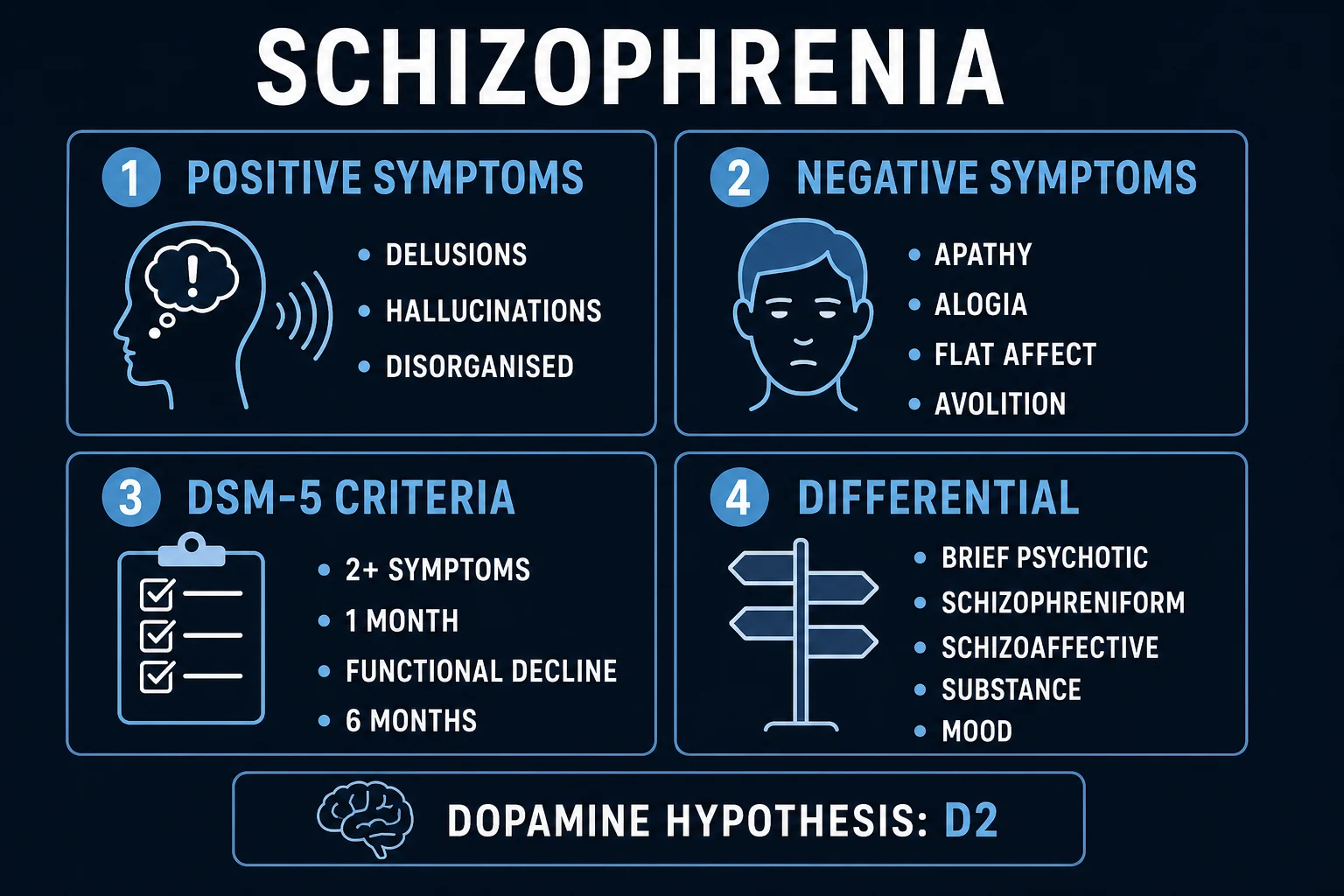
DSM-5 diagnostic criteria (reproduced)
- Criterion A — at least 2 of the following, present for a significant portion of 1 month (at least one must be items 1, 2 or 3):
- Delusions
- Hallucinations
- Disorganised speech (frequent derailment, incoherence)
- Grossly disorganised or catatonic behaviour
- Negative symptoms (diminished emotional expression or avolition)
- Criterion B — social/occupational dysfunction: a marked decline in one or more areas (work, interpersonal relations, self-care) below premorbid level for a significant time.
- Criterion C — duration: continuous signs for at least 6 months, including at least 1 month of Criterion-A symptoms (active phase); the remainder may be prodromal or residual symptoms.
- Criterion D — schizoaffective disorder and depressive/bipolar disorder with psychotic features excluded.
- Criterion E — not attributable to a substance or another medical condition.
- Criterion F — if a history of autism spectrum disorder or communication disorder of childhood onset, an additional diagnosis of schizophrenia is made only if prominent delusions or hallucinations are present for at least 1 month.[1]
Epidemiology & Risk Factors
Schizophrenia affects about 0.3 to 0.7% of the population lifetime (the traditional "1%" figure holds for most populations), with a point prevalence of about 0.5% and an annual incidence of about 15 per 100,000. It is one of the leading causes of disability worldwide in the 15 to 44 age band.[2][6]
Schizophrenia — key numbers
Sex and age of onset — overall equal sex ratio, but men have an earlier onset (peak 15 to 25 vs 25 to 35 in women), more negative symptoms, poorer response and worse prognosis; women have a second peak after the menopause, more affective and paranoid features, and better prognosis.[2]
Risk factors (high-yield): [1]
| Factor | Effect / mechanism |
|---|---|
| Family history / genetics | 1st-degree relative risk ~10%; ~50% if both parents affected; monozygotic twin concordance ~50%, dizygotic ~15%; heritability ~80% |
| Copy-number variants | 22q11.2 deletion (velocardiofacial/DiGeorge) — highest known genetic risk (~30% develop psychosis); 1q21, 15q11.2, 16p11.2 |
| GWAS loci | DRD2 (D2 receptor), C4 complement (excess synaptic pruning), TCF4, ZNF804A |
| Obstetric complications | Hypoxia, pre-eclampsia, low birth weight, emergency LSCS — neurodevelopmental insult |
| Prenatal infection/inflammation | Maternal influenza, rubella, toxoplasmosis; maternal fever |
| Prenatal famine / malnutrition | Dutch hunger winter (1944 to 1945) and Chinese famine cohorts |
| Advanced paternal age | Increased de-novo mutations |
| Winter/spring birth | ~5 to 10% excess, presumed viral exposure |
| Cannabis (adolescent, high-potency) | Doubles risk; age of use inversely related; gene-environment interaction with COMT/AKT1 |
| Amphetamine/cocaine/PCP/ketamine | Acute and chronic psychotomimetic |
| Urban birth / upbringing | 2-fold risk; cumulative with duration of residence |
| Migration / minority status | Increased (esp. second-generation); social defeat hypothesis |
| Childhood trauma / adversity | Dose-response with psychosis; sensitises dopamine |
| Social isolation, low SES | Both cause and consequence (downward drift) |
Pathophysiology
No single mechanism explains schizophrenia — it is a heterogeneous neurodevelopmental disorder with contributions from genetics, abnormal brain development, dopamine dysregulation, glutamate dysfunction, immune activation and synaptic pathology.[2]
The dopamine hypothesis (the classical framework)
Dopamine neurons project through four pathways; dysregulation in each produces a symptom cluster: [1]
- Mesolimbic pathway (VTA to nucleus accumbens) — HYPERdopaminergia → positive symptoms (delusions, hallucinations). All currently licensed antipsychotics block D2 receptors here; amphetamine (releases dopamine) and L-dopa worsen/trigger psychosis.
- Mesocortical pathway (VTA to prefrontal cortex) — HYPOdopaminergia → negative and cognitive symptoms. D2 blockade here does not help and may worsen them.
- Nigrostriatal pathway (substantia nigra to striatum) — D2 blockade → extrapyramidal side effects (EPSE): dystonia, parkinsonism, akathisia, tardive dyskinesia.
- Tuberoinfundibular pathway (hypothalamus to pituitary) — D2 blockade disinhibits prolactin → hyperprolactinaemia (galactorrhoea, amenorrhoea, gynaecomastia, sexual dysfunction, osteoporosis). [1]
The revised dopamine hypothesis (Howes and Kapur) localises the abnormality to presynaptic striatal dopamine synthesis and release — confirmed by PET/SPECT imaging showing elevated dopamine synthesis (F-DOPA), increased baseline dopamine release (amphetamine challenge), and greater D2/3 receptor availability. The upstream drivers of this striatal hyperdopaminergia are glutamatergic and GABAergic cortical dysfunction (see below).[2]
The glutamate hypothesis
NMDA-type glutamate receptor hypofunction produces a schizophrenia-like syndrome encompassing positive, negative AND cognitive symptoms — explaining features dopamine blockade alone cannot. The evidence: phencyclidine (PCP) and ketamine (NMDA antagonists) reproduce the full triad, and NMDA hypofunction on cortical GABA interneurons produces disinhibition of glutamate and dopamine release. This is why glutamatergic agents have been therapeutic targets.[2]
Other neurotransmitters
- Serotonin (5-HT2A) — atypical antipsychotics combine D2 and 5-HT2A antagonism, which improves negative symptoms and lowers EPSE risk.
- GABA interneuron dysfunction — reduced parvalbumin-positive fast-spiking interneurons → cortical disinhibition.
- Acetylcholine / noradrenaline — modulators of cognition and arousal. [1]
The neurodevelopmental hypothesis
Schizophrenia arises from abnormal brain development beginning in utero, with a second hit in adolescence (excess synaptic pruning, hormonal change, cannabis). Evidence: ventricular enlargement, reduced cortical thickness (esp. temporal and prefrontal), reduced hippocampal volume, abnormal gyrification, cytoarchitectural abnormalities without gliosis (arguing against degeneration), and premorbid deficits in motor, cognitive and social function detectable in childhood. The C4 complement gene variant drives excess synaptic pruning, and 22q11.2 deletion disrupts neuronal migration. There may also be a mild neurodegenerative component with progressive grey-matter loss in the early years of illness (the "neuroprogressive" element).[2]
Inflammatory / immune contributions
Maternal infection (influenza, toxoplasmosis), microglial activation, and autoimmune encephalitis (especially anti-NMDA-receptor encephalitis, which presents with new-onset psychosis in young women ± ovarian teratoma) are recognised contributors. Raised inflammatory markers and microglial activation on PET are described in acute psychosis. [1]
Clinical Presentation
Schizophrenia typically unfolds in four phases: a premorbid phase (subtle social, cognitive and motor deficits in childhood), a prodromal phase (insidious decline over months to years — social withdrawal, odd beliefs, reduced functioning, anxiety, depression, sleep disturbance, attenuated psychotic symptoms), an active (psychotic) phase (florid positive symptoms), and a residual phase (smouldering negative and cognitive symptoms with possible relapse). The full triad of positive, negative and cognitive symptoms must be assessed.[1][2]
Positive symptoms
- Hallucinations — perception without a stimulus. Auditory are most common (classically third-person voices arguing about the patient, or a running commentary on the patient's actions — two of Schneider's first-rank symptoms). Visual, olfactory, gustatory and somatic hallucinations also occur; prominent visual hallucinations should prompt a search for an organic cause (occipital lesions, Lewy body disease, substance use, sensory deprivation).
- Delusions — fixed false beliefs held with conviction despite contrary evidence. Persecutory are most common; others include delusions of reference, grandeur, control, guilt, nihilism, jealousy, religious and somatic. A delusional perception (a normal perception carrying a sudden, fully-formed delusional meaning) is Schneiderian.
- Thought disorder / formal thought disorder — disorganised thinking: derailment (knight's-move), loosening of associations, tangentiality, circumstantiality, incoherence (word salad), neologisms (invented words), thought block.
- Disorganised / bizarre behaviour — childlike silliness, agitation, inappropriate sexual behaviour, grimacing, stereotypies, the "clothing oddities" of hebephrenia.
- Catatonic features — stupor, posturing, negativism, mutism, waxy flexibility, stereotypy, mannerisms, echolalia, echopraxia. [1]
Negative symptoms — the five A's (high-yield mnemonic)
Negative symptoms — the five A's of schizophrenia
AAAAA
Blunted/restricted emotional expression; reduced eye contact, facial movement, voice modulation
Poverty of speech and speech content; empty, slow, brief replies
Lack of drive, motivation and goal-directed activity; sits for hours, no initiative
Inability to experience pleasure; loss of interest
Social withdrawal; reduced social engagement and intimacy
Negative symptoms are the hardest to treat, the best predictor of poor functional outcome, and are split into expressive deficits (blunting, alogia) and amotivational deficits (avolition, anhedonia, asociality). Primary negative symptoms are core to the illness; secondary negative symptoms mimic them but arise from EPSE, depression, untreated positive symptoms, antipsychotic-induced (antipsychotic-induced dysphoria) or social deprivation.[2]
Cognitive symptoms
Deficits in sustained attention, working memory, episodic memory, processing speed and executive function (planning, set-shifting, inhibition) are nearly universal, often predate the psychosis, and are the single strongest predictor of long-term functional outcome. They respond poorly to current antipsychotics. [1]
Schneider's first-rank symptoms (high-yield — heavily tested)
Kurt Schneider listed 11 "first-rank" symptoms which, in the absence of organic disease, he considered diagnostic of schizophrenia. They are now de-emphasised (present in other psychoses, absent in many schizophrenics) but remain exam staples: [1]
Schneider's first-rank symptoms
SCHNEIDER
Bodily sensations imposed/made by an external agency
Voices giving a running commentary on the patient's actions
Two or more voices discussing the patient in the third person
Invented words (thought disorder — some lists)
Thoughts audible as they are being thought; or thought broadcasting
Alien thoughts put into the mind
Normal perception acquiring sudden delusional meaning
Volition, impulses or feelings felt as made by an external agent
Thoughts taken out of the mind
The passivity phenomena / delusions of control cluster — thought insertion, thought withdrawal, thought broadcasting, made acts, made impulses, made feelings, somatic passivity — all share the theme that the patient experiences thoughts/acts/feelings as imposed by an external agency, and are highly characteristic. [1]
Insight
Insight is typically impaired (the patient does not believe they are ill). Poor insight predicts non-adherence and is fluctuating — it should be assessed, not assumed. [1]
Atypical presentations
- Late-onset schizophrenia (onset 40 to 60) and very-late-onset schizophrenia-like psychosis (over 60) — more paranoid and hallucinatory, fewer negative/cognitive symptoms, women over-represented, often sensory impairment (deafness); rule out dementia with Lewy bodies in the elderly (visual hallucinations, fluctuating cognition, parkinsonism, antipsychotic hypersensitivity).
- Adolescent/childhood-onset — rare; more insidious, more negative symptoms, worse prognosis.
- Pregnancy — risk of relapse if antipsychotics are stopped; weigh fetal risk vs relapse (see Special Populations).
- Comorbid substance use — cannabis, amphetamines, alcohol; worsens course and complicates diagnosis.
- Postpartum psychosis — rapid onset within 2 weeks of delivery; mood swings, delusions, confusion; high risk to infant; emergency admission; different from schizophrenia (usually a bipolar-spectrum presentation).
- In a patient with intellectual disability / autism — diagnosis requires prominent delusions/hallucinations for at least 1 month. [1]
Differential Diagnosis
The cardinal rule of any first presentation of psychosis is "rule out organic and drug-induced causes first", then "is the psychosis driven by a mood disorder?", then decide between the schizophrenia-spectrum diagnoses.[1]
- Bipolar disorder, manic episode with psychotic features — grandiose/religious delusions mood-congruent, pressure of speech, reduced need for sleep, hyperactivity, elevated/irritable mood, increased libido/spending; psychosis arises during the mood episode; episodic with full or near-full inter-episode recovery.
- Major depressive disorder with psychotic features — nihilistic/guilt/hypochondriacal (mood-congruent) delusions/hallucinations; psychomotor retardation, anhedonia, suicidal ideation dominate; mood precedes the psychosis.
- Schizoaffective disorder — a mood episode present for the majority of the total illness duration AND at least 2 weeks of psychosis without a mood episode.
- Drug-induced psychotic disorder — amphetamines, methamphetamine, cocaine, cannabis, PCP, ketamine, hallucinogens, corticosteroids, dopaminergic drugs, antimalarials, alcohol withdrawal; temporal relationship to intoxication/withdrawal, vivid visual hallucinations, formication ("cocaine bugs"); resolves with abstinence.
- Psychotic disorder due to another medical condition — temporal lobe epilepsy, limbic/autoimmune encephalitis (esp. anti-NMDAR in young women ± teratoma), brain tumour (esp. temporal/frontal), HIV, neurosyphilis, herpes encephalitis, thyroid dysfunction, B12/folate deficiency, Wilson's disease, Huntington's disease, Parkinson's, Lewy body, SLE (lupus psychosis), porphyria; always look for clouding of consciousness, visual hallucinations, abnormal vital signs, focal neurology.
- Brief psychotic disorder — under 1 month, full recovery; often stress-related, often emotional turmoil.
- Schizophreniform disorder — 1 to 6 months, identical criteria.
- Delusional disorder — non-bizarre, encapsulated delusion, otherwise intact function, no hallucinations, no negative symptoms.
- Obsessive-compulsive disorder with absent insight — ego-dystonic intrusive thoughts (not delusional perception), compulsions; insight can be lost but content is OCD-typical.
- Personality disorders — schizotypal (cognitive/perceptual distortions, magical thinking, eccentricity, but no frank psychosis), borderline, paranoid.
- Factitious disorder / malingering — intentional production of symptoms for psychological (factitious) or external (malingering) gain; inconsistent collateral history.
- Delirium — acute fluctuating attention, clouding of consciousness, visual hallucinations, underlying medical cause; never miss this. [1]
Distinguishing features most examiners reward: (a) presence/absence of a primary mood syndrome and its timing relative to psychosis; (b) duration (under 1 month / 1 to 6 months / over 6 months); (c) evidence of substance or organic cause; (d) presence of first-rank/passivity symptoms and negative symptoms; (e) level of premorbid and inter-episode functioning. [1]
Clinical & Bedside Assessment
Diagnosis is clinical — based on a careful psychiatric history (from the patient and a reliable informant — collateral history is essential in psychosis), a full mental state examination (MSE), a physical examination and screening investigations to exclude organic causes.[1]
History — onset (insidious vs acute), course (episodic vs continuous), symptom content, precipitants (stress, substance), past psychiatric and medical history, drug and alcohol use (a full substance history is mandatory), family history of psychosis/mood disorder, obstetric and developmental history, forensic history, social circumstances (housing, employment, relationships), medication adherence and prior treatment response, and risk assessment. [1]
Mental state examination — a structured assessment of: [1]
- Appearance and behaviour — self-neglect, poor eye contact, psychomotor agitation/retardation, bizarre posturing (catatonia), response to internal stimuli.
- Speech — rate, rhythm, volume; poverty of speech (alogia) or pressure of speech; thought disorder is assessed here and in the thought form.
- Mood and affect — subjectively and objectively; flat/blunted/incongruous affect; suicidal/homicidal ideation.
- Thought — assess form (derailment, tangentiality, incoherence, neologisms, thought block, perseveration), content (delusions — persecutory, grandiose, reference, control, nihilistic, etc.), and possession/alienation (insertion, withdrawal, broadcasting — passivity phenomena).
- Perception — hallucinations (modality, third-person/commentary), illusions, depersonalisation/derealisation.
- Cognition — orientation, attention, memory, executive function (screen with MMSE/MoCA; formal neuropsychology if needed).
- Insight and judgement — does the patient believe they are ill? Do they accept treatment? [1]
Risk assessment (mandatory): [1]
- Suicide — history of attempts, current suicidal ideation, command hallucinations to self-harm, hopelessness, recent loss/relapse, comorbid depression/substance use, access to means, young male (highest risk).
- Self-neglect — inability to eat, drink, maintain hygiene; risk of physical illness.
- Violence / risk to others — history of violence, command hallucinations to harm others, persecutory delusions about specific individuals, substance use.
- Exploitation / safeguarding — financial, sexual, self-neglect in the vulnerable.
- Risk from others — homelessness, domestic violence, trauma. [1]
Investigations
There is no laboratory test for schizophrenia — it is a clinical diagnosis of exclusion. The role of investigations is to exclude organic causes and screen for and monitor the metabolic consequences of treatment.[1]
Baseline (first-episode psychosis): [1]
- FBC, U&E, LFT, TFT, glucose/HbA1c, fasting lipids, vitamin B12, folate, calcium — exclude metabolic, endocrine and haematological causes.
- Drug screen (urine) — cannabis, amphetamines, cocaine, opiates, benzodiazepines.
- Pregnancy test (beta-hCG) in women of childbearing potential before starting any antipsychotic.
- Infection screen — HIV, syphilis (Treponema pallidum), hepatitis B/C where indicated.
- ECG — baseline QTc before starting QT-prolonging antipsychotics (especially ziprasidone, haloperidol IV, clozapine, pimozide).
- CT or MRI brain — first-episode psychosis, atypical features, focal neurology, new-onset in older patient, cognitive decline; look for structural lesions, ventricular enlargement.
- EEG — if seizures suspected or to distinguish non-convulsive status/complex partial seizures from psychosis.
- Lumbar puncture, autoimmune/paraneoplastic and NMDA-receptor antibody panel — if autoimmune encephalitis suspected (young, rapid onset, seizures, movement disorder, ovarian teratoma).
- Cognitive testing — MMSE/MoCA screen; formal neuropsychology for characterisation.
- Physical examination — including neurological exam (movement disorder before starting antipsychotic, to avoid attributing baseline dyskinesia to treatment), BMI, waist circumference, BP. [1]
During treatment (monitoring bundle): [1]
- Weight/BMI at baseline, 4 to 6 weeks, 12 weeks, then 6-monthly; waist circumference annually.
- Fasting glucose/HbA1c and lipids at baseline, 12 weeks, then annually (more often if abnormal).
- Prolactin if symptomatic (amenorrhoea, galactorrhoea, sexual dysfunction).
- ECG for QTc-prolonging drugs or cardiac risk.
- FBC — weekly for the first 18 weeks of clozapine, then fortnightly until 1 year, then monthly for life (clozapine monitoring).
- EPSE examination — Simpson-Angus Scale, Barnes Akathisia Rating Scale, Abnormal Involuntary Movement Scale (AIMS). [1]
Rating scales (reproduced)
- PANSS (Positive and Negative Syndrome Scale) — the standard research and clinical severity scale: 30 items (7 positive, 7 negative, 16 general psychopathology), each scored 1 (absent) to 7 (extreme); total range 30 to 210.
- BPRS (Brief Psychiatric Rating Scale) — 18 or 24 items rating symptom severity; widely used in trials.
- SAPS / SANS — Scale for Assessment of Positive / Negative Symptoms.
- AIMS (Abnormal Involuntary Movement Scale) — 12-item examination for tardive dyskinesia.
- Barnes Akathisia Rating Scale (BARS) — objective + subjective + distress + global.
- Simpson-Angus Scale (SAS) — for antipsychotic-induced parkinsonism.
- Bush-Francis Catatonia Rating Scale (BFCRS) — 23 items for catatonia; a score over 2 (on the 14-item screening) supports the diagnosis.
- Clinical Global Impression (CGI) and Global Assessment of Functioning (GAF) — overall severity and function. [1]
Management — Resuscitation
Acute psychosis is rarely a physiological emergency — the "resuscitation" priorities are safety, risk control and exclusion of an organic cause. The recognised emergency is acute behavioural disturbance / violence with imminent risk to self or others.[1]
Principles of acute behavioural management (rapid tranquillisation): [1]
- De-escalation first — calm environment, reduced stimulation, verbal techniques, respect, time; sufficient trained staff. The least restrictive option that works.
- Oral medication if accepted — oral lorazepam 1 to 2 mg, or oral promethazine 25 to 50 mg, or oral olanzapine 5 to 10 mg.
- Rapid tranquillisation (IM) if oral fails and risk is imminent:
- IM lorazepam 1 to 2 mg (max 4 mg in 24 hours) — useful where substance use is suspected.
- IM olanzapine 5 to 10 mg (10 mg usual, 5 mg in elderly/hepatic impairment; do NOT combine with IM/parenteral lorazepam — risk of respiratory depression and collapse; observe at least 1 hour after, monitor SpO2 and BP).
- IM haloperidol 5 mg + IM promethazine 25 to 50 mg (the Maudsley guideline combination) — effective, well evidenced.
- IM droperidol 5 to 10 mg (re-emerging; monitor QT and BP).
- Post-injection monitoring — pulse, BP, respiratory rate, SpO2, temperature and conscious level every 15 minutes for 1 hour, then at least hourly until ambulant; have flumazenil and oxygen/airway equipment available.
- Physical restraint (physical holding) only as a last resort, time-limited, by trained staff, with documentation — not a treatment. [1]
Safety and legal framework: [1]
- Admit under the Mental Health Act if the patient lacks capacity, refuses admission, and there is risk to health/safety (UK: Section 2 — assessment, up to 28 days; Section 3 — treatment, up to 6 months renewable; Section 5(2) — holding power for an inpatient already admitted). Involuntary treatment requires the statutory tests to be met and documented.
- Exclude organic causes — check glucose (hypoglycaemia), temperature, infection, head injury, intoxication, hypoxia; do not assume behavioural disturbance is "just the illness".
- Manage NMS (see Complications) immediately if antipsychotic has been given and fever + rigidity appear. [1]
Management — Definitive & Stepwise
Schizophrenia is managed by a biopsychosocial, multi-disciplinary team combining antipsychotic medication, psychological interventions and social support, ideally coordinated by an early-intervention service for first episodes. The aim is symptom control, relapse prevention, functional recovery and reduction of harm.[1][10]
Pharmacological — antipsychotics (neuroleptics)
All antipsychotics act by D2 receptor antagonism in the mesolimbic pathway; second-generation agents also block 5-HT2A receptors (and have variable effects on other receptors), which partly accounts for their differing side-effect profiles. The 2013 Leucht network meta-analysis confirmed that efficacy differs between drugs — clozapine is the most effective, and among non-clozapine agents olanzapine, risperidone, amisulpride and zotepine are most efficacious — while the CATIE and CUtLASS trials showed that, overall, second-generation drugs are not categorically superior to first-generation, but differ in side-effect profile.[3][4][11]
Second-generation (atypical) antipsychotics — preferred first-line (NICE / APA / IPS): [1]
| Drug | Oral dose | Key side effects |
|---|---|---|
| Olanzapine | 5 to 10 mg start, usual 10 to 20 mg/day (max 20 mg) | High metabolic risk (weight, glucose, lipids), sedation, moderate EPSE, hyperprolactinaemia mild |
| Risperidone | 1 to 2 mg start, usual 4 to 6 mg/day (max 16 mg) | Dose-dependent EPSE, highest hyperprolactinaemia, moderate weight gain, orthostatic hypotension |
| Paliperidone (9-OH-risperidone) | 3 to 12 mg/day | As risperidone; once-daily |
| Quetiapine | titrate 25 to 800 mg/day IR (or XR 50 to 700 mg); usual 300 to 750 mg | Sedation, orthostatic hypotension, metabolic, low EPSE, low prolactin; favoured in Parkinson's/Lewy body psychosis |
| Aripiprazole | 10 to 15 mg start, 10 to 30 mg/day | Partial D2 agonist — low EPSE, low prolactin (may lower it), akathisia, less weight gain; activating |
| Amisulpride | 50 to 300 mg (negative symptoms) or 400 to 800 mg/day (positive) | High hyperprolactinaemia, low EPSE at low dose, low weight gain |
| Ziprasidone | 40 to 160 mg/day with food | QT prolongation, low weight gain, low EPSE |
| Lurasidone | 40 to 160 mg/day with food (over 350 kcal) | Akathisia, nausea, sedation; low metabolic; approved for bipolar depression |
| Asenapine | 5 to 10 mg sublingual twice daily | Oral hypoesthesia, sedation; do not eat/drink 10 min after |
| Cariprazine | 1.5 to 6 mg/day | Partial D3/D2 agonist; akathisia, low metabolic; benefit for negative symptoms |
| Brexpiprazole | 1 to 4 mg/day | Partial agonist; akathisia, weight gain |
| Clozapine | start 12.5 mg, titrate to 200 to 450 mg (max 900 mg/day) | Reserved for TRS — see below |
First-generation (typical / conventional) antipsychotics — high potency (more EPSE, less sedation/metabolic) and low potency (less EPSE, more sedation/anticholinergic/orthostatic/metabolic): [1]
| Drug | Typical oral dose | Potency |
|---|---|---|
| Haloperidol | 2 to 20 mg/day (often 5 to 10 mg) | High — high EPSE, low sedation, QT |
| Trifluoperazine | 5 to 20 mg/day | High |
| Flupenthixol | 1 to 8 mg/day oral | High |
| Pimozide | 2 to 20 mg/day | High — marked QT prolongation |
| Chlorpromazine | 100 to 800 mg/day (up to 1000 mg) | Low — sedation, photosensitivity, anticholinergic, orthostatic, cholestatic jaundice, retinopathy |
| Thioridazine | 150 to 600 mg/day | Low — QT prolongation, retinopathy; restricted use |
Long-acting injectable (depot) antipsychotics — for confirmed non-adherence or patient choice: [1]
| Depot | Dose / interval |
|---|---|
| Risperidone LAI (Risperdal Consta) | 25 to 50 mg IM every 2 weeks (must continue oral cover 3 weeks after first injection) |
| Paliperidone palmitate monthly (Xeplion/Invega Sustenna) | 75 to 150 mg equivalent, IM monthly; 3-monthly form (Trevicta) and 6-monthly form available |
| Aripiprazole LAI (Abilify Maintena) | 400 mg IM monthly |
| Olanzapine LAI (ZypAdhera) | 150 to 300 mg every 2 weeks; REMS — post-injection monitoring 3 h for sedation/delirium |
| Haloperidol decanoate | 50 to 200 mg IM every 4 weeks |
| Flupenthixol decanoate | 20 to 40 mg IM every 2 to 4 weeks |
| Zuclopenthixol decanoate | 200 to 400 mg IM every 1 to 4 weeks |
| Pipotiazine palmitate | 50 to 200 mg IM every 4 weeks |
Clozapine — treatment-resistant schizophrenia (TRS)
Treatment-resistant schizophrenia is defined as failure to respond to two adequate trials (6 to 8 weeks at a therapeutically effective dose) of different antipsychotics, at least one atypical, with persistent symptoms and functional impairment. Clozapine is the only drug with proven superiority in TRS — it reduces positive symptoms in roughly 60% of refractory patients (vs ~30% for other agents), reduces suicidality, and is under-utilised.[8]
Clozapine essentials: [1]
- Start 12.5 mg once or twice on day 1, titrate slowly (12.5 to 25 mg daily increments) to a target of 200 to 450 mg/day (max 900 mg/day); onset of benefit may take 3 to 6 months.
- FBC monitoring (mandatory) — weekly for 18 weeks, then fortnightly until 1 year, then monthly for life; stop and do not rechallenge if neutrophils fall into the red-alert range (absolute neutrophil count below 1.5 x 10^9/L). In the UK, registration with a clozapine monitoring service (e.g. CPMS) is mandatory.
- Major adverse effects — agranulocytosis (about 1%), myocarditis and cardiomyopathy (first 8 weeks — fever, tachycardia, chest pain; check troponin, CRP, echo), seizures (dose-related — use valproate prophylaxis if needed), sedation, hypersalivation (sialorrhoea — treat with sublingual atropine/ipratropium or glycopyrrolate), constipation that can progress to fatal paralytic ileus (the commonest cause of clozapine-related death — prescribe regular laxatives), postural hypotension, tachycardia, weight gain and metabolic syndrome (worst of all antipsychotics), NMS (atypical presentation), pulmonary embolism, sialadenitis.
- Augmentation if clozapine partially responsive — aripiprazole (offsets weight/prolactin), lamotrigine, sodium valproate, ECT; NICE advises against routine combined antipsychotics. [1]
Psychological and social interventions
- Cognitive behavioural therapy for psychosis (CBTp) — reduces distress and positive symptom severity; recommended for all with psychosis.
- Family intervention — reduces expressed emotion and relapse rates in families with high contact; recommended where the patient lives with or is in close contact with family.
- Early intervention in psychosis (EIP/EIS) — specialist team for first-episode psychosis (UK NICE: offer within 2 weeks of referral; aim to keep people in employment/education).[9]
- Vocational rehabilitation and supported employment (individual placement and support, IPS).
- Cognitive remediation for cognitive deficits.
- Assertive outreach / ACT for severe, complex, hard-to-engage patients.
- Supported accommodation, financial/benefits advice, peer support, carer support.
- Avoid routine combined antipsychotic polypharmacy, adherence-promoting strategies (depot, psychoeducation).
A stepwise management plan (examinable)
- Diagnose (clinical, exclude organic/substance), baseline investigations, risk assessment.
- First episode — specialist early-intervention team; offer CBTp and family intervention; start an oral atypical antipsychotic at the lowest effective dose (shared decision with the patient re: side-effect profile); monitor metabolic, EPSE, prolactin, QT.
- Acute exacerbation / non-response at 4 to 6 weeks — check adherence, address substance use, optimise dose, then switch class if still unresponsive.
- Treatment-resistant (two failed adequate trials) — clozapine, with mandatory monitoring.
- Clozapine-resistant — augmentation (aripiprazole, lamotrigine, ECT) under specialist supervision.
- Maintenance — continue antipsychotic at least 1 to 2 years after a first episode, and long-term (often lifelong) for recurrent schizophrenia; depots for adherence; do not stop abruptly (withdrawal dyskinesia, relapse).
- Relapse prevention — CBTp, family intervention, early-warning-signs plan, crisis and advance statements, regular review. [1]
Specific Subtypes & Scenarios
- Paranoid schizophrenia — the most common classical subtype; persecutory delusions and auditory hallucinations with preserved affect and cognition; later onset; best prognosis.
- Hebephrenic / disorganised — early onset, prominent affective incongruity and disorganised thought/behaviour; poor prognosis.
- Catatonic schizophrenia / catatonia — stupor, posturing, negativism, mutism, rigidity, waxy flexibility, stereotypies, echolalia/echopraxia, excitement; diagnose with the Bush-Francis Catatonia Rating Scale; first-line treatment is IM/IV lorazepam (1 to 2 mg) — a lorazepam challenge test produces transient improvement; ECT is highly effective for refractory or life-threatening catatonia (malignant catatonia); always exclude organic causes (NMS, encephalitis, structural lesions). Antipsychotics can worsen catatonia and are avoided until the catatonia has resolved.
- Residual schizophrenia — smouldering negative symptoms after resolution of positive symptoms.
- First-episode psychosis — emphasise early intervention, lower antipsychotic doses (high sensitivity in the drug-naïve), substance-use intervention, family work, vocational recovery; treat for 1 to 3 years then reassess.
- Treatment-resistant schizophrenia — clozapine (see above).
- Late-onset (40 to 60) and very-late-onset (over 60) schizophrenia — more paranoid/hallucinatory, fewer negative/cognitive symptoms, sensory impairment common; address hearing/vision, lower doses, avoid anticholinergics, beware stroke risk of atypicals in dementia.
- Comorbid substance use ("dual diagnosis") — worsens prognosis, complicates diagnosis, increases violence and non-adherence; integrated treatment of both.
- Post-psychotic depression — depressive symptoms emerging after the acute psychotic episode resolves; high suicide risk; treat with antidepressant ± CBT, watch for antipsychotic-induced dysphoria.
- Schizophrenia with obsessive-compulsive symptoms — distinguish true comorbid OCD from antipsychotic-induced OCD (especially clozapine); treat with SSRI. [1]
Complications & Pitfalls
Antipsychotic side effects — extrapyramidal (EPSE)
The four classical EPSE result from nigrostriatal D2 blockade, worse with high-potency first-generation drugs and risperidone at higher doses:[7]
- Acute dystonia (hours to days) — sustained, painful muscle spasm; torticollis, oculogyric crisis, trismus, laryngospasm (life-threatening). Treat urgently with IM/IV procyclidine 5 to 10 mg or benztropine 1 to 2 mg; the response is dramatic and diagnostic. Risk highest in young men starting high-potency drugs.
- Parkinsonism (weeks to months) — bradykinesia, rigidity, tremor, mask-like face; reduce dose, switch to lower-EPSE drug, add anticholinergic (procyclidine, trihexyphenidyl, benztropine) — but avoid routine prophylactic anticholinergics (cognitive impairment, tardive dyskinesia risk).
- Akathisia (days to weeks) — subjective inner restlessness with motor urge to move; easily missed and misdiagnosed as agitation or worsening psychosis (which can lead to a disastrous dose increase). Reduce dose or switch; beta-blocker (propranolol 10 to 30 mg TDS), benztropine, or low-dose clonazepam/mirtazapine.
- Tardive dyskinesia (months to years, risk increases with cumulative exposure) — involuntary, repetitive, choreoathetoid movements of the face/tongue (lip-smacking, tongue protrusion), limbs and trunk; potentially irreversible. Manage by reducing or stopping the offending drug, switching to clozapine or quetiapine, withholding anticholinergics (worsen it); VMAT2 inhibitors (valbenazine 40 to 80 mg/day, deutetrabenazine) reduce severity. Screen with AIMS at least 6-monthly. [1]
Neuroleptic malignant syndrome (NMS)
A rare, life-threatening idiosyncratic reaction to any antipsychotic (and other dopamine antagonists; withdrawal of dopamine agonists) — hyperthermia (over 38 degrees C, often over 40), lead-pipe muscular rigidity, altered consciousness, autonomic instability (tachycardia, labile BP, diaphoresis, incontinence), raised creatine kinase (often over 1000 U/L), leukocytosis, deranged LFTs, and acute kidney injury (from rhabdomyolysis). Onset hours to days; mortality 5 to 20%.[7]
Management: STOP all antipsychotics and other dopamine antagonists immediately; supportive care (cooling, IV fluids, DVT prophylaxis, airway/ventilation, treat AKI); specific treatments — dantrolene 1 to 2.5 mg/kg IV (repeated up to 10 mg/kg/day) and/or bromocriptine 2.5 to 5 mg PO/NG (up to 40 mg/day); ECT for refractory cases. Do not rechallenge precipitously — wait at least 2 weeks, restart at very low dose with a low-potency/atypical agent. Distinguish from malignant hyperthermia (anaesthetic trigger, immediate), serotonin syndrome (clonus, hyperreflexia, mydriasis, GI upset, serotonergic drugs), malignant catatonia, heat stroke, anticholinergic toxicity and sepsis. [1]
Metabolic and cardiovascular effects (especially atypicals)
Weight gain (worst with clozapine and olanzapine, then quetiapine, risperidone; least with aripiprazole, ziprasidone, lurasidone), type 2 diabetes mellitus, dyslipidaemia, and hypertension — together the metabolic syndrome, the principal driver of the 15 to 20 year reduction in life expectancy from cardiovascular disease.[7][6] Other CVS effects: QT prolongation and sudden cardiac death (worst with thioridazine, pimozide, IV haloperidol, ziprasidone — baseline and periodic ECG), orthostatic hypotension (alpha-1 blockade) and tachycardia.
Hyperprolactinaemia (tuberoinfundibular blockade)
Worst with risperidone and amisulpride (and most first-generation); absent with aripiprazole (can lower prolactin). Causes galactorrhoea, gynaecomastia, amenorrhoea/oligomenorrhoea, loss of libido, erectile/sexual dysfunction, infertility, osteoporosis. Manage by dose reduction, switch to aripiprazole, or add aripiprazole; treat symptomatically (e.g. dopamine agonists are avoided as they can worsen psychosis). [1]
Other adverse effects
Sedation (histamine blockade — chlorpromazine, olanzapine, quetiapine, clozapine), anticholinergic effects (dry mouth, constipation, urinary retention, blurred vision, cognitive impairment — chlorpromazine, clozapine), photosensitivity (chlorpromazine), cholestatic jaundice, seizure threshold lowering (clozapine most), neutropaenia/agranulocytosis, myocarditis, cardiomyopathy, paralytic ileus, sialorrhoea, pulmonary embolism (all clozapine), hepatotoxicity, pigmentary retinopathy (thioridazine, chlorpromazine), skin pigmentation, and temperature dysregulation (poikilothermia). [1]
Disease-related complications
- Suicide — lifetime risk about 4.9% (the older "10%" is an overestimate); about 20 to 40% attempt suicide; risk highest in young men, early in illness, after a recent relapse or discharge, with comorbid depression/substance use, command hallucinations, hopelessness, or a recent loss.[5]
- Excess mortality — standardized mortality ratio about 2 to 3; life expectancy reduced 15 to 20 years, mainly from cardiovascular disease and suicide.[6]
- Substance misuse, homelessness, unemployment, victimisation, stigma, family burden.
- Trauma (self-harm, violence, accidental).
- Physical illness under-treated (diabetes, smoking, infection, hepatitis C, HIV).
Pitfalls
- Misdiagnosing an organic psychosis (autoimmune encephalitis, temporal lobe epilepsy, tumour, thyroid) as schizophrenia — always exclude organic in first presentations.
- Confusing akathisia with agitation/psychosis and increasing the antipsychotic.
- Missing NMS (attributing fever to infection) or clozapine myocarditis (attributing tachycardia/fever to anxiety).
- Failing to monitor metabolic parameters and FBC on clozapine.
- Over-reliance on polypharmacy, missing adherence issues, abrupt cessation (relapse, withdrawal dyskinesia).
- Inadequate attention to physical health, smoking, weight and CVS risk.
- Under-utilisation of clozapine in TRS (delayed by years on average). [1]
Prognosis & Disposition
Outcome is highly variable. The classical "rule of thirds" (one-third recover, one-third fluctuate, one-third are chronically disabled) is broadly true: roughly 20% have a good outcome, 60% a fluctuating course, 20% a chronic severe course.[2]
Good-prognostic factors: female sex, older age of onset, acute onset, obvious precipitant, prominent affective (mood) symptoms, good premorbid social/occupational functioning, brief active phase, late onset, married, good support, treatment adherence, early intervention, no substance use, no family history, living in a low expressed-emotion household.[2]
Poor-prognostic factors: male sex, young/insidious onset, prominent negative and cognitive symptoms, poor premorbid function, no affective component, cannabis/substance use, non-adherence, family history, high expressed emotion, longer duration of untreated psychosis (DUP), neurocognitive deficits, structural brain changes. [1]
Disposition — most care is delivered in the community by a community mental health team or early-intervention service; admission is for risk, treatment resistance, diagnostic uncertainty, or assessment. Discharge planning addresses accommodation, finances, benefits, occupation, family/carers, follow-up, relapse-prevention (early-warning-signs) and crisis plans, and advance statements / joint crisis plans. [1]
Special Populations
- Pregnancy — do not switch an effective antipsychotic solely because of pregnancy; untreated relapse risks maternal self-neglect, suicide, and obstetric harm. Prefer continuing a working agent at the lowest effective dose with perinatal psychiatry. Commonly used: olanzapine, quetiapine, risperidone, haloperidol. Avoid clozapine if alternatives exist (seizures, agranulocytosis, inability to monitor fetal FBC). Monitor for gestational diabetes/weight gain (especially olanzapine), and plan neonatal observation 4–5 days for extrapyramidal/withdrawal signs (tone, feeding, irritability). Breastfeeding is individualised — moderate-dose olanzapine/quetiapine often considered; clozapine is contraindicated in breastfeeding.
- Elderly — start low, go slow (aripiprazole or low-dose quetiapine often preferred over high-potency typicals). Regulator warnings: atypical antipsychotics increase stroke and all-cause mortality in dementia-related psychosis — use only if benefit clearly outweighs risk, time-limit, and document. Check QT, orthostatic BP, falls risk, and anticholinergic burden. Always consider Lewy body dementia (extreme antipsychotic sensitivity).
- Children and adolescents — early-onset schizophrenia is uncommon but often severe; manage in CAMHS with family intervention, school support, and meticulous metabolic monitoring (weight, glucose, lipids). Use lower starting doses; long-term metabolic harm is a major concern.
- Comorbid medical illness — renally/hepatically adjust; map CYP interactions. Critical clozapine pearls: fluvoxamine and ciprofloxacin raise levels; smoking induces metabolism so cessation can precipitate clozapine toxicity (seizures, sedation) — reduce dose proactively when someone stops smoking.
- Intellectual disability / autism spectrum — higher rate of misattributed behaviour; exclude pain, constipation, epilepsy, and abuse; simplify regimens; involve carers in adherence and side-effect spotting.
- Treatment-resistant schizophrenia — after two adequate antipsychotic trials, offer clozapine with mandatory haematological monitoring, constipation prophylaxis, myocarditis vigilance (early weeks), and seizure-risk counselling.
- Anticoagulated / polypharmacy with QT drugs — baseline and follow-up ECG when combining antipsychotics with other QT-prolonging agents (e.g. some antibiotics, methadone); correct electrolytes. [1]
Evidence, Guidelines & Regional Differences
Landmark trials and reviews: [1]
- CATIE (2005, NEJM) — large NIMH pragmatic trial; perphenazine (a first-generation drug) was as effective as most atypicals; olanzapine marginally more effective but with more metabolic side-effects and discontinuation; challenged the assumption of atypical superiority.[4]
- CUtLASS 1 (Jones et al., 2006, Lancet) — in the NHS, no disadvantage of first-generation drugs on quality of life over 1 year; supported rational prescribing by side-effect profile.
- Leucht 2013 (Lancet) multiple-treatments meta-analysis — clozapine the most effective; olanzapine, amisulpride, risperidone ranked next; drugs differ more in tolerability than in efficacy.[3]
- Davis 2003 (Arch Gen Psych) — meta-analysis supporting efficacy advantage for some second-generation agents.[11]
- Siskind 2017 (Can J Psychiatry) — clozapine response rates in TRS about 60%.[8]
- Palmer 2005 / Saha 2007 — suicide and mortality burden.[5][6]
- Marshall & Rathbone 2011 (Cochrane) — early intervention for psychosis.[9]
- Bighelli 2021 (Lancet Psych) — network meta-analysis of relapse-prevention psychosocial interventions.[10]
Guidelines: [1]
- NICE CG178 (2014, updated) — oral atypical first-line; CBTp and family intervention for all; EIP within 2 weeks; clozapine for TRS; avoid routine polypharmacy.
- APA Practice Guideline (2020) — similar; pharmacogenomics and LAIs highlighted.
- Indian Psychiatric Society (IPS) Practice Guidelines — antipsychotic choice by efficacy, tolerability and cost; Risperidone/olanzapine widely first-line; clozapine for TRS; emphasise family involvement given the high family-caregiver load in India; the Mental Healthcare Act, 2017 (replacing the Mental Health Act 1987) provides a rights-based framework, advance directives, and decriminalises suicide attempts — a major regional legal change tested in Indian exams. [1]
Regional differences: [1]
- UK (NICE) — early-intervention model, EIP within 2 weeks, CBTp + family intervention universal; depots increasingly first-line for maintenance.
- USA (APA) — broader formulary, long-acting injectables emphasised, insurance-driven.
- India (IPS / MHCA 2017) — cost-sensitive prescribing; greater reliance on family caregivers; chlorpromazine/haloperidol still widely used; the 2017 Act mandates advance directives and a Mental Health Review Board.
- WHO — mhGAP Intervention Guide for psychosis in low-resource settings. [1]
Exam Pearls
- Duration defines the diagnosis: brief under 1 month, schizophreniform 1 to 6 months, schizophrenia over 6 months (with at least 1 month active phase).
- Auditory hallucinations are most common; classic types are third-person arguing voices and running commentary (Schneider).
- Persecutory delusions are the most common delusion.
- Passivity phenomena (thought insertion/withdrawal/broadcasting, made acts/impulses/feelings, somatic passivity) are highly characteristic.
- Negative symptoms = the five A's (Affect flattening, Alogia, Avolition, Anhedonia, Asociality); hardest to treat; best predictor of poor function.
- Dopamine hypothesis: mesolimbic hyper (positive), mesocortical hypo (negative/cognitive).
- First-generation (typical) = more EPSE; second-generation (atypical) = more metabolic and hyperprolactinaemia (risperidone, amisulpride worst for prolactin).
- Clozapine: TRS (after 2 failed trials); agranulocytosis — weekly FBC for 18 weeks; also myocarditis, seizures, paralytic ileus, sialorrhoea.
- EPSE — acute dystonia (procyclidine/benztropine), parkinsonism (reduce dose/anticholinergic), akathisia (beta-blocker — easily missed!), tardive dyskinesia (irreversible — switch to clozapine/quetiapine, VMAT2 inhibitor).
- NMS = fever + lead-pipe rigidity + autonomic instability + raised CK; STOP, supportive, dantrolene/bromocriptine.
- Catatonia = lorazepam challenge; ECT if refractory.
- Lifetime suicide risk about 5%; life expectancy cut by 15 to 20 years (CVS, suicide).
- Cannabis in adolescence (especially high-potency) doubles the risk.
- 22q11.2 deletion (DiGeorge/velocardiofacial) = highest single-gene risk of psychosis.
- Anti-NMDA-receptor encephalitis in a young woman with new psychosis ± ovarian teratoma — exclude in atypical first presentation.
- Never stop antipsychotics abruptly (relapse, withdrawal dyskinesia); monitor weight, glucose, lipids, EPSE, prolactin, QT.
- Mental Healthcare Act 2017 (India) decriminalises attempted suicide and mandates advance directives — high-yield for INICET. [1]
Exam application bank (NEET-PG / INICET)
One-line answer
Schizophrenia is a chronic major mental disorder characterised by positive symptoms (delusions, hallucinations, thought disorder), negative symptoms (flat affect, alogia, avolition, anhedonia, asociality), and cognitive impairment, causing functional decline, present for over 6 months with at least 1 month of active-phase symptoms. Lifetime prevalence about 1%; onset males 15 to 25, females 25 to 35. Dopamine hypothesis: mesolimbic hyperdopaminergia (positive), mesocortical hypodopaminergia (negative/cognitive). Atypical antipsychotics first-line (olanzapine, risperidone); clozapine for treatment-resistant schizophrenia after 2 failed adequate trials, with mandatory FBC monitoring for agranulocytosis. Watch for EPSE, NMS, metabolic syndrome, hyperprolactinaemia, QT prolongation. Lifetime suicide risk about 5%; life expectancy reduced 15 to 20 years.
Worked stems (answer without another resource)
Stem 1 — Classic presentation. Map symptoms to mechanism; name the first investigation and first treatment step with dose/route if drug therapy is standard. [1]
Stem 2 — Unstable / complicated. List red flags that force immediate resuscitation, theatre, ICU, antidote, or reperfusion — and what you do in the first 15 minutes. [1]
Stem 3 — Atypical group. Elderly, pregnancy, child, or immunocompromised: how presentation and thresholds change. [1]
Stem 4 — Differential trap. Name the three closest mimics and one discriminator for each. [1]
Stem 5 — Disposition. Who goes home with safety-netting, who is admitted, who needs HDU/ICU/theatre, and what follow-up is mandatory. [1]
Rapid viva checklist
- Definition + classification
- Pathophysiology chain
- Bedside signs / criteria
- Score with exact components (if any)
- Emergency bundle
- Definitive therapy with doses
- Complications of disease and of treatment
- Special populations
- Guideline/trial name if classic
- Three exam traps
Coverage self-check
If you cannot answer any stem above from this page alone, re-read the matching section — the page is intended to be self-sufficient for final-prof and NEET-PG/INICET questions on Schizophrenia.
References
- [1]Lieberman JA, First MB. Psychotic Disorders N Engl J Med, 2018.PMID 30021088
- [2]Kahn RS, Sommer IE, Murray RM, et al. Schizophrenia Nat Rev Dis Primers, 2015.PMID 27189524
- [3]Leucht S, Cipriani A, Spineli L, et al. Comparative efficacy and tolerability of 15 antipsychotic drugs in schizophrenia: a multiple-treatments meta-analysis Lancet, 2013.PMID 23810019
- [4]Lieberman JA, Stroup TS, McEvoy JP, et al. Effectiveness of antipsychotic drugs in patients with chronic schizophrenia N Engl J Med, 2005.PMID 16172203
- [5]Palmer BA, Pankratz VS, Bostwick JM. The lifetime risk of suicide in schizophrenia: a reexamination Arch Gen Psychiatry, 2005.PMID 15753237
- [6]Saha S, Chant D, McGrath J. A systematic review of mortality in schizophrenia: is the differential mortality gap worsening over time? Arch Gen Psychiatry, 2007.PMID 17909124
- [7]Haddad PM, Sharma SG. Adverse effects of atypical antipsychotics : differential risk and clinical implications CNS Drugs, 2007.PMID 17927296
- [8]Siskind D, Siskind V, Kisely S. Clozapine Response Rates among People with Treatment-Resistant Schizophrenia: Data from a Systematic Review and Meta-Analysis Can J Psychiatry, 2017.PMID 28655284
- [9]Marshall M, Rathbone J. Early intervention for psychosis Cochrane Database Syst Rev, 2011.PMID 21678345
- [10]Bighelli I, Rodolico A, Garcia-Mieres H, et al. Psychosocial and psychological interventions for relapse prevention in schizophrenia: a systematic review and network meta-analysis Lancet Psychiatry, 2021.PMID 34653393
- [11]Davis JM, Chen N, Glick ID. A meta-analysis of the efficacy of second-generation antipsychotics Arch Gen Psychiatry, 2003.PMID 12796218