Psychiatry · Psychiatry
Specific Phobias & Agoraphobia
Also known as Specific phobia · Agoraphobia · Simple phobia · Blood-injection-injury (BII) phobia · Needle phobia (trypanophobia) · Acrophobia · Claustrophobia · Arachnophobia
Specific phobias are marked, persistent, excessive fear of a circumscribed object or situation, provoking immediate anxiety, recognised as out of proportion, leading to avoidance, lasting 6 months or more, with impairment. DSM-5 subtypes: animal, natural environment, blood-injection-injury (BII — UNIQUE: vasovagal bradycardia/syncope, not tachycardia), situational, other. Agoraphobia is marked fear of 2 or more of 5 situations where escape might be difficult or help unavailable. Treatment of choice and often curative: CBT with exposure therapy (graded / systematic desensitisation); applied tension for BII phobia; SSRIs reserved for severe/agoraphobic or comorbid cases.
On this page & tools
Your progress
Saved locally on this device.
Exam tags
Red flags
Overview & Definition
Specific phobias are the commonest of the anxiety disorders (lifetime prevalence around 7 to 12 percent), yet the most under-treated: most sufferers simply arrange their lives to avoid the trigger, and so never present. The decisive clinical fact for the exam candidate is that — unlike almost any other psychiatric disorder — a specific phobia can frequently be cured, often in a single 2 to 3 hour session of intensive exposure therapy. The reason this is true is mechanistic: phobic fear is a conditioned amygdala response that can be overwritten by new prefrontal learning (extinction), so the cure consists of giving the amygdala corrective, safe exposure to the cue until it recalibrates.[2][3]
The other defining oddity is the blood-injection-injury (BII) subtype. Every other phobia — spiders, heights, enclosed spaces, flying — produces a sympathetic surge (tachycardia, sweating, tremor, breathlessness). BII phobia alone produces a biphasic response: a brief initial sympathetic rise is followed by a profound vagal overdominance (Bezold-Jarisch reflex) that drops the heart rate (often below 40/min) and blood pressure and culminates in vasovagal syncope. This single physiological fact dictates the entire management of BII phobia: the treatment is applied tension (isometric muscle tensing to raise blood pressure), and standard relaxation is actively harmful because it lowers blood pressure further and precipitates the faint.[4][5]
Agoraphobia sits beside the specific phobias but is conceptually distinct. It is not fear of one cue but a generalised fear of being trapped — of being in a place from which escape might be difficult, or in which help might be unavailable, should panic, physical collapse, or loss of control occur. DSM-5 lists five agoraphobic situations (public transport, open spaces, enclosed spaces, queues/crowds, being outside the home alone) and requires fear in 2 or more of them. Crucially, DSM-5 uncoupled agoraphobia from panic disorder: agoraphobia can now be diagnosed with or without a history of panic attacks, recognising that many patients fear entrapment itself rather than recurrent uncued panic.[1][3]
ICD-11 vs DSM-5-TR — what changed and why it matters
Both systems classify specific phobia and agoraphobia among the phobic anxiety disorders and agree on the core features (marked fear, immediate provocation, avoidance or endurance, duration, impairment). They differ in three practical details.[3]
Diagnostic label
ICD-11 uses 'phobic anxiety disorders'; DSM-5-TR keeps 'anxiety disorders'
- ICD-11 groups specific phobia and agoraphobia under phobic anxiety disorders
- DSM-5-TR retains the older umbrella term 'anxiety disorders'
- Both agree on cue-specificity, avoidance and 6-month duration
Agoraphobia–panic link
Both modern systems UNCOUPLE agoraphobia from panic
- DSM-5 (2013) and ICD-11 (2018) both permit agoraphobia with OR without panic disorder
- ICD-11 has distinct codes for 'agoraphobia' and 'panic disorder'
- The old DSM-IV 'panic disorder with agoraphobia' is replaced by two independent diagnoses
Subtype specifiers
ICD-11: coding of subtype; DSM-5-TR: subtype specifier
- DSM-5-TR lists 5 subtypes: animal, natural environment, BII, situational, other
- ICD-11 mirrors these and adds 'other specified' residual category
- Practically identical for clinical use
What agoraphobia is NOT — common misconceptions
Agoraphobia is not fear of open spaces (the Greek etymology suggests this, but the modern criteria are broader), not always a complication of panic disorder (most modern cases are not), and not a personality trait of being a "homebody". It is a clinical disorder characterised by the five situations listed above, with fear disproportionate to actual danger, lasting six months or more and causing significant impairment. Misunderstanding these points delays treatment and minimises the disorder's impact on patients' lives.[1][3]
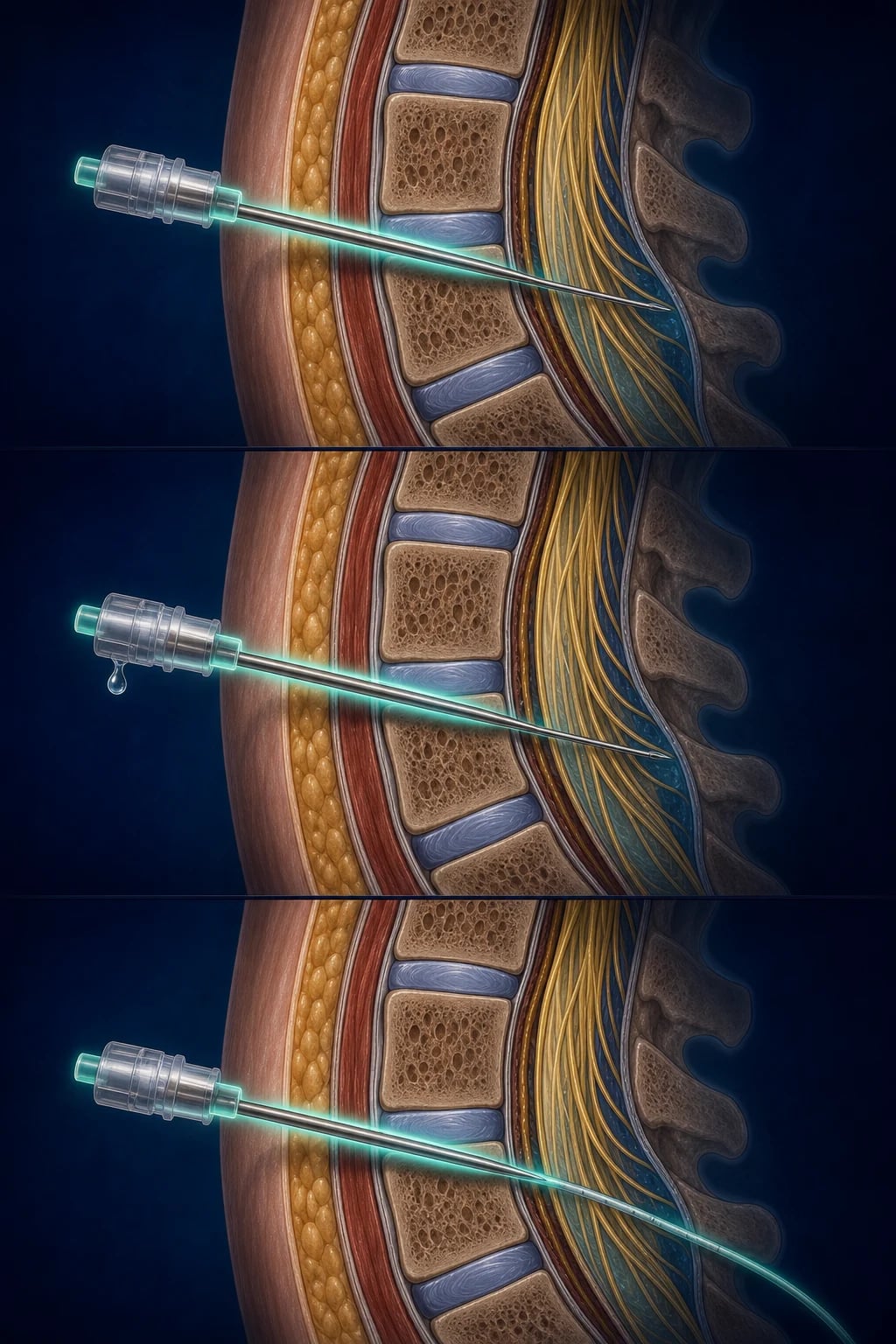
Classification
The DSM-5 classifies specific phobia by a single overarching diagnosis with a subtype specifier that records the cue domain. Five subtypes are recognised, each with characteristic onset, sex ratio, and (for BII) a unique physiology.[3][4]

Animal
Spiders, snakes, dogs
- Onset in early childhood (mean 7–9 years)
- Strong female predominance; highly prepared-evolutionary cue
- Robust response to in-vivo exposure; one-session often curative
Natural environment
Heights, storms, water, dark
- Childhood onset; acrophobia most common
- May persist into adulthood if untreated
- Virtual-reality exposure validated for acrophobia
Blood-injection-injury
Needles, blood, dental, medical
- UNIQUE biphasic response: brief sympathetic then vagal overdominance
- Bradycardia + hypotension + vasovagal syncope (Bezold-Jarisch reflex)
- ~64% heritable; treatment of choice is APPLIED TENSION, not relaxation
Situational
Flying, lifts, enclosed spaces, driving
- Later onset (late adolescence/early adulthood); claustrophobia commonest
- Cognitive therapy adds most value (catastrophic beliefs about entrapment)
- Virtual-reality exposure validated for flying phobia
Other
Claustrophobia, vomiting, loud sounds
- Emetophobia (vomiting) can cause severe food restriction and weight loss
- Choking phobia may mimic eating disorders — distinguish by the cue
- Treated with exposure adapted to the cue
Epidemiology & Risk Factors
World Mental Health (WMH) and National Comorbidity Survey (NCS-R) data anchor the prevalence figures used here. Specific phobia is the most common anxiety disorder in every survey conducted worldwide — its prevalence in adolescents and young adults is around 16 percent, and rises further when the recall window is extended (lifetime around 7 to 12 percent, with higher figures in some community samples). Agoraphobia without panic disorder is estimated at roughly 0.8 to 1.7 percent of the population at any time. About one in five people with a specific phobia across the lifetime meet criteria for a second anxiety or depressive disorder, illustrating how comorbidity accumulates when phobias are not treated.[1][3]
Phobic disorders are among the most prevalent of all mental disorders, yet are markedly under-presented to services because avoidance substitutes for treatment.[1][3]
The risk factors cluster into four groups. Temperamental factors are behavioural inhibition and neuroticism in childhood. Environmental factors are a conditioned traumatic exposure (a dog bite, a near-drowning, a painful venepuncture, a frightening flight), and observational or informational learning — a parent who models fear of spiders, or warnings about heights. Genetic factors are strongest for BII phobia (heritability around 64 percent with strong familial aggregation) but contribute modestly to all subtypes. Evolutionary preparedness (Seligman) explains why certain cues — snakes, spiders, heights, enclosed spaces, blood — are vastly over-represented as phobic stimuli relative to genuinely dangerous modern objects (guns, knives, electrical sockets): the human fear circuit is phylogenetically prepared to associate threat with cues that were dangerous to ancestral hominids.[3][4]
Comorbidity is the rule rather than the exception. Other anxiety disorders (especially social anxiety and panic disorder), major depression, and alcohol/substance use (self-medication to blunt the cue) commonly co-occur. Agoraphobia historically travelled with panic disorder in DSM-IV, but DSM-5 separated the two; nonetheless they remain highly comorbid, and untreated agoraphobia is a frequent long-term sequela of untreated panic disorder.[1][3]
Pathophysiology
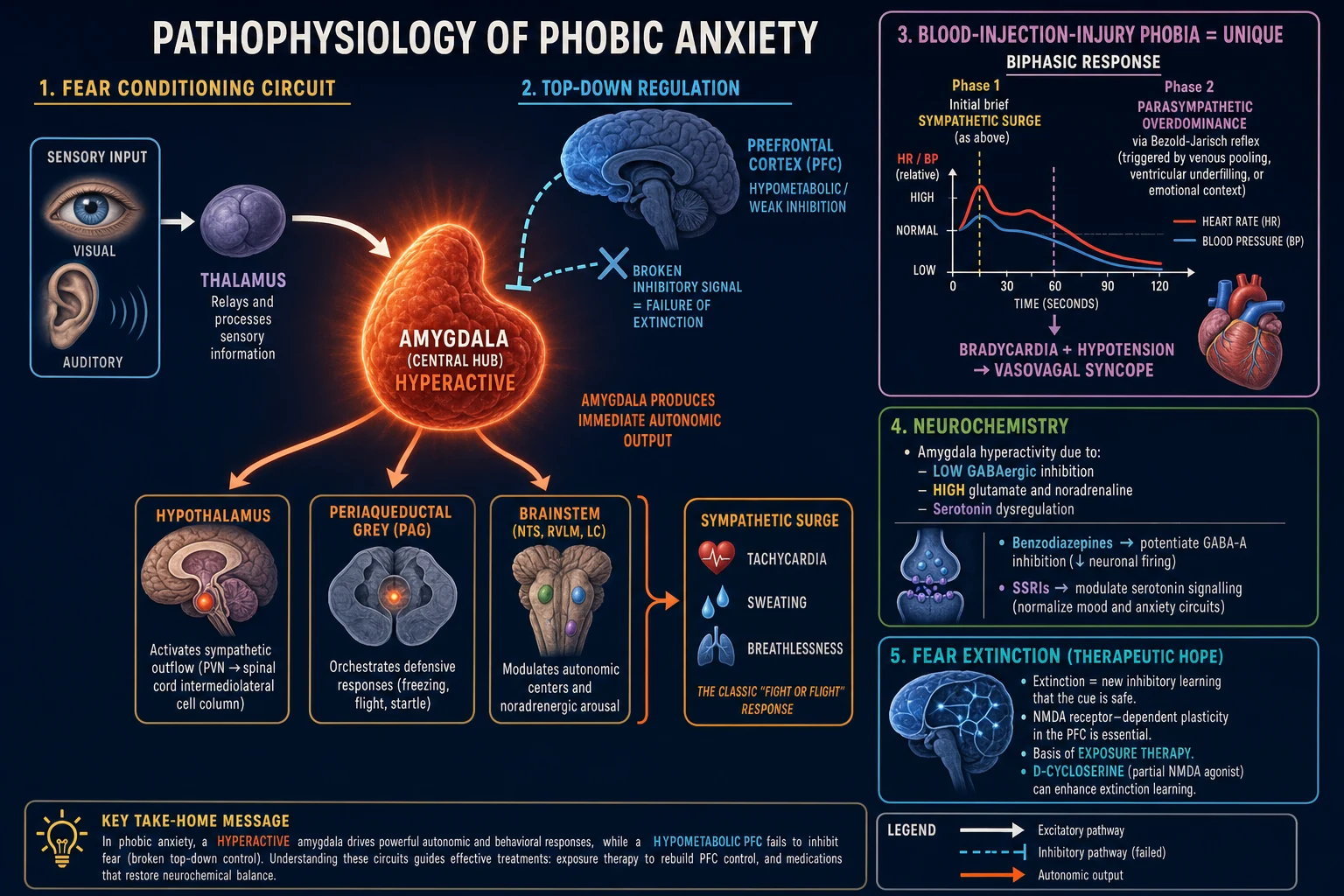
Phobic fear is a conditioned amygdala response that the prefrontal cortex has failed to extinguish. The functional anatomy has two arms. The fast, subcortical arm runs sensory input from the thalamus directly to the basolateral and central nuclei of the amygdala, which then project to the hypothalamus, the periaqueductal grey, and the brainstem to produce the autonomic and behavioural fear response (sympathetic surge, freezing, escape). In phobic individuals this amygdala response is hyperactive: functional imaging shows exaggerated amygdala activation to the cue, even to masked or subliminal cue presentations. The slow, regulatory arm runs from the ventromedial prefrontal cortex (vmPFC) back to the amygdala, where it normally provides top-down inhibition that recalibrates the fear response when no real danger is present. In phobic individuals this vmPFC activity is hypometabolic, so the inhibitory "all-clear" signal fails to land, and extinction does not occur.[3][4]
The fear network in detail
The "fear network" is a distributed circuit that includes the amygdala (basolateral and central nuclei), the bed nucleus of the stria terminalis (sustained anxiety), the hippocampus (context), the ventromedial prefrontal cortex (extinction), the anterior cingulate cortex (anticipation), and the insular cortex (interoception). In specific phobia the amygdala hyper-reactivity is cue-locked — it triggers reliably to the spider, the lift door, the needle — and the insular cortex misreads internal bodily signals (palpitations, breathlessness) as catastrophic. The vmPFC's diminished output means the amygdala is never effectively "told" that the cue was harmless; the hippocampus keeps the contextual memory alive; and the bed nucleus of the stria terminalis sustains a low-grade anticipatory anxiety between exposures.[3]
Neurochemistry of fear acquisition and extinction
Acquisition (the original conditioning that produced the phobia) depends on glutamate acting at NMDA and AMPA receptors in the basolateral amygdala. Noradrenaline from the locus coeruleus amplifies the consolidation of the fear memory — this is why emotionally charged events are remembered more vividly. Endogenous cortisol and corticotropin-releasing hormone modulate consolidation and retrieval in a U-shaped curve. Extinction (the new safety learning that exposure therapy produces) is again NMDA-receptor-dependent but occurs in the infralimbic prefrontal cortex (in rodents) and its human homologues in the ventromedial prefrontal cortex, which then inhibits the central nucleus of the amygdala. GABA-A receptor activation (as by benzodiazepines) interferes with this new learning by suppressing the amygdala activation that extinction needs to encode. SSRIs reduce amygdala reactivity over weeks by increasing serotonergic tone, but they do not erase the conditioned memory — exposure does.[3][4]
Genetic and temperamental contributions
Twin studies give heritability estimates of around 30 to 40 percent for animal and situational phobias and around 60 to 64 percent for blood-injection-injury phobia — making BII one of the most heritable psychiatric phenotypes. Molecular genetic work has identified plausible associations in CRHR1 (corticotropin-releasing hormone receptor 1) and GABA-A receptor subunit genes but no large-effect single-gene finding. The strongest temperamental predictor is behavioural inhibition (Kagan): the inhibited infant who withdraws from novelty at 4 months is at increased risk of social anxiety and multiple specific phobias by adolescence. Neuroticism in childhood is a weaker but more general predictor of all anxiety disorders.[3][4]
Why BII phobia is unique — the Bezold-Jarisch reflex
Clinical Presentation
A phobic patient presents with immediate, intense anxiety on exposure to the cue, with full recognition (in adults) that the fear is out of proportion. The autonomic symptom cluster is sympathetic: palpitations, sweating, tremor, dyspnoea, a choking sensation, chest tightness, abdominal distress, derealisation or depersonalisation, paraesthesia, hot or cold flushes, and a fear of losing control, going mad, dying, or fainting. Three behavioural signatures complete the picture: anticipatory anxiety before the encounter, avoidance of the cue, and endurance with intense dread when avoidance is impossible. Insight is characteristically intact — the patient knows the spider cannot harm them but cannot suppress the alarm.[1][3]
The BII presentation is unmistakable and must be recognised at first contact: on venepuncture, blood draw, dental work, or medical procedures the patient reports light-headedness, nausea, pallor, visual disturbance, a sinking feeling, and then loses consciousness. The pulse, instead of racing, slows (often below 40/min) and the blood pressure falls. The faint is genuine vasovagal syncope, and patients can injure themselves falling. A positive family history is common (mother, aunt, sibling).[5][6]
Agoraphobia presents not as a single cue but as a spreading geography of avoidance. The patient describes being unable to use buses, trains or the underground; unable to queue at the supermarket; unable to sit in the middle of a cinema row; unable to drive on motorways or over bridges; and ultimately unable to leave the house unaccompanied. They may report needing a "safe person" to accompany them, avoiding situations where they cannot leave at will, or engaging in subtle safety behaviours (carrying water, an anxiolytic, a phone). When forced into the situation they experience the full autonomic panic-like cluster described above. In its severe form the patient becomes housebound, with secondary deconditioning, occupational loss, social isolation, and frequently comorbid depression.[1][3]
[1]Differential Diagnosis
The differential turns on one question: is the fear cue-specific and primary, or is it driven by an underlying disorder? Several disorders produce avoidance that mimics a specific phobia but has a different engine.[1][3]
Social anxiety disorder
Engine: fear of negative evaluation
- Fear is of being scrutinised/judged, not of the situation itself
- Avoids public speaking, eating in public, using public toilets
- Treat with CBT (exposure + cognitive) ± SSRI
Panic disorder
Engine: recurrent uncued panic attacks
- Attacks are unexpected and out-of-the-blue, not cue-specific
- Anticipatory anxiety is about the next attack, not a cue
- Agoraphobia may be comorbid but uncued attacks point to panic disorder
Obsessive-compulsive disorder
Engine: ego-dystonic obsessions
- Avoidance is in the service of compulsions (e.g. avoids knives due to harm obsessions)
- Fear is recognised as irrational/ego-dystonic and driven by intrusive thoughts
- Treat with ERP + high-dose SSRI
Illness anxiety disorder
Engine: fear of having a disease
- Fear is of having/acquiring a serious illness, not of a discrete cue
- Health-avoidant or health-seeking behaviours; somatic preoccupation
- Distinguish from medical/dental phobia (which is cue-specific)
PTSD
Engine: an identifiable index trauma
- Cue is trauma-related; intrusions, flashbacks, hyperarousal accompany avoidance
- Onset is clearly tied to a life-threatening event
- Treat with trauma-focused CBT (EMDR/trauma-focused CBT)
Separation anxiety disorder
Engine: fear of separation from attachment figures
- Avoidance concerns separation from home or major attachment figures
- Commonest in children; may persist into adulthood
- Cue is separation, not a discrete object/situation
Agoraphobia vs panic disorder — the most-tested distinction
Because DSM-5 uncoupled the two, the distinction is now a standalone clinical question. Use the onset, trigger, and feared outcome to separate them.[1][3]
Panic disorder
Engine: recurrent uncued panic
- Attacks are unexpected / out-of-the-blue (uncued)
- Fear is of the ATTACK itself recurring; catastrophic misinterpretation of bodily sensations
- Patient fears dying, going mad, or losing control during the attack
- Agoraphobia may be present (comorbid) but the engine is the panic
- Treat with CBT (including interoceptive exposure) + SSRI; high-dose SSRI first-line
Agoraphobia
Engine: fear of entrapment or helpless escape
- Fear is of SITUATIONS where escape would be hard or help unavailable
- Often cued (anticipated) but may develop after a panic attack — the entrapment persists even between attacks
- Patient fears collapse, incontinence, fainting, embarrassment in the situation — not the panic per se
- Many patients have NO prior panic attacks (DSM-5 recognises agoraphobia without panic)
- Treat with CBT + broad in-vivo exposure; SSRI often added
Avoidant personality disorder and the personality/anxiety boundary
Avoidant personality disorder (AvPD) shares with social anxiety disorder the central feature of avoidance due to fear of criticism and rejection, but AvPD is pervasive across many life domains (work, relationships, new situations generally) rather than limited to social-evaluative contexts, and the personality traits are enduring and ego-syntonic. Specific phobia avoidance is circumscribed — the patient is otherwise confident and functioning outside the cue. AvPD rarely responds to exposure therapy for the simple reason that there is no single cue to expose; treatment is longer-term psychotherapy (CBT, schema therapy) sometimes with low-dose SSRI for the social component.[3]
Medical mimics must be excluded when autonomic symptoms dominate and the cue is unclear: hyperthyroidism (restlessness, palpitations, tremor, weight loss — check TSH), phaeochromocytoma (paroxysmal hypertension, headache, sweating — check plasma or 24-hour urine metanephrines), hypoglycaemia (sweating, tremor, cognitive change — check capillary glucose during an episode), cardiac arrhythmia (palpitations, presyncope — ECG), vestibular disorder (dizziness in specific positions), caffeine or stimulant intoxication, and benzodiazepine or alcohol withdrawal. In BII phobia the bradycardia/syncope must be distinguished from cardiogenic syncope (cardiomyopathy, conduction disease — ECG and echocardiogram if red flags) and postural orthostatic tachycardia syndrome.[3]
Clinical & Bedside Assessment
The psychiatric interview establishes the diagnosis and excludes mimics. Elicit, in order: the nature of the fear and the precise cue(s); the onset (was there a conditioning event — a bite, a near-drowning, a frightening procedure?); the tempo and duration (must be 6 months or more); the avoidance behaviours and safety behaviours; the degree of impairment (work, social, travel, healthcare — is the patient housebound, missing blood tests, declining dental care?); insight (intact in phobias, distinguishing from psychosis); and family history (strongly positive in BII phobia). Explicitly assess comorbid depression, alcohol/substance use, and suicide risk.[1][3]
The mental state examination shows a patient who is anxious only in relation to the cue (or in anticipation of it), with intact reality testing and full insight. Thought content centres on the feared outcome; there are no delusions, no thought insertion, no thought broadcast. Perception is intact (no hallucinations). Cognition is intact. This intact insight is itself a diagnostic feature — it distinguishes a phobia from a delusional disorder. [1]
Validated instruments quantify severity and track treatment response. The Fear Survey Schedule–III (FSS-III) is a broad self-report covering many cues; the Marks–Sheehan Phobia Scale and the Phobia Scale are shorter. For agoraphobia specifically, the Mobility Inventory for Agoraphobia (MI) measures avoidance alone and when accompanied, and the Agoraphobic Cognitions Questionnaire (ACQ) captures catastrophic agoraphobic thoughts. These are research-and-tracking tools; the diagnosis is clinical.[1]
A focused functional assessment documents the patient's avoidance geography: which situations are avoided, which are endured with dread, which require a companion, what safety behaviours are used, and whether the patient is housebound. This map becomes the exposure hierarchy in treatment. [1]
Investigations
There is no laboratory or imaging test for a phobia — the diagnosis is entirely clinical, made against DSM-5 (or ICD-11) criteria. Investigations are reserved for excluding medical mimics when the history is atypical or autonomic symptoms dominate without a clear cue.[3]
| Test | When to order | What it excludes |
|---|---|---|
| ECG | Chest pain, palpitations, presyncope/syncope, older age | Arrhythmia, ischaemia, long-QT, cardiogenic syncope |
| TSH, free T4 | Weight loss, heat intolerance, tremor, goitre | Hyperthyroidism |
| Plasma or 24-h urine metanephrines | Paroxysmal hypertension, headache, sweating triplet | Phaeochromocytoma |
| Capillary glucose during episode | Sweating, tremor, cognitive change, hunger | Hypoglycaemia |
| Caffeine/alcohol/drug screen | Atypical anxiety, withdrawal pattern | Intoxication, withdrawal |
| FBC, U&E, LFT, calcium | General medical screen before psychotropics | Anaemia, electrolyte disturbance |
For a classical BII phobia with cue-specific bradycardia/syncope and a positive family history, no investigations beyond an ECG (to exclude cardiogenic syncope) are required. Severity is measured with the validated scales above for baseline and treatment-response tracking. Neuroimaging showing amygdala hyperactivation and prefrontal hypoactivation is a research finding and is not part of clinical practice. [1]
Self-test: which single test is most important in an older patient with new-onset 'fear of lifts' and episodes of collapse?
An ECG. New-onset situational collapse in an older adult is cardiogenic syncope (arrhythmia, aortic stenosis, conduction disease) until proven otherwise — a phobia is a diagnosis of exclusion here. The bradycardia of BII phobia is cue-specific to blood/needles and rarely begins de novo in old age.
Management — Resuscitation
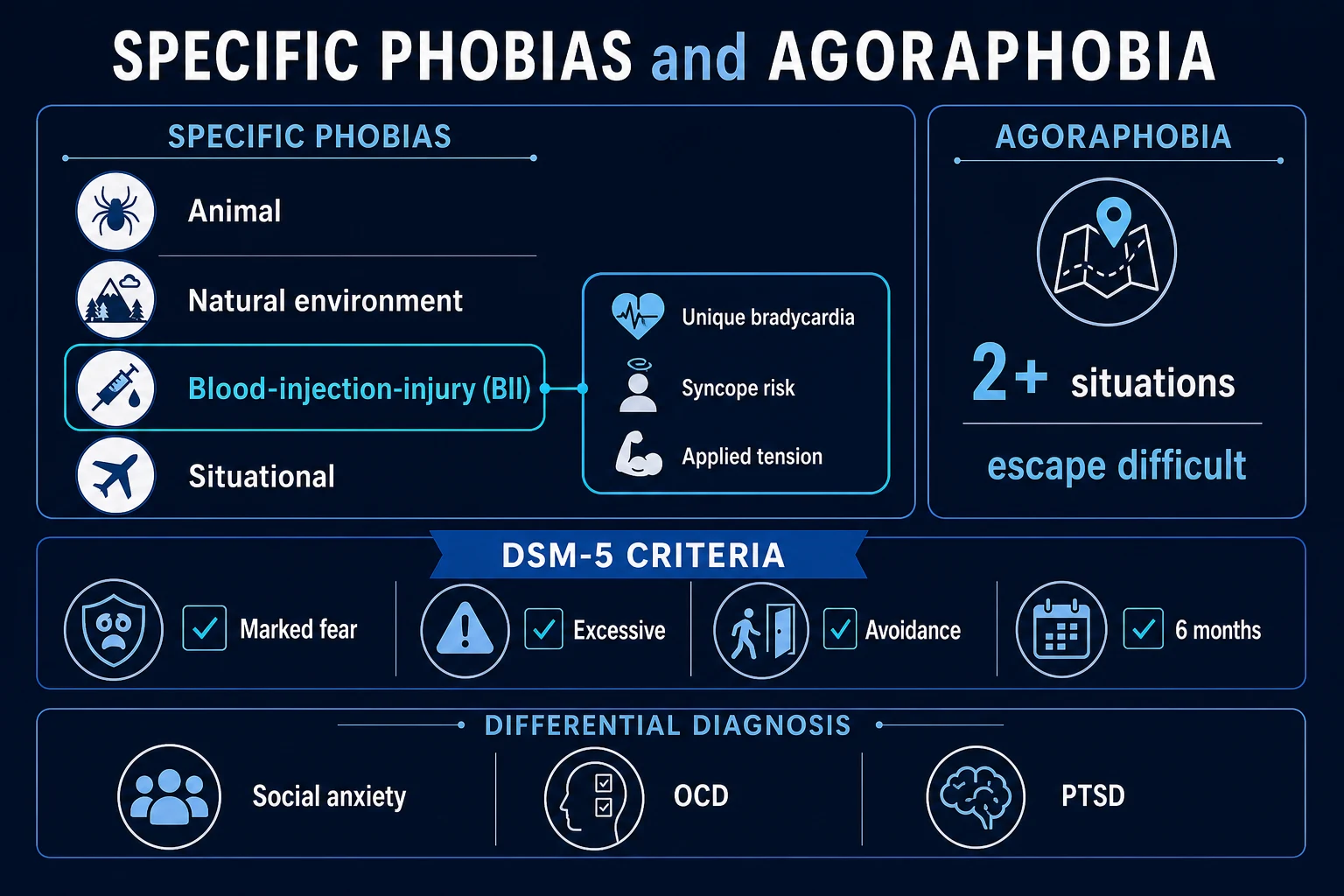
Phobic disorders are not usually medical emergencies, but two scenarios demand immediate action. The first is BII-phobia vasovagal syncope: the patient collapses during venepuncture, dental work, or a medical procedure. Management is to lie the patient supine with the legs elevated, monitor heart rate and blood pressure, and await spontaneous recovery (the episode is self-limiting). Anticipate it: anyone with a known BII history should have procedures performed recumbent from the outset. The fall itself can cause injury (laceration, fracture, head strike).[5][6]
The second is severe acute panic-like distress in the cue situation (a dental chair, an MRI scanner, a flight). Stop the procedure, give calm reassurance, reposition, and teach paced breathing. A short-acting benzodiazepine (for example lorazepam 0.5 to 1 mg oral or sublingual) is reserved for extreme distress that cannot be managed behaviourally — but it should be a last resort because it impairs extinction learning and risks dependence. For essential dental or medical procedures in a needle-phobic or claustrophobic patient, nitrous oxide (relative analgesia) or, rarely, conscious sedation can bridge to definitive behavioural treatment.[1]
Always assess and address suicide risk when comorbid depression is present; phobic avoidance and depression together carry a non-trivial suicide risk that must not be missed behind the presenting complaint. [1]
Management — Definitive & Stepwise
The treatment of choice — first-line, evidence-based, and frequently curative — is cognitive behavioural therapy with exposure therapy. Pharmacotherapy has a narrow and clearly defined role. The algorithm below applies to a patient with a specific phobia; agoraphobia follows the same exposure principle but adds breadth (multiple cues) and an SSRI more often.[2][3][4]
Step 1 — Psychoeducation and engagement
Explain that the phobia is a conditioned fear response, that avoidance maintains it (because every avoidance reinforces the belief that the cue is dangerous), and that exposure re-teaches the brain that the cue is safe. Frame exposure as the active ingredient — the patient must encounter the cue, in safety, repeatedly, until the alarm extinguishes. Obtain explicit informed consent for exposure (it will feel uncomfortable by design). [1]
Step 2 — Build an exposure hierarchy
Construct a ranked list of cue-related situations from least to most anxiety-provoking (a 0–100 "subjective units of distress" scale). For a spider phobia, the hierarchy might run: say the word "spider"; look at a cartoon spider; a photograph; a video; a spider in a jar across the room; a spider in a jar on the lap; touching the jar; a loose spider in the room. The hierarchy becomes the roadmap. [1]
Step 3 — Graded in-vivo exposure with cognitive restructuring
Begin with a low-hierarchy item, remain with it until anxiety falls by at least half (habituation), and only then move up. Each exposure is repeated until it elicits little anxiety. Pair exposure with cognitive restructuring of the catastrophic belief ("the lift will fall", "the spider is lethal", "I will be trapped forever") — this is most valuable in claustrophobia and situational phobias. Homework between sessions is essential: daily self-directed exposure drives consolidation. Virtual-reality exposure is validated for flying phobia and acrophobia where in-vivo exposure is impractical. A single 2–3 hour intensive (one-session) exposure is highly effective and often curative for a circumscribed animal or environmental phobia.[4]
Step 4 — Flooding (selected cases)
Flooding — intense, prolonged exposure to the most feared item from the outset — is effective but more distressing, carries higher dropout, and is now used selectively. It works by the same extinction mechanism but front-loads the discomfort. [1]
Step 5 — Blood-injection-injury: applied tension (special protocol)
For BII phobia the standard relaxation component is contraindicated (it lowers blood pressure and precipitates the faint). Instead teach the applied tension technique (Öst): the patient tenses the muscles of the arms, legs and torso for about 20 seconds, releases briefly, and repeats the cycle five times — this raises blood pressure mechanically and aborts the vasovagal syncope. Delivered over five sessions, applied tension produces clinical improvement in around 90 percent of patients and is the treatment of choice for BII phobia.[5][6]
Step 6 — Pharmacotherapy (narrow indications)
Drugs have a limited role in isolated specific phobia. SSRIs (sertraline, paroxetine, escitalopram) are reserved for severe or disabling phobia, for agoraphobia, or for comorbid depression/anxiety and act over 4 to 6 weeks. Beta-blockers (propranolol 10 to 40 mg before exposure) help only the peripheral somatic symptoms of performance-type anxiety. Benzodiazepines (alprazolam, lorazepam, diazepam) should be used only as short-term rescue for acute situational use, never routinely, because they blunt the amygdala activation that exposure needs and carry dependence risk. D-cycloserine, a partial NMDA agonist given as a single dose immediately before exposure sessions, has been studied to accelerate extinction consolidation, with mixed evidence and no routine clinical role.[2][3][4]
Step 7 — Agoraphobia: comprehensive CBT plus an SSRI
Agoraphobia needs broader exposure across all the avoided situations, often delivered intensively or home-based, with behavioural experiments out in the real world (the bus, the supermarket, the cinema). A home treatment team or intensive outreach input is appropriate for the housebound. Combine high-intensity CBT with an SSRI (sertraline first-line) when depression is comorbid or exposure alone is insufficient. Relapse prevention plans and booster sessions reduce recurrence.[1][3]
Pharmacotherapy ladder — drug, dose, route, timing
The table below gives explicit doses for the agents with the strongest evidence. Use the smallest effective dose, titrate to response, and review at 4 to 6 weeks.[1][3]
Virtual-reality exposure (VRE) — when and how
Virtual-reality exposure is validated for flying phobia, acrophobia, and claustrophobia where in-vivo exposure is impractical or too costly. The patient wears a headset that simulates the feared environment (a plane cabin, a glass-floored balcony, an MRI bore) and is guided through a hierarchy exactly as in-vivo. Effect sizes are comparable to in-vivo exposure for these specific cues, with the advantage of complete therapist control over the stimulus and the option to conduct sessions in the clinic. VRE is less well validated for animal phobias (where actual animals are readily available) and agoraphobia (where the breadth of feared situations is too large for simulation).[3][4]
Self-help and computerised CBT
NICE step 2 endorses guided self-help based on CBT principles, and computerised CBT (cCBT) programmes such as FearFighter, which deliver exposure-based treatment digitally. Self-help is appropriate for patients with mild-to-moderate specific phobia who are motivated, computer-literate, and have no severe comorbidity. For agoraphobia, self-help is rarely sufficient and should not delay high-intensity CBT or SSRI treatment.[1][3]
Panic control treatment (PCT) for agoraphobia with panic
For patients whose agoraphobia is driven by recurrent panic (the most common pattern historically), panic control treatment combines psychoeducation about panic, breathing retraining, cognitive restructuring of catastrophic beliefs about bodily sensations, interoceptive exposure (deliberately inducing panic-like symptoms via spinning, hyperventilation, or caffeine), and in-vivo exposure to agoraphobic situations. This integrated package outperforms exposure alone for panic-driven agoraphobia and is the model endorsed by Barlow, Craske, and the Craske/Stein Lancet 2016 review.[3]
Relapse prevention and long-term management
After successful exposure, the relapse rate for specific phobia is low (under 15 percent at one year) if the patient continues occasional self-directed exposure. Booster sessions every 6 to 12 months help. Agoraphobia has a higher relapse rate (up to 30 to 40 percent at one year), particularly after SSRI discontinuation — taper slowly over months rather than stopping abruptly, and maintain exposure practice indefinitely.[1][3]
When to refer to specialist mental health
Refer to secondary or tertiary care when (i) step 2/3 treatment has failed after a full course, (ii) the patient is housebound and needs a home treatment team, (iii) there is severe comorbidity (active suicidality, substance dependence, personality disorder), (iv) BII phobia is blocking essential medical or surgical treatment, or (v) the patient is a child or pregnant woman needing specialist psychological formulation. Most routine cases can be managed in primary care with practice nurse or psychological wellbeing practitioner support.[1]
Disposition depends on severity and safety. Most patients are managed as outpatients by primary care or psychological therapy services. Referral to specialist mental health services is indicated for treatment-refractory cases, severe agoraphobia with housebound status, significant comorbidity (depression, substance use), or suicide risk. Admission is rarely needed and reserved for severe comorbid depression with suicide risk or for intensive treatment programmes.
Specific Subtypes & Scenarios [1]
Each subtype has nuances that change the practical management.[4]
Animal phobia
Arachnophobia, ophidiophobia, cynophobia
- Childhood onset; prepared cue; robust exposure response
- One-session intensive (2–3 hr) often curative
- In-vivo exposure with a live specimen is the active ingredient
Natural-environment phobia
Acrophobia, astraphobia, nyctophobia, aquaphobia
- Acrophobia is the commonest; virtual-reality exposure validated
- Storm/water phobias may follow a conditioning event
- Address any trauma component if onset is sudden
Blood-injection-injury
Trypanophobia, haemophobia, dental/odontiatric
- Unique vasovagal physiology; applied tension is first-line
- Highly familial (~64% heritable); screen relatives
- Frequently blocks essential healthcare — prioritise treatment
Situational phobia
Aviophobia, claustrophobia, driving, tunnels, lifts
- Cognitive restructuring adds most value (catastrophic beliefs)
- Virtual-reality exposure validated for flying and heights
- Claustrophobia blocks MRI scans — pre-scan protocol needed
Other / miscellaneous
Emetophobia, phonophobia, choking
- Emetophobia can cause food restriction/weight loss (mimics eating disorder)
- Choking phobia usually follows a choking episode
- Adapt exposure to the cue; address any trauma component
Animal phobia — in detail
Animal phobia is the commonest specific phobia subtype, accounting for roughly half of all cases. Spiders (arachnophobia), snakes (ophidiophobia), dogs (cynophobia), wasps, bees, mice, and rats dominate the list. The mean age of onset is 7 to 9 years, with a strong female predominance (around 4:1). Animal phobias are highly responsive to exposure: a single intensive 2 to 3 hour exposure session with a graded hierarchy ending in handling a live specimen produces durable remission in 60 to 90 percent of motivated patients. The treatment package typically uses a spider or snake in progressive jars/containers, with a SUDs hierarchy (0 to 100) and a planned "final step" of touching or holding. Booster sessions are rarely needed.[3][4]
Natural-environment phobia — in detail
Acrophobia (heights) is the most prevalent natural-environment phobia and the most studied. Virtual-reality exposure is the modality of choice — patients wear a headset that simulates a glass elevator, a high balcony, or a bridge, and progress through a hierarchy of exposure until they can "stand" at considerable heights with low anxiety. Outcomes are durable and comparable to in-vivo. Astraphobia (storms) and aquaphobia (water) are often acquired after a frightening event (a near-drowning, a thunderstorm causing injury) and respond well to graded exposure plus cognitive restructuring of catastrophic beliefs.[3][4]
Blood-injection-injury phobia — in detail
BII phobia deserves special attention because it is the subtype most likely to disrupt essential healthcare. Patients skip vaccinations, refuse blood tests, decline dental treatment, avoid antenatal care, refuse epidural or caesarean anaesthesia, decline chemotherapy or dialysis line insertion, and (famously) do not donate blood. The mechanism — Bezold-Jarisch reflex vagal overdominance producing bradycardia, hypotension and syncope — is unique among the phobias, and so is the treatment: applied tension. The technique is taught in five sessions, with the patient practising the muscle-tensing sequence until it is automatic, then applied during graded exposure to photographs, videos, and finally real venepuncture performed recumbent. Outcomes are excellent (around 90 percent clinically improved).[5][6]
Situational phobia — in detail
Claustrophobia (lifts, MRI scanners, small rooms), aviophobia (flying), and driving phobia are the commonest situational subtypes. Claustrophobia is particularly important to recognise because the MRI scanner is now a routine medical investigation; affected patients may decline investigation or require sedation/general anaesthesia. Pre-scan CBT with in-vivo or VR exposure to a mock scanner (with the bore of a decommissioned machine) is highly effective. Aviophobia is well treated with VRE ("Fear of Flying" programmes). Driving phobia often responds to a hybrid exposure package: graded in-vivo driving plus a cognitive component addressing catastrophic beliefs about losing control.[3][4]
Other / miscellaneous phobias — in detail
Emetophobia (fear of vomiting) can be severe: patients may restrict food to the point of malnutrition and weight loss, avoid hospitals and sick people, and decline pregnancy for fear of morning sickness. Exposure is constructed around progressively more vomit-eliciting stimuli (talking about vomiting, watching videos of people being sick, eating at restaurants where others are eating). Choking phobia follows a choking episode and produces food restriction; exposure progresses from soft foods through mixed textures. Phonophobia (fear of loud sounds) overlaps with PTSD and hyperacusis. All respond to adapted exposure hierarchies.[3][4]
Agoraphobia — integrated overview
Agoraphobia differs from a specific phobia in its breadth and its entrapment cognition. The feared outcome is not the cue itself but the experience of being trapped, helpless, or unable to escape should panic, collapse, loss of bladder or bowel control, or a medical emergency occur. Management therefore requires exposure across the full avoidance geography, with explicit cognitive work on the entrapment beliefs. The course is more chronic and fluctuating than specific phobia, comorbid depression is common, and a housebound patient needs assertive outreach (home treatment team, home-based CBT) rather than clinic-based care.[1][3]
Special populations — paediatric and adolescent considerations
Phobias are the commonest psychiatric diagnosis in childhood, with a 12-month prevalence in adolescents of around 16 percent. Most childhood fears are developmentally appropriate (stranger anxiety around 9 months, animal fears around 2 to 4 years) and resolve spontaneously. Treatment is reserved for fears that are persistent (6+ months), out of proportion, and impairing. The treatment of choice is play-based, parent-assisted CBT, with modelling, storytelling, and graded exposure to the feared object. One-session intensive exposure is effective for animal phobias even in 6 to 10 year olds. Benzodiazepines should be avoided (paradoxical disinhibition, cognitive effects, no role in childhood anxiety).[3][4]
Special populations — pregnancy and lactation
CBT and exposure are first-line and risk-free in pregnancy and lactation — no fetal or neonatal exposure. If medication is essential (severe comorbid depression, severe panic-driven agoraphobia), sertraline is the SSRI with the best-established safety record in pregnancy (extensive data, low cardiac-teratogenicity signal). Paroxetine is avoided (cardiac malformations, brief neonatal adaptation syndrome). Benzodiazepines are avoided (neonatal withdrawal, "floppy baby" syndrome, cleft palate signal with first-trimester use). Applied tension for BII phobia is critical: many needle-phobic pregnant women refuse antenatal blood tests, epidural analgesia, or elective caesarean section unless the technique is taught in advance.[1][3]
Special populations — older adults
Late-onset phobia is uncommon but important: a situational phobia (lifts, open spaces, driving) may follow a fall, a medical event, or the death of a spouse. Late-onset presentation should prompt exclusion of cardiogenic syncope, vestibular disorder, cognitive impairment, and medication effects before attributing to phobia. Exposure therapy is effective but may need to be adapted for mobility (use chairs for VR; conduct sessions in clinic rather than in-vivo at heights); cognitive impairment may require more concrete cue hierarchies. Benzodiazepines should be avoided (fall risk, cognitive impairment). The diagnosis is often missed because older adults present with somatisation rather than reporting fear.[3]
Special populations — chronic disease and immunocompromised
Medical/needle phobia is disproportionately common in patients who need repeated procedures (haemodialysis, chemotherapy, cystic fibrosis, anticoagulation, insulin pumps) and in patients with chronic disease (HIV, hepatitis C — where blood tests are frequent). The cost of untreated phobia is delayed treatment, missed monitoring, and worse outcomes. BII applied tension + graded exposure should be offered proactively before essential procedures, with the procedural team briefed and adapted (recumbent phlebotomy, topical anaesthetic, smallest-gauge needle, distraction). Multidisciplinary planning is essential.[3][4]
Special populations — intellectual disability
Specific phobias are common in people with intellectual disability (ID), particularly animal and BII subtypes. Assessment relies on behavioural observation (tantrums, avoidance, aggression at the cue) rather than self-report. Exposure therapy is effective when adapted with concrete rewards, simplified hierarchies, and caregiver involvement. Pharmacotherapy is rarely needed and may worsen behaviour.[3]
Special populations — perinatal and postnatal
The perinatal period is a high-risk time for onset or worsening of specific phobia, particularly emetophobia (fear of morning sickness), BII phobia (blood tests, epidural), and tokophobia (fear of childbirth). Untreated BII phobia can lead to avoidance of essential antenatal care; untreated tokophobia can lead to avoidance of pregnancy or request for caesarean section without medical indication. CBT during pregnancy is first-line.[1][3]
Special Populations
Cultural formulation matters: taijin kyofusho (Japan, Korea) is a culture-bound variant in which the fear is of causing others discomfort by one's appearance or smell, and overlaps substantially with social anxiety disorder. Culture-bound fears (such as koro, or fear of genital retraction) are interpreted within their cultural frame. Always apply the DSM-5 Cultural Formulation Interview when the presentation sits outside the usual Western pattern.[3]
Children
Play-based, parent-assisted
- Developmentally appropriate fears are common — treat only if persistent (6 mo+) and impairing
- Use play-based, parent-assisted CBT; one-session exposure effective for animal phobias
- Avoid benzodiazepines (paradoxical disinhibition, cognitive effects)
Pregnancy & lactation
Behavioural treatment preferred
- CBT/exposure is first-line (no fetal risk)
- If medication needed, sertraline is the SSRI with the lowest fetal-risk profile
- Avoid benzodiazepines (neonatal withdrawal, 'floppy baby' syndrome)
- Applied tension is critical to enable antenatal blood tests, epidural and caesarean anaesthesia
Older adults
Adapt for comorbidity
- Late-onset situational phobia often follows a fall or medical event
- Exclude cardiogenic syncope (ECG) before assuming BII phobia
- Adapt exposure for mobility and sensory impairment
- Avoid benzodiazepines (fall and cognitive risk)
Chronic disease / immunocompromised
Prioritise BII treatment
- Medical/needle phobia delays chemotherapy, dialysis, vaccination, blood monitoring
- Apply tension + graded exposure before essential procedures wherever possible
- Multidisciplinary planning with the procedural team
Complications & Pitfalls
The complications of phobic disorders are largely the consequences of avoidance. Functional impairment restricts work, travel, social life, and relationships. Medical and dental phobia causes delayed diagnosis and untreated disease — a patient who will not see a dentist loses teeth; a patient who will not have blood tests misses an iron-deficiency anaemia or a rising PSA; a patient who will not have an epidural endures avoidable labour pain. Comorbid depression, substance use (alcohol to blunt the cue before a flight, before a blood test), and suicidality are the most serious long-term consequences of untreated severe phobia or agoraphobia. BII syncope can cause fall-related injury (laceration, fracture, head strike). Untreated agoraphobia produces deconditioning, social isolation, and occupational loss, and the housebound patient loses independent living.[1][3]
The pitfalls are mostly iatrogenic. Prescribing benzodiazepines routinely for situational anxiety creates dependence and undermines the exposure that would cure the patient. Using relaxation (rather than applied tension) in BII phobia precipitates fainting. Offering flooding to an unprepared or low-motivation patient causes dropout and erodes the therapeutic alliance. Therapist drift — substituting supportive talking for the prescribed exposure because exposure is uncomfortable to watch — is a common reason for treatment failure. Misdiagnosing OCD or PTSD avoidance as a "specific phobia" sentences the patient to the wrong (ineffective) treatment. Failing to exclude cardiogenic syncope in an older patient with new-onset collapse is a serious medical miss.[4]
Prognosis & Disposition
The prognosis of specific phobia treated with exposure is excellent: acute response rates of 60 to 90 percent, with gains largely maintained at one year. A single circumscribed phobia in a motivated adult with intact insight and adherence to exposure homework can be cured — often in one to a handful of sessions. Childhood-onset animal and environmental phobias often resolve spontaneously as the child develops, but persist into adulthood if impairing and untreated.[2][4]
Agoraphobia follows a more chronic, fluctuating course. Response to CBT plus exposure is good, but relapse is common, particularly after medication cessation. Favourable prognostic factors are a single phobia, high motivation, good adherence to exposure homework, intact insight, and treated comorbid depression. Poor prognostic factors are severe avoidance or housebound status, comorbid personality disorder, substance use, and untreated depression.[1][3]
Disposition depends on severity and safety. Most patients are managed as outpatients by primary care or psychological therapy services. Referral to specialist mental health services is indicated for treatment-refractory cases, severe agoraphobia with housebound status, significant comorbidity (depression, substance use), or suicide risk. Admission is rarely needed and reserved for severe comorbid depression with suicide risk or for intensive treatment programmes. [1]
Evidence, Guidelines & Regional Differences
The evidence base for phobic disorders is mature and unusually consistent.[1][2][3][4]
[1]The Craske and Stein Lancet (2016) review establishes CBT (particularly exposure) as the first-line treatment across the anxiety disorders, with SSRIs and SNRIs as effective pharmacotherapy and their combination potentially superior to either alone. The Katzman Canadian guidelines (2014) place CBT/exposure first-line and reserve pharmacotherapy for severe agoraphobia or comorbid illness. The van Dis JAMA Psychiatry meta-analysis (2020) shows that the benefit of CBT for anxiety-related disorders is largely maintained at 12 months; for specific phobia the acute effect is large (Hedges g 0.49 to 0.72) but long-term data beyond one year are sparse. The Choy et al Clinical Psychology Review (2007) review confirms in-vivo exposure as the most effective modality for most subtypes, virtual reality for flying and acrophobia, cognitive therapy for claustrophobia, and the unique responsiveness of BII phobia to applied tension. The Öst applied-tension trials (1989, 1991) establish applied tension as the treatment of choice for blood phobia, with around 90 percent of patients clinically improved after five sessions.
Controversies and active research. D-cycloserine augmentation of exposure shows mixed evidence and no routine clinical role. One-session versus multi-session exposure formats are debated, with one-session favoured for circumscribed animal/environmental phobias and multi-session formats favoured for agoraphobia and complex cases. The place of benzodiazepines continues to narrow as their extinction-impairing effects are better understood. Telehealth and digital CBT are expanding access, particularly for housebound agoraphobic patients. [1]
Exam Pearls
The 5 DSM-5 specific phobia subtypes
ABSON
Spiders, snakes, dogs — childhood onset
Needles, blood, dental — UNIQUE: vasovagal syncope; applied tension
Flying, lifts, enclosed spaces, driving
Claustrophobia, vomiting/emetophobia, loud sounds
Heights, storms, water, dark
The high-yield one-liners examiners reward: [1]
- Specific phobia: marked persistent excessive fear of a specific object/situation, immediate anxiety, recognition of excess (adults), 6 months or more, impairment, not better explained.
- BII phobia is UNIQUE: vasovagal bradycardia + syncope (not tachycardia); treated with applied tension (muscle-clenching to raise blood pressure); around 64 percent heritable.
- Agoraphobia: fear of 2 or more of 5 situations (transport, open, enclosed, queues/crowds, outside alone); diagnosable with or without panic disorder.
- Treatment of CHOICE for specific phobia = CBT with exposure (graded / systematic desensitisation); often curative; single-session intensive exposure can cure a simple phobia.
- Medication rarely needed for specific phobia; benzodiazepines impair exposure learning; beta-blockers for performance-only symptoms; SSRIs only for severe/agoraphobic/comorbid.
- Prepared learning explains why snakes, spiders, heights and blood are the commonest phobic cues.
- Flooding = intense immediate exposure; effective but distressing, higher dropout.
- Fear extinction is NEW LEARNING (NMDA-dependent), not memory erasure — the basis of exposure and of D-cycloserine augmentation.
- Avoid the trap of diagnosing a phobia when fear is better explained by OCD, PTSD, social anxiety, illness anxiety, or separation anxiety.
- Most phobias onset in childhood; treat in children only if persistent and impairing. [1]
Exam application bank (NEET-PG / INICET)
One-line answer
Specific phobias are marked, persistent, excessive fear of a circumscribed object or situation, provoking immediate anxiety, recognised as out of proportion, leading to avoidance, lasting 6 months or more, with impairment. DSM-5 subtypes: animal, natural environment, blood-injection-injury (BII — UNIQUE: vasovagal bradycardia/syncope, not tachycardia), situational, other. Agoraphobia is marked fear of 2 or more of 5 situations where escape might be difficult or help unavailable. Treatment of choice and often curative: CBT with exposure therapy (graded / systematic desensitisation); applied tension for BII phobia; SSRIs reserved for severe/agoraphobic or comorbid cases.
Worked stems (answer without another resource)
Stem 1 — Classic presentation. Map symptoms to mechanism; name the first investigation and first treatment step with dose/route if drug therapy is standard. [1]
Stem 2 — Unstable / complicated. List red flags that force immediate resuscitation, theatre, ICU, antidote, or reperfusion — and what you do in the first 15 minutes. [1]
Stem 3 — Atypical group. Elderly, pregnancy, child, or immunocompromised: how presentation and thresholds change. [1]
Stem 4 — Differential trap. Name the three closest mimics and one discriminator for each. [1]
Stem 5 — Disposition. Who goes home with safety-netting, who is admitted, who needs HDU/ICU/theatre, and what follow-up is mandatory. [1]
Rapid viva checklist
- Definition + classification
- Pathophysiology chain
- Bedside signs / criteria
- Score with exact components (if any)
- Emergency bundle
- Definitive therapy with doses
- Complications of disease and of treatment
- Special populations
- Guideline/trial name if classic
- Three exam traps
Coverage self-check
If you cannot answer any stem above from this page alone, re-read the matching section — the page is intended to be self-sufficient for final-prof and NEET-PG/INICET questions on Specific Phobias & Agoraphobia.
[1] [1]References
- [1]Katzman MA, Bleau P, Blier P, et al. Canadian clinical practice guidelines for the management of anxiety, posttraumatic stress and obsessive-compulsive disorders BMC Psychiatry, 2014.PMID 25081580
- [2]van Dis EAM, van Veen SC, Hagenaars MA, et al. Long-term Outcomes of Cognitive Behavioral Therapy for Anxiety-Related Disorders: A Systematic Review and Meta-analysis JAMA Psychiatry, 2020.PMID 31758858
- [3]Craske MG, Stein MB. Anxiety Lancet, 2016.PMID 27349358
- [4]Choy Y, Fyer AJ, Lipsitz JD. Treatment of specific phobia in adults Clin Psychol Rev, 2007.PMID 17112646
- [5]Ost LG, Fellenius J, Sterner U. Applied tension, exposure in vivo, and tension-only in the treatment of blood phobia Behav Res Ther, 1991.PMID 1684704
- [6]Ost LG, Sterner U, Fellenius J. Applied tension, applied relaxation, and the combination in the treatment of blood phobia Behav Res Ther, 1989.PMID 2564772