Respiratory · Respiratory
Asthma
Asthma is a chronic inflammatory airway disease with variable and reversible airflow obstruction, bronchial hyperresponsiveness, and airway inflammation. GINA 2022-2024: low-dose inhaled corticosteroid for all severities (SABA-only is unsafe), ICS-formoterol is the preferred reliever (MART/SMART). Acute severe: oxygen to SpO2 93-95 percent, nebulised salbutamol 5 mg plus ipratropium 500 mcg, oral prednisolone 40-50 mg, IV magnesium sulphate 2 g. Biologics for severe type-2-high asthma: omalizumab, mepolizumab, benralizumab, dupilumab, tezepelumab.
On this page & tools
Your progress
Saved locally on this device.
Exam tags
Red flags
Overview & Definition
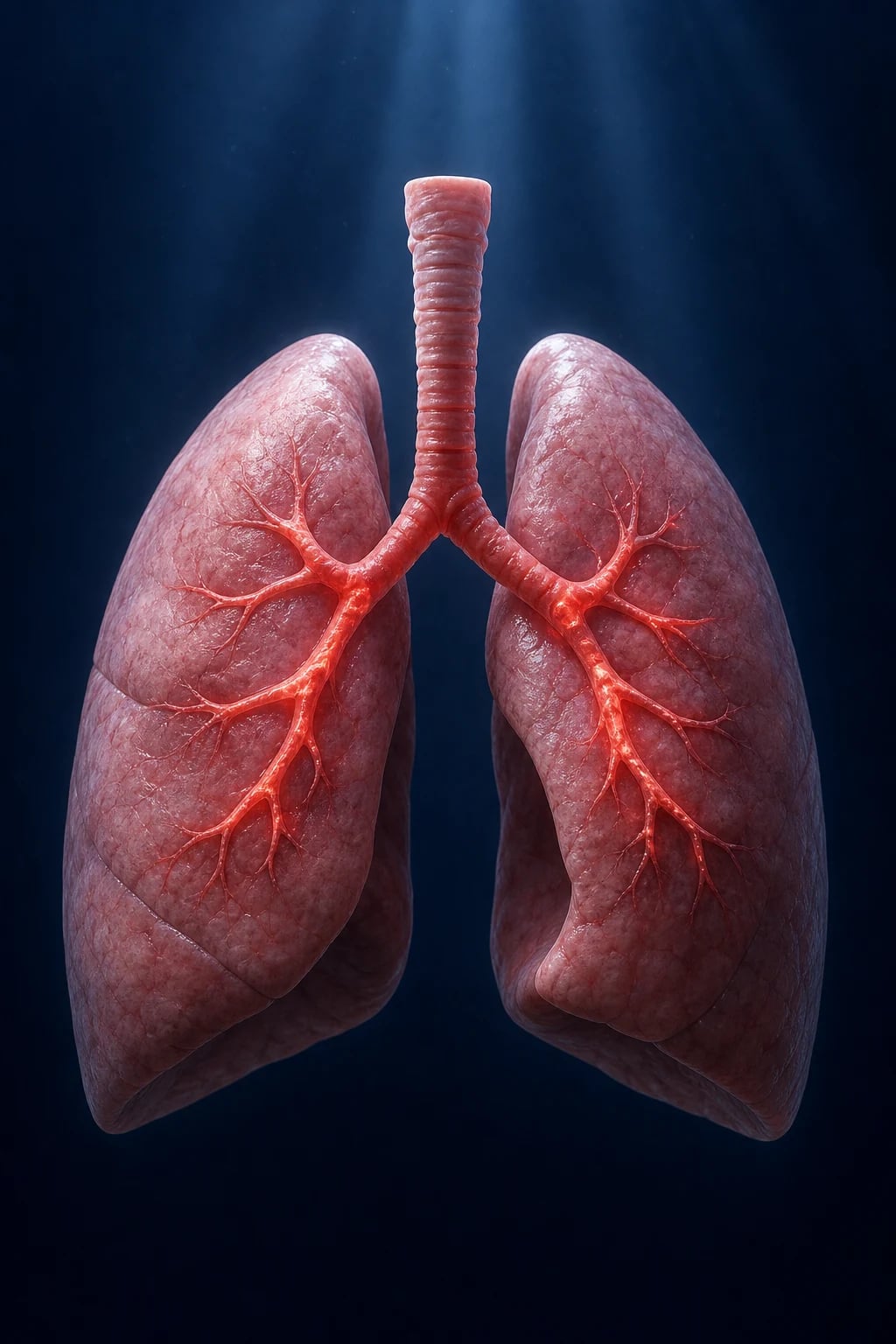
Asthma is a heterogeneous chronic inflammatory disease of the airways defined by four physiological hallmarks: (1) chronic airway inflammation (predominantly eosinophilic, type-2-high in over half of adults, but also neutrophilic, paucigranulocytic, or mixed); (2) variable airflow obstruction that fluctuates in time and intensity; (3) bronchial hyperresponsiveness to both specific (allergen) and non-specific (cold air, exercise, methacholine) stimuli; and (4) reversibility, either spontaneously or with a bronchodilator. Clinically it presents with episodic wheeze, breathlessness, chest tightness, and cough, with symptoms that classically worsen at night and in the early morning and that change in response to triggers, steroids, or the menstrual cycle. [1]
A central conceptual shift — captured by Pavord's After asthma treatise — is that "asthma" is not one disease but a syndrome of overlapping phenotypes (early-onset allergic, late-onset eosinophilic, exercise-induced, aspirin-exacerbated, obesity-associated, premenstrual, neutrophilic) sharing a final common pathway of variable airflow obstruction.[4] The clinical implication is that one investigates the phenotype (blood eosinophils, FeNO, total and specific IgE) in anyone not responding to low-dose ICS, because the phenotype selects the biologic. Status asthmaticus — the severe, prolonged attack unresponsive to standard bronchodilators — is a medical emergency and is covered in the resuscitation section below.
Classification
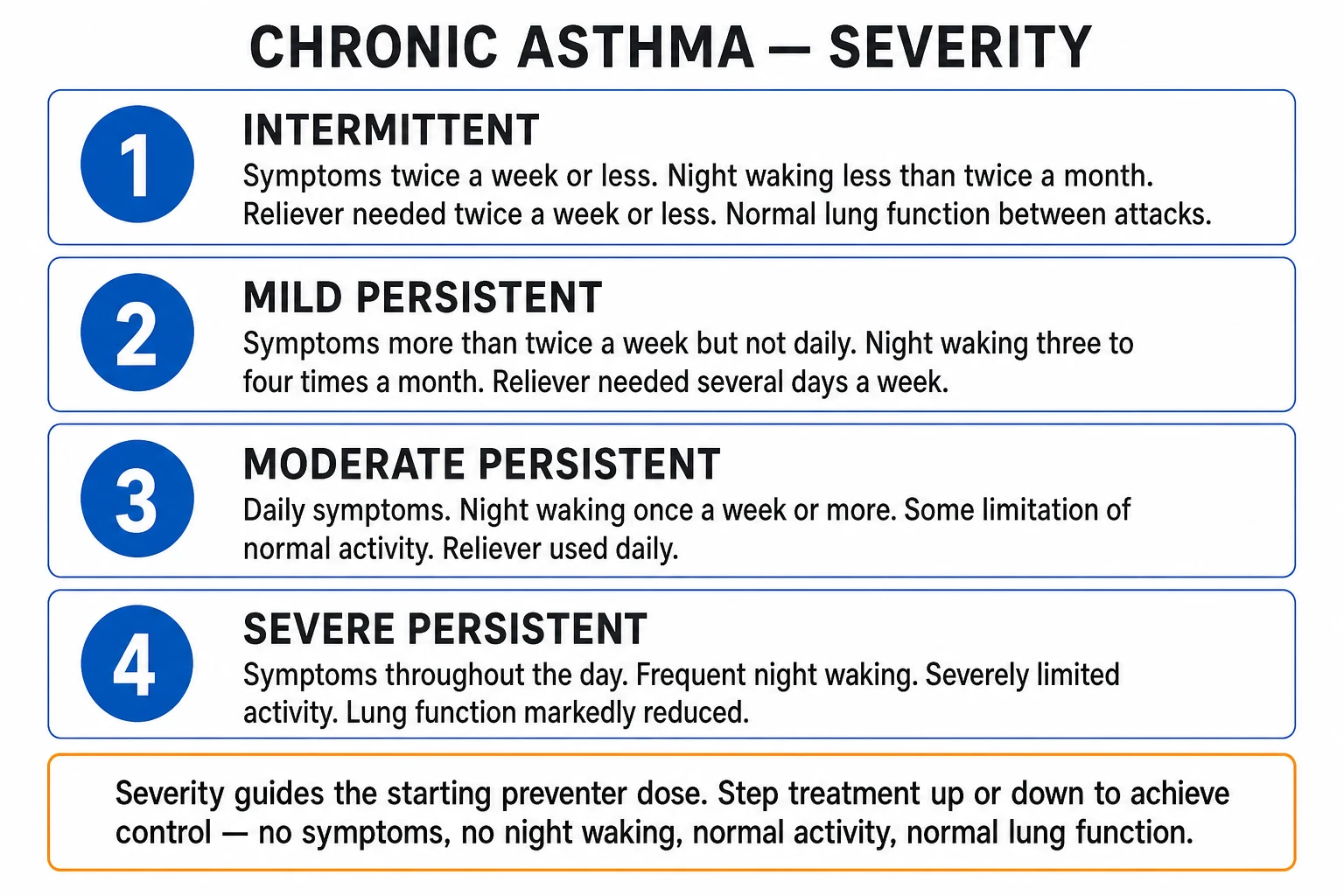
Asthma is classified along three independent axes — severity (intermittent through severe persistent), inflammatory phenotype (type-2-high vs type-2-low), and control (well controlled, partly controlled, uncontrolled). Severity is determined after the patient is established on appropriate controller therapy: a patient needing high-dose ICS-LABA plus a LAMA to achieve control has severe persistent asthma even if currently symptom-free. [1]
Intermittent (Step 1)
- Symptoms fewer than twice a week
- Night waking no more than twice a month
- Normal or near-normal lung function between attacks
- Reliever needed fewer than twice a week
- No activity limitation; no severe exacerbations in past year
Mild persistent (Step 2)
- Symptoms more than twice a week but not daily
- Night waking 3 to 4 times a month
- Mild activity limitation
- Low-dose ICS daily; ICS-formoterol reliever preferred
Moderate persistent (Step 3-4)
- Daily symptoms
- Night waking once a week or more
- Activity limitation; reliever most days
- Low to medium-dose ICS-LABA (MART regimen)
- One or more exacerbations needing OCS in past year
Severe persistent (Step 5)
- Symptoms throughout the day, frequent night waking
- Marked activity limitation; persistent airflow obstruction (FEV1 under 60 percent)
- High-dose ICS-LABA plus LAMA plus biologic ± maintenance OCS
- Specialist severe-asthma pathway
By inflammatory phenotype, asthma is split into: [1]
- Type-2-high (eosinophilic) — 50 to 70 percent of asthma. Driven by Th2 cells and group-2 innate lymphoid cells (ILC2) producing IL-4, IL-5 and IL-13. Characterised by blood eosinophils over 150 to 300 per microlitre and FeNO over 25 to 50 ppb; responsive to corticosteroids and to every approved asthma biologic. Includes early-onset allergic, late-onset eosinophilic, and aspirin-exacerbated respiratory disease (AERD).
- Type-2-low (non-eosinophilic) — 20 to 30 percent. Either neutrophilic (IL-17 driven, obese, smoking-related, often steroid-resistant) or paucigranulocytic (inflammation-poor, smooth-muscle-driven). No approved biologic; treat the modifier (smoking cessation, weight loss, macrolide trial, optimise adherence).
- Mixed overlap — late-onset asthma in elderly smokers blends features of COPD; termed asthma-COPD overlap (ACO), in which ICS is essential (never LABA alone — see SMART trial below). [1]
Phenotype matters because it selects the biologic: eosinophils over 300 point to anti-IL-5 (mepolizumab, benralizumab, reslizumab) or anti-IL-4R dupilumab; raised total and specific IgE with sensitisation points to anti-IgE omalizumab; any T2 phenotype (including low-eosinophil) responds to anti-TSLP tezepelumab.[3]
Epidemiology & Risk Factors
Asthma affects roughly 300 million people worldwide and causes about 250,000 deaths per year, most of which are preventable with access to affordable inhaled corticosteroids.[2] Prevalence is highest in high-income English-speaking countries (5 to 15 percent), and the global rise over the last 50 years tracks urbanisation, smaller family size, and westernised indoor environments — the foundation of the hygiene hypothesis, which posits that reduced early-life microbial exposure biases the developing immune system toward T-helper-2 (allergic) responses. In India, adult prevalence is 2 to 3 percent overall but climbs to 5 to 10 percent in urban children, with under-diagnosis and ICS cost being the dominant barriers to care.
Host risk factors: atopy (eczema, allergic rhinitis, food allergy — the strongest), family history of atopy or asthma, female sex in adult-onset disease, obesity (mechanical and leptin/IL-6 mediated), and genetic variants in the ORMDL3/17q21 locus. [1]
Environmental and trigger factors: early-life viral lower respiratory infections (respiratory syncytial virus, rhinovirus), aeroallergen sensitisation (house-dust mite, cockroach, cat, dog, mould, Alternaria, pollen), tobacco smoke (in utero, second-hand, active), indoor and outdoor air pollution (PM2.5, NO2, ozone from traffic and biomass cooking), occupational sensitisers (isocyanates in spray-paint and polyurethane, flour and grain dust, latex, wood dust, laboratory animal dander, cleaning agents, colophony), and drugs — non-steroidal anti-inflammatory drugs (NSAIDs) in aspirin-exacerbated respiratory disease, and beta-blockers (including topical timolol eye drops, a classic MRCP stem). [1]
The risk factors for fatal or near-fatal asthma — the list every candidate must memorise — are recapitulated in the mnemonic below. [1]
NEAR-FATAL
Pathophysiology
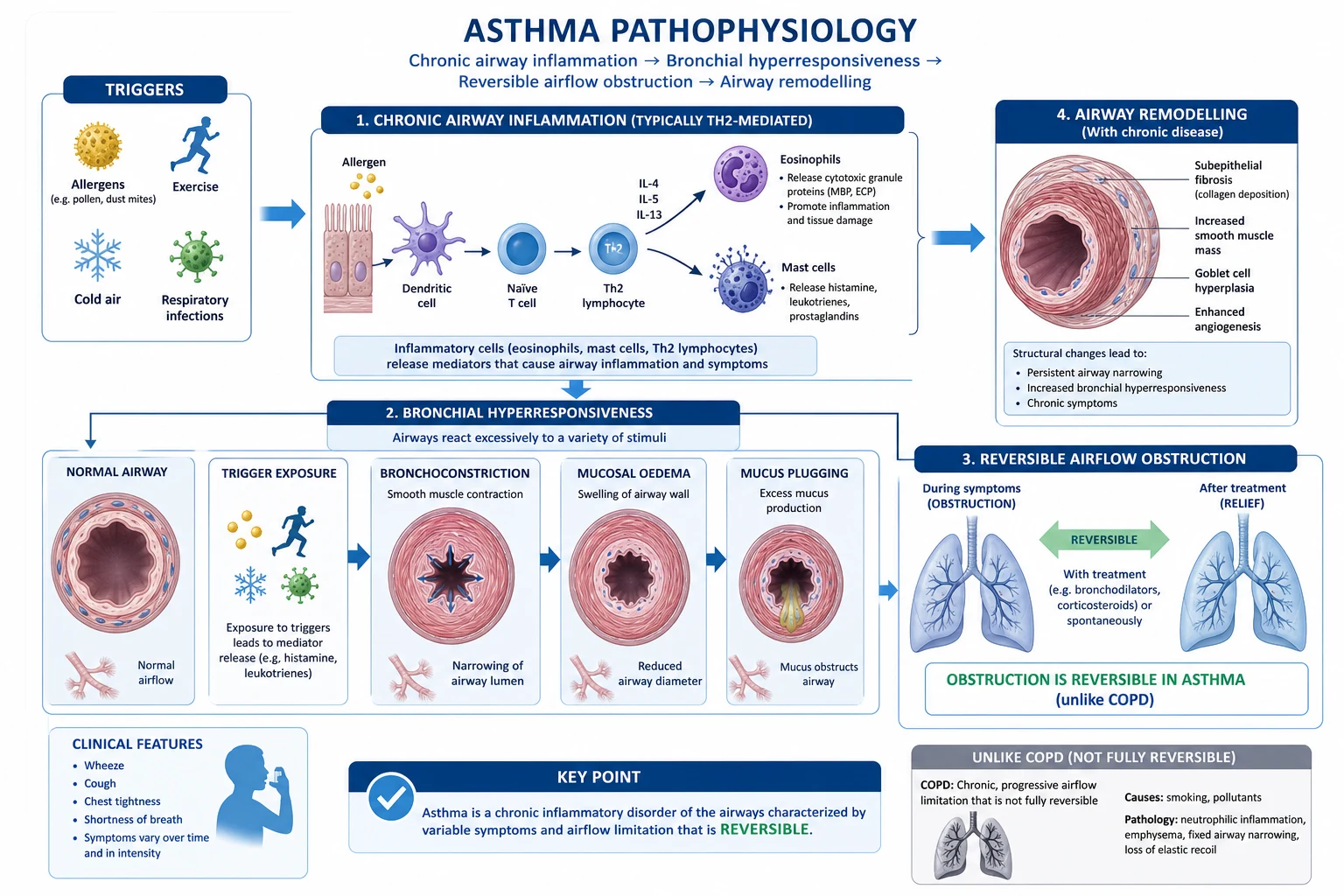
Asthma is the archetypal type-2 (T2-high) inflammatory disease of the airway, but understanding it requires the full cascade — the why of every symptom and the target of every modern biologic. Three converging mechanisms produce the acute attack: bronchospasm (smooth-muscle contraction), mucosal oedema and inflammation (vascular leak, eosinophil infiltration), and mucus plugging (goblet-cell hyperplasia with tenacious Cast-mucus). Together they narrow small airways, cause premature airway closure during expiration, produce air-trapping and hyperinflation, and account for the prolonged expiratory phase, polyphonic wheeze, and the rising work of breathing that culminates in fatigue. [1]
The type-2-high cascade
An inhaled allergen or virus damages the bronchial epithelium, which releases the alarmins TSLP, IL-25 and IL-33. These do two things: they activate dendritic cells (which migrate to the draining lymph node and, in the presence of allergen, present antigen to naive CD4 T cells and skew them to a Th2 phenotype), and they directly activate group-2 innate lymphoid cells (ILC2) in the mucosa — bypassing adaptive immunity and explaining why some patients have eosinophilic asthma without demonstrable allergy. Th2 cells and ILC2 then secrete the signature cytokines: [1]
- IL-4 — drives IgE class-switching in B cells and Th2 differentiation.
- IL-5 — essential for eosinophilopoiesis, maturation, survival and activation in the bone marrow and tissue. Eosinophils release major basic protein, eosinophil cationic protein and leukotrienes that strip airway epithelium and provoke bronchoconstriction. (Target: anti-IL-5 mepolizumab and reslizumab; anti-IL-5 receptor benralizumab.)
- IL-13 (and IL-4) — drive goblet-cell hyperplasia and mucin (MUC5AC) production, airway smooth-muscle contraction, and IgE switching. (Target: anti-IL-4R dupilumab blocks both IL-4 and IL-13 signalling.) [1]
Circulating allergen-specific IgE binds high-affinity FceRI receptors on mast cells and basophils in the airway; cross-linking on re-exposure triggers immediate degranulation with histamine, prostaglandins and cysteinyl-leukotrienes (LTC4, LTD4, LTE4) — the basis of the early-phase asthmatic response within minutes, the late-phase response 4 to 8 hours later (eosinophil-driven), and the rationale for anti-IgE omalizumab and anti-leukotriene montelukast. [1]
Type-2-low asthma
In about 20 to 30 percent of patients — typically late-onset, obese, smoking, or neutrophilic — the inflammation is driven by Th17 cells and IL-8 recruiting neutrophils, with IL-17 promoting smooth-muscle proliferation and steroid resistance. This group has normal eosinophils and FeNO, responds poorly to corticosteroids, and has no currently licensed biologic (macrolide trials, weight loss, smoking cessation are the management levers). Anti-TSLP tezepelumab is the exception that crosses both worlds: by blocking the epithelial alarmin at the top of the cascade it reduces exacerbations across all eosinophil strata, including T2-low.[16]
Airway remodelling
Chronic, undertreated inflammation produces structural remodelling — sub-epithelial basement-membrane fibrosis (type III and V collagen, tenascin), airway smooth-muscle hypertrophy and hyperplasia, mucous-gland hyperplasia, and angiogenesis. Remodelling begins early (even in children within years of diagnosis) and explains the progressive loss of reversibility seen in long-standing adult asthma. Early and sustained inhaled corticosteroid attenuates remodelling — one of the strongest mechanistic arguments against the SABA-only era. Eosinophilic inflammation, when chronic, also produces localised atelectasis from mucus plugging of small bronchi and, rarely, pneumothorax or pneumomediastinum from alveolar rupture during forceful coughing. [1]
Why hypercapnia signals catastrophe
In a typical attack the patient hyperventilates (in response to hypoxaemia, hyperinflation, and anxiety) and so blows off CO2, producing a respiratory alkalosis on arterial blood gas. A normal or rising PaCO2 therefore means the patient is fatiguing and alveolar ventilation is falling — this is the single most important bedside and biochemical warning of impending respiratory arrest, and is itself a life-threatening criterion independent of the SpO2. [1]
Clinical Presentation
Classic asthma presents with the tetrad of wheeze, breathlessness, chest tightness, and cough, with symptoms that vary in time, intensity, and trigger. The wheeze is expiratory and polyphonic (multiple pitches because multiple airways narrow to different degrees), is variable (present on some days and absent on others, diurnally worse at night and around 4 am), and is reproducible with the patient's known triggers. Between attacks, the chest may be entirely normal. Diurnal variability with nocturnal or early-morning dips is so characteristic that a patient who never wakes at night should have the diagnosis reconsidered. [1]
[1]Trigger patterns to elicit: allergens (dust, pet, pollen, mould — often with identifiable seasonal pattern), viral upper-respiratory infections (rhinovirus the classic in children), exercise (particularly cold dry air), cold air and weather change, irritant smoke and fumes, NSAIDs and beta-blockers (including topical timolol), gastro-oesophageal reflux, menstrual and pregnancy-related worsening, and psychological stress. A careful occupational history with symptom improvement on weekends and holidays points to sensitiser-induced occupational asthma (isocyanates the single commonest cause worldwide). [1]
Acute attack — the bedside picture
A moderate attack shows an anxious patient, tachypnoea, tachycardia, an expiratory polyphonic wheeze, a prolonged expiratory phase, and accessory-muscle use. As the attack worsens the patient cannot complete sentences in one breath, develops hyperinflation with a hyper-resonant percussion note, and a reduced PEF. The life-threatening features below indicate that the patient is tiring and that the airways are no longer moving enough air to wheeze — a silent chest is not improvement, it is pre-arrest. [1]
Differential Diagnosis
A wheeze is not always asthma. The complete adult differential of wheeze or chronic breathlessness — and the features that distinguish each — is captured in the comparison below. [1]
COPD
- Older (over 40), current or former smoker, 10+ pack-years
- Chronic productive cough; symptoms stable, less variable
- Irreversible or only partially reversible obstruction (FEV1/FVC under 0.7 post-bronchodilator)
- Emphysema on CT; less eosinophilia, lower FeNO
Vocal-cord dysfunction (inducible laryngeal obstruction)
- Throat-focused, inspiratory stridor more than expiratory wheeze
- Normal spirometry between attacks; flattened inspiratory loop during attack
- No response to bronchodilator; laryngoscopy is diagnostic
- Common in young female healthcare workers; often co-exists with asthma
Cardiac asthma (acute LV failure)
- Older, ischaemic or valvular heart disease, hypertension, AF
- Orthopnoea, paroxysmal nocturnal dyspnoea, bilateral crackles, raised JVP
- CXR pulmonary oedema, raised BNP/NT-proBNP, echo EF reduced
- Treat with oxygen, loop diuretic, nitrates — bronchodilator a poor response
Allergic bronchopulmonary aspergillosis (ABPA)
- Asthma that is hard to control, with brownish sputum plugs
- Total IgE over 1000 IU/mL; positive Aspergillus-specific IgE/IgG; eosinophils over 500
- Central (proximal) bronchiectasis on HRCT; fleeting infiltrates on CXR
- Treat with oral corticosteroid ± itraconazole; consider omalizumab
Foreign-body aspiration
- Sudden onset in a child or adult with a choking history
- Asymmetric monophonic wheeze; ipsilateral hyperinflation or collapse
- Rigid bronchoscopy is both diagnostic and therapeutic
- No diurnal variability; no response to bronchodilator
Pulmonary embolism
- Sudden pleuritic pain, dyspnoea, hypoxia; risk factors (immobility, malignancy, OCP)
- Wheeze may coexist if there is underlying asthma; D-dimer, CTPA diagnostic
- Bronchodilator does not resolve hypoxia
- Anticoagulation — delay kills
Also consider: bronchiectasis (chronic purulent sputum, CT diagnostic), tuberculosis (chronic cough with weight loss and fever, CXR upper-lobe infiltrate, positive sputum AFB), tracheal or bronchial tumour (older smoker, haemoptysis, fixed monophonic wheeze, weight loss), pulmonary fibrosis (dry cough, fine bibasal crackles, restrictive spirometry), hypersensitivity pneumonitis (exposure to birds or mould, recurrent flu-like episodes), gastro-oesophageal reflux (cough after meals and on lying down, response to PPI), and dysfunctional breathing (hyperventilation syndrome, sighing dyspnoea, normal investigations). [1]
The clincher that points to COPD rather than asthma: age over 40, significant smoking history, symptoms present every day with little variability, productive cough, persistent airflow obstruction post-bronchodilator, and minimal reversibility (under 12 percent and 200 mL). The clincher that points to vocal-cord dysfunction rather than asthma: throat-focused inspiratory noise, no response to bronchodilator, normal spirometry between attacks, and a flattened inspiratory limb of the flow-volume loop during an attack. [1]
Clinical & Bedside Assessment
The focused history establishes the pattern (intermittent, persistent, seasonal, occupational), triggers (allergen, exercise, viral, cold, NSAID, beta-blocker), nocturnal symptoms, activity limitation, previous admissions (especially any ICU or intubation), oral steroid courses in the past year, SABA consumption (the single most useful adherence marker — request the prescription record), atopic history (eczema, rhinitis, food allergy), family history, smoking, occupation, and the home environment (damp, pets, biomass cooking). [1]
The examination in a stable patient is often normal — its main purpose is to detect atopic stigmata (allergic shiners, Dennie-Morgan infraorbital folds, transverse nasal crease, pale boggy nasal mucosa, nasal polyps, eczema), hyperinflation (resonant percussion, low diaphragms), and a polyphonic expiratory wheeze. In an acute attack the examination is reorganised around severity assessment — the BTS/SIGN bands reproduced verbatim below — because severity dictates where the patient is treated and what is given. [1]
Severity
Stage 3
The PEF is the most useful bedside measurement in an acute attack: compare with the patient's personal best if known (more reliable), or with the predicted value adjusted for age, height, and sex. A silent chest — disappearance of the wheeze in a patient who is cyanosed, exhausted, or bradycardic — means so little air is moving that no turbulence can be generated; it is a pre-arrest sign and mandates immediate ICU escalation, not reassurance. [1]
Investigations
Spirometry is the diagnostic test of choice. It demonstrates an obstructive pattern (FEV1/FVC ratio under 0.70 or below the lower limit of normal) with reversibility: an improvement in FEV1 of at least 12 percent AND at least 200 mL within 15 minutes of 400 mcg inhaled salbutamol (or 30 percent and 400 mL in some guidelines). Spirometry should be done at the time of diagnosis and repeated at least every 1 to 2 years, or after any exacerbation, to monitor lung function decline. Bronchoprovocation with methacholine or histamine is reserved for patients with suspected asthma but normal spirometry (typically cough-variant or exercise-induced); a fall in FEV1 of 20 percent (PC20) at a low concentration of methacholine (under 8 mg/mL) supports asthma. Exercise challenge (a 6- to 8-minute free run with serial spirometry) is the standard for exercise-induced bronchoconstriction. [1]
Peak expiratory flow variability over 1 to 2 weeks — measured morning and evening before reliever — of more than 10 percent diurnally (or 20 percent in older guidelines) supports asthma. The morning dip pattern is characteristic. PEF diaries are especially useful in occupational asthma (compare work days with holidays). [1]
Fractional exhaled nitric oxide (FeNO) measures eosinophilic airway inflammation; FeNO of 50 ppb or more in adults (35 ppb or more in children) supports T2-high asthma and predicts a good response to ICS. It is also useful to monitor adherence to ICS (FeNO falls within days of starting or resuming ICS, and rises within 2 weeks of stopping). [1]
Sputum eosinophils (4 percent or more) is research-grade but supports T2-high asthma and predicts steroid response. Blood eosinophils of 150 to 300 per microlitre or higher identify candidates for anti-IL-5 and dupilumab. Total IgE is elevated in atopy and is required to dose omalizumab (eligibility: IgE 30 to 1500 IU/mL in the United States, 30 to 700 in Europe, plus weight and sensitisation). Specific IgE (RAST) or skin-prick testing identifies sensitisation and guides allergen avoidance and immunotherapy. [1]
Chest X-ray is not diagnostic — it may show hyperinflation, flattened diaphragms, or be normal — but is essential in an acute attack to exclude pneumothorax, pneumomediastinum, pneumonia, or lobar collapse from mucus plugging. HRCT chest is reserved for atypical or severe cases, suspected ABPA (central bronchiectasis), bronchiectasis, or alternative diagnosis. [1]
Arterial blood gas is performed when the patient has any life-threatening feature. The classic early pattern is respiratory alkalosis (low PaCO2 from hyperventilation) with mild hypoxaemia. A normal or rising PaCO2 is itself a life-threatening criterion — it signals fatigue and impending respiratory arrest. A metabolic acidosis with a high lactate may follow high-dose beta-agonist therapy and is usually self-limiting. [1]
Management — Resuscitation
Acute severe asthma is a time-critical medical emergency. The ABCDE approach is paired with severity stratification (above) because severity drives therapy, location, and the threshold for IV agents and ventilation. [1]
Acute severe asthma — first-hour bundle
Assess ABCDE; high-flow oxygen via face mask to **target SpO2 93 to 95 percent** (avoid 100 percent — risk of absorption atelectasis and CO2 rise)
**Salbutamol 5 mg** via oxygen-driven nebuliser, repeated every 15 to 20 minutes for the first hour (or continuous in severe)
**Ipratropium bromide 500 mcg** nebulised added to salbutamol every 4 to 6 hours (the combination nebuliser)
**Prednisolone 40 to 50 mg orally** (or hydrocortisone 100 mg IV if cannot swallow or very severe) — give immediately; full effect in 4 to 6 hours
**IV magnesium sulphate 2 g** over 20 minutes for acute severe or any life-threatening feature (vasodilates, bronchodilates, evidence from 3Mg trial)
Reassess at 15 to 30 minutes: SpO2, PEF, ABG if any life-threatening feature; escalate to ICU if not improving or if life-threatening features persist
**Heliox** (helium-oxygen mix) and **IV salbutamol 250 mcg bolus then 5 to 10 mcg/min)** for refractory cases; **IV aminophylline** 5 mg/kg loading if not on oral theophylline
Consider **NIV (BiPAP)** or **invasive mechanical ventilation** with permissive hypercapnia, ketamine induction, small ETT, low rate, long expiratory time — senior ICU/anaesthesia decision
The doses and rationale: [1]
- Oxygen — high-flow via reservoir mask, titrated to SpO2 93 to 95 percent. In the tiring patient a falling SpO2 is the early warning; a rising PaCO2 is the late warning.
- Salbutamol 5 mg via oxygen-driven nebuliser (back-to-back or continuous 10 to 20 mg/hour in severe) — short-acting beta-2 agonist, bronchodilates within minutes. In a child use 2.5 mg (under 5 years) or 5 mg (5 years and over). Side-effects: tachycardia, tremor, hypokalaemia (beta-2 driven intracellular shift — check K+), lactic acidosis.
- Ipratropium 500 mcg nebulised — muscarinic antagonist, additive bronchodilation, particularly useful in the first hours of a severe attack; less effective beyond 3 days.
- Prednisolone 40 to 50 mg orally (or hydrocortisone 100 mg IV) — early administration reduces admissions and relapse; full effect in 4 to 6 hours. Five-day course, no taper is standard.
- IV magnesium sulphate 2 g over 20 minutes — bronchodilator via calcium-channel antagonism; the 3Mg trial confirmed it reduces admissions when added to standard therapy in acute severe asthma, although the subsequent MagNet trial in children cautioned about hypotension in the most severe.[15]
- IV salbutamol 250 mcg slow bolus then 5 to 10 mcg/min infusion — for refractory or life-threatening cases; ICU only, monitor lactate, K+, troponin.
- IV aminophylline 5 mg/kg loading (omit or reduce if already on oral theophylline) then 0.5 mg/kg/hour — narrow therapeutic window, monitor levels; reserved for refractory cases.
- Heliox — reduced-density gas lowers work of breathing through narrowed airways; bridge to other therapy.
- Invasive mechanical ventilation — ketamine induction (bronchodilator anaesthetic), small endotracheal tube, low respiratory rate (8 to 10), long expiratory time (I:E 1:4 or more), low tidal volume (6 mL/kg), permissive hypercapnia (allow PaCO2 up to 80 mmHg with arterial pH at or above 7.15), deep sedation and neuromuscular blockade. Watch for tension pneumothorax and dynamic hyperinflation (breath-stacking) — disconnect and allow full exhalation if blood pressure drops.
Management — Definitive & Stepwise
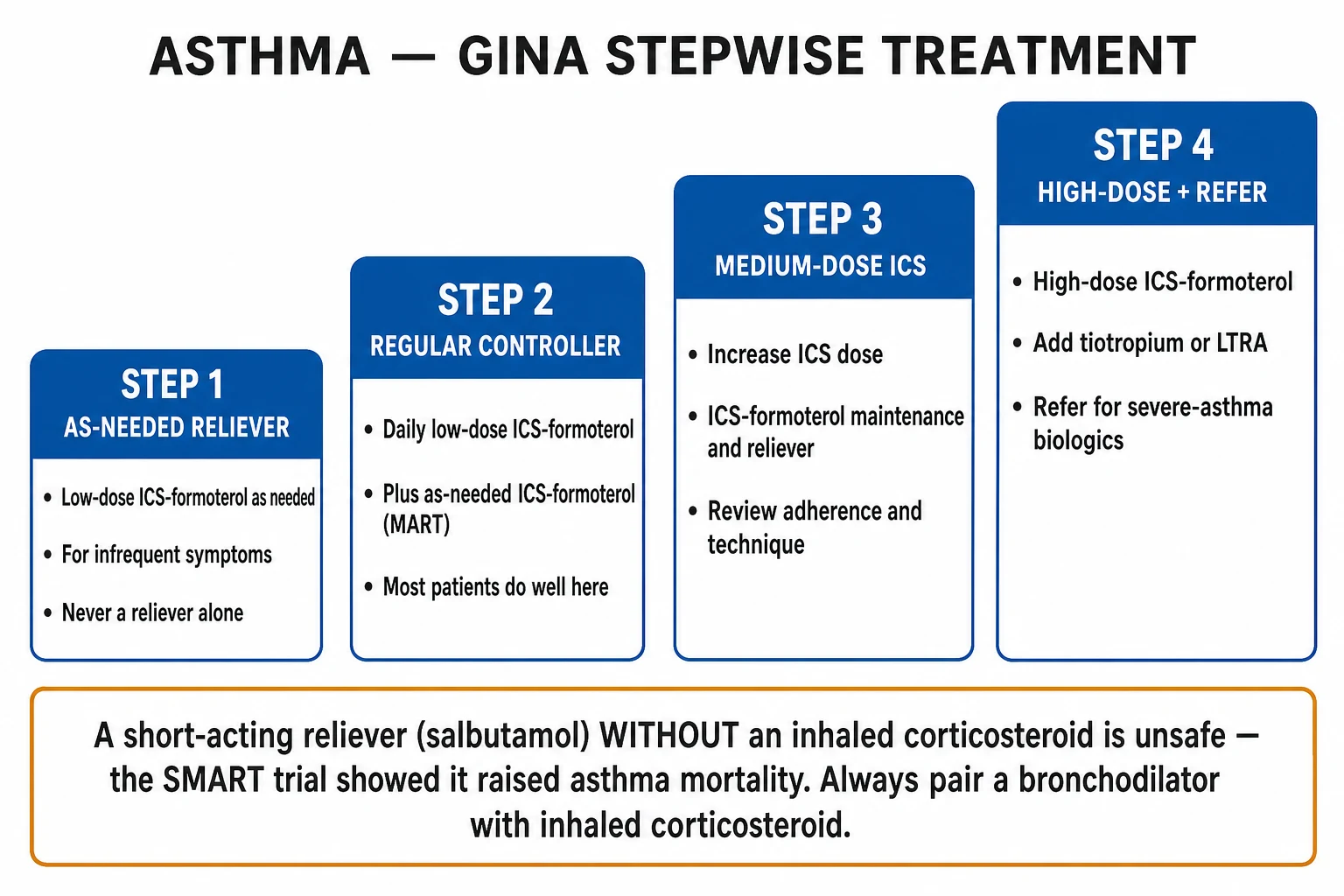
The GINA 2022/2024 strategy represents a paradigm shift away from SABA monotherapy that took effect in 2019 and is now embedded in BTS/SIGN, NICE NG80, and the NAEPP 2020 update. The central principle — backed by the SMART trial (Nelson, 2006) demonstrating excess asthma death on LABA without ICS, and by SYGMA (Beasley, 2019) showing as-needed ICS-formoterol matches regular ICS for exacerbation prevention in mild asthma — is that every asthmatic must receive an inhaled corticosteroid, either as maintenance or co-administered with the reliever.[5][11]
GINA preferred (Track 1) — the ICS-formoterol MART track
The anti-inflammatory reliever (AIR) concept: low-dose budesonide-formoterol (or beclometasone-formoterol) used as both maintenance and reliever (MART). Formoterol is fast enough (onset 1 to 3 minutes) to act as a reliever and long enough (12 hours) to be a controller; pairing it with budesonide means every reliever dose carries an anti-inflammatory payload. [1]
GINA 2024 — preferred MART (Track 1)
**Step 1** (symptoms 1 to 2 per month, no risk factors): as-needed **low-dose ICS-formoterol** with any symptom. No regular maintenance.
**Step 2** (mild persistent): as-needed **low-dose ICS-formoterol** whenever needed — SYGMA-equivalent to daily low-dose ICS.
**Step 3** (moderate): **daily low-dose ICS-formoterol** maintenance **plus** as-needed ICS-formoterol reliever (full MART).
**Step 4** (moderate-severe): **medium-dose ICS-formoterol** maintenance plus as-needed ICS-formoterol.
**Step 5** (severe): **high-dose ICS-LABA + LAMA (tiotropium)** ± add-on **biologic** (anti-IgE, anti-IL-5, anti-IL-4R, anti-TSLP) ± low-dose maintenance oral corticosteroid; refer to severe-asthma service.
GINA alternative (Track 2) — ICS plus SABA
For patients unable to access ICS-formoterol or with strong preference: regular maintenance ICS at the appropriate dose band, with SABA as reliever. Crucially, Step 1 still carries an ICS: the patient takes a dose of low-dose ICS whenever they take a SABA. SABA monotherapy is no longer recommended at any step. [1]
ICS dose bands (adult, beclometasone-equivalent)
Low dose
- Beclometasone (CFC-free) 100 to 250 mcg/day
- Budesonide 200 to 400 mcg/day
- Fluticasone propionate 100 to 250 mcg/day
- Ciclesonide 80 to 160 mcg/day
Medium dose
- Beclometasone 250 to 500 mcg/day
- Budesonide 400 to 800 mcg/day
- Fluticasone propionate 250 to 500 mcg/day
- Ciclesonide 160 to 320 mcg/day
High dose
- Beclometasone over 500 mcg/day
- Budesonide over 800 mcg/day
- Fluticasone propionate over 500 mcg/day
- Ciclesonide over 320 mcg/day — risk of adrenal suppression; consider once-daily
Add-on therapies at Step 4 to 5
- LABA (salmeterol, formoterol, vilanterol) — added to ICS as a fixed-dose combination. Never as monotherapy — see SMART trial.[5]
- LTRA — montelukast 10 mg once daily at night (4 mg age 2 to 5, 5 mg age 6 to 14). Useful in exercise-induced asthma, AERD, and allergic rhinitis; black-box warning for neuropsychiatric side-effects (depression, sleep disturbance, suicidality) — never first-line.
- LAMA — tiotropium 18 mcg once daily via Respimat (or 5 mcg via Soft Mist). Evidence from TALC (Peters, 2010) and the Kerstjens 2012 NEJM trial showing improved FEV1 and reduced exacerbations when added to ICS-LABA in uncontrolled asthma.[12][13]
- Theophylline (sustained-release 200 to 400 mg twice daily) — narrow therapeutic window (10 to 20 mg/L), interactions (ciprofloxacin, erythromycin, cimetidine, smoking increases clearance), side-effects (nausea, insomnia, seizures, arrhythmia). A fourth-line oral agent.
- Macrolide — azithromycin 250 to 500 mg three times weekly reduces exacerbations in adult severe non-eosinophilic asthma (AMAZES trial); QTc and macrolide resistance considerations.
Biologics for severe asthma (Step 5)
Severe asthma is defined as asthma uncontrolled despite optimised high-dose ICS-LABA with or without LTRA/LAMA, OR requiring maintenance oral corticosteroid to maintain control. Biologic selection is biomarker-driven:[3]
Omalizumab (anti-IgE)
- Subcutaneous every 2 to 4 weeks; dose by weight and total IgE (30 to 1500 IU/mL US, 30 to 700 EU)
- For severe persistent allergic asthma with sensitisation and IgE-mediated triggers
- Reduces exacerbations by 30 to 50 percent; also approved for chronic spontaneous urticaria and nasal polyps
- Anaphylaxis rare — observe post-dose
Mepolizumab / Reslizumab (anti-IL-5)
- Mepolizumab 100 mg subcutaneous every 4 weeks; reslizumab 3 mg/kg IV every 4 weeks
- For severe eosinophilic asthma (blood eos 150 or 300+ at initiation)
- DREAM, MENSA (Ortega 2014) and SIRIUS (Bel 2014) showed reduced exacerbations and OCS-sparing
- Herpes zoster risk — consider vaccination
Benralizumab (anti-IL-5 receptor alpha)
- 30 mg subcutaneous every 4 weeks x3 then every 8 weeks
- Kills eosinophils by enhanced ADCC via natural killer cells — eosinophil count often falls to zero
- ZONDA (Nair 2017) demonstrated 50 percent OCS-sparing
- Useful in OCS-dependent eosinophilic asthma
Dupilumab (anti-IL-4 receptor alpha)
- Loading 400 or 600 mg subcutaneous then 200 or 300 mg every 2 weeks
- Blocks IL-4 and IL-13 signalling; for severe eosinophilic or OCS-dependent asthma, also CRSwNP and atopic dermatitis
- Wenzel 2013 (early-phase), QUEST, VENTURE for OCS-sparing
- Transient blood eosinophilia; watch for conjunctivitis and helminth reactivation
Tezepelumab (anti-TSLP)
- 210 mg subcutaneous every 4 weeks
- Blocks the epithelial alarmin TSLP at the top of the cascade — works across all eosinophil strata (T2-high and T2-low)
- SOURCE (Menzies-Gow 2021) and DESTINATION (2023) — reduced exacerbations and OCS-sparing, sustained long-term
- The only biologic approved for non-eosinophilic severe asthma
Bronchial thermoplasty (Castro, AIR2, 2011) — bronchoscopic radiofrequency ablation of airway smooth muscle in three sessions; reduces exacerbations and improves quality of life in carefully selected adults with severe persistent asthma unresponsive to high-dose ICS-LABA. Reserved for specialist centres.[14]
Non-pharmacological and lifestyle
Allergen avoidance (house-dust mite covers, pet removal where sensitised, mould remediation, occupational removal), smoking cessation, weight loss in obesity (BMI over 30), vaccination (annual influenza, COVID-19, pneumococcal — PCV20 or PPV23 as appropriate), comorbidity management (rhinitis — same-one-airway, GERD, OSA, anxiety/depression), and allergen immunotherapy (sublingual or subcutaneous) for selected IgE-mediated allergic asthma in a stable patient. Written asthma action plan (PEF- or symptom-based) with a traffic-light system for step-up is mandatory and reduces mortality. [1]
Monitoring and the asthma control test
Review at 2 to 4 weeks after any change, then every 3 months when stable. At each visit check symptom control (Asthma Control Test — ACT — five questions, score 5 to 25; under 20 is uncontrolled), exacerbation frequency in the past year, PEF or FEV1, inhaler technique (the commonest cause of treatment failure), adherence (prescription refill record, canister weight), side-effects (oral candidiasis, dysphonia — rinse and spit after ICS; check for OCS toxicity — bone density, HbA1c, blood pressure), and FeNO where available. Step up if uncontrolled; step down (reduce ICS by 25 to 50 percent) if controlled for at least 3 months — never stop ICS abruptly. [1]
Specific Subtypes & Scenarios
Exercise-induced bronchoconstriction
- Symptoms peak 5 to 10 minutes after exercise (cold dry air worst)
- Diagnosis by 8-minute free-running challenge with serial FEV1; drop of 10 percent diagnostic
- Inhaled salbutamol or ICS-formoterol 15 minutes before exercise; warm-up; daily LTRA (montelukast) for refractory
Aspirin-exacerbated respiratory disease (AERD, Samter triad)
- Asthma + nasal polyps + NSAID sensitivity (aspirin most classic)
- Symptoms 30 to 180 min after NSAID; leukotriene-driven
- Avoid COX-1 NSAIDs; COX-2 selective (celecoxib) usually tolerated; montelukast; aspirin desensitisation in specialist units
- Biologics: dupilumab or omalizumab for severe polyp disease
Allergic bronchopulmonary aspergillosis (ABPA)
- Asthma poorly responsive to ICS; brownish sputum plugs; fleeting CXR infiltrates
- Total IgE over 1000 IU/mL; Aspergillus-specific IgE/IgG positive; blood eosinophils over 500
- Central (proximal) bronchiectasis on HRCT
- Treat with prednisolone 0.5 mg/kg/day for 4 to 8 weeks ± itraconazole 200 mg twice daily for 16 weeks; consider omalizumab or mepolizumab
Cough-variant asthma
- Chronic dry cough, often nocturnal — no wheeze
- Normal or near-normal spirometry; positive methacholine challenge
- Dramatic response to low-dose ICS within 2 to 4 weeks
- Rule out ACE inhibitor, GERD, post-viral, eosinophilic bronchitis
Severe eosinophilic asthma
- Adult onset; frequent exacerbations; often nasal polyps
- Blood eos over 300 (or over 150 with FeNO over 25)
- High OCS burden; OCS-sparing is the goal
- Anti-IL-5 (mepolizumab, benralizumab), anti-IL-4R (dupilumab), anti-TSLP (tezepelumab)
Occupational asthma
- Sensitisers: isocyanates (spray paint, polyurethane), flour and grain dust, latex, wood dust, laboratory animals, colophony, cleaning agents
- Symptoms improve on weekends and holidays; serial PEF at and away from work
- Specific IgE or inhalation challenge confirms; removal from exposure is curative but compensation considerations
- Co-occupational screening mandatory
Brittle asthma
- Type 1: wide PEF variability (over 40 percent diurnal) despite maximal therapy — consider subcutaneous terbutaline pump
- Type 2: sudden catastrophic attacks on a background of apparent control — adrenaline auto-injector, alert card
- Specialist severe-asthma pathway; biologic eligibility reassessed
Complications & Pitfalls
Acute complications of a severe attack include respiratory failure (type 1 from V/Q mismatch, type 2 from fatigue and CO2 retention), pneumothorax and pneumediastinum (alveolar rupture from high intrathoracic pressures), mucus plugging with lobar atelectasis (especially right middle lobe), cardiac arrhythmia (beta-agonist and hypokalaemia), lactic acidosis (high-dose salbutamol), and cardiac arrest from hypoxaemia or tension pneumothorax during ventilation. Mechanical ventilation itself risks dynamic hyperinflation (breath-stacking), hypotension from raised intrathoracic pressure, and tension pneumothorax. [1]
Chronic complications of poorly-controlled asthma include airway remodelling with fixed airflow obstruction, reduced quality of life, school and work absence, anxiety and depression, and near-fatal or fatal asthma. Medication-related complications are dominated by oral corticosteroid toxicity — osteoporosis and vertebral fracture (give calcium, vitamin D, bisphosphonate; check DEXA after 3 months of OCS over 5 mg/day), type 2 diabetes, hypertension, weight gain, cataracts, skin thinning, mood disturbance, adrenal suppression (carry a steroid card; cover surgical stress) — and by inhaled corticosteroid local effects (oral candidiasis, dysphonia — rinse the mouth and use a spacer; minor systemic absorption at high dose). Long-acting beta-agonist monotherapy increases asthma-related death (the SMART trial) and must never be given without an ICS. [1]
Classic errors — every one of these has killed asthmatics: [1]
- SABA monotherapy without an ICS — the single commonest preventable cause of asthma death.[5]
- Undertreating a severe exacerbation ("give one neb and discharge") — leads to relapse and arrest at home.
- Missing a normal or rising PaCO2 as a life-threatening sign — the patient looks "settled" but is tiring.
- Sedating the anxious asthmatic with an opiate, benzodiazepine, or antihistamine — respiratory depression, hypercapnia, arrest.
- Delayed ICU referral — the senior intensivist should be informed early, not at the point of arrest.
- LABA without ICS — relative risk of asthma death approximately doubled (SMART, 2006).[5]
- Forgetting non-adherence and technique as the cause of "severe" asthma — the commonest reason for failure to respond.
Prognosis & Disposition
Childhood asthma often improves in adolescence (especially mild viral-triggered disease), but a substantial minority relapse in adulthood — particularly with atopy, eosinophilia, smoking, or occupational exposures. Adult-onset asthma is usually lifelong. Severe asthma (roughly 5–10% of patients) drives most morbidity, cost, and death, and is the group in whom biologics have transformed outcomes.[2]
Severity of the acute attack (BTS/SIGN-style thresholds — reproduce)
| Feature | Moderate | Acute severe | Life-threatening | Near-fatal |
|---|---|---|---|---|
| PEF | 50–75% best/predicted | 33–50% | <33% | — |
| RR | — | ≥25/min | — | — |
| HR | — | ≥110/min | — | — |
| Speech | — | Cannot complete sentences in one breath | — | — |
| SpO2 | — | ≥92% usually | <92% | — |
| Other | — | — | Silent chest, cyanosis, poor respiratory effort, arrhythmia, hypotension, exhaustion, altered consciousness, PEF <33%, normal/raised PaCO2 | Requiring ventilation, or raised PaCO2 / needing ICU ventilation |
Normal or raised PaCO2 in an acute asthmatic is a life-threatening sign (impending respiratory failure) — not reassurance. [1]
Disposition after acute treatment
- Discharge if PEF >75% best/predicted, stable on 3–4-hourly bronchodilators, SpO2 normal on air, and the patient has a written action plan, oral steroids (typically prednisolone 40–50 mg daily for 5 days adult), inhaled therapy optimised, and GP/respiratory follow-up.
- Admit any acute severe or life-threatening feature, pregnancy with severe attack, poor social support, previous near-fatal asthma, or incomplete response after 1–2 hours of treatment.
- ICU for life-threatening features, exhaustion, rising PaCO2, needing ventilatory support, or failure of maximal medical therapy. [1]
Long-term control prognosis
Good control (GINA): daytime symptoms ≤2/week, no night waking, reliever ≤2/week, no activity limitation. Poor control and ≥1 severe exacerbation/year should trigger step-up, adherence/technique check, comorbidity review (rhinitis, GORD, obesity, OSA, anxiety), and phenotyping for biologics if high-dose ICS-LABA fails.
Special Populations
Children
Distinguish episodic viral wheeze (preschool, only with colds, no interval symptoms) from multitrigger asthma. Use age-appropriate devices (spacer ± mask). Prednisolone dosing is weight-based (often 1–2 mg/kg, max 40 mg). Avoid routine antibiotics. Parental education and spacer technique determine real-world control. [1]
Pregnancy
- Asthma control protects the fetus — uncontrolled asthma is more dangerous than asthma medicines.
- Continue ICS; short-acting beta-agonists are safe; add LABA if needed; oral steroids for exacerbations when indicated.
- Avoid step-down experiments in pregnancy if control is tenuous.
- Acute severe asthma in pregnancy: same drugs and doses; involve obstetric and ICU teams early; left lateral tilt; fetal monitoring when viable.
- Leukotrienes: montelukast often continued if previously effective; individualise.
Elderly
Higher risk of fixed airflow obstruction (asthma–COPD overlap), drug interactions, poor inhaler strength/coordination — prefer spacers or soft-mist/breath-actuated devices. Beta-blockers for cardiac disease may worsen bronchospasm — use cardioselective agents cautiously if essential.
Aspirin-exacerbated respiratory disease (AERD / Samter)
Triad: asthma + nasal polyps + NSAID hypersensitivity. Avoid COX-1 inhibitors; consider COX-2 selective agents only with caution/specialist advice. Often eosinophilic; may need biologics or aspirin desensitisation in specialist hands.
Occupational asthma
Two forms: sensitiser-induced (latency, IgE or non-IgE) and irritant-induced (RADS after high-level exposure). Serial PEF at work/off work, specific IgE when relevant, referral to occupational lung disease services. Early removal from exposure improves prognosis.
Obesity and alternative diagnoses
Obesity mimics/worsens asthma (dyspnoea, deconditioning). Confirm variable airflow obstruction before escalating steroids. Vocal cord dysfunction / inducible laryngeal obstruction causes inspiratory stridor and poor response to escalation — think of it when spirometry is normal and attacks are abrupt with throat symptoms.
Biologic-era severe asthma phenotypes
| Phenotype clue | Typical biologic class |
|---|---|
| High eos / FeNO, allergy | Anti-IL-5/5R (mepolizumab, benralizumab), anti-IL-4R (dupilumab), anti-TSLP (tezepelumab) |
| Allergic IgE-driven | Omalizumab (anti-IgE) if criteria met |
| Low-T2 severe asthma | Fewer options; tezepelumab broader; focus on comorbidities |
Exact eligibility (eos counts, exacerbation frequency, IgE, weight) is guideline- and payer-specific — examiners want the class logic, not brand trivia alone. [1]
Evidence, Guidelines & Regional Differences
GINA 2022/2024 is the international standard, updated annually since 1993. The defining change in 2019, sustained through 2024, is the removal of SABA-only therapy: every asthmatic at every step receives an ICS, either as maintenance or co-delivered with the reliever. The preferred track is MART (ICS-formoterol maintenance and reliever); the alternative track is regular ICS with SABA reliever (Step 1 takes ICS alongside each SABA dose).[1][2]
Landmark trials that changed practice
SMART — Salmeterol Multicenter Asthma Research Trial
Key finding
Approximately 4-fold increase in asthma-related death and life-threatening events with salmeterol vs placebo when added to usual therapy; led to FDA black-box warning and the END of LABA monotherapy.
SYGMA-1 — As-needed budesonide-formoterol in mild asthma
Key finding
As-needed low-dose budesonide-formoterol was non-inferior to maintenance budesonide for severe exacerbations and superior to terbutaline-only — foundation of the AIR (anti-inflammatory reliever) concept.
DREAM, MENSA, SIRIUS — Mepolizumab (anti-IL-5)
Key finding
DREAM showed dose-dependent reduction in exacerbations; MENSA confirmed efficacy (intravenous and subcutaneous); SIRIUS demonstrated oral-steroid-sparing. Established anti-IL-5 as standard for severe eosinophilic asthma.
ZONDA — Benralizumab (anti-IL-5Rα) OCS-sparing
Key finding
Median 75 percent reduction in OCS dose versus 25 percent with placebo; nearly half of patients could stop OCS altogether. Established benralizumab in OCS-dependent eosinophilic asthma.
SOURCE and DESTINATION — Tezepelumab (anti-TSLP)
Key finding
Reduced exacerbations across ALL eosinophil strata — the first biologic to work in T2-low asthma. DESTINATION confirmed sustained 2-year efficacy and safety.
TALC and Kerstjens — Tiotropium add-on
Key finding
Tiotropium added to ICS-LABA improved FEV1 and reduced exacerbations in uncontrolled moderate-severe asthma; licensed as a LAMA add-on at Step 4 to 5.
AIR2 — Bronchial thermoplasty
Key finding
Reduced exacerbations and ER visits vs sham in severe persistent asthma; reserved for specialist centres and carefully selected adults.
3Mg — IV magnesium in severe acute asthma
Key finding
IV magnesium sulphate 2 g given in the ED reduced the need for hospital admission in acute severe asthma when added to standard therapy; nebulised magnesium added little. MagNet (children) urged caution in the most severe paediatric attacks.
GINA Track Exam Summary & Dose Pearls
GINA track exam summary (adults/adolescents — conceptual)
Modern GINA prefers ICS-containing reliever strategies (Track 1: ICS-formoterol as MART — maintenance and reliever therapy) over SABA-only reliever (Track 2), because SABA-only treatment is associated with higher exacerbation risk.
- Steps 1–2: as-needed low-dose ICS-formoterol (Track 1) OR low-dose ICS whenever SABA is taken (Track 2)
- Step 3: low-dose maintenance ICS-formoterol (MART) OR low-dose ICS-LABA maintenance + SABA reliever
- Step 4: medium-dose ICS-formoterol MART OR medium/high ICS-LABA
- Step 5: high-dose ICS-LABA ± LAMA; refer for phenotyping/biologics; low-dose oral steroid only as last resort
Acute drug doses (adult) — must-cite numbers
- Salbutamol 5 mg nebulised (or 4–10 puffs via spacer), repeat q15–20 min in first hour
- Ipratropium 500 mcg nebulised with salbutamol in acute severe/life-threatening
- Prednisolone 40–50 mg oral for ≥5 days (or hydrocortisone 100 mg IV q6h if cannot take oral)
- Magnesium sulphate 1.2–2 g IV over 20 minutes in acute severe with poor response
- Aminophylline IV only in specialist/ICU settings after senior decision — narrow therapeutic index
- Adrenaline IM if anaphylaxis overlap; not routine asthma therapy [1]
Worked stem — life-threatening asthma
A 28-year-old cannot speak, SpO2 90% on air, PEF unrecordable, silent chest, ABG shows PaCO2 6.2 kPa (normal/high). This is life-threatening / near-fatal trajectory. Continuous nebulised bronchodilators, steroids immediately, IV magnesium, senior/ICU review, prepare for intubation by the most experienced airway clinician — intubation in asthma is high-risk (dynamic hyperinflation, hypotension).
Worked NEET-PG Stems — Asthma
- PEF 30%, silent chest, SpO2 90% → life-threatening; continuous nebs, steroids, MgSO4, ICU.
- Normal PaCO2 in tachypnoeic asthmatic → impending failure, not reassurance.
- Aspirin + polyps + asthma → AERD/Samter; avoid NSAIDs.
- SABA canister weekly use → poor control; start/ensure ICS; abandon SABA-only.
- Pregnancy exacerbation → treat fully; steroids safe when indicated; fetus needs oxygenated mother.
- Work-related symptoms improve on holiday → occupational asthma; serial PEF. [1]
Exam Pearls
- Reversibility: at least 12 percent AND 200 mL in FEV1 after 400 mcg salbutamol.
- PEF variability: more than 10 percent diurnal (or 20 percent in older guidelines) over 1 to 2 weeks supports asthma.
- FeNO: 50 ppb or more in adults (35 in children) supports T2-high asthma and predicts ICS response.
- GINA 2024: low-dose ICS for every patient; SABA-only is no longer recommended at any step; ICS-formoterol MART is the preferred track.[1]
- Reliever without ICS is unsafe — the SMART trial showed excess asthma-related death on salmeterol monotherapy.[5]
- Acute severe bundle: salbutamol 5 mg neb, ipratropium 500 mcg neb, prednisolone 40 to 50 mg, oxygen to SpO2 93 to 95 percent, IV magnesium 2 g.[15]
- Silent chest, exhaustion, cyanosis, SpO2 below 92 percent, normal or rising PaCO2 = life-threatening — ICU, IV salbutamol, NIV or intubation with permissive hypercapnia.
- Never sedate the anxious asthmatic with opiate or benzodiazepine; the anxiety is from hypoxaemia.
- Samter triad = asthma + nasal polyps + aspirin sensitivity — give a leukotriene modifier and avoid NSAIDs.
- Biologics by target: anti-IL-5 (mepolizumab, reslizumab), anti-IL-5Rα (benralizumab), anti-IgE (omalizumab), anti-IL-4Rα (dupilumab), anti-TSLP (tezepelumab — the only one active in T2-low).[3]
- SABA overuse: dispensing 3 or more salbutamol canisters per year is a strong independent marker of future fatal/near-fatal attack — review controller adherence and step up.
- Inhaler technique and adherence are the commonest reasons for "severe" asthma failing to respond — check before escalating.
- Beta-blockers and NSAIDs are classic triggers — even topical timolol eye drops for glaucoma can precipitate severe bronchospasm.
- Always double the maintenance ICS for 2 to 4 weeks after a severe exacerbation, then step down.
Exam application bank (NEET-PG / INICET)
One-line answer
Asthma is a chronic inflammatory airway disease with variable and reversible airflow obstruction, bronchial hyperresponsiveness, and airway inflammation. GINA 2022-2024: low-dose inhaled corticosteroid for all severities (SABA-only is unsafe), ICS-formoterol is the preferred reliever (MART/SMART). Acute severe: oxygen to SpO2 93-95 percent, nebulised salbutamol 5 mg plus ipratropium 500 mcg, oral prednisolone 40-50 mg, IV magnesium sulphate 2 g. Biologics for severe type-2-high asthma: omalizumab, mepolizumab, benralizumab, dupilumab, tezepelumab. [1]
Worked stems (answer without another resource)
Stem 1 — Classic presentation. Map symptoms to mechanism; name the first investigation and first treatment step with dose/route if drug therapy is standard. [1]
Stem 2 — Unstable / complicated. List red flags that force immediate resuscitation, theatre, ICU, antidote, or reperfusion — and what you do in the first 15 minutes. [1]
Stem 3 — Atypical group. Elderly, pregnancy, child, or immunocompromised: how presentation and thresholds change. [1]
Stem 4 — Differential trap. Name the three closest mimics and one discriminator for each. [1]
Stem 5 — Disposition. Who goes home with safety-netting, who is admitted, who needs HDU/ICU/theatre, and what follow-up is mandatory. [1]
Rapid viva checklist
- Definition + classification
- Pathophysiology chain
- Bedside signs / criteria
- Score with exact components (if any)
- Emergency bundle
- Definitive therapy with doses
- Complications of disease and of treatment
- Special populations
- Guideline/trial name if classic
- Three exam traps
Coverage self-check
If you cannot answer any stem above from this page alone, re-read the matching section — the page is intended to be self-sufficient for final-prof and NEET-PG/INICET questions on Asthma.
[1]References
- [1]Reddel HK, Bacharier LB, Bateman ED, et al. Global Initiative for Asthma Strategy 2021. Executive Summary and Rationale for Key Changes Arch Bronconeumol, 2022.PMID 35245179
- [2]Levy ML, Bacharier LB, Bateman E, et al. Key recommendations for primary care from the 2022 Global Initiative for Asthma (GINA) update NPJ Prim Care Respir Med, 2023.PMID 36754956
- [3]Israel E, Reddel HK Severe and Difficult-to-Treat Asthma in Adults N Engl J Med, 2017.PMID 28877019
- [4]Pavord ID, Beasley R, Agusti A, et al. After asthma: redefining airways diseases Lancet, 2018.PMID 28911920
- [5]Nelson HS, Weiss ST, Bleecker ER, et al. The Salmeterol Multicenter Asthma Research Trial: a comparison of usual pharmacotherapy for asthma or usual pharmacotherapy plus salmeterol Chest, 2006.PMID 16424409
- [6]Pavord ID, Korn S, Howarth P, et al. Mepolizumab for severe eosinophilic asthma (DREAM): a multicentre, double-blind, placebo-controlled trial Lancet, 2012.PMID 22901886
- [7]Ortega HG, Liu MC, Pavord ID, et al. Mepolizumab treatment in patients with severe eosinophilic asthma N Engl J Med, 2014.PMID 25199059
- [8]Bel EH, Wenzel SE, Thompson PJ, et al. Oral glucocorticoid-sparing effect of mepolizumab in eosinophilic asthma N Engl J Med, 2014.PMID 25199060
- [9]Nair P, Wenzel S, Rabe KF, et al. Oral Glucocorticoid-Sparing Effect of Benralizumab in Severe Asthma N Engl J Med, 2017.PMID 28530840
- [10]Wenzel S, Wilbraham D, Fuller R, et al. Dupilumab in persistent asthma with elevated eosinophil levels N Engl J Med, 2013.PMID 23688323
- [11]Beasley R, Holliday M, Reddel HK, et al. Controlled Trial of Budesonide-Formoterol as Needed for Mild Asthma N Engl J Med, 2019.PMID 31112386
- [12]Peters SP, Kunselman SJ, Icitovic N, et al. Tiotropium bromide step-up therapy for adults with uncontrolled asthma N Engl J Med, 2010.PMID 20979471
- [13]Kerstjens HA, Disse B, Schroder-Babo W, et al. Tiotropium in asthma poorly controlled with standard combination therapy N Engl J Med, 2012.PMID 22938706
- [14]Castro M, Rubin AS, Laviolette M, et al. Asthma outcomes from bronchial thermoplasty in the AIR2 trial Am J Respir Crit Care Med, 2011.PMID 21920931
- [15]Goodacre S, Cohen J, Bradburn M, et al. The 3Mg trial: a randomised controlled trial of intravenous or nebulised magnesium sulphate versus placebo in adults with acute severe asthma Health Technol Assess, 2014.PMID 24731521
- [16]Menzies-Gow A, Colice G, Banks TA, et al. Tezepelumab in Adults and Adolescents with Severe, Uncontrolled Asthma N Engl J Med, 2021.PMID 33979488
- [17]Menzies-Gow A, Bachert C, Busse WW, et al. Long-term safety and efficacy of tezepelumab in people with severe, uncontrolled asthma (DESTINATION): a randomised, placebo-controlled extension study Lancet Respir Med, 2023.PMID 36702146