Respiratory · Respiratory
Cystic Fibrosis
Cystic fibrosis (CF) is an autosomal recessive multi-system disorder caused by loss-of-function mutations in the CFTR gene (chromosome 7q31.2; F508del accounts for ~70% of disease alleles). CFTR encodes a cAMP-regulated epithelial chloride/bicarbonate channel; its dysfunction produces dehydrated, viscous secretions across lungs, pancreas, gut, liver, sweat glands and reproductive tract. Pulmonary disease — chronic endobronchial infection (Staphylococcus aureus, Pseudomonas aeruginosa, Burkholderia cepacia complex) with bronchiectasis and respiratory failure — is the dominant cause of morbidity and mortality. Diagnosis rests on a positive newborn screen (immunoreactive trypsinogen), a sweat chloride over 60 mmol/L and confirmatory CFTR genotyping. Care has been transformed by CFTR modulator therapy — ivacaftor (gating mutations), lumacaftor/tezacaftor-ivacaftor and, above all, the triple combination elexacaftor-tezacaftor-ivacaftor (Trikafta/Kaftrio), effective in ~90% of patients — which has lifted median survival beyond 50 years. Comprehensive care also includes airway clearance, mucolytics (dornase alfa, hypertonic saline), inhaled antibiotics, macrolide immunomodulation, pancreatic enzyme replacement, fat-soluble vitamin supplementation, CFRD screening with insulin, and bilateral lung transplant for end-stage disease.
On this page & tools
Your progress
Saved locally on this device.
Exam tags
Red flags
Overview & Definition
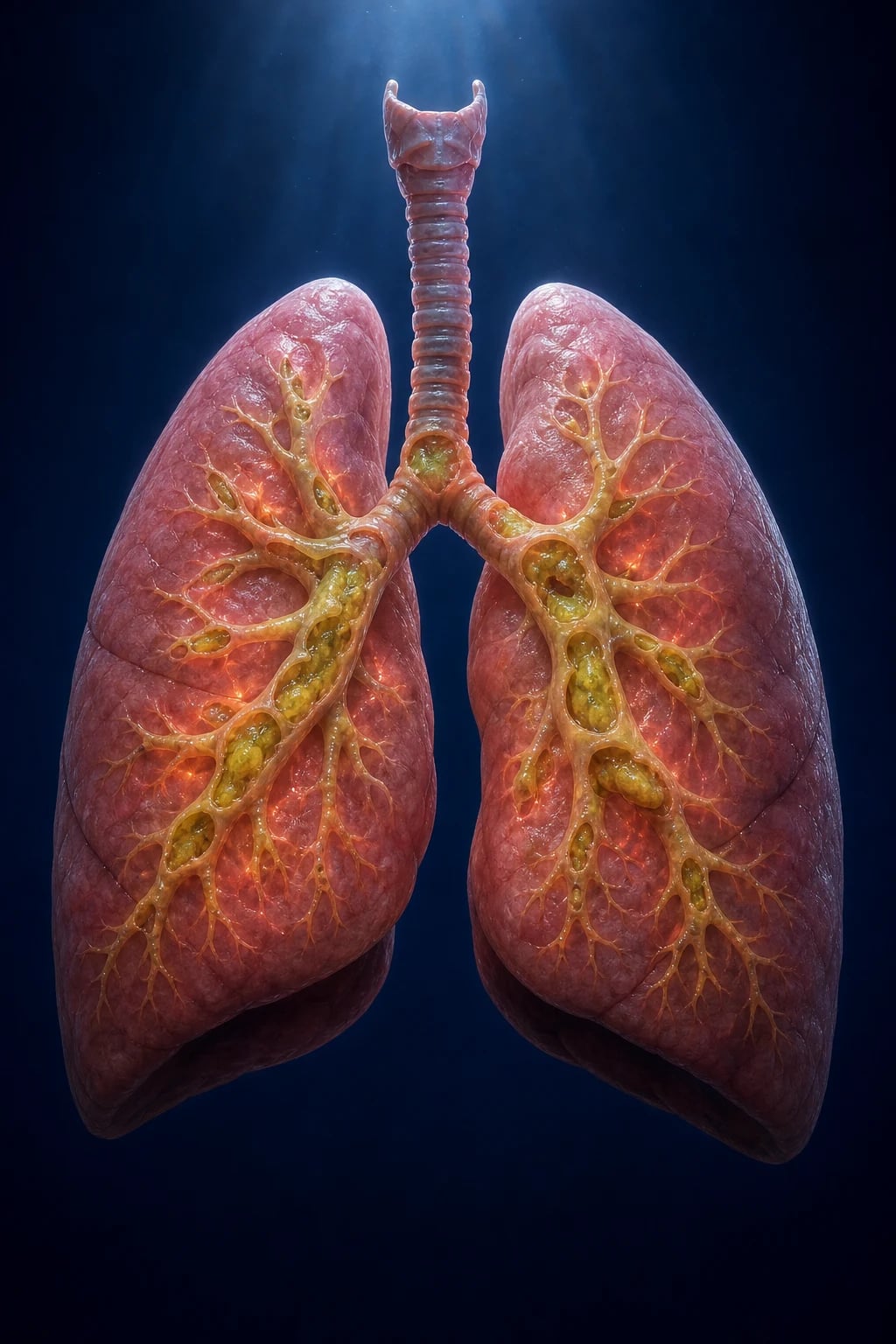
Cystic fibrosis (CF) is the most common life-shortening autosomal recessive disorder in populations of European ancestry, caused by loss-of-function mutations in the CFTR gene on chromosome 7q31.2. The gene product, the cystic fibrosis transmembrane conductance regulator, is a cAMP-activated chloride and bicarbonate channel expressed on the apical membrane of epithelial cells in the airways, pancreas, intestine, biliary tree, sweat glands and vas deferens. When CFTR is absent or dysfunctional, chloride secretion falls, ENaC-driven sodium absorption rises, and the airway-surface liquid collapses: mucus becomes dehydrated, viscous and adherent, mucociliary clearance fails, and a vicious cycle of infection and neutrophilic inflammation is established. More than 2,000 CFTR variants have now been catalogued, and the CFTR2 project has assigned disease liability to the most common of them. [15] [4]
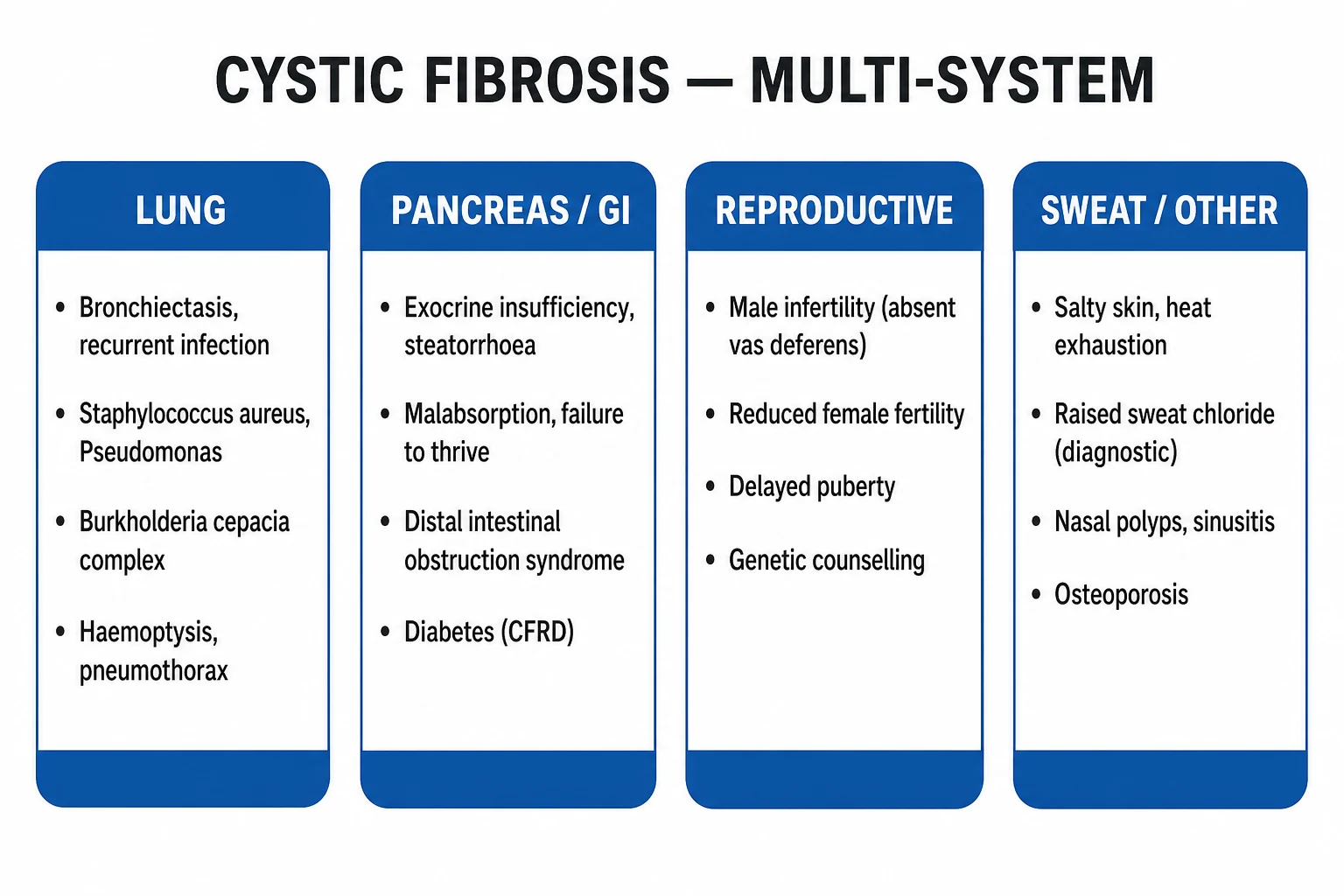
The clinical face of CF is therefore relentlessly multi-system. Lung disease — chronic bacterial endobronchitis with Staphylococcus aureus, Haemophilus influenzae and then mucoid Pseudomonas aeruginosa, progressing to bronchiectasis, haemoptysis, pneumothorax, respiratory failure and death — dominates the prognosis and is the focus of most therapy. Pancreatic exocrine insufficiency affects ~85 percent and produces steatorrhoea, failure to thrive and fat-soluble vitamin deficiency; progressive endocrine loss causes CF-related diabetes (CFRD) in 40 to 50 percent of adults. Meconium ileus in 10 to 20 percent of neonates and distal intestinal obstruction syndrome (DIOS) later in life reflect gut involvement; focal biliary cirrhosis, gallstones and portal hypertension reflect the liver. Congenital bilateral absence of the vas deferens (CBAVD) renders ~95 percent of males infertile; female fertility is reduced by thickened cervical mucus. The elevated sweat chloride is the diagnostic signature — and the historical clue, parents describing a "salty kiss". [4]
Two decades ago median survival barely exceeded 30 years. The arrival of CFTR modulators — small molecules that restore CFTR function at the protein level — has transformed CF into a chronic disease of adults. The triple combination elexacaftor-tezacaftor-ivacaftor (Trikafta in the US, Kaftrio in Europe), licensed first in 2019, is effective in roughly nine out of ten patients and is now standard of care for F508del homozygotes and for compound heterozygotes carrying one F508del plus one minimal-function allele. [2] [3] In countries with modulator access, median predicted survival now exceeds 50 years, and the focus of CF care is shifting from delaying death to preserving quality of life, mental health and reproductive choice across a near-normal lifespan.
Classification
By CFTR mutation class — six functional categories
CF is classified by the functional consequence of the CFTR mutation rather than its genomic position. The class determines phenotype severity and, crucially, modulator responsiveness. [1]
Class I — protein production
- Nonsense, frameshift, splice — no full-length CFTR synthesised
- Examples: G542X, W1282X, 621+1G>T
- Severe phenotype, pancreatic insufficient
- Responsive to read-through agents (ataluren) in selected stop-codon variants; ELX/TEZ/IVA only if partnered with F508del
Class II — processing / trafficking
- Protein misfolded, degraded by proteasome, never reaches surface
- F508del is the archetype (~70% of alleles worldwide)
- Severe phenotype, pancreatic insufficient
- Corrected by tezacaftor and elexacaftor; VX-445 combination is the basis of Trikafta
Class III — gating
- CFTR reaches membrane but channel opens poorly
- G551D is the classic example (2–3% of alleles)
- Severe phenotype
- Highly responsive to ivacaftor monotherapy
Class IV — conductance
- Channel reaches surface and gates but chloride flow reduced
- R117H, R334W
- Mild phenotype, often pancreatic sufficient
- Responsive to ivacaftor
Class V — reduced abundance
- Splice variants producing some normal CFTR — e.g. 3849+10kbC>T, 2789+5G>A
- Mild phenotype, often idiopathic pancreatitis or CBAVD
- Variable modulator response
Class VI — reduced stability
- Channel at surface but turned over rapidly
- Example: N1303K (some classifications)
- Variable phenotype
A clinically critical point: a single patient inherits two CFTR alleles, and it is the combination that determines disease. Most patients are compound heterozygotes — for example F508del on one chromosome plus a gating or minimal-function variant on the other. The CFTR2 database should be consulted for variant-specific disease liability and modulator eligibility. [15]
By phenotype: classic vs atypical / CFTR-related disorder
When CFTR dysfunction is partial — class IV/V/VI variants, or a single mutation with environmental modifiers — patients may present not with classic multisystem CF but with a CFTR-related disorder: isolated CBAVD with adult-onset respiratory symptoms, recurrent or chronic pancreatitis, or bronchiectasis without the full CF phenotype. Consensus criteria for CFTR-related disorder distinguish these patients, who often retain pancreatic sufficiency and near-normal spirometry, from classic CF. [10]
Epidemiology & Risk Factors
CF is overwhelmingly a disease of European ancestry, reflecting positive selection pressure on CFTR carriers (possibly protective against cholera or typhoid in heterozygotes). The single most important epidemiological advance of the past two decades has been universal newborn screening (NBS) in high-income countries, which identifies affected infants via immunoreactive trypsinogen (IRT) on the heel-prick with reflex CFTR panel testing. NBS and early specialist care have shifted diagnosis from the symptomatic toddler with failure to thrive to the asymptomatic neonate, and have improved long-term nutritional and pulmonary outcomes. [1]
The principal risk factors for disease are parental carrier status (genetic counselling for siblings and at-risk couples) and consanguinity. Risk factors for rapid pulmonary decline include chronic Pseudomonas aeruginosa or Burkholderia cepacia complex infection, poor adherence to airway clearance, malnutrition, CFRD, female sex in adolescence (the "gender gap") and exposure to tobacco smoke. Socioeconomic deprivation amplifies every one of these. [4]
Pathophysiology
The molecular defect: failed chloride transport
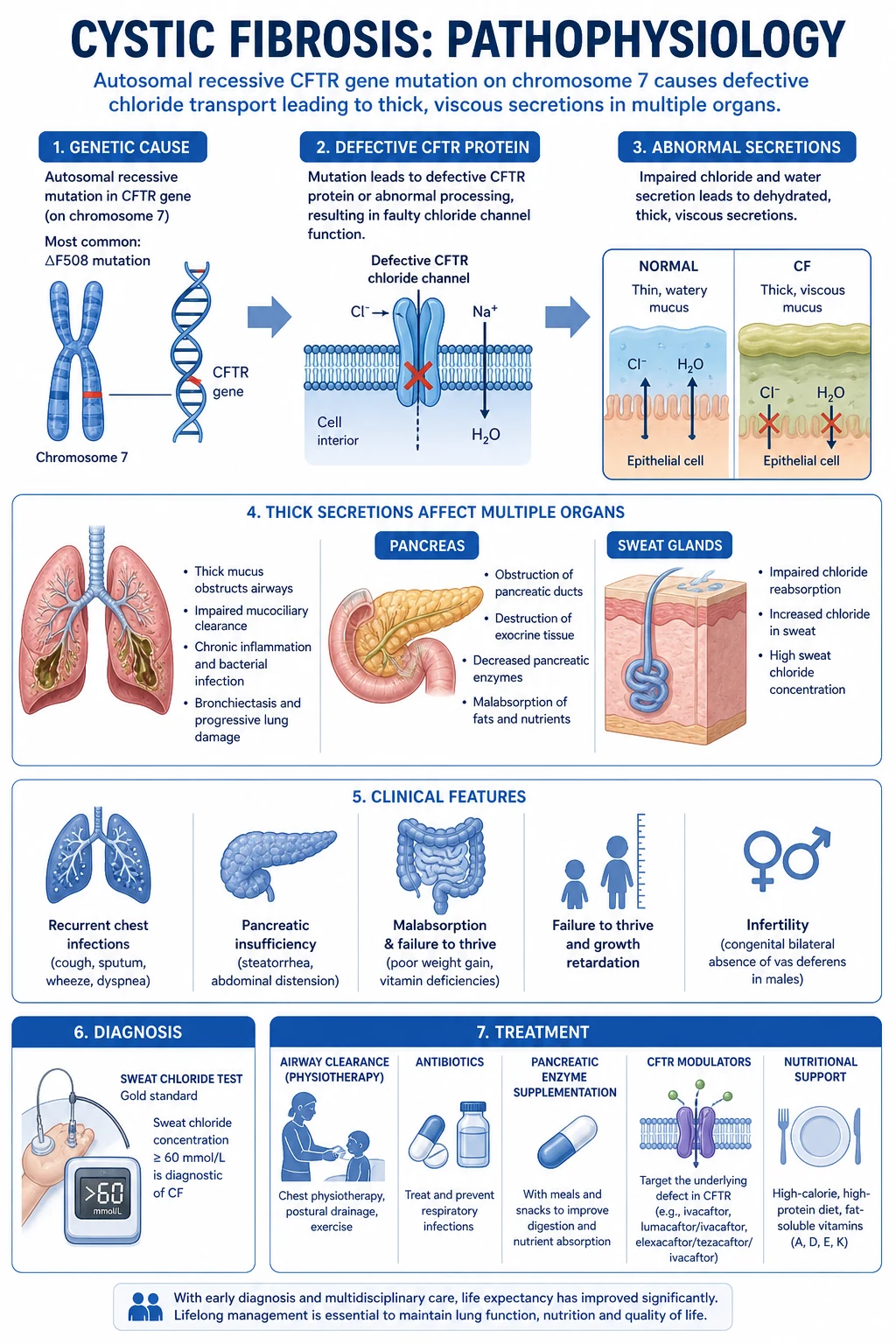
Normal airway epithelium maintains a hydrated airway surface liquid (ASL) of ~7 µm depth, allowing ciliary beating to sweep mucus and trapped pathogens upward. CFTR sits on the apical membrane alongside the epithelial sodium channel ENaC; CFTR normally secretes chloride and bicarbonate and restrains ENaC. When CFTR is absent: [1]
- Chloride and bicarbonate secretion fail → secretions become dehydrated, acidic and protein-rich.
- ENaC becomes hyperactive → excessive sodium (and with it water) is absorbed from the lumen into the cell, further depleting ASL.
- The periciliary liquid layer collapses, cilia lie flat in viscous mucus, and mucociliary clearance grinds to a halt.
- Trapped, dehydrated mucus plugs small airways, and Pseudomonas and Staphylococcus form antibiotic-resistant biofilms within it.
- A self-perpetuating cycle of infection → neutrophilic inflammation → elastase-mediated tissue destruction → bronchiectasis establishes itself, often insidiously, from early infancy. [1]
The same dehydrated-secretion mechanism damages other organs: thick pancreatic juice obstructs ducts and acini (exocrine and then endocrine loss); viscid meconium obstructs the terminal ileum (meconium ileus); inspissated bile produces focal biliary cirrhosis; and the vas deferens fails to develop in utero (CBAVD). Sweat glands are unable to reabsorb chloride — giving the elevated sweat chloride that is the diagnostic cornerstone. [1]
The microbiological succession
CF airway infection evolves in a recognisable sequence. Staphylococcus aureus and non-typeable Haemophilus influenzae dominate infancy and early childhood. Pseudomonas aeruginosa appears in late childhood and adolescence — initially non-mucoid and eradicable, then mucoid within a biofilm and essentially incurable, marking accelerated decline. Methicillin-resistant S. aureus (MRSA) is increasingly common. Burkholderia cepacia complex — particularly B. cenocepacia and B. multivorans — carries a poor prognosis, can cause a necrotising pneumonia with bacteraemia ("cepacia syndrome"), and historically excluded patients from transplantation at many centres. Non-tuberculous mycobacteria (especially Mycobacterium abscessus) and Aspergillus (allergic bronchopulmonary aspergillosis, ABPA) require dedicated surveillance. [1]
[1]Clinical Presentation
CF presents across the age spectrum, and the dominant features shift with it. Modern newborn screening means that most patients are diagnosed asymptomatically, but presentations still occur at every age, and the atypical or CFTR-related presentation in adolescence and adulthood should not be missed. [4] [5]
Neonate and infant
- Meconium ileus in 10 to 20 percent of CF neonates — abdominal distension, bilious vomiting, failure to pass meconium in the first 48 hours, with microcolon and inspissated meconium pellets in the terminal ileum on contrast enema. About half present with complications (perforation, volvulus, atresia).
- Prolonged neonatal jaundice and cholestasis.
- Failure to thrive despite a ravenous appetite, frequent bulky greasy stools, rectal prolapse, salty-tasting skin, hypochloraemic metabolic alkalosis, electrolyte depletion in hot weather ("pseudo-Bartter"). [1]
Child and adolescent
- Chronic productive cough, recurrent wheeze, recurrent pneumonia or "asthma that doesn't respond".
- Bronchiectasis: daily purulent sputum, finger clubbing, coarse inspiratory crackles, wheeze, exertional dyspnoea.
- Nasal polyposis (over 30 percent) and chronic sinusitis in a child — a major clue.
- Malabsorption: steatorrhoea, distal intestinal obstruction syndrome (DIOS), failure to thrive, fat-soluble vitamin deficiencies (night blindness, rickets, easy bruising, neuropathy).
- CF-related diabetes typically emerges from age 10 — weight loss, polyuria, polydipsia, and an unexplained decline in pulmonary function.
- Delayed puberty, short stature, salty crusting on the skin after exercise. [1]
Adult
- Chronic Pseudomonas bronchitis with frequent exacerbations; massive haemoptysis from hypertrophied bronchial arteries; pneumothorax (ruptured emphysematous bullae); cor pulmonale in end-stage disease.
- CFRD in 40 to 50 percent of adults; osteoporosis; arthritis (hypertrophic pulmonary osteoarthropathy, CF-related vasculitis).
- Infertility (CBAVD in ~95 percent of males; thickened cervical mucus in females) — often the presenting complaint in atypical or CFTR-related disease.
- Mental health burden: depression, anxiety, treatment fatigue; an emerging cohort of patients with substance-use and adherence problems as survival extends. [1]
Focused bedside examination
Hands and skin
- Finger clubbing
- Cyanosis (peripheral and central in advanced disease)
- Salty crystalline deposits on the forehead
- Hypertrophic pulmonary osteoarthropathy
Chest
- Barrel chest, Harrison sulcus, kyphoscoliosis
- Coarse inspiratory crackles, polyphonic wheeze
- Hyper-resonance to percussion (hyperinflation)
- Reduced chest expansion
Abdomen
- Hepatomegaly or hepatosplenomegaly
- Palpable right iliac fossa mass (DIOS)
- Distension (steatorrhoea, distension)
- Rectal prolapse in infants
ENT
- Nasal polyps (bilateral)
- Tenderness over sinuses
Differential Diagnosis
The differential depends on whether the patient presents with chronic respiratory disease, malabsorption / failure to thrive, neonatal bowel obstruction or male infertility. [1]
Chronic respiratory disease with bronchiectasis:
- Primary ciliary dyskinesia (PCD) — situs inversus (Kartagener), chronic sinusitis, otitis media, neonatal respiratory distress, infertility; diagnosis by nasal nitric oxide (low) and electron microscopy of cilia.
- Primary immunodeficiency — common variable immunodeficiency, IgA deficiency, X-linked agammaglobulinaemia; recurrent sinopulmonary infection with low immunoglobulins.
- Post-infectious bronchiectasis — pertussis, measles, adenovirus, severe pneumonia in childhood.
- Allergic bronchopulmonary aspergillosis (ABPA) — eosinophilia, central bronchiectasis, elevated IgE.
- Tuberculosis — epidemiological risk, upper-lobe cavitation, positive sputum AFB.
- Foreign-body aspiration — unilateral fixed wheeze, regional hyperinflation.
- Asthma with chronic infection — atopy, reversibility, normal sweat chloride. [1]
Malabsorption and failure to thrive:
- Shwachman-Diamond syndrome — exocrine pancreatic insufficiency, neutropenia, skeletal dysplasia; sweat chloride normal.
- Coeliac disease, chronic pancreatitis, short-bowel syndrome, biliary atresia, protein-losing enteropathy. [1]
Neonatal bowel obstruction (differential of meconium ileus):
- Meconium plug syndrome (small left colon, often with maternal diabetes).
- Intestinal atresia, Hirschsprung disease, malrotation with volvulus, imperforate anus. [1]
Male infertility with CBAVD:
- Isolated CBAVD may be a CFTR-related disorder even without classic CF — always genotype and offer sweat testing in men presenting with CBAVD. [10]
Clinical & Bedside Assessment
A focused CF consultation at every visit should cover: [1]
-
History. Neonatal (meconium ileus, NBS result, weight trajectory); respiratory (cough character, sputum volume and colour, exacerbation frequency, hospitalisations, ICU admissions, haemoptysis, pneumothorax); gastrointestinal (stool pattern, malabsorption, DIOS, rectal prolapse, liver disease); endocrine (CFRD symptoms, polyuria, polydipsia); ENT (nasal polyps, sinusitis); reproductive (fertility, contraception, pregnancy plans); social (school, work, exercise, smoking, alcohol, mental health, adherence, financial); family (siblings, carrier testing, consanguinity); medicines (modulator, nebulised therapies, antibiotics, PERT dose and timing, vitamins); vaccination history; infection history by organism with dates of acquisition. [1]
-
Examination. Vital signs including SpO₂ on room air; growth — height, weight, BMI, growth velocity; chest (deformity, crackles, wheeze, hyper-resonance); abdomen (hepatosplenomegaly, mass); ENT (polyps); skin (salty crust, clubbing, cyanosis, injection sites, eczema); musculoskeletal (kyphoscoliosis, joint disease); mental state. [1]
-
Functional status. Six-minute walk distance in older patients; spirometry trend; symptom-based quality-of-life scores (CFQ-R); depression and anxiety screening (PHQ-9, GAD-7) annually. [1]
Investigations
Diagnostic tests
The diagnostic triad is: (i) a clinical phenotype consistent with CF or a positive newborn screen; (ii) evidence of CFTR dysfunction; and (iii) two disease-causing CFTR mutations. The 2017 Cystic Fibrosis Foundation consensus defines the algorithm. [5]
Newborn screen
- Immunoreactive trypsinogen (IRT) on heel-prick at day 3–5
- Reflex to CFTR panel if IRT elevated
- Sensitivity ~90–95%; sweat chloride mandatory to confirm
Sweat chloride test
- Pilocarpine iontophoresis (Gibson-Cooke)
- Greater than 60 mmol/L = diagnostic (in replicate)
- 30–59 mmol/L = indeterminate; repeat or genotype
- Less than 30 = unlikely CF
- False low: oedema, malnutrition, neonate under 2 weeks
Genetic testing
- Targeted CFTR mutation panel first
- Full sequencing + deletion/duplication if panel negative but phenotype convincing
- Interpret with CFTR2 (cftr2.org) for variant disease liability
- Two disease-causing variants in trans confirms CF
Nasal potential difference
- Useful in equivocal cases (sweat chloride indeterminate, genotype ambiguous)
- Confirms CFTR dysfunction at the nasal epithelium
Extended CFTR electrophysiology
- Intestinal current measurement in research centres
- Reserved for diagnostically challenging cases
Routine monitoring battery
The CF annual review interrogates every organ system. Baseline and longitudinal tests include: [1]
Respiratory:
- Spirometry every 3 to 6 months — FEV1 percent predicted is the single most important prognostic metric; track the trajectory.
- Sputum culture at every visit (or cough swab in non-productive children) — request Pseudomonas, MRSA, Burkholderia, non-tuberculous mycobacteria (NTM), Aspergillus; treat new organisms aggressively.
- Chest X-ray annually or with exacerbation.
- HRCT chest every 2 to 5 years to characterise structural change (bronchiectasis, mucus plugging, air trapping) — limit cumulative radiation dose.
- Arterial blood gas in advanced disease (type 1 then type 2 respiratory failure; the 6-minute walk test and overnight oximetry screen for hypoxaemia). [1]
Gastrointestinal and nutritional:
- Faecal pancreatic elastase (less than 200 µg/g indicates exocrine insufficiency; less than 100 severe).
- Annual LFTs, abdominal ultrasound from age 5 (focal biliary cirrhosis, portal hypertension, gallstones).
- Annual nutritional assessment: weight, height, BMI, mid-upper-arm circumference, dietary intake. [1]
Endocrine and metabolic:
- HbA1c and oral glucose tolerance test (OGTT) annually from age 10 for CFRD screening.
- DEXA from age 8 to 10, repeated every 1 to 5 years (CF osteoporosis).
- Vitamin levels A, D (25-OH), E and INR (proxy for K). [1]
Microbiological:
- ABPA screen annually (total IgE greater than 500 IU/mL, Aspergillus-specific IgE/IgG, eosinophilia).
- NTM culture at least annually in older patients (acid-fast bacilli on multiple sputum samples). [1]
Reproductive:
- Semen analysis in adolescents and adults (CBAVD); offer genetic counselling. [1]
Why does sweat chloride rise in CF?
In a normal sweat gland, CFTR on the reabsorptive duct reabsorbs chloride (and sodium follows via ENaC) from isotonic primary sweat, producing a hypotonic surface film. In CF, CFTR-dependent chloride reabsorption fails, so sweat emerges rich in chloride and sodium — concentrations above 60 mmol/L are diagnostic. The same channel defect that dehydrates airway secretions prevents the duct from scavenging salt.
Management — Resuscitation
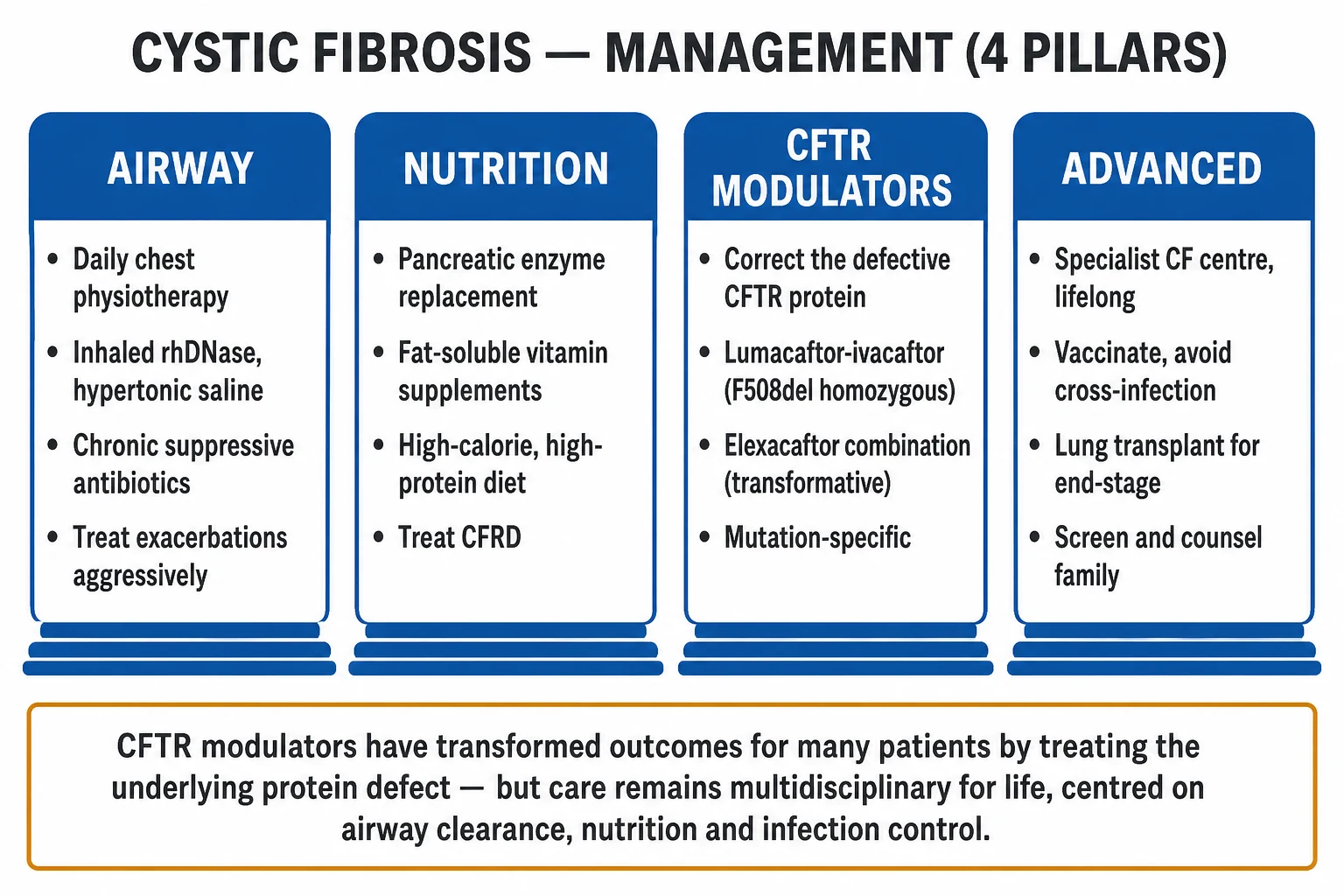
Most CF emergencies are pulmonary. The principle is rapid antibiotic coverage guided by recent sputum, intensified airway clearance, nutritional support and anticipation of complications. [1]
Acute pulmonary exacerbation
An exacerbation is defined by an increase in cough, sputum volume or purulence, dyspnoea, fatigue, reduced exercise tolerance, weight loss, FEV1 fall of 10 percent or more from baseline, new crackles or wheeze, or fever. The Fuchs criteria, originally for dornase alfa trials, remain a useful checklist. [8]
Immediate management:
- IV dual antibiotics guided by the most recent sputum — typically a beta-lactam plus an aminoglycoside for Pseudomonas:
- Ceftazidime 50 mg/kg IV TDS (max 6 g/day) + tobramycin 5–7 mg/kg IV OD (titrated to trough), or
- Meropenem 40 mg/kg IV TDS (max 6 g/day) + tobramycin, or
- Piperacillin-tazobactam 90 mg/kg IV QDS (max 18 g/day) + tobramycin, for 14 days.
- MRSA: vancomycin or linezolid.
- Burkholderia: meropenem + minocycline or co-trimoxazole per sensitivities — treatment is always organism-specific.
- Intensified airway clearance — physiotherapy 2 to 4 times daily; continue home nebulised mucolytics (dornase alfa, hypertonic saline); add bronchodilator pre-treatment.
- Nutritional support — increase calories (120 to 150 percent RDA), continue or up-titrate PERT, supplement fat-soluble vitamins; consider NG or gastrostomy feeds if intake inadequate.
- Oxygen to keep SpO₂ at 92 to 94 percent or above; bronchodilators (salbutamol nebs) before physio and hypertonic saline.
- Check HbA1c and capillary glucose — exacerbations precipitate or worsen CFRD.
- Disposition: hospitalise for moderate-severe exacerbations; consider home IV for selected mild exacerbations with reliable home support. [1]
Massive haemoptysis
Defined as more than 240 mL in 24 hours, or recurrent smaller bleeds significant enough to threaten the airway. The bleeding source is hypertrophied bronchial arteries. [1]
- Protect the airway: position the patient with the bleeding side down; high-flow oxygen; secure IV access.
- IV antibiotics for exacerbation; correct coagulopathy (vitamin K, transfuse as needed; transiently hold modulator and adjust for drug interactions).
- Bronchial artery embolisation by interventional radiology is first-line.
- Surgical resection or lobectomy reserved for localised, refractory bleeding after failed embolisation. [1]
Pneumothorax in CF
Affects up to 3 to 4 percent of patients over their lifetime; a marker of advanced disease. Large, symptomatic or recurrent pneumothoraces require a small-bore chest drain with suction (water seal to allow continuous air evacuation), then medical talc pleurodesis or surgical pleurodesis/pleurectomy (VATS) for recurrence. Avoid aggressive chest physiotherapy during the acute phase; consider physiological sniff ("snorkel") manoeuvres. Transplant candidates should be discussed with the transplant centre before definitive pleurodesis, which can complicate future surgery. [1]
Distal intestinal obstruction syndrome (DIOS)
Right iliac fossa pain, palpable mass, distension, vomiting, often with reduced stool output. [12]
- Rehydration (IV fluids to correct electrolyte loss).
- Oral or NG Gastrografin (water-soluble hyperosmolar contrast, 50 to 100 mL, diluted) — draws fluid into the lumen and softens the inspissated contents; rectal Gastrografin enema as alternative.
- Oral or NG N-acetylcysteine (10 percent, 50 mL) or polyethylene glycol (PEG) solution.
- Surgery is reserved for failed medical therapy, perforation, or peritonitis — a last resort given the morbidity in CF.
- Continue PERT and consider chronic PEG or macrogol to prevent recurrence. [1]
Management — Definitive & Stepwise
Modern CF care is delivered by a multidisciplinary team (respiratory physician, specialist nurse, physiotherapist, dietitian, psychologist, social worker, pharmacist, obstetrician, gastroenterologist and endocrinologist as needed). Therapy is layered: CFTR modulator to address the molecular defect; airway clearance and mucolytics to limit mucus plugging; inhaled antibiotics and macrolides to suppress chronic infection; nutritional support to preserve body composition; and aggressive treatment of complications as they arise. [1]
1. CFTR modulator therapy — the foundation
The arrival of small-molecule CFTR modulators has been the single greatest advance in CF history. They target specific CFTR mutation classes and are mutation-directed, not phenotype-directed. [1]
Ivacaftor (Kalydeco)
- CFTR potentiator — holds channel open longer
- Class III gating (G551D, S549N, R117H) and some class IV
- 150 mg PO BD with fat-containing food
- Landmark ENVISION/STRIVE — Ramsey 2011: FEV1 +10.6 percent, sweat chloride fall of ~48 mmol/L
- Onset of effect within 2 weeks
Lumacaftor-ivacaftor (Orkambi)
- Corrector + potentiator for F508del homozygous
- TRAFFIC/TRANSPORT — Wainwright 2015: FEV1 +2.6 to 4.0 percent
- Two tablets BD (lumacaftor 200 mg + ivacaftor 125 mg each)
- Modest benefit; transaminitis; chest tightness on initiation
Tezacaftor-ivacaftor (Symdeko/Symkevi)
- Corrector + potentiator; better tolerated than lumacaftor-ivacaftor
- F508del homozygous and F508del + residual-function allele
- EVOLVE/EXPAND: FEV1 +4.0 percent; fewer drug interactions than Orkambi
Elexacaftor-tezacaftor-ivacaftor (Trikafta/Kaftrio)
- Triple combination — next-gen corrector + corrector + potentiator
- For F508del homozygous AND F508del + minimal-function allele (~90 percent of all CF patients)
- Two tablets of elexacaftor 100 mg + tezacaftor 50 mg + ivacaftor 75 mg in the morning, plus ivacaftor 150 mg in the evening
- Heijerman 2019: FEV1 +14.3 percent in F508del homozygous; Middleton 2019: +13.8 percent in heterozygotes
- Reduces exacerbations by over 60 percent, sweat chloride toward normal, marked quality-of-life gains
Elexacaftor-tezacaftor-ivacaftor (Trikafta / Kaftrio)
Dose
Triple-combination CFTR modulator — once-daily morning combination (elexacaftor 100 mg / tezacaftor 50 mg / ivacaftor 75 mg) plus once-daily evening ivacaftor 150 mg, taken with fat-containing food
Citations: [1] (ivacaftor); [14] (lumacaftor-ivacaftor); [2] [3] (elexacaftor-tezacaftor-ivacaftor).
2. Airway clearance and mucolytics
- Chest physiotherapy — active cycle of breathing technique (ACBT), autogenic drainage, postural drainage with percussion, positive expiratory pressure (PEP) devices, high-frequency chest wall oscillation (vest). One to four sessions daily, more with exacerbation. Patient preference drives adherence.
- Dornase alfa (Pulmozyme, recombinant human DNase) — 2.5 mg nebulised once daily; cleaves extracellular DNA released by neutrophils, reducing sputum viscosity. The 1994 Fuchs trial showed a 6 percent FEV1 rise and 28 percent reduction in exacerbation risk over 24 weeks. [8]
- Hypertonic saline 7 percent — 4 mL nebulised once or twice daily, with a bronchodilator pre-treatment (it is irritant); the Elkins 2006 NEJM trial showed improved FEV1 and fewer exacerbations through an osmotic hydration of the airway surface. [6]
- Inhaled mannitol (dry-powder, 400 mg BD) — alternative osmotic agent where dornase alfa or hypertonic saline are not tolerated.
3. Anti-infective therapy
Inhaled tobramycin (TOBI, Bethkis)
- 300 mg nebulised BD, alternating 28 days on / 28 days off
- Chronic suppressive therapy for *Pseudomonas*-colonised patients
- Ramsey 1999: FEV1 +12 percent, reduced *Pseudomonas* density
Inhaled aztreonam lysine (Cayston)
- 75 mg nebulised TDS, alternating 28 days on / 28 days off
- Alternative or rotation with tobramycin for *Pseudomonas*
- Retsch-Bogart 2009 — sustained FEV1 improvement over 28-day cycles
Inhaled colistin (colistimethate)
- 1–2 million units nebulised BD or TDS
- Option for multidrug-resistant Gram-negatives
Inhaled levofloxacin (Aptreom)
- 240 mg nebulised BD in 28-day cycles
- Reserve for resistant organisms
Macrolide immunomodulation
- Azithromycin 250 mg (under 40 kg: 500 mg once weekly, or weight-based) PO three times weekly (TIW)
- Reduces exacerbations by ~50 percent in chronic *Pseudomonas* — Saiman 2003 JAMA
- Mechanism: anti-inflammatory + anti-quorum-sensing
Eradication of new *Pseudomonas*
- First isolation triggers eradication — inhaled tobramycin 28 days or oral ciprofloxacin
- Successful eradication in most patients with early infection
Citations: [7] (inhaled tobramycin); [13] (aztreonam lysine); [11] (azithromycin).
Infection control on wards and clinics — strict cohort segregation by organism (Pseudomonas, B. cepacia, MRSA, NTM), hand hygiene, single rooms where possible, dedicated equipment per patient, masks for contact. B. cepacia complex patients should never share clinical space with other CF patients. [1]
4. Anti-inflammatory and bronchodilator therapy
- Bronchodilators — salbutamol 100 to 200 µg inhaler or 2.5 to 5 mg nebulised before physiotherapy and before hypertonic saline; long-acting beta-2 agonists (salmeterol) or antimuscarinics (tiotropium) where there is a reversible component.
- Systemic corticosteroids — short courses for severe exacerbations or ABPA; avoid chronic oral steroids (growth suppression, glucose intolerance, osteoporosis).
- Ibuprofen — high-dose, anti-inflammatory (20 to 30 mg/kg/day to a peak serum concentration of 50 to 100 mg/L) is recommended by the CFF in children with preserved lung function; limited uptake due to monitoring burden and GI adverse effects. [1]
5. Nutritional and pancreatic support
CF nutrition aims for 120 to 150 percent of recommended caloric intake, high fat, high protein, with salt supplementation in hot weather. [16]
- Pancreatic enzyme replacement therapy (PERT) — pancrelipase (Creon, Pancreaze, Zenpep) capsules with every meal, snack and milk feed; lipase dose 500 to 2,500 U/kg/meal (max 10,000 U/kg/day — higher risks fibrosing colonopathy). Titrate to stool pattern, growth and fat absorption; give with fat-containing food.
- Fat-soluble vitamins — A, D (titrate 25-OH-D to 75 nmol/L or above), E and K — CF-specific multivitamin preparation (ADEK).
- Essential fatty acid supplementation where deficient.
- Caloric supplementation — oral high-calorie supplements, then NG or gastrostomy feeds (overnight bolus or continuous) if oral intake is insufficient to maintain BMI.
- Salt — unrestricted dietary salt; supplement in hot weather or intercurrent illness to avoid hyponatraemic dehydration. [1]
6. Cystic fibrosis-related diabetes
CFRD is the most common comorbidity in adults with CF, present in 40 to 50 percent. It is a distinct entity from type 1 or type 2 diabetes — primarily insulin deficiency with some insulin resistance from inflammation and steroids. It is strongly associated with pulmonary decline, and early treatment with insulin improves both nutritional and pulmonary outcomes. [9]
- Screen with HbA1c and OGTT annually from age 10 (HbA1c alone misses CFRD).
- Treat with insulin, not metformin alone — basal-bolus regimen is standard; continuous subcutaneous insulin infusion (pump) is increasingly used.
- Coordinate insulin timing with PERT and meals.
- Re-screen with OGTT during exacerbations, pregnancy and on starting modulator therapy. [1]
7. Hepatobiliary and bone disease
- Liver — annual LFTs and abdominal ultrasound from age 5; ursodeoxycholic acid (10 to 15 mg/kg BD) for cholestasis; surveillance endoscopy for varices in established portal hypertension; liver transplant for decompensated cirrhosis (preserves pulmonary benefit, unlike combined transplant).
- Bone — annual vitamin D supplementation; DEXA from age 8 to 10; calcium supplementation; bisphosphonates for established osteoporosis or fragility fracture; weight-bearing exercise. [1]
8. Reproductive and mental health
- Males — CBAVD in ~95 percent; IVF with ICSI using percutaneous epididymal or testicular sperm aspiration (PESA/TESE).
- Females — thickened cervical mucus reduces fertility but pregnancy is increasingly common; preconception counselling (FEV1 greater than 50 percent predicted, BMI greater than 20, optimise CFRD and infections, review teratogenic drugs — modulators are generally avoided in pregnancy pending data).
- Mental health — annual PHQ-9 and GAD-7 screening; treat depression and anxiety (high prevalence); involve specialist CF psychologist. [1]
9. Lung transplantation
Bilateral sequential lung transplantation is offered for end-stage disease. Indications and timing follow the ISHLT guidelines. [4]
- Indications: FEV1 less than 30 percent predicted, or rapidly declining FEV1; 6-minute walk less than 400 m; persistent hypoxaemia (PaO₂ less than 8 kPa) or hypercapnia (PaCO₂ greater than 6.5 kPa); pulmonary hypertension; recurrent massive haemoptysis or pneumothorax unmanageable medically; worsening functional status despite optimised therapy.
- Absolute contraindications (centre-dependent) — multi-drug-resistant organisms with no post-transplant antibiotic options (some B. cenocepacia strains), severe malnutrition, significant non-adherence, active malignancy.
- Outcomes — 5-year survival over 60 percent in CF, often better than non-CF indications; quality-of-life improves markedly. CFTR modulators may reduce transplant need in the coming decade as the population is treated earlier. [1]
Stepwise care at a glance
Confirm diagnosis
Sweat chloride over 60 mmol/L plus two disease-causing CFTR variants in trans; or nasal potential difference if equivocal. <Cite id='5' />
Start CFTR modulator
If eligible — elexacaftor-tezacaftor-ivacaftor for any F508del carrier; ivacaftor for gating mutations. <Cite id='2' /> <Cite id='3' />
Establish airway clearance + mucolytics
Physio 1–4×/day, dornase alfa 2.5 mg neb OD, hypertonic saline 7 percent neb BD, bronchodilator pre-treatment. <Cite id='8' /> <Cite id='6' />
Suppression of chronic infection
Inhaled tobramycin or aztreonam 28-day cycles, azithromycin TIW if chronic *Pseudomonas*. <Cite id='7' /> <Cite id='11' />
Optimise nutrition
PERT with every meal and snack, ADEK vitamins, high-calorie diet, gastrostomy if needed. <Cite id='16' />
Screen and treat comorbidity
Annual OGTT from age 10, DEXA, LFTs, ABPA serology, sputum surveillance.
Vaccinate
Routine schedule plus annual influenza, COVID-19, pneumococcal, hepatitis B, varicella.
Refer for transplant
When FEV1 under 30 percent predicted, refractory exacerbations, respiratory failure, severe complications.
Specific Subtypes & Scenarios
- F508del homozygous CF — classic severe multisystem phenotype; eligible for elexacaftor-tezacaftor-ivacaftor from age 2 to 6 depending on region, with transformative benefit. [2]
- Compound heterozygous F508del + minimal-function allele — also eligible for triple therapy; Middleton 2019 demonstrated comparable benefit. [3]
- Gating mutations (G551D) — class III; ivacaftor monotherapy is highly effective (Ramsey 2011 ENVISION/STRIVE). [1]
- Atypical / CFTR-related disorder — late presentation with isolated CBAVD, chronic pancreatitis or bronchiectasis; one or two CFTR variants with residual function; sweat chloride borderline; consider ivacaftor for responsive variants. [10]
- Meconium ileus equivalent (DIOS) in adults — see Resuscitation. [12]
- Allergic bronchopulmonary aspergillosis — oral corticosteroids (prednisolone 0.5 to 1 mg/kg/day, taper) plus antifungal (voriconazole or itraconazole); omalizumab in refractory disease; surveillance IgE.
- Non-tuberculous mycobacteria (NTM) — M. abscessus (more virulent) and M. avium complex; multi-drug therapy with macrolide + amikacin + imipenem or cefoxitin (initial) and a long-term regimen with rifamycins/ethambutol; involve an ID physician.
- CF in pregnancy — preconception optimisation (FEV1, BMI, CFRD), MDT care, modulator risk/benefit discussion (limited data), prefer vaginal delivery, breastfeeding usually encouraged.
- Post-lung-transplant CF — immunosuppression, infection prophylaxis, ongoing management of extrapulmonary CF (PERT, CFRD, fertility, bone).
Complications & Pitfalls
Respiratory
- Bronchiectasis, atelectasis, mucus plugging
- Massive haemoptysis (>240 mL/24 h)
- Pneumothorax (3–4% lifetime)
- Allergic bronchopulmonary aspergillosis (~10%)
- Non-tuberculous mycobacterial infection
- Cor pulmonale, type 2 respiratory failure
Gastrointestinal
- Pancreatic exocrine insufficiency (~85%)
- Meconium ileus and DIOS
- Rectal prolapse (infants)
- Intussusception, fibrosing colonopathy (high-dose enzymes)
- Gastro-oesophageal reflux
- Distal intestinal obstruction
Hepatobiliary
- Focal biliary cirrhosis
- Portal hypertension, varices
- Gallstones, microgallbladder
- Hepatic steatosis (malnutrition)
Endocrine & metabolic
- CFRD (40–50% adults)
- Osteoporosis and fragility fracture
- Hypogonadism (delayed puberty)
- Hypoelectrolytaemia / metabolic alkalosis
Reproductive
- CBAVD in ~95% of males
- Reduced female fertility, pregnancy risk
- Stress incontinence in advanced lung disease
Drug-related
- Aminoglycoside nephro- and ototoxicity
- Ciprofloxacin tendinopathy, QTc
- Drug–drug interactions with CFTR modulators (CYP3A4) — adjust azole antifungals, macrolides, rifampicin, hormonal contraception
- Fibrosing colonopathy with excessive enzymes
Common pitfalls:
- Misdiagnosing atypical CF as "asthma plus malabsorption" or "idiopathic bronchiectasis" — always sweat-test and genotype a child with chronic productive cough, nasal polyps and clubbing, and any man with CBAVD.
- Underdosing inhaled antibiotics or using them in inadequate nebuliser systems — drug delivery is critical.
- Forgetting drug interactions with modulators — strong CYP3A4 inhibitors (azoles, macrolides) raise ivacaftor/elexacaftor levels; inducers (rifampicin, phenytoin, St John's wort) reduce them. Hormonal contraception can fail.
- Missing CFRD — HbA1c alone is insufficient; OGTT annually is mandatory. CFRD heralds pulmonary decline.
- Inadequate nutritional rescue — every exacerbation should trigger a nutritional review; a falling BMI is a poor prognostic sign.
- Person-to-person transmission — never mix B. cepacia–positive patients with other CF patients in clinics or wards. [1]
Prognosis & Disposition
The trajectory of CF has been transformed. Median predicted survival in countries with modulator access and modern MDT care now exceeds 50 years, and an increasing proportion of children diagnosed today are expected to live into their seventh decade or beyond. Survival is determined by: [1]
- Genotype and modulator eligibility — F508del homozygous and F508del heterozygous with minimal-function alleles gain the most from triple therapy.
- Age at diagnosis and early care — NBS-detected infants have better growth and pulmonary trajectories.
- Microbiological history — chronic Pseudomonas and especially B. cepacia complex accelerate decline; NTM adds complexity.
- Nutritional and metabolic status — BMI, CFRD.
- Adherence and psychosocial factors — nebulised therapies are burdensome; adherence is the single greatest modifiable determinant of outcome.
- Socioeconomic and structural access — modulator access varies dramatically by country and reimbursement. [1]
Disposition — outpatient multidisciplinary care with annual review for stable patients; admission for exacerbations, complications, transplant workup or modulator initiation in select cases. End-of-life and advance care planning should begin in parallel with transplant referral; with effective modulators, palliative CF care is becoming less common but is still essential in the non-modulator subset. [1]
Special Populations
- Neonate — meconium ileus in 10 to 20 percent (Gastrografin enema; surgery if complicated); screen positive on NBS, confirm with sweat chloride after 2 weeks of age; transfer to specialist CF centre; start PERT if pancreatic insufficient (faecal elastase); involve family in early education.
- Child — growth and development are paramount; school support, family psychosocial input; transition preparation begins in early adolescence.
- Adolescent and young adult — adherence is the central challenge; mental health screening; reproductive and fertility counselling; transition to adult CF services at 16 to 18.
- Pregnancy in CF — preconception MDT optimisation; modulator risk/benefit discussion; vaginal delivery preferred; breastfeeding generally encouraged; postpartum respiratory vigilance.
- CF after lung transplant — immunosuppression (tacrolimus, mycophenolate, prednisolone); infection prophylaxis (CMV, PCP, fungal); ongoing extrapulmonary CF management (PERT, CFRD, bone, mental health).
- End-of-life — palliative care integrated with disease-modifying therapy; symptom control (opioids, benzodiazepines, oxygen); advance directives; organ donation discussion. [1]
Evidence, Guidelines & Regional Differences
Landmark trials
STRIVE / ENVISION (Ramsey 2011) — Ivacaftor in G551D
Two phase 3 randomised, double-blind, placebo-controlled trials in patients 6 years and older with at least one G551D-CFTR allele
Population: 161 adults and adolescents (STRIVE); 52 children 6–11 (ENVISION)
Key finding
FEV1 +10.6 percent predicted by 2 weeks; sustained through 48 weeks; 55 percent reduction in pulmonary exacerbations; sweat chloride fall of ~48 mmol/L; weight gain of ~2.7 kg
AURORA F/M (Heijerman 2019) + Edelstein (Middleton 2019) — ELX/TEZ/IVA triple therapy
Two phase 3 RCTs — F508del homozygous (Heijerman) and F508del + minimal-function allele (Middleton)
Population: ~400 patients each, age 12 years and older
Key finding
FEV1 +14.3 percent (homozygous) and +13.8 percent (heterozygous); 60 percent exacerbation reduction; sweat chloride fall of ~45 mmol/L; CFQ-R respiratory domain +20 points
TRAFFIC / TRANSPORT (Wainwright 2015) — Lumacaftor-ivacaftor in F508del homozygous
Two phase 3 RCTs in F508del homozygous patients aged 12 and older
Population: 1,108 patients
Key finding
Modest FEV1 +2.6 to 4.0 percent; 30 to 39 percent fewer exacerbations; transaminitis and chest tightness on initiation
Citations for individual trials: [1] (Ramsey 2011 ivacaftor), [2] (Heijerman 2019), [3] (Middleton 2019), [14] (Wainwright 2015 lumacaftor-ivacaftor).
Guidelines & registries
- Cystic Fibrosis Foundation (CFF) consensus statements — diagnosis (Farrell 2017), [5] chronic suppression therapies, pulmonary exacerbations, nutrition (Stallings 2008), [16] CFRD (Moran 2010), [9] DIOS (Colombo 2011), [12] CFTR-related disorders (Bombieri 2011). [10]
- European Cystic Fibrosis Society (ECFS) standards of care and ECFS Patient Registry — annual outcome reporting across Europe.
- UK CF Trust registry and standards; UK NICE technology appraisal on elexacaftor-tezacaftor-ivacaftor (Kaftrio).
- CFTR2 database (cftr2.org) — variant-specific disease liability and in vitro modulator response. [15]
Regional differences
[1] [1]Access to CFTR modulators is the single largest global inequity in CF. In many low- and middle-income countries, modulators are unaffordable or unlicensed; mortality remains similar to the pre-modulator era, with median survival in the third decade. Universal NBS is patchy. The CF health gap is now principally a global-access issue.
Controversies and future directions
- Modulator access and equity — between-country disparity in modulator access is widening the survival gap.
- Modulator therapy in pregnancy and the very young — long-term safety data emerging; age-down approvals continue.
- Gene therapy and mRNA therapeutics — inhaled lipid-nanoparticle-delivered mRNA for F508del and other mutations is in clinical trials.
- ELX-TEZ-IVA for rarer mutations — extension studies are adding variant indications.
- NTM and B. cepacia management — limited evidence base; outcomes remain poor. [1]
Exam Pearls
- CF = AR, CFTR gene on chromosome 7q31.2; F508del accounts for ~70 percent of alleles worldwide.
- The CFTR defect is failed chloride secretion + ENaC-driven Na+ absorption → dehydrated airway surface liquid → thick mucus, infection, bronchiectasis.
- Sweat chloride greater than 60 mmol/L is diagnostic; 30 to 59 is indeterminate.
- Microbiological succession: Staph aureus (infant) → H. influenzae → mucoid Pseudomonas (most important pathogen) → Burkholderia cepacia complex (poorest prognosis, often transplant-excluding) → NTM and Aspergillus.
- Pancreatic exocrine insufficiency ~85 percent; CFRD in 40 to 50 percent of adults; CBAVD in ~95 percent of males; meconium ileus in 10 to 20 percent of neonates.
- Newborn screening = immunoreactive trypsinogen (IRT) on heel-prick, with reflex CFTR panel.
- CFTR modulator classes: potentiator (ivacaftor — gating G551D); corrector (lumacaftor, tezacaftor, elexacaftor — F508del); triple therapy (Trikafta/Kaftrio) covers ~90 percent of patients and is the modern foundation.
- Acute exacerbation = IV dual antibiotics (β-lactam + aminoglycoside) for 14 days, intensified airway clearance, nutritional support.
- Dornase alfa 2.5 mg neb OD; hypertonic saline 7 percent neb BD; inhaled tobramycin 300 mg BD alternating 28 days; aztreonam 75 mg TID alternating 28 days; azithromycin 250 mg TIW (chronic Pseudomonas).
- PERT with every meal and snack, 500 to 2,500 U lipase/kg/meal (max 10,000 U/kg/day — fibrosing colonopathy).
- CFRD treated with insulin, NOT metformin; screen annually with OGTT from age 10.
- Lung transplant for FEV1 less than 30 percent predicted, refractory exacerbations, respiratory failure, severe pulmonary hypertension.
- Median survival now exceeds 50 years in countries with modulator access. [1]
CFTR2D
Exam application bank (NEET-PG / INICET)
One-line answer
Cystic fibrosis (CF) is an autosomal recessive multi-system disorder caused by loss-of-function mutations in the CFTR gene (chromosome 7q31.2; F508del accounts for ~70% of disease alleles). CFTR encodes a cAMP-regulated epithelial chloride/bicarbonate channel; its dysfunction produces dehydrated, viscous secretions across lungs, pancreas, gut, liver, sweat glands and reproductive tract. Pulmonary disease — chronic endobronchial infection (Staphylococcus aureus, Pseudomonas aeruginosa, Burkholderia cepacia complex) with bronchiectasis and respiratory failure — is the dominant cause of morbidity and mortality. Diagnosis rests on a positive newborn screen (immunoreactive trypsinogen), a sweat chloride over 60 mmol/L and confirmatory CFTR genotyping. Care has been transformed by CFTR modulator therapy — ivacaftor (gating mutations), lumacaftor/tezacaftor-ivacaftor and, above all, the triple [1]
Worked stems (answer without another resource)
Stem 1 — Classic presentation. Map symptoms to mechanism; name the first investigation and first treatment step with dose/route if drug therapy is standard. [1]
Stem 2 — Unstable / complicated. List red flags that force immediate resuscitation, theatre, ICU, antidote, or reperfusion — and what you do in the first 15 minutes. [1]
Stem 3 — Atypical group. Elderly, pregnancy, child, or immunocompromised: how presentation and thresholds change. [1]
Stem 4 — Differential trap. Name the three closest mimics and one discriminator for each. [1]
Stem 5 — Disposition. Who goes home with safety-netting, who is admitted, who needs HDU/ICU/theatre, and what follow-up is mandatory. [1]
Rapid viva checklist
- Definition + classification
- Pathophysiology chain
- Bedside signs / criteria
- Score with exact components (if any)
- Emergency bundle
- Definitive therapy with doses
- Complications of disease and of treatment
- Special populations
- Guideline/trial name if classic
- Three exam traps
Coverage self-check
If you cannot answer any stem above from this page alone, re-read the matching section — the page is intended to be self-sufficient for final-prof and NEET-PG/INICET questions on Cystic Fibrosis.
[1]Why is Burkholderia cepacia complex feared in CF?
Chronic B. cepacia complex infection is associated with accelerated FEV1 decline, cepacia syndrome (fulminant necrotising pneumonia with bacteraemia and high mortality), person-to-person transmission (mandatory cohort segregation), and substantially worse post-lung-transplant survival — many centres exclude B. cenocepacia–positive patients from transplantation. It is the single most important organism to identify early and contain.
References
- [1]Ramsey BW, Davies J, McElvaney NG, Tullis E, Bell SC, Dřevínek P, et al. A CFTR potentiator in patients with cystic fibrosis and the G551D mutation N Engl J Med, 2011.PMID 22047557
- [2]Heijerman HGM, McKone EF, Downey DG, Van Braeckel E, Rowe SM, Tullis E, et al. Efficacy and safety of the elexacaftor plus tezacaftor plus ivacaftor combination regimen in people with cystic fibrosis homozygous for the F508del mutation: a double-blind, randomised, phase 3 trial Lancet, 2019.PMID 31679946
- [3]Middleton PG, Mall MA, Dřevínek P, Lands LC, McKone EF, Polineni D, et al. Elexacaftor-Tezacaftor-Ivacaftor for Cystic Fibrosis with a Single Phe508del Allele N Engl J Med, 2019.PMID 31697873
- [4]Elborn JS. Cystic fibrosis Lancet, 2016.PMID 27140670
- [5]Farrell PM, White TB, Ren CL, Hempstead SE, Accurso F, Derichs N, et al. Diagnosis of Cystic Fibrosis: Consensus Guidelines from the Cystic Fibrosis Foundation J Pediatr, 2017.PMID 28129811
- [6]Elkins MR, Robinson M, Rose BR, Harbour C, Moriarty CP, Willson GV, et al. A controlled trial of long-term inhaled hypertonic saline in patients with cystic fibrosis N Engl J Med, 2006.PMID 16421364
- [7]Ramsey BW, Pepe MS, Quan JM, Otto KL, Montgomery AB, Williams-Warren J, et al. Intermittent administration of inhaled tobramycin in patients with cystic fibrosis. Cystic Fibrosis Inhaled Tobramycin Study Group N Engl J Med, 1999.PMID 9878641
- [8]Fuchs HJ, Borowitz DS, Christiansen DH, Morris EM, Nash ML, Ramsey BW, et al. Effect of aerosolized recombinant human DNase on exacerbations of respiratory symptoms and on pulmonary function in patients with cystic fibrosis. The Pulmozyme Study Group N Engl J Med, 1994.PMID 7503821
- [9]Moran A, Brunzell C, Cohen RC, Katz M, Marshall BC, Onady G, et al. Clinical care guidelines for cystic fibrosis-related diabetes: a position statement of the American Diabetes Association and a clinical practice guideline of the Cystic Fibrosis Foundation, endorsed by the Pediatric Endocrine Society Diabetes Care, 2010.PMID 21115772
- [10]Bombieri C, Claustres M, De Boeck K, Derichs N, Dodge J, Girodon E, et al. Recommendations for the classification of diseases as CFTR-related disorders J Cyst Fibros, 2011.PMID 21658649
- [11]Saiman L, Marshall BC, Mayer-Hamblett N, Burns JL, Quittner AL, Cibene DA, et al. Azithromycin in patients with cystic fibrosis chronically infected with Pseudomonas aeruginosa: a randomized controlled trial JAMA, 2003.PMID 14519709
- [12]Colombo C, Ellemunter H, Houwen R, Munck A, Taylor C, Wilschanski M, et al. Guidelines for the diagnosis and management of distal intestinal obstruction syndrome in cystic fibrosis patients J Cyst Fibros, 2011.PMID 21658638
- [13]Retsch-Bogart GZ, Quittner AL, Gibson RL, Oermann CM, McCoy KS, Montgomery AB, et al. Efficacy and safety of inhaled aztreonam lysine for airway pseudomonas in cystic fibrosis Chest, 2009.PMID 19420195
- [14]Wainwright CE, Elborn JS, Ramsey BW, Marigowda G, Huang X, Cipolli M, et al. Lumacaftor-Ivacaftor in Patients with Cystic Fibrosis Homozygous for Phe508del CFTR N Engl J Med, 2015.PMID 25981758
- [15]Sosnay PR, Siklosi KR, Van Goor F, Kaniecki K, Yu H, Sharma N, et al. Defining the disease liability of variants in the cystic fibrosis transmembrane conductance regulator gene Nat Genet, 2013.PMID 23974870
- [16]Stallings VA, Stark LJ, Robinson KA, Feranchak AP, Quinton H, et al. Evidence-based practice recommendations for nutrition-related management of children and adults with cystic fibrosis and pancreatic insufficiency: results of a systematic review J Am Diet Assoc, 2008.PMID 18442507