EM · Vasoactive drugs in resuscitation
Vasoactive drugs in resuscitation
Also known as Vasopressors and inotropes · Inotropes in shock · Catecholamine therapy · Pressor use in the shocked patient
Vasoactive drugs in resuscitation — the receptor pharmacology that decides which agent to reach for (noradrenaline alpha-greater-than-beta is the first-line vasopressor of septic and most distributive shock; adrenaline the alpha-plus-beta agent of anaphylaxis and cardiac arrest; vasopressin the V1-receptor catecholamine-sparing adjunct of septic shock; dopamine avoided because of SOAP II; dobutamine the beta-1 inotrope of cardiogenic shock; milrinone the selective PDE-3 inodilator useful for the right heart and the pulmonary vasculature), the selection of the agent by the shock type and the haemodynamic phenotype, the peripheral-versus-central administration question, and the full weight-based dosing reference. The landmark trials are SOAP II (noradrenaline over dopamine), VASST and VANISH (vasopressin), SEPSISPAM (the MAP target), APROCCHSS (hydrocortisone as the catecholamine-sparing adjunct), CLOVERS (the early vasopressor versus the early fluid) and the Surviving Sepsis Campaign 2021 framework. ACEM-primary, globally tagged.
On this page & tools
Your progress
Saved locally on this device.
Target exams
Red flags
Related topics
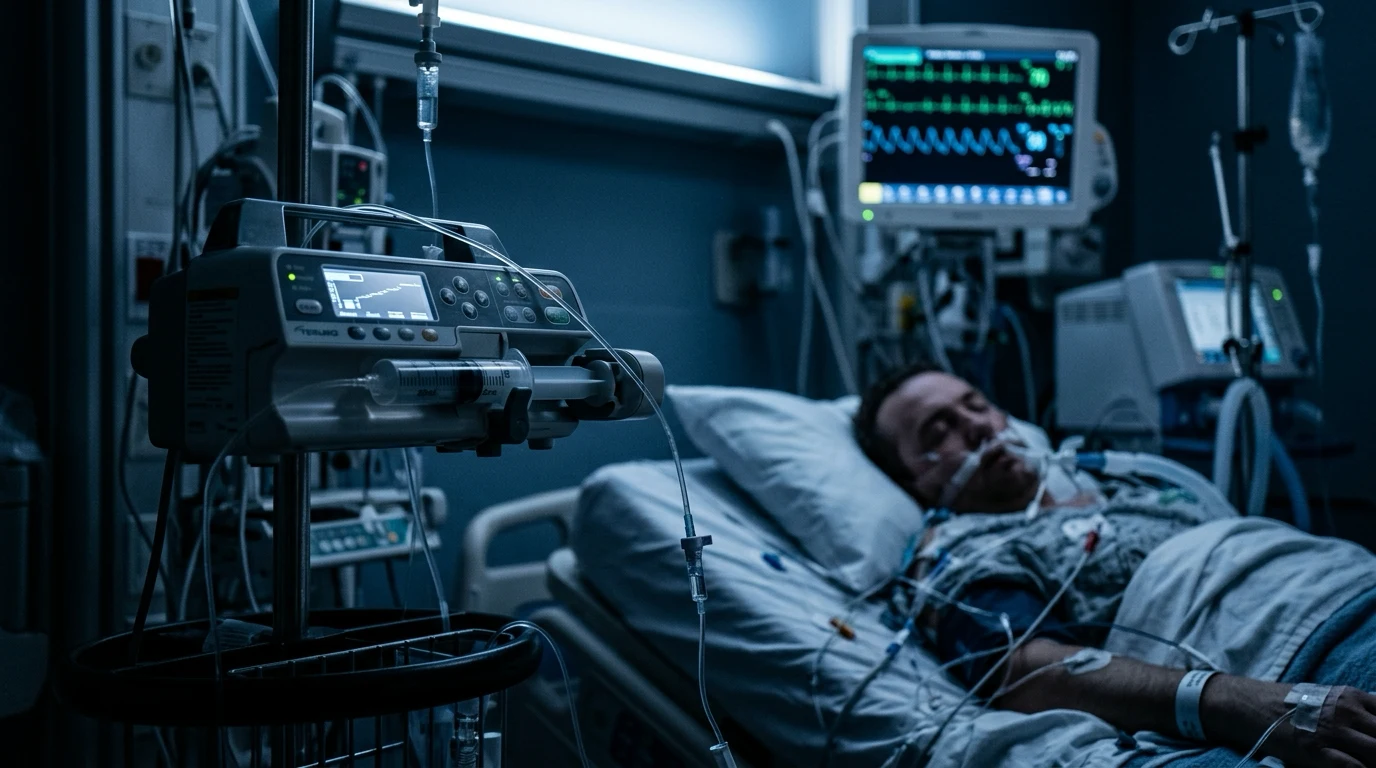
The vasoactive drugs are the agents that restore the perfusion pressure and the cardiac output when the fluid resuscitation is exhausted or contraindicated, and they are the most dangerous drugs the emergency physician wields — a dose misjudged by a decimal point stops a heart or opens a vessel catastrophically. The Fellowship candidate must know the receptor that each agent acts on (because the receptor predicts the effect — the alpha-1 receptor constricts the vasculature and raises the pressure, the beta-1 receptor raises the heart rate and the contractility, the beta-2 receptor dilates and bronchodilates, the V1 receptor of the vasopressin constricts independently of the catecholamine pathway, and the dopamine receptor is dose-dependent and unreliable), must match the agent to the shock type (the vasopressor for the distributive shock, the inotrope for the cardiogenic, the combined agent for the mixed), and must know the doses, the routes, and the complications cold.[3]
The receptor framework — the science behind every choice
The catecholamines and the vasopressin analogues act through a small number of G-protein-coupled receptors, and the receptor engaged determines the haemodynamic effect. The Fellowship candidate who memorises the receptor profile of each agent reasons from the physiology rather than rote, and answers any question on any agent — including the unfamiliar — by reading the receptor.[3]
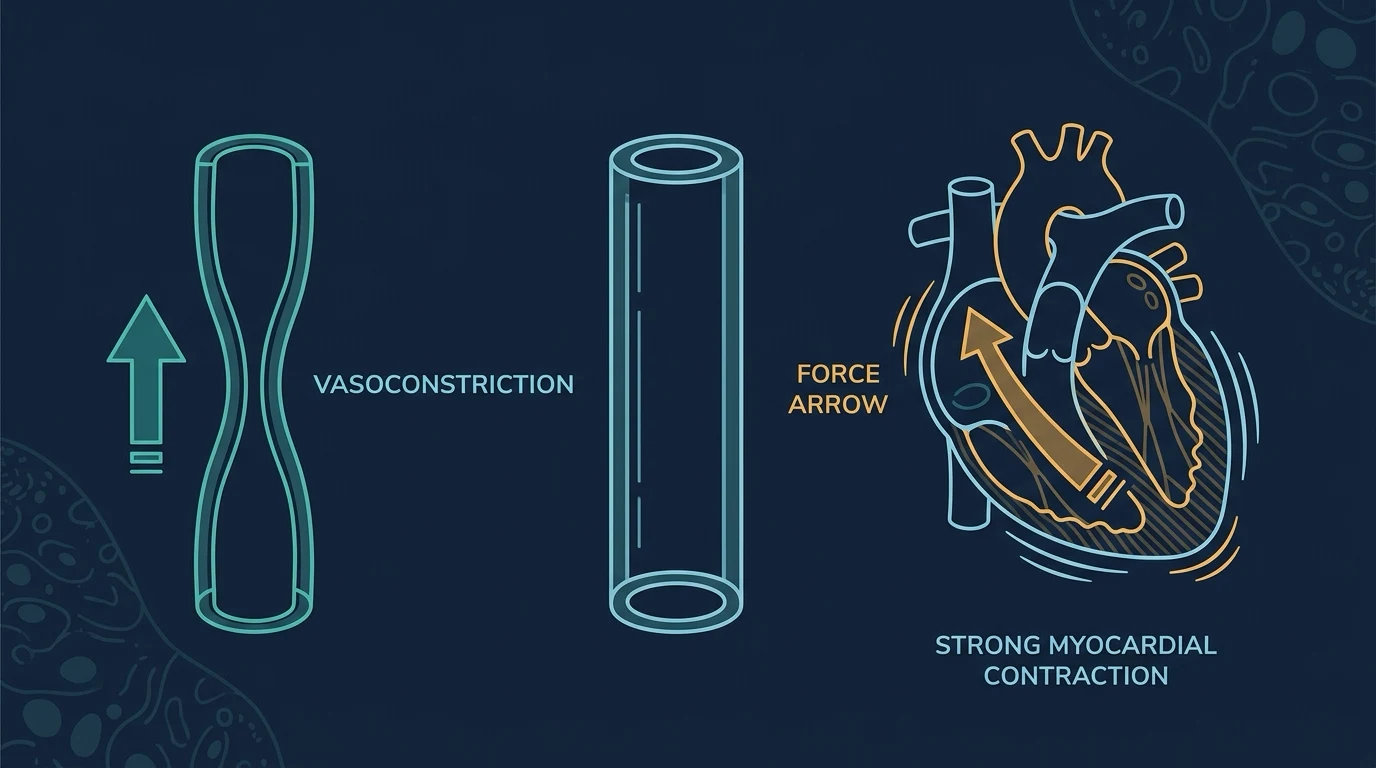
The alpha-1 adrenergic receptor (a Gq-coupled receptor on the vascular smooth muscle) activates the phospholipase C pathway, raises the intracellular calcium, and produces the arteriolar vasoconstriction that is the basis of every vasopressor. The beta-1 adrenergic receptor (a Gs-coupled receptor on the myocardium) raises the cyclic AMP, the calcium influx, and therefore the heart rate (the chronotropy), the contractility (the inotropy), and the conduction velocity (the dromotropy). The beta-2 adrenergic receptor (a Gs-coupled receptor on the bronchial and the vascular smooth muscle) relaxes the smooth muscle, producing the bronchodilation and a peripheral vasodilation that can drop the pressure. The dopamine-1 (D1) receptor dilates the renal, mesenteric and the cerebral vasculature and was the basis of the historical "renal dose dopamine" myth — discredited, because the low-dose dopamine does not protect the kidney in the shock. The V1 (V1a) receptor of the vasopressin is a Gq-coupled receptor on the vascular smooth muscle that produces a catecholamine-independent vasoconstriction — the value of the vasopressin as a catecholamine-sparing adjunct in the refractory vasoplegia.[3]
The receptor framework — read the agent through the receptor
Alpha-1 receptor
Gq-coupled on the vascular smooth muscle; raises the intracellular calcium; produces the arteriolar vasoconstriction. Engaged by noradrenaline (predominantly), adrenaline (at higher doses), phenylephrine, metaraminol, vasopressin (via the V1 receptor, an analogous pathway). Raises the systemic vascular resistance and the blood pressure.
Beta-1 receptor
Gs-coupled on the myocardium; raises the cyclic AMP; produces the chronotropy (the heart rate), the inotropy (the contractility), and the dromotropy (the AV conduction). Engaged by dobutamine, dopamine, adrenaline, isoprenaline. Raises the cardiac output and the myocardial oxygen demand.
Beta-2 receptor
Gs-coupled on the bronchial and the vascular smooth muscle; produces the bronchodilation and the peripheral (and the splanchnic) vasodilation. Engaged by adrenaline (and by salbutamol, terbutaline). The bronchodilation is the basis of the adrenaline in anaphylaxis; the vasodilation is why pure beta-2 agonists can drop the blood pressure.
D1 (dopamine-1) receptor
Vasodilates the renal, mesenteric and cerebral beds. Engaged at the low dopamine dose (1 to 3 mcg/kg/min). The historical "renal-dose dopamine" was meant to protect the kidney — disproven by the trials, and the dopamine is no longer used for this purpose.
V1 (vasopressin) receptor
Gq-coupled on the vascular smooth muscle; catecholamine-independent vasoconstriction. Engaged by terlipressin and the arginine vasopressin. The basis of the catecholamine-sparing strategy in the refractory septic vasoplegia — a small fixed dose reduces the noradrenaline requirement.
The phosphodiesterase-3 inhibition (milrinone)
Not a receptor — an enzyme. The PDE-3 breaks down the cyclic AMP; milrinone inhibits it and raises the intracellular cyclic AMP, producing an inotropy plus a vasodilation (the inodilator). It lowers the pulmonary vascular resistance and is the agent of choice in the right-heart failure and the pulmonary hypertension.
The agent-by-agent pharmacology
The vasoactive armamentarium is small — six core agents and a handful of adjuncts. Each is profiled by its receptor profile, its onset, its titratability, and its complications, and the choice of the agent is the choice of the receptor profile that the patient needs.[1]
Noradrenaline (first-line pressor)
- Alpha-1 strong + beta-1 mild; alpha greater than beta
- 0.05 to 1.0 mcg/kg/min; titrate to a MAP of 65
- First-line for septic, neurogenic, anaphylactic-shock-on-fluid-refractory
- Onset seconds; the most titratable pressor
Adrenaline (combined pressor-inotrope)
- Alpha + beta-1 + beta-2; beta-rich at low doses, alpha-rich at high doses
- 0.05 to 1.0 mcg/kg/min infusion; 0.5 mg IM for anaphylaxis; 1 mg IV for arrest
- Anaphylaxis, cardiac arrest, the single-agent cardiogenic shock, beta-blocker/CCB overdose
- Raises the lactate (beta-2 aerobic glycolysis); arrhythmogenic
Vasopressin (catecholamine-sparing adjunct)
- V1 receptor; catecholamine-independent vasoconstriction
- 0.01 to 0.04 units/min — fixed, do not titrate higher
- Septic-shock adjunct to reduce the noradrenaline dose
- Mesenteric, digital and coronary ischaemia; hyponatraemia
Dopamine (avoid first-line)
- Dose-dependent: D1 at low dose, beta at mid, alpha at high
- 5 to 20 mcg/kg/min for the pressor effect
- SOAP II: higher arrhythmia, no mortality benefit
- Reserved for the bradycardia-induced shock and the temporary pacing bridge
Dobutamine (beta-1 inotrope)
- Beta-1 predominant with a mild beta-2; raises the CO, lowers the SVR
- 2.5 to 20 mcg/kg/min
- Cardiogenic shock; the low-output state; the septic cardiomyopathy
- Tachyarrhythmia, myocardial ischaemia, hypotension if volume-deplete
Milrinone (PDE-3 inodilator)
- Phosphodiesterase-3 inhibitor; inotropy + vasodilation
- 0.125 to 0.75 mcg/kg/min (loading 50 mcg/kg)
- Right-heart failure, the pulmonary hypertension, the cardiogenic shock
- Renally cleared (halve in AKI); long half-life, hard to switch off
Phenylephrine (pure alpha-1)
- Pure alpha-1 agonist; vasoconstricts without the chronotropy
- 0.5 to 6 mcg/kg/min; 50 to 200 mcg boluses
- Tachyarrhythmia-intolerant shock; the anaesthesia-induced hypotension
- Drops the stroke volume in the failing ventricle — avoid in cardiogenic shock
Metaraminol (mixed alpha, AUS/NZ favourite)
- Mixed alpha-1 and alpha-2 with some indirect noradrenaline release
- 0.5 to 10 mg in 500 mL, titrated; 0.5 to 1 mg boluses
- Theatre and ED bolus pressor; temporising while the infusion is prepared
- Reflex bradycardia; not the agent for a long infusion; extravasation risk
Isoprenaline (pure beta)
- Pure beta-1 and beta-2; chronotropy and vasodilation
- 2 to 20 mcg/min
- Bradycardia intolerant of pacing; the torsades pause; beta-blocker bradycardia
- Causes hypotension (beta-2); rarely the right agent in the shocked patient
Terlipressin (long-acting V1)
- V1 agonist prodrug; long half-life (about six hours)
- 1 to 2 mg IV bolus every four to six hours
- Hepatorenal syndrome; the refractory septic vasoplegia
- Hyponatraemia, ischaemia; slower onset than the noradrenaline
Angiotensin II (refractory pressor)
- Angiotensin-receptor agonist; catecholamine-independent
- 20 to 80 ng/kg/min
- Refractory vasoplegic shock (the ATHOS-3 evidence)
- Thrombosis (venous); limited availability; for the refractory patient
The selection of the agent by the shock type
The shocked patient has a shock type, and the shock type decides the vasoactive agent. The four shock types — the distributive (the septic, the anaphylactic, the neurogenic, the drug-induced), the cardiogenic, the hypovolaemic and the obstructive — each have a preferred pharmacology, and the bedside echocardiogram and the fluid response narrow the diagnosis in the minutes that matter.[2]
Septic / distributive shock
- Vasodilatory (low SVR); warm periphery early
- Noradrenaline first-line; titrate to a MAP of 65
- Add vasopressin 0.03 to 0.04 units/min for the catecholamine-sparing
- Add dobutamine if the septic cardiomyopathy (low CO) supervenes
Anaphylactic shock
- Vasodilatory + bronchospasm + angio-oedema
- Adrenaline 0.5 mg IM (1:1000) repeated every 5 min — first
- IV adrenaline infusion 0.05 to 0.5 mcg/kg/min if refractory
- Adjuncts: fluid, antihistamine, hydrocortisone, bronchodilator
Cardiogenic shock
- Low cardiac output; cold, wet periphery
- Noradrenaline to restore the coronary perfusion pressure
- Add dobutamine (or milrinone) for the inotropy
- Revascularise the cause; MCS for the refractory
Hypovolaemic / haemorrhagic
- Low preload; cold, dry periphery
- Fluid and the blood first — not the pressor
- Noradrenaline as a temporising adjunct only if the pressure is life-threatening
- Stop the bleeding; transfuse; permissive hypotension until the haemostasis
Obstructive (PE, tamponade, PTX)
- Not a pressor disease alone — relieve the obstruction
- Noradrenaline to hold the pressure while the cause is treated
- Thrombolysis for the massive PE; drainage for the tamponade; decompression for the tension PTX
- Cautious fluid; avoid the vasodilator
Neurogenic shock
- Loss of the sympathetic tone; bradycardia + hypotension
- Noradrenaline first-line (alpha-1 to restore the SVR)
- Add atropine or an isoprenaline infusion for the bradycardia
- Above the T6 cord lesion; beware the hypothermia
Drug-induced vasoplegia
- CCB/BB overdose: bradycardia + hypotension + vasodilation
- High-dose insulin/euglycaemia first (1 unit/kg bolus then 0.5 to 1 unit/kg/h)
- Noradrenaline or adrenaline for the refractory; calcium and the lipid emulsion
- Vasopressin ineffective (the V1 pathway intact but the catecholamine pathway blocked) — do not rely on it alone
The shock-type to first-agent matrix
The dosing reference — the full weight-based table
The vasoactive doses are weight-based (the microgram per kilogram per minute), titrated to the perfusion target (the mean arterial pressure of 65, the lactate trend, the urine output, the capillary refill), and infused through a syringe driver or a volumetric pump with the dedicated lumen. The Fellowship candidate must know the dose, the starting point, the titration range and the maximum, because these are the numbers that are asked and the numbers that are fatal if misjudged.[4]
Noradrenaline
- Start 0.05 mcg/kg/min; titrate to a MAP of 65
- Range 0.05 to 1.0 mcg/kg/min (the usual ceiling 1.0)
- Onset 1 to 2 min; half-life about 2.5 min
- Concentration: 4 mg in 50 mL (or 8 mg in 250 mL) of 5 per cent dextrose
Adrenaline
- Start 0.05 mcg/kg/min; titrate to the MAP and the CO
- Range 0.05 to 1.0 mcg/kg/min infusion
- Anaphylaxis: 0.5 mg IM (1:1000); Arrest: 1 mg IV (1:10,000)
- Onset seconds; raises the lactate (beta-2 glycolysis)
Vasopressin
- Fixed 0.01 to 0.04 units/min — do not titrate by the MAP
- No weight adjustment; the maximum 0.04 units/min
- Onset minutes; half-life 10 to 35 min
- Add as the catecholamine-sparing adjunct, not the first agent
Dopamine
- Renal-dose 1 to 3 (obsolete); beta 5 to 10; alpha over 10
- Pressor range 5 to 20 mcg/kg/min
- Onset 5 min; half-life 2 min
- Avoid first-line — the SOAP II arrhythmia signal
Dobutamine
- Start 2.5 mcg/kg/min; titrate by the cardiac output
- Range 2.5 to 20 mcg/kg/min
- Onset 1 to 2 min; half-life 2 min
- Tachyarrhythmia and the ischaemia are the watch-fors
Milrinone
- Loading 50 mcg/kg over 10 min; then 0.125 to 0.75 mcg/kg/min
- Halve the dose in the AKI (the renal clearance)
- Onset 5 to 15 min; half-life 2.3 hours (long!)
- Lowers the PVR — the right-heart and the pulmonary-hypertension agent
Phenylephrine
- Bolus 50 to 200 mcg; infusion 0.5 to 6 mcg/kg/min
- Pure alpha-1 — no tachycardia
- Onset seconds; half-life 5 min
- The tachyarrhythmia-intolerant shock; avoid in the failing LV
Metaraminol
- Bolus 0.5 to 1 mg IV; infusion 0.5 to 10 mg in 500 mL
- Mixed alpha with some indirect noradrenaline release
- Onset 1 to 2 min; duration 20 to 60 min
- The AUS/NZ bolus pressor; the reflex bradycardia is common
Isoprenaline
- 2 to 20 mcg/min (not weight-based in the common practice)
- Pure beta; chronotropy + vasodilation
- Onset seconds; half-life 2 to 5 min
- The torsades pause, the beta-blocker bradycardia, the bridge to pacing
The vasoactive dosing quick-reference
Peripheral versus central administration — the question that matters in the first hour
The traditional teaching was that the vasopressor requires a central line, and that the patient must wait for the central access before the pressor is started. The contemporary evidence — and the Surviving Sepsis Campaign 2021 — accepts the peripheral vasopressor as a safe and appropriate temporising measure in the first hour of the resuscitation, because the harm of the delayed pressor (the prolonged hypotension, the deepening ischaemia) exceeds the small risk of the extravasation.[6]
The peripheral administration rules: use a large, proximal vein (the antecubital fossa or the forearm, never the dorsum of the hand or the wrist); use a cannula that is well flushed and well secured; avoid the limbs with the poor perfusion, the vascular disease or the dialysis fistula; monitor the site continuously for the swelling, the blanching or the pain; dilute the standard concentration (the noradrenaline at 4 mg in 50 mL or 8 mg in 250 mL is the peripheral-safe dilution); and plan the central access early — the peripheral line is a bridge, not the destination, and any patient on a sustained pressor needs a central line within the first hours.[3]
The central administration is preferred for the high-dose or the multi-agent infusion (more than one pressor or an inotrope), the vasopressin (the high extravasation risk, the tissue necrosis), and the long-acting agents (the milrinone, the terlipressin). The site is the internal jugular (the lowest infection and thrombosis risk, the ultrasound-guided insertion) or the subclavian (the lower infection but the pneumothorax risk in the coagulopathic or the ventilated patient); the femoral is the rapid-access option in the arrest and the deeply shocked patient but carries the higher infection risk.[2]
[6] [2]The septic-shock resuscitation — the first 60 minutes

The septic shock is the commonest application of the vasoactive drugs in the resuscitation bay, and the Surviving Sepsis Campaign hour-1 bundle is the framework. The fluids are given first (the 30 mL per kilogram of the balanced crystalloid for the hypotension or the lactate over 4), and the vasopressor is started early — even before the full fluid challenge is complete if the patient is profoundly hypotensive — to restore the mean arterial pressure to 65. The CLOVERS trial has refined this by showing that the early vasopressor with the restrictive fluid is at least as safe as the liberal-fluid-then-pressor strategy, supporting the early pressor in the right patient.[7]
The first 60 minutes — the septic-shock resuscitation with the vasoactive agent
0 to 10 min — Recognise, oxygenate, the access
Recognise the shock (the hypotension, the raised lactate, the altered mentation); apply the high-flow oxygen to a saturation of 94 per cent; the two large-bore cannulae; the full monitoring (the ECG, the SpO2, the non-invasive pressure, the arterial line when safe). The blood for the lactate, the cultures before the antibiotic, the FBC, the electrolytes, the coagulation, the troponin, the group and hold.
0 to 30 min — The antibiotic and the source control
The broad-spectrum antibiotic within the first hour (the Surviving Sepsis Campaign mandate), the source control planned (the imaging, the surgical or the drainage). The antibiotic is the disease-modifying therapy; the pressor is the bridge that holds the patient until it works.
0 to 30 min — The fluid challenge
A 30 mL per kilogram of the balanced crystalloid for the hypotension or the lactate over 4, given in the aliquots of 500 mL with the reassessment (the jugular venous pressure, the capillary refill, the lung bases, the bedside echocardiogram). The CLOVERS trial supports a more restrictive approach with the early pressor in the patient who is not clearly volume-responsive.
Early — Start the noradrenaline
Start the noradrenaline 0.05 mcg/kg/min peripherally, even before the fluid challenge is complete, if the mean arterial pressure is below 65 or the lactate is rising. Titrate in 0.05 mcg/kg/min increments every 5 minutes to a MAP of 65. The goal is the perfusion, not the number — the falling lactate and the rising urine output are the targets.
15 to 60 min — Add the adjunct
If the noradrenaline requirement rises above 0.25 mcg/kg/min, add the vasopressin 0.03 units/min (the catecholamine-sparing, the VASST and the VANISH evidence). Add the hydrocortisone 200 mg per day if the pressor requirement is still rising (the APROCCHSS evidence — the hydrocortisone plus the fludrocortisone reduced the mortality in the vasopressor-dependent shock).
15 to 60 min — Reassess the cardiac output
The bedside echocardiogram: a hyperdynamic, kissing ventricle confirms the distributive shock; a depressed left ventricle (the septic cardiomyopathy) needs the dobutamine 2.5 to 20 mcg/kg/min added to the noradrenaline. The passive leg raise or the fluid challenge confirms the residual volume-responsiveness.
30 to 60 min — The central access and the disposition
Place the central line (the internal jugular, the ultrasound-guided) and the arterial line; transfer to the intensive care. The mean arterial pressure held at 65, the lactate falling, the antibiotic given, the source identified — the patient is resuscitated.
The targets — the MAP, the lactate, and the SEPSISPAM question
The vasoactive agent is titrated to the mean arterial pressure of 65 mmHg (the threshold below which the autoregulation of the cerebral, the coronary and the renal beds is lost), the lactate trend (the clearance of 10 per cent per hour in the first hours, or the trend rather than the single value), and the urine output (over 0.5 mL per kilogram per hour). The capillary refill (under three seconds) and the mottling are the bedside adjuncts.[4]
The SEPSISPAM trial asked whether a higher target (the MAP of 80 to 85) was better than the standard 65 for the patients with the septic shock, and the answer was no — there was no mortality difference overall, but the higher target required more catecholamines, more arrhythmias, and a signal of harm in the subgroup with the chronic hypertension (more acute kidney injury). The lesson: the target is 65 for most patients, with a higher target (the 75 to 80) considered only for the patient with the chronic hypertension who had a higher baseline and who clinically appears under-perfused at 65.[4]
[4]The catecholamine-sparing strategy and the adjuncts
The high catecholamine dose is independently associated with the arrhythmia, the myocardial ischaemia, the immunosuppression and the mortality — and the catecholamine-sparing strategy aims to reduce the catecholamine burden without sacrificing the perfusion. The two adjuncts are the vasopressin (the V1-receptor vasoconstrictor that is catecholamine-independent) and the corticosteroid (the hydrocortisone that restores the vascular responsiveness and the adrenal function).[2]
The VASST trial (Russell 2008) compared the vasopressin against the noradrenaline in the septic shock and found no overall mortality difference, but a signal of benefit in the less severe shock (the lactate under 4); the VANISH trial (Gordon 2016) compared the early vasopressin against the noradrenaline and found no difference in the kidney failure-free days, but a lower rate of the renal-replacement therapy. The Surviving Sepsis Campaign suggests the vasopressin as a catecholamine-sparing adjunct at a fixed 0.03 units per minute when the noradrenaline dose is rising.[3]
The APROCCHSS trial (Annane 2018) randomised the septic-shock patients to the hydrocortisone plus the fludrocortisone versus the placebo and found a reduction in the 90-day mortality (43 per cent versus 49 per cent) — the strongest evidence for the corticosteroid in the vasopressor-refractory shock. The Surviving Sepsis Campaign suggests the intravenous hydrocortisone 200 mg per day for the patient on the rising vasopressor dose (typically over 0.25 mcg/kg/min of the noradrenaline).[5]
[5]The early vasopressor versus the early fluid — the CLOVERS question
The Surviving Sepsis Campaign hour-1 bundle mandates the 30 mL per kilogram of the fluid for the hypotension or the lactate over 4, but the contemporary evidence — the CLOVERS trial — has refined the role of the early fluid. The CLOVERS trial (Self 2023, NEJM) randomised the sepsis-induced hypotension to a restrictive fluid strategy (the early vasopressor, the smaller fluid boluses, the dynamic assessment) versus a liberal fluid strategy (the standard 30 mL per kilogram, the vasopressor only for the refractory hypotension) and found no difference in the 90-day mortality — and a trend toward fewer days on the vasopressor and less fluid overload in the restrictive arm.[7]
The lesson is not that the fluid is harmful but that the early vasopressor, used judiciously in the patient who is not clearly volume-responsive, is safe and may reduce the fluid overload. The dynamic assessment (the passive leg raise, the fluid challenge, the bedside echocardiogram) is the tool that distinguishes the patient who will benefit from the fluid from the patient who needs the pressor — and the Fellowship candidate must know both.[7]
CLOVERS — early restrictive vs liberal fluid in sepsis-induced hypotension (NEJM 2023)
New England Journal of Medicine
PMID 36688507
Key finding
A multicentre randomised trial of 1,563 patients with the sepsis-induced hypotension, comparing the early restrictive fluid strategy (the smaller boluses, the early vasopressor, the dynamic assessment) against the liberal fluid strategy (the standard 30 mL per kilogram before the vasopressor). The 90-day mortality was not different (the restrictive arm at 30 days 23.0 per cent versus 22.4 per cent), with no signal of harm and a trend toward the fewer vasopressor days and the less fluid overload in the restrictive arm.<Cite id="7"/>
Practice change
The early vasopressor with the restrictive fluid is at least as safe as the liberal-fluid-then-pressor strategy in the sepsis-induced hypotension. The dynamic assessment of the volume responsiveness (the passive leg raise, the bedside echo) is the tool that distinguishes the patient who needs the fluid from the patient who needs the pressor.
The special situations
Anaphylaxis — the intramuscular adrenaline
The anaphylactic shock is the one shock in which the intramuscular adrenaline is the first, the second and the third therapy — not an infusion, not a vasopressor, but the 0.5 mg of the 1:1000 adrenaline into the anterolateral thigh (the vastus lateralis), repeated every five minutes until the response. The alpha-1 arrests the angio-oedema and the vasodilation, the beta-2 the bronchospasm, and the beta-1 supports the heart. The intravenous adrenaline infusion (0.05 to 0.5 mcg/kg/min) is reserved for the refractory shock, the patient on the beta-blocker (where the glucagon is added), or the peri-arrest. The adjuncts — the fluid, the antihistamine (the chlorphenamine), the hydrocortisone, the bronchodilator — are the second-line; the adrenaline is the first.[2]
The cardiac arrest and the post-ROSC shock
The cardiac arrest uses the 1 mg of the 1:10,000 adrenaline intravenously every three to five minutes (the standard ALS algorithm), with the vasopressin no longer recommended by the ILCOR (the adrenaline alone is the standard). The post-ROSC patient with the stunned myocardium and the vasodilatory post-arrest syndrome frequently needs the noradrenaline infusion (the MAP of 65 and the systolic over 90, the normoxia and the normocapnia, the targeted temperature management), and the dobutamine is added for the low-output state. The post-arrest bradycardia and the heart block may need the isoprenaline or the pacing.[2]
[2]The beta-blocker and the calcium-channel-blocker overdose
The beta-blocker and the calcium-channel-blocker overdose is the drug-induced shock with a specific antidotal pathway: the high-dose insulin and the euglycaemia (the 1 unit per kilogram bolus of the regular insulin, then the 0.5 to 1 unit per kilogram per hour, with the glucose to maintain the euglycaemia), the calcium (the 10 to 20 mL of the 10 per cent calcium chloride or the 30 to 60 mL of the 10 per cent calcium gluconate), the vasopressor (the noradrenaline or the adrenaline, high-dose), and the lipid emulsion for the refractory. The vasopressin is ineffective alone in this setting (the V1 pathway is intact but the catecholamine and the calcium pathways are blocked) — do not rely on it. The glucagon is added for the beta-blocker overdose (the 5 to 10 mg bolus then the infusion). The mechanical circulatory support is the rescue for the refractory.[2]
The right-heart failure and the pulmonary hypertension
The right-heart failure (the right-ventricular infarct, the massive pulmonary embolism, the decompensated pulmonary hypertension) is the shock in which the milrinone is preferred over the dobutamine — the milrinone lowers the pulmonary vascular resistance (the afterload of the right ventricle) and the inotropy supports the output, without the tachyarrhythmia of the dobutamine. The noradrenaline holds the systemic pressure (the coronary perfusion pressure of the right ventricle, supplied in the systole and the diastole, depends on it), the volume loading is cautious (the right ventricle is preload-responsive up to a point, then it fails), and the vasodilators are avoided. The inhaled pulmonary vasodilators (the nitric oxide, the nebulised epoprostenol) are the adjunct for the refractory.[3]
The neurogenic shock
The neurogenic shock (the spinal cord lesion above the T6) is the loss of the sympathetic tone — the hypotension with the bradycardia (the unopposed vagal tone), the warm periphery (the loss of the alpha tone), and the hypothermia. The noradrenaline is the first-line vasopressor (the alpha-1 to restore the systemic vascular resistance), with the atropine 0.5 mg or the isoprenaline infusion for the symptomatic bradycardia. The fluid is given for the associated injuries but the pressor is the main therapy. The distinguishing feature from the spinal shock (the transient areflexia of the acute cord injury) is the persistent hypotension with the bradycardia.[2]
The complications and the pitfalls
The complications of the vasoactive therapy are the predictable consequences of the receptor pharmacology: the extravasation and the tissue necrosis (the alpha-1 vasoconstriction at the cannula site), the arrhythmia (the beta-1 chronotropy — the tachycardia, the atrial fibrillation, the ventricular ectopy, the ischaemia), the digital and mesenteric ischaemia (the vasopressin at the high dose), the hyponatraemia (the vasopressin), the lactate rise on the adrenaline (the beta-2 glycolysis), the hypotension on the milrinone (the vasodilation, the long half-life), and the immunosuppression and the hyperglycaemia (the high-dose catecholamine).[2]
The pitfalls are the inverse of the pharmacology: using the dopamine as the first-line pressor; using the pure alpha-agonist (the phenylephrine, the metaraminol) alone in the cardiogenic shock (the afterload rise drops the stroke volume); delaying the pressor for the central line; titrating the vasopressin above 0.04 units per minute; forgetting the phentolamine for the extravasation; using the milrinone at the full dose in the acute kidney injury; chasing the rising lactate on the adrenaline with more fluid; and treating the blood pressure number rather than the perfusion.[3]
[4]The monitoring and the weaning
The patient on the vasoactive therapy needs the arterial line (the beat-to-beat pressure, the accurate titration), the central venous access (the reliable infusion, the multiple agents), the continuous ECG (the arrhythmia), the urine output (the catheter, the hourly charting), the lactate (the trend), and the bedside echocardiogram (the cardiac output, the volume status, the response to the inotrope). The advanced monitoring — the pulse contour cardiac output, the pulmonary artery catheter, the point-of-care ultrasound — is used for the complex or the refractory shock.[2]
[6]The weaning of the vasopressor begins when the cause is treated (the antibiotic working in the septic shock, the revascularisation done in the cardiogenic), the lactate is clearing, the urine output is recovering, and the perfusion is restored. The noradrenaline is weaned in the 0.05 mcg/kg/min decrements as the patient tolerates, the vasopressin is discontinued first (the longer duration of action, the catecholamine-sparing achieved), and the inotrope is weaned last. The premature weaning (before the cause is treated) precipitates the rebound hypotension; the prolonged weaning (out of caution) prolongs the intensive-care stay and the catheter risk.[6]
The prognosis and the disposition
The mortality of the septic shock is 30 to 40 per cent with the prompt resuscitation, higher with the delay. The patients on the rising catecholamine dose, the vasopressin, and the hydrocortisone carry the higher mortality. Every patient on the vasoactive therapy is admitted to the intensive care, with the continuous monitoring, the cause-directed therapy, and the daily reassessment for the weaning.[6]
The special populations
The elderly carry the higher baseline pressure and the chronic hypertension, and may need the higher MAP target (the 75 to 80) per the SEPSISPAM subgroup. The pregnant patient with the septic shock is managed with the same noradrenaline (it is safe in the pregnancy; the phenylephrine is the alternative for the obstetric anaesthesia-induced hypotension). The paediatric patient is dosed by the weight and started on the adrenaline (the first-line pressor in the paediatric septic shock per the PALS guidelines) rather than the noradrenaline. The patient with the chronic heart failure needs the inotrope early (the dobutamine or the milrinone) and the cautious pressor. The patient with the pulmonary hypertension needs the milrinone and the inhaled pulmonary vasodilator.[4]
The evidence and the regional guidelines
The contemporary framework is the Surviving Sepsis Campaign 2021 (the noradrenaline first-line, the vasopressin the adjunct at 0.03 units per minute, the hydrocortisone 200 mg per day for the refractory shock, the target MAP of 65)[6] — the sepsis-specific evidence. The SOAP II (noradrenaline over dopamine)[1], the VASST and the VANISH (the vasopressin)[2][3], the SEPSISPAM (the MAP target)[4], the APROCCHSS (the hydrocortisone)[5], and the CLOVERS (the early vasopressor versus the fluid)[7] are the landmark trials the Fellowship candidate must cite.
SOAP II — dopamine vs noradrenaline for shock (NEJM 2010)
New England Journal of Medicine
PMID 20200382
Key finding
A multicentre randomised trial of 1,679 patients with any shock type, comparing the dopamine against the noradrenaline as the first-line vasopressor. There was no overall mortality difference (the 28-day mortality 52.5 per cent versus 48.5 per cent), but the dopamine had a significantly higher rate of the arrhythmic events (24.1 per cent versus 12.4 per cent) leading to the discontinuation, and a pre-specified cardiogenic-shock subgroup trended toward the higher mortality with the dopamine.<Cite id="1"/>
Practice change
The noradrenaline is the default vasopressor for the shock — the dopamine carries a higher arrhythmia risk without a mortality benefit. The dopamine is reserved for the bradycardia-induced shock where the chronotropy is wanted, and even there the pacing is preferable.
VASST — vasopressin vs noradrenaline in septic shock (NEJM 2008)
New England Journal of Medicine
PMID 18305265
Key finding
A multicentre randomised trial of 778 patients with the septic shock on the rising vasopressor, comparing the vasopressin (titrated 0.01 to 0.04 units per minute) against the noradrenaline. There was no overall mortality difference (the 28-day mortality 35.4 per cent versus 39.3 per cent, not significant), but a pre-specified subgroup with the less severe shock (the lactate under 4) showed a mortality reduction with the vasopressin.<Cite id="2"/>
Practice change
The vasopressin is not superior to the noradrenaline as a first-line agent, but it has a role as the catecholamine-sparing adjunct in the less severe septic shock. It is added at a fixed low dose to reduce the noradrenaline requirement, not titrated by the blood pressure.
VANISH — early vasopressin vs noradrenaline on the kidney failure (JAMA 2016)
JAMA
PMID 27483065
Key finding
A factorial randomised trial of 409 patients with the septic shock, comparing the early vasopressin (up to 0.06 units per minute) against the noradrenaline, with the hydrocortisone as the second factor. The primary outcome of the kidney failure-free days was not different, but the vasopressin group had a lower rate of the renal-replacement therapy (the signal toward the renal protection).<Cite id="3"/>
Practice change
The early vasopressin is not superior to the noradrenaline as the first agent for the kidney outcome, but the signal of the reduced renal-replacement therapy supports its use as the catecholamine-sparing adjunct. The fixed low dose is the standard, not the titrated high dose.
SEPSISPAM — high vs low MAP target in septic shock (NEJM 2014)
New England Journal of Medicine
PMID 24635770
Key finding
A multicentre randomised trial of 776 patients with the septic shock, comparing the high (80 to 85) against the low (65 to 70) MAP target. There was no difference in the 28-day or the 90-day mortality, but the high-target group received more noradrenaline, had more atrial fibrillation, and in the pre-specified subgroup with the chronic hypertension showed a doubling of the acute kidney injury requiring the renal-replacement therapy.<Cite id="4"/>
Practice change
The default MAP target is 65 for the septic shock. The higher target (75 to 80) is reserved for the selected patient with the chronic hypertension who is clinically under-perfused at 65 — the routine high target is harmful.
APROCCHSS — hydrocortisone plus fludrocortisone in septic shock (NEJM 2018)
New England Journal of Medicine
PMID 29490185
Key finding
A multicentre randomised trial of 1,241 patients with the vasopressor-refractory septic shock (on at least 1 mcg/kg/min of the catecholamine for the shock), comparing the hydrocortisone 200 mg per day plus the fludrocortisone 50 mcg per day for seven days against the placebo. The 90-day mortality was significantly reduced (43 per cent versus 49 per cent); the effect was driven by the catecholamine-sparing and the reduced vasopressor requirement.<Cite id="5"/>
Practice change
The hydrocortisone (plus the fludrocortisone) is the adjunct of the vasopressor-refractory septic shock — it reduces the mortality and the catecholamine requirement. The Surviving Sepsis Campaign suggests the intravenous hydrocortisone 200 mg per day for the patient on the rising vasopressor dose.
ANZ practice note. The noradrenaline is the first-line vasopressor for the septic and the distributive shock; the peripheral administration is accepted as the temporising measure while the central access is secured; the vasopressin is added at 0.03 units per minute for the catecholamine-sparing; the hydrocortisone 200 mg per day is added for the refractory shock. The metaraminol remains the bolus pressor of the theatre and the immediate temporising, but it is not the agent for the sustained infusion. The dosing is the weight-based, the microgram per kilogram per minute, titrated to a MAP of 65.[2]
SAQ — Septic shock requiring vasopressors after fluid resuscitation
10 minutes · 10 marks
A 58-year-old man with community-acquired pneumonia and septic shock has received 30 mL/kg of crystalloid. His MAP is now 60 mmHg, HR 124, lactate 3.8, central venous oxygen saturation 68 per cent. He is intubated and ventilated. A central line is in place.
SAQ — Cardiogenic shock complicating acute myocardial infarction
10 minutes · 10 marks
A 65-year-old man presents with an inferior STEMI. After primary PCI, he remains hypotensive: MAP 55 mmHg, HR 110, cool peripheries, bibasal crackles, JVP elevated. Lactate 4.2. Bedside echo shows a severely impaired LV (ejection fraction 25 per cent).
Exam pearls
- Noradrenaline is the first-line vasopressor for the septic and the distributive shock — dopamine is no longer first-line (SOAP II — more arrhythmia, no mortality benefit).
- Noradrenaline is alpha-greater-than-beta — the alpha-1 restores the systemic vascular resistance and the pressure, the mild beta-1 supports the output without the dopamine tachyarrhythmia. Dose 0.05 to 1.0 mcg/kg/min to a MAP of 65.
- Anaphylaxis is the intramuscular adrenaline into the anterolateral thigh — 0.5 mg of 1:1000 every five minutes; the infusion (0.05 to 0.5 mcg/kg/min) is only for the refractory.
- Vasopressin is the V1-receptor catecholamine-sparing adjunct — fixed 0.01 to 0.04 units per minute, never titrated higher (mesenteric and digital ischaemia), never the first pressor. VASST and VANISH support the adjunctive role.
- Dobutamine is the beta-1 inotrope — 2.5 to 20 mcg/kg/min, the cardiogenic shock and the septic cardiomyopathy. Watch the tachyarrhythmia, the ischaemia, and the hypotension if volume-deplete.
- Milrinone is the PDE-3 inodilator — the right heart and the pulmonary vasculature; 0.125 to 0.75 mcg/kg/min; halve the dose in the AKI; the half-life is hours (hard to switch off).
- The MAP target is 65 — the SEPSISPAM showed no benefit of the higher target and a signal of harm in the chronic-hypertension subgroup. The 75 to 80 is reserved for the selected chronic-hypertension patient.
- Do not delay the pressor for the central line — start the peripheral noradrenaline through a well-sited, proximal cannula, and plan the central access within the first hours (the Surviving Sepsis Campaign 2021).
- Extravasation is the emergency — stop, aspirate, leave the cannula in situ, and inject the phentolamine 5 to 10 mg in 10 mL saline subcutaneously within twelve hours.
- Adrenaline raises the lactate through the beta-2 aerobic glycolysis — a rising lactate on the adrenaline infusion is not by itself the sign of the worsening shock.
- The pure alpha-agonist (phenylephrine, metaraminol) in the cardiogenic shock — the number improves while the patient dies (the afterload rise drops the stroke volume of the failing ventricle).
- The catecholamine-sparing: add the vasopressin 0.03 units per minute and the hydrocortisone 200 mg per day for the patient on the rising noradrenaline dose (over 0.25 mcg/kg/min) — the APROCCHSS mortality benefit.
- The dopamine is dose-dependent (D1, beta, alpha) and unpredictable — avoid first-line; reserve for the bradycardia-induced shock and the temporary bridge.
- CLOVERS (2023): the early vasopressor with the restrictive fluid is at least as safe as the liberal-fluid-then-pressor strategy — the dynamic assessment (the passive leg raise, the bedside echo) distinguishes the patient who needs the fluid from the patient who needs the pressor.
- The right-heart failure and the pulmonary hypertension — the milrinone is preferred over the dobutamine (lowers the pulmonary vascular resistance); the noradrenaline holds the systemic pressure; avoid the vasodilators.
- The beta-blocker/CCB overdose — the high-dose insulin/euglycaemia, the calcium, the noradrenaline or the adrenaline, and the lipid emulsion; the vasopressin is ineffective alone (do not rely on it).
- Read the agent through the receptor — the receptor engaged predicts the effect, and the receptor is the answer to any question on any vasoactive agent, including the unfamiliar.[7]
Red flags
[4]References
- [1]De Backer D, Biston P, Devriendt J, et al. Comparison of dopamine and norepinephrine in the treatment of shock (SOAP II). New England Journal of Medicine, 2010.PMID 20200382
- [2]Russell JA, Walley KR, Singer J, et al. Vasopressin versus norepinephrine infusion in patients with septic shock (VASST). New England Journal of Medicine, 2008.PMID 18305265
- [3]Gordon AC, Mason AJ, Thirunavukkarasu N, et al. Effect of Early Vasopressin vs Norepinephrine on Kidney Failure in Patients With Septic Shock (VANISH). JAMA, 2016.PMID 27483065
- [4]Asfar P, Meziani F, Hamel JF, et al. High versus low blood-pressure target in patients with septic shock (SEPSISPAM). New England Journal of Medicine, 2014.PMID 24635770
- [5]Annane D, Renault A, Brun-Buisson C, et al. Hydrocortisone plus Fludrocortisone for Adults with Septic Shock (APROCCHSS). New England Journal of Medicine, 2018.PMID 29490185
- [6]Evans L, Rhodes A, Alhazzani W, et al. Surviving sepsis campaign: international guidelines for management of sepsis and septic shock 2021. Intensive Care Medicine, 2021.PMID 34599691
- [7]National Heart, Lung, and Blood Institute PETAL Clinical Trials Network; Shapiro NI, Douglas IS, et al. Early Restrictive or Liberal Fluid Management for Sepsis-Induced Hypotension (CLOVERS). New England Journal of Medicine, 2023.PMID 36688507