Hypothyroidism in Adults
Hypothyroidism is a common clinical syndrome resulting from a deficiency of thyroid hormones, which leads to a generaliz... MRCP, USMLE exam preparation.
What matters first
Hypothyroidism is a common clinical syndrome resulting from a deficiency of thyroid hormones, which leads to a generaliz... MRCP, USMLE exam preparation.
Altered mental status / Coma
10 Jan 2026
Generated educational material; verify before clinical use.
Visible references section
See the concept before reading it
Study the key anatomy, imaging, and decision pathways as full teaching plates.
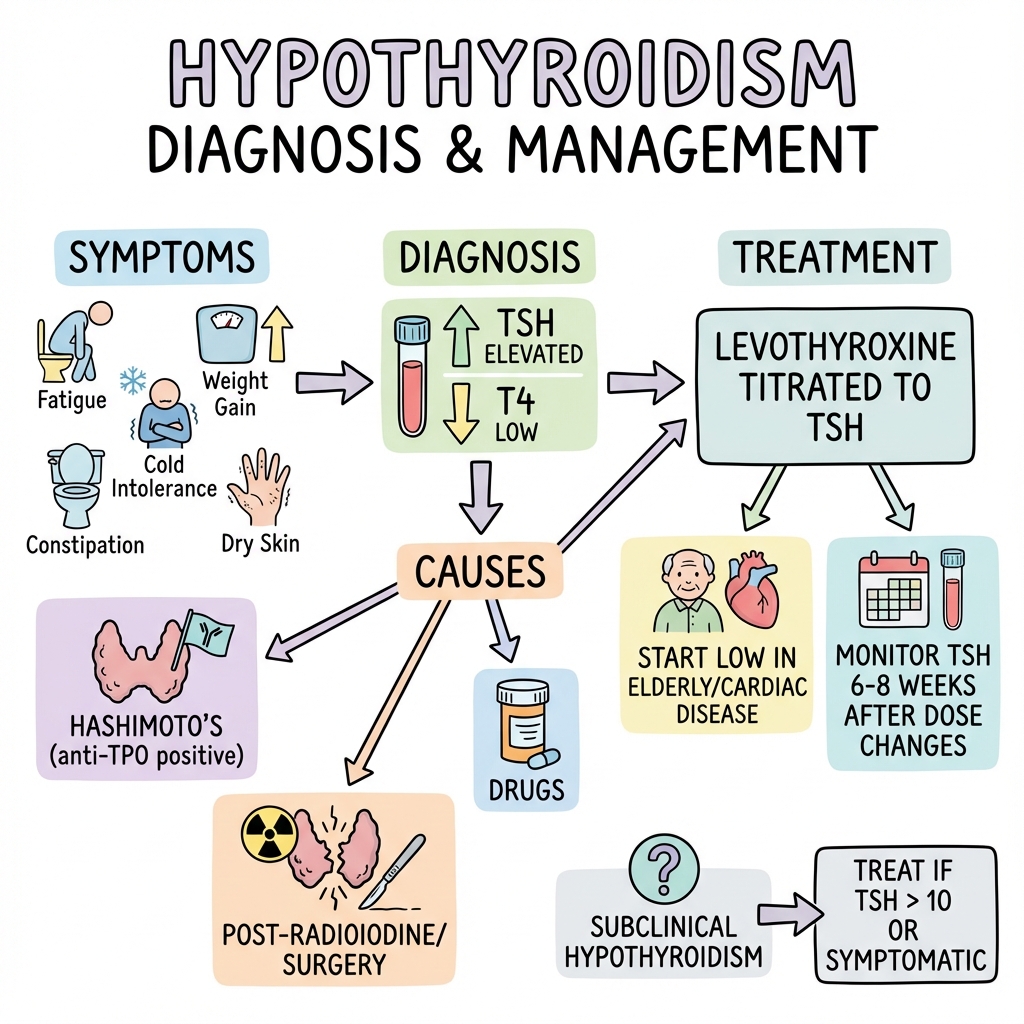
Clinical board
A visual summary of the highest-yield teaching signals on this page.
Urgent signals
Safety-critical features pulled from the topic metadata.
- Altered mental status / Coma
- Severe hypothermia (less than 35CC)
- Hypoventilation / Hypercapnia
- Bradycardia with hemodynamic instability
Exam focus
Current exam surfaces linked to this topic.
- MRCP
- USMLE
- PLAB
Content status and exam context
This page is AI-generated educational content. It may contain errors or omissions and is not a substitute for current guidelines, local protocols, senior clinical judgement, or professional medical advice.
MedVellum does not claim an individual clinician reviewer, board certification, or professional credential for this page unless a future version names a real, verifiable reviewer.
Clinical explanation and evidence
SECTION 1: Clinical Overview
1.1 Summary
Hypothyroidism is a common clinical syndrome resulting from a deficiency of thyroid hormones, which leads to a generalized slowing of metabolic processes. In adults, the condition is primarily characterized by an insidious onset of non-specific symptoms such as fatigue, cold intolerance, weight gain, and depressive mood. It is most frequently caused by chronic autoimmune thyroiditis (Hashimoto's disease) in iodine-sufficient regions, affecting 20-30% of patients with thyroid pathology, or by iodine deficiency globally. [1,2] The diagnosis is biochemically defined by an elevated serum thyroid-stimulating hormone (TSH) level and a low free thyroxine (fT4) level in primary hypothyroidism, while central (secondary) hypothyroidism demonstrates low or inappropriately normal TSH with low fT4. [3] Primary hypothyroidism accounts for over 95% of cases, while central hypothyroidism (pituitary or hypothalamic failure) is rare but clinically important to recognize. [4]
The clinical significance of hypothyroidism lies in its profound impact on cardiovascular health, lipid metabolism, and neuropsychiatric function. Subclinical hypothyroidism, defined as elevated TSH with normal fT4, affects up to 10% of the adult population and up to 20% of women over 60 years. [5,6] If left untreated, overt hypothyroidism can progress to myxedema coma, a life-threatening state of extreme metabolic collapse with mortality rates of 20-60% even with treatment. [7] Management centers on lifelong hormone replacement therapy, typically with synthetic levothyroxine (L-T4), aimed at normalizing TSH levels and restoring clinical euthyroidism. The prognosis for patients with hypothyroidism is excellent with appropriate adherence to therapy, though subclinical forms of the disease require nuanced management based on age, cardiovascular risk, and presence of thyroid peroxidase (TPO) antibodies. [8,9] Regular monitoring is essential to avoid iatrogenic hyperthyroidism, which carries risks of atrial fibrillation and osteoporosis, particularly in elderly patients. [10]
Classification by Etiology:
Primary Hypothyroidism (95% of cases):
- Chronic autoimmune (Hashimoto's) thyroiditis: Most common in iodine-sufficient areas
- Iodine deficiency: Most common cause globally
- Post-ablative: Following radioiodine therapy or thyroidectomy
- Drug-induced: Amiodarone, lithium, tyrosine kinase inhibitors, checkpoint inhibitors
- Thyroid infiltration: Amyloidosis, sarcoidosis, hemochromatosis
- Congenital: Thyroid dysgenesis or dyshormonogenesis (typically presents in infancy)
Central (Secondary/Tertiary) Hypothyroidism (1-5% of cases):
- Pituitary tumors or their treatment (adenomas, craniopharyngiomas)
- Pituitary surgery or radiation
- Sheehan syndrome (postpartum pituitary necrosis)
- Traumatic brain injury
- Hypothalamic disease (rare)
- Genetic mutations (TSH-beta, PROP1, PIT1)
Transient Hypothyroidism:
- Postpartum thyroiditis (5-10% of women)
- Subacute (de Quervain's) thyroiditis
- Silent (painless) thyroiditis
- Drug-induced (thyroiditis phase of amiodarone toxicity)
1.2 Key Facts
- Definition: A clinical state resulting from insufficient production or action of thyroid hormones (T3 and T4).
- Incidence: Approximately 0.5% per year for overt hypothyroidism; 3.5 per 1,000 women and 0.6 per 1,000 men annually. [11]
- Prevalence: Overt hypothyroidism affects 0.3–0.5% of the population; subclinical affects 4.3–10% depending on age and TSH cutoff. [12]
- Mortality: Low (\u003c1% annual) in treated cases; 20–60% in myxedema coma despite ICU treatment. [7]
- Morbidity: Associated with dyslipidemia (50% of cases), diastolic hypertension (30%), infertility (up to 30%), and cognitive dysfunction. [13]
- Peak Age: Incidence increases with age, peaking in the 7th and 8th decades; prevalence in women \u003e60 years reaches 15-20%. [6]
- Sex Distribution: Significant female predominance, with a Female:Male ratio of approximately 7:1 to 10:1 depending on population. [2]
- Genetic Component: Family history confers 3-5 fold increased risk; HLA-DR3, DR4, and DR5 associations in Hashimoto's thyroiditis. [14]
- Pathognomonic Feature: Delayed relaxation phase of deep tendon reflexes (Woltman sign) - sensitivity 77%, specificity 91%. [15]
- Gold Standard Screening: Serum Thyroid Stimulating Hormone (TSH) assay for primary hypothyroidism.
- Diagnostic Pitfall: TSH alone misses central hypothyroidism; must check fT4 if pituitary disease suspected. [4]
- First-line Treatment: Synthetic Levothyroxine (L-T4) monotherapy at 1.6 mcg/kg/day (lower in elderly). [16]
- Second-line Treatment: Combination therapy (L-T4 + Liothyronine) in selected refractory cases (controversial). [17]
- Key Complication: Myxedema coma (medical emergency requiring ICU care).
- Treatment Monitoring: TSH every 6-8 weeks after dose adjustment; aim for 0.5-2.5 mIU/L in most adults. [16]
- Pregnancy Consideration: Levothyroxine requirements increase by 25-50% in pregnancy; inadequate treatment impairs fetal neurodevelopment. [18,19]
- Subclinical Progression: 2-5% annual progression to overt hypothyroidism; higher (up to 8%) with positive TPO antibodies. [8,20]
- Drug Interactions: Calcium, iron, PPI, cholestyramine reduce L-T4 absorption; separate by 4 hours. [21]
1.3 Clinical Pearls
Diagnostic Pearl: "The TSH Log-Linear Relationship" Small changes in serum free T4 concentrations result in large, exponential changes in serum TSH concentrations. This makes TSH the most sensitive marker for diagnosing primary thyroid failure and monitoring replacement therapy, except in cases of pituitary disease.
Examination Pearl: "The Woltman Sign" During the neurological exam, pay close attention to the relaxation phase of the Achilles reflex. A slow, 'hung-up' relaxation is highly specific for hypothyroidism because thyroid hormone deficiency slows the rate of calcium reuptake by the sarcoplasmic reticulum in muscle fibers.
Treatment Pearl: "Start Low and Go Slow in the Elderly" In patients over 65 or those with known coronary artery disease, start levothyroxine at 12.5–25 mcg daily. Rapid replacement can increase cardiac output and oxygen demand, potentially precipitating angina, myocardial infarction, or tachyarrhythmias.
Pitfall Warning: "Biotin Interference" High-dose biotin (Vitamin B7) supplements can cause falsely low TSH and falsely high free T4 results in competitive immunoassays. Advise patients to stop biotin for at least 48–72 hours before thyroid function testing to avoid misdiagnosis of hyperthyroidism.
Mnemonic: "THE MYXEDEMA" Tiredness, Hoarseness, Edema (periorbital), Menorrhagia, Yellow skin (carotenemia), X-tra weight, Erythematous cheeks (malar flush), Depression, Memory loss, Achiness.
Emergency Pearl: "The Hypo-Triad" In an unconscious patient, the triad of hypothermia, hyponatremia, and hypercapnia should immediately raise suspicion for myxedema coma. Do not wait for TSH results to initiate steroid and thyroid hormone therapy if clinical suspicion is high.
Exam Pearl: "Secondary vs. Primary Hypothyroidism" In secondary (central) hypothyroidism, TSH is often inappropriately 'normal' or low in the setting of a low fT4. Relying solely on TSH for screening will miss these patients; always check fT4 if pituitary pathology is suspected.
1.4 Thyroid Function Test Interpretation
Understanding the TSH-T4 Relationship:
The thyroid axis operates on a highly sensitive negative feedback loop. The hypothalamus secretes thyrotropin-releasing hormone (TRH), which stimulates the pituitary to release TSH. TSH then stimulates the thyroid gland to produce T4 and T3. This relationship is logarithmic: a 2-fold change in fT4 produces a ~100-fold change in TSH. [22] This makes TSH exquisitely sensitive for detecting primary thyroid dysfunction.
Interpreting Common Patterns:
| TSH | fT4 | fT3 | Interpretation | Next Steps |
|---|---|---|---|---|
| High | Low | Low/Normal | Overt Primary Hypothyroidism | Start levothyroxine; check TPO antibodies |
| High | Normal | Normal | Subclinical Hypothyroidism | Check TPO Ab; consider treatment if TSH \u003e10, symptoms, or pregnancy |
| Low/Normal | Low | Low | Central Hypothyroidism | MRI pituitary; check other pituitary axes (cortisol, LH/FSH, GH) |
| Normal | Normal | Normal | Euthyroid | No treatment; consider retesting if high clinical suspicion |
| High | High | High | Lab Error or Assay Interference | Repeat; consider biotin interference, heterophile antibodies |
| Low | Low | Normal | Non-Thyroidal Illness Syndrome | Manage underlying illness; usually transient |
| High | Normal | Low | Poor T4 to T3 Conversion | Rare; consider selenium deficiency, medications |
Critical Diagnostic Pearls:
-
Age-Related TSH Shift: TSH reference ranges increase with age. A TSH of 6 mIU/L may be abnormal in a 30-year-old but physiological in an 80-year-old. [23] Consider age-specific ranges when interpreting subclinical hypothyroidism.
-
Central Hypothyroidism Diagnosis: TSH may be low, normal, or even mildly elevated (up to 10 mIU/L) in central hypothyroidism. The key is that TSH is inappropriate for the degree of low fT4. [4] Always measure fT4 concurrently with TSH when evaluating suspected pituitary disease.
-
Biotin Interference: High-dose biotin (\u003e5 mg/day) causes falsely low TSH and falsely high fT4/fT3 in competitive immunoassays, mimicking hyperthyroidism. Discontinue biotin for 48-72 hours before testing. [24]
-
Non-Thyroidal Illness Syndrome (NTIS): Critically ill patients often have low T3 ± low T4 with normal or low TSH. This is an adaptive response, not true hypothyroidism. Treatment with levothyroxine is not indicated. [25]
-
Pregnancy-Specific Ranges: hCG cross-reacts with TSH receptor, suppressing TSH in first trimester. Use trimester-specific TSH ranges: 1st trimester 0.1-2.5 mIU/L, 2nd trimester 0.2-3.0 mIU/L, 3rd trimester 0.3-3.0 mIU/L. [18]
1.5 Why This Matters Clinically
Patient Outcomes: Undiagnosed hypothyroidism leads to a progressive decline in physical and mental health. Delayed diagnosis often results in unnecessary psychiatric evaluations for depression or cardiovascular workups for bradycardia and hyperlipidemia. In the long term, untreated hypothyroidism accelerates atherosclerosis through increased LDL-cholesterol (average increase of 10-30 mg/dL) and diastolic hypertension. [26] For pregnant patients, untreated hypothyroidism is catastrophic, leading to impaired fetal neurodevelopment with IQ reductions of 7-10 points and increased risk of miscarriage (2-3 fold), preeclampsia, and placental abruption. [18,19] Maternal subclinical hypothyroidism is associated with lower birthweight and increased risk of small-for-gestational-age neonates. [27]
Healthcare Burden: Hypothyroidism is one of the most common chronic conditions managed in primary care. The economic burden is driven by the sheer volume of diagnostic testing and the need for lifelong medication. While the medication itself (levothyroxine) is inexpensive (\u003c$10-20/month), the cumulative cost of monitoring and the management of complications (like heart failure or myxedema coma) contributes significantly to healthcare resource utilization. Levothyroxine is consistently among the top 3 most prescribed medications in the United States and Europe, with over 100 million prescriptions annually in the US alone.
Medico-legal: Common litigation scenarios involve the failure to diagnose hypothyroidism in patients presenting with vague symptoms, or the failure to adjust levothyroxine doses during pregnancy (requiring 25-50% increase). [18] Another high-risk area is the mismanagement of myxedema coma in the emergency department, where the diagnosis is often overlooked in favor of sepsis or stroke. Failure to recognize central hypothyroidism in patients with known pituitary disease is also a source of liability. Over-replacement leading to iatrogenic thyrotoxicosis and subsequent hip fractures in elderly patients, or atrial fibrillation with thromboembolic events, are frequent sources of liability.
Training Relevance: Hypothyroidism is a "bread and butter" topic for medical board examinations (USMLE, MRCP, FRACP, PLAB). Trainees are expected to master the interpretation of thyroid function tests (TFTs), understand the nuances of subclinical disease management, and know the specific dosing requirements for special populations (elderly, pregnant, post-MI). It serves as the archetypal model for negative feedback loops in endocrine physiology. Common exam scenarios include: distinguishing primary from central hypothyroidism, managing subclinical hypothyroidism in different age groups, adjusting levothyroxine in pregnancy, and recognizing and treating myxedema coma.
Healthcare Burden: Hypothyroidism is one of the most common chronic conditions managed in primary care. The economic burden is driven by the sheer volume of diagnostic testing and the need for lifelong medication. While the medication itself (levothyroxine) is inexpensive, the cumulative cost of monitoring and the management of complications (like heart failure or myxedema coma) contributes significantly to healthcare resource utilization.
Medico-legal: Common litigation scenarios involve the failure to diagnose hypothyroidism in patients presenting with vague symptoms, or the failure to adjust doses during pregnancy. Another high-risk area is the mismanagement of myxedema coma in the emergency department, where the diagnosis is often overlooked in favor of sepsis or stroke. Over-replacement leading to iatrogenic thyrotoxicosis and subsequent hip fractures in elderly patients is also a frequent source of liability.
Training Relevance: Hypothyroidism is a "bread and butter" topic for medical board examinations (USMLE, MRCP). Trainees are expected to master the interpretation of thyroid function tests (TFTs), understand the nuances of subclinical disease, and know the specific dosing requirements for special populations. It serves as the archetypal model for feedback loops in endocrine physiology.
SECTION 2: Epidemiology
2.1 Incidence & Prevalence
- Incidence: 3.5 per 1,000 women per year and 0.6 per 1,000 men per year (Whickham Survey) [PMID: 8435600].
- Prevalence: Approximately 4.6% of the US population (0.3% overt, 4.3% subclinical) [PMID: 11834430].
- Lifetime Risk: 1 in 10 women will develop some form of thyroid dysfunction during their lifetime.
- Trend: Stable to slightly increasing due to improved screening and detection of subclinical cases.
- Geographic Variation: Higher prevalence of iodine-deficiency hypothyroidism in mountainous regions (Himalayas, Andes) and parts of Central Africa.
- Temporal Patterns: No significant seasonal variation, though myxedema coma is more common in winter months.
- Healthcare Burden: Levothyroxine is consistently among the top 3 most prescribed medications in the United States and Europe.
2.2 Demographics Table
| Factor | Details | Clinical Significance |
|---|---|---|
| Age | Peak: 60-80 years; increases linearly with age | Higher screening threshold needed in elderly |
| Sex | Female:Male ratio approx 8:1 | Estrogen may modulate autoimmune response |
| Ethnicity | Higher in Caucasians and Hispanics; Lower in African Americans | Genetic predisposition to Hashimoto's varies |
| Geography | Higher in iodine-deficient "Goiter Belts" | Iodine supplementation status dictates etiology |
| Socioeconomic | Lower access leads to delayed diagnosis | Severe myxedematous presentations in marginalized groups |
| Occupation | Radiation workers, healthcare (radiology) | Increased risk from occupational radiation exposure |
2.3 Risk Factors Tables
Non-Modifiable Risk Factors:
| Factor | Relative Risk (95% CI) | Mechanism |
|---|---|---|
| Female Sex | RR 5.0–10.0 | X-chromosome inactivation and hormonal influences |
| Family History | RR 3.0–5.0 | HLA-DR3, DR4, and DR5 associations in Hashimoto's |
| Type 1 Diabetes | RR 2.5–4.0 | Common autoimmune polyendocrine syndrome (APS) |
| Turner Syndrome | RR 3.0 (2.1-4.2) | Genetic predisposition to thyroid autoimmunity |
| Down Syndrome | RR 4.0 (3.2-5.1) | Increased frequency of thyroid dysgenesis and autoimmunity |
Modifiable Risk Factors:
| Risk Factor | Relative Risk (95% CI) | Evidence Level | Intervention Impact |
|---|---|---|---|
| Iodine Intake | RR Variable | Level 1a | Excess or deficiency both cause dysfunction |
| Smoking Cessation | RR 1.5-2.0 (transient) | Level 2a | Smoking is protective against Hashimoto's but harmful overall |
| Amiodarone Use | RR 6.0–10.0 | Level 1b | Wolff-Chaikoff effect leads to hypothyroidism |
| Lithium Therapy | RR 2.0–3.0 | Level 2a | Lithium inhibits thyroid hormone release |
| Head/Neck Radiation | RR 15.0-50.0 | Level 1b | Direct follicular cell destruction |
SECTION 3: Pathophysiology
3.1 Step 1: Initiating Event/Trigger
Primary Trigger: The most common trigger in iodine-sufficient areas is the loss of immune tolerance to thyroid-specific antigens, primarily thyroid peroxidase (TPO) and thyroglobulin (Tg). This is often initiated by a combination of genetic susceptibility (HLA-DR alleles) and environmental triggers (e.g., viral infections, excessive iodine intake). In Hashimoto's thyroiditis, the initiating event involves the activation of antigen-presenting cells (APCs) that recognize thyroid antigens.
Cellular Response: The APCs activate CD4+ T-helper cells, specifically the Th1 subtype. These cells begin secreting pro-inflammatory cytokines such as Interferon-gamma (IFN-γ) and Tumor Necrosis Factor-alpha (TNF-α). This happens over weeks to months before clinical symptoms appear.
Susceptibility: Individuals with polymorphisms in the CTLA-4 gene or PTPN22 gene are more susceptible, as these genes regulate T-cell activation and inhibition. Environmental priming may occur via "molecular mimicry," where viral proteins resemble thyroid antigens.
3.2 Step 2: Early Pathological Changes
Inflammatory Response: IFN-γ stimulates the expression of MHC class II molecules on thyroid follicular cells, which are normally MHC II negative. This allows the follicular cells themselves to act as APCs, creating a self-perpetuating inflammatory loop. Pro-inflammatory cytokines like IL-1, IL-6, and TNF-α increase vascular permeability within the gland.
Cellular Infiltration: There is a massive infiltration of the thyroid gland by lymphocytes (B-cells and T-cells) and plasma cells. Germinal centers form within the thyroid parenchyma, effectively turning the thyroid into a lymphoid organ.
Tissue Changes: The initial response may cause a transient enlargement of the gland (goiter). Histologically, follicular cells undergo "Hürthle cell" metaplasia—becoming large, granular, and eosinophilic due to mitochondrial stress.
3.3 Step 3: Established Disease Process
Progression of Pathology: The hallmark of established Hashimoto's is CD8+ cytotoxic T-cell-mediated destruction of thyrocytes. These T-cells recognize antigens on the follicular cell surface and induce apoptosis via the Fas/FasL pathway and the release of perforins and granzymes.
Histological Findings: As thyrocytes are destroyed, the normal follicular architecture collapses. Follicles become small, depleted of colloid, and surrounded by dense lymphocytic infiltrates and fibrosis.
Functional Consequences: As the number of functioning thyrocytes drops below a critical threshold (approx. 50-60%), the gland can no longer maintain euthyroidism. TSH levels rise in a compensatory attempt to stimulate the remaining tissue. This is the stage of "subclinical hypothyroidism."
3.4 Step 4: Complications and Progression
Natural History: Without intervention, the progressive destruction leads to "overt hypothyroidism." The systemic effects of low T3/T4 begin to manifest. Basal metabolic rate drops, and there is an accumulation of glycosaminoglycans (hyaluronic acid) in the interstitial space of various tissues.
Systemic Effects: The accumulation of glycosaminoglycans leads to the "myxedematous" state. This fluid-binding substance causes non-pitting edema in the skin, vocal cords (hoarseness), and heart (pericardial effusion). Cardiovascularly, there is decreased myocardial contractility and increased peripheral vascular resistance.
Secondary Complications: Hypercholesterolemia occurs due to decreased expression of LDL receptors in the liver. Anemia may develop due to decreased erythropoietin production and impaired iron/B12 absorption.
3.5 Step 5: Resolution, Chronicity, or Death
Chronicity: In most cases of Hashimoto's or post-ablative hypothyroidism, the disease is permanent. The thyroid gland eventually becomes atrophic and fibrotic (atrophic thyroiditis).
Outcomes: If untreated, the patient may enter myxedema coma. This is characterized by profound hypothermia, respiratory failure (due to blunted hypercapnic drive and macroglossia), and cardiovascular collapse. Death results from multi-organ failure or arrhythmias. With levothyroxine replacement, the systemic metabolic changes are reversible, though the thyroid gland itself does not recover.
3.6 Classification/Staging
| Stage/Type | Definition | Clinical Features | Prognosis |
|---|---|---|---|
| Subclinical | High TSH, Normal fT4 | Vague symptoms or asymptomatic | 5% per year progress to overt |
| Overt (Mild) | High TSH (> 10), Low fT4 | Fatigue, cold intolerance, dry skin | Excellent with L-T4 |
| Overt (Severe) | High TSH, Very low fT4 | Myxedema facies, bradycardia | Risk of myxedema coma |
| Central | Low/Normal TSH, Low fT4 | Pituitary/Hypothalamic signs | Depends on other pituitary axes |
| Myxedema Coma | Extreme metabolic failure | Coma, hypothermia, hypotension | 20-50% mortality |
3.7 Anatomical Considerations
The thyroid gland is located in the visceral compartment of the neck, anterior to the trachea (C5-T1 level). It consists of two lobes connected by an isthmus.
- Blood Supply: Superior thyroid artery (from external carotid) and inferior thyroid artery (from thyrocervical trunk).
- Nerve Supply: Recurrent laryngeal nerve (RLN) and superior laryngeal nerve lie in close proximity; compression by a goitrous thyroid can cause hoarseness.
- Venous Drainage: Superior, middle, and inferior thyroid veins.
SECTION 4: Clinical Presentation
4.1 Symptoms
| Symptom | Frequency | Character | Duration | Associations |
|---|---|---|---|---|
| Fatigue | 90% | Lethargy, excessive sleep | Chronic | Depressive mood |
| Cold Intolerance | 80% | Feeling cold when others aren't | Persistent | Raynaud-like changes |
| Weight Gain | 75% | Modest (5-10 lbs), fluid-driven | Gradual | Poor appetite |
| Constipation | 60% | Decreased gut motility | Chronic | Bloating |
| Dry Skin | 70% | Rough, scaly texture | Persistent | Brittle nails |
| Hair Loss | 50% | Diffuse thinning, loss of outer 1/3 eyebrow | Months | Coarse hair |
| Muscle Aches | 40% | Myalgias, stiffness | Exertional | Proximal weakness |
| Menorrhagia | 35% | Heavy menstrual bleeding | Cyclic | Infertility |
4.2 Signs
General Examination:
- Bradycardia (HR less than 60 bpm)
- Diastolic hypertension
- Low basal body temperature
- "Myxedema facies": Periorbital puffiness, macroglossia, and dull expression.
System-Specific Signs:
| Sign | How to Elicit | Significance | Sensitivity/Specificity |
|---|---|---|---|
| Delayed Reflexes | Achilles tendon tap | Sluggish relaxation (Woltman sign) | 75%/90% |
| Carotenemia | Inspect palms/soles | Yellowish hue (impaired Vit A conversion) | 30%/85% |
| Goiter | Palpate thyroid gland | Suggests Hashimoto's or iodine deficiency | 50%/Variable |
| Malar Flush | Inspect cheeks | Erythematous patches on pale skin | 25%/80% |
| Non-pitting Edema | Press over pretibial area | Myxedematous fluid accumulation | 40%/70% |
| Thinning Eyebrows | Inspect lateral 1/3 | Queen Anne's sign | 30%/75% |
4.3 Red Flags
[!CAUTION] RED FLAGS — Seek immediate help if:
- Temperature less than 35°C: Severe metabolic failure.
- Respiratory distress: May indicate macroglossia or pleural effusion.
- Hypotension: Suggests cardiovascular collapse or adrenal insufficiency.
- Severe abdominal pain: Can indicate ileus or megacolon.
- Bradycardia less than 40 bpm: Risk of heart block or arrest.
SECTION 5: Clinical Examination
5.1 Structured Approach
1. General Inspection:
- Observe for psychomotor retardation (slow speech, slow movement).
- Check for hoarseness during history taking.
- Look for periorbital edema and malar flush.
2. Vital Signs:
- Heart rate (bradycardia), Blood pressure (diastolic hypertension), Temperature (hypothermia).
3. Thyroid Examination:
- Inspection: Look for scars (post-thyroidectomy) or visible masses.
- Palpation: Assess size, consistency (rubbery in Hashimoto's), and presence of nodules.
- Auscultation: Check for bruits (more common in Graves', but can occur in goitrous Hashimoto's).
4. Neurological/Musculoskeletal:
- Test deep tendon reflexes (Achilles is best).
- Assess for proximal muscle weakness (difficulty standing from a chair).
- Check for carpal tunnel syndrome (Tinel's and Phalen's signs).
5.2 Special Tests Table
| Test Name | Technique | Positive Finding | Sensitivity | Specificity | Clinical Use |
|---|---|---|---|---|---|
| Achilles Reflex | Patient kneels on chair | Delayed relaxation | 77% | 91% | Bedside screen |
| Queen Anne Sign | Visual inspection | Loss of lateral 1/3 eyebrow | 30% | 75% | Classic physical sign |
| Pemberton Sign | Raise arms above head | Facial flushing/stridor | N/A | High | Large retrosternal goiter |
| Tinel's Sign | Tap over median nerve | Paresthesia | 50% | 70% | Evaluate for entrapment |
| Phalen's Test | Flex wrists for 60s | Paresthesia | 60% | 80% | Evaluate for entrapment |
SECTION 5A: Differential Diagnosis
5A.1 Primary vs Secondary vs Tertiary Hypothyroidism
| Feature | Primary Hypothyroidism | Central (Secondary) Hypothyroidism | Tertiary Hypothyroidism |
|---|---|---|---|
| Anatomical Site | Thyroid gland failure | Pituitary failure | Hypothalamic failure |
| Frequency | 95% of cases | 4% of cases | \u003c1% of cases |
| TSH | High (↑↑) | Low or inappropriately normal | Low or inappropriately normal |
| fT4 | Low (↓) | Low (↓) | Low (↓) |
| TRH Stimulation | TSH rises markedly | No/blunted TSH response | Delayed but sustained TSH rise |
| Common Causes | Hashimoto's, iodine deficiency, post-RAI | Pituitary adenoma, Sheehan syndrome, surgery/radiation | Hypothalamic tumor, infiltration, trauma |
| Associated Features | Goiter (Hashimoto's), TPO antibodies | Other pituitary hormone deficiencies (GH, ACTH, FSH/LH) | Same as secondary plus hypothalamic signs |
| Treatment Target | Normalize TSH (0.5-2.5 mIU/L) | Normalize fT4 (upper half of range); TSH unreliable | Same as secondary |
| Critical Point | Must exclude central adrenal insufficiency before treating | Must give glucocorticoids before thyroid hormone | Same as secondary |
Clinical Clue for Central Hypothyroidism:
- "TSH is the wrong number for the T4"
- e.g., TSH 3.2 mIU/L (looks normal) but fT4 0.6 ng/dL (very low)
- Always check both TSH AND fT4 if clinical suspicion exists
- Look for other pituitary hormone deficiencies: low cortisol, hypogonadism, growth hormone deficiency
5A.2 Conditions Mimicking Hypothyroidism
| Condition | Overlapping Features | Distinguishing Features | Key Test |
|---|---|---|---|
| Depression | Fatigue, weight changes, cognitive slowing | Prominent mood symptoms, diurnal variation | Normal TSH; psychiatric eval |
| Chronic Fatigue Syndrome | Profound fatigue, poor concentration | Post-exertional malaise, no cold intolerance | Normal TSH and fT4 |
| Anemia | Fatigue, pale skin, cold intolerance | No weight gain, no constipation | CBC (low Hb, Hct) |
| Sleep Apnea | Fatigue, weight gain, cognitive impairment | Snoring, daytime somnolence, witnessed apneas | Polysomnography |
| Cushing Syndrome | Weight gain, facial rounding, fatigue | Striae, proximal weakness, hypertension | 24h urinary cortisol, dexamethasone suppression test |
| Nephrotic Syndrome | Edema, fatigue | Proteinuria, hypoalbuminemia, hyperlipidemia | Urine protein \u003e3.5 g/24h |
| Congestive Heart Failure | Edema, fatigue, bradycardia (if beta-blocked) | Orthopnea, PND, elevated JVP | BNP, echocardiogram |
| Drug-Induced | Depends on drug | Temporal relationship with drug initiation | Medication history |
Common Drugs Causing Hypothyroidism:
| Drug | Mechanism | Incidence | Management |
|---|---|---|---|
| Amiodarone | Wolff-Chaikoff effect (excess iodine) + direct toxicity | 15-20% | Continue amiodarone if necessary; treat hypothyroidism with levothyroxine |
| Lithium | Inhibits T4/T3 release; interferes with iodine uptake | 10-20% | Check TSH every 6 months; treat if hypothyroid |
| Interferon-alpha | Autoimmune thyroiditis | 5-10% | Screen TSH before and during therapy |
| Tyrosine Kinase Inhibitors (sunitinib, sorafenib) | Direct follicular cell damage | 20-30% | Treat with levothyroxine; continue TKI |
| Checkpoint Inhibitors (nivolumab, pembrolizumab) | Immune-related thyroiditis | 5-10% | Can be transient; may need permanent levothyroxine |
| Thalidomide, Lenalidomide | Unknown mechanism | 5-15% | Monitor TSH; treat if needed |
5A.3 Euthyroid Sick Syndrome (Non-Thyroidal Illness Syndrome)
Clinical Scenario: Critically ill patient (sepsis, MI, major surgery) with low T3 ± low T4 but normal or low TSH.
Pathophysiology:
- Decreased peripheral conversion of T4 → T3 (Type 1 deiodinase downregulation)
- Increased conversion of T4 → reverse T3 (inactive)
- Central suppression of TSH (cytokine-mediated)
- Adaptive response to reduce metabolic demand
Laboratory Pattern:
- Mild illness: Low T3, normal T4, normal/low TSH
- Severe illness: Low T3, low T4, normal/low TSH
- Recovery phase: Transient TSH elevation (can mimic primary hypothyroidism)
Key Diagnostic Features:
- Resolves with treatment of underlying illness
- Reverse T3 is HIGH (not routinely measured)
- No treatment with levothyroxine recommended (trials show no benefit or harm)
Do NOT treat with levothyroxine—treat the underlying illness.
5A.4 Subclinical Hypothyroidism vs Lab Error/Assay Interference
| Cause | TSH | fT4 | Clinical Clue | Next Step |
|---|---|---|---|---|
| True Subclinical Hypothyroidism | Mildly elevated (4.5-10) | Normal | Symptoms may be present | Repeat in 2-3 months; check TPO Ab |
| Lab Error | Variable | Variable | Recent biotin, high-dose vitamin B7 | Stop biotin × 48-72h; repeat |
| Heterophile Antibodies | Falsely high or low | Falsely high or low | Discrepancy with clinical picture | Send to different lab; use different assay |
| Macro-TSH | Persistently high | Normal | Asymptomatic, no progression | PEG precipitation; gel filtration |
| TSH-Secreting Pituitary Adenoma | High | High | Hyperthyroid symptoms, goiter, visual field defects | MRI pituitary; alpha-subunit; refer endocrine |
SECTION 6: Investigations
6.1 Bedside Tests
| Test | Expected Finding | Purpose | Urgency |
|---|---|---|---|
| Vital Signs | Bradycardia, Hypothermia | Severity assessment | Immediate |
| ECG | Low voltage, Bradycardia, T-wave flattening | Rule out heart block/effusion | Immediate |
| Blood Glucose | Hypoglycemia | Rule out associated adrenal failure | Immediate |
| Urinalysis | Normal | Rule out nephrotic syndrome (diff dx) | Routine |
6.2 Laboratory Tests
| Test | Expected Finding | Purpose | Turnaround |
|---|---|---|---|
| TSH | Elevated (> 4.5 mIU/L) | Primary screening test | 24 hours |
| Free T4 | Low (less than 0.9 ng/dL) | Confirms overt hypothyroidism | 24 hours |
| TPO Antibodies | Elevated | Confirms Hashimoto's etiology | 2-3 days |
| Lipids | High LDL, High TG | Assess cardiovascular risk | 24 hours |
| FBC | Normocytic or Macrocytic anemia | Check for complications/B12 deficiency | 4 hours |
| Sodium | Hyponatremia | Assess for SIADH-like effect | 1 hour |
| CK | Elevated | Rule out myopathy | 4 hours |
6.3 Imaging
| Modality | Key Findings | Indication | Sensitivity/Specificity |
|---|---|---|---|
| Ultrasound | Diffuse heterogenicity | Confirm Hashimoto's/Nodules | 90%/80% |
| Chest X-ray | Cardiomegaly | Check for pericardial effusion | Low/Moderate |
| Echocardiogram | Pericardial fluid | If heart failure/muffled sounds | High/High |
| CT/MRI Brain | Empty sella/Pituitary mass | If central hypothyroidism suspected | High/High |
SECTION 7: Management
⚠️ MANDATORY: ASCII MANAGEMENT ALGORITHM
┌─────────────────────────────────────────────────────────────┐
│            HYPOTHYROIDISM MANAGEMENT ALGORITHM               │
└─────────────────────────────────────────────────────────────┘
                              │
                              ▼
              ┌───────────────────────────────┐
              │     INITIAL PRESENTATION      │
              │  • Fatigue, weight gain, cold │
              │  • Check TSH and Free T4      │
              └───────────────────────────────┘
                              │
                              ▼
              ┌───────────────────────────────┐
              │     BIOCHEMICAL DIAGNOSIS     │
              │  • Overt: High TSH, Low fT4   │
              │  • Subclinical: High TSH,     │
              │    Normal fT4                 │
              └───────────────────────────────┘
                              │
        ┌─────────────────────┼─────────────────────┐
        ▼                     ▼                     ▼
┌───────────────┐   ┌───────────────┐   ┌───────────────┐
│  SUBCLINICAL  │   │     OVERT     │   │   MYXEDEMA    │
│ (TSH 4.5-10)  │   │  (TSH > 10)   │   │     COMA      │
└───────────────┘   └───────────────┘   └───────────────┘
        │                     │                     │
        ▼                     ▼                     ▼
┌───────────────┐   ┌───────────────┐   ┌───────────────┐
│ Treat if:     │   │ Standard Rx:  │   │ EMERGENCY Rx: │
│ • Pregnancy   │   │ • Levothyroxine│  │ • IV L-T4     │
│ • TPO Ab (+)  │   │ • 1.6 mcg/kg  │   │ • IV L-T3     │
│ • Symptoms    │   │ • Take fasting│   │ • Hydrocortis.│
└───────────────┘   └───────────────┘   └───────────────┘
        │                     │                     │
        ▼                     ▼                     ▼
   ┌─────────┐           ┌─────────┐          ┌─────────┐
   │Response?│           │Response?│          │Response?│
   └────┬────┘           └────┬────┘          └────┬────┘
    Yes │ No              Yes │ No             Yes │ No
        │                     │                     │
        ▼                     ▼                     ▼
┌───────────────┐   ┌───────────────┐   ┌───────────────┐
│   MONITOR     │   │ Check Adheren.│   │   ICU CARE    │
│ • TSH 6-12 mo │   │ • Malabsorpt. │   │ • Rewarming   │
│ • Adjust dose │   │ • T3/T4 combo?│   │ • Ventilation │
└───────────────┘   └───────────────┘   └───────────────┘
7.1 Emergency/Acute Management
MYXEDEMA COMA: Life-Threatening Emergency
Myxedema coma represents the extreme end of the hypothyroidism spectrum and is a medical emergency with mortality rates of 20-60% despite aggressive treatment. [7] It is characterized by severe hypothyroidism, hypothermia, altered mental status, and multi-organ dysfunction. The term "coma" is a misnomer—patients may have any degree of altered consciousness from lethargy to frank coma.
Diagnostic Criteria (Clinical):
- Altered mental status (GCS \u003c 12) or frank coma
- Hypothermia (core temperature \u003c 35°C)
- Precipitating factor (infection, cold exposure, stroke, MI, drugs)
- No other cause for altered consciousness
Common Precipitants:
- Infection (pneumonia, UTI, sepsis) - 50% of cases
- Cold exposure - 20% of cases
- Stroke or MI - 15% of cases
- Drugs: Sedatives, anesthetics, amiodarone, lithium - 10% of cases
- Non-adherence to levothyroxine - 5% of cases
Immediate Actions (A-E Approach):
-
Airway: Secure airway if GCS \u0026lt; 8; macroglossia may require fiberoptic intubation. Consider early intubation given high risk of respiratory failure.
-
Breathing: Mechanical ventilation for hypercapnic respiratory failure (PaCO2 \u003e 50 mmHg). Blunted respiratory drive is due to decreased central chemoreceptor sensitivity to CO2.
-
Circulation: Cautious IV fluids (0.9% normal saline 250-500 mL bolus); avoid fluid overload due to impaired free water clearance and risk of SIADH. Monitor for hyponatremia (\u003c130 mmol/L in 50% of cases).
-
Disability: Check GCS and rule out co-existing stroke (CT head). Pupils may be sluggish. Deep tendon reflexes show delayed relaxation phase.
-
Exposure: Passive rewarming with blankets; avoid active rewarming (heating blankets, warm IV fluids) - risk of vasodilation, hypotension, and cardiovascular collapse. Allow gradual spontaneous rewarming.
Emergency Medications (Give ALL THREE simultaneously):
| Drug | Loading Dose | Maintenance | Rationale | Notes |
|---|---|---|---|---|
| Levothyroxine (L-T4) IV | 200–400 mcg IV bolus | 50–100 mcg IV daily | Replete T4 stores; slower onset (2-3 days) | Preferred by ATA [16] |
| Liothyronine (L-T3) IV | 5–20 mcg IV bolus | 2.5–10 mcg IV q8h | Rapid onset (hours); immediate metabolic effect | Controversial; increases cardiac demand [7] |
| Hydrocortisone IV | 100 mg IV q8h | 50-100 mg IV q8h | Prevent adrenal crisis; 5-10% have co-existing adrenal insufficiency | MUST give before/with thyroid hormone |
Critical Treatment Principles:
-
Always give glucocorticoids FIRST or simultaneously with thyroid hormone: Thyroid hormone replacement increases metabolic demand and can precipitate adrenal crisis in patients with coexisting primary or secondary adrenal insufficiency (present in 5-10% of myxedema coma cases).
-
T4 vs T3 debate: The 2014 ATA guidelines recommend T4 alone, but most experts use combination T4 + T3 for faster effect. [16] T3 has more rapid onset (hours vs days) but increases cardiac oxygen demand and arrhythmia risk.
-
Dosing in myxedema coma: Use full IV loading doses despite cardiovascular risk—the mortality from untreated myxedema coma (\u003e60%) far exceeds the risk of thyroid hormone-induced MI (\u003c5%).
-
Monitor closely: Continuous cardiac monitoring for arrhythmias (especially AF, VT). Serial ABGs for CO2 (target gradual reduction). Serial electrolytes (hyponatremia worsens with treatment). Core temperature q2h.
Supportive Management:
- Treat precipitating factor: Broad-spectrum antibiotics if infection suspected (60% have infection). Blood cultures, CXR, urinalysis.
- Vasopressors if needed: Noradrenaline preferred over fluid boluses for persistent hypotension (MAP \u003c 65 mmHg).
- Correct hyponatremia slowly: Fluid restriction + hypertonic saline if Na \u003c 120 mmol/L or symptomatic. Correct by \u003c 10 mmol/L in 24 hours to avoid osmotic demyelination.
- Prevent aspiration: NG tube if ileus present (common). Elevate head of bed 30°.
- DVT prophylaxis: LMWH once hemodynamically stable.
When to Switch to Oral Therapy: Once patient is conscious, able to take PO, and hemodynamically stable (typically 3-7 days), switch to oral levothyroxine 1.6 mcg/kg/day. Continue hydrocortisone taper if no documented adrenal insufficiency (ACTH stimulation test once stable).
Prognosis:
- Overall mortality: 20-60% (higher in elderly, delayed treatment, severe hypothermia \u003c30°C) [7]
- With early recognition and aggressive treatment: 20-30%
- Delayed treatment (\u003e 24 hours): \u003e 50%
- Main causes of death: Sepsis, respiratory failure, cardiovascular collapse
7.2 Conservative Management
Lifestyle Modifications:
- Dietary Fiber: Increase fiber intake to manage constipation.
- Weight Management: Explain that weight loss will be modest (mostly fluid) after starting treatment.
- Iodine Awareness: Avoid excessive iodine (kelp supplements) which can worsen Hashimoto's.
Patient Education:
- Take levothyroxine on an empty stomach (30-60 mins before breakfast).
- Avoid taking with calcium, iron, or proton pump inhibitors (PPIs).
- Lifelong nature of treatment must be emphasized.
7.3 Medical Management
LEVOTHYROXINE DOSING: Population-Specific Approaches
General Principles:
- Standard Starting Dose: 1.6 mcg/kg/day (ideal body weight) in healthy adults \u003c 65 years
- Goal TSH: 0.5-2.5 mIU/L for most adults; 1-3 mIU/L acceptable in elderly
- Time to Steady State: 6-8 weeks after dose change (due to T4 half-life of 7 days)
- Never adjust dose before 6 weeks unless severe symptoms or pregnancy
Population-Specific Dosing:
| Population | Starting Dose | Titration | Target TSH | Special Considerations |
|---|---|---|---|---|
| Healthy Adult \u003c65 years | 1.6 mcg/kg/day (full dose) | Increase by 12.5-25 mcg q6-8 weeks | 0.5-2.5 mIU/L | Can start full dose; well tolerated |
| Elderly \u003e65 years | 12.5-25 mcg/day | Increase by 12.5 mcg q6-8 weeks | 1.0-3.0 mIU/L | Higher TSH targets acceptable [23] |
| Coronary Artery Disease | 12.5-25 mcg/day | Increase by 12.5 mcg q6-8 weeks | 1.0-2.5 mIU/L | Risk of angina, MI with rapid replacement |
| Pregnancy (1st trimester) | Increase by 25-30% immediately | Adjust q4 weeks | 0.1-2.5 mIU/L | Early increase critical for fetal development [18] |
| Pregnancy (2nd/3rd tri) | Increase by 30-50% from baseline | Adjust q4 weeks | 0.2-3.0 mIU/L | Requirements peak in 2nd trimester [19] |
| Post-Partum | Decrease to pre-pregnancy dose | Recheck TSH at 6 weeks post-partum | 0.5-2.5 mIU/L | Return to baseline within 4-6 weeks |
| Central Hypothyroidism | 1.0 mcg/kg/day | Titrate to fT4 (not TSH) | fT4 in upper half of reference range | TSH unreliable; monitor fT4 [4] |
| Subclinical (TSH \u003e10) | 1.0 mcg/kg/day (50-75 mcg) | Increase by 25 mcg q6-8 weeks | 0.5-2.5 mIU/L | Treat if symptomatic, pregnant, or TPO+ [9] |
| Severe Hypothyroidism | 25-50 mcg/day | Increase by 25 mcg q4-6 weeks | 0.5-2.5 mIU/L | Avoid cardiac stress; slow titration |
PREGNANCY AND HYPOTHYROIDISM: Critical Management Points
Pregnancy dramatically increases levothyroxine requirements due to:
- Increased thyroid-binding globulin (TBG) from estrogen → more bound T4
- Increased maternal blood volume → dilutional effect
- Placental transfer of T4 to fetus (especially first trimester before fetal thyroid develops)
- Type 3 deiodinase in placenta degrading T4
Management Algorithm for Pregnancy:
- Pre-Pregnancy Counseling: Optimize TSH to \u003c2.5 mIU/L before conception [18]
- As soon as pregnancy confirmed: Increase levothyroxine by 25-30% immediately (or add 2 extra doses per week)
- Check TSH every 4 weeks (not 6-8 weeks like non-pregnant patients)
- Target TSH by trimester:
- 1st trimester: 0.1-2.5 mIU/L
- 2nd trimester: 0.2-3.0 mIU/L
- 3rd trimester: 0.3-3.0 mIU/L
- Post-partum: Decrease to pre-pregnancy dose immediately after delivery; check TSH at 6 weeks
Consequences of Inadequate Treatment in Pregnancy:
- Miscarriage risk increased 2-3 fold
- Preeclampsia risk increased 2 fold
- Placental abruption increased
- Preterm birth increased
- Fetal neurodevelopmental impairment: IQ reduction of 7-10 points if maternal hypothyroidism in first trimester [19]
- Small for gestational age neonates [27]
First-Line Drug Table:
| Drug | Class | Dose | Route | Frequency | Duration | Key Side Effects | Monitoring |
|---|---|---|---|---|---|---|---|
| Levothyroxine | Synthetic T4 | 1.6 mcg/kg | PO | Daily | Lifelong | Palpitations, Insomnia | TSH every 6-8 weeks |
| Levothyroxine (Elderly) | Synthetic T4 | 12.5-25 mcg | PO | Daily | Lifelong | Angina, Arrhythmia | TSH every 6-8 weeks |
| Levothyroxine (Pregnancy) | Synthetic T4 | Increase 25-50% | PO | Daily | Gestation | None | TSH every 4 weeks |
Second-Line/Alternative Drugs:
| Drug | Indication | Dose | Contraindications |
|---|---|---|---|
| Liothyronine (T3) | Combination therapy | 5 mcg | Ischemic heart disease |
| Desiccated Thyroid | Patient preference | 1/2 - 2 grain | Unstable T3/T4 ratios |
| Tirosint (Gel cap) | Malabsorption/Allergy | 1.6 mcg/kg | Cost considerations |
Management of Malabsorption:
Common causes of levothyroxine malabsorption include:
- Celiac disease (test tissue transglutaminase antibodies)
- Atrophic gastritis (test anti-parietal cell antibodies, vitamin B12)
- Inflammatory bowel disease (Crohn's, ulcerative colitis)
- Post-bariatric surgery (gastric bypass, sleeve gastrectomy)
- Concurrent medications: PPIs, H2-blockers reduce absorption by 20-30% [21]
Solutions:
- Separate levothyroxine from interfering substances by 4 hours
- Consider liquid formulation (better absorbed than tablets)
- Consider gel-cap formulation (Tirosint) - not affected by gastric pH
- Increase dose empirically by 25-50 mcg and recheck TSH in 6-8 weeks
7.4 Subclinical Hypothyroidism: To Treat or Not to Treat?
Definition: TSH elevated (typically 4.5-10 mIU/L) with normal fT4 and fT3
Prevalence: 4-10% of general population; up to 20% in women \u003e 60 years [6]
Natural History:
- 2-5% annual progression to overt hypothyroidism
- Higher progression rate (5-8% per year) if TPO antibodies positive [20]
- Lower progression rate (\u003c2% per year) if TPO antibodies negative
TRUST Trial (2017) - Landmark Study: [5]
- Population: 737 adults ≥65 years with subclinical hypothyroidism (TSH 4.6-19.9 mIU/L)
- Intervention: Levothyroxine vs Placebo for 12-18 months
- Primary Outcome: Hypothyroid symptoms score, tiredness score
- Result: NO significant benefit of levothyroxine on symptoms or quality of life
- Implication: Challenges routine treatment of subclinical hypothyroidism in elderly
Evidence-Based Treatment Indications:
DEFINITE Indications for Treatment (Strong Evidence):
-
Pregnancy or Attempting Conception [18,19]
- Treat if TSH \u003e 2.5 mIU/L (pregnancy-specific cutoff)
- Prevents miscarriage, preeclampsia, fetal neurodevelopmental impairment
- Target TSH 0.1-2.5 mIU/L in first trimester
-
TSH \u003e 10 mIU/L [9]
- Higher risk of progression to overt hypothyroidism (8-10% per year)
- Associated with cardiovascular events in younger adults
- Consensus across all guidelines (ATA, ETA, AACE)
-
Symptomatic Patients with TSH 5-10 mIU/L
- Fatigue, cold intolerance, weight gain, depression
- Trial of levothyroxine for 3-6 months; reassess symptoms
- If no improvement, consider stopping
-
TPO Antibody Positive [20]
- Progression rate to overt hypothyroidism 4-8% per year
- Consider treatment if TSH persistently \u003e 7 mIU/L
RELATIVE Indications (Weaker Evidence, Individualize):
-
Younger Adults (\u003c 65 years) with TSH 7-10 mIU/L
- May benefit from cardiovascular risk reduction
- Some evidence for improved lipid profile
-
Goiter Present
- Levothyroxine may reduce goiter size
- Prevents further enlargement
-
Infertility or Recurrent Miscarriage
- Treat if TSH \u003e 4.0 mIU/L in reproductive-age women
- May improve fertility outcomes
DO NOT TREAT:
-
Elderly Patients (\u003e 65-70 years) with TSH 4.5-7 mIU/L and no symptoms [5,23]
- TRUST trial showed no benefit
- Age-related TSH increase is physiological
- Risk of iatrogenic hyperthyroidism (AF, fractures) outweighs benefit
-
Transient TSH Elevation
- Always repeat TSH in 2-3 months before treating
- May be due to non-thyroidal illness, medications, or assay variability
Management Algorithm for Subclinical Hypothyroidism:
┌─────────────────────────────────────────────┐
│  Subclinical Hypothyroidism (High TSH,      │
│  Normal fT4) - Confirmed on Repeat Testing  │
└─────────────────────────────────────────────┘
                     │
                     ▼
        ┌────────────────────────┐
        │   Check TPO Antibodies  │
        │   Assess Symptoms       │
        │   Check Age             │
        └────────────────────────┘
                     │
      ┌──────────────┴──────────────┐
      ▼                              ▼
┌──────────────┐            ┌──────────────┐
│ TSH \u003e 10 mIU/L│            │TSH 4.5-10    │
│ OR Pregnancy  │            │mIU/L         │
└──────────────┘            └──────────────┘
      │                              │
      ▼                              ▼
┌──────────────┐            ┌──────────────┐
│   TREAT       │            │  Consider:   │
│ Start L-T4   │            │ • Age \u003c 65   │
│ 1.0 mcg/kg   │            │ • Symptoms    │
│              │            │ • TPO Ab +    │
│              │            │ • Infertility │
└──────────────┘            └──────────────┘
                                    │
                     ┌──────────────┴──────────────┐
                     ▼                              ▼
              ┌─────────────┐              ┌─────────────┐
              │   TREAT     │              │  OBSERVE    │
              │  (Trial of  │              │ Recheck TSH │
              │   3-6 mo)   │              │  in 6-12 mo │
              └─────────────┘              └─────────────┘
7.5 Surgical Management
Indications for Surgery (in Hashimoto's):
- Large goiter causing compressive symptoms (dysphagia/stridor).
- Suspicious nodules (FNAC Bethesda V/VI).
- Cosmetic disfigurement.
- Failure of medical therapy for goiter reduction.
Surgical Complications:
| Complication | Incidence | Prevention | Management |
|---|---|---|---|
| Recurrent Laryngeal Nerve Injury | 1-2% | Nerve monitoring | Speech therapy/Surgical repair |
| Hypoparathyroidism | 5% (transient) | Preserve parathyroids | Calcium/Calcitriol |
| Hematoma | less than 1% | Meticulous hemostasis | Emergency evacuation |
SECTION 8: Complications
8.1 Immediate Complications
| Complication | Incidence | Presentation | Risk Factors | Management |
|---|---|---|---|---|
| Myxedema Coma | less than 0.1% | Coma, hypothermia | Infection, cold, MI | IV T4/T3 + Steroids |
| Adrenal Crisis | Rare | Hypotension, Shock | Co-existing Addison's | IV Hydrocortisone |
| Heart Failure | 5% | Dyspnea, Edema | Pre-existing CAD | Diuretics + T4 |
8.2 Early Complications (Start of Treatment)
| Complication | Timing | Incidence | Management |
|---|---|---|---|
| Angina Pectoris | Days 1-14 | 2% (Elderly) | Reduce T4 dose; Beta-blockers |
| Atrial Fibrillation | Weeks 1-8 | 1% | Monitor TSH; Rate control |
| Pseudotumor Cerebri | Rare | less than 1% | Ophthalmological referral |
8.3 Late Complications (Untreated/Long-term)
| Complication | Timing | Incidence | Long-term Impact | Management |
|---|---|---|---|---|
| Hyperlipidemia | Years | 50% | Atherosclerosis | Levothyroxine |
| Infertility | Years | 30% | Anovulation | Levothyroxine |
| Cognitive Decline | Years | 20% | Pseudo-dementia | Levothyroxine |
SECTION 9: Prognosis & Outcomes
9.1 Natural History
Without treatment, hypothyroidism is a progressive disease. Patients experience a slow decline in cognitive and physical function. Mortality is high if it progresses to myxedema coma, particularly in the elderly. Spontaneous resolution is only seen in transient forms like subacute or postpartum thyroiditis.
9.2 Outcomes with Treatment
| Variable | Outcome | Notes |
|---|---|---|
| Mortality | Normal | Same as general population |
| Symptom Resolution | 2-4 weeks | Energy levels improve first |
| TSH Normalization | 6-8 weeks | Lag time between dose and TSH |
| Cure rate | 0% | Usually permanent; requires lifelong Rx |
SECTION 10: Evidence & Guidelines
10.1 Key Guidelines
Guideline 1: ATA Guidelines for the Treatment of Hypothyroidism (2014)
- Organization: American Thyroid Association
- Recommendation: Levothyroxine monotherapy is the standard of care.
- Recommendation: Use of T3/T4 combination is not recommended for routine use.
- PMID: 25280290
Guideline 2: ETA Guideline on Management of Subclinical Hypothyroidism (2013)
- Organization: European Thyroid Association
- Recommendation: Treat if TSH > 10 mIU/L regardless of age.
- Recommendation: In patients > 65, observe if TSH is 4.5–10 mIU/L.
- PMID: 24454374
10.2 Landmark Trials
TRIAL 1: TRUST Trial (2017)
- Study Design: Double-blind, randomized, placebo-controlled trial.
- Patients: n = 737, adults aged ≥65 years with subclinical hypothyroidism.
- Intervention: Levothyroxine vs. Placebo.
- Key Finding: No significant benefit of levothyroxine for hypothyroid symptoms or tiredness scores.
- PMID: 28371646
TRIAL 2: VITS Study (2005)
- Study Design: RCT.
- Patients: Patients with persistent symptoms despite normal TSH.
- Intervention: T4 vs T4+T3 combination.
- Key Finding: No difference in quality of life or cognitive function.
- PMID: 16278291
SECTION 11: Patient Explanation
11.1 What is Hypothyroidism?
Think of your thyroid gland like a thermostat for your body's engine. In hypothyroidism, the thermostat is set too low. This means your body's processes—like your heart rate, digestion, and temperature control—all slow down. It usually happens because your immune system accidentally attacks the thyroid gland (Hashimoto's).
11.2 Why Does It Matter?
If your engine runs too slowly for too long, it can lead to high cholesterol, heart problems, and a feeling of "brain fog" or depression. In very rare cases, if ignored, it can lead to a dangerous state where the body almost shuts down entirely.
11.3 How Is It Treated?
We simply replace the missing hormone with a daily pill called Levothyroxine. It is exactly the same as the hormone your body makes. You take it once a day on an empty stomach. Most people feel back to normal within a few weeks.
11.4 When to Seek Help
See your doctor if you feel unusually tired, cold, or depressed. Seek emergency help if you feel extremely confused, very cold, or have trouble breathing.
SECTION 12: References
-
Ragusa F, Fallahi P, Elia G, et al. Hashimoto's thyroiditis: Epidemiology, pathogenesis, clinic and therapy. Best Pract Res Clin Endocrinol Metab. 2019;33(6):101367. PMID: 31812326
-
Ralli M, Angeletti D, Fiore M, et al. Hashimoto's thyroiditis: An update on pathogenic mechanisms, diagnostic protocols, therapeutic strategies, and potential malignant transformation. Autoimmun Rev. 2020;19(10):102649. PMID: 32805423
-
Vargas-Uricoechea H. Molecular Mechanisms in Autoimmune Thyroid Disease. Cells. 2023;12(6):918. PMID: 36980259
-
Khandelwal D, Tandon N. Overt and subclinical hypothyroidism: who to treat and how. Drugs. 2012;72(1):17-33. PMID: 22191793
-
Stott DJ, Rodondi N, Kearney PM, et al. Thyroid Hormone Therapy for Older Adults with Subclinical Hypothyroidism (TRUST Trial). N Engl J Med. 2017;376(26):2534-2544. PMID: 28371646
-
Biondi B, Cappola AR, Cooper DS. Subclinical Hypothyroidism: A Review. JAMA. 2019;322(2):153-160. PMID: 31287527
-
Wartofsky L. Myxedema Coma. Endocrinol Metab Clin North Am. 2006;35(4):687-698. PMID: 17127140
-
Pearce SH, Brabant G, Duntas LH, et al. 2013 ETA Guideline: Management of Subclinical Hypothyroidism. Eur Thyroid J. 2013;2(4):215-228. PMID: 24783053
-
Okosieme O, Gilbert J, Abraham P, et al. Management of primary hypothyroidism: statement by the British Thyroid Association. Clin Endocrinol (Oxf). 2016;84(6):799-808. PMID: 26310323
-
Biondi B, Bartalena L, Cooper DS, et al. The 2015 European Thyroid Association Guidelines on Diagnosis and Treatment of Endogenous Subclinical Hyperthyroidism. Eur Thyroid J. 2015;4(3):149-163. PMID: 26558229
-
Vanderpump MP, Tunbridge WM, French JM, et al. The incidence of thyroid disorders in the community: a twenty-year follow-up of the Whickham Survey. Clin Endocrinol (Oxf). 1995;43(1):55-68. PMID: 7641412
-
Hollowell JG, Staehling NW, Flanders WD, et al. Serum TSH, T4, and thyroid antibodies in the United States population (1988 to 1994): National Health and Nutrition Examination Survey (NHANES III). J Clin Endocrinol Metab. 2002;87(2):489-499. PMID: 11836274
-
Chaker L, Bianco AC, Jonklaas J, Peeters RP. Hypothyroidism. Lancet. 2017;390(10101):1550-1562. PMID: 28314571
-
Tomer Y, Huber A. The etiology of autoimmune thyroid disease: a story of genes and environment. J Autoimmun. 2009;32(3-4):231-239. PMID: 19307103
-
Zulewski H, Müller B, Exer P, et al. Estimation of tissue hypothyroidism by a new clinical score: evaluation of patients with various grades of hypothyroidism and controls. J Clin Endocrinol Metab. 1997;82(3):771-776. PMID: 9062480
-
Jonklaas J, Bianco AC, Bauer AJ, et al. Guidelines for the Treatment of Hypothyroidism: Prepared by the American Thyroid Association Task Force on Thyroid Hormone Replacement. Thyroid. 2014;24(12):1670-1751. PMID: 25280290
-
Wiersinga WM, Duntas L, Fadeyev V, et al. 2012 ETA Guidelines: The Use of L-T4 + L-T3 in the Treatment of Hypothyroidism. Eur Thyroid J. 2012;1(2):55-71. PMID: 24782999
-
Alexander EK, Pearce EN, Brent GA, et al. 2017 Guidelines of the American Thyroid Association for the Diagnosis and Management of Thyroid Disease During Pregnancy and the Postpartum. Thyroid. 2017;27(3):315-389. PMID: 28056690
-
Lazarus J, Brown RS, Daumerie C, et al. 2014 European Thyroid Association Guidelines for the Management of Subclinical Hypothyroidism in Pregnancy and in Children. Eur Thyroid J. 2014;3(2):76-94. PMID: 25114871
-
Huber G, Staub JJ, Meier C, et al. Prospective study of the spontaneous course of subclinical hypothyroidism: prognostic value of thyrotropin, thyroid reserve, and thyroid antibodies. J Clin Endocrinol Metab. 2002;87(7):3221-3226. PMID: 12107228
-
Centanni M, Gargano L, Canettieri G, et al. Thyroxine in goiter, Helicobacter pylori infection, and chronic gastritis. N Engl J Med. 2006;354(17):1787-1795. PMID: 16641395
-
Spencer CA, LoPresti JS, Patel A, et al. Applications of a new chemiluminometric thyrotropin assay to subnormal measurement. J Clin Endocrinol Metab. 1990;70(2):453-460. PMID: 2298859
-
Surks MI, Hollowell JG. Age-specific distribution of serum thyrotropin and antithyroid antibodies in the US population: implications for the prevalence of subclinical hypothyroidism. J Clin Endocrinol Metab. 2007;92(12):4575-4582. PMID: 17911171
-
Li D, Radulescu A, Shrestha RT, et al. Association of Biotin Ingestion With Performance of Hormone and Nonhormone Assays in Healthy Adults. JAMA. 2017;318(12):1150-1160. PMID: 28973622
-
Van den Berghe G. Non-thyroidal illness in the ICU: a syndrome with different faces. Thyroid. 2014;24(10):1456-1465. PMID: 24845024
-
Razvi S, Jabbar A, Pingitore A, et al. Thyroid Hormones and Cardiovascular Function and Diseases. J Am Coll Cardiol. 2018;71(16):1781-1796. PMID: 29673469
-
Derakhshan A, Peeters RP, Taylor PN, et al. Association of maternal thyroid function with birthweight: a systematic review and individual-participant data meta-analysis. Lancet Diabetes Endocrinol. 2020;8(6):501-510. PMID: 32445737
SECTION 12A: Clinical Case Scenarios
Case 1: Subclinical Hypothyroidism in an Elderly Patient
Presentation: A 78-year-old woman attends for routine health check. She feels well. Laboratory tests ordered by her primary care physician show TSH 7.8 mIU/L (reference 0.4-4.0), fT4 1.1 ng/dL (reference 0.9-1.7), TPO antibodies negative. She has no symptoms of hypothyroidism.
Key Questions:
- Should you start levothyroxine?
- What are the risks and benefits of treatment?
Discussion: According to the TRUST trial (2017), there is no benefit to treating subclinical hypothyroidism (TSH 4.6-19.9 mIU/L) in adults ≥65 years. [5] This patient has:
- Age \u003e 65 years
- TSH \u003c 10 mIU/L
- Normal fT4
- No symptoms
- TPO antibody negative (lower risk of progression)
Age-related TSH increase: TSH reference ranges shift upward with age. A TSH of 7.8 mIU/L may be physiologically normal for a 78-year-old. [23]
Management:
- DO NOT treat with levothyroxine
- Repeat TSH in 6-12 months
- Reassess if TSH rises \u003e10 mIU/L or symptoms develop
- Explain to patient that treatment carries risks (atrial fibrillation, osteoporosis) without proven benefit in this population
Answer: No, do not start levothyroxine. Observe and recheck in 6-12 months.
Case 2: Hypothyroidism in Pregnancy
Presentation: A 32-year-old woman with known hypothyroidism on levothyroxine 100 mcg daily presents at 6 weeks gestation. Her pre-pregnancy TSH was 1.8 mIU/L. She asks if she needs any changes to her medication.
Key Questions:
- Should the levothyroxine dose be adjusted immediately?
- What is the target TSH in pregnancy?
- How often should TSH be monitored?
Discussion: Levothyroxine requirements increase by 25-50% in pregnancy due to:
- Increased TBG from estrogen
- Increased blood volume
- Placental transfer of T4 to fetus (critical in first trimester before fetal thyroid develops at 10-12 weeks)
- Placental degradation of T4 by type 3 deiodinase
Fetal Consequences of Inadequate Treatment:
- IQ reduction of 7-10 points [19]
- Increased risk of miscarriage (2-3 fold)
- Preeclampsia, placental abruption, preterm birth
- Small for gestational age neonates [27]
Management:
- Increase levothyroxine immediately by 25-30% (or add 2 extra doses per week)
- "New dose: 100 mcg × 1.3 = 130 mcg daily OR 100 mcg on 5 days + 150 mcg on 2 days"
- Target TSH: \u003c 2.5 mIU/L in first trimester [18]
- Monitor TSH every 4 weeks (not 6-8 weeks like non-pregnant patients)
- Post-partum: Decrease immediately back to pre-pregnancy dose; check TSH at 6 weeks post-partum
Answer: Yes, increase levothyroxine immediately by 25-30%. Target TSH \u003c2.5 mIU/L. Check TSH every 4 weeks.
Case 3: Myxedema Coma
Presentation: A 68-year-old woman with a history of hypothyroidism (non-adherent to levothyroxine) is brought to the emergency department in January after being found unresponsive at home. On examination: GCS 7, temperature 32.8°C, HR 42 bpm, BP 85/50 mmHg, RR 8/min. She has periorbital puffiness, macroglossia, and non-pitting edema.
Key Questions:
- What is the diagnosis?
- What immediate tests should be ordered?
- What is the emergency management?
- Should you wait for TSH results before treating?
Discussion: This is myxedema coma, a life-threatening emergency. The classic triad is:
- Altered mental status (GCS 7)
- Hypothermia (32.8°C)
- Bradycardia + hypotension
Mortality is 20-60% even with treatment. [7] Precipitating factors include cold exposure (winter presentation), non-adherence to levothyroxine, or concurrent infection.
Immediate Tests:
- TSH, fT4 (confirm diagnosis, but DO NOT wait for results)
- Cortisol, ACTH (rule out adrenal insufficiency)
- ABG (expect hypercapnia, respiratory acidosis)
- Electrolytes (hyponatremia common)
- Blood cultures, CXR, urinalysis (identify infection)
- ECG (low voltage, bradycardia, heart block)
- Core temperature
Emergency Management (DO NOT WAIT FOR TSH):
- Airway: Consider early intubation (GCS 7, macroglossia, hypoventilation)
- Breathing: Mechanical ventilation for RR 8/min and likely hypercapnia
- Circulation: Cautious IV fluids; monitor for hyponatremia
- Passive rewarming: Blankets only (no active rewarming—risk of vasodilation)
- Give ALL THREE medications simultaneously:
- Levothyroxine IV: 200-400 mcg IV bolus, then 50-100 mcg IV daily
- Liothyronine IV: 5-20 mcg IV bolus, then 2.5-10 mcg IV q8h
- Hydrocortisone IV: 100 mg IV q8h (MUST give before/with thyroid hormone)
Critical Point: NEVER wait for TSH results to treat suspected myxedema coma. Clinical diagnosis is sufficient. Delaying treatment increases mortality from 30% to \u003e60%.
Why hydrocortisone? 5-10% of myxedema coma patients have coexisting adrenal insufficiency (Addison's disease or secondary to pituitary failure). Thyroid hormone increases metabolic demand and can precipitate adrenal crisis. Always give steroids first or simultaneously.
Answer: Myxedema coma. Treat immediately with IV levothyroxine + liothyronine + hydrocortisone. Do NOT wait for TSH results.
Case 4: Resistant Hypothyroidism
Presentation: A 45-year-old woman with primary hypothyroidism is taking levothyroxine 200 mcg daily (2.5 mcg/kg). Despite this dose, her TSH remains elevated at 12.4 mIU/L. She reports good adherence to medication.
Key Questions:
- What are the causes of persistently elevated TSH despite apparently adequate levothyroxine dose?
- How would you investigate and manage?
Discussion: Causes of "Resistant" Hypothyroidism (High TSH Despite High Dose):
-
Non-adherence (most common - 40-50% of cases)
- Investigate: Pill count, pharmacy refill records
- Management: Supervised dosing, liquid formulation, directly observed therapy
-
Malabsorption:
- Celiac disease: Test tissue transglutaminase antibodies (tTG IgA)
- Atrophic gastritis: Test anti-parietal cell antibodies, vitamin B12
- Inflammatory bowel disease: Clinical history, fecal calprotectin
- Post-bariatric surgery: Consider liquid or gel-cap formulation
- Management: Treat underlying condition; increase dose empirically; consider IV levothyroxine trial
-
Drug Interactions (separate by 4 hours):
- Calcium carbonate, iron sulfate: Chelate levothyroxine in GI tract (↓ absorption by 30-40%)
- Proton pump inhibitors, H2-blockers: Reduce gastric acidity needed for absorption
- Cholestyramine, colestipol: Bind levothyroxine
- Estrogen, raloxifene: Increase TBG, increasing bound (inactive) T4
- Management: Separate dosing by 4 hours; may need dose increase if estrogen started
-
Improper Timing:
- Taking with food (reduces absorption by 20-30%)
- Taking with coffee (reduces absorption)
- Management: Emphasize empty stomach, 30-60 minutes before breakfast
-
Increased Levothyroxine Clearance:
- Pregnancy: 25-50% increase needed [18]
- Rifampin, carbamazepine, phenytoin: Induce hepatic metabolism
- Nephrotic syndrome: Urinary loss of thyroid-binding proteins
- Management: Increase dose; monitor TSH closely
-
Lab Error/Assay Interference:
- Biotin interference: Falsely high TSH
- Heterophile antibodies: Variable
- Management: Stop biotin × 48-72h; repeat in different lab
Diagnostic Approach:
- Assess adherence: Directly observed levothyroxine administration for 1 week, then recheck TSH
- Check celiac serology: tTG IgA, total IgA
- Medication review: Any new drugs? Calcium/iron/PPI timing?
- Trial of liquid or gel-cap levothyroxine: If suspected malabsorption
- Consider supervised therapy: If adherence remains uncertain
Answer: Most likely non-adherence or malabsorption. Investigate with celiac serology, medication review, and consideration of supervised dosing trial.
Case 5: Central Hypothyroidism
Presentation: A 52-year-old man with a history of traumatic brain injury 5 years ago presents with fatigue, weight gain, and cold intolerance. His primary care physician ordered TSH which came back "normal" at 2.8 mIU/L. The patient asks why he still feels hypothyroid if his TSH is normal.
Key Questions:
- Is TSH alone sufficient to exclude hypothyroidism?
- What additional test should be ordered?
- What are the clues to central hypothyroidism?
Discussion: TSH alone can MISS central (secondary/tertiary) hypothyroidism. [4]
In central hypothyroidism, the pituitary does not produce adequate TSH, OR produces TSH with reduced bioactivity. TSH may be:
- Low (30%)
- Inappropriately "normal" (50%)
- Even mildly elevated (20%)—but still insufficient for the degree of low T4
Clues to Central Hypothyroidism:
- History of pituitary surgery, radiation, traumatic brain injury, Sheehan syndrome (postpartum hemorrhage)
- Other pituitary hormone deficiencies (hypogonadism, growth hormone deficiency, adrenal insufficiency)
- Visual field defects (bitemporal hemianopsia from pituitary mass)
- Symptoms of hypothyroidism despite "normal" TSH
Diagnostic Approach:
- Measure fT4 concurrently with TSH (not TSH alone)
- If fT4 is low with normal/low TSH → Central hypothyroidism
- MRI pituitary (look for adenoma, empty sella, infiltration)
- Test other pituitary axes:
- 8am cortisol, ACTH (adrenal axis)
- LH, FSH, testosterone/estradiol (gonadal axis)
- IGF-1 (growth hormone axis)
- Prolactin (hyperprolactinemia suggests stalk compression)
Management:
- CRITICAL: Check cortisol BEFORE starting levothyroxine
- If cortisol low/borderline → Give hydrocortisone FIRST, then levothyroxine
- Levothyroxine increases cortisol metabolism and can precipitate adrenal crisis
- Levothyroxine dosing: Titrate to fT4 (NOT TSH)
- Target fT4 in upper half of reference range
- TSH is unreliable for monitoring—use fT4
Answer: TSH alone is insufficient. Must check fT4. If low fT4 with normal TSH → Central hypothyroidism. MRI pituitary and test other pituitary axes.
SECTION 13: Examination Focus
13.1 Common Exam Questions
MRCP/FRACP Style Questions:
-
MRCP: "A 70-year-old with TSH 8.4 mIU/L and normal fT4. What is the next step?"
- Answer: Recheck TSH in 3-6 months. Treatment is usually not indicated in this age group unless TSH \u003e 10 mIU/L, symptomatic, or TPO antibody positive. The TRUST trial showed no benefit of levothyroxine in elderly patients with subclinical hypothyroidism.
-
MRCP: "A patient on levothyroxine has persistently elevated TSH despite taking 200 mcg daily. What is the most likely cause?"
- Answer: Non-adherence (most common). Other causes include malabsorption (celiac disease, PPI use), drug interactions (iron, calcium), or improper timing (taking with food).
-
FRACP: "A woman with hypothyroidism becomes pregnant. When should levothyroxine be increased?"
- Answer: Immediately upon pregnancy confirmation. Increase dose by 25-30% or add 2 extra doses per week. Check TSH every 4 weeks targeting \u003c2.5 mIU/L in first trimester.
-
MRCP: "A patient has TSH 2.5 mIU/L and fT4 0.7 ng/dL. What is the diagnosis?"
- Answer: Central (secondary) hypothyroidism. TSH is inappropriately "normal" for the degree of low fT4. Requires MRI pituitary and assessment of other pituitary axes.
USMLE Style Questions:
-
USMLE Step 2: "Which drug can cause both hypothyroidism and hyperthyroidism?"
- Answer: Amiodarone (due to high iodine content causing Wolff-Chaikoff effect → hypothyroidism, OR destructive thyroiditis → hyperthyroidism).
-
USMLE Step 2: "An unconscious patient presents with hypothermia, hyponatremia, and hypercapnia. What medication must be given before levothyroxine?"
- Answer: Hydrocortisone (100 mg IV). Must rule out/treat adrenal insufficiency before thyroid hormone replacement to prevent adrenal crisis.
-
USMLE Step 1: "What is the most sensitive test for primary hypothyroidism?"
- Answer: Serum TSH (due to the logarithmic relationship: small changes in T4 cause large changes in TSH).
PLAB/AMC Style Questions:
-
PLAB: "A patient on levothyroxine 100 mcg has TSH 0.1 mIU/L. What are the risks?"
- Answer: Iatrogenic hyperthyroidism: atrial fibrillation (increased risk in elderly), osteoporosis/fractures, cardiac stress. Reduce levothyroxine dose by 25 mcg and recheck TSH in 6-8 weeks.
-
AMC: "Which antibody is most specific for Hashimoto's thyroiditis?"
- Answer: Thyroid peroxidase (TPO) antibodies (present in 90-95% of Hashimoto's cases). Thyroglobulin antibodies are less specific.
13.2 OSCE Stations
OSCE Station 1: History Taking - Hypothyroidism
Scenario: A 45-year-old woman presents with tiredness and weight gain. Take a focused history.
Key Elements to Cover:
-
Symptom Characterization:
- Fatigue: Severity, duration, impact on daily activities
- Weight gain: Amount, time course, dietary changes
- Cold intolerance, dry skin, hair loss, constipation, menstrual changes
-
Risk Factors:
- Family history of thyroid disease or autoimmune conditions
- Previous thyroid surgery, radioiodine therapy, neck radiation
- Medications: amiodarone, lithium, interferon, checkpoint inhibitors
-
Red Flags (myxedema coma):
- Recent infections, cold exposure
- Progressive confusion, extreme fatigue
- Respiratory symptoms, chest pain
-
Functional Impact:
- Work performance
- Mood changes (depression screening)
- Reproductive history (infertility, miscarriages)
-
Current Medications and Allergies
Examiner Expects: Systematic approach, identification of hypothyroid symptoms, risk factor assessment, empathy.
OSCE Station 2: Examination - Thyroid Status
Scenario: Examine this patient for signs of hypothyroidism.
Systematic Approach:
-
General Inspection (from end of bed):
- Psychomotor retardation (slow movements, slow speech)
- Periorbital puffiness, myxedema facies
- Non-pitting edema (hands, ankles)
-
Hands:
- Cool, dry skin
- Brittle nails
- Delayed capillary refill
- Carpal tunnel signs (Tinel's, Phalen's)
-
Face and Neck:
- Loss of lateral third of eyebrows (Queen Anne sign)
- Malar flush on pale skin
- Macroglossia
- Hoarse voice (ask patient to say "Aah")
- Thyroid examination:
- Inspect: Scars, visible goiter
- Palpate from behind: Size, consistency, nodules
- Ask patient to swallow (thyroid moves with swallowing)
- Percuss for retrosternal extension
- Auscultate for bruit
-
Cardiovascular:
- Bradycardia
- Diastolic hypertension
- Muffled heart sounds (pericardial effusion)
-
Neurological:
- Achilles reflex (most sensitive):
- Patient kneels on chair
- Tap Achilles tendon
- Observe for delayed relaxation phase (Woltman sign)
- Proximal muscle weakness (ask patient to stand from seated position without using arms)
- Cognitive slowing (delayed responses)
- Achilles reflex (most sensitive):
-
Skin:
- Dry, coarse texture
- Yellowish tint (carotenemia on palms/soles)
Examiner Expects: Systematic examination, identification of key signs (delayed reflexes, dry skin, goiter), professional demeanor.
OSCE Station 3: Counseling - Starting Levothyroxine
Scenario: This patient has been diagnosed with hypothyroidism. Counsel them about starting levothyroxine.
Key Points to Cover:
-
Diagnosis Explanation (layperson terms):
- "Your thyroid gland isn't making enough thyroid hormone"
- "This hormone controls your body's metabolism—like the accelerator in a car"
- "When levels are low, everything slows down: energy, digestion, temperature control"
-
Treatment:
- "Levothyroxine is a synthetic version of your thyroid hormone"
- "It replaces what your body should be making"
- Lifelong treatment in most cases
-
How to Take:
- Empty stomach: 30-60 minutes before breakfast
- Same time every day
- Do NOT take with:
- Calcium supplements (separate by 4 hours)
- Iron supplements (separate by 4 hours)
- Antacids or proton pump inhibitors
- Coffee (wait 30 minutes after levothyroxine)
-
What to Expect:
- Improvement in 2-4 weeks (energy first, then other symptoms)
- Full effect in 6-8 weeks
- Need blood test (TSH) in 6-8 weeks to check dose
-
Side Effects:
- If dose too high: Palpitations, tremor, insomnia, weight loss
- If dose too low: Continued fatigue, weight gain
-
Pregnancy:
- If planning pregnancy or become pregnant → inform doctor immediately
- Dose needs to increase by 25-50% in pregnancy
- Critical for baby's brain development
-
Monitoring:
- TSH every 6-8 weeks initially
- Once stable: Annual TSH check
-
Address Patient Concerns:
- "Will I gain/lose weight?" → Modest weight loss (5-10 lbs) as fluid is lost
- "Can I stop if I feel better?" → No, lifelong treatment needed
- "What if I miss a dose?" → Take as soon as remember; if close to next dose, skip and resume
Examiner Expects: Clear explanation, checking understanding, empathy, addressing concerns.
13.3 Viva Voce Scenarios
Viva Scenario 1: Subclinical Hypothyroidism
Examiner: "Tell me about subclinical hypothyroidism."
Model Answer: "Subclinical hypothyroidism is defined as an elevated TSH, typically between 4.5 and 10 mIU/L, with normal free T4 and T3 levels. It affects 4-10% of the adult population and up to 20% of women over 60 years.
The natural history shows progression to overt hypothyroidism in 2-5% of cases annually, with higher rates (5-8% per year) in patients who are TPO antibody positive.
Regarding treatment, the evidence is nuanced. The TRUST trial published in the New England Journal of Medicine in 2017 showed no benefit of levothyroxine therapy in adults aged 65 years and older with subclinical hypothyroidism.
The indications for treatment include:
- TSH persistently greater than 10 mIU/L—consensus across all guidelines
- Pregnancy or attempting conception with TSH greater than 2.5 mIU/L
- Symptomatic patients with fatigue, cold intolerance, or other hypothyroid symptoms
- TPO antibody positive patients, particularly if TSH is trending upward
In elderly patients over 65-70 years with TSH between 4.5 and 10 mIU/L and no symptoms, observation is preferred over treatment, as the TSH reference range physiologically increases with age."
Examiner: "What are the cardiovascular risks of subclinical hypothyroidism?"
Answer: "Subclinical hypothyroidism has been associated with increased risk of heart failure and coronary artery disease events, particularly in younger adults. There's evidence of increased LDL cholesterol and diastolic blood pressure. However, treatment has not been shown to definitively reduce cardiovascular events, which is why the decision to treat must be individualized based on age, symptoms, and cardiovascular risk profile."
Viva Scenario 2: Myxedema Coma
Examiner: "A patient presents to A\u0026E in winter, found unconscious at home. Temperature 32°C, HR 40 bpm, BP 80/50 mmHg. What are you thinking?"
Model Answer: "This presentation of altered consciousness, severe hypothermia, and bradycardia in winter raises strong suspicion for myxedema coma, which is an endocrine emergency with 20-60% mortality.
The classic triad is altered mental status, hypothermia, and a precipitating factor—commonly infection, cold exposure, stroke, or non-adherence to levothyroxine.
My immediate management would follow an A-to-E approach:
- Airway: Secure if GCS less than 8; macroglossia may complicate intubation
- Breathing: Likely hypercapnic respiratory failure requiring mechanical ventilation
- Circulation: Cautious IV fluids, monitoring for hyponatremia
- Exposure: Passive rewarming only—active rewarming causes vasodilation and cardiovascular collapse
Critically, I would initiate treatment before biochemical confirmation. The three essential medications given simultaneously are:
- Levothyroxine 200-400 mcg IV loading dose, then 50-100 mcg daily
- Liothyronine 5-20 mcg IV loading dose, then 2.5-10 mcg every 8 hours
- Hydrocortisone 100 mg IV every 8 hours—essential because 5-10% have coexisting adrenal insufficiency
The hydrocortisone must be given before or simultaneously with thyroid hormone to prevent adrenal crisis.
Investigations would include TSH, free T4, cortisol, ABG looking for hypercapnia, electrolytes for hyponatremia, and cultures to identify infection."
Examiner: "Why both T4 and T3?"
Answer: "The 2014 ATA guidelines recommend T4 alone, but most experts use combination therapy in myxedema coma because T3 has a more rapid onset of action—hours versus days for T4. In this life-threatening emergency, the faster metabolic effect of T3 may be critical, despite the theoretical increased cardiac risk."
Viva Scenario 3: Pregnancy and Hypothyroidism
Examiner: "Why is thyroid function important in pregnancy?"
Model Answer: "Thyroid hormone is critical for fetal neurodevelopment, particularly in the first trimester before the fetal thyroid begins functioning at 10-12 weeks gestation. Maternal T4 crosses the placenta and is essential for fetal brain development.
Untreated or inadequately treated hypothyroidism in pregnancy has several serious consequences:
- Fetal neurodevelopmental impairment with IQ reductions of 7-10 points
- Two to three-fold increased risk of miscarriage
- Increased risk of preeclampsia, placental abruption, and preterm birth
- Low birthweight and small-for-gestational-age neonates
Levothyroxine requirements increase in pregnancy by 25-50% due to increased thyroid-binding globulin from estrogen, increased blood volume, placental transfer to the fetus, and placental degradation by type 3 deiodinase.
Management requires:
- Immediate 25-30% dose increase as soon as pregnancy is confirmed
- TSH monitoring every 4 weeks—not 6-8 weeks like non-pregnant patients
- Target TSH less than 2.5 mIU/L in the first trimester
- Return to pre-pregnancy dose immediately postpartum"
Examiner: "What if a woman is found to have subclinical hypothyroidism in pregnancy?"
Answer: "Pregnancy is an absolute indication for treatment even with subclinical hypothyroidism. If TSH is greater than 2.5 mIU/L with normal fT4, we should start levothyroxine to reduce the risk of pregnancy complications and fetal neurodevelopmental impairment. This is supported by the 2017 ATA Pregnancy Guidelines."
13.4 Viva Opening Statement
"Hypothyroidism is a clinical syndrome characterized by a deficiency of thyroid hormones, leading to a systemic slowing of metabolic processes. It is most commonly caused by Hashimoto's thyroiditis in the developed world. Diagnosis is confirmed by an elevated TSH and low free T4. Treatment consists of lifelong levothyroxine replacement, with the goal of normalizing TSH and resolving symptoms."
13.3 Common Mistakes
- ❌ Starting full-dose levothyroxine (1.6 mcg/kg) in an elderly patient with heart disease.
- ❌ Treating subclinical hypothyroidism in an 85-year-old without clear indications.
- ❌ Forgetting to check for adrenal insufficiency before treating myxedema coma.
- ❌ Adjusting levothyroxine dose based on fT4 instead of TSH in primary hypothyroidism.
Last Updated: 2026-01-10
Medical Disclaimer: MedVellum content is for educational purposes and clinical reference. Clinical decisions should account for individual patient circumstances. Always consult appropriate specialists and current guidelines.